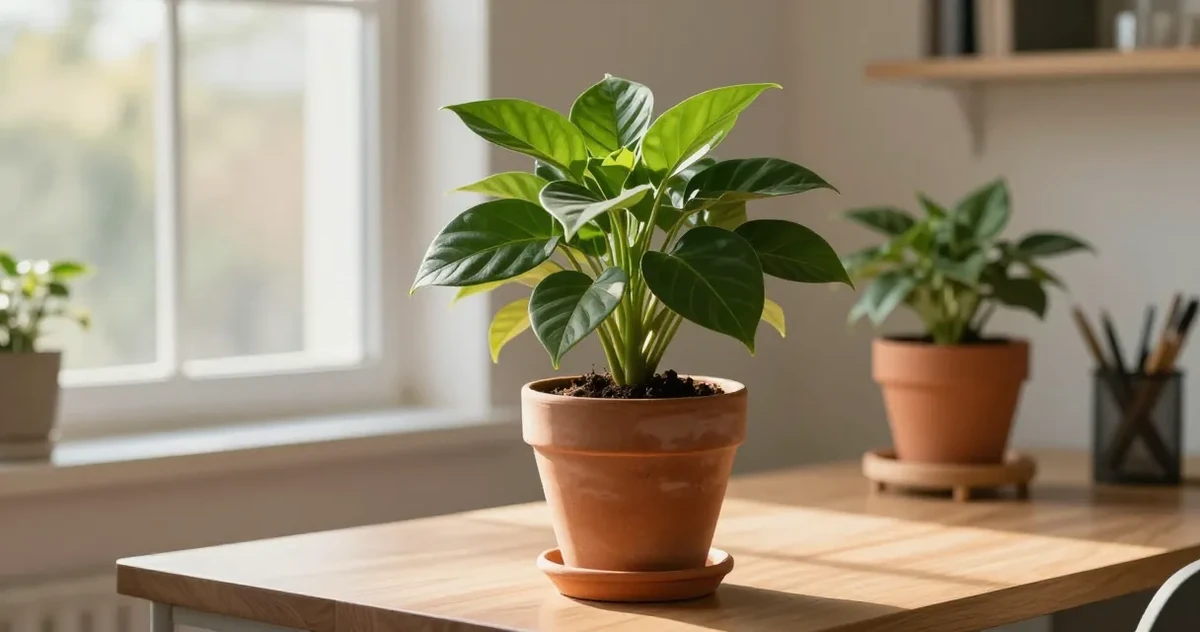
Figuring out how often to water indoor plants is the question that trips up almost every plant owner at some point. The honest answer: there is no single schedule that works. Not once a week. Not twice a week. Not the tag that came with the pot. Watering frequency depends on your plant, your pot, your room, and your season. What this guide gives you instead is a way to read all of those signals together so you stop guessing and start trusting your own judgment.
What Most Care Guides Miss
Here is where most watering advice goes wrong: it frames the problem as a timing question when it is actually a condition question.
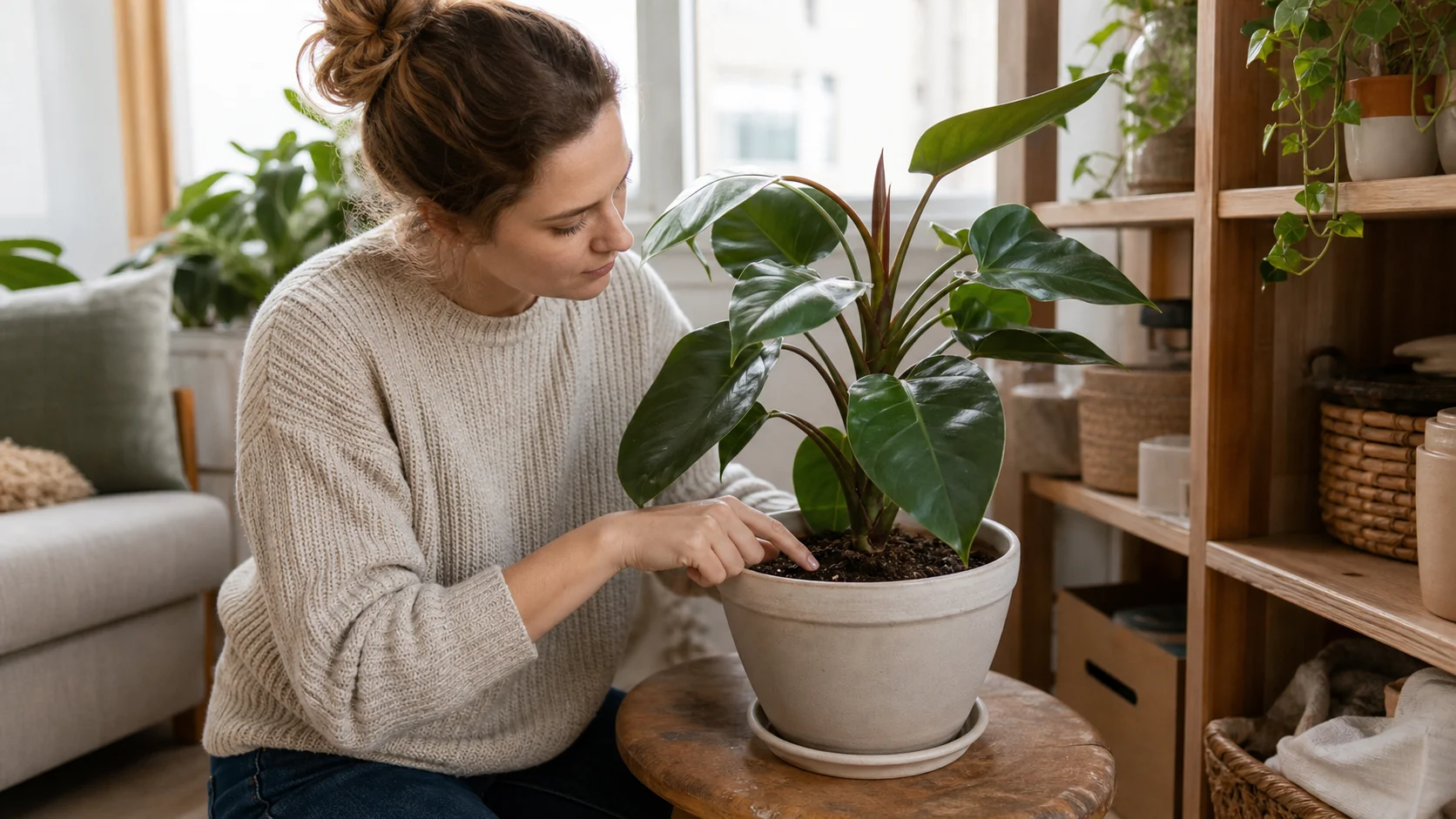
Check the root zone itself before watering; the calendar cannot tell you whether this pot is still moist.
“Water once a week” is the most common recommendation on plant tags and beginner guides. The problem is that this instruction tells you nothing about what is actually happening in the root zone. If your apartment runs dry from winter heating, the soil might be bone-dry by day four. If you are growing in a large plastic pot in a north-facing room, that same volume of soil might still feel damp on day twelve.
The common misdiagnosis this creates: an owner follows the schedule faithfully, notices the plant looking tired by day five, waters again to be safe, and ends up with root rot – not from neglect, but from a rule that accounted for none of the real-world variables in that specific room. That is not a watering mistake; it is a diagnostic mistake.
The practical first check that changes everything: press your finger two inches into the soil right now, before you do anything else. What you feel there is the decision. Not the calendar, not the care tag, not how long ago you last watered. Illinois Extension identifies seven variables that determine how quickly soil dries out – plant type, temperature, humidity, light intensity, pot size, potting mix composition, and drainage – and a weekly watering schedule accounts for none of them.
Once you shift from timing to sensing, watering becomes one of the simpler parts of plant care.
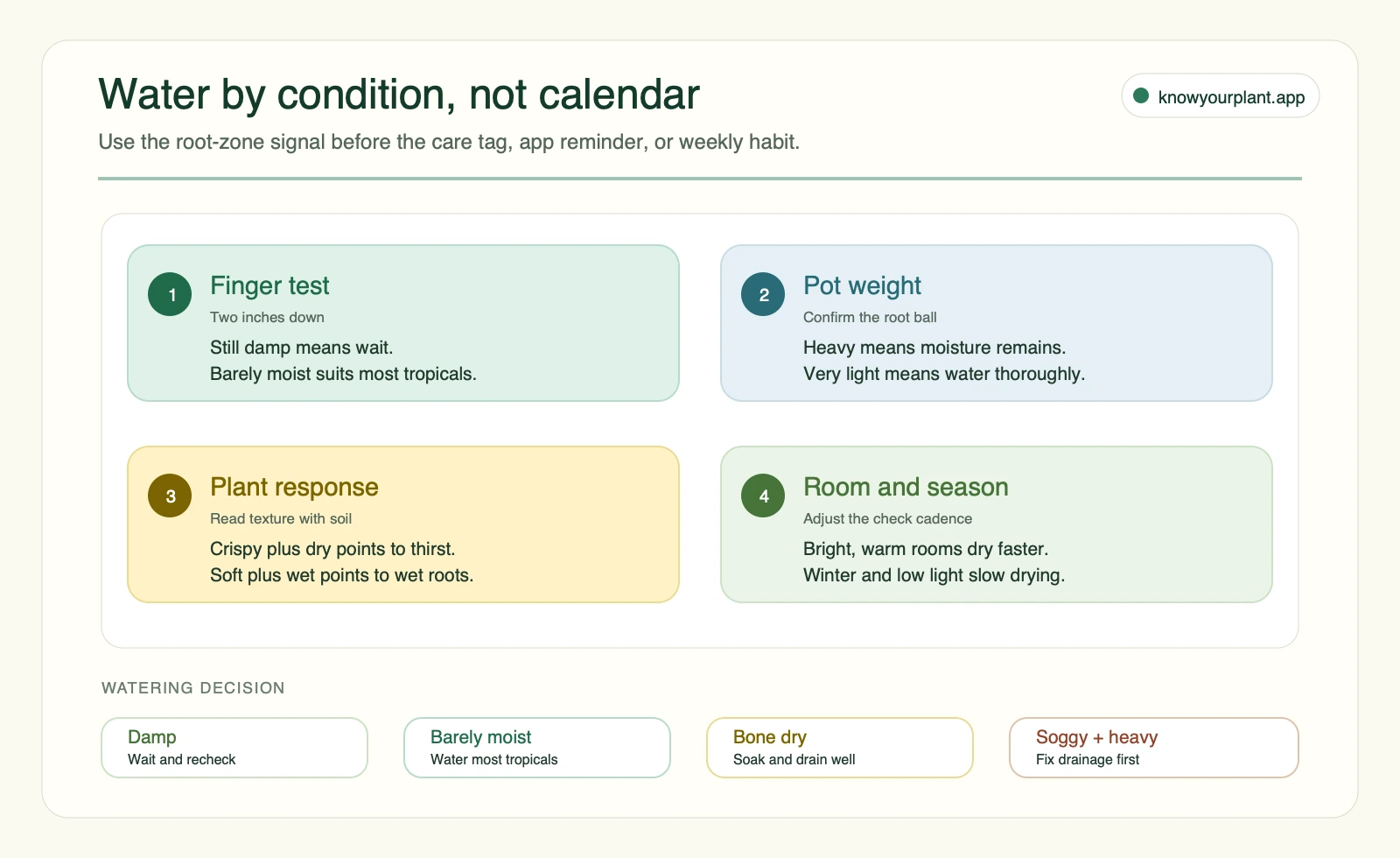
Use the condition-first router before watering on a weekly schedule, especially when the surface looks dry but the root zone may still be moist.
The Finger Test: Your Most Reliable Check
Push your finger into the soil down to the second knuckle, roughly two inches deep. What you feel there is what your roots are experiencing.
Still damp: Wait. Check again in a day or two.
Just barely moist: This is the right moment for most tropical houseplants. Water now.
Bone dry, pulling away from the pot edge: You waited a little too long. Water thoroughly right away. For most plants, this is fine occasionally, but repeated drought stress shows up as crispy edges and slowed growth over time.
Soggy and heavy even though you have not watered recently: This is a drainage or pot-size problem, not a timing problem. Adding more water will not help here. More on that below.
University of Maryland Extension recommends exactly this approach: do not water on a fixed schedule, but test the soil about two inches deep and water when it has dried to the appropriate level for the plant type. The calendar cannot tell you that. Your finger can.
Pot Weight: The Shortcut Once You Know Your Plant
After a few watering cycles, lift the pot immediately after a good watering and notice how it feels – heavy, saturated. Then lift it again two or three days later. Noticeably lighter. That difference is your watering signal.
Experienced plant owners often settle into this method and barely think about it anymore. Water is heavy. An almost-dry root ball feels dramatically lighter than a freshly watered one. It sounds too simple, but it works because you are measuring actual moisture, not time.
This method is especially useful for hanging plants where sticking your finger into the soil is awkward, and for drought-tolerant plants like succulents and cacti where you want to wait until the pot feels nearly weightless before watering. For a snake plant in a terracotta pot, that might mean waiting until the pot surprises you with how light it has become.
Before You Water: A Five-Step Check
Running through these five checks before you reach for the watering can prevents the most common watering mistakes.
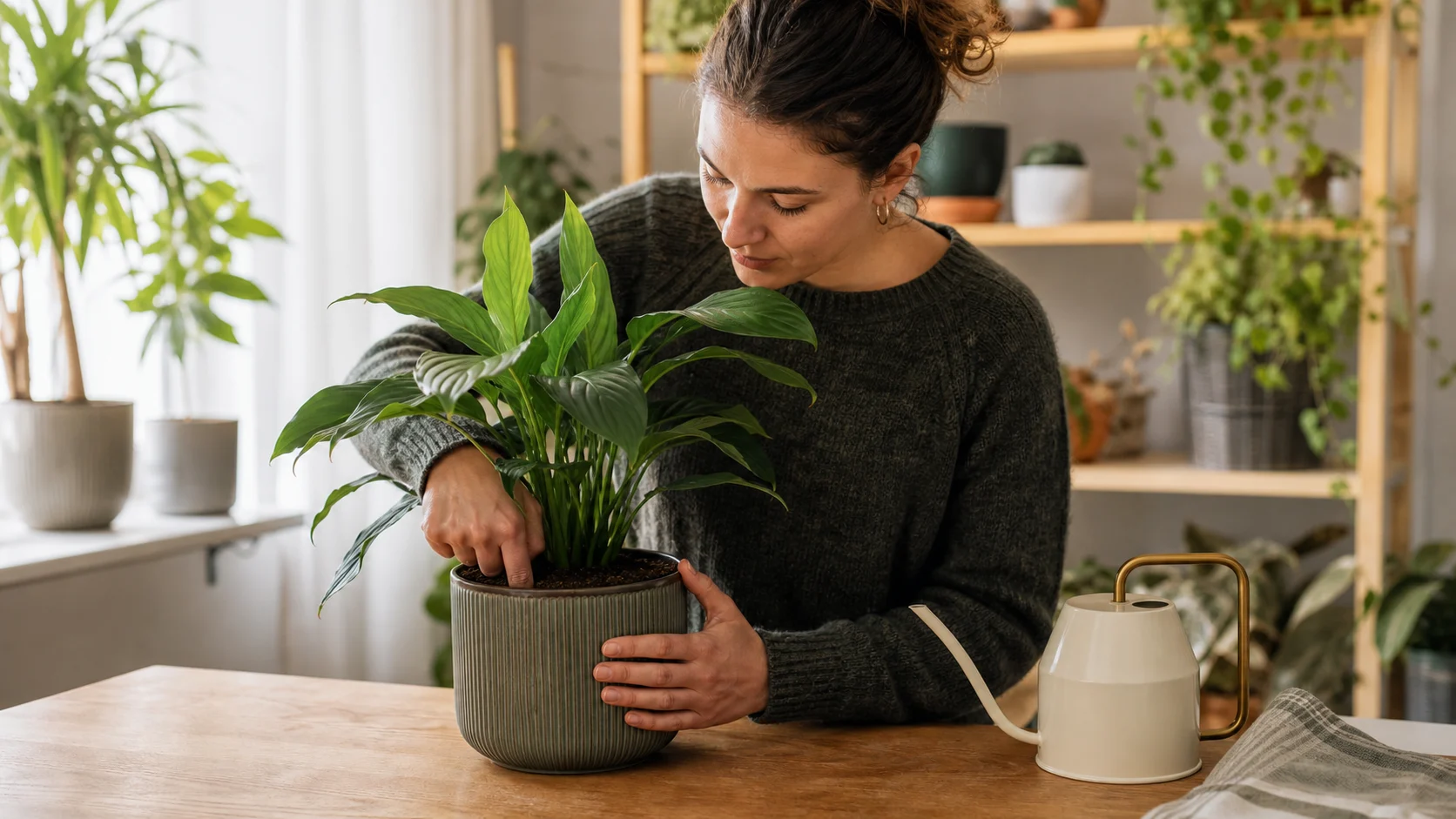
Test the soil before lifting the watering can so current root-zone moisture—not the calendar—drives the decision.
- Finger test first. Press two inches into the soil. If it is still moist, put the can down and come back tomorrow.
- Lift the pot. Does it feel lighter than usual? A noticeably light pot confirms the soil has dried. A heavy pot means wait, even if the surface looks dry.
- Look at the plant, not just the soil. Slight droop on tropical plants often signals thirst. But soft, translucent leaves combined with wet soil signal the opposite.
- Check recent watering history. If you watered two days ago and the soil is already bone dry, the problem is probably a pot that is too small or a room that is extremely warm and bright – not a signal to change your plant’s schedule permanently.
- Consider the season. In winter, your plant’s water use slows substantially. If the finger test shows the soil is still moist and you have not watered in two weeks, that is completely normal.
This five-step loop takes about thirty seconds once you build the habit, and it replaces the need for a guessed schedule. If you prefer a probe for deep pots, the plant moisture meter guide explains how to check repeatability and cross-check a reading. Illinois Extension notes that moisture meter probes are not always reliable – soil mineral content and probe placement can skew readings enough to mislead rather than guide.
Identification Snapshot
Use this quick snapshot to decide which watering lane your plant belongs in before you think about frequency.
| Detail | What to notice |
|---|---|
| Plant category | Most indoor plants fall into one of three buckets: moisture-loving foliage, standard tropical aroids, or drought-tolerant plants |
| Best watering cue | Soil condition at 2 inches plus pot weight, not the calendar |
| Fastest dry-down setup | Bright light, airy soil, terracotta, and a pot close to the root ball |
| Slowest dry-down setup | Low light, dense soil, large pots, and decorative cachepots that trap runoff |
| Seasonal rhythm | Faster drying in spring and summer, slower drying in fall and winter |
| Pet safety | Never assume a houseplant is pet-safe. Many common indoor plants, including pothos, philodendron, peace lily, and ZZ plant, are not |
What Different Plants Actually Need
Not every plant uses water at the same pace, and the moisture preference a plant evolved with matters more than any fixed interval.
Evenly moist: never fully dry, never soggy
Peace lilies, Boston ferns, and calatheas prefer that the top inch or two dries out between drinks but the root zone never goes completely dry. If a peace lily starts to droop, that is almost always thirst rather than overwatering. Check the soil – if the surface is dry, water it.
Dry at the top, moist deeper down
Most tropical houseplants fall here: pothos varieties, philodendrons, monsteras, rubber plants, dracaenas. Let the top two inches dry before watering again. These plants tolerate brief dry spells much better than they tolerate sitting in wet soil.
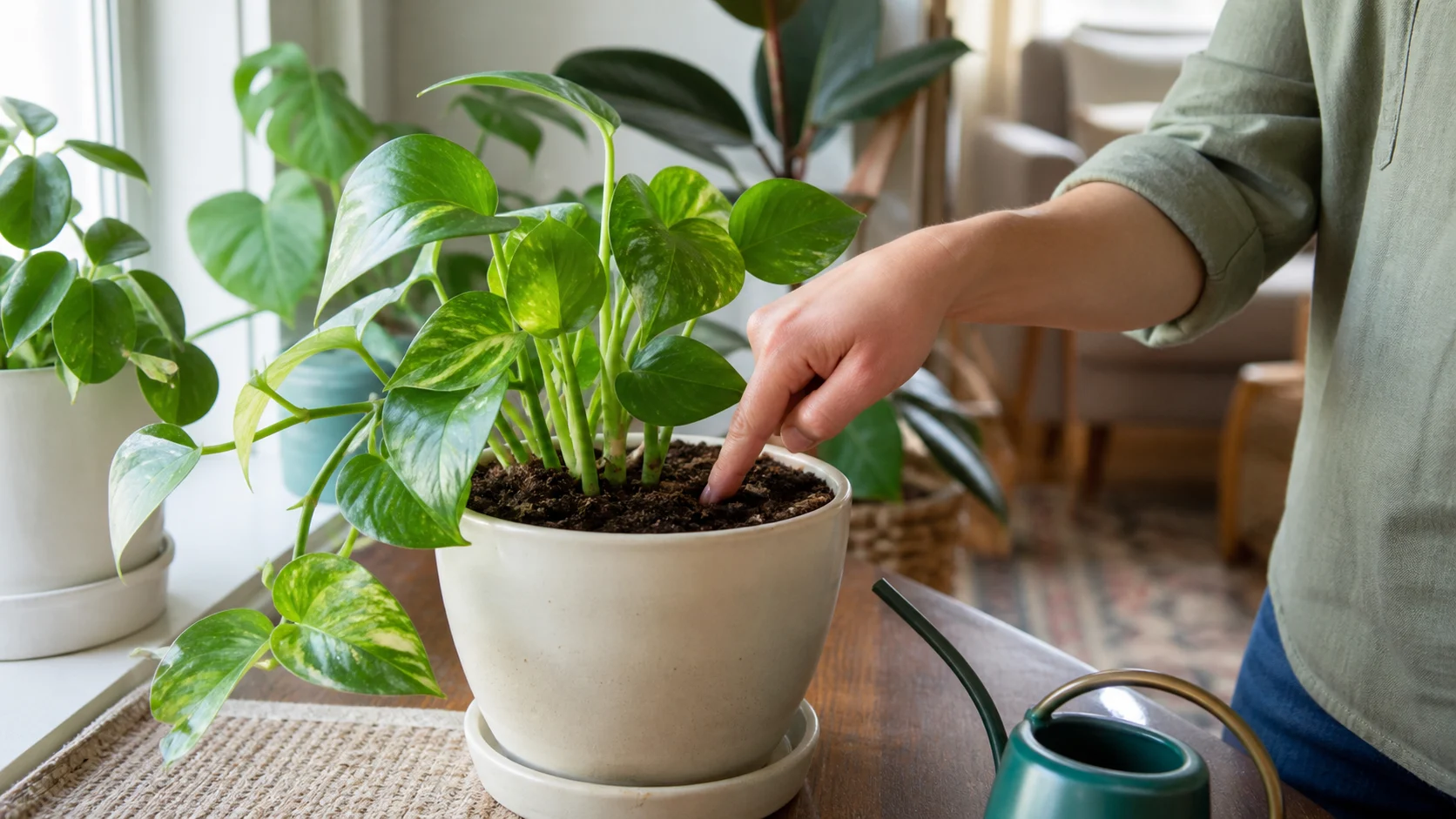
A dry surface is only the first clue; probe deeper before watering standard tropical houseplants.
Nearly fully dry before watering
Succulents, cacti, snake plants, and ZZ plants store water in their leaves or roots. They want the soil to dry out almost completely before the next drink. In a cool, low-light winter room, that can mean waiting three to four weeks between waterings – and that is completely normal, not neglect.
Missouri Botanical Garden organizes common houseplants by this same moisture-preference framework, noting that watering needs reflect not just species but the specific room conditions where each plant lives.
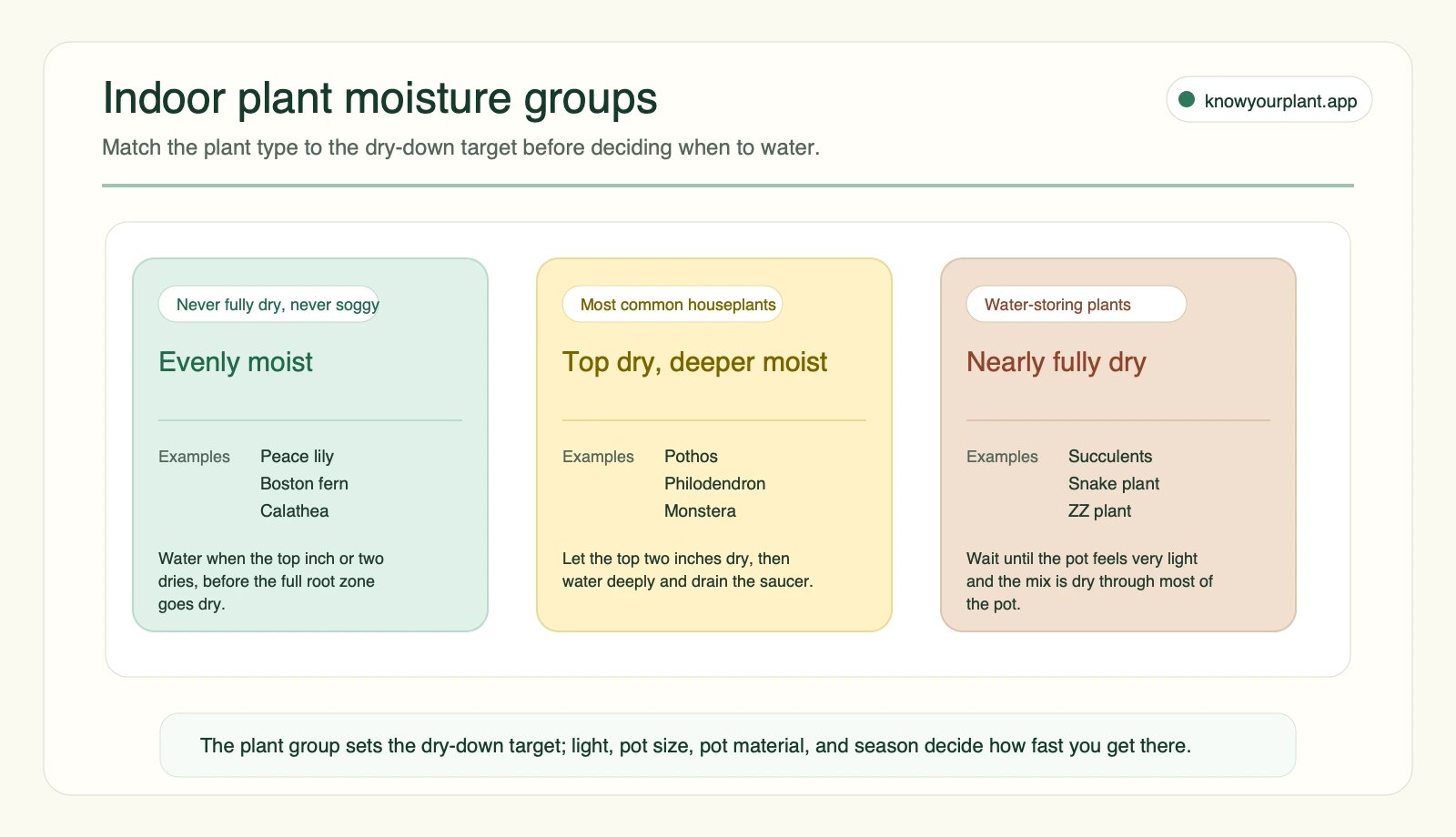
Use the moisture-group guide to decide how dry the soil should get before you apply the finger test and pot-weight check.
Lookalikes and Confused With
One reason general watering advice fails is that owners often apply the same routine to plants that dry down at completely different speeds.
- Standard tropical houseplants like pothos, philodendrons, monsteras, rubber plants, and dracaenas usually want the top couple of inches to dry before the next drink.
- Moisture lovers like ferns, calatheas, and peace lilies usually want more even moisture and react faster when the root ball dries too far.
- Drought-tolerant plants like snake plants, ZZ plants, succulents, and cacti want much longer dry-down periods and are easier to harm with frequent watering than with brief neglect.
If you are not sure which bucket your plant belongs in, identify it before copying a schedule. A pothos watering rhythm reused on a fern will be too dry. A fern rhythm reused on a snake plant will be too wet.
The Four Variables That Change Everything
Once you know which moisture category your plant belongs to, these four factors push the timing earlier or later:
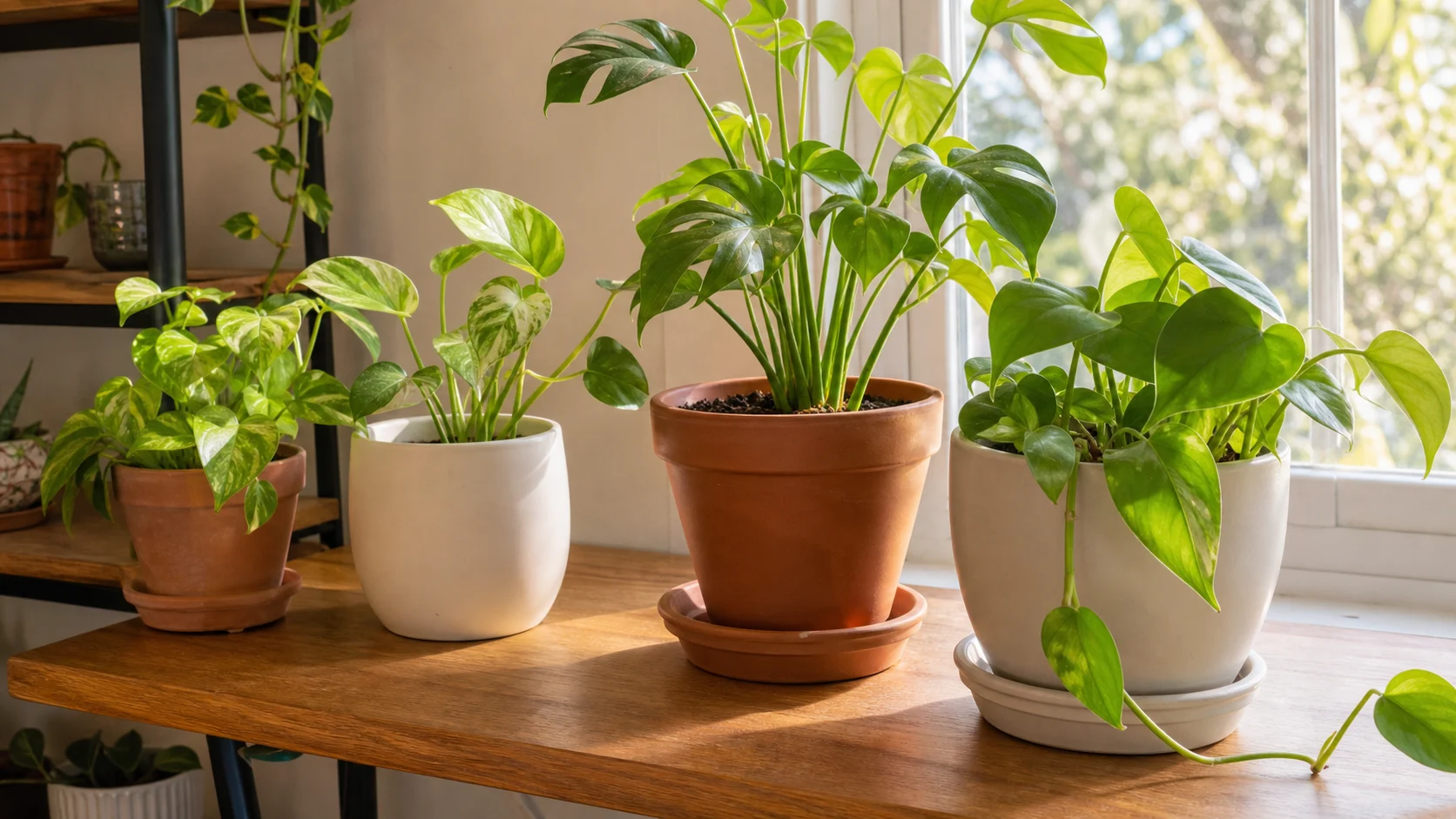
Light exposure, pot material, container size, and season all shift how quickly the same root zone dries.
Light: A plant in a bright south-facing window photosynthesizes faster and uses water faster. The same plant in a dim corner will sit in damp soil much longer. Low light is one of the most common reasons overwatering happens – not because the owner watered too much, but because the plant could not use what it was given. If you are growing plants in low-light spots, expect to water far less often than the tag suggests.
Pot material: Terracotta pots are porous, so the root zone dries faster. Plastic and glazed ceramic hold moisture longer. If you switch pot materials, your watering rhythm will need to shift with it.
Pot size: A pot that is much larger than the root ball holds far more soil than the roots can access. That extra soil stays wet and creates conditions for root rot even when you are only watering when the surface feels dry. The University of Connecticut Soil Nutrient Analysis Laboratory notes that plants in oversized containers routinely develop overwatering symptoms because the root mass simply cannot consume the moisture held by the excess growing medium. The pot should fit the root ball snugly, not dwarf it.
Season: Most houseplants slow down in autumn and winter. They use less water, absorb less light, and take longer to dry out. A plant that needed water every five days in July might only need it every ten to fourteen days in January. This seasonal shift catches a lot of owners off guard – the plant looks the same, so they keep the same rhythm, and the roots quietly suffer.
Seasonal Watering Calendar
Matching your watering rhythm to the season is one of the most reliable ways to avoid the slow-building overwatering that tends to happen in autumn and winter when nothing about the plant’s appearance signals the change.
Spring (March to May): Growth resumes and water use picks up. If you have been watering infrequently all winter, start checking the soil more often as days lengthen. Most tropical houseplants are ready to return to their regular watering cycle by mid-spring. This is also when newly purchased plants arrive at peak health – a good time to establish the pot-weight baseline while the plant is actively drinking.
Summer (June to August): This is when most indoor plants drink the most. Warm rooms, bright windows, and active growth all accelerate drying. Check the soil every few days rather than every week. Air conditioning can work against you here – it removes humidity and dries the air, which speeds up evaporation from the surface of the pot while the root zone may still be moist underneath. Do not be fooled by a dry-looking top layer in summer; the finger test at two inches is especially important this time of year.
Autumn (September to November): Growth slows as daylight hours shorten. This is the season most owners get caught overwatering. The plant looks healthy and green, but it is quietly winding down. Extend the time between waterings by two to four days compared to your summer rhythm, and let the soil dry a little further before each drink. If you fertilized through summer, stop by October and let the plant coast on what it has.
Winter (December to February): Minimum water for most houseplants. Many tropical plants can go ten to fourteen days between waterings in a cool, dim room, and cacti or succulents may only need a drink once a month. Heating systems lower indoor humidity, which makes the top of the soil feel dry quickly – but the root zone may remain damp for much longer. Rely on the finger test and pot weight, not the calendar. Resume your normal watering frequency when you notice new growth returning in late winter or early spring.
One note: if you use grow lights or keep a very warm, well-lit indoor setup, your plants may not slow down as much in winter. Let the soil condition, not the season, be the final word.
Care Cards
| Care card | Fast answer |
|---|---|
| Light | Brighter rooms speed up water use, dim rooms slow it down |
| Pot | Terracotta dries faster, plastic and glazed ceramic stay wet longer |
| Soil | Airy mixes are easier to water correctly than dense, peat-heavy mixes |
| Watering cue | Dry at depth plus a lighter pot beats any weekly schedule |
| Winter adjustment | Most plants need longer gaps and a deeper dry-down check in cool, dim months |
Symptoms That Look the Same but Mean Opposite Things
Yellowing leaves, wilting, and soft stems can appear whether a plant is too dry or too wet. This is the part that makes watering feel so difficult, and it is worth understanding before you react to any symptom.
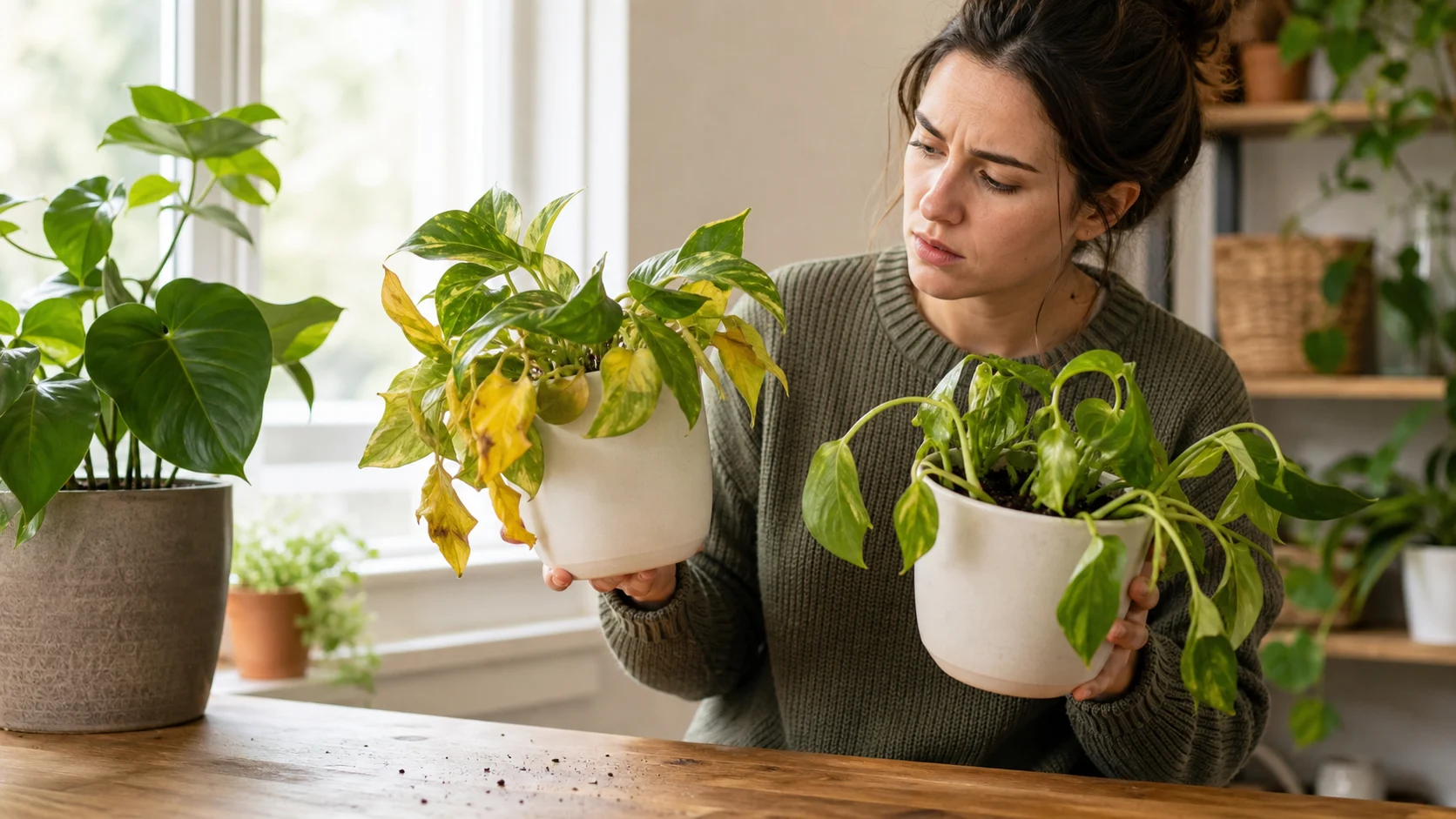
Similar wilt and yellowing can come from opposite moisture problems, so compare leaf texture, soil feel, and pot weight together.
University of Maryland Extension explicitly flags this: plants can wilt both from too little water and from too much – the same visual signal with opposite root causes. If you treat the wrong one, you make the situation worse.
Here is how to tell them apart by combining what you see with what you feel in the soil:
| Symptom | Underwatered | Overwatered |
|---|---|---|
| Leaf texture | Crispy, papery | Soft, translucent, or mushy |
| Soil feel | Dry, pulling from pot edges | Dense, heavy, possibly musty smell |
| Which leaves affected first | Older lower leaves, crispy | Lower leaves, softer and yellower |
| How plant responds to watering | Perks up within hours | Continues declining |
| Pot weight | Noticeably light | Heavy even days after watering |
When you are unsure, check the soil and lift the pot before doing anything else. Dry soil and a light pot almost always signal thirst. Wet soil and a heavy pot almost always point to a drainage or container problem. If you are already seeing soft yellow leaves or a plant that keeps declining after watering, compare those signals with our guide to overwatered plant signs and fixes.
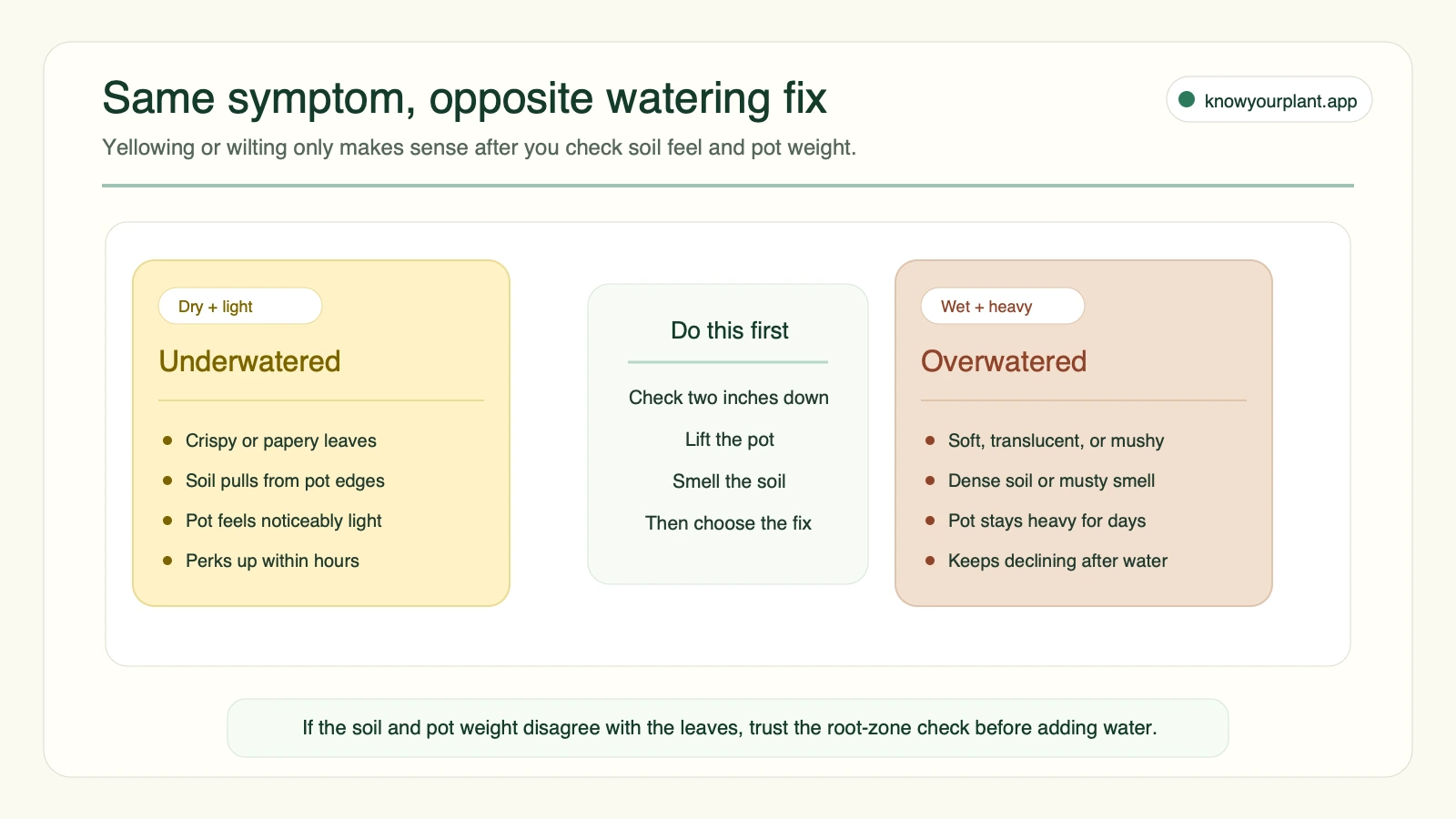
Use the symptom triage before reacting to yellowing or wilting, because the same leaf signal can require opposite watering fixes.
Brown and yellowing leaves have more causes than watering alone – light, humidity, and nutrient levels can all produce similar discoloration. The guide to why plant leaves turn brown covers the full diagnostic process if you are not sure where to start.
Common Problems That Get Mistaken for Watering
Sometimes what looks like a watering failure is actually a setup problem in disguise.
| What you notice | What is usually happening | Safer next step |
|---|---|---|
| Surface looks dry but the pot still feels heavy | The root zone is still wet deeper down | Wait, then inspect pot size, drainage, and soil density |
| Yellow leaves after following a fixed schedule | The calendar ignored season, light, or pot size | Reset around soil depth and pot weight instead of timing |
| Wilting right after watering | Roots may already be stressed from staying wet too long | Check drainage and root health before adding more water |
| Soil stays wet for a week or more | The pot is too large, the mix is too dense, or water is trapped in a cachepot | Improve drainage or resize the container |
| The plant dries out in two or three days every cycle | The pot is small, the mix is very airy, or the room is warm and bright | Shorten the inspection window, not necessarily the volume of water |
A few setup traps show up repeatedly:
- Pot too large: Excess soil holds water the roots cannot reach. The fix is a better-fitting container, not a different watering schedule.
- No drainage hole: Water collects at the bottom, the surface dries out, you water again, and the roots sit in a permanent reservoir. Every pot should drain.
- Decorative cachepot trapping water: The inner nursery pot drains, but water pools in the outer vessel. Empty it thirty minutes after every watering.
- Compacted or old potting mix: Mix that has broken down forms dense pockets that drain slowly or repel water entirely. If water runs straight through without absorbing, or if you see the soil pulling sharply away from the pot edges, it may be time to refresh the growing medium. The guide to when to repot plants covers how to read root health and choose the right moment.
- Self-watering gadgets without a root check: Watering spikes, hydro granules, and self-watering inserts can help maintain moisture, but they do not replace understanding what the root zone actually needs. If the light is too low or the pot is too large, a gadget that keeps the soil consistently moist can make overwatering worse, not better. Check the soil and roots before trusting any moisture-management tool is working correctly, then use the plant watering systems comparison to match the delivery method to the plant’s dry-down pattern.
How to Water Correctly Each Time
When you do water, water thoroughly. Pour slowly and evenly until water drains from the bottom drainage hole. This ensures the entire root ball gets wet, not just the top inch. Then empty the saucer after about thirty minutes so the roots are not sitting in standing water.
Shallow watering – barely dampening the surface – trains roots to stay near the top, where they are more vulnerable to both drought and temperature swings. Deep, thorough watering followed by a full dry-down cycle is the healthiest pattern for almost every indoor plant.
Pet Safety
Watering advice only works once you know what plant you are caring for, and that matters for pets too. Many common indoor plants are not safe if chewed. Pothos, philodendron, peace lily, and ZZ plant are all common examples where a pet-friendly assumption would be wrong.
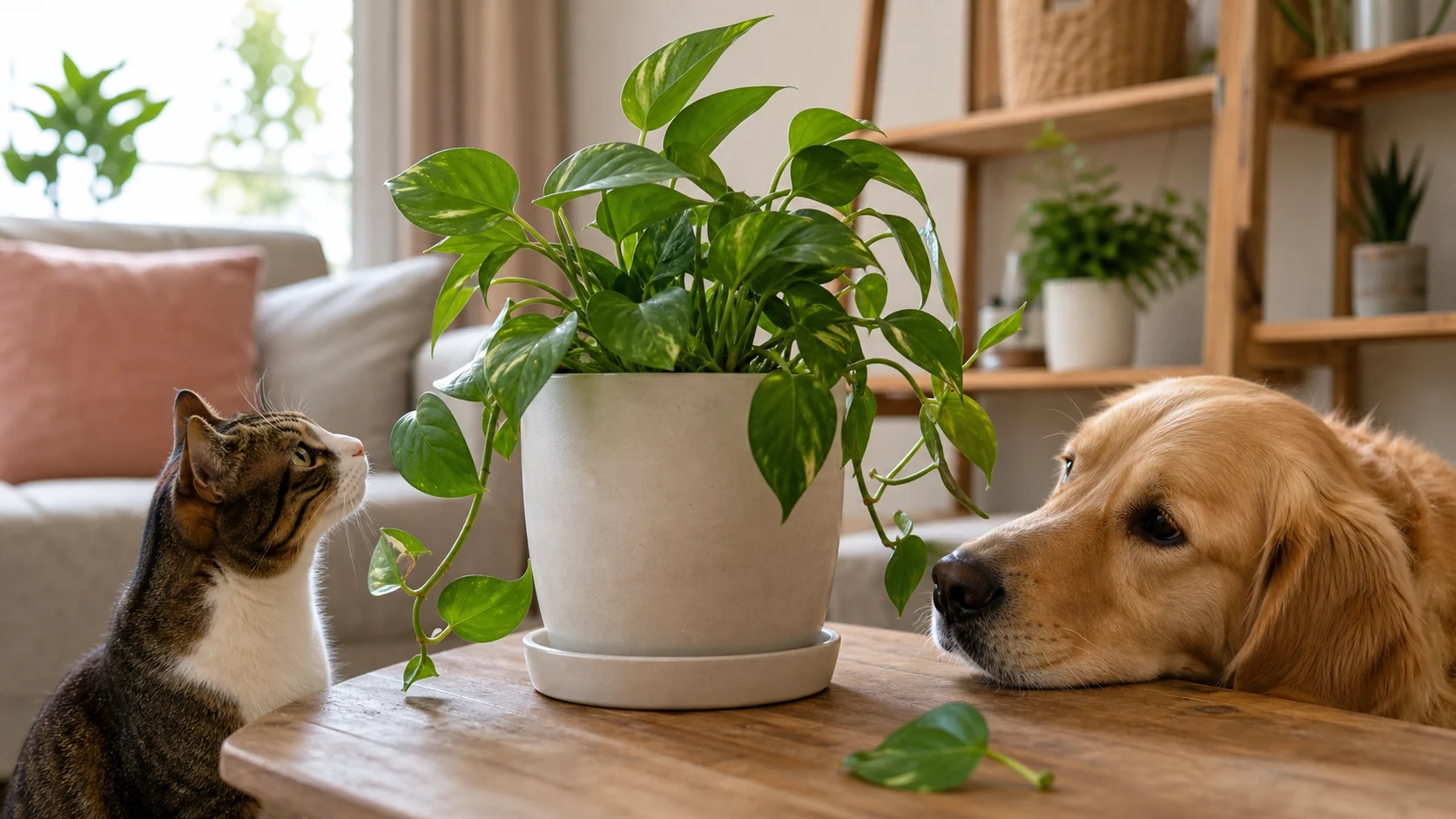
A reachable pothos, runoff tray, or dropped cutting can all become pet hazards, so identify the plant before choosing its placement.
If cats or dogs can reach the pot, also think about runoff trays, dropped leaves, and cuttings after pruning or propagation. The safe move is to confirm the species and check a trusted toxicity source before you place the plant within reach.
Real User FAQ
My care tag says to water once a week, but the pot still feels heavy. Should I do it anyway?
No. Fixed schedules are exactly how many indoor plants get overwatered. If the pot still feels heavy or the soil is damp two inches down, wait and reassess the setup instead of following the tag.