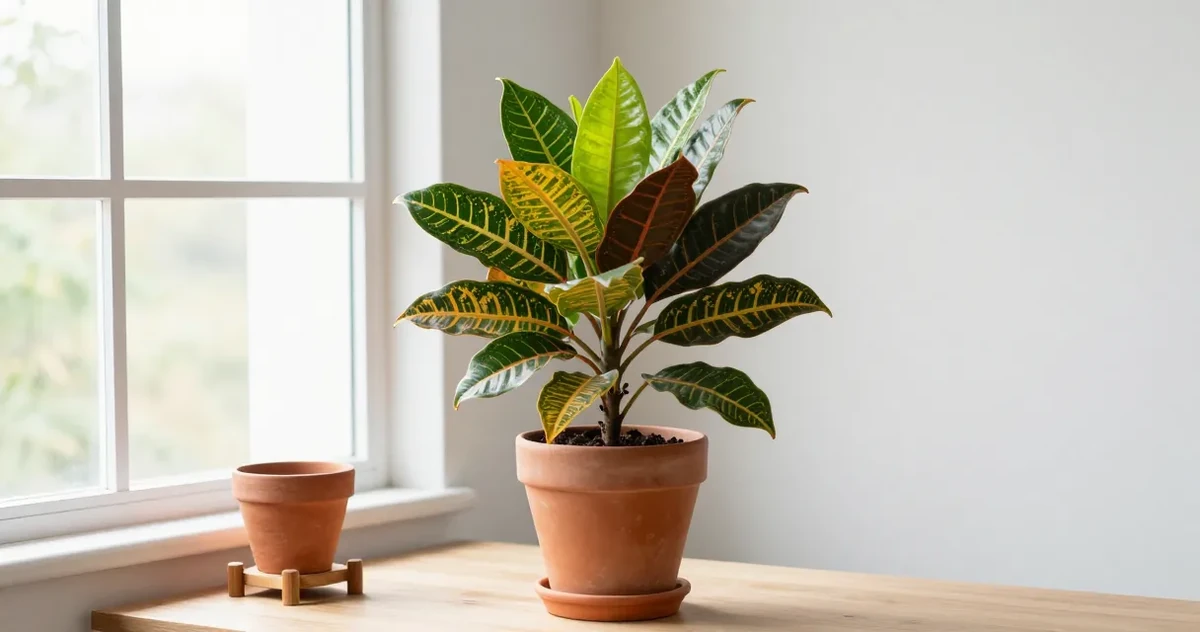
Croton Plant Care: Keep the Color and Stop Sudden Leaf Drop
If your croton is dropping leaves or losing that red, orange, and yellow glow she had at the store, you probably do not need more generic tropical plant advice. You need to know which problem you are actually looking at.
That is where most croton articles fall short. They tell you to give bright light, even moisture, and humidity, which is true, but they do not help you sort out the real indoor-plant question: did she drop leaves because you watered wrong, because the room is too dim, because a cold draft hit her, because she hates being moved, or because spider mites showed up quietly under the leaves?
For crotons, the order of checks matters almost as much as the care itself. If you treat relocation stress like a watering issue, or dim light like a fertilizer issue, you can pile extra stress on a plant that mainly needed stability.
What Most Croton Care Guides Miss
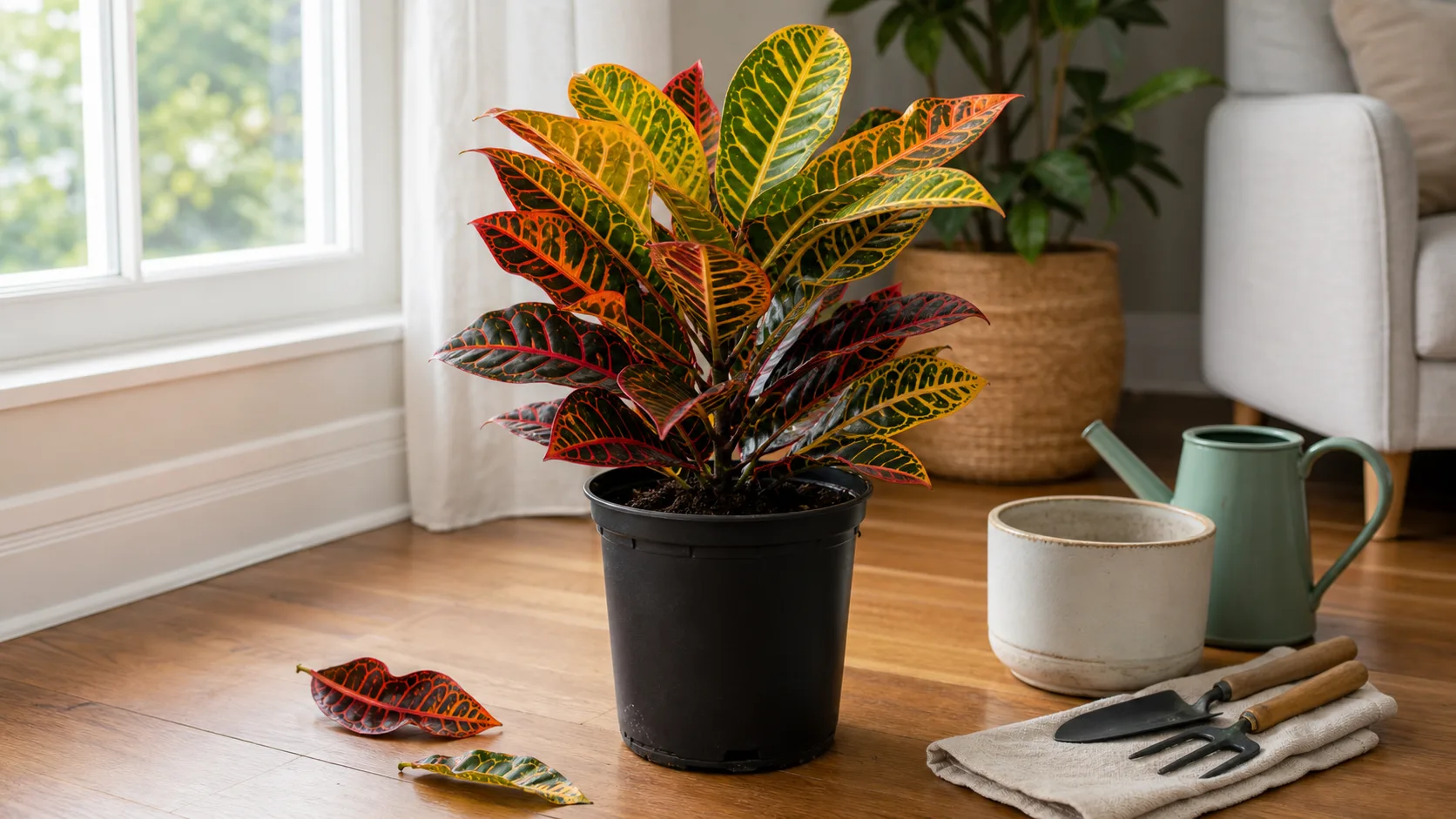
A newly moved croton can shed a few leaves while extra care changes wait on the sidelines.
The most common croton misdiagnosis is assuming every dropped leaf means the soil is wrong.
Often, the better first question is: what changed in the last two weeks?
That single question helps you avoid the usual spiral. A croton gets moved from a greenhouse to a car, from a store to your living room, then into a new pot, then closer to a window, then onto a new watering schedule, all in one week. She drops leaves, and it feels like proof that she needs another change. In reality, she may be reacting to the stack of changes, not asking for one more.
Illinois Extension notes that crotons resent root disturbance and may drop leaves after transplanting. That is why the first practical check is not the watering can. It is the timeline.
Before you fix anything, check these in order:
- Recent move or repot in the last 14 days
- Light strength at the exact window, not just whether the room feels bright
- Cold exposure from AC, a drafty door, or cool night glass
- Soil moisture one to two inches down
- Leaf undersides for stippling or webbing from spider mites
That sequence is the real care shortcut. It keeps you from solving the wrong problem first.
Croton Care Snapshot
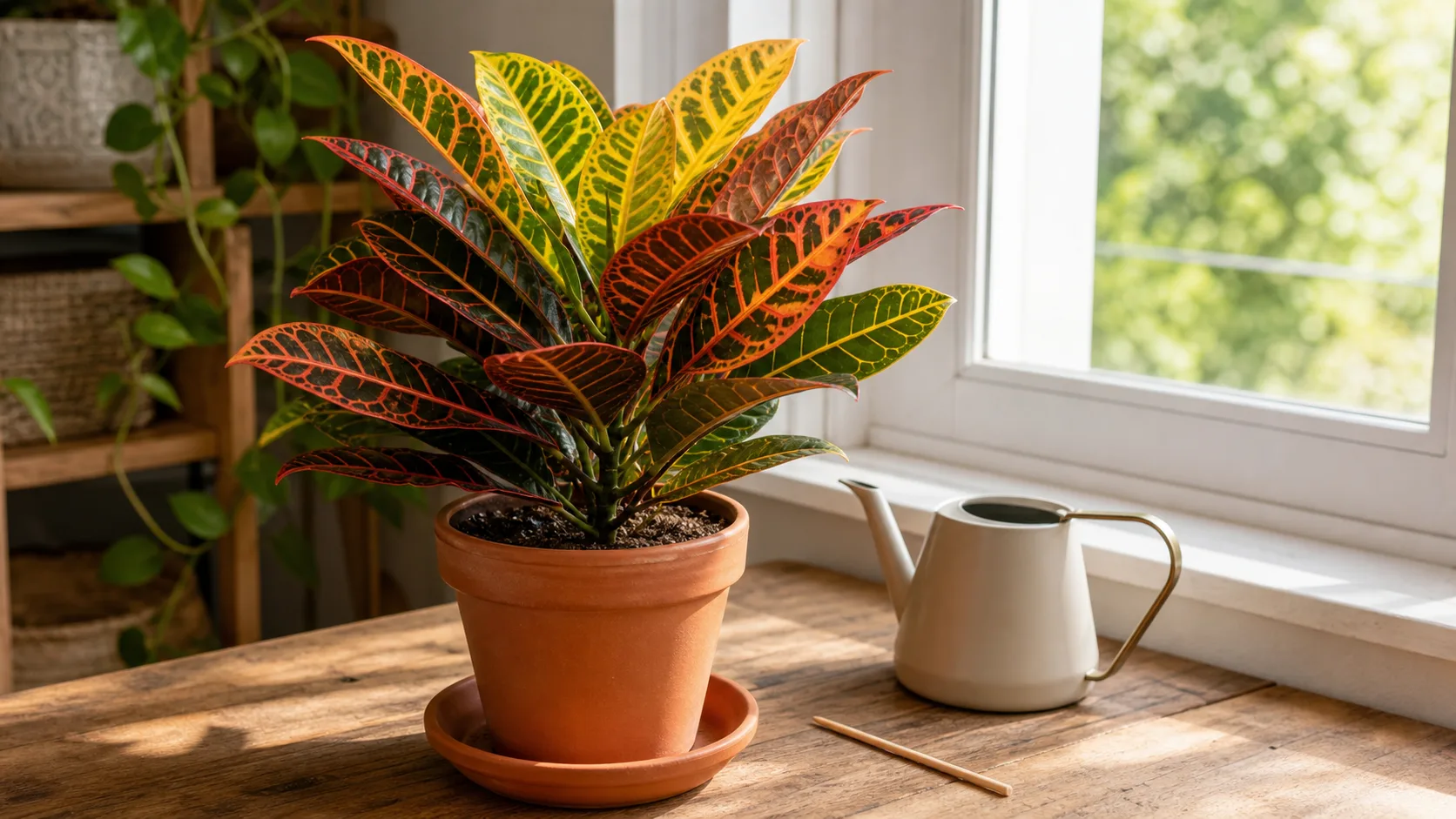
Strong window light, drainage, and a soil check form a practical croton care baseline.
If you just want the core care card before we troubleshoot, here it is:
- Light: Very bright light, often with some direct sun, for the best color
- Water: Water when the top 1 to 2 inches of soil feel dry
- Soil: Well-draining potting mix that stays lightly and evenly moist, never swampy
- Temperature: Warm, stable room temperatures, kept away from cold drafts
- Humidity: Moderate to higher humidity helps, especially in winter
- Top risk indoors: Leaf drop after change, dim-light color fade, spider mites, and cold stress
Start With the Pattern, Not One Cause
Here is the fastest way to read what your croton is telling you.
Symptom diagnosis card
| What you see | Most likely cause | First check today | What not to do |
|---|---|---|---|
| Leaves dropping right after bringing her home or repotting | Relocation shock or root disturbance | Review what changed in the last 2 weeks | Do not repot again or keep moving her |
| Colors fading to greener leaves | Light is too weak | Move her closer to the brightest window gradually | Do not compensate with extra fertilizer |
| Crispy edges and curled leaves with dry soil | Underwatering or fast drying | Check soil 1 to 2 inches down and water deeply | Do not give tiny sips every day |
| Yellowing lower leaves with wet soil | Overwatering or poor drainage | Check pot drainage and soil staying soggy | Do not water on a fixed schedule |
| Sudden decline after cool nights or AC blast | Cold stress | Feel for cold air around her spot in the morning | Do not leave her against cold glass |
| Pale speckling, dull leaves, fine webbing | Spider mites | Inspect undersides of leaves in bright light | Do not assume humidity alone will solve it |
Where a Croton Will Actually Stay Colorful
Crotons are often described as bright indirect light plants, and that phrase is not enough on its own.
The practical version is this: a croton usually needs stronger light than many people expect if you want to keep the color. University of Maryland Extension classifies croton as a high-light indoor plant in roughly the 500 to 1,000 footcandle range. NC State Extension also notes that best leaf color comes with bright light and some direct sun, while too much shade can lead to leaf loss.
In real homes, that usually means the window itself matters more than the room label.
Window-by-window reality check
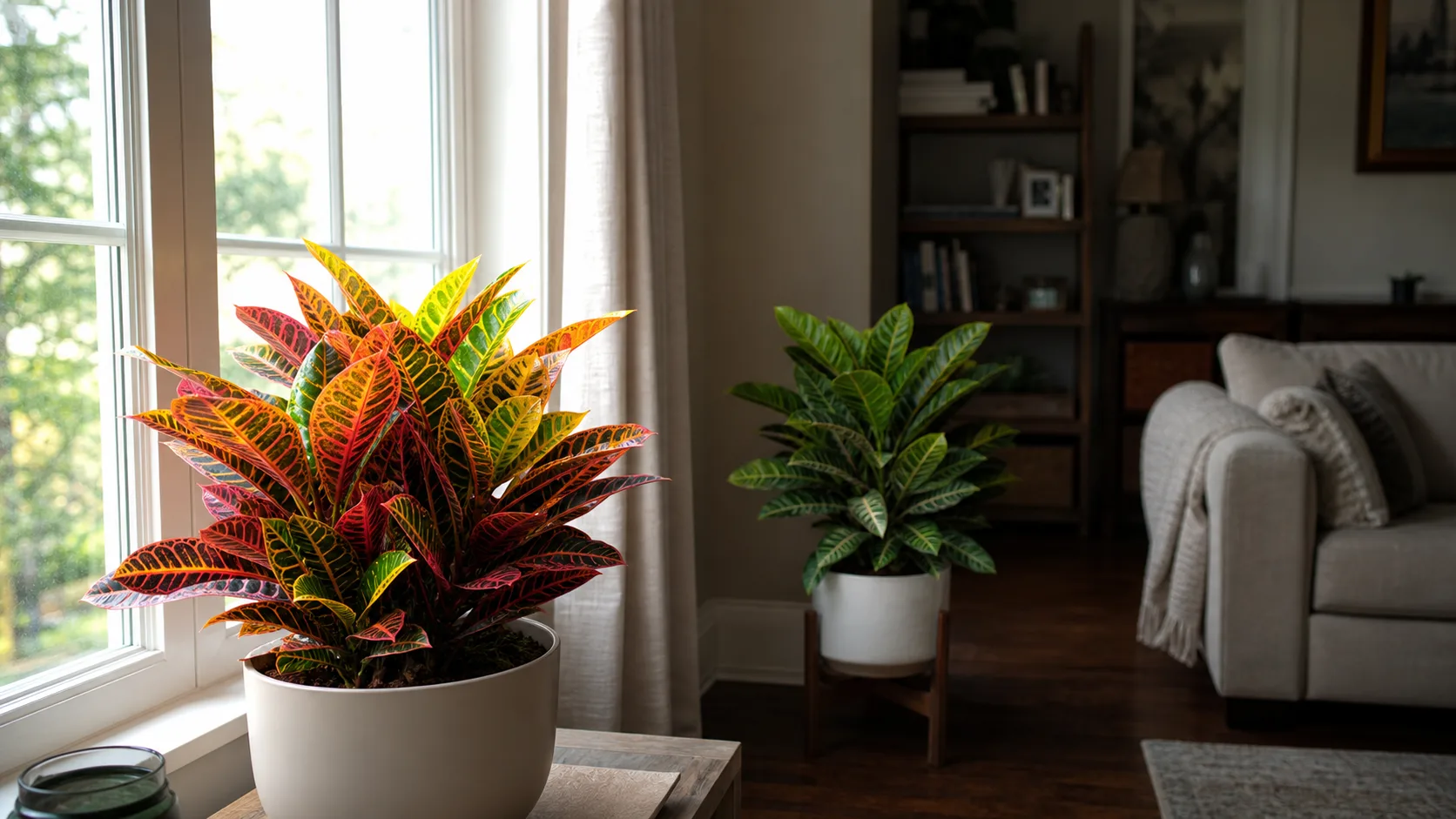
Croton color stays strongest near usable window light and fades toward green deeper in the room.
| Window setup | What usually happens | Best use |
|---|---|---|
| South window | Best color potential, strongest indoor light | Ideal if you transition her in gradually |
| West window | Strong afternoon light, often great for color | Good choice if heat is not extreme against the glass |
| East window | Gentle morning sun, steady bright conditions | A very workable option for many homes |
| North window | Often too weak for strong color | Use only if you can add a grow light |
| Several feet back from any window | Color usually dulls, lower leaves may drop | Not enough for most crotons long term |
If she came from lower light, do not shove her from a dark corner into blazing afternoon sun in one day. Step her forward over a week or two. Crotons love strong light, but they still prefer a smoother transition.
If your home is naturally dim, our guide to grow lights for indoor plants can help you set up a better fallback than just hoping she adjusts.
How to Water Without Starting a Root Problem
Crotons like moisture, but not chaos.
That means two things can be true at once: she does not want to sit bone dry for long, and she also does not want roots sitting in heavy, airless soil.
The easiest way to water well is to ignore the calendar and check the pot instead.
- Push a finger 1 to 2 inches into the soil
- If that layer is dry, water thoroughly until excess drains out
- If it still feels cool and damp, wait a bit longer
- Empty the saucer so roots are not left in standing water
A croton that is thirsty often looks limp, curled, or papery at the edges. A croton that is overwatered often shows softer yellowing, especially lower down, while the soil stays wet longer than it should.
If you are ever stuck between two guesses, trust the soil and the timeline together. Dry soil plus droop is a watering issue. Normal soil plus leaf drop right after a move often is not.
The Croton Leaf Drop Decision Tree
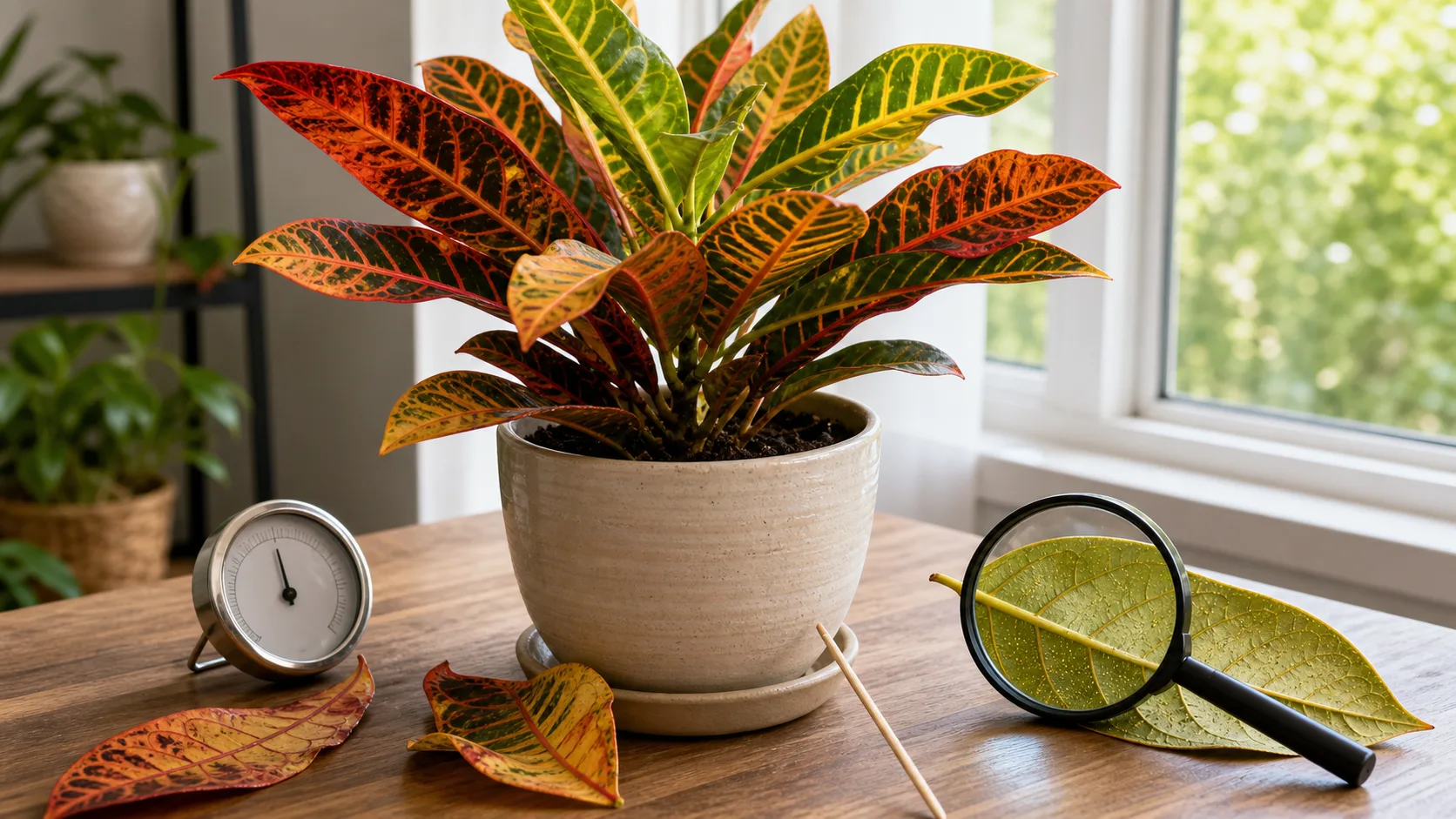
Recent change, light, cold, soil moisture, and leaf-underside clues narrow down croton leaf drop.
This is the practical order to work through before changing your whole care routine.
1. Did anything change recently?
If you bought her, moved her, repotted her, or changed rooms in the last two weeks, start here. Illinois Extension specifically notes that crotons may drop leaves after transplanting because they resent root disturbance.
Best response: hold conditions steady, keep light strong, water only by soil feel, and give her 10 to 14 days before making another big change.
2. Has the color been fading too?
If the bold pattern is washing out and the plant is getting greener, low light is the likely driver. Leaf drop and faded color together are a strong clue that the problem is placement, not just watering.
Best response: move her closer to the brightest window you have, gradually.
3. Did she get chilled?
Crotons can react fast to cold air. Illinois Extension advises moving them indoors before temperatures reach the 50s Fahrenheit, which tells you how little they enjoy cool exposure. Indoors, that same sensitivity shows up near drafty doors, AC vents, and cold windows.
Best response: move her to a warmer, steadier spot and keep leaves off cold glass.
4. Is the soil actually dry, or actually wet?
Do not guess from the top crust. Dig a finger down.
If dry: water deeply, then let excess drain.
If wet: stop watering, check drainage, and let the root zone breathe. Our root rot treatment guide can help if soggy soil has already started to damage roots.
5. Do you see mite clues under the leaves?
Spider mites are one of the most common croton pest problems indoors, and NC State Extension specifically lists them. If you see pale speckling, dusty-looking leaves, or fine webbing near leaf stems, that is a strong clue.
Best response: isolate the plant if needed and start treatment early. Our guide to how to get rid of spider mites walks through the least disruptive first steps.
A Better First Two Weeks Plan After You Bring One Home
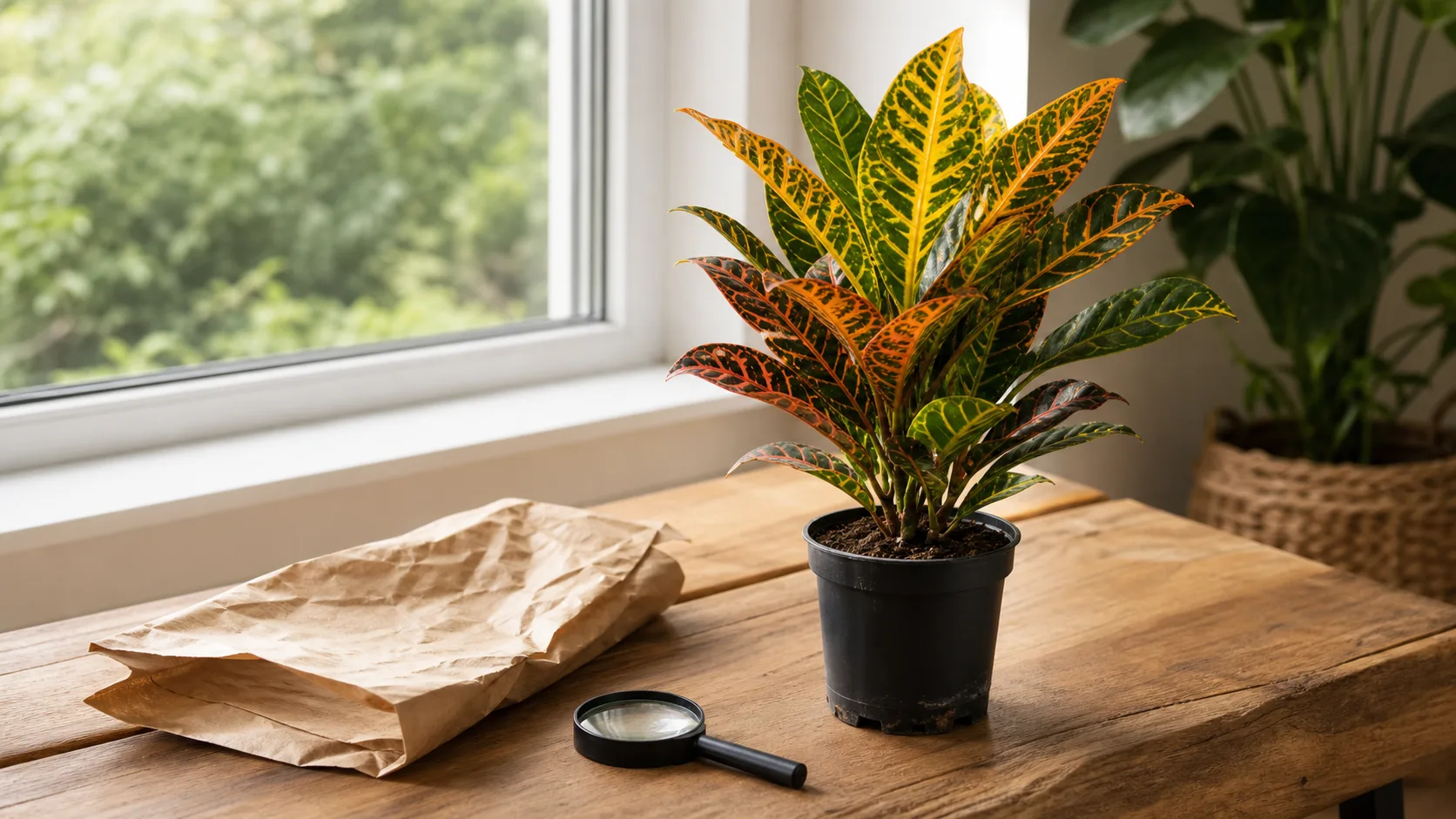
Keeping a new croton in its nursery pot for the first two weeks lets it acclimate before repotting.
This is where a lot of croton problems begin, so it helps to have a simple plan.
Day 1 to Day 3
- Put her in your brightest stable spot
- Check for mites under the leaves before she joins other plants
- Check moisture before watering, instead of watering automatically
- Do not repot unless the current setup is clearly failing, like a pot with no drainage or a sour, swampy root ball
Day 4 to Day 10
- Expect some adjustment, especially if she came from a greenhouse or shipping box
- Watch whether new leaf drop slows once the environment stays consistent
- Avoid fertilizing during this settling-in window
Day 10 to Day 14
- Reassess light if color looks flatter or leaf drop continues
- Reassess cold exposure if she sits near glass or vents
- Only consider repotting later, once she feels settled and you know the original pot is actually limiting her
This approach sounds patient because it is. For crotons, patience is often the thing that prevents a mild adjustment period from turning into a bigger setback.
Soil, Humidity, and the Room Around Her
A croton does best in a mix that drains well but does not become a brick by the next day. Standard indoor potting soil improved with extra perlite or bark usually works well.
What matters most is the result:
- Water should move through the pot instead of pooling
- The soil should stay lightly moist for a while, not soggy for days
- Roots should get both moisture and air
Humidity also affects how forgiving the plant feels. In a dry winter room, brown edges, curl, and mite pressure all show up faster. You do not need to turn your home into a greenhouse, but a nearby humidifier or grouping plants together can make a visible difference. If you want a practical baseline, our guide to humidity for plants indoors breaks down what actually helps in normal rooms.
If your croton always seems crisp at the tips during heating season, check the room humidity before you blame yourself. Sometimes the room is the real problem.
Seasonal Note: What Changes Through the Year
Spring
Growth usually picks up. Soil dries faster, and this is the easiest season for gentle recovery after winter stress. If she is clearly growing, light feeding can begin.
Summer
This is her strongest season indoors if light is good. Watch watering more closely because the pot may dry faster. If she goes outdoors, transition slowly and avoid sudden full afternoon sun.
Autumn
Shorter days and drier indoor air start to shift the balance. This is when color can dull and mite pressure can creep up. Start checking leaves more often.
Winter
Growth slows, light drops, and cold stress becomes the bigger risk. Water less often, keep her away from drafts, and consider extra light if she is far from a bright window.
Common Mistakes That Make Croton Care Harder
These are the mistakes that trip people up most often:
- Treating every dropped leaf like proof she needs more water
- Repotting immediately after bringing her home
- Keeping her in a bright room but too far from the actual window
- Moving her repeatedly while trying to “find the perfect spot”
- Missing early spider mite signs because you only looked at the top of the leaves
- Letting her sit in cold air overnight near vents, doors, or winter glass
- Fertilizing when the real issue is low light or root stress
None of these mistakes mean you are bad with plants. Crotons just react dramatically enough that they make small timing errors look bigger than they are.
Pet and Skin Safety
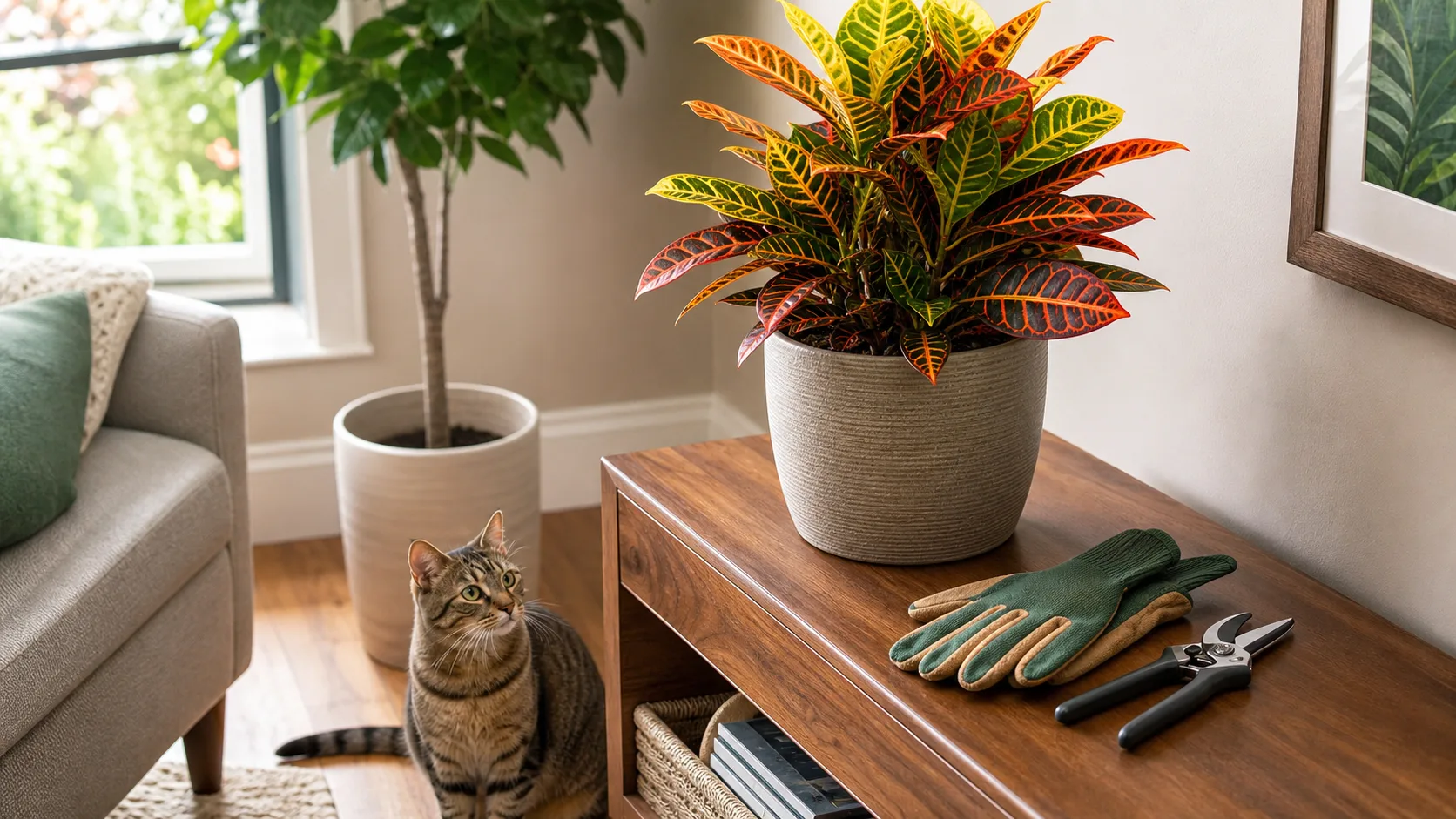
High placement, gloves, and stored pruning shears reduce pet and sap-contact risk.
Croton is not a good plant for chewing pets. Pet Poison Helpline notes that ingestion can cause oral and stomach irritation, including drooling, vomiting, and diarrhea. The sap can also irritate skin.
If you prune, repot, or wipe leaves often, gloves are worth using. And if you have a cat or dog that samples foliage, keep this one out of reach.
FAQ
How often should I water a croton?
Water when the top 1 to 2 inches of soil feel dry. In strong summer light that may be every few days. In winter it may be much less often. The pot tells you more than a schedule does.
Why is my croton dropping leaves all of a sudden?
The first thing to check is recent change. A move, repot, transport stress, cold draft, or sudden placement shift is a very common trigger. If nothing changed, then check moisture, light, and spider mites in that order.
Does a croton need direct sun?
Many crotons do best with very bright light and can handle some direct sun indoors, especially morning sun or gradually introduced stronger light. That is often what keeps the colors vivid.
Why is my croton turning green?
Usually because the light is too weak. When the plant is not getting enough light, the bold color often dulls and greener growth becomes more common.
Should I mist my croton?
Misting gives only a brief humidity bump. If your air is very dry, a humidifier or a better room setup usually helps more.
When should I repot a croton?
Wait until she is settled unless the current pot is creating a clear problem. Spring is usually the easiest time. When you do repot, go up only one pot size and expect a short adjustment period afterward.
If you are comparing care routines for another houseplant, see Schefflera Plant Care: Light, Water, Pruning, and Leaf Drop for a focused step-by-step guide.
The Bottom Line
Croton plant care gets much easier once you stop treating every symptom as the same problem. The real skill is reading the pattern.
If she dropped leaves after a move, give her stability. If the color is fading, increase light. If the soil is staying wet, fix the root zone before you water again. If the leaves look dusty and speckled, check for mites before you call it humidity.
That is what keeps a croton from feeling impossible. She is dramatic, yes, but she is also readable once you know what to check first.
Methodology: This article was built from extension guidance and the active KnowYourPlant research pack for this topic. Factual claims were checked against NC State Extension, Illinois Extension, University of Maryland Extension, and Pet Poison Helpline. Community pain patterns informed the troubleshooting angle, but no unvalidated social quotes or screenshots were used. Last updated: 2026-07-18.
For a low-light comparison, see low-light indoor plants.