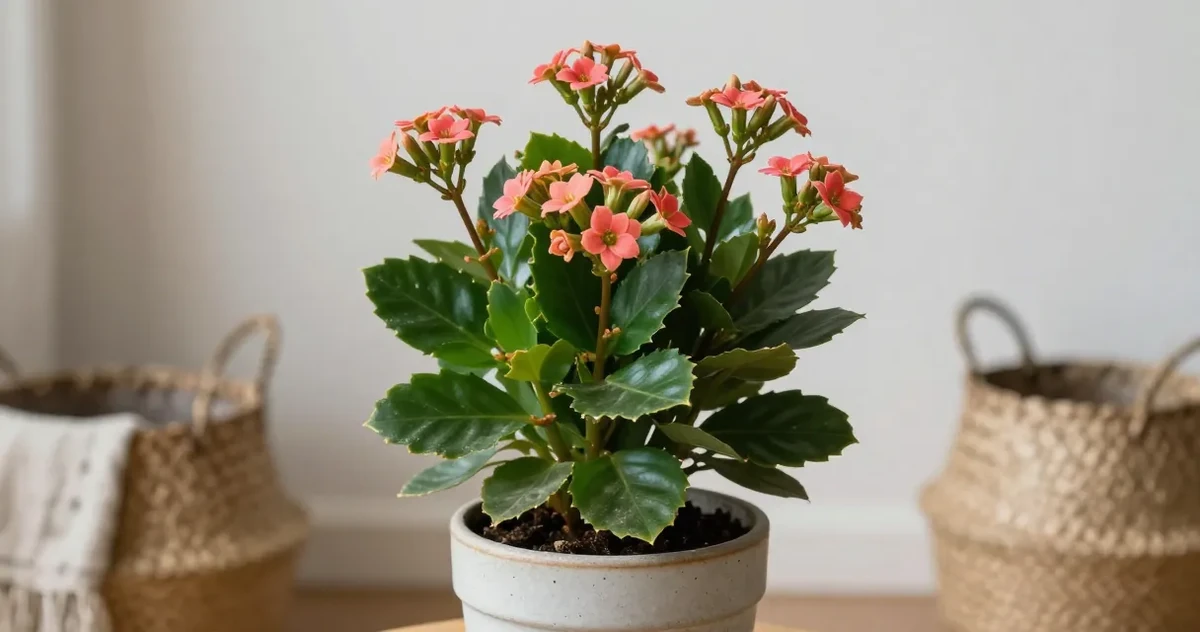
Kalanchoe plant care comes down to one simple idea: treat it like the succulent it is, and give it a real rest after blooming. If you need the bigger dry-down basics first, start with the succulent care guide. Most people bring one home from a grocery store or gift shop, enjoy a month of cheerful flowers, and then watch it slowly decline. That is not the plant failing. It is the plant waiting for a cue that most care guides forget to explain.
Kalanchoe blossfeldiana, the florist kalanchoe you find everywhere, is a compact flowering succulent that stores water in its fleshy leaves, blooms in clusters of small bright flowers, and needs bright light and infrequent deep watering to thrive indoors. Where it differs from most other common houseplants is in reblooming: it is a short-day plant, which means it only sets flower buds when it gets extended periods of darkness. That one detail changes how you care for it after the first bloom fades.
Identification Snapshot
| What to verify | What to look for | Why it matters |
|---|---|---|
| Growth habit | A compact succulent with fleshy leaves and rounded clusters of flowers held above the foliage | Confirms you are caring for florist kalanchoe, not just a generic foliage succulent |
| Leaves | Thick leaves that stay plump when the plant is hydrated and wrinkle slightly when it gets too dry | Gives you a better watering signal than the calendar |
| Bloom pattern | Many small flowers open in clusters, then the plant shifts into a rest-and-rebuild phase after the display fades | Prevents the common mistake of treating post-bloom slowdown like a crisis |
| Seasonal rhythm | Healthy plants often stay leafy for months, then need a six-week long-night trigger before they set buds again | Explains why a healthy plant can still refuse to rebloom |
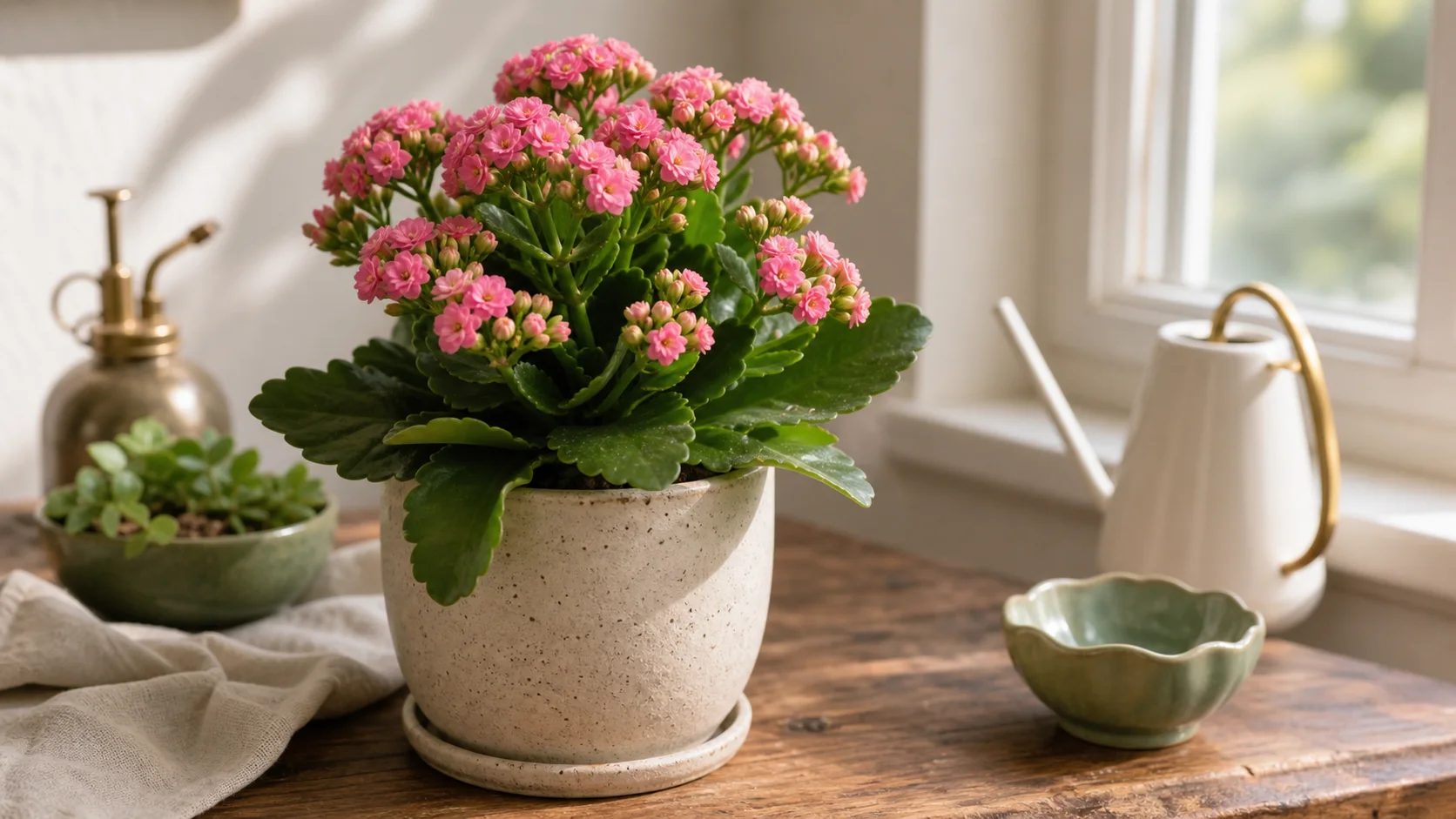
Thick scalloped leaves and rounded flower clusters identify florist kalanchoe at a glance.
Lookalikes and Confused-With Cases
| Common mix-up | Why people confuse it | What separates florist kalanchoe |
|---|---|---|
| Generic non-flowering succulent | The leaves are thick, glossy, and drought-tolerant like many shelf succulents | Florist kalanchoe is grown for clustered blooms and usually needs an intentional rebloom routine, not just neglect between waterings |
| Holiday cactus sold as a gift plant | Both are compact flowering gift plants that often show up in supermarkets and garden centers | Holiday cactus has flattened segmented stems, while kalanchoe has separate fleshy leaves and upright flower clusters |
| Jade-type succulent | Both tolerate dry spells and are often treated with the same “water rarely” advice | Jade plants are usually sold for woody, tree-like foliage, while kalanchoe is a shorter blooming succulent that reveals problems first through failed reblooming and soft post-bloom growth |
Care Cards
| Care area | What healthy kalanchoe looks like | What to do | Warning sign |
|---|---|---|---|
| Light | Compact growth, sturdy stems, and enough energy to set buds later | Give it the brightest window you can, with some filtering if hot summer sun scorches the leaves | Long gaps between leaves or pale, stretched stems |
| Water | Leaves stay firm and the mix dries between drinks | Water deeply, then let the mix dry out before watering again | Yellow soft growth, a mushy stem, or soil that stays damp for days |
| Soil and pot | Water drains quickly and roots are never trapped in soggy mix | Use a cactus-style mix and a pot with drainage holes | Heavy potting soil that stays cool and wet |
| Rebloom cycle | The plant rests after flowering, then eventually forms new bud clusters | Trim spent stems and give it 14 to 16 hours of darkness for about six weeks | A healthy plant that stays leafy but never sets buds |
| Household placement | Bright light without easy pet access | Keep it near a strong window but out of reach of cats, dogs, and children | A floor-level sunny spot in a home with chewers |
What Owners Keep Running Into
Repeated owner questions cluster around four practical frustrations: whether the plant will ever bloom again, how to tell thirst from overwatering when the leaves change texture, what to do with gift plants that look weak after the first flower show, and whether the plant is safe to keep within reach of pets. That pattern is why this guide focuses so heavily on reblooming, symptom-led watering cues, rescue scenarios, and placement decisions rather than repeating generic succulent advice.
What Most Care Guides Miss About Kalanchoe
The vast majority of kalanchoe articles give you the same three rules: bright light, well-drained soil, water sparingly. That advice is not wrong, but it is incomplete in ways that actually matter once the flowers fall off.
Here is the misdiagnosis that catches most owners: when the flowers fade and the plant starts looking tired, people assume something went wrong with their ongoing care. They adjust watering, move the plant around, or add fertilizer. What is actually happening is post-bloom recovery, not a care failure. The plant you brought home from a gift shop has almost certainly been pushed to bloom under commercial growing conditions. It may be under-rooted, slightly stressed, or still adjusting to your light levels.
When the flowers are gone, you are not maintaining a healthy, stable plant. You are helping it recover, rebuild, and prepare for a second bloom it can only produce if you give it a specific darkness signal.
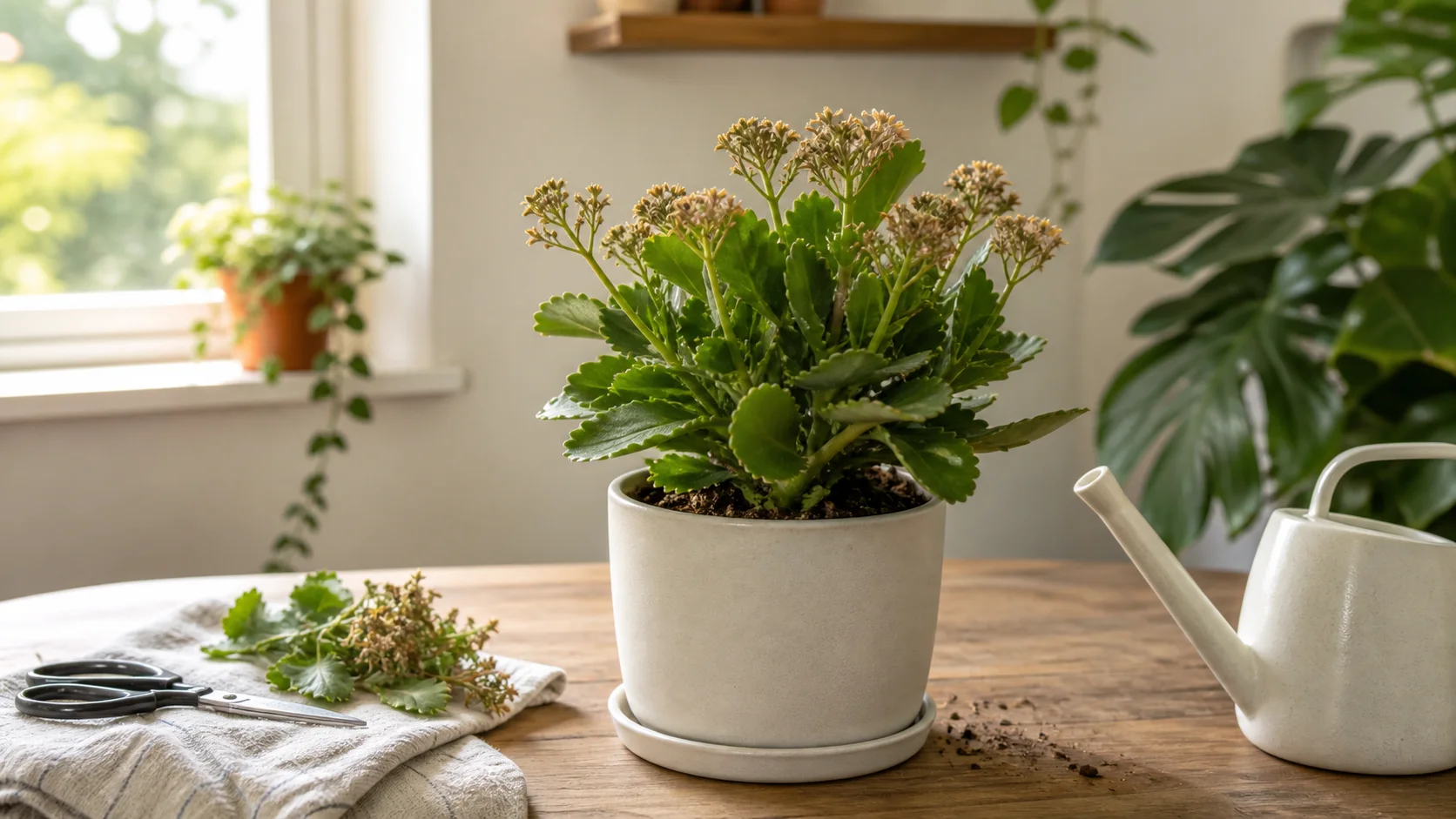
Spent flower clusters can mark a normal post-bloom recovery phase, not a care failure.
The practical first check when your kalanchoe is struggling after bloom: before changing any care, ask whether the plant has had a genuine rest period with reduced watering and whether it has received the long-night darkness trigger. Those two things are what it is usually waiting for.
“Kalanchoe blossfeldiana requires 14 hours of darkness for at least 6 weeks to ensure blooming.”
NC State Extension Gardener Plant Toolbox
That one sentence reframes the whole plant. It is not a plant that blooms or does not bloom based on luck. It blooms on a schedule you control.
What Kalanchoe Actually Needs Indoors
Light
Kalanchoe wants as much light as you can give it without cooking it. A south- or west-facing window where it gets several hours of direct sun each day is ideal during the cooler months. In summer, strong midday sun through glass can scorch the leaves, so some filtering or an east-facing spot works better.
If your kalanchoe is sitting more than a metre from a window, it will stretch toward the light, grow leggy, and produce fewer flowers the next time around. As Clemson’s Home and Garden Information Center puts it, kalanchoe “becomes spindly in low light”, which means a bright window is non-negotiable, not just a preference.
If you do not have strong natural light, a grow light positioned close to the plant can fill the gap. The guide to grow lights for indoor plants covers practical setup options for supplementing low natural light indoors.
Watering
This is where most kalanchoe owners run into trouble, and the problem almost always goes in one direction: too much water, too often.
Kalanchoe holds moisture in its leaves and roots the same way other succulents do. It needs a thorough watering, then a genuine dry-out period before you water again. Push your finger into the soil and check down a couple of centimetres. If the mix still feels cool or damp, leave it alone. When it feels dry through, water slowly and deeply until it drains from the bottom, then leave it until it dries out again.
According to Iowa State University Extension, indoor succulents signal their water needs visually: wrinkled or slightly limp lower leaves mean the plant is thirsty; yellow, soft growth at the base or a mushy stem means you are overwatering. A fixed weekly schedule often leads owners toward overwatering, because the plant’s actual needs shift with season, pot size, light, and temperature.
In warm growing months, watering every one to two weeks is typical. In winter, or when the plant is resting after bloom, it can go even longer. The guide on how often to water indoor plants explains the finger-test method in more detail if you want to build better watering instincts across your whole collection.
Soil and Pot
Use a fast-draining mix. A cactus and succulent potting mix works well, or you can blend standard potting mix with perlite to open it up. Standard potting soil that holds moisture is too dense for kalanchoe and increases the risk of root rot. The guide to potting soil for indoor plants explains what to look for when choosing a mix.
Terracotta helps because it breathes and pulls excess moisture away from the roots faster than plastic or glazed ceramic. Whatever pot you use, drainage holes are not optional.
Temperature
Kalanchoe prefers indoor temperatures between roughly 16 and 24 degrees Celsius. It does not like cold draughts, air conditioning vents blowing directly on it, or windowsill surfaces that drop below 10 degrees in winter. Keep it away from cold glass on very cold nights.
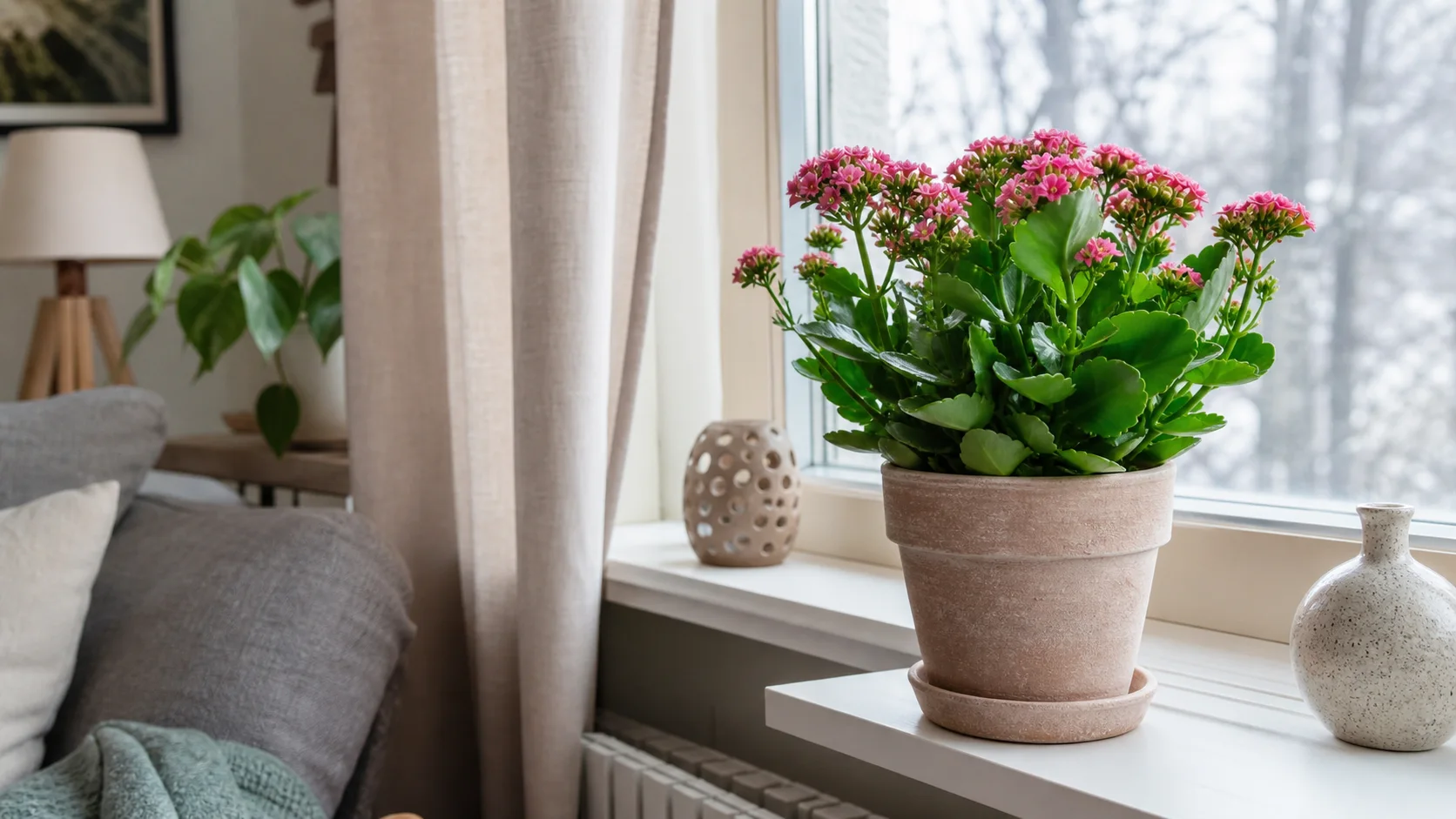
In winter, keep kalanchoe sheltered indoors without letting its foliage touch cold window glass.
Fertilizing
During the spring and summer growing season, a diluted balanced fertilizer once a month gives it enough to support healthy leaf growth. Do not fertilize while it is in bloom or during its post-bloom rest period. More fertilizer does not equal more flowers with kalanchoe. For a broader look at what works and what causes fertilizer salt buildup in pots over time, the indoor plant fertilizer guide is a useful reference.
Getting Kalanchoe to Rebloom
This is the part that separates owners who keep their kalanchoe for years from those who replace it every season.
Kalanchoe sets flower buds only after a period of long nights. According to Clemson’s Home and Garden Information Center, the plant needs natural short days or 14 to 16 hours of darkness per night for approximately six weeks to form flower buds again. Indoors, where lights stay on into the evening, the plant never receives that signal on its own.
To trigger reblooming, you need to create the darkness period manually. Here is the routine that works:
Step 1: Trim first. Cut back spent flower stems close to the main stem. The plant should not be wasting energy on dead growth.
Step 2: Start the dark period in autumn or early winter. Each day, move the plant to a spot with complete darkness from late afternoon, around 5 or 6pm, until morning. A closet, a cupboard, or any room where lights are not turned on after dusk all work. During the day it still needs its bright light window.
Step 3: Hold the routine for six weeks. Consistency matters. Even a few accidental exposures to light in the evening can reset the clock.
Step 4: Watch for bud clusters. After six weeks, small bud clusters should appear between the leaves or at stem tips. Once you see them, bring the plant back to its normal spot and return to regular care.
Step 5: Reduce watering during the dark period. The plant is resting, not actively growing. Water less frequently, letting the soil dry out more fully between drinks.
Reblooming at a Glance
| Phase | When | What to do |
|---|---|---|
| Post-bloom cutback | Immediately after flowers fade | Trim spent stems, reduce watering |
| Dark period | 6 weeks in autumn or early winter | 14-16 hours darkness nightly, bright days |
| Bud watch | Weeks 5-7 of dark period | Look for small clusters at stem tips |
| Return to normal care | Once buds appear | Bright window, resume regular watering |
| Full bloom | 4-8 weeks after buds form | Enjoy, then plan next year’s cycle |
The process feels more involved than basic plant care, but the payoff is real. Kalanchoe is capable of blooming year after year if you give it what it is waiting for.
Seasonal Care Calendar
How you care for a kalanchoe shifts through the year, especially around the reblooming cycle. Here is what to focus on each season.
Spring
Spring is when the plant picks up again after its winter rest. Resume monthly fertilizing as you see new leaf growth emerging. If the plant spent winter in lower light, move it to a brighter spot as days lengthen. This is also the best time to repot if the roots have filled the nursery pot, going up just one pot size and using a cactus or succulent mix. Water more regularly than in winter, but still let the soil dry between drinks.
Summer
Kalanchoe grows actively in summer and can handle more regular watering than in other seasons, though always let the top few centimetres of soil dry out first. If you move it outdoors, choose a sheltered spot with morning sun or bright shade rather than full midday sun through summer heat. Acclimate it gradually over one to two weeks to avoid leaf scorch. Bring it back inside before night temperatures drop below 10 degrees Celsius. Watch for pests when moving between indoors and out.
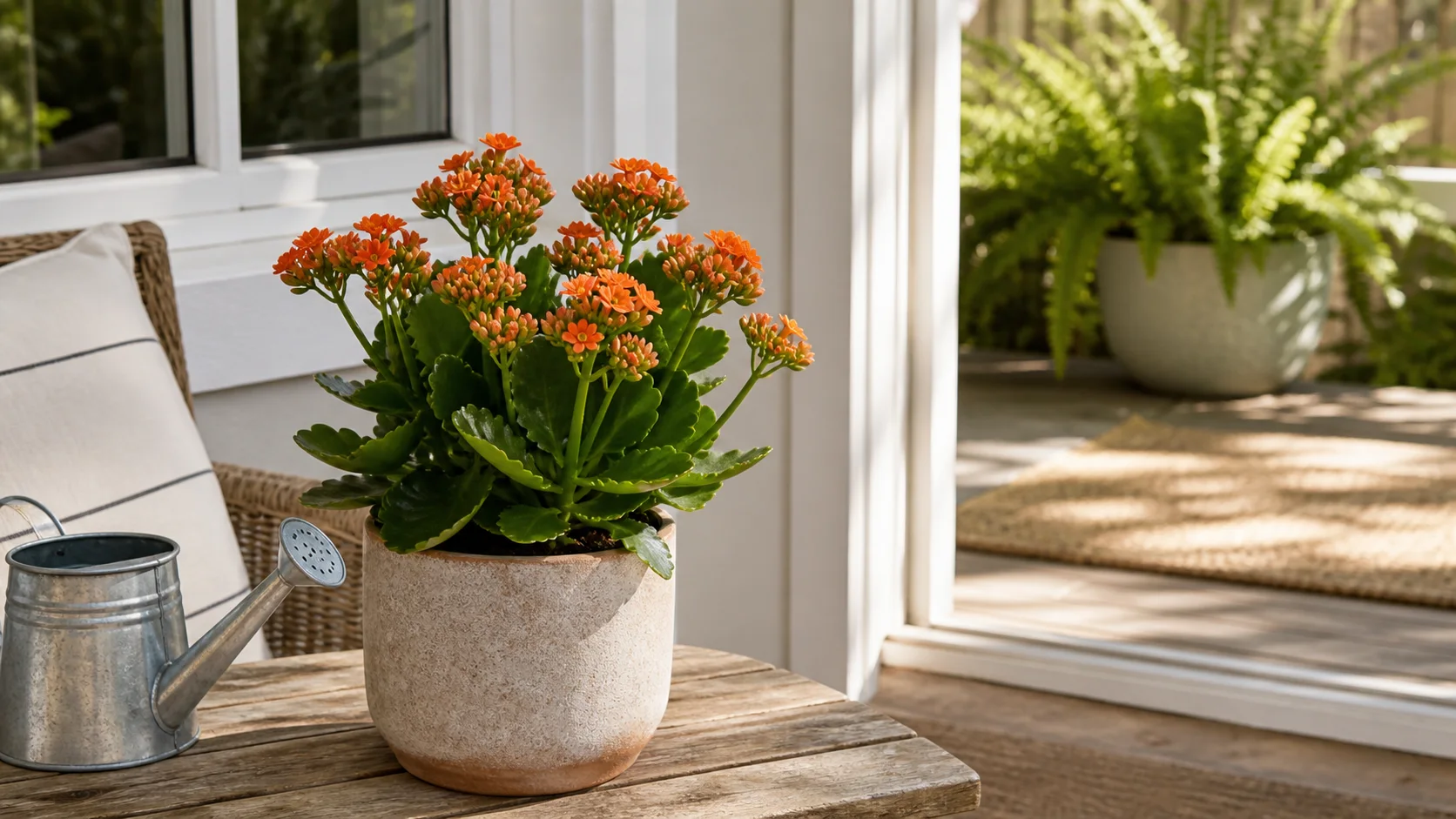
A sheltered doorway makes a useful halfway point while kalanchoe acclimates to summer outdoor light.
Autumn
This is the time to start thinking about the reblooming cycle. Let the plant taper off: stop fertilizing and start stretching the time between waterings. Begin the long-night darkness routine in early to mid-autumn for winter or spring blooms. The plant does not need much from you during this phase beyond consistent darkness each evening and a bright window during the day.
Winter
During the active dark period, the plant needs minimal water and no fertilizer. Keep it away from heating vents that cause rapid soil moisture loss and away from cold draughts near glass. Buds should begin appearing toward the end of the six-week dark period. Once they do, bring the plant back to its regular bright window and return to light regular watering.
Decision Tree: No Blooms, Soft Growth, Leggy Stems, or Pet Concerns
- No blooms after the first flower flush? Trim spent stems, then ask whether the plant ever got a true rest period and six weeks of long nights. If not, start there before changing fertilizer or pot size.
- Soft yellow growth or a mushy stem? Treat it like an overwatering problem first. Let the mix dry fully, check drainage, and inspect roots if the base stays soft.
- Wrinkled leaves but otherwise firm stems? The plant is more likely thirsty than sick. Water thoroughly, let excess drain, and go back to the dry-down method instead of a fixed schedule.
- Leggy stems with few future buds? Move the plant closer to a brighter window or supplement with a grow light. Low light makes kalanchoe survive, but it rarely helps it bloom well.
- Pets in the house? Solve placement before aesthetics. If cats or dogs can reach the pot, move it higher or switch to a non-toxic alternative instead of gambling on training.
Watering Cues at a Glance
Use leaf and stem signals rather than a fixed schedule:
| What you see | What it means | What to do |
|---|---|---|
| Slightly wrinkled or limp lower leaves | Plant is thirsty | Water thoroughly, let drain fully |
| Firm, plump leaves, cool damp soil | Moisture is still present | Wait, check again in 2-3 days |
| Yellow, soft leaves at base or mushy stem | Overwatering, possible root rot | Let dry fully; check roots |
| Brown, crispy leaf tips or bleached patches | Too much direct sun | Move back from window or add sheer filter |
| Leggy stems, pale colour, few buds | Insufficient light | Reposition to a brighter window |
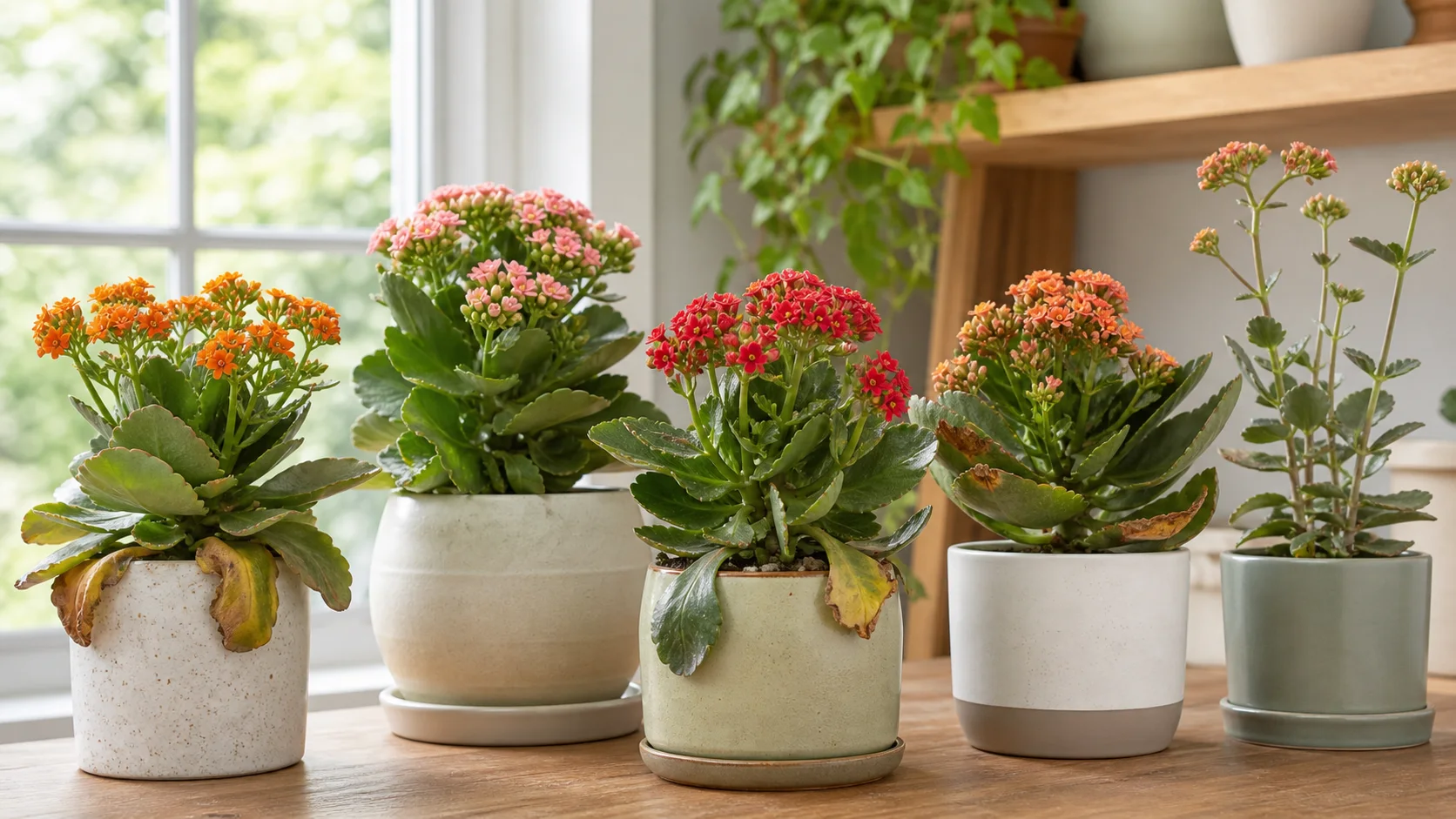
Compare leaf firmness, yellowing, browned edges, and leggy stems before changing your watering routine.
If you suspect root rot is already underway, the root rot treatment guide covers how to assess and recover from it.
Common Mistakes
- watering on a fixed weekly schedule instead of checking whether the mix is actually dry,
- treating every post-bloom slump like a fertilizer problem,
- forgetting that evening room light can block reblooming,
- repotting a weak gift plant too quickly instead of letting roots recover first,
- and leaving the plant within easy reach of pets because it looks like a harmless succulent.
Pet Safety
Kalanchoe is toxic to cats and dogs if ingested. It can cause digestive upset, and larger ingestions may raise more serious concerns involving the heart. The ASPCA lists it as toxic to both cats and dogs, and NC State Extension recommends keeping it away from children as well.
If you have pets that chew on plants, this one needs to be placed well out of reach or in a room they cannot access. For households with cats, the guide to cat-safe indoor plants lists safer alternatives for floor level or low shelves.
Common Problems and What They Mean
Leggy growth with few flowers: Not enough light. Move the plant closer to a bright window or add a grow light.
Yellow, mushy leaves or a soft stem at the base: Overwatering, likely combined with poor drainage. Let the soil dry fully before watering again and inspect the roots. Healthy roots are firm and white or pale; damaged roots are brown, soft, and may smell off.
Wrinkled or slightly limp lower leaves: The plant is thirsty. Water thoroughly until it drains from the bottom.
No sign of buds after the first bloom: The plant did not get its darkness period. Start the six-week routine and be consistent about blocking evening light.
Brown leaf tips or scorched-looking patches: Too much direct sun through hot glass in summer, or a sudden shift to a very bright spot. Move it slightly back from the window or use a sheer curtain to filter intense midday light.
White hair-like growth between stems, weak root system: Common in plants that arrive as gifts and have been commercially pushed to bloom quickly. Give the plant time to establish rather than repotting immediately. A well-draining mix and conservative watering give sparse roots the best chance to recover.
Real User FAQ
Will my kalanchoe bloom again after the flowers die?
Yes, it will, but only if you give it the darkness signal it needs. Kalanchoe is a short-day plant, which means it forms flower buds only after a period of 14 to 16 hours of complete darkness each night for about six weeks. Trim the spent flower stems, run the dark routine consistently in autumn or early winter, and you should see bud clusters forming after about six weeks.
How do I know if I am overwatering my kalanchoe?
Look at the base of the plant and the lower leaves. If leaves are turning yellow, feeling soft or mushy, or if the stem at the soil line has gone soft and darkened, you have too much water in the system. Healthy kalanchoe leaves are plump and firm. Let the soil dry out fully before watering again, and check that your pot has drainage holes and that water is not sitting in a saucer underneath.
How often should I water kalanchoe?
There is no single answer because the right interval depends on your pot size, light level, season, and soil type. In warm months with good light, every one to two weeks is typical. In winter or during the post-bloom rest, it can go three weeks or longer. Use the soil-finger test rather than a schedule: push a finger two centimetres into the mix. If it still feels cool or damp, wait. If it feels dry, water slowly and thoroughly until it drains out the bottom.
Why are my kalanchoe leaves curling or getting brown tips?
Brown, crispy tips often come from too much direct sun through glass, particularly in summer when the light is more intense. Leaf curling can also happen when the plant is underwatered or under heat or draught stress from an air conditioning vent or radiator nearby. Check the light level, move the plant back slightly from a south window in summer, and make sure it is away from strong airflow.
Is kalanchoe safe to keep if I have cats or dogs?
No. Kalanchoe is toxic to cats and dogs if ingested and should be kept out of reach of pets that chew on plants. If your pet ingests any part of the plant, contact your vet. For plant options that are safer to leave at floor or shelf level in a home with pets, see the guide to cat-safe indoor plants.
Can I put my kalanchoe outside in summer?
Yes, with some care. Kalanchoe can go outdoors in summer in a sheltered spot with bright indirect light or morning sun. Avoid moving it directly from a low-light indoor spot into full outdoor sun, acclimate it gradually over a week or two to prevent leaf scorch. Bring it back inside before temperatures drop below 10 degrees Celsius.
My kalanchoe has no root system, what should I do?
Gift-shop kalanchoes sometimes arrive with sparse roots because they have been grown quickly for short retail cycles. Give it a well-draining succulent mix, a small pot so the soil does not stay wet around minimal roots, and conservative watering until new roots establish. Do not fertilize until it has settled in for at least a few weeks. Patience and good drainage are the main tools here.
Do I need to repot kalanchoe after buying it?
Not immediately. Check whether the roots are circling the bottom of the nursery pot or pushing through drainage holes. If not, let it settle in its current pot for a season. When you do repot, go up just one pot size and use a well-draining cactus or succulent mix. Spring is the best time to repot.
Freshness Note
This guide was refreshed on 2026-07-18 using current extension guidance plus qualitative owner questions that repeatedly focus on reblooming failure, confusing watering signals, weak post-gift plants, and pet-safety placement.
Methodology
A healthy kalanchoe, closed notebook, magnifying glass, moisture-check skewer, and clean shears reflect the evidence-led care method behind this guide.
Care guidance in this article was checked against extension resources from NC State Extension Gardener Plant Toolbox, Clemson Home and Garden Information Center, Iowa State University Extension and Outreach, and University of Minnesota Extension. Qualitative owner pain patterns came from live SERP discovery and community-result snippets reviewed on 2026-07-18. Those public discussions were used only to understand recurring reader confusion, not as statistical proof or as standalone authority.