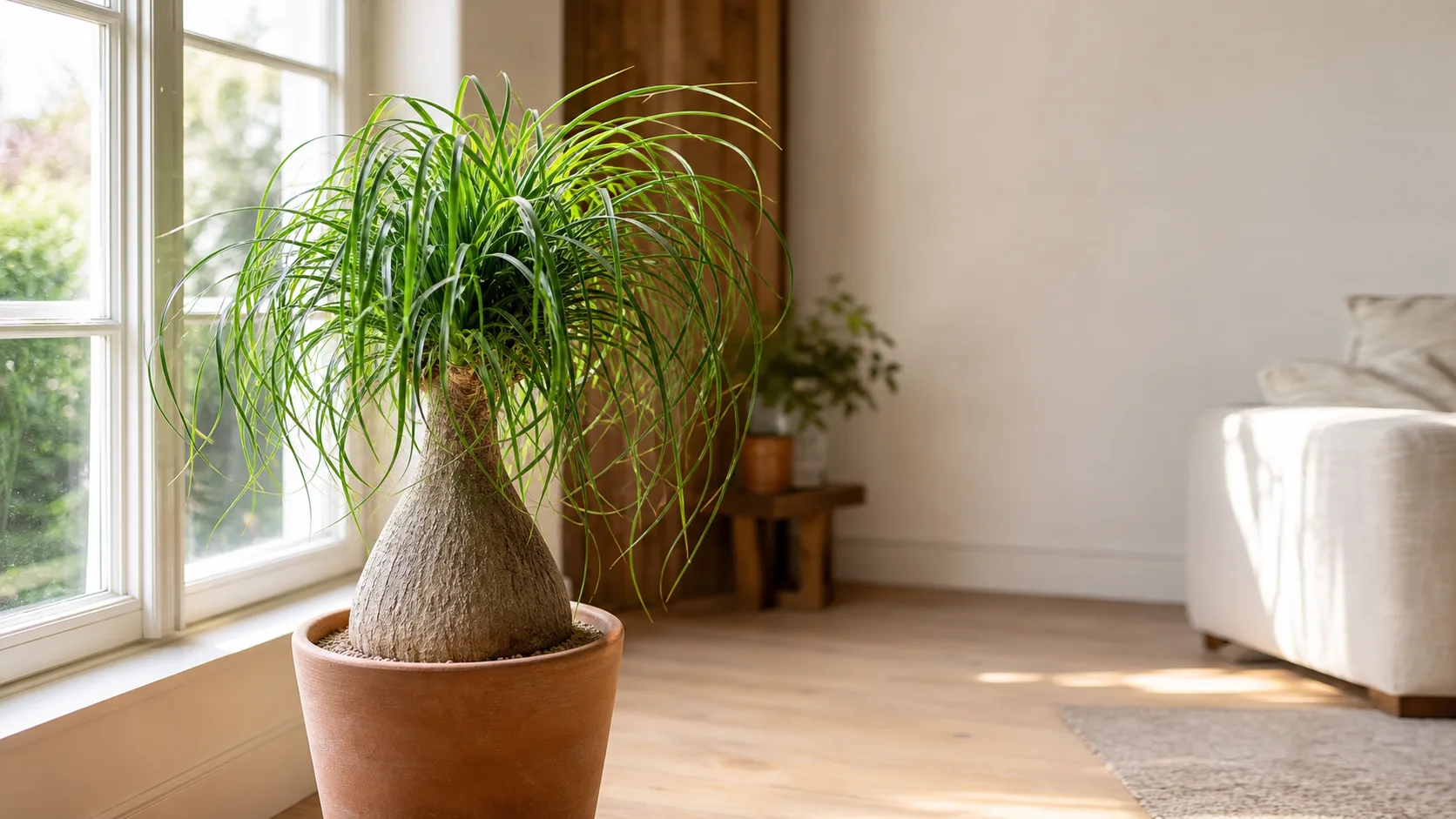
Ponytail palm care is simpler than most guides make it sound, but people still run into trouble because the plant gets categorized wrong. It is not a thirsty tropical houseplant. It is a slow-growing, water-storing succulent from the dry scrublands of eastern Mexico, and once you understand that, almost every care decision becomes clearer.
The plant’s formal name is Beaucarnea recurvata. That swollen base at the soil line is called the caudex. It is not a decorative feature: it is a water reservoir, which is why this plant can go weeks without being watered and still look perfectly healthy. The challenge is knowing when “drought-tolerant” shades into “actually needs a drink,” and when “let it dry out” becomes “the roots are sitting in wet soil and rotting.”
This guide is built around that distinction.
What Most Care Guides Miss
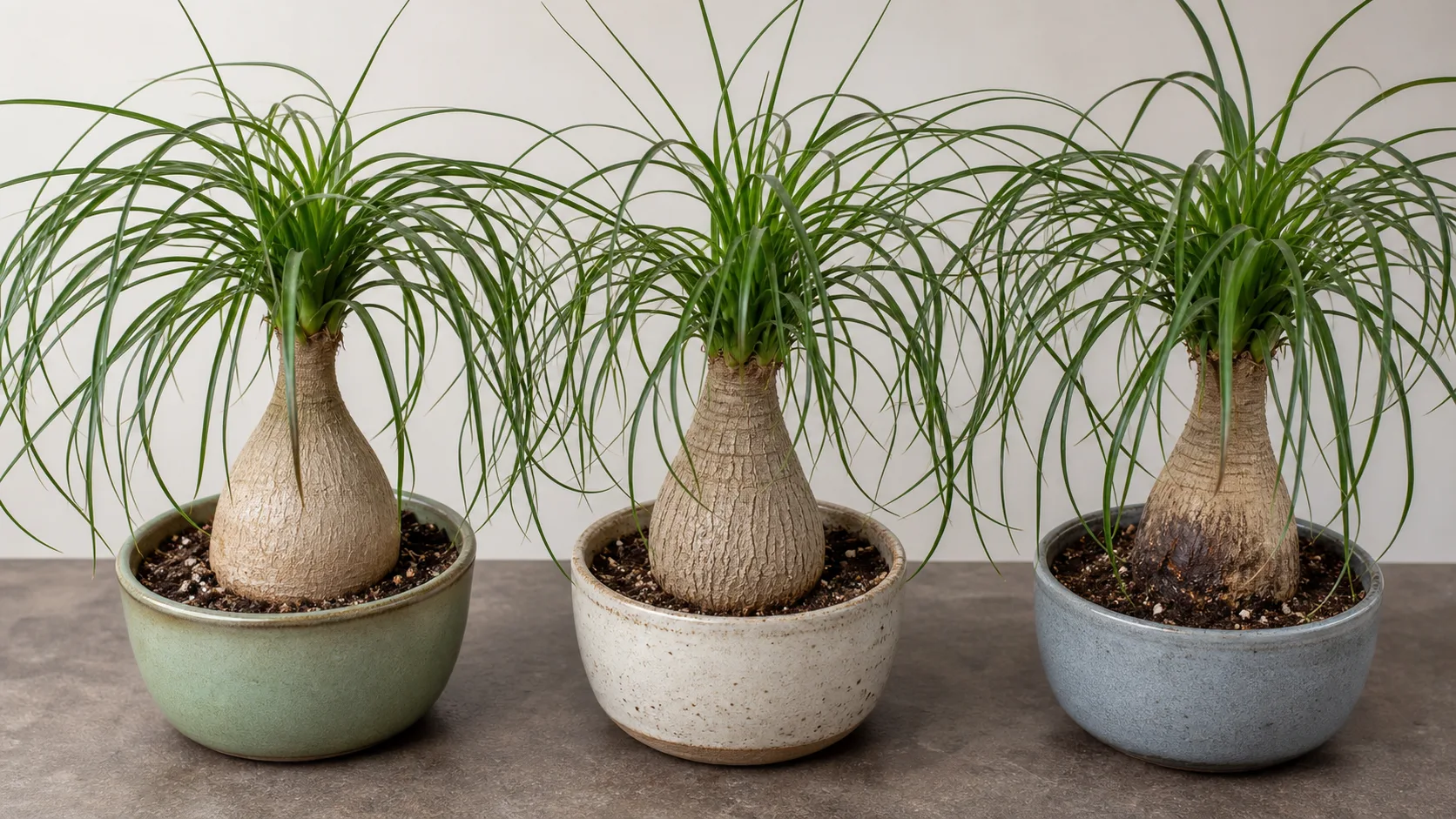
A firm pale caudex, a subtly depleted base, and localized darkening at the soil line call for different next steps.
Most ponytail palm articles tell you to water every two to four weeks and put the plant in a bright spot. That is not wrong, but it skips the diagnostic layer that actually keeps the plant healthy.
The most common mistake is treating watering frequency as fixed. Owners read “water every two weeks” and follow that schedule regardless of pot size, season, or how much light the plant is actually getting. Then when the leaves start browning, they cannot tell whether to water more or less, because they followed the rules and the rules did not say what to check.
The part most guides skip: the caudex tells you more than any schedule. A firm, plump base means the plant has water in reserve and does not need you right now. A slightly wrinkled or deflated-looking base means it is drawing down those reserves and a deep drink would be welcome. A soft or darkening area at the soil line is not a watering cue at all: it is a warning sign that needs a completely different response.
If you start at the base rather than the calendar, you will almost never overwater a ponytail palm. Underwatering this plant is genuinely difficult.
What Makes Ponytail Palm Different
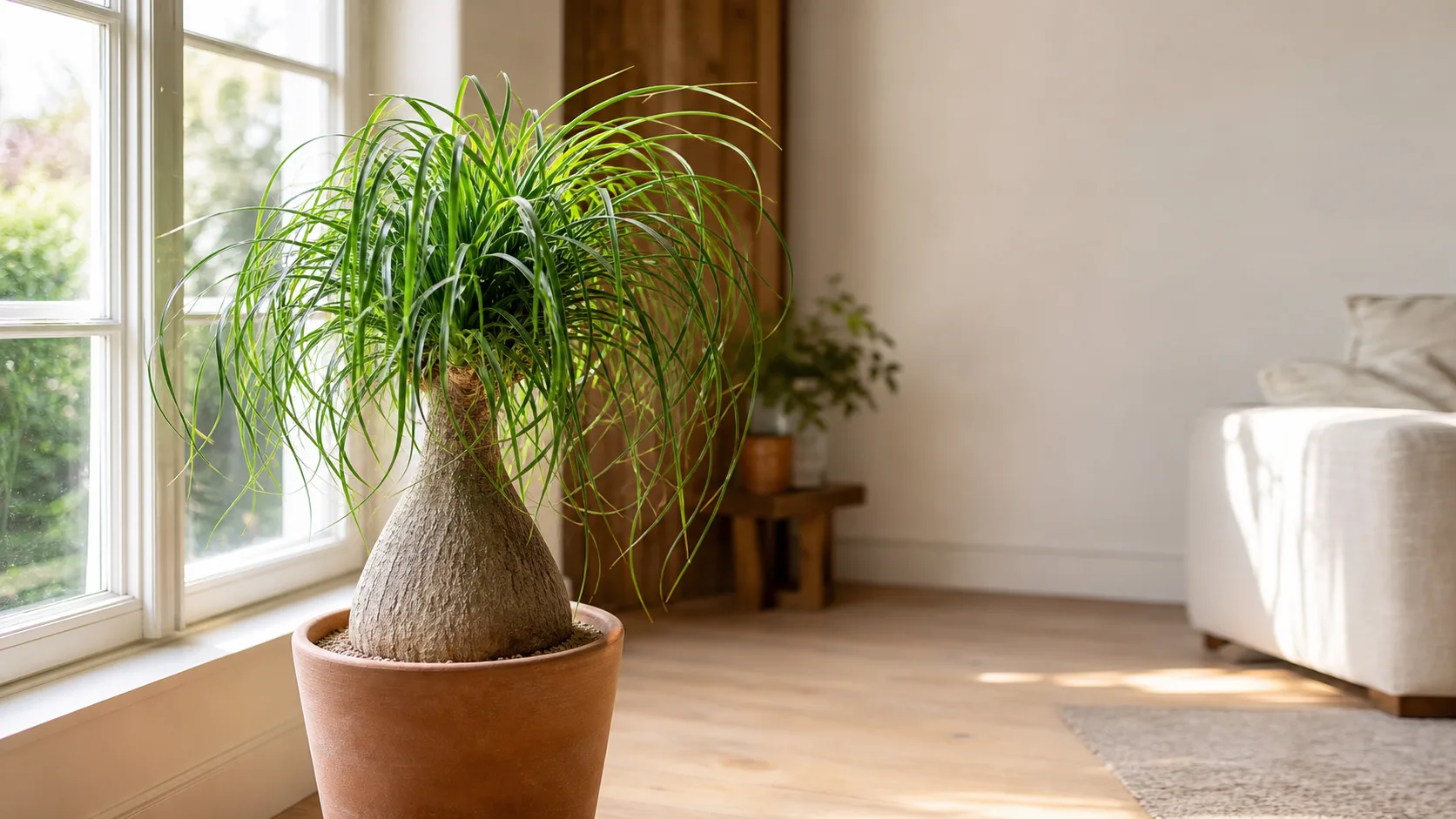
The broad caudex stores water, so Ponytail Palm care revolves around drying and drainage rather than a tropical watering schedule.
Beaucarnea recurvata evolved in regions where rainfall is intense but brief, followed by months of dry heat. That history is built into the plant’s structure. The caudex stores water the way a cactus stores it in its pads, which is why the plant handles neglect so gracefully and why it earned the nickname “elephant foot tree.”
This architecture also means the plant is far more vulnerable to wet conditions than to dry ones. Root rot, caudex rot at the soil line, and slow decline from soggy soil are the most common reasons ponytail palms fail indoors, not underwatering.
UF/IFAS plant records confirm that ponytail palm is prone to root rot on wet soils. That is not a minor caveat: it is the central fact that shapes how you choose soil, pot, and watering method. The plant’s roots evolved for brief saturation followed by complete drying, not the consistent moderate moisture that tropical houseplants prefer.
If you have been treating your ponytail palm like a pothos or a philodendron, that shift in understanding is the most useful thing this guide can offer.
Light: As Much as You Can Offer
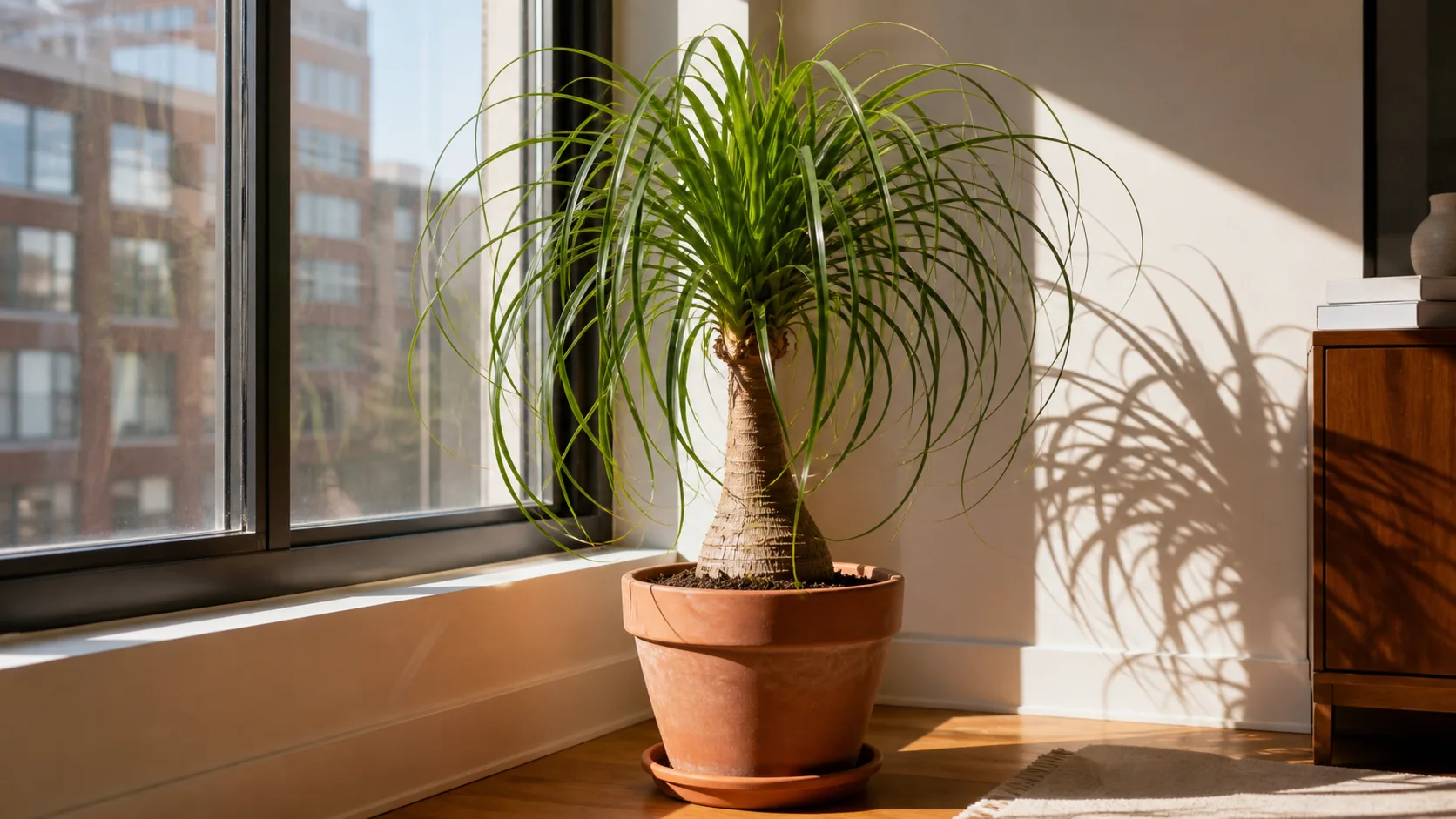
Several hours beside a bright window support denser new growth and faster soil drying.
Ponytail palms come from a region with intense sun. Indoors, a south- or west-facing window where the plant gets several hours of direct light each day is the best placement. A few hours of direct sun through glass is not too much for this plant. It is closer to what it actually needs.
Low light does not kill a ponytail palm quickly, but it weakens it over time. In dim conditions, leaves grow thinner, new growth slows further, and the plant becomes less efficient at using the moisture already in the soil. Many cases of persistent browning on newer growth trace back to a spot that looks bright to a person but does not deliver enough direct light for a desert plant.
NC State Extension notes that Beaucarnea recurvata performs best in a sunny window with well-drained cactus-style soil and recommends giving indoor plants as much direct light as possible for strong, healthy growth.
If your best window faces north, or the plant has spent time in a dim corner, a grow light can make a real difference. See our guide to grow lights for indoor plants for what to look for and how to position it.
Watering: Read the Caudex, Not the Calendar
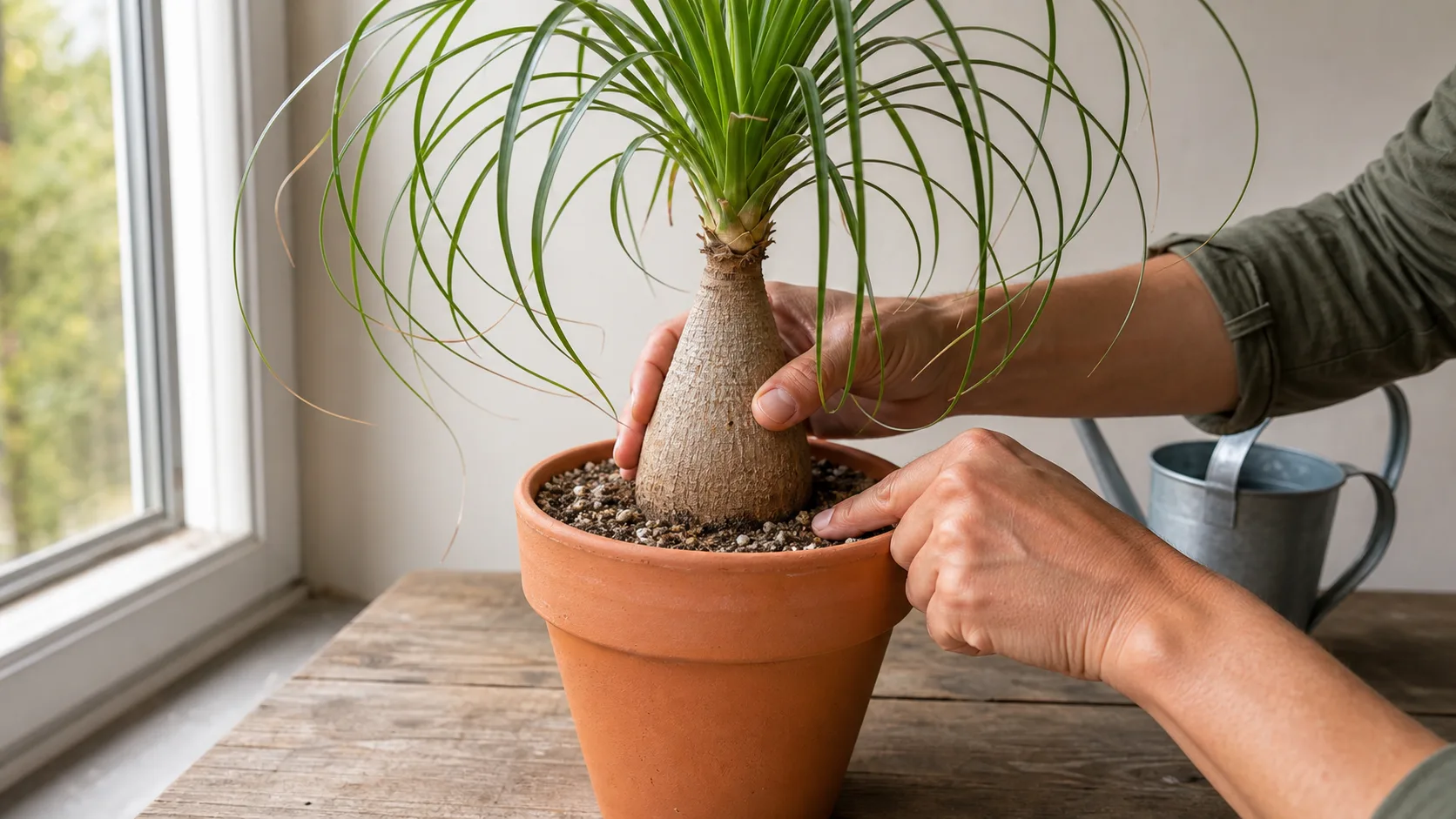
Check the caudex and the gritty root zone before reaching for the watering can.
The most reliable approach is to let the soil go almost completely dry before watering deeply. When you do water, water thoroughly until it runs freely from the drainage holes, then empty the saucer. Roots sitting in standing water for hours after watering is one of the fastest routes to trouble with this plant.
How long between waterings depends on pot size, light level, and season. A small plant in a clay pot on a sunny windowsill in summer might need water every two to three weeks. A larger plant in a glazed ceramic pot in lower light during winter might go a month or more. Trying to assign a fixed number of days misses the actual variable: how fast is the soil drying out?
Use these three checks before you water:
- Soil dryness: Push a finger into the soil to the second knuckle. If it is still damp, wait a few more days.
- Pot weight: Lift the pot when it is fully dry so you know what “ready to water” feels like. A dry pot is noticeably lighter than a recently watered one.
- Caudex feel: Press gently on the base. Firm means the plant is fine. Slightly wrinkled or soft-feeling means it could use water. Mushy or visibly darkened at the soil line means check the roots before you do anything else.
Missouri Botanical Garden recommends reducing watering considerably in winter, when the plant enters a natural rest period and does not need the same moisture frequency it draws on during active spring and summer growth.
Brown Tips: Which Kind?
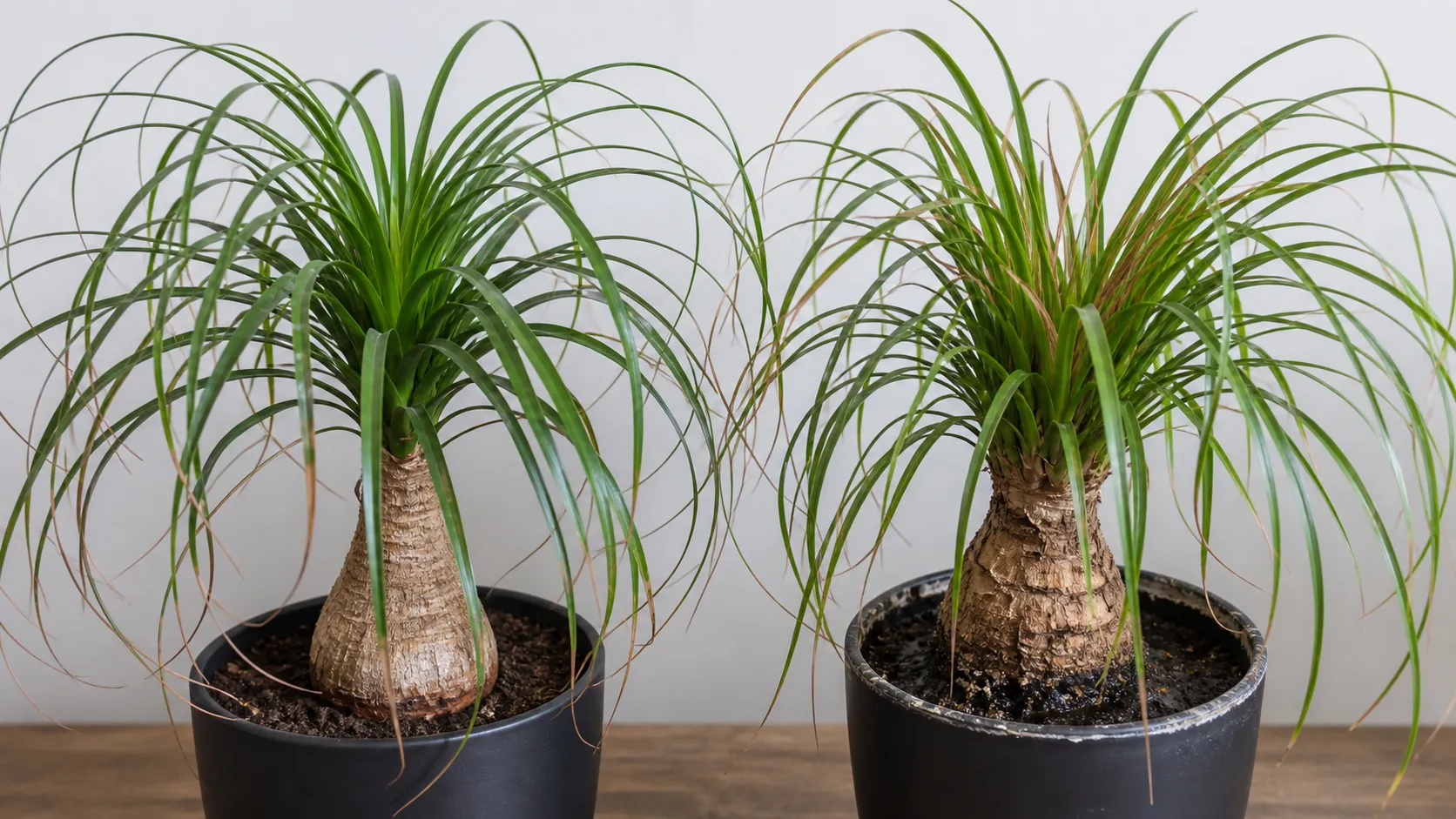
A few old outer tips differ from browning that enters the younger central growth while the mix stays wet.
Brown leaf tips are the most frequent concern owners raise about ponytail palms, and they are not all the same problem.
Normal aging on the outer leaves: As the plant grows, the oldest leaves at the bottom of the rosette yellow and brown before dropping. This is how the plant sheds foliage it no longer needs. Trim them off with clean scissors cut at an angle if you prefer, or leave them to dry and fall on their own. Nothing needs to change.
Browning on newer growth toward the center: When browning appears on younger leaves, or starts midway down a leaf rather than at the very tip, that points to a condition problem. The most common causes are chronically wet soil, fertilizer salt buildup in the potting mix, and a significant drop in available light.
Salt buildup browning: If the plant has been watered regularly without ever being flushed, salts from tap water and fertilizer concentrate in the soil and can damage leaf tips over time. The fix is to water deeply and slowly until water runs freely from the drainage holes for a full minute or two, then allow the soil to dry completely before the next watering.
Soft or darkened base: This is not a watering symptom. A soft or visibly darkened area where the trunk meets the soil means the caudex may be rotting. Unpot the plant, inspect the roots, trim back any blackened or mushy sections to healthy white or tan tissue, let the roots air-dry for several hours, and repot into fresh gritty mix. Use the root rot treatment guide to confirm the diagnosis and follow the full cleanup sequence.
| Symptom | Most Likely Cause | First Check |
|---|---|---|
| Browning on oldest outer leaves | Normal aging | None needed; trim if preferred |
| Browning on newest inner growth | Wet soil or low light | Check soil dryness, reassess window placement |
| Browning midway down any leaf | Fertilizer salt buildup | Flush soil thoroughly, confirm drainage |
| Soft or dark area at the base | Caudex or root rot | Unpot and inspect roots immediately |
The pattern that trips people up most is responding to any brown tip by increasing moisture. On this plant, more water is rarely the answer to browning. If the newer leaves are affected, the safer starting move is to check the soil dryness and move the plant closer to the light source before touching the watering schedule.
Soil, Pot, and Drainage
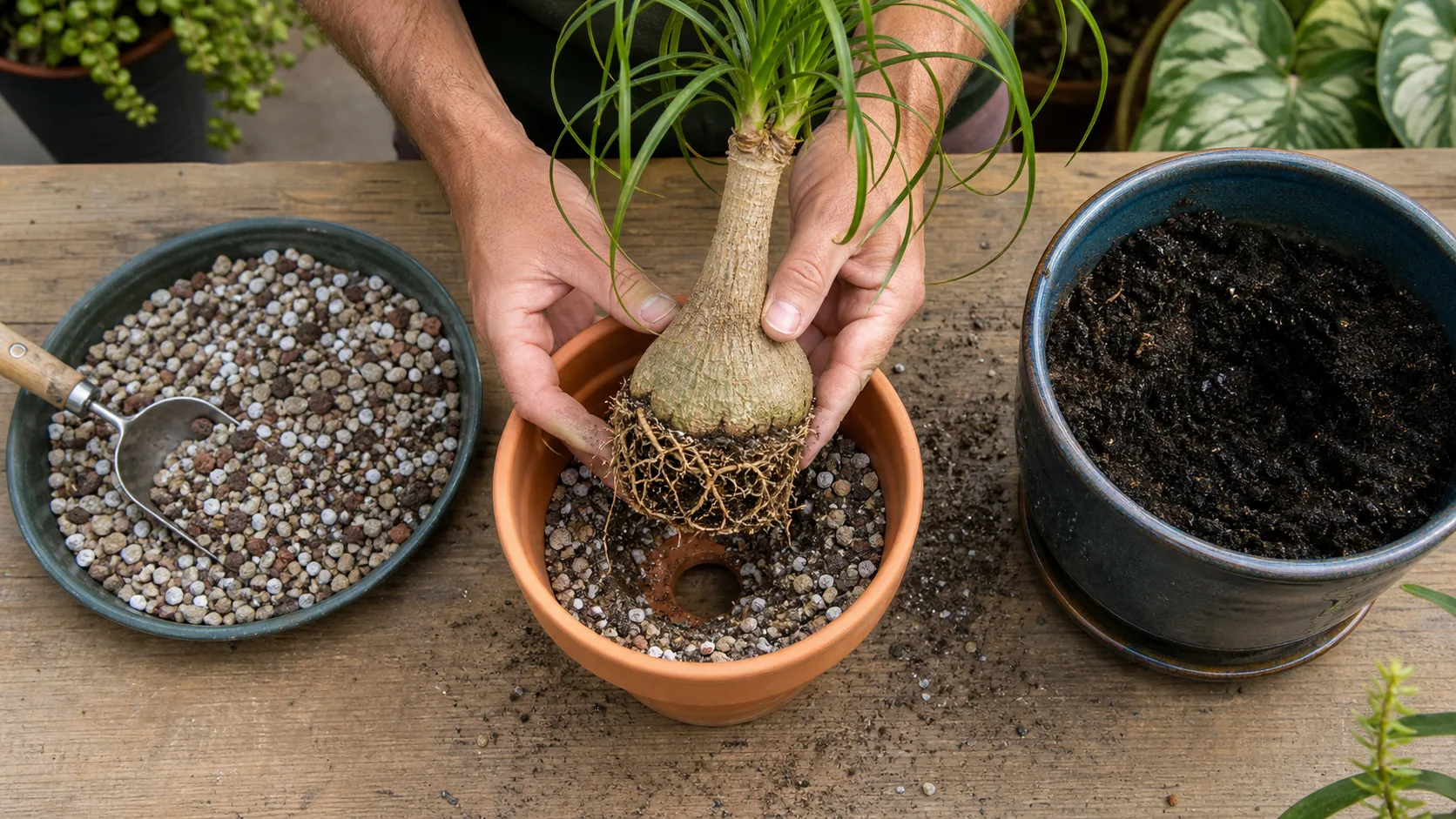
A snug terracotta pot and mineral-rich gritty mix leave far less wet soil around the fine roots than a large glazed container.
A standard potting mix retains too much moisture for this plant. Use a cactus and succulent mix, or amend a regular mix with perlite or coarse grit in roughly equal proportions. The goal is a medium that drains fast and dries fully between waterings. For more on choosing the right soil for plants that prefer lean, fast-draining conditions, our guide to the best potting soil for indoor plants covers what to look for on a bag label.
Terra cotta pots dry out faster than plastic or glazed ceramic, which works in your favor here. Any container needs at least one drainage hole. Choose a pot only slightly larger than the root ball. A container much bigger than the plant holds more moisture than the roots can absorb, and that lingering wet soil is exactly what ponytail palms handle worst.
Ponytail palms are slow growers and comfortable in a snug pot for several years at a time. Repotting every three to four years is usually enough, and moving up only one pot size at a time keeps the drying cycle manageable.
Seasonal Care and Outdoor Transitions
Spring and summer: This is the active period. Water more frequently as temperatures rise and light intensity increases. A single application of balanced liquid fertilizer in late spring is sufficient, though this plant does not need much feeding. Many owners move their plants outdoors after the last frost, which the plant genuinely benefits from.
If you move yours outside: do not go straight from a dim indoor spot to full afternoon sun. UF/IFAS notes that plants transitioning from indoor to outdoor settings should be gradually exposed to increased light and temperature to avoid leaf scorch. Start the plant in a bright but sheltered spot with morning sun and move it into stronger light over two to three weeks.
Autumn and winter: Bring the plant back indoors before nighttime temperatures drop below about 7 degrees Celsius (45 Fahrenheit). Once inside, reduce watering significantly and skip fertilizer entirely until spring. The plant is resting, not struggling, and it does not need intervention during this period.
Pet Safety
The ASPCA lists Beaucarnea recurvata as non-toxic to both cats and dogs, which makes ponytail palm one of the more relaxed choices for pet households. The long, arching leaves can attract cats that enjoy chewing on foliage, and a bit of nibbling will not harm a healthy animal, but the leaves will look ragged afterward. Placing the pot on a plant stand or a higher surface keeps the foliage out of reach if that becomes an issue.
For a broader look at pet-safe options, see our guides to cat-safe indoor plants and dog-friendly houseplants.
If you are comparing care routines for another houseplant, see Parlor Palm Care: Low-Light Tolerance Without Overwatering for a focused step-by-step guide.
Frequently Asked Questions
How often should I water a ponytail palm indoors?
There is no universal answer because it depends on pot size, light level, and season. A small plant in a clay pot on a sunny windowsill in summer may need water every two to three weeks. A large plant in a glazed pot in lower light during winter might go four to six weeks. Check the soil dryness, lift the pot to feel its weight, and press on the caudex. Those three checks tell you more than any fixed schedule.
Why are my ponytail palm’s leaf tips turning brown?
Tip browning on the oldest, outermost leaves is normal aging and not a problem. Browning on newer leaves closer to the center usually points to wet soil, accumulated fertilizer salts, or a light level lower than the plant needs. Check the soil dryness first. If the soil has been consistently damp, wet conditions are the most likely cause, and holding off on water is the right response, not adding more.
What soil does a ponytail palm need?
A cactus and succulent mix, or a regular potting mix amended with perlite or coarse grit to roughly a 50/50 ratio. The goal is fast drainage and quick drying between waterings. Standard potting mixes hold too much moisture for this plant and increase rot risk over time.
Can I move my ponytail palm outside in summer?
Yes, and most plants respond well to it. Wait until nighttime temperatures are reliably above about 10 degrees Celsius (50 Fahrenheit) after the last frost, then transition the plant gradually into stronger outdoor light over two to three weeks. Starting it in bright, sheltered morning sun before moving it into fuller light prevents leaf scorch.
How do I know if I am overwatering my ponytail palm?
Press on the caudex at the soil line. A firm, plump base means the plant is fine and does not need water yet. A slightly wrinkled base means it is drawing down its reserves and a drink would be welcome. A mushy base or visible darkening where the trunk meets the soil is a sign of rot, not a watering cue. Unpot the plant and inspect the roots.
Does ponytail palm need fertilizer?
Not much. One application of balanced liquid fertilizer in spring or early summer is enough for most plants. Skip fertilizer in autumn and winter when the plant is resting. Over-fertilizing contributes to salt buildup in the soil, which shows up as browning along leaf tips.
Is ponytail palm safe for cats and dogs?
Yes. The ASPCA lists Beaucarnea recurvata as non-toxic to both cats and dogs. The long leaves may attract some cats, but chewing on them is not harmful to a healthy animal.
My ponytail palm has been in the same pot for years and looks fine. Should I repot it?
Ponytail palms prefer being slightly root-bound, so a snug pot is not a problem. Repot only when you see roots circling at the base of the drainage holes or when the plant is drying out unusually fast. When you do repot, go up only one pot size and use a gritty, fast-draining mix.
How this guide was built: Care claims were verified against the NC State Extension Gardener Plant Toolbox, Missouri Botanical Garden Plant Finder, and UF/IFAS plant records. Reader confusion patterns were drawn from plant-owner community discussions and used as qualitative signal only, not as statistical data. This guide was last reviewed on 2026-07-18.