Money Tree Yellow Leaves: Diagnose Before You Water
Your Money Tree has yellow leaves, and now you have five choices circling in your head: water her, wait, move her, inspect the roots, or treat for pests.
Start by waiting just long enough to check the pattern.
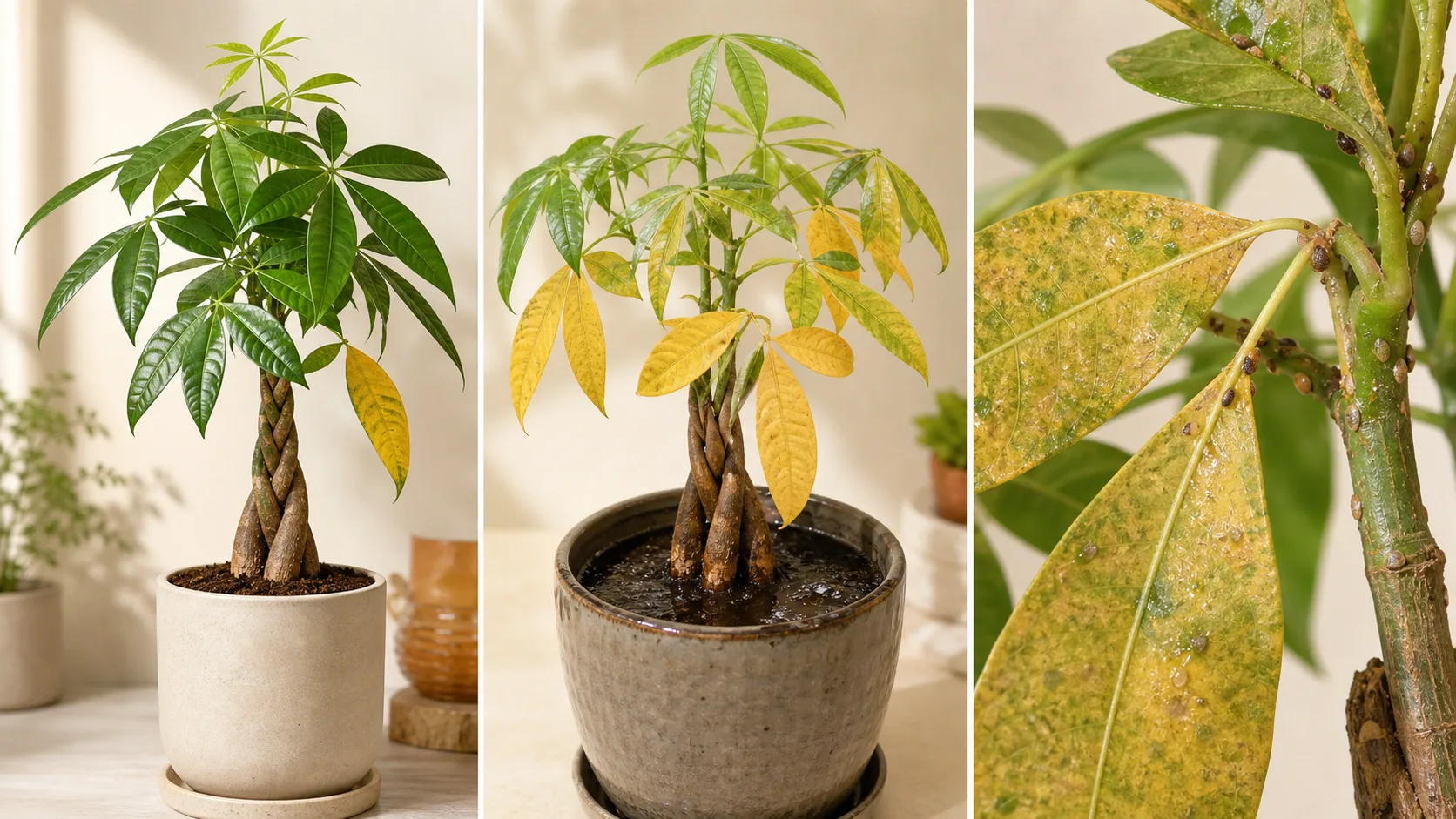
One older lower leaf fading slowly is often normal. Several leaves turning yellow while the pot feels wet and heavy point toward root-zone stress. Fine pale dots or sticky residue send you toward pests. A soft trunk or sour-smelling soil makes the situation more urgent.
The safest first move is not a new watering schedule. It is a quick check of the leaves, soil, pot, and trunks. You will know what deserves action today and what needs a few quiet days of observation.
For the species’ normal light, watering, humidity, and soil baseline, compare your routine with our Money Tree plant care guide.
If you want a clear baseline, photograph the whole plant and the yellow leaves in the same light. KnowYourPlant can help you identify your plant and keep that first record connected to her care.
What Most Care Guides Miss
Yellow is a symptom, not a diagnosis.
Generic advice often treats yellow leaves as proof of overwatering. That is incomplete because a Money Tree can also yellow after drying out, moving to lower light, sitting near a cold vent, developing pests, or shedding an old leaf. Damaged roots can even make leaves look thirsty while the soil is still wet.
The common misdiagnosis is seeing a dry surface and adding water. The top layer may be dry while the middle of an oversized or dense pot remains damp.
Your first decision rule: check moisture below the surface before changing anything. Push a clean wooden skewer toward the middle of the root ball, leave it for a moment, then pull it out. Damp soil clinging to the wood means the root zone is not ready for more water. A clean, dry skewer plus a noticeably light pot makes thirst more plausible.
This pattern-first approach follows guidance from the University of Maryland Extension, which describes yellowing as an early, nonspecific stress signal, and Penn State Extension, which separates old-leaf, young-leaf, general, spotted, and marginal yellowing during diagnosis.
The 30-Second Pattern Card
Match your plant to the closest pattern before reaching for a remedy.
| What you see | What it suggests | Check first |
|---|---|---|
| One older lower leaf fading slowly | Normal aging is possible | Whether yellowing spreads to other leaves |
| Several yellow leaves and a wet, heavy pot | Excess root-zone moisture | Deep moisture, drainage holes, trapped runoff |
| Yellow leaves and a dry, light pot | Thirst or an unevenly dry root ball | Moisture through the middle, not just at the edge |
| Yellowing soon after a move | Light or temperature stress | Window distance, cold glass, vents, direct sun |
| Pale stippling, sticky residue, bumps, or webbing | Sap-feeding pests | Leaf undersides and stem joints |
| Soft trunk, sour soil, or rapidly dropping leaves | Root or trunk decline | Each trunk, then roots if warning signs persist |
A single sign cannot prove the cause. Use the card to choose the next observation, not to label the plant from across the room.
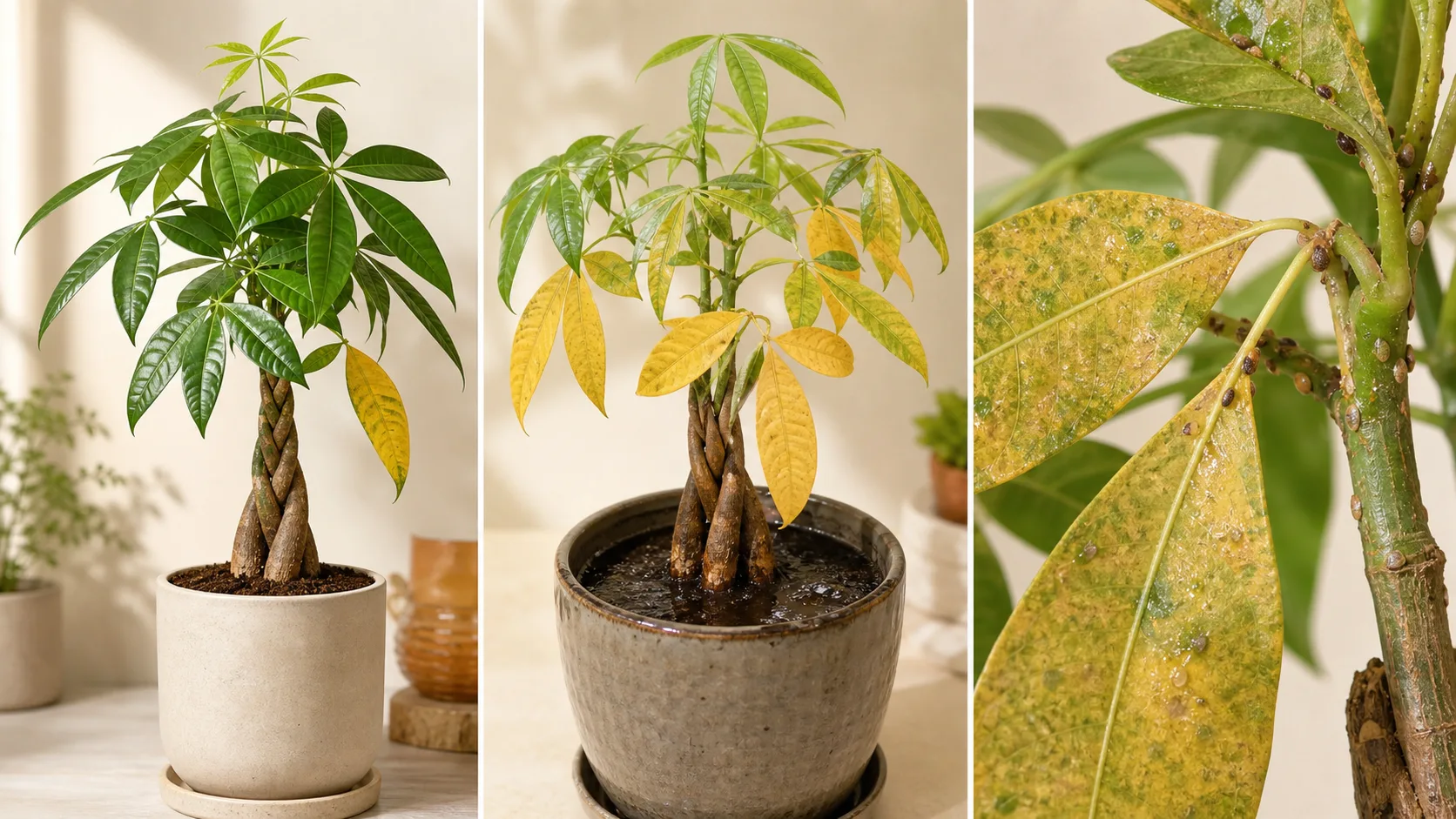
Compare the pattern before choosing a remedy: one old leaf, widespread wet-soil yellowing, and pest evidence lead to different checks.
A 10-Minute Decision Tree
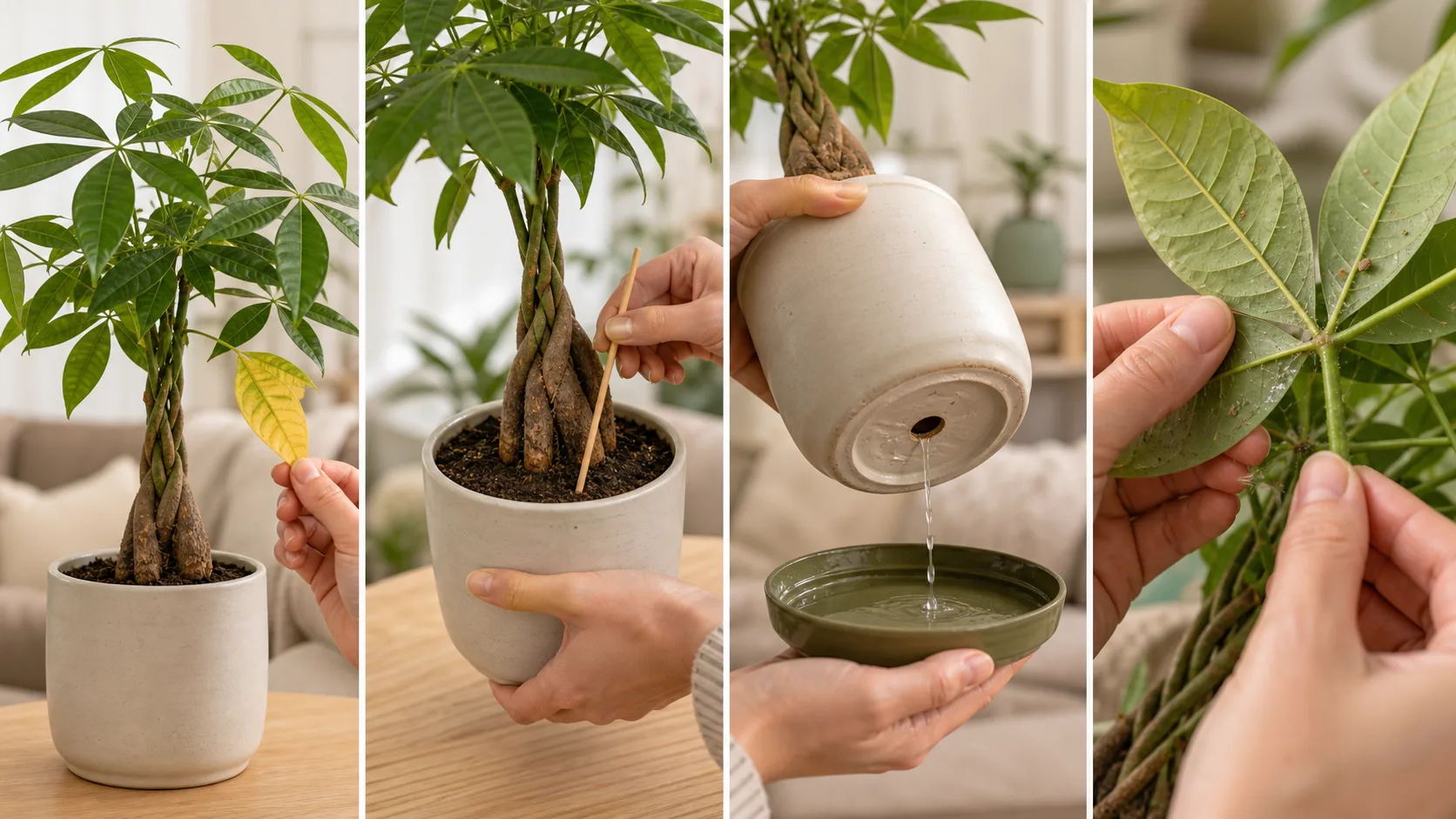
Work in this order: read the leaf pattern, test moisture at root depth, confirm drainage, then inspect leaf undersides for pests.
1. Did one leaf change, or many?
One yellow lower leaf with a firm trunk and healthy new growth usually earns observation, not a rescue operation. Let it finish fading and remove it when it releases easily.
Several leaves changing within a few days deserve a closer check. Note whether the yellowing begins low in the canopy, appears everywhere, or follows one section of a braided plant.
2. Is the root zone wet or dry?
Lift the pot if you can. A recently watered pot feels distinctly heavier than the same pot after drying. Use that weight difference as a personal reference rather than relying on a universal calendar.
Then test below the surface:
- If the skewer comes out damp or coated with soil, wait to water.
- If it comes out clean and dry and the pot feels light, water thoroughly.
- If one side is dry while the center stays wet, the mix may be compacted or the root ball may be receiving water unevenly.
When watering, soak the root ball until water drains from the bottom. Empty the saucer or outer pot. Do not leave the nursery pot standing in runoff.
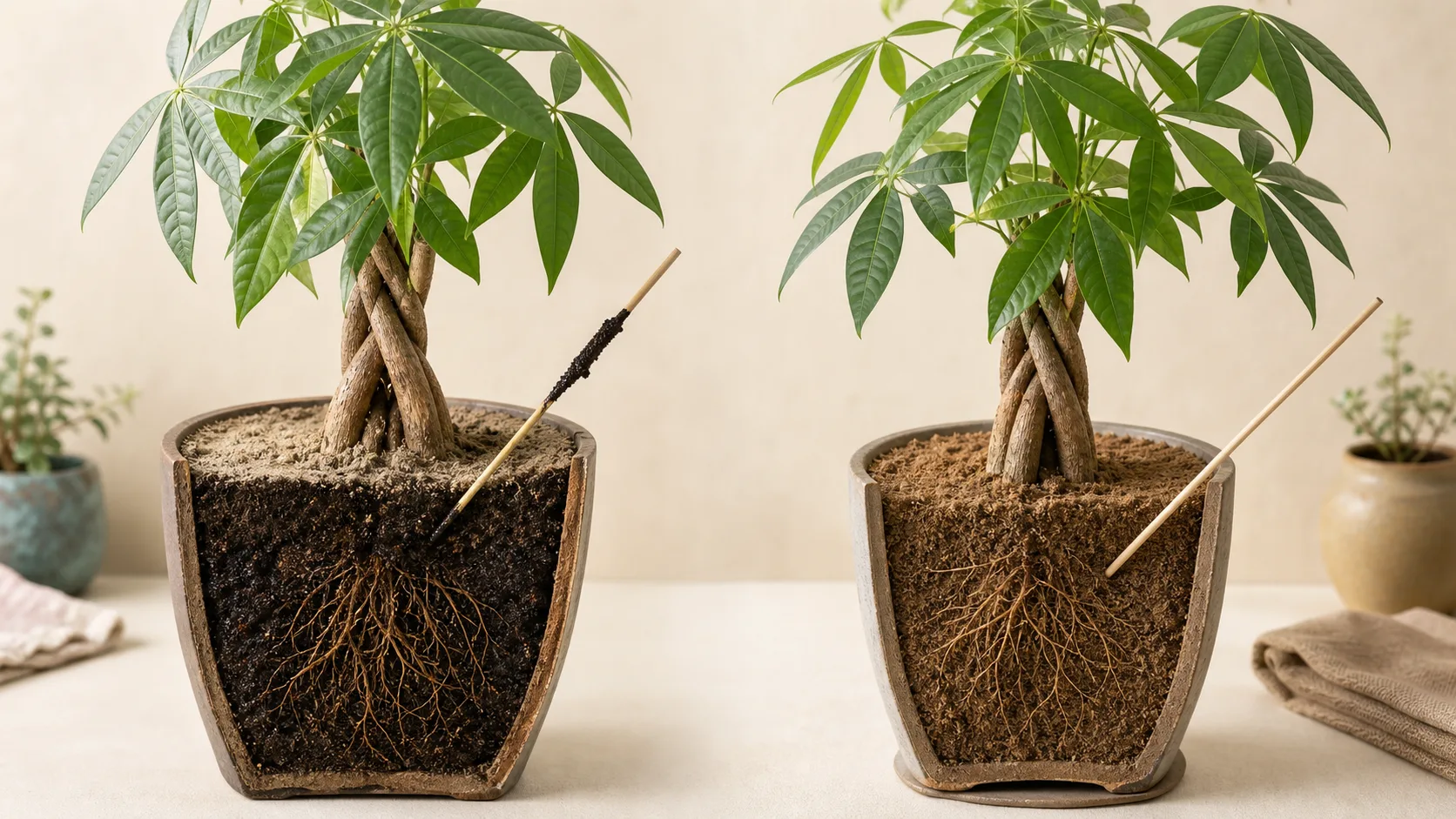
A dry surface can hide a wet center. Use a wooden skewer and pot weight to check where the roots actually are.
3. Can excess water escape?
Look underneath the container. Visible holes are not enough if they are blocked by compacted mix or if water collects inside a decorative cachepot.
Also compare the pot with the root ball. A large volume of unused soil can stay damp long after the roots have taken what they need. The University of Minnesota Extension advises moving only one pot size larger when repotting because excess mix can retain too much water and contribute to root problems.
Do not repot solely because a leaf turned yellow. Repot when the container, drainage, or roots give you a specific reason, then follow the pot-size and root-check steps in our Money Tree repotting guide.
4. Did her environment change?
Think back over the previous couple of weeks:
- Was she moved farther from a window?
- Did shorter days reduce her light?
- Is a heater, AC vent, or cold window nearby?
- Was she recently repotted or fertilized?
- Did direct afternoon sun begin reaching the leaves?
Lower light matters twice. It can stress growth, and it slows water use, leaving the pot wet longer. If the yellowing followed a window change, compare it with the signs in our plant sunburn guide before moving her again.
5. Are pests leaving evidence?
Inspect both sides of several leaves, especially where the leaf stalk joins the stem. Look for:
- Hard or waxy bumps that do not brush away easily
- White cottony clusters
- Fine webbing
- Pale pinprick stippling
- Sticky residue on leaves or nearby furniture
The NC State Extension Plant Toolbox lists aphids, mealybugs, scale, and fungus gnats among potential Money Tree pests. If you find one, isolate the plant and treat the pest you can actually identify. Our houseplant diseases and problems guide can help you separate pest evidence from environmental damage.
6. Does the base feel firm?
Press each trunk gently near the soil line. A healthy trunk should feel firm. Soft, darkened, collapsing, or foul-smelling tissue is a warning sign.
If the pot remains wet, leaves are dropping quickly, or a trunk feels soft, inspect the roots. Firm roots are reassuring. Dark, mushy roots that slip apart are damaged. Standing water is a recognized root-rot risk for Pachira, according to NC State, but wet soil alone does not prove rot.
Record the pattern, deep-soil moisture, and trunk condition together. KnowYourPlant can help you keep those signals in one place while you diagnose what is changing.
The Braided-Trunk Check Most Guides Skip
A braided Money Tree is often several young plants sharing one pot. One trunk can decline while its neighbors remain firm and leafy.
Follow the canopy attached to each trunk. If yellowing and leaf loss cluster on one section, inspect that trunk separately. Check for dark tissue, softness, loose bark, or dead material caught inside the braid.
Look around and slightly below the soil line for old ties, bands, or wrapping material. Some commercially braided plants have been secured during production, although this is not true of every Money Tree. Remove only material that is clearly separate from living tissue and easy to reach. Do not pull apart a healthy braid just to investigate.
This individual-trunk check is useful because watering the entire pot more will not rescue a trunk whose base is already failing.
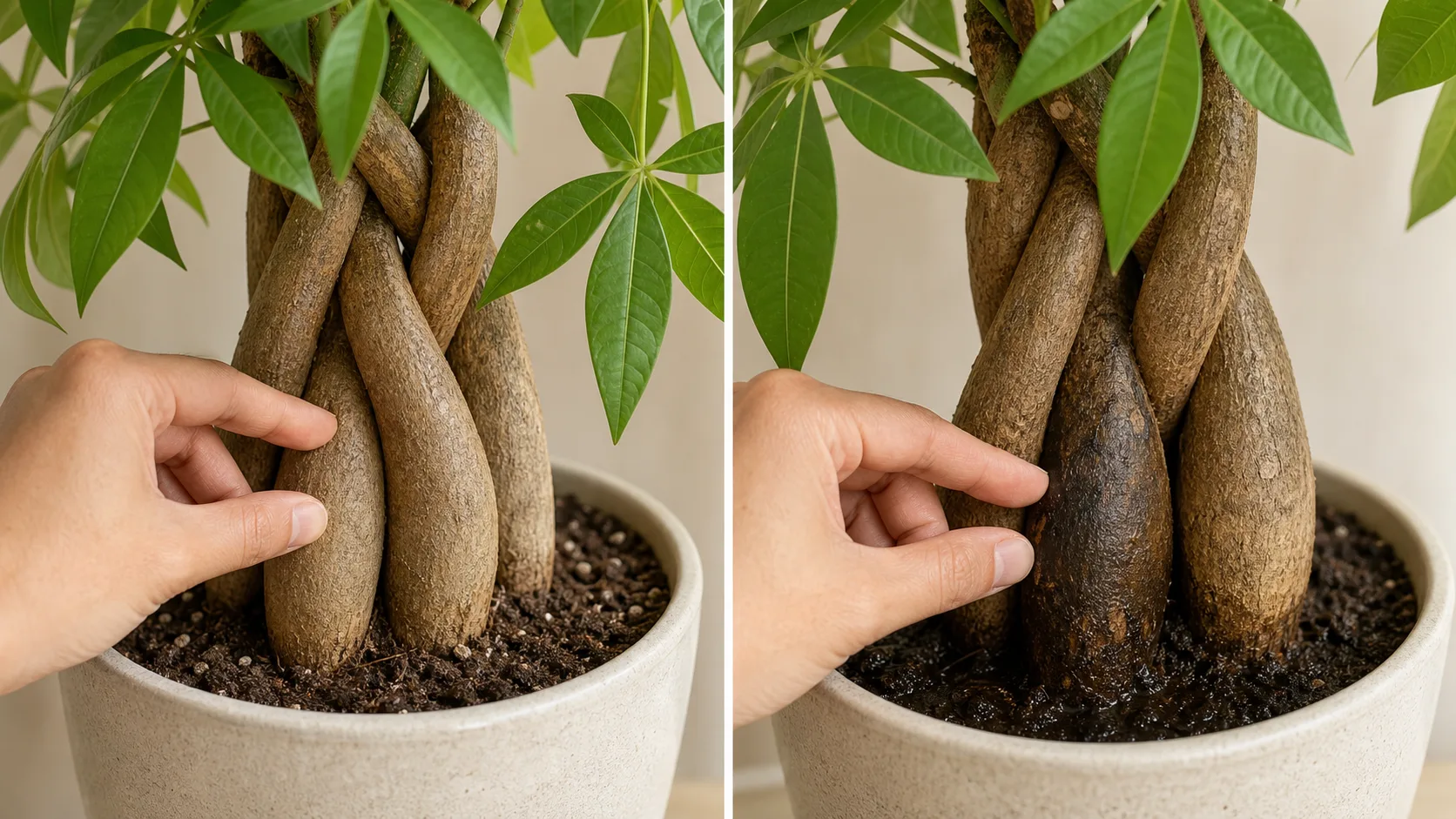
Press and trace each trunk separately: one dark, soft base can decline while the rest of the braid remains firm.
Stress, Thirst, or Root Trouble?
| Signal | Environmental stress | Thirst | Root trouble |
|---|---|---|---|
| Soil | May be wet or dry | Dry through much of the root ball | Stays damp, sometimes smells sour |
| Pot weight | Varies | Noticeably light | Heavy for several days |
| Leaf texture | Yellowing after a move, sometimes scorched edges | Thin, limp, or crisp | Yellow, limp, sometimes with soft dark areas |
| Trunk | Firm | Usually firm | May be soft or dark near the base |
| Safest first step | Stabilize location | Water deeply and drain | Stop watering and inspect drainage |
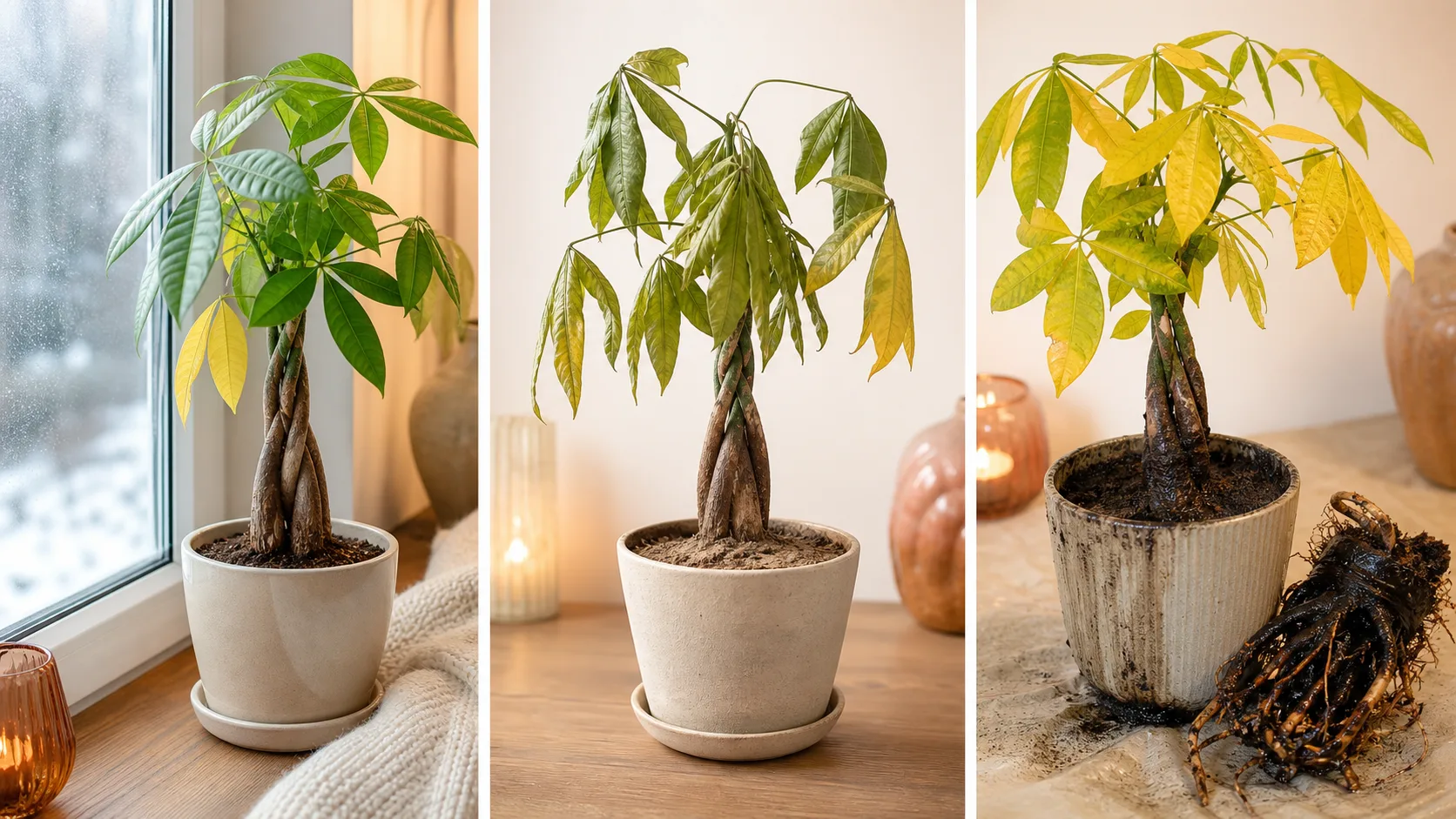
Cold or move stress, true thirst, and root trouble can all yellow leaves, but the pot, soil, and trunk reveal different evidence.
A plant with damaged roots may wilt in wet soil because those roots cannot move water properly. That is why leaf texture never replaces a soil and trunk check.
What to Do After the Check
Wet soil, firm trunks, limited yellowing
Wait. Give her bright indirect light, empty trapped runoff, and improve gentle air circulation. Recheck deep moisture in two or three days. Do not fertilize while the roots are already under stress.
Dry root ball and a light pot
Water slowly and thoroughly until excess drains. If water races down the sides without wetting the middle, apply it in two passes a few minutes apart. Recheck the center afterward.
Your next watering should depend on how the root zone feels, not on the day of the week. For a simple routine around light, moisture, and drainage, see our indoor plant care guide for beginners.
Yellowing after a move, with firm trunks
Choose a stable place with bright indirect light and protection from vents and cold glass. Leave her there for at least a week unless the spot is clearly damaging the leaves. Moving her every few days makes the original problem harder to read.
Visible pests
Isolate the plant, wipe accessible insects from the leaves and stems, and use a treatment labeled for the pest and indoor plants. Inspect again every few days, including nearby plants. One treatment may miss eggs or hidden insects.
Soft trunk, sour smell, or rapidly spreading leaf loss
Remove the plant from its pot and inspect the roots and each trunk. Trim only tissue that is clearly mushy or dead with clean tools. Repot into a clean container with working drainage and fresh, airy mix sized closely to the remaining roots.
Keep a Root-Zone Evidence Log
Before making another change, write down:
- Date of the last watering
- Pot weight and moisture at the surface and middle
- Whether water drained freely
- Whether runoff remained in an outer pot
- Recent moves, temperature changes, repotting, or feeding
- Number and location of newly yellow leaves
- Whether healthy new growth continues
This small record protects you from the exhausting cycle of watering more, then less, then repotting and fertilizing because the first yellow leaf did not turn green again.
It will not. Once a leaf is fully yellow, it rarely becomes green. Judge recovery by slower yellowing, firm trunks, appropriate drying, and healthy new growth.
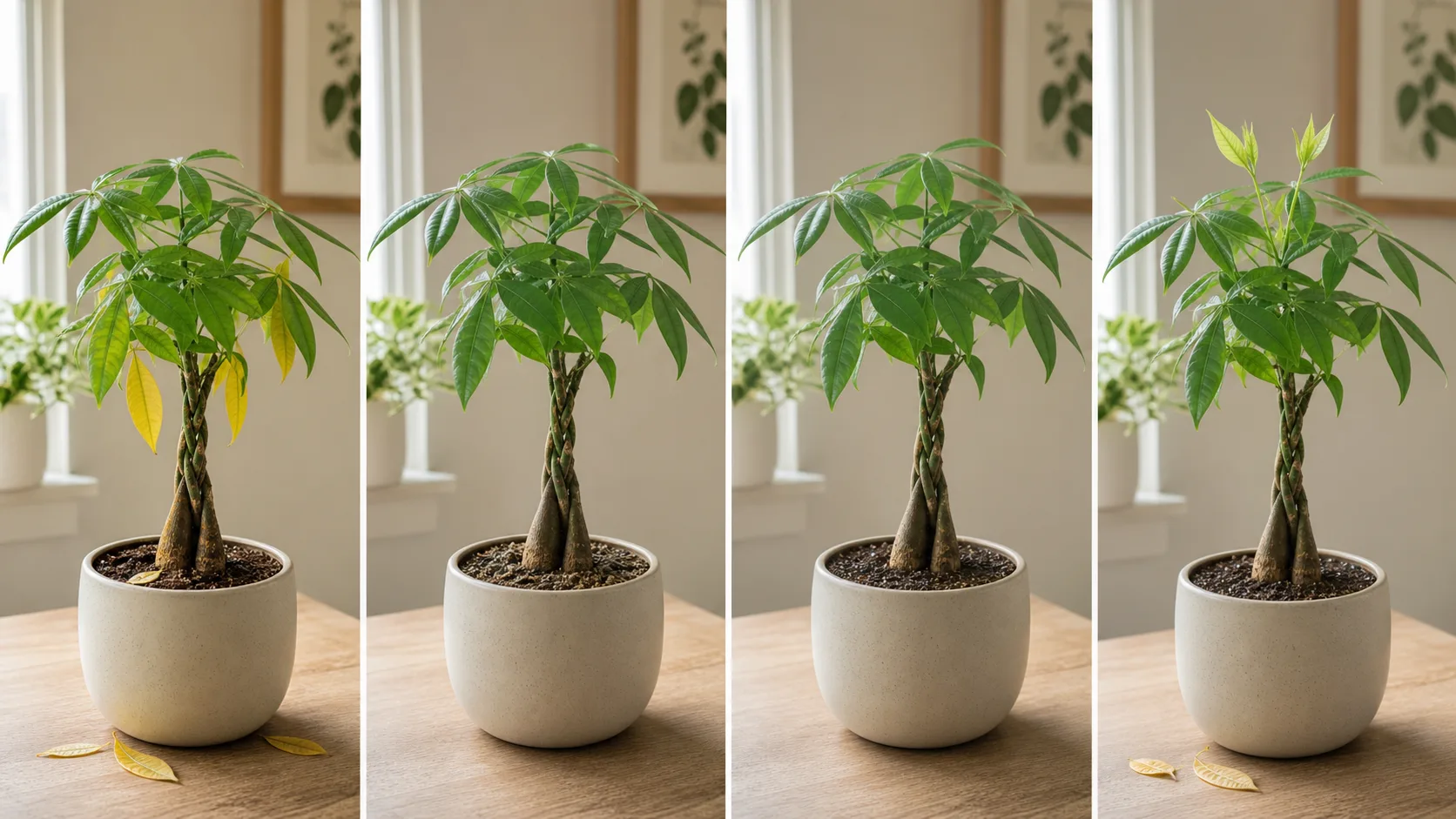
Recovery usually appears as stability first: fewer new yellow leaves, then steady foliage, and finally healthy new growth.
Common Mistakes That Make Yellowing Worse
Stacking several fixes at once
Repotting, moving, pruning, feeding, and changing the watering routine together add stress and erase useful diagnostic clues. Address the clearest risk first, then watch the response.
Watering from the surface alone
A dry top layer tells you very little about the middle of a deep pot. Check at root depth.
Fertilizing a stressed plant
Fertilizer does not repair damaged roots. Wait until the plant is stable and actively growing.
Assuming every yellow leaf is root rot
An occasional old lower leaf can be ordinary turnover. Look for spread, wetness, odor, and soft tissue before disturbing the roots.
Ignoring one declining trunk
In a braided plant, one soft trunk can hide among several healthy ones. Press and trace them separately.
Seasonal Note
Money Trees often use water more slowly when days shorten, indoor light drops, or temperatures cool. The pot that dried comfortably in brighter months may remain damp much longer later in the year.
Keep checking the soil rather than repeating a summer schedule. During brighter growth, inspect more often, but water only when the root zone confirms that she is ready.
Your Recovery Plan
Today: Photograph the pattern, test deep moisture, inspect drainage, press each trunk, and check leaf undersides.
In two or three days: Recheck moisture and count only newly yellowing leaves. Do not use an existing yellow leaf as proof that the problem is worsening.
After one week: Look for slower leaf loss, firm trunks, and healthy new growth. If wetness or yellowing persists, reassess pot size and roots.
Over the next two to three weeks: Keep light and care steady. Recovery shows up as stability first, then growth.
For personalized plant care reminders and a simple record of watering and recovery, download KnowYourPlant. It can help you follow what your Money Tree is doing without falling back on a rigid schedule.
FAQ
Why are my Money Tree leaves turning yellow?
Common possibilities include excess root moisture, a dry root ball, lower light, temperature stress, pests, root damage, or normal aging. The location and speed of yellowing, soil moisture, drainage, and trunk firmness help separate them.
How can I tell if my Money Tree is overwatered?
Look for several yellowing leaves, a pot that stays wet and heavy, trapped runoff, or soft tissue near the base. These signs support moisture stress, but only dark, mushy roots or declining trunk tissue confirm serious damage.
Should I water a Money Tree when its leaves turn yellow?
Not until you check below the surface. Water if the root ball is dry and the pot feels light. Wait if the middle remains damp.
Should I remove yellow leaves?
You can remove a fully yellow leaf when it releases easily. Removing it tidies the plant but does not solve the cause. Use new yellowing, trunk firmness, and new growth to judge progress.
Can a Money Tree recover from yellow leaves?
Yes, when the underlying stress is corrected before extensive root or trunk damage develops. Existing yellow leaves may fall, so look for stable green foliage and healthy new growth rather than expecting old leaves to recover.
When should I inspect the roots?
Inspect them when the soil remains wet, yellowing spreads quickly, leaves drop rapidly, the soil smells sour, or a trunk feels soft. Limited yellowing with firm trunks does not automatically justify uprooting the plant.
Does low light cause yellow leaves?
It can contribute. In lower light, a Money Tree grows and uses water more slowly. The root zone then stays damp longer, so light and watering problems often overlap.
How often should I water a Money Tree?
There is no safe universal interval. Check the middle of the root ball and learn the pot’s dry-versus-watered weight. Water thoroughly when the root zone has dried appropriately, then let all excess drain.
Sources and Methodology
This guide was reviewed against species and diagnostic guidance from NC State Extension, University of Maryland Extension, Penn State Extension, University of Minnesota Extension, and Ask Extension.
The diagnosis order prioritizes low-disturbance observations: symptom pattern, deep moisture, drainage, recent environmental change, pests, and individual trunk firmness. Root inspection is reserved for defined warning signs. Owner questions informed the practical choices addressed here, but anecdotal discussions were not used to prove causes or estimate how common any problem is.
Last reviewed: July 18, 2026.