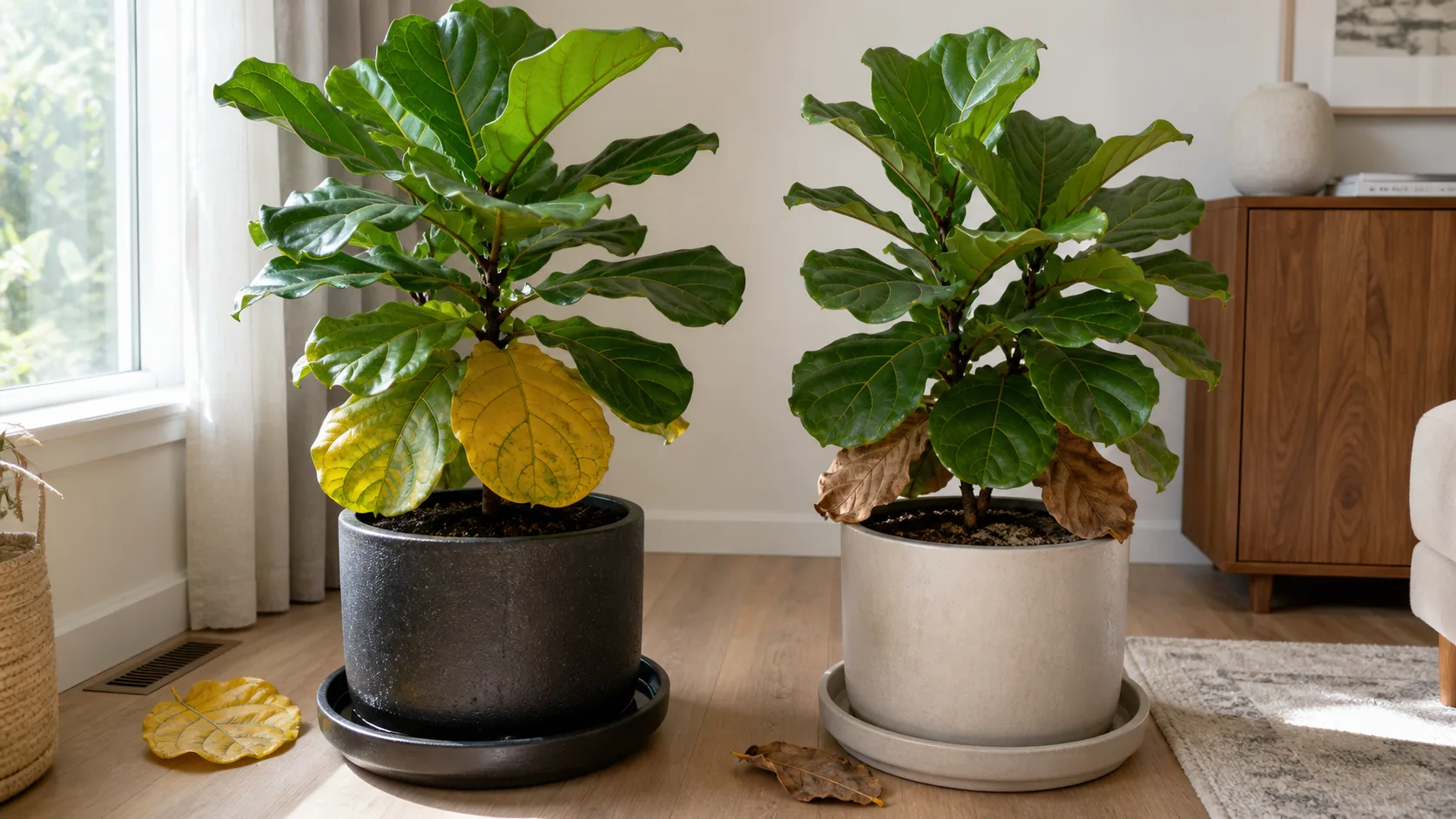
If your fiddle leaf fig is dropping leaves, pause before you water, repot, fertilize, or move it again. Leaf drop means the plant is responding to stress, but it does not identify the stress by itself.
What Most Care Guides Miss
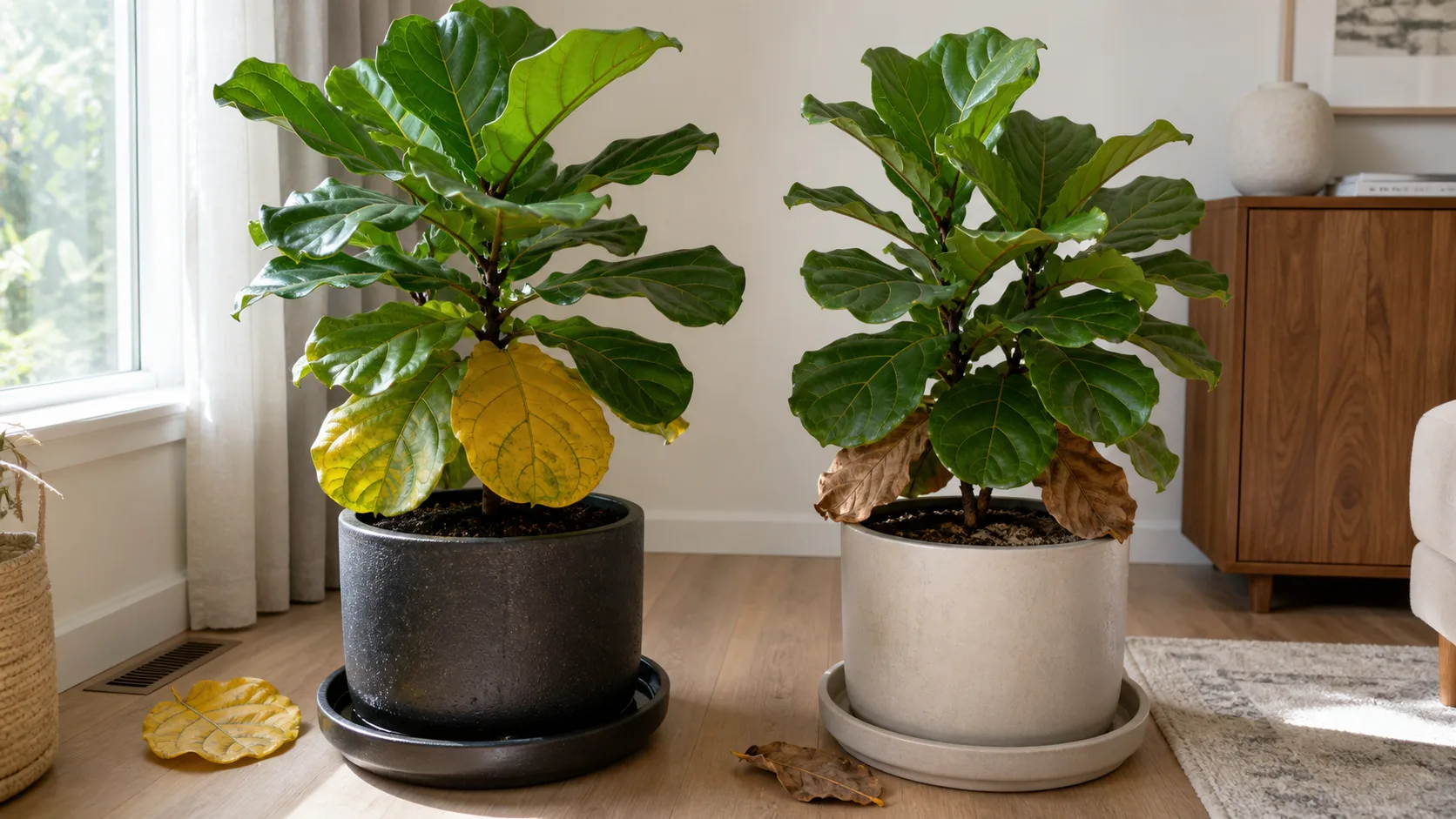
The most common misdiagnosis is that a yellow lower leaf must mean thirst. Lower leaves can also yellow and fall when the middle of the pot stays wet too long, especially in low light or an oversized pot. Watering immediately may make that problem worse.
Generic cause lists fail because opposite problems can produce similar symptoms. Both overly wet and overly dry roots can lead to yellowing, browning, and leaf loss. A cold night can resemble a watering problem. Relocation stress may not appear until days after the move.
Here is the first decision rule:
Start with where the leaf drop began. Then review the last 14 to 21 days and check moisture deeper in the pot before changing care.
One fallen leaf is not enough for a diagnosis. Treat it as a reason to inspect the plant, not as proof that something is seriously wrong.
Quick diagnostic card
Use this table to choose your next check. It is a starting point, not a final diagnosis.
| Where the drop began | What it can suggest | Check next |
|---|---|---|
| Oldest lower leaves first | Prolonged wetness, a hard dry spell, reduced light, or normal aging | Moisture in the middle of the pot, pot weight, and recent watering |
| Newer or upper leaves | Cold shock, a strong draft, serious root stress, or active pests | Recent temperature exposure, deeper moisture, stems, and leaf undersides |
| Scattered throughout the canopy | Relocation, repeated repositioning, inconsistent conditions, or multiple stresses | Everything that changed during the last 14 to 21 days |
| Outer leaves near a window | Cold glass, direct hot sun, or a nearby draft | Nighttime window conditions and the direction of damage |
| Leaves after a move or repot | Acclimation or transplant stress, sometimes layered over the original problem | Stop further changes and compare symptoms with the pre-move pattern |
| Leaves with webbing, sticky residue, or visible insects | Credible pest pressure | Leaf undersides, stems, nodes, and nearby plants |
A single old lower leaf can fall as the plant reallocates resources. Repeated loss, loss from the top, or leaf drop paired with a soft stem, sour-smelling soil, or active pests deserves closer attention.
Diagnose in this order
Following the same sequence each time keeps you from stacking stressful fixes.
1. Mark where the drop started
Look at the plant before examining the fallen leaf.
Did the oldest leaves near the base go first? Are newer leaves falling from the top? Is the loss scattered? Is it concentrated on the side facing a window, door, or vent?
Location matters because it narrows the next check:
- Lower-leaf loss puts root-zone moisture, changing light, and ordinary aging higher on the list.
- Upper or new-leaf loss deserves faster investigation because the plant is losing recent growth.
- Scattered loss often follows a broad environmental change such as moving home, changing rooms, or repeated repositioning.
- One-sided loss makes local exposure, including cold glass, hot direct sun, or moving air, worth checking.
Do not rely on location alone. Use it to decide what evidence to gather next.
2. Rebuild the last 14 to 21 days
Fiddle leaf figs may react after the stressful event rather than during it. Think back through the previous two to three weeks.
Ask whether you:
- brought the plant home
- moved it between rooms or windows
- rotated it repeatedly
- repotted it or changed the soil
- moved it into a much larger pot
- watered more or less often
- started fertilizing
- experienced a cold night or sharp weather change
- began using heating or air conditioning
- closed curtains that previously provided light
- left water standing in a saucer or decorative cachepot
Timing can be more useful than the color of one leaf. Ficus guidance from Illinois Extension notes that chilling and relocation can trigger leaf drop. Although that page covers weeping fig, it supports the broader ficus tendency to respond poorly to sudden environmental change.
If the plant was recently repotted, separate two questions: What caused the original decline, and what symptoms began only after the repot? Transplant stress can blur the pattern without being the original cause.
3. Check moisture below the surface
The top inch can be dry while the middle of the root ball remains wet. Before watering, use a clean wooden skewer or chopstick to check several inches down. If the pot is small enough, lift it and compare its weight with how it feels after a thorough watering.
Interpret the evidence together:
- Dry surface and dry deeper soil: Underwatering or a mix that has become difficult to rewet is possible.
- Dry surface but damp middle: Wait before watering.
- Wet middle and a heavy pot several days after watering: Slow drying, poor drainage, an oversized pot, or low light may be stressing the roots.
- Soil pulling from the pot and a very light root ball: The plant may have dried too hard.
- Sour or swampy smell: Root trouble moves higher on the list.
UC Agriculture and Natural Resources recommends waiting until the top two inches are dry and warns against letting the pot sit in drained water. Use that surface threshold with a deeper check, especially in a large pot.
Overwatering is usually about watering again before the root zone has dried enough. It is not simply about giving a large volume of water at one time. When a genuinely dry plant needs water, watering thoroughly and allowing the excess to drain is usually safer than giving frequent small sips.
4. Check cold, drafts, and window exposure
Look at the plant’s actual position, not just the room temperature.
A fiddle leaf fig can be exposed to:
- cold glass overnight
- an exterior door that opens frequently
- an air-conditioning vent
- a heating vent that dries one side of the canopy
- sharp day-to-night temperature swings
- intense direct sun after being moved closer to a window
North Carolina State Extension recommends temperatures above 55°F for Ficus lyrata and notes that temperature fluctuations can contribute to damage. Its preferred conditions include bright indirect light and moist, well-drained soil.
If leaf drop followed a cold event or a move against a window, stabilize the location. Do not compensate by watering unless the root zone is actually dry.
5. Require credible pest evidence
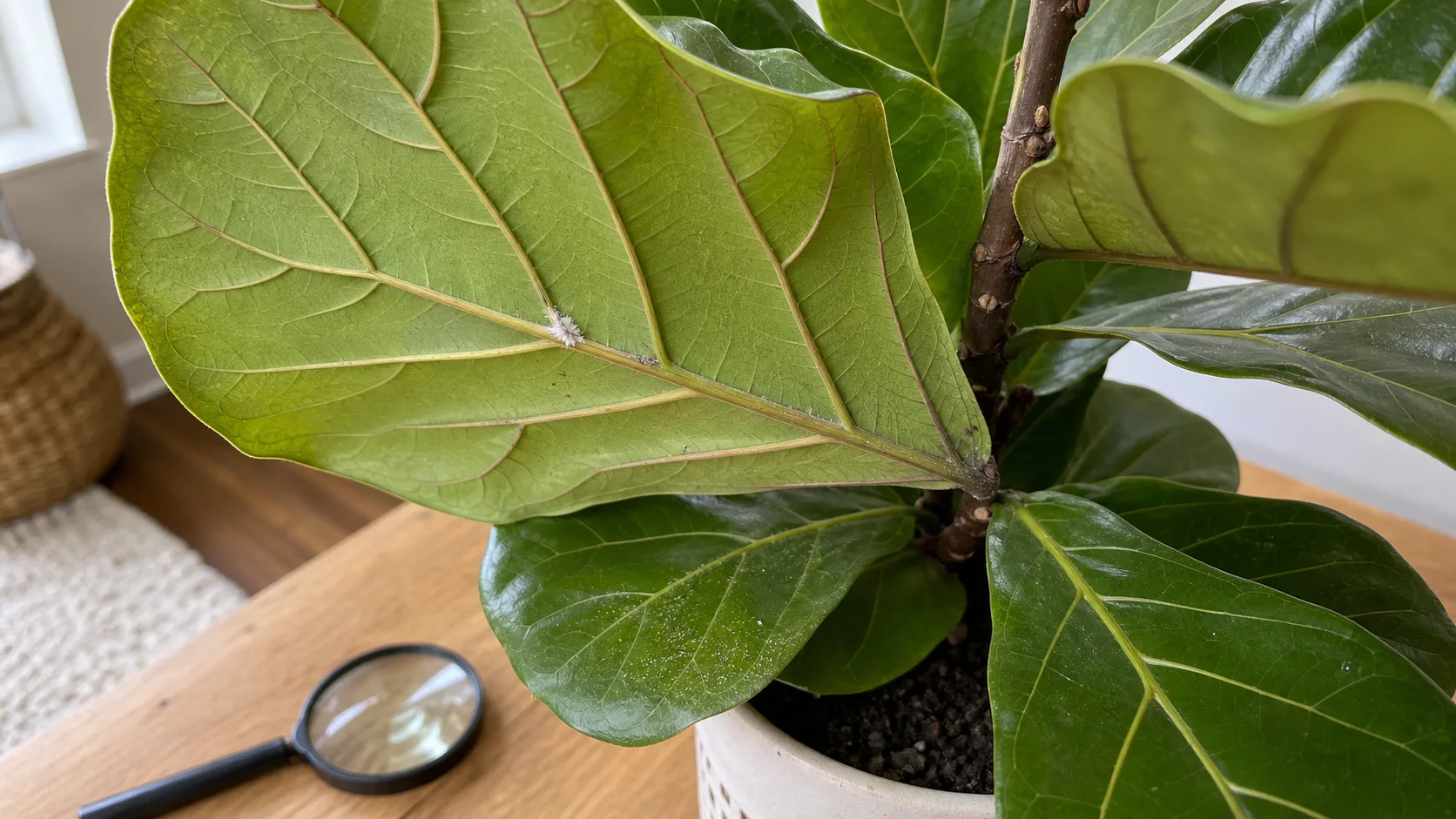
Yellowing alone is not proof of pests. Look for physical evidence in bright light:
- fine webbing, especially around veins and leaf joints
- sticky residue on leaves or the surface below
- cottony clusters on stems or leaf undersides
- shell-like bumps that do not brush away easily
- pale stippling across leaf surfaces
- distorted or scarred new growth
- visible moving insects
Inspect leaf tops, undersides, stems, nodes, and the rim of the pot. Check nearby plants too.
NC State lists scale, aphids, mealybugs, thrips, and spider mites among pests that can affect fiddle leaf figs. University of Maryland Extension notes that mealybugs may appear on leaf undersides, stems, or pots and can cause yellowing, stunting, and dieback.
If you find credible evidence, isolate the plant from nearby houseplants and identify the pest before choosing a treatment. Do not spray a stressed plant with a random combination of products simply because leaves are falling.
Five likely causes compared
| Likely cause | Leaf clues | Root-zone or environmental clue | Safest first response |
|---|---|---|---|
| Relocation or acclimation stress | Leaves may look fairly normal before falling; loss can be scattered | Purchased, moved, rotated, or repotted within the last few weeks | Choose one suitable bright location and stop repositioning |
| Prolonged wetness or root stress | Older lower leaves may yellow, soften, or develop dark areas before falling | Pot remains heavy; deeper soil stays wet; drainage is poor | Pause watering, empty standing water, and monitor drying |
| Underwatering | Dry or crisp edges, drooping, very light pot | Root ball is dry throughout or has pulled from the pot | Water thoroughly, drain fully, and avoid another hard dry-down |
| Cold or draft stress | Sudden loss, sometimes from outer or upper leaves; spotting may follow exposure | Cold glass, drafty door, vent, or chilly night | Stabilize temperature without repeatedly moving the plant |
| Pest pressure | Stippling, distortion, sticky residue, webbing, cottony material, or bumps | Visible insects or feeding evidence | Isolate, identify, and begin pest-specific care |
These clues can overlap. A dark room, for example, makes the soil dry more slowly. The resulting lower-leaf loss may look like a watering problem even though insufficient light is helping create it.
A low-disturbance inspection ladder
Start at the top and move down only when the evidence supports it.
- Observe the canopy. Record whether the loss is lower, upper, scattered, or one-sided. Note whether the fallen leaf was old or new.
- Review recent changes. Include moves, repotting, weather, vents, watering, fertilizer, and changes in daylight.
- Check deeper moisture. Use pot weight and a skewer rather than judging only by the surface.
- Inspect leaves and stems. Look for credible pest evidence and check whether new growth is firm or distorted.
- Smell the soil and confirm drainage. Empty standing water and make sure the container has a functioning drainage path.
- Inspect roots only if red flags justify the disturbance. Persistent wetness, a sour smell, a soft stem base, failing drainage, or continued rapid decline can make root inspection worth the stress.
If root inspection becomes necessary, healthy roots are generally firm rather than mushy. Avoid tearing apart the entire root ball merely to satisfy curiosity. If the plant is stable and the pot is drying normally, leave the roots alone.
For more help deciding whether disturbance is justified, read when to repot plants.
Safe actions you can take today
You do not need a perfect diagnosis to reduce immediate risk.
- Stop moving or rotating the plant for now.
- Keep it in bright indirect light.
- Move it away from cold glass, exterior doors, and direct vent airflow.
- Check moisture below the surface before watering.
- Empty water from the saucer or outer pot.
- Inspect leaves and stems in bright light.
- Record which part of the plant loses the next leaf.
- Hold fertilizer while the plant is actively declining.
If the root ball is dry throughout, water slowly and thoroughly until excess drains. Empty that excess and let the root zone begin drying before watering again.
If the middle remains damp, do not add water merely because a leaf fell. Focus on drainage, light, and environmental stability while you observe.
Use a seven-day stability log
For one week, keep the plant in the same suitable place and record the same details each day.
| What to record | What it helps reveal |
|---|---|
| Location and distance from the window | Whether light and positioning are staying consistent |
| Vent, door, or cold-glass exposure | Whether temperature or moving air matches the damaged side |
| Last watering date | Whether you are reacting too frequently |
| Surface moisture | How quickly the upper mix dries |
| Deeper moisture | Whether the center stays wet after the surface dries |
| Pot weight | A simple comparison between wet and dry conditions |
| New fallen leaves and their original position | Whether the pattern is slowing or moving upward |
| New growth condition | Whether buds and young leaves remain firm |
| Pest evidence | Whether webbing, residue, insects, or damage is spreading |
During this observation window, make only the lowest-risk correction supported by evidence. If you discovered cold glass, create a little more separation and then hold steady. If the soil is still damp, wait rather than changing the pot, fertilizer, and light at the same time.
Seven days may not produce a new leaf, and it may not reverse existing spots. The goal is to see whether the decline is stabilizing.
Signs the plant is improving
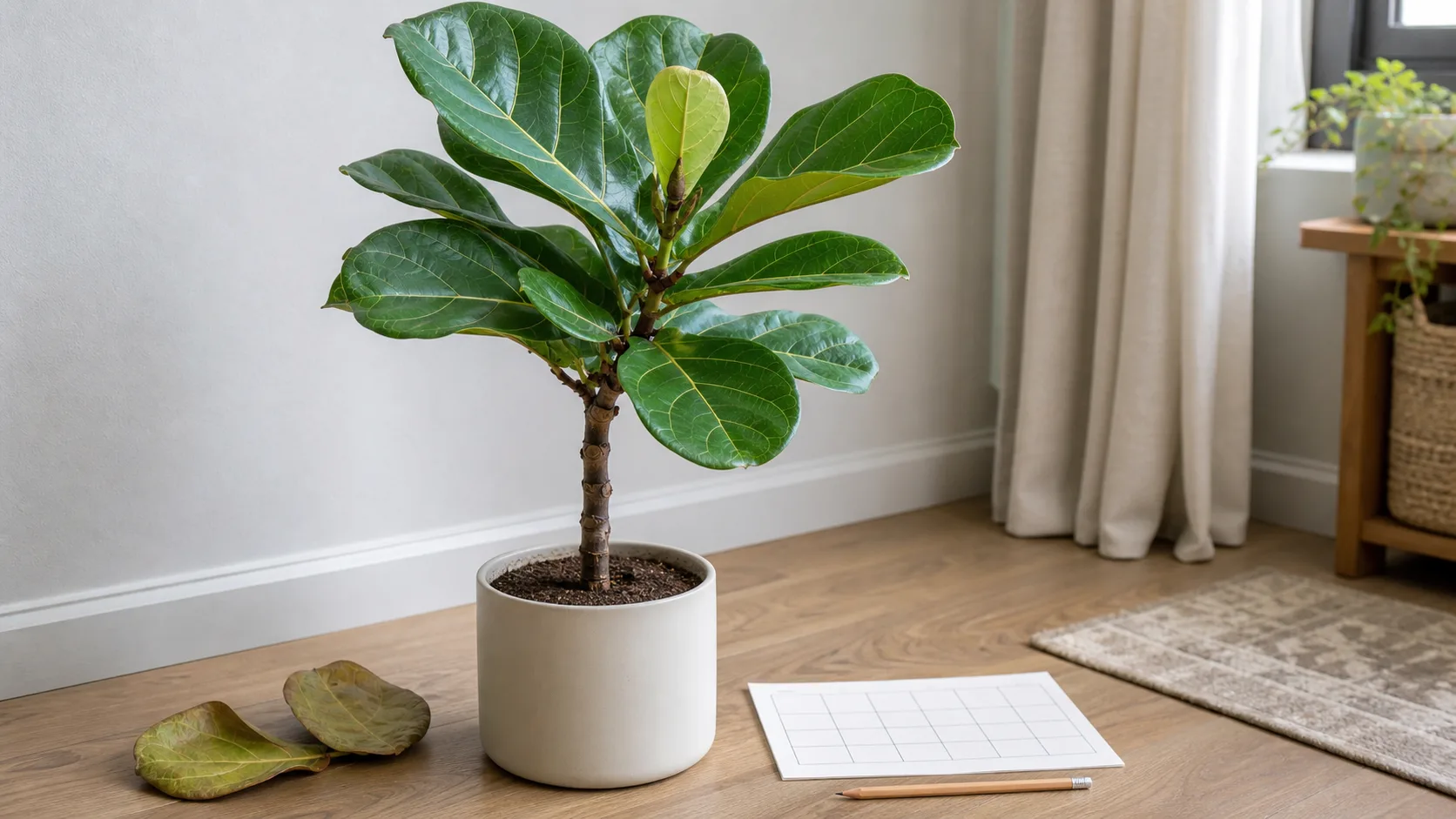
Recovery is usually quieter than the original leaf drop. Look for:
- fewer new leaves falling
- existing leaves remaining firm
- no upward progression from old leaves to new growth
- buds or young leaves staying attached
- soil beginning to dry at a more reasonable pace
- no new pest evidence
- a firm stem base
- no spreading sour smell from the pot
Old yellow or brown tissue will not turn green again, and a fallen leaf will not reattach. Judge progress by what happens next, not by whether old damage disappears.
If you are sorting out yellowing that has not yet led to leaf drop, see why plant leaves are turning yellow. For dry margins or expanding brown patches, use why plant leaves are turning brown. If those brown areas are showing up specifically on this plant, compare them with our fiddle leaf fig brown spots guide.
Common mistakes that make diagnosis harder
Watering because a leaf fell
Leaf drop is not a watering command. Check the root zone first.
Reading only the top inch
A large pot may remain wet in the middle long after the surface dries. That is especially common in lower light or cool weather.
Repotting before checking the timeline
If the plant was just moved, chilled, or repeatedly repositioned, repotting adds another stress and obscures the original pattern.
Moving it every few days
Trying three windows in one week prevents the plant from settling and makes it difficult to connect symptoms with an exposure.
Fertilizing a declining plant
Fertilizer does not correct cold shock, poor drainage, dry roots, or pests. University of Washington’s Plant Answer Line includes excess fertilizer among possible contributors to ficus leaf loss.
Assuming every soil insect is eating the plant
Small insects around damp potting mix are not automatically the cause of leaf drop. Identify them and look for plant damage before escalating treatment. Our guide to tiny bugs in houseplant soil can help separate soil activity from leaf-feeding pests.
Treating without pest evidence
Oil, soap, alcohol, and pesticides can damage an already stressed plant when misused. Find webbing, residue, insects, bumps, stippling, or distorted growth before choosing a pest treatment.
Cutting off every marked leaf
Damaged leaves can still contribute to the plant if they retain healthy green tissue. Remove leaves only when there is a clear reason, such as severe decline, sanitation needs, or confirmed pest management.
When to act faster
Escalate beyond observation when you find any of these red flags:
- repeated loss of upper or newest leaves
- a soft or darkening stem near the soil line
- sour-smelling soil
- a pot that remains saturated and cannot drain
- widespread mushy tissue
- visible pests across multiple leaves or nearby plants
- rapid decline that continues after the environment is stabilized
- a dry root ball that will not absorb water
- extensive root damage visible through drainage holes or during a justified inspection
A recently purchased plant dropping one older leaf is different from a plant losing new growth while sitting in sour, saturated soil. Urgency should match the evidence. If you need the baseline environment again, review the full fiddle leaf fig care guide.
What owner discussions add
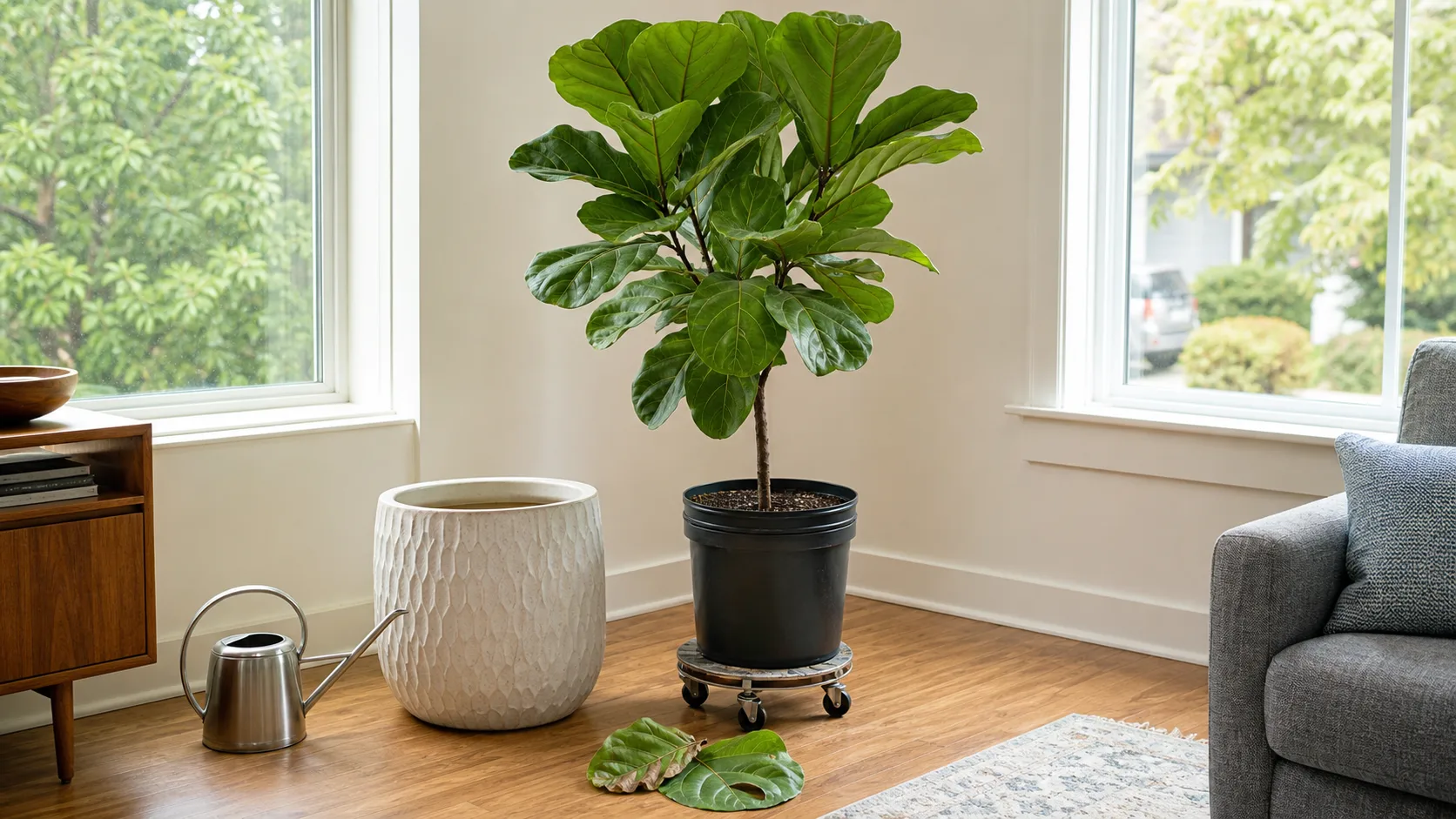
Public plant-care discussions repeatedly show the same kinds of confusion: owners repot after an early problem and then cannot separate transplant stress from the original cause; others extend watering intervals but continue judging moisture only at the surface; newly purchased plants may be moved repeatedly in search of the perfect spot.
These discussions are useful for identifying questions that care guides need to answer. They are not controlled diagnoses and do not establish how common any cause is. A forum story cannot prove that repotting, cold, or watering was solely responsible for another plant’s decline.
That is why this guide uses community evidence qualitatively and checks care claims against extension sources.
FAQ
Why is my fiddle leaf fig dropping leaves suddenly?
Look for a change during the last 14 to 21 days. Relocation, a repot, cold exposure, a new vent pattern, prolonged wetness, or a hard dry spell can appear as delayed leaf drop. Start with where the loss began, then check deeper moisture and environmental exposure.
Does a fiddle leaf fig drop leaves after being moved?
It can. Ficus plants are sensitive to sudden changes in location and conditions. Choose a bright, suitable position and allow the plant to settle instead of moving it between windows every few days. Do not assume all post-move loss is harmless, especially if new leaves are falling or the soil smells sour.
Is my plant overwatered or underwatered?
Use the whole root ball as evidence. A heavy pot with a damp center and yellowing lower leaves supports prolonged wetness. A very light pot, dry deeper soil, crisp tissue, or soil pulling from the sides supports drought stress. Leaf color alone cannot reliably separate them.
How often should I water a fiddle leaf fig?
There is no dependable universal schedule. Light, temperature, pot size, soil structure, and season all affect drying time. Check whether the top two inches have dried, then confirm that the deeper root zone is not still saturated. Water thoroughly when the plant actually needs it and allow excess to drain.
Should I repot a fiddle leaf fig that is losing leaves?
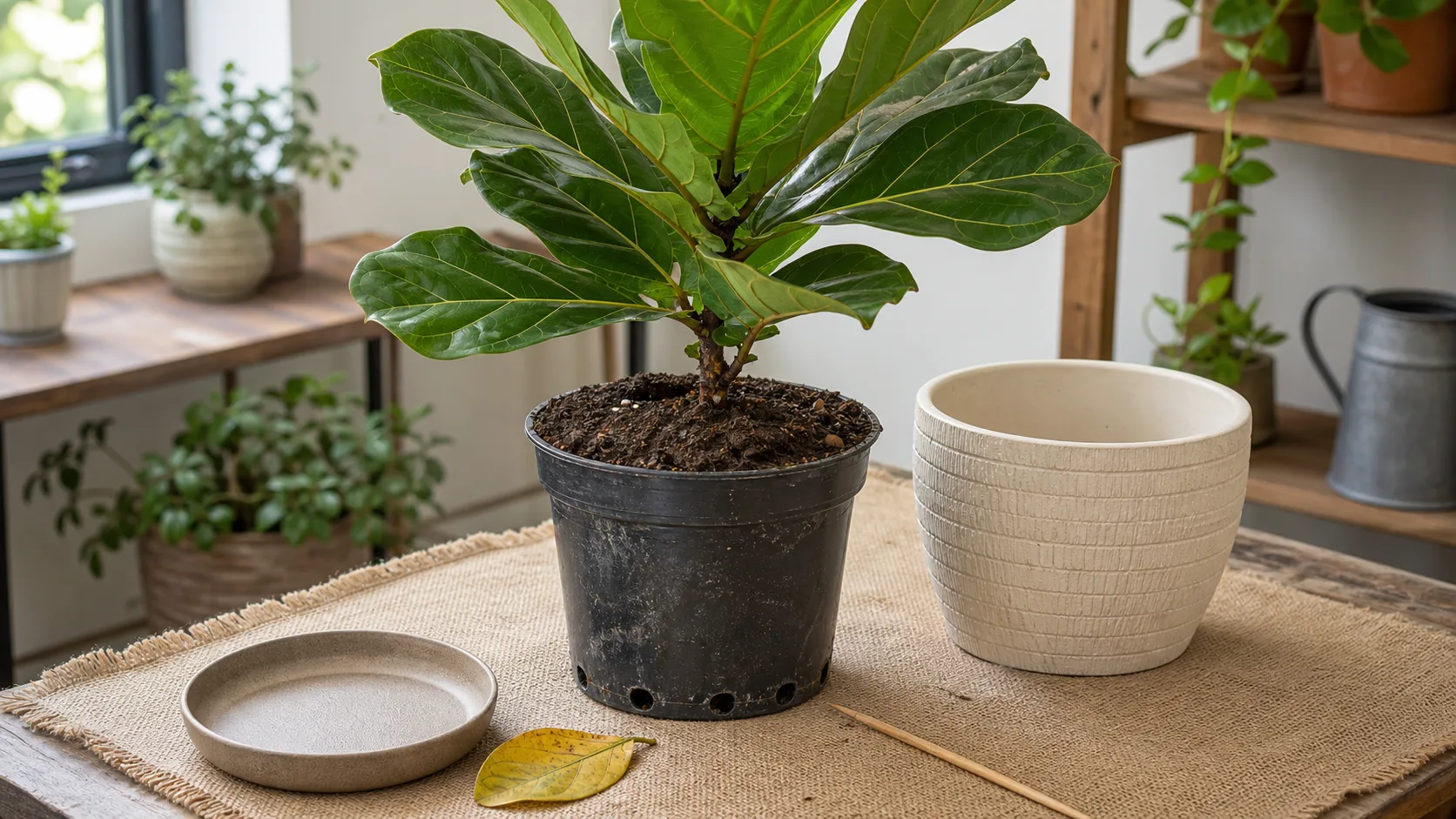
Not automatically. Repot when evidence points to a pot or root-zone problem, such as failing drainage, persistent saturation, sour soil, an unsuitable mix, or serious root damage. If the plant was recently moved or chilled and the pot is functioning normally, stability may be safer than another disturbance.
Can low light cause leaf drop?
Yes. Low light can reduce the plant’s water use, leaving the root zone wet longer. That interaction is why a routine that worked near a bright window may cause trouble after the plant is moved to a darker room.
Can cold glass damage the plant even if the room feels warm?
Yes. A leaf or pot pressed close to cold glass can experience a different temperature from the middle of the room. Check the plant’s position overnight and create some separation without repeatedly relocating it.
Can pests make a fiddle leaf fig lose leaves?
Yes, but look for credible evidence. Spider mites, scale, aphids, mealybugs, and thrips can cause visible feeding damage and decline. Webbing, sticky residue, cottony material, shell-like bumps, stippling, distorted growth, or actual insects support a pest diagnosis more than yellowing alone.
Will leaves grow back where they fell?
The fallen leaf will not return. The plant may produce new growth from active nodes or at the top, but bare areas on older wood do not always refill. The immediate goal is to stop ongoing stress and protect healthy growth.
Is one fallen leaf an emergency?
Usually not by itself. Record where it came from, inspect the plant, and watch for a repeated pattern. Act faster if the lost leaf was new or upper growth, or if you also find a soft stem, sour soil, failed drainage, or active pests.
Methodology and sources
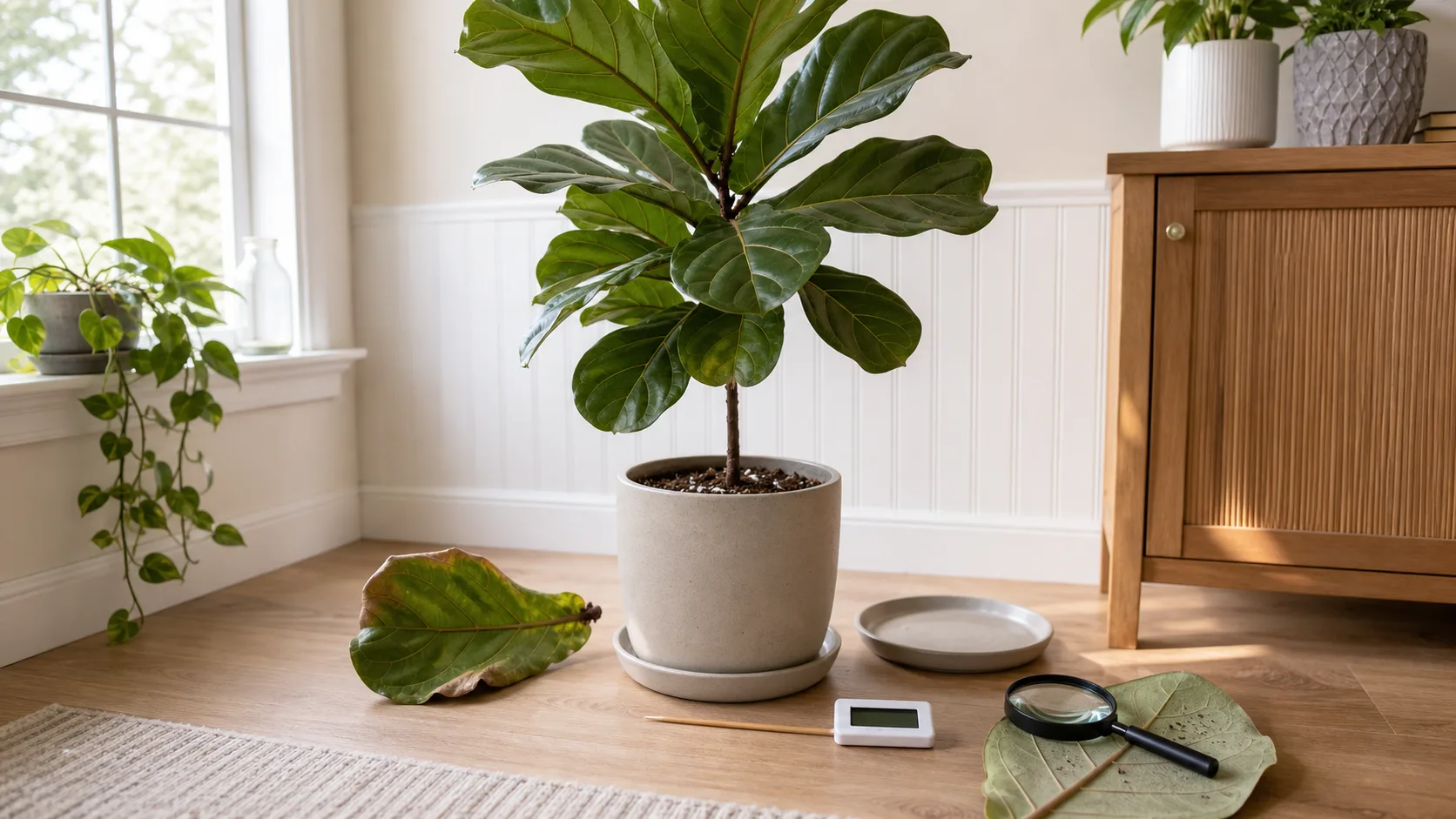
This guide organizes diagnosis by information that changes the next action: where leaf drop starts, what changed in the previous 14 to 21 days, deeper root-zone moisture, temperature exposure, and physical pest evidence.
Care and troubleshooting claims were checked against:
- North Carolina State Extension: Ficus lyrata
- UC Agriculture and Natural Resources: Fiddle Leaf Fig Houseplant Care
- Illinois Extension: Weeping Fig
- University of Washington Plant Answer Line: Yellowing and Dropping Ficus Leaves
- University of Maryland Extension: Mealybugs on Indoor Plants
Current public owner discussions were used only to identify recurring uncertainties around watering, relocation, cold exposure, and repotting. They were not used to calculate prevalence, establish case counts, or diagnose individual plants.
Freshness note: Source research was reviewed on July 19, 2026, and this article was updated on July 20, 2026. Recheck product labels and local extension guidance before using any pesticide.