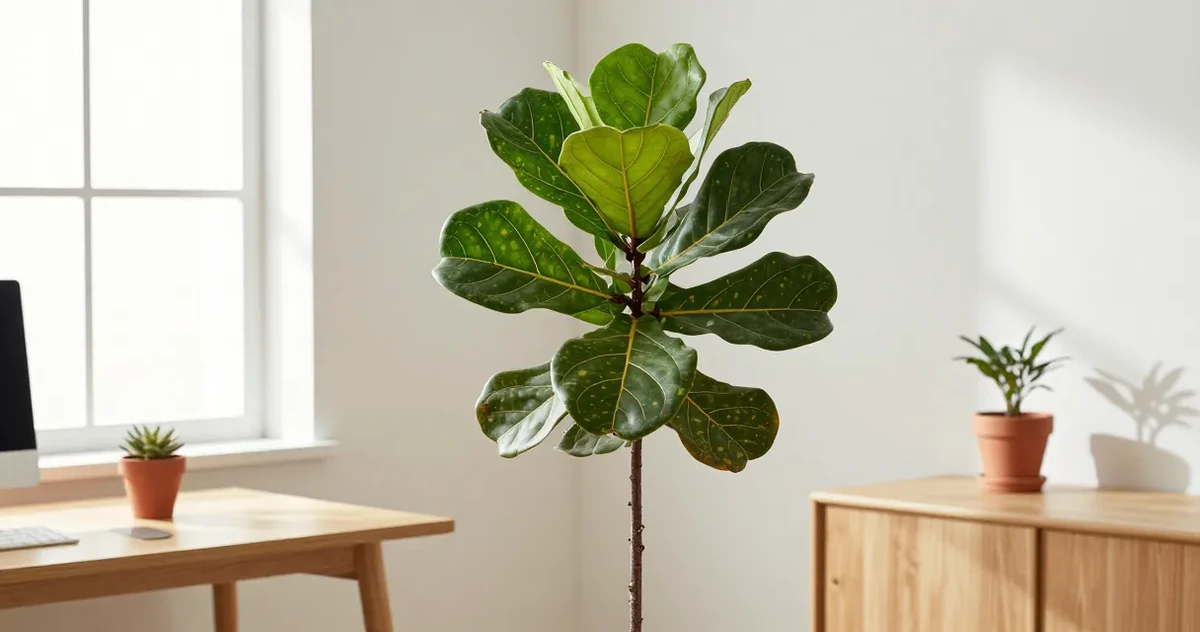
Fiddle Leaf Fig Brown Spots: Every Cause and How to Fix Them
You notice one brown spot, then another, then suddenly you are down a rabbit hole of advice that does not agree with itself. Water less. Water more. Move her. Repot her. Spray something. Leave her alone.
That is frustrating, and honestly, it is not because you are missing something simple. Brown spots on a fiddle leaf fig can come from different problems, and the fix for one can push another in the wrong direction.
The good news is that you can narrow it down fast without guessing. You do not need to memorize every fiddle leaf fig problem on the internet. You need the right first check.
Start With the Pattern, Not One Cause
The most common misdiagnosis is treating every dark spot like root rot, or every dry spot like sunburn, especially after a move or a new purchase. Generic advice like “water less” or “give more light” is incomplete because fiddle leaf figs often throw mixed signals.
Before you change anything, check these three things on the same leaf:
- Where did the spot start? Center, edge, tip, or sun-facing side?
- What does it feel like? Soft, dry, papery, or slightly water-soaked?
- What is the soil doing two inches down? Wet, evenly damp, or completely dry?
That one-minute check rules out a lot of bad guesses.
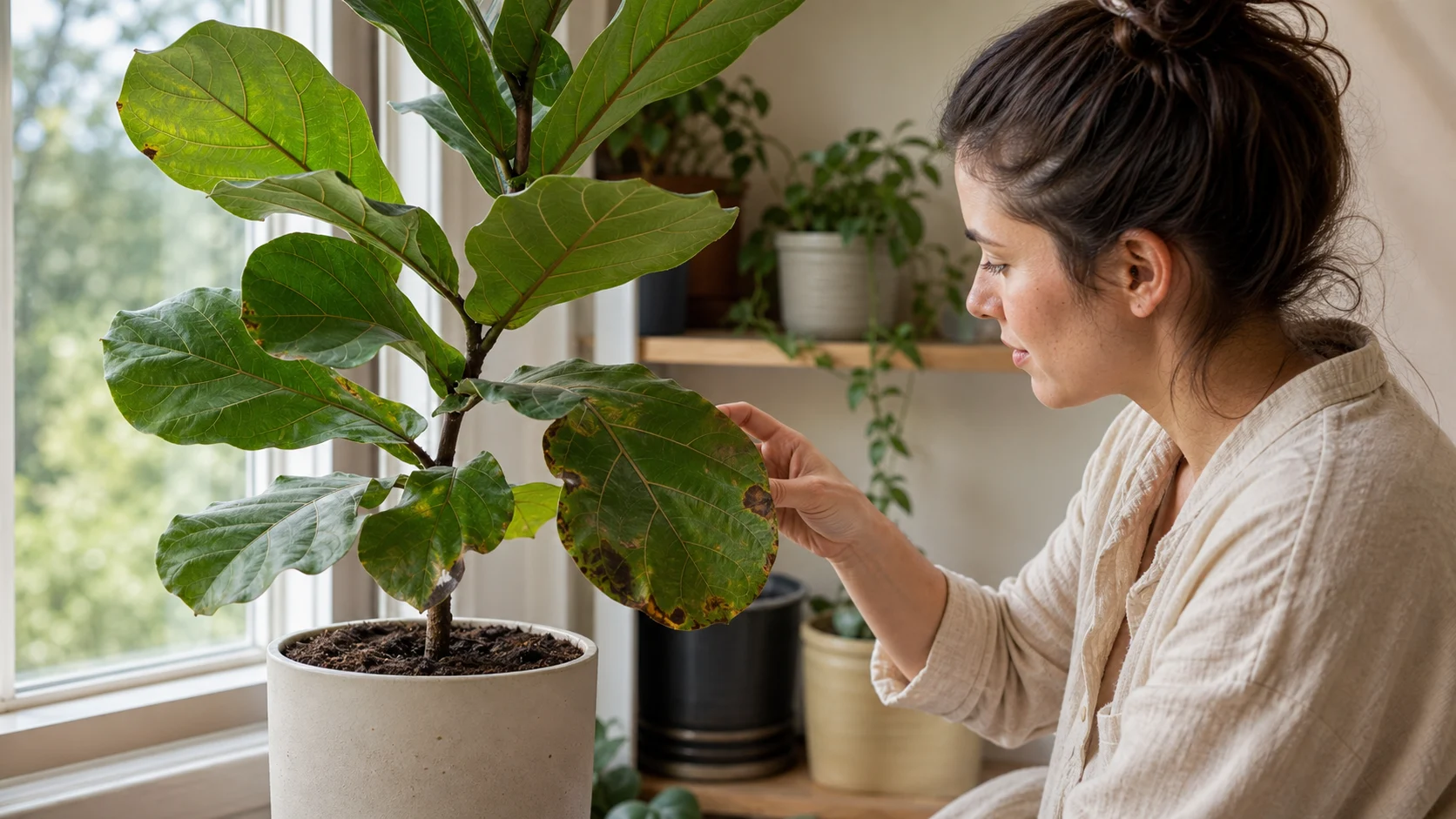
Checking spot location, texture, and soil together prevents one symptom from driving the wrong treatment.
Symptom Diagnosis Card
Start with the pattern, not the first fix you remember. For fiddle leaf fig brown spots, the wrong treatment can make her worse because water, light, pests, and root stress can produce similar-looking damage.
| What you see | Check first | Next move |
|---|---|---|
| Dark spots spreading from lower leaves | Moisture/root issue | Check roots and drainage before treating leaves |
| Bleached or crispy spots on the bright side | Sun scorch or move shock | Shift to bright filtered light |
| Dry brown edges and curling | Water rhythm | Check soil dryness before watering again |
| Small irregular spots showing up on several lower leaves | Stress plus leaf damage | Stabilize conditions and remove the worst leaves |
| Mixed signals, like dry topsoil but worsening spots | Compounding problem | Check the root ball, not just the surface |
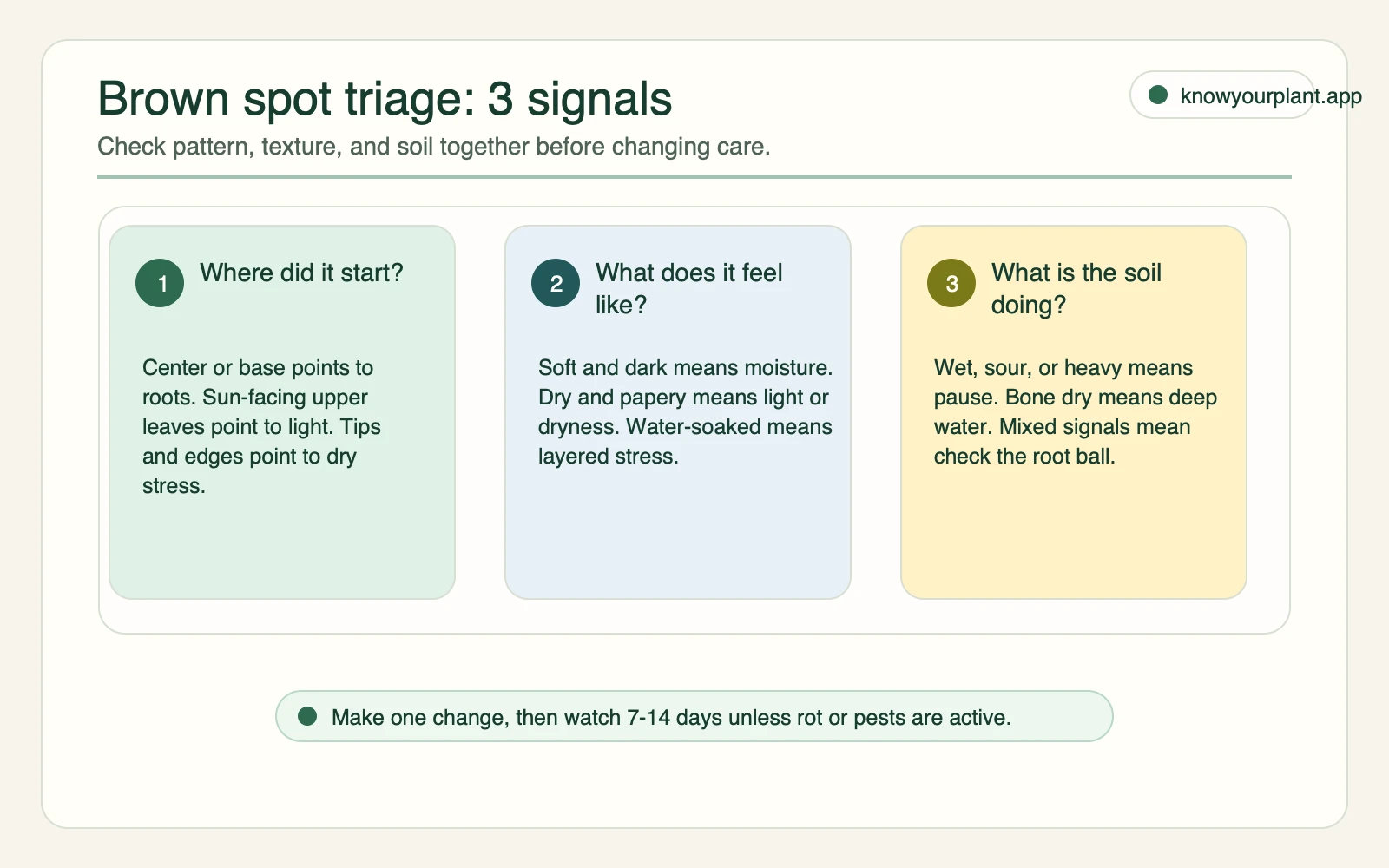
Use the triage card before changing care so the first move matches the spot pattern, texture, and root-zone moisture together.
What Most Brown Spot Guides Miss
This is where a lot of fiddle leaf fig owners get stuck, and it is a real pattern in troubleshooting discussions.
- Brown spots often show up after a move or a purchase, and people struggle to tell whether they are looking at wet-root stress or light shock.
- A lot of owners report mixed signals, like dry soil on top but dark roots lower down, or new spots right after repotting.
- Damage on one side of the plant often turns out to be exposure stress, while lower-leaf spotting pushes you back toward moisture and roots.
In plain language, the trap is treating one brown patch like a full diagnosis. A plant that was just moved can have sun-facing damage and a root-zone problem at the same time, so the safest first move is still pattern, texture, and soil together.
That is why location, texture, and soil matter more than the word “brown.”
Decision Tree
- Check whether the newest growth, oldest leaves, soil surface, root zone, or leaf undersides changed first.
- If the soil or roots are involved, fix drainage and watering rhythm before adding fertilizer or sprays.
- If pests are visible, isolate the plant and treat the pest life cycle, not just the visible damage.
- If the problem followed a move, repot, heat wave, grow light change, or winter heating, treat it as stress until the evidence says otherwise.
- Make one change, then observe for 7 to 14 days unless she has active rot or a fast-spreading infestation.
Common Mistakes
- Watering again because the leaves look sad while the root zone is still wet.
- Treating every brown or yellow mark like a nutrient problem.
- Spraying before checking leaf undersides, soil moisture, roots, and nearby plants.
- Repotting into a much larger pot, which keeps the root zone wetter for longer.
- Expecting damaged leaves to turn green again. Recovery usually shows up in new growth.
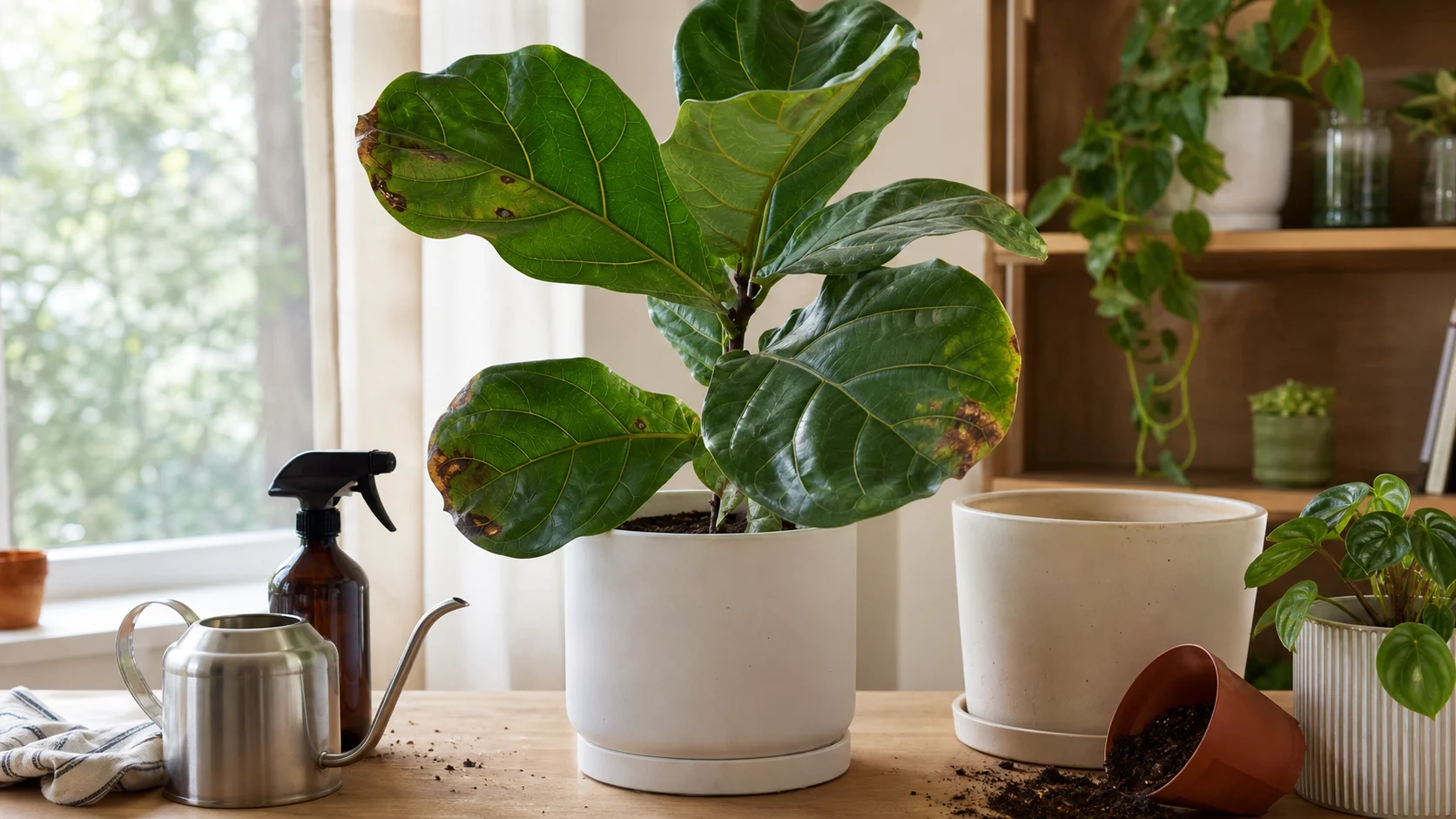
Extra water, an unverified spray, and an oversized replacement pot can compound brown-spot stress instead of solving it.
Seasonal Note
In winter or in heavily air-conditioned rooms, growth slows and soil stays wet longer. In summer, brighter light and faster drying can make the exact same watering routine suddenly too sparse. Re-check light, watering interval, and humidity whenever the season or room conditions change.
Expert Note: Source Layer
The practical checks above are grounded in extension and safety sources, then cross-checked against current plant-owner confusion patterns:
- NC State Extension Gardener Plant Toolbox, Ficus lyrata
- Ask Extension fiddle leaf fig drainage/root rot answer
- University of Maryland Extension root rots of indoor plants
Methodology Note
This remediation section was built from the Research Pack for fiddle-leaf-fig-brown-spots. Social patterns are used only as qualitative troubleshooting signals. Treatment and safety claims are anchored to the extension source layer above.
Freshness Note
Last checked against the current source layer and validated troubleshooting patterns in May 2026. If your fiddle leaf fig was just shipped, repotted, or moved to a much brighter window, weigh stress and watering together before assuming disease.
What the Spot Pattern Is Telling You
Brown spots do not land randomly. Each cause leaves a different signature, and the safest diagnosis comes from reading pattern plus texture plus soil, not color alone.
Here is the quick version:
| Cause | Where the spots usually start | Texture | What the soil often tells you |
|---|---|---|---|
| Root rot / root stress | Center or base of leaf, often lower leaves first | Dark, soft, sometimes slightly spongy | Staying wet too long, sour smell, heavy pot |
| Bacterial-type leaf damage | Lower leaves, often scattered or edge-starting | Can look slightly water-soaked before browning | May follow overwatering or general stress |
| Sunburn | Bright side of plant, often upper leaves | Dry, pale, papery | Soil can be normal |
| Underwatering | Tips and edges | Dry, crisp, curling inward | Very dry, sometimes pulling from pot sides |
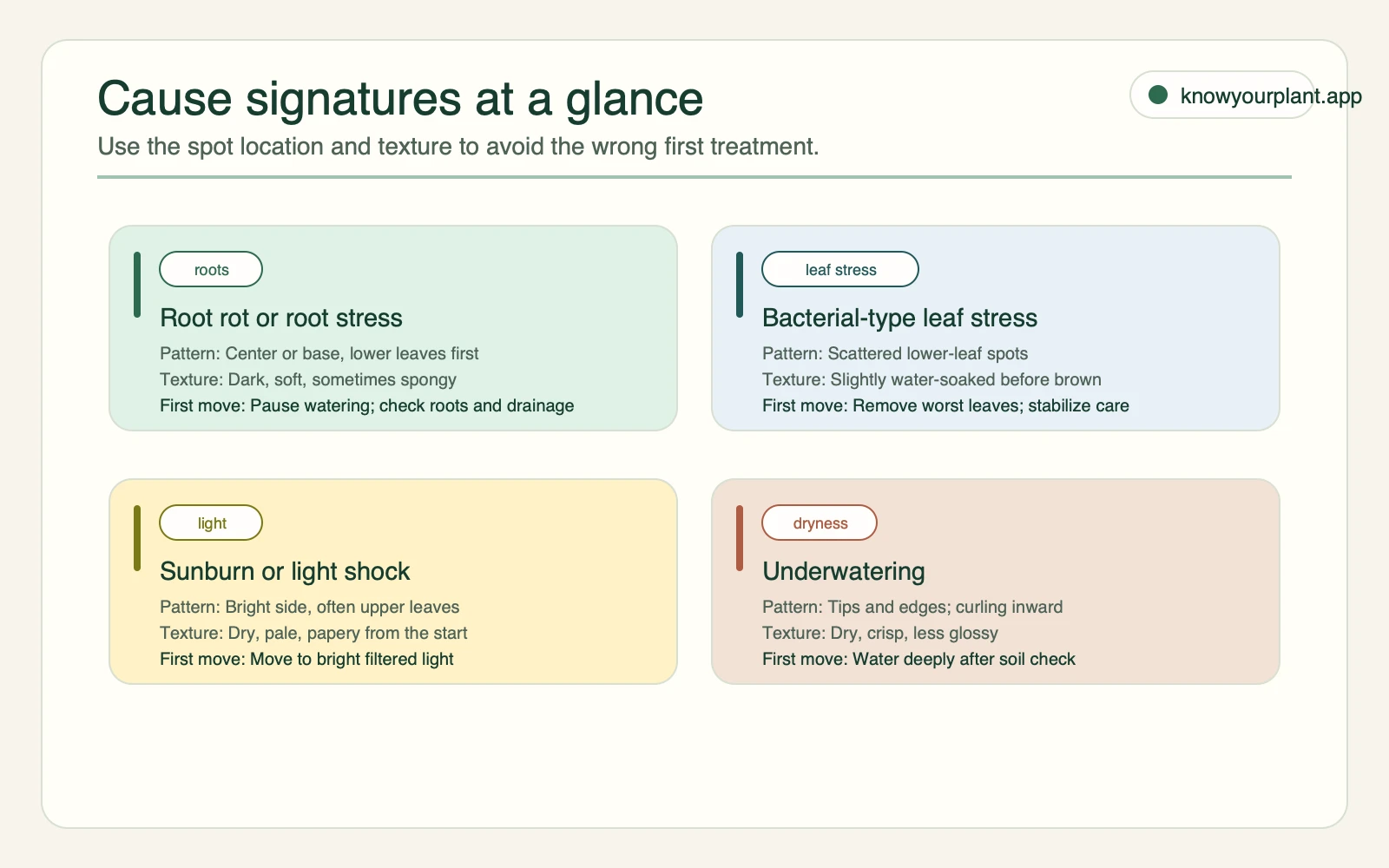
Use the signature map to compare root stress, leaf stress, sunburn, and underwatering without treating every brown mark the same way.
If you want the full picture of how she behaves day to day, the fiddle leaf fig care guide covers light, watering, soil, and repotting in more detail.
Cause 1: Root Rot From Overwatering
Root rot is the most common cause of fiddle leaf fig brown spots. The spots tend to be large, irregular, and very dark, sometimes almost black. They often begin closer to the center or base of the leaf rather than the edges. Press gently on one and it often feels soft, not crispy.
The rest of the plant usually backs that up. Soil stays wet for too long. The pot still feels heavy days later. There may be a sour or musty smell. If you slide her out of the pot, healthy roots are pale and firm. Rotted roots are brown or black, soft, and easy to break.
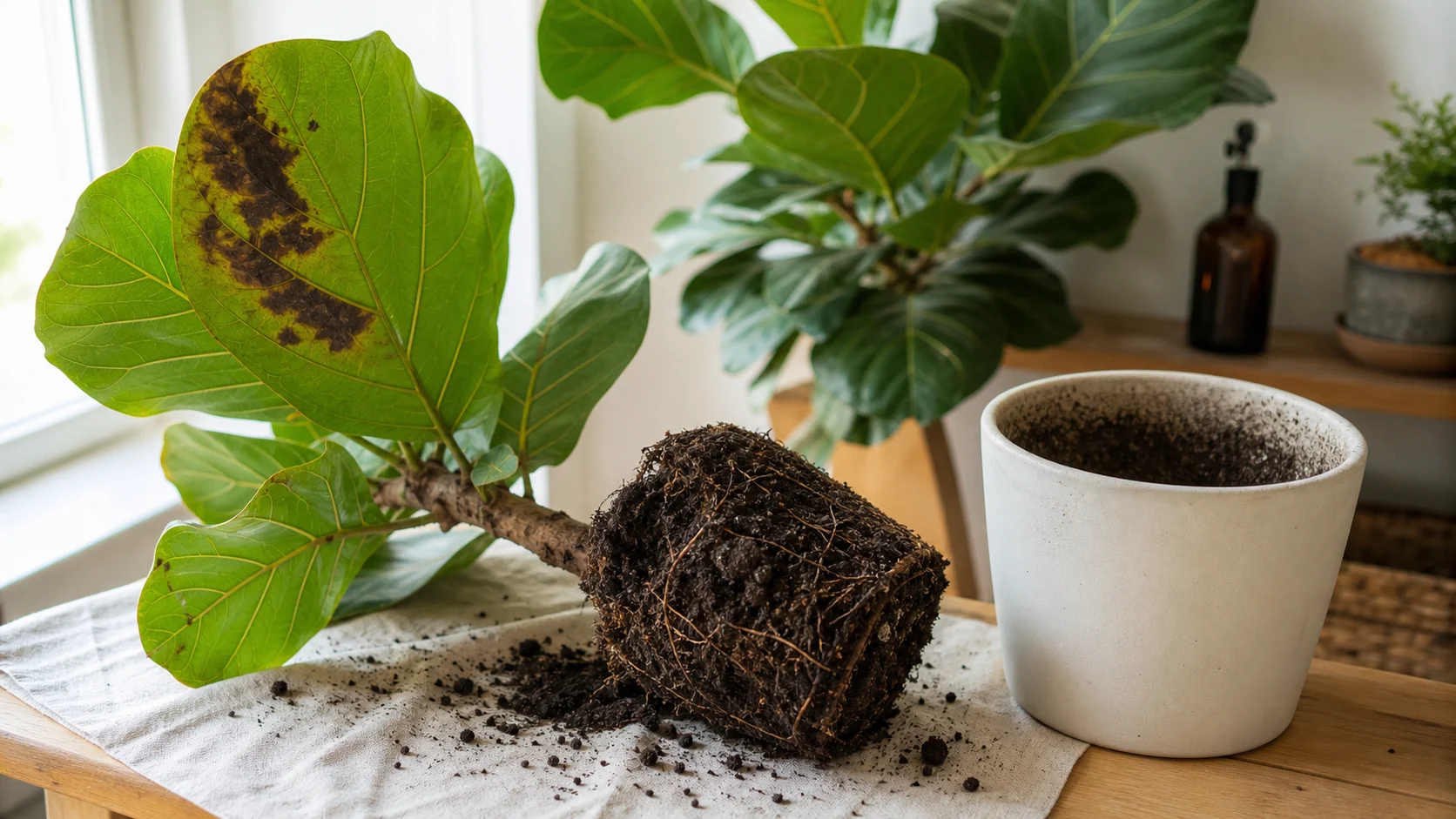
A dark, saturated root ball paired with soft central leaf damage points back to oxygen-starved roots.
NC State Extension and University of Maryland both point back to the same core issue here: roots sitting in saturated mix lose access to oxygen, and once that root zone starts breaking down, the leaves show it. If you want the full rescue sequence, the root rot treatment guide walks through what healthy roots should look and smell like before you trim or repot.
What to do today: Stop watering and check the root zone before anything else.
What to do this week: If the damage is mild, let the mix dry properly and make sure the pot drains well. If the damage is more advanced, gently remove the plant, trim soft black roots with clean scissors, and repot into fresh, airy soil in a pot with drainage holes.
What not to do: Do not keep watering on schedule just because the surface looks lighter in color. Check deeper.
Recovery timeline: Mild cases can stabilize within a few weeks, but clean new growth often takes six to eight weeks. If she drops a couple of leaves after root cleanup, that can still be part of recovery.
Cause 2: Bacterial-Type Leaf Damage
This one is trickier because it often shows up after the plant was already stressed. The spots are usually smaller than classic root-rot patches, more scattered, and can look a little wet or translucent before they dry out. They often appear on lower leaves first and may show up on several leaves around the same time.
In real life, this is one of the spots where people second-guess themselves. They fix the watering, but the leaves still worsen for a bit because the plant is dealing with a second layer of stress on top of the first.
What to do today: Remove the worst affected leaves if they are mostly damaged, and stop getting water on the foliage.
What to do this week: Keep conditions steady. Bright indirect light, no cold drafts, no constant moving, and better air flow around the plant help more than panic treatments do.
What not to do: Do not start layering random sprays if you have not ruled out root stress first.
Recovery timeline: If the main stressor is corrected, fresh spotting should slow within two to three weeks. The clearest sign of progress is clean new growth.
Cause 3: Sunburn and Light Shock
Sunburn looks different right away. The damaged area is dry, pale, and papery, and it usually shows up on the side facing strong light. Upper leaves get hit first. This often happens when a fiddle leaf fig goes from a dim corner or shop floor into hard direct sun too quickly.
The useful distinction here is texture. Sunburn looks dry from the start. It does not usually feel soft or water-soaked.
What to do today: Move her out of harsh direct sun. Bright filtered light is what usually works best.
What to do this week: If you want her in a brighter place long-term, shift her gradually over several days so the leaves can adjust.
What not to do: Do not assume “more light” is always the answer just because fiddle leaf figs like brightness.
Recovery timeline: Burned spots stay burned, but if the light is corrected, new leaves should come in clean. If the pattern still feels ambiguous, the plant sunburn guide helps you separate bleached, papery scorch from soft moisture-related damage. If your window gets too harsh by afternoon, grow lights for indoor plants can help you build a steadier setup.
Cause 4: Underwatering
Underwatering usually starts at the tips and edges. The damage is dry and crispy, the soil may shrink away from the pot, and the leaves can look less glossy or a little limp.
This surprises people because fiddle leaf figs are so associated with overwatering that some owners swing too far the other way. In warmer months especially, she may dry much faster than the winter routine trained you to expect.
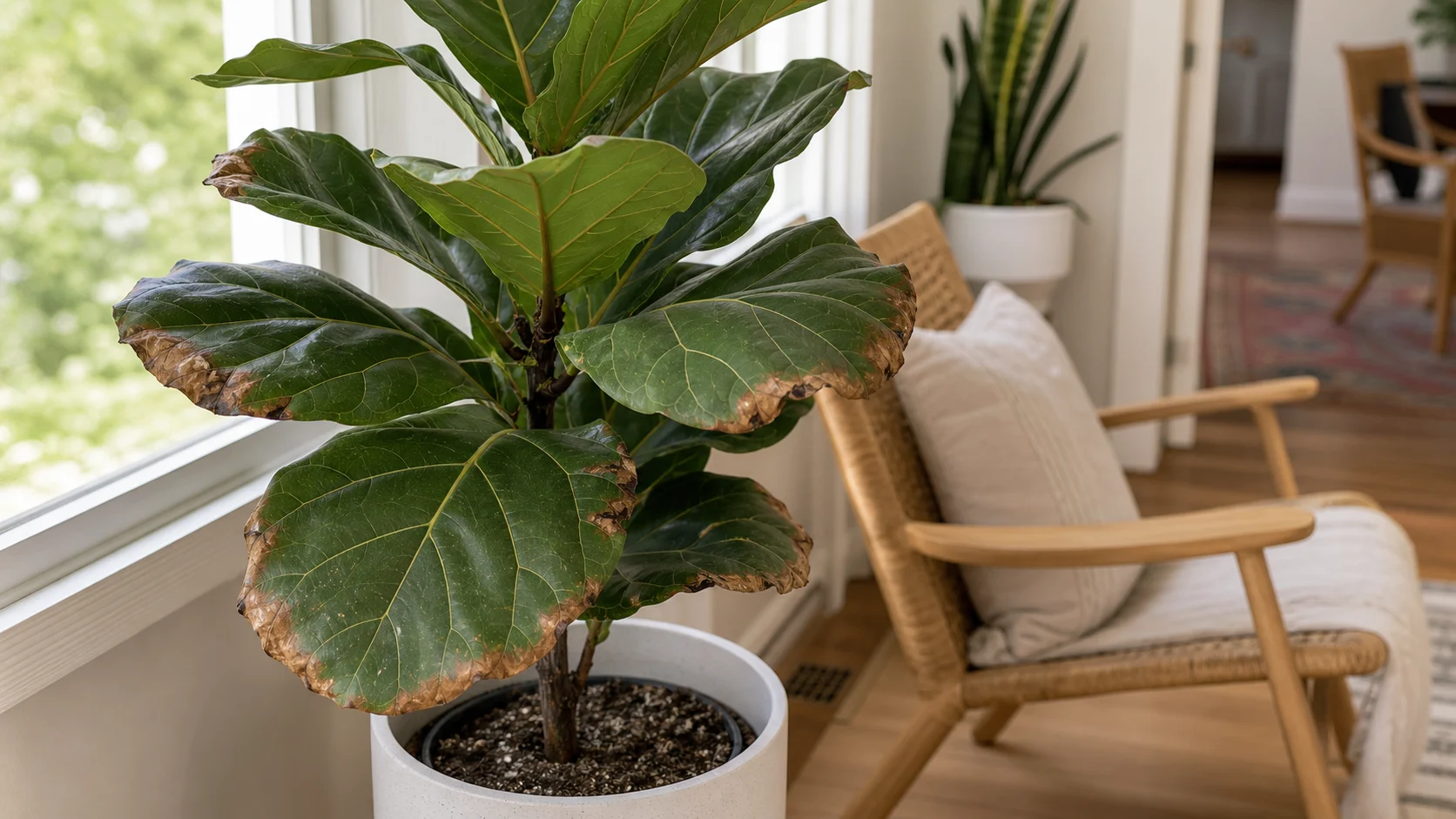
Dry, papery damage at several leaf tips and edges is the classic pattern to compare with a dry root zone.
What to do today: Check the soil two inches down. If it is dry there, water thoroughly and slowly until water runs through the drainage holes.
What to do this week: Watch how fast the mix actually dries instead of following a fixed calendar.
What not to do: Do not give tiny sips. A deep watering followed by a proper dry-down is much better.
Recovery timeline: Leaves often look firmer within a week once watering becomes consistent. Clean new growth is the stronger sign that things are improving.
When Two Problems Compound
This is the part most brown-spot guides skip, and it is often why people fix one thing and still feel stuck.
Fiddle leaf figs can absolutely have two problems at once. The most common chain is overwatering first, then secondary leaf stress after the roots were weakened. That is why some owners report dry-looking soil on top but dark roots lower down, or new spots still showing up after a repot.
You may be dealing with compounding problems if:
- some spots are dark and soft while others are dry and edge-based,
- you corrected the watering but lower leaves keep worsening,
- the plant had a recent move, repot, or sharp light change on top of the original problem.
If that sounds familiar, go back to the root zone and the environment together. Stabilize both. Do less, not more. If the stress started after topping, shaping, or a rescue cut, the fiddle leaf fig pruning guide can help you separate normal post-pruning stress from a deeper care problem.
How to Tell the Causes Apart at a Glance
When you are standing in front of her trying to decide what this is, work through these in order:
Where are the spots?
Center or base of the leaf suggests root trouble. Edges and tips suggest underwatering. Sun-facing upper leaves suggest sunburn. Lower leaves with spreading irregular patches push you toward stress-related leaf damage.
What is the texture?
Soft and dark points to moisture trouble. Dry and crisp points to sunburn or underwatering. Slightly water-soaked spotting points to something beyond simple dryness.
What is the soil doing?
Soggy and slow-draining points to overwatering. Bone dry and pulling from the pot points to underwatering.
Did this start after a move, repot, or light change?
That timing matters. One-sided damage after a move often points to exposure stress, not instant disease.
One more thing: existing spots will not turn green again. The win is not perfect old leaves. The win is that the spotting stops and the next leaf comes in clean.
What To Do Today, This Week, and This Month
If you want the short version, use this.
Today
- Feel one brown spot.
- Check the soil two inches down.
- Look at which leaves were hit first.
- If the soil is wet, pause watering.
- If the damage is on the bright side only, pull her back from direct sun.
This week
- Check the roots if the mix is staying wet too long.
- Remove only the worst damaged leaves.
- Keep conditions steady instead of moving her from spot to spot.
- Make one change, then watch.

Inspect the damaged leaves in the plant’s steady spot, remove only the worst, and watch before making another change.
This month
- Track whether new spots are still appearing.
- Watch new growth more than old leaves.
- Adjust watering to the season, not to habit.
- If the roots were damaged, give her time before judging the recovery.
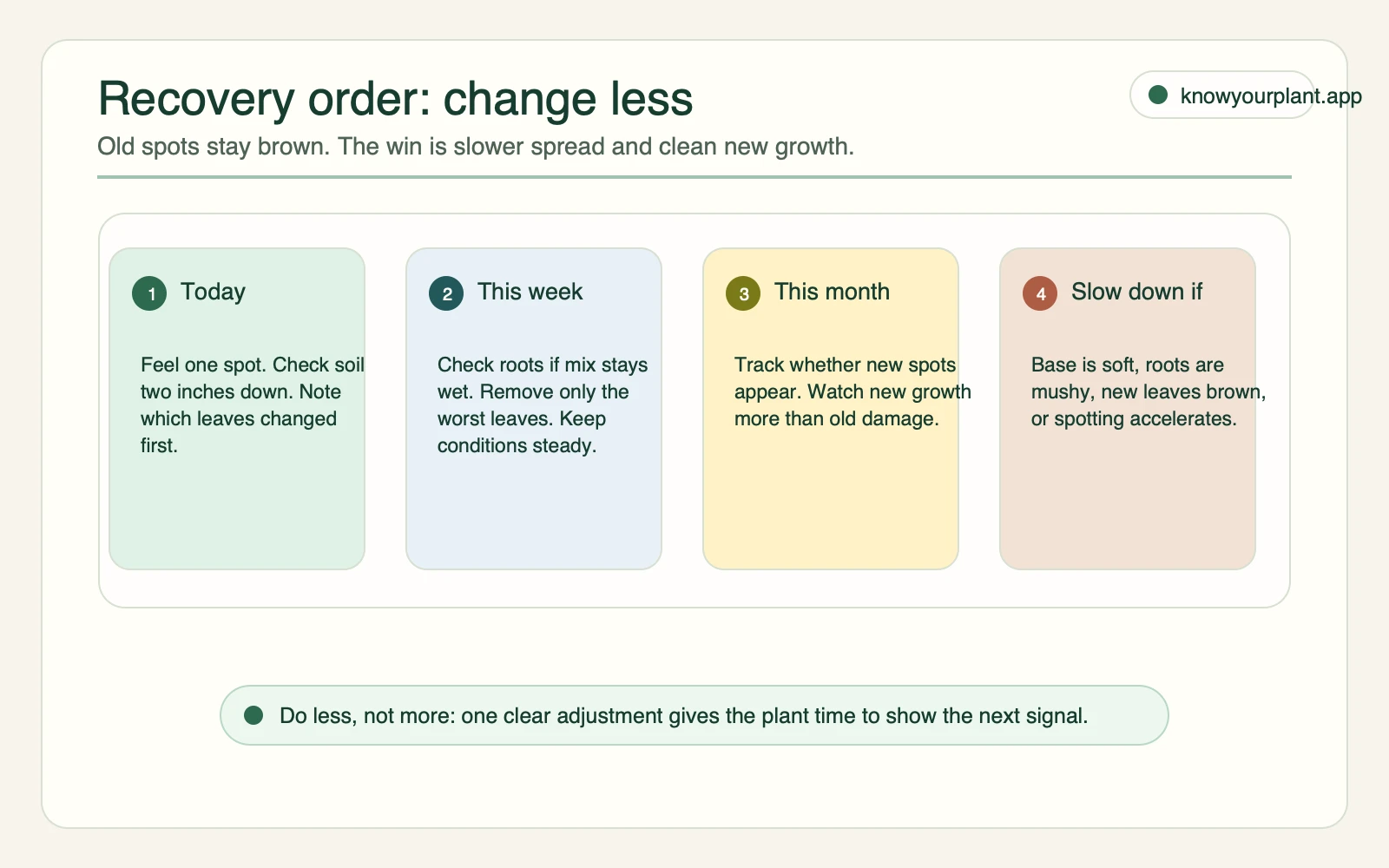
Use the recovery order to avoid stacking fixes: make one clear change, watch new growth, and slow down when root or trunk red flags appear.
Seasonal Patterns Worth Knowing
Brown spots are not spread evenly through the year.
Root rot is most common in winter, when growth slows and the mix stays wet longer. Sunburn tends to show up in spring and summer, when a window that felt gentle a few months ago suddenly gets sharp. Underwatering often surprises people in warmer months when she is growing faster and drinking more. Stress spotting often follows shipping, repotting, or a move into a very different room.
The season does not give you the answer by itself, but it helps you weight the possibilities. If you are comparing this symptom with browning on other houseplants, why plant leaves are turning brown gives you a broader pattern-by-pattern triage.
When To Stop Troubleshooting at Home
Most fiddle leaf fig brown spots are manageable at home. It is time to slow down and get more cautious if:
- the trunk feels soft near the base,
- the roots are mostly black and mushy,
- new leaves are browning as they unfurl,
- spotting is accelerating across the plant,
- or the plant is dropping leaves fast while the root situation still feels unclear.
At that point, the safest move is not another random treatment. It is a calmer diagnosis of roots, drainage, and environment before anything else.
If you are troubleshooting another common plant symptom, see Fiddle Leaf Fig Dropping Leaves: Start Where It Fell for a focused diagnosis and recovery plan.
Frequently Asked Questions
Can fiddle leaf fig brown spots be reversed?
No. Brown tissue does not turn green again. The goal is to stop the spread and help new leaves come in healthy.
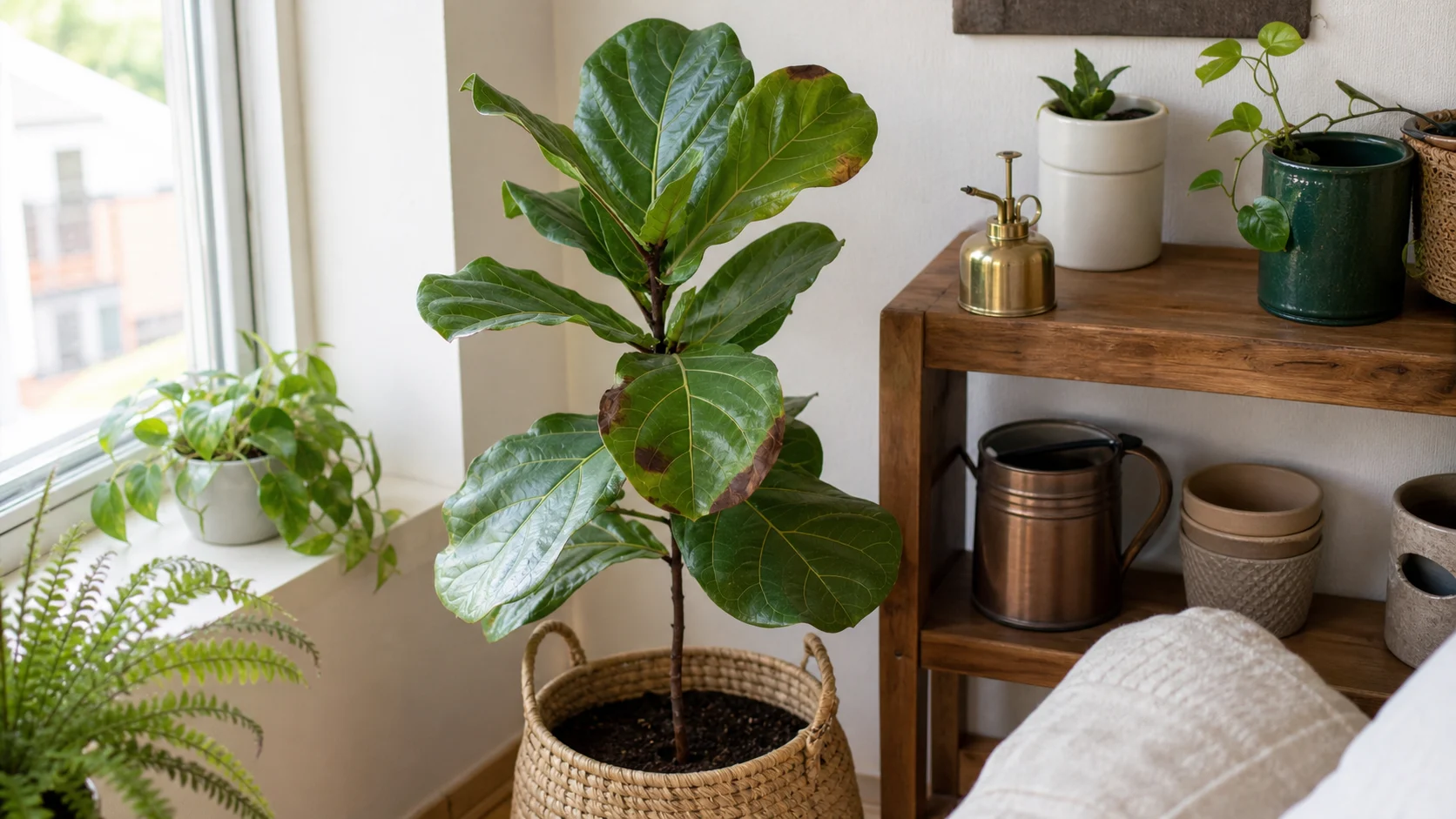
Stable brown patches can remain on older leaves while healthy upper growth shows that the plant is recovering.
How do I know if it is root rot or bacterial-type leaf damage?
Start with texture and soil. Root-rot spots are usually larger, darker, and softer, with soggy soil somewhere in the picture. Bacterial-type spotting is often smaller, more scattered, and may look slightly water-soaked on several leaves at once. If the soil is staying wet too long, check roots first.
Should I cut off leaves with brown spots?
Only if the leaf is badly damaged or still worsening. A leaf with one stable brown patch can stay. A leaf that is mostly brown or clearly spreading can be removed cleanly at the petiole.
Why are brown spots appearing on new leaves?
That usually means the underlying stress is still active. Check roots, watering consistency, recent light changes, and drafts. New leaf damage means the plant is still dealing with the cause, not just showing old damage.
How often should I water my fiddle leaf fig to avoid brown spots?
There is no single number that works in every home. Check the soil with your finger about two inches down. Dry there usually means it is time. Still damp means wait.
Can I save a fiddle leaf fig with severe root rot?
Sometimes, yes, if some healthy roots remain. Remove the plant, trim soft black roots, repot into fresh well-draining mix, and restart watering carefully. Recovery is slower than most people want, but it is possible.
Why do brown spots keep appearing after I fixed the watering?
Usually because there is a second layer to the problem: lingering root damage, environmental stress, or a recent move that the plant is still reacting to. This is where compounding problems show up. Go back to pattern, texture, and soil instead of assuming the first fix failed.
If you are newer to houseplants and want a steadier foundation, the indoor plant care guide for beginners walks through watering, light, and soil in plain language.
If you want help keeping the diagnosis, watering checks, and recovery timeline straight, KnowYourPlant can track the plant, remind you when to check her again, and help you see whether the next change is real improvement or a new warning sign.