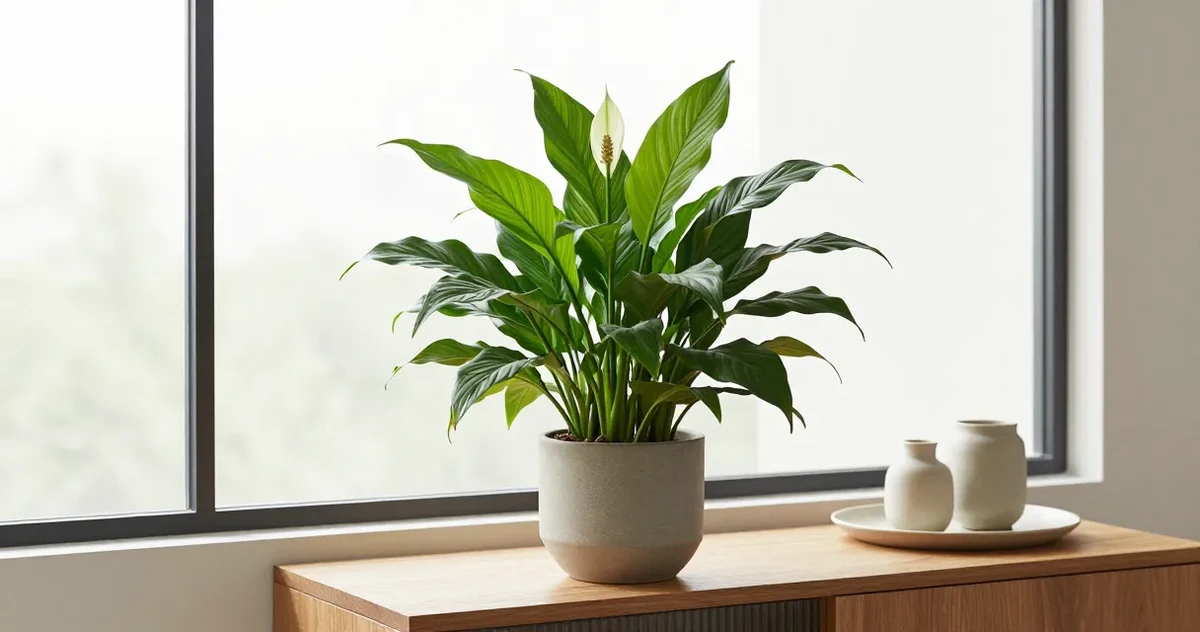
If your peace lily drooped while you were at work and then perked right back up after a drink of water, you already understand this plant’s most defining trait. Peace lily care is built around one central skill: learning to read your plant instead of following a fixed schedule.
A peace lily (Spathiphyllum) is a tropical foliage plant that produces elegant white sail-shaped blooms indoors, as long as you match its light, watering, and humidity needs to what it actually signals rather than what a calendar tells you.
That might sound vague. It is not. Peace lilies are unusually communicative, and once you know what to look for, caring for one becomes much more intuitive.
This guide is built for the real questions owners ask next: Is the droop from thirst or wet roots? Is this plant getting enough light to bloom? Does the pot setup make overwatering more likely? And is a peace lily safe around pets?
Peace Lily Identification Snapshot
Use this quick identification snapshot before you copy care advice from another plant guide:
- Leaves: glossy, deep green, lance-shaped leaves that rise from the base in a clump rather than on woody stems.
- Flowers: a white hood-like spathe surrounding a pale spadix. The spathe often starts bright white and slowly ages to green.
- Growth habit: upright, fountain-like, with new leaves emerging rolled and then unfurling.
- Indoor behavior: dramatic droop when thirsty, steady recovery after watering, and slower blooming in dim rooms.
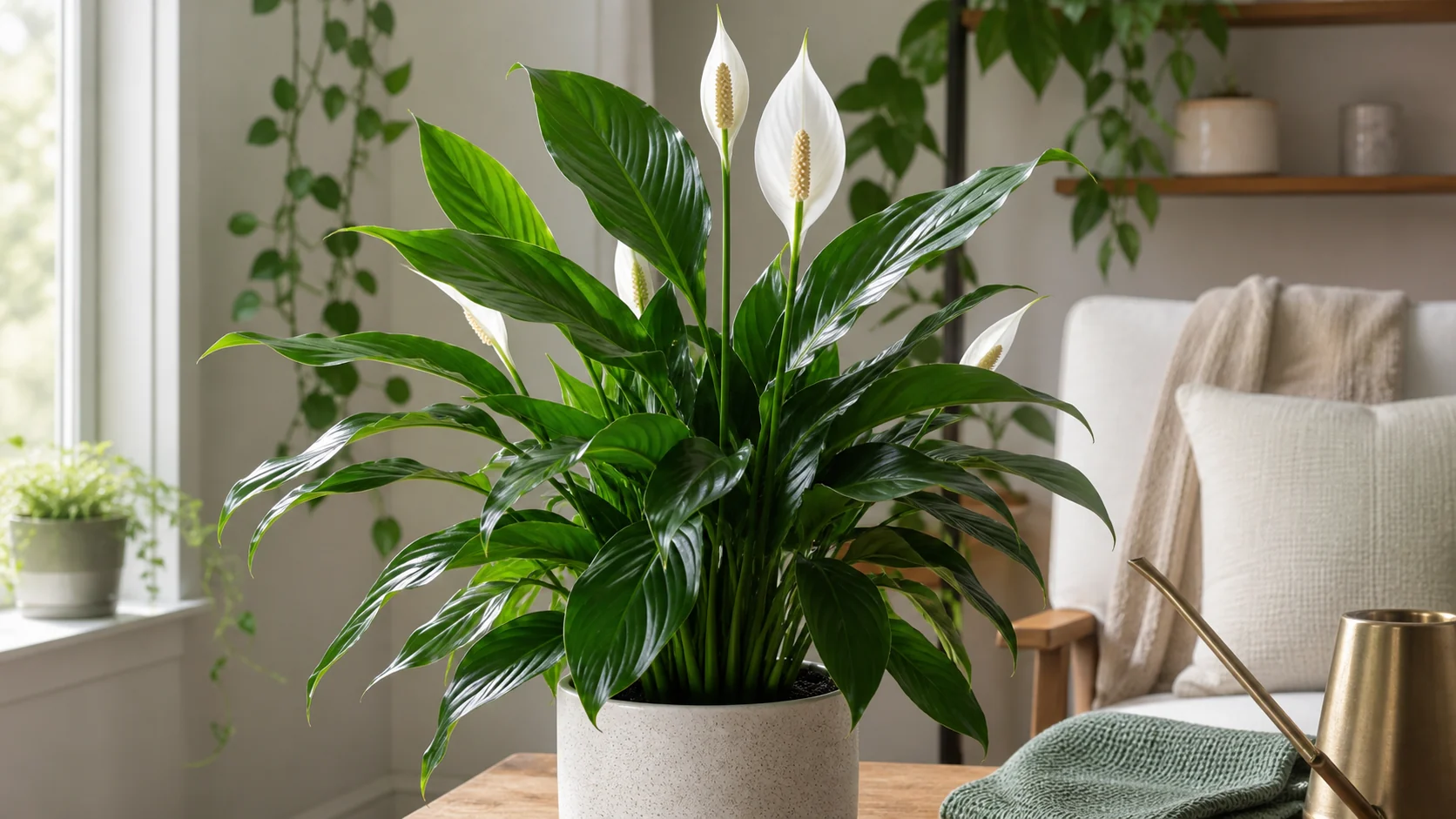
Glossy basal leaves and white spathes make a healthy peace lily easy to recognize indoors.
If your plant has this clumping habit, dark glossy foliage, and a single white spathe rather than clusters of petals, you are almost certainly caring for a peace lily rather than a flowering lily.
What Most Care Guides Miss
Most peace lily guides hand you the same baseline rules: bright indirect light, keep the soil moist, mist occasionally. Those rules are not wrong, but they skip the part where things actually go sideways.
The most common misdiagnosis: When a peace lily droops, almost every plant owner reaches for the watering can. That instinct is right about half the time. The other half, the droop comes from something else entirely: wet soil that cannot drain, roots that have run out of room, or stress after a recent repot. Watering a plant that is already waterlogged speeds up root damage rather than fixing the droop.
Why generic advice falls short: Most guides treat “moist soil” as a single uniform state. In practice, moist soil in a nursery pot with drainage holes behaves completely differently than moist soil in a decorative cachepot with no drainage. The container type changes how quickly oxygen reaches the roots and how long moisture lingers, which changes how often you should water and when overwatering becomes a real risk.
The practical first check: Before watering a drooping peace lily, press your finger one inch into the soil. If it feels wet or cool, the problem is probably not thirst. Check for drainage before you add any more water. If the soil is dry and the pot feels noticeably light when you lift it, that is a clearer signal to water than the droop alone.
Social Listening: What Peace Lily Owners Keep Getting Stuck On
The same owner-confusion pattern shows up again and again in peace lily threads: people start with a once-a-week routine, a decorative pot, and a bright spot near a window, then get blindsided when the plant droops even though the soil still feels wet.
The recurring pain points are consistent:
- fixed watering schedules that ignore season, pot size, and drainage
- drooping that gets treated as thirst even when roots are sitting in wet soil
- cachepots without drainage holes that quietly trap extra water
- post-repot droop that makes owners change too many variables at once
That community signal is useful because it tells you where peace lily care actually breaks down in ordinary homes. The safest response is not to water on schedule. It is to check soil moisture, pot weight, drainage, and recent stress together before changing anything.
Peace Lily Care Cards
These care cards keep the routine simple while still reflecting how peace lilies behave indoors.
| Care card | What to aim for | What to avoid |
|---|---|---|
| Light | Bright to medium indirect light | Direct afternoon sun or a windowless corner |
| Water | Water when the top inch is dry and the pot feels lighter | Fixed once-a-week watering regardless of conditions |
| Pot setup | Nursery pot or cachepot setup with real drainage | Decorative containers that trap standing water |
| Humidity | Average indoor humidity is workable, higher humidity is even better | Dry heat from vents, radiators, or constant AC blast |
| Soil | Moisture-retentive but airy indoor mix | Dense, soggy mix that stays wet for many days |
| Feeding | Half-strength balanced fertilizer in spring and summer | Heavy winter feeding or fertilizer on stressed roots |
If you only remember one thing from these care cards, make it this: a peace lily is easier to care for in a pot with drainage than in a beautiful pot that hides standing water.
Light: Shade Tolerance Does Not Mean No Light
Peace lilies are often marketed as low-light plants, and they do tolerate shade better than most flowering houseplants. But there is a difference between tolerating low light and thriving in it.
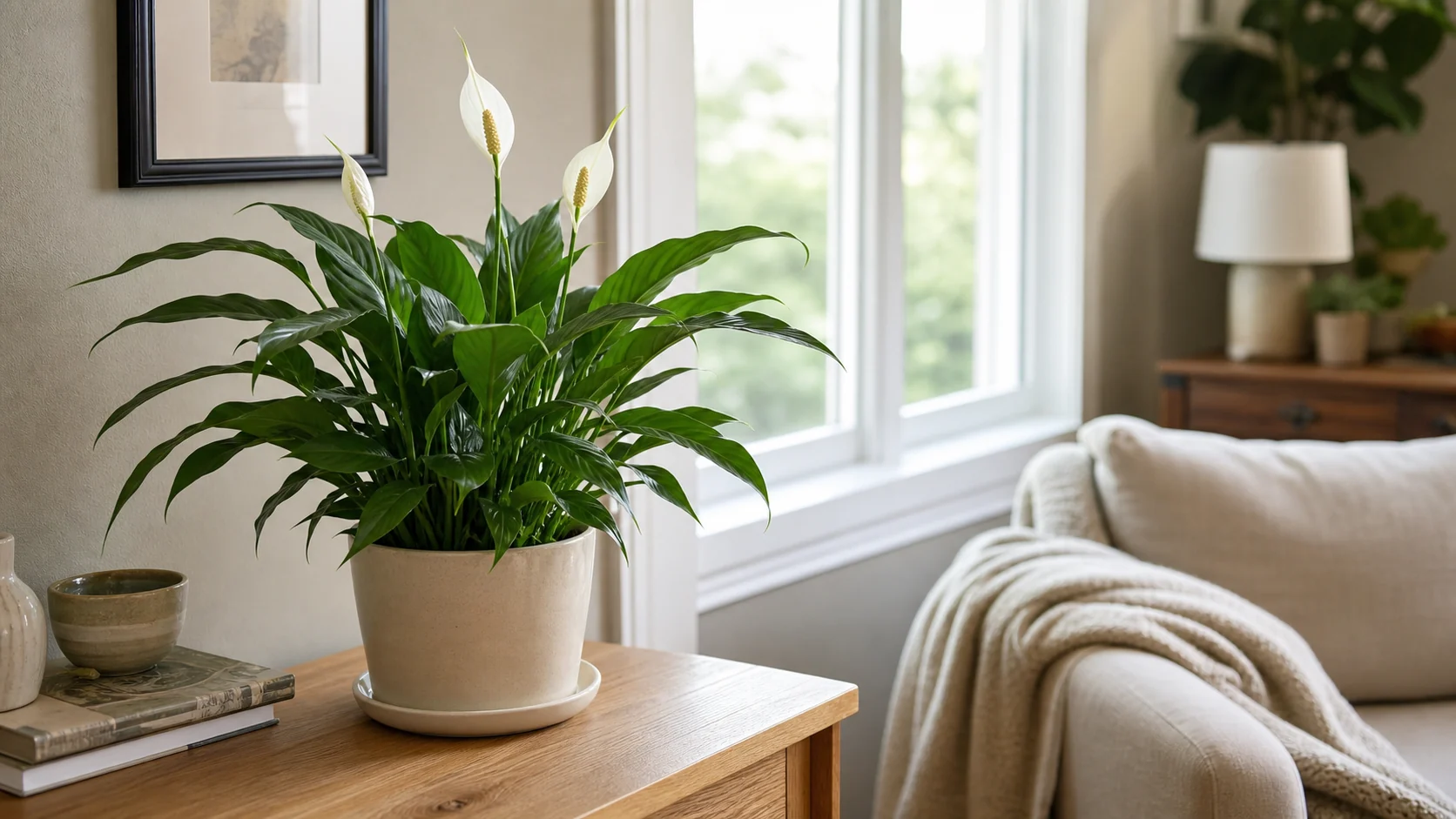
A bright window can support steady peace lily growth without exposing the leaves to direct sun.
“Peace lilies prefer partial to deep shade and should not be placed in direct sunlight, which can quickly cause brown patches on the foliage.” – North Carolina State University Extension Gardener Plant Toolbox
In a genuinely dim room, a peace lily will stay alive but rarely bloom. In a bright room with no direct sun, it will grow steadily and put out flowers through spring and into summer.
The ideal spot is a few feet back from a window that gets indirect light for most of the day. North or east-facing windows often work well. South or west-facing windows can work too, as long as you keep the plant far enough back that the leaves never sit in a direct sunbeam.
Direct sun is the main thing to avoid. It scorches leaves quickly, leaving brown patches that will not recover.
A simple placement test: If you can comfortably read a book in that spot without turning on a lamp, your peace lily will probably do fine there. In rooms with no usable natural light, a basic grow light on a timer can substitute. Our guide to grow lights for indoor plants covers the options that work well with tropical foliage plants.
Watering: The Most Common Point of Confusion
Most peace lily problems trace back to water, either too much, too little, or the wrong pot setup that makes it hard to judge either.
Peace lilies prefer to stay evenly moist, but they do not want to sit in soggy soil. The root system needs air as much as it needs water, and roots that stay waterlogged start to break down within days.
“Peace lilies like damp soil but should not be overwatered, and do best in a well-lit area kept out of direct sunlight.” – University of Florida IFAS Extension, Gardening Solutions
The most reliable watering method combines two quick checks. Press your finger about an inch into the soil. If the top layer is dry, that is one signal. Then lift the pot. If it feels noticeably lighter than it did after your last watering, that is the second. Both signals together mean it is time to water. If the soil still feels cool and damp, or the pot still feels heavy, give it another day.
What Drooping Actually Tells You
A drooping peace lily looks like a crisis, but the droop itself is just a signal. What the droop means depends on everything around it:
Droop plus dry soil: The plant is thirsty. Water thoroughly and it should recover within a few hours.
Droop plus wet or damp soil: Something other than thirst is the problem, likely drainage, root crowding, or root damage. Adding more water will make this worse.
Droop after a recent repot: Normal transplant stress. Roots disturbed during repotting take several days to resettle. Keep soil evenly moist but do not overcompensate.
Droop despite good watering and drainage: The plant may be root-bound. If roots are filling the container and pushing out of drainage holes, the plant cannot take up moisture efficiently. A pot-up of one size is the fix.
For a symptom-first walkthrough that separates thirst, wet-root stress, and transplant shock, use our peace lily drooping guide before changing the watering routine.
If yellowing leaves are appearing alongside the droop, that usually points to a watering imbalance. Our guide on peace lily leaves turning yellow walks through the specific causes and what to check first, and if you want the broader picture across plant types, why plant leaves turn yellow covers the full range.
Container Type Changes Everything
The pot you choose affects how often you should water and how quickly overwatering becomes a risk. This is the variable most care guides leave out entirely.
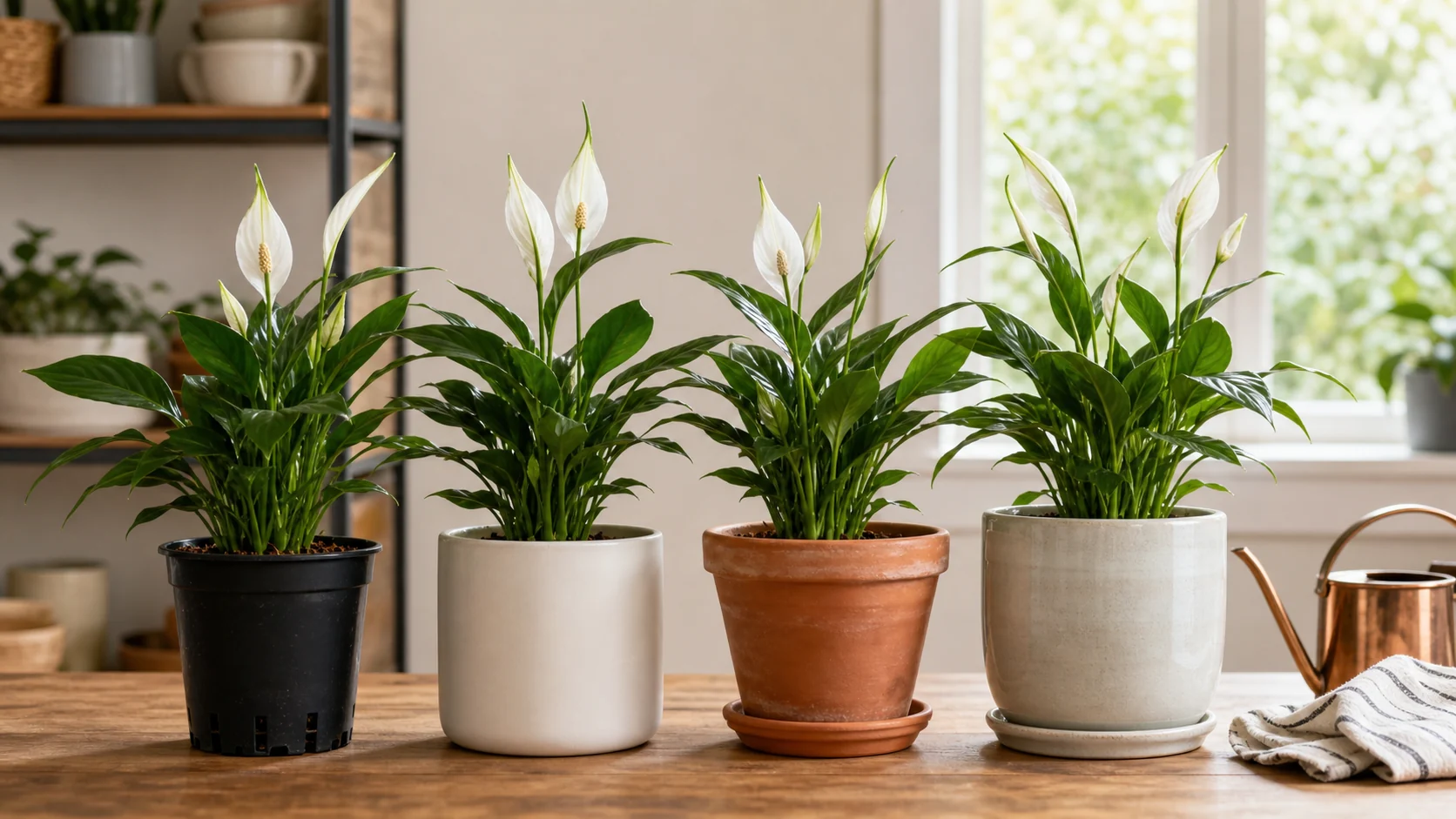
Nursery, cachepot, terracotta, and glazed containers create very different drainage conditions.
| Container type | Drainage | Overwatering risk | Notes |
|---|---|---|---|
| Nursery pot with holes | Good | Lower | Easy to monitor; most reliable for beginners |
| Decorative cachepot (no holes) | None | High | Water pools invisibly at the bottom |
| Terracotta pot with holes | Excellent | Lowest | Dries faster; may need more frequent watering |
| Glazed ceramic with holes | Good | Low to medium | Holds moisture longer than terracotta |
A peace lily in a cachepot without drainage is one of the most common setups for chronic overwatering, not because owners are careless, but because excess water has nowhere to go. If your plant lives in a decorative outer pot, either use a nursery liner with holes inside it or check regularly that the outer layer is not holding standing water.
Peace Lily Symptom Diagnosis Decision Tree
Use this decision tree when the plant suddenly looks worse and you are tempted to fix everything at once.
- The plant is drooping. Check the top inch of soil.
- Dry soil + light pot: water deeply, let excess drain, then reassess in a few hours.
- Wet soil + heavy pot: stop watering, empty any standing water, and check drainage and root health.
- Leaves are turning yellow. Look at the pattern.
- Old lower leaves one at a time: normal aging is possible.
- Several leaves yellowing while soil stays wet: overwatering or root stress is more likely.
- Leaf tips are brown. Check air and water quality.
- Dry room or vent nearby: raise humidity and move the plant away from hot or cold airflow.
- No airflow issue but tips keep crisping: consider mineral-heavy tap water or fertilizer salts.
- No blooms for months. Check light before fertilizer.
- Dim room: move the plant closer to bright indirect light.
- Good light but crowded roots: repot one size up in spring.
- Droop started right after repotting. Do less, not more.
- Keep moisture even.
- Avoid fertilizer.
- Give the roots several days to settle before making another change.
This kind of symptom diagnosis works better than a rigid schedule because it responds to what the plant and container are doing right now.
Lookalikes and Confused-With Plants
Peace lilies are often confused with a few other common houseplants, especially when buyers are shopping by leaf shape rather than by flower structure.
| Plant | What looks similar | How to tell it apart |
|---|---|---|
| Peace lily (Spathiphyllum) | Glossy green leaves and a white hood-like bloom | Blooms are a white spathe around a spadix, with leaves arising from the base in a clump |
| Anthurium | Waxy leaves and a prominent spathe | Anthurium spathes are usually red, pink, or patterned and feel thicker and glossier |
| Calla lily | White showy bloom | Calla lilies have a more funnel-shaped bloom and are not the same common indoor foliage plant setup |
| Chinese evergreen | Similar green clumping foliage when not blooming | Chinese evergreen lacks the white spathe and usually shows more patterned foliage |
If you are staring at a green plant with a white flag-like bloom and a dramatic wilt response to dry soil, you are almost certainly dealing with a peace lily and not a true lily.
Common Problems
Here is the fast version of the common problems peace lily owners run into most often.
| Symptom | Most likely cause | First thing to check |
|---|---|---|
| Sudden full-plant droop | Dry soil or wet-root stress | Soil moisture and pot weight |
| Yellowing leaves | Overwatering, low light, or normal aging | Whether soil stays wet for days |
| Brown tips | Low humidity, tap water minerals, or fertilizer salts | Airflow, vent exposure, and watering source |
| Brown patches on leaves | Direct sun scorch | Window distance and sunbeam exposure |
| No blooms | Not enough indirect light or root crowding | Placement and pot size |
| Weak recovery after watering | Root stress or compacted roots | Drainage holes and root crowding |
If the soil stays wet longer than a week and the plant keeps drooping anyway, jump to our root rot treatment guide before watering again.
Expert Note
North Carolina State University and the University of Florida both land on the same core peace lily logic: indirect light, evenly moist but not soggy soil, and protection from direct sun. That agreement matters because it rules out two common beginner mistakes at once. If a peace lily is failing in a dim room with a waterlogged cachepot, the fix is not a more aggressive watering routine. It is a better light position and a root zone that can actually breathe.
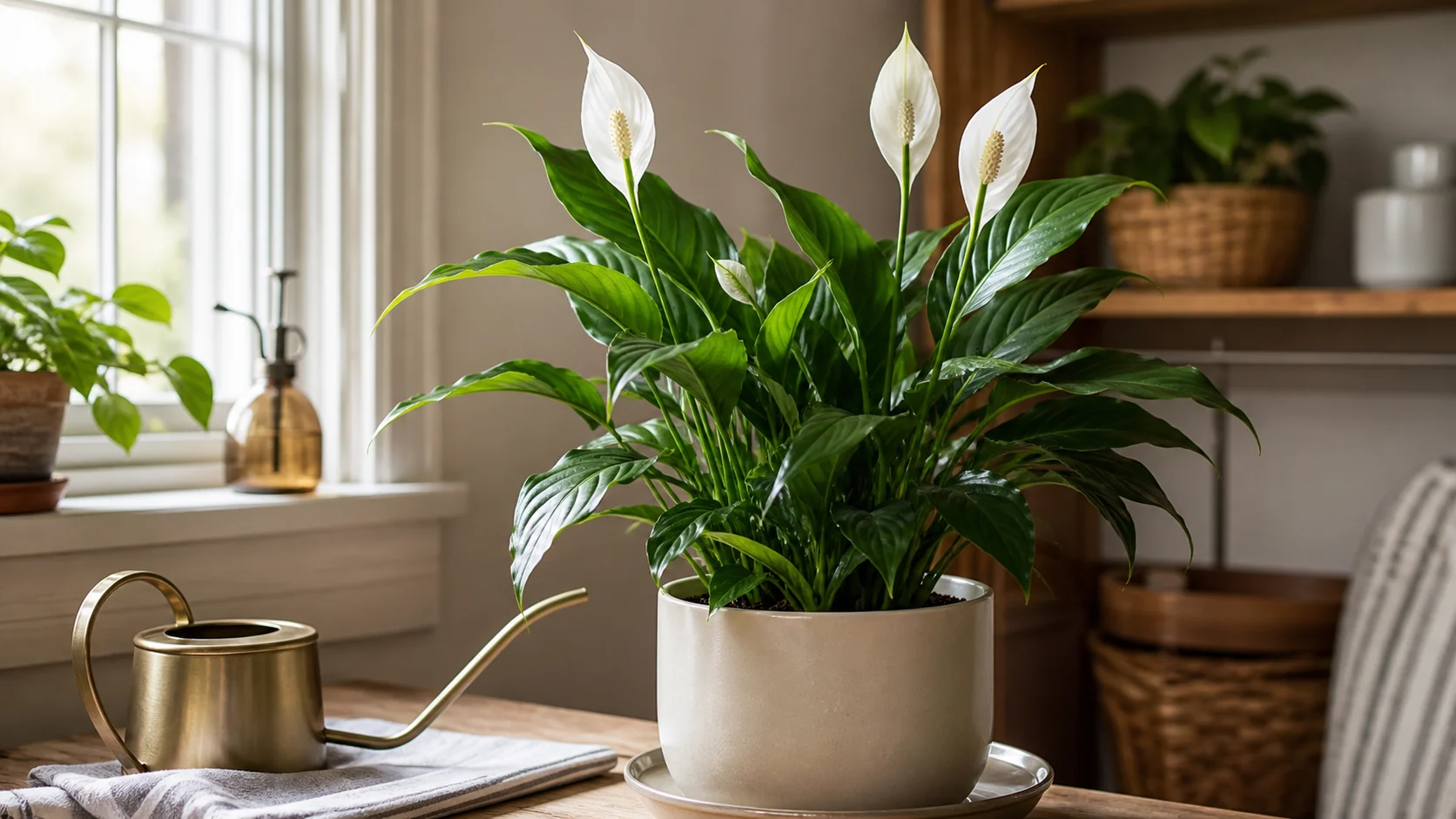
Indirect daylight, careful watering, and a draining root zone work together in successful peace lily care.
Seasonal Care Calendar
Peace lily care does not stay constant across the year. The plant’s growth pace, water needs, and sensitivity to conditions all shift with the seasons, and matching your habits to those shifts prevents most of the common problems.
Spring: This is when growth resumes in earnest. Peace lilies typically start pushing new leaves, and some will produce their first flower of the year. Increase watering frequency as the plant drinks more, and resume monthly feeding with a balanced liquid fertilizer at half strength. If the plant has outgrown its pot, spring is the best time to repot. Keep an eye out for spider mites as indoor air warms and dries out. Our guide on how to get rid of spider mites covers the steps if you spot them early.
Summer: Peak growing season. The plant will use water more quickly, so check soil moisture more often and be ready to water twice a week in warm rooms. Continue monthly fertilizing. If the plant is near a south or west-facing window, make sure it is far enough back that no direct sun reaches the leaves during the hottest part of the day. Humidity tends to be higher in summer, which suits peace lilies, but air conditioning can dry out indoor air as much as winter heating does.
Autumn: The growth pace slows as light levels drop. Begin reducing fertilizer frequency in September and stop feeding entirely by late October. Watering frequency should decrease naturally as the plant drinks less. This is also a good time to wipe down leaves with a damp cloth to remove any dust that has built up over summer, which helps the plant make the most of lower winter light.
Winter: Minimal fertilizer, careful watering, and watch for dry air from heating systems. Peace lilies are more vulnerable to brown leaf tips in winter because central heating pulls humidity from indoor air quickly. Keep the plant away from cold drafts and exterior doors. If the light in your space drops significantly, consider supplementing with a grow light on a timer to keep the plant from losing ground during the shorter days.
Humidity and Temperature
Peace lilies come from tropical forest floors where humidity is consistently high. Indoors, especially in winter when heating systems dry out the air, they can develop brown leaf tips even with careful watering.
Brown tips on otherwise healthy leaves usually point to low humidity or occasional direct heat from a vent or radiator. Moving the plant away from heat sources and placing the pot on a tray with pebbles and water can raise the local humidity around the plant without misting the foliage directly. Misting can leave water sitting on leaves, which invites fungal issues over time.
Room temperature between 65 and 85 degrees Fahrenheit suits peace lilies well. They dislike cold drafts and should stay away from exterior doors in winter. If brown tips persist despite adjusting humidity, our guide on why plant leaves turn brown covers fluoride sensitivity and fertilizer salt buildup, two causes that often get overlooked.
Getting Peace Lilies to Bloom Again
A peace lily that was blooming at the shop but has not bloomed since is usually getting too little light or is still recovering from the transition between a greenhouse and a home environment.
More indirect light is the most reliable fix. If the plant is otherwise healthy and the foliage looks good but no flowers appear, move it gradually closer to a brighter window over a few weeks rather than shifting it abruptly.
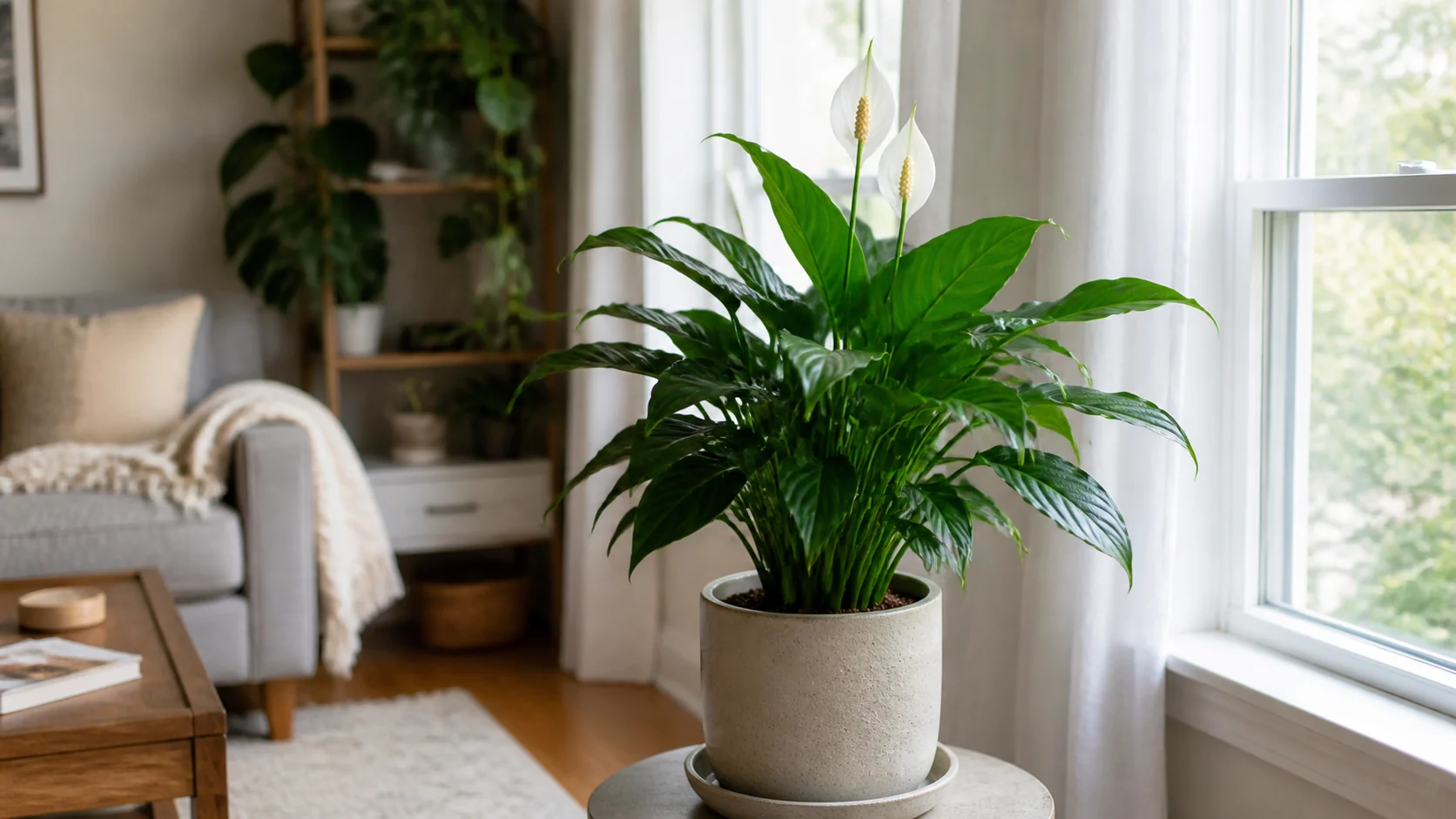
Filtered window light can help a healthy peace lily return to flowering without risking sun scorch.
Peace lilies bloom naturally in spring and sometimes again in late summer. Outside of those windows, it is normal to see only foliage. If the plant has been in the same pot for more than two years with no sign of blooms despite good light, it may be root-bound. A tightly packed root system redirects energy toward survival rather than flowering.
Repotting and Root Crowding
When roots start circling the bottom of the pot or pushing up through the drainage hole, a peace lily is ready to move up one pot size. Repotting into a container more than one or two inches larger than the current one tends to backfire, leaving a large volume of soil that holds excess moisture around a root system that cannot yet reach it.
After repotting, a peace lily may droop for several days. This is normal transplant stress, and it is not a signal to water more heavily. Keep the soil evenly moist and give the roots time to settle. If you are unsure about soil choice and pot sizing, our guide on how to repot plants covers the process step by step.
Common Mistakes
These are the mistakes that cause the biggest peace lily setbacks indoors:
- watering on a fixed schedule instead of checking the soil first
- leaving the plant in a decorative pot that traps runoff
- treating every droop as thirst
- moving the plant into direct sun to force more blooms
- repotting too far up in size and creating a soggy root zone
- fertilizing a stressed or freshly repotted plant
If you correct those six mistakes, peace lily care gets much easier very quickly.
Pet Safety
Peace lilies are toxic to dogs and cats. According to the ASPCA Poison Control Center, peace lily contains insoluble calcium oxalates that cause oral irritation, excessive drooling, vomiting, and difficulty swallowing if a pet chews or ingests any part of the plant. If you have animals that are prone to nibbling on foliage, keep the plant on a high shelf or in a room they do not access. Contact your veterinarian or the ASPCA Animal Poison Control Center immediately if you suspect ingestion.
What to Focus On First
If you are new to peace lily care, the three things worth getting right from the start are a spot with good indirect light, a pot with drainage holes, and the habit of checking soil moisture and pot weight before watering rather than following a fixed schedule. Everything else, blooms, humidity adjustments, and repotting timing, follows naturally from having those three basics in place.
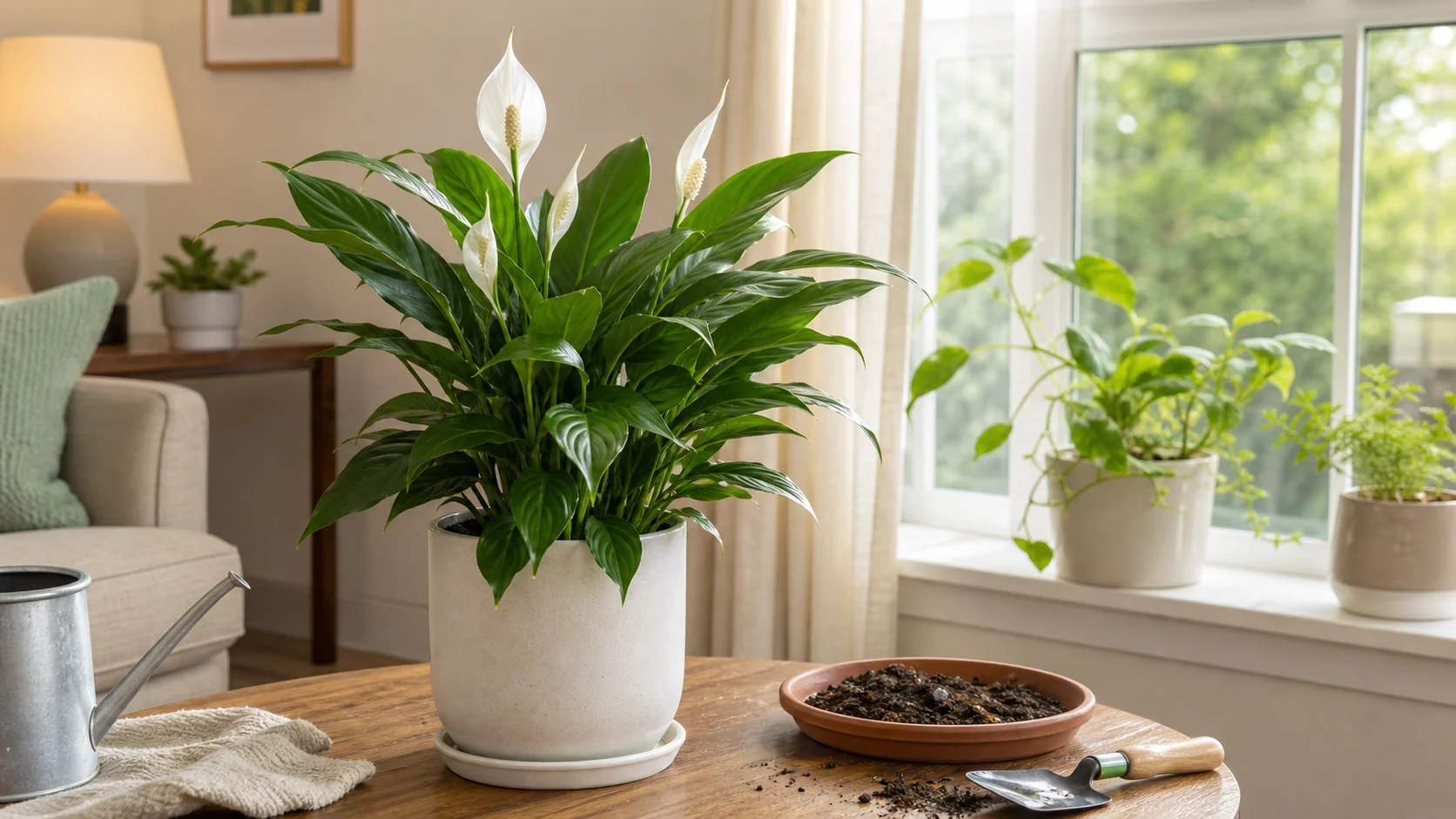
Filtered light, dependable drainage, and checking the soil before watering are the essential starting points.
For another practical pet-safety check, see Is Peace Lily Toxic to Cats? Why It Is Not the Same as a True for the risk level and the next steps.
For a related hands-on growing walkthrough, use Peace Lily Propagation: Divide Crowns Without Damaging Roots for the setup and follow-up care.
Real User FAQ
These are the real user FAQ themes that keep showing up when people own a peace lily in an ordinary room rather than a greenhouse.
How often should I water a peace lily?
There is no fixed schedule that works reliably for everyone, because frequency depends on pot size, container type, room humidity, and the season. The more useful habit is to check before every watering. Press a finger about an inch into the soil and lift the pot to feel its weight. If the top layer is dry and the pot feels light, water thoroughly until it drains from the bottom. If the soil still feels cool or damp, wait another day. During winter, most peace lilies need water less often than during spring and summer growth periods.
Why is my peace lily drooping?
Drooping has four main causes: thirst, waterlogged soil in a pot without adequate drainage, being root-bound, or transplant stress after a recent repot. Dry soil alongside drooping almost always means the plant needs water. Wet soil alongside drooping usually points to a drainage or root problem, and adding more water will make that worse. If the droop appeared within a few days of repotting, it is likely normal transplant shock that resolves on its own.
Why are my peace lily’s leaves turning yellow?
Yellow leaves most often point to too much water, too little light, or both. Leaves that yellow from the bottom up while the soil stays wet usually signal overwatering or root damage from poor drainage. Leaves that yellow more evenly, especially on older growth, can indicate low light or simply that the plant is shedding older foliage as it grows. Check your drainage setup and your light placement before changing anything else. Our guide on peace lily leaves turning yellow covers the specific causes in more detail.
How do I get my peace lily to bloom again?
Insufficient indirect light is the most common reason a peace lily stops producing flowers. Gradually move the plant closer to a window with bright indirect light and allow four to six weeks for it to respond. Peace lilies bloom naturally in spring and sometimes again in late summer, so timing matters too. If light is adequate and no blooms appear after a full growing season, check whether the plant is root-bound. A crowded root system tends to redirect its energy away from flowering.
Are peace lilies safe for cats and dogs?
No. Peace lilies are toxic to both cats and dogs. The plant contains insoluble calcium oxalates, which cause oral irritation, drooling, vomiting, and difficulty swallowing if chewed or ingested. Keep peace lilies out of reach of pets, and contact your veterinarian immediately if you suspect ingestion.
Why does my peace lily have brown leaf tips?
Brown tips are almost always a humidity or water quality issue rather than a watering frequency issue. Peace lilies are sensitive to fluoride, which many municipal water supplies contain, and tip burn from fluoride is common. Letting tap water sit uncovered overnight before using it can help. Low humidity from central heating in winter is another frequent cause. A pebble tray with water under the pot can raise local humidity without misting the leaves. Brown patches in the middle of leaves, by contrast, typically indicate the plant has been hit by direct sunlight.
How do I know when to repot my peace lily?
Look for roots circling the inside of the pot, emerging from drainage holes, or pushing up through the soil surface. A plant that dries out much faster than it used to, even with good watering practices, may have outgrown its container. Spring is the best time to repot if you have a choice. Move up by only one pot size, and expect a few days of drooping while the roots adjust.
Can a peace lily survive in a room with no natural light?
A peace lily can survive in very low natural light, but it will not bloom and may gradually weaken over time without some light source. If natural light is not available, a basic grow light on a timer set to eight to twelve hours a day can substitute and keep the plant healthy enough to grow and eventually flower.
Freshness Note
This peace lily guide was refreshed on 2026-06-19 to keep the watering, droop-diagnosis, drainage, and pet-safety guidance aligned with current extension and ASPCA source material, plus the real owner-confusion patterns that keep appearing in public plant-help threads.
Methodology Note
This article was built by reviewing search results for peace lily care and close follow-up questions, then cross-checking the core care claims against North Carolina State University Extension, University of Florida IFAS Extension, and the ASPCA plant-toxicity database. Public plant-owner threads were used only as qualitative signal for what people get stuck on most often, especially around fixed watering schedules, wet-soil droop, cachepots without drainage, and repot shock.