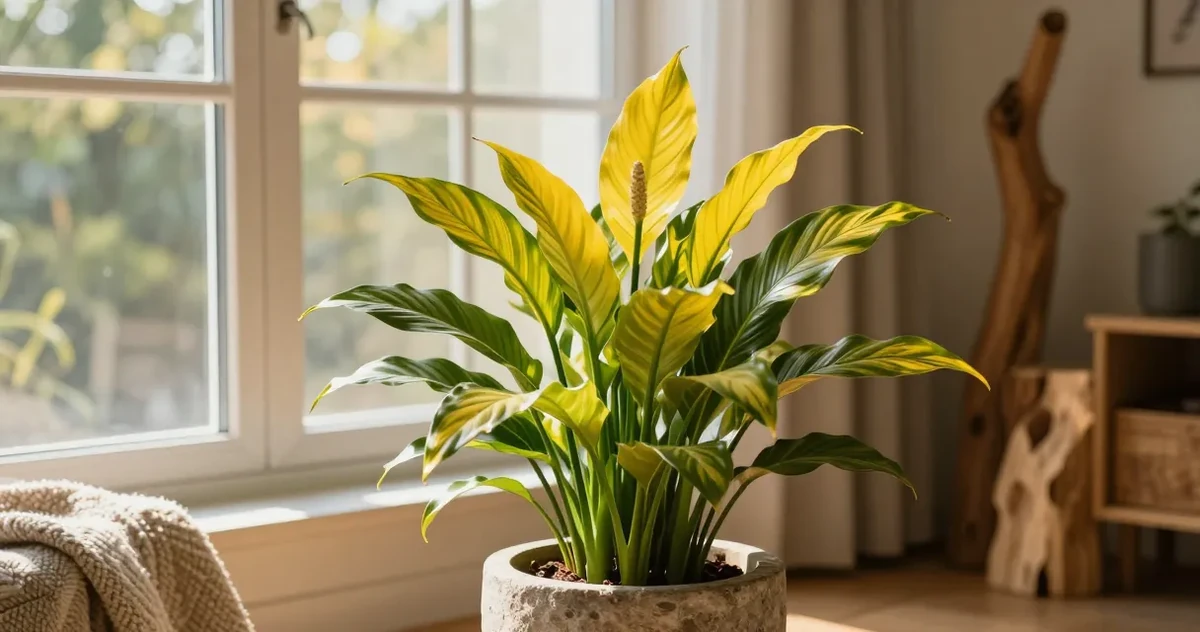
Peace lily leaves turning yellow can feel confusing fast, especially because the same plant can look thirsty and overwatered at the same time.
That is the trap. Many articles jump straight into a list of causes, but peace lilies are much easier to diagnose when you start with the pattern. Which leaves changed first, whether the pot still feels heavy, whether the yellowing came after a move or repot, and whether the tips are also browning usually tells you more than any generic watering advice.
The eight causes below cover what most often goes wrong. I’ll keep it practical, so you can tell what to check today, what not to change yet, and when the problem is probably simpler than it looks. Once the yellowing is stable, use the main peace lily care guide to reset light, watering, blooming, and seasonal care together.
What Most Care Guides Miss
The most common misdiagnosis is assuming every yellow peace lily needs either more water or less water right away.
That sounds sensible, but it is incomplete. A peace lily can have dry-looking topsoil while the bottom of the pot is still wet. She can yellow after repotting, moving under a grow light, or sitting in stronger window light, even if your watering routine stayed the same. And if a new peace lily yellows quickly, water quality is often missed completely.
Before you change anything, do this first:
- Check which leaves changed first: oldest leaves, newest leaves, tips, edges, or random patches.
- Check root-zone moisture, not just the surface. Push a finger into the soil and lift the pot. If it feels cool and heavy, the roots may still be too wet.
- Think about what changed in the last two to four weeks: repotting, a brighter window, a new grow light, a new room, a different water source, heating, or air conditioning.
That pause prevents the two mistakes that hurt peace lilies most: watering again when the roots are already stressed, or repotting again when the plant is only reacting to change.
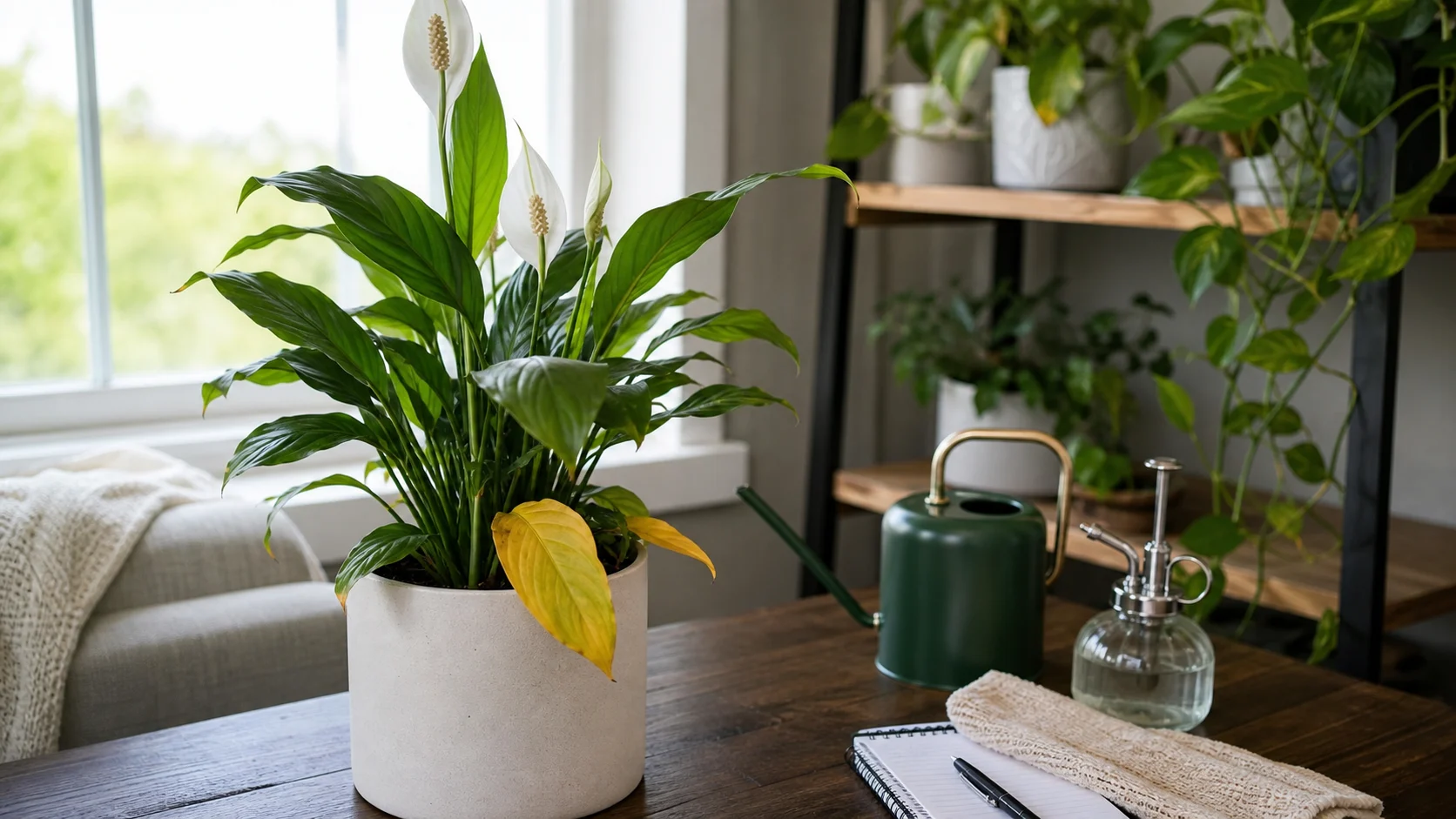
Yellow lower leaves are a cue to check the root zone and recent care changes before reaching for the watering can.
Social Listening: Where Peace Lily Owners Get Tricked
A few confusion patterns show up again and again when peace lily owners try to troubleshoot yellow leaves:
- The top of the soil looks dry, so people water again. But the real problem is often deeper down, where the root ball is still wet and short on oxygen.
- One old lower leaf yellows after a repot, a move, or a grow-light change, and it gets treated like proof of overwatering. Sometimes it is just stress or normal leaf turnover, not a sign to overhaul everything.
- A new peace lily yellows soon after coming home, and people blame themselves immediately. In practice, direct sun and mineral-heavy tap water are both worth checking early.
These are not statistics, just useful patterns from real troubleshooting conversations. They matter because they point to the first checks that prevent the usual overcorrections.
Symptom Diagnosis Card
Start with the pattern, not the first fix you remember. For peace lily yellow leaves, the wrong treatment can make the plant worse because water, light, root stress, and water quality can overlap.
| What you see | Check first | Next move |
|---|---|---|
| Lower older leaves yellow, rest looks firm | Normal aging, low feeding, or recovery after stress | Remove spent leaves and check feeding history before changing everything |
| Yellow leaves plus wet, cool, heavy soil | Root oxygen problem or early rot | Pause watering and inspect drainage before adding more water |
| Topsoil feels dry but pot still feels heavy | Surface dryness hiding a wet root ball | Wait, improve airflow, and re-check deeper moisture tomorrow |
| Yellow patches after bright exposure | Direct sun stress | Move to bright indirect light |
| Yellowing after repotting, a move, or grow-light change | Stress, senescence, or care shift | Hold conditions steady for 7 to 14 days unless roots are clearly rotting |
| Yellow leaves with brown tips and recurring crust on soil | Water quality or salt buildup | Flush the pot and test filtered, distilled, or rainwater |
If you only have one minute, use this split first: old leaves or new leaves, heavy pot or light pot, even yellowing or patchy yellowing. That quick check rules out a lot of bad guesses.
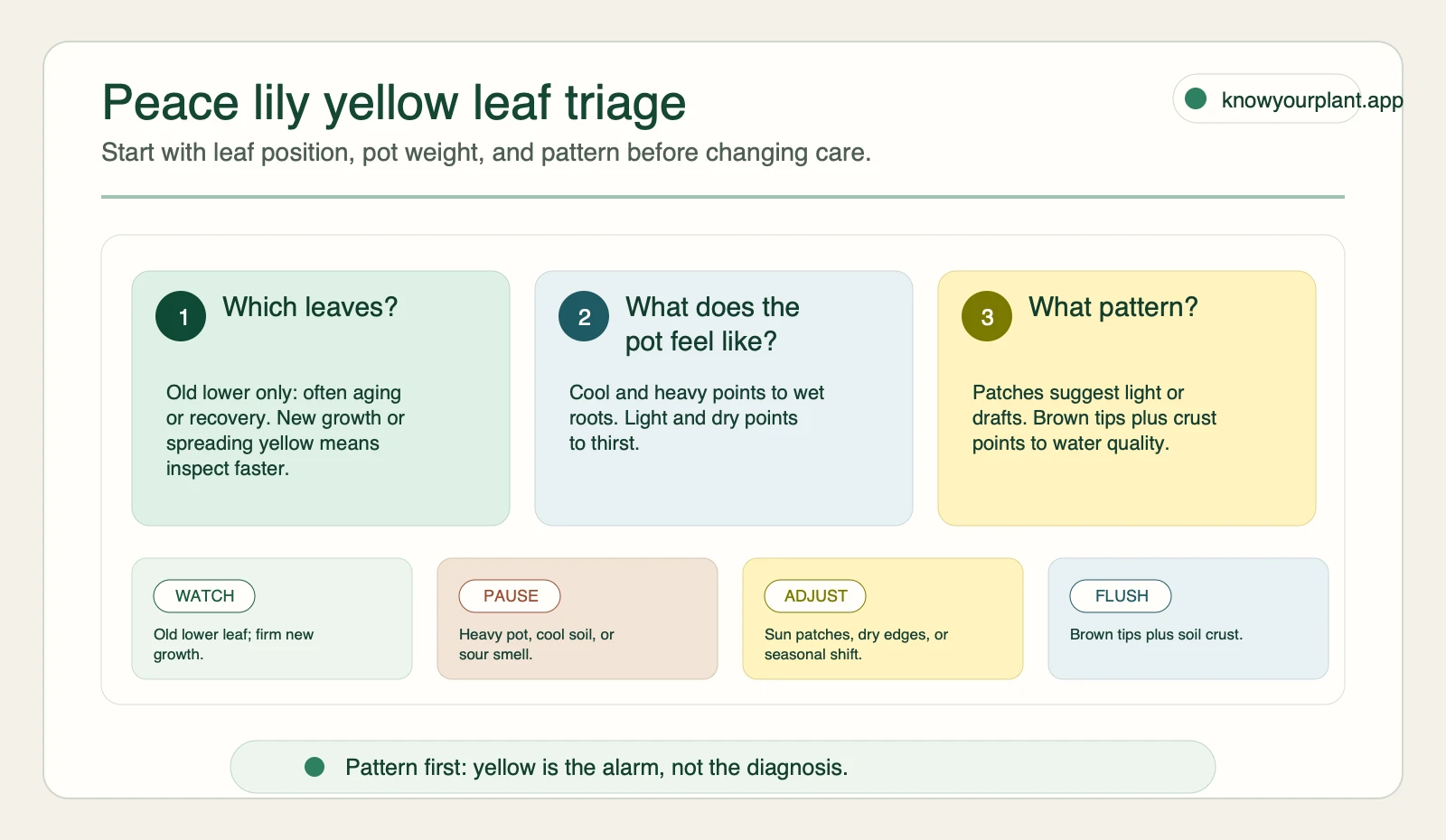
Use the triage card before changing care: leaf position, pot weight, and pattern usually point to the right first move.
Decision Tree
- Check whether the newest growth, oldest leaves, soil surface, root zone, or leaf undersides changed first.
- If the soil or roots are involved, fix drainage and watering rhythm before adding fertilizer or sprays.
- If the plant was recently repotted, moved, or put under a new light, give that change weight before blaming every yellow leaf on root rot.
- If pests are visible, isolate the plant and treat the pest life cycle, not just the visible damage.
- If the obvious causes do not quite fit, check water quality and salt buildup before making a second big change.
- Make one change, then observe for 7 to 14 days unless the plant has active rot or a spreading pest infestation.
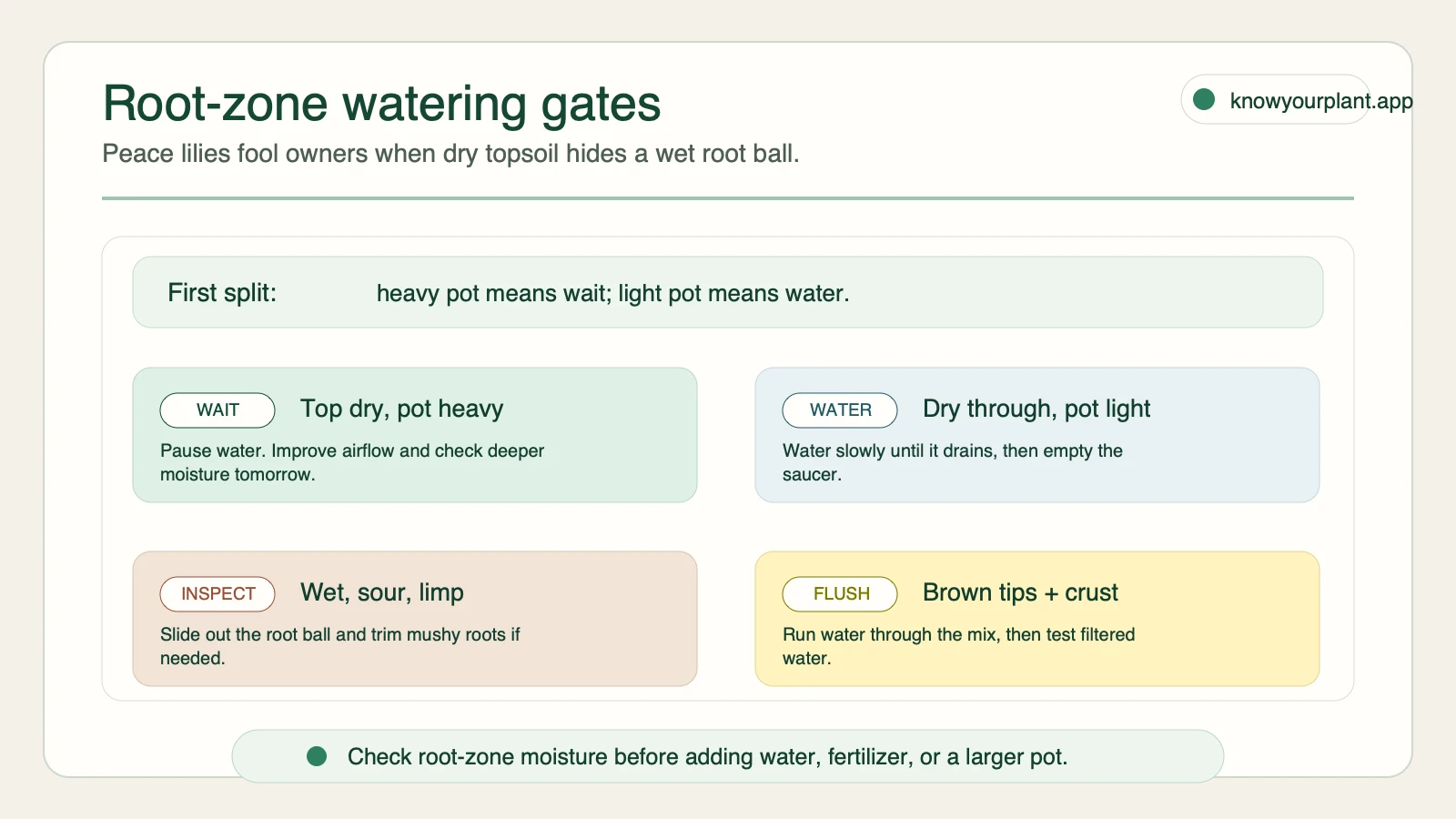
The root-zone gate keeps you from watering again just because the topsoil looks dry while the lower root ball is still wet.
Common Mistakes
- Watering again because the leaves look limp while the root zone is already wet.
- Trusting only the top of the soil instead of checking the weight of the pot too.
- Treating every yellow leaf after repotting or moving as proof of overwatering.
- Assuming every brown tip means low humidity, when salts or tap water may be part of the problem.
- Repotting into a much larger pot, which keeps the root zone wet longer.
- Expecting damaged yellow leaves to turn green again. Recovery shows up in new growth.
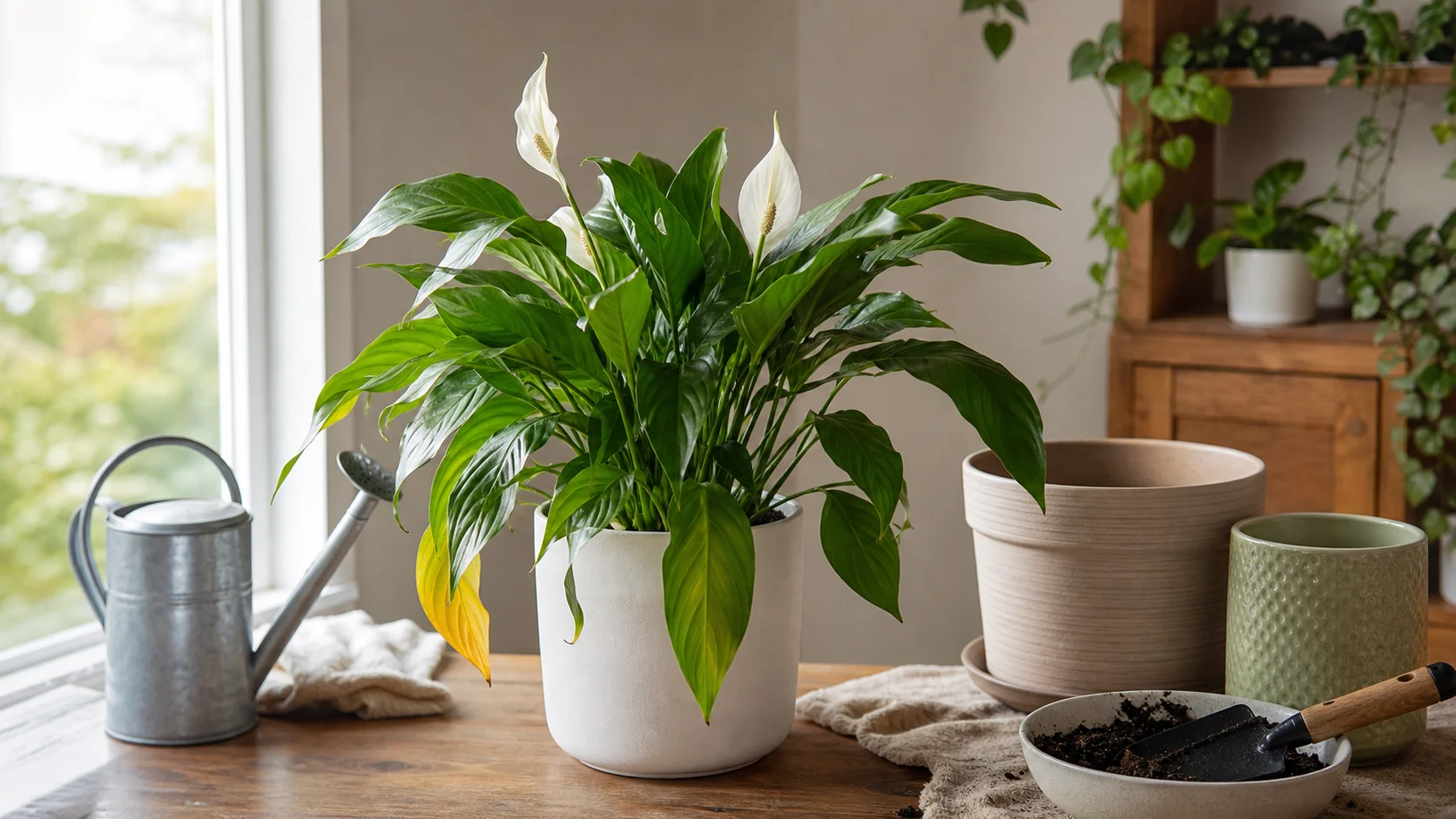
An oversized replacement pot and another round of watering can both make yellow-leaf troubleshooting harder.
Seasonal Note
In winter or in air-conditioned rooms, growth slows and soil stays wet longer. In summer, brighter windows and faster drying can make the same care routine behave very differently. Re-check light, watering interval, humidity, and mineral buildup whenever the season or room conditions change.
Expert Note: Source Layer
The practical checks in this guide are grounded in extension and safety sources, then cross-checked against qualitative plant-owner confusion patterns:
- South Dakota State University Extension peace lily care
- Ask Extension peace lily watering, sun, and yellowing answer
- ASPCA peace lily pet safety
Methodology Note
This article follows the Research Pack for peace-lily-leaves-turning-yellow. Social patterns are used only as qualitative signals about confusion and decision points. Treatment and safety claims are anchored to extension or poison-control style sources where available.
Freshness Note
This version was tightened to surface the exact reader traps that generic yellow-leaf guides often miss: dry topsoil versus wet roots, repot or light-change stress versus overwatering, and water-quality issues that can look like a watering mistake.
Editorial Review and Safety Note
Author: KnowYourPlant editorial team
Reviewer: Editorial review pending final publish check
Last updated: 2026-05-17
Pet safety: Peace lily is toxic to cats and dogs if chewed, according to the ASPCA source listed above.
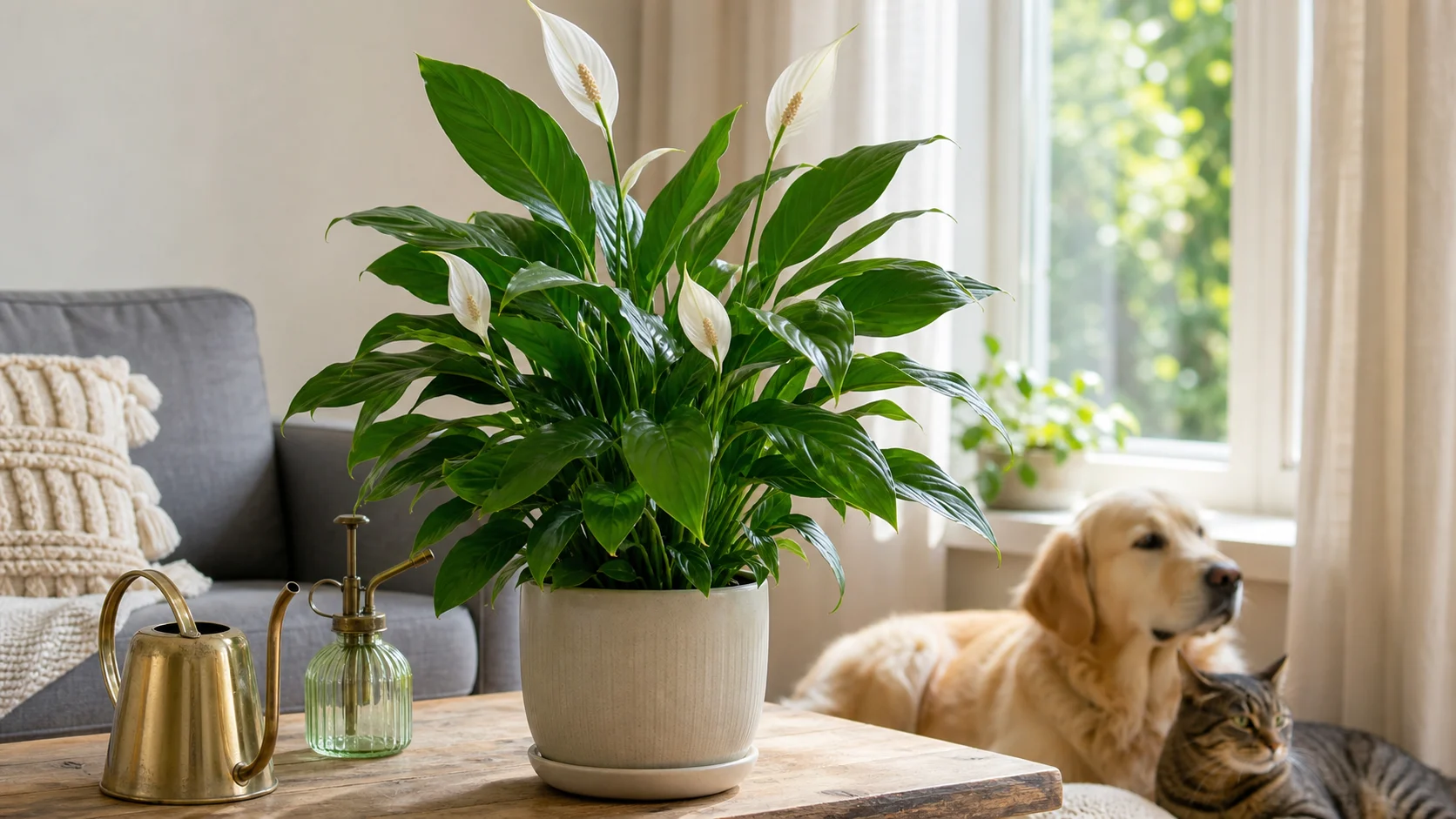
Keep peace lilies out of chewing reach in homes shared with curious cats or dogs.
1. Overwatering
This is still the most common cause. Peace lily roots need oxygen as much as they need moisture. When the root zone stays wet too long, the roots start to suffocate, and yellowing usually begins on older lower leaves.
The important nuance is that peace lilies often fool people here. The top layer may look dry while the lower root ball is still wet. If the pot feels heavy, the soil feels cool, or water has been sitting in a cachepot or saucer, think root stress first. That matches the basic extension pattern too: peace lilies like even moisture, not a pot that stays waterlogged.
Check the soil before you do anything else. Press your finger about two centimeters into the mix, then lift the pot. If it still feels heavy and damp, wait. If the soil smells stale or sour, or if the base stays wet for days, slide the plant out and inspect the roots. If you want a broader read on the soft-yellow-leaf pattern before unpotting, the overwatered plant signs guide helps separate wet-root stress from simple thirst.
Healthy roots are white or light tan. Rotting roots are brown, mushy, or sour-smelling. Trim the damaged roots with clean scissors and repot into fresh mix in a pot with drainage holes. If you need the full rescue process, the root rot treatment guide walks through cleanup, trimming, and recovery timing step by step.
2. Underwatering
Underwatering can also turn a peace lily yellow, but the feel is different. The leaves often droop, edges may go dry or crispy, and the soil may pull away from the sides of the pot.
Peace lilies are dramatic when thirsty. By the time she is fully flopped, though, she has usually been stressed for a bit. If the soil is dry through the pot and the whole plant looks limp, water slowly and thoroughly until water drains out the bottom, then let the pot drain fully.
Going forward, the goal is not a fixed schedule. It is watering when the top two centimeters of soil have dried, but before the plant spends days wilted. In warm bright rooms that may be every five to seven days. In winter it may be much less often.
3. Direct Sun
Peace lilies prefer bright indirect light. If direct sun hits the leaves, especially through a hot window, yellowing often shows up with pale bleached patches or brown scorch marks. That fits the usual extension advice too: bright is good, harsh direct sun is not.
This is a common problem after bringing a new peace lily home. She may have come from filtered greenhouse light and then landed in a much harsher window than she is used to.
Move her back from the glass or soften the light with a sheer curtain. A few feet from a bright east-facing window usually works well. If your room is more dim than sunny, the low-light indoor plants guide helps put peace lily tolerance in context.
4. Water Quality or Salt Buildup
This is the missing cause many yellow-leaf guides skip.
If your watering rhythm seems reasonable, the light looks fine, and your peace lily keeps producing yellow leaves with brown tips or a tired washed-out look, water quality is worth checking. Peace lilies can react to mineral-heavy tap water, softened water, fluoride, chlorine, or fertilizer salts that build up in the pot over time.
This is especially worth checking when:
- the plant is new to your home and started yellowing quickly
- the top growth looks stressed even though the root zone is not obviously soggy
- brown tips keep returning no matter how carefully you water
- a white crust is forming on the soil or around the drainage holes
Start simple. Flush the pot thoroughly so excess salts run out the bottom. Then, for the next few waterings, switch to filtered water, distilled water, or rainwater if that is practical for you. If your home uses softened water, do not use that on peace lilies.
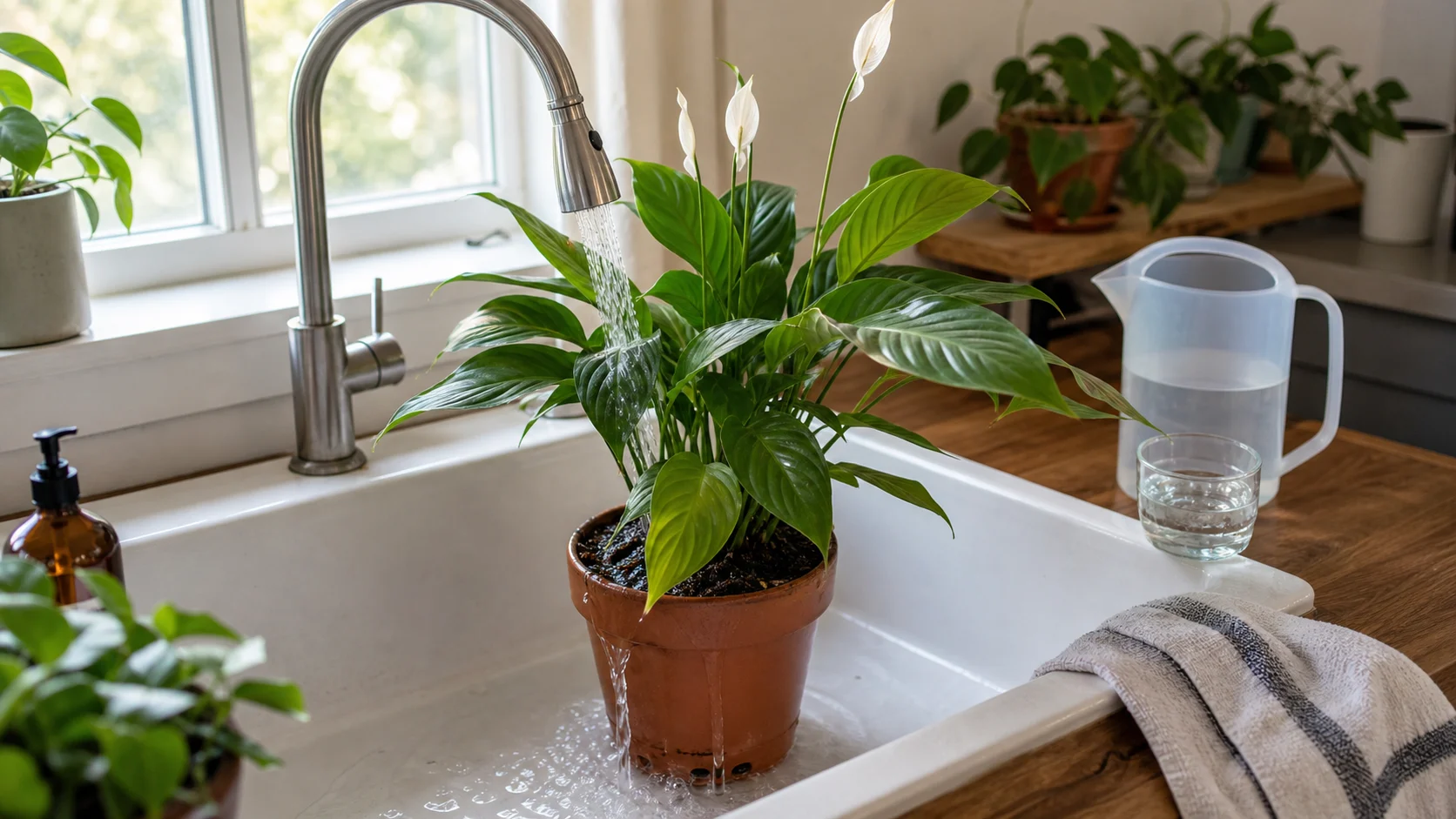
Flush accumulated salts through the drainage holes, then test a gentler water source for the next few waterings.
This is not the first cause to blame in every case, but it is one of the best tests when the obvious explanations do not quite fit.
5. Low Humidity
Peace lilies are more comfortable once household humidity stays above about 40 percent. In heated or air-conditioned homes, the air can get much drier than that, especially in winter.
Humidity stress usually begins at the tips and edges. You may see yellowing that fades into dry brown tips, and the leaf texture often feels thin or papery rather than soft.
A few practical fixes help:
- Put the pot on a pebble tray with water below the pot, not around the roots
- Group her near other plants to create a small humidity pocket
- Run a humidifier nearby during the driest part of the year
Misting is often suggested, but it gives only short-lived relief. A tray or humidifier is steadier and easier to rely on.
6. Nutrient Deficiency
If your peace lily has been in the same mix for a long time and has not been fed through the growing season, older leaves can start to look pale and washed out. Sometimes the veins stay a little greener than the rest of the leaf.
Peace lilies are not heavy feeders, so this is usually a slower, more even kind of yellowing, not a sudden collapse. If everything else looks stable and the plant has been actively growing, a light feeding routine may be enough.
Use a balanced liquid fertilizer at half strength once a month in spring and summer. Ease off in autumn and winter, when growth slows down.
If you have already been fertilizing regularly, do not automatically add more. Too much fertilizer can also yellow the leaves by leaving salts in the soil, which overlaps with the water-quality issue above. The plant fertilizer guide can help you separate underfeeding from buildup.
7. Root Bound
When a peace lily outgrows her pot, the roots circle tightly and the plant starts struggling to hydrate evenly. That can lead to yellowing, slower growth, or wilting between waterings even when the soil does not look fully dry.
This is another place people get tripped up. A root-bound peace lily can seem thirsty all the time, which makes overwatering more likely if you keep responding with more water instead of more space.
If roots are pushing through drainage holes, rising above the soil, or filling the pot in a dense coil, move up one pot size only, about two to three centimeters wider. A huge size jump creates the opposite problem by keeping too much soil wet around a relatively small root system.
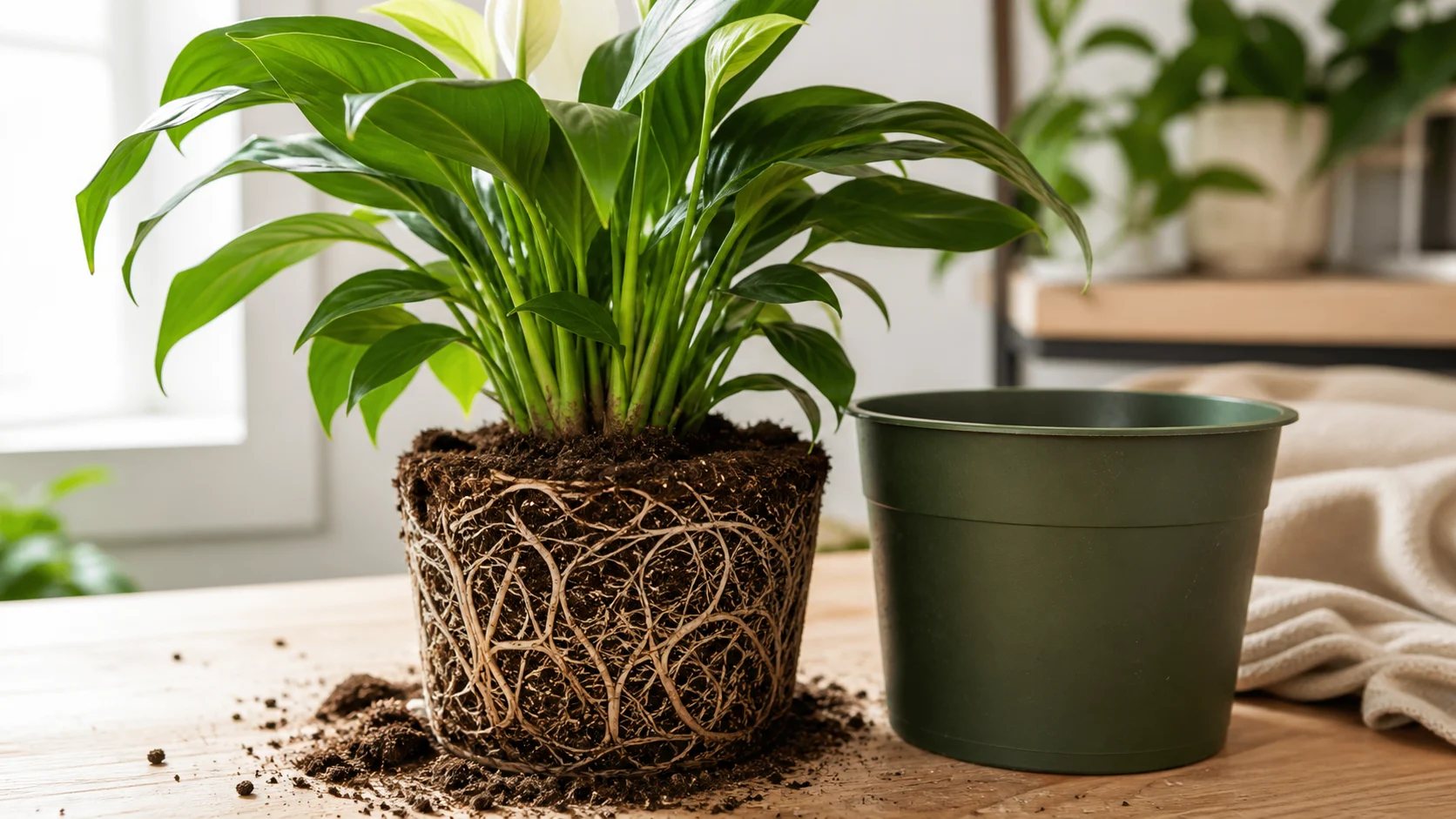
Dense circling roots call for a replacement pot only slightly wider than the old one.
If you want a step-by-step for checking roots without overdoing the pot size, the how to repot plants guide walks through it.
8. Cold Drafts or Temperature Stress
Peace lilies like steady warmth. Sudden cold drafts, air-conditioning blasts, or a leaf pressed against a cold window can trigger yellowing, especially on the side facing the stress.
This kind of yellowing is often patchy instead of even. If the damage lines up with a vent, a drafty door, or a cold pane of glass, move her somewhere more stable and watch the next leaves she makes.
A steady room matters more than chasing a perfect number. Peace lilies cope better with consistent conditions than with repeated swings from warm to cold.
The Seasonal Angle: When Each Cause Is Most Likely
One thing most yellow-leaf guides skip is timing. The same symptom can mean different things in different seasons because the likely cause shifts with your home.
Spring
Fresh growth picks up. If your peace lily spent winter in tired soil, this is when mild nutrient deficiency may show up on older leaves. It is also the best time to repot if roots are crowded.
Summer
Rooms dry faster, and direct sun gets stronger. Underwatering and sun stress both become more likely, especially near bright windows.
Autumn
Heating starts, humidity drops, and plants slow down. This is when people often overwater by following their summer routine too long.
Winter
Soil stays wet longer, humidity is usually lowest, and cold windows become an issue. Overwatering, low humidity, and temperature stress all become more likely at once.
If yellowing started after the season changed, use that clue. It often explains more than the leaf color alone.
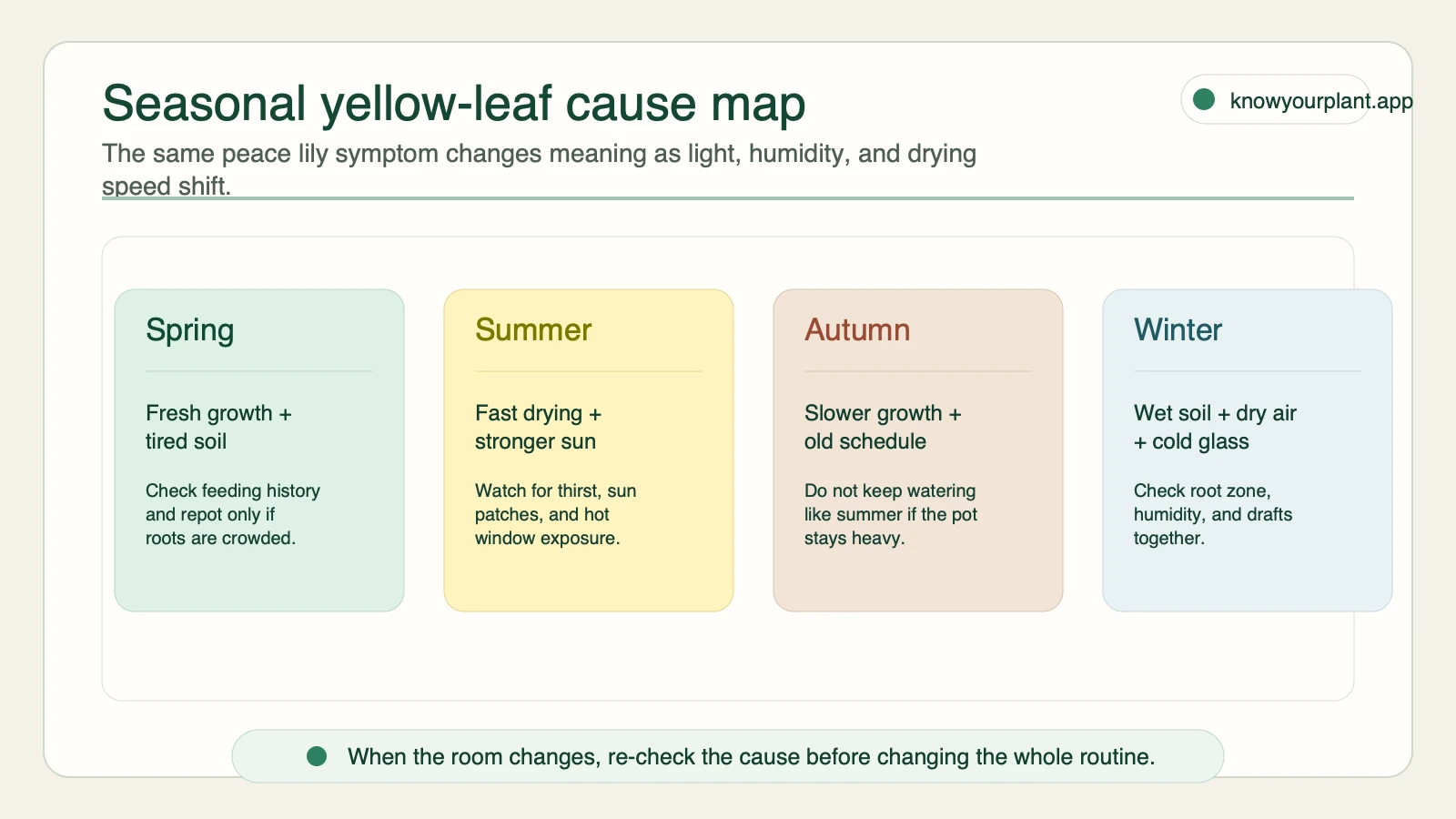
Use the seasonal map to re-check the room conditions before assuming the same yellow leaf pattern means the same cause all year.
How to Read the Pattern
Use this as your quick first filter:
- Yellowing from the bottom up, pot feels wet or heavy: Overwatering
- Yellowing with drooping and dry soil pulling from the pot edge: Underwatering
- Yellow patches or pale scorch near a sunny window: Direct sun
- Yellow leaves with brown tips, recurring crust, or ongoing stress despite decent care: Water quality or salt buildup
- Yellowing at tips and edges, dry papery feel: Low humidity
- Pale even yellowing on older leaves, no obvious water problem, slow steady decline: Nutrient deficiency
- Yellowing with slow growth and crowded visible roots: Root bound
- Patchy yellowing near drafts, vents, or cold glass: Temperature stress
The yellow leaves already on the plant will not turn green again. What you are watching for is healthier new growth and a stop to the spread. If you want the full baseline for light, watering, soil, and seasonal care, the peace lily care guide covers the everyday setup in one place.
For a related hands-on growing walkthrough, use Peace Lily Propagation: Divide Crowns Without Damaging Roots for the setup and follow-up care.
If you are troubleshooting another common plant symptom, see Peace Lily Drooping: Thirst, Root Stress, or Shock? for a focused diagnosis and recovery plan.
If you are troubleshooting another common plant symptom, see Peace Lily Brown Tips: Water Quality, Dry Air, or Root Stress? for a focused diagnosis and recovery plan.
Frequently Asked Questions
Why are my peace lily leaves turning yellow even though I just watered it?
The first thing to check is whether the roots were still wet before you watered again. Peace lily owners often get fooled by dry topsoil while the lower root ball is still holding moisture. If the pot feels heavy and the soil stays cool, overwatering is still more likely than thirst.
Can yellow peace lily leaves turn green again?
No. Once a leaf has turned fully yellow, that tissue will not recover. Trim it off with clean scissors and judge recovery by the next leaves the plant produces.
How often should I water my peace lily to avoid yellow leaves?
There is no one schedule that works in every home. Check the soil instead. When the top two centimeters feel dry and the pot feels lighter, water thoroughly and let the excess drain away. In summer that may be every five to seven days. In winter it may be much less often.
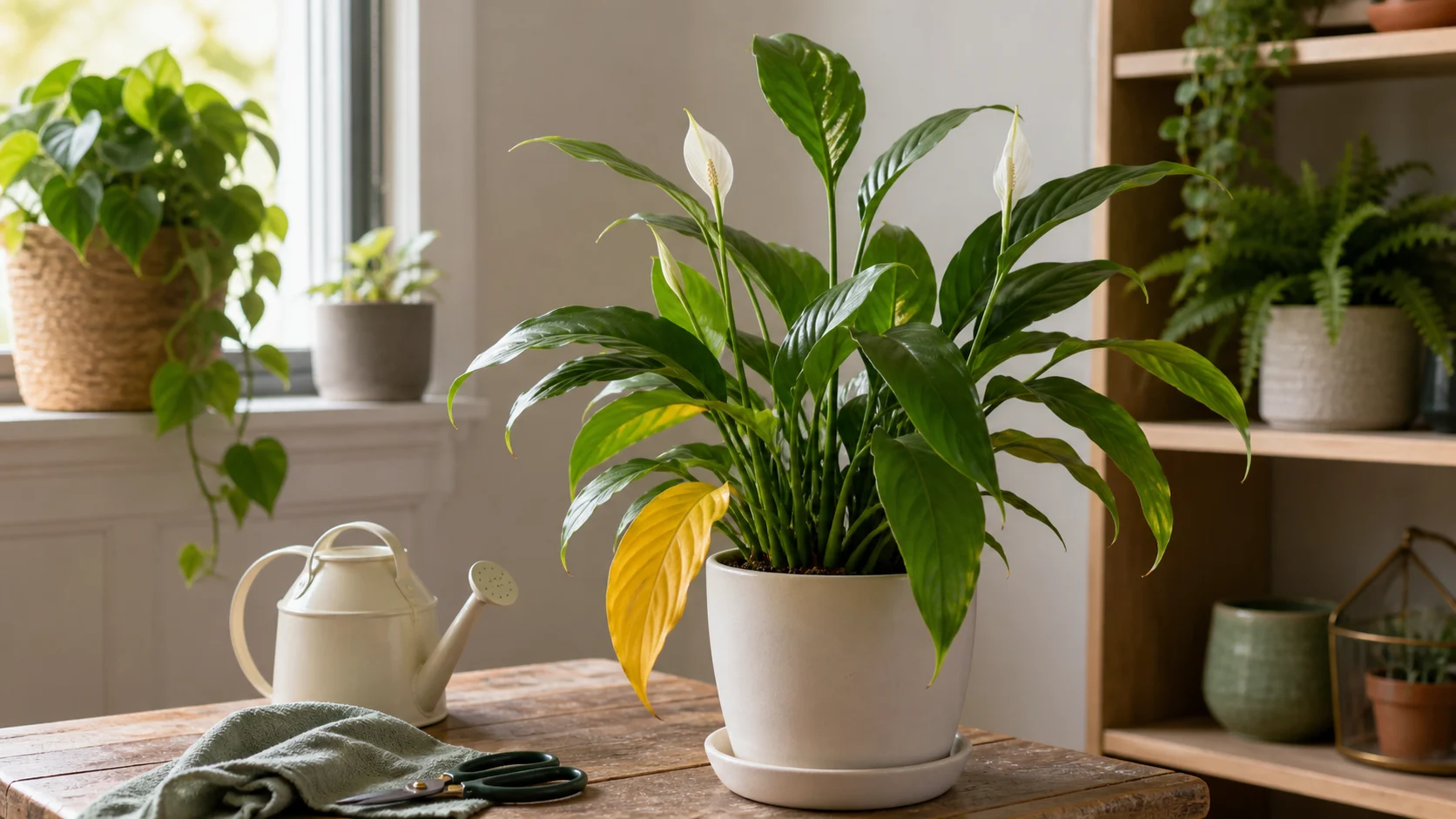
Check moisture before watering again, and use clean shears for a yellow leaf that will not recover.
Why does my peace lily have yellow leaves and brown tips at the same time?
That combination often points to low humidity, water-quality stress, or a buildup of salts from fertilizer or tap water. If the watering rhythm otherwise seems okay, flush the soil and try filtered, distilled, or rainwater for a few waterings.
Is it normal for peace lily lower leaves to turn yellow?
Yes, sometimes. One or two old bottom leaves yellowing occasionally is often normal aging. The concern starts when yellowing spreads upward, happens repeatedly, or shows up on newer growth too.
Can repotting make peace lily leaves turn yellow?
Yes. A recent repot can cause short-term stress, especially if roots were disturbed or the plant was moved into a much larger pot. That does not automatically mean you should water more or repot again. Hold conditions steady unless you see clear signs of rot.
My peace lily started yellowing after I moved it. What changed?
Usually one of three things: brighter direct light, colder drafts, or a different watering rhythm because the room dries differently. Think about the move itself before assuming the plant suddenly developed a disease.
Does tap water make peace lily leaves yellow?
It can contribute, especially if your tap water is mineral-heavy, softened, or leaving visible crust in the pot. It is not the most common cause, but it is absolutely worth testing when yellowing and brown tips keep returning after you have ruled out light and watering mistakes.
Should I cut off yellow peace lily leaves?
Yes. Once a leaf has turned yellow, it will not green up again. Cut it cleanly at the base so the plant can put her energy into healthy growth.
Can peace lilies recover from root rot?
Often, yes, if you catch it early. Remove mushy roots, repot into fresh mix with drainage, and give the remaining roots time to recover. She may look sparse for a bit, but new growth can still come back.
If you want a calm second opinion before you water again, KnowYourPlant can help you track symptoms, log care changes, and slow down the usual panic spiral.