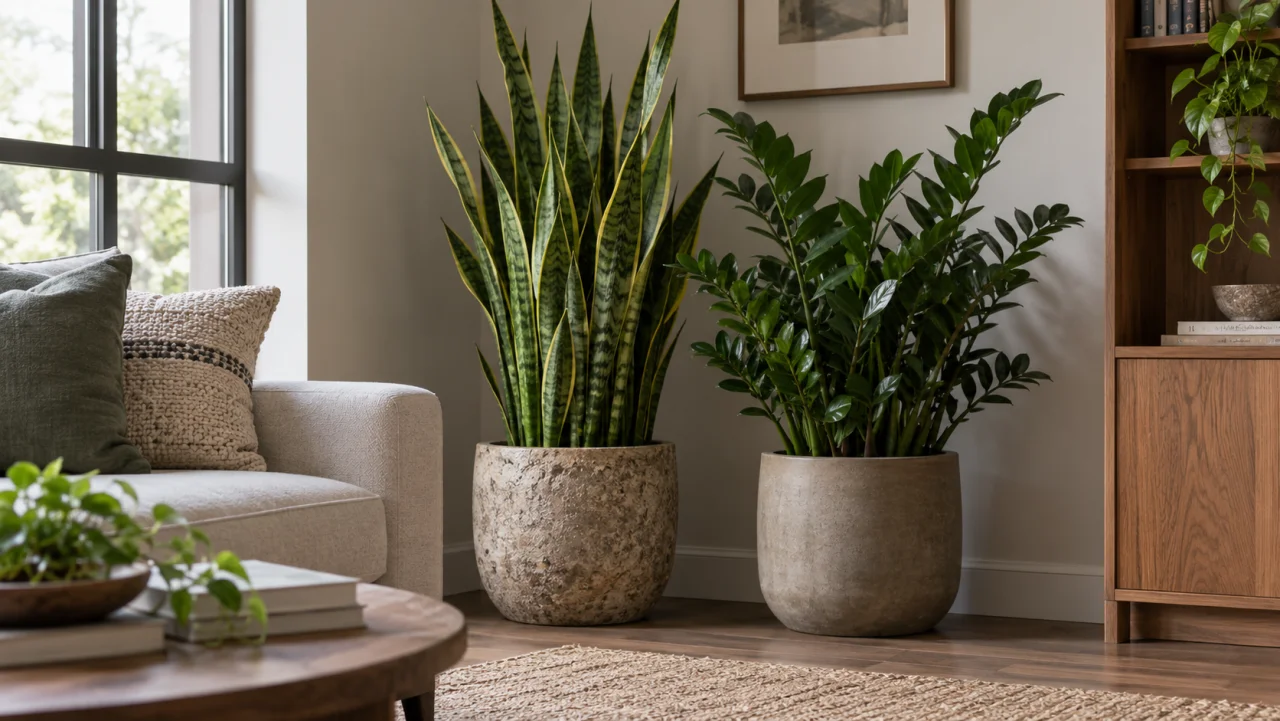
10 Large Low Light Indoor Plants That Actually Work in Dim Rooms
If your room gets soft indirect light at best and every plant list seems to assume you own a sunny loft, this is the article you probably wanted in the first place.
Large low light indoor plants do exist. The problem is that a lot of roundups mix together plants that truly stay healthy in dim rooms and plants that only tolerate them for a while before getting lanky, yellow, or root-rotted from slow drying soil.
This guide is here to make the decision simpler. You will find ten large plants that can work in lower light, plus the part people usually need most: which ones are easiest to live with, which ones are safer around pets, which ones rot fast if you water on a bright-room schedule, and which ones are worth the money if you want a true tree or palm silhouette.
What Most Low-Light Plant Lists Miss
The most common misdiagnosis is thinking low light means no light, then trying to solve the problem by either watering more or buying whatever plant gets called “low-light tolerant.”
That is too generic to help.
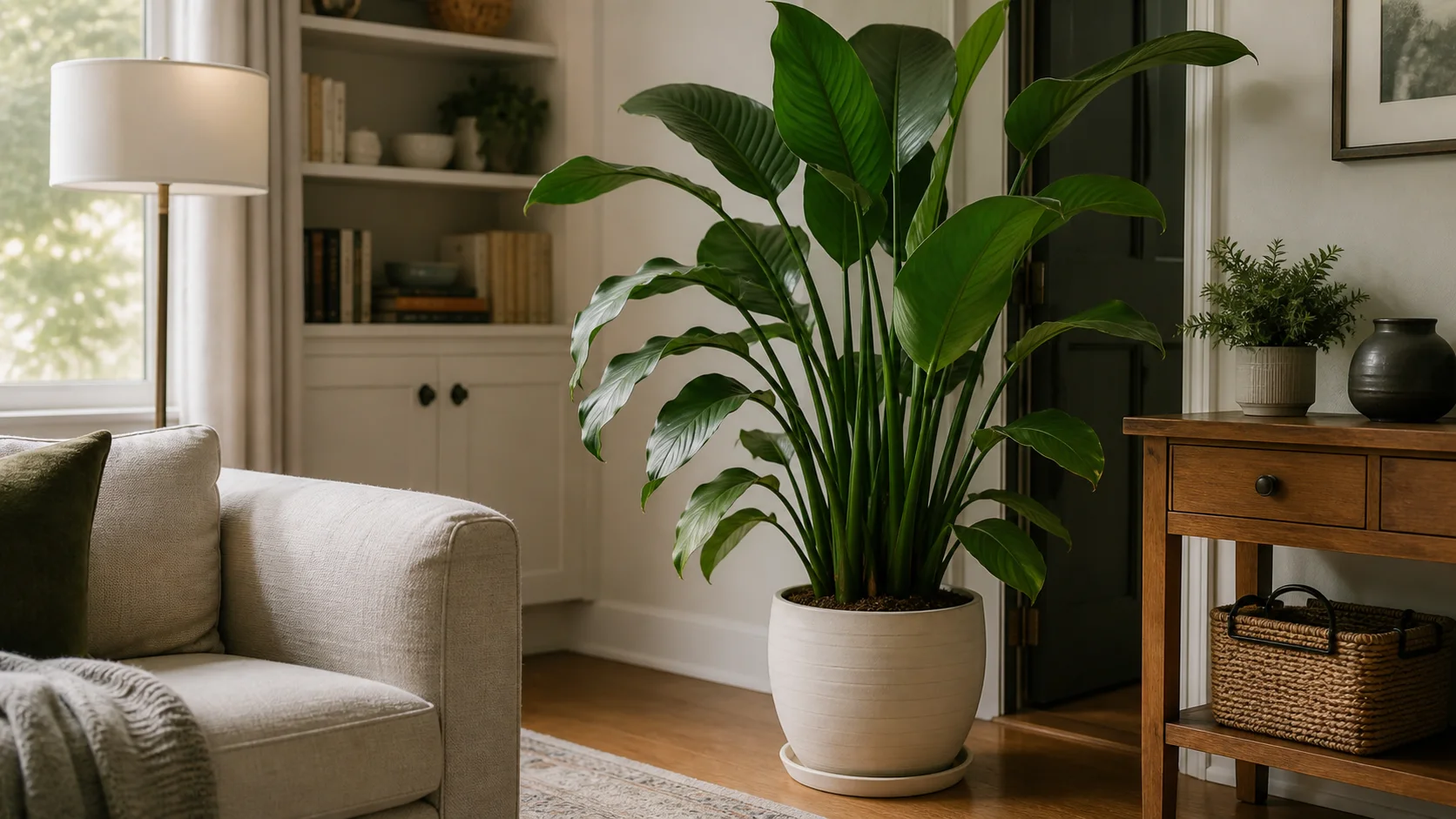
Usable indirect daylight and a longer drying interval matter more than a generic low-light label.
Before you buy, check two things:
- Can you comfortably read in the spot during the day without turning on a lamp? If yes, you likely have low light. If no, you are closer to “needs a grow light” territory.
- Are you willing to water less, not more, in that room? In dim spaces, soil dries slowly. The biggest low-light mistake is using a bright-room watering schedule.
That one shift saves a lot of plants. In low light, the question is not only “will this plant survive?” It is also “will she still look good, and can I keep her from sitting wet too long?”
Social Listening: What Plant Owners Keep Getting Stuck On
The same confusion keeps showing up in plant-owner questions. People want to know what “low light” actually means in a room, why a ZZ or snake plant suddenly turns yellow after being watered on a bright-window schedule, and which larger options are still realistic if cats or dogs chew leaves.
That community signal is not statistical proof, but it is useful buyer-language. It tells you the real selection risks are usually light definition, slow drying soil, and pet safety, not just whether a plant name appears on a generic roundup.
Low Light Reality Check
Low light does not mean darkness. It usually means:
- a north-facing room,
- a corner several feet back from a window,
- or an apartment with bright ambient daylight but no direct sun in the plant’s spot.
If floor space is the real constraint as well as light, the best apartment plants guide includes smaller shelf and desk options alongside the larger plants covered here.
It also means slower growth and slower water use.
That matters more than most labels admit. In dim rooms, a plant that looked “easy” near a brighter window can suddenly stay wet for an extra week. If you remember one thing from this guide, make it this: in low light, the safest watering adjustment is usually to wait longer, not to water smaller amounts more often.
For a broader comparison across light tolerance, watering forgiveness, pet safety, and compact or trailing options, use the best low-light indoor plants guide.
Quick Comparison Table
| Plant | Typical indoor height | Watering pace in a dim room | Pet safety | Best for |
|---|---|---|---|---|
| Snake plant | 3 to 4 ft | Very infrequent, often every 3 to 4 weeks once established | No | Neglect tolerance, slim footprint |
| ZZ plant | 2.5 to 3 ft | Very infrequent, often every 3 to 4 weeks | No | Busy people, low-maintenance corners |
| Dracaena ‘Lisa’ | 5 to 6 ft | Moderate, usually when top 2 in dry | Better to keep away from pets | True tree look in lower light |
| Corn plant | 5 to 6+ ft | Moderate, usually every 2 to 3 weeks depending on season | Better to keep away from pets | Budget-friendly indoor tree shape |
| Kentia palm | 5 to 8 ft over time | Moderate, let top layer dry a bit first | Verify before buying for pet homes | Graceful palm shape in softer light |
| Peace lily ‘Sensation’ | 3 to 4 ft | More regular, do not let it go bone dry | No | Large leaves plus blooms |
| Chinese evergreen | 3 to 4 ft | Moderate, let top inch or two dry | Better to keep away from pets | Patterned foliage, easy learning curve |
| Cast iron plant | 2 to 3 ft | Infrequent, likes to dry some between waterings | Yes | Pets, neglect, genuinely dim rooms |
| Dieffenbachia | 4 to 5 ft | Moderate, hates staying soggy | No | Faster visible growth |
| Lady palm | 5 to 6 ft | Moderate and steady, never swampy | Yes | Pet-safe palm-like form |
Identification Snapshot
| Signal | What to look for in this category |
|---|---|
| Real size | Usually 3 feet or taller indoors, or wide enough to read as a floor plant |
| True low-light behavior | Holds a decent shape in soft indirect light instead of merely hanging on |
| Water pattern | Soil stays wet longer than it would near a bright window, so watering intervals stretch |
| Best beginner filter | Decide first on pets, neglect tolerance, or whether you want a tree, palm, or upright sculptural shape |
Lookalikes and Confused With
- Kentia palm vs majesty palm: both look elegant in photos, but kentia is the more realistic low-light palm indoors. Majesty palms usually want brighter conditions and more humidity than most dim rooms provide.
- Dracaena ‘Lisa’ vs corn plant: both give you a trunked indoor-tree look. ‘Lisa’ usually reads cleaner and darker in lower light, while corn plant is often easier to find at a lower price.
- Snake plant vs cast iron plant: both are forgiving, but snake plant stays more upright and architectural while cast iron plant is better for pet homes and truly dim corners.
- ZZ plant vs peace lily: both are common beginner recommendations, but they solve opposite problems. ZZ is for forgetful watering, while peace lily is for people who want more visible foliage response and can keep the moisture steadier.
Decision Tree: Which One Fits Your Situation?
Use this before you get emotionally attached to the wrong plant.
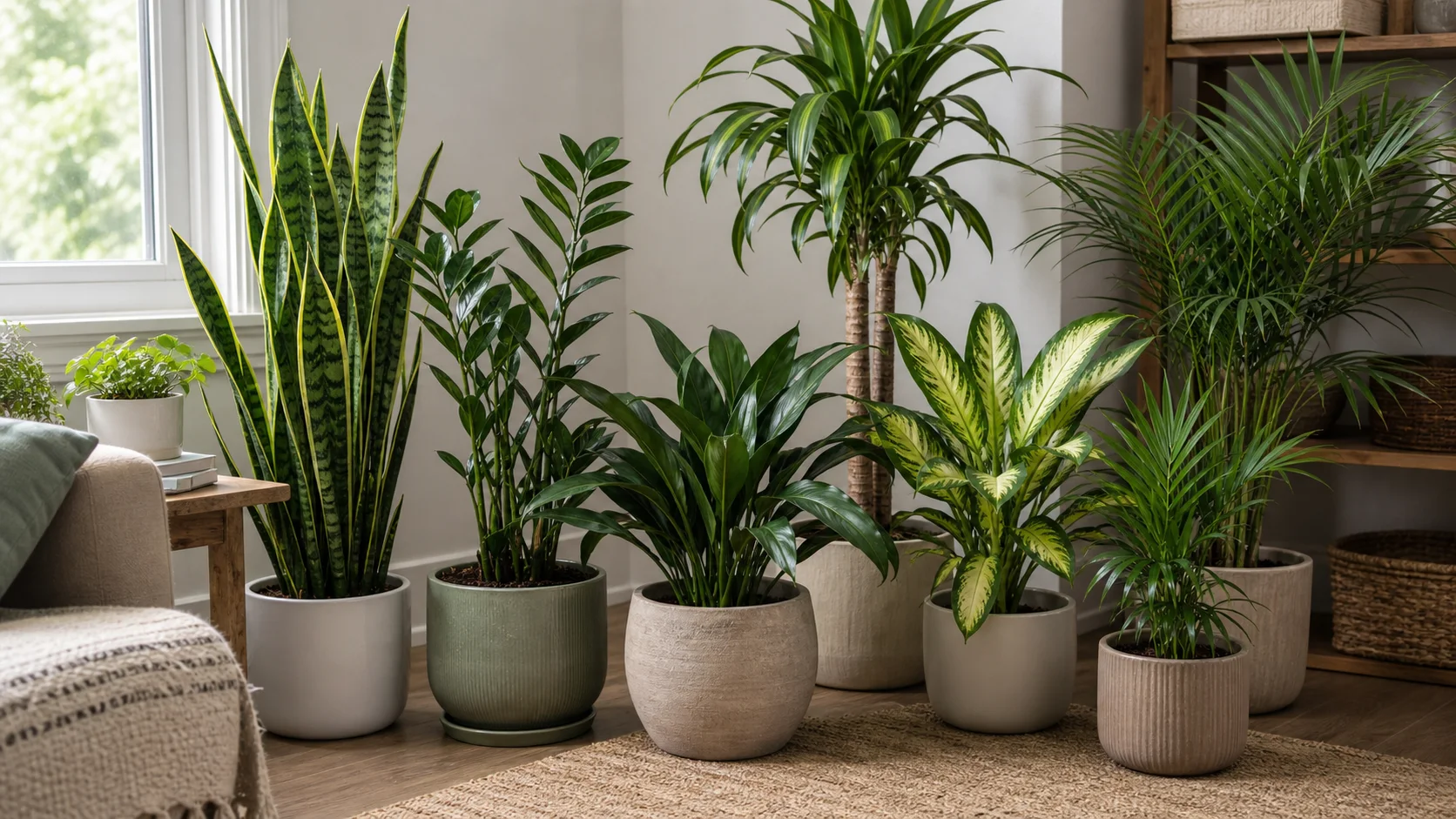
The right low-light choice depends on your watering habits, desired shape, and the realities of the room.
You forget to water for weeks:
Choose snake plant, ZZ plant, or cast iron plant.
You have cats or dogs that chew leaves:
Choose cast iron plant or lady palm first.
You want a tall plant with a real trunk or tree feel:
Choose Dracaena ‘Lisa’ or corn plant.
You want something that grows visibly, not just patiently:
Choose dieffenbachia or peace lily ‘Sensation’.
Your room is dim and you do not want drama:
Choose ZZ plant or cast iron plant.
You want softer, more elegant palm foliage:
Choose kentia palm or lady palm.
You have a truly windowless corner:
No plant will stay healthy there indefinitely without help. The most realistic move is cast iron plant or ZZ plant plus a simple grow light on a timer.
Care Cards
Care Card: drought-tolerant structural plants
Best fits: snake plant, ZZ plant, cast iron plant
Use when: the room is dim and your biggest risk is forgetting the plant for too long, then overcorrecting with too much water.
Watch most closely: soft leaves, yellowing, or a pot that stays wet week after week.
Care Card: tree-form plants for corners
Best fits: Dracaena ‘Lisa’, corn plant
Use when: you want height and a real indoor-tree silhouette without direct sun.
Watch most closely: brown tips from drafts, dry air, or mineral-heavy water, plus soggy soil if the corner is darker than expected.
Care Card: palms for softer shape
Best fits: kentia palm, lady palm
Use when: you want a taller, softer canopy and are comfortable with slower growth.
Watch most closely: overwatering, impatience, and buying a palm that the room cannot actually support without better light.
Care Card: fuller foliage that wants steadier moisture
Best fits: peace lily ‘Sensation’, Chinese evergreen, dieffenbachia
Use when: you want broader leaves and more visible growth, not just survival.
Watch most closely: letting the mix stay swampy in low light, or assuming every droop means the plant needs more water immediately.
10 Large Low Light Indoor Plants Worth the Space
1. Snake Plant (Dracaena trifasciata)
Snake plants earn their place here because they stay upright and architectural even when the room is not bright. Taller varieties like ‘Laurentii’ and ‘Black Gold’ can reach 3 to 4 feet indoors and hold that clean vertical shape for years.
NC State lists snake plant among the more shade-tolerant indoor options, which matches real life. What matters more, though, is what low light changes: she dries much more slowly than people expect.
- Watering in low light: often every 3 to 4 weeks, sometimes longer in winter
- Best for: people who forget to water and want a narrow plant for tight corners
- Watch for: yellowing or soft leaves from overwatering, not thirst
If you want the full care rhythm, the snake plant care guide goes deeper.
2. ZZ Plant (Zamioculcas zamiifolia)
A mature ZZ plant does not get tree-tall, but she fills space beautifully. Thick glossy stems rise in a way that feels deliberate, and even in low light she usually keeps that polished look.
She stores water in underground rhizomes, which is why ZZ plants handle neglect so well and why overwatering is their biggest trap in dim rooms.
- Watering in low light: often every 3 to 4 weeks, sometimes a little sooner in summer
- Best for: busy people, office corners, and anyone who tends to fuss too much
- Watch for: yellow stems or mushy rhizomes if the soil stays wet
A small but useful detail: wipe dust off the leaves once in a while. In a dim room, every bit of usable light matters.
3. Dracaena ‘Lisa’
If what you really want is a proper indoor tree shape, Dracaena ‘Lisa’ is one of the strongest options. She forms a trunk or clustered canes with a dark crown of leaves and can reach 5 or 6 feet indoors over time.
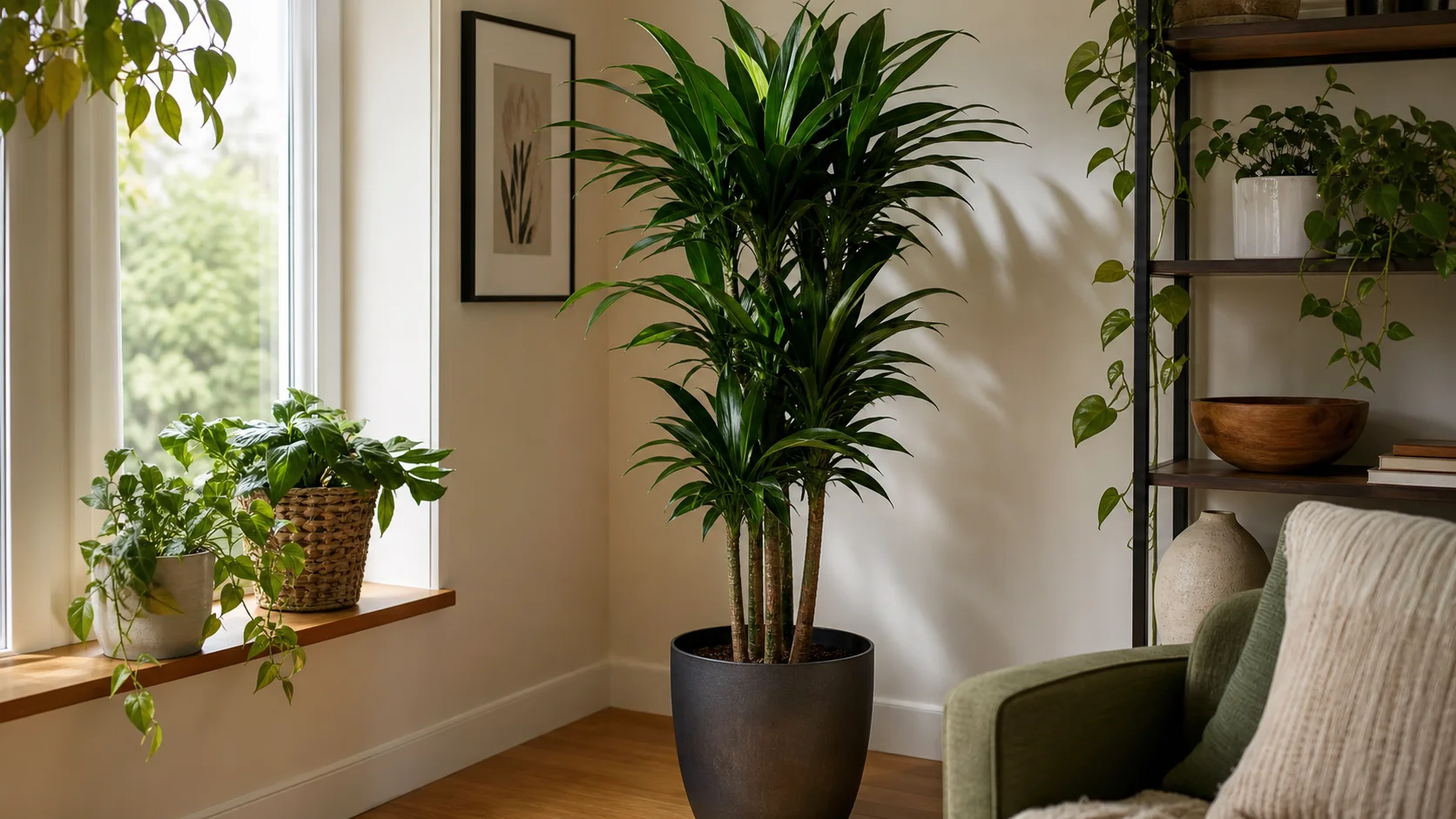
Clustered canes and compact dark crowns give Dracaena ‘Lisa’ a true corner-tree shape in softer light.
Compared with leggier dracaena types, ‘Lisa’ tends to keep a cleaner silhouette in softer light.
- Watering in low light: usually when the top 2 inches are dry, often every 2 to 3 weeks
- Best for: true corner-tree shape without needing bright sun
- Watch for: brown tips from dry air, mineral-heavy water, or cold drafts
If you are deciding between dracaena types, the dracaena care guide helps sort the genus.
4. Corn Plant (Dracaena fragrans)
Corn plant is one of the best “big plant for ordinary people” options. She grows into a real indoor tree silhouette without demanding much glamour from the room. In low light she will be slower, but she usually stays stable and attractive.
- Watering in low light: often every 2 to 3 weeks, always after the upper soil has dried somewhat
- Best for: height on a moderate budget
- Watch for: brown tips, especially from dry air or tap-water sensitivity
This is one of those plants that forgives a lot, but not constant sogginess.
5. Kentia Palm (Howea forsteriana)
Most palms are secretly bad low-light recommendations. Kentia is the exception people mean when they say “there is one palm that can really do this.”
She grows slowly, gracefully, and holds a soft arching look that works beautifully in living rooms and bedrooms. NC State notes kentia palm as a relatively light-tolerant indoor palm, and that is exactly why it keeps showing up in long-lived interiors.
- Watering in low light: usually every 1.5 to 2 weeks, depending on pot size and season
- Best for: elegant palm shape without bright-window demands
- Watch for: overwatering and impatience, because she is slow
One honest tradeoff: kentia palms are expensive. You pay for age and patience.
6. Peace Lily ‘Sensation’ (Spathiphyllum)
If you only know peace lilies as tabletop plants, the large varieties can be a surprise. ‘Sensation’ can reach around 4 feet with broad leaves that fill a space fast enough to feel rewarding.
Peace lilies tolerate lower light well, and they are one of the few plants on this list that may still bloom indoors in softer light. They also communicate thirst clearly by drooping, which many beginners appreciate.
- Watering in low light: usually every 7 to 14 days, letting the top layer dry slightly but not completely
- Best for: larger foliage plus occasional flowers
- Watch for: brown tips from dryness or direct sun, and pet toxicity
If this is the one you are leaning toward, the peace lily care guide covers the full routine.
7. Chinese Evergreen (Aglaonema)
Chinese evergreens are especially good if you want a plant that looks decorative, not just durable. Darker green varieties handle low light better than the pink or red ones, which usually need more brightness to keep their color.
They can reach 3 to 4 feet over time, and the fuller shape makes them feel more generous in a corner than their height alone suggests.
- Watering in low light: usually every 10 to 14 days, after the top inch or two dries
- Best for: patterned leaves and easygoing care
- Watch for: soggy soil and cold drafts
If you are comparing varieties, the Chinese evergreen care guide helps with the light differences.
8. Cast Iron Plant (Aspidistra elatior)
Cast iron plant is not the fastest or flashiest plant here, but she is one of the most honest. If your room is genuinely dim and your routine is inconsistent, this is one of the safest bets.
She usually tops out around 2 to 3 feet, but the dense dark leaves give her real presence. NC State also supports what plant people already know: this is one of the best shade-tolerant houseplants for long-term stability.
- Watering in low light: often every 2 to 3 weeks, sometimes longer in winter
- Best for: pets, dim rooms, and people who want almost no drama
- Watch for: slow growth, because she takes her time
If you want the plant most likely to still look good in the same corner years from now, cast iron plant is a strong answer.
9. Dieffenbachia
Dieffenbachia is one of the few large low-light plants that often looks like it is actually doing something. She can reach 4 to 5 feet indoors, and the big patterned leaves make her feel lush even when the room is not especially bright.
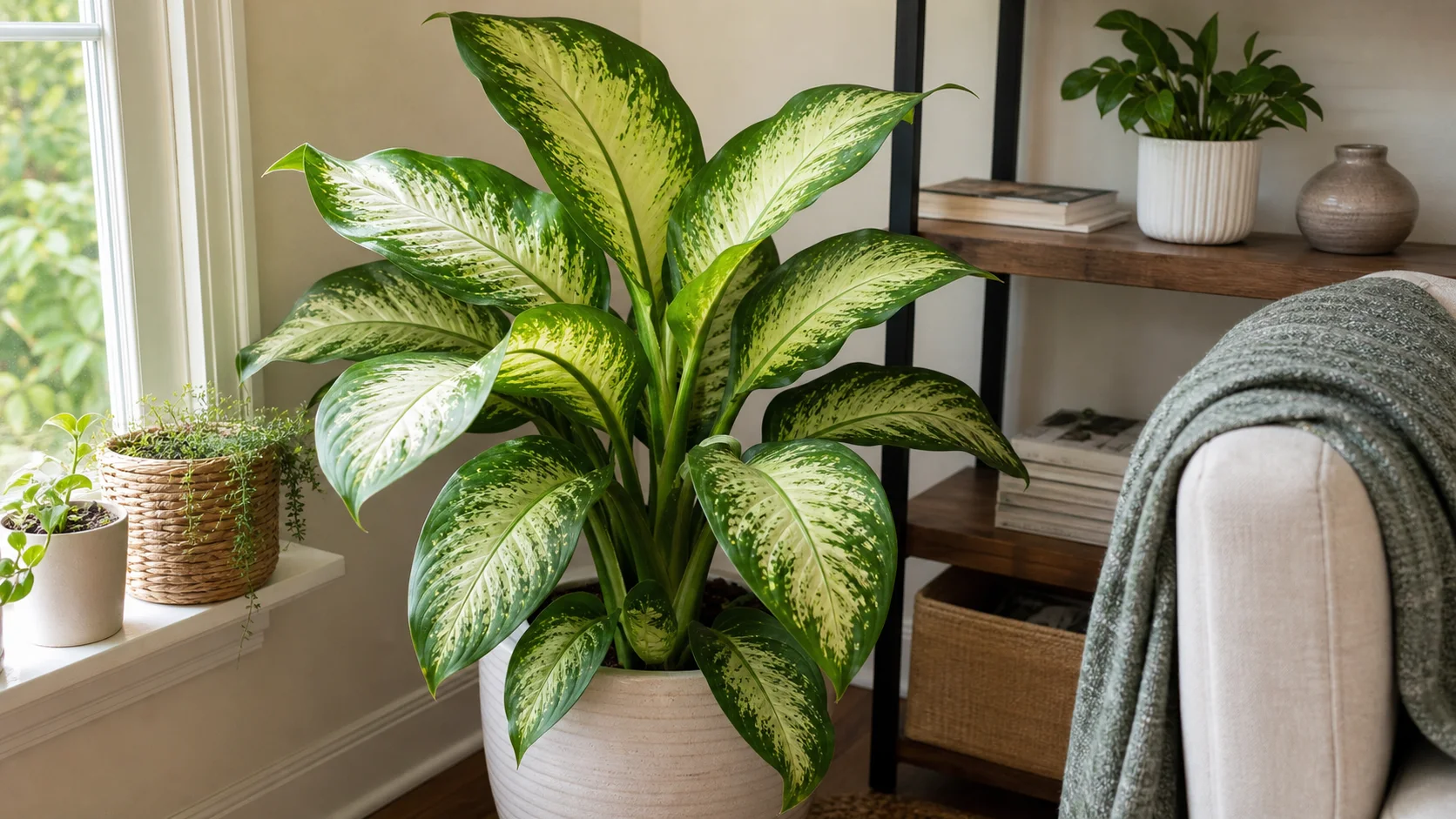
A fresh rolled leaf makes dieffenbachia’s visible growth easy to spot among its broad patterned foliage.
She tolerates lower light better than her tropical look suggests, but she is less forgiving than ZZ or cast iron if the root zone stays wet.
- Watering in low light: usually every 10 to 14 days, sometimes a little longer in winter
- Best for: noticeable growth and a fuller tropical look
- Watch for: overwatering, sap irritation, and pet risk
If you have animals or small kids who interact with plants directly, this is not the casual choice.
10. Lady Palm (Rhapis excelsa)
Lady palm has a slightly formal look, almost like she already knows how the room should be styled. The fan-shaped stems build up gradually into a full clump that can reach 5 to 6 feet indoors.
She is slower and pricier than easier beginner plants, but she solves a real problem: pet-safe height and palm-like form in lower light.
- Watering in low light: usually every 1.5 to 2 weeks, keeping the mix evenly lightly moist but never swampy
- Best for: pet homes that still want height and a palm feel
- Watch for: overwatering and impatient buyers expecting fast size gains
Common Problems and Symptom Diagnosis Card
| Symptom | Most likely issue in a dim room | What to do next |
|---|---|---|
| Yellow, soft leaves on snake plant or ZZ | Soil stayed wet too long, often from using a bright-room watering schedule | Stop watering, inspect the root zone, and let the mix dry much more before the next drink |
| Peace lily droops but the soil is still wet | Root stress, cold draft, or a badly drained mix, not simple thirst | Check drainage, room temperature, and whether the pot has been staying heavy for days |
| New growth is tiny or the plant leans hard toward one side | The spot is too dim for attractive growth | Rotate the pot and move it closer to the window or add a basic grow light |
| Brown tips on dracaena or palm leaves | Dry air, mineral-heavy water, or inconsistent watering | Trim the dead edge, then correct the routine instead of watering more often by default |
| Plant has not done much for months but still looks firm | It may simply be surviving, not actively growing, which is common in low light | Decide whether survival is acceptable or whether the room needs more light for the look you want |
These are the common problems that keep surfacing in community troubleshooting threads. The pattern is boring but useful: slow drying soil causes more trouble than actual thirst in dim rooms.
Seasonal Note
In winter or during long cloudy stretches, even the easy plants on this list may need less water than their summer rhythm. In brighter spring and summer weeks, watch new growth first before you speed the watering schedule back up.
The Best Choices by Risk
Sometimes the right choice is less about beauty and more about what is most likely to go wrong in your house.
| If your biggest risk is… | Start with… | Because… |
|---|---|---|
| Overwatering in a dim room | Snake plant, ZZ plant, cast iron plant | They tolerate slower drying better than most |
| Pets chewing leaves | Cast iron plant, lady palm | They are the safer picks on this list |
| Wanting visible growth fast | Dieffenbachia, peace lily | They usually show progress sooner |
| Spending a lot on the wrong plant | Snake plant, Chinese evergreen | Easier entry point, lower regret |
| A room that is dim all day | Cast iron plant, ZZ plant | They hold up better when the light is honestly limited |
Common Mistakes in Low-Light Rooms
Treating low light like “just water less sometimes”
Low light changes the whole rhythm. A plant that drinks weekly near a bright window may need ten days, two weeks, or much longer in a dim room.
Buying for the label, not the shape
Some plants technically tolerate low light but look sparse or tired there. If you want a full upright form, choose the plants that hold structure well, not just the ones marketed as tolerant.
Forgetting pet safety until after purchase
A lot of classic low-light plants are not safe for chewing pets. If that matters in your home, filter for it first.
Expecting real growth in a windowless room without help
No plant on this list wants true darkness. If the room has almost no natural light, a simple grow light is not overkill. It is the realistic solution.
Watering on a bright-room schedule
This is the mistake that quietly causes most trouble. Check the soil, not the day of the week.
Before You Buy: What to Check in the Actual Room
Stand in the exact spot and ask:
- Can I read here during the day without turning on a lamp?
- Is there a heater, AC vent, or cold draft nearby?
- Will this plant get bumped in a walkway?
- Do I want height, width, or both?
- Am I choosing for looks only, or for my actual watering habits too?
That last question matters more than people like to admit. A plant that suits your routine will always feel easier than a theoretically “better” plant that needs attention you will not consistently give.
If your room is darker than you hoped, grow lights for indoor plants can help you keep the plant you want instead of settling for the only one that might survive.
If you are troubleshooting another common plant symptom, see Majesty Palm Care Indoors: Light, Water, and Brown Tips for a focused diagnosis and recovery plan.
Methodology Note
This article was remediated from the Research Pack for large-low-light-indoor-plants, not from a keyword list alone. The recommendations were cross-checked against NC State Extension plant profiles for low-light behavior, ASPCA toxicity pages for pet safety, and recurring Gardening Stack Exchange questions for the reader-language around low light confusion, slow drying soil, and rot risk. Community questions are qualitative signals only, not prevalence data.
Real User FAQ
These are the real user FAQ themes that keep showing up when people compare big low-light plants for ordinary rooms.
Can large plants really thrive in low light, or do they just survive?
Some genuinely do well, but slower than they would in brighter conditions. The main difference is whether the plant still keeps a healthy shape and steady new growth over time. Snake plant, ZZ plant, cast iron plant, and the better low-light dracaenas usually hold up well. A plant that is only surviving will start showing it through yellowing lower leaves, leaning hard toward the window, or months of stalled growth.
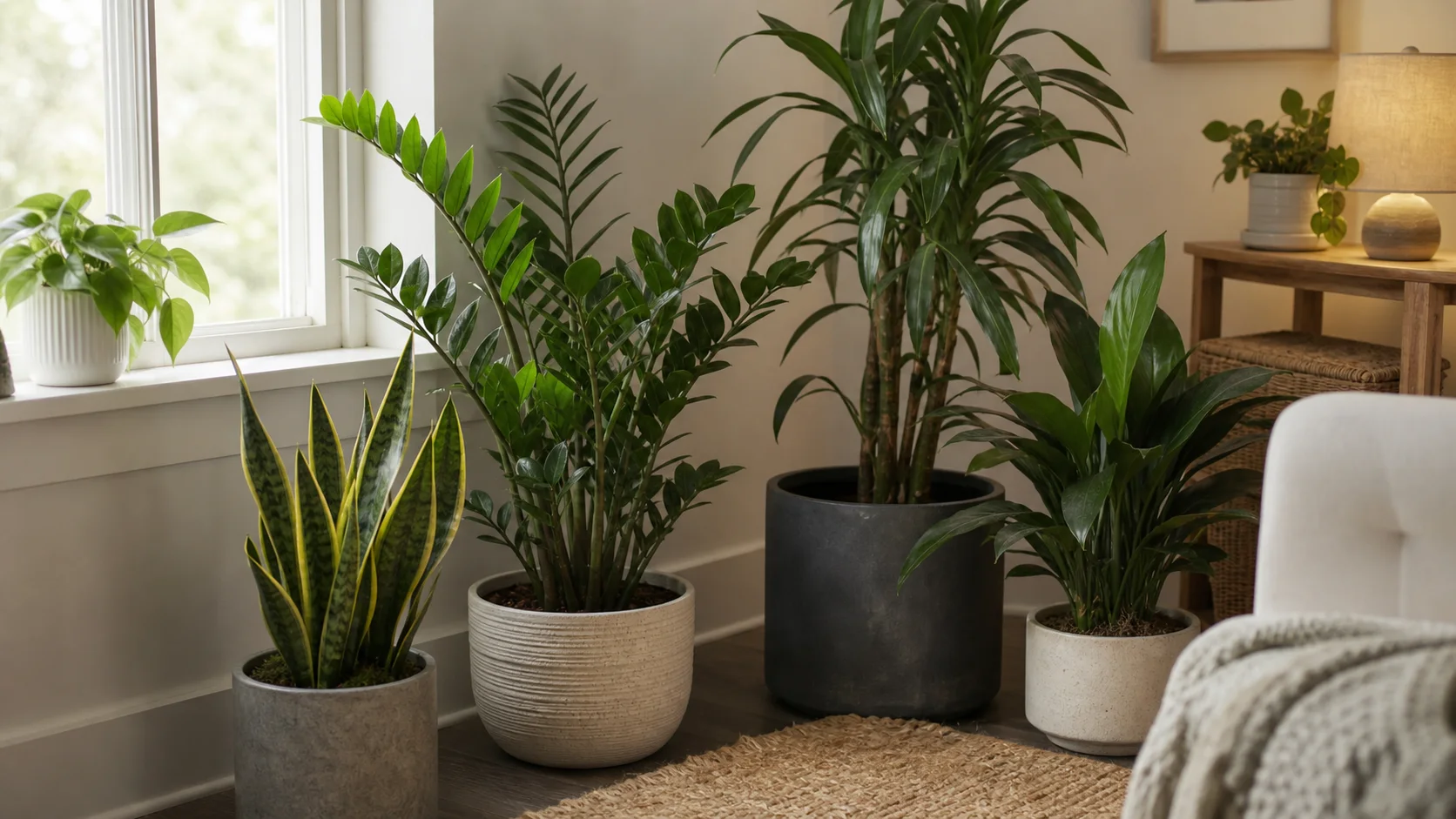
Upright shape and pale new ZZ growth show the difference between slow progress and merely surviving.
What is the fastest-growing large plant for a dim room?
Dieffenbachia is usually the fastest-looking grower on this list. Peace lily ‘Sensation’ is another good choice if you want visible growth without waiting forever.
How often should I water large plants in a low-light room?
Less often than most people expect. In many homes, what looks like a weekly routine near a bright window becomes more like every 10 to 14 days in lower light, and sometimes much longer for snake plants and ZZ plants. The safer rule is still to check the soil before watering.
Are any of these large low-light plants safe for cats and dogs?
Yes, but only a few on this list are the safest obvious choices for pet homes: cast iron plant and lady palm. Many classic low-light plants, including snake plant and peace lily, are not pet-safe. If pets chew leaves, browse the cat-safe indoor plants guide before buying.
Which plant is best if I forget to water?
Snake plant and ZZ plant are the two easiest answers. Cast iron plant is also forgiving, though slower.
Which large plant is best for a room with almost no natural light?
If there is almost no natural light, pair the plant with a grow light. On their own, cast iron plant and ZZ plant are the most tolerant, but even they are not truly happy in darkness.
How do I know my plant is not getting enough light?
Watch for smaller new leaves, no new growth for months during spring and summer, leaning toward the window, or slow yellowing from the bottom. Those are the quiet signs that the room is too dim for real progress.
Editorial Trust and Freshness
Author: KnowYourPlant editorial team
Reviewer: Pending editorial review
Review status: Editorial review pending final publish check
Last updated: May 2026
This page was built around the real buying risks people run into with large low-light plants: confusing low light with no light, overwatering slow growers, and discovering too late that the best-known options are not safe for pets.
The shortlist and care tradeoffs were checked against extension guidance and primary toxicity references, especially NC State for plant behavior in low light and ASPCA for pet-safety verification where relevant.
A Good Starting Point
If you want the shortest honest answer, here it is:
- choose snake plant or ZZ plant if you want the easiest low-light life,
- choose cast iron plant or lady palm if pets are part of the decision,
- choose Dracaena ‘Lisa’ or corn plant if what you really want is height and tree shape,
- and choose dieffenbachia or peace lily if visible growth matters more than maximum tolerance.
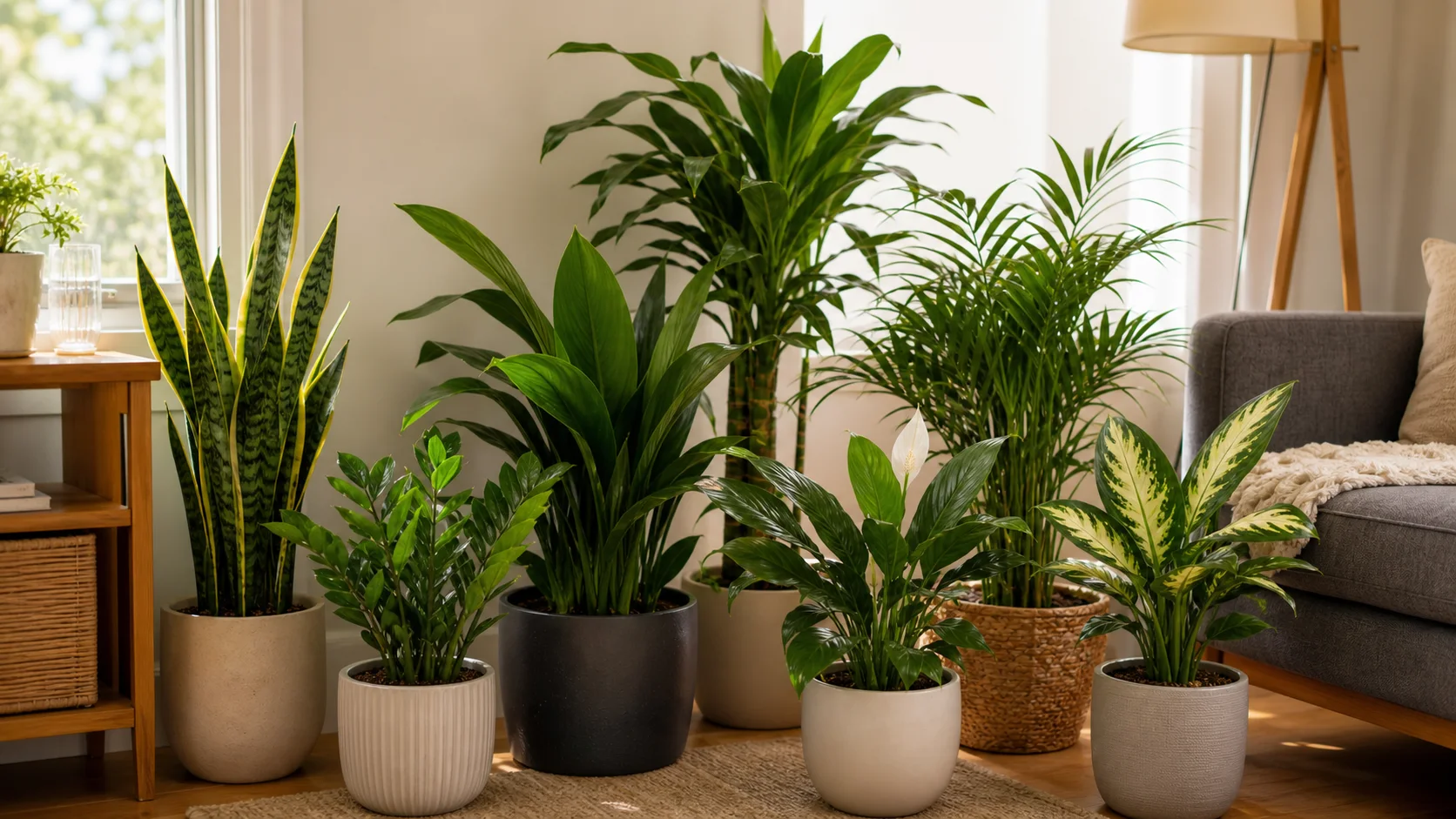
A practical shortlist balances easy-care structure, pet-aware options, tree height, and visible foliage growth.
The best low-light plant is not the one with the most dramatic label. It is the one that still fits your room and your routine three months later.
If you want help tracking which corner dries faster, which plant was watered last, and whether the new growth is actually a good sign, KnowYourPlant can help keep the whole setup straight.