By the KnowYourPlant Editorial Team | Seller policies and shipping thresholds verified May 2026
Guarantee policies were verified directly from Bloomscape and The Sill support and FAQ pages. Cold-damage thresholds are drawn from published University of Minnesota Extension and NC State Extension research on tropical houseplant cold sensitivity. Seasonal risk guidance was reviewed against documented shipping incidents across plant-buying communities during the 2024–2025 shipping seasons. No retailer was contacted for promotional inclusion, and no compensation was received from any retailer mentioned.
Two fears come with ordering plants online. The first is that the plant will arrive dead or damaged. The second is more expensive: buying something that was never a good fit for your home in the first place.
A fiddle-leaf fig looks spectacular in photos. It also needs bright, stable light, hates drafts, and punishes every inconsistent watering with dropped leaves. Buying one because it showed up in a search result is how most plant disappointments start – before the shipping box even enters the picture.
This guide covers both problems. It starts with whether the plant you want is actually a match for your home, then walks you through choosing a seller, reading seasonal risk, and handling a damaged arrival.
What Most Buying Guides Skip
Here is the kind of thing that actually goes wrong. A buyer orders a fiddle-leaf fig in late November from a seller with 4.8 stars and over 300 reviews. The listing looks professional. Nothing mentions cold weather, heat packs, or temperature holds. The plant ships from Northern California to the Midwest in a single-wall box with no insulation. Four days later, overnight temperatures during transit drop to 28°F in Indiana. The plant arrives with mushy, translucent stems at the base. It never recovers.
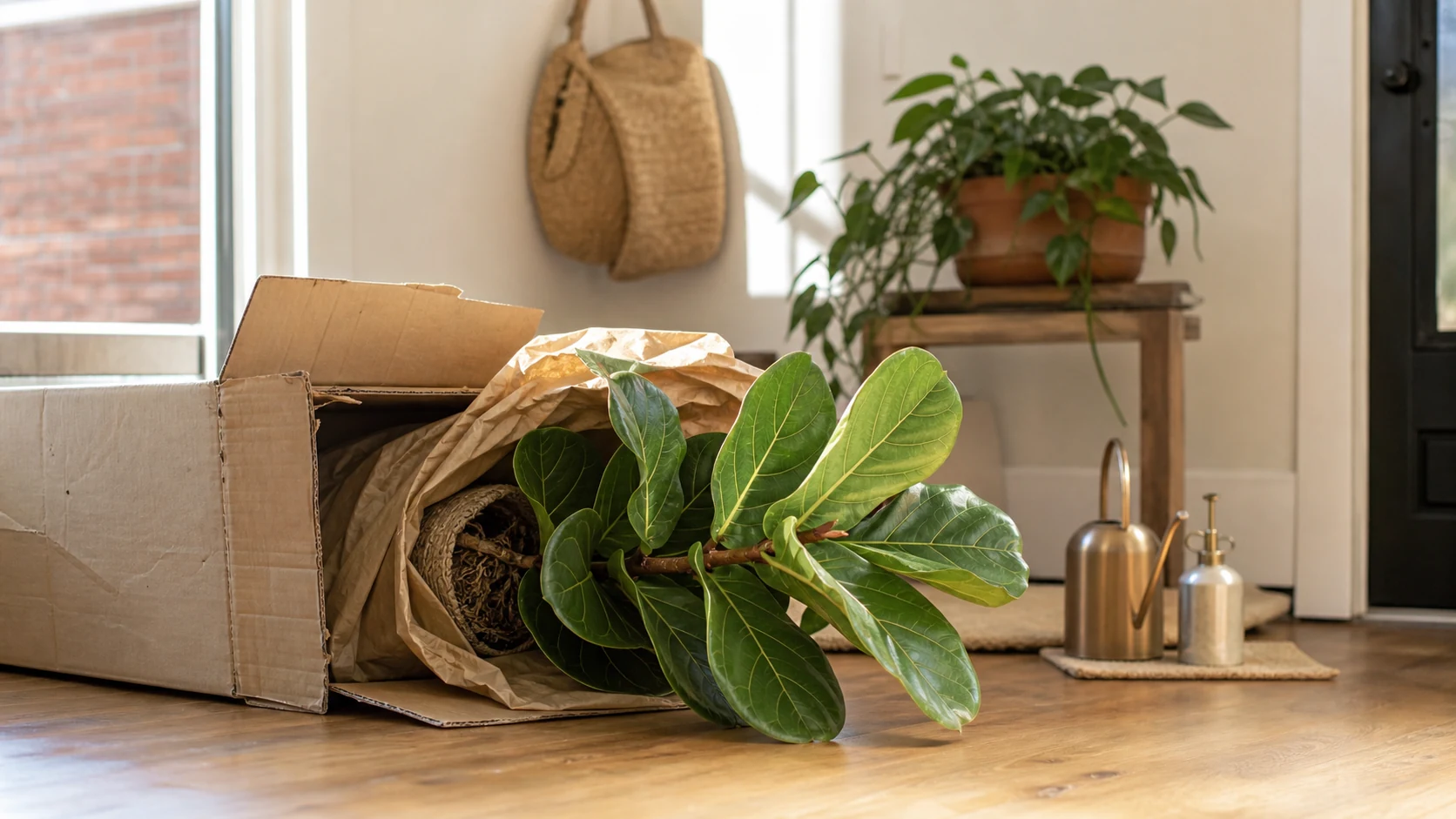
A single-wall box with loose paper leaves a cold-sensitive fiddle-leaf fig exposed to preventable transit damage.
A recurring pattern in winter plant-buying threads: buyers check the overall star rating, not the packaging policy. That gap is where most buying guides stop being useful.
Most articles in this space are store roundups. They tell you that Bloomscape is polished, The Sill has great packaging, and Etsy has unusual varieties. All true. But they skip the part that actually decides whether your plant arrives alive: whether the plant is right for your home at all, how to judge a seller before you order, and when to pause the whole idea.
Should You Buy This Plant at All?
Before you compare sellers or check shipping costs, spend three minutes here. Shipping damage is frustrating. Buying the wrong plant for your home is more frustrating – and more expensive.
Does your home have the right light?
Light is the most common reason plants fail. Most product descriptions say “bright indirect light” or “low light tolerant” without explaining what that means in a real living room.
- Bright indirect light means 2 to 4 feet from a south- or east-facing window that gets sun for part of the day. Not a north-facing corner. Not the center of a room with one distant window.
- Low light tolerant means the plant can survive in dim conditions, not that it thrives there. Pothos and ZZ plants are genuinely low-light tolerant. Fiddle-leaf figs are not.
- Direct sun means sun hits the leaves. Most tropicals scorch in direct afternoon sun.
Quick test: stand in the spot at midday and hold your hand up. A sharp shadow means bright light. A soft shadow is medium. No shadow is low.
Can you match its humidity needs?
Most tropical houseplants come from environments where humidity runs 60 to 80 percent. Most homes run 30 to 50 percent, lower in winter with heating running.
- Low sensitivity: Pothos, ZZ plant, snake plant, heartleaf philodendron. Fine in normal home humidity.
- Medium sensitivity: Monstera deliciosa, peace lily, spider plant. They prefer higher humidity but manage in most homes.
- High sensitivity: Calathea, orchid, alocasia, bird of paradise, fiddle-leaf fig. Below 50 percent humidity these drop leaves, develop brown tips, or stop growing. You need a humidifier nearby, not just occasional misting. Misting raises humidity for a few minutes, then it drops back to where it was.
Is it safe for your pets?
If you have cats or dogs, verify this before you order. Many popular houseplants are toxic to pets, including peace lily, pothos, philodendron, and snake plant. The cat-safe indoor plants guide lists safe and unsafe species if you need to check before buying.
How forgiving is it of missed waterings?
Some plants bounce back from an off week. Others do not.
- Very forgiving: ZZ plant, snake plant, cactus, succulent. Miss a watering by two weeks and most are fine.
- Moderately forgiving: Pothos, heartleaf philodendron, peace lily. They droop when thirsty but recover after watering.
- Unforgiving: Fiddle-leaf fig, orchid, calathea, alocasia. Irregular watering causes lasting damage. These need a consistent schedule.
If your routine is irregular or you travel frequently, start with a forgiving plant. You can always add a more demanding one later.
Is this plant honest about what it takes?
Search the plant name plus “beginner” and read what experienced growers say, not just the seller’s listing. Sellers have an incentive to make plants sound easy. Growing communities do not.
Quick Decision: Local, Online, or Wait?
Use this before you start comparing individual sellers.
| Your situation | Best move |
|---|---|
| Common plant (pothos, snake plant, peace lily), any season | Buy locally. Inspect before you buy. Skip shipping risk entirely. |
| Rare or hard-to-find variety, safe season (late April–October), experienced buyer | Etsy or specialty nursery. Vet the seller with the Five-Point Score below. |
| First online order, want a reliable arrival experience | Curated retailer (Bloomscape, The Sill). Lower selection, but real guarantees. |
| Delicate tropical (fiddle-leaf fig, alocasia, orchid, calathea), safe season | Curated retailer or well-vetted specialty nursery. Confirm heat-pack policy. |
| Any delicate tropical, December through March, Zone 4–6 | Wait for late spring. Or order only from a seller with documented heat packs and weather holds. |
| Large-leaf tropical (bird of paradise, monstera), shoulder season | Curated retailer only. These plants do not recover from cold transit damage. |
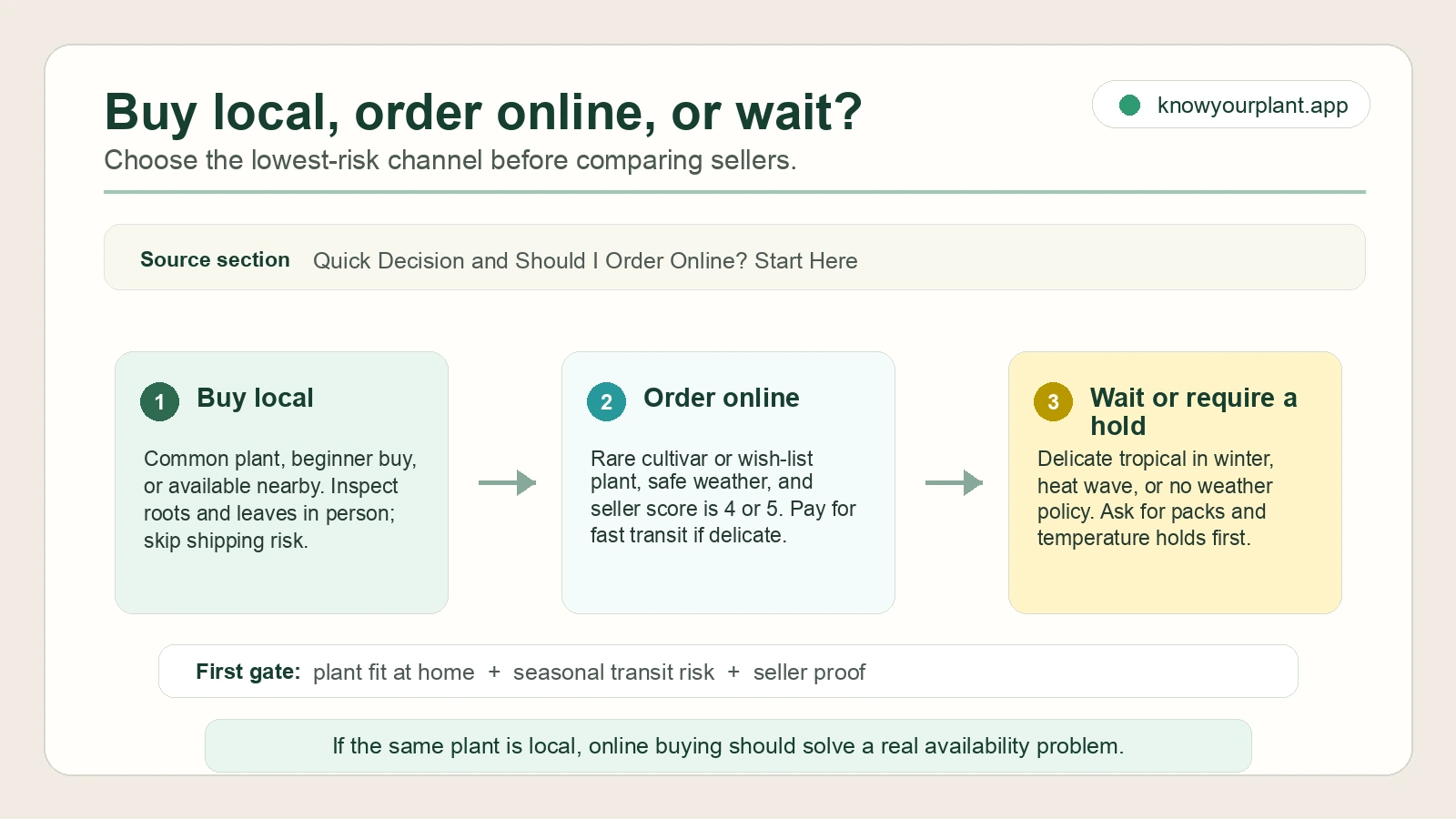
Use the lowest-risk path first: buy locally when the plant is common, order online when availability justifies shipping risk, and wait or require a weather hold when the season is unsafe.
If your plant is available locally, buying online adds risk without adding value. The real case for online plant shopping is wish-list plants you genuinely cannot find nearby.
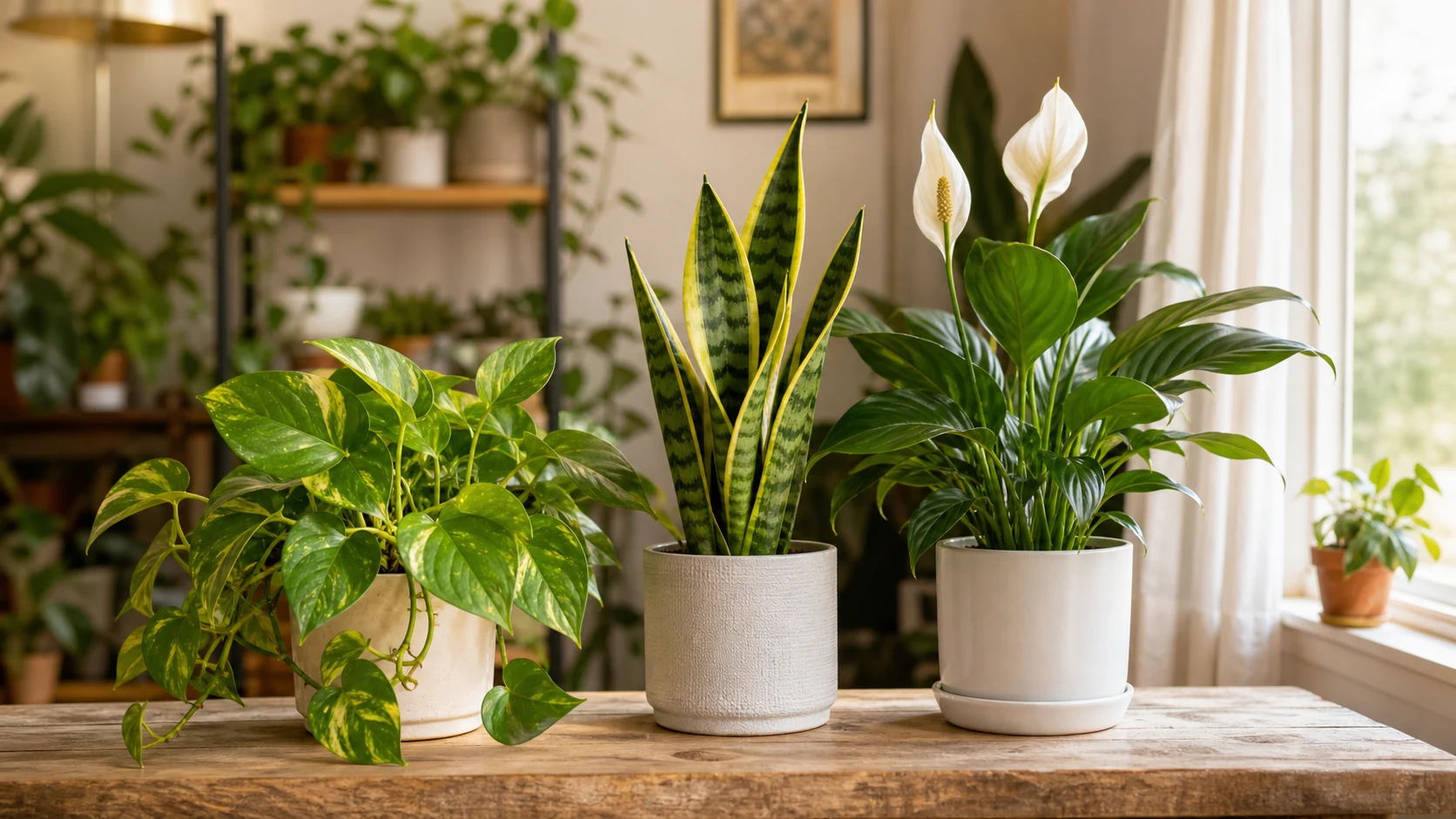
Common pothos, snake plants, and peace lilies are easier to inspect locally, avoiding needless shipping risk.
Why Plant Type Changes the Shipping Risk
Not all plants ship the same way. Matching your plant type to the right channel and season matters more than any star rating.
Large-leaf tropicals (fiddle-leaf fig, bird of paradise, monstera deliciosa) The highest-risk shippers. Large leaves bruise and tear in a box. Stems snap at weak points. Cold-sensitive below 55°F, and a single night below that threshold during transit can cause permanent damage. These plants need the most experienced seller, the fastest transit time, and the safest season. October through April in Zone 4–6: wait.
Trailing vines (pothos, heartleaf philodendron, tradescantia) The most forgiving shippers. These plants tolerate 3 to 5 days in a dark box with minimal watering and are rarely damaged by brief cold exposure. A solid first online plant purchase. Fine from most sellers during safe seasons. See the pothos varieties guide for a sense of how many distinct cultivars exist – most of which your local store will never carry, which is where online buying earns its place.
Succulents and cacti These tolerate temperature swings better than tropicals and prefer dry shipping conditions. The main risk after arrival is the reflex to water immediately. Let them settle 5 to 7 days before the first watering.
Orchids Often shipped bare-root or in minimal media by specialists who know how to pack them. The real consideration is post-arrival care: they need 50 to 70 percent humidity to recover well. Buy from an orchid-specific seller when possible. General plant retailers often pack orchids worse than specialists do.
Rare aroids (alocasia, philodendron gloriosum, anthurium crystallinum) Rarely available locally, which makes Etsy and specialist growers often the only option. These are among the most cold- and humidity-sensitive houseplants available. They require the most thorough seller vetting, a confirmed safe season, and heat-pack packaging. Not recommended as a first online plant purchase.
Social Listening: What Recent Buyers Keep Running Into
Recent plant-buying threads and review-platform snippets kept surfacing the same issues, even when the seller looked reputable on the surface:
- Marketplace trust is not enough by itself. Buyers kept warning each other to check recent reviews, seller location, and weather handling instead of assuming Etsy or another platform would filter out bad packing habits.
- Online orders feel most worth it for wish-list plants. For common pothos, snake plants, or peace lilies, buyers repeatedly said shipping costs made local pickup the smarter move unless the online shop was offering a hard-to-find cultivar.
- Seasonal timing changes the outcome more than branding does. Winter complaint threads repeatedly centered on frost exposure, missing heat packs, or sellers shipping into obvious cold snaps that should have triggered a hold.
Treat those patterns as qualitative buyer-language signals, not retailer-wide statistics. They are still useful because they show where plant orders break in the real world: vetting, timing, and claim readiness.
Should I Order Online? Start Here
Once you have confirmed the plant is a good fit for your home and chosen your channel from the table above, work through this before selecting a specific seller.
Is the plant available at a nearby nursery or garden center?
- Yes: Buy locally unless you need a specific cultivar not in stock. Go inspect the plant in person.
- No: Continue below.
Is the season safe for shipping in your region? (See Seasonal Risk Calendar below.)
- Yes: Proceed with a seller who scores 4 or 5 on the Five-Point Seller Score.
- No: Either wait for a safer window or order only from a seller with documented cold or heat packaging and weather holds.
Is it a delicate tropical (fiddle-leaf fig, alocasia, orchid, calathea, or large-leaf tropical)?
- Yes, in a safe season: Use the Five-Point Seller Score before ordering. Fastest available shipping is worth paying for.
- Yes, in a risky season: Order only from a curated retailer with confirmed heat-pack and weather-hold policy, or wait.
- No (trailing vine, succulent, ZZ, snake plant): A curated retailer or well-vetted Etsy seller is fine. Check the seller score to avoid a frustrating arrival.
Online Plant Seller Scoring Rubric: The Five-Point Seller Score
Score each seller on these five criteria before you order. A seller that scores 4 or 5 is low risk. A seller scoring 3 or below deserves a harder look or a direct question before you proceed.
How to read the score
- 5/5: Low-risk order. Safe to place if the season is also in your favor.
- 4/5: Usually acceptable, especially for curated retailers or a seller who answered your pre-order questions clearly.
- 3/5: Only worth the risk for a genuinely hard-to-find plant, and only after direct seller confirmation.
- 0 to 2/5: Skip it, wait for a better season, or buy locally instead.
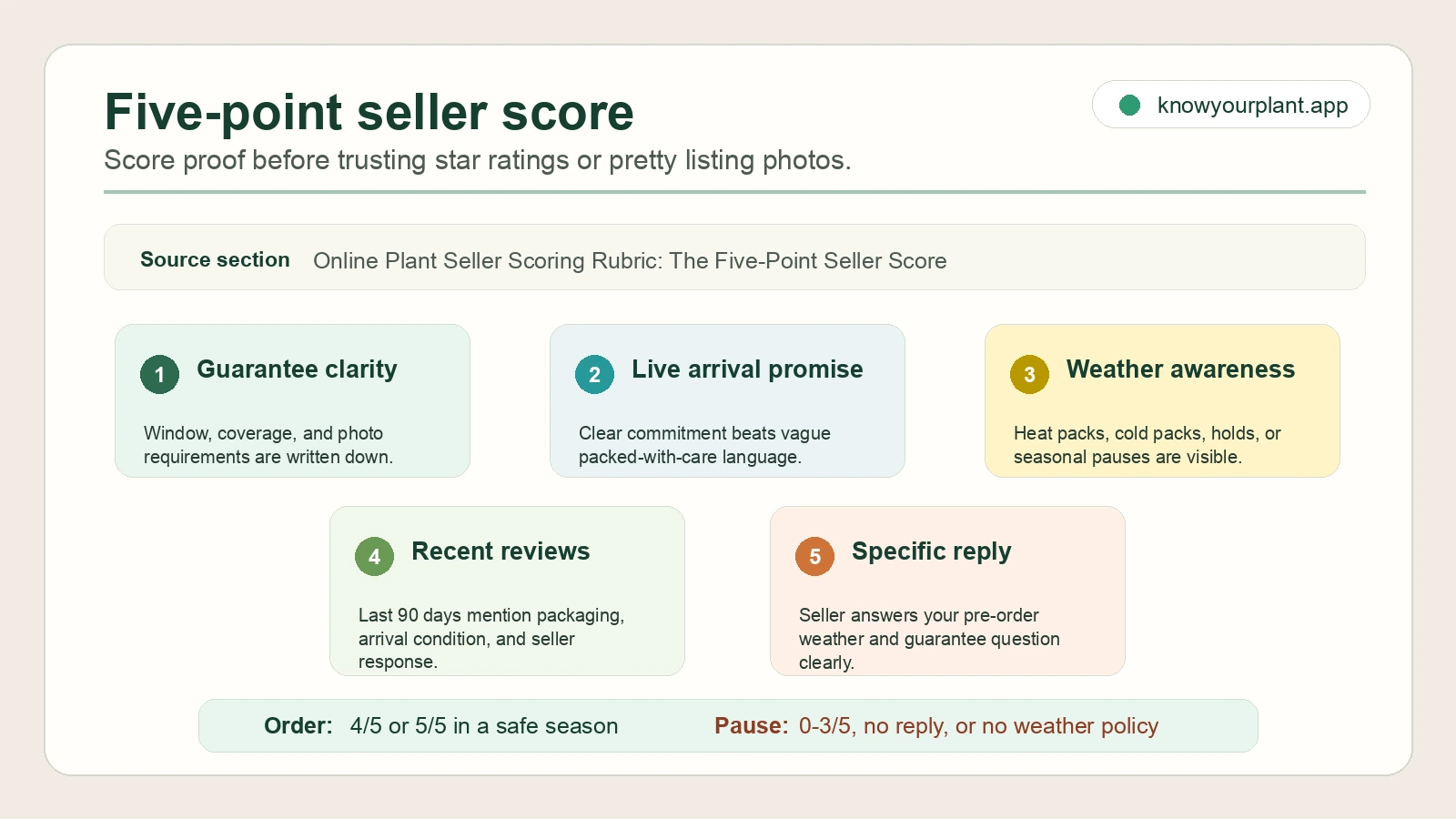
A strong seller score is evidence-based: clear guarantee terms, live-arrival language, weather handling, recent packaging reviews, and a specific answer before you buy.
1. Guarantee clarity (0 or 1 point) A trustworthy seller states the guarantee window, what it covers, and what documentation you need. Bloomscape covers every plant for 30 days after arrival and requires photos for damage claims. The Sill offers the same 30-day coverage with the same photo requirement. A vague policy like “we stand behind our plants” is not a guarantee.
Where to find it: Open the seller’s FAQ or Shipping page and search for the word “guarantee.” If you cannot find explicit language with a time window and a documentation requirement, score 0. Screenshot the exact policy wording before you order so you have proof of what was promised.
2. Live arrival commitment (0 or 1 point) Does the seller explicitly state that plants ship with live arrival guaranteed, or do they hedge with “we do our best”? The clearer the language, the more likely there is a real process behind it.
Where to find it: Check the listing description and the seller’s policy page. “Live arrival guaranteed” is the phrase to look for. “We take great care in packing” is not a commitment.
3. Weather awareness (0 or 1 point) Does the seller mention heat or cold packs, temperature holds, or seasonal shipping pauses? The Sill uses insulated packaging and 72-hour heat packs for winter orders and pauses shipments of cold-sensitive species during extreme cold. A seller who does not mention weather at all is a red flag in any month outside late spring and early autumn.
Where to find it: Search the Shipping or FAQ page for “heat pack,” “cold pack,” “winter shipping,” or “temperature hold.” On Etsy, check whether the shop announcement mentions seasonal shipping pauses. If you find nothing, ask directly before ordering.
4. Recent, specific reviews (0 or 1 point) Read reviews from the last 90 days, not the overall rating. Are reviewers describing packaging quality, arrival condition, and how the seller responded to a problem? “Great shop, fast shipping” tells you less than “arrived a little wilted, seller sent a replacement within 48 hours.”
Where to find it: On Etsy, filter reviews by “Most Recent.” On platform retailers, sort by date. A seller with 500 reviews earned mostly in May and June may not represent their current winter performance at all.
5. Responsive pre-purchase communication (0 or 1 point) Send a question before ordering. Ask about packaging, shipping timeline, or whether they hold orders if a cold front is coming. A seller who replies promptly and specifically is a seller who will also respond well if your plant arrives damaged.
Where to find it: Use the platform’s messaging system. Under 24 hours is good. Over 72 hours is a concern.
What Correct Packaging Looks Like
A correctly packed shipment will typically include:
- An insulated liner or bubble-wrap layer lining the inside of the box
- A heat pack, activated and placed inside, for cold-weather orders
- The plant positioned upright, not lying on its side
- Void fill (paper, foam, or cardboard) preventing the pot from shifting during transit
- The pot secured so roots and soil stay contained, not loose inside the box
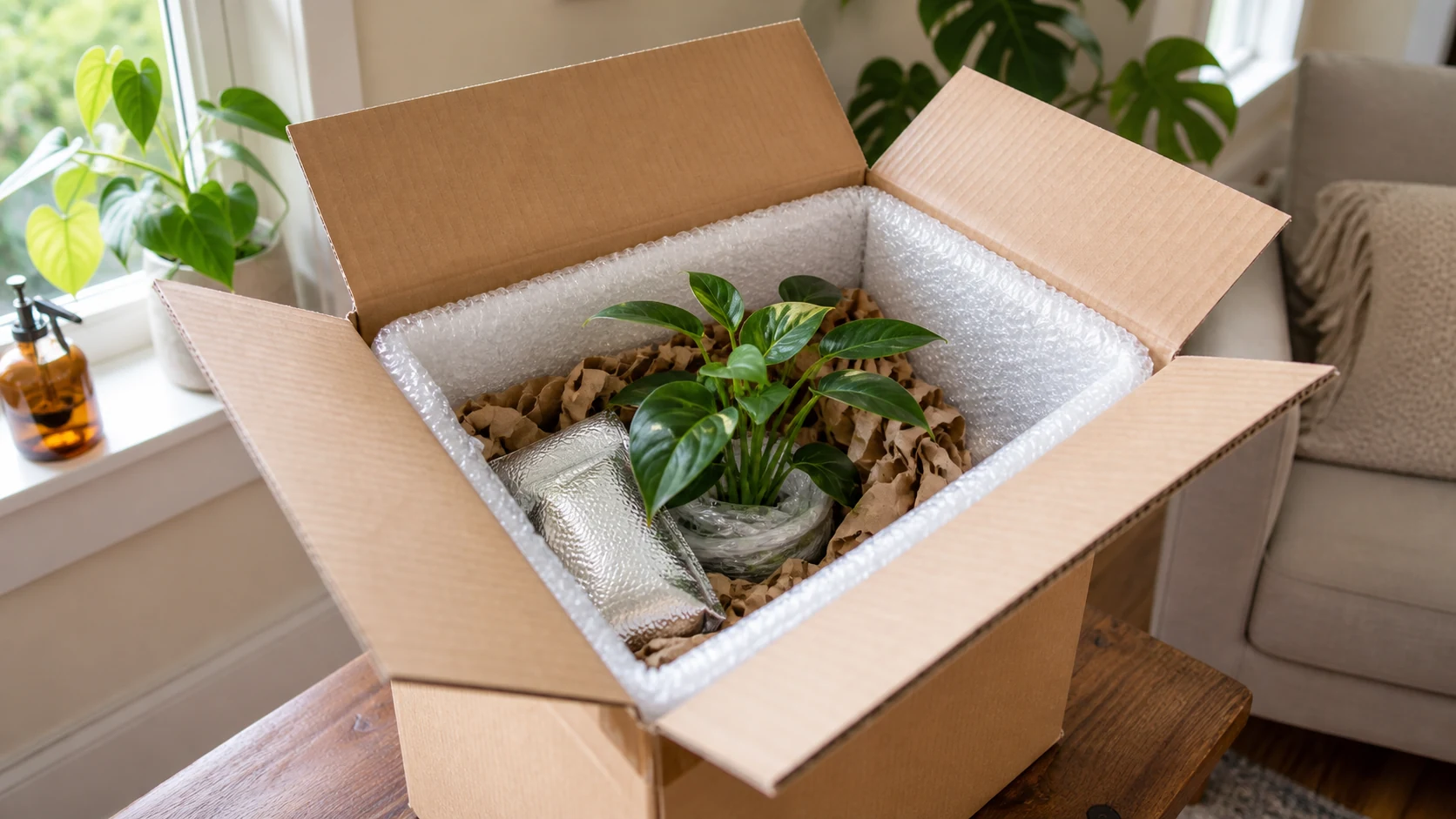
An upright plant, secured pot, insulated liner, thermal pack, and paper void fill show what deliberate cold-weather packaging looks like.
If a seller’s listing shows packed-shipment photos, check for those five things specifically. Soil loose in the box, the plant lying sideways, or no insulation in cold-weather months is a packing problem, not bad luck.
Questions to Send Any Seller Before Ordering
Copy and paste one of these before you commit. A trustworthy seller will answer all three points specifically rather than with a generic “don’t worry.”
For weather and packaging:
“Hi, I’m planning to order [plant name] and wanted to ask about your current shipping approach. Do you include a heat pack or insulated liner for cold weather? And do you hold orders if there’s a cold front forecast for my region? I’m in [your state/province].”
For guarantee terms:
“Could you confirm your guarantee window and what I’d need to provide if the plant arrives damaged? Specifically: how many days do I have to file, and do you need photos of the box and the plant before I unpack it?”
For Etsy or marketplace sellers (combined check):
“Hi, I’m interested in ordering [plant name]. A few quick questions: Do you ship with a heat or cold pack in current temperatures? What’s your policy if the plant arrives damaged, including the window and what I need to document? And roughly where do you ship from? Thanks.”
A seller who answers all three points clearly before you buy is worth trusting.
What if the seller does not reply? If there is no response within 48 hours, treat silence as a score-0 on responsive communication. A seller who is unresponsive before the sale has no particular incentive to become more responsive after.
Red Flag Checklist for Listings
Before you add anything to your cart, run through this list.
- Stock photos only. If you cannot see the actual plant or representative recent shipment photos, you do not know what you are buying.
- No plant size information. A listing should specify pot size or approximate height so you can judge value relative to shipping cost.
- No seller location listed. Transit time and climate risk depend on where the plant ships from. A West Coast seller shipping to the upper Midwest in February is a long, cold trip.
- Vague replacement language. “Contact us if there is an issue” is not a policy. Look for specific windows, photo requirements, and whether the resolution is a refund, store credit, or a replacement plant.
- No packaging details. “Ships bare root,” “double-boxed,” or “heat pack included at checkout” are signals that someone has actually shipped plants before and thought about what survives transit.
- Slow or scripted pre-purchase replies. That pattern is how they will respond when your plant needs attention too.
- No shipping timeline stated. If the listing does not say when the plant will be picked, packed, and handed to the carrier, you cannot plan for weekend warehouse holds or holiday delays – both add days of dark box time in temperature extremes.
Seller Type Comparison
| Seller Type | Best plant types | Guarantee | Weather protection | Vetting burden | Price range |
|---|---|---|---|---|---|
| Curated retailer (Bloomscape, The Sill) | Common and popular tropicals | Clear 30-day, photos required | Yes: winter holds and heat packs | Low | $35–$80 delivered |
| Etsy / marketplace shop | Rare cultivars, aroids, hobby-grown | Varies widely by seller | Varies: ask before ordering | High | $12–$45 + shipping |
| Small direct nursery (specialty) | Deep genus-specific selection | Often strong for their specialty | Often yes if asked | Medium | $20–$60 + shipping |
| Big-box online (Amazon, Walmart plants) | Hardy common species only | Weak to none | Rarely specified | Very high | $8–$25 delivered |
Price ranges reflect typical retail pricing as of 2025–2026. Rare cultivars on Etsy can exceed these ranges significantly.
Pros and Cons by Seller Type
| Seller type | Pros | Cons |
|---|---|---|
| Curated retailer | Clear guarantee, documented packaging, easier claims process | Higher prices, narrower plant selection |
| Etsy or marketplace shop | Access to rare cultivars, hobbyist expertise, flexible sourcing | Policy quality varies widely, more vetting work, weather risk can shift to the buyer |
| Small direct nursery | Deep specialty knowledge, stronger fit for genus-specific buyers | Smaller teams, more variable lead times, seasonal windows can be tighter |
| Big-box online retailer | Cheapest path for hardy common plants, easy checkout | Weak plant-specific support, generic returns, packaging often built for retail speed not live plants |
Curated Retailers
Best for: First-time online buyers and anyone ordering a delicate tropical who wants a guaranteed arrival without doing seller homework on every order.
Not for: Collectors hunting rare cultivars, buyers on a tight budget.
Bloomscape covers every plant for 30 days after arrival. Claims require photos and must be submitted within the guarantee window. Repotting within 30 days voids the guarantee. Policy verified: May 2026.
The Sill offers a 30-day guarantee with the same photo-documentation requirement. Winter orders include insulated packaging and 72-hour heat packs for cold-sensitive species. Some cold-sensitive varieties are paused entirely during extreme cold windows. Policy verified: May 2026.
Etsy and Marketplace Shops
Best for: Experienced buyers looking for rare cultivars, cuttings, or hobby-grown varieties that curated retailers simply do not carry.
Not for: Anyone skipping seller research, orders during winter without confirmed heat-pack policy, or beginners who want a predictable first online experience.
A recurring issue in winter plant threads: buyers receive a plant without a heat pack even though the listing implied one would be included. The copy-paste pre-order message above takes thirty seconds and removes that risk entirely. On Etsy, look for listings that show packed shipment photos – bare-root wrapping, box setup, moisture management. Sellers who photograph their packing process have usually learned from early mistakes. If you are weighing a recurring delivery against one-off orders, this seller-vetting checklist pairs well with our plant subscription box review, which compares guarantees, plant choice, and arrival-health support across subscription models.
Small Direct Nurseries
Best for: Buyers who want a specific genus or cultivar from a grower who knows that plant deeply. Often the best source for specialty tropicals and rare aroids when you need someone who understands the plant’s specific needs. If the plant on your wish list sits in the collector tier, the rare houseplants guide helps you sanity-check whether that species is realistically worth shipping into your home setup before you start comparing nurseries.
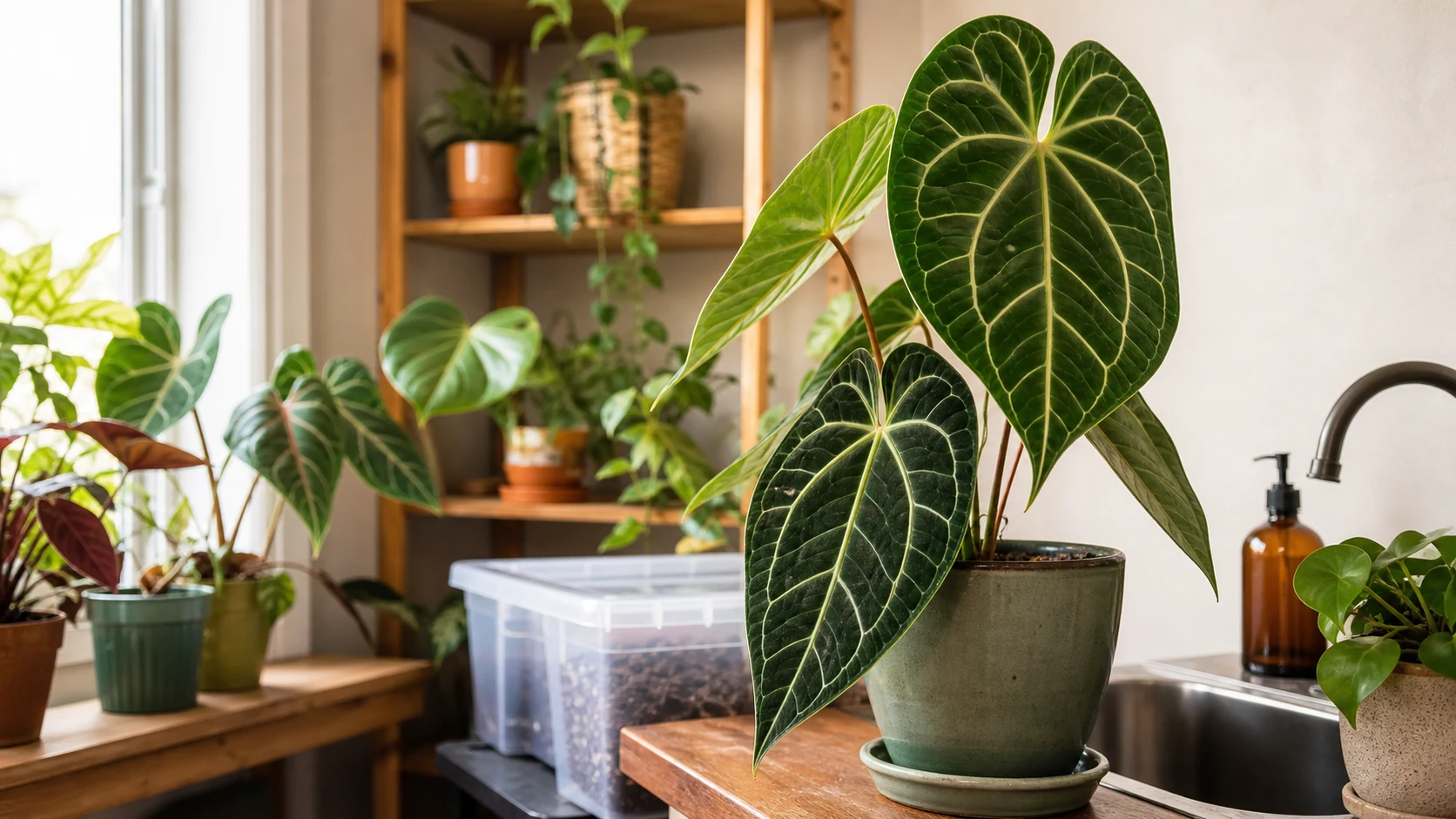
A specialist grower’s compact workspace reflects the focused care that rare velvet-leaf aroids need before shipping.
Not for: Impulse purchases or time-sensitive orders without lead time. These sellers often have small teams and seasonal shipping windows.
Big-Box Online Retailers
Best for: Common, hardy species (succulents, cacti, air plants) where arrival stress is survivable and price matters most.
Not for: Any delicate tropical, any cold or hot month, or anyone who needs a real guarantee. The generic return policy at Amazon or Walmart is not designed for live plants and rarely produces a useful resolution for damaged arrivals.
When to Order: Seasonal Risk Calendar
Timing is the variable most online plant guides ignore. University of Minnesota Extension notes that most tropical houseplants should not be exposed to temperatures below 50°F, and even brief cold exposure during transit can cause shock, yellowing, wilting, or permanent damage. NC State Extension adds that cold sensitivity in tropical species begins at temperatures that feel mild to people. A 40°F overnight during transit can produce translucent, mushy tissue damage – just more slowly than a hard freeze.
Find your USDA zone before reading this table. Search “USDA Plant Hardiness Zone Map” and enter your zip code at planthardiness.ars.usda.gov. Zone 3–4 covers Minnesota, Wisconsin, and northern New England. Zone 5–6 covers much of the Midwest, mid-Atlantic interior, and Pacific Northwest inland. Zone 7–8 covers the mid-Atlantic coast, the Carolinas, and the Pacific Northwest coast. Zone 9–10 covers coastal California, Florida, and the Gulf Coast.
| Season | Risk Level | Temperature Threshold | Regional Notes | What to Do |
|---|---|---|---|---|
| Late spring (mid-April to June) | Low | Nights above 50°F across most of North America | Zone 4–5: wait until mid-May; Zone 9–10: safe from early April | Order freely. Most sellers ship without heat packs and transit risk is minimal. |
| Summer (July to August) | Medium | Daytime peaks above 90–95°F stress most tropicals | Zone 9–10: heat is your main risk; choose early-week orders to avoid weekend warehouse delays | Watch for extreme heat in transit. Choose express shipping if your area consistently runs above 90°F. |
| Early autumn (September to mid-October) | Low | Nights typically 45–65°F across most regions | Zone 4–5: move cautiously into October; Zone 8–10: excellent window extending into November | An excellent window. Temperatures are moderate across most of North America. |
| Late autumn (mid-October to November) | Medium to high | Risk rises when overnight lows fall below 45°F | Zone 4–5: high risk from late October; Zone 7–8: risk begins in November; Zone 9–10: usually safe through November | Confirm heat pack inclusion before ordering. Ask whether the seller holds shipments if a cold front is forecast. |
| Winter (December to March) | High | Any exposure below 50°F in transit can cause permanent damage | Zone 4–5: extend caution through mid-April; Zone 9–10: most winters allow ordering with heat pack protection | Order only from sellers with documented cold-weather packaging and temperature holds. Many reliable retailers pause sensitive species entirely during this window. |
| Early spring (March to mid-April) | Medium | Watch for overnight lows below 40°F | Zone 4–5: high risk continues well into April; Zone 7–8: typically safe by late March; Zone 9–10: already clear | Watch for late cold snaps. Order only if overnight lows in your region are reliably above 40°F. |
If a seller does not have a cold-weather policy and it is November through March, wait.
What to Do When the Plant Arrives
Most buyers open the box, feel relief or panic, and react accordingly. You have a short window to document problems and file a claim. Missing it can cost you the guarantee even when the damage is obvious and real.
First Hour: Document Before You Do Anything Else
Photograph the exterior of the box before opening it. Do this wherever the package was left. Visible damage, a crushed corner, signs of rough handling – document it now, before you carry it inside. This is your evidence if you need to file a shipping claim.
Open carefully and photograph everything as you unpack. The packing material, how the plant was positioned, any broken stems, loose soil, or damaged roots. Do this before you repot, water, or rearrange anything. Your phone photos are your claim evidence. Once you disturb the packing, that documentation is gone.
Check for non-recoverable damage immediately. Look at the base of each stem. Firm is normal. Mushy or blackened is not. Look at the leaves – are any translucent or water-soaked in appearance? Does the soil smell sour? If yes to any of these: contact the seller today with your photos. Do not wait.
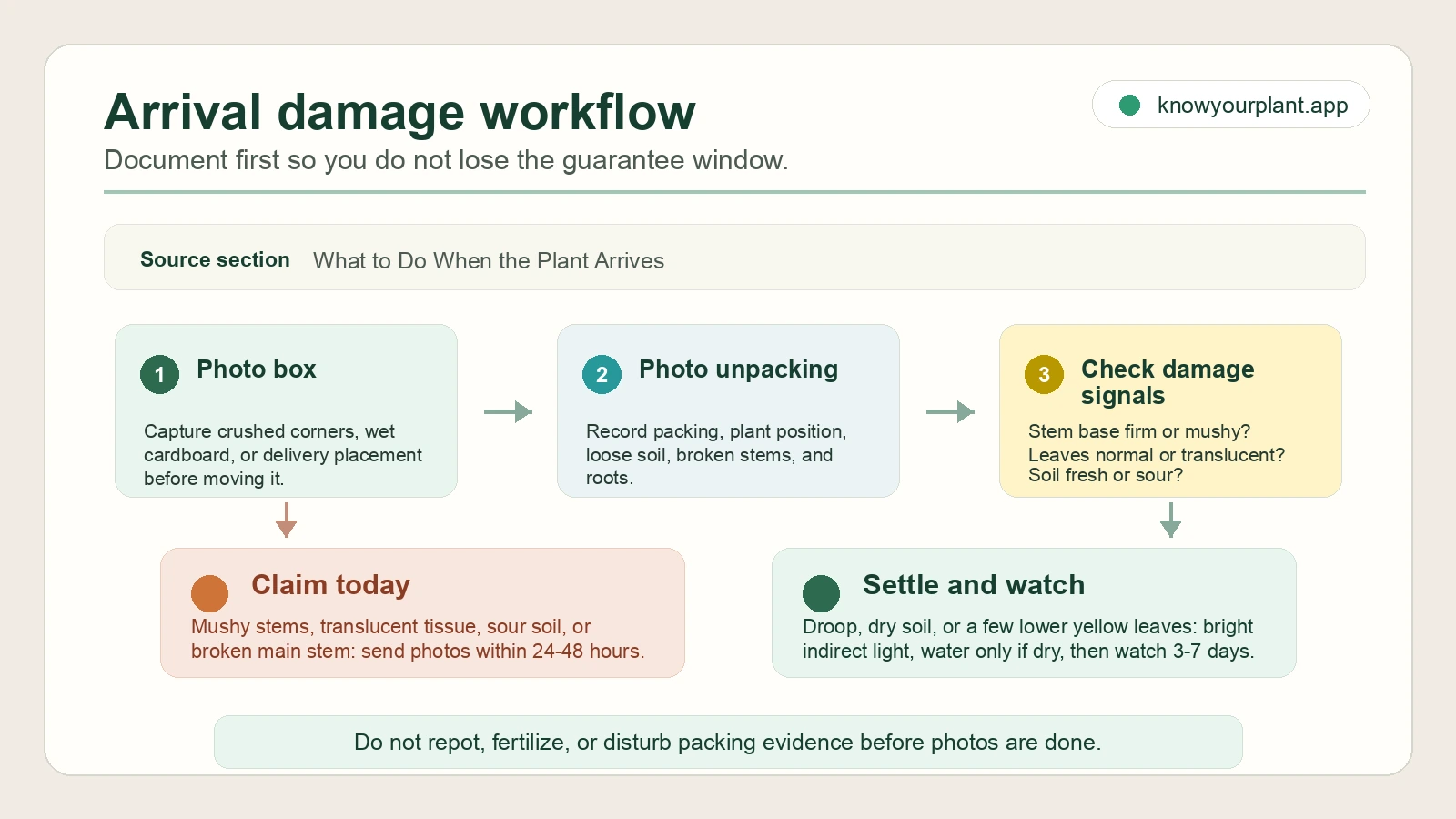
Document the box and plant before changing anything. Mushy stems, translucent tissue, sour soil, or structural damage are claim-day signals; simple droop usually gets a short settle-and-watch window.
First 24 Hours: Settle, Don’t Stress the Plant
Place in bright indirect light. Not direct sun. Most plants coming out of a dark box need time to adjust, and direct sun on stressed foliage can scorch leaves already weakened by transit.
Water lightly only if the soil is completely dry. Push your finger 2 cm into the soil. If it feels completely dry, water until it drains from the drainage hole. If it still has any moisture at all, wait. Over-watering a newly arrived plant is a very common first-day mistake.
Do not fertilize. Fertilizer pushes the plant to grow before its roots have recovered from transit stress.
If you found damage, file the claim now – not tomorrow. Most guarantees require photos and notice within 24 to 48 hours of delivery. Do not wait to see if the plant “bounces back.” You cannot file late, and most sellers would rather respond to a concern about minor wilting than deal with a missed claim window on genuine cold damage.
First Week: Watch, Don’t Intervene
What you should see: Gradual recovery. Drooping leaves begin to firm up over 2 to 5 days. A few lower leaves yellowing or dropping is a normal stress response.
What is normal:
- Drooping or limp leaves in the first 2–4 days
- A few yellowed or dropped lower leaves
- Slightly dry soil (sellers often dry down before packing to reduce weight and shipping damage)
- Bent stems that straighten within a few days of light and support
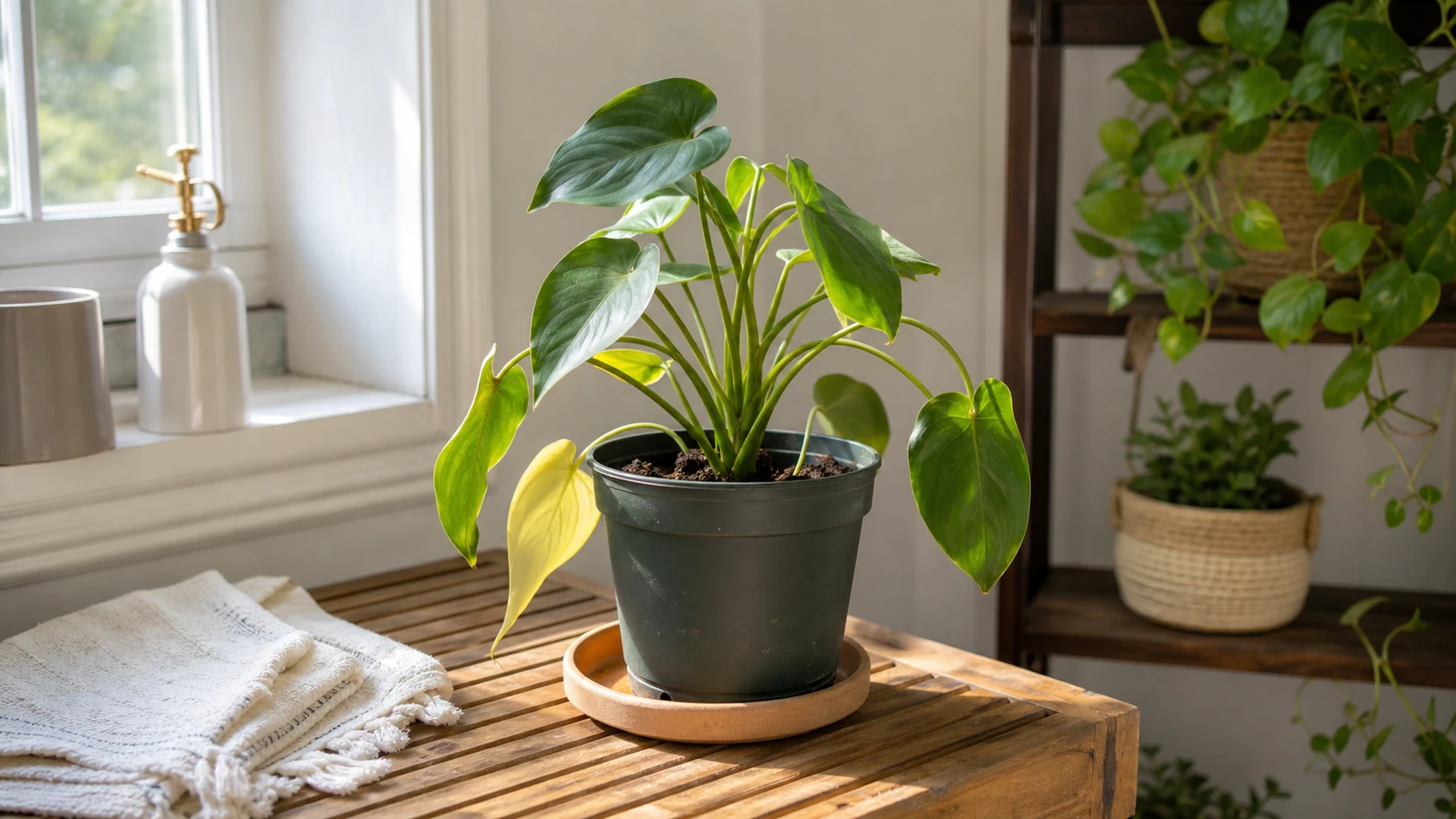
Mild droop and one yellowing lower leaf can be normal while a newly arrived tropical rests in its nursery pot.
What is not normal – escalate immediately:
- Mushy or blackened stems at the base
- Translucent, water-soaked-looking leaf tissue
- Soil that smells sour or musty
- A broken main stem with no secondary growth points
Do not repot this week. Do not repot within the first 30 days unless the root system is visibly compromised. Both Bloomscape and The Sill note that repotting within 30 days voids their guarantee. If you are unsure whether repotting is needed after the plant settles, the how to repot plants guide walks through timing, pot sizing, and what to look for at the roots.
When to Escalate to a Claim
If you see mushy tissue, translucent leaves, or sour soil smell at any point in the first week, contact the seller immediately with photos. The rule is simple: droop is often recoverable, but mushy tissue is not. If the stem base feels soft or looks water-soaked, treat that as claim-day evidence, not a wait-and-see situation.
Normal Transit Stress vs. Real Damage
| What You See | Normal or Not | Days to Decide |
|---|---|---|
| Drooping or limp leaves | Normal: lacks water and light after days in a box | Wait 3–7 days with water and indirect light before escalating |
| A few yellowed or dropped lower leaves | Normal: lower leaves sacrifice themselves under stress | Wait 7–10 days; if upper leaves hold, the plant is recovering |
| Slightly dry soil | Normal: sellers often dry down before packing to reduce weight | Water once settled; not a damage signal |
| Bent stems | Normal: usually straighten within a few days | Wait 5 days; stake gently if needed |
| Mushy or blackened stems at the base | Not normal: cold damage or root rot | Contact the seller today with photos |
| Translucent, water-soaked-looking leaf tissue | Not normal: cold damage or bacterial infection | Contact the seller today with photos |
| Soil that smells sour or musty | Not normal: root rot already in progress | Contact the seller today with photos |
| Broken main stem with no secondary growth points | Not normal: structural damage unlikely to recover | Contact the seller today with photos |
| Bare root when a potted plant was ordered | Not normal: packing failure | Contact the seller today with photos |
Care After the First Week: Practical Thresholds
Once the plant has had 7 to 10 days to settle, shift from watching to managing. Here are the specific thresholds that matter most.
Light
Light is the factor most people misjudge, and it affects how quickly the plant uses water, whether it grows, and whether problems appear.
- Bright indirect light: 2 to 4 feet from a south- or east-facing window. You should see a soft shadow from your hand at midday. If your finger casts no shadow, the light is not bright enough for light-hungry tropicals.
- Medium light: 4 to 8 feet from the same window, or a north-facing room that gets daylight but no direct sun.
- Low light: No direct sun visible from the plant’s position. Only genuinely low-light tolerant plants – ZZ plant, snake plant, cast iron plant – maintain health here. Everything else will decline slowly.
If the plant is not growing and is losing leaves gradually, the most likely cause is insufficient light, not a watering problem. Move it closer to a window before changing anything else.
Watering
The most reliable method works for almost every houseplant: check the soil, not the calendar.
- Push your finger 2 cm into the soil (roughly your first knuckle).
- If the soil feels dry at that depth, water thoroughly until water drains from the drainage hole.
- If it still feels moist, wait 2 to 3 more days and check again.
- Never let the plant sit in standing water in a saucer for more than 30 minutes. Roots need air as well as water.
For plants with high humidity needs (calathea, orchid, alocasia): the soil check still applies, but also keep a pebble tray with water beneath the pot, or run a small humidifier within a meter of the plant. Target above 50 percent ambient humidity. Misting the leaves helps for a few minutes and is not a substitute.
Repotting
Do not rush repotting. The plant has already been through shipping stress. Adding that disruption too soon delays recovery.
After 4 to 6 weeks, check whether repotting is actually needed:
- Are roots circling the drainage hole or growing out through it? Size up by one pot width (roughly 2 inches / 5 cm).
- Is the plant drying out very quickly despite regular watering? It may be root-bound.
- Is the soil staying wet far longer than expected? The current pot may be too large, which can cause root rot.
If none of these apply, leave it alone. The how to repot plants guide covers timing, pot sizing, and what to look for at the roots.
For a full care foundation after the plant settles, the indoor plant care guide for beginners covers light placement, watering habits, and what to watch in the first month. If you ordered a low-light variety, the low-light indoor plants guide can help match placement to what that species actually needs.
If you are comparing care routines for another houseplant, see Tradescantia Care: Fuller Growth, Better Color, and Easy Cuttings for a focused step-by-step guide.
Frequently Asked Questions
Is it safe to buy plants online? Yes, with the right seller and the right season. The main risks are transit damage and cold exposure, both of which are manageable when you choose a seller with a documented guarantee and check the seasonal timing before ordering.
What is the best time of year to buy plants online? Late spring and early autumn are the safest windows. Temperatures are moderate in most of North America, heat packs are not needed, and sellers are typically at full shipping capacity. Avoid ordering delicate tropicals between December and March unless the seller has explicit cold-weather packaging and temperature holds.
Does shipping speed matter – is 2-day delivery safer than 4-day? Yes, especially for delicate tropicals in shoulder seasons. Each extra day in a dark, unventilated box adds stress, and that stress compounds when temperatures are at the margins. A plant that survives two cold nights in transit may not survive four. In late autumn or early spring, faster shipping is worth the cost. For hardy plants in safe seasons, the difference matters less.
How do I know if an Etsy plant seller is trustworthy? Read reviews from the last 90 days specifically. Look for reviews that mention packaging quality, arrival condition, and how the seller handled a problem. Use the pre-order message template in this guide to check packaging and guarantee terms in one send. A seller who answers promptly and specifically is worth trusting.
What should I do if my plant arrives damaged? Photograph everything before touching anything: the box exterior, the packing inside, and the plant itself. Then contact the seller within 24 to 48 hours with those photos. Most reputable sellers offer a replacement or refund within a claim window that begins on delivery day. Do not wait to see if the plant recovers. Waiting can cost you the claim.
Is it worth paying more for a curated retailer versus a cheaper Etsy shop? For common plants, no – buy locally instead. For rare or hard-to-find plants, a curated retailer offers a predictable experience and a documented guarantee. An Etsy specialist can be equally good but requires more vetting upfront to verify they are worth the risk.
Why did my plant lose leaves after shipping? Leaf drop after transit is common and usually temporary. The plant was in the dark in a moving box with fluctuating temperature and humidity. Losing a few lower leaves is a stress response, not a sign of lasting damage. Give it two weeks in stable conditions before deciding something is wrong.
Can I order plants in winter? You can, but it requires care. Order only from sellers who offer heat packs and temperature-sensitive packaging, and confirm they will hold shipments if a cold front is forecast. University of Minnesota Extension notes that most tropical houseplants should not be exposed to temperatures below 50°F, even briefly during transit. Zone 4–5 buyers should extend caution through mid-April.
The plant I want is toxic to my cat. Are there safe alternatives? Yes. Check the cat-safe indoor plants guide for a list of safe alternatives before ordering.
Evaluation Method and Methodology
This evaluation method weighted four things first: claim-window clarity, packaging and weather protection, buyer-vetting burden, and what recent buyer-language signals keep warning about. Official retailer policies were treated as the highest-trust layer, while Reddit and review-platform snippets were used only as qualitative signals about recurring failure modes.
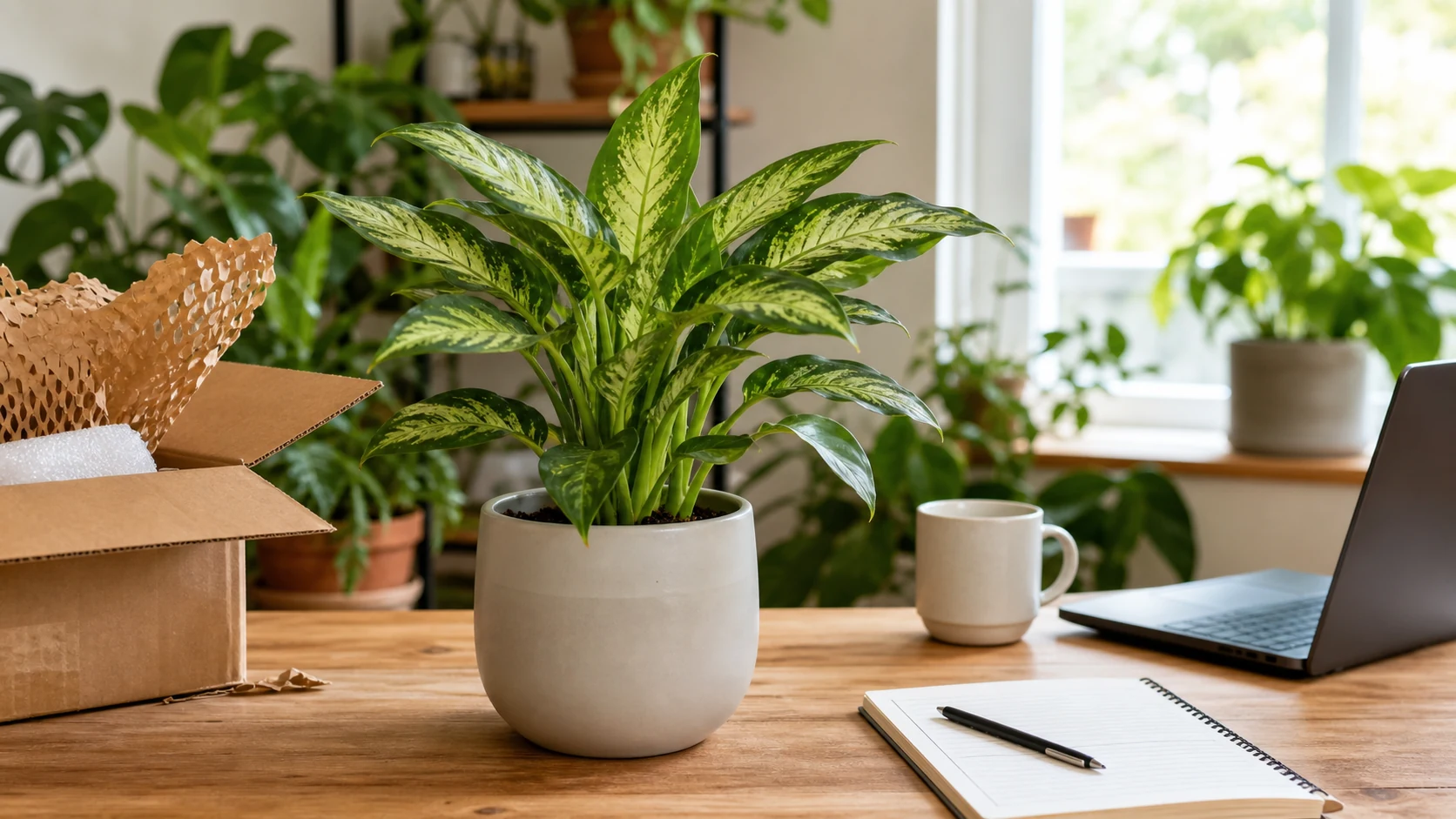
Seller-policy research is weighed alongside visible packaging evidence and the needs of cold-sensitive tropical plants.
Guarantee policies for Bloomscape and The Sill were verified directly from each retailer’s support and FAQ pages in May 2026. Cold-damage thresholds come from published research by University of Minnesota Extension and NC State Extension on tropical houseplant cold sensitivity – specifically their documented findings on the temperature ranges at which tissue damage begins in tropical species. Seasonal risk guidance was developed by reviewing documented shipping incidents across plant-buying communities during the 2024–2025 shipping seasons. A recurring winter complaint – receiving a plant without the heat pack implied in the listing – directly shaped the pre-order message templates in this guide. No seller was contacted for promotional inclusion, and no compensation was received from any retailer mentioned.
Last updated: May 2026
Use the Five-Point Seller Score to evaluate the seller you are considering right now, then send the pre-purchase message before you add to cart. That single step removes a surprising amount of risk.
Once the plant arrives, KnowYourPlant can help you diagnose post-arrival stress – whether that is yellowing leaves, unusual drooping, brown tips, or spots you are not sure about – and set up watering, humidity, and seasonal reminders matched to your specific plant so you do not have to keep all of it in your head.