By KnowYourPlant editorial team. Last updated June 4, 2026.
You’ve had your ZZ plant for a while, and something just changed. A leaf or two went yellow near the base. Or the soil feels like it’s been wet longer than usual, and you’re not sure if you should water again or wait it out. Or you picked it up, heard it was nearly impossible to kill, and now you’re quietly wondering if you’re the exception.
This guide is for exactly that moment. You’ll find out when to water (not how often – there’s a difference), what light actually does for this plant, why drainage matters more than technique, and what yellowing leaves are really telling you. Not in a “low maintenance, don’t worry” way. In a “here’s what to check and in what order” way. If you are still choosing a desk plant, the best office plants guide compares ZZ with snake plant, pothos, and Chinese evergreen under real workplace light.
Identification Snapshot
If you are double-checking that you actually have a ZZ plant before changing care, look for these traits:
- Upright stems with thick, glossy leaflets arranged in tidy rows
- Fleshy underground rhizomes that store water and let the plant ride out dry spells
- Slow, deliberate new growth rather than constant soft leafy expansion
- A dense, architectural shape instead of a trailing or floppy habit
If the plant in front of you has fuzzy leaves, paper-thin stems, or a trailing vine habit, pause before applying ZZ advice.
A mature plant may also produce a pale, sheath-like bloom near the soil line. The ZZ plant flower guide shows how to distinguish that uncommon flower from a new stem.
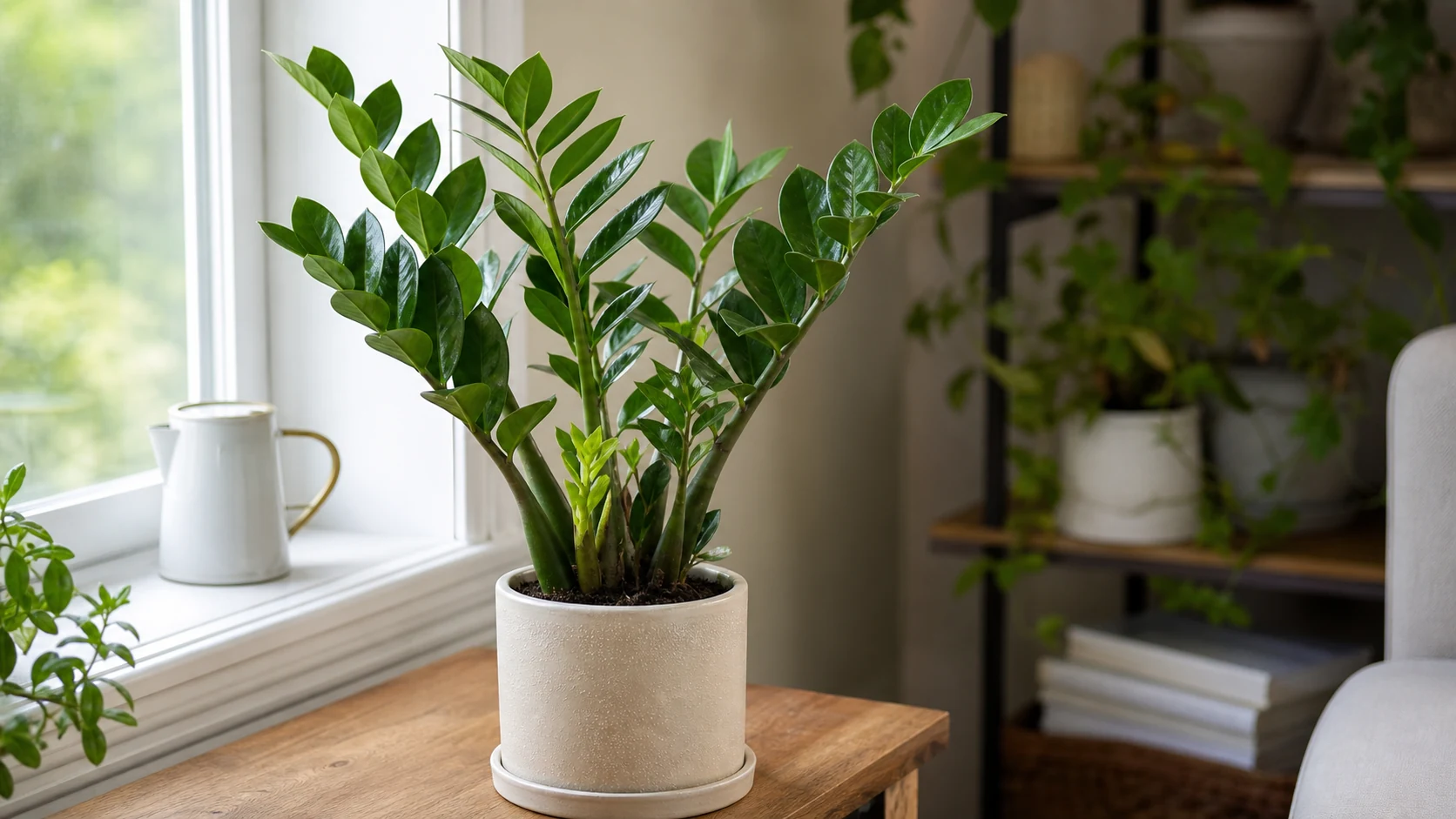
Upright stems and paired, glossy leaflets distinguish a ZZ plant from trailing or thin-stemmed lookalikes.
Lookalikes and Common Mix-Ups
| Plant or situation | What gets confused | Fast check |
|---|---|---|
| Raven ZZ vs standard ZZ | Very dark foliage gets mistaken for stress | Raven ZZ naturally matures to near-black leaves; yellowing and mushy stems are the warning signs, not deep color alone |
| Cast iron plant | Both get sold as low-light, hard-to-kill houseplants | Cast iron plant has broader strap-like leaves instead of paired glossy leaflets on upright stems |
| Overwatered ZZ vs thirsty ZZ | Both can look limp to beginners | Check rhizome firmness and soil dryness before watering; a wet pot with soft stems points to rot, not thirst |
Quick Check: Is Your ZZ Telling You Something Right Now?
Before anything else, match what you’re seeing to what it usually means:
| What you’re seeing | Most likely cause | First check |
|---|---|---|
| One or two yellow leaves near the base | Natural aging, or past overwatering stress | Soil moisture + drainage |
| Yellowing spreading up the plant | Overwatering, root rot starting | Drainage hole? Soil moisture? |
| Soft or mushy stems near soil | Root rot from standing water | Inspect roots; may need repotting |
| Stems leaning or reaching toward a window | Not enough light | Move closer to a light source |
| No new growth for weeks or months | Seasonal slowdown, or too little light | Check season + light level |
| Soil still wet 7-10 days after watering | Watering too often, or poor drainage | Check drainage + reduce frequency |
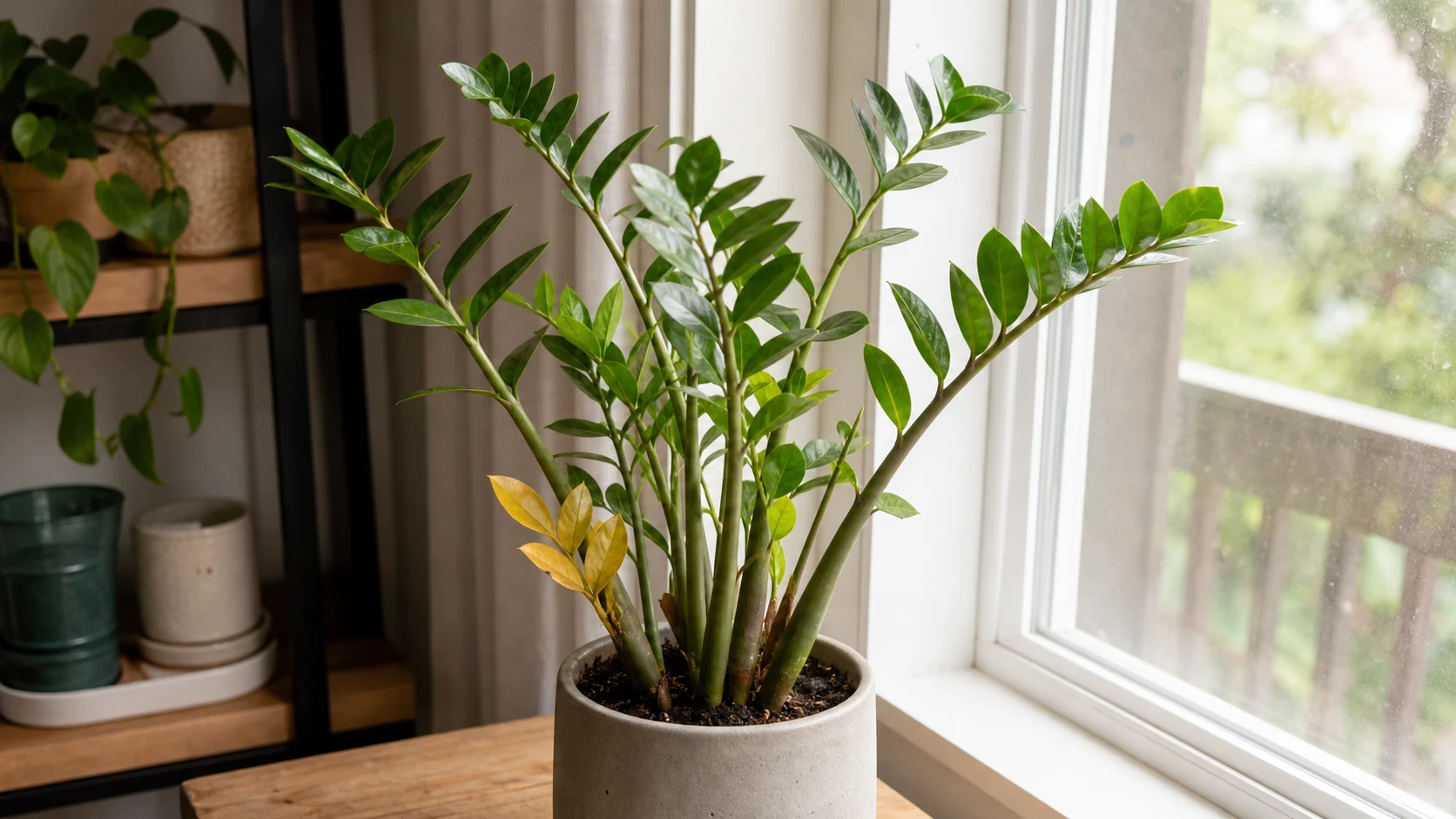
A few yellow basal leaflets on an otherwise firm, healthy ZZ call for a soil-moisture and drainage check before changing care.
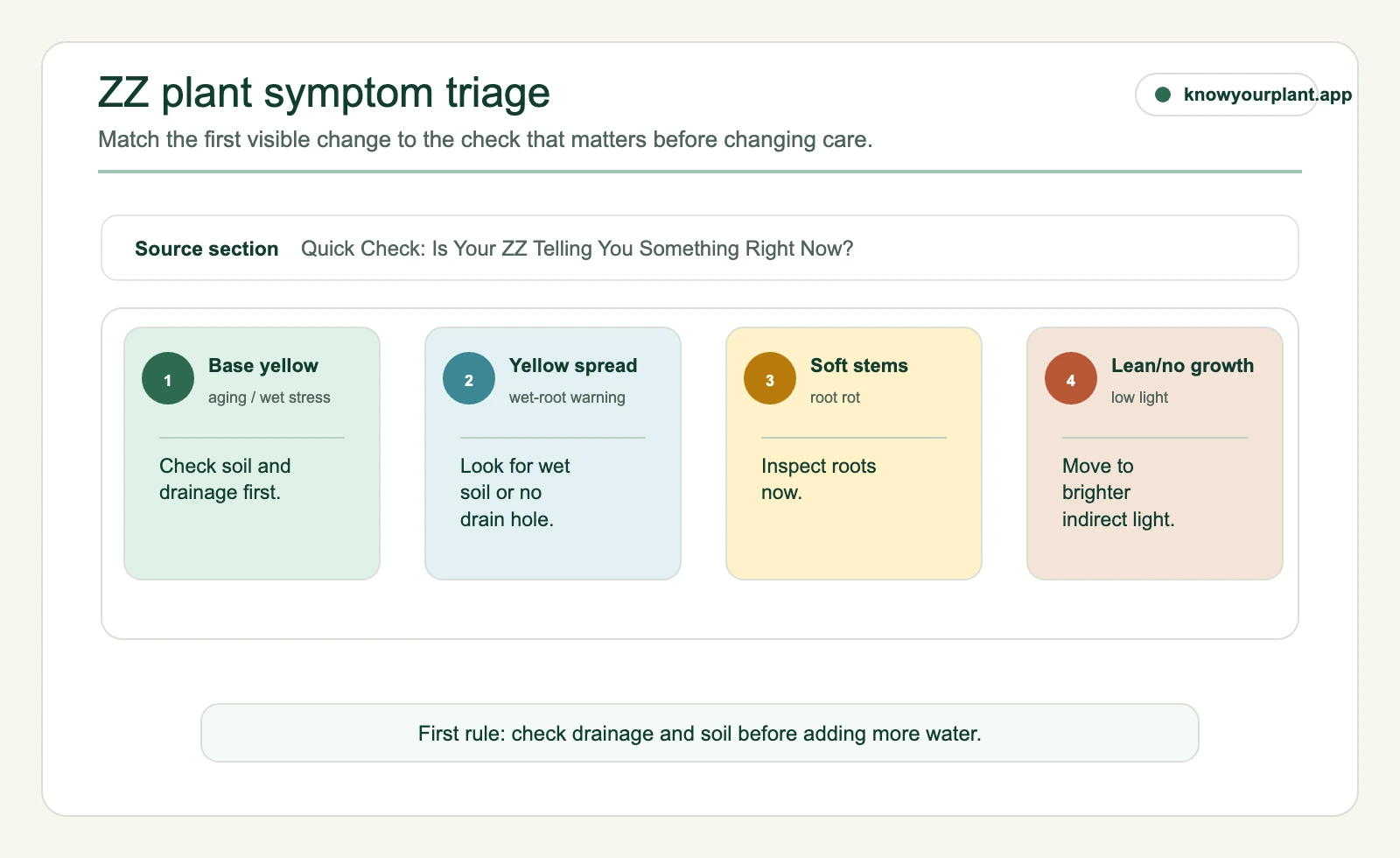
Use the triage card before changing care. For ZZ plants, the first visible symptom usually points to a soil, drainage, root, or light check rather than a fixed watering schedule.
If you’re seeing the first two rows, the rest of this guide will walk you through the exact checks to do. If it’s row three – soft stems near the soil – head directly to the yellow leaf decision tree near the end of this page.
What Most Care Guides Miss
Every ZZ plant article leads with the same reassurance: low light, drought tolerant, easy for beginners. That’s all true. But those three phrases create a specific trap.
When you hear “drought tolerant,” you assume the plant prefers dry conditions. When you hear “low light,” you assume any corner of your home works. Neither is quite right, and when they combine with a pot that doesn’t drain, the plant quietly develops root rot while the leaves stay dark and glossy for weeks before anything looks obviously wrong.
The thing most guides skip: ZZ plants store water in underground rhizomes, swollen potato-like structures at the base of the stems. North Carolina State Extension confirms that ZZ plants are specifically adapted to store water in these fleshy rhizomes, which is what allows them to survive extended dry periods. That’s the source of their drought tolerance. They have their own internal reservoir. They don’t need you to water on a schedule. They need you to water when the reservoir runs low, and to stop well before the soil stays wet enough to drown the roots.
The practical first check before every watering: push your finger into the soil about two knuckles deep. Still damp? Come back in a few days. Dry all the way down? Now’s the right time.
The second thing most guides miss: a ZZ plant in dim light uses water much more slowly than one in bright indirect light. If you move a ZZ to a darker corner and keep watering at the same frequency, the soil stays wet longer than the roots can handle. Where the plant sits and how often you water are directly connected.
Light: Survive vs Thrive
ZZ plants can survive in low light. A dim hallway or a room with a north-facing window won’t kill one. But there’s a meaningful gap between “won’t die” and “grows well,” and that gap has a direct effect on how you need to water.
| Light level | What it looks like | Growth | Watering risk | Key note |
|---|---|---|---|---|
| Very low | Dim corner, no direct window line of sight | Pauses almost entirely | High: soil stays wet far too long | Water very infrequently; expect dormancy |
| Medium indirect | A few metres from a window, ambient daylight | Slow but consistent | Low | A reliable baseline for most homes |
| Bright indirect | Near east or west window, set back from south | Active, regular new leaves | Lowest | Where ZZ plants actually thrive |
Illinois Extension explains that ZZ plants have rhizomatous roots adapted to alternating periods of rainfall and drought, meaning they evolved to endure difficult conditions, not because they prefer them. NCSU Extension is explicit on this point: ZZ plants perform best in bright indirect sunlight even though they tolerate very low light.
The “low light” label is a survival specification, not a care recommendation. If your ZZ’s stems are reaching or leaning toward any available light source, that’s the plant asking to move.
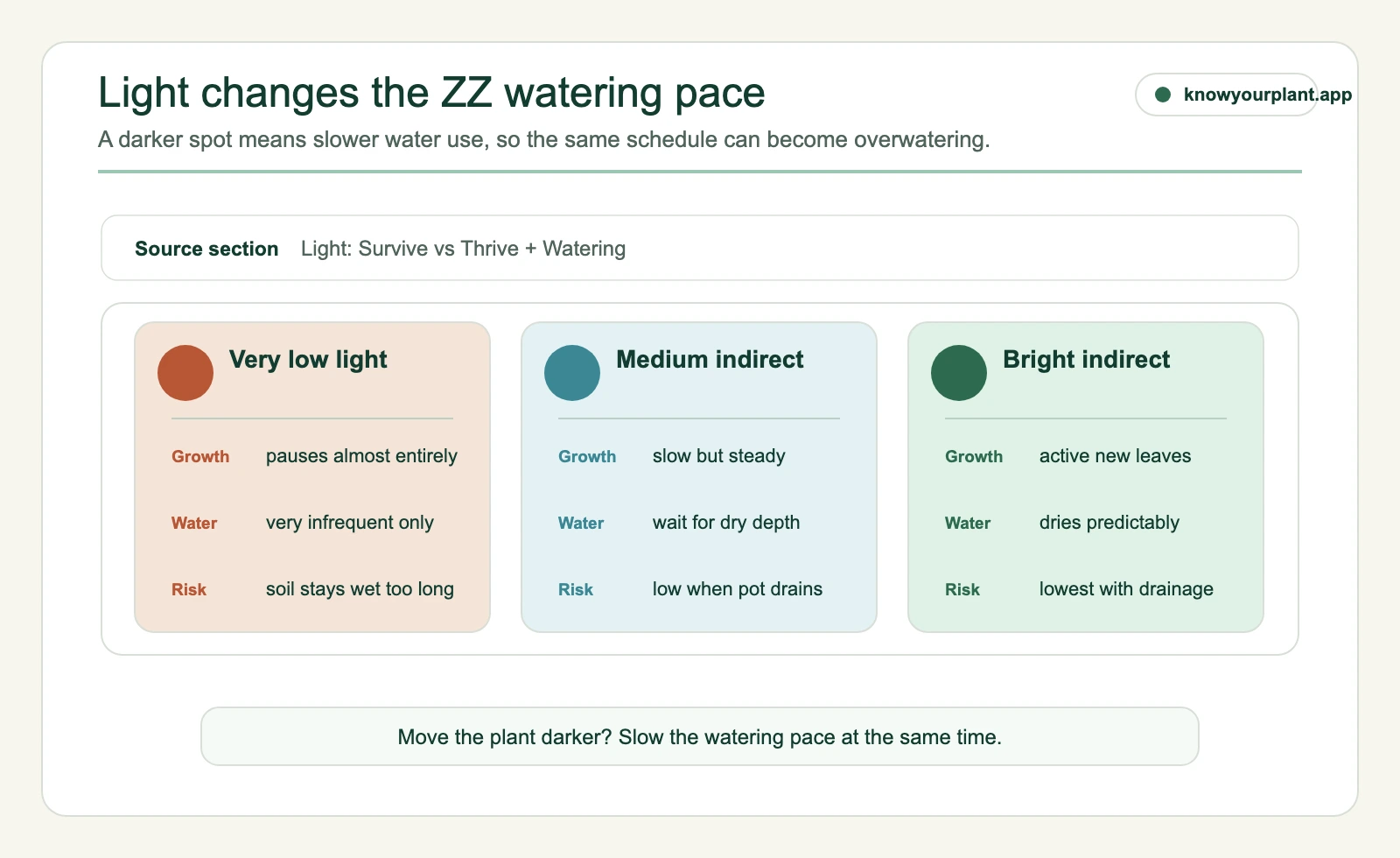
Light and watering are linked. A ZZ plant moved into a darker spot uses water more slowly, so the old watering rhythm can become the overwatering problem.
Not sure how much light your space actually provides? The guide to grow lights for indoor plants covers practical ways to measure and supplement light at home.
Watering: Less Is Almost Always Right
The most common ZZ plant care mistake isn’t underwatering. It’s watering on a fixed schedule regardless of what the plant actually needs.
Because the rhizomes store water, the plant can go two to three weeks between waterings during active growth, sometimes longer in winter. The rule isn’t about days. It’s about what the soil tells you.
Water thoroughly when the top few centimetres of soil are dry. Let the water drain completely from the bottom. Empty the saucer about half an hour after watering so the roots aren’t sitting in standing water. Then leave it alone until the soil dries out again.
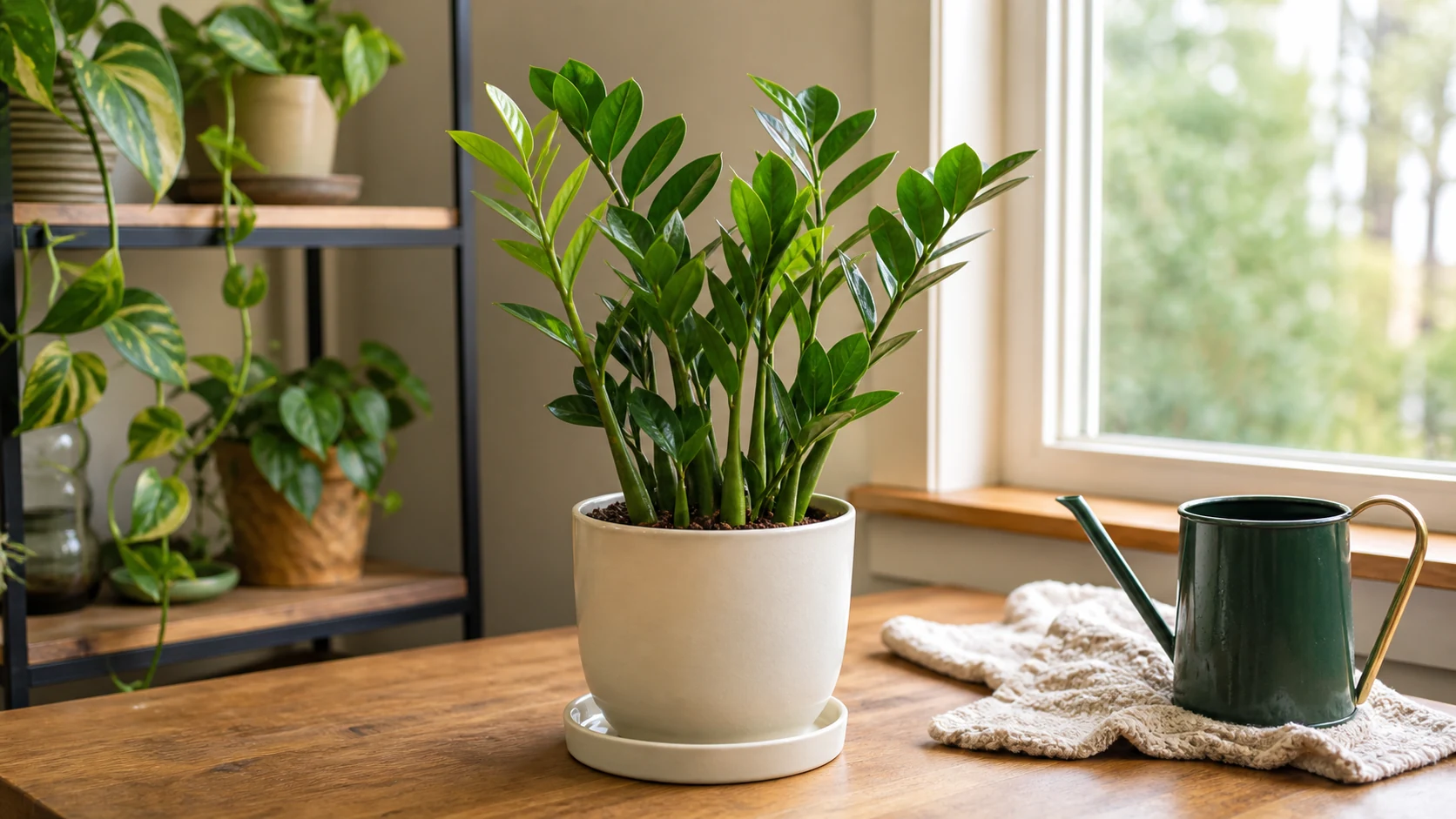
After thorough watering, let excess collect in the saucer, then empty it so the rhizomes do not sit in water.
Both NCSU Extension and Illinois Extension recommend reducing watering to roughly once a month in autumn and winter, when ZZ plants are not actively growing. This isn’t a punishment; it’s matching what the plant actually needs at that point in the year. Watering a dormant ZZ at the same pace you used in summer is how roots go from healthy to rotten without any obvious warning appearing on the leaves for weeks.
Soil and Drainage: Where Most Problems Start
Good watering habits mean almost nothing if the soil holds moisture too long. ZZ plants need a well-draining mix. Standard potting soil works, but adding perlite or coarse grit improves drainage and prevents compaction over time. The ZZ plant soil guide compares practical mixes, amendments, and pot materials for rooms that dry at different speeds.
More important than the soil: the pot. ZZ plants need drainage holes. UF/IFAS makes this clear: ZZ plants can develop root rot if kept in poorly drained soil with excessive water for an extended period. A decorative glass vase or a cachepot without a drainage hole is not a safe container for a ZZ plant. Water collects at the bottom, the roots sit in it, and the rhizomes eventually rot, even when the surface of the soil looks and feels completely dry.
If you love a decorative pot without drainage, use it as a sleeve over a plain nursery pot. Lift the inner pot out to water, let it drain fully, then set it back inside.
Expert note: The extension sources agree on the failure pattern here. ZZ plants can tolerate low light and missed watering far better than they tolerate soil that stays wet around the rhizomes for too long. If you are stuck between “maybe thirsty” and “maybe overwatered,” rule out rot first.
Seasonal Care Calendar
ZZ plants slow down in autumn and winter, and your care routine should slow down with them.
Spring (March to May): The plant wakes up. New stems begin to emerge from the soil. This is the best window for repotting if the plant needs it. Resume regular watering as growth picks up, and start monthly fertilizing with a diluted balanced liquid fertilizer. Watch for new stems reaching toward a window as a sign to improve light placement.
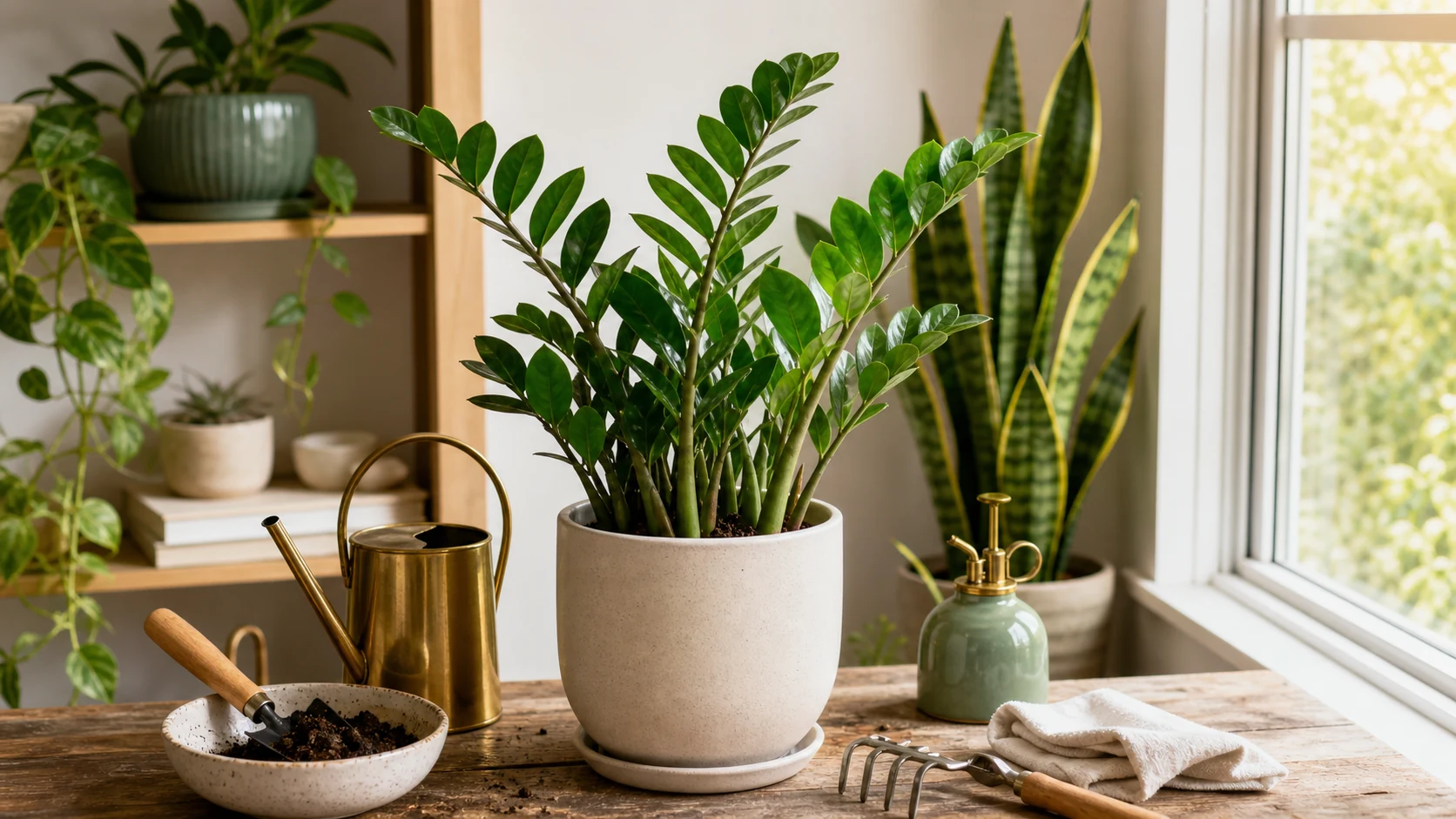
Pale new stems and a ready potting setup mark spring as the time to resume active ZZ care.
Summer (June to August): Peak growing season. Water when the top few centimetres of soil are dry, typically every two to three weeks. Keep fertilizing monthly. Avoid placing the plant where afternoon sun hits the leaves directly, which can scorch the glossy surface. If you move it outside for summer, full shade or dappled light only.
Autumn (September to November): Growth slows. Start reducing watering frequency and stop fertilizing. Some yellowing of the lowest, oldest leaves is normal at this time of year. The plant is redistributing energy, not declining. One or two older leaves going yellow is a seasonal signal, not a distress call.
Winter (December to February): Rest period. Water roughly once a month, or when the soil is thoroughly dry. Skip fertilizer entirely. Keep the plant away from cold drafts and heating vents. Wiping the leaves with a damp cloth occasionally does more good than trying to raise humidity with a mist bottle.
For a deeper look at the logic behind seasonal feeding pauses, the plant fertilizer guide covers when to stop and why it matters for root health.
Care Cards
Light: Bright indirect for best growth; tolerates medium indirect; survives very low light but growth pauses almost entirely.
Water: When the top few centimetres of soil are dry. Every two to three weeks in spring and summer; roughly once a month in autumn and winter.
Soil: Well-draining potting mix; add perlite to improve drainage and reduce compaction.
Pot: Drainage holes required. No glass vases, sealed ceramics, or decorative pots without drainage used directly.
Temperature: 15 to 26 degrees Celsius (60 to 80 degrees Fahrenheit). Avoid cold drafts, heating vents, and air conditioning units aimed directly at the plant.
Humidity: Normal household humidity is fine. ZZ plants are not fussy about this the way many tropical plants are.
Fertilizing: Diluted balanced liquid fertilizer once a month during spring and summer only. Nothing in autumn or winter.
Cleaning: Wipe leaves with a damp cloth occasionally. Dust blocks light and dulls the glossy surface. Skip leaf-shine products; they can clog the pores.
Common Problems to Catch Early
| Problem | Usually means | Best next move |
|---|---|---|
| Yellow lower leaves | Natural aging or a past watering mistake | Check drainage and soil moisture before changing anything else |
| Soft stems near the base | Rot risk from wet soil | Stop watering, inspect roots, and repot if you find mushy sections |
| No new growth during the warm season | Light is too weak or roots are stalled in dense wet mix | Move to brighter indirect light and reassess the potting mix |
| Leaning stems | Light is coming from one direction only | Rotate the plant or move it closer to brighter indirect light |
Repotting
ZZ plants grow slowly and don’t need frequent repotting. Every two to three years is usually sufficient, or when you see roots beginning to circle the bottom of the pot or emerge through the drainage holes.
When you do repot, choose a pot just one size larger. A pot much bigger than the root ball holds more soil than the plant can use, and that extra moist soil sitting around the roots raises the rot risk, even if your watering habits are otherwise careful.
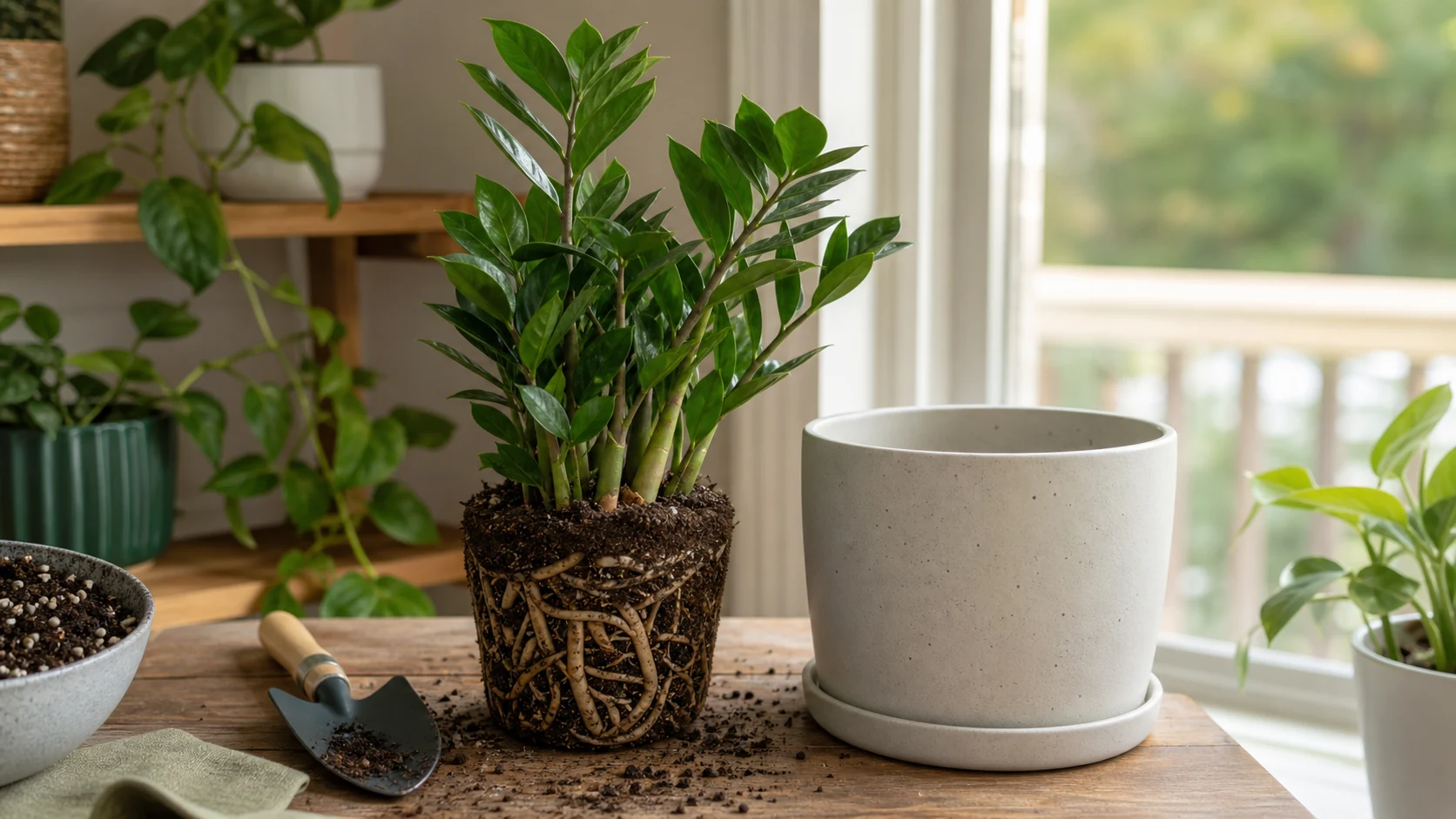
Circling roots and a root ball that nearly fills the old pot justify moving up only one pot size.
Spring, right as the growing season begins, is the best window. The plant handles the disruption more easily when it’s starting to grow again. The guide to repotting plants walks through the process step by step if it’s your first time. If you divide rhizomes or save healthy leaves while repotting, the ZZ plant propagation guide explains which pieces can root and how long each method takes.
A Note on Pet Safety
ZZ plants contain insoluble calcium oxalate crystals and are toxic to cats, dogs, and humans if ingested. According to the ASPCA, chewing ZZ plant tissue can cause oral irritation, excessive drooling, retching, vomiting, and diarrhea in pets, and in rare cases involving large exposures, swelling that affects breathing.
The plant doesn’t need to leave your home. It just needs to be somewhere pets and young children can’t reach it. Wash your hands after handling the leaves or cutting stems.
If you’re looking for a low-maintenance plant that’s safe around animals, the cat-safe indoor plants guide has solid alternatives worth exploring. If you already have one at home and need symptom-based pet triage, read is ZZ plant toxic to cats.
When Leaves Turn Yellow: Work Through This in Order
Yellow leaves on a ZZ plant are the most common care question, and the answer is rarely one isolated thing. Light, drainage, watering frequency, and the season all interact. A yellowing leaf in a dim room inside a glass vase without drainage tells a completely different story than a single older leaf going yellow at the base of an otherwise healthy stem.
Work through these checks in order before changing anything:
1. Check drainage first. Is there a hole at the bottom of the pot? If not, root rot from standing water is the most likely culprit, and that’s a structural problem before it’s a watering frequency problem. No drainage hole means water has been collecting at the bottom every time you watered, regardless of how careful you were. Repotting into a pot with drainage is the fix, not watering less.
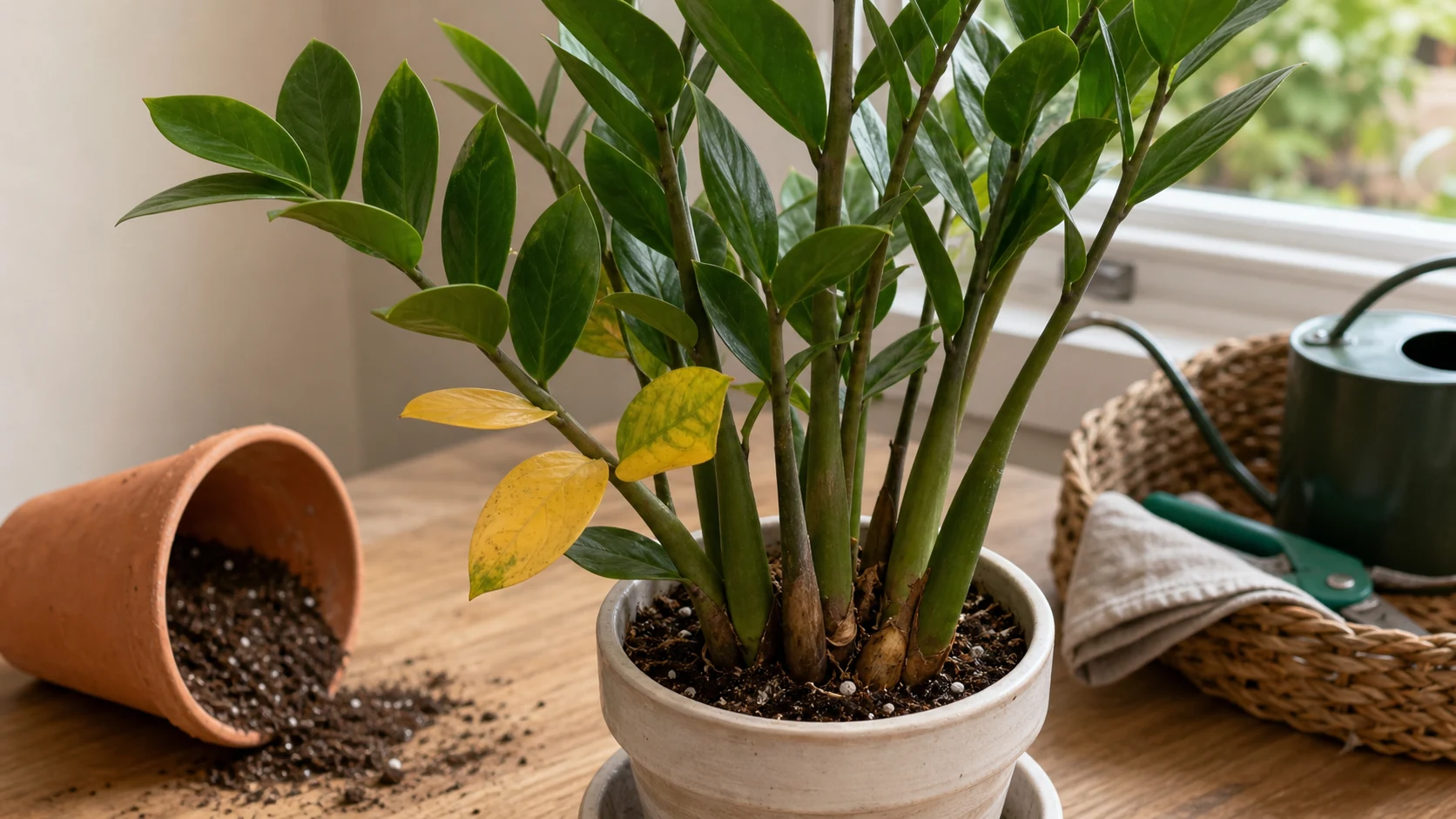
Localized yellowing plus a darkened basal stem is a cue to check drainage and prepare fresh, fast-draining mix.
2. Check soil moisture. Push your finger two knuckles deep. If the soil is wet or cool and damp, hold off on watering regardless of how long it’s been. If the soil has been consistently wet for some time, the roots may already be under stress. Let it dry out fully before watering again.
3. Check the light level. Has anything changed? A plant moved to a darker spot uses water far more slowly than it did before, so the watering habit that worked in its previous location may now be too frequent. Compare where it’s sitting against the light table earlier in this guide.
4. Check the season. Some yellowing of older, lower leaves in autumn is normal. The plant is redistributing resources as it moves into dormancy. One or two older leaves going yellow at the end of the growing season is not a sign of decline.
5. Check the timeline. Did the yellowing start a few weeks after something changed: a new pot, a new location, a repotting, a stretch of extra watering? ZZ plants can hold on for a while before symptoms appear on the leaves. The problem often started weeks before the yellowing became visible.
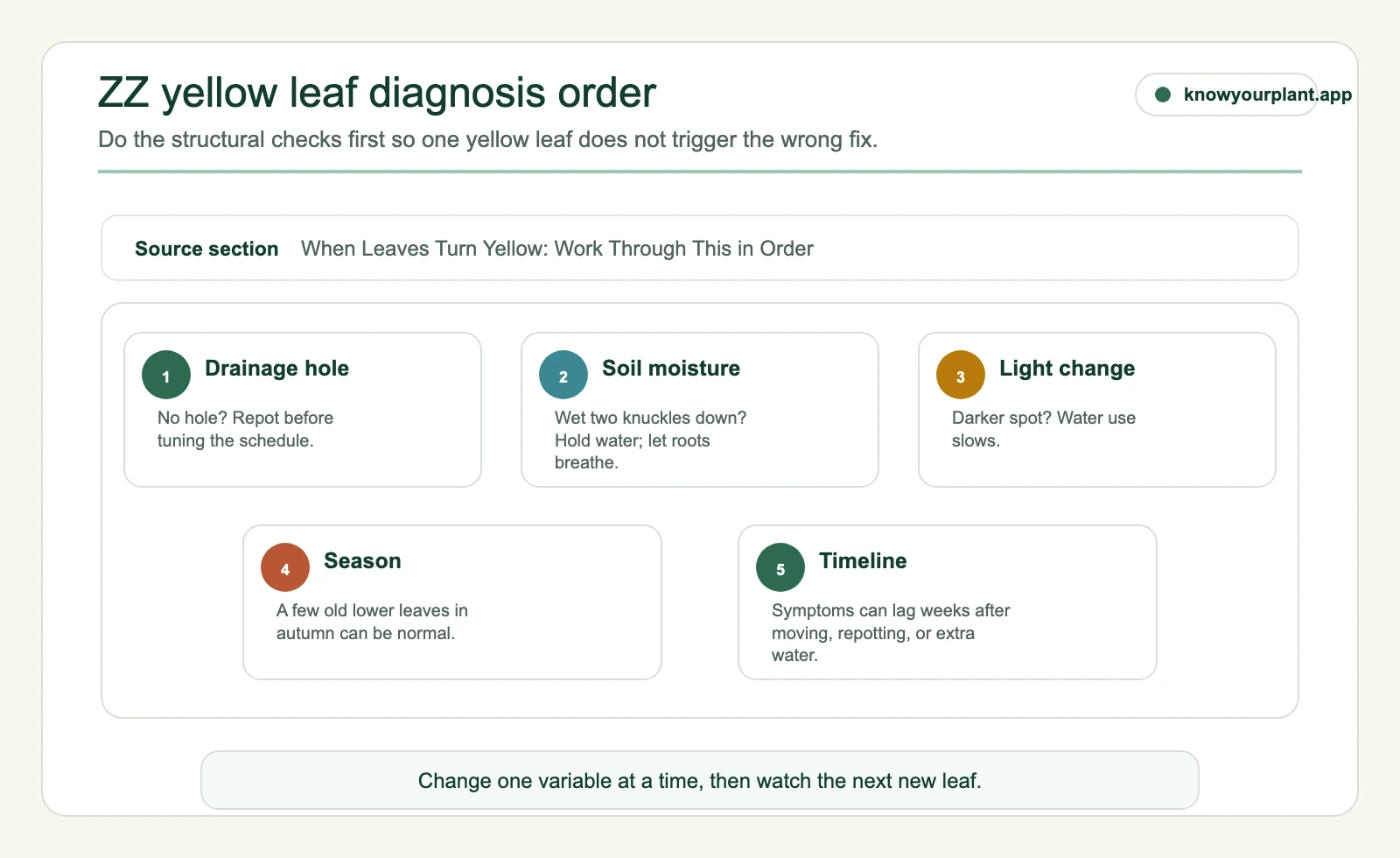
Work through the yellow-leaf checks in this order. Drainage and soil moisture come first, then light, season, and the timing of recent care changes.
If you’re seeing widespread yellowing or the plant isn’t recovering after adjusting care, the ZZ plant yellow leaves guide goes deeper on specific patterns and what each one points to.
ZZ plant care comes down to one core insight: this plant is built to store what it needs, so your job isn’t to keep it constantly supplied. It’s to stay out of the way until it actually asks for something. Give it reasonable light, water only when the soil is genuinely dry, make sure the pot drains, and pull back in winter. The rest mostly takes care of itself.
If you’re just starting out with houseplants and want a broader framework for keeping different plants alive, the beginner indoor plant care guide covers the fundamentals that apply across nearly every variety you’ll bring home.
Real User FAQ
How often should I water a ZZ plant?
There’s no fixed schedule that works in every setup. The better approach is to read the soil. Push your finger about two knuckles deep before watering. If it’s dry all the way down, water thoroughly and let the excess drain. If it’s still damp, check again in a few days. During spring and summer, most ZZ plants need water every two to three weeks. In autumn and winter, once a month is often enough, sometimes less.
Can a ZZ plant survive in a room with no windows?
It can survive for a while, but it won’t grow, and the bigger risk is overwatering. A plant in very low light uses water very slowly. Normal watering frequency in a dark room leads to consistently wet soil and root rot. If a windowless room is your only option, water very infrequently, use a well-draining pot with drainage holes, and expect the plant to stay essentially dormant.
Why are my ZZ plant’s leaves turning yellow?
Yellowing traces back to four main culprits: a pot without drainage, soil that stays wet too long, placement that’s too dark for the current watering pace, or natural aging of older lower leaves. Check drainage and soil moisture first before adjusting anything else. The ordered decision tree earlier in this guide walks through each check in the right sequence.
My ZZ plant has soft stems near the base. What’s wrong?
Soft or mushy stems near the soil almost always indicate root rot from excess moisture or inadequate drainage. If you catch it early, removing the plant from the pot, trimming any blackened or mushy roots, letting things dry out, and repotting into fresh well-draining soil in a pot with drainage holes can save it. If the rhizomes themselves are dark and soft throughout, the damage is likely too extensive to reverse. The root rot treatment guide has a step-by-step approach for catching and treating it as early as possible.
Is the ZZ plant safe around cats and dogs?
No. ZZ plants contain calcium oxalate crystals that are toxic to pets. The ASPCA lists it among common houseplants that cause oral irritation, drooling, retching, vomiting, and diarrhea if chewed. Keep it out of reach of cats, dogs, and small children. If you want a similarly low-maintenance plant that’s non-toxic to pets, the cat-safe indoor plants guide covers good alternatives.
How do I know when to repot my ZZ plant?
Look for roots circling the bottom of the pot or emerging from the drainage holes. ZZ plants grow slowly, so repotting every two to three years is typical. When you do repot, choose a pot just one size larger. Oversized pots hold excess moisture the plant can’t use, which raises the rot risk.
Can I grow a ZZ plant in a glass vase or pot without drainage?
Not safely. Without drainage, water collects at the bottom and the roots sit in it. The rhizomes can rot even when the top of the soil looks completely dry. If you want to use a decorative container without drainage, place your ZZ plant in a plain nursery pot with drainage holes and set that inside the decorative outer pot. Lift the nursery pot out to water, let it drain fully, then place it back.
When should I fertilize my ZZ plant?
Once a month during spring and summer with a diluted balanced liquid fertilizer is enough. Stop fertilizing completely in autumn and winter. The plant isn’t actively growing during the rest period, so fertilizer doesn’t help and the unused nutrients build up as salts in the soil over time, which can damage roots.
How this guide was checked: Care claims were cross-checked on June 4, 2026 against North Carolina State Extension, Illinois Extension, UF/IFAS, and ASPCA. Community examples from a gardening forum and surfaced Reddit snippets were used only to map recurring owner confusion, not as expert proof.