Jade plant care is one of those topics where the reputation does the plant a disservice. Everyone calls it low-maintenance, and it is – once you understand the one condition it actually cares about: light. Get that right and almost everything else, the watering, the growth, the long-term shape, follows from it naturally.
Crassula ovata is a South African succulent that stores water in its thick, coin-shaped leaves and woody stems. It can live for decades in the right conditions. But it is not a desk plant. Kept too far from a window with the same watering rhythm you would use for a tropical houseplant, it quietly declines: dropping leaves, stretching toward any available light, and sitting in soil that never quite dries out. If you want the broader dry-down logic that jade shares with other drought-tolerant houseplants, the succulent care guide is the right companion piece.
This guide covers jade plant care from the basics through the parts that trip up most indoor owners – reading what the leaves are telling you, deciding when to water, shaping the plant without stressing it, and taking cuttings that actually root.
What Most Care Guides Miss About Jade Plants
Most jade care advice leads with a single sentence: “bright indirect light, water when dry.” That is not wrong, but it skips the part that matters most.
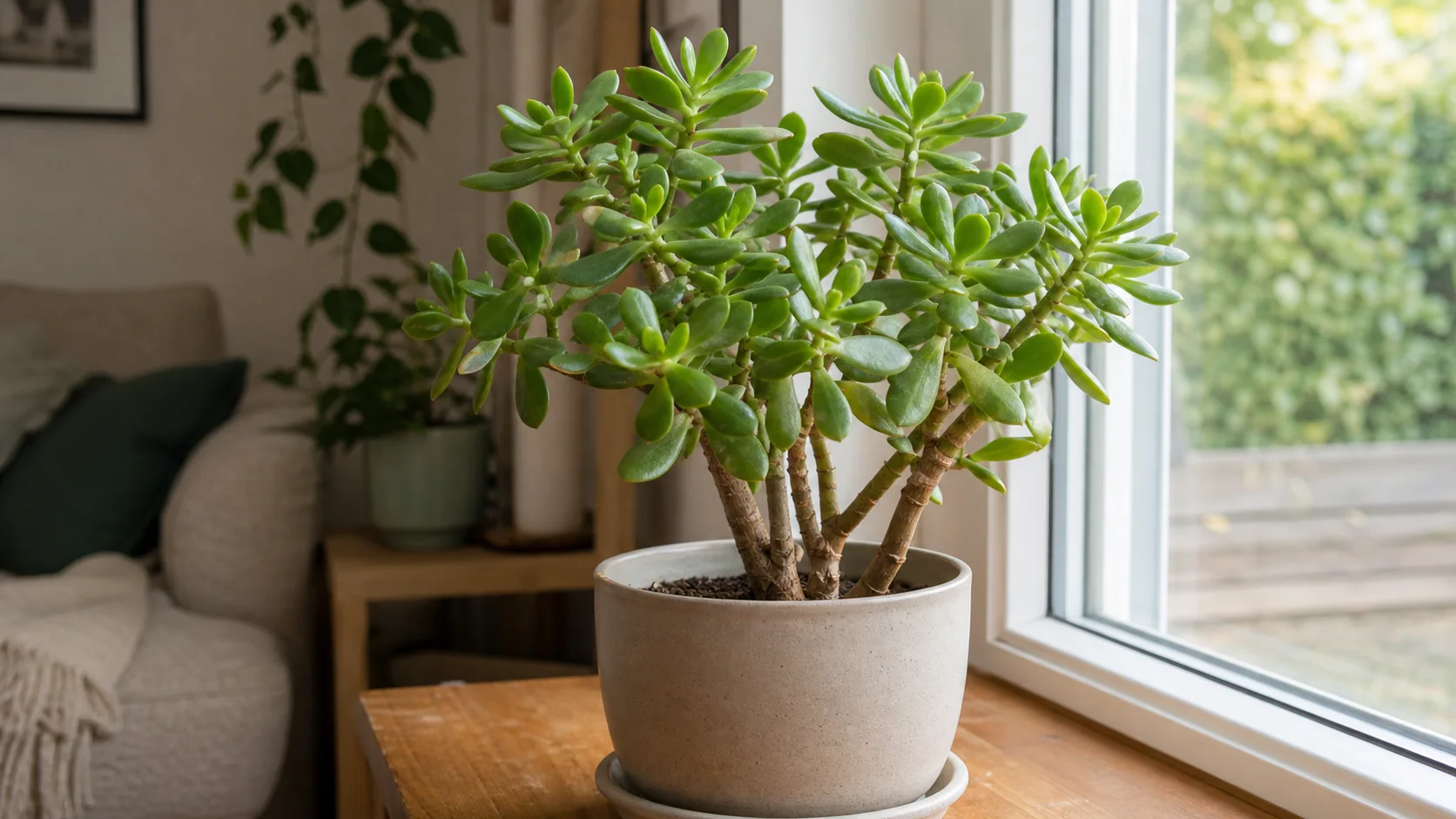
A jade plant beside a bright window shows why light must be checked before changing its watering routine.
The common misdiagnosis: When jade drops leaves or grows soft, owners usually assume they are watering wrong. Often they are – but the root cause is light. A jade kept away from a window does not grow well enough to use water at a meaningful rate. The soil stays wet for weeks. The roots sit in damp conditions they were never designed for. Then leaves yellow and fall, and the owner cuts back watering, which helps somewhat, but the plant keeps struggling because the real problem was never fixed.
Why generic advice is incomplete: “Bright indirect light” is a phrase that covers almost any indoor condition and gives no practical guidance. For jade, the threshold matters: Clemson Cooperative Extension is direct that jade plants do best with four or more hours of direct sunlight per day – not filtered, not ambient, but actual direct rays through a window. That is a different requirement than most tropical houseplants, and most care guides gloss over it.
The first check: Before you adjust watering, ask where the plant is sitting. Can you see the sun’s path across that window during the day? Do the leaves feel genuinely firm and plump, or slightly soft even when the soil is dry? Soft leaves in dim conditions are almost always a light problem first, not a watering problem. Move the plant to your brightest window, then reassess everything else from there.
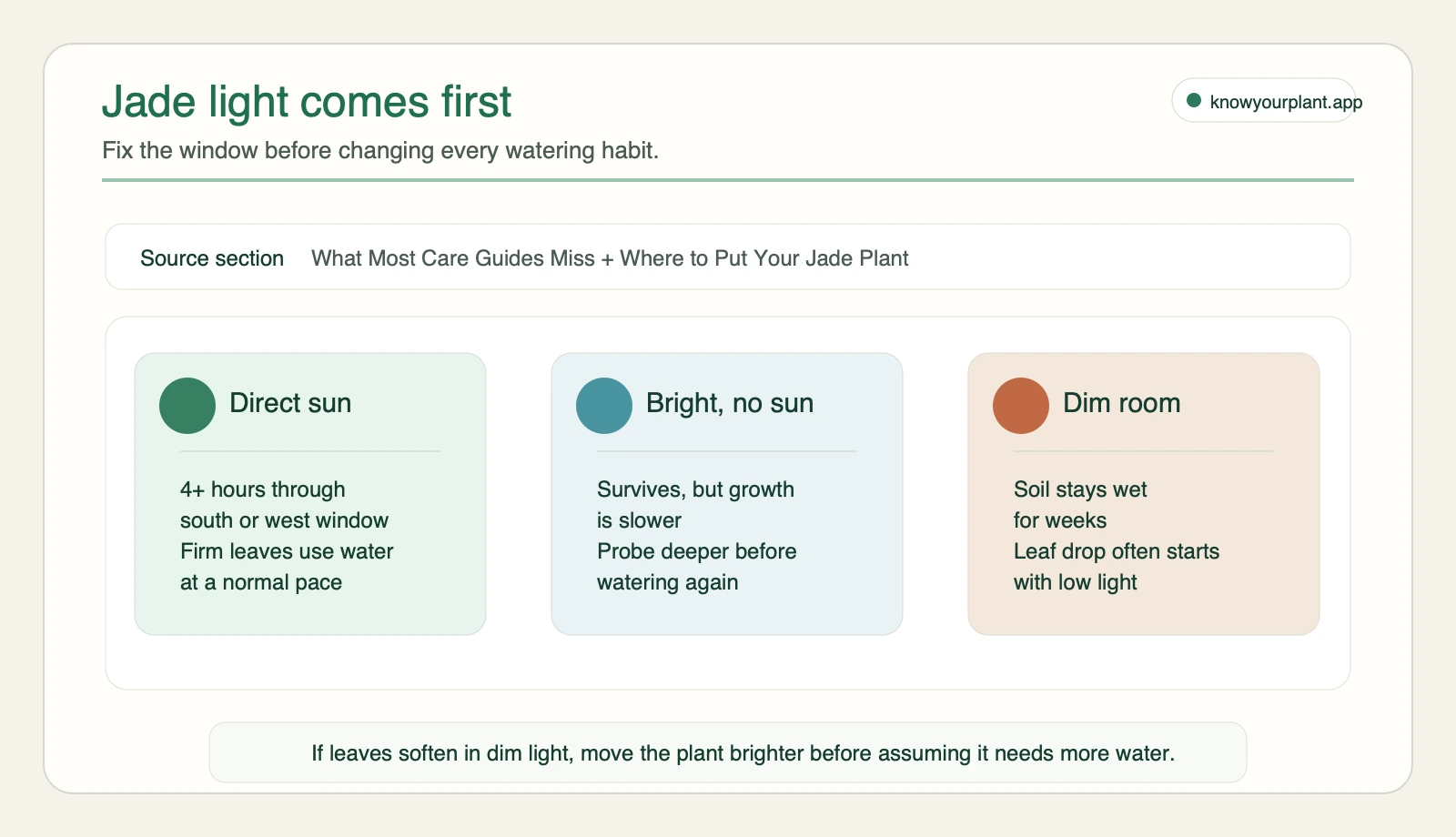
Use this light map before changing your watering schedule; a jade plant in dim light dries slowly no matter how careful you are.
Identification Snapshot
| Detail | What to look for |
|---|---|
| Botanical name | Crassula ovata |
| Growth habit | Upright succulent shrub with thick woody stems and oval water-storing leaves |
| Fastest visual clue | Glossy green leaves in opposite pairs, often edged red when the plant gets strong sun |
| Best home placement | Brightest windowsill available, ideally with several hours of direct sun and fast drainage |
| Pet safety | ASPCA lists jade plant as toxic to cats, dogs, and horses |
Lookalikes and Confused-With
| Plant | How to tell it apart |
|---|---|
| Elephant bush (Portulacaria afra) | Smaller, rounder leaves on thinner reddish stems, often sold as mini jade even though it is a different plant |
| Echeveria and other rosette succulents | Leaves form a low rosette instead of branching woody stems |
| Young jade in dense nursery pots | Same paired leaves, but the plant may look compact until the stems start to harden and branch |
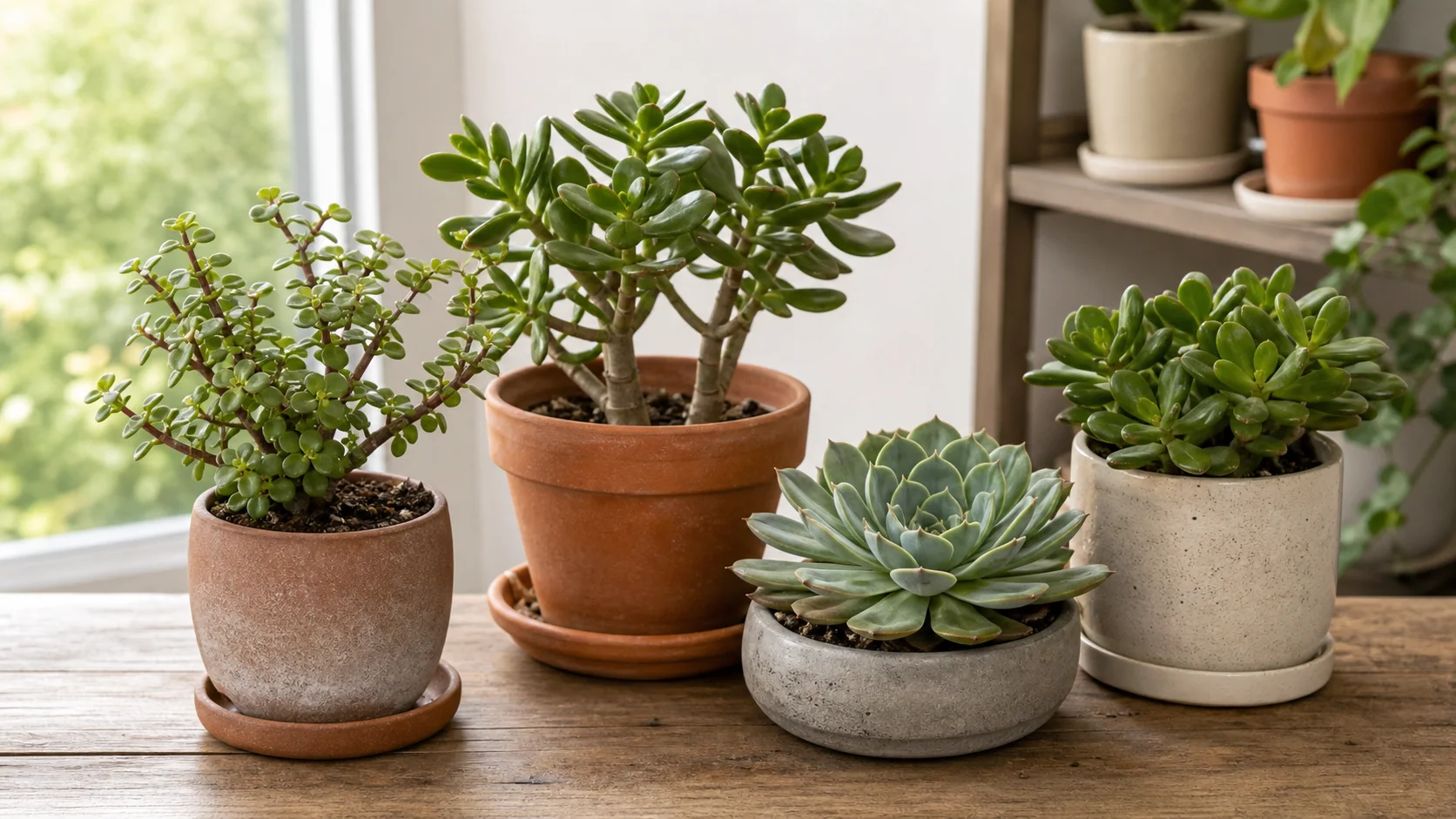
Mature jade, elephant bush, a rosette succulent, and compact young jade reveal the growth habits that separate common lookalikes.
Jade Plant Care Cards
| Care card | Practical target |
|---|---|
| Light | Four or more hours of direct sun when possible, or the brightest indoor spot you have |
| Water | Let the mix dry fully, then water deeply and let every bit of excess drain away |
| Soil | Cactus or succulent mix that dries fast, not a dense moisture-retentive houseplant blend |
| Pot | Drainage hole required, and only size up a little when repotting |
| Pruning and propagation | Shape in spring or summer, then let cuttings callus before rooting |
Social Listening: Why Jade Fails Indoors So Quietly
Plant-owner threads about jade repeat the same pattern: people hear that it is “easy,” place it on a desk or a shelf away from direct sun, then keep watering on a normal houseplant rhythm. The leaves soften, older leaves yellow, and the soil stays wet far longer than expected. Community examples also show repeated confusion around oversized pots and root-rot rescues, which is why this guide treats light, drainage, and pot size as one decision instead of three separate tips.
Where to Put Your Jade Plant
Jade wants the brightest spot in your home, ideally one with at least a few hours of direct sun each day. A south- or west-facing windowsill is the natural home for it. If you can see the sun tracking across that window during the day, that location will work.
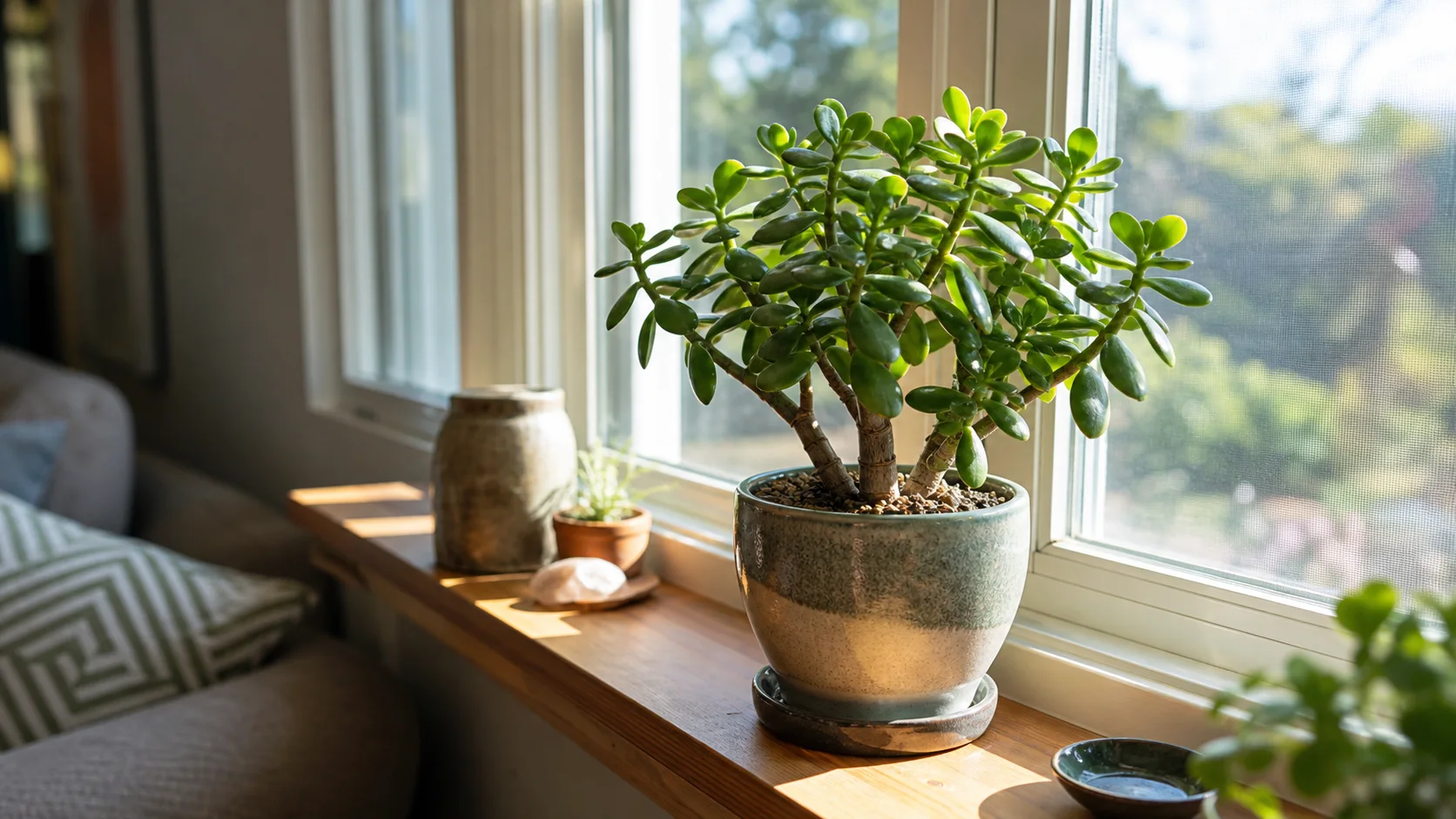
A sunlit windowsill gives jade the direct light it needs to stay compact and use water efficiently.
According to Clemson Cooperative Extension, jade plants perform best with four or more hours of direct sunlight indoors. A few meters back from a window, or in a room that gets good ambient light but no direct rays, is usually not enough. Jade will survive those conditions for a while, but growth stretches out and weakens. The plant is effectively rationing itself.
If you are limited to lower light, you can still keep jade, but you will need to water even less frequently than usual. Dim light means slow growth, slow growth means slow water use, and slow water use means the soil stays wet longer. That is where root rot tends to start. If your best window is still fairly dim, a grow light for indoor plants placed close to the plant for several hours a day can genuinely close that gap.
Soil, Pot, and Drainage
Jade needs a fast-draining mix. A cactus and succulent potting mix works well, or you can improve regular potting soil by adding perlite at roughly one part perlite to two parts soil. NC State Extension recommends well-drained potting soil as a baseline requirement – the kind of dense, moisture-retaining mix that works for tropical houseplants is the wrong starting point for jade.
The pot matters as much as the mix. Drainage holes are non-negotiable. Jade sitting in a cachepot with no escape hole is borrowing time. Terracotta is genuinely useful here: it breathes and helps the root zone dry out between waterings, which is exactly what jade needs. Our guide to terracotta pots covers why this matters for succulents specifically.
Pot size is a common stumbling block. It is tempting to move jade into a noticeably larger container, but an oversized pot holds more moisture than the roots can draw down, especially in a lower-light room. When you repot, go up by roughly one pot size – about an inch of fresh soil around the rootball on each side. For guidance on timing, see when to repot plants, which walks through the signs that roots are genuinely ready for more space versus just looking crowded.
Watering Jade Plant
The rule that works in most situations: wait until the soil is dry before you water, then water thoroughly so it drains out the bottom.
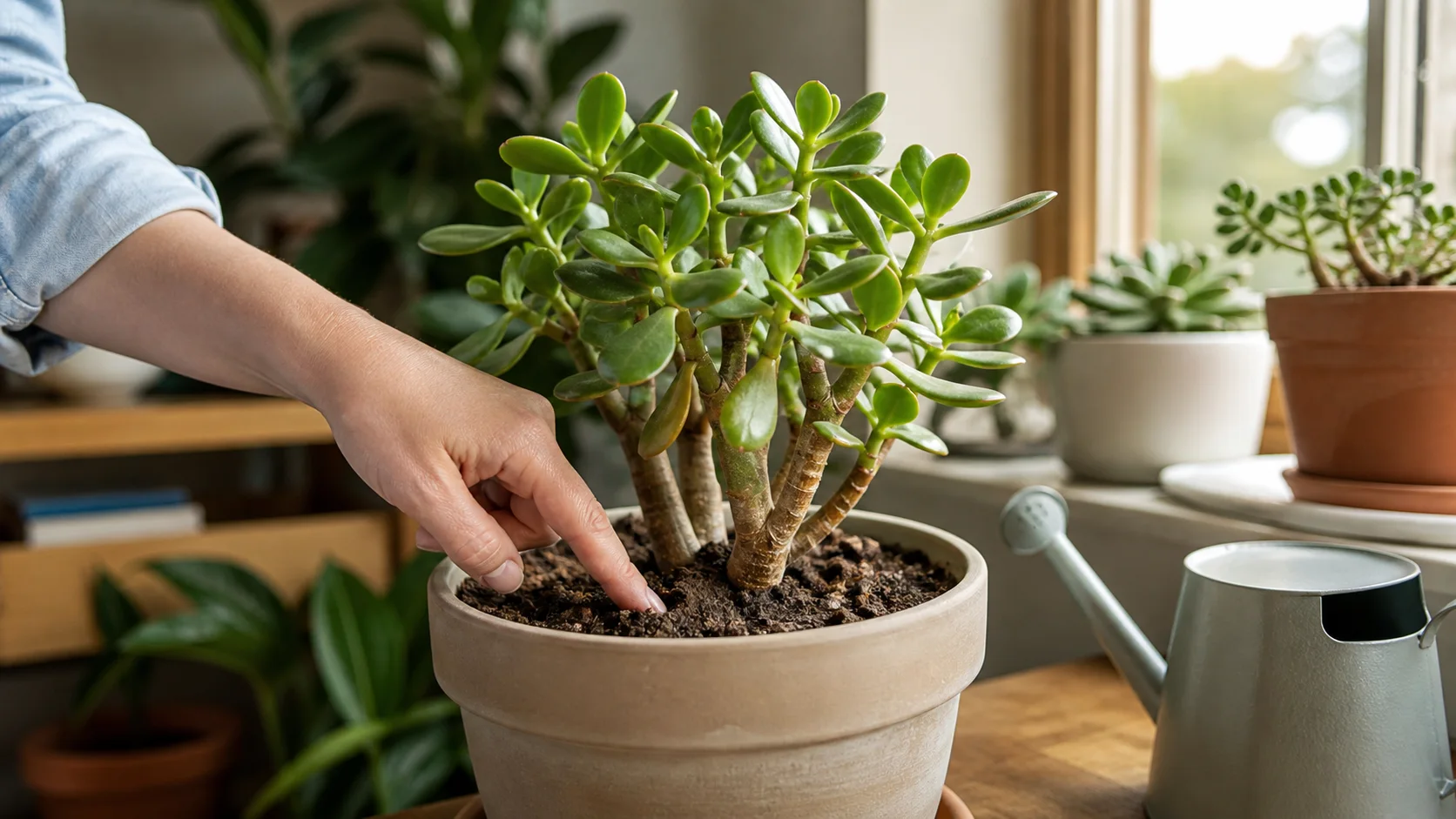
Testing the soil before reaching for the watering can keeps jade care tied to actual dryness rather than a calendar.
What changes depending on conditions:
| Situation | Expected dry-out time |
|---|---|
| Bright south window, summer | 1–2 weeks |
| Average bright room, no direct sun | 2–3+ weeks |
| Dim location or winter, any window | 3–5+ weeks |
Do not water by calendar. Press your finger into the soil up to the first knuckle. If there is any moisture at all, wait another few days. Jade forgives underwatering far more graciously than overwatering – a slightly thirsty plant will signal with mildly soft or wrinkled leaves and recover quickly after a good drink. A plant sitting in wet soil too long develops root rot, which is much harder to reverse.
In autumn and winter, most jade plants slow down or stop growing entirely. This is normal. NC State Extension notes that jade should be watered less from fall through late winter, allowing the soil to dry out fully and stay dry a bit longer before the next watering. If you are seeing yellowing leaves in winter and the soil feels damp, this is the pattern to correct first.
Expert note (NC State Extension): “Leaf fall and root rot can result from overwatering.” The combination of wet soil and insufficient light is the leading cause of jade decline indoors.
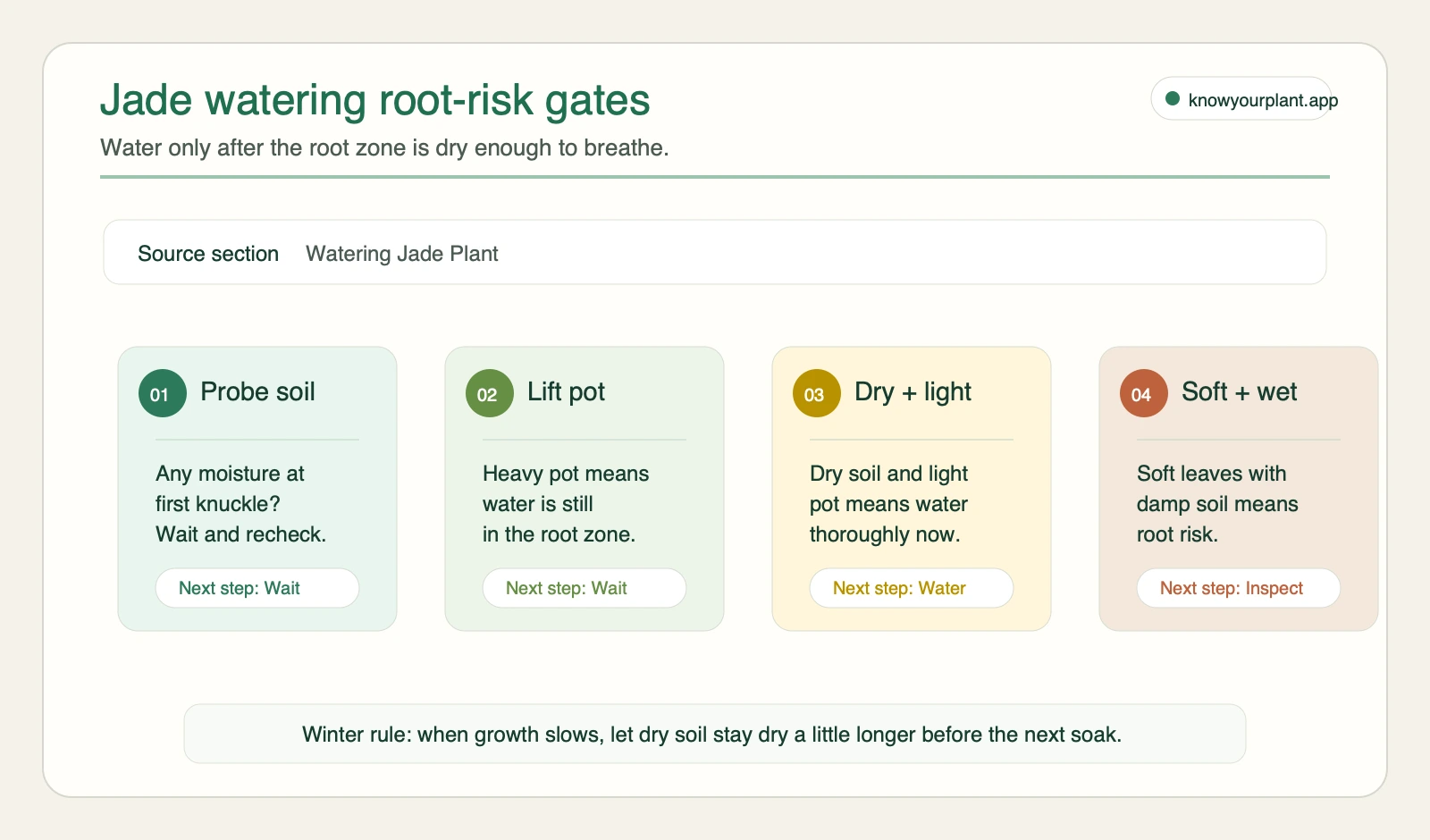
Use these watering gates to decide whether to wait, water, or inspect roots instead of following a fixed calendar.
If you suspect root rot is already present – soft, darkened stem base, mushy roots when you unpot – the root rot treatment guide covers how to assess damage, treat roots, and decide whether to save the plant in place or take healthy cuttings.
Seasonal Jade Plant Care
Jade does not need dramatically different care through the year, but the rhythm does shift, and matching your habits to the season prevents the two most common problems: overwatering in winter and missed growth opportunities in spring.
Spring (March–May): This is when jade wakes up. New leaves emerge at the growing tips and the plant starts drawing water down at a noticeably faster rate. If you have been on a careful winter watering schedule, you can begin checking the soil more frequently and watering a little sooner. This is also the best window for propagating stem cuttings – warmer temperatures help them root faster.
Summer (June–August): Peak growing season. Jade in a bright window with some direct sun will be putting out new growth steadily. Water when the top few centimetres of soil are completely dry. If the plant is outside for the summer, watch for afternoon sun intensity, which can scorch leaves that have been acclimated to indoor light. Bring it back inside before night temperatures drop below about 10°C (50°F).
Autumn (September–November): Growth starts to slow as light levels drop and days shorten. Begin spacing waterings out a little further. This is a natural transition, not a sign of a problem. Avoid fertilizing after early autumn – pushing growth as the plant is heading into its resting period produces weak, stretched stems that the low winter light cannot support.
Winter (December–February): Jade may stop growing almost entirely. The soil takes weeks to dry out in a dim room. Water sparingly, and only after the soil has been dry for several days. This is the season when most overwatering damage happens, because owners keep a regular schedule even though the plant has all but stopped using water. If you are near a bright south-facing window, you may see slow growth continue, but the watering rhythm still needs to be more conservative than in summer.
Pruning Your Jade Plant
Jade tolerates pruning well and actually benefits from it. Pinching back the growing tips when the plant is young encourages it to branch and become bushier rather than growing one long, top-heavy stem. Once jade has a woody trunk, it is more forgiving about where you cut.
Use clean, sharp scissors or pruning shears. Cut just above a leaf node – the spot where a pair of leaves meets the stem. The plant will put out two new branches from that point.
The best time to prune is in spring or early summer when jade is actively growing and can direct energy into new branches quickly.
Avoid heavy pruning in winter or when the plant is already stressed. If the leaves are soft, yellowing, or dropping, that is a signal to fix the growing conditions first. Pruning a struggling plant before the underlying problem is addressed asks it to recover and regrow at the same time, which rarely goes well. Diagnose first, prune later.
Propagating Jade Plant
Jade is one of the easiest succulents to propagate. Both stem cuttings and individual leaves can root, though stem cuttings are more reliable and grow into recognizable plants much faster.
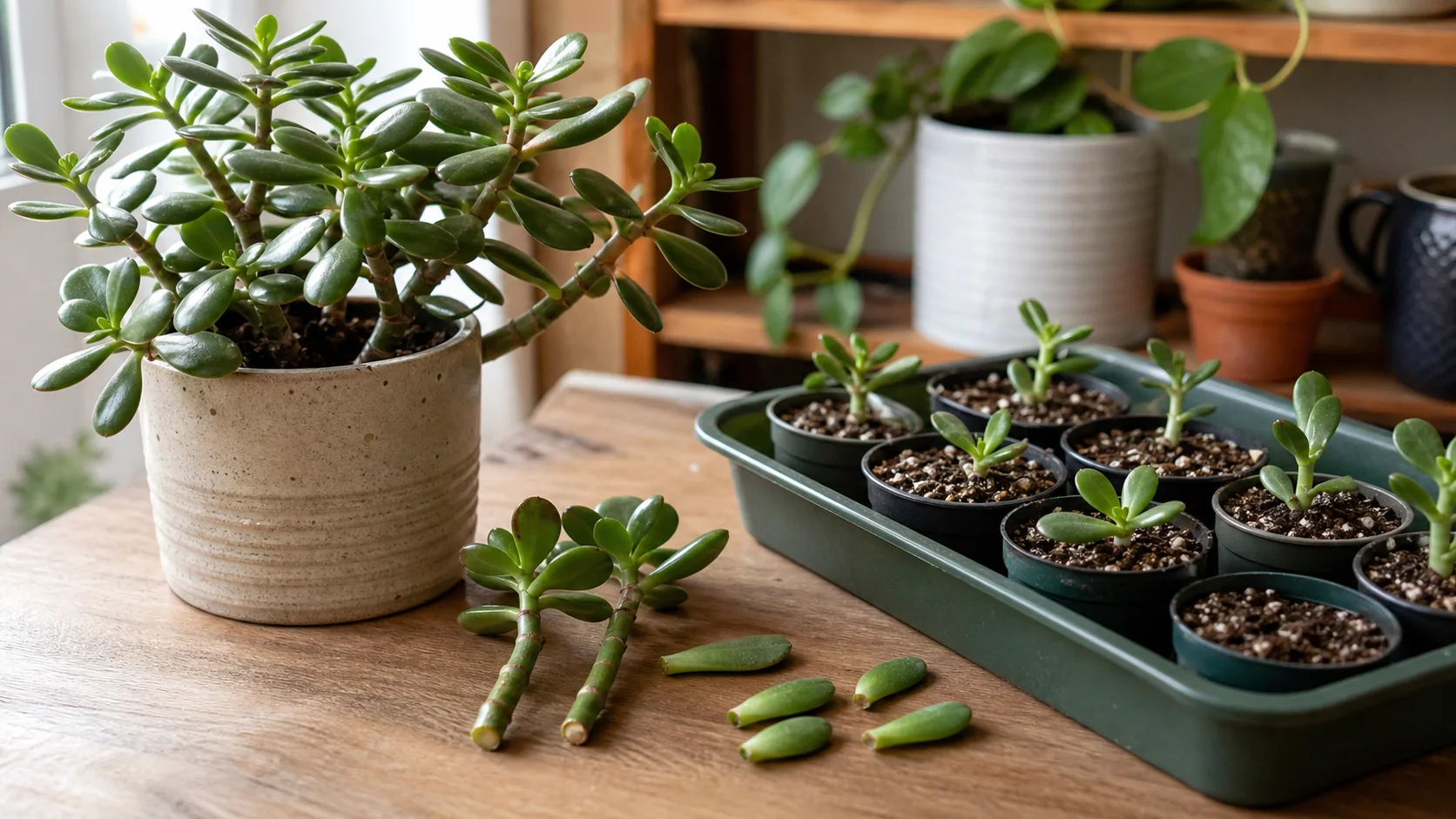
Drying stem and leaf cuttings before setting them in gritty cactus mix reduces the risk of rot during propagation.
Stem cuttings: Take a cutting about 5–10 cm long with a few pairs of leaves. Remove the lower leaves, then let the cutting rest in a dry spot, out of direct sun, for several days to a week. The cut end needs to callus over before it goes into soil. Planting a fresh cut into moist soil invites rot – this is where most propagation attempts fail.
Once calloused, plant the cutting into barely moist cactus mix and place it somewhere bright but away from direct afternoon sun while roots establish. Water very sparingly at first: just enough to keep the soil from drying completely. Once you see new growth emerging from the top, the cutting has rooted.
Leaf cuttings: Gently remove a healthy leaf with a slight twisting motion to keep the base intact. Lay it on the surface of dry cactus mix and place it in indirect light. Tiny rosettes and roots will emerge slowly from the base over several weeks to months. It works, but stem cuttings are faster if you want a real plant in a reasonable timeframe.
For a broader look at how these techniques fit into general succulent propagation, the plant propagation guide covers callusing, rooting media, and timing across multiple species.
What Jade Leaves Are Telling You
Jade communicates clearly through its leaves once you know what to look for. The goal of this section is to help you separate the three most common overlapping problems: thirst, overwatering, and low light.
| Symptom | Most likely cause | First check |
|---|---|---|
| Soft, slightly shriveled leaves | Thirst | Press soil – is it bone dry? Water thoroughly. |
| Soft leaves + wet or damp soil | Overwatering or root rot | Let soil dry down completely; check drainage |
| Yellowing lower leaves that fall after watering | Overwatering + low light | Move to more light, reduce watering frequency |
| Leggy stems with gaps between leaves | Low light | No watering change will fix this – more light needed |
| Leaf drop right after repotting | Transplant stress | Normal; hold off on watering, give it time |
| Firm, plump, healthy-looking leaves | Good balance | You are doing it right |
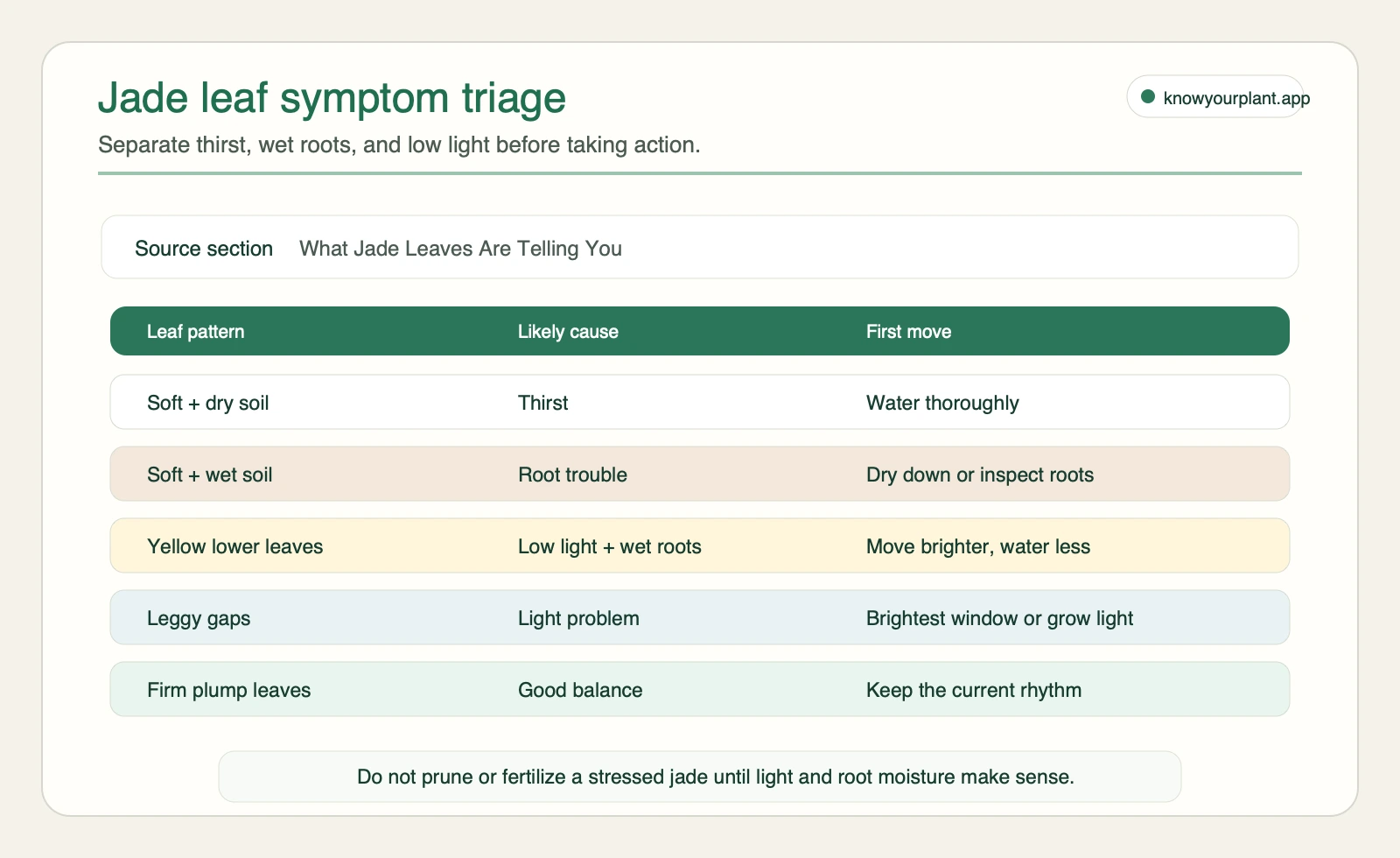
Use this triage card when the leaves change so you can separate thirst, wet roots, and low light before pruning, fertilizing, or repotting.
Soft leaves with dry soil mean thirst. Soft leaves with wet soil mean root trouble. Leggy growth means light, not water. These three patterns cover the majority of jade problems. If the main symptom is active drop rather than color change, the guide to succulent leaves falling off helps separate normal lower-leaf shedding from overwatering and stress. For a deeper look at what yellow leaves signal across houseplants generally, why plant leaves turn yellow gives a useful comparison framework.
One Note on Pet Safety
Jade plant is toxic to cats, dogs, and horses. The ASPCA lists clinical signs including vomiting, depression, and incoordination. Keep it out of reach of pets that tend to chew on plants. If you suspect your pet has ingested jade, contact your vet promptly.
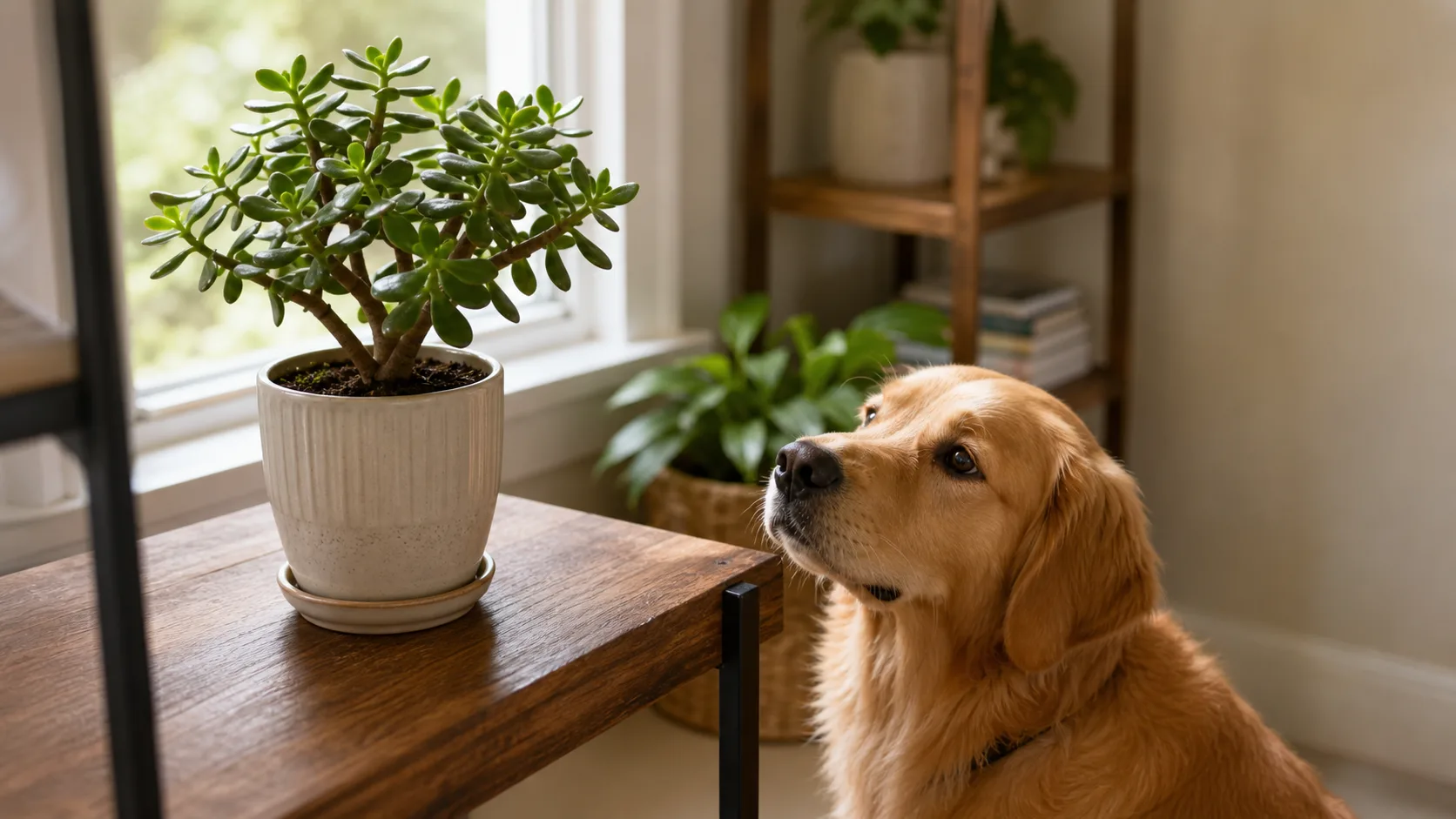
An elevated placement keeps a jade plant separated from curious pets that may chew foliage.
For a related hands-on growing walkthrough, use Christmas Cactus Propagation: Root Healthy Segments Without Rot for the setup and follow-up care.
Real User FAQ About Jade Plant Care
How often should I water my jade plant?
There is no fixed schedule that works for every jade plant. The right interval depends on your light levels, pot size, soil mix, and season. In a bright south-facing window in summer, the soil might dry in one to two weeks. In a dimmer room in winter, the same plant might need three to five weeks between waterings. The reliable method: press your finger into the soil up to the first knuckle. If you feel any moisture, wait. If it is completely dry, water thoroughly until water runs from the drainage hole.
Why are my jade plant leaves soft and wrinkled?
Soft, wrinkled leaves usually mean one of two things: thirst, or root trouble. Check the soil first. If the soil is bone dry and you have not watered in a while, give the plant a thorough drink and it should plump back up within a day or two. If the soil is damp or the pot feels heavy, the softness is more likely from overwatering – roots that have been sitting in wet soil too long lose their ability to move water into the plant effectively. In that case, let the soil dry out completely and check that your drainage is working.
Why is my jade plant dropping leaves?
Leaf drop in jade has several causes, and the combination of low light and overwatering is the most common. When jade sits in dim conditions, it grows slowly and uses very little water, which means the soil stays wet for much longer than it would in a bright window. That prolonged moisture stresses the roots and causes yellowing and leaf drop. Moving the plant to a brighter location and reducing watering frequency usually stops the cycle. Leaf drop immediately after repotting is also normal transplant stress and does not need intervention beyond giving the plant a few weeks to settle.
Why is my jade plant growing leggy and stretched?
Leggy, stretched growth – long gaps between leaf pairs, weak-looking stems reaching toward the window – is almost always a light problem. Jade stretches when it is trying to reach more light than its current spot provides. No watering adjustment fixes this. Move the plant to your brightest window, ideally one with some direct sun, and the new growth that comes in will be compact and sturdy. The existing stretched stems can be pruned back once the plant is in better light and actively growing.
When and how should I propagate jade plant?
Spring and early summer are the best times to take stem cuttings, because the plant is actively growing and cuttings root faster when temperatures are warmer. Take a cutting of about 5–10 cm, remove the lower leaves, and let the cut end dry and callus for several days before putting it into cactus mix. Do not skip the callusing step – a fresh cut planted into soil almost always rots before it can root. Once in soil, water very lightly and wait for new growth from the top before increasing watering.
Can jade plants grow in low light?
Jade can survive in lower light, but it will not thrive. The stems stretch, growth slows almost completely, and the plant becomes progressively weaker. More importantly, in low light, the soil takes much longer to dry out between waterings, which dramatically increases the risk of root rot. If your best available spot is fairly dim, water much less than you think you need to, and consider a grow light to supplement. A plant that is clearly stretching toward the window is telling you it needs more light than it is getting.
Is jade plant toxic to cats and dogs?
Yes. The ASPCA lists jade plant as toxic to cats, dogs, and horses. Signs of ingestion can include vomiting, lethargy, and loss of coordination. If you have pets that chew on plants, keep jade on a high shelf or in a room they do not access. If you think your pet has eaten part of the plant, contact your vet or an animal poison control helpline promptly.
How do I know when to repot my jade plant?
Jade does not need repotting often – every two to three years is typically enough for a healthy plant. Signs it is ready: roots visibly circling the bottom of the pot or growing out of drainage holes, the plant becoming top-heavy and unstable, or water running straight through the soil without being absorbed. When you do repot, go up only one pot size. Jumping to a much larger container fills the space with soil that holds more moisture than the roots can draw down, which often leads to the same soggy-root problems you are trying to avoid.
Download KnowYourPlant for personalized plant care reminders, seasonal watering nudges, and a plant doctor that helps you catch problems before they become serious.
Methodology and freshness note: Updated on 2026-06-17 using live OpenClaw research originally reviewed on 2026-05-18. We compared jade care queries and close variants in live search, reviewed recurring owner problems on Gardening Stack Exchange through the Stack Exchange API, and verified care, watering, propagation, and pet-safety claims against NC State Extension, Clemson Cooperative Extension, and ASPCA. Community examples are used as qualitative signal only, not as a universal diagnosis for every struggling plant.