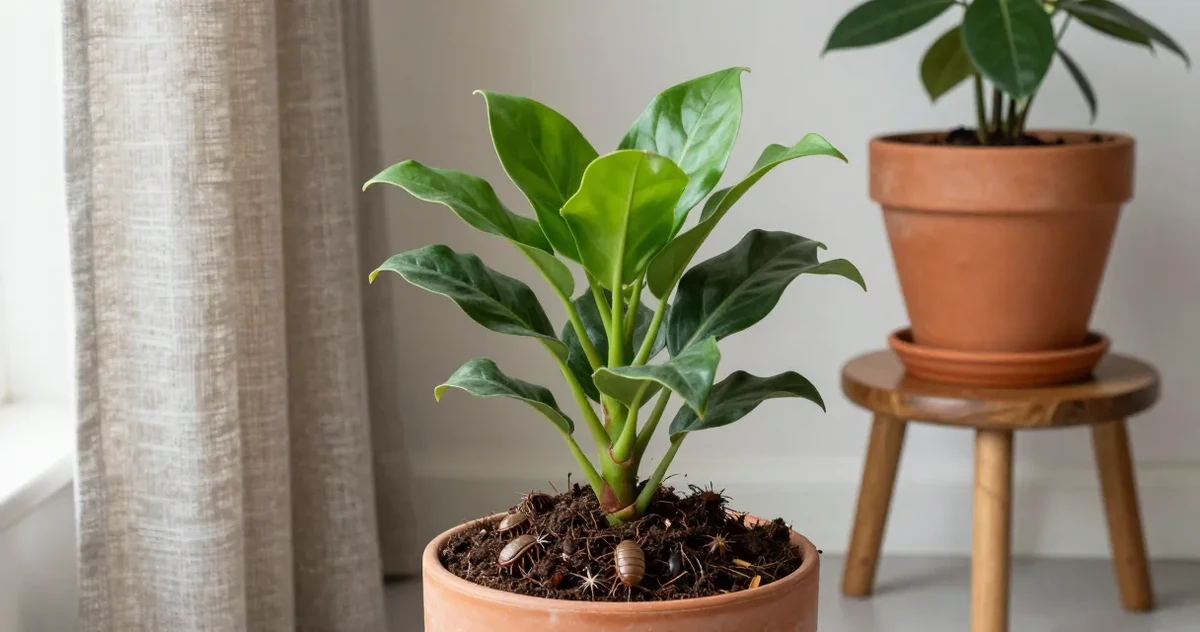
You move a pot to water it, disturb the top layer of soil, and suddenly notice tiny white or orange specks scrambling in every direction. Your stomach drops. Are those bugs? Do you need to act?
Before you reach for a spray bottle, here is the single most useful thing to know: soil mites are not automatically a problem. They are a natural part of living soil. In the garden, nobody panics when they turn a shovelful of earth and find mites working through the decomposing matter. Indoors, though, any moving creature near a plant triggers the urge to treat first and ask questions later.
That instinct gets it backwards. The question worth asking isn’t “how do I kill them?” It’s “should I do anything at all?” – and most of the time, the answer is no.
Identification Snapshot
Use this quick snapshot before you decide whether anything needs treatment:
- Most likely soil mites: tiny white, cream, or orange crawlers appear only when you disturb the top layer of potting mix, with no webbing and no leaf damage.
- More likely springtails: similar tiny pale bugs, but they flick or jump when you tap the soil surface.
- More likely fungus gnats: you notice tiny dark flies hovering around the pot, with larvae living in the top inch or two of damp mix.
- More likely a real plant pest: bugs are on leaves, stems, or new growth, and the plant shows stippling, webbing, sticky residue, distortion, or unexplained decline.
- Best first move: inspect the leaves, then check how wet and sour the soil feels before you spray, repot, or throw the mix out.
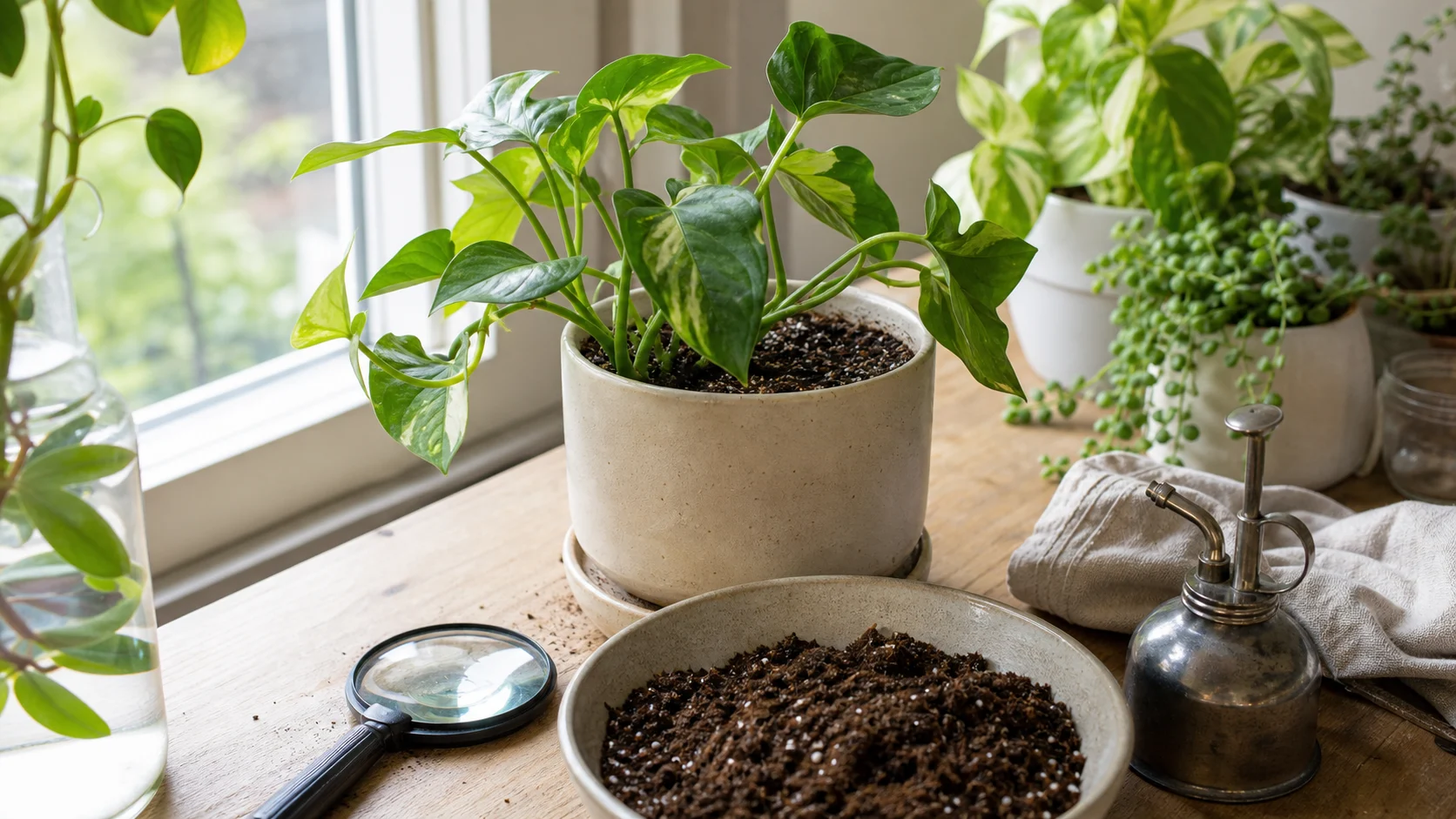
Disturbed potting mix, a magnifier, and healthy foliage help separate harmless soil life from a true plant pest.
Social Listening: Why This Problem Gets Misread
Plant owners usually describe the same pattern: they disturb the potting mix, spot tiny orange or white bugs, see no webs or leaf damage, and still feel pressure to kill something immediately. Community threads and extension Q&A also show how often people bundle soil mites, springtails, and fungus gnats into one problem just because they share the same damp pot. That is the real reader pain here. Bugs in soil is not a diagnosis by itself. The useful clues are where the bugs are, how they move, and whether the plant is actually showing damage.
What Most Care Guides Miss
Most articles about soil mites skip straight to elimination. They describe what the bugs look like, list a few spray options, and send you off to treat. What they rarely help you do is figure out whether you should treat at all.
The common misdiagnosis goes like this: you see tiny moving things in potting soil, assume “mites = bad,” and spray. But the bugs in your soil are far more likely to be harmless decomposers than actual plant pests. Treating them doesn’t help your plant. It disrupts the soil ecosystem that was doing its job quietly, and it won’t change the damp conditions that attracted them in the first place.
The practical first check isn’t identifying the bug. It’s answering two questions:
- Are the bugs on the plant, or only in the soil?
- Is the plant actually showing symptoms – yellowing, stippling, webbing, distorted growth, or wilting that doesn’t improve with water?
If the answer to both is no, you’re almost certainly looking at harmless soil life, not a pest problem.
What Soil Mites Actually Are
Soil mites are tiny arachnids, related to spiders and ticks, that live in the top layer of organic matter in soil. Most are decomposers: they break down dead plant material, fungal threads, and bacteria. They’re part of the same ecosystem that healthy outdoor garden soil depends on.
Soil mites typically measure less than a millimeter. They appear white, cream, tan, or orange. When you disturb the soil surface, they scatter quickly, because they’re sensitive to light and movement. That scrambling behavior is usually the moment people notice them.
Acarologists have described over 48,000 mite species, with the vast majority being free-living soil and leaf-litter organisms rather than parasites or plant pests. Soil mites are a normal, expected part of any organic-matter-rich growing medium.
Why Potting Mix Attracts Them
Soil mites need moisture and organic matter. Standard peat- or coir-based potting mix provides both, especially when a pot stays consistently damp, when decorative bark or moss topdressing sits on the surface, or when drainage is slow and the bottom third of the pot stays wet for days.
Seeing soil mites is often less a pest problem and more a soil-environment signal. The conditions that keep potting mix perpetually moist are the same conditions that support decomposer communities.
According to Colorado State University Extension, excessively moist soil is also the primary driver of fungus gnat problems in houseplants. The same damp environment that attracts harmless mites can attract multiple other soil-dwelling organisms at the same time – which is exactly why the diagnosis step matters before the treatment step.
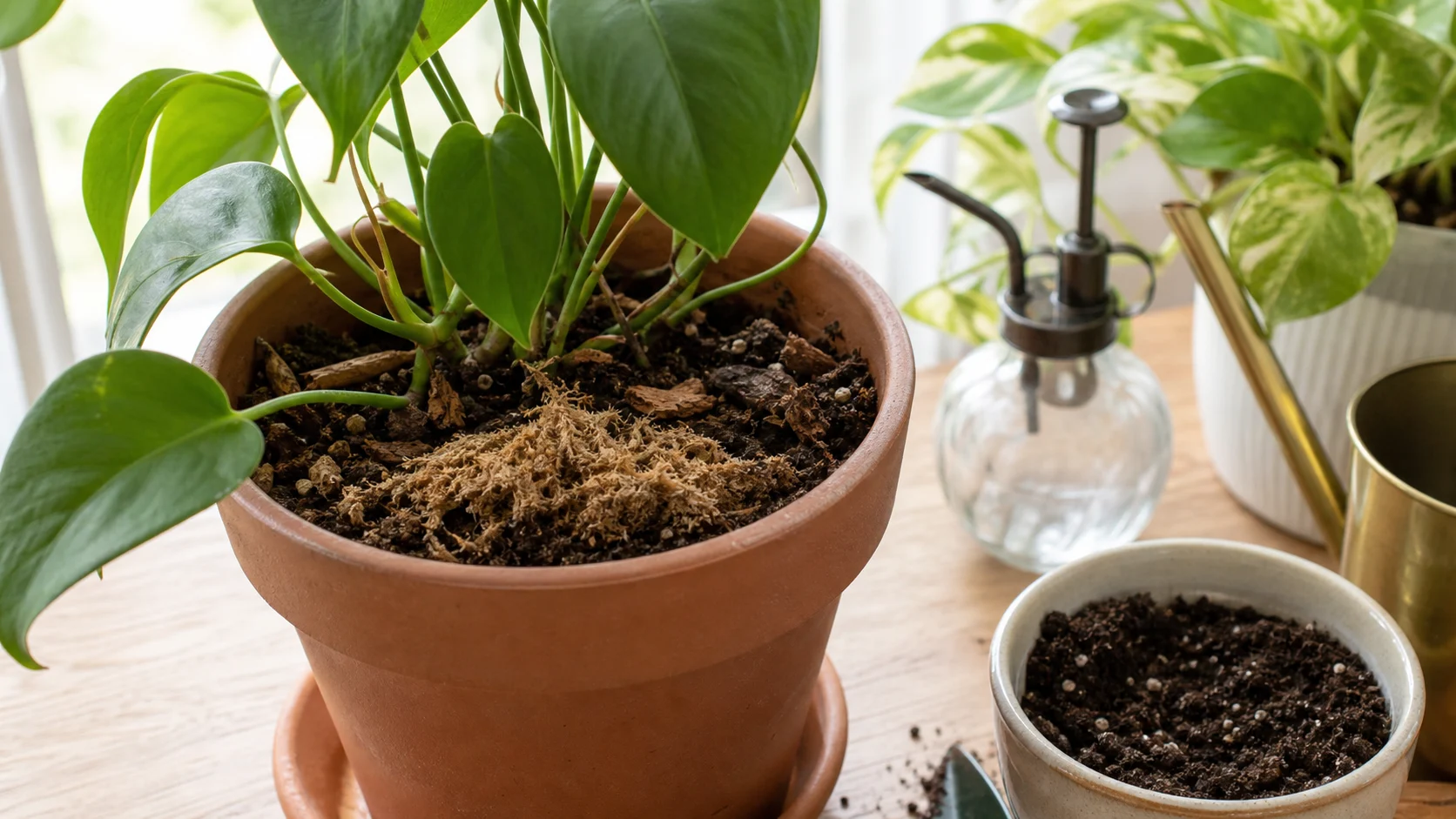
Moist organic mix and evaporation-slowing topdressing create the conditions that attract decomposer communities.
Lookalikes and Confused-With: Soil Mites vs. Everything Else
Here’s a comparison of the most common tiny-bug findings in and around houseplant pots. The “Where found” column is the most useful one.
| Bug | Color | Movement | Jumps? | Webbing? | Where found | Next step |
|---|---|---|---|---|---|---|
| Soil mites | White / cream / orange | Crawl, scatter fast | No | No | Disturbed top soil only | Usually ignore; let soil dry |
| Springtails | White / gray | Crawl, then jump | Yes | No | Damp soil surface | Let top inch dry; no spray needed |
| Fungus gnats | Tiny black flies | Fly + hover | No | No | Flying near pot; larvae in top 1-2 inches | Reduce watering; see fungus gnat guide |
| Spider mites | Red / yellow / brown specks | Crawl on leaves and stems | No | Yes | Undersides of leaves | Isolate plant; treat leaves directly |
| Root aphids | White / pale yellow | Slow, clustered | No | Waxy white coating | Around root crown or roots | Unpot and inspect roots |
If you’re seeing movement only in disturbed soil – not on stems, not under leaves, not flying – the odds strongly favor harmless soil organisms.
What Extension Research Says About Treatment
University of Minnesota Extension puts it plainly: springtails are commonly found in the soil of overwatered houseplants. They prefer excessively damp conditions and feed on decaying roots and fungi. The conclusion: springtails “rarely damage plants.”
Ask Extension, a service run by land-grant university experts, is equally direct: “Insecticides are not needed or recommended” for springtails in houseplant soil. “They do not feed on live plant matter.” The recommended response is adjusting moisture conditions, not spraying.
The same logic applies to harmless soil mites. If they’re not on the plant, not causing damage, and the plant looks healthy, a spray doesn’t fix anything. It removes a decomposer community from the soil ecosystem without any benefit.
Expert Note
Extension guidance is unusually consistent on this point: when the organisms are living in damp potting soil and there is no plant-tissue damage, the first fix is usually moisture control, not insecticide. University of Minnesota Extension treats springtails as a damp-soil signal, Ask Extension says insecticides are not needed for them, and Colorado State University Extension separates those moisture-linked soil findings from true spider mite problems that show up on foliage.
How to Tell Soil Mites From Bugs That Actually Hurt Plants
The answer depends less on what the bugs look like and more on where they are and whether any damage is visible.
Bugs only in the soil, no leaf or stem symptoms
If you see tiny crawling bugs only when you disturb the top layer of soil, and there’s no stippling, webbing, sticky residue, or distortion on the leaves, you’re most likely looking at harmless soil-dwelling organisms – soil mites or springtails, or both.
Springtails are a common lookalike. They’re tiny, pale, and live in damp soil where they feed on fungi and decaying organic matter. The main difference: springtails jump when disturbed. Soil mites crawl and scatter. Neither feeds on healthy plant tissue.
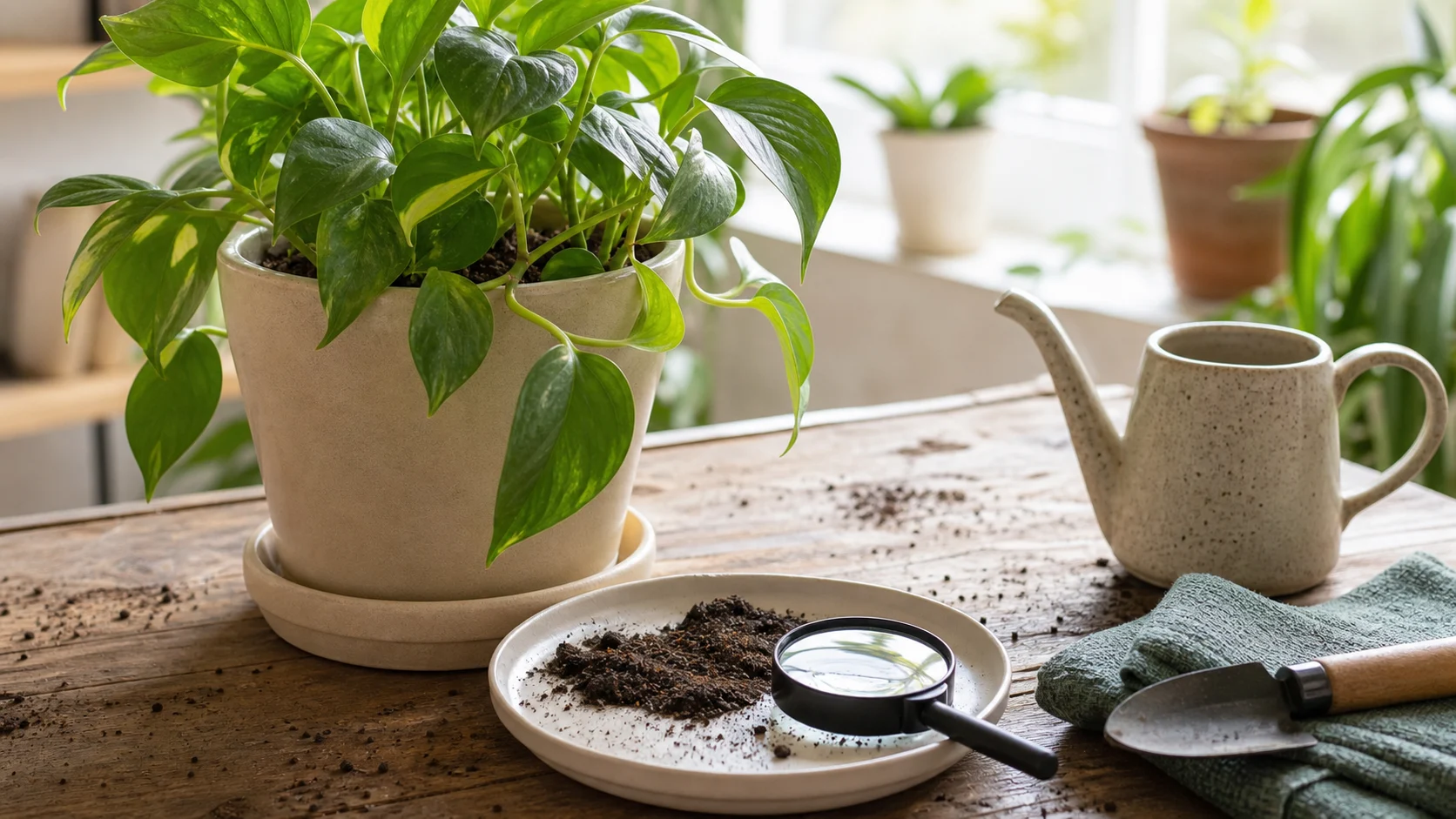
Healthy leaves and a soil-focused inspection point toward harmless soil organisms rather than a foliage pest.
Bugs on the leaves or stems with visible damage
Tiny bugs on the undersides of leaves, especially with fine webbing between stems or silvery stippling on leaf surfaces, are almost certainly spider mites rather than soil mites. Spider mites feed on leaf tissue and spread quickly in warm, dry conditions. If that’s what you’re seeing, the problem lives on the plant, not in the soil. A soil treatment won’t help. See our guide to getting rid of spider mites for what actually works.
CSU Extension notes that plants in hot, dry sites are particularly prone to spider mite problems. A dry environment is the trigger, not a damp soil condition. If you’re searching “mites in my plant” and the pot sits on a sunny south-facing windowsill, check the leaves before the soil.
Tiny flies around the pot
If you’re seeing flies hovering near the soil rather than crawling bugs in the soil, that’s fungus gnats – a different organism with a different management approach. Fungus gnat larvae live in the top inch or two of damp soil and feed on fungal material and fine root hairs. The visible flies are a symptom of an overwatering or drainage problem. Fixing fungus gnats starts with soil conditions, not sprays.
Soil mites and fungus gnats often share the same damp conditions, so you can easily see both at once. They are separate organisms that need separate consideration – if they need any response at all.
Soil Bug Decision Tree
Use this decision tree before you treat:
- If the bugs appear only in disturbed soil and the leaves look normal, treat the sighting as harmless soil life first. Let the top inch dry, remove any moisture-trapping topdressing, and monitor for a week.
- If the bugs jump when you tap the soil, treat them as springtails. Focus on drying the mix a bit more between waterings instead of spraying.
- If adults fly or hover around the pot, treat the issue as fungus gnats and address the damp top layer where larvae live.
- If the bugs are on leaves or stems, or you see webbing or stippling, move out of the soil-mites bucket and inspect for spider mites or another foliage pest.
- If the plant is wilting in wet soil, smells sour, or has mushy roots, treat it as a root-health problem first, even if bugs are also present.
Treat or Leave Alone: A Decision Checklist
Run through these six checks before deciding on any treatment. This applies whether you’re looking at soil mites, springtails, or any other small bug found in potting mix.
Leave alone if:
- Bugs are only visible when you disturb the top layer of soil
- No webbing anywhere on the plant
- No stippling, silvery patches, or distorted new growth on leaves
- The plant’s growth rate and color look normal
- The soil smells fresh, not sour or fermented
Investigate further if:
- Bugs appear on stems, leaf undersides, or new growth tips
- You see fine webbing between stems or at growth points
- Leaves show stippling, yellowing, or distortion that appeared recently
- The soil smells sour or swampy when you press your finger in
- The plant is wilting despite moist soil (this can signal root problems, not just bugs)
If you’re in the “leave alone” column, the only useful adjustment is letting the soil dry out more between waterings. That’s better for the plant and naturally reduces the conditions that support any moisture-dependent soil organism.
If you’re in the “investigate further” column, what you’re likely dealing with is either a true plant pest (spider mites, thrips, mealybugs) or a soil health problem caused by overwatering or drainage failure. The right response depends on what you actually find. The KnowYourPlant app can help you take a photo and identify the next step before you treat.
Common Mistakes When You Find Bugs in Soil
Treating soil mites like spider mites. The most common error. Soil mites live in the soil and don’t damage plant tissue. Spider mites live on leaves and leave webbing. If you spray the soil because you saw tiny things moving in it but there’s nothing on the leaves, you’re treating the wrong organism in the wrong place.
Repotting to “reset” the soil. Repotting doesn’t eliminate soil mites if the new potting mix ends up just as damp as the old one. Within a few weeks, the population rebuilds. The underlying fix is a change in watering frequency, not a new pot.
Using top dressing that traps moisture. Decorative pebbles, bark chips, or sheet moss placed on the soil surface look attractive but can slow evaporation from the top inch – the exact layer where soil mites, springtails, and fungus gnat larvae concentrate. Removing decorative topdressing often does more good than any spray.
Treating at the first sighting without checking the plant. If the plant is growing normally, the leaves look healthy, and the bugs are only visible when you dig around in the soil, you don’t have a plant health problem. You have living soil. The treatment in that case is to do nothing.
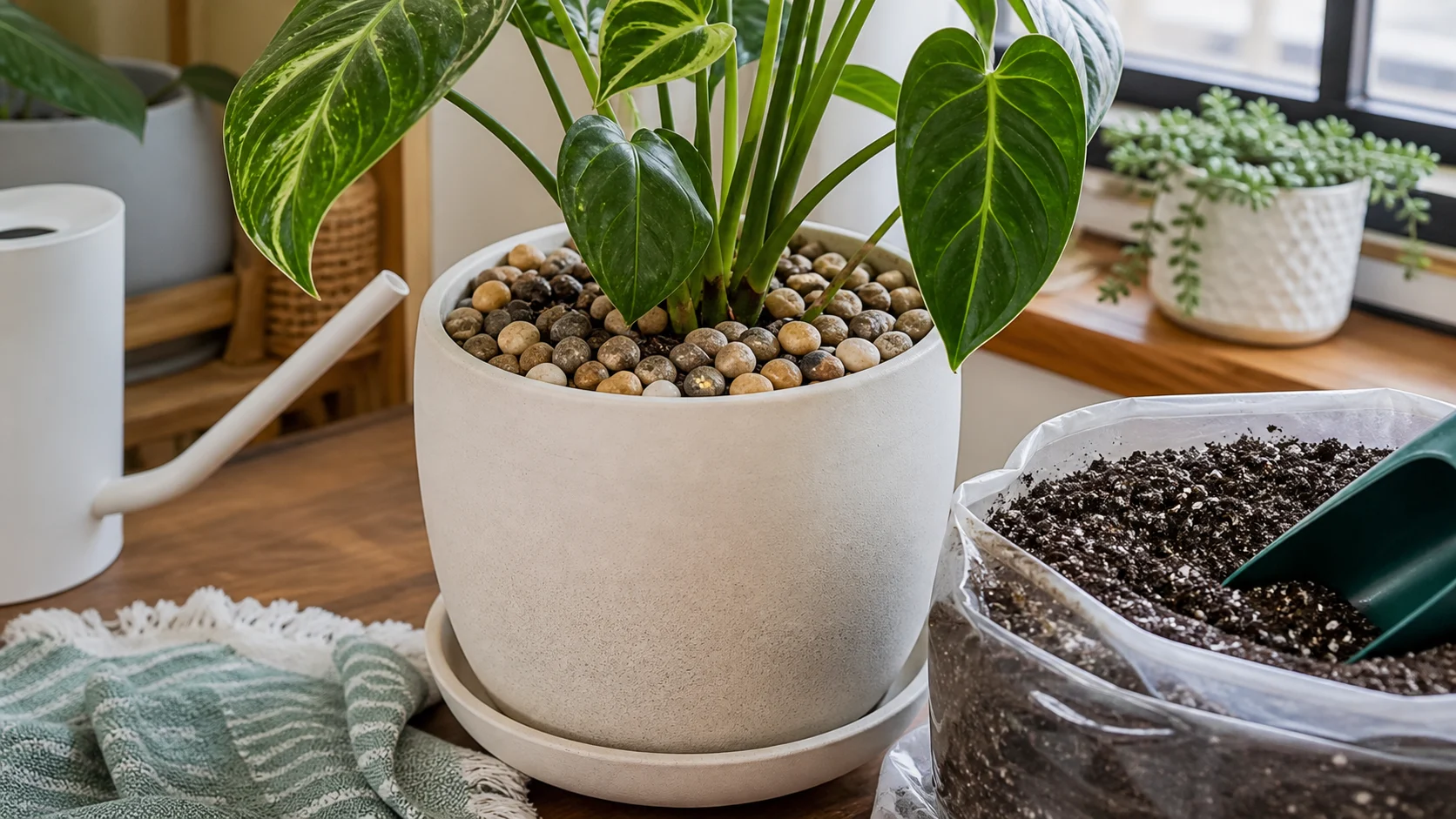
Fresh mix and decorative pebbles do not solve the damp conditions that brought soil organisms to the pot.
Care Cards
Care Card 1: Healthy plant, bugs only in soil
Do: Let the top inch of mix dry before watering again, increase airflow, and remove decorative moss or stones that trap moisture.
Skip: Neem drenches, insecticidal soap in the pot, or emergency repotting.
Care Card 2: Damp soil plus fungus gnats
Do: Cut back watering, check drainage, and treat fungus gnats as their own issue if adult flies are present.
Skip: Assuming every moving speck in the pot is the same pest.
Care Card 3: Leaf damage or webbing
Do: Inspect leaf undersides, isolate the plant, and treat the foliage problem directly.
Skip: Soil-only treatments, because they will not solve a spider mite outbreak living on the plant.
Care Card 4: Sour soil or mushy roots
Do: Unpot the plant, trim rotten roots, and repot into fresh, better-draining mix if root rot is present.
Skip: Trying to fix a drainage failure with pesticide.
The Moisture-First Check
Before deciding whether to treat anything, run through this short checklist. Three or more “yes” answers suggest the underlying issue is moisture, not a pest invasion:
- Does the soil smell sour or musty when you press your finger in?
- Does the pot feel heavy even though you haven’t watered in more than a week?
- Are there fungus gnats flying near the pot as well as bugs in the soil?
- Has the plant been sitting in a saucer with standing water?
- Did you use a potting mix with lots of peat or coir that compacts and stays wet?
If yes to most of the above, the primary fix is letting the top inch of soil dry out before the next watering. That single change makes conditions less hospitable for every moisture-dependent soil organism, and it’s healthier for the plant. Persistent overwatering is one of the main pathways to root rot, and the soggy conditions that produce it are exactly what draws soil bugs in the first place.
Common Problems Soil Mites Get Blamed For
Overwatering and compacted mix
In many homes, soil mites are simply the messenger. The real issue is a potting mix that stays wet too long, especially in dense peat-heavy blends or pots without enough airflow.
Fungus gnat conditions
If you have both crawling bugs in the soil and tiny flies around the pot, the shared denominator is usually damp, organic-rich soil. Soil mites do not cause fungus gnats, but both show up when the surface layer stays moist.
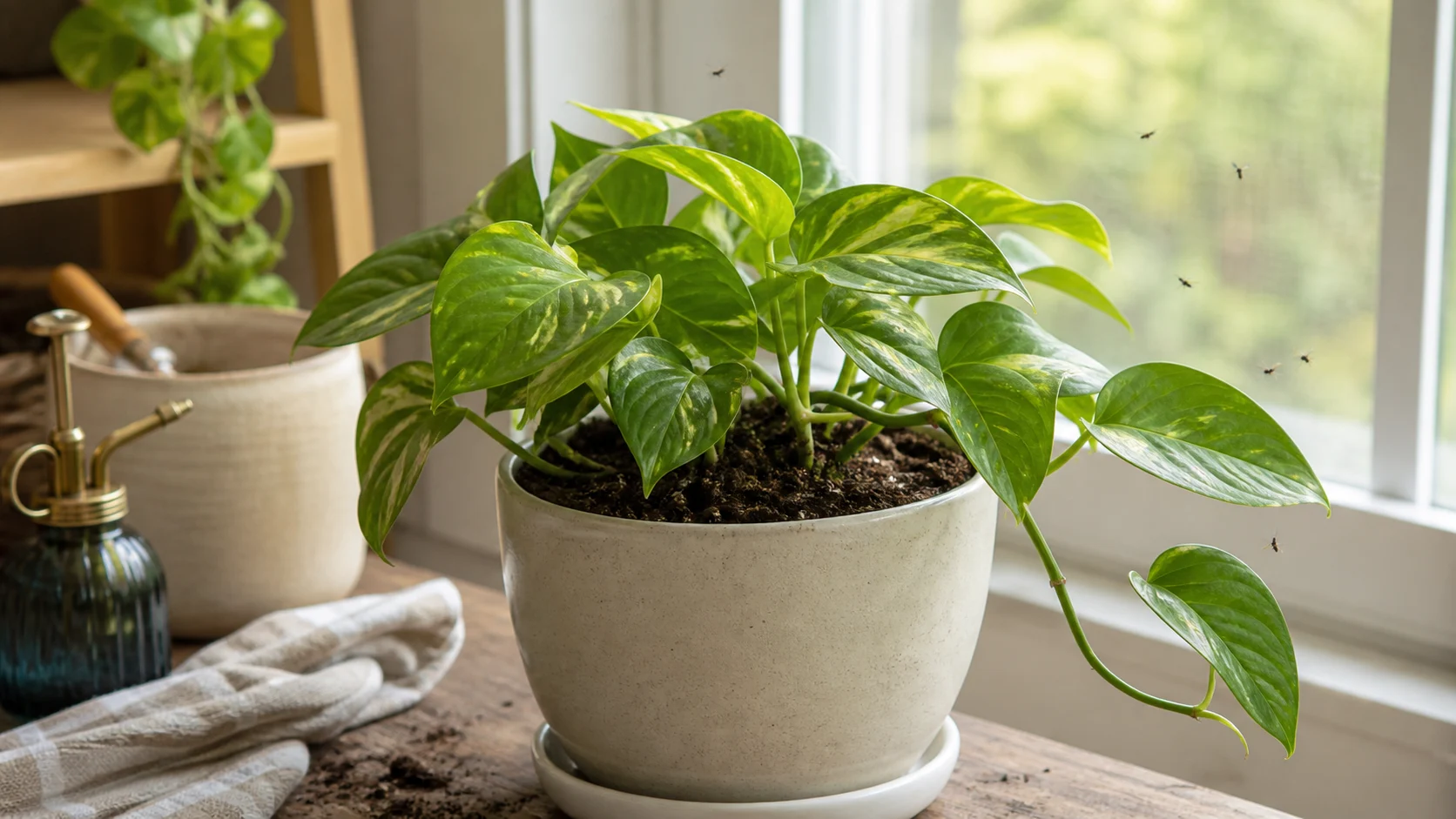
Sparse adult gnats around a healthy plant point back to the damp organic mix they share with other soil organisms.
Moisture trapped by topdressing
Decorative pebbles, bark, and sheet moss can make a pot look tidy while quietly slowing evaporation from the exact zone where these organisms gather.
Early root stress
When the plant is yellowing, sulking, or collapsing in wet soil, the bigger problem is often stressed or rotting roots. The bugs are secondary to that decline, not the main event.
Seasonal Note: When Soil Mite Populations Change
Soil mite activity in houseplants often shifts with the seasons, and not always in the direction you’d expect.
In winter, indoor heating keeps rooms warmer and drier, which slows soil drying. Plants in heated rooms often need less water than owners expect, but watering habits don’t always adjust. Pots that stay damp for longer stretches in winter can show more soil mite activity, even if the visual bug count seems higher than in summer.
In summer, rooms that get genuinely warm and dry – especially near south windows – actually suppress moisture-loving soil organisms. But if you move plants outdoors or to a humid spot, or if you water more frequently to compensate for heat, the soil conditions can shift back in the other direction.
The practical takeaway: if you notice more soil bug activity starting in autumn or winter, the most likely cause is a quiet shift in how quickly the soil is drying, not a new infestation. Check your watering interval first.
When to Take a Closer Look
There are situations where bugs in the soil deserve more attention:
- The soil smells sour or swampy
- The pot feels unusually heavy despite not being watered recently
- The plant has soft, mushy growth near the soil line
- Leaves are yellowing faster than usual, or new growth looks pale and weak
In those cases, the primary issue is usually overwatering or poor drainage, not the bugs. Treating the bugs without fixing the moisture conditions means they’ll return within a few weeks. If you lift the plant and see brown, mushy roots, that’s a drainage problem first. Dry it out, trim the damaged roots, and repot into fresh mix with better drainage before doing anything else.
When You Don’t Need to Do Anything
If the bugs are visible only when you disturb the soil – not on the plant, not jumping, not associated with webbing or leaf damage – you probably don’t need to do anything.
Many plant owners treat soil mites and springtails with sprays or drenches that kill off the decomposer community without solving any real problem. The plant was fine. The soil ecology was doing its job. The only thing that changes after treatment is that you feel better for a few weeks, until the population returns because nothing about the soil environment changed.
Let the top layer of soil dry out between waterings. That’s usually the only adjustment needed.
Pet Safety
Soil mites themselves are not the main pet hazard around a houseplant pot. For cats and dogs, the bigger risks are the plant species, moldy or fertilizer-heavy soil, and any pesticide or systemic treatment added in response to harmless soil life. If a pet likes to dig in pots, avoid unnecessary drenches and confirm the plant’s toxicity against ASPCA or veterinary poison resources instead of assuming the bug is the danger.
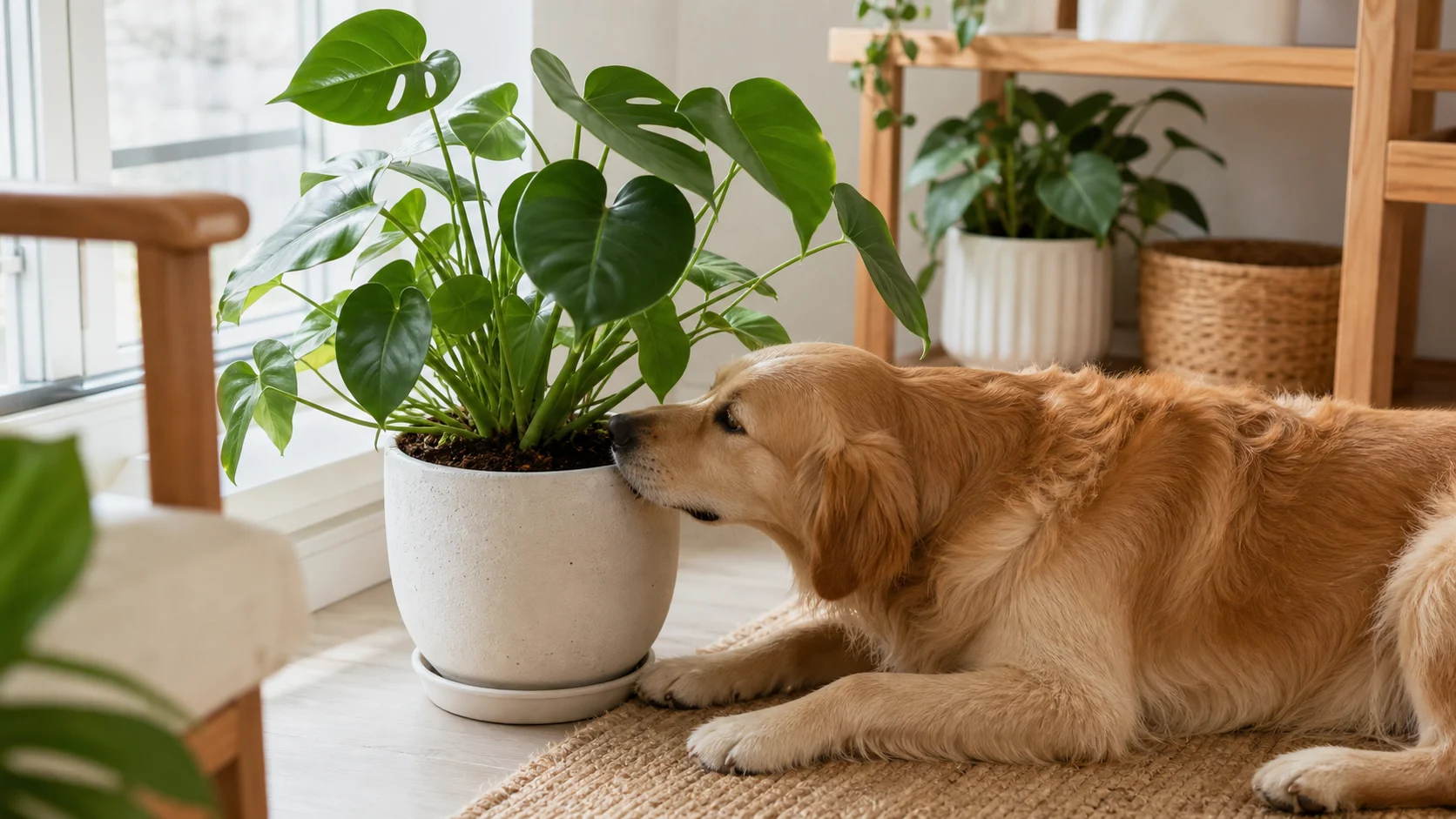
For pets that investigate pots, the plant species and anything added to the soil deserve more attention than harmless mites.
Real User FAQ
Are soil mites harmful to houseplants?
No. Soil mites are decomposers that feed on dead organic matter, fungi, and bacteria in the soil. They do not feed on living plant roots, stems, or leaves. Their presence in your potting mix is normal and does not indicate a plant health problem.
How do I know if I have soil mites or spider mites?
Location is the clearest indicator. Soil mites are found only in the soil – they scatter when you disturb the surface and are not on the plant. Spider mites live on leaves and stems, leave fine webbing between growth points, and cause silvery stippling or yellowing on leaf surfaces. If you don’t see any webbing or leaf damage, you’re almost certainly not dealing with spider mites. Check the undersides of several leaves before you conclude anything.
Do I need to repot if I find soil mites?
Not because of the mites alone. Repotting to eliminate soil mites doesn’t address the underlying conditions that attract them, and they’ll return quickly if the moisture environment hasn’t changed. The main reason to repot is if the plant is rootbound, the soil is compacted and draining poorly, or you can smell that the mix has gone sour. If the plant is otherwise healthy, leave it.
What are the tiny white jumping bugs in my houseplant soil?
Those are almost certainly springtails, not soil mites. Springtails jump when disturbed – that’s the definitive tell. Like soil mites, they feed on decaying material and fungi, not on living plant tissue. University of Minnesota Extension says springtails “rarely damage plants” and that reducing overwatering is the recommended response. No spray needed.
Do soil mites spread to other plants?
Soil mites can move through soil contact, so if a pot overflows into a shared saucer or you use the same trowel across multiple pots without wiping it down, you can transfer them. But since they’re harmless decomposers, that transfer doesn’t cause a problem in the receiving plant either. If you’re seeing bugs in every pot you own, that’s usually a sign that overwatering is a consistent habit across your collection, not that the mites are colonizing aggressively.
Will neem oil or insecticidal soap get rid of soil mites?
They can reduce populations temporarily, but the mites will return if the soil stays damp and organic-matter-rich, because those conditions are simply favorable for soil mites. More importantly, if the bugs you’re seeing are harmless soil organisms, killing them doesn’t help your plant. It removes a decomposer community from the soil ecosystem without any benefit. Let the soil dry out more between waterings and see whether the population decreases on its own before reaching for any product.
When should I actually treat bugs in my houseplant soil?
Treat when there’s clear evidence of plant damage: stippling on leaves, webbing, distorted new growth, sticky residue, or wilting that doesn’t resolve with correct watering. The type of damage points you toward the right pest, and in most cases the treatment lives on the plant rather than in the soil. If you’re not sure whether what you’re seeing is damage or normal variation, snap a photo in the KnowYourPlant app before you treat.
Why do I suddenly have bugs in my plant soil when I never did before?
The most common triggers are a shift in watering frequency, a new potting mix with more peat or bark content, a change in where the plant sits that slows soil drying, or added topdressing that keeps the surface moist. Winter heating that keeps pots warmer and slightly more humid can also push soil populations higher. Check whether anything changed in your care routine around the same time the bugs appeared – that’s usually where the real answer is.
If you’d rather not guess every time you spot something moving in a pot, the KnowYourPlant app gives you a calm next step based on what you actually see. Download it for personalized plant care reminders that help you build the watering habits that prevent overly damp soil in the first place.
Methodology Note
This article was checked against current university extension guidance and live owner questions reviewed in May 2026. Strong claims, such as springtails being moisture-linked and spider mites living on plant tissue rather than in potting soil, were verified directly against extension sources. Forum and community examples were used only to understand the confusion readers bring to this problem, not as proof that a treatment works.
Sources: Colorado State University Extension, Managing Houseplant Pests; University of Minnesota Extension, Springtails; Ask Extension, springtails on indoor house plants; Ask Extension, Spider mites and potting soil. Research conducted May 2026.