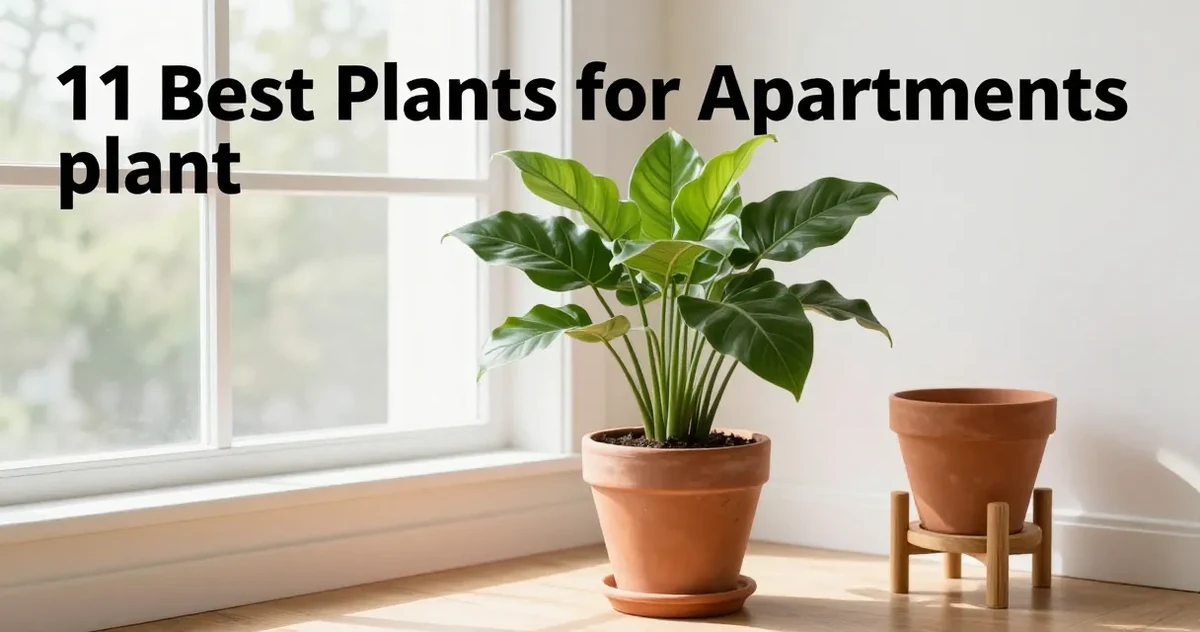
Finding the best plants for apartments is less about which plants are pretty and more about which ones actually fit your life. A plant that thrives in a bright studio is a different plant than one that survives a north-facing bedroom. The one that works when you travel every other week is not the same as the one that needs watering twice a week.
The best apartment plant is not just one that tolerates indoors. It is one that fits your light, your footprint, your schedule, and your household without fighting you the whole time.
By KnowYourPlant editorial team. Last updated June 18, 2026.
How this guide was built: We ranked each plant against apartment-fit criteria, current renter pain points, and direct source checks against University of Minnesota Extension, CSU PlantTalk, UF/IFAS, ASPCA, EPA, and peer-reviewed indoor-air research.
Most plant lists give you a roster of popular houseplants and call it done. This one organizes plants by the constraints that actually matter in a small space: how much light you have, whether you have pets, how often you are home, and how much floor or shelf space you can spare. For the same constraints at work, the best office plants guide narrows the choice further for desks, dry AC air, and weekend darkness.
What Most Apartment Plant Lists Miss
The most common mistake is not picking the wrong plant. It is picking based on “tolerates low light” without understanding what that phrase actually means.
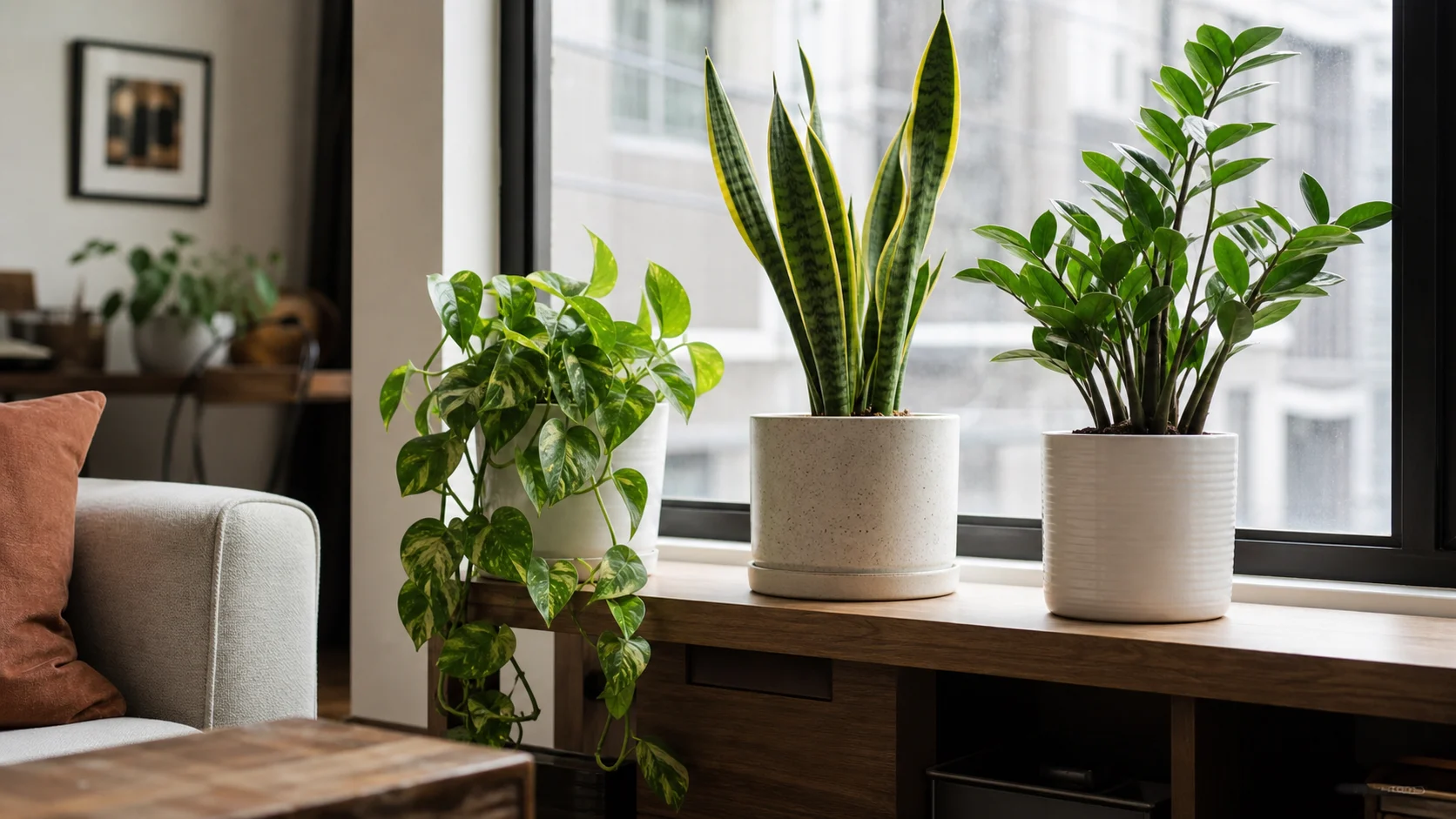
Pothos, snake plant, and ZZ plant still benefit from a real window rather than relying on a low-light label.
Many guides use “low light tolerant” to mean the plant will not die immediately in a dim room. That is a much lower bar than thriving. Pothos survives dimness, but it grows slowly and leaves stay small and widely spaced. A snake plant handles near-neglect in low light, but even it struggles in a sealed room lit only by overhead fluorescent tubes. The real trap is buying a plant labeled “low light” for a north-facing room and watching it limp along for months, dropping leaves and rotting at the base, while you quietly assume you are just bad at keeping plants alive.
A second thing most lists skip entirely: several of the most popular apartment plants, including pothos, ZZ plant, and snake plant, are toxic to cats and dogs to varying degrees. Lists rarely separate “good for apartments” from “good for apartments with pets,” which creates a frustrating situation when you bring something home and then Google it. If you want a floor plant rather than another shelf pot, compare the shortlist with these large low-light indoor plants before you buy.
The practical first check: Before you shop, stand at your window around noon on a clear day and hold your hand at chest height. A sharp, well-defined shadow means bright light. A fuzzy shadow you can still make out means medium indirect light. No shadow at all means low light, and that narrows your realistic plant list considerably. This shadow test takes ten seconds and saves you from weeks of watching a plant slowly decline.
Before You Pick: Know Your Real Constraints
Answer these four questions before falling in love with anything at the garden center:
- Light: Which direction do your windows face? North-facing rooms get very little direct light. South and west windows get hours of direct sun. East windows give gentle morning light.
- Space: Do you want something that sits on a shelf or side table, or can it grow to fill a corner?
- Pets: Do you have cats or dogs that like to chew on things? Many popular houseplants are toxic to both.
- Schedule: Are you home every day, or do you travel or forget to water for a week at a time?
Those four answers do most of the filtering. The plants below are organized around them.
A Horticulturist Reality Check on Apartment Light
University of Minnesota Extension notes that so-called low-light indoor plants still grow more slowly, use less water, and may need supplemental light when a room gets genuinely dim. CSU PlantTalk adds a useful boundary: few plants tolerate indoor light levels below roughly 50 foot-candles for long. In plain English, that means a north window, a room with a readable daytime glow, and a truly dark corner are three different situations.
If your apartment is bright enough to read in comfortably near the plant for part of the day, you can usually work with low-light foliage plants. If the spot feels cave-like all day, use a small grow light or move the plant closer to a window instead of trusting a “survives low light” label.
Scoring Rubric and How We Evaluated These Apartment Plants
Instead of ranking plants by popularity, we used a simple scoring rubric based on the five apartment constraints that decide whether a plant stays easy or turns into a chore.
| Apartment-fit factor | What scored high | What lost points |
|---|---|---|
| Low-light tolerance | Keeps functioning in north-facing or dim rooms | Needs bright indirect or direct sun to avoid decline |
| Mature size | Stays shelf-size, tabletop-size, or narrow upright | Quickly outgrows a corner or needs floor space |
| Pet safety | Non-toxic according to ASPCA listings | Toxic or irritating if chewed |
| Missed-watering tolerance | Handles dry spells and travel well | Sulks fast if watering slips |
| Humidity tolerance | Copes with dry air from AC or heating | Wants steady humidity to look good |
Each plant was judged on that apartment-fit rubric first, then checked against real renter problems such as decorative pots without drainage, travel gaps, cat safety, and low-light rooms.
Apartment Plant Decision Tree
- Very dim room, no pets, and you forget to water: Start with snake plant or ZZ plant.
- Moderate window light and a chewing cat or dog: Start with spider plant, haworthia, air plants, or a calathea if you can keep moisture steady.
- You want a plant that trails from a shelf: Choose pothos or heartleaf philodendron, unless pet safety rules them out.
- You want one statement plant in a bright corner: Choose rubber plant, and only choose peace lily if pets are not an issue.
- You travel often: Prioritize aloe vera, ZZ plant, haworthia, air plants, or snake plant.
The Apartment Problems Renters Actually Ask About
Across current renter threads and beginner plant questions, the same frustrations keep showing up. People do not just want a pretty plant. They want one that survives novice watering, does not outgrow the room immediately, and does not become a pet emergency.
- People in dim rooms want an honest list of plants that can cope with low light, not just survive for a month looking worse each week.
- Pet owners keep running into the same tradeoff: many resilient apartment plants are not safe for cats or dogs.
- Busy renters love stylish pots, but decorative containers without drainage quietly create root-rot problems.
- Home-office growers want something more interesting than a default office plant, but still need compact size and tolerance for low humidity.
- Small-space readers also keep running into overblown air-purifying promises, even though EPA guidance and peer-reviewed reviews point people back to ventilation, filtration, and realistic plant fit instead.
That is why this list favors fit over trend. A plant that looks impressive in a nursery but fails your apartment conditions is not a good apartment plant.
Best Plants for Low-Light Apartments
These plants genuinely cope with dim corners, north-facing windows, and rooms where natural light arrives at an angle. For spaces with no windows at all, even these will eventually struggle. A grow light on a simple timer is the more honest solution for truly dark rooms.
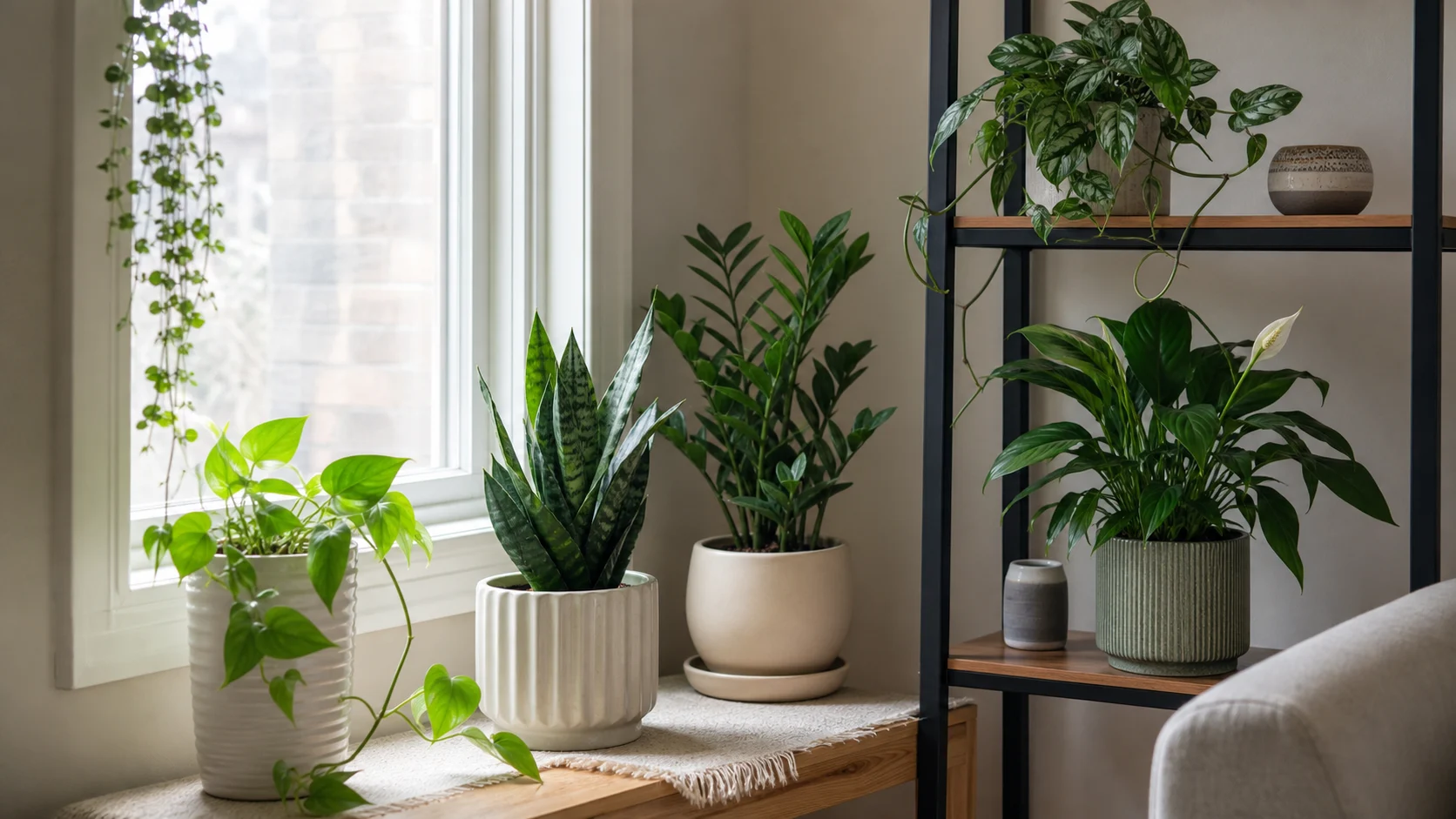
Snake plants and ZZ plants can handle angled window light, but even low-light choices still need natural light.
NC State’s dorm-and-apartment guidance calls out overwatering as the most common small-space mistake. Starting with drought-tolerant plants reduces that risk significantly.
Pothos
Pothos earns its place on every apartment list. Trailing vines look good from a shelf or hanging hook, which helps when floor space is tight. It handles irregular watering better than most plants and will tell you when it is thirsty by developing a slight droop. Water then, and it bounces back within hours. Let the top two inches of soil dry between waterings. See the full pothos care guide for varieties and common problems.
Best for: Shelves, hanging planters, and renters who want a forgiving trailing plant.
Not ideal for: Homes with pets that chew on leaves.
Heads up: Pothos is toxic to cats and dogs. Keep it out of reach if you have pets that chew on plants.
Snake Plant
Snake plants grow upright and stay upright, which makes them genuinely useful in a small space. They tolerate dark corners better than almost any other plant and go weeks without water without drama. If you want one plant that asks almost nothing of you, this is it. The snake plant care guide covers timing, soil, and what those yellow tips actually mean.
Best for: Very busy people, darker rooms, and narrow floor or tabletop spots.
Not ideal for: Households that need strict pet-safe choices.
Heads up: Mildly toxic to cats and dogs.
ZZ Plant
ZZ plants have thick, waxy stems that store water, making them naturally built for neglect. They handle low light and dry air from heating and AC without complaint. Growth is slow, which is actually a feature in a small apartment: it stays the size you want for a long time.
Best for: Travelers, dry apartments, and renters who forget to water.
Not ideal for: Homes with curious pets or young children who might chew on leaves.
Heads up: All parts of the ZZ plant are toxic to humans, cats, and dogs. Keep it out of reach.
Heartleaf Philodendron
Similar to pothos in care needs, the heartleaf philodendron has softer, heart-shaped leaves and trails or climbs easily. A good choice for a shelf, a hanging planter, or trained up a small moss pole if you want height without width. It handles low to medium light and is forgiving about watering frequency. The heartleaf philodendron care guide has more on what to do when leaves go pale or start curling.
Best for: Small apartments that need a soft-looking trailing plant.
Not ideal for: Pet households or rooms with no natural light at all.
Heads up: Toxic to cats and dogs.
Best Plants If You Have Cats or Dogs
Not every low-light survivor is pet-safe. The ASPCA notes that even plants classified as non-toxic can still cause mild vomiting or gastrointestinal upset in pets, which means non-toxic is not quite the same as harmless if eaten. If your cat or dog actively chews on plants, the realistic shortlist gets smaller, but there are solid options.
The complete guide to cat-safe indoor plants has a fuller breakdown by room and light level if you want to go deeper.
Spider Plant
Spider plants are non-toxic to cats and dogs. They grow well in moderate to bright indirect light and are forgiving of imperfect watering. The long, dangling offshoots look charming in a hanging planter. They do best near a window, not in a deeply shaded room. The spider plant care guide covers what those brown tips mean and how to encourage the offshoots.
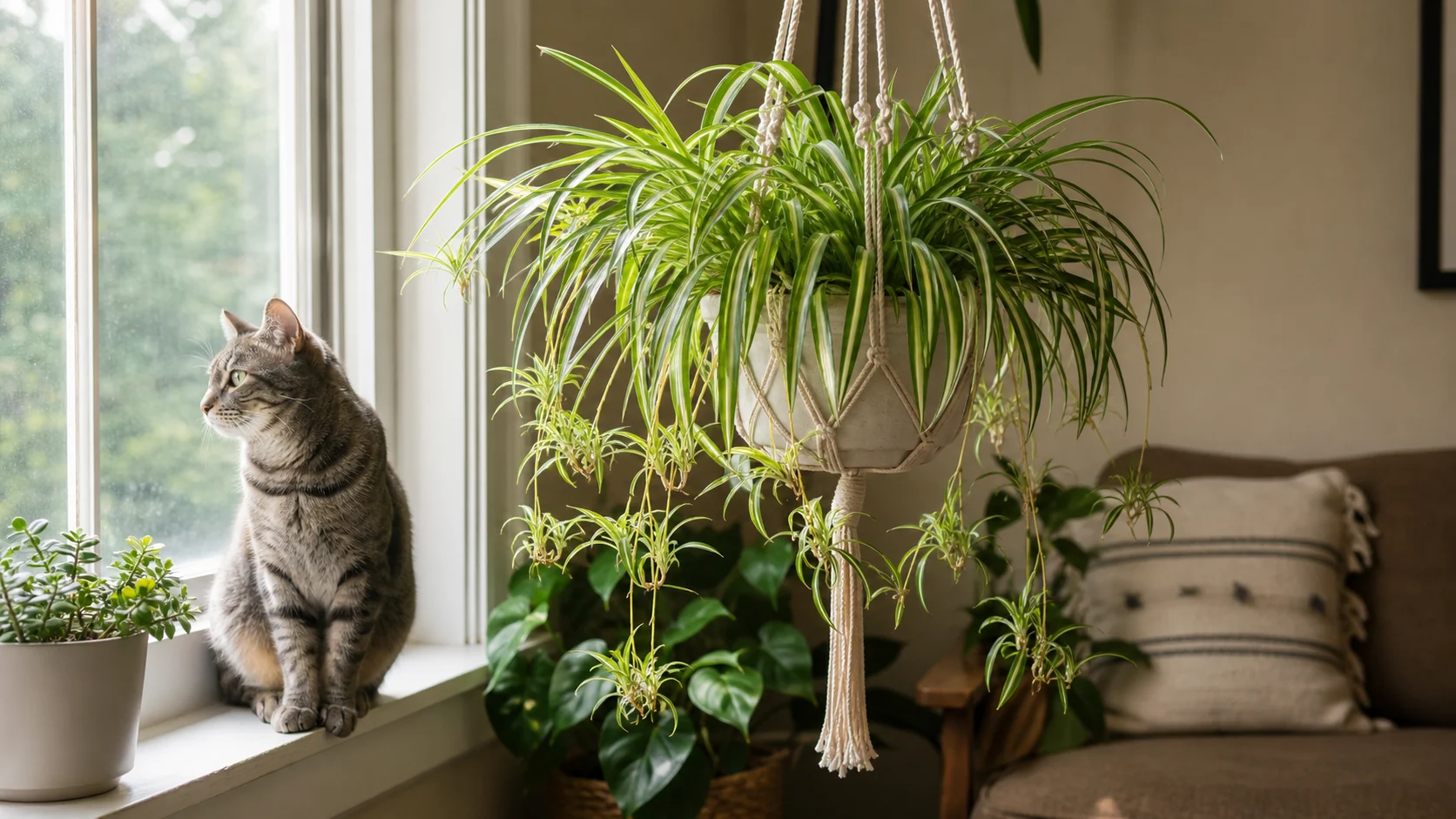
A hanging spider plant keeps its pet-safe foliage and offshoots in the bright indirect light beside an apartment window.
Best for: Pet owners who have a decent window and want something easy.
Not ideal for: Very dark apartments.
Calathea
Calatheas are pet-safe and have striking patterned leaves that look intentional in a small space. They need consistent moisture and humidity, so they suit someone who checks on their plants regularly. Avoid placing them near heating vents or AC units, which dry the air faster than the plant tolerates. See the calathea care guide for the specific watering rhythm that keeps them from getting crispy edges.
Best for: Pet-safe style in medium light, especially for attentive plant owners.
Not ideal for: Travelers or anyone who wants a low-humidity plant.
Boston Fern
If you have a bright bathroom or a spot near a humidifier, a Boston fern is pet-safe and rewarding. It needs more humidity than most apartments naturally provide, so it works best in a bathroom or paired with a pebble tray and occasional misting. Worth the effort in the right spot, frustrating in the wrong one. The Boston fern care guide explains the humidity setup that actually works.
Best for: Bright bathrooms and people willing to manage humidity.
Not ideal for: Dry apartments with strong AC or heating and no humidifier.
Best Plants for Busy Renters and Travelers
These plants handle missed watering, low humidity, and stretches of benign neglect without holding a grudge.
Aloe Vera
Aloe vera belongs in a sunny spot. A south or west windowsill works well. It stores water in its fleshy leaves and can go two to three weeks without a drink in a warm apartment. Water thoroughly, then let it dry out completely before watering again. It will look slightly deflated and the leaves will curl softly inward when it is genuinely thirsty. That is the signal, not a schedule.
Best for: Bright apartments, sunny desks, and renters who travel.
Not ideal for: Low-light rooms or pet households.
Heads up: Toxic to cats and dogs.
Air Plants (Tillandsia)
Air plants need no soil at all, which makes them oddly practical for apartments. Soak them in water for about twenty minutes every one to two weeks, let them dry completely upside-down, then set them wherever they look good. Small, non-toxic, and genuinely low-maintenance, the kind of plant that surprises people who expect to kill everything.
Best for: Tiny apartments, desks, and pet-safe decor.
Not ideal for: People who forget the soak-and-dry routine entirely.
Haworthia
Haworthia tolerates lower light than most succulents, which makes it more apartment-realistic than echeveria or sedum. It needs almost no water in autumn and winter and handles dry indoor air without complaint. Good for a windowsill or desk where it gets a few hours of indirect light each day.
Best for: Pet owners who want a compact succulent-like plant.
Not ideal for: Windowless rooms or people who habitually overwater.
When You Want Something That Fills a Corner
These plants need more light but reward you with real visual presence in a room.
Rubber Plant
A rubber plant in a bright spot is one of the better-looking plants for an apartment. It grows upright, has glossy dark leaves, and stays reasonably compact for years. It does well near an east or west-facing window and only needs watering when the top inch of soil dries out. One of the easier large-leaf plants to keep alive in a typical apartment. The rubber plant care guide covers the specific signs that tell you it needs more light or less water.
Best for: Bright corners and renters who want one statement plant rather than many small ones.
Not ideal for: Pet households or very dim apartments.
Heads up: Toxic to cats and dogs.
Peace Lily
Peace lilies tolerate lower light better than most flowering houseplants and produce elegant white blooms with deep green leaves. They droop noticeably when thirsty, which takes the guesswork out of watering entirely. Toxic to pets, so not the right call for households with cats or dogs that eat plants, but a great fit for the right space.
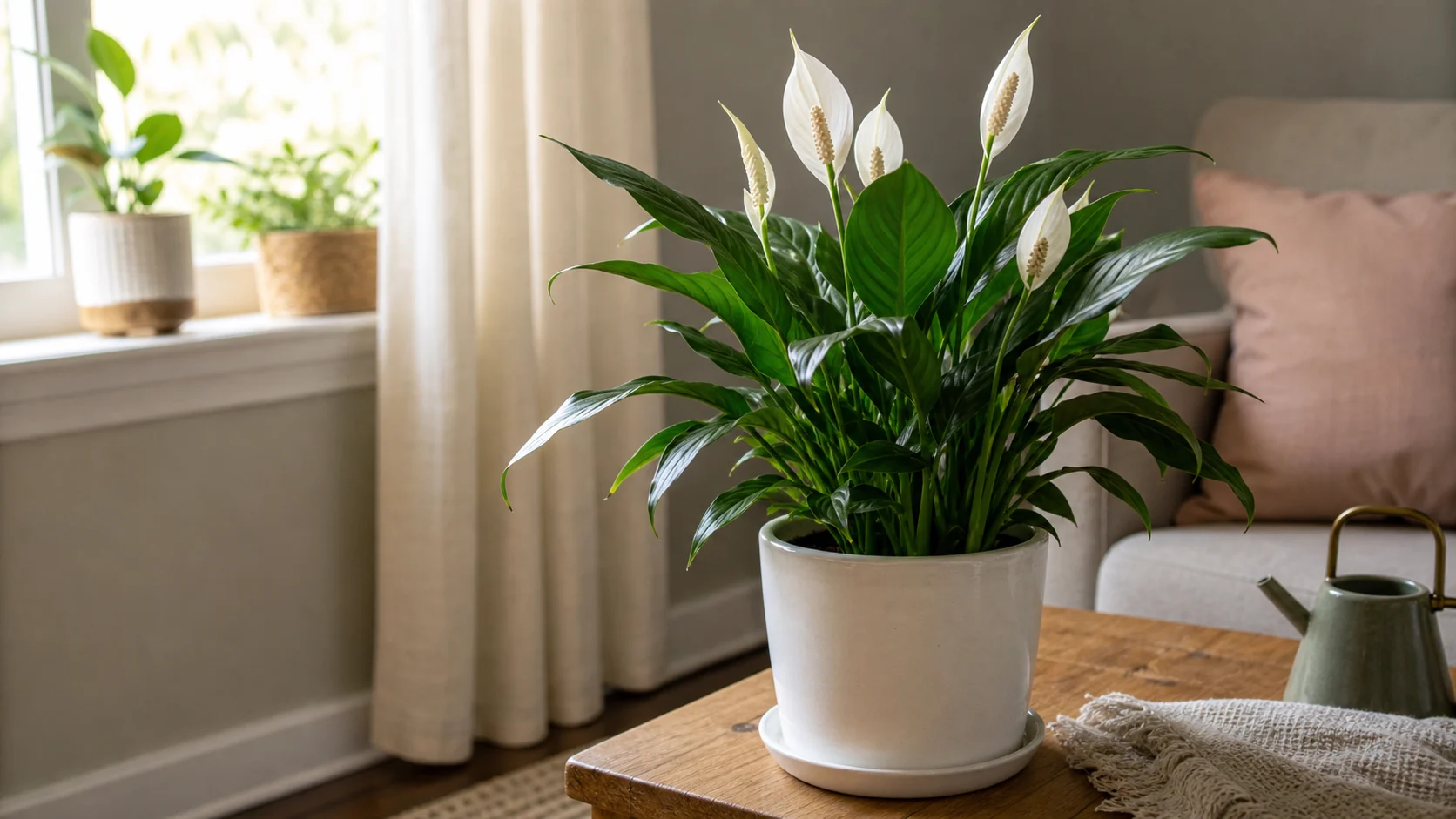
A flowering peace lily pairs its obvious thirst signal with a saucer and watering can in medium apartment light.
Best for: Medium-light apartments where you want flowers and an obvious thirst signal.
Not ideal for: Homes with chewing pets.
Apartment Plant Selector Matrix
| Plant | Best apartment use case | Light tolerance | Space habit | Watering risk | Pet-safety note | Why it makes the list |
|---|---|---|---|---|---|---|
| Pothos | Shelf or hanging planter in a normal apartment window | Low to medium indirect light, but grows slower in dim rooms | Trailing | Low to medium | Toxic to cats and dogs | Forgiving, easy to place, and rewarding fast enough for beginners |
| Snake plant | Dim apartment, narrow floor spot, or forgetful owner | Strong low-light tolerance, but still not for a windowless room | Upright and compact | Low | Toxic to cats and dogs | One of the most realistic picks for low-effort apartment care |
| ZZ plant | Traveler, dry apartment, or low-maintenance office corner | Strong low-light tolerance | Upright and compact | Low | Toxic to humans, cats, and dogs | Stores water well and stays tidy for a long time |
| Heartleaf philodendron | Soft trailing look in a small room | Low to medium indirect light | Trailing or climbing | Low to medium | Toxic to cats and dogs | Gives apartment shelves a full look without needing floor space |
| Spider plant | Pet-safe starter plant near a decent window | Medium indirect light is best | Arching and hanging | Medium | ASPCA lists it as non-toxic | Easy, cheerful, and one of the safest renter-friendly first plants |
| Calathea | Pet-safe foliage statement on a shelf or side table | Medium indirect light | Clumping and compact | High | Pet-safe by common trade group, but still discourage chewing | Great for style-conscious renters who will keep moisture steady |
| Boston fern | Pet-safe bathroom or humid room | Medium to bright indirect light | Full and spreading | High | ASPCA lists it as non-toxic | Works when the room already supports humidity |
| Aloe vera | Sunny windowsill for a frequent traveler | Bright light to direct sun | Compact rosette | Low | Toxic to cats and dogs | One of the best drought-tolerant options if you truly have sun |
| Air plants | Tiny shelves, desks, and no-soil decor | Medium bright indirect light | Tiny and flexible | Medium | Generally treated as pet-safe, though chewing is still a bad idea | Great for renters short on pot space |
| Haworthia | Pet-safe compact plant for a bright shelf | Medium to bright indirect light | Compact rosette | Low | Common haworthia types are widely treated as pet-safe | A better apartment succulent than thirstier, fussier options |
| Rubber plant | One statement plant in a bright corner | Bright indirect light | Upright and eventually taller | Medium | Toxic to cats and dogs | Big visual payoff without needing a full jungle setup |
| Peace lily | Flowering option for a medium-light apartment without pets | Medium indirect light | Upright and fuller | Medium | Toxic to cats and dogs | Useful if you want blooms and a clear droop-when-thirsty signal |
Pros, Cons, Best For, and Not For
| Plant | Pros | Cons | Best for | Not for |
|---|---|---|---|---|
| Pothos | Forgiving, fast-growing, easy to place on shelves | Toxic to pets, gets leggy in very dim rooms | Renters who want a trailing plant with low fuss | Chewing cats or dogs |
| Snake plant | Handles dim light, narrow footprint, tolerates travel | Toxic to pets, slow growth if you want fast visual payoff | Darker rooms and very busy people | Strictly pet-safe homes |
| ZZ plant | Excellent drought tolerance, handles dry air | Toxic, slow to show new growth | Frequent travelers and forgetful waterers | Pet households |
| Heartleaf philodendron | Soft look, climbs or trails, forgiving | Toxic, not for truly dark rooms | Small apartments that need a trailing plant | Pet homes |
| Spider plant | Pet-safe, easy, charming hanging habit | Wants better light than the internet often implies | Pet owners with medium light | Windowless apartments |
| Calathea | Pet-safe, decorative foliage | Sensitive to dry air and watering inconsistency | Attentive plant keepers who want pattern and color | Travelers and dry rooms |
| Boston fern | Pet-safe, lush, rewarding in humidity | Crisps quickly in dry air | Bright bathrooms and humidified rooms | Dry apartments without support |
| Aloe vera | Sunny-window survivor, drought tolerant | Toxic to pets, fails in low light | Bright apartments and travelers | Shady rooms |
| Air plants | Tiny footprint, pet-safe, no soil mess | Need a real soak-and-dry routine | Small apartments and shelves | People who want a conventional potted plant |
| Haworthia | Compact, pet-safe, drought tolerant | Easy to overwater, still needs some light | Pet-safe desks and bright shelves | Dark rooms and chronic overwaterers |
| Rubber plant | Strong visual impact, upright shape | Not pet-safe, needs brighter light | One statement plant in a bright corner | Low-light apartments |
| Peace lily | Obvious thirst signal, elegant flowers | Not pet-safe, can flop in poor light | Medium-light apartments without pets | Homes with chewing pets |
One Thing Most Lists Skip: The Pot Matters Too
A plant in a decorative ceramic pot with no drainage hole is a plant on borrowed time. Roots sitting in trapped water rot, even with careful watering. This is one of the more common silent killers for apartment plants: the pot looks fine on the outside, the plant looks fine for weeks, and then the roots have already started to go.
Illinois Extension’s houseplant lighting guidance also helps explain why some apartment plants quietly stall. Even a plant sold as low light tolerant still needs useful light wavelengths and enough daily exposure to put out new growth.
If you want to use decorative pots without drainage, the double-pot method is the practical fix: keep the plant in a simple plastic grower pot and set it inside your decorative pot. When you water, take the inner pot to the sink, water thoroughly, let it drain, and return it. It takes thirty extra seconds and saves the plant.
For travelers and inconsistent waterers, self-watering pots are worth considering. They buffer the gap between waterings and reduce the risk of soil drying out completely while you are away.
Seasonal Care for Apartment Plants
Apartments create a specific indoor climate that shifts with the season. The plants do not know what month it is, but they do feel the changes in light, humidity, and temperature.
Spring is when most houseplants start pushing new growth. Move them a little closer to windows to catch the stronger light. If a plant has been root-bound in the same pot for a year or more, spring is the right time to move it up one pot size. This is also the moment to start light fertilizing again if you stopped over winter. Check plants for pests: spider mites and fungus gnats become more active as temperatures rise.
Summer brings stronger light and often drier air from AC running constantly. South and west windowsill plants may need more frequent watering. Watch for sunburn on plants that were fine in spring but now get direct afternoon sun through the glass. Moving a rubber plant or peace lily back a foot from a west window during the hottest months can prevent the leaf scorch that looks like crispy brown patches.
Autumn is the time to slow down. Reduce fertilizing from October onward. Most apartment plants naturally slow growth as days shorten, and pushing fertilizer into slow-growing roots causes salt buildup in the soil. Move plants away from drafty windows as temperatures drop. If your heating kicks on regularly, the air in your apartment will dry out faster than summer, which affects calatheas and ferns most sharply.
Winter is when overwatering kills the most plants. Reduced light means reduced growth, which means the soil stays wet longer. Water less frequently and check soil moisture by feel before watering rather than by schedule. Snake plants, ZZ plants, and succulents can go three to four weeks between waterings in a cool apartment without any issue. Supplement with a grow light for any plant that starts dropping leaves or producing pale, small new growth.
Frequently Asked Questions
What is the best plant for a very dark apartment?
Snake plant and ZZ plant are the most realistic choices for a genuinely dim apartment. Both handle low light and irregular watering better than almost any other houseplant. If your room has no windows at all, even these will eventually decline. A small grow light on a six-hour daily timer is the more honest solution for a windowless space.
Is pothos a good plant for apartments?
Yes. Pothos is one of the best apartment plants for most situations. It handles low to medium light, tolerates missed waterings, trails nicely from shelves, and grows fast enough to feel rewarding without taking over a small space. The one real caveat is that it is toxic to cats and dogs, so keep it on high shelves or skip it entirely if you have chewing pets.
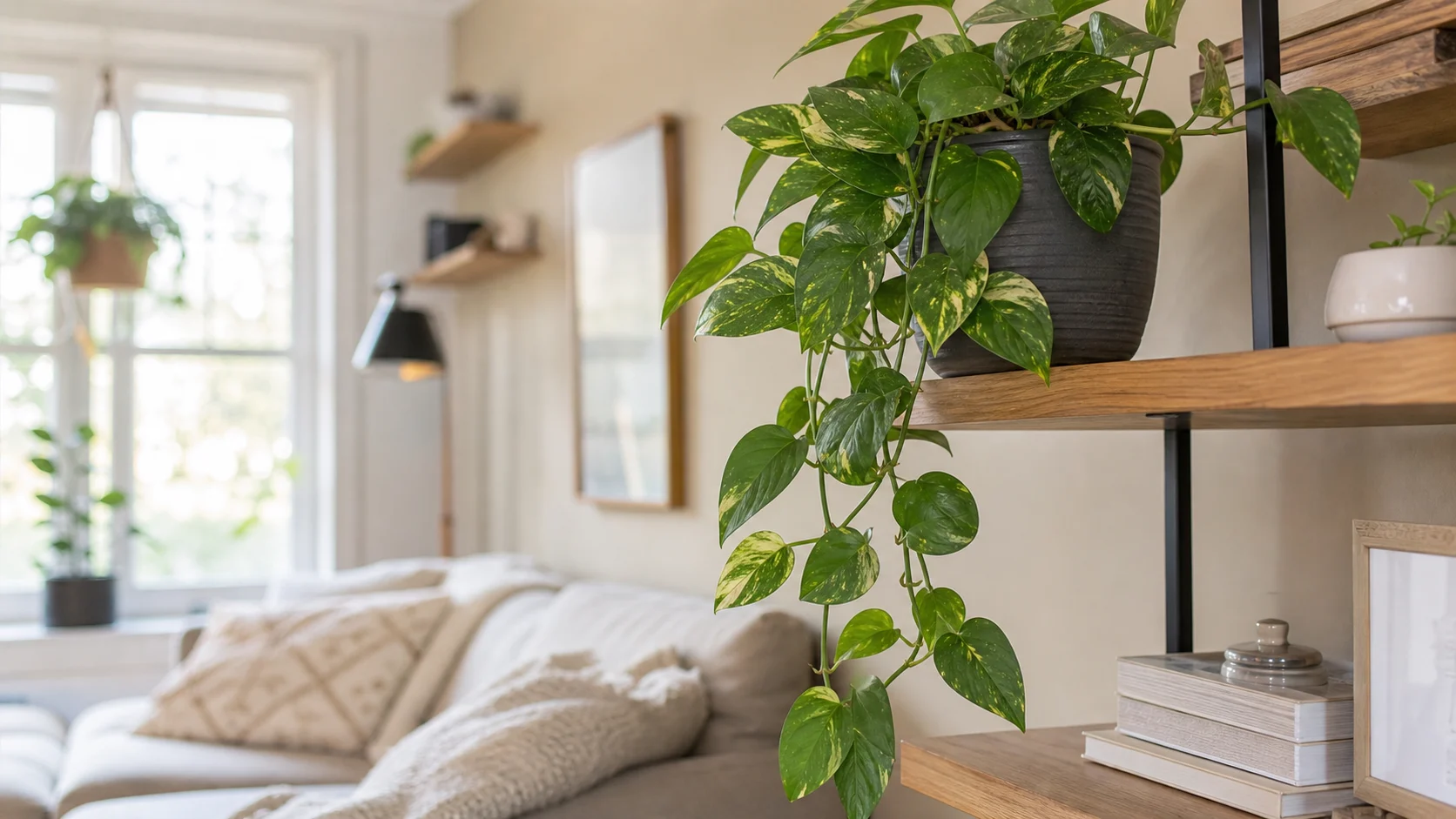
Golden pothos trails neatly from a high shelf, saving floor space while staying farther from chewing pets.
What plants are safe for cats in apartments?
Spider plants, calatheas, haworthia, air plants, and Boston ferns are all non-toxic to cats. That said, the ASPCA notes that even non-toxic plants can cause mild vomiting or digestive upset when eaten in quantity. Non-toxic means it will not cause serious poisoning, not that it is completely harmless. If you have a cat that actively eats plants, putting any plant on a high shelf or in a room the cat cannot access is still the safest approach.
How do I keep my apartment plants alive when I travel?
Start with plants that store water in their leaves or stems. Aloe vera, ZZ plant, haworthia, and air plants all handle gaps of one to two weeks easily. For plants that need more consistent moisture, water thoroughly right before you leave and move them to the coolest, shadiest spot in your apartment to slow water loss. Grouping plants together also helps because they create a small pocket of humidity around each other.
Do apartment plants actually purify the air?
The air-purifying benefits of houseplants are often overstated. The studies showing plants removing toxins from air were conducted in sealed chambers, not in ventilated apartments where air turns over constantly. Plants still improve how a room feels, but choosing a plant primarily for air purification is not worth it. Choose for your light, your schedule, and your household.
Do I need a special pot or soil for apartment plants?
The main requirement is drainage. A pot with at least one drainage hole and a saucer to catch water is the simplest, most reliable setup. Decorative pots without holes trap water and eventually rot roots, even with careful watering. If you love the look of a ceramic pot, use the double-pot method: keep the plant in a basic plastic grower pot and set it inside the decorative one. For soil, a well-draining potting mix is the default for most of the plants on this list.
How do I know if my apartment gets enough light for plants?
The shadow test works well: hold your hand about twelve inches above a white surface near your window around noon on a clear day. A sharp, defined shadow means bright indirect to bright direct light, good for rubber plants, aloe vera, and most succulents. A faint but visible shadow means medium indirect light, good for pothos, snake plant, heartleaf philodendron, and spider plant. No shadow at all means low light. Stick to snake plant and ZZ plant, or add a grow light.
How We Built This Guide
We reviewed current search results and apartment-plant discussions for the exact topic and close variants, then compared them against the recurring problems renters actually describe: dim rooms, pet safety, travel gaps, decorative pots without drainage, and confusion about air-purifying claims. Those reader questions were treated as qualitative signal, not statistical proof.
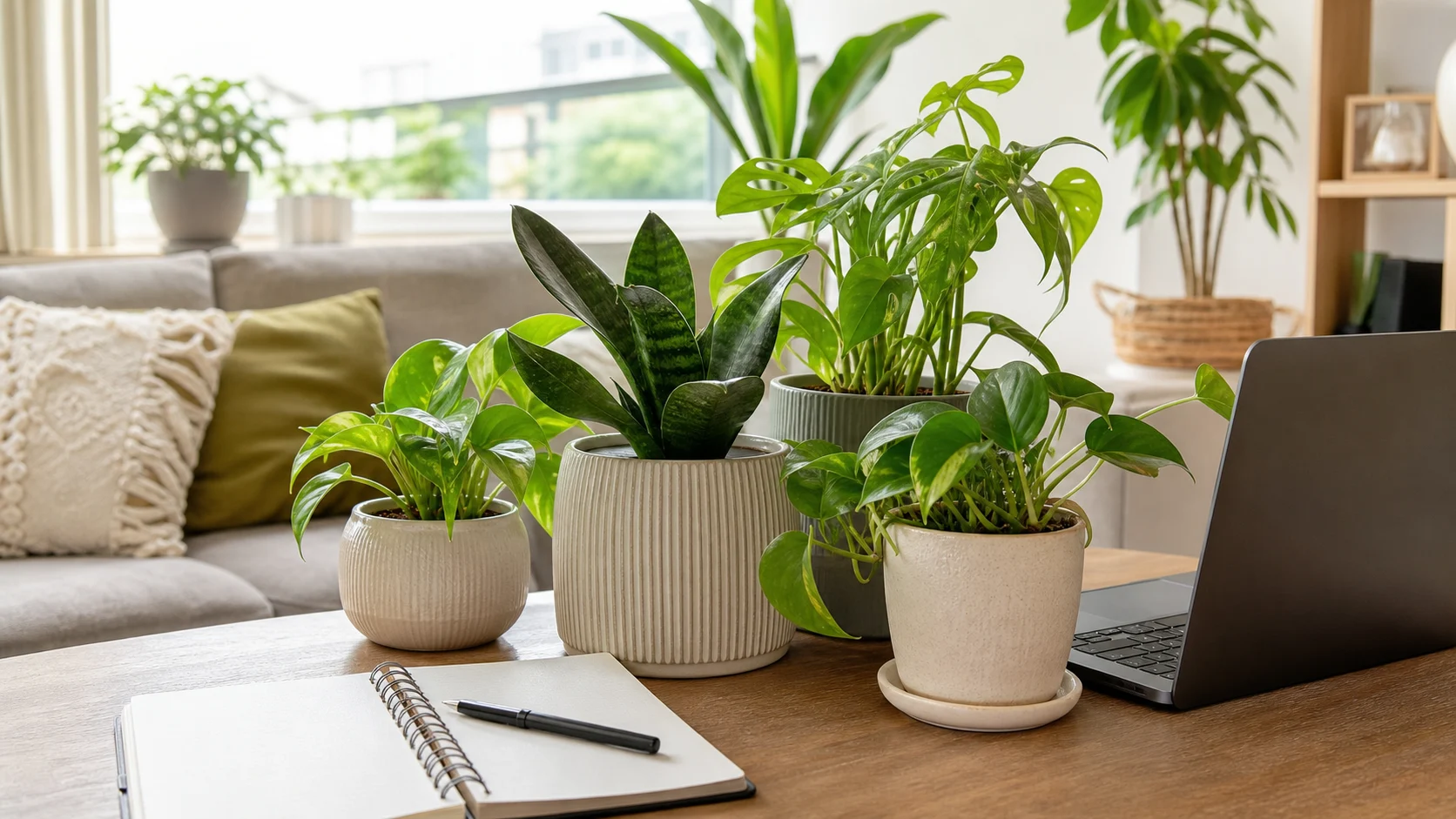
Apartment plant candidates are compared alongside research tools so practical fit—not popularity—drives the shortlist.
We then checked the practical claims in this article against University of Minnesota Extension on indoor light, CSU PlantTalk on low-light thresholds, UF/IFAS houseplant references, ASPCA toxicity listings, and indoor-air-quality evidence from EPA and peer-reviewed reviews. That combination set the safety rails while real renter pain points decided which plants are actually the best fit for apartment life.
Apartment plants work when the plant matches the apartment. Match for light first, check for pets second, then pick by how much watering attention you can realistically give. That sequence produces a better shortlist than any popularity ranking, and it is the difference between a plant that becomes part of your space and one that quietly declines in a corner for three months.