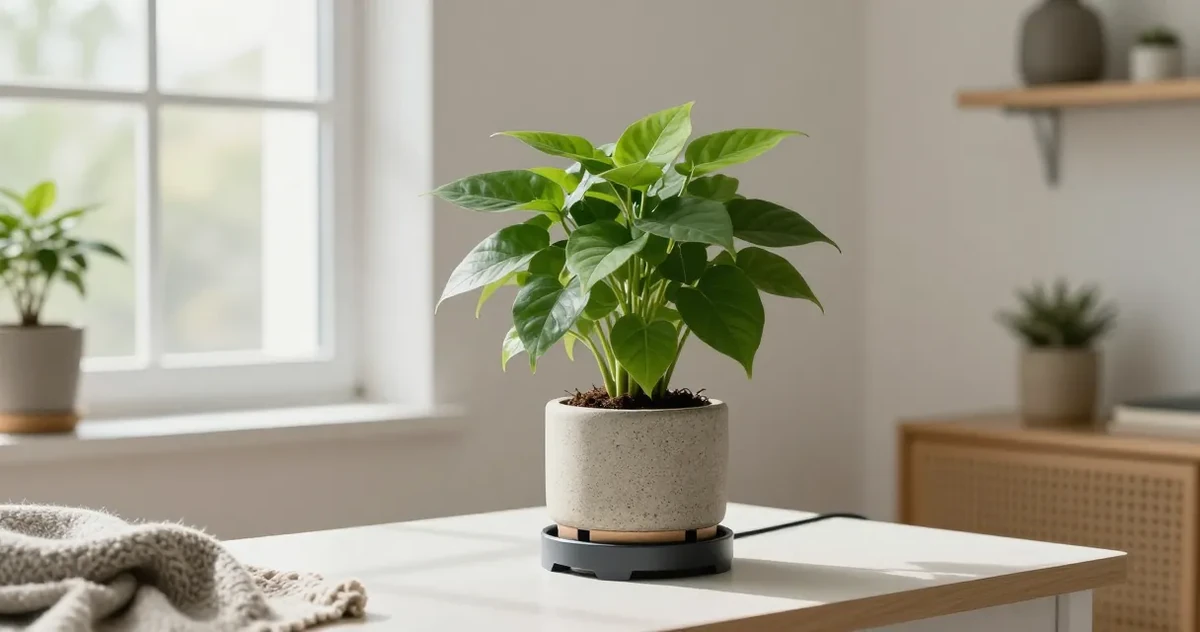
Here’s a scenario that comes up more than you’d think: someone buys a self-watering pot before a trip, comes home to a thriving pothos, and thinks they’ve figured it out. Then they try the same setup with their snake plant, and a month later the base has gone soft and the lower leaves are yellowing. Same system. Completely different result.
That’s the real problem with most watering system advice. It focuses on the gadget when the actual decision is about the plant. A self-watering pot that keeps soil consistently moist is perfect for a pothos and genuinely harmful for a snake plant. A wick that works great for a small peace lily might flood a larger pot of the same plant if you switch containers before a trip.
A plant watering system is any setup that delivers water to your indoor plants without you being there for each session - from a cotton wick dropped into a jar to a timed drip kit or a pot with a built-in reservoir. The challenge isn’t finding something that dispenses water. It’s finding something that doesn’t keep the soil wetter than your plant can handle.
Social Listening: Where Indoor Watering Systems Go Wrong
When plant owners talk about watering systems, the same problems keep repeating. People use self-watering pots for rosemary, succulents, or snake plants that really want a dry interval. They assume a wick setup will regulate itself without a test run. And they try to make decorative cache pots act like true drainage systems, even when the inner pot is quietly sitting in runoff.
Those patterns come from real indoor-plant questions, not from a lab trial, so treat them as qualitative signals rather than universal rules. They are still useful because they match the same failure modes extension guidance warns about: soggy soil, trapped runoff, and one-size-fits-all watering decisions.
Not sure what plant you are caring for?
Open KnowYourPlant, snap a photo, and get the plant name plus care notes matched to the species in front of you.
Identify your plantWhat Most Watering System Guides Get Wrong
Most roundups jump straight to product rankings. That skips the decision that actually matters: does your plant prefer staying consistently moist, or does it need to dry out between waterings?
The common misdiagnosis is treating all watering systems as universally helpful - assuming that as long as water is being delivered, the plant is being helped. That’s not how it works. University of Missouri Extension notes that overwatering is the leading cause of houseplant death, partly because keeping roots too wet reduces oxygen in the growing medium. A watering system that delivers water on a fixed schedule or maintains constant reservoir contact can cause the same slow decline as heavy-handed manual watering, just more quietly and over a longer stretch of time.
The practical first check before choosing any system: press your finger into the soil to the first knuckle. If it’s still damp, no system is needed right now regardless of what the schedule says. University of Minnesota Extension advises checking soil moisture before watering rather than following a fixed routine, because seasonal shifts and light changes affect how fast the soil actually dries - and those shifts don’t match any standard calendar.
Before picking a method, answer these two questions:
- Does this plant prefer drying out between waterings, or staying evenly moist?
- Does the pot have drainage holes?
The answers determine which systems are safe to use. If you’re unsure how often your specific plant actually needs water, the guide to how often to water indoor plants covers watering intervals by plant type.
Want a care schedule you do not have to remember?
KnowYourPlant sends watering, feeding, repotting, and seasonal reminders based on the plants you actually own.
Get care remindersSystems at a Glance
| System | Best plant fit | Avoid for | Main risk | Needs drainage? |
|---|---|---|---|---|
| Self-watering pot | Pothos, peace lily, ferns, calathea | Snake plant, succulents, cacti, rosemary | Constant root-zone moisture | Yes - inner pot must drain |
| Wick system | Thirsty plants in smaller pots, tested setups | Drought-tolerant plants, no-drainage pots | Uncontrolled flow rate | Recommended |
| Drip kit | Medium-to-large pots, consistent daily delivery | Very small pots, dry-cycle plants | Outpacing plant’s intake | Yes |
| Watering globes / ceramic stakes | Moisture-tolerant plants in well-draining soil | Small pots, loose/sandy soil, dry-cycle plants | Drains too fast in porous soil | Yes |
| Manual prep (check + water only if due + reduce heat stress) | Trips shorter than that pot’s observed dry-down interval | Absences beyond the plant’s known interval | Guessing from trip length instead of the root zone | N/A |
Plant + Potting-Mix Suitability Matrix
A plant name alone cannot tell you whether a watering system will work. The useful unit is the whole setup: the plant’s dry-down preference, the mix’s air and water balance, the container’s drainage, and the delivery method. University of Maryland Extension explains why: roots need both water and air in the mix’s pore spaces, and excess water that cannot drain keeps fresh air from returning.
| Plant or root-zone style | Potting mix condition | Container requirement | Best starting method | Do not proceed if… |
|---|---|---|---|---|
| Even-moisture tropical foliage, such as peace lily or many ferns | Airy mix that holds some moisture but still springs back and drains | Drainage or a reservoir overflow that cannot submerge the root ball | Tested self-watering pot or wick | The lower mix stays cold, heavy, sour-smelling, or saturated after the reservoir runs down |
| Pothos, monstera, or philodendron | Chunky mix with bark or coarse aeration material | Inner pot drains freely and runoff remains visible | Manual watering, or a conservative reservoir after a full test cycle | A fine peat-heavy mix stays wet through the plant’s normal check interval |
| Succulent, cactus, snake plant, ZZ plant, or another dry-cycle plant | Coarse, fast-draining mix | Unobstructed drainage | Manual watering based on the normal dry-down signal | The method keeps water continuously available or removes the plant’s dry interval |
| Moisture-demanding herb or leafy edible | Fresh, porous container mix with even wicking | Working overflow and clean reservoir | Self-watering container or calibrated drip | Heat, growth, or reservoir use changes faster than the test data you recorded |
| Newly purchased, recently repotted, or unidentified plant | Any mix whose drying behavior is not yet known | Keep the current draining setup during observation | Manual checks until you record at least one normal wet-to-ready cycle | You are choosing hardware before you know whether the root zone dries quickly or slowly |
Use the matrix as a screening step, not a guarantee. If the plant and mix land in different rows, the wetter condition wins: correct compacted mix or unclear drainage before adding an automatic supply.
Save this plant plan before you forget the details.
Keep the plant, diagnosis notes, reminders, and care changes in KnowYourPlant so the next decision is based on your actual plant history.
Open KnowYourPlantIdentification Snapshot
- Best fit: moisture-loving indoor plants in pots with real drainage, especially pothos, peace lilies, ferns, and similar plants that dislike fully drying out.
- Poor fit: snake plants, ZZ plants, succulents, cacti, and herbs that prefer a real dry interval between waterings.
- Safer trip rule: compare the absence with each pot’s observed dry-down interval; if the trip is longer than that interval, test a system through a full cycle or arrange a human backup.
- Hard stop: if the setup leaves roots sitting in runoff or keeps the soil cold, dense, and constantly wet, the system is working against the plant.
Lookalikes and Confused-With Setups
| Setup people confuse | What it actually does | Where confusion causes trouble |
|---|---|---|
| Self-watering pot | Keeps a reservoir available below the soil so moisture can move upward gradually | Owners assume every plant wants constant access to moisture |
| Cache pot plus inner nursery pot | Hides a draining pot inside a decorative shell | Runoff collects out of sight and quietly removes the drainage advantage |
| Wick setup | Pulls water from an outside jar or bucket into the pot through capillary action | Flow rate can run too fast or too slow unless it is tested first |
| Drip stake or globe | Releases a measured amount of water into the soil over time | People expect it to self-correct for pot size, season, or plant type |
Decision Tree: Which Watering Setup Fits This Plant?
- Does the plant normally like evenly moist soil?
- Yes: a self-watering pot, ceramic stake, or tested wick can be a fit.
- No: start with manual prep or a very conservative vacation backup instead of a reservoir-style system.
- Does the pot have real drainage?
- Yes: you have more room to use a wick, drip stake, or self-watering insert safely.
- No: fix the drainage setup first, or keep the solution manual and short-term.
- Is the trip shorter than this pot’s observed wet-to-ready interval?
- Yes: keep the normal setup and water only if the root zone is due.
- No: test a system through a comparable cycle or arrange a person; do not make departure day the first experiment.
- Is the plant drought tolerant, like a snake plant, ZZ plant, cactus, or many succulents?
- Yes: do less, not more. Constant moisture is usually the bigger risk.
- No: choose the lightest system that keeps the soil from going fully dry.
Expert note: University of Minnesota Extension and University of Missouri Extension both point to the same core principle here: most container plants want moisture without staying soggy, and drainage still matters even when the water is being delivered automatically.
What the Main Systems Actually Do
Self-Watering Pots
Self-watering pots have an inner plant container and an outer reservoir. The plant draws water up through drainage holes via capillary action as the soil dries. When it works well, this closely matches what the plant actually needs, because the water only moves when the soil pulls it.
The catch: some designs keep the lower portion of the soil in near-constant contact with the reservoir. For moisture-tolerant plants like pothos or peace lily, that’s fine. For drought-tolerant plants like snake plants, aloe, or herbs like rosemary and lavender, it creates the same slow-suffocation problem as overwatering by hand.
University of Minnesota Extension warns that containers without adequate drainage significantly raise root rot risk, and that oversized pots compound this because they hold more water than the plant’s roots can consume before waterlogging sets in. If you’re considering a self-watering pot, choose one sized appropriately for the plant and confirm the inner pot drains freely rather than sitting in standing water between refills.
For a deeper look at how reservoir designs differ and which ones work for specific plant types, the self-watering pots guide covers the specifics.
Good for: Pothos, peace lily, spider plant, ferns, calathea Skip for: Succulents, snake plants, cacti, ZZ plants, most Mediterranean herbs
Wick Systems
A wick system uses cotton rope or fabric to draw water from a jar or bucket into the soil. It’s one of the most common DIY vacation setups, and it works - but flow rate is nearly impossible to predict without testing it first.
The thickness of the wick, the distance and height between the water source and the pot, the pot size, the mix, and the plant’s uptake all affect how fast water moves. A thick wick from a raised reservoir can overdeliver, while a thin or poorly contacting wick may not keep up.
If you’re using a wick system before a trip, test it through at least one normal wet-to-ready watering cycle. Watch how fast the reservoir drops and whether the root zone stays evenly moist without becoming soggy. A short two- or three-day check may catch a leak or rapid flood, but it cannot prove the setup will remain balanced for a longer absence.
Good for: Thirsty plants in smaller pots with drainage, tested setups where you already know the flow rate Skip for: Drought-tolerant plants, pots without drainage, first use right before longer travel
Drip Kits and Watering Stakes
Drip kits use thin tubing from a reservoir or water bottle to deliver small, metered amounts of water directly to the soil. Watering globes and ceramic stakes work similarly, releasing water slowly as the surrounding soil dries and pulls it through.
These tend to be more calibrated than wick setups. Ceramic stakes in particular slow down as the soil gets wetter, which provides a bit of natural regulation. They still need a pot with drainage to work safely, and flow rate still matters: a large water-filled globe in a small pot can empty in a day or two rather than the week you planned for.
Match the globe or stake size to the pot volume, not just the plant type.
Pot material changes that calibration too: unglazed clay loses moisture through its walls, so compare the drying behavior in the terracotta pots guide before assuming a test from a plastic or glazed pot will transfer unchanged.
Good for: Consistent delivery for thirsty plants, medium-to-large pots with drainage Skip for: Very small pots, dry-cycle plants, first use without a test run
Manual Preparation - the Underrated Option
For a short trip that fits inside a plant’s already observed watering interval, preparation often beats gadgets. Water only if the root zone is actually ready, reduce avoidable heat stress, and keep the plant in stable indirect light rather than introducing an untested device.
For drought-tolerant plants like snake plants, ZZ plants, or succulents, the established dry-down interval may already cover a short absence. Adding a watering system to a plant that is not due can create more risk than leaving the existing routine alone.
When Drainage Is the Real Problem
A common workaround for decorative pots without drainage holes is nesting a nursery pot inside the outer pot and using a wick between them. This can work, but it requires checking that water isn’t pooling in the outer cache pot and staying in contact with the inner pot’s base.
University of Minnesota Extension recommends emptying water-catching trays regularly to prevent prolonged waterlogged soil. The same applies to cache pots that collect reservoir runoff. Any time roots are sitting near standing water for more than an hour or two after watering, root rot risk increases. If you’re working with a plant in a decorative no-drainage pot, an inner nursery pot with drainage plus regular tray emptying is safer than trying to calibrate a wick alone.
If your plant is already showing signs of decline - soft stem base, yellowing lower leaves, soil that smells slightly musty - check the roots before setting up any new watering system. A system that delivers consistent water to a plant with damaged roots usually accelerates the problem rather than solving it. The root rot treatment guide is the better starting point in that case.
Care Cards
Self-watering pot
- Use it for: thirsty tropicals and herbs that like steady moisture
- Check first: inner pot drains, reservoir is not oversized, and the mix stays airy
- Skip it for: drought-tolerant plants that need a real dry-down
Wick setup
- Use it for: small-to-medium pots you can test before travel
- Check first: wick thickness, reservoir height, and how fast the soil stays damp
- Skip it for: no-drainage pots and any plant that already trends soggy
Drip stake or globe
- Use it for: medium-to-large pots where you want controlled short-term delivery
- Check first: the pot has drainage and the release speed matches the soil type
- Skip it for: tiny pots, very loose mixes, and first-day setups before a long trip
Manual prep
- Use it for: trips shorter than that pot’s observed watering interval and dry-cycle plants that are not due
- Check first: root-zone moisture, expected room heat, stable indirect light, and clear drainage
- Skip it for: absences longer than the known interval for plants that dry quickly
Matching System to Trip Length
| Trip window | What to compare | Planning default |
|---|---|---|
| Shorter than the pot’s normal watering interval | Last two or three wet-to-ready cycles in the current room | Keep normal care; do not add water or hardware just because you are leaving |
| About as long as one normal interval | Root-zone moisture, forecast room heat, pot size, and mix | Water only if due; test any backup through a comparable cycle before relying on it |
| Longer than one observed interval | Daily reservoir use during a test and the plant’s response at the root depth | Pair a tested system with written sitter instructions or a check-in |
| Much longer than the system has ever been tested | Failure mode if the reservoir empties, clogs, leaks, or overdelivers | Use a human backup; no passive device earns a duration guarantee from reservoir size alone |
Trip length helps you choose a plan, but it cannot tell you how many days a wick, globe, or reservoir will last. That number must come from the same plant, pot, mix, room, and system during a pre-trip test.
Vacation Watering Planning Timeline
Use this timeline for the whole collection rather than applying one hack to every pot.
| When | What to do | Evidence to leave behind |
|---|---|---|
| Two or more weeks before departure | Inventory each plant, note pot and mix, and record whether it prefers an even-moisture or dry-cycle pattern | Last watering date, the moisture signal that triggered it, and the usual time to the next check |
| Seven to ten days before | Install any proposed wick, globe, reservoir, or drip method and observe it through a normal cycle | Starting and ending reservoir level, root-zone feel, pot weight, and any runoff or sour smell |
| Two to three days before | Remove failed setups, adjust only the systems with a stable test, and assign plants that need a person | One sentence per plant: “check this signal; water only if this condition is met” |
| Departure day | Water only pots that are actually due, empty runoff, confirm overflow paths, and photograph the setup | A dated reference photo plus reservoir level; never top up every plant automatically |
| Return day | Inspect leaves, root-zone moisture, reservoir, and standing water before watering | Note which setup stayed stable, ran dry, or kept mix too wet before changing anything |
A sitter handover should name the condition that permits watering, not just a weekday. For example: “Water the peace lily only if the top layer is dry and the pot feels lighter; empty the outer pot after drainage.” For any untested setup or high-value plant, add an emergency contact and permission to do less rather than improvise.
Common Problems
This is where most guides stop short. Knowing which systems exist doesn’t explain why the same product works for one plant owner and fails for another. The failures almost always fall into one of these patterns:
| Failure pattern | What you usually notice | Safer adjustment |
|---|---|---|
| Reservoir system on a dry-loving plant | Yellowing base leaves, soft crowns, stalled growth | Remove the plant from constant moisture and let the mix dry properly between waterings |
| Untested wick or rope setup | One pot stays soaked while another dries out | Run the setup for two to three days before travel and adjust wick thickness or reservoir height |
| Inner nursery pot hidden inside a cache pot full of runoff | Soil stays cold, heavy, and musty | Empty standing water and make sure the inner pot is not sitting in collected runoff |
| Summer refill rhythm left unchanged in winter | Soil stays wet much longer than expected | Reduce refill frequency and check the soil directly after seasonal light and temperature shifts |
| Oversized reservoir for a small pot | Globe or bottle empties too slowly and the pot never gets a dry interval | Use a smaller reservoir or switch to manual prep for shorter trips |
Wrong system for the plant’s thirst pattern. Using a reservoir-based setup for a snake plant, ZZ plant, or succulent keeps the root zone too wet between waterings. These plants need a dry period the system can’t provide. The plant doesn’t fail immediately - it declines slowly over weeks, which makes it harder to connect to the watering setup.
Skipping the test run before travel. A wick or drip system that has never been run before a trip is a guess. You will not know whether the flow is too fast, too slow, or inconsistent until you return. Test through a normal wet-to-ready cycle; a shorter check catches only obvious leaks or flooding.
Drainage hidden by the decorative pot. A plant in a cache pot with no drainage holes relies entirely on the inner nursery pot and the gap between them staying managed. If the outer pot fills with runoff and the inner pot sits in it, the drainage advantage disappears. This happens quietly, especially with reservoir-style systems that cycle water regularly.
Calibrated for summer, left running in winter. Most indoor plants slow down significantly as daylight shortens and temperatures stabilize indoors. A drip rate or reservoir that worked well in July will deliver too much to the same plant in December when the soil takes much longer to dry. University of Minnesota Extension specifically advises seasonal soil checks because changing light affects how fast indoor plants consume water - and that seasonal shift doesn’t announce itself.
Reservoir sized too large for the pot. A globe or bottle that holds far more water than the pot’s soil can absorb before the next cycle keeps the soil from fully drying between fillings. Smaller reservoir, calibrated to actual plant thirst and pot volume, is almost always safer than a larger one “just in case.”
A Seasonal Note Worth Keeping
If you set up a watering system in spring or summer and it worked, write down the reservoir size and refill interval. When autumn arrives, revisit those numbers. Most houseplants slow their water intake noticeably between October and February, and a system that was exactly right in August often overdelivers through winter. Check the soil directly once a month during the slower season rather than assuming the system is still matched to the plant’s actual needs.
Plant ID + Plant Doctor
Not sure what your plant needs?
Snap a photo in KnowYourPlant to identify the plant, check yellow leaves, spots, wilting, or pests, and get a calm next step before the problem spreads.
Pet Safety
The watering hardware itself is usually the bigger issue here, not the idea of automatic watering. Keep open reservoirs, fertilizer water, dangling cotton wicks, and narrow glass globes out of reach if pets chew, drink from saucers, or knock over pots. If a cat or dog already drinks from plant trays, skip any setup that leaves standing water accessible while you are away.
Pre-Trip Plant Watering Checklist
Before you leave, work through these:
- Drainage confirmed: Does the pot have drainage holes? If not, is there an inner pot with drainage sitting inside the decorative outer pot?
- Plant thirst matched: Have you confirmed this plant actually tolerates constant moisture, or does it prefer drying between waterings?
- Test run done: Have you run the exact wick, globe, or drip setup through a normal wet-to-ready cycle? If not, have you arranged a person instead?
- Reservoir sized correctly: Is the reservoir large enough to last the trip but not so large it floods the soil if flow runs faster than expected?
- Tray or cache pot checked: Will anyone empty standing water from trays or cache pots during your absence?
- Light and heat adjusted: Are plants away from direct sun and heat sources that would increase their water needs beyond what the system is calibrated for?
- Drought-tolerant plants excluded: Are succulents, ZZ plants, and snake plants left out of the watering setup entirely?
A Simple Way to Start
The best plant watering system is the one that matches your plant’s actual thirst, fits the potting mix and drainage setup, and gets tested before you rely on it. A self-watering pot may suit one airy, moisture-tolerant setup while manual care is safer for a dry-cycle plant or a dense mix. The combination, not the gadget name, determines the answer.
During a test run, a plant moisture meter can add a root-zone data point, but use it with pot weight and a physical soil check rather than treating one number as the verdict.
If you’ve noticed your plant declining since you set up a system, the most likely explanation is that the soil is staying wet too long between deliveries. The overwatered plant signs and fixes guide can help you tell the difference between drought stress and too much moisture, so you can adjust before the roots are affected.
And if you want to track your plant’s specific watering schedule and get reminders adjusted to the season and your plant type, KnowYourPlant can help with that too.
Methodology
This guide was built from a live search review for the core keyword and close variants, recent indoor-plant questions on Gardening Stack Exchange, and extension guidance from the University of Minnesota and University of Missouri. The community threads helped surface the language and failure patterns real owners keep running into. The extension sources are what ground the final care advice.
Freshness Note
Reviewed September 9, 2026. Watering-system advice goes stale when the season changes, the plant moves to a new room, or the potting setup changes. Re-check any automatic system when indoor heat shifts, daylight drops, or you repot into a different container size.
About This Guide
Prepared by the KnowYourPlant editorial team for indoor growers choosing between self-watering pots, wick setups, drip kits, and simple vacation backups. The goal is practical fit guidance, not gadget hype.
Real User FAQ
Do self-watering pots work for all houseplants?
No. Self-watering pots work well for plants that tolerate or prefer consistently moist soil - pothos, peace lily, spider plants, ferns, and calathea are good candidates. Plants that need to dry out between waterings - snake plants, succulents, ZZ plants, aloe, most cacti, and drought-tolerant herbs like rosemary and lavender - are poor fits. Some reservoir designs keep the bottom of the soil in near-constant contact with water, which can cause root rot in plants not adapted to those conditions.
How do I know if my watering system is giving too much water?
Check the soil before the system’s next scheduled delivery. If the top two inches are still damp or the pot feels heavy, the system is running faster than your plant is drinking. Signs of too much water include yellowing leaves, soft or mushy stems at the base, soil that smells slightly musty, and leaves that look dull rather than perky. The overwatered plant signs and fixes guide covers how to read these signs and what to adjust.
Can I use a wick system in a pot without drainage holes?
Technically yes, but carefully. The wick can deliver water into the soil from an external reservoir, but without drainage holes, any excess water has nowhere to go. The soil can become waterlogged if the wick runs faster than the plant drinks. If you’re working with a no-drainage decorative pot, nest a plastic nursery pot with drainage inside it, use the wick between them, and check regularly that water isn’t pooling in the base of the outer pot.
How long can a wick system keep plants watered while I’m away?
A wick system’s range depends on reservoir size, wick thickness, height and distance, pot size, mix, room conditions, and the plant’s uptake. Do not assign it a fixed number of days from reservoir size alone. Test the exact setup through a normal cycle, measure the daily reservoir change, and leave a safety margin or human backup for a trip longer than the tested period.
Should I change my watering system setup in winter?
Yes. Most indoor plants grow more slowly in winter and need significantly less water. A drip rate or reservoir size that worked well in summer will often overwater the same plant in winter when soil takes longer to dry and roots are less active. Check your setup at the start of autumn, reduce reservoir size or refill frequency, and monitor the soil directly rather than assuming the seasonal shift has no effect.
What’s the simplest vacation watering setup for a beginner?
Start with the plant’s observed dry-down interval. If the trip is shorter, keep the normal setup and water only if the plant is due. If it is longer, test one conservative method through a full cycle and arrange a person for any plant that still dries too quickly or matters too much to risk. The vacation watering planning timeline shows what to test and document before departure.
Are watering globes actually effective?
They can be, but they’re often oversold as a set-it-and-forget-it solution. Watering globes work by releasing water as the soil dries and pulls it through the opening. In practice, flow rate varies with soil type, pot size, and how the globe is inserted. Dense or compacted soil can block flow; loose or porous soil can drain the globe in a day or two. A globe is most reliable in a medium-to-large pot with well-draining soil for a moisture-tolerant plant. For succulents, snake plants, or small pots, they’re usually too much.