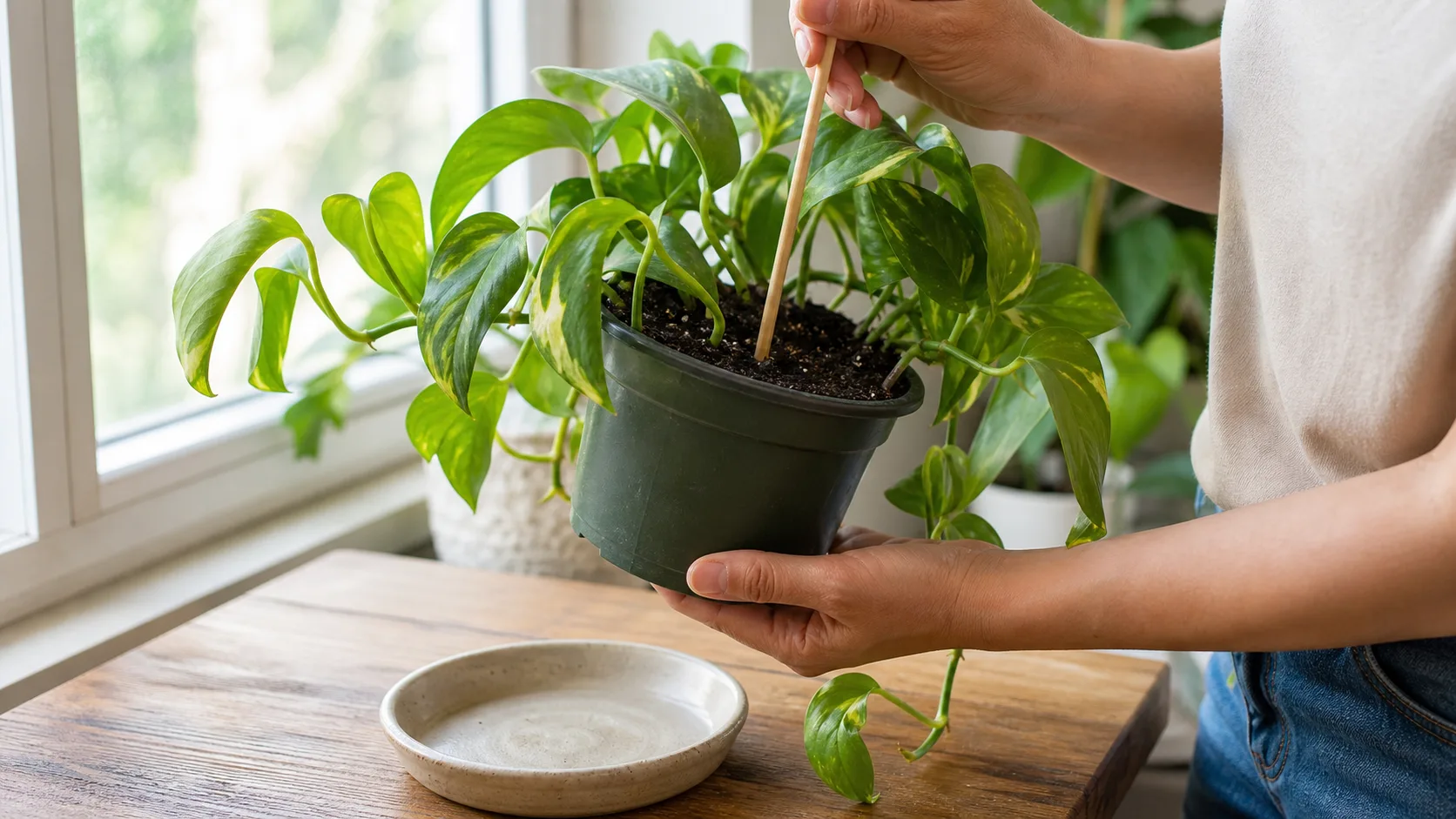
Seeing pothos leaves curling can trigger an anxious reach for the watering can. Pause for ten minutes first. The fastest answer usually falls into one of three paths:
- The root ball is dry and the pot feels unusually light.
- The pot is damp and heavy, but stressed roots cannot use that moisture properly.
- Only window-facing leaves or tender new growth are curling after local heat or stronger light.
The confusing part is that dry roots and wet, unhealthy roots can both produce leaves that look thirsty. Leaf curl alone cannot tell you whether to water. Soil moisture at depth, pot weight, the location of the damage, and recent changes give you much better information.
This guide is for common pothos, Epipremnum aureum. For the species’ normal light, soil, and maintenance baseline, start with the complete pothos care guide. If you are unsure whether you have pothos or a similar trailing plant such as satin pothos, the identification tool is useful before applying species-specific care advice.
Do This First Today
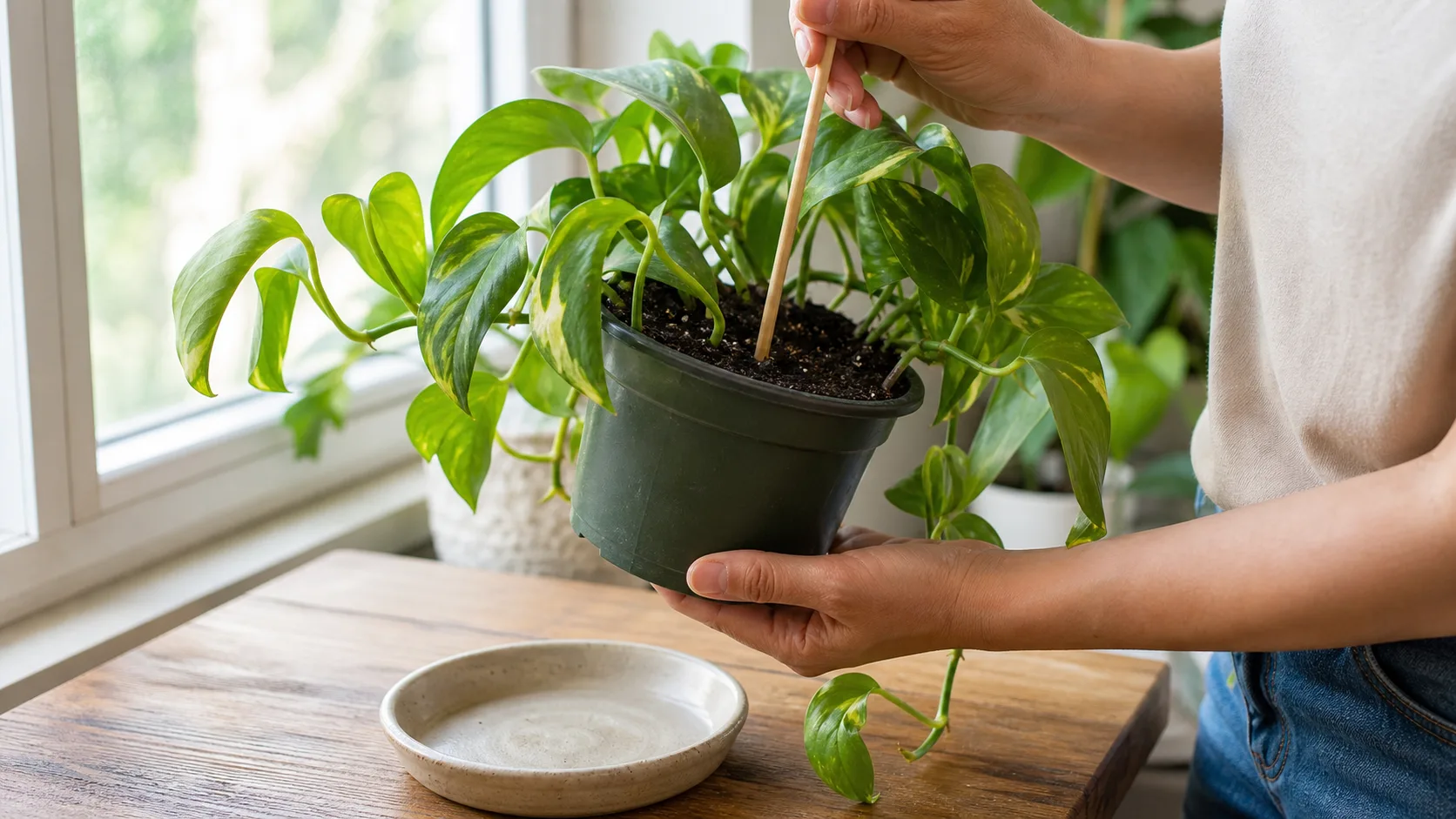
Diagnostic cue: Compare the leaf curl with moisture below the surface and pot weight before deciding to water.
| What you find | What to do today | What to avoid |
|---|---|---|
| Soil is dry 2 to 3 inches down and the pot feels light | Water the entire root ball slowly, then let it drain completely | Do not give repeated small sips |
| Soil is damp and the pot feels heavy | Pause watering, empty trapped runoff, and check drainage and roots | Do not water because the leaves look thirsty |
| Only window-facing or tender new leaves are affected | Reduce hot direct exposure and inspect closely for pests | Do not repot or fertilize based on a few leaves |
The 2-to-3-inch check is a practical starting point, not a universal watering rule. A tiny pot may need a shallower check, while a deep container may require a skewer or moisture check farther down. Compare today’s result with the plant’s normal drying pattern.
The Highest-Information Check
Many troubleshooting guides begin with a long list of possible causes. A more useful first question is:
Is the root ball actually dry, or is water present but unavailable because the roots are stressed?
The surface cannot answer that reliably. Potting mix may look pale and dry on top while remaining cool and wet around the roots. It may also pull away from the pot after becoming very dry, allowing water to run down the sides without moistening the center.
Before changing anything, gather four observations:
- Moisture below the surface
- Pot weight compared with its usual freshly watered and nearly dry weights
- Whole-plant curl versus curl limited to one side, vine, or growth stage
- Physical pest evidence, not just suspicion
These observations quickly separate a watering problem from a local exposure or pest problem. They also prevent the most damaging reflex: adding water to a pot that is already staying wet.
Your 10-Minute Inspection
1. Map the curl
Step back and look at the entire plant.
A whole plant curling at once moves root-zone moisture, major temperature changes, and widespread stress higher on the list. Curl limited to one vine or the window-facing side points more toward a dry pocket, physical damage, concentrated heat, or an early pest cluster.
Tender new leaves can remain slightly rolled while opening. That is different from new growth emerging rough, twisted, scarred, or stuck.
2. Feel several leaves
Compare an affected leaf with a healthy one.
- Thin, soft, and limp: water stress is likely, but the cause may be dry soil or damaged roots.
- Firm and folded like a taco: heat, concentrated light, or pests deserves attention.
- Crispy edges with curl: the plant may have experienced a hard dry-down, hot exposure, or both.
- Soft curl with yellowing: persistent wetness and declining roots move higher on the list.
Texture is supporting evidence. It is not enough to choose a treatment by itself.
3. Check moisture below the surface
Insert a finger, unfinished wooden skewer, or chopstick into the mix, aiming toward the center without stabbing through dense roots.
- A mostly clean, dusty probe supports dryness.
- Cool soil clinging to the probe means moisture remains.
- Muddy soil, a heavy pot, or water collecting below the nursery pot means watering should wait.
Use the plant’s normal drying pattern as your baseline. A pothos that once dried predictably but now stays wet much longer may be receiving less light, sitting in colder conditions, or growing in compacted mix.
4. Check the pot and drainage path
Lift the inner pot out of any decorative container. Empty standing water from the saucer or cachepot. Confirm that drainage holes are open.
Notice whether water recently raced straight down the sides. That can happen when a dry root ball shrinks away from the pot. In that case, the top may have been watered while the center remained dry.
5. Reconstruct the last week or two
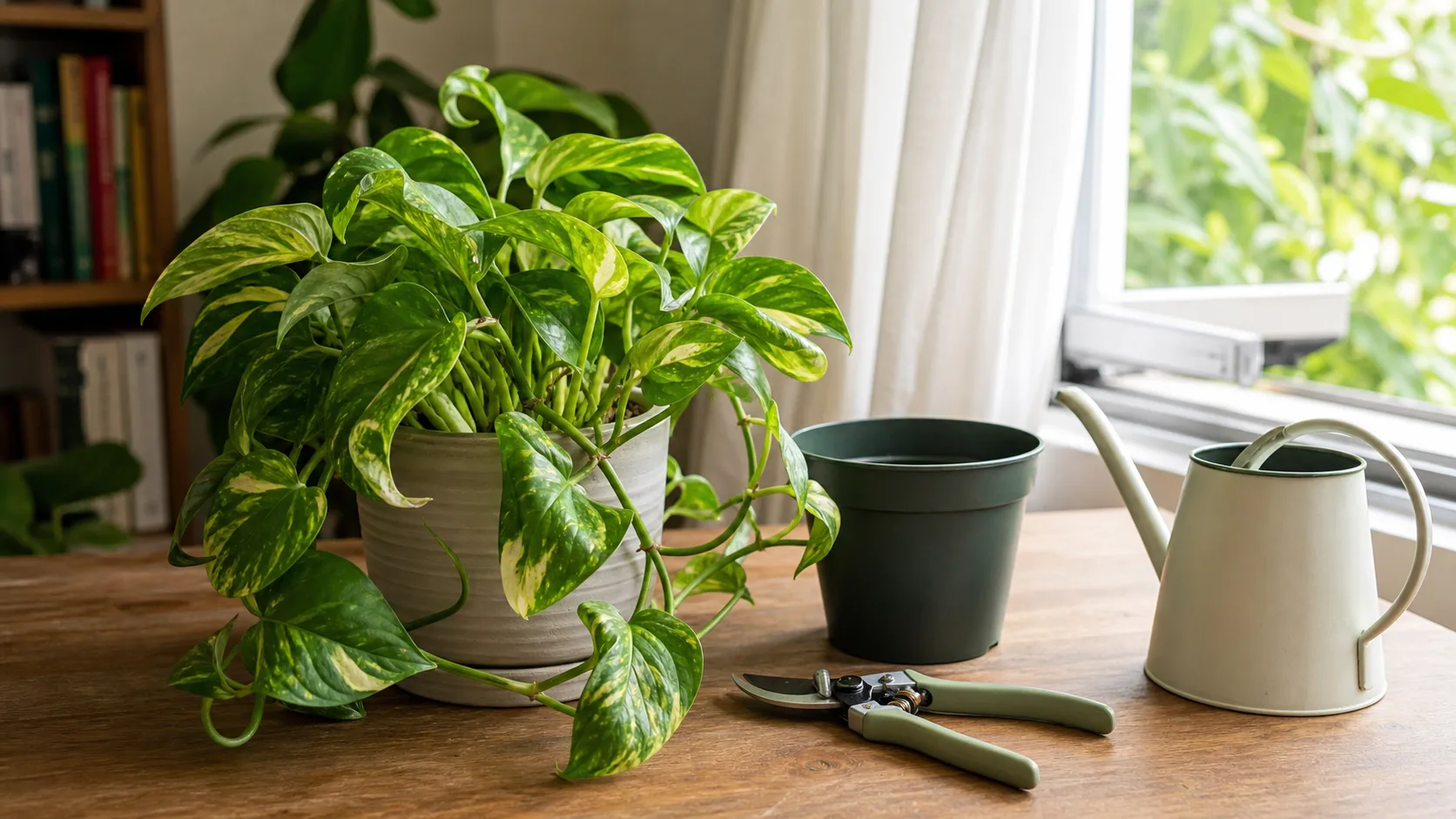
Diagnostic cue: A new pot, watering change, pruning, or brighter window matters most when its timing matches the first curled leaves.
Ask what changed before the curling began:
- A heat wave or stronger seasonal sun
- A move closer to or farther from a window
- Air conditioning, a heater, or a cold draft
- Repotting, root untangling, or a large pot-size jump
- Missed watering followed by small rescue sips
- Heavy pruning or propagation
- Fertilizer applied to dry or stressed roots
- A new plant placed nearby
Timing often explains more than the leaf shape.
6. Inspect new growth and leaf undersides
Use bright light and check nodes, petioles, leaf undersides, and the freshest leaves. Look for fine webbing, pale stippling, sticky residue, raised bumps, cottony material, black specks, or insects. Treat pests only after finding physical clues or the pest itself.
Quick Symptom Card
| Pattern | More likely explanation | First response |
|---|---|---|
| Thin inward curl, dry mix, light pot | Dry root ball or uneven wetting | Water thoroughly once |
| Curl with damp mix and heavy pot | Slow drying or root stress | Pause watering and assess drainage |
| Window-facing leaves curl first | Local heat or direct light | Move back or filter the light |
| Distorted growth with webbing, stippling, or residue | Pest feeding | Isolate and identify the pest |
| Curl begins after repotting | Disturbed roots or excess wet mix | Keep conditions stable |
| Only one vine is affected | Local exposure, damage, dry pocket, or pests | Inspect that vine and its root-zone area |
The KnowYourPlant R4 Curl Map keeps the diagnosis repeatable: Root, Reach, Recent change, Residue.
- Root: Is the center of the mix dry, damp, or muddy, and is the pot light or heavy?
- Reach: Does the curl affect the whole plant, one vine, the window side, or only new growth?
- Recent change: Did light, temperature, pot size, watering, pruning, or fertilizer change in the last two weeks?
- Residue: Is there webbing, stippling, stickiness, cottony material, scale, or an unusual smell?
Use all four before choosing an action. For example, a heavy damp pot, whole-plant curl, a recent move to lower light, and no pest residue point toward slow drying. That combination supports pausing water and improving conditions, not treating pests or repotting immediately.
An Ordered Decision Tree for Pothos Leaves Curling
Follow these steps in order. Stop when the evidence points clearly toward one path.
1. Is the root ball dry?
Dry soil 2 to 3 inches down, a light pot, and thinner-than-normal leaves together make genuine thirst likely. Common reasons include a hotter room, a rootbound plant drying faster, hydrophobic potting mix, or several shallow waterings that missed the center.
Water slowly across the whole surface until water exits the drainage holes. Let the pot drain fully. After 10 to 15 minutes, check the center again. If it remained dry, water slowly once more.
Do not leave the pot standing in runoff. Do not fertilize during the rescue watering. Return to moisture checks rather than assigning a fixed weekday. The indoor plant watering guide explains how to build a routine around soil and pot weight.
A mildly thirsty pothos may regain firmness after the root ball is properly moistened. Older curled leaves may not become perfectly flat, so judge recovery by whether the curl stops spreading and new growth develops normally.
2. Is the mix damp or the pot still heavy?
If moisture remains in the root zone, stop watering. A wet pothos can look thirsty when oxygen-poor or damaged roots cannot move water into the leaves effectively.
Check for:
- Runoff trapped inside a decorative pot
- A container much larger than the root system
- Dense or broken-down potting mix
- A recent move into lower light
- Slow drying that is unusual for this plant
- A musty or sour smell
- Yellowing, soft stems, or darkening leaf margins
North Carolina State, Penn State, and Clemson all emphasize drainage and allowing the mix to dry between waterings. This does not mean forcing every pothos to become bone-dry. It means avoiding a root zone that remains continuously saturated.
Empty trapped water and provide steady bright indirect light. Let the mix move toward its usual watering point. Repot only if the soil structure is failing, the pot is badly mismatched, or direct inspection finds unhealthy roots. If roots are soft or decaying, follow the root rot treatment guide.
3. Is the curl limited to a bright or hot area?
Local patterns matter. If the leaves nearest the glass curl first while shaded leaves remain normal, the problem may be leaf temperature or an abrupt increase in direct light.
Pothos generally handles bright indirect light well. Hot afternoon sun through glass can heat leaves, accelerate water loss, and eventually cause pale or scorched patches. A plant may also dry much faster in the new position, creating both heat and moisture stress.
Move the plant slightly back from the glass or filter the strongest rays with a sheer curtain. Avoid moving it directly into a dark corner. If the room lacks useful indirect light, the indoor grow light guide can help create steadier exposure.
Ordinary indoor temperatures are usually comfortable for pothos, with Penn State describing roughly 65 to 85°F (18 to 29°C) as a suitable range. Treat that as context, not a precise cutoff. Sudden heat, cold glass, and rapid temperature swings can matter more than one thermometer reading.
4. Did the curl follow repotting or another major change?
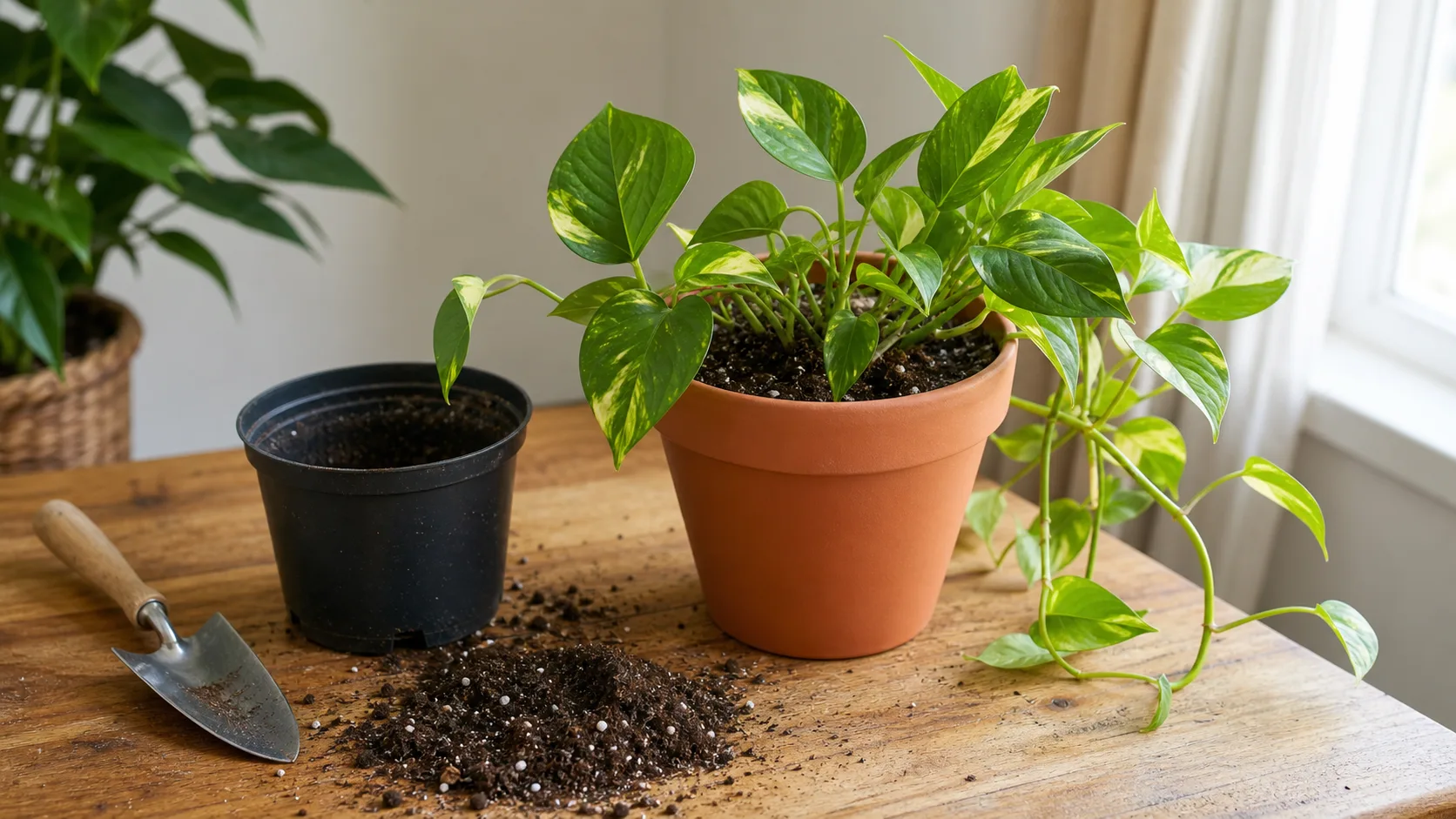
Diagnostic cue: A modest pot-size increase is easier to manage than a large jump that leaves unused mix wet around a small root system.
Curling after repotting does not automatically mean the plant needs more water. Roots may have been disturbed, while the larger volume of fresh mix remains wet longer than the old pot did.
University of Minnesota Extension recommends moving up only one pot size when repotting is needed because excess soil can retain more moisture than a modest root system can use. The pothos repotting guide covers pot sizing, root checks, and aftercare in more detail. After repotting, keep light and temperature stable, allow appropriate dry-down, and avoid another repot unless evidence shows a serious root problem.
The same calm approach applies after pruning, relocation, or an abrupt schedule change. Correct the clearest issue, then watch the plant instead of trying to erase all stress in one day.
5. Are there physical pest clues?
Pests move up the list when the soil story does not match the curl, or when new growth is distorted.
Spider mites may leave pale stippling and fine webbing. Thrips can produce rough, scarred, twisted growth and dark specks. Mealybugs form cottony clusters, while scale insects resemble attached bumps and may be accompanied by sticky residue.
Isolate the pothos if you find credible evidence and inspect nearby plants. Identify the likely pest before choosing a treatment. The houseplant pest guide covers the next steps.
Do not spray insecticide, oil, soap, or homemade mixtures merely because a leaf curled. Unnecessary treatment can damage stressed foliage and obscure the original problem.
Dry Soil vs Wet Roots vs Heat
| Clue | Dry root ball | Wet or stressed roots | Heat or direct light |
|---|---|---|---|
| Pot weight | Lighter than normal | Heavy for longer than normal | Either |
| Moisture at depth | Dry | Damp, wet, or muddy | Often drying faster near exposure |
| Leaf feel | Thin and limp | Soft, sometimes with yellowing | Firmer fold or exposed-edge damage |
| Distribution | Many leaves or whole plant | Often widespread | Window-facing or upper leaves first |
| Best first move | Water completely once | Pause watering | Reduce local exposure |
When the observations conflict, the diagnosis tool is useful for comparing soil, leaf, root, and exposure clues before committing to a treatment.
Recent-Change Checkpoint
If the pothos was stable until recently, write down what changed rather than repeating the old care routine harder.
A plant may need water sooner during warm, bright weather and much later after moving into a dimmer or cooler room. The same weekly schedule can therefore cause dryness in one season and persistent wetness in another.
Also consider whether the potting mix now behaves differently. Old mix can compact and drain slowly. Extremely dry mix may repel water. A rootbound plant may use moisture rapidly. A recent pot-size jump may surround a small root system with more wet soil than it can process.
The goal is not to find every possible imperfection. Find the change that best matches the timing and distribution of the curl.
Low-Disturbance Root and Pest Inspection
Avoid bare-rooting a pothos as the first diagnostic step. Start with observations that cause little stress.
For roots, check the drainage holes, stem base, soil smell, drainage speed, and pot weight. Pale, tan, or light-colored firm roots are generally reassuring. Dark, soft, easily collapsing roots and a sour smell are concerning.
Slide the root ball out gently only when several clues justify it, such as persistent wetness, worsening yellowing, a soft stem base, foul odor, or no improvement despite correcting drainage. If it does not release easily, do not tear through healthy roots just to satisfy curiosity.
For pests, inspect before treating. Look along veins, nodes, and protected folds with a bright light. Wipe a suspicious speck with a damp white tissue and check whether it moves, smears, or remains attached. Inspect neighboring plants if you find webbing, insects, eggs, honeydew, or feeding damage.
Leaf curl without physical pest clues is not enough to justify pest treatment.
One-Change Rescue Plan
Choose the path with the strongest evidence and make one primary correction.
If the root ball was dry
Water completely, drain the pot, and leave the plant in stable bright indirect light. Recheck moisture and pot weight over the next several days. Do not compensate with daily sips.
If the pot has stayed wet
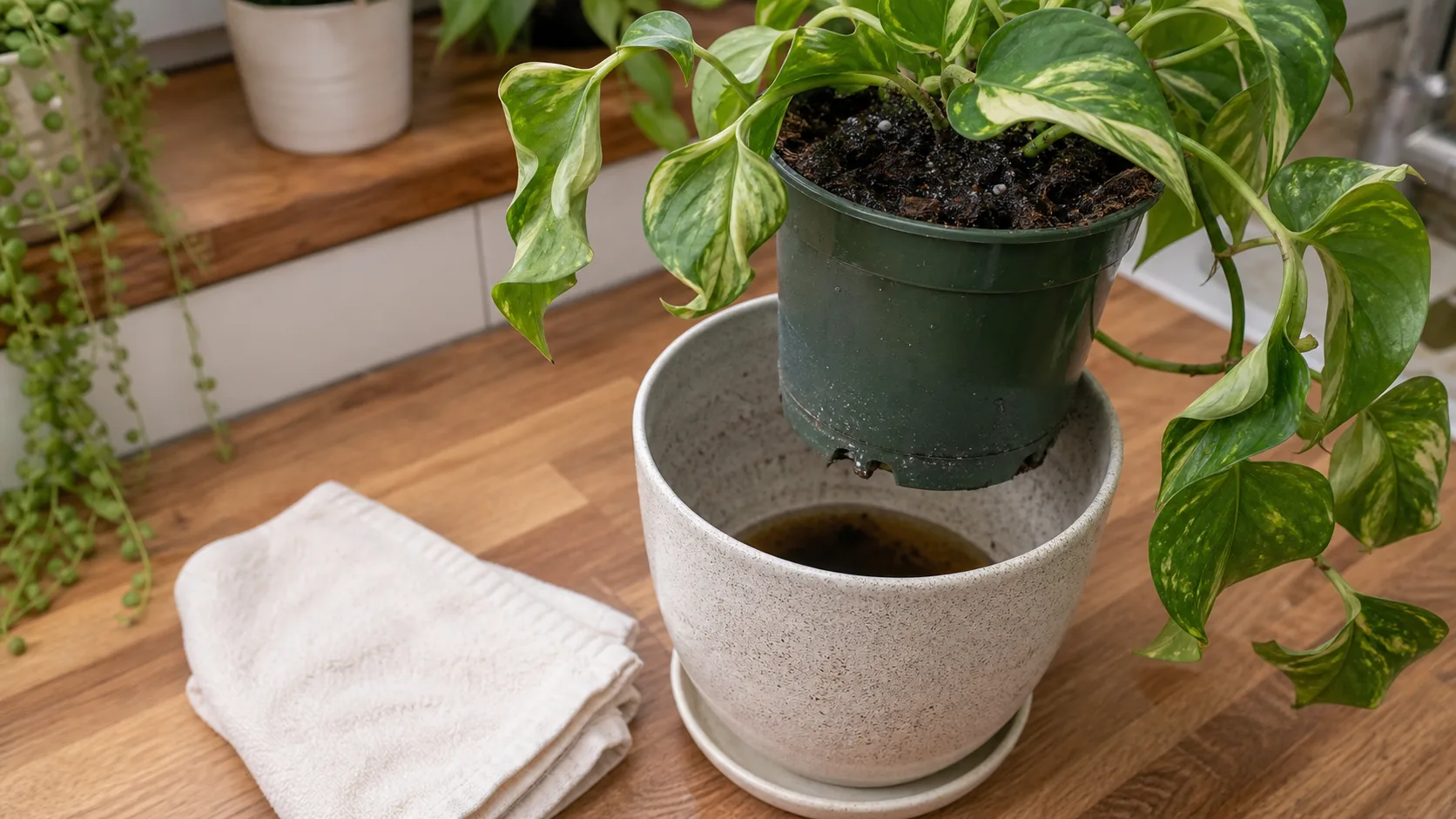
Diagnostic cue: Water hidden inside a decorative pot is direct evidence to drain first and pause before watering again.
Pause watering, empty runoff, and improve indirect light or gentle air movement if conditions are dim and stagnant. Do not add fertilizer. Inspect roots only if decline continues or red flags are present.
If local heat or light is responsible
Move the plant a short distance from hot glass or filter direct sun. Keep watering based on root-zone moisture. Avoid combining the move with repotting or fertilizing.
If repotting triggered the problem
Keep the plant stable and allow the new mix to dry according to actual moisture, not the old schedule. Watch new growth. Do not repot again unless direct evidence shows failing soil or root decay.
If pests are confirmed
Isolate the plant, identify the pest, and use an appropriate repeat treatment plan. Check neighboring plants. Pest control usually requires follow-up because one application may not address every life stage.
Improvement Signals and Red Flags
Recovery is heading in the right direction when:
- Curl stops spreading
- Leaves regain some firmness
- New leaves open with normal shape
- The pot returns to a predictable drying rhythm
- No new stippling, webbing, residue, or distorted growth appears
Inspect roots or escalate pest checks if:
- The plant remains limp while the soil is damp
- Yellowing and softening spread together
- The stem base becomes soft or dark
- The soil smells sour
- The pot stays heavy far beyond its normal pattern
- New growth repeatedly emerges scarred or distorted
Do not use one older curled leaf as the only recovery test. Existing damage can remain even after the cause is corrected.
Common Mistakes
- Watering from leaf curl alone: Opposite root conditions can create a similar thirsty appearance.
- Checking only the surface: The lower mix may still be wet.
- Using a rigid weekly schedule: Light, temperature, pot size, roots, and season change water use.
- Giving small rescue sips: Water may bypass or only partially moisten the root ball.
- Moving the plant into direct sun: More light is not the same as hot exposure through glass.
- Jumping to a much larger pot: Extra mix can remain wet around a small root system.
- Blaming humidity first: Dry air can add stress, but soil, roots, heat, and pests need checking too.
- Stacking several fixes: Simultaneous watering, repotting, fertilizing, moving, and spraying makes the plant harder to read.
Is Pothos a Fit for Your Light and Routine?
Pothos is a good fit if your space offers bright indirect light and you can check soil rather than water by calendar. It also tolerates medium light, although growth may slow and the pot may dry less quickly.
It is a poorer fit for a spot with hours of hot direct sun, a dark corner where soil remains wet, or a routine built around frequent small waterings. If your schedule is inconsistent, learn the difference between a light dry pot and a heavy damp one. That simple habit is more useful than memorizing a watering interval.
Frequently Asked Questions
Should I water as soon as pothos leaves curl?
No. Check moisture at depth and lift the pot first. Water when the root ball is dry and the pot is light. If the soil is damp and heavy, more water can worsen root stress.
Can curled pothos leaves flatten again?
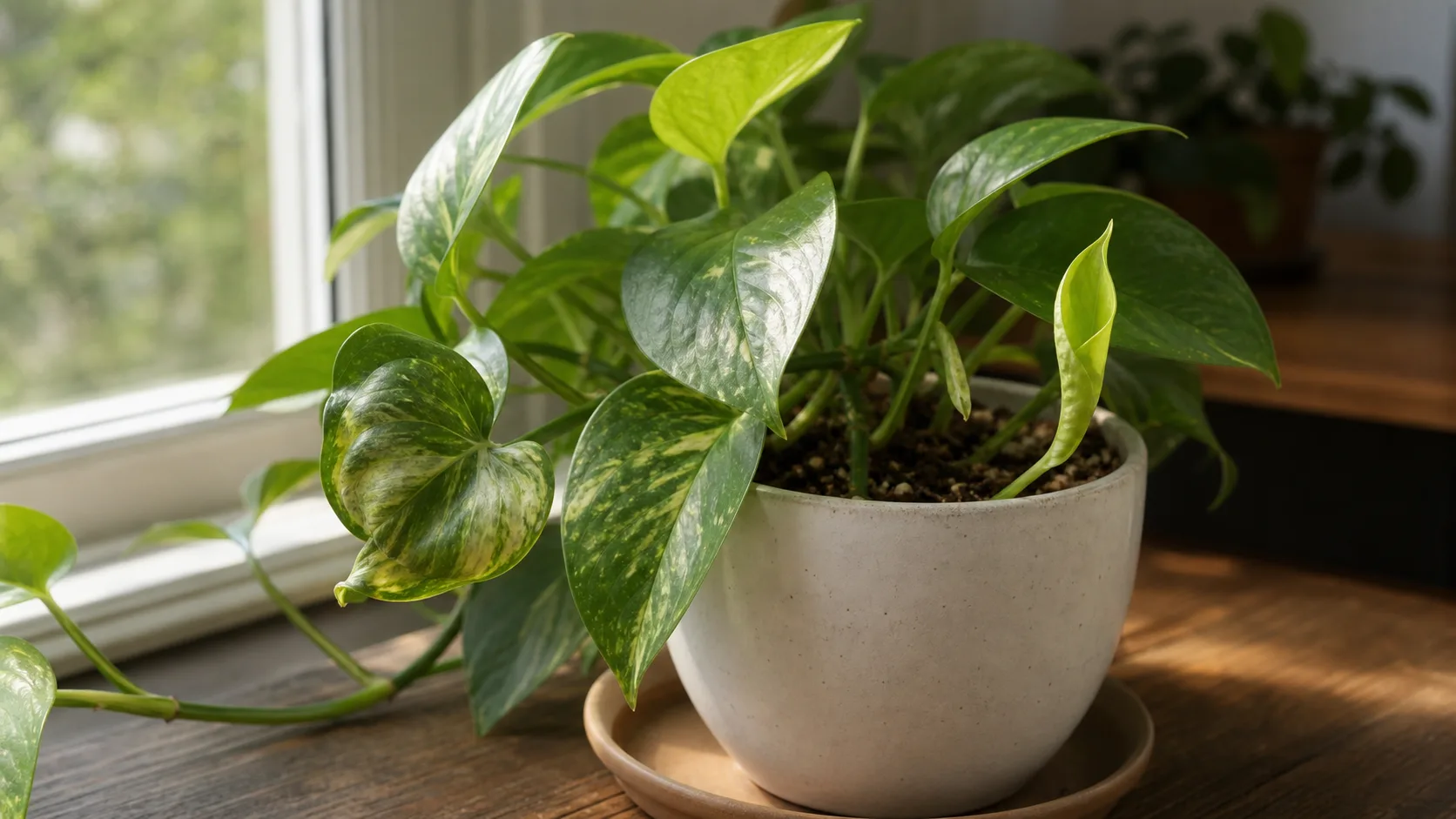
Diagnostic cue: Judge recovery by firm new growth and a curl that stops spreading, not by whether every older leaf becomes perfectly flat.
Leaves may relax after mild thirst or temporary heat stress. Leaves affected by prolonged stress, root damage, or pest feeding may remain curled. Normal new growth is a better recovery signal.
Why are only a few leaves curling?
A limited pattern often points to local heat, physical damage, a dry pocket, tender growth, or an early pest issue. Compare the affected vine with the rest of the plant before making a whole-plant change.
Can overwatering cause curling instead of drooping?
Yes. Roots that remain wet and oxygen-stressed may fail to supply leaves properly. Curling can occur before more recognizable signs such as widespread yellowing, soft tissue, or root decay.
Does low humidity cause pothos leaves curling?
Low humidity can contribute, especially beside vents or hot windows. It is often a stress multiplier rather than the complete diagnosis. Check root-zone moisture, exposure, and pests first.
Should I repot a curling pothos?
Not unless there is a clear reason, such as unhealthy roots, failed compacted mix, or a badly mismatched container. Unnecessary repotting adds root disturbance and may make the diagnosis less clear.
How often should I water pothos?
There is no reliable universal interval. Water use changes with light, temperature, pot size, mix, root density, and season. Check the root zone and learn the plant’s normal dry-down pattern.
Methodology and Sources
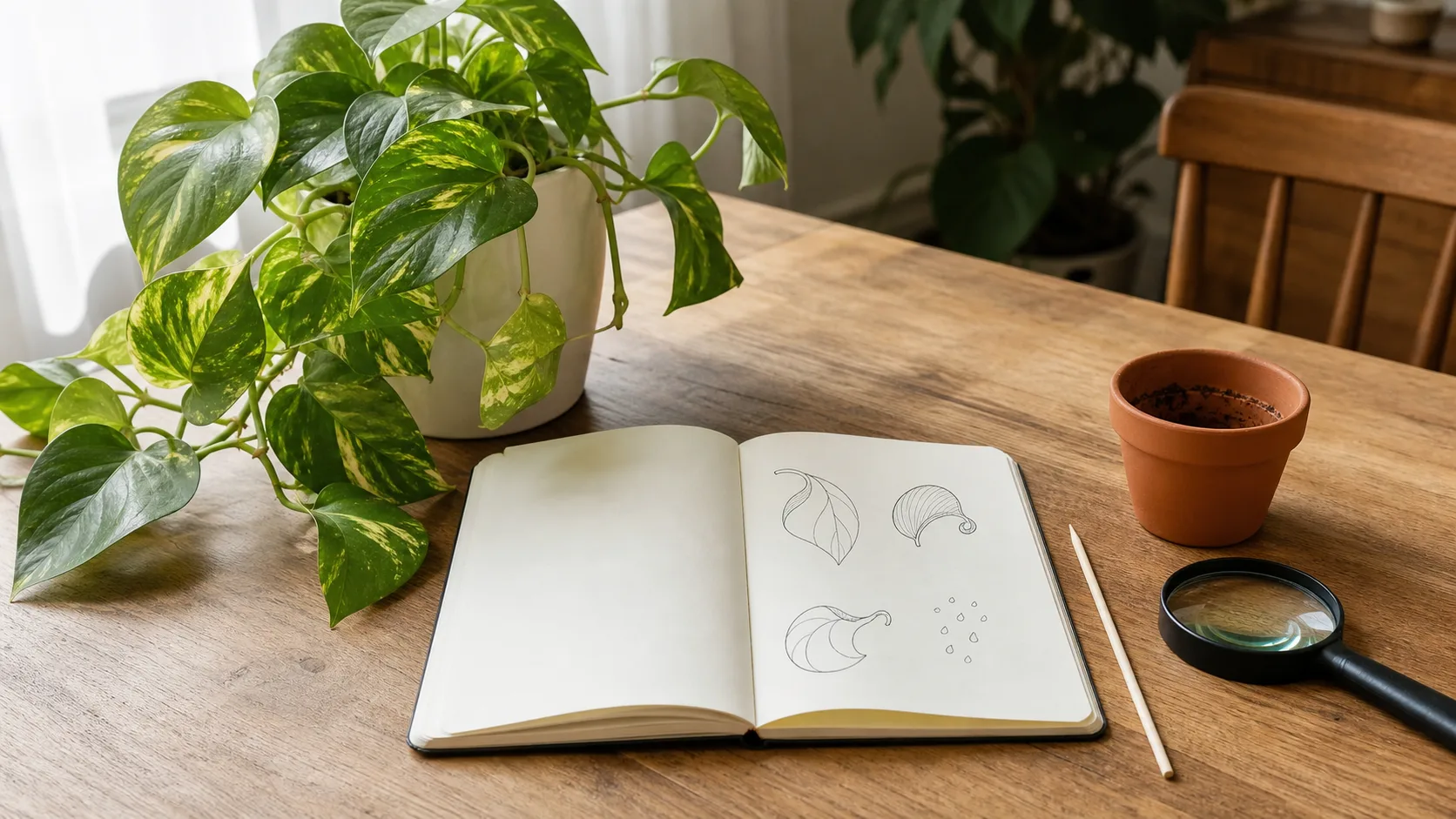
Diagnostic cue: The method combines leaf distribution, moisture, pot weight, recent changes, and physical pest evidence instead of relying on leaf shape alone.
This article uses a symptom-first process: soil moisture at depth, pot weight, whole-plant versus partial curl, recent changes, local exposure, roots, and physical pest clues are evaluated before treatment.
Care and diagnostic guidance was checked against:
- North Carolina Extension Gardener Plant Toolbox: Epipremnum aureum
- Penn State Extension: Pothos as a Houseplant
- Penn State Extension: Diagnosing Poor Plant Health
- Clemson Extension: How to Grow Pothos Indoors
- University of Minnesota Extension: Spring Houseplant Care
- University of Minnesota Extension: Managing Insects on Indoor Plants
Community search snippets were reviewed only to identify recurring owner questions about watering schedules, bright windows, sudden curl, and pest uncertainty. They were not used as proof of diagnoses, frequency, treatment outcomes, or prevalence.
Freshness note: Sources and search patterns were reviewed on July 19, 2026. This article was updated on July 20, 2026.
Once the immediate curl is stable, the care tool is useful for building reminders around the plant’s actual light, drying pattern, and seasonal routine.