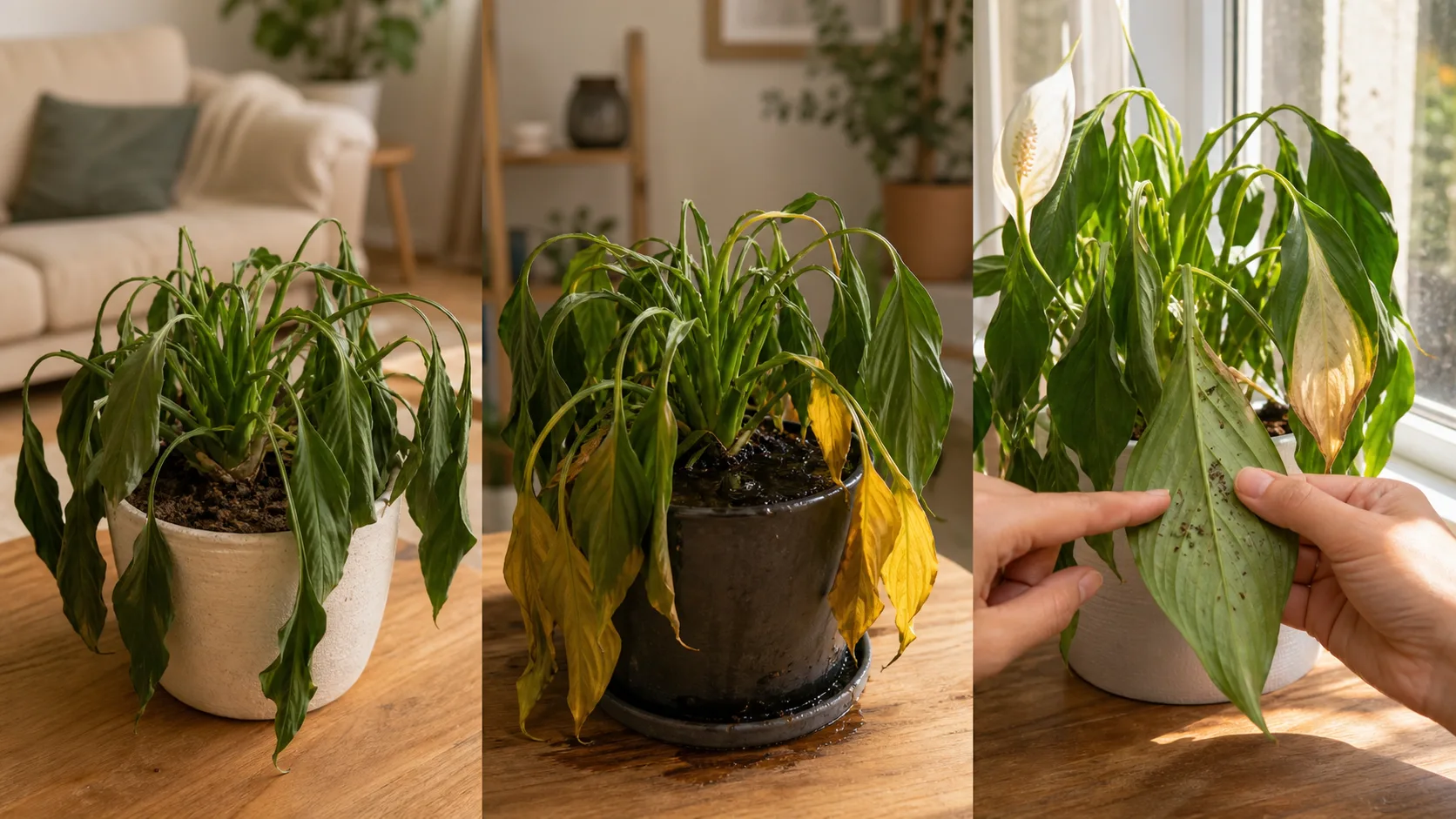
Peace Lily Drooping: Thirst, Root Stress, or Shock?
Do not water yet. In under ten minutes, you can separate dry-soil thirst from wet-root stress and choose one safe next step without guessing.
Use the Four-S Check: Soil, Setup, Shift, Signs. Soil decides water or wait. Setup finds trapped water. Shift connects the droop to a recent change. Signs tell you when simple monitoring is no longer enough.
| What the check finds | Safe action | Stop waiting when |
|---|---|---|
| Skewer reaches the middle of the pot and comes out dry; pot feels light | Water: soak evenly, drain, and empty runoff | No lift begins within several hours; reassess by the next day |
| Skewer comes out damp or muddy; pot feels heavy | Wait and drain: do not water; recheck in 48 hours | Yellowing spreads, soil smells sour, the base softens, or decline speeds up |
| Droop follows a move, repot, strong sun, cold window, or vent | Stabilize: keep one suitable location while you monitor | Damage spreads beyond the leaves exposed to the change |
| Webbing, sticky residue, insects, or a soft base | Act: isolate a pest case or inspect roots | Wet soil and rapid decline occur together; inspect the same day |
If you inherited the plant or are unsure it is a peace lily, identify it first. A correct identity gives you a baseline for light, moisture, and expected leaf form before you diagnose the droop.
What Most Peace Lily Articles Miss
Penn State Extension lists wilted leaves under several possible problems, including underwatering, overwatering, root rot, low humidity, cold damage, overfertilization, and crowded roots. Posture alone cannot separate them.
The common mistake is watering wet soil because the leaves look limp. Check below the dry-looking surface instead. Push a wooden skewer or unfinished chopstick into the middle third of the pot.
- Almost clean and dry supports thirst.
- Cool, damp, or coated with dark wet soil means wait.
- Different results around the pot suggest uneven drying.
Dry soil around the roots supports watering. Damp or wet soil means wait and investigate before adding more.
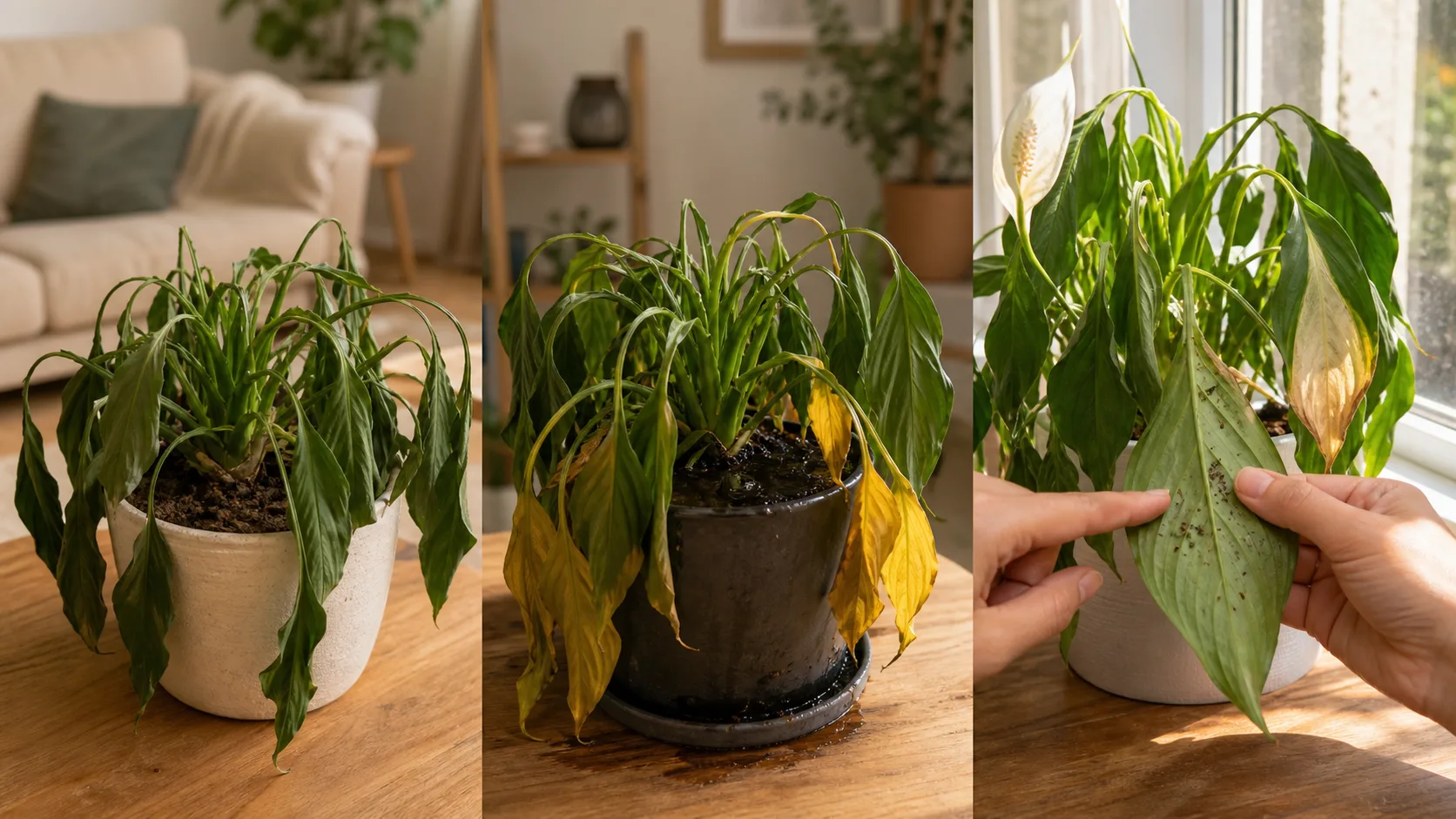
The same limp posture can come from dry soil, wet-root stress, or an environmental or pest clue, so read the whole pattern.
Comparison Table: Match One Pattern to One Action
Use several clues together. The escalation column shows when waiting becomes less safe.
| Pattern | Visible signs | Do this | Do not / next check |
|---|---|---|---|
| Thirst | Green limp leaves, dry middle, light pot, firm base | Water thoroughly | Do not fertilize; look for a lift within hours and reassess next day |
| Wet-root stress | Damp middle, heavy pot, soft yellowing | Drain runoff and pause watering | Do not water; recheck in 48 hours or inspect sooner with odor or soft tissue |
| Repot or move shock | Droop began after a clear change; base stays firm | Hold light and temperature steady | Do not repot again unless drainage has failed |
| Light stress | Pale or crisp damage faces the window | Move outside the direct sunbeam | Do not move into a dim corner; watch whether new damage stops |
| Pests | Webbing, cotton, raised bumps, sticky residue, or insects | Isolate and identify | Do not treat droop with water; inspect nearby plants now |
Decision Tree: The Ten-Minute Four-S Check
Soil: Decide Whether Water Is Justified
Do not stop at the top inch. The surface can look dusty while the lower half is still wet. Reach the middle third of the pot and compare its weight with how it feels just after watering.
NC State Extension advises keeping peace lilies moist but not soggy, with some drying between waterings. Apply that guidance to the root zone, not a fixed weekday schedule.
- Dry at the middle of the pot and noticeably lighter than after watering: water now.
- Slightly moist below the surface: wait.
- Wet and heavy: do not add water.
- Dry near the edge but damp in the center: expect uneven drying and water more slowly next time.
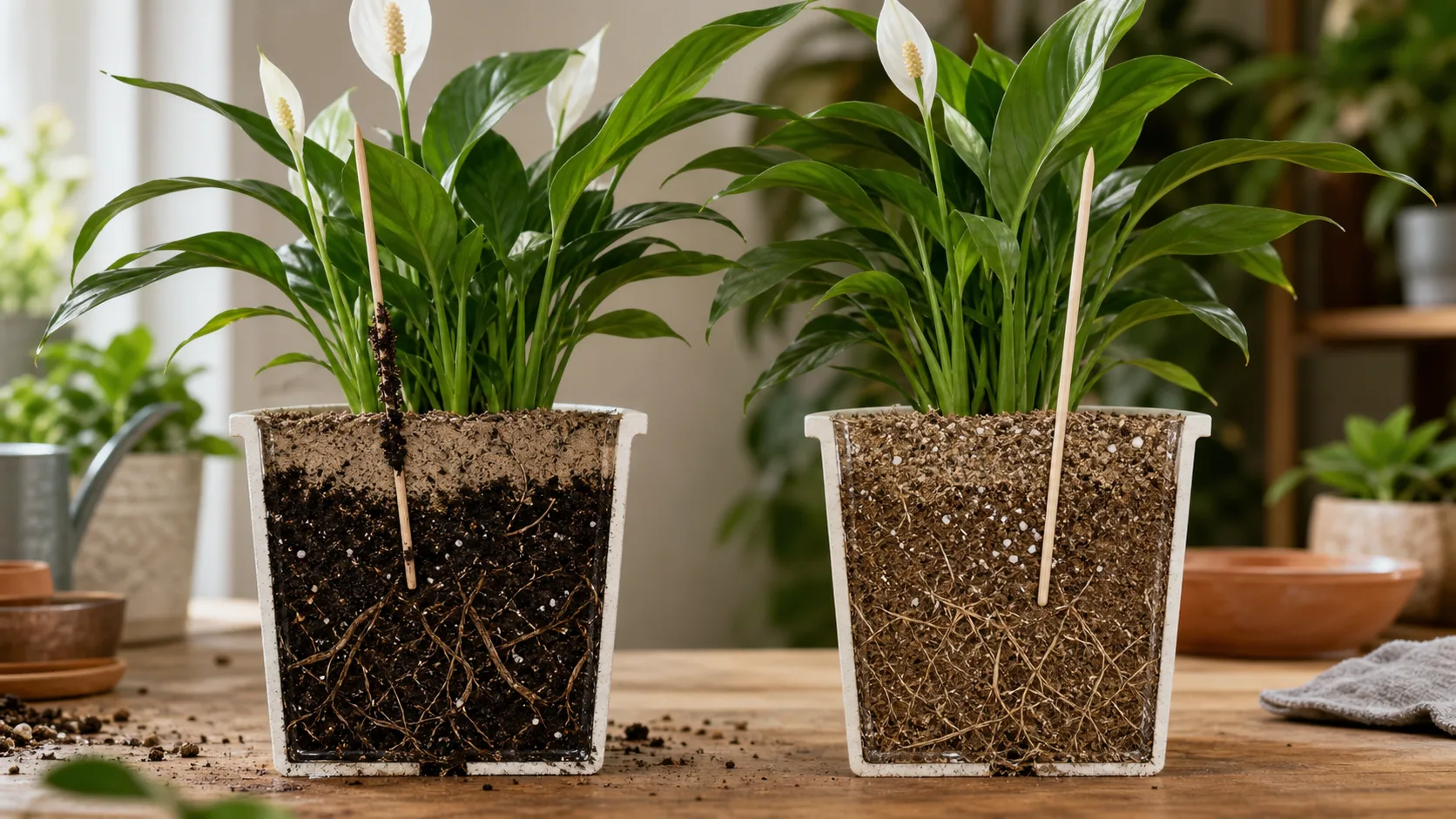
A wooden skewer reveals what the surface hides: damp soil clinging deep in the pot means the roots are not ready for more water.
Setup: Let Water Leave the Pot
Lift the nursery pot from its decorative outer pot. Check the saucer or cachepot for standing water, and confirm that drainage holes are open. A hole does not help if the nursery pot sits in its runoff.
Also check for dense mix, roots packed so tightly that water runs around the root ball, or a recent jump into a much larger pot. The University of Minnesota Extension recommends moving up only one pot size when repotting. Unused mix around a small root system can hold moisture longer.
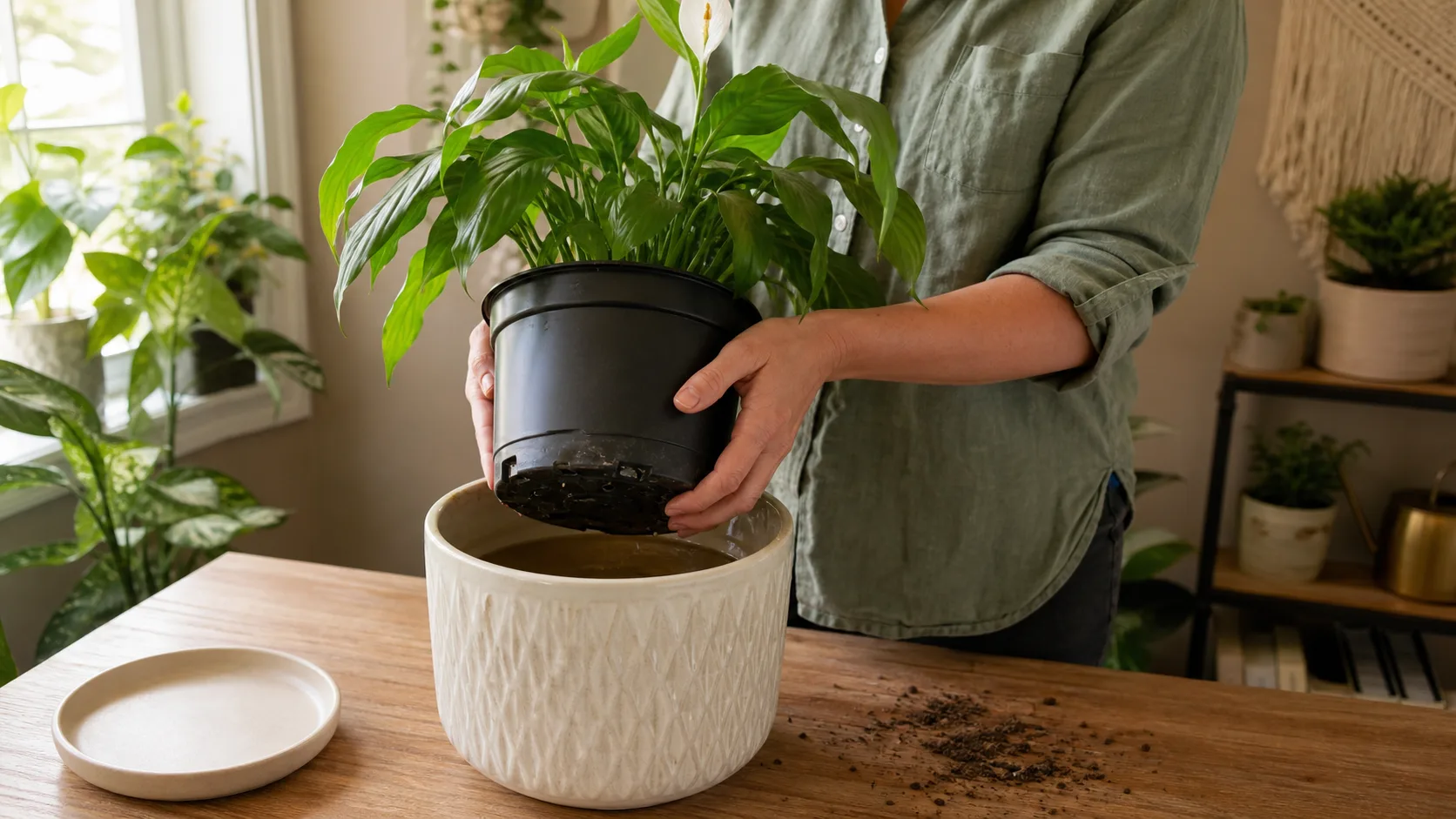
Lift the nursery pot after watering. Hidden runoff can keep an otherwise well-drained pot wet around the roots.
Shift: Stabilize What Changed
List changes from the last 7 to 14 days:
- repotting or a move from the store
- a new window, grow light, or brighter exposure
- an air conditioner, heater, fan, or cold window
- fertilizer or watering by another person
Droop after a move or repot may be transition stress. Check the setup and avoid another abrupt change.
Peace lilies prefer indirect light. Put the plant near a bright window but outside the beam of direct sun, where the leaves receive bright room light without a hard-edged sun patch. NC State warns against direct sun, and the University of Minnesota advises increasing light gradually for shade-loving plants. Pale or crisp damage on window-facing leaves after a move toward stronger sun supports light stress.
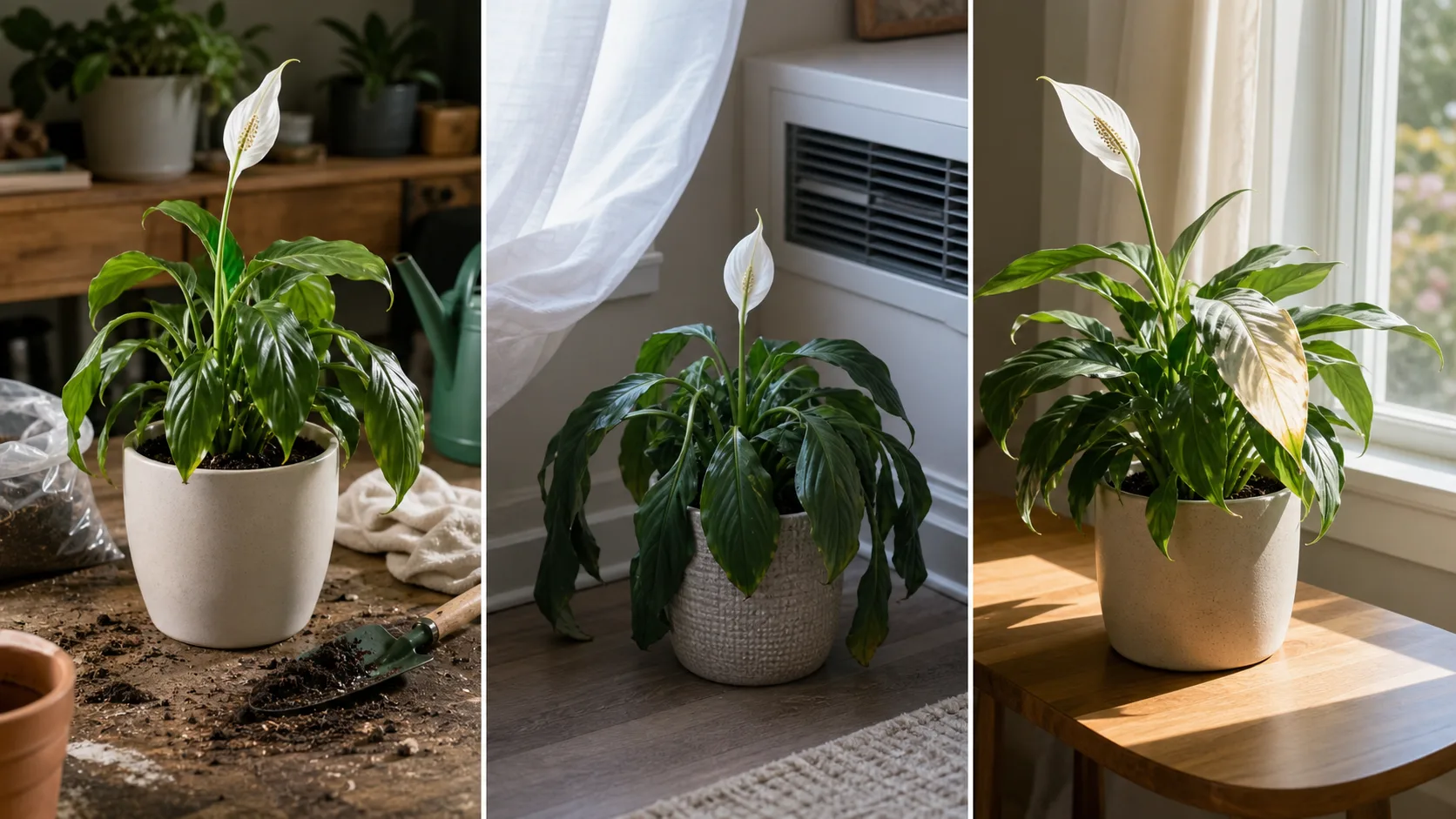
Repotting, cold airflow, and sudden direct sun can each trigger droop, so match the symptom to what changed in the last two weeks.
Signs: Separate Recovery Clues From Red Flags
Mostly green, flexible leaves plus dry soil and a firm plant base support thirst. Wet-root stress becomes more concerning with spreading soft yellow leaves, a heavy pot, sour or stale odor, or a dark, soft base.
Turn over several leaves and check veins, stem joints, the pot, and nearby surfaces. The University of Minnesota Extension recommends checking leaf surfaces, containers, and sticky residue when diagnosing indoor plant pests. Look for webbing, cottony clusters, raised bumps, sticky residue, and tiny insects. Isolate a plant with pest clues and use the houseplant pests guide to identify the problem.
Save these four observations in KnowYourPlant before acting. Recording Soil, Setup, Shift, and Signs creates a clean before-and-after record instead of leaving you to remember what happened during the next droop.
Dry Soil: Water Now
If the root zone is dry, water slowly until the whole root ball is moist and excess leaves the drainage holes. Empty the saucer or outer pot.
If water races down the sides, the mix may have pulled away from the pot and may not have absorbed much. Apply water in two or three slow passes, pausing briefly between them.
Leave the plant in bright indirect light. Do not fertilize, repot, or water again while the mix remains moist. Look for the beginning of a lift within several hours, then reassess by the next day. That response supports thirst; it is a monitoring threshold, not a promise that every plant recovers on the same clock.
Worked Example: Dry Soil and Green Limp Leaves
Dry soil, a light pot, green limp leaves, and a firm base justify one thorough watering. If the leaves begin rising later that day, log the response and wait for the next real dry-down. The guide to how often to water indoor plants explains how to replace calendar watering with moisture checks.
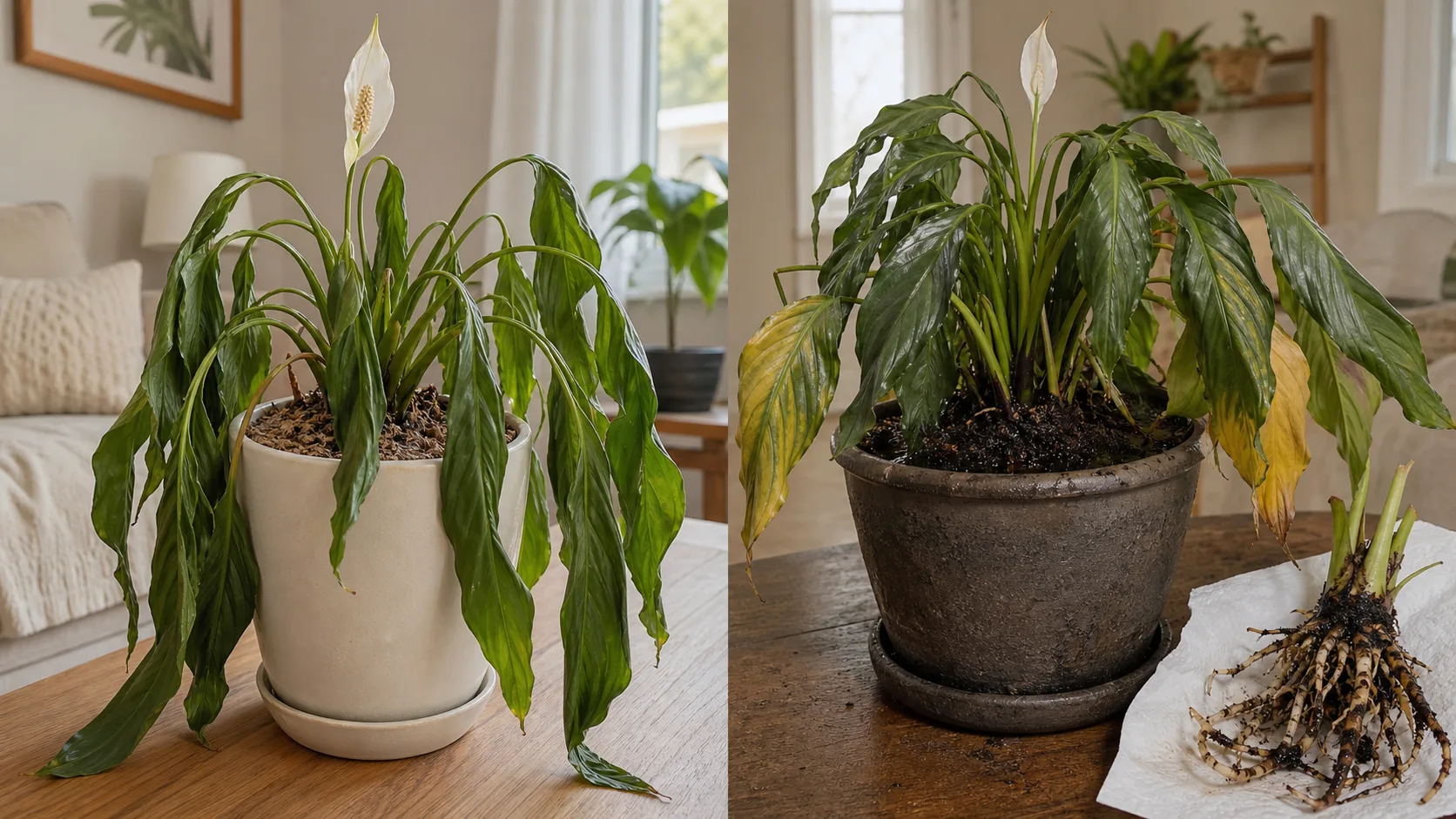
Green droop in a dry, light pot supports thirst; yellow softness, wet soil, and damaged roots make root stress more likely.
Wet Soil: Do Not Water Again Yet
If the lower mix is damp or wet, do this in order:
- Empty runoff from the saucer or outer pot.
- Confirm that drainage holes are open.
- Keep the plant near a bright window but outside direct sun, away from cold glass and blowing vents.
- Pause watering.
- Recheck soil, pot weight, and symptoms in 48 hours.
Wet soil alone is not a reason to pull the plant from its pot. Root inspection also disturbs roots, so wait when the base is firm, yellowing is not spreading, there is no sour odor, and decline is not rapid.
Inspect roots sooner when wet soil appears with spreading yellowing, sour odor, soft tissue, or rapid decline. Healthy roots should feel firm; dark, soft, compromised roots support a root problem more strongly than damp soil alone. Use the root rot treatment guide before cutting or repotting.
Worked Example: Wet Soil and Soft Yellow Leaves
If the plant stays limp in wet mix, the pot remains heavy, and lower leaves become soft and yellow, more water will not test thirst. Drain the setup. Inspect the roots the same day if a sour smell, soft base, or rapid decline joins those signs; otherwise recheck in 48 hours.
Low light can slow water use. Move the plant only when needed, keep it out of sudden direct sun, and change one condition at a time.
Recent Change: Stabilize Conditions
After repotting, keep the plant near a bright window but outside direct sun, away from vents and cold glass, with evenly moist but never waterlogged soil. Skip fertilizer until recovery begins. Do not repot again unless the container cannot drain or the new setup is clearly failing. Watch a much larger new pot closely because its additional mix may stay wet.
After a store-to-home move, check the lower soil and choose a stable place away from direct sun and vents. Water only when the root-zone check supports it.
After a move into stronger light, pull the plant back from harsh sun if exposed leaves are pale or crisp. The plant sunburn guide helps separate scorch from watering trouble.
Pest or Soft-Base Signs: Inspect and Act
Pest clues call for isolation and identification, not extra water. Check nearby plants as well as leaf undersides, joints, and containers.
A soft or darkened base, sour soil, spreading yellowing, or rapid decline in wet mix justifies earlier root inspection. One older yellow leaf does not. The guide to peace lily leaves turning yellow covers spreading yellowing in more detail.
Log the Response, Then Set the Next Reminder
Record the date, deep soil condition, pot weight, drainage, recent changes, leaf color, and action. After justified watering, record when the first lift appeared and how the plant looked by the next day. For wet soil, record the 48-hour recheck.
After two or three checks, use the actual dry-down to set the next reminder in KnowYourPlant. A reminder should prompt another moisture check, not automatic watering. The care record also shows whether repeat droop follows fast drying, trapped runoff, seasonal change, or the same environmental shift.
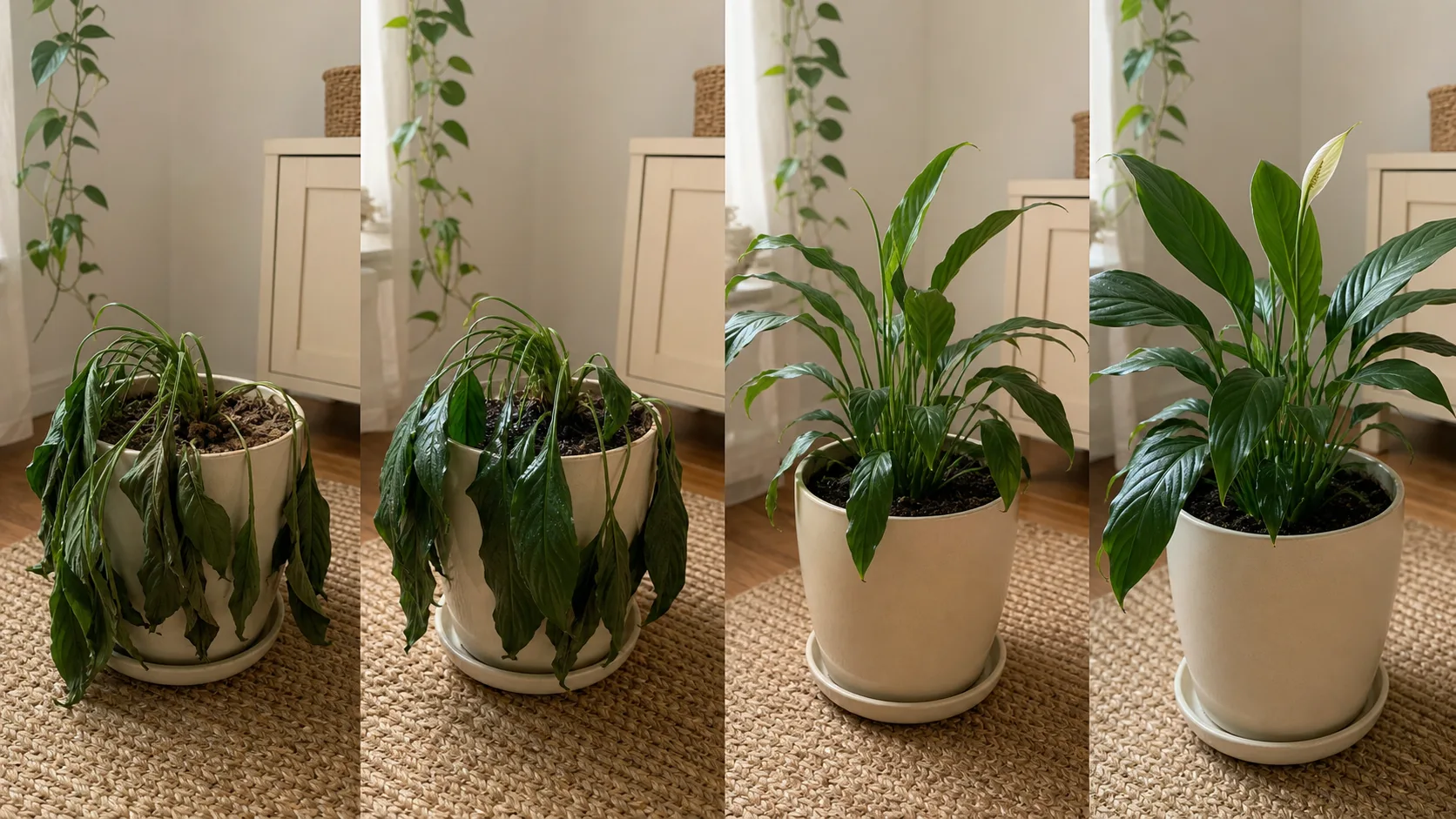
Use recovery speed as evidence: stability comes first, then firmer leaves and healthy new growth.
Common Mistakes That Hide the Cause
For now:
- do not water wet soil
- do not fertilize a drooping plant
- do not move it into direct sun
- do not repot twice in quick succession
- do not cut off green leaves that may recover
- do not change several conditions at once
Check only the surface and you can miss a wet lower root zone. Leave runoff in an outer pot and roots remain wet despite drainage holes. Repot too large and unused mix stores more moisture.
Seasonal and Freshness Note
A peace lily may use water more slowly during cooler, dimmer periods. A routine that worked in brighter months can become too frequent when daylight drops. Heating can dry the air while the mix remains wet, so do not answer every brown edge with more water. Check the soil first; the guide to humidity for indoor plants covers room humidity separately.
Before buying another peace lily, consider the routine it needs. It can tolerate lower light but uses water more slowly there, and direct sun is unsuitable. It suits someone willing to check root-zone moisture better than someone who waters every plant on the same day. If you travel, base reminders on observed dry-down rather than a universal interval.
Recovery Timeline
| When | What improvement looks like | Failure signal |
|---|---|---|
| Within several hours after justified watering | The first leaves begin to lift | No change is not proof of root rot, but it means reassess by next day |
| By the next day | More leaves are upright and soil is moist, not flooded | Continued collapse despite absorbed water calls for the Four-S Check again |
| After 48 hours with initially wet soil | Pot is lighter, no new yellowing, base stays firm | Soil stays saturated or yellowing, odor, softness, or decline increases |
| Over one to two weeks | Stable green leaves and no new damage | New soft yellowing or a worsening base justifies root inspection |
Keep conditions stable, note actual dry-down, and return to routine care when the droop resolves. The indoor peace lily care guide can help rebuild that routine.
Use KnowYourPlant to keep the response log and set the next care reminder from what this plant actually did.
If you are troubleshooting another common plant symptom, see Peace Lily Brown Tips: Water Quality, Dry Air, or Root Stress? for a focused diagnosis and recovery plan.
FAQ
Why is my peace lily still drooping the next day after watering?
Confirm that the lower soil was dry before watering and that the root ball absorbed moisture. If it was already wet, or is now saturated with no meaningful lift, do not repeat the treatment. Recheck drainage, cold exposure, recent changes, and red flags.
When should I inspect roots instead of waiting?
Do not unpot for wet soil alone. Inspect sooner when wet soil comes with spreading yellowing, sour odor, soft tissue, or rapid decline. If those signs are absent, drain runoff, pause watering, and recheck in 48 hours.
Should I remove drooping or yellow leaves?
Leave green, undamaged leaves while you diagnose; they may recover. Remove a leaf when it is fully yellow, badly damaged, or collapsing, using clean cutters near the base. One old yellow leaf is less urgent than yellowing that spreads while the soil stays wet.
Why does my peace lily keep drooping every few days?
Check moisture at depth before every watering. The pot may be small, roots may be crowded, the room may be warm and bright, or the root ball may be drying unevenly. Repeated droop does not prove the plant needs a larger pot. Compare the soil condition and response across several episodes.
Sources and Methodology
This guide was reviewed against the exact query “peace lily drooping” and related owner questions on July 19, 2026. Recommendations on Spathiphyllum moisture and light come from NC State Extension; pot sizing and gradual light changes come from the University of Minnesota Extension; pest inspection comes from its indoor-plant pest guidance; and the broader differential for wilt comes from Penn State Extension. The University of Maryland Extension supports treating yellowing as a stress clue and identifies overwatering as a leading reason indoor plants fail.
The Four-S Check, triage branches, worked examples, and monitoring thresholds are the KnowYourPlant editorial team’s practical synthesis of those sources, reviewed through the KnowYourPlant editorial process. The soil and light principles are extension-backed; the Four-S order and 48-hour recheck are editorial decision aids for making one low-risk change at a time, not claims that every peace lily follows a universal biological schedule. No first-hand trial or individual owner outcome is presented as evidence.