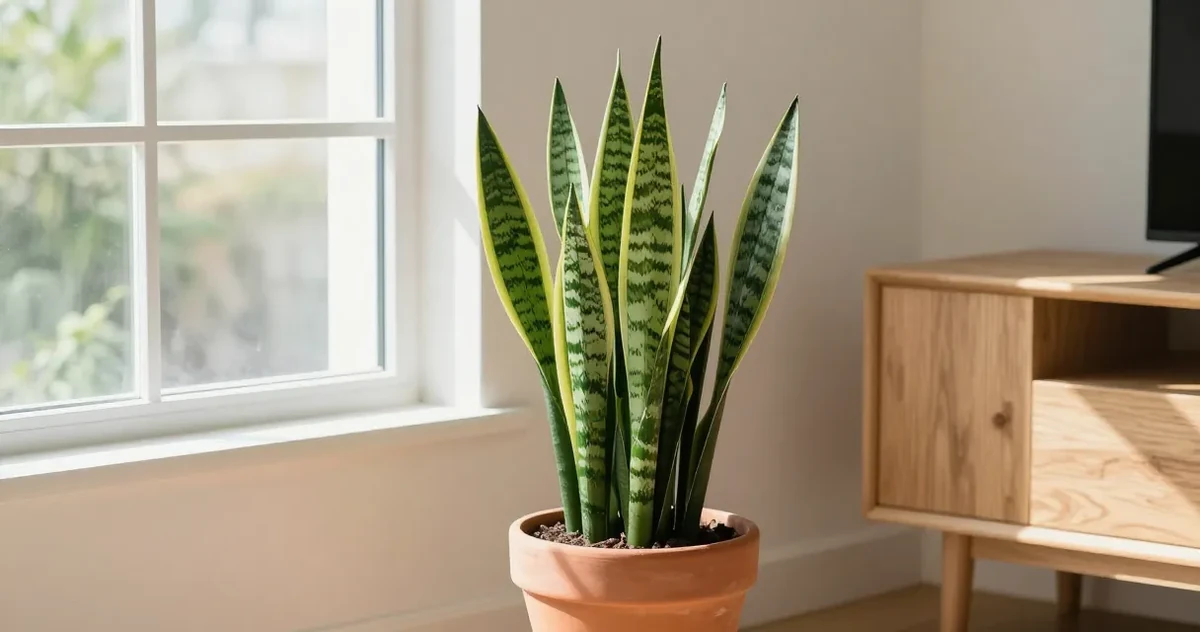
The Plant That Practically Takes Care of Itself
If you’ve ever bought a plant because everyone promised she was easy, then still ended up searching yellow leaves at 11 p.m., snake plant care probably feels more confusing than it should.
She really is one of the easier houseplants. The tricky part is that most problems come from kindness rather than neglect - too much water, soil that stays wet too long, or the assumption that low light means no light at all.
The snake plant (Dracaena trifasciata, still widely sold under her old name Sansevieria) is a succulent-like perennial with stiff, upright leaves that grow in strong architectural fans. Care in one sentence: give her less water than you want to, decent light, and a pot that lets the roots breathe. When those three things are right, she settles in and stays.
She’s been a staple of homes and offices for decades for a reason. When you understand her rhythm, she makes plant care feel calmer rather than anxious.
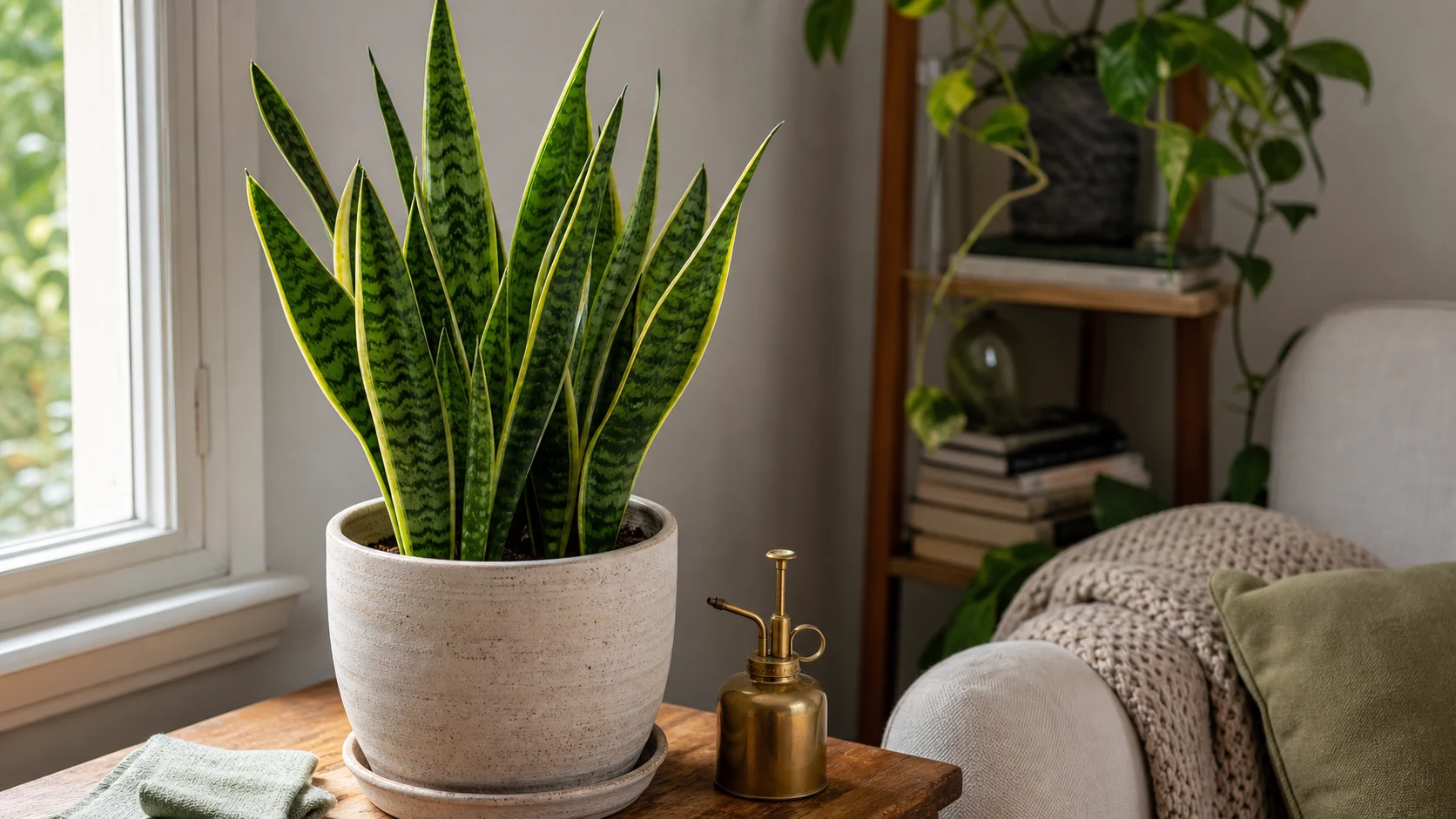
A healthy snake plant settles into a bright, lived-in room with minimal fuss and restrained watering.
Identification Snapshot
Before we get into care, a quick look at what you’re working with.
| Detail | What to know |
|---|---|
| Botanical name | Dracaena trifasciata |
| Old name you’ll still see | Sansevieria trifasciata |
| Growth habit | Upright, clumping leaves from the base |
| Best known for | Handling missed waterings and lower light better than most houseplants |
| Most common mistake | Watering before the soil is fully dry |
| Good fit for | Beginners, busy homes, offices, bedrooms, shelves, and floor corners |
| Not a great fit for | Homes with leaf-chewing pets or people who water every few days |
Common Varieties
If you’ve stood in a garden centre staring at what look like five completely different plants all labelled “snake plant,” that’s not a mislabelling problem - that’s just how many varieties exist. Here are the ones you’ll encounter most:
| Variety | What makes it different |
|---|---|
| Laurentii | Yellow-edged leaves - the classic look most people picture when they say snake plant |
| Moonshine | Pale silver-green, almost ghostly, with a soft architectural presence |
| Hahnii (Bird’s Nest) | Compact rosette shape, stays small, perfect for desks and shelves |
| Cylindrica | Round, spear-like leaves instead of flat blades - more sculptural than the standard form |
| Black Coral | Dark green with subtle cross-banding, bold and very architectural |
Care is the same across all of them. One practical note: if you propagate a variegated variety like Laurentii from leaf cuttings, new growth will likely revert to solid green. Division - splitting the root clump - is the only way to reliably keep the variegation.
Confused With
New plant owners sometimes mix up snake plants with aloe or ZZ plants at first glance.
- Snake plant vs aloe: aloe grows in soft, fleshy rosettes that snap easily; snake plant grows in firm, upright blades
- Snake plant vs ZZ plant: ZZ plants have many small leaflets growing along arching stems; snake plants grow individual sword-like leaves straight from the base
Not sure which one you have? Our guide to snake plant benefits covers what makes this plant worth choosing, and can help you confirm you’ve got the right one.
What Most Care Guides Miss
Most snake plant care guides tell you the ideal routine. The more useful question is what to check first when something starts looking off.
A very common misdiagnosis: treating every curling, leaning, or yellowing leaf like a watering emergency. Generic advice like “just water less” or “move it to brighter light” is incomplete, because the same symptom can come from very different causes - and changing the wrong variable can make things worse before they get better.
Before you adjust anything, check in this order:
- Soil moisture below the surface: Is it still damp halfway down, or bone dry all the way through?
- The leaf base: Does it feel firm at the soil line, or soft and slightly mushy?
- The pattern: Is the oldest, lowest leaf changing first, or does the whole plant look stressed at once?
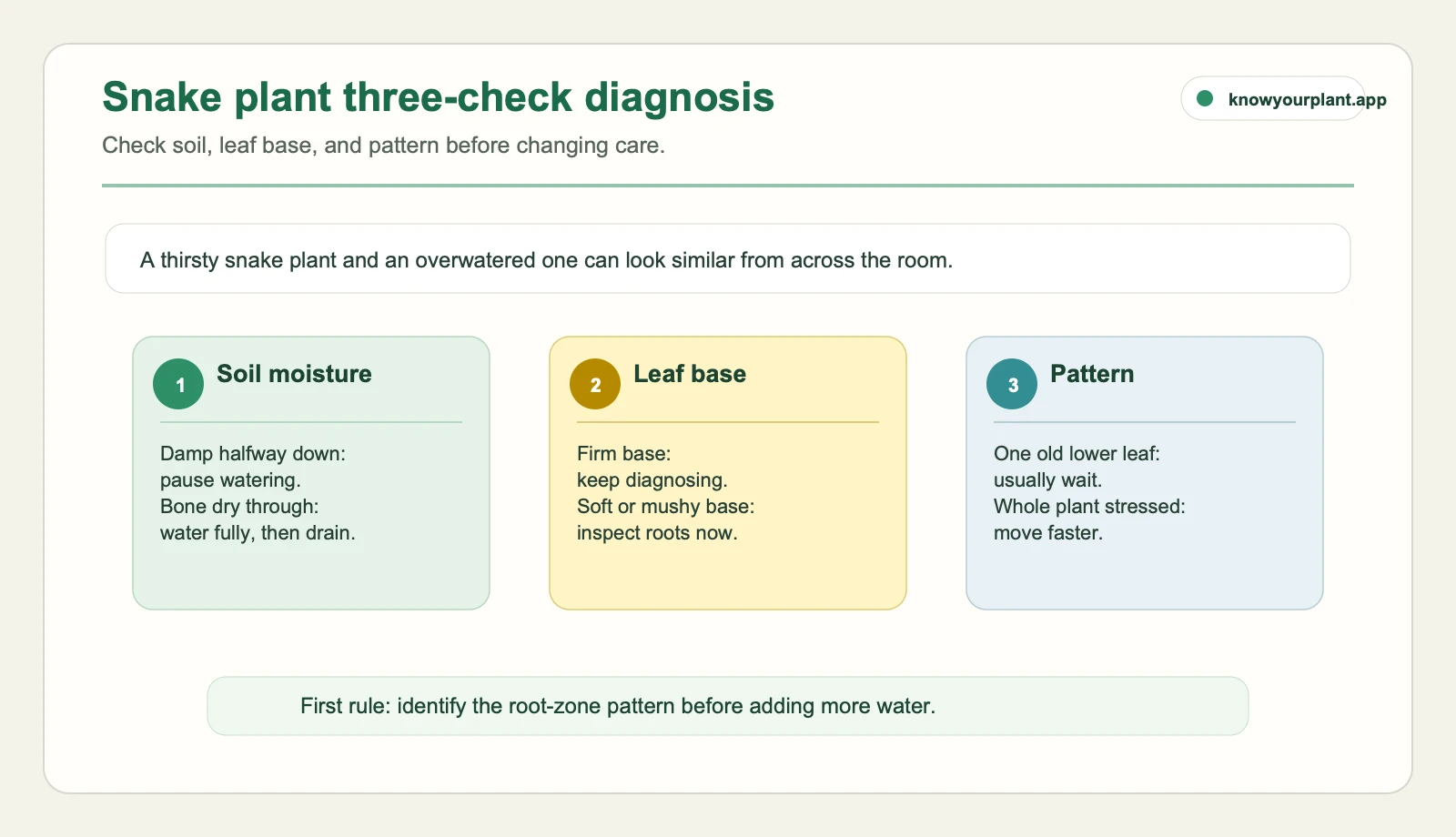
Use the three-check diagnosis before changing water or light; the soil and leaf base tell you whether the problem is thirst or wet roots.
That three-step check tells you most of what you need. A thirsty snake plant and an overwatered one can look almost identical from across the room. The soil and the base of the leaves tell you which situation you’re actually in.
Care Cards
| Need | Fast rule |
|---|---|
| Light | Bright indirect light is ideal, but lower light is workable if you water much less often |
| Water | Wait until the mix is dry deep in the pot, then water thoroughly and empty the saucer |
| Soil | Use a fast-draining cactus mix or standard potting soil cut with plenty of perlite or pumice |
| Pot | Drainage hole required, and slightly snug is safer than oversized |
| Pet safety | Keep out of reach of cats and dogs that chew leaves |
| Winter rhythm | Water less, skip feeding, and keep leaves away from cold glass |
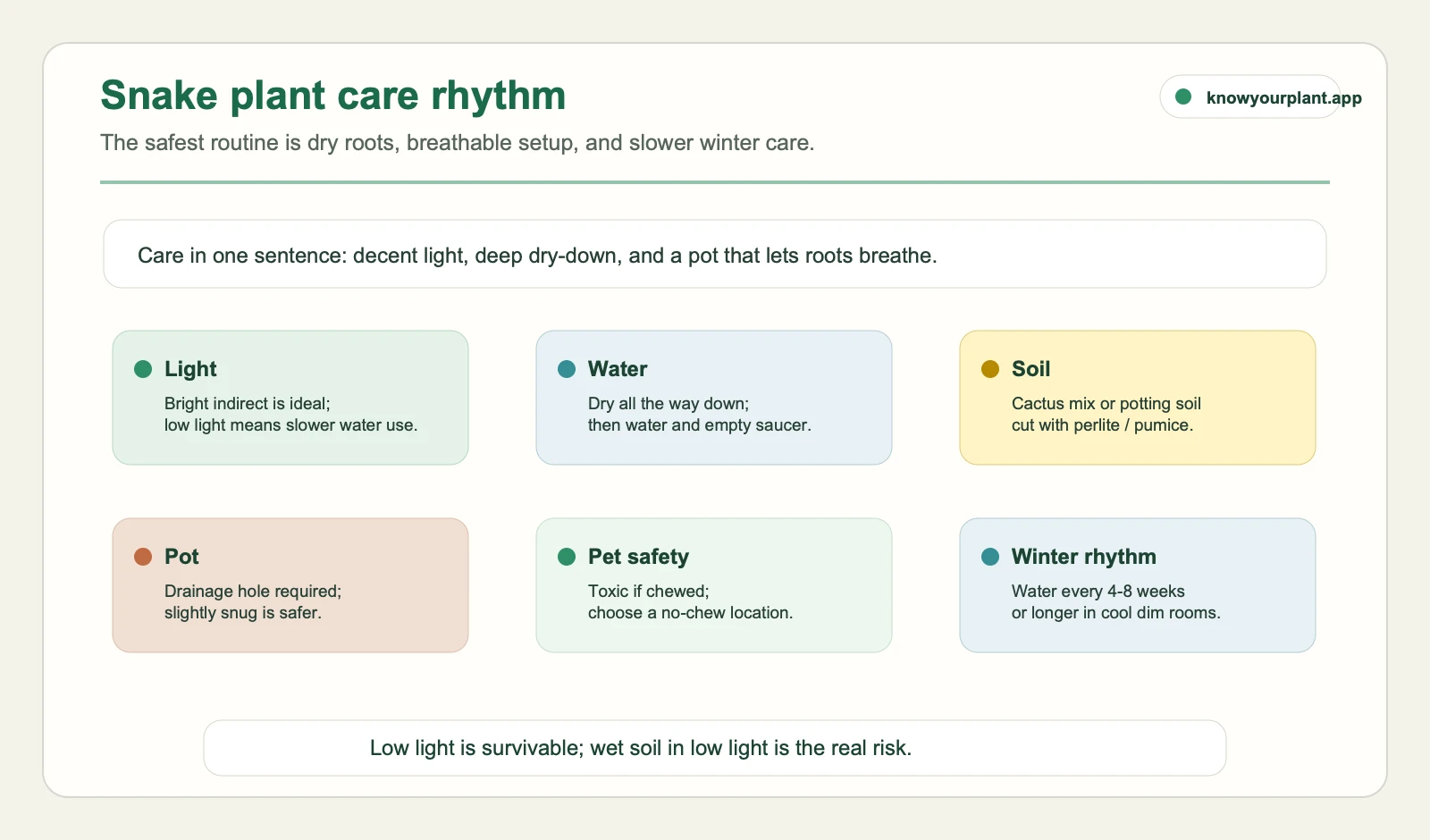
Use the care rhythm card as the practical baseline: dry roots, breathable setup, slower winter care, and pet-aware placement.
Expert Note
NC State and Penn State both treat snake plant as a forgiving Dracaena, not a plant that wants constant attention. The low-light tolerance is real, but it changes the watering rhythm because the soil dries much more slowly. ASPCA also lists snake plant as toxic to cats and dogs, so the two checks that matter most are the root zone and pet access.
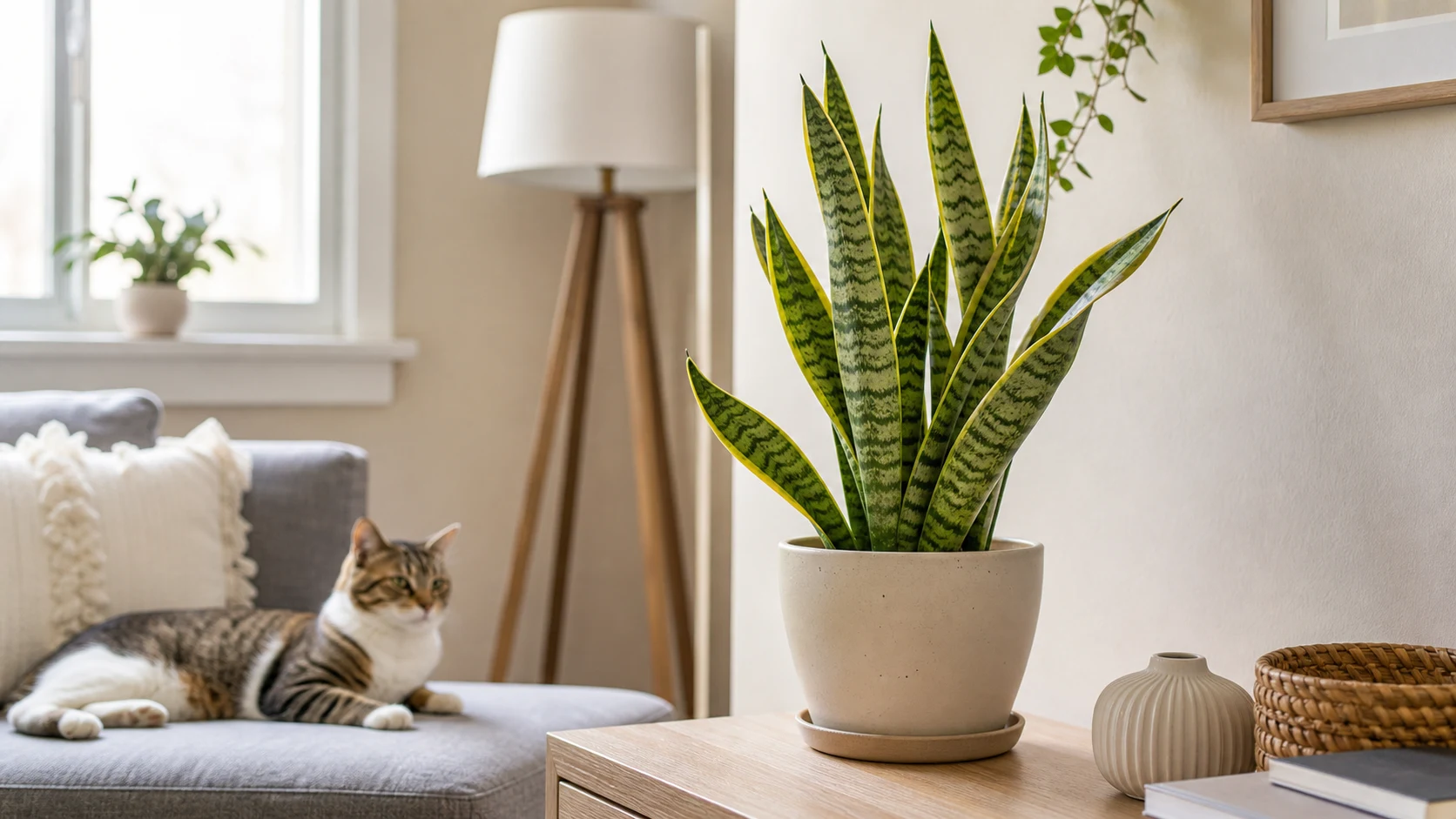
A visible root zone and deliberate distance from curious pets are the two practical placement checks.
Light: More Flexible Than You’d Expect
How much light does a snake plant actually need? The honest answer: she tolerates more shade than almost any other common houseplant, but she looks and grows better with decent light.
According to the North Carolina Extension Gardener Plant Toolbox, snake plant does best when she gets 2 to 6 hours of direct sun for part of the day, while tolerating very low light. That matches what plant owners see at home: she survives in dimmer spots, but she looks stronger and stays more compact in brighter ones.
What she loves: bright indirect light, or a little gentle morning sun through an east-facing window
What she handles well: medium light and most lower-light rooms with a real window
What causes problems: long stretches of harsh afternoon sun, which can bleach the leaf colour over weeks
“Place in a location where it will receive direct sunlight only part of the day, 2 to 6 hours, as it will tolerate very low light.” – North Carolina Extension Gardener Plant Toolbox
If your room is genuinely dim, a simple grow light setup can help her stay compact and healthy instead of slowly stretching and leaning toward the nearest light source. Our grow lights for indoor plants guide covers the setups that work well for tolerant plants like this one.
Watering: The Main Thing to Get Right
This is where most snake plant problems begin. She looks sturdy, but her roots hate staying wet.
The Sill recommends watering a snake plant every 2 to 8 weeks, always making sure the soil is dry first. That wide range is intentional. Your light level, pot size, season, and room temperature all affect how fast she dries out. There is no reliable weekly schedule.
“Water a snake plant thoroughly every two to eight weeks, ensuring the soil is dry before every watering.” – The Sill
The Rule That Works
Let the soil dry out completely before watering again. Not just the top layer - all the way down.
How to check: Push your finger into the soil as far as it will go. If it feels cool or damp at any depth, wait a few more days. For deeper pots, a wooden skewer works better than a finger: push it in, leave it for 30 seconds, pull it out. If any moisture clings to the skewer, she’s not ready yet.
You can also pick up the pot. A dry snake plant in a terracotta pot will feel noticeably lighter than the same pot just after watering. With practice, this becomes a fast and reliable read.
When she is ready, water thoroughly until it drains freely from the bottom, then empty the saucer completely.
What This Looks Like Across the Year
- Spring and summer: every 2 to 3 weeks in typical home conditions
- Autumn: soil starts staying damp longer - check before watering rather than going by calendar
- Winter: often every 4 to 8 weeks, sometimes longer in cool or dim rooms
NCSU specifically notes that winter watering can slow to every one to two months for some setups. That’s not neglect - that’s reading her actual needs instead of following a habit.
Signs She Has Had Too Much Water
- Yellow leaves, especially low on the plant, with a soft texture
- A soft or mushy feeling at the leaf base where it meets the soil
- Soil that stays wet for more than a week or so after watering
- A sour or musty smell coming from the pot
Signs She Is Ready for Water
- Soil bone dry several centimetres down when you push your finger in
- Pot noticeably lighter than usual when you pick it up
- Leaves feel very slightly less firm, but still not soft or limp
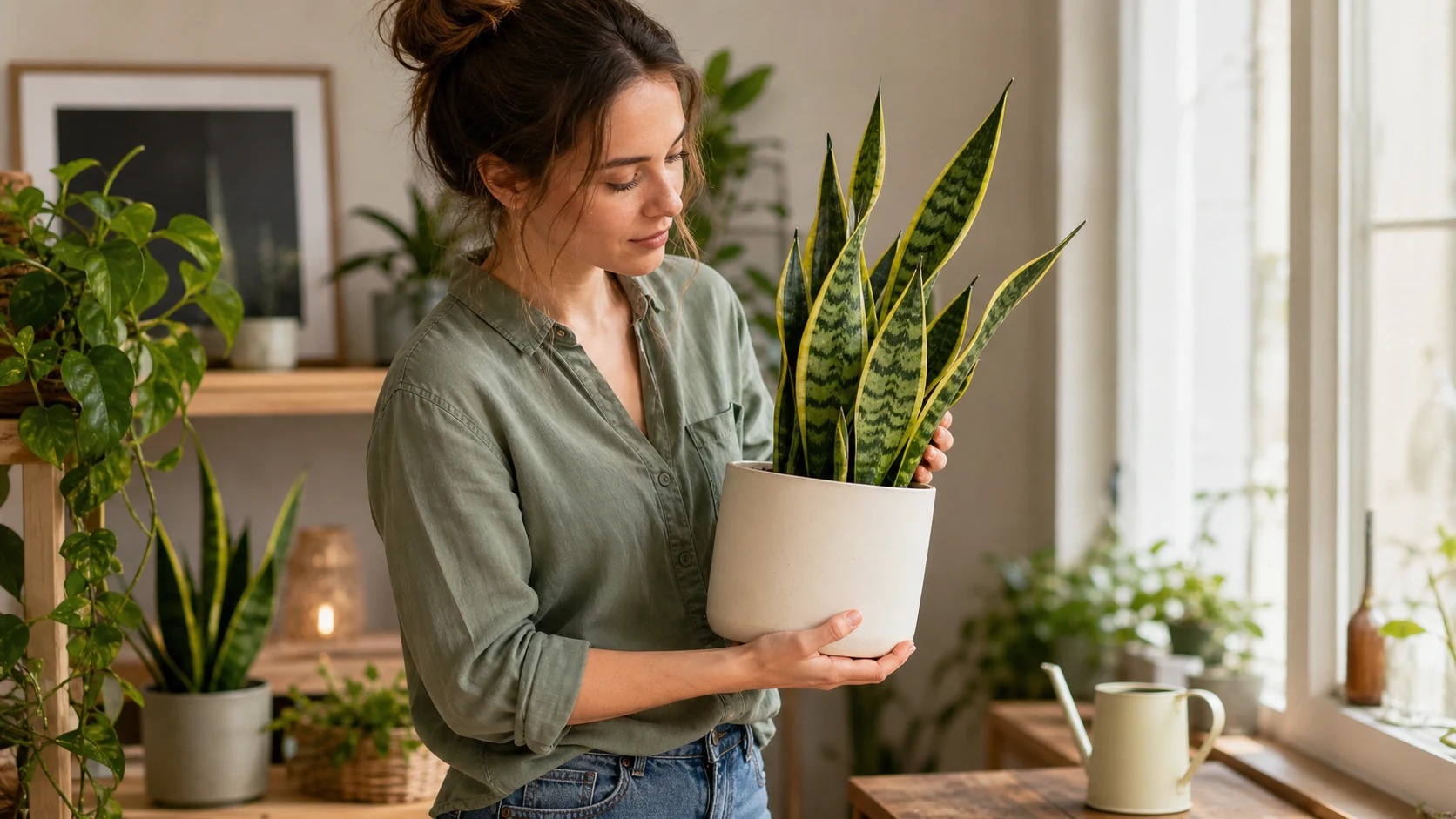
Lift the pot and check the leaves before reaching for the watering can.
If the base feels mushy or the roots smell off, the problem has moved past watering habits. Our root rot treatment guide walks through exactly what to do from that point.
Soil and Pots
Well-draining soil is not optional for snake plant care. She stores water in her thick leaves, which means soggy soil doesn’t help her - it traps the roots in conditions they can’t handle.
A cactus or succulent mix works well straight from the bag. If you’re using standard indoor potting soil, add a generous amount of perlite or coarse pumice to help it drain faster and stay airy between waterings.
The pot material makes a genuine difference here. Terracotta dries out faster than plastic or glazed ceramic, which is helpful if you tend to water on instinct rather than checking the soil first. Our terracotta pots guide explains why this material choice matters more for some plants than others, and snake plant is a good example of one that benefits.
Whatever material you choose, drainage holes are non-negotiable. And this is one of those plants that does better slightly snug than swimming in extra soil - a pot much larger than the root ball holds more moisture than she can use, and that’s usually where root problems start.
Repot only when roots are pushing through the drainage hole, circling tightly at the bottom, or the plant is clearly crowding herself upward. Go up just one pot size at a time.
Temperature and Humidity
Refreshingly easy here.
The Sill says she thrives between 60 to 75 degrees F (16 to 24 C), and NCSU notes she tolerates cool temperatures around 50 F. That covers most indoor spaces without any adjustments.
Around 40% humidity is comfortable for her - roughly average indoor humidity. No misting routine, no humidity tray required.
Keep her away from icy window glass in winter, cold drafts near exterior doors, and heater or AC vents blowing directly on her leaves. Outside of those three things, she usually settles in without complaint.
Feeding
She doesn’t need much. A balanced liquid fertiliser at half strength, once a month in spring and summer, is plenty. Skip feeding entirely in autumn and winter when her growth slows down.
If she’s living in lower light, you can feed even less frequently. Less light means slower growth, and slower growth means she uses less of everything.
Common Problems and What They Usually Mean
Yellow Leaves
Most often: too much water, or watering before the soil had dried completely. If the soil is still damp and the base of the leaf feels soft, stop watering, check the roots, and let her dry out. If only one old outer leaf is yellowing and the rest of the plant looks healthy, it may simply be natural ageing - she drops her oldest leaves eventually. For a cause-by-cause diagnosis, see the guide on snake plant yellow leaves.
Brown Tips
Brown tips usually come from inconsistent watering, mineral buildup from tap water (switching to filtered or rainwater sometimes helps), cold drafts, or sun exposure that was a bit too intense for too long. The tip itself won’t turn green again once it’s brown, so trim it cleanly and focus on fixing the underlying pattern.
Pale or Bleached Leaves
Usually too much direct sun. Move her a step back from the brightest window and give her a few weeks to adjust.
Drooping or Leaning Leaves
Root stress is the most common cause. If the soil has stayed wet too long, the roots may not be strong enough to support the leaves upright. Long-term low light can also make her gradually lean toward the nearest window. If the whole plant is slumping or falling sideways, the snake plant drooping guide helps separate root trouble, thirst, and top-heavy growth.
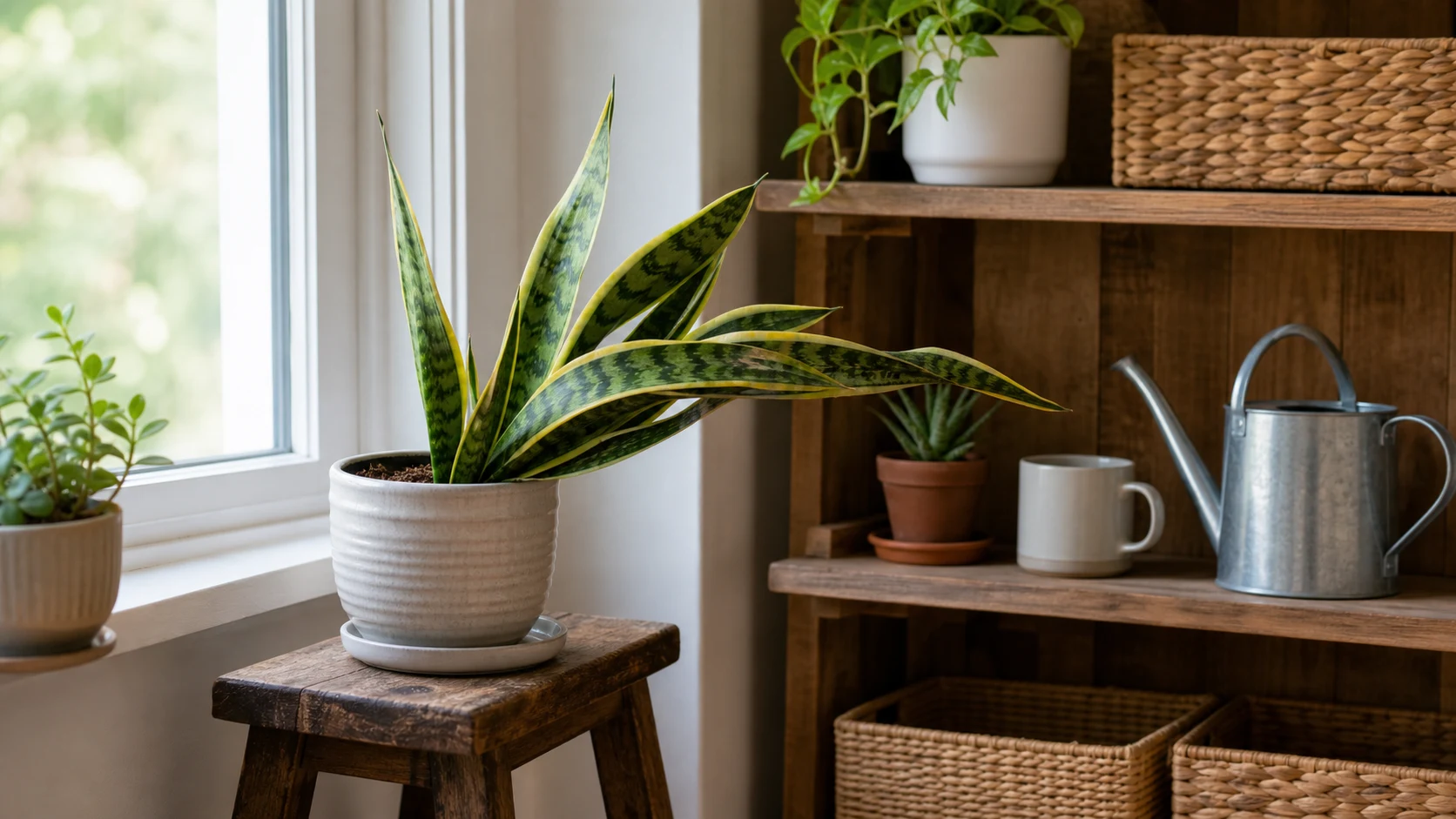
Compare slumping leaves with the upright growth before deciding whether roots, thirst, or light are responsible.
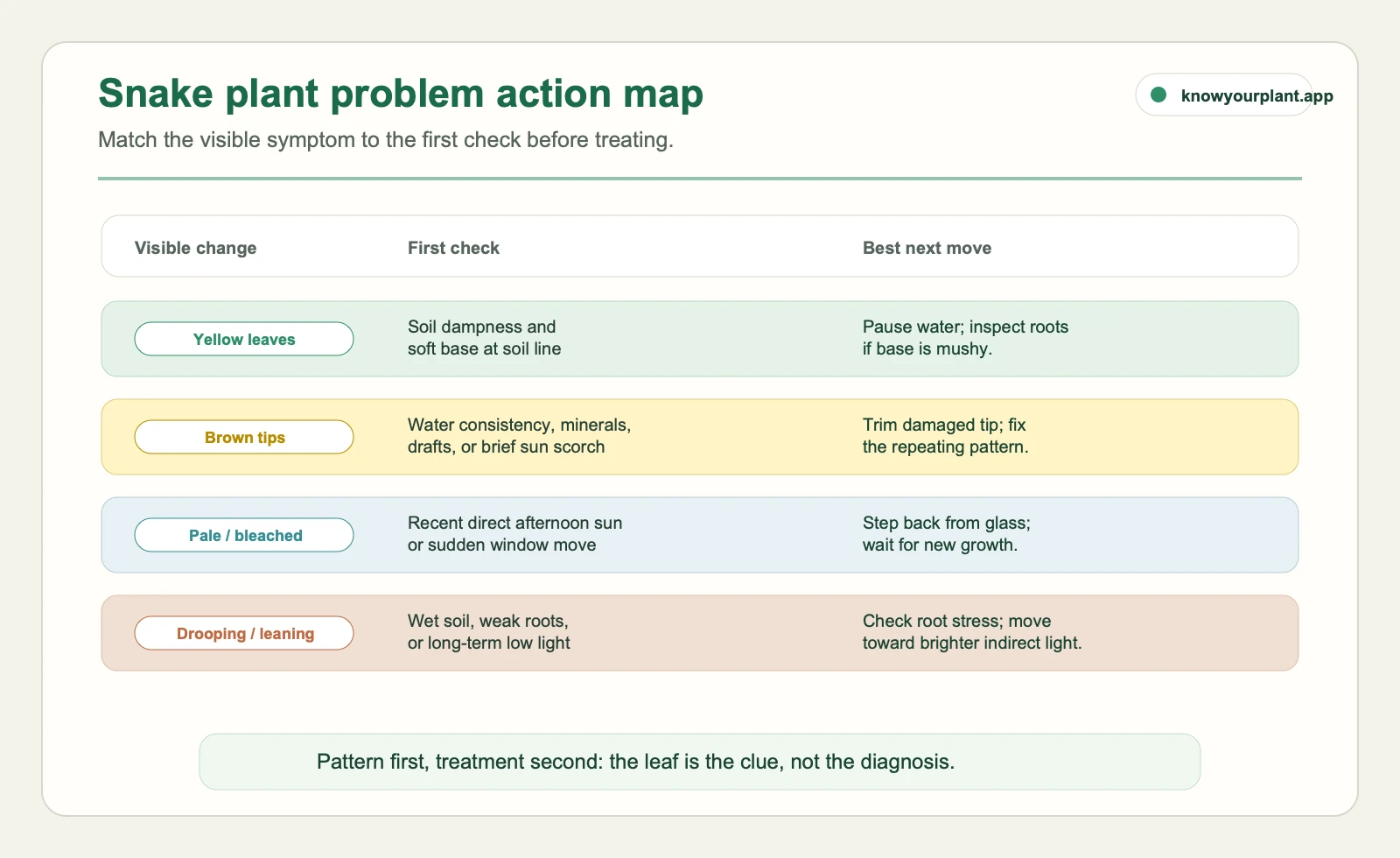
Use the problem action map to match the visible leaf change to the first check instead of treating every symptom like a watering emergency.
Pet Safety
Worth saying clearly: snake plants are toxic if chewed by cats or dogs. They contain saponins that cause drooling, nausea, and stomach upset.
If you have a pet that investigates plants with their mouth, keep her well out of reach or choose a spot they can’t get to. For a fuller list of plants that are genuinely safe around curious cats, our cat-safe plants guide has practical alternatives for every room.
Seasonal Care: She Doesn’t Want the Same Thing All Year
This is where a lot of people accidentally cause trouble. The care rhythm that worked beautifully in July can quietly cause root problems if you keep the same pace in January.
Spring and Summer
She wakes up, grows more visibly, and dries out faster between waterings. If she’s been stable through winter, this is when you’ll typically see a new leaf push up from the base. A good time to fertilise and, if needed, repot.
Autumn
Growth slows. The soil starts staying damp longer after each watering. Check the soil before watering rather than going by habit.
Winter
Her quiet season. NCSU’s guidance to water every one to two months in winter is a genuine reflection of how slowly she uses water when growth has paused. No fertiliser. No repotting unless something is clearly wrong. Just patience. If your home gets very cold near certain windows, watch the leaves closest to drafty glass - they’ll show stress first.
Two Things Worth Remembering
Both of these come from sources that spend a lot of time with these plants, and they cover most of what goes wrong:
“Well-drained soil and careful watering are a must; do not overwater, as the roots will rot.” – North Carolina Extension Gardener Plant Toolbox
“Snake plants need even less water during the winter.” – The Sill
Light helps. Fertiliser is optional. Drainage and patience are what keep her alive.
Real User FAQ
How often should I water a snake plant?
Most snake plants need water every 2 to 3 weeks in brighter, warmer months and every 4 to 8 weeks in cooler or darker conditions. In winter, some setups only need watering every 1 to 2 months. Always check the soil rather than following a fixed calendar.
Can a snake plant really live in low light?
Yes, she tolerates low light better than most common houseplants. But low light usually means slower growth, less vibrant colour, and soil that stays wet longer after watering. She survives in dim spots, but she won’t grow much.
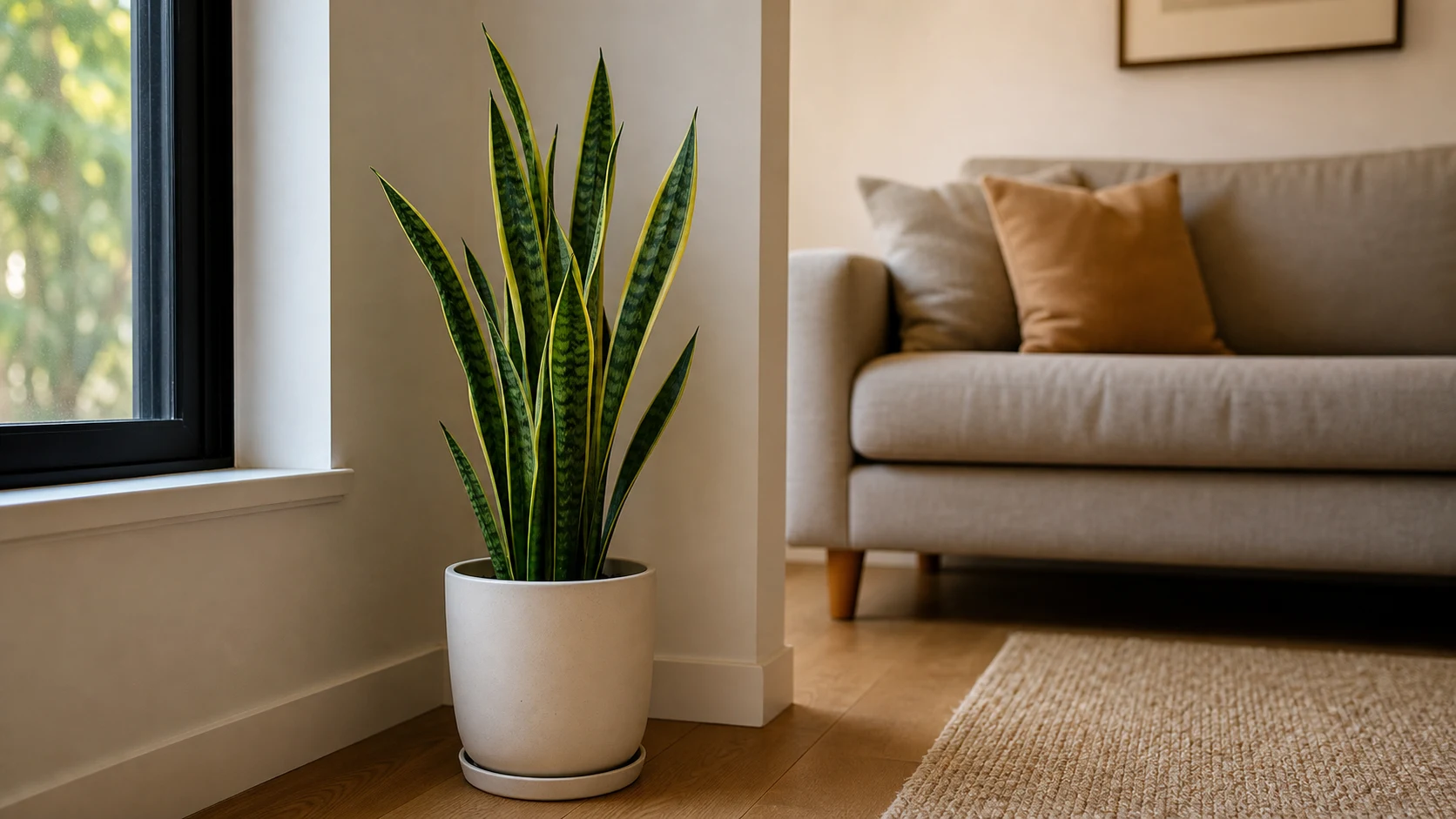
A shaded corner can work, but slower drying means the watering rhythm must slow down too.
Why are my snake plant leaves turning yellow?
Yellow leaves usually mean overwatering, especially if the soil is still damp or the base of the leaf feels soft. If only one old lower leaf is yellowing and the rest of the plant looks fine, that’s likely just natural leaf ageing.
Why do my snake plant’s brown tips keep coming back?
Brown tips are usually caused by inconsistent watering, minerals in tap water, cold drafts, or brief periods of too much direct sun. The damaged tip won’t recover, so trim it cleanly and focus on identifying the underlying pattern.
When should I repot a snake plant?
Repot when roots are coming out of the drainage hole, circling tightly at the bottom, or the plant is clearly crowded. Go up just one pot size. Too much extra soil holds more water than she can use.
Does a snake plant need fertiliser?
Only lightly. A diluted balanced fertiliser once a month in spring and summer is enough. Skip it entirely in autumn and winter.
Is a snake plant a good choice for beginners?
Yes, especially for beginners who don’t want to tend to their plants every few days. She handles missed waterings, average humidity, and less-than-perfect light better than most houseplants. The main adjustment is learning not to water too soon. If you’re looking for other plants in the same spirit, our easy houseplants for beginners guide has good options in the same category.
Do all snake plant varieties need the same care?
Yes - care is consistent across Laurentii, Moonshine, Hahnii, Cylindrica, and other common forms. The one thing that varies: if you want to keep a variegated variety like Laurentii looking variegated, propagate by division rather than leaf cuttings. Leaf-cutting propagation tends to revert the markings in new growth.
Methodology Note
This guide was refreshed with current search review for snake plant care, low-light placement, watering, pet safety, and common rescue questions. Community snippets were used only to surface recurring confusion, especially the way overwatering and thirst can look similar once the roots are stressed. Care and safety claims were kept conservative and tied back to extension guidance and ASPCA toxicity notes.
Last Updated Note
Last updated: 2026-06-16. If your plant lives in a dim room, cut watering frequency before you assume it needs more attention.
What She Really Needs
At the heart of it, snake plant care is a short list: well-draining soil, a pot with drainage holes, watering only when the soil is genuinely dry all the way down, decent light, and more patience than instinct usually suggests.
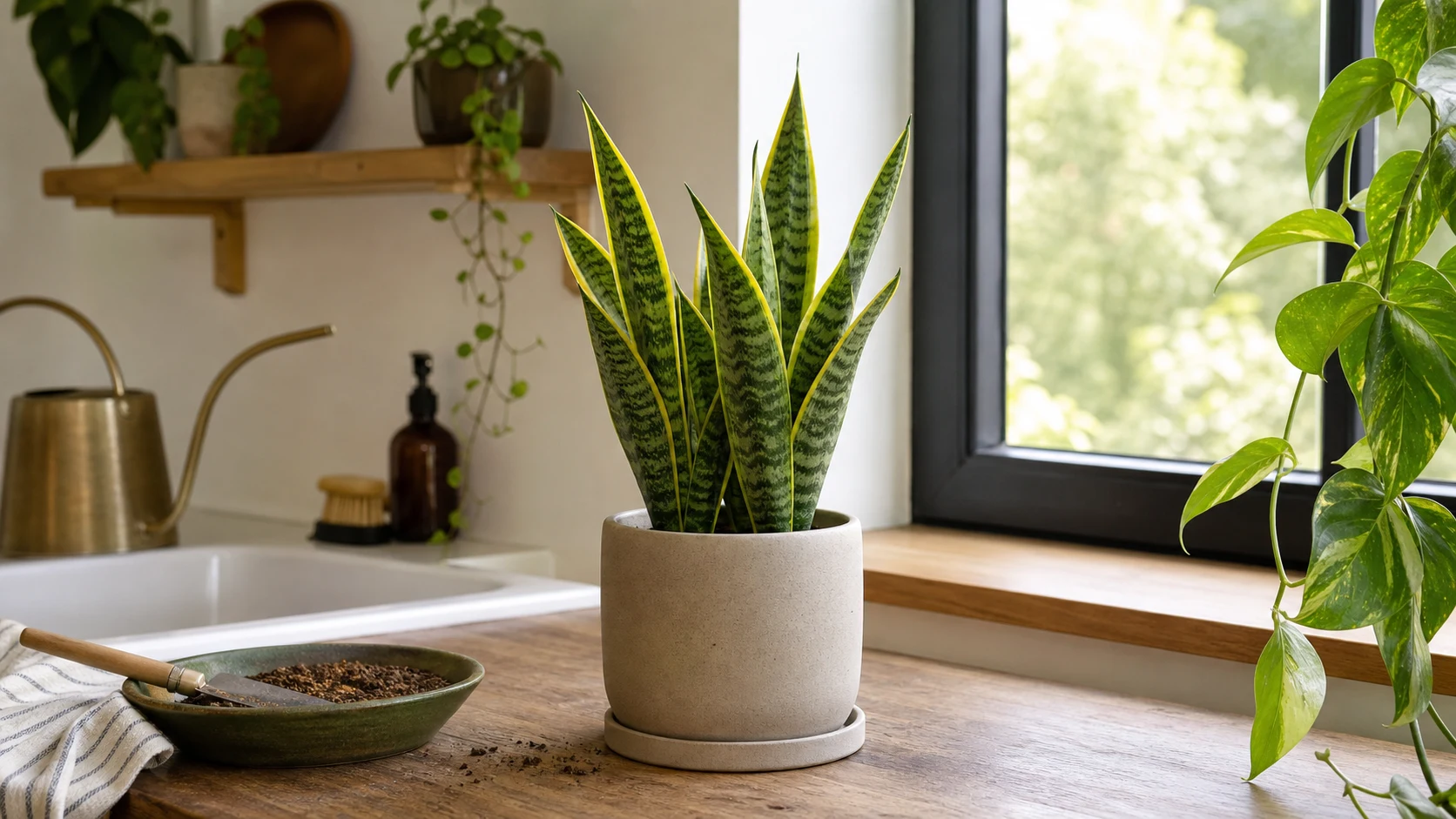
Dry airy soil, real drainage, indirect light, and patience are the care essentials that matter most.
She won’t ask for much attention. When you get the basics right, she rewards you with steady upright growth and the quiet satisfaction of a plant that’s clearly settled.
Pay attention to the soil before you water. Watch the pattern before you change anything. And if you want watering reminders tuned to your season and room conditions - plus quick help when something looks off - the KnowYourPlant app is worth keeping on your phone.