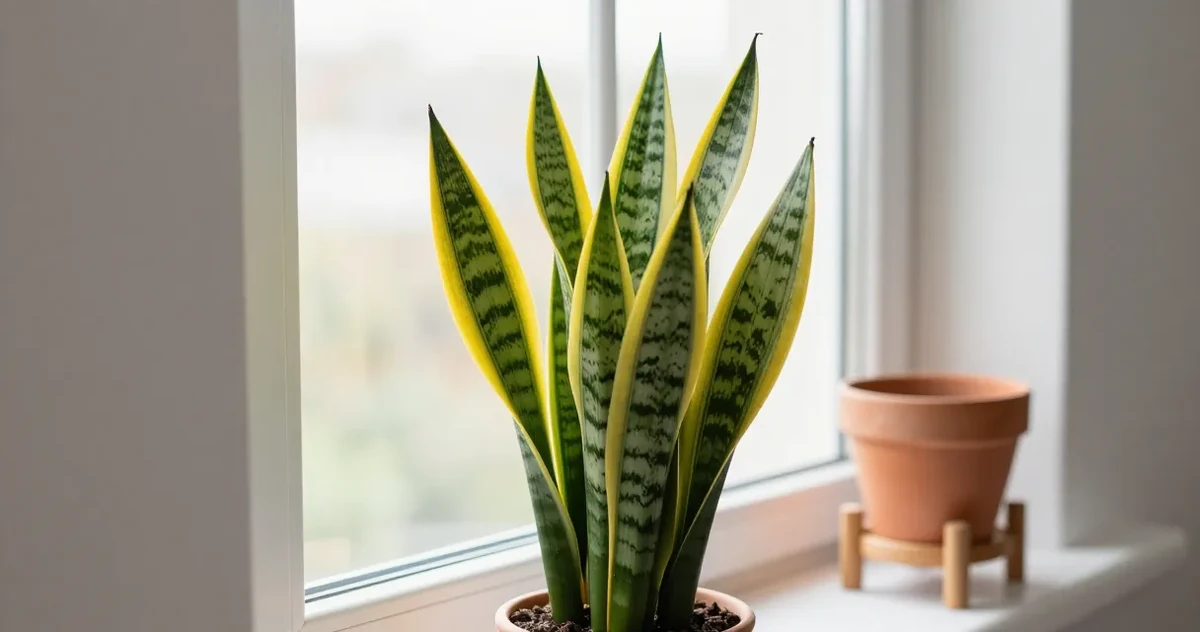
Snake plant yellow leaves are one of those problems that look obvious until you try to fix them the wrong way. You see a yellow leaf, assume the plant is thirsty, water it, and things get worse. Or you’ve heard the “snake plants hate water” advice, cut back drastically, and the plant goes from yellow to papery and limp. If the main symptom is leaning or collapse rather than color change, the snake plant drooping guide is the faster diagnostic path. Both happen regularly, and both are avoidable once you know how to read the actual symptom pattern before you reach for the watering can.
This guide covers every real cause of snake plant leaves turning yellow, in order of likelihood, and gives you a way to diagnose which one applies before you change anything.
By KnowYourPlant editorial team. Updated June 17, 2026 using source checks against NC State Extension, Penn State Extension, ASPCA, and recurring owner questions collected during the research pass behind this article.
What Most Care Guides Miss About Snake Plant Yellowing
Most articles on why a snake plant is turning yellow hand you a list: overwatering, underwatering, low light, pests, root rot, temperature. That list is accurate. The problem is it’s not useful on its own, because each cause looks slightly different and the fix for one can make another worse.
The common misdiagnosis is treating all yellowing as a watering problem. Someone notices yellow leaves, assumes the soil is too wet, skips watering for several weeks, and ends up with a dehydrated plant that still has soft leaf bases from earlier rot that never got addressed. The list of causes exists; what the list doesn’t tell you is which one you’re actually dealing with.
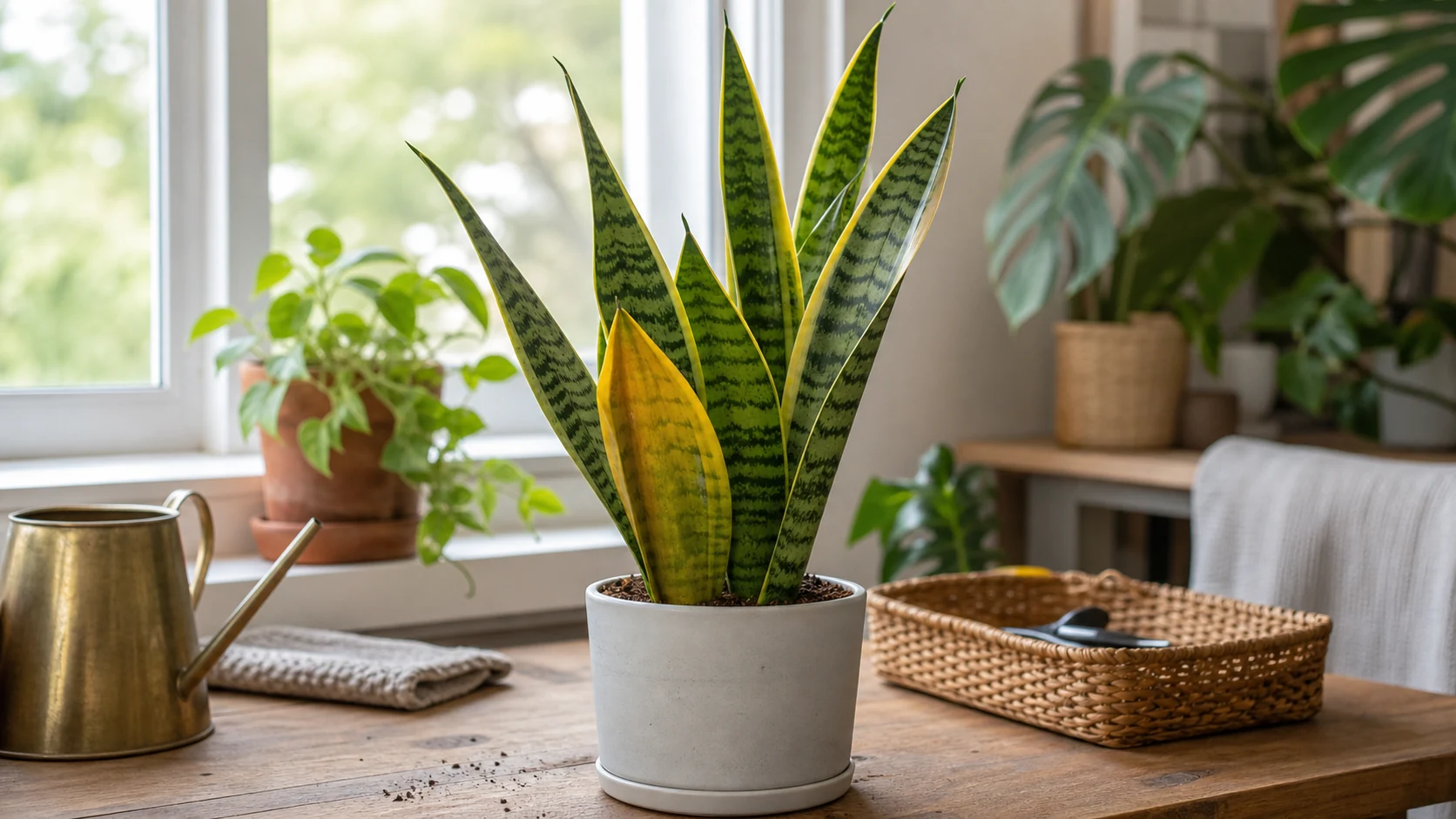
Compare leaf texture and where yellowing starts before changing water, light, or soil.
The practical first check before you change anything: look at leaf texture and where the yellow is spreading.
- Soft, mushy yellow with a darkened base? That’s overwatering or early rot. Stop watering and check drainage.
- Firm, pale yellow that starts at the tip or along the edges? Look at light and sun exposure together.
- Yellow spreading from old outer leaves at the base upward? This is often normal – older outer leaves die back as the plant matures.
- Yellow with tiny spots, webbing, or white cottony residue? Stop here and check for pests before you do anything else.
That one initial read – texture and location – narrows the diagnosis by half before you touch the soil.
Symptom Diagnosis Card: Read Your Yellow Leaf Fast
If you only have a minute, use this diagnosis card first. Match the color pattern, leaf texture, and where the damage begins before you change water, light, or soil.
This table covers the most common symptom combinations and what they typically mean for a snake plant. Use the texture and location columns together, not just one.
| What you see | Leaf texture | Where it starts | Most likely cause | First action |
|---|---|---|---|---|
| Yellow, collapsing leaves | Mushy at base | Lower, older leaves first | Overwatering or root rot | Stop watering, check drainage and roots |
| Pale, uniform yellowing across the whole plant | Firm throughout | All leaves gradually | Chronic low light | Move to brighter indirect light |
| Yellow-brown at tips or margins | Firm, dry, sometimes crispy | Tips and outer edges | Direct sun scorch | Move back from window |
| Single outer leaf yellowing, rest look fine | Firm | Outermost, oldest leaves | Normal turnover or transplant stress | Monitor for two weeks, no action yet |
| Yellow plus white cottony fluff at leaf bases | Check both | Where leaves meet the soil | Mealybug infestation | Treat pests first, before adjusting water |
| Yellow plus fine webbing or stippled marks | Check both | Leaf surfaces, especially undersides | Spider mites | Increase humidity, treat mites |
| Yellow or gold margins that look consistent, not spreading | Firm, healthy | Leaf edges on all leaves | Cultivar variegation | Nothing needed |
Most overwatering cases show mushy texture at the base. Most light cases show firm, uniform pallor. If you’re unsure, check the soil at 3–4 cm depth and the root zone before deciding.
Decision Tree: What to Check Next
Use this order when the cause is not obvious at first glance.
- If the leaf base is soft or mushy and the mix is still damp, treat it as an overwatering or root-rot problem first. Pause watering, inspect drainage, and unpot the plant if the base is collapsing.
- If yellowing started soon after repotting, audit the pot size before assuming disease. A pot that is much larger than the root ball keeps extra soil wet for too long.
- If the leaves are firm and the whole plant looks washed-out rather than wet, increase light before you change anything else. Low light yellowing is usually gradual and even.
- If the yellowing is strongest on the window-facing side and the tips feel dry or crisp, treat it as scorch. Move the plant back from direct sun.
- If you see webbing, white cottony residue, or stippling, switch to a pest check immediately. Water changes alone will not fix mealybugs or spider mites.
- If only one or two old outer leaves are yellow and the center still looks firm, monitor instead of panicking. Normal older-leaf decline and mild transplant stress can look dramatic without meaning the whole plant is failing.
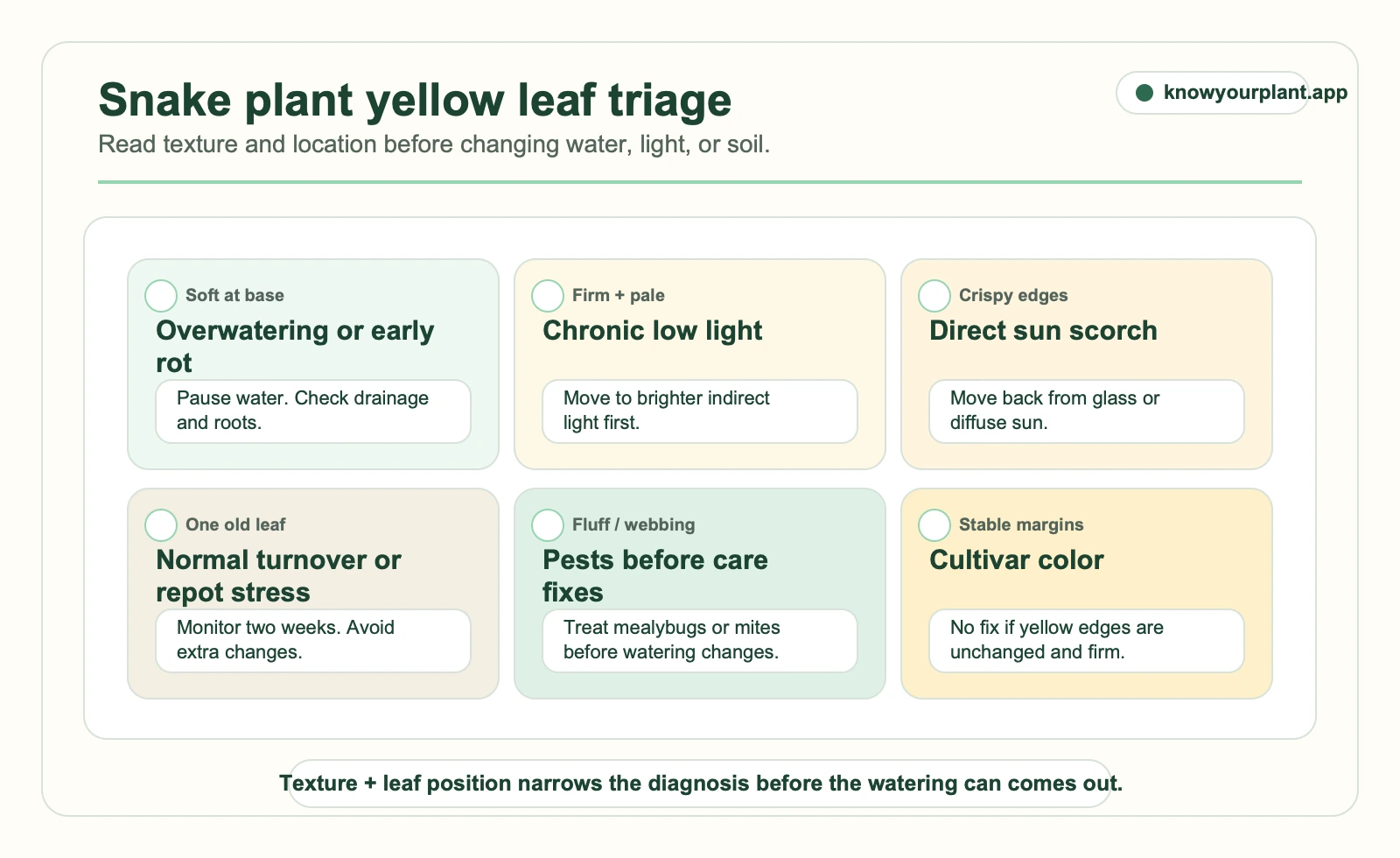
Use the pattern read before changing care: texture, leaf position, and whether the yellow is spreading decide the first check.
The Most Likely Cause: Overwatering
Sansevieria (now reclassified as Dracaena trifasciata) stores water in its thick leaves and rhizomes. It is genuinely difficult to underwater a healthy snake plant in a typical indoor environment. Overwatering is easy, and it’s slow-moving enough that you don’t notice it until leaves start yellowing.
When a snake plant gets too much water, the roots begin to suffocate in saturated soil. They lose the ability to take up oxygen, which interrupts normal function and causes leaves to yellow – usually starting with the lower, older leaves and progressing upward. If the yellow leaves are also soft or slightly mushy at the base, this is almost always overwatering or its downstream consequence: root rot.
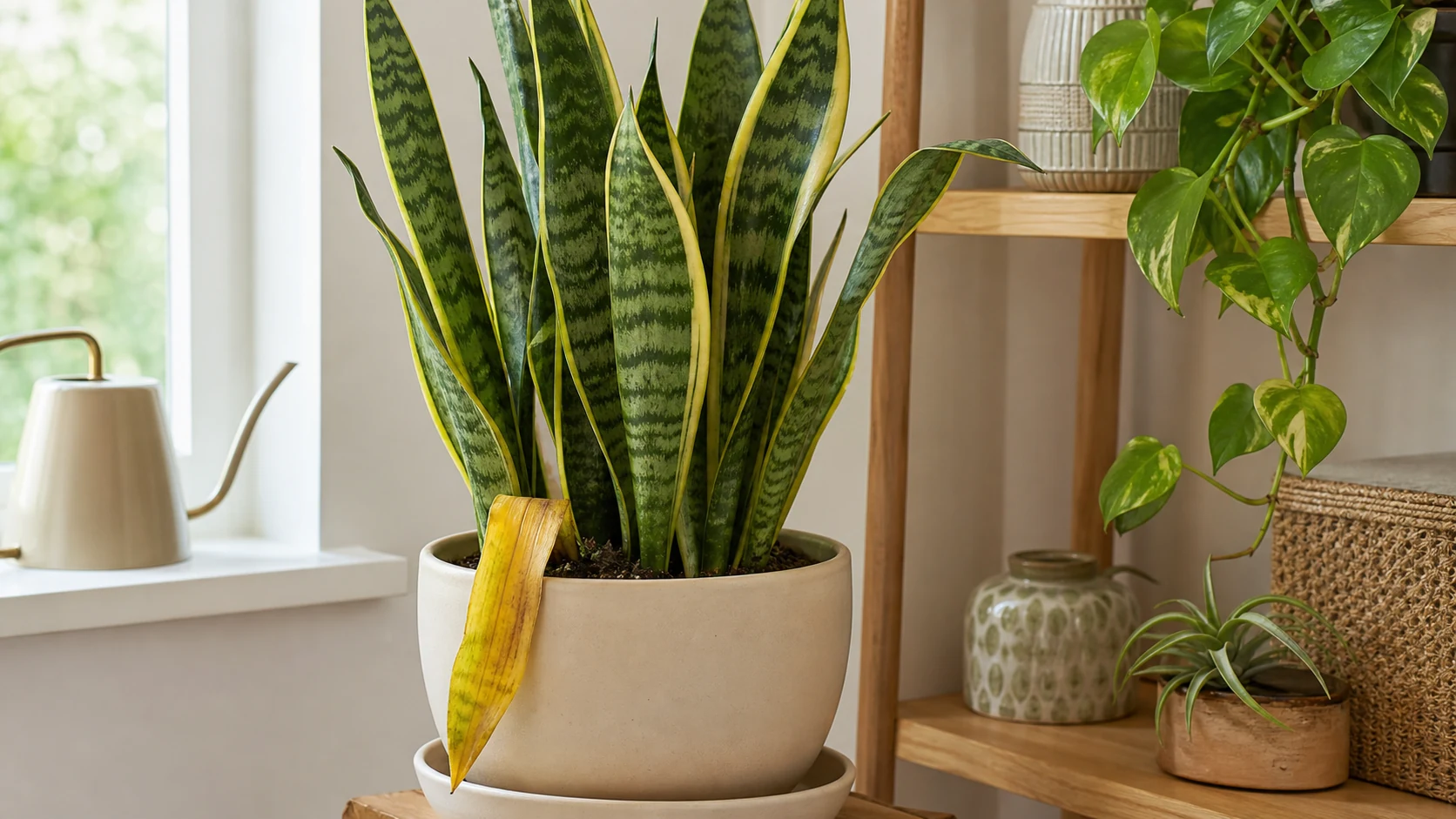
A yellow, collapsing lower leaf near the pot rim makes excess moisture the first check.
Both Penn State Extension and NC State Extension are clear on this. Root rot from overwatering is the primary threat to snake plants, and the plant should only be watered when the soil has completely dried out. Penn State specifically notes that snake plants should be “watered infrequently – only when the soil is dry – to prevent root rot,” while NC State flags overwatering as the top cause of plant failure in this species.
Watering audit: what to check before you water again
- Push your finger 3–4 cm into the soil. If it’s still damp, the plant doesn’t need water.
- Lift the pot. Does it feel heavy for its size? The mix is holding water.
- Look at the drainage. No holes in the pot means water is accumulating at the bottom with every pour.
- Consider the season. Snake plants in winter need water far less often – sometimes once every four to six weeks in a cool, dim room.
A watering calendar doesn’t work for snake plants. Frequency depends on season, pot size, soil mix, and how bright the room is. The right trigger is soil state, not the date.
A Note on Winter Watering
Snake plants slow significantly from late autumn through early spring. Growth nearly stops, and the roots use far less moisture. If you’ve been watering every one to two weeks through summer and haven’t adjusted that habit going into winter, you are almost certainly overwatering by November.
In a cool room with shorter days, some snake plants need water only once a month or less. The soil-check rule matters most in winter because the surface can look and feel dry while the middle of the pot is still quite damp. If your plant started yellowing in autumn or winter without any other changes, cut back watering before you look at any other cause.
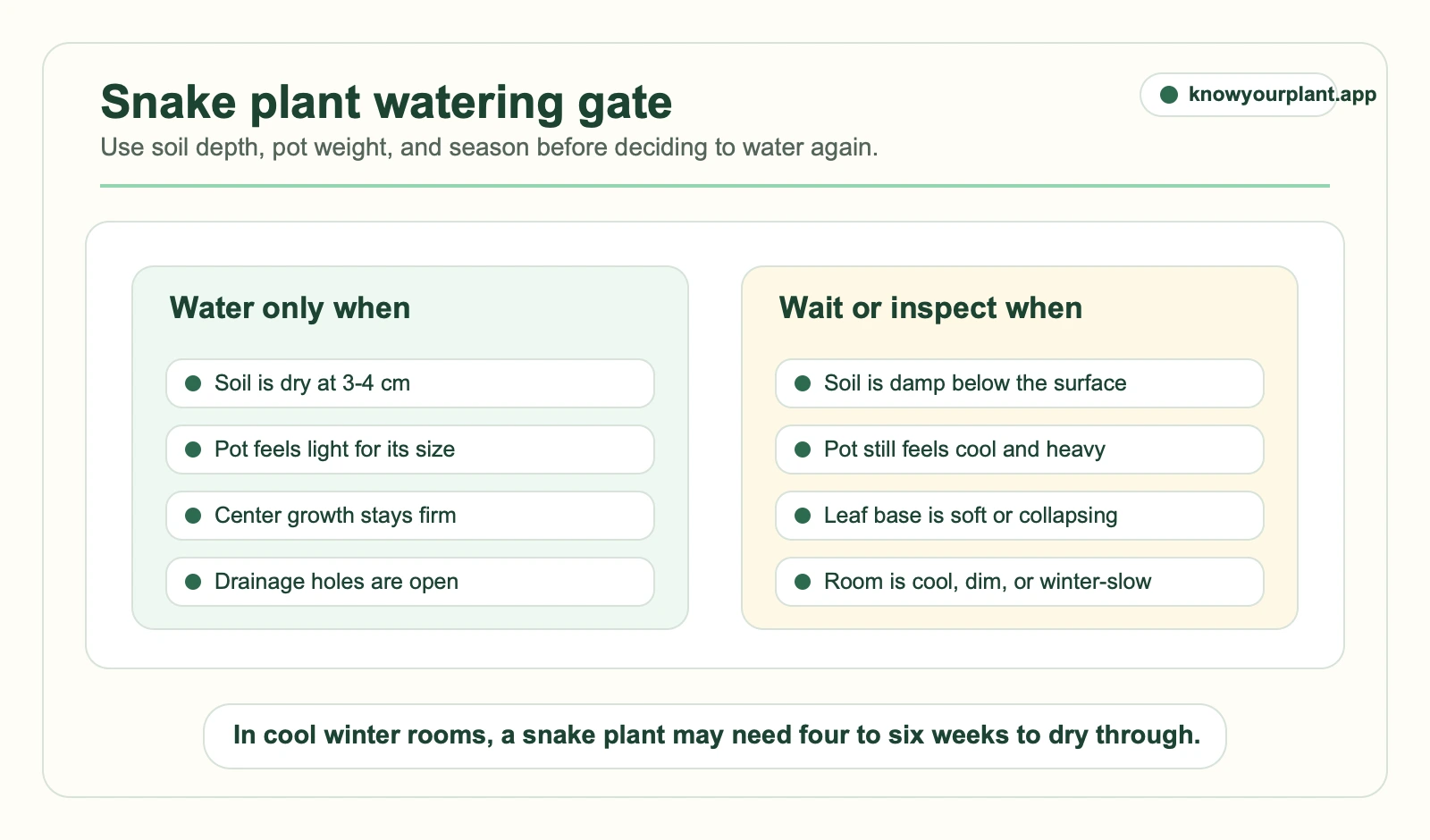
For snake plants, the safest watering trigger is a dry root zone plus a light pot, not a fixed calendar interval.
Root Rot: When Overwatering Goes Further
If overwatering continues, the roots begin to rot. This is a separate problem from simple wet soil – it means the roots themselves are damaged and the plant can no longer take up water or nutrients even after you correct your watering habits.
Signs that you’re dealing with rot rather than just wet soil: leaves that are yellow and collapsing at the base, a dark or brown-black mushy section at the soil line, and sometimes a faint sour or fermented smell when you lift the plant out.
If you suspect rot, the only way to confirm it is to unpot the plant. Healthy snake plant roots are firm and pale tan or white. Rotted roots are dark, soft, and often smell bad. You can save a rotting snake plant if there are still healthy roots remaining – trim away the rotted sections, let the roots air dry for a few hours, and repot into fresh, well-draining mix in a pot with drainage holes.
For more on handling root rot across plant types, the guide on treating root rot covers the rescue process in detail.
After a Repot: A Different Pattern Entirely
If your snake plant started yellowing after a recent repot, the cause is different from chronic overwatering, and treating it like rot could make things worse.
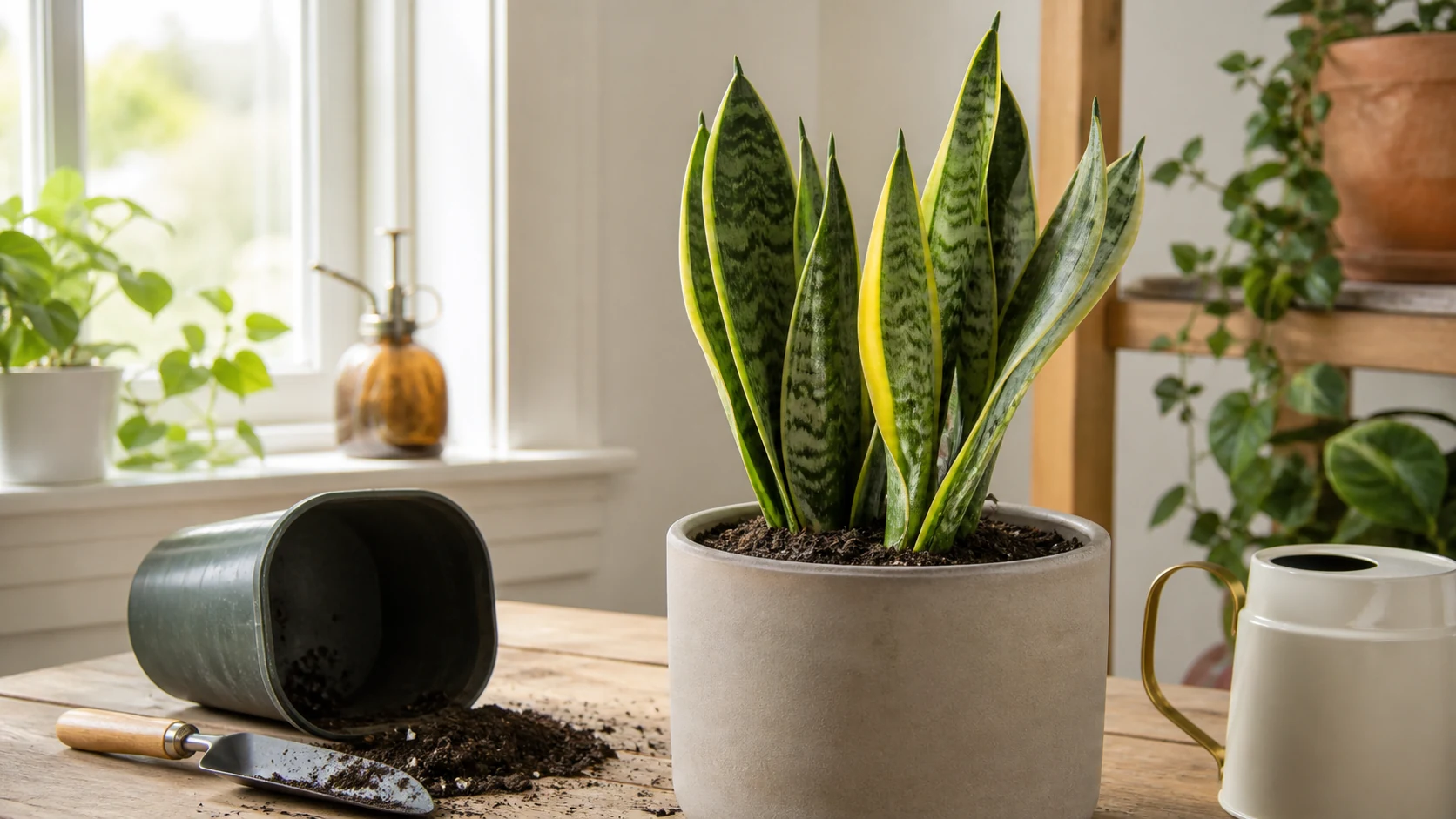
A larger new pot, disturbed mix, and a just-emptied nursery pot point to repot conditions before chronic rot.
Post-repot yellowing often comes from one of three things:
-
Pot too large. When the pot is significantly bigger than the root ball, the surrounding soil stays wet for much longer because the roots aren’t drawing moisture out of it. The plant sits in damp conditions it can’t use. This is different from everyday overwatering – the volume mismatch is the trigger.
-
Watering immediately after repotting. Some plant owners water right after a repot to settle in the plant. Unless the mix is bone dry, snake plants generally don’t need it. If the roots were disturbed during the move, they’re less efficient at taking up water for a couple of weeks anyway.
-
Transplant stress. Moving a plant disrupts the root zone. Some yellowing and loss of a lower leaf or two is normal after a repot. If the new growth and smaller central leaves still look green and firm, the plant is most likely recovering rather than declining.
The clue is healthy new growth alongside yellowing older leaves. If the center of the plant looks fine, wait before intervening. For a full walkthrough of how to size pots correctly and avoid common repotting mistakes, see the repotting guide.
Light Problems: Easier to Overlook
Snake plants can tolerate low light, but tolerate is not the same as thrive. Extended low-light conditions slow the plant’s metabolism and can cause a gradual, pale yellowing that looks different from overwatering yellowing – it’s more uniform, the leaves stay firm, and there’s no mushing at the base.
On the other end: direct, harsh sun will scorch the leaves. Penn State Extension specifically flags this as a surprise for owners who assume a low-light plant is also sun-proof. Direct sun can burn snake plant leaves even on species marketed as nearly indestructible. Scorch shows up as pale, bleached patches or yellow-brown along the edges and tips, particularly on leaves facing the window.
The right position is bright indirect light – a few feet back from a south- or east-facing window, or close to a north-facing window that gets decent sky view. If yours has been in a dark corner and is yellowing slowly, move it before changing anything else.
Pests: Less Common, Easy to Miss
Snake plants are not frequent pest targets, but they do occasionally get mealybugs and spider mites. Both NC State Extension and Penn State Extension flag these as the main pest watch-outs for this species.
Mealybugs look like small tufts of white cottony fluff, usually tucked into the crevices where leaves meet the base of the plant. Spider mites leave fine webbing and tiny stippled marks on leaf surfaces.
If you’re seeing yellowing alongside any of these signs, address the pest first. Changing your watering routine won’t fix a mealybug infestation, and a stressed plant is more vulnerable to infestations spreading.
Wipe mealybugs off with a cotton pad dipped in rubbing alcohol. For spider mites, a firm spray of water and increased humidity usually disrupts them early. For persistent cases, the spider mites treatment guide covers the full process. For mealybugs, see the mealybug treatment guide.
Expert Note: What the Higher-Trust Sources Agree On
NC State Extension and Penn State Extension both converge on the same practical baseline for snake plants: let the mix dry between waterings, use a fast-draining potting medium, and check for root rot before you assume the plant is thirsty. They also flag mealybugs and spider mites as the main pest watch-outs for this species. ASPCA adds an important household detail that many care guides skip: snake plant is toxic to cats and dogs, so cleanup and pruning matter if pets are nearby.
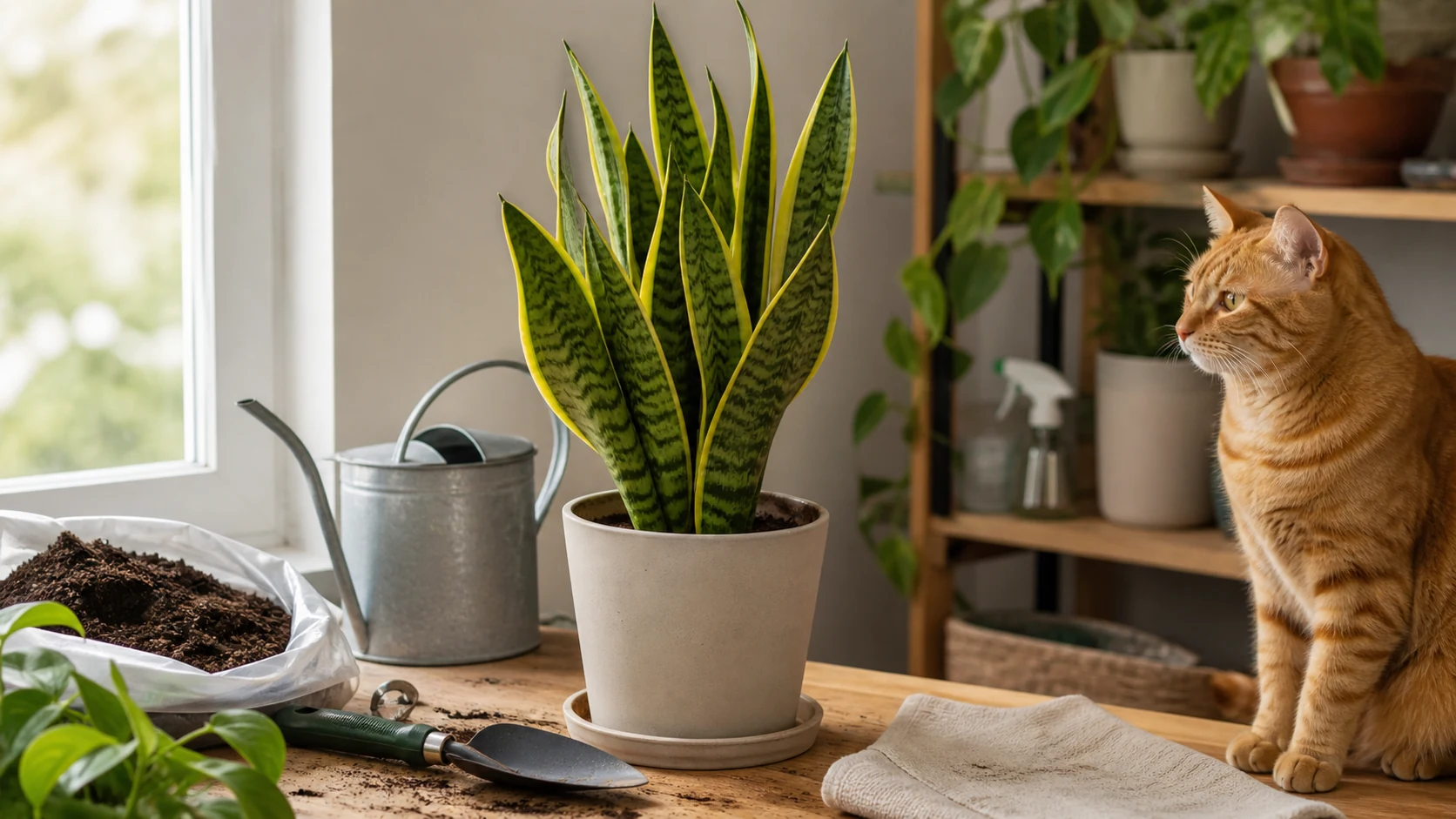
Drainage, measured watering, clean tools, and pet awareness form the shared first-response baseline.
That source overlap matters because it narrows the first-response plan. For this plant, moisture and drainage are the first checks, pest signs are the second, and dramatic intervention only comes after those two are ruled out.
Before You Panic: Check the Cultivar
One thing that catches people off guard: some snake plant cultivars naturally have yellow edges or yellow-green banding, and it’s not damage.
Sansevieria trifasciata ‘Laurentii’ – one of the most common varieties – has bright yellow margins along its leaves. Sansevieria trifasciata ‘Twist’ has yellow borders and wavy leaves. If you bought a plant with yellow edges and those edges have always looked the same, that’s just the plant. True stress-related yellowing is new, spreading, and usually comes with texture changes.
The question to ask: is the yellow spreading into areas that used to be green, or has it always been there?
Common Mistakes That Make Yellow Leaves Worse
A few patterns come up repeatedly when snake plant owners try to fix yellow leaves and the plant gets worse instead of better.
Watering by the calendar. Snake plants don’t follow a weekly schedule. In summer near a bright window they might need water every ten days; in winter in a dim corner, once a month can be too often. The only reliable check is soil state: dry all the way through at 3–4 cm depth means it’s time.
Changing three things at once. You notice yellow leaves, so you move the plant, reduce watering, and repot into fresh soil in the same week. When the plant responds – for better or worse – you have no idea what worked. Change one variable, wait two weeks, then reassess.
Over-correcting from wet to dry. You realize you’ve been overwatering, so you let the plant go completely dry for weeks. A plant with roots already weakened by overwatering doesn’t immediately recover full function when the soil dries out. Water correctly going forward; don’t swing to the opposite extreme.
Removing leaves before diagnosing. Trimming yellow leaves is fine once the plant is stable, but pruning first and diagnosing second means you lose your clearest visual signal. Leave them in place until you understand what’s causing them.
A Quick Note on Pet Safety
The ASPCA lists snake plant as toxic to dogs and cats. The toxin responsible is saponins – naturally occurring compounds in the leaves and roots – and ingestion can cause nausea, vomiting, and diarrhea. The main risk during a yellowing episode is trimmings and fallen leaves being left within reach while you’re diagnosing or pruning.
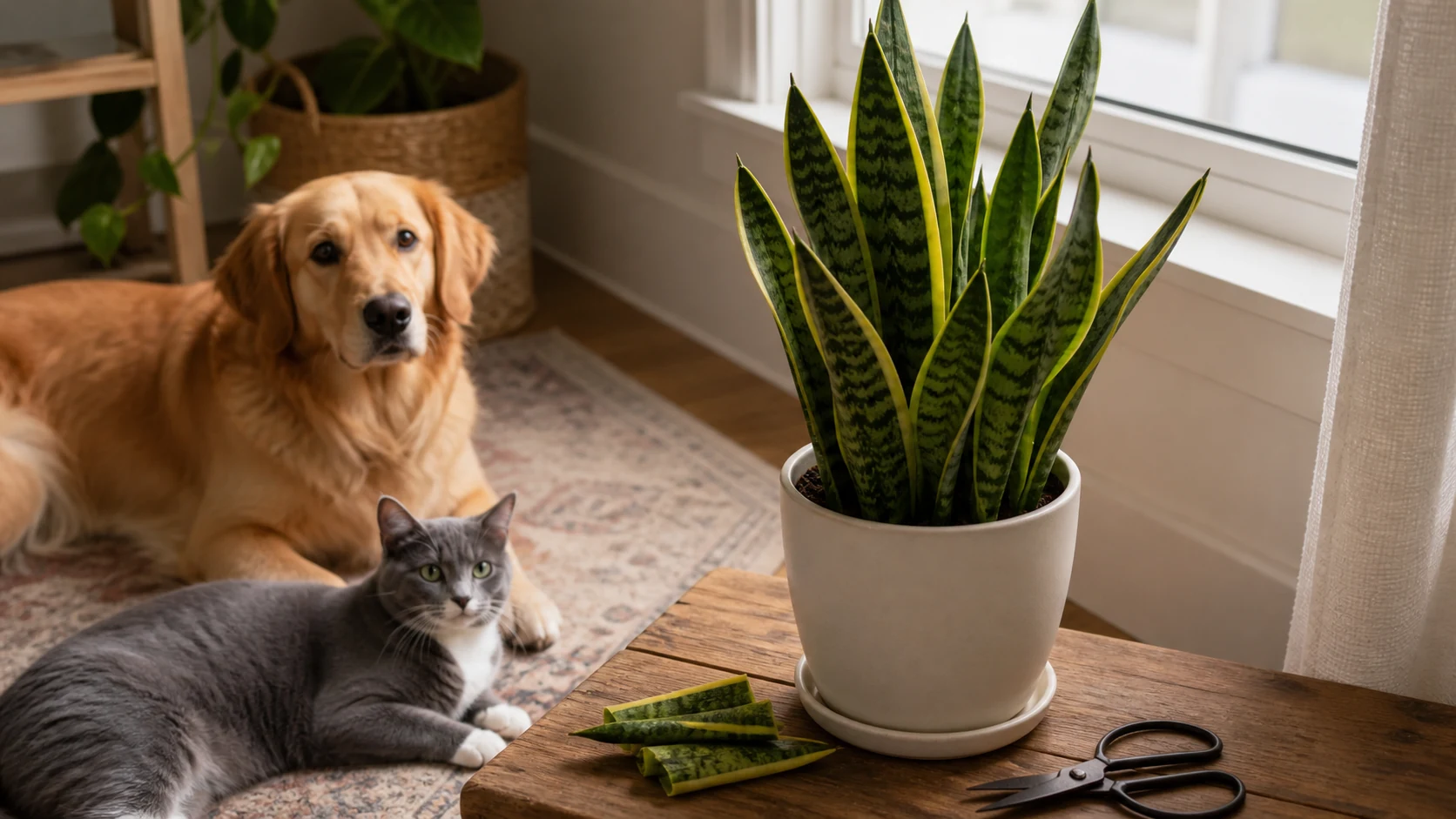
Keep pets back from the work surface and clear every removed leaf as soon as pruning ends.
If pets are in the household, dispose of any removed leaves immediately and keep animals away from the plant while you’re working with it. For a full list of pet-safe alternatives if you’d rather not risk it, the cat-safe indoor plants guide has options that work in most light conditions.
Where to Start: A Rescue Priority Order
If your snake plant leaves are turning yellow right now, work through this sequence before making any changes:
- Check leaf texture first – mushy means moisture problem, firm means look at light or pests.
- Check the soil – push a finger 3–4 cm in. Still damp? Watering is not the solution right now.
- Check for pests – look at the base of each leaf for cottony white residue or fine webbing on the leaf surfaces.
- Consider recent changes – repotted? Moved? Season shifted from summer to winter? These all change the baseline significantly.
- Check the light – has it been in a dim spot for a while, or getting direct sun exposure through a window?
One change at a time. Snake plants are forgiving, but they respond slowly, and they can’t tell you which of three simultaneous changes made the difference. Make one correction, wait, and observe.
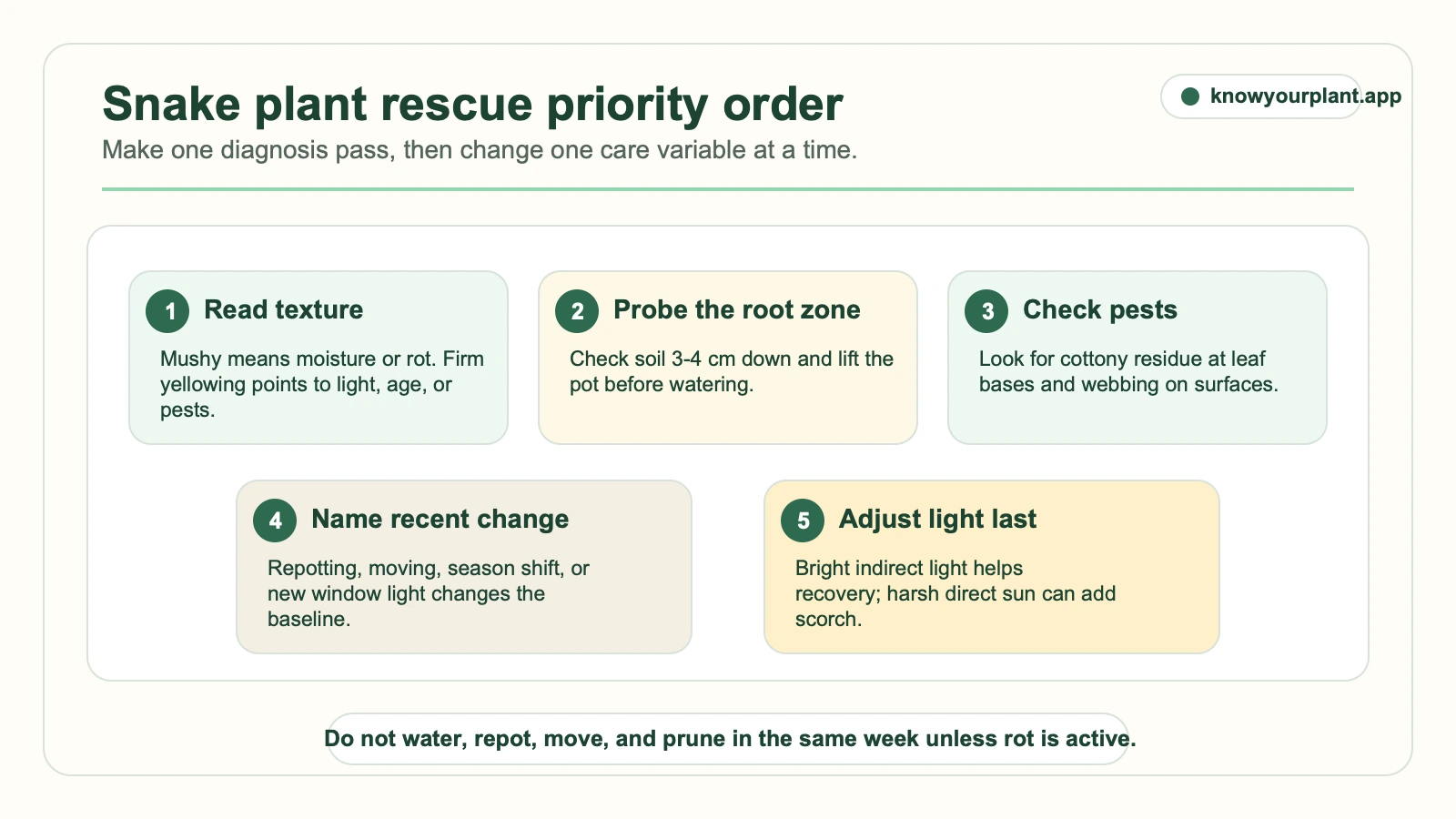
Work through the checks in order so you do not water, repot, move, and prune the plant all in the same week.
If you are troubleshooting another common plant symptom, see Snake Plant Root Rot: Save Firm Leaves and Healthy Rhizomes for a focused diagnosis and recovery plan.
Frequently Asked Questions
Can yellow snake plant leaves turn green again?
Usually not. Once a leaf turns yellow, the chlorophyll loss is permanent in most cases. If the yellowing is very early and mild, correcting the cause quickly can sometimes slow or stop it from spreading further, but the affected portion won’t fully recover its color. The better goal is to fix the underlying cause so that healthy green leaves continue to grow and the yellow ones can be removed cleanly once the plant is stable.
How do I know if my snake plant is overwatered or underwatered?
Check the leaf texture and the soil at the same time. Overwatered leaves are soft, mushy, or collapsing – especially at the base. The soil will feel damp well into the pot even if the surface looks dry. Underwatered leaves wrinkle or become slightly limp and paper-thin, and the soil is bone dry all the way through when you push a finger in. Underwatering is genuinely uncommon in snake plants; if you water on any regular schedule at all, overwatering is far more likely.
Should I cut off yellow snake plant leaves?
Yes, once you’ve diagnosed and addressed the cause. Leaving a fully yellowed or mushy leaf on the plant doesn’t help it recover, and rotting tissue can become an entry point for bacterial problems. Use clean scissors or a sharp blade, cut as close to the soil line as you can without damaging neighbouring leaves, and dispose of the removed leaves away from pets. Don’t prune while the root zone is still waterlogged – stabilize the plant first, then tidy it up.
Why is my snake plant turning yellow after repotting?
The most common reasons are an oversized pot (which holds more moisture than the roots can use), watering immediately after the move before roots have settled, or normal transplant stress from root disturbance. If the central new growth still looks firm and green and only the older outer leaves are yellowing, that’s typically stress rather than rot. Give the plant two to three weeks without additional water and in stable conditions before assuming something is wrong.
How often should I water a snake plant to avoid yellowing?
There’s no universal schedule – the right interval depends on pot size, soil mix, season, and room temperature. The only reliable trigger is soil state: push a finger 3–4 cm into the mix and only water when it comes out dry. In a typical home during winter, that might mean watering once every three to six weeks. In summer near a bright window, once every ten to fourteen days might be right. Penn State Extension recommends waiting until the soil is completely dry before watering again.
My snake plant has yellow leaves but the soil is dry. What’s going on?
A few possibilities. If the yellowing is slow and uniform across the whole leaf with firm texture, low light is the likely cause. If the tips or edges are yellow-brown and crispy, check whether the plant is getting direct sun that’s scorching it. If the soil has been dry for a long time and the leaves are wrinkled and limp rather than mushy, underwatering is finally showing up. And if the plant was recently repotted and dried out quickly after, the roots may be damaged and not taking up water properly even when it’s available.
Is a snake plant with yellow leaves safe to have around pets?
The ASPCA classifies snake plant as toxic to both dogs and cats due to saponins. The plant itself is fine to have in a home with pets as long as they aren’t chewing on it, but during a yellowing episode when you’re trimming, repotting, or handling the plant, keep pets away from the work area and dispose of removed leaves before animals can reach them. If your pet ingests any part of the plant, contact your vet or the ASPCA Animal Poison Control Center.
Can a snake plant recover from severe yellowing?
It depends on how much healthy root and leaf tissue remains. If several leaves are yellowing but the roots are mostly firm and pale, and there’s still new growth emerging from the center, the plant has a good chance with corrected care. If most of the root system has rotted and the remaining leaves are soft, recovery is harder but possible – trim away all rotted roots, let the healthy ones air dry, and repot into fresh well-draining mix. Snake plants can also be propagated from healthy leaf sections if the main plant can’t be saved. The full-care background is in the snake plant care guide if you want to reset your routine from scratch.
Methodology
This guide was refreshed on June 17, 2026 using live research collected on May 26, 2026. It combines search review for the main query and close variants, recurring owner questions surfaced through Reddit and Garden.org results, and care and safety guidance verified against NC State Extension, Penn State Extension, and ASPCA. Community examples are used as qualitative signal, not statistical proof.
The refresh pairs direct plant observation with source review and documented research notes.
Last updated: June 17, 2026.