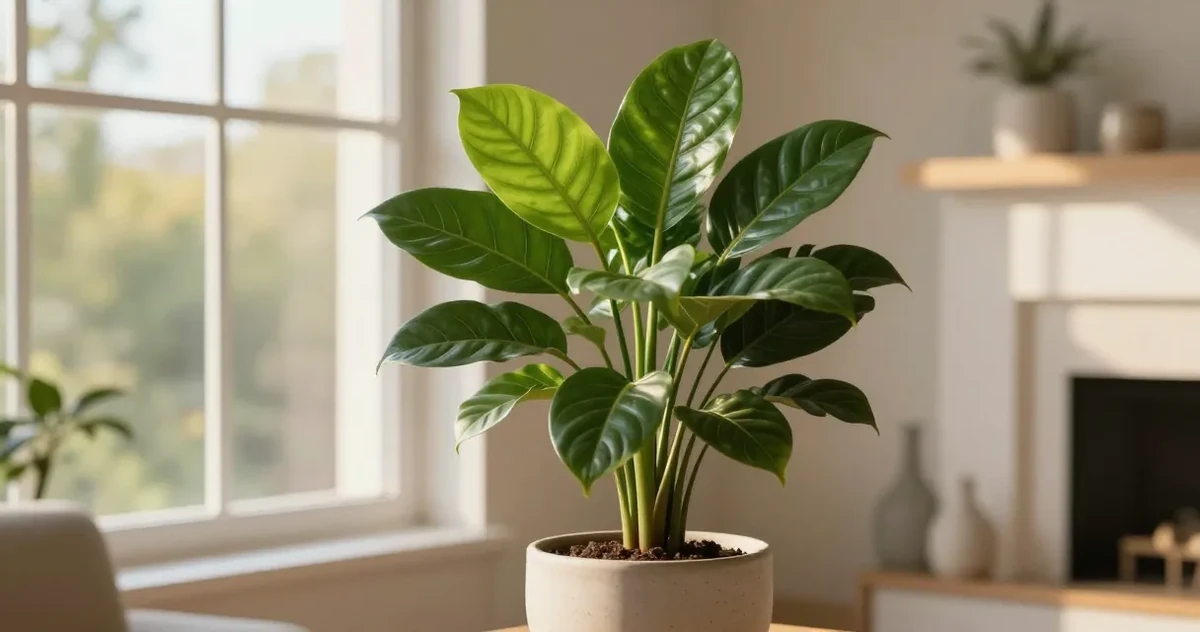
How to Clean Plant Leaves: Methods That Actually Work
Most of us notice it at the same moment: the afternoon light hits your monstera or fiddle-leaf fig just right, and you realize the leaves are coated in a fine grey film you somehow never noticed before. Knowing how to clean plant leaves properly is one of those small-but-real care habits that makes a noticeable difference over time, both for how your plants look and how well they actually grow.
Here is the honest version: clean leaves photosynthesize more efficiently, and dusty ones work harder for less. The method matters more than most guides let on. What works on a rubbery monstera leaf will damage a fuzzy African violet, and the DIY shine tricks floating around online are often solving the wrong problem entirely.
The real question is not just “how do I clean this?” but “what exactly is on this leaf, and what kind of leaf am I working with?”
Quick Answer: Choose Your Method
Before reaching for anything, answer two questions: Is the leaf smooth and firm, or fuzzy and soft? And what does the residue look or feel like?
| Leaf type | What you see | Use this method |
|---|---|---|
| Smooth or glossy | Grey or beige dusty film | Damp cloth or shower rinse |
| Smooth or glossy | Sticky or greasy feel | Dilute dish soap, rinse after |
| Smooth or glossy | White chalky spots after misting | Dry buff with soft cloth |
| Smooth or glossy | Hazy or uneven gloss | Damp cloth to lift old shine product |
| Fuzzy or hairy | Any visible buildup | Soft dry brush only, never wet |
That covers 90% of situations. The rest of this guide explains why these methods work, how to apply them to specific plants, and what to avoid.
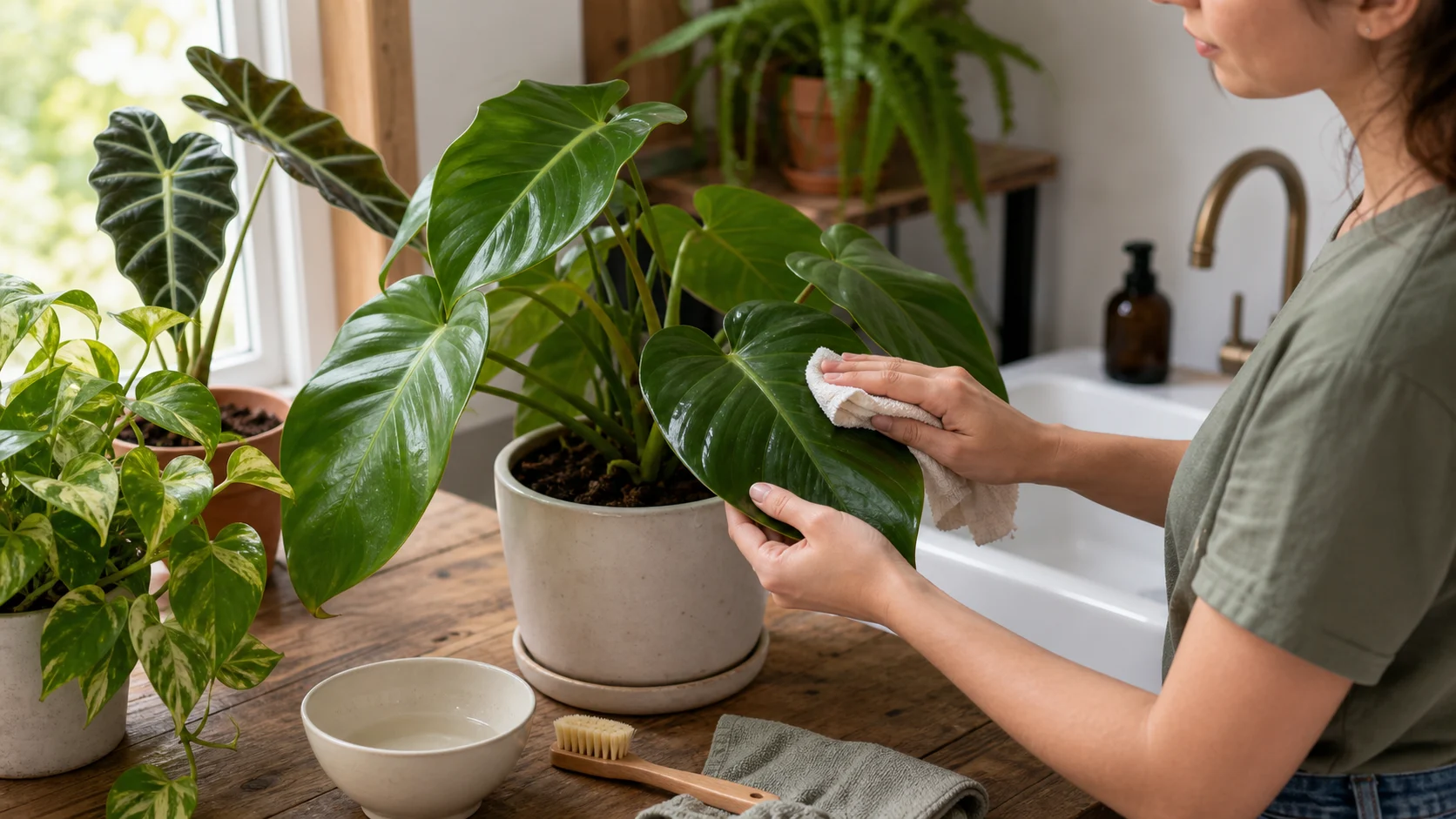
A damp cloth, water bowl, and soft brush keep the cleaning method matched to the leaf surface.
Symptom Diagnosis Card
If you want the fastest safe diagnosis, match the residue first and the leaf texture second.
| What you see | Check first | Safest next move |
|---|---|---|
| Dry, matte dust on a smooth leaf | Ordinary household dust | Wipe with a soft damp cloth or use a gentle shower rinse |
| Sticky or greasy film on a smooth leaf | Kitchen grease, honeydew, or old residue | Test one leaf with very dilute soap, then rinse clean |
| White chalky marks after misting | Mineral deposits from tap water | Dry-buff gently and switch the water source rather than adding more shine |
| Hazy gloss that looks worse after wiping | Old leaf-shine or DIY residue | Remove buildup with repeated damp-cloth passes, then stop using gloss products |
| Visible buildup on fuzzy or hairy leaves | Leaf texture, not just the residue | Use a soft dry brush only, and keep water or polish off the leaf surface |
When the symptom and the leaf type point in different directions, follow the more conservative rule. That usually means treating fuzzy foliage like a dry-clean-only surface.
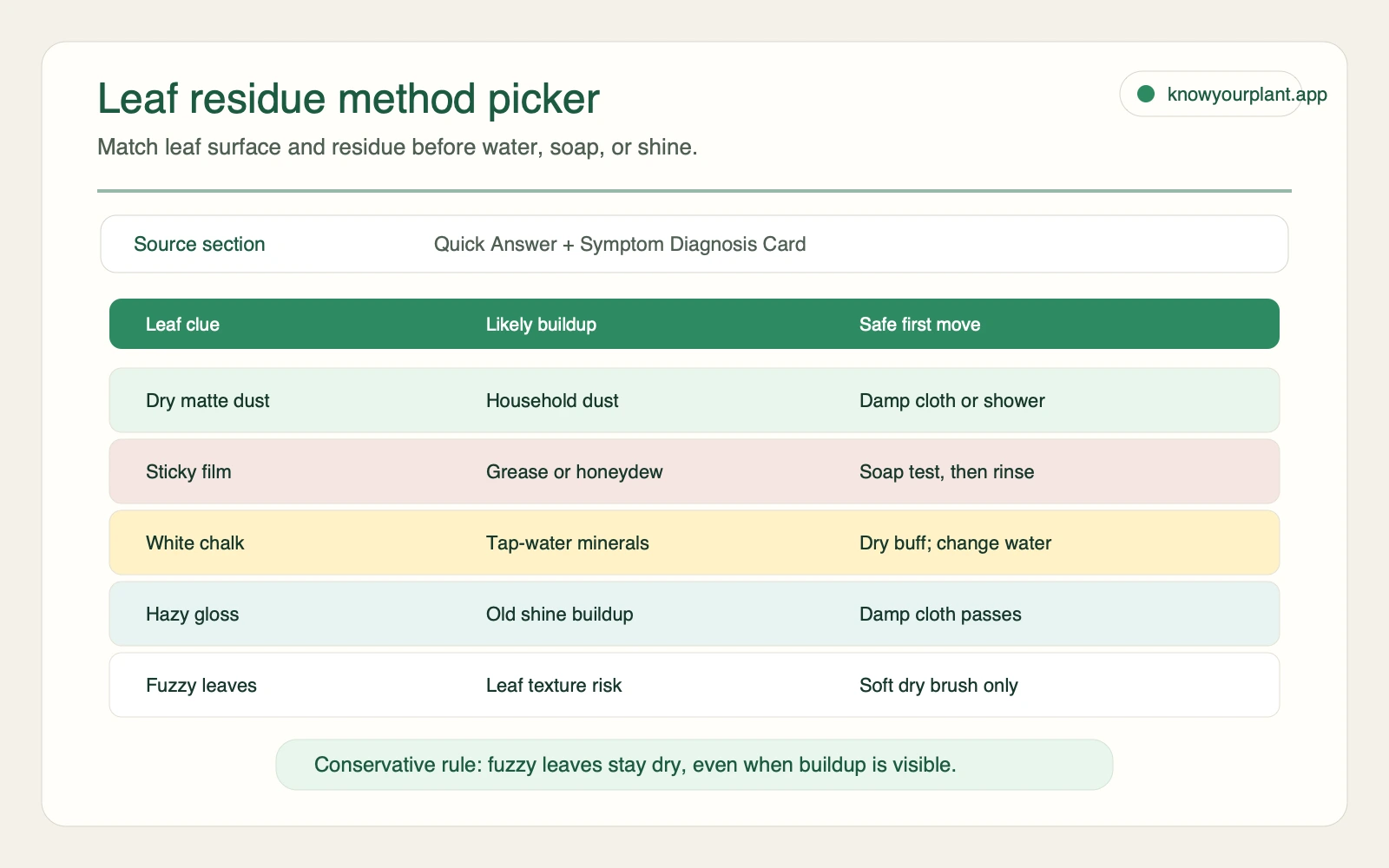
Use this picker before cleaning so the residue type and leaf surface drive the method, not a one-size-fits-all wipe-down.
What Most Care Guides Miss
The standard advice is wipe with a damp cloth, done. It works fine for ordinary dust on smooth foliage. But it creates three real problems most guides skip over entirely.
The common misdiagnosis: treating every dirty leaf as “just dusty.” In practice, indoor plant leaves collect at least four different types of buildup: ordinary dust, kitchen grease and airborne oil, hard-water mineral deposits left by frequent misting, and residue from leaf-shine products applied over time. Each one needs a different approach. Wiping a mineral-spotted leaf with a damp cloth just spreads the deposit around. Wiping a grease-coated leaf with plain water barely cuts it. And layering more shine product over old shine product creates a wax buildup that attracts more dust and blocks more light over the coming months.
The leaf-type problem: the University of Illinois Extension explicitly states that leaf polish is not recommended on pubescent or hairy leaves, and that any shine products should be used sparingly and only on plants with firm foliage. Many guides skip this entirely and give a one-size approach that can damage calatheas, African violets, and fuzzy begonias.
The practical first check: before reaching for anything, look at the leaf surface in good light and answer two questions. Is the deposit dusty and matte, or does it have any sheen or stickiness? Are the leaves smooth and firm, or soft and fuzzy? Those two answers determine your entire cleaning approach, and they take about ten seconds.
Smooth vs. Fuzzy: Two Different Sets of Rules
The most important variable in leaf cleaning is not the product you use. It is the leaf surface itself. Smooth leaves and fuzzy leaves need completely different approaches.
Is the leaf smooth and firm?
├─ YES (monstera, pothos, rubber plant, peace lily, ZZ plant)
│   ├─ Dusty film → damp cloth or shower
│   ├─ Sticky or greasy → dilute dish soap + rinse
│   ├─ White mineral spots → dry buff, switch to filtered water
│   └─ Hazy shine buildup → damp cloth to remove
│
└─ NO (fuzzy or hairy: African violet, calathea, fuzzy begonia)
    └─ Any buildup → soft dry brush only
       Water on hairy leaves = brown spots and rot risk
       No wet cloth, no soap, no shine spray
| Smooth, firm leaf | Fuzzy or hairy leaf | |
|---|---|---|
| Dust | Damp cloth or shower | Soft dry brush |
| Grease | Dilute soap + rinse | Brush only, no liquid |
| Mineral spots | Dry buff | Brush only |
| Shine buildup | Damp cloth to lift | Brush only |
This split matters because hairy leaf surfaces trap water in fine hairs. That trapped moisture causes brown spots and can encourage rot if it lingers. The University of Illinois Extension specifically flags hairy and pubescent foliage as unsuitable for wet cleaning methods or any leaf polish.
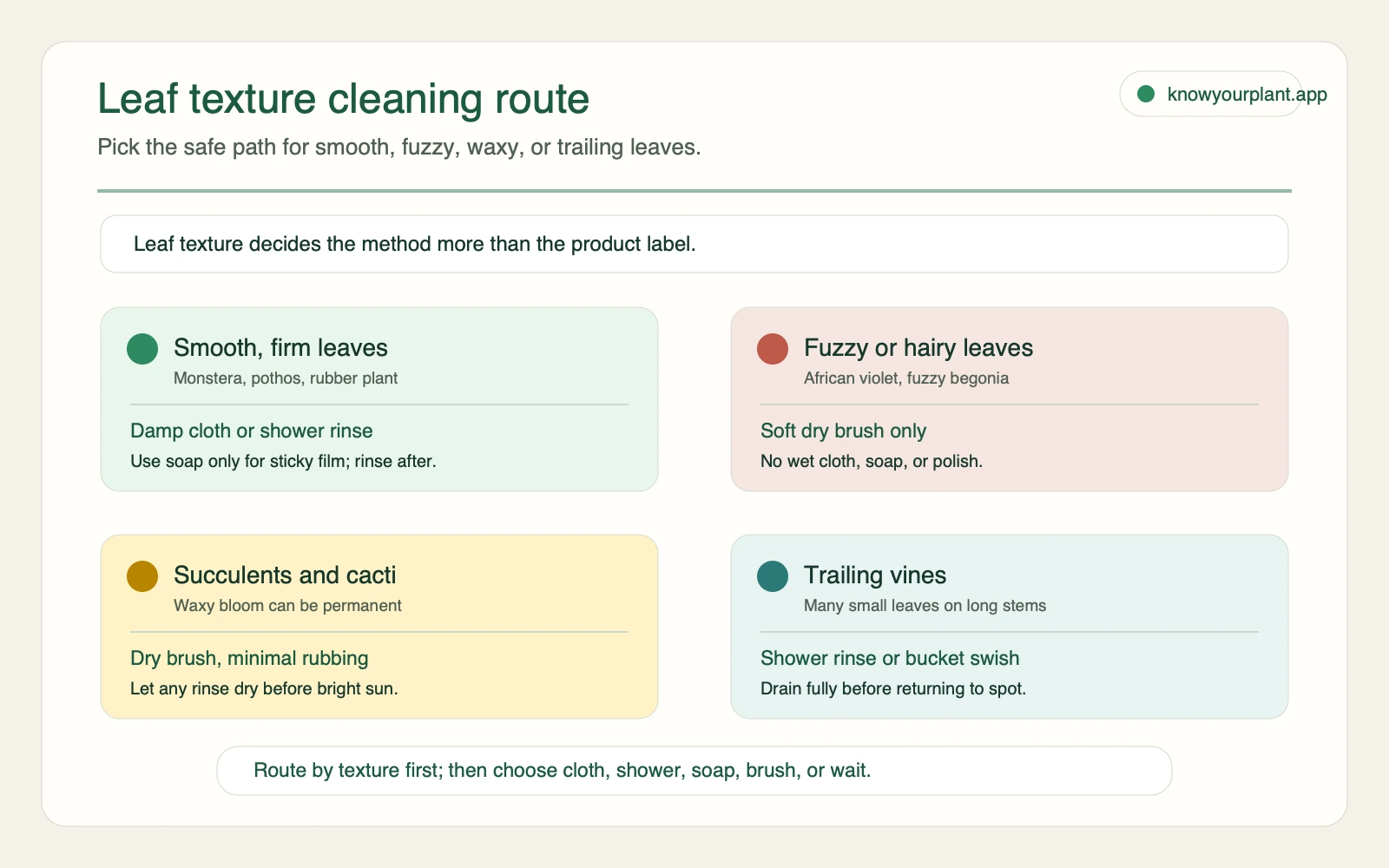
Use the texture route when you know the plant type but need the safest cleaning tool for that leaf surface.
Why Cleaning Leaves Is Worth Doing
Dust is not just a cosmetic issue. A thick layer of fine particles reduces how much light the plant can absorb, which slows photosynthesis and makes the plant work harder than it needs to. The University of Maryland Extension notes that keeping leaves dust-free, ideally by washing with warm water, also reduces insect and disease problems because clean, dry foliage is less hospitable to pests than grimy, residue-coated leaves.
None of this means you need a weekly cleaning ritual. But if your plants live in a naturally dusty environment, near a kitchen, or in a room where the windows stay closed most of the year, a monthly wipe-down is genuinely useful.
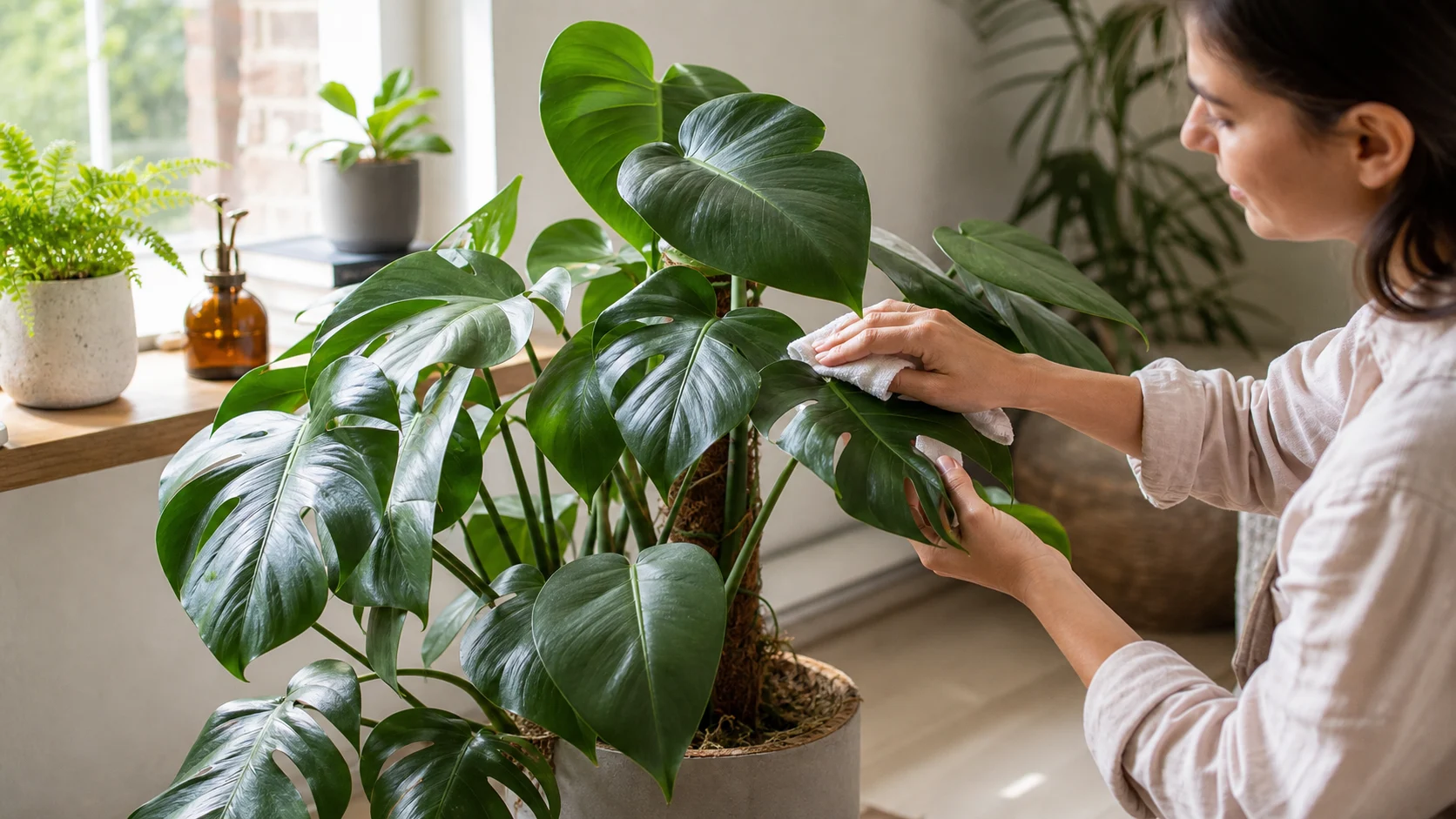
Monthly cleaning helps broad Monstera leaves capture window light without a dull layer of dust.
Identify the Problem First
Match what you see on the leaf to the actual buildup type. Different residues need different solutions:
| What you are seeing | Most likely cause | Best approach |
|---|---|---|
| Dull grey or beige film, matte surface | Ordinary indoor dust | Damp cloth or shower |
| Slightly sticky surface, greasy look | Airborne cooking grease or aphid honeydew | Dilute dish soap solution, rinse after |
| White or chalky spots after misting | Mineral deposits from tap water | Dry buffing, switch to filtered water |
| Shiny but hazy or uneven gloss | Old leaf-shine product buildup | Damp cloth to remove, skip future shine |
This table is the decision tree most guides collapse into a single step. Matching your symptom to the right method saves you from spreading deposits, scratching delicate foliage, or creating a new problem on top of the original one.
Cleaning by Leaf Type
Smooth, Glossy Leaves
This covers the majority of popular houseplants: monstera, pothos, rubber plants, peace lilies, ZZ plants, philodendrons. These leaves handle moisture well and are straightforward to clean.
A soft, damp cloth wiped across each leaf, top and bottom, is all you need for routine dust. Use room-temperature water. Cold water can leave temporary spotting, and hot water can stress the tissue. Support the leaf with your other hand while you wipe so you are not bending it at the base.
For large plants where wiping each leaf feels like a project, the shower method works well: move the plant to a shower or bathtub, rinse gently with lukewarm water, and let it drain fully before bringing it back. Morning is the best time, so the leaves have several hours to dry before cooler evening temperatures.
Fuzzy or Hairy Leaves
Calatheas, African violets, and begonias have soft, hairy leaf surfaces that should never be wiped with a wet cloth. Water sits in the fine hairs, causes brown spots, and can lead to rot if moisture lingers.
Use a soft dry brush instead: a clean paintbrush, a makeup brush, or a very soft toothbrush. Brush gently from the base of the leaf outward. Do this over a sink, because the dust does go somewhere.
Succulents and Cacti
Most succulents have a waxy coating on their leaves called a bloom or pruinose layer that protects them from sun and moisture loss. Wiping these leaves aggressively can strip that coating permanently. For light dust on succulents, a dry brush is usually enough. If the plant genuinely needs a rinse, let it dry thoroughly before placing it back in full sun.
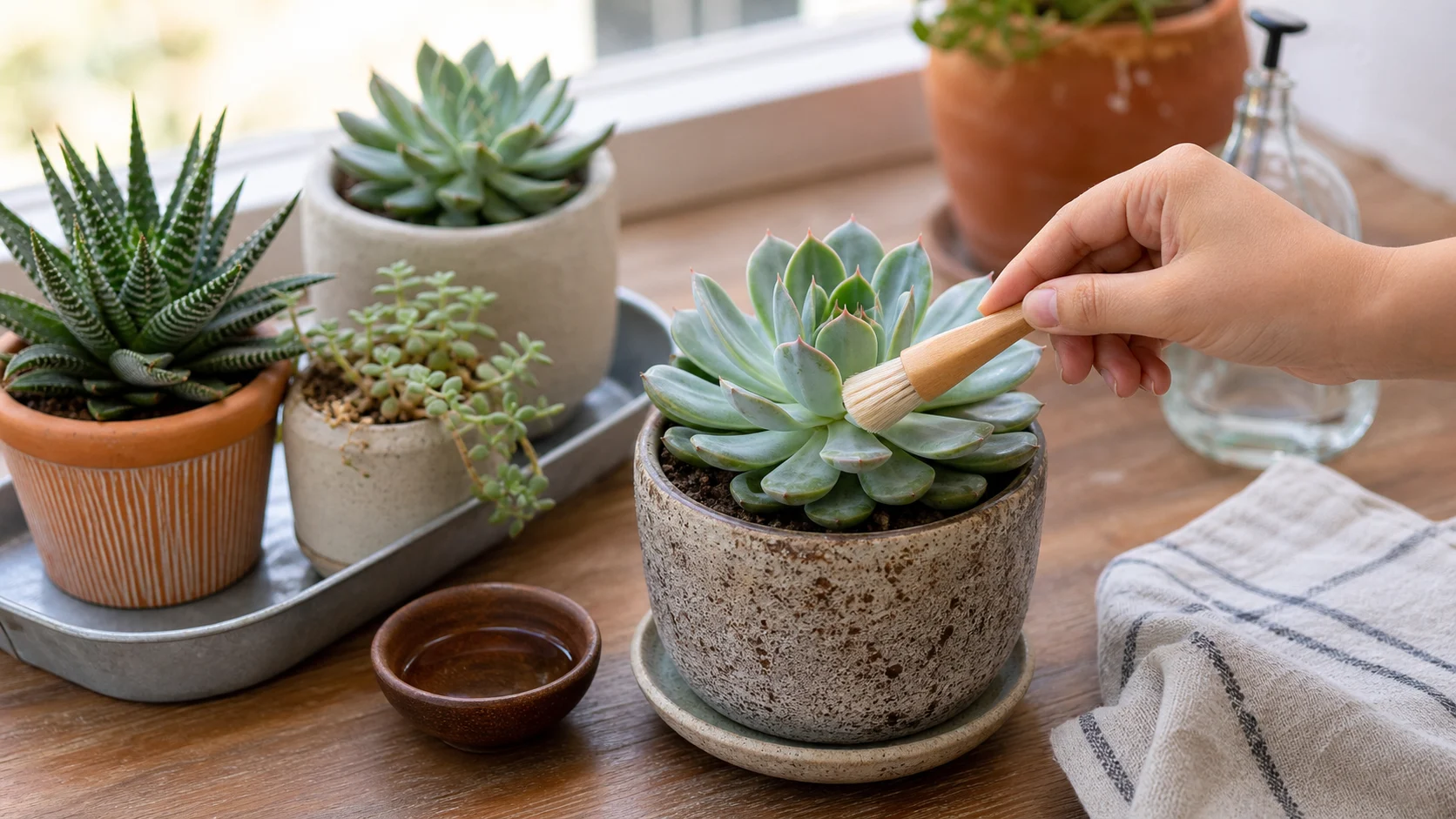
A soft dry brush lifts dust without rubbing away the protective bloom on succulent leaves.
Trailing Vines
For plants like heartleaf philodendron or golden pothos with long trailing stems, wiping each leaf individually takes a long time. The shower method is usually the most practical option. Otherwise, dunk individual vines into a bucket of lukewarm water and swish gently, then let them drain before returning to their spot.
Cleaning by Problem Type
Regular Dust
Damp cloth, soft brush, or shower method depending on leaf type. This is the scenario most guides handle reasonably well, and in most households it is the only scenario you will encounter regularly.
Kitchen Grease or Sticky Residue
Plants that live near cooking areas can develop a sticky film from airborne grease. Plain water alone usually is not enough to cut it. A very dilute dish soap solution, a single drop of plain dish soap in a bowl of warm water, applied with a soft cloth, then wiped off with a clean damp cloth, is a reliable starting point. Test on one leaf and check after 24 hours before treating the whole plant. Never leave soap residue on the leaf surface.
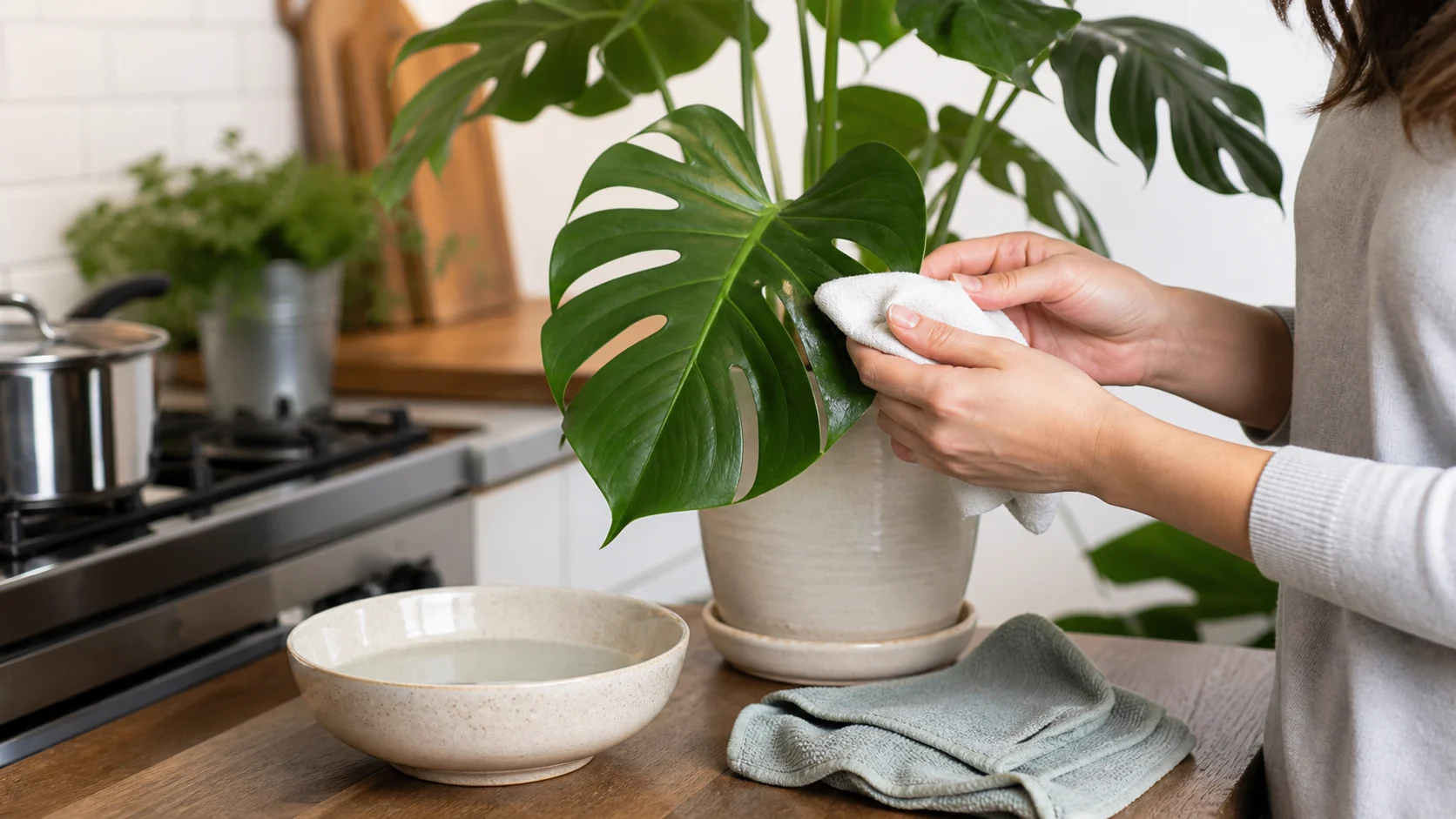
Near cooking areas, a gentle cloth-and-rinse routine removes greasy residue without leaving soap behind.
Water Spots After Misting
If you mist frequently, white mineral deposits from tap water can accumulate on leaves. The University of Florida IFAS Extension notes that salts from tap water and fertilizer inputs leave white crusty deposits on leaf surfaces over time. These spots do not wipe off with water alone, because water is what caused them. A soft cloth barely dampened and some patient dry buffing can reduce them. The longer-term fix is switching to filtered or rainwater for misting, or pulling back on misting frequency. Many plants marketed as needing humidity do better on a pebble tray than with direct misting anyway.
Shine-Product Buildup
If leaves feel greasy or look unevenly shiny after previous leaf-shine applications, a damp cloth wipe is usually enough to remove the fresh layer. For older buildup, two or three passes with a clean damp cloth, wiping in one direction rather than scrubbing back and forth, usually clears it.
What About Leaf-Shine Products?
Leaf-shine sprays are sold as a way to give plants that deep, glossy look you see in lifestyle shoots. The University of Illinois Extension recommends using any leaf polish products sparingly and only on plants with firm, smooth foliage, not on fuzzy, hairy, or delicate leaves. Oils and waxes applied to a leaf surface attract more dust and can, over time, build up into a coating that blocks light rather than letting it through.
For most houseplants, a clean damp cloth gives you a natural, lasting shine without the residue. Reserve leaf-shine products, if you use them at all, for specific occasions rather than as part of a regular care routine.
DIY alternatives like milk wipes carry the same residue risk: they leave a film on the leaf surface. Cleaning with plain water first is almost always the right starting point, and for most leaves it is also the complete solution.
How Often Should You Clean Plant Leaves?
For most indoor plants, once a month is a reasonable rhythm if your environment is dusty. In cleaner spaces or for plants that live outdoors part of the year, every two to three months may be enough. The simplest cue: when you notice the leaves look dull under bright light, it is time.
After cleaning, check the undersides of leaves for early pest signs while you are already handling each plant. Dust and grime on leaf undersides can harbor spider mites and other small pests before they become a real problem. A cleaning session is a built-in inspection opportunity that costs nothing extra.
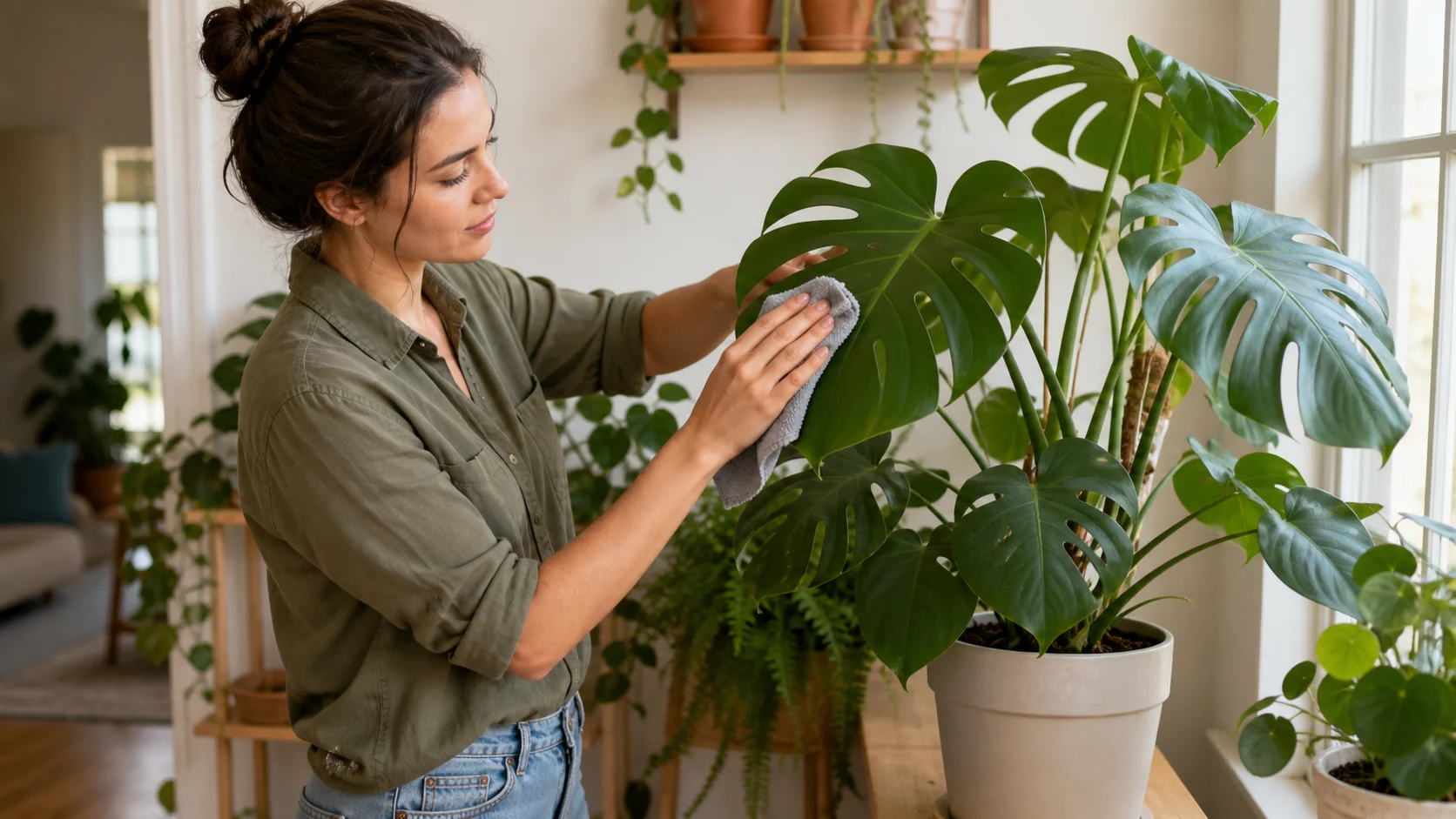
A regular leaf-by-leaf cleaning session doubles as a close inspection for early pest signs.
Common Mistakes
- Cleaning in direct harsh sunlight. Water droplets on leaves can act as a lens and cause scorch marks. Move the plant to a bright but indirect spot while it dries.
- Using cold water on tropical plants. Room temperature is the standard. Cold water can temporarily stress the tissue and leave spotting on sensitive foliage.
- Scrubbing with rough materials. The goal is removing dust, not polishing stone. Soft cloths and soft brushes only.
- Wetting hairy leaves. Always use dry methods, a brush rather than a wet cloth, for fuzzy foliage.
- Applying shine products as a substitute for cleaning. Shine does not clean. Clean first, then decide whether shine is even needed. Usually it is not.
- Misting as a cleaning method. Misting adds moisture but does not remove dust. It can make mineral spotting worse over time if you use tap water.
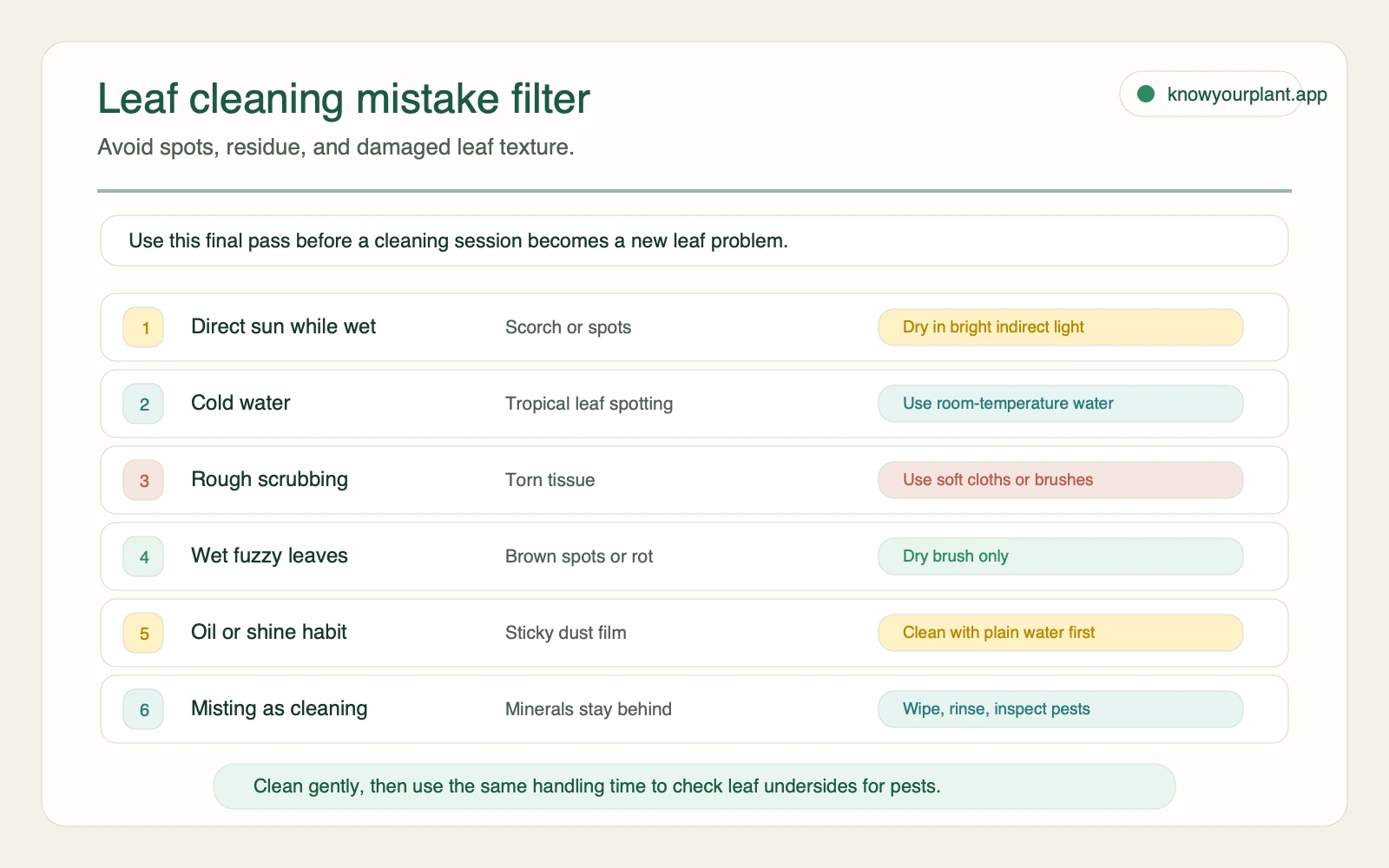
Use this mistake filter as a final check before cleaning, especially for delicate, fuzzy, or recently stressed plants.
Seasonal Note
In winter, when indoor heating lowers humidity and windows stay closed, dust accumulates faster and plants grow more slowly. That combination means buildup matters more at exactly the time your plant has less energy to compensate for it. A slightly more frequent check in January and February, or whenever heating is running full-time, is worth the two minutes it takes to wipe a few leaves.
In spring, as plants come back into active growth, a thorough cleaning before the growing season starts gives foliage the clearest possible surface right when it needs to absorb the most light. It is also the best time to inspect for pests that may have been quietly sitting out the winter.
Expert Note
Illinois Extension gives the clearest practical rule here: plain room-temperature water or a soft damp cloth is enough for most smooth leaves, while hairy or pubescent foliage should skip wet cleaning and leaf polish altogether. University of Maryland adds the why, noting that clean foliage reduces insect and disease pressure, and UF IFAS is a useful reminder that white residue after misting is often mineral buildup from water rather than a mysterious disease.
Methodology Note
This guide was checked against current extension guidance and live plant-owner confusion patterns in May 2026. Forum-style discussions were used only to identify the situations people keep misdiagnosing, like grease versus dust or mineral spotting versus generic dullness. Cleaning and safety advice was anchored to the extension sources listed below.
Frequently Asked Questions
Can I use olive oil or coconut oil to make leaves shiny?
These are two of the most common DIY leaf-shine suggestions, and both leave a sticky oil film that attracts more dust and can block the leaf surface over time. Stick with plain water and a soft cloth. If you want a natural-looking shine without residue, that is usually all you need.
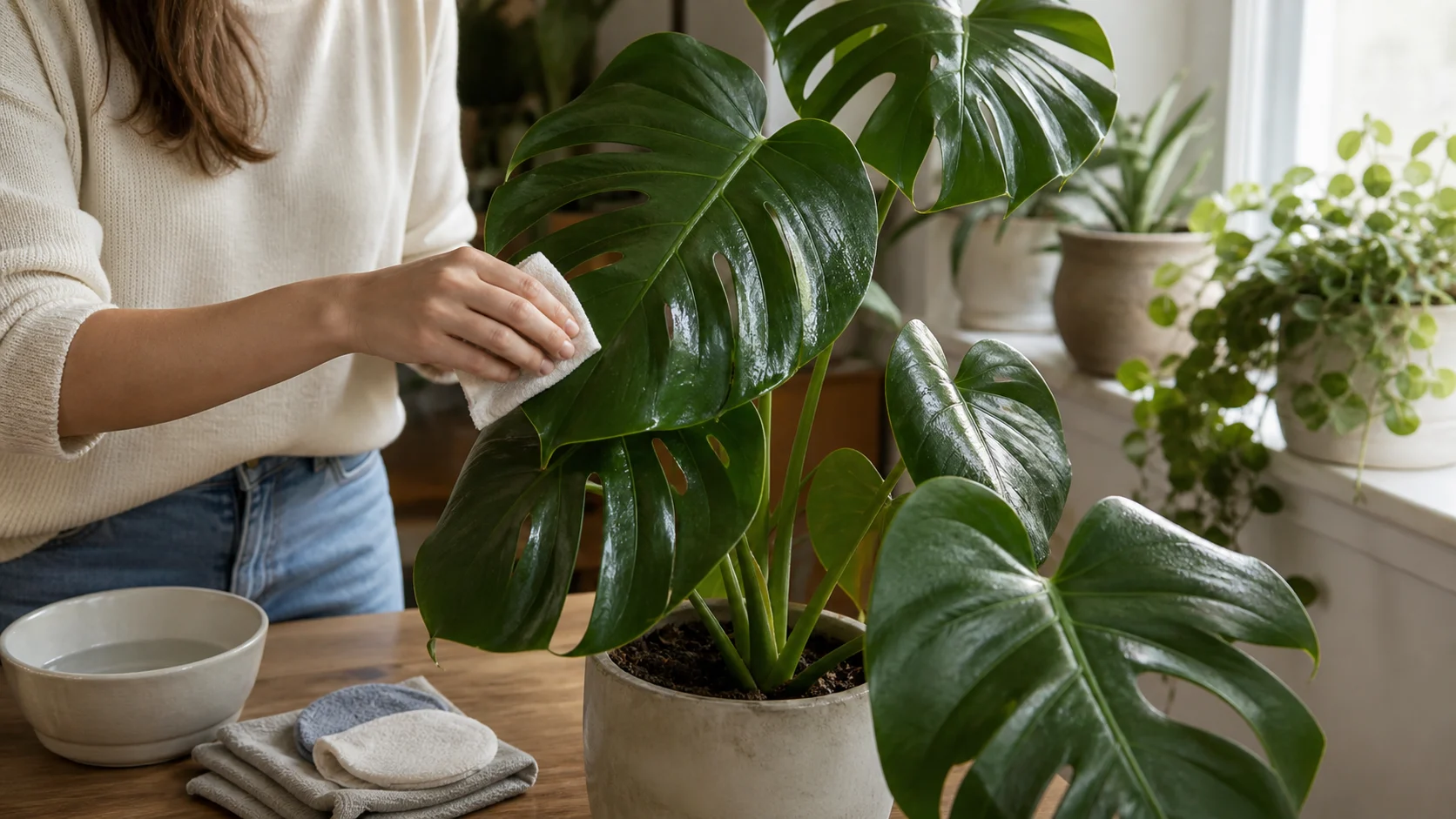
Plain water, microfiber, and soft cotton rounds are safer than oil or rough paper for routine leaf care.
Is it okay to wipe plant leaves with a paper towel?
Paper towels are rougher than they feel. On firm, smooth leaves like rubber plants or peace lilies, a single gentle pass is usually fine. On thinner or more delicate foliage, the texture can cause micro-abrasions. A soft cloth or cotton round is a safer default.
My monstera has brown spots after I wiped it. What happened?
Two likely causes: cold water, which caused a brief temperature shock and left spotting, or cleaning in direct sun, where the water droplets acted as a magnifier. Both leave temporary discoloration that usually fades. Going forward, use room-temperature water and move the plant out of harsh direct sun while you clean it.
How do I clean leaves without getting water on the soil?
For small plants, tilt the pot slightly while you wipe, or lay the pot on its side carefully. For large plants, a quick shower is actually easier. Let the pot drain thoroughly before returning it to its saucer. The shower method also reaches the undersides of leaves more thoroughly than hand-wiping does.
Can cleaning leaves actually help with pest prevention?
Yes, in a practical sense. The University of Maryland Extension notes that keeping plants clean and neat reduces insect and disease problems. Physically clean leaves are less hospitable to small pests, and the act of wiping each leaf means you will notice a problem like spider mite webbing or mealybug clusters earlier, when it is still easy to treat.
What should I do about white spots on my plant leaves after misting?
Those are mineral deposits from tap water, not disease or pest damage. A dry, clean cloth and some gentle buffing can reduce them. If they are persistent, the fix is upstream: switch to filtered water or collected rainwater for misting, or reduce misting frequency and use a pebble tray for humidity instead.
Should I clean new leaves the same way as mature ones?
New leaves are more delicate and should be handled with extra care. If a leaf has just unfurled, skip the wipe-down until it has had a week or two to fully mature and firm up. Premature handling can cause deformation or spotting on leaves that are still hardening.
How do I clean the leaves on a very small plant?
For compact plants or seedlings, a soft paintbrush or makeup brush is more precise than a cloth. You can also lightly hold a small plant over a sink and use a clean spray bottle with room-temperature water to rinse the foliage, then let it air dry.
Sources
- Illinois Extension, Care | Houseplants | UIUC. Accessed 2026-05-18. Recommends using plain room-temperature water or a soft damp cloth for smooth-leaved plants; notes leaf polish should be used sparingly and is not appropriate for hairy or pubescent foliage.
- University of Maryland Extension, Grooming Indoor Plants. Accessed 2026-05-18. Recommends washing leaves with warm water and notes that cleanliness reduces insect and disease problems.
- University of Florida IFAS, Houseplant Care. Accessed 2026-05-18. Notes that salts from tap water and fertilizer inputs can leave white crusty deposits on leaves and growing surfaces.