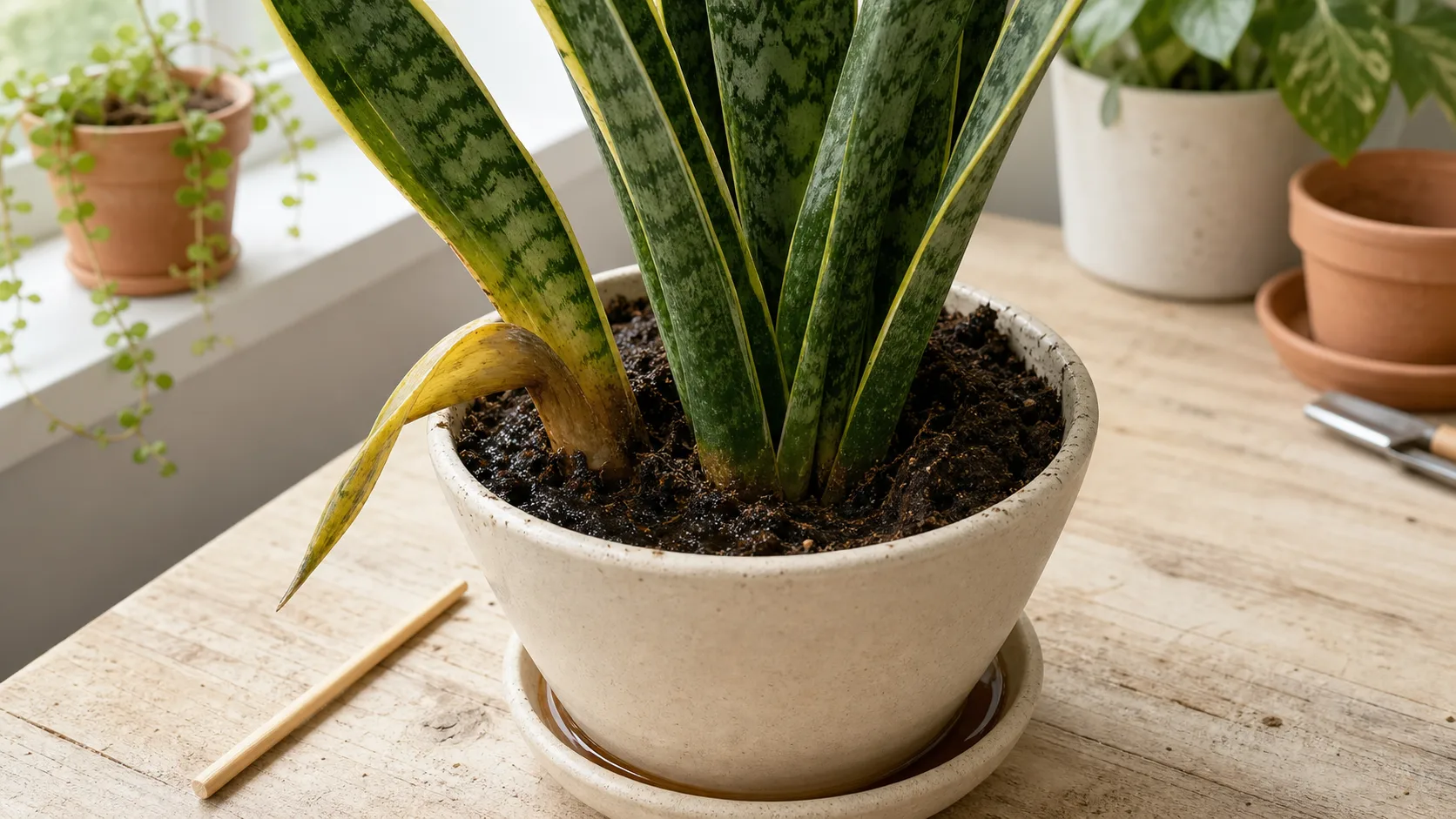
Can a snake plant with root rot still be saved? Yes, if any part of the base is still firm. A fully firm base means save the clump; mixed firm and soft sections mean split it; a fully soft base means discard the original plant. Do not water again to test it. In the next 10 minutes:
- Lift the pot. If it is wet, heavy, or sour-smelling, unpot the plant now.
- Press each leaf base gently. Firm tissue may be saved; jelly-soft tissue cannot.
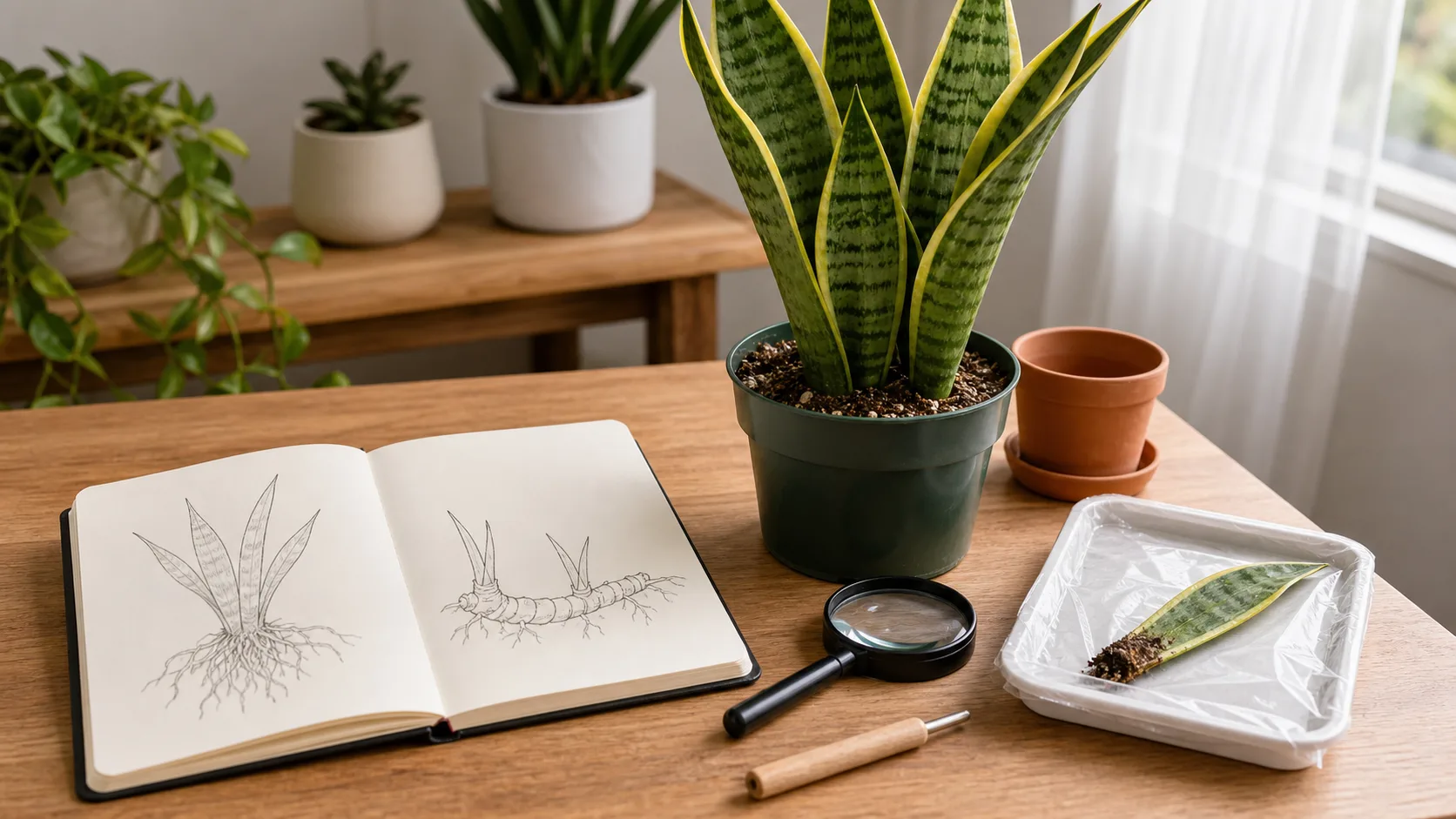
- Check the rhizome, the thick underground stem connecting roots and leaves. Keep firm sections and remove decay.
If the mix is dry and the entire base is firm, wait before cutting and compare the pattern with the snake plant yellow leaves guide. If everything below the leaves is soft, the original clump cannot recover as one plant.
Symptom Diagnosis Card
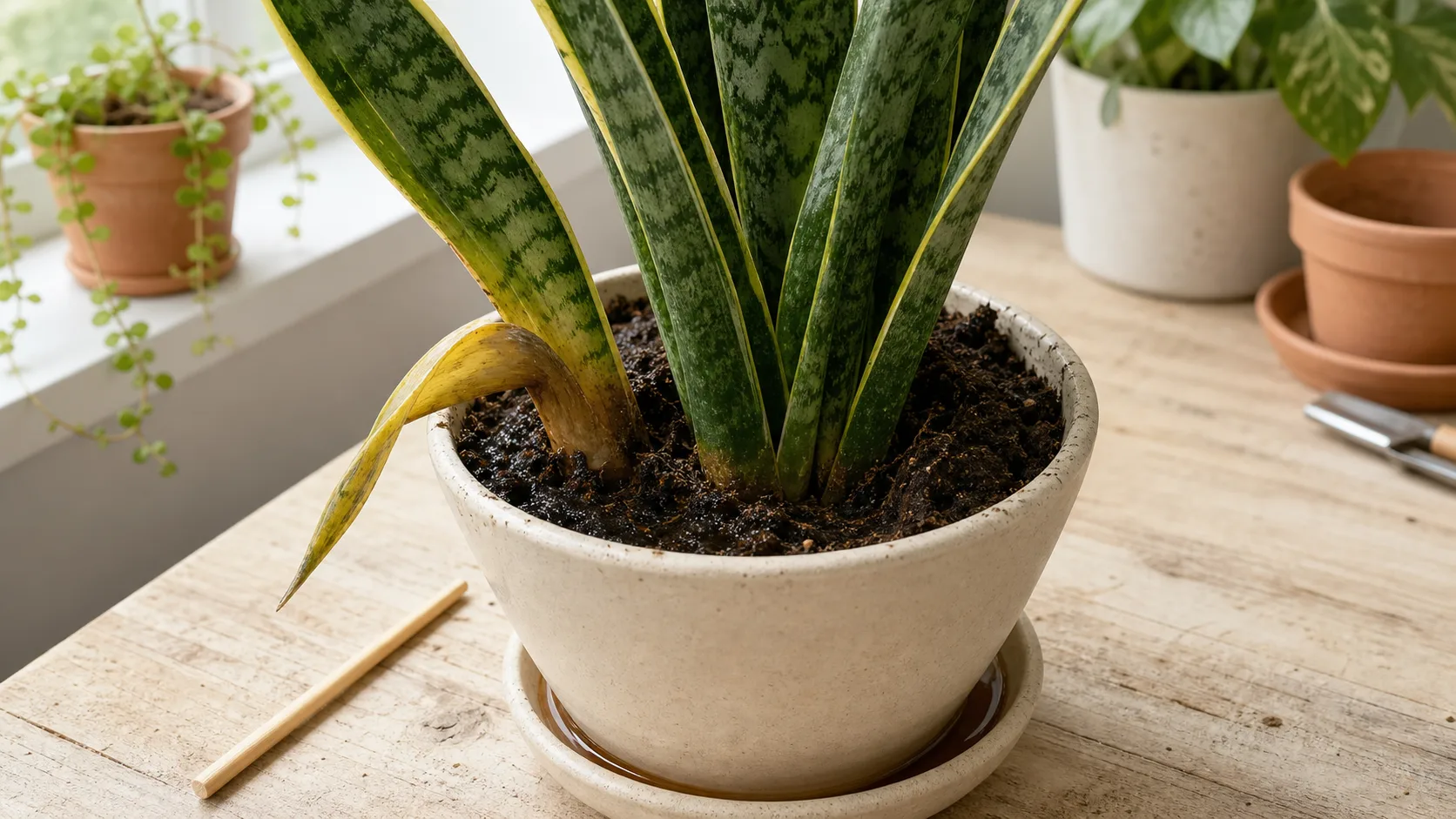
Diagnostic cue: Softness at the soil line while the mix is wet is the reason to inspect below the surface.
| What you notice | Likely pattern | Do this now |
|---|---|---|
| Dry, light pot; wrinkled leaves; firm base | Thirst stress | Water deeply and reassess in 2 to 3 days |
| Wet, heavy pot; sour smell | High rot risk | Unpot and inspect today |
| Leaf pulls free from a jelly-soft base | Crown or rhizome rot | Keep only firm sections |
| One yellow outer leaf; hard, odor-free base | Aging or mild stress | Monitor; do not emergency-repot |
| Several leaves droop while mix stays wet | Root failure possible | Inspect roots and rhizome |
Trust the base more than the leaf tips: thirst is usually dry and firm; rot is often wet and soft.
If you cannot confirm the plant or tell its leaf base from the rhizome, identify those parts before making an irreversible cut.
Inspect Roots and Rhizome
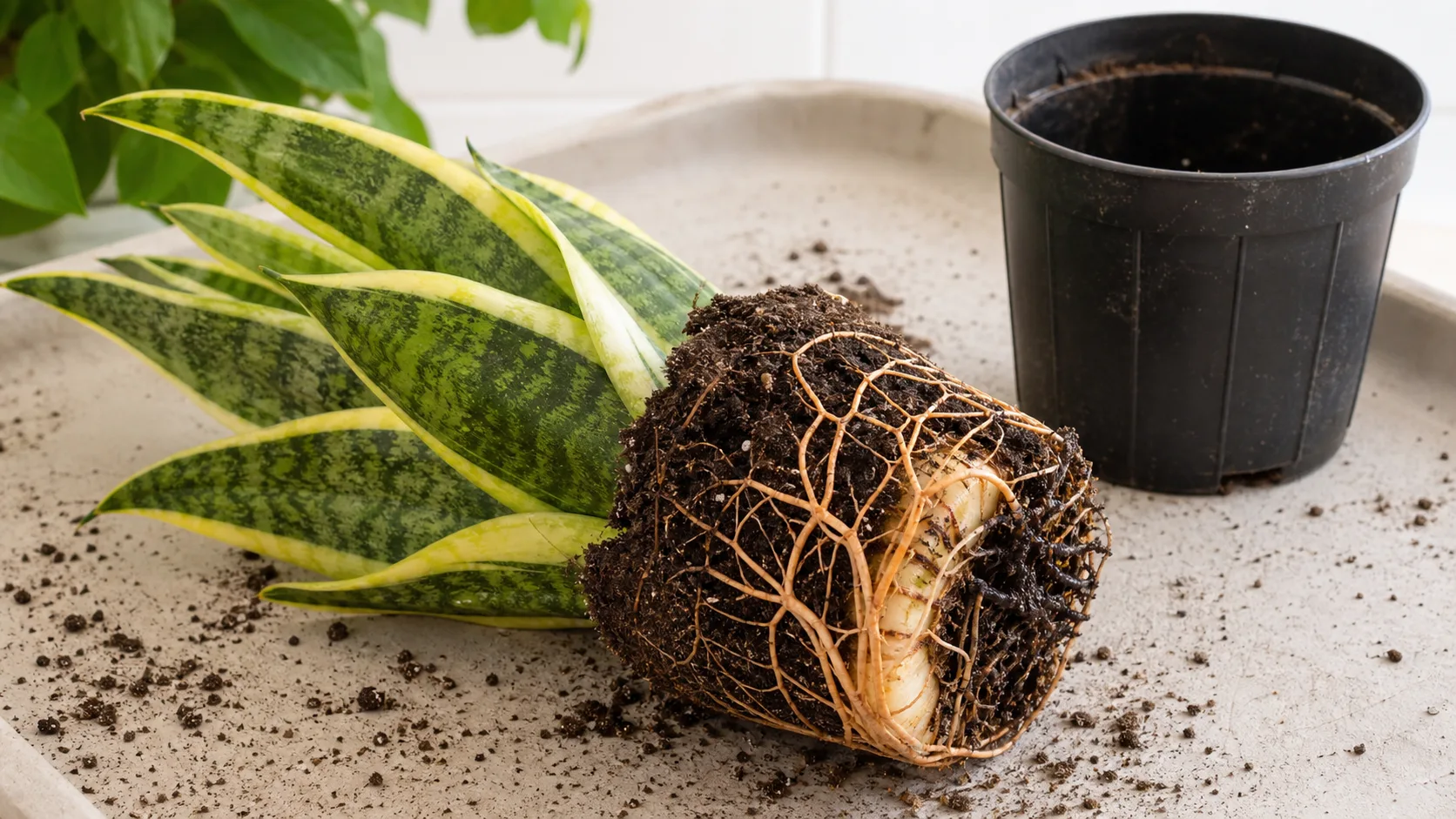
Slide the plant out gently. Squeeze a nursery pot or loosen its edge with a blunt knife; do not pull on the leaves. Check in this order:
- Smell: healthy mix smells earthy. Rot often smells sour or rotten.
- Roots: color varies from pale tan to orange-white, so test texture. Keep roots that stay firm; remove brown-to-black roots that flatten or slide apart.
- Rhizome: keep hard, solid sections. Remove tissue that is translucent, hollow, wet, or mushy.
- Leaf attachment: a green leaf can sit on rotten tissue. If it pulls free, inspect its base immediately.
Common owner confusion (qualitative): Two reviewed discussions show why inspection matters: leaf droop alone left people unsure about water, cold, pot material, and light (drooping and curling; pot and light). These are individual examples, not prevalence data or treatment evidence.
Save, Split, or Discard Decision Tree
Use the Firm-Base Boundary Rule: judge the worst condition below the soil line, not the greenest leaf above it. Root-only damage can preserve the clump; a soft patch crossing the underground stem boundary requires a split; no firm base means the original plant is lost.
| Root-zone condition | Rescue decision |
|---|---|
| Some damaged roots; rhizome fully firm | Trim bad roots and repot the intact plant |
| Firm rhizome; most roots lost | Keep the rhizome and expect slower recovery |
| Mixed soft and hard rhizome sections | Split the clump; save firm sections only |
| Soft crown; leaves detaching | Stop preserving the clump; salvage firm sections or clean leaves |
| No firm tissue below the leaves | Discard the original plant |
Worked example (hypothetical): A pot remains heavy eight days after watering. One leaf pulls free, several roots collapse, and a 1 cm rhizome tip is soft, but the rest of the rhizome is hard. Choose trim and repot: remove the collapsing roots and soft tip, then keep the firm section. Those numbers describe this example, not universal watering or cutting thresholds.
If your plant falls between two rows, compare its odor, root texture, rhizome firmness, and leaf attachment before making another cut.
Cut, Callus, and Repot
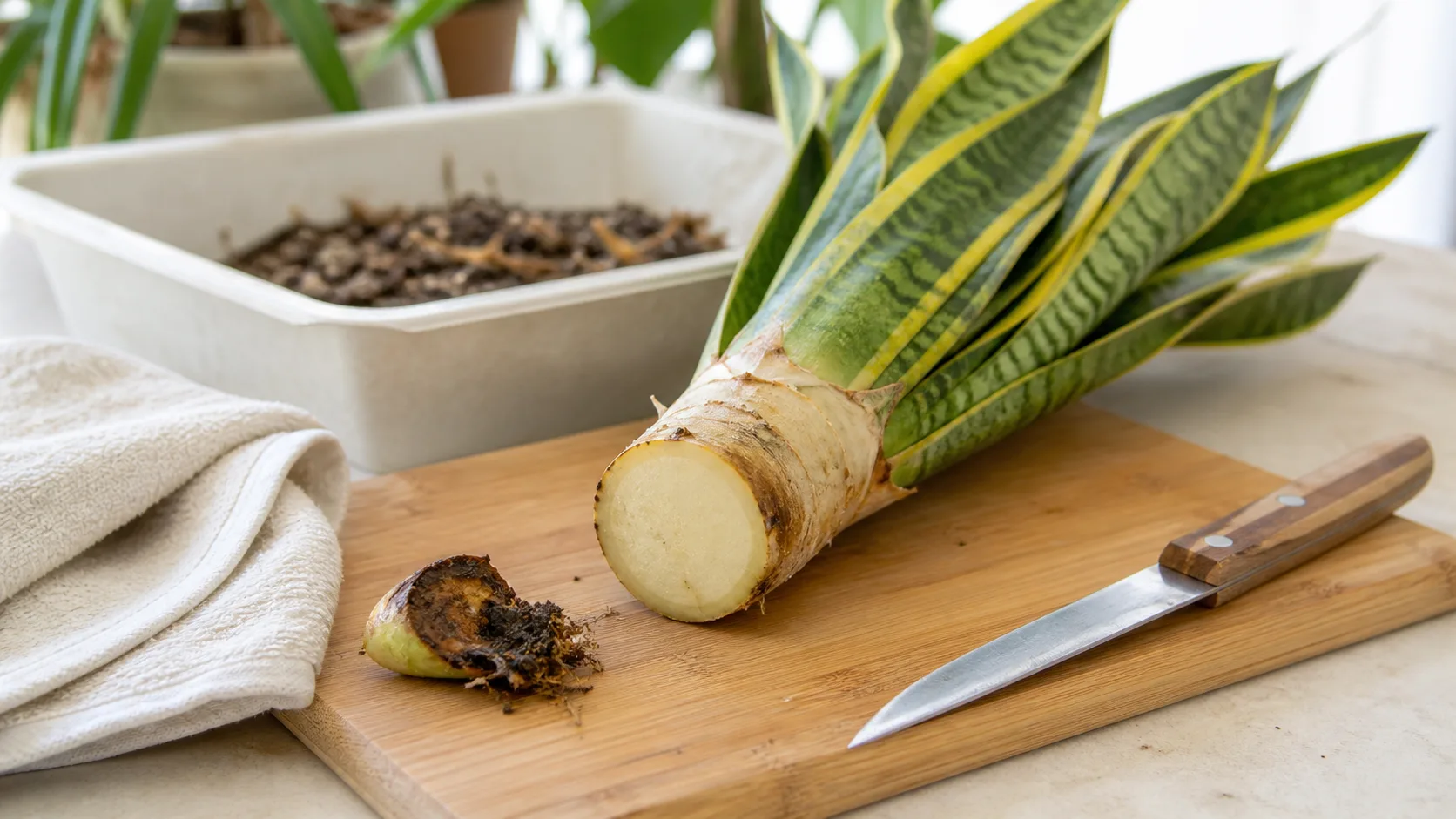
- Use a sterile blade and clean it between major cuts.
- Remove every soft root and rhizome section. If the cut face still has a wet brown pocket, cut farther into firm tissue.
- Discard the old mix. Wash the pot or use a clean one.
- If you trimmed only roots and left the rhizome intact, you can usually repot the same day. If you cut the rhizome or removed most roots, let the cut surface dry before repotting.
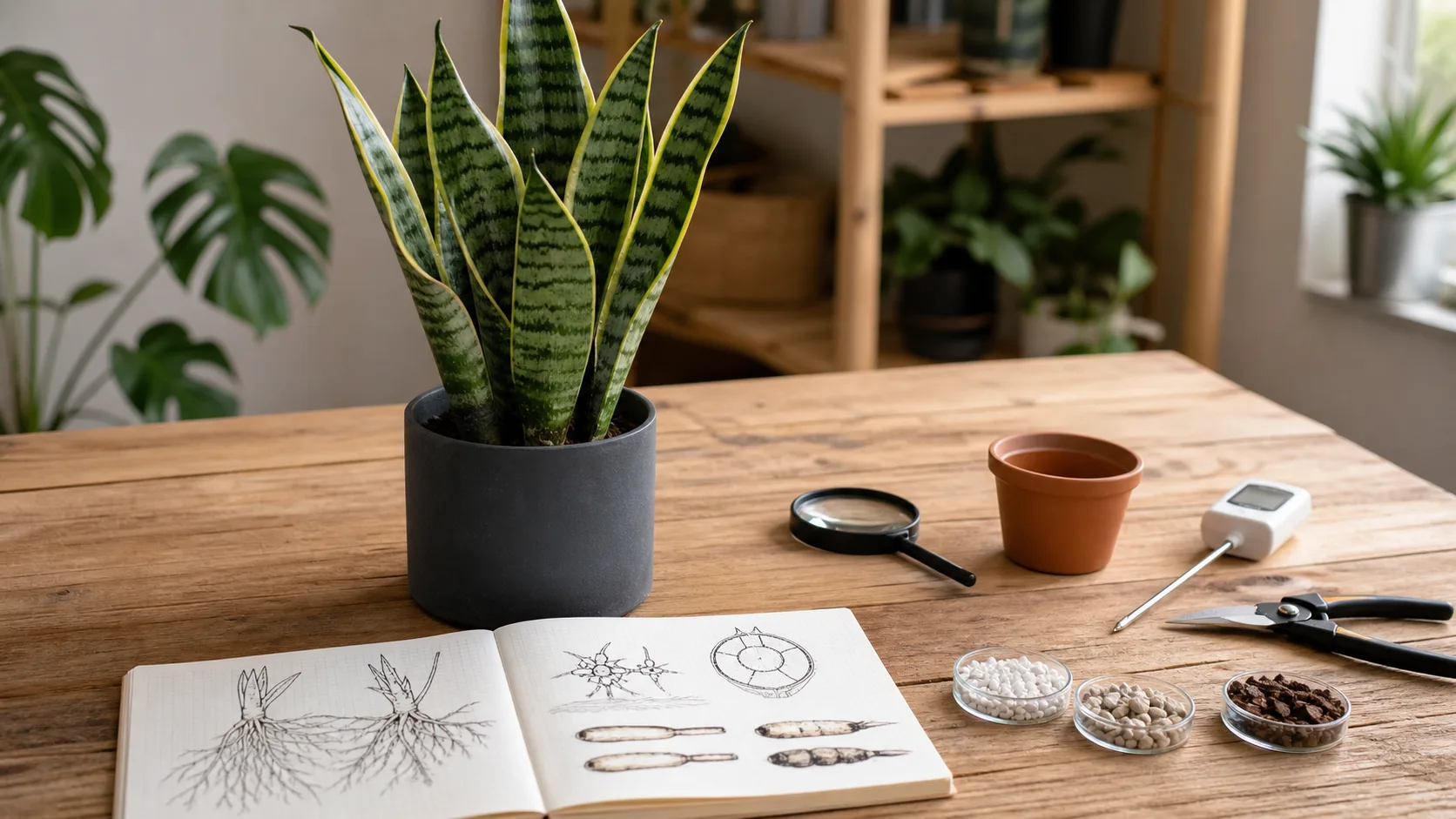
- Use fresh cactus or succulent mix. Add pumice or perlite if it stays dense.
Choose a snug pot with a drainage hole. A large container surrounds the reduced root system with more damp mix. Terracotta can be more forgiving than plastic because it dries faster. A cachepot is fine only when the plant stays in a draining inner pot and you empty runoff.
Do not keep soft tissue because the leaf above it is green. University of Maryland Extension recommends clean or new pots, sterile media, and salvage material taken only from healthy tissue when infection is severe.
When to Water Again
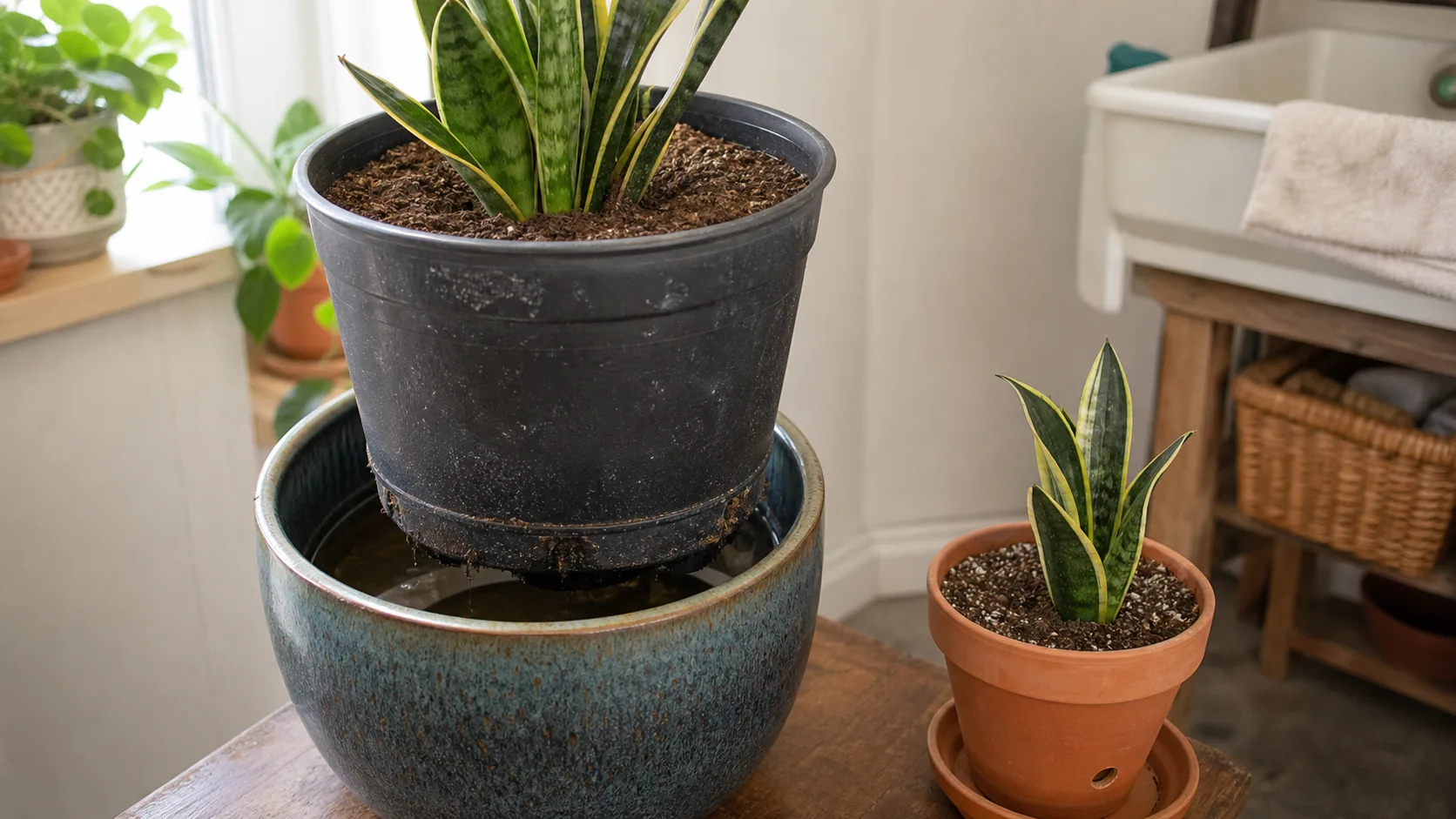
After a minor root trim, a light watering can settle the mix. After major root loss or a rhizome cut, start drier. North Carolina Extension advises letting snake plant soil dry between waterings.
Before watering, confirm all four:
- The pot is much lighter than after repotting.
- The mix is dry well below the surface.
- The base remains firm and odor-free.
- The plant is warm and receiving bright indirect light.
Today: keep only firm tissue. This week: watch for odor, softness, or loose leaves. Next watering: use the dryness checks above, not a calendar. Pot size, mix, light, and temperature make a universal day count unreliable.
Prevent Root Rot From Returning
Fix the condition that kept the root zone wet:
- Low light: move to brighter indirect light so the mix dries more predictably.
- Cool air: keep the recovering plant away from cold drafts; cool rooms slow drying.
- Oversized pot: downsize to a snug container.
- Dense mix: add coarse aeration and replace compacted old media.
- Trapped runoff: empty the outer pot after watering.
- Fixed schedule: check deep moisture and pot weight before every watering.
Cooler, darker months slow drying, so a summer routine may become too wet in winter. Snake plants suit owners who can provide drainage and wait for deep drying. If you tend to water frequently, use a porous pot and a reminder to check, not automatically water.
What Recovery Looks Like
Week 1: no odor, mush, or loose leaves. Weeks 2 to 4: the base stays firm and the pot dries normally. Later: roots recover before top growth. If softness returns, inspect again.
Sources and Safety
- North Carolina Extension: use well-drained soil and let it dry between waterings.
- University of Maryland Extension: brown-to-black, soft roots indicate rot; salvage healthy tissue.
- Missouri Botanical Garden: waterlogging deprives roots of oxygen and can create a sour smell.
- ASPCA: snake plant can cause nausea, vomiting, and diarrhea in pets. Isolate cut pieces during cleanup.
Once the base stays firm and odor-free, set snake-plant reminders around actual dryness, light, and season rather than a fixed watering day.
FAQ
Can a snake plant recover from root rot? Yes, if a root or rhizome section remains firm. A fully soft base cannot recover as one plant.
What do rotten snake plant roots look like? They are brown or black, soft, slimy, flattened, or easy to pull apart. Healthy roots stay firm.
Should I water after repotting? After minor root trimming, a light watering can be fine. After a rhizome cut or major root loss, start drier.
Can healthy leaves be propagated? Yes, if the leaf base is clean and firm. The snake plant propagation guide explains when to use a leaf cutting instead of preserving the original clump. Discard soft or wet bases.
Is hydrogen peroxide required? No. Clean cuts, fresh airy mix, and a drier setup matter more.
Why did rot happen with infrequent watering? Low light, cool air, dense mix, an oversized pot, or poor drainage can prolong wetness.
How do I know the rot is gone? The base stays firm, with no sour smell, new soft spots, or loosening leaves.
Methodology
KnowYourPlant reviewed live search results and reader questions on July 19, 2026, then checked care and safety claims against NC State Extension, University of Maryland Extension, Missouri Botanical Garden, and ASPCA. The original SERP-gap finding was that broad “trim and repot” advice rarely separated root-only damage from damage crossing into the underground stem or crown; that gap produced the Firm-Base Boundary Rule and save/split/discard tree. Community cases identify confusion patterns only, the worked rescue is explicitly hypothetical, and no outcome data were invented.
For a related care deep dive, see the low-light indoor plants guide, the cat-safe indoor plants guide, the grow lights guide for indoor plants.