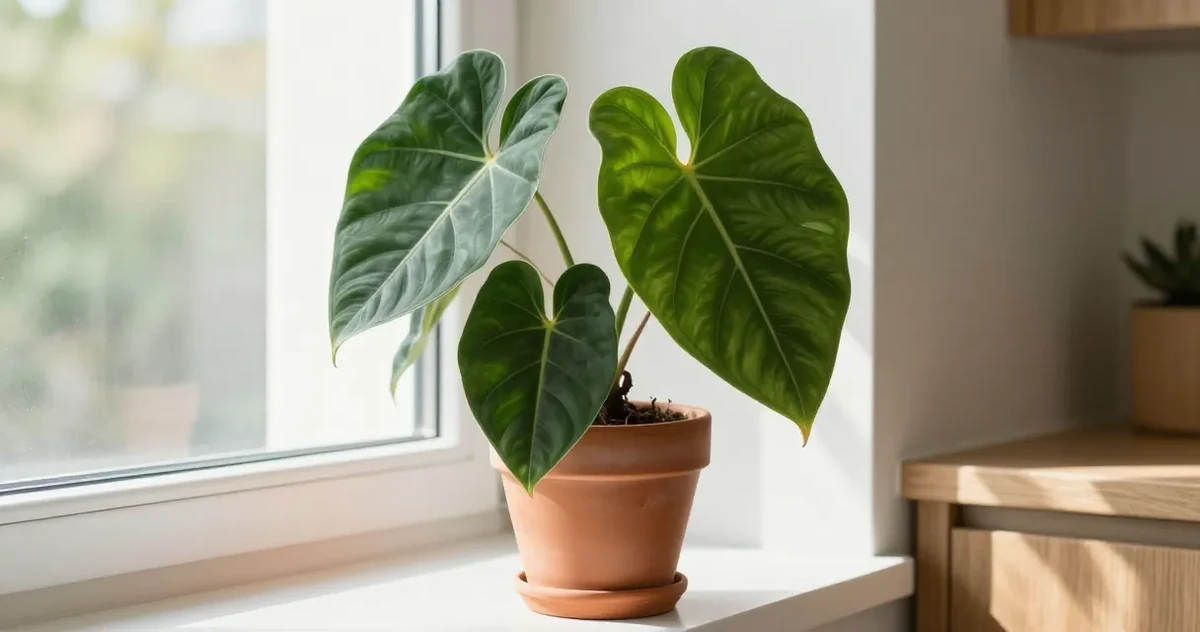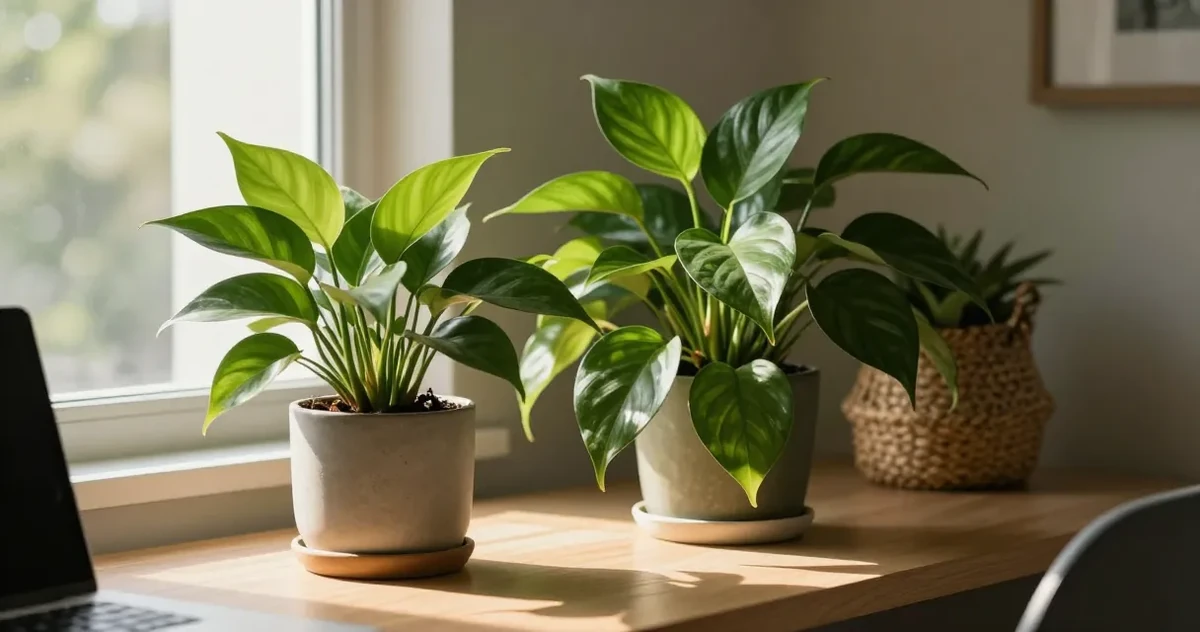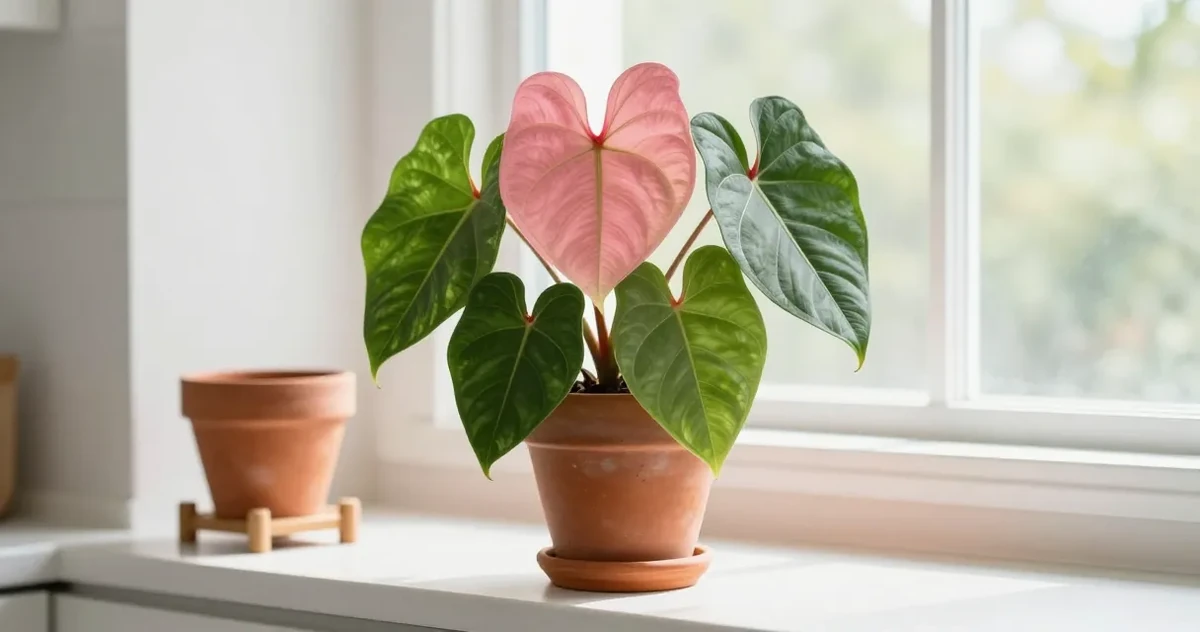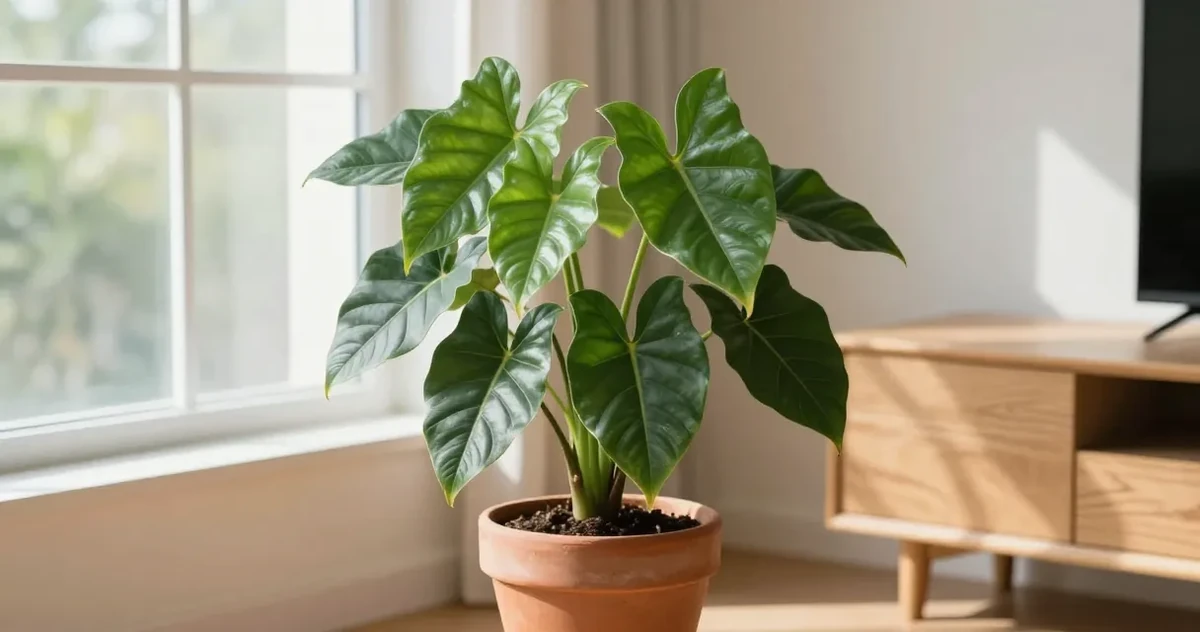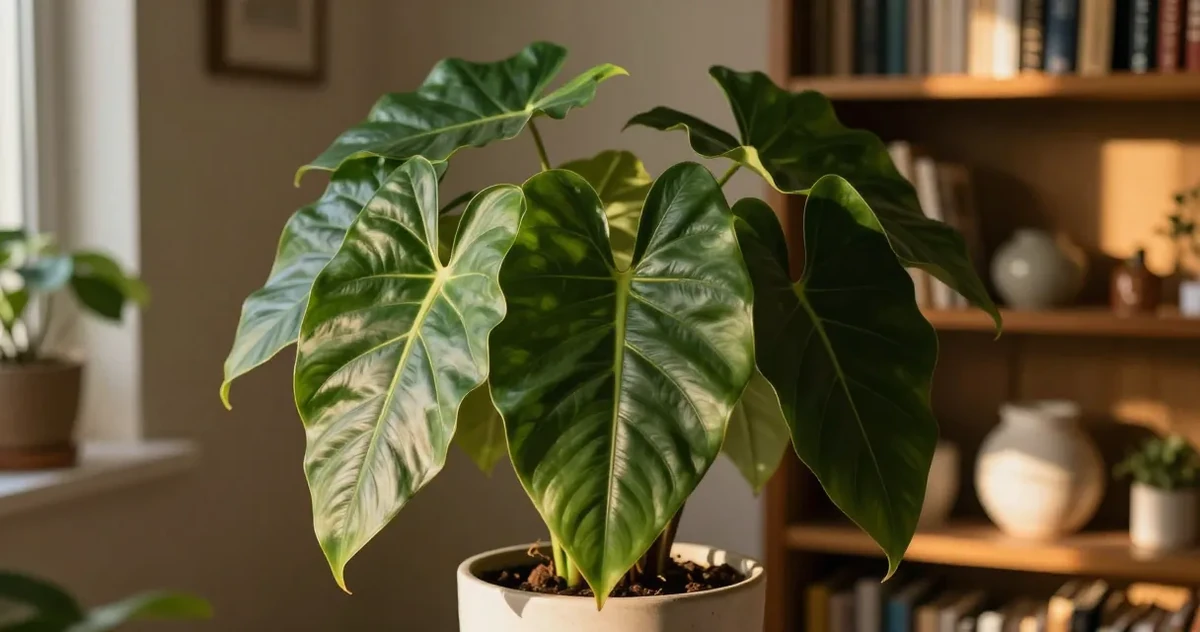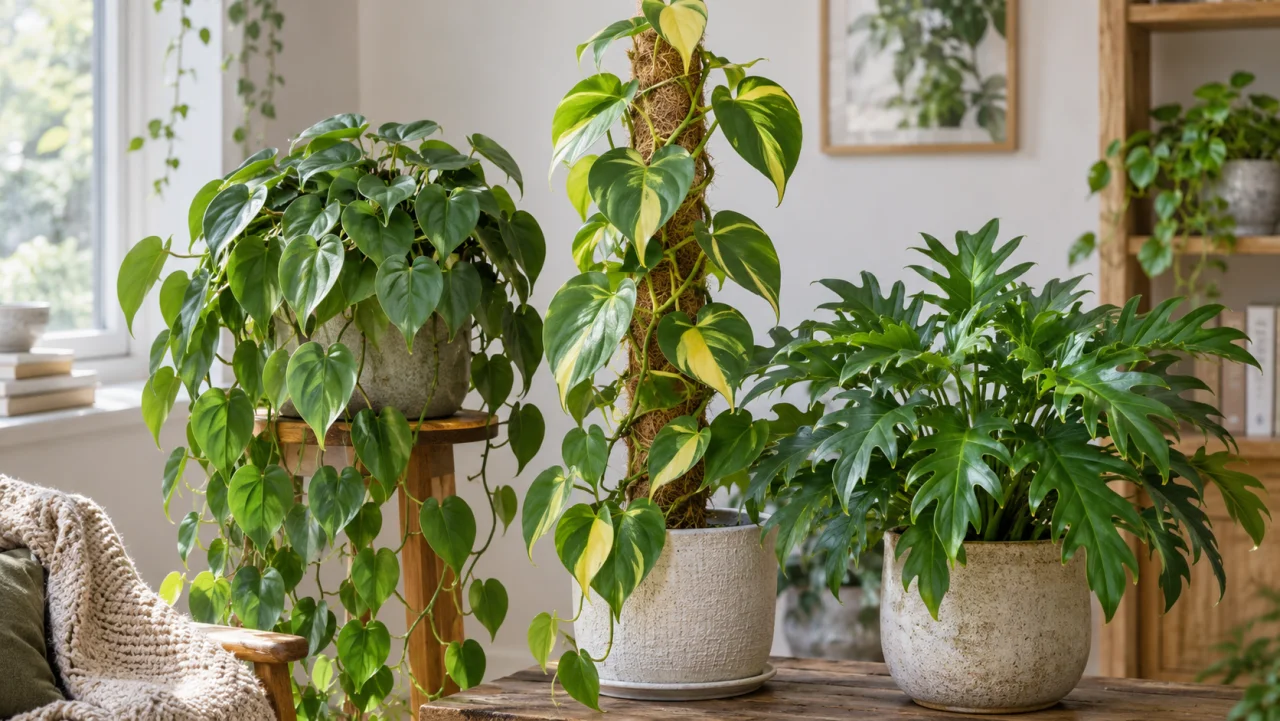
Several philodendron varieties including heartleaf, Xanadu, and Brasil arranged indoors on shelves and poles

Philodendron Types: The Best Varieties for Indoor Growers

If you’ve ever stood in a garden center staring at a shelf of philodendrons – heart-shaped leaves, velvet leaves, big split leaves, some trailing, some bushy – and thought I have no idea which one I actually want, you’re in very good company. Philodendron types vary so dramatically that two plants with the same name on the tag can look nothing alike once they mature. The clearest way to think about it before you pick anything: philodendrons divide into two main growth habits – trailing or climbing types, and self-heading types. One group wants to vine along a surface or hang from a basket; the other sits upright without any support. That single distinction shapes where the plant can live, whether it needs a pole, and how much space it will eventually claim. ...
 · 21 min · 
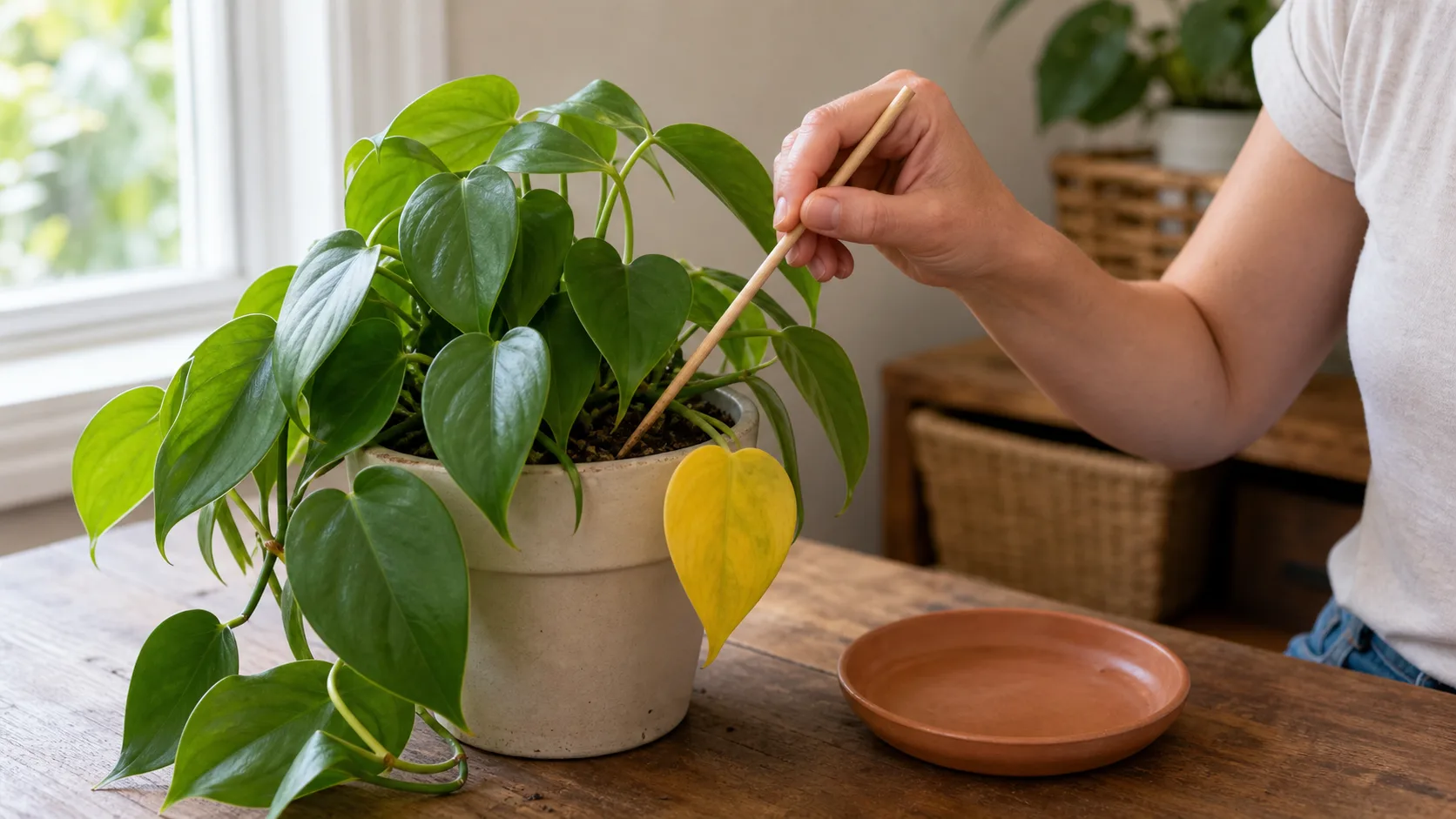
Yellow lower philodendron leaf being checked beside healthy green foliage and moist potting mix

Philodendron Yellow Leaves: Age, Wet Roots, or Light?

Most philodendron yellow leaves follow one of three common paths: one old leaf is aging out, the roots are staying wet too long, or the plant is in light too dim for its current watering routine. You can sort those paths quickly by checking which leaf changed first, how damp the mix is 2 to 3 inches down, and whether new growth still looks healthy. A genuinely bone-dry root ball, pests, temperature stress, or a fertilizer problem can also cause yellowing, but they need supporting signs. A fully yellow leaf will not become green again, so the goal is to prevent the next leaf from yellowing. ...

 · 15 min · 
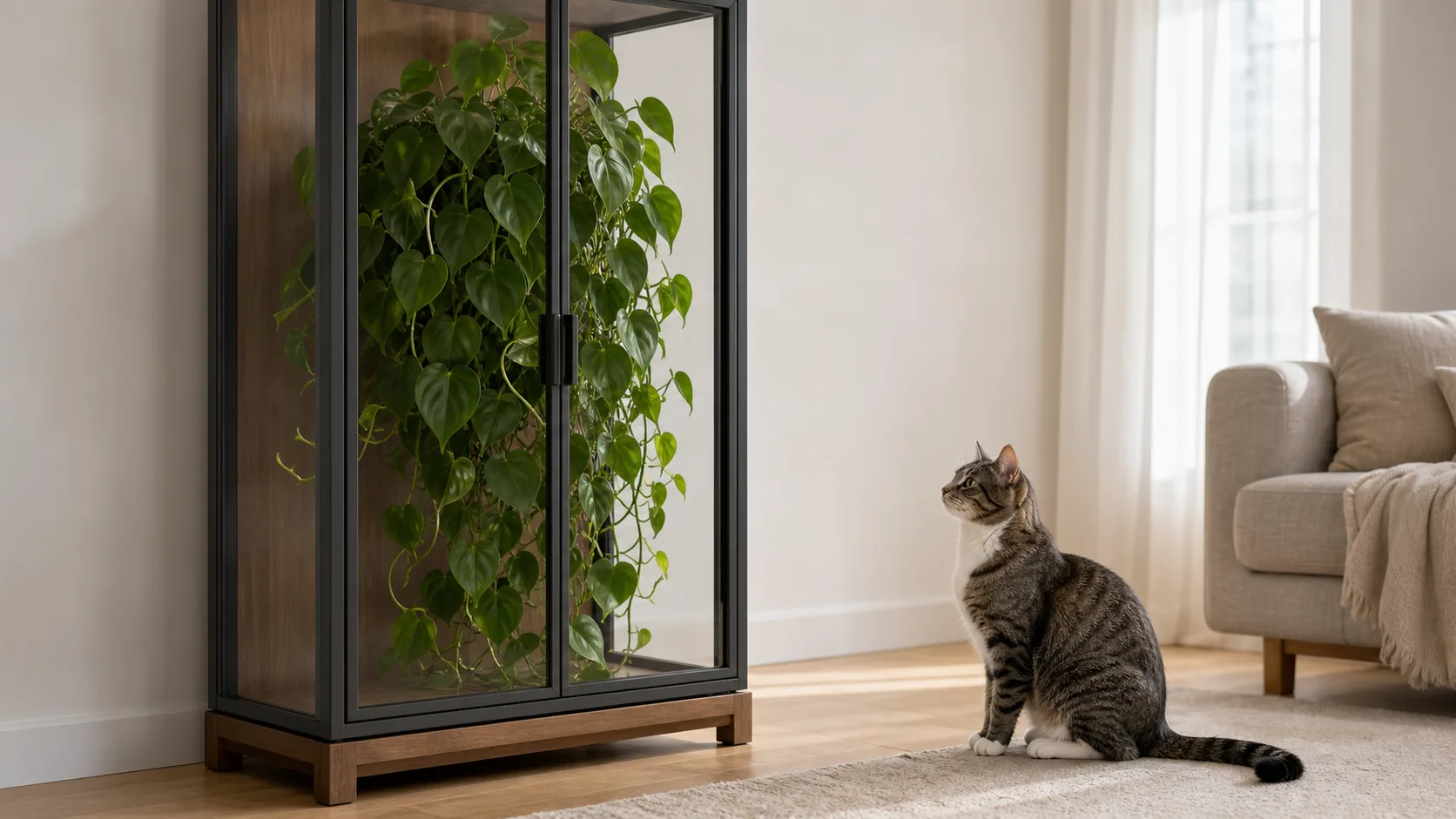
Heartleaf philodendron trailing from a shelf in a home with a cat nearby

Is Philodendron Toxic to Cats? Symptoms and Alternatives

If your cat just chewed a philodendron leaf, you probably do not need a vague warning. You need to know whether this is a watch-closely moment, a call-the-vet moment, or a drop-everything-and-go moment. The short answer is yes, philodendron is toxic to cats. But the usual problem is not the kind of poisoning people imagine when they hear the word toxic. In most cases, philodendron causes immediate burning and irritation in the mouth and throat because the plant contains insoluble calcium oxalate crystals. That difference matters, because it changes what you should check first. ...

 · 13 min · 
Philodendron plant with heart-shaped leaves in a bright indoor space

Philodendron Care: Light, Watering, and Yellow Leaves

Most people bring home a philodendron because she seems easy, then one leaf turns yellow and suddenly nothing feels easy at all. You check the soil three times in one day, move her closer to the window, move her back again, and start wondering whether you are overwatering, underwatering, or somehow doing both. That spiral is common, and usually unnecessary. Philodendrons are some of the clearest communicators in the houseplant world. If you learn how to read her leaves, growth pattern, cataphylls, and soil dry-down, you can usually catch trouble early and fix it before she really declines. ...

 · 19 min · 
Pothos vs Philodendron: Differences

Pothos vs Philodendron: Differences

You’re standing in a garden center, or maybe scrolling through a plant shop online, and you see two plants side by side. Both have heart-shaped green leaves. Both trail beautifully. Both are labelled with names that don’t quite match what you remember. This is the pothos vs philodendron puzzle, and it trips up almost everyone at some point. Here’s the useful part: you do not need a botany lesson to solve it. You need a few reliable checks for the plant in front of you, then a simple answer to the care question that usually follows: can you water it the same way, and which one fits your room better? Nurseries sometimes don’t help matters; mislabelling is common enough that you cannot always trust the tag in the pot. Once you know what to look for, though, you’ll never mix them up again. ...

 · 22 min · 
Philodendron Pink Princess Care Guide

Philodendron Pink Princess Care Guide

Philodendron Pink Princess is not hard to keep alive, but it is easy to disappoint if you buy it for the pink and then put it in a dim corner. The real care question is simple: can you give it bright indirect light, a pot that drains, and a soil check once a week? If yes, it can fit a normal indoor routine. If you want a plant you can water on a fixed schedule and forget, choose a tougher green philodendron instead. ...

 · 21 min · 
Heartleaf Philodendron Care Indoors

Heartleaf Philodendron Care Indoors

Climate DNA for heartleaf philodendron The heartleaf plant in this guide is tied to the accepted species Philodendron hederaceum, including the broad POWO native range from Mexico through tropical America. The ranges below are the middle 50% (p25–p75), not recommended indoor setpoints. Reference taxon POWO native range Annual mean temperature Annual precipitation Relative humidity Solar radiation Evidence Philodendron hederaceum (heartleaf philodendron) Mexico to tropical America 24.0–25.9°C 1668–2787 mm/yr 64–68% 17.0–18.7 MJ/m²/day 30 climate points / 783 usable records; medium confidence What this changes in this guide: A broad field envelope indicates ecological variation, not immunity to soggy potting mix. Use it to understand context while checking the indoor root zone directly. ...

 · 20 min · 
Philodendron Brasil Care Guide Indoors

Philodendron Brasil Care Guide Indoors

Philodendron Brasil is a good fit if you want a trailing plant that can forgive the occasional late watering, but it is not a great fit for a dark corner. Its yellow-green streaks need brighter indirect light than a plain heartleaf philodendron, and its roots need time to dry between waterings. The short version: put it near a bright window out of harsh direct sun, water when the top few centimetres of soil feel dry, and watch the newest leaves. Curling usually means the plant is too dry, yellowing often means the soil has stayed wet too long, and brown tips usually point to dry air, fertilizer buildup, or inconsistent watering. ...

 · 20 min ·