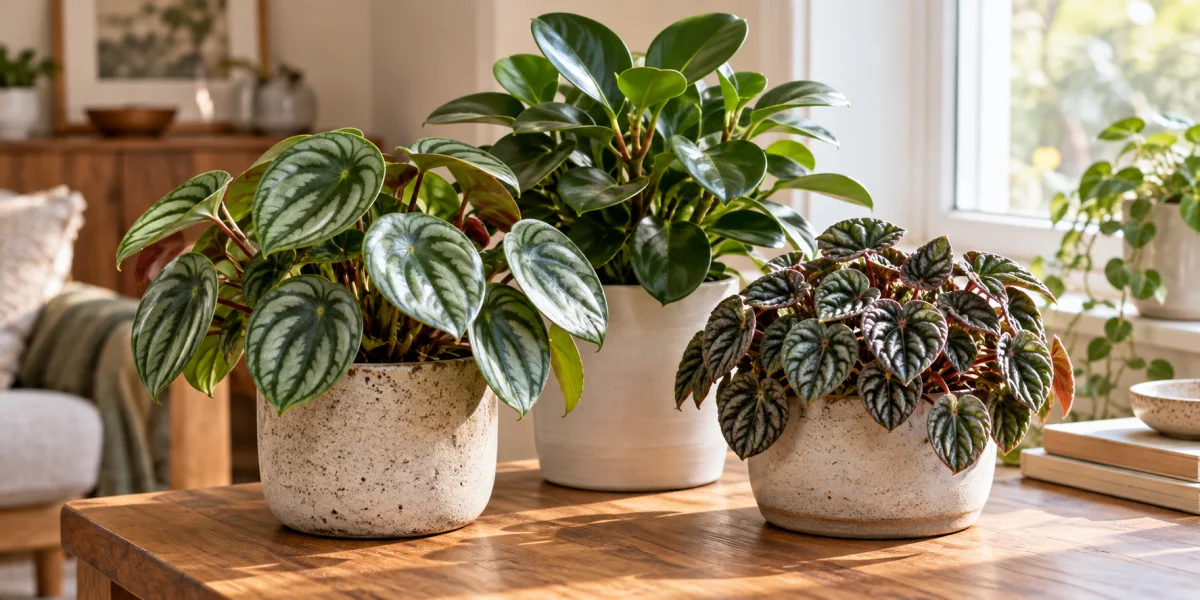
Peperomia plant care starts with bright indirect light, freely draining soil, and allowing the mix to dry between waterings. Peperomia is a diverse genus of compact tropical plants, many with fleshy, water-storing leaves, rather than one plant with one fixed care schedule.
If you have ever picked up a small, cheerful plant from a garden center without really knowing what it was, there is a good chance it was a peperomia. They sit on “low-maintenance starter plant” racks and desk displays everywhere, yet many decline at home because the potting mix remains wet longer than the owner realizes.
This guide covers what peperomia actually needs day to day, how to read it when something looks off, which varieties suit beginners and small spaces, and how to set it up so it stays healthy without constant attention.
Identification Snapshot
Use this identification snapshot before you change the care routine:
- Peperomia usually has thick, slightly succulent leaves that store some water, even when the plant looks delicate or compact.
- Most houseplant peperomia stays low, bushy, or softly trailing rather than tall and woody.
- Healthy growth should look dense and tidy. Long gaps between leaves usually point to low light, not a naturally lanky habit.
- If the plant is sold as a tiny shelf or desk plant, drainage and window distance matter more than feeding or humidity tweaks.
Lookalikes and Confused-With Cases
| Plant | Why people confuse it with peperomia | Quick difference |
|---|---|---|
| Baby rubber plant (Peperomia obtusifolia) vs rubber plant (Ficus elastica) | Similar glossy green leaves and the word “rubber” in the common name | Peperomia stays compact with softer, fleshy leaves; rubber plant gets woody and much larger over time |
| Watermelon peperomia (P. argyreia) vs patterned begonia | Both can show silver striping and ornamental foliage | Watermelon peperomia grows as a compact rosette with thicker leaves; begonias usually have thinner, more asymmetrical leaves |
| Peperomia vs Chinese money plant (Pilea peperomioides) | Both are sold as small round-leaved desk plants | Pilea has flat coin-like leaves on longer upright stems; peperomia leaves usually feel thicker and more succulent |
Care Cards
| Care card | Best baseline | What to watch for |
|---|---|---|
| Light | Bright indirect light; judge the spot by the plant’s new growth rather than distance alone | Leggy stems and wide leaf gaps usually mean it needs more light |
| Water | Let the mix dry well below the surface before watering again | Yellowing, leaf drop, or limp growth in wet soil usually means roots are staying too damp |
| Soil | Light, well-draining potting mix with extra aeration from perlite or coarse material | Dense mix in a large pot stays wet too long |
| Pot | Drainage holes first, decorative cache pot second | Standing water in the outer pot is a frequent cause of leaf drop |
| Seasonal rhythm | Faster drying in summer, slower drying in winter | Keeping a summer watering habit into winter causes many avoidable losses |
What Most Care Guides Miss
Most peperomia guides give you two facts: bright indirect light, and let it dry between waterings. That advice is correct, but it misses the part that causes most failures – moisture and light working against each other at the same time.
A peperomia sitting far from a window, in damp soil, inside a glazed decorative cache pot is in trouble on three fronts simultaneously. Telling someone to water less only solves one of them. The common misdiagnosis is “I’m overwatering” when the fuller picture is wet soil plus low light plus trapped drainage, all reinforcing each other.
The first practical check: Before you change your watering schedule, look at two things together – how far the plant is from its nearest window, and whether the pot has drainage holes that actually drain freely. Fix both before adjusting anything else.
Light: The Legginess Signal
Peperomia does best in bright, indirect light. Start near a bright window without harsh afternoon sun, then watch the new growth. Direct midday or afternoon rays can scorch foliage, leaving pale, bleached, or papery brown patches.
The more forgiving side: peperomia tolerates lower light better than many houseplants. Growth slows and trailing varieties may stretch toward the nearest light source. NC State Extension describes P. obtusifolia as preferring bright indirect light while tolerating lower light for extended periods; variegated and other species can respond differently.
Leggy, stretched stems with wide gaps between leaves are almost always a light signal. Moving the plant closer to the window usually stops the stretch within a few weeks. Pruning back leggy growth without improving the light just creates the same problem on a shorter stem.
If you are trying to grow plants in genuinely dim spots, the indoor plants for low light guide covers which species are actually equipped for it rather than just surviving.
Watering: How to Read the Soil, Not the Calendar
This is where many peperomia problems start. The plant looks small and tropical, so the instinct is to water it on a regular schedule. But UF/IFAS notes that many Peperomia species have fleshy leaves that store water, while Clemson Extension recommends letting the soil dry between waterings.
A practical starting check is to test below the surface in more than one place. If the root zone still feels damp, wait. When it has dried to the level appropriate for the species, water thoroughly and let the excess drain. Many thick-leaved peperomias tolerate substantial drying between waterings, while thinner-leaved types may need checking sooner; pot size, mix, light, temperature, and root mass decide the interval.
Clemson also notes that overwatered peperomia may drop leaves. Treat that as a prompt to inspect moisture and drainage, not as proof that every dropped leaf has the same cause.
How Quickly Will Your Mix Dry?
The honest answer: it depends on your specific setup. Thick-leaved varieties in small terracotta pots in a bright spot dry much faster than thinner trailing types in larger glazed pots in a dim corner. This rough guide covers the most common indoor setups:
| Setup | What usually changes | Better check | |
|---|---|---|---|
| Small terracotta pot in brighter light | Mix often dries faster | Check below the surface sooner, but water only when the root zone has dried appropriately | |
| Glazed or plastic pot in moderate light | Mix often stays moist longer | Lift the pot and check moisture in more than one spot | |
| Chunky, airy mix | Water moves through quickly | Water thoroughly, then confirm the pot drains completely | |
| Large pot or low-light position | The center can remain wet after the surface dries | Use a wooden skewer or probe near the root zone before watering |
These are tendencies, not calendar intervals. Pot size, material, root mass, temperature, airflow, and mix composition can change drying time substantially.
The Drainage Mistake That Causes Most Leaf Drop
One setup problem trips up new peperomia owners consistently: the decorative cache pot. You slide the plant in its plastic grower pot into a glazed outer pot because it looks better on the shelf, but the outer pot holds drainage water and keeps the roots sitting in moisture long after they should have dried out.
Leaf drop in a plant that is “only watered once a week” is often traced directly here. The watering frequency is not the problem – the water retention is. If you use a decorative outer pot, check it after every watering and empty it within an hour. If that becomes a regular hassle, repot directly into a pot with drainage holes. The root rot treatment guide walks through how to assess the damage and what can still be saved when drainage problems have persisted for a while.
Soil and Repotting
Peperomia likes a light, well-draining mix. Standard potting soil can be amended with perlite or another coarse component to help moisture move through rather than pool at the roots. Both NC State’s genus profile and Clemson’s guide emphasize drainage and avoiding persistently wet soil.
Repotting is rarely urgent. Peperomia grows slowly and does well slightly root-bound. When roots appear from the drainage holes or circle visibly at the soil surface, size up by one pot only. Going too large creates more soil than the roots can dry out efficiently, which increases the chance of rot – a common mistake with semi-succulent plants. The when to repot plants guide has a practical walkthrough for reading the signs without uprooting prematurely.
Compact Varieties: Which One Fits Your Space
Most peperomia sold as houseplants stay small enough for a desk or shelf. Where they differ is how forgiving they are of imperfect conditions, and whether they grow upright or trail.
| Variety | Growth habit | Beginner friendliness | Desk / shelf notes |
|---|---|---|---|
| Baby rubber plant (P. obtusifolia) | Upright, bushy | Very high | Handles a wide light range; one of the most forgiving houseplants available |
| Ripple peperomia (P. caperata) | Compact rosette | High | Tiny footprint; handles lower light reasonably well |
| Watermelon peperomia (P. argyreia) | Low rosette | High | Distinctive striped leaves; slightly more sensitive to drought |
| Peperomia Hope | Trailing | Moderate | Gets leggy faster in low light; good for shelf edges where it can hang |
Use the peperomia varieties guide to compare leaf shapes and growth habits before applying species-specific advice. If you have confirmed P. obtusifolia, the baby rubber plant care guide narrows the routine to that thick-leaved species.
Thick-leaved upright varieties like baby rubber plant and ripple peperomia are the most forgiving for beginners. They store more water in their leaves, giving you more margin if you miss a watering or two.
Thinner-leaved or trailing types like Peperomia Hope are still approachable plants, but their response to light and drying can differ from thick-leaved upright forms. Watch the spacing and firmness of new growth instead of assuming every species needs the same interval.
Seasonal and Light-Cycle Adjustments
Peperomia does not demand a calendar overhaul, but its care rhythm changes when light, temperature, and active growth change. Most problems happen when an owner keeps the same watering and feeding routine after the plant has slowed down.
Brighter, warmer growing periods: Check moisture more often because the mix may dry faster, but water only after the root zone reaches the appropriate dry point. Resume light feeding only when healthy new growth is visible. This is also the more forgiving time to repot or take cuttings.
Dimmer, cooler or slower-growth periods: Check less often, pause or reduce feeding, and pay close attention to decorative cache pots that retain drainage. Protect the plant from cold drafts and hot heating vents. Clemson suggests a humidifier when indoor air becomes especially dry; misting is not a substitute for correcting room conditions.
If you live in the Northern Hemisphere, these patterns often align with spring/summer and autumn/winter; in the Southern Hemisphere they reverse. Grow lights and climate-controlled rooms can also shift or erase the calendar pattern, so let the plant and root zone make the final decision.
Common Problems and Symptom-First Troubleshooting
Yellowing leaves: Usually overwatering or poor drainage, especially if the soil has been consistently damp. Check the outer pot for standing water first.
Leaf drop: The cache pot setup is the first thing to check. Roots sitting in retained moisture cause leaf drop even when watering frequency seems correct. Empty the outer pot after every watering and let the soil dry fully before the next session.
Leggy, stretched stems: Move it closer to the light source. Thin stems reaching toward one direction almost always mean the plant is not getting enough light where it is placed. Pruning without improving light just repeats the problem on shorter stems.
Brown or pale patches: Direct sun exposure, especially in summer through glass. Move the plant a foot or two back from the window.
Wilting despite moist soil: Check the roots. Lift the plant out of the pot and look at the root ball. Healthy roots are white or tan; mushy, dark brown roots indicate rot. Trim the damaged roots, let them air dry briefly, then repot in fresh dry mix. If the rot is caught before it reaches the stem, the plant usually recovers.
Drooping that keeps coming back: Check moisture, drainage, root condition, and light together rather than assuming thirst. A plant in low light with consistently damp soil can droop from root stress; adding more water will not dry the mix or repair damaged roots. Let the root zone reach the species-appropriate dry point and correct drainage or light before watering again.
Pet Safety
The ASPCA lists baby rubber plant (Peperomia obtusifolia) as non-toxic to dogs and cats. That listing does not prove every plant sold under a similar common name is safe, so verify the botanical name. Any chewed plant material can still cause stomach upset; contact a veterinarian if your pet becomes unwell. The cat-safe indoor plants guide lists more verified options.
Before You Buy: A Quick Fit Check
Peperomia suits you if:
- You want a plant that stays compact and doesn’t need regular pruning or staking
- You can give it a bright-to-moderate indirect light spot and adjust by observing new growth
- You tend to underwater rather than overwater, or you’re willing to check the soil before watering rather than sticking to a schedule
- You want something that tolerates being slightly root-bound and rarely needs repotting
Peperomia is probably not the right fit if:
- Your available spot produces stretched, pale growth and cannot be supplemented with a grow light
- You water on a fixed schedule regardless of what the soil feels like
- You want fast growth or dramatic visual change – peperomia grows slowly by design
The honest trade-off: peperomia rewards the habit of checking before watering, not watering on a timer. If you forget plants for a week at a time, it will usually forgive you. If you tend to water on a routine, you will need to break that habit with this one.
Frequently Asked Questions
How often should I water my peperomia? There’s no fixed schedule that works for all setups – it depends on pot size, light, season, root mass, and soil mix. Check below the surface in more than one place and water only after the root zone has dried appropriately for the species. A bright summer setup can dry much faster than a low-light winter setup.
Why are my peperomia leaves turning yellow? The most common cause is overwatering or water retention from a cache pot that holds drainage. Check whether the outer pot has water sitting in it – empty it and let the soil dry out more before the next session. Less commonly, yellowing can result from low light combined with consistently damp soil. The yellow leaves guide walks through the symptom patterns in more detail.
Why is my peperomia leggy? Leggy, stretched stems with wide gaps between leaves are almost always a low-light problem. Move it closer to a window and trim back the leggy growth to encourage compact new shoots. If the light doesn’t improve, the new growth will just repeat the pattern on shorter stems.
Can peperomia grow in low light? Some peperomias tolerate lower light, but the response varies by species and cultivar. If new growth becomes smaller, paler, or widely spaced, the current light is not supporting compact growth; move the plant gradually toward brighter indirect light or add a suitable grow light. P. obtusifolia is one of the better-documented lower-light-tolerant types, but tolerance is not the same as vigorous growth.
Is peperomia safe for cats and dogs? Peperomia obtusifolia (baby rubber plant) is listed as non-toxic to both cats and dogs by the ASPCA. If you have a different plant, check its botanical name against the ASPCA database because common names can refer to unrelated species.
Why is my peperomia dropping leaves? Leaf drop is most often caused by root stress from retained moisture – not necessarily from watering too frequently, but from water sitting around the roots too long. Check whether your pot sits inside a decorative cache pot that holds drainage water. Empty it after every watering and let the soil dry before the next session. If the drop continues after fixing drainage, lift the plant out and check the roots for rot.
How do I propagate peperomia? Method depends on the species. NC State Extension lists leaf cuttings, stem cuttings, and division as propagation options, depending on the plant. The how to propagate plants guide covers the step-by-step process.
Do I need to mist my peperomia? Routine misting is not required. If winter air is very dry, Clemson recommends a room humidifier. Keep leaves from remaining wet for long periods and focus first on light, root-zone moisture, and drainage.
Methodology Note
This guide was reviewed in September 2026 using current care guidance from Clemson Extension, NC State Extension, UF/IFAS, and the ASPCA. Community questions were used only to identify confusing decisions, not as factual proof. Drying times are presented as setup-dependent observations rather than fixed schedules.
Sources
- Clemson Home and Garden Information Center: Peperomia (Peperomia spp.) Indoor Plant Care and Growing Guide, accessed 2026-09-09
- NC State Extension Gardener Plant Toolbox: Peperomia, accessed 2026-09-09
- UF/IFAS Gardening Solutions: Florida Peperomia, accessed 2026-09-09
- ASPCA: Baby Rubber Plant (Peperomia obtusifolia), accessed 2026-09-09