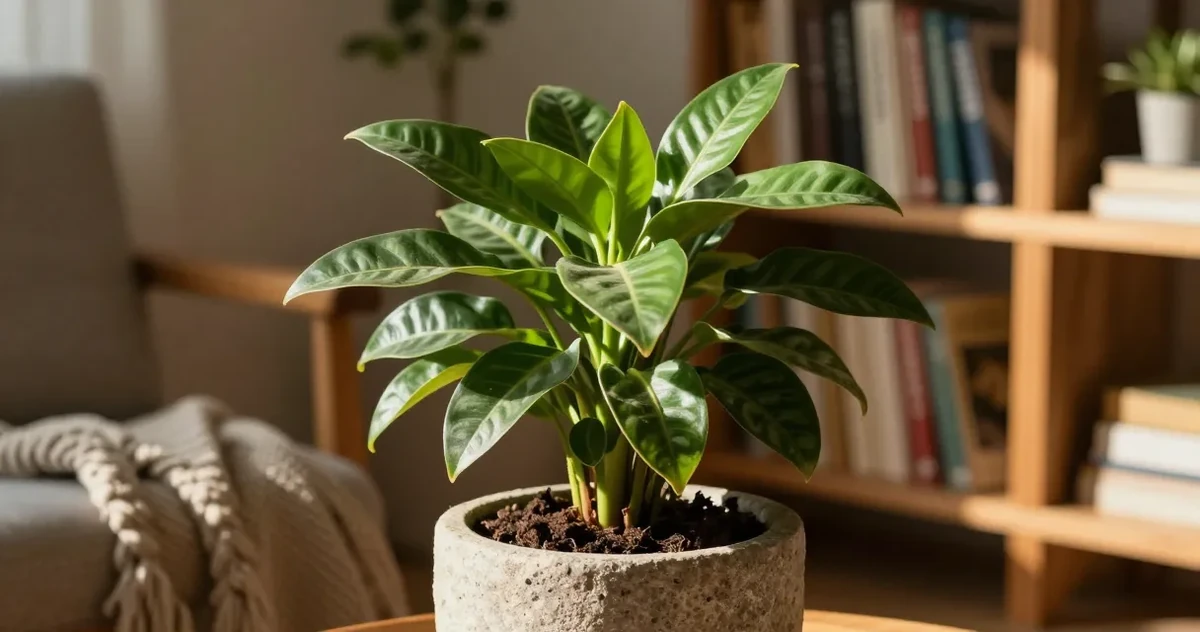
The thing that changes how you care for Peperomia obtusifolia is understanding one quality it has that most houseplants do not: those thick, glossy leaves store water. That means the baby rubber plant handles a missed watering far better than it handles sitting in wet soil – and the large majority of problems owners run into, from drooping to yellowing to mushy stems, trace back to watering too often rather than too little.
If yours is drooping, turning yellow, or just looking off, this guide helps you read what the plant is actually telling you so you are not guessing between “does it need water” and “am I drowning it.”
Byline: KnowYourPlant editorial team. Last updated June 19, 2026. We refreshed this guide against Clemson, NC State, UF/IFAS, UF Gardening Solutions, and ASPCA, then used current plant-owner questions as a reality check for drooping, watering confusion, propagation choices, and harmless flower spikes.
What Most Care Guides Miss
The single most common misdiagnosis with Peperomia obtusifolia is treating drooping as thirst. An owner sees a drooping plant, assumes it needs water, waters it, and accelerates the exact problem they were trying to fix.
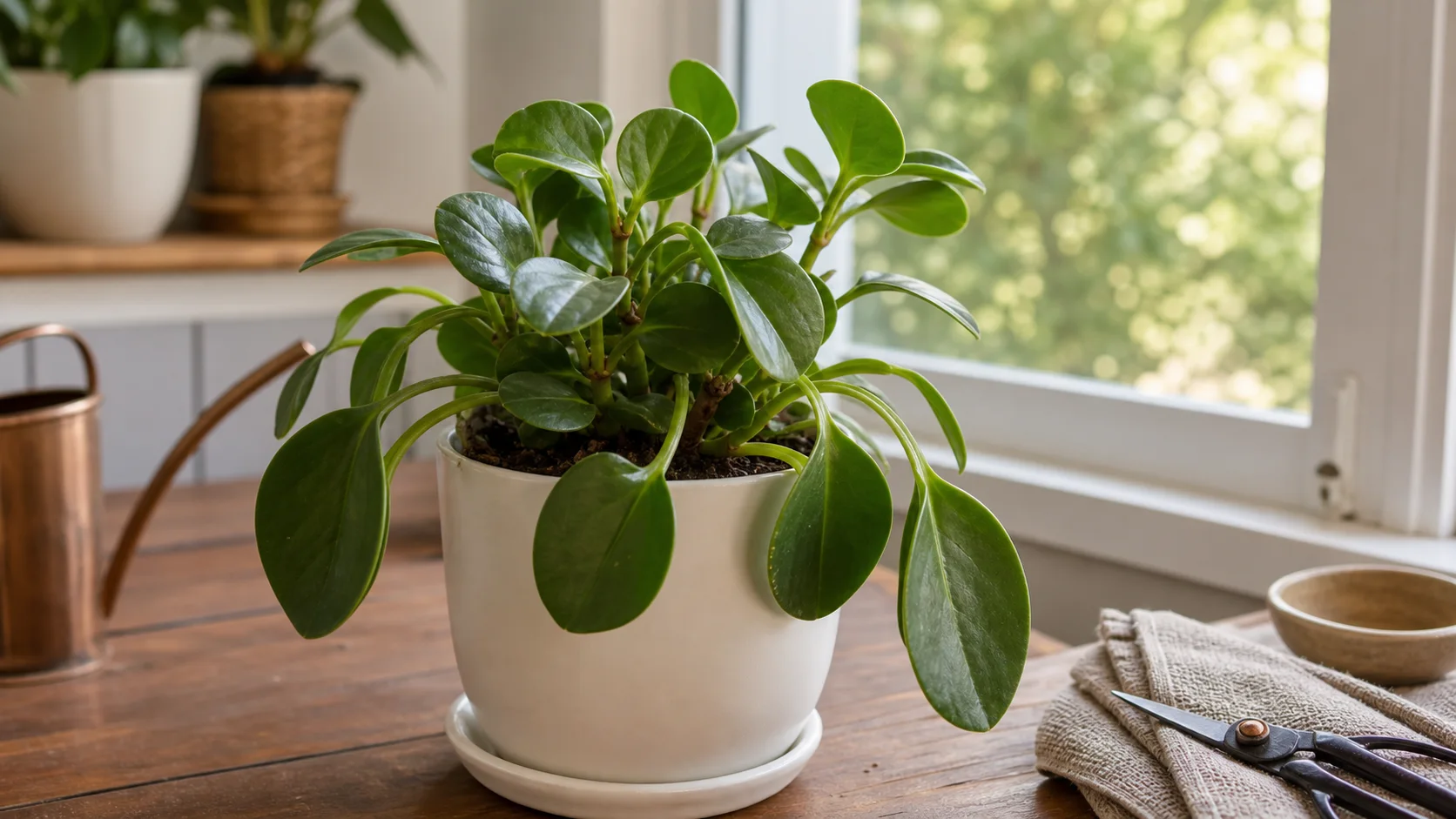
A drooping baby rubber plant needs a soil and stem check before the watering can comes out.
Here is what generic care advice skips: drooping on this plant has at least three separate causes – direct sun stress, overwatering, and occasionally a root-bound or root-rotted pot. Each one can look similar from above. But the fix is completely different for each. Watering a sun-stressed plant more often does nothing. Watering an already-wet root ball pushes it into rot.
The first check before you do anything else: press your finger about an inch into the soil and feel the base of the stems. Wet soil plus soft or dark stem bases means the plant has too much water, not too little. Dry soil plus firm leaves that feel slightly matte means it is genuinely thirsty. Wet soil plus firm leaves drooping under bright afternoon light almost always points to sun stress, not watering.
One check, three completely different answers. That is what this guide is built around.
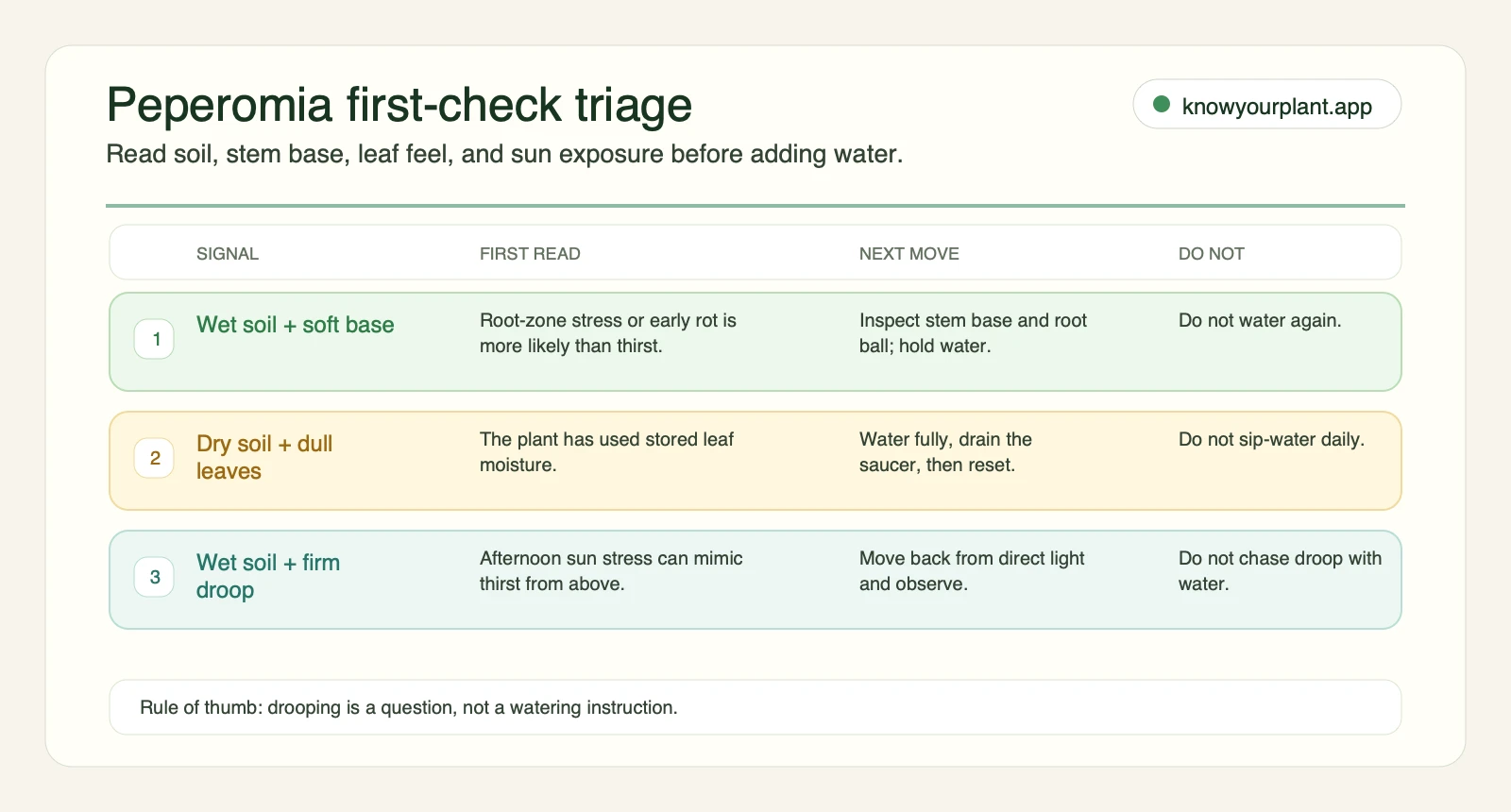
Use this triage before watering a drooping baby rubber plant so soil moisture, stem firmness, leaf feel, and sun exposure point to the right fix.
Identification Snapshot
| Trait | What to look for |
|---|---|
| Leaf shape | Thick, rounded, glossy leaves that feel slightly fleshy rather than thin or papery |
| Growth habit | Compact upright stems that stay tidy on a shelf or windowsill instead of vining far outward |
| Normal weird thing | Thin upright flower spikes that look strange at first but are not a pest or disease issue |
| Fast reality check | If the plant has woody stems and much larger leaves, double-check that you do not have Ficus elastica instead |
What Is Peperomia Obtusifolia?
Baby rubber plant is the kind of houseplant that earns its place quietly. It stays compact enough for a shelf or windowsill for years, its rounded waxy leaves look good without much fuss, and it tolerates the slightly irregular care that real households actually provide. Peperomia obtusifolia is native to South America and parts of the Caribbean, and the Peperomia genus it belongs to contains more than 1,000 species (Royal Botanic Gardens, Kew) – but this one stands out for its semi-succulent leaves and its genuine tolerance for imperfect conditions.
The “baby rubber plant” name comes from a surface resemblance to the larger Ficus elastica – similar leaf shape, similar gloss, similar upright habit – but these two plants are unrelated botanically. The practical difference that matters most: the ASPCA lists Peperomia obtusifolia as non-toxic to both cats and dogs, while Ficus elastica is listed as toxic. If you bought a “baby rubber plant” specifically for pet safety, confirm the botanical name on the tag. Common names alone are not reliable. You can cross-check against other safe options in our cat-safe indoor plants guide.
There are also variegated forms with cream and green markings. These need a little more light than the solid green variety to hold their patterning, but the core care is the same. If you want to compare this plant with other compact peperomias before you buy or repot, our peperomia varieties guide breaks down the main lookalikes and care differences. For the shared light, watering, soil, humidity, and seasonal baseline across the genus, use the complete peperomia care guide.
Lookalikes and Confused-With Plants
| If you are deciding between… | The useful difference | Why it matters |
|---|---|---|
| Peperomia obtusifolia vs Ficus elastica | Peperomia stays compact with fleshy stems and small rounded leaves. Ficus gets larger, woodier, and more tree-like. | Peperomia obtusifolia is listed by ASPCA as non-toxic to pets. Ficus elastica is not. |
| Green baby rubber plant vs variegated baby rubber plant | The variegated form has cream markings and usually asks for a brighter spot to hold them. | New leaves turning greener usually point to lower light, not a fertilizer problem. |
| Flower spikes vs a plant problem | Peperomia flower spikes are thin, upright, and odd-looking but harmless. | Owners often mistake them for stress growth, pests, or something to treat. |
Light: Where the Baby Rubber Plant Does Best
Bright indirect light is the sweet spot. A spot near an east- or west-facing window where the plant gets good light without direct midday sun works well in most homes.
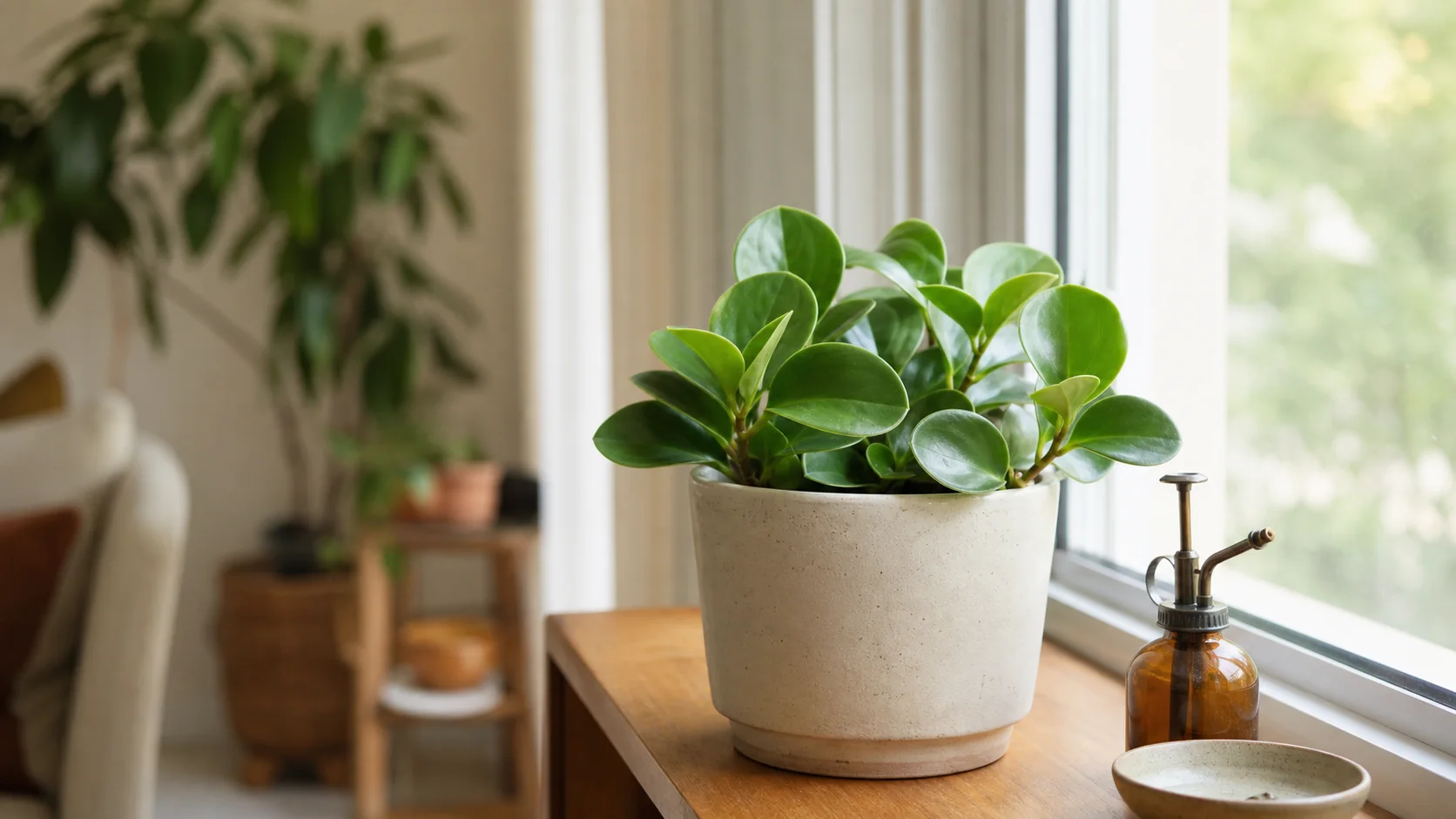
Soft window light keeps baby rubber plant growth compact without exposing its leaves to harsh midday sun.
Direct sun – especially through a south-facing window in summer – will bleach or scorch the leaves and stress the plant enough that it droops. The UF/IFAS Gardening Solutions guide is straightforward on this point: “Direct sunlight will burn the leaves.” If the leaves look washed out or develop dry brown patches, moving the plant back from the glass is the fix, not any product.
Lower-light positions work for short stretches, but in dim conditions the plant grows very slowly and becomes more vulnerable to overwatering because the soil dries far more slowly. A darker room that keeps soil wet for two to three weeks is a more stressful environment than a bright spot where the soil dries reliably between waterings. If you are weighing supplemental light for a dim corner, our grow lights guide for indoor plants covers which options work well for lower-intensity tropicals like peperomia.
Variegated peperomia and light
The cream-and-green variegated form needs more light than the all-green version to maintain its markings. In dim light, it will gradually push out greener leaves as it prioritizes photosynthesis over its patterning. If the cream sections are fading or new leaves are coming in solid green, move it closer to the window before trying anything else.
Care Cards
| Care need | What Peperomia obtusifolia wants | What goes wrong when you miss it |
|---|---|---|
| Light | Bright indirect light, with protection from hot direct afternoon sun | Harsh sun scorches and droops the plant. Dim light slows growth and keeps soil wet too long. |
| Water | Let the top inch dry before watering again, then water thoroughly | Frequent small waterings keep the root zone wet and raise rot risk. |
| Soil and pot | Well-draining mix plus a real drainage hole | Oversized pots and heavy mixes turn simple watering mistakes into root problems. |
| Temperature | Normal warm room conditions, away from cold drafts | Drafts and cold glass can mimic watering stress. |
| Pet safety | Generally a safer pick for homes with cats and dogs | The main risk is misidentifying it as another “rubber plant,” not the plant itself. |
What Baby Rubber Plant Owners Keep Second-Guessing
The same confusion loops show up again and again in plant-owner questions:
- Drooping does not always mean thirst. Owners regularly second-guess whether the plant needs more water, a smaller pot, or less direct sun.
- Overwatered vs underwatered is the real fork in the road. The useful test is soil dryness plus leaf firmness, not the calendar.
- Propagation method matters. People often hope a single leaf cutting will be the fastest route, when stem cuttings are usually the more reliable home method.
- Flower spikes look alarming if you have never seen them before. They are a recurring source of false panic, not a decline signal on their own.
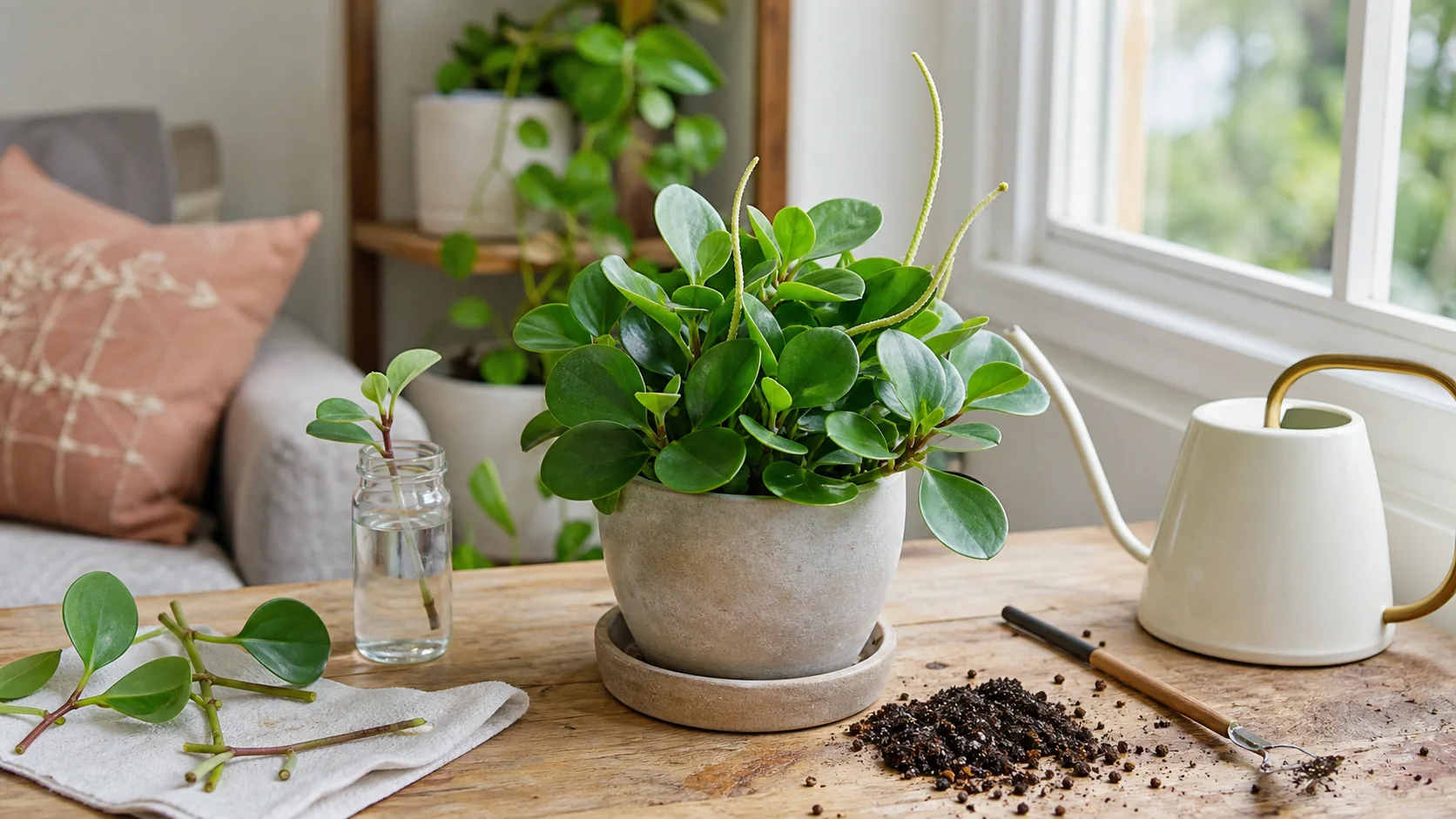
Flower spikes, stem cuttings, soil moisture, and watering choices are easier to judge side by side.
Watering: The Part That Catches Most People Out
Peperomia obtusifolia is a semi-succulent. Its leaves hold moisture between waterings, so it does not need water as frequently as thinner-leaved houseplants, and overwatering causes far more damage than going a few extra days between sessions.
As NC State Extension Gardener Plant Toolbox notes for peperomia, “root rot plus yellowing or curling leaves indicates overwatering” – conditions that develop when soil stays wet longer than the roots can tolerate. The fix is not a product. It is a habit change and, often, a better-draining soil mix.
The most reliable approach is to check the soil before you water rather than watering on a fixed schedule. Press your finger about an inch into the soil. If it still feels damp, put the watering can down and come back in a few days. If the top inch is dry and the leaves still feel firm, it is time to water. If you want a broader framework for reading soil moisture and seasonal dry-down speed, our guide to how often to water indoor plants covers the finger test, pot weight, and room-by-room variables in more detail.
When you do water, go fully – until water drains from the bottom – then empty the saucer. Leaving Peperomia obtusifolia sitting in water is a fast path to root rot. If you have already run into that problem, our root rot treatment guide walks through how to assess how far it has progressed and whether the plant can recover.
What the plant is telling you
The leaves give a lot of feedback if you pay attention:
| Leaf signal | What it likely means | What to do |
|---|---|---|
| Firm, glossy surface | Well-hydrated | Check soil; no watering needed |
| Slightly matte or dull surface | Starting to dry down | Check soil – if dry an inch down, water |
| Wrinkling or softening | Genuinely dry | Water now |
| Yellowing lower leaves with wet soil | Overwatering or early root rot | Check root ball, reduce watering |
| Mushy stem base at soil line | Root rot in progress | Inspect roots, stop watering until resolved |
| Drooping under direct afternoon sun | Sun stress, not thirst | Move plant; do not water more |
Watering decision tree
Start here whenever you are unsure:
- Is the soil wet or damp an inch down? Wait. Come back in 3–4 days.
- Is the soil dry an inch down and are the leaves firm? Water fully, drain the saucer, done.
- Is the soil dry and are the leaves wrinkling or softening? Water now, then check if the pot is undersized or if the plant is getting too much direct light.
- Is the soil wet but the plant is drooping? Do not water. Check for root rot at the stem base and root ball.
- Is the plant drooping in bright afternoon sun with firm leaves? Move back from direct light. Hold off on watering for now.
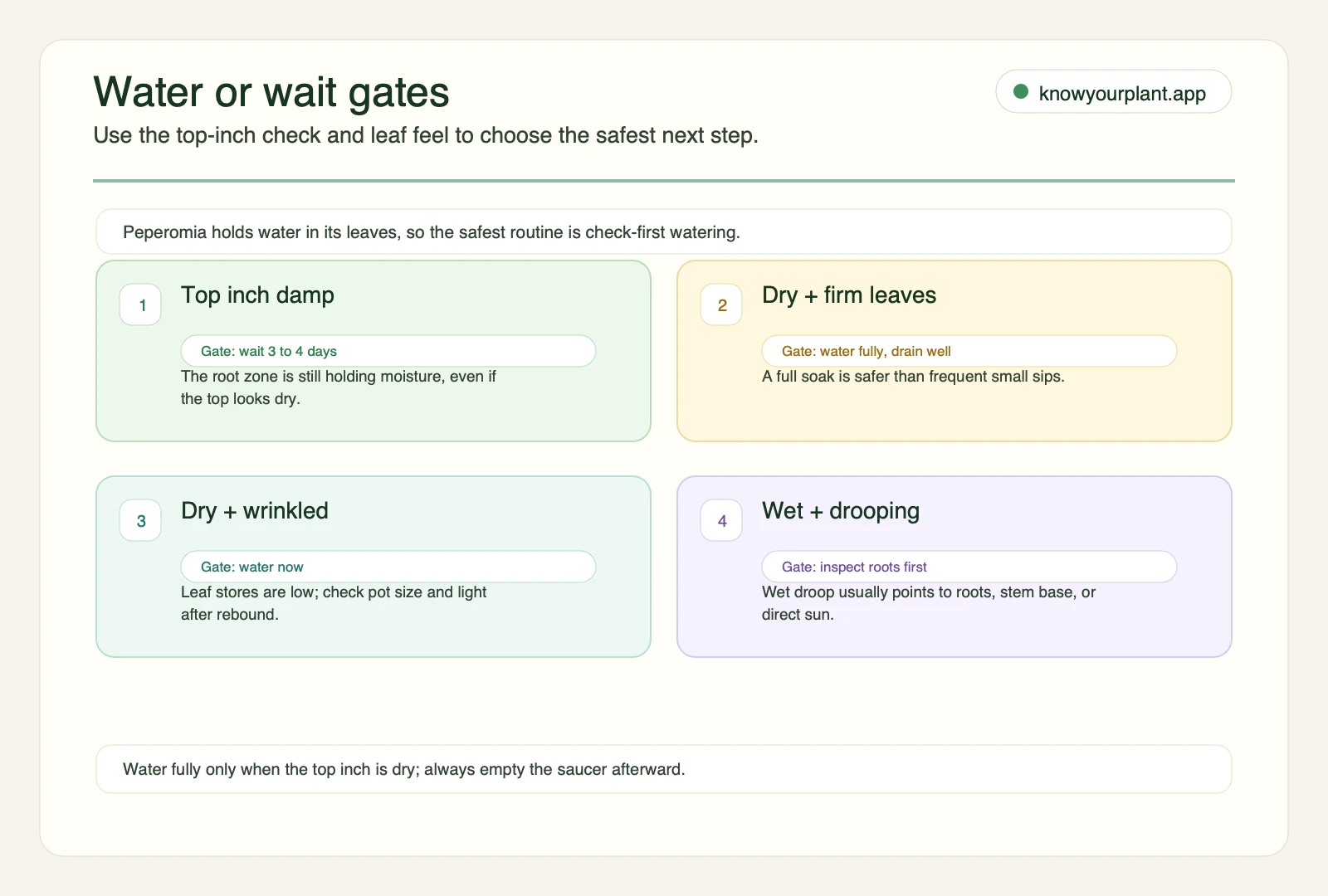
Use the water-or-wait gates when the schedule is unclear: check the top inch first, then let leaf feel and droop pattern decide the next move.
Expert note: Clemson, NC State, and UF/IFAS all point to the same core pattern for this species: bright indirect light, well-drained conditions, and drying between waterings. When those three are right, most other symptoms become easier to interpret.
Common Mistakes With Baby Rubber Plant Care
- Watering on a fixed schedule: this plant behaves better with a soil check than with a weekly reminder.
- Using a decorative pot with no drainage: the roots stay wet longer than the leaves suggest.
- Treating every droop as thirst: direct sun stress and wet roots can look similar from across the room.
- Choosing leaf cuttings when you want fast propagation: stem cuttings are usually the simpler, more reliable route indoors.
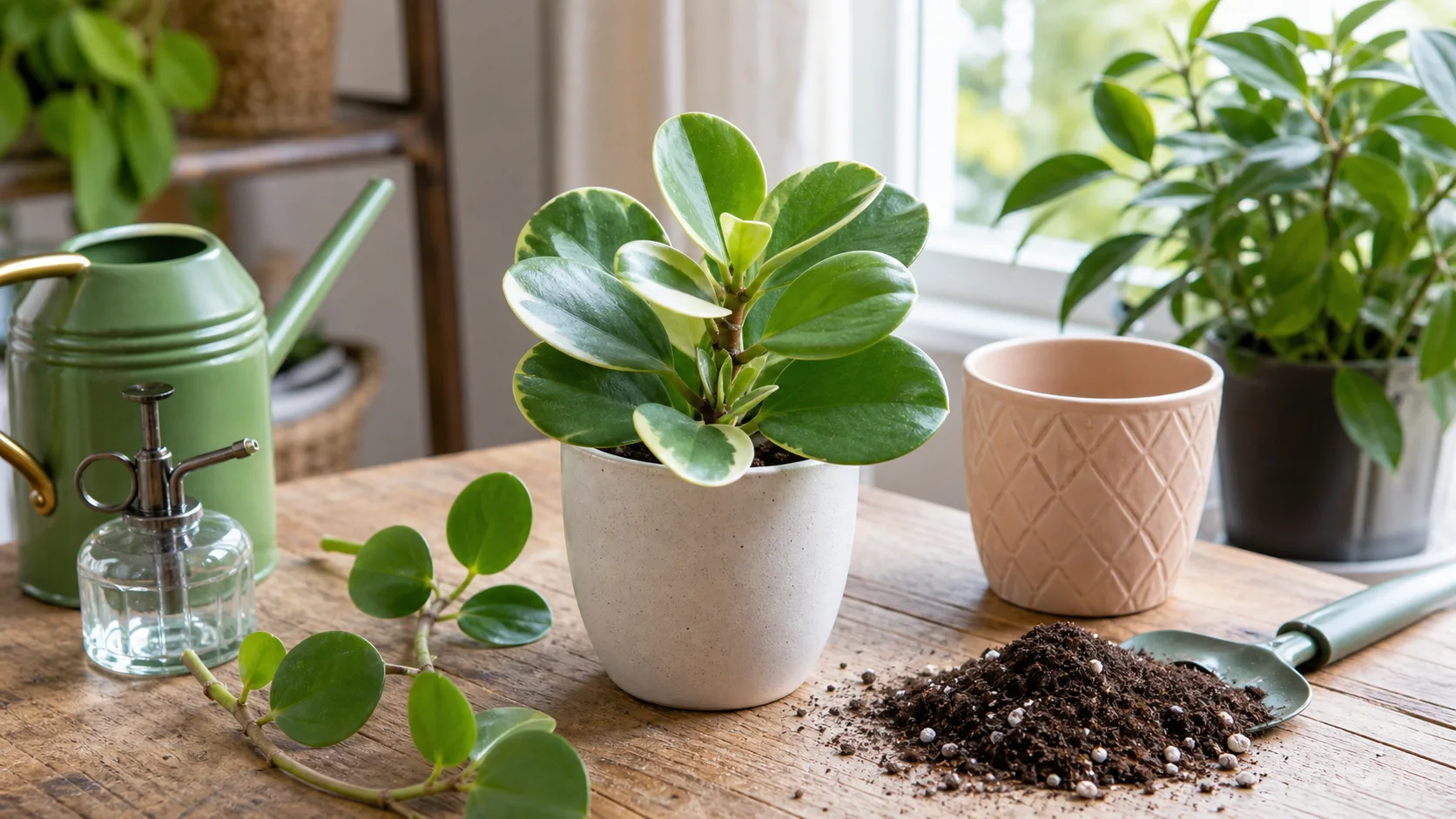
Drainage, an airy mix, and a stem cutting matter more than another automatic watering.
Soil and Pot Setup
Baby rubber plant needs a well-draining mix. Standard potting soil works fine with added perlite – roughly one part perlite to two or three parts soil. The goal is a mix that holds enough moisture to hydrate the roots but releases excess water quickly rather than staying saturated.
UF/IFAS is plain about the core requirement: well-drained conditions are essential to prevent stem and root rot, and this plant is “best grown on the dry side.” That guidance shapes every choice about soil and pot.
A pot with drainage holes is non-negotiable. Terra cotta works particularly well because it wicks moisture through the walls and speeds up drying, which suits this plant’s preference for drying out between waterings. Plastic pots work too, but you will need to water less frequently.
Choose a pot that fits the root ball without much extra room. Excess soil stays wet long after the roots have taken what they need, and that extra wet zone is where rot tends to start. When repotting, moving up one pot size is usually enough.
Temperature and Humidity
Peperomia obtusifolia is comfortable in the same range most people keep their homes: 60 to 80°F (16 to 26°C). It does not tolerate cold drafts well, and temperatures below about 50°F (10°C) will stress it quickly – keep it away from exterior doors and drafty windows in winter.
Average household humidity is fine. This is not a plant that needs a pebble tray or regular misting the way some tropicals do. If your home is very dry in winter, a small humidifier nearby helps, but peperomia obtusifolia handles ordinary indoor air well.
Seasonal Care Calendar
Peperomia obtusifolia does not need dramatically different routines across the year, but the seasons change the conditions enough that a few small adjustments prevent the most common problems.
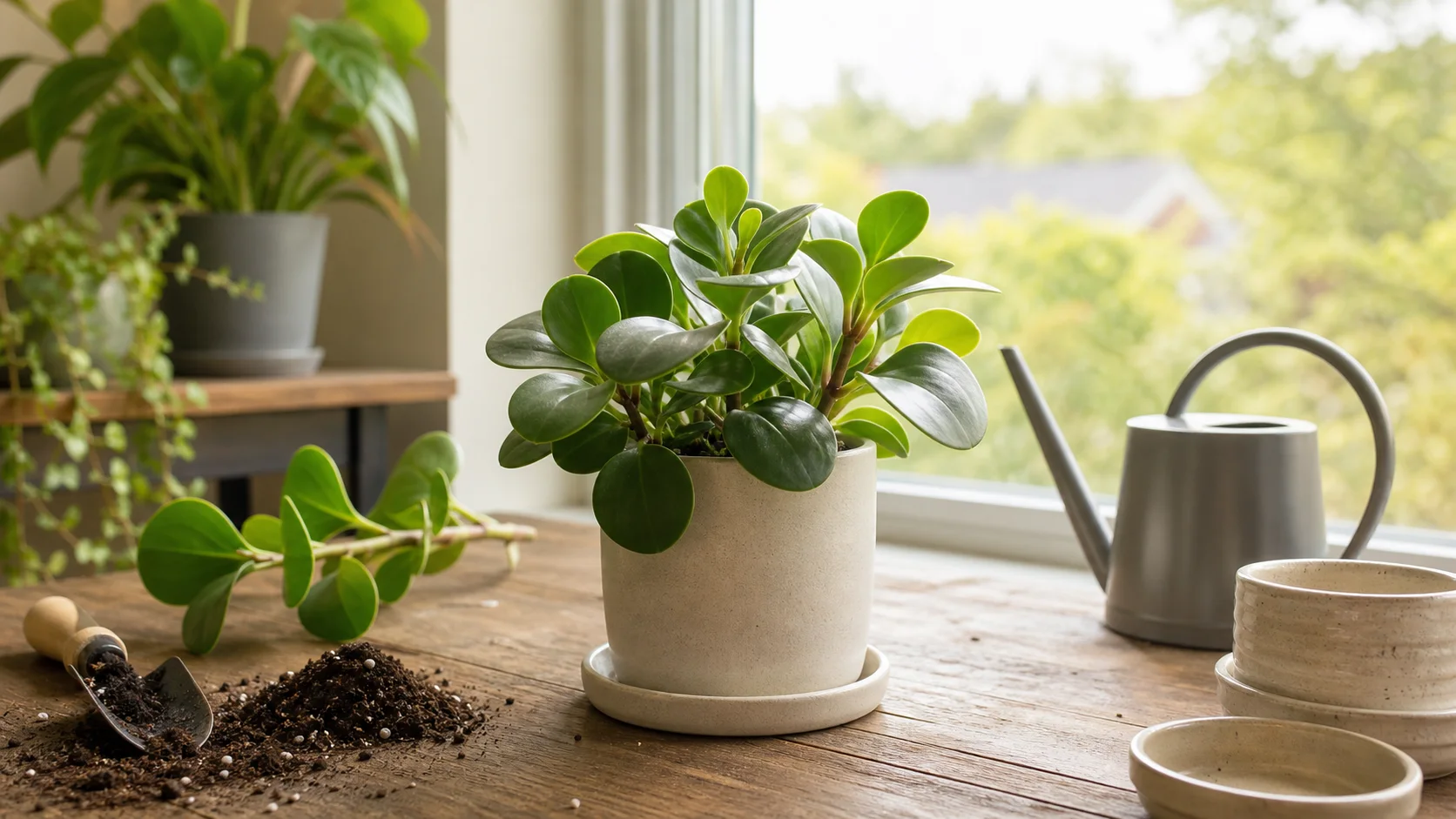
Spring repotting and propagation give way to careful light and watering adjustments as the seasons change.
Spring (March–May): Growth picks back up after the slower winter period. This is a good time to repot if the plant has become root-bound, and the best time to take stem cuttings for propagation. Resume watering more regularly as the soil starts drying faster, but still check before you water rather than switching to a fixed schedule. Look over the leaves for any pests – scale and mealybugs occasionally show up on new growth at this time of year.
Summer (June–August): The highest-risk season for sun stress. South-facing windows that were fine in winter can push direct afternoon sun onto the leaves, causing bleaching or drooping. If the plant was close to a south window all winter without problems, move it back or add a sheer curtain for the summer months. Watering frequency increases in heat, but the same check-first rule applies. Growth is fastest now, so fertilize lightly once a month if you want to encourage it.
Autumn (September–November): Growth begins to slow as light levels drop. Reduce watering frequency to match the slower drying. If the plant is near a window, drafts from a slightly open gap can stress it as temperatures fall – close the window or move the pot back from the glass. Indoor heating coming on can also dry soil faster than expected in the first few weeks of the heating season.
Winter (December–February): The lowest-light period of the year. The plant slows significantly, which means the soil stays wet much longer than in summer. This is the season when overwatering happens most easily – often because owners keep the same watering schedule they used in summer. Check the soil before every single watering and expect longer gaps between sessions. Every two to three weeks is not unusual for a plant in a plastic pot in a dim room. Skip fertilizer entirely until spring growth resumes.
Pruning and Those Mysterious Spikes
Baby rubber plant grows slowly and stays naturally compact. It does not need heavy pruning, but you can pinch back leggy stems in spring to encourage a fuller shape. Cut just above a leaf node with clean scissors.
You may notice thin, upright spikes appearing that look nothing like the leaves. These are flower spikes, and they are completely normal – not a sign of disease, not a pest, not a problem. Peperomia flowers are small and not particularly showy compared to the foliage, so many owners remove the spikes to redirect the plant’s energy, but leaving them causes no harm either way.
Propagation: Comparing Your Options
Peperomia obtusifolia can be propagated by stem cuttings, leaf cuttings, or by dividing a mature clump at the roots. Clemson Extension notes that cuttings root easily, and UF/IFAS confirms that propagation by cuttings or division is reliable for this species. Here is how the three methods compare in practice:
| Method | Speed | Success rate | Best medium | Main mistake to avoid |
|---|---|---|---|---|
| Stem cutting (2–3 leaves) | 3–5 weeks to roots | High | Water or moist soil | Cutting too short – keep 2+ nodes |
| Leaf cutting (single leaf) | 6–12 weeks, variable | Low to moderate | Moist soil | Expecting fast results |
| Division (root separation) | Immediate | High | Fresh potting mix | Pulling roots apart forcefully |
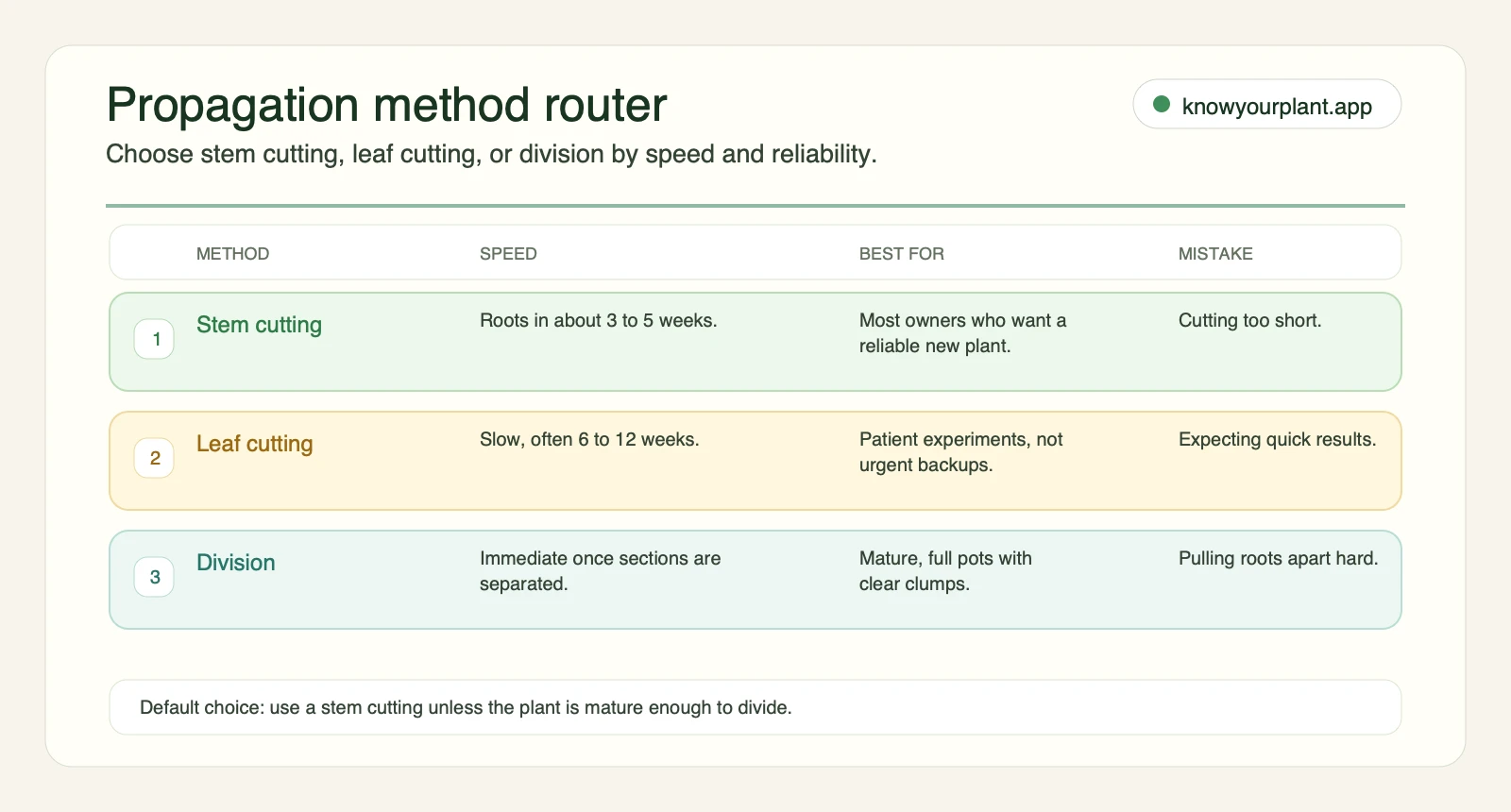
Use the propagation router to pick the method that matches your patience level and plant size before taking a cutting.
Stem cuttings are the most reliable method for most people. Take a cutting with two or three leaves, let the cut end dry for a few hours, then place it in moist potting mix or a small glass of water in a bright spot out of direct sun. Roots usually appear within a few weeks.
Leaf cuttings are possible but considerably slower and less consistent. A single leaf can eventually produce a new plant, but stem cuttings are a much better use of your time if you want reliable results.
Division works well on mature plants that have filled out their pot. Tease the root ball gently into two sections and repot each one. This is the fastest way to get two established plants from one.
Pet Safety
The ASPCA lists Peperomia obtusifolia as non-toxic to both cats and dogs – one of the main reasons it appears regularly on pet-safe houseplant lists. If a pet chews a leaf, a serious reaction is unlikely, though eating any plant material can cause mild stomach upset in some animals.
The one thing worth verifying: confirm you actually have Peperomia obtusifolia and not Ficus elastica, which is toxic and shares the “rubber plant” common name. Retail listings are not always precise about botanical names. Check the tag. For a broader list of safe and unsafe options, our guide to cat-safe indoor plants covers the most common ones.
Real User FAQ
How often should I water Peperomia obtusifolia?
There is no single schedule that works for every home, because frequency depends on pot size, soil mix, light level, season, and humidity. The more reliable approach: check the soil every few days by pressing your finger about an inch down. When the top inch is dry, water fully. In a bright spot in summer, that might be every 7–10 days. In a dim room in winter, the same plant might go two to three weeks between waterings. The leaves also give feedback – firm and glossy means no rush; slightly soft or wrinkled means water now.
Why are the leaves on my baby rubber plant turning yellow?
Yellow leaves on Peperomia obtusifolia are most often a sign of overwatering. When soil stays wet for too long, roots begin to fail, and the plant sheds lower leaves as a stress response. Check the soil – if it has been consistently damp rather than drying out between waterings, reduce frequency and make sure the pot has drainage holes and the mix is well-draining. Less commonly, yellow leaves can result from very low light, but overwatering is the more frequent cause. Our guide to yellow leaves on houseplants covers a broader symptom checklist if you want to rule out other causes.
Why is my baby rubber plant drooping?
Drooping has at least three separate causes on this plant: sun stress from direct light, overwatering with wet soil, and occasionally a root-bound or root-rotted root ball. Before watering more, check the soil first. Wet soil plus a drooping plant almost always means the problem is too much water, not too little. A plant drooping under bright afternoon sun with firm leaves is reacting to direct light – move it back from the window and give it a day before doing anything else.
What are the thin spikes growing from my peperomia?
Those are flower spikes, and they are completely normal. They are not a sign of disease, pests, or stress. Peperomia flowers are small and unshowy compared to the foliage, so many owners clip the spikes off to redirect the plant’s energy, but leaving them causes no harm. The plant can produce them year-round under good indoor conditions.
Can I propagate Peperomia obtusifolia in water?
Yes, stem cuttings root reliably in water. Take a cutting with two or three leaves, remove any leaves that would sit below the waterline, and place the cut end in a small glass of water in a bright spot out of direct sun. Roots usually appear within two to four weeks. Once the roots are an inch or two long, move the cutting into a well-draining potting mix. Leaf cuttings in water are possible but slower and much less reliable than stem cuttings.
Is Peperomia obtusifolia safe for cats and dogs?
Yes. The ASPCA lists Peperomia obtusifolia as non-toxic to both cats and dogs. It is one of the most frequently recommended pet-safe houseplants for that reason. Even so, eating any plant material can cause mild stomach upset in some animals, so it is worth discouraging chewing. If you have any concern after ingestion, contact your veterinarian.
How is Peperomia obtusifolia different from the rubber plant?
Peperomia obtusifolia and Ficus elastica share a similar leaf shape and glossy surface, which is the source of the “baby rubber plant” common name. They are unrelated botanically and need different care. The most important practical difference is toxicity: Peperomia obtusifolia is non-toxic to pets, while Ficus elastica is listed as toxic. If pet safety is why you chose this plant, always verify the botanical name on the tag rather than relying on the common name. For Ficus elastica care specifically, our rubber plant care guide covers its distinct requirements.
Why is my variegated Peperomia obtusifolia losing its cream markings?
Variegated peperomia needs more light than the solid-green form to maintain its patterning. In dim conditions, the plant gradually produces greener leaves because it is prioritizing photosynthesis over the decorative markings. If the cream sections are fading or new growth is coming in solid green, move the plant to a brighter spot – closer to an east- or west-facing window usually resolves it. The change shows up gradually in new growth over several weeks.
Download KnowYourPlant for personalized plant care reminders – it tracks your specific plants and sends watering reminders based on your conditions, so you are not guessing at schedules.
Methodology and Sources
This guide was refreshed against Clemson Cooperative Extension HGIC, NC State Extension Gardener Plant Toolbox, UF/IFAS publication FP466, UF/IFAS Gardening Solutions, and ASPCA’s non-toxic plant listing for baby rubber plant. To keep the troubleshooting grounded in real home conditions, we also checked current plant-owner questions about drooping, watering confusion, propagation method choice, and flower spikes through Ask Extension plus search-validated Reddit discussions. Those community signals are qualitative only, and we use them here to shape the decision points, not to override extension guidance.
Extension guidance and real owner questions are documented together before care advice reaches the guide.