Alocasia Odora Care: How to Grow Upright Elephant Ear Indoors
Alocasia odora is the elephant ear you choose when you want something that reads as architectural rather than just decorative. The leaves point upward instead of drooping at the edges, they grow large enough to anchor a corner, and the plant holds its structure even as it gets bigger. That upright habit is one of the first things that separates it from the looser, more sprawling elephant ears most people picture.
If you’re researching alocasia odora care, you’re probably trying to figure out whether this plant can actually work in your home and what it needs that a generic care card leaves out. This guide covers exactly that: the species-specific details, the indoor failure patterns, and the practical first checks that matter most.
Author: KnowYourPlant editorial team
Last updated: 2026-08-09
Identification Snapshot
| Detail | What to look for |
|---|---|
| Botanical name | Alocasia odora |
| Growth habit | Upright elephant ear with thick petioles and large leaves that stand above the pot instead of hanging down |
| Fastest visual clue | Big leaves held upright, with the stem attaching near the leaf edge rather than through the center |
| Mature indoor size | Usually a floor plant, often 3 to 5 feet tall indoors when the light is good |
| Best home placement | Bright window, warm room, roomy pot, and enough floor space for a plant that wants to get broad |
| Pet safety | ASPCA lists Alocasia as toxic to cats and dogs, so placement matters from day one |
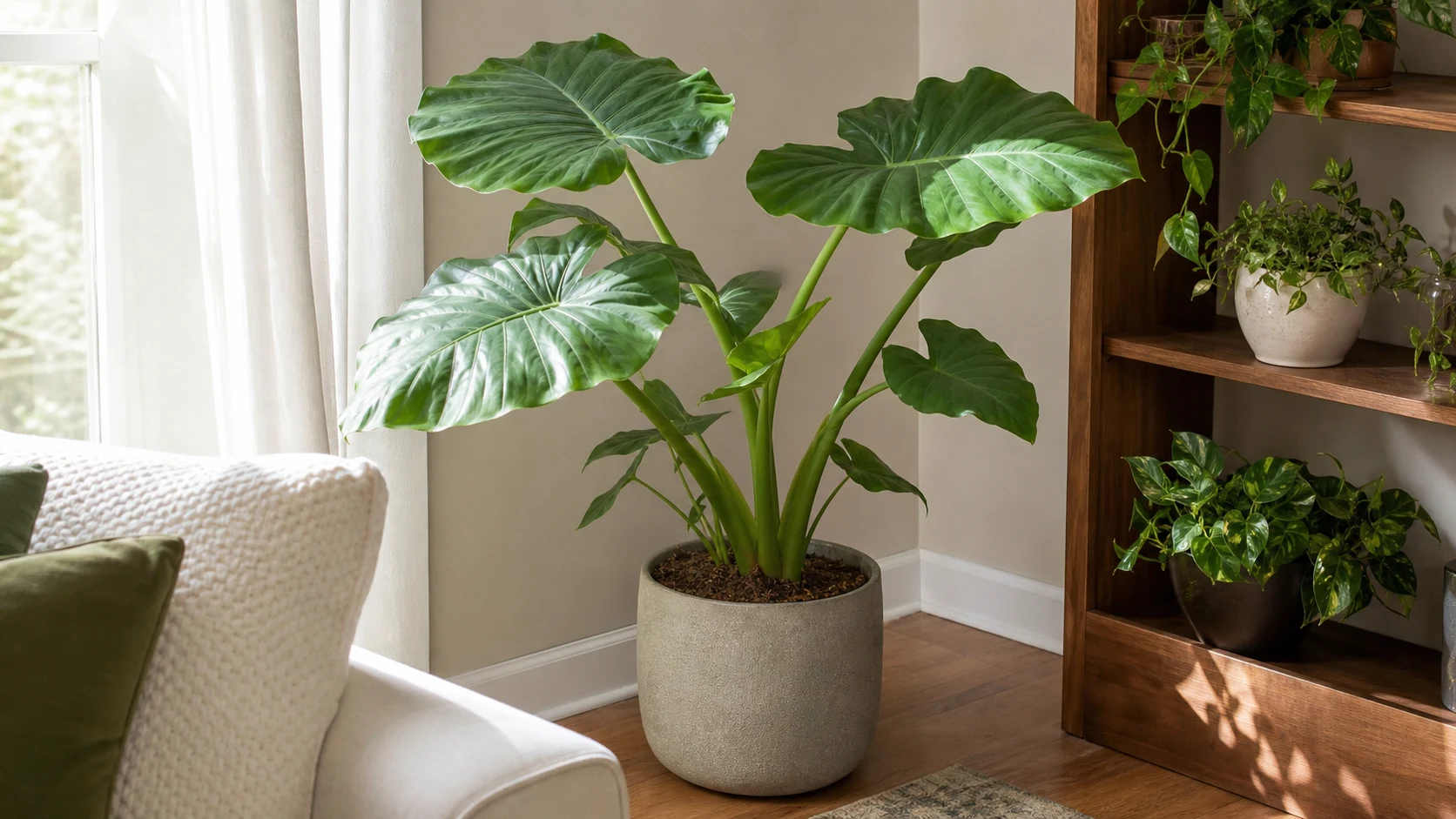
Large upright leaves and thick petioles give Alocasia odora its architectural indoor presence.
Lookalikes and Confused-With
| Plant | How to tell it apart |
|---|---|
| Colocasia (taro) | Leaves usually hang or sit flatter, and the stem often attaches through the center of the leaf instead of near the edge |
| Alocasia macrorrhizos or Portodora types | Similar upright posture, but they usually grow larger, feel coarser, and are less often sold as manageable indoor floor plants |
| Smaller Alocasia cultivars such as Polly or Amazonica | Much smaller leaves, sharper contrast veining, and a fussier response to dry air or watering mistakes |
Alocasia Odora Care Cards
| Care card | Practical target |
|---|---|
| Light | Bright indirect light, with a little gentle sun acceptable if the leaves do not scorch |
| Water | Keep the mix lightly moist during active growth, but never swampy or slow-draining |
| Soil | Chunky aroid-style mix with bark, perlite, and an airy base instead of dense nursery soil |
| Temperature | Aim for roughly 68 to 77 F and keep it away from cold drafts or AC blasts |
| Winter care | Expect slower growth, reduce watering, and stop fertilizing until light improves again |
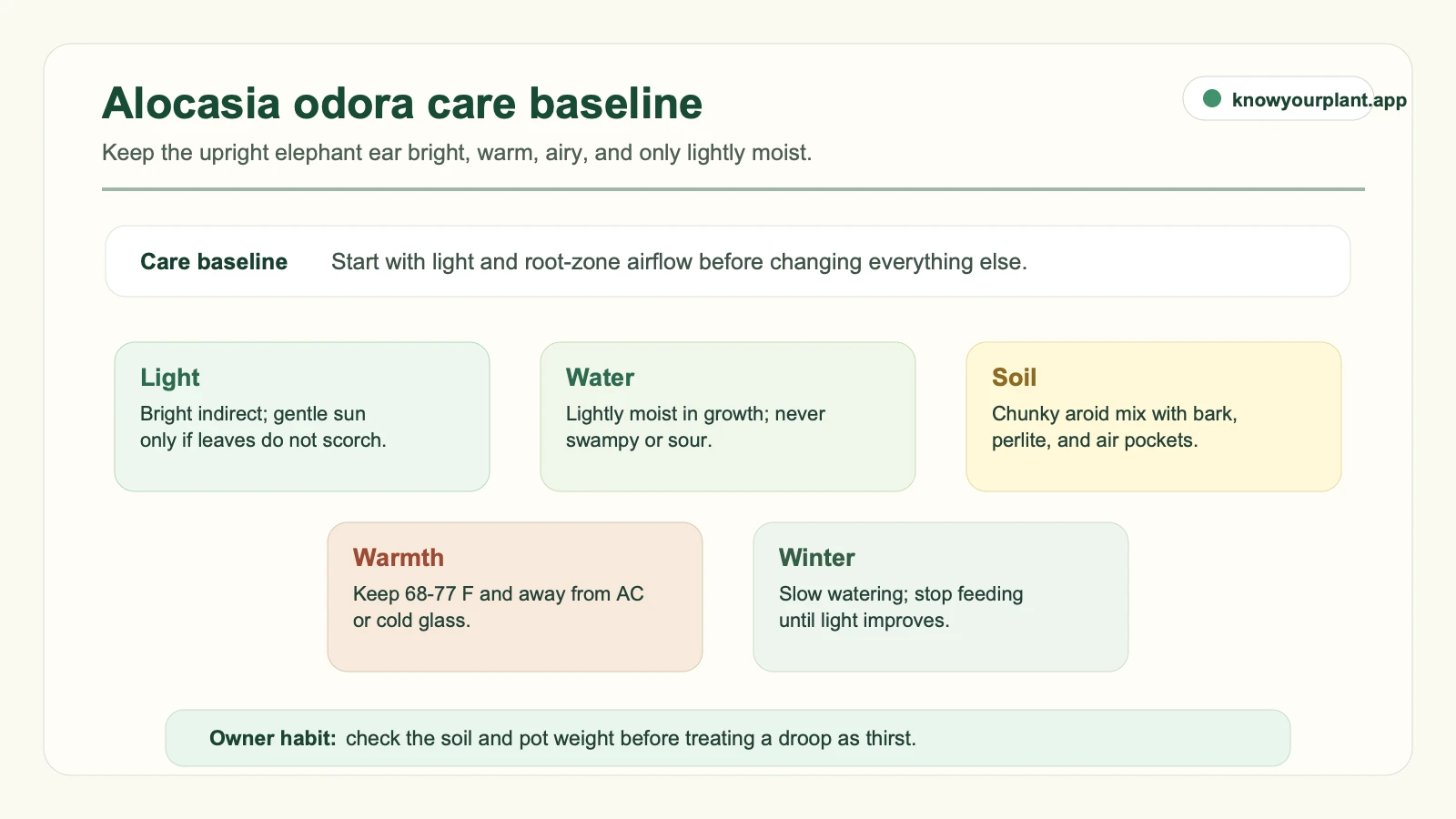
Use the baseline card as a first-pass care check before changing the watering schedule or moving the plant.
What Most Care Guides Miss
Most alocasia articles tell you to provide bright indirect light, high humidity, and “evenly moist” soil. That advice is not wrong. It just skips the detail that causes the most indoor failures: the soil structure matters more than the watering schedule.
The most common misdiagnosis goes like this. The plant starts drooping or declining, so the owner assumes it needs more water or a humidifier upgrade. In many cases, the actual problem is that the plant arrived in dense nursery soil that holds too much moisture, cuts off oxygen to the roots, and sets up rot conditions regardless of how carefully the owner waters.
Before adjusting your watering frequency or buying humidity equipment, check the soil first. Push a finger two inches in. If it feels wet rather than barely damp, or if water pools and drains slowly, the mix is the first thing to fix. A chunkier, more open soil gives you a much wider margin for every other care variable, including watering and humidity.
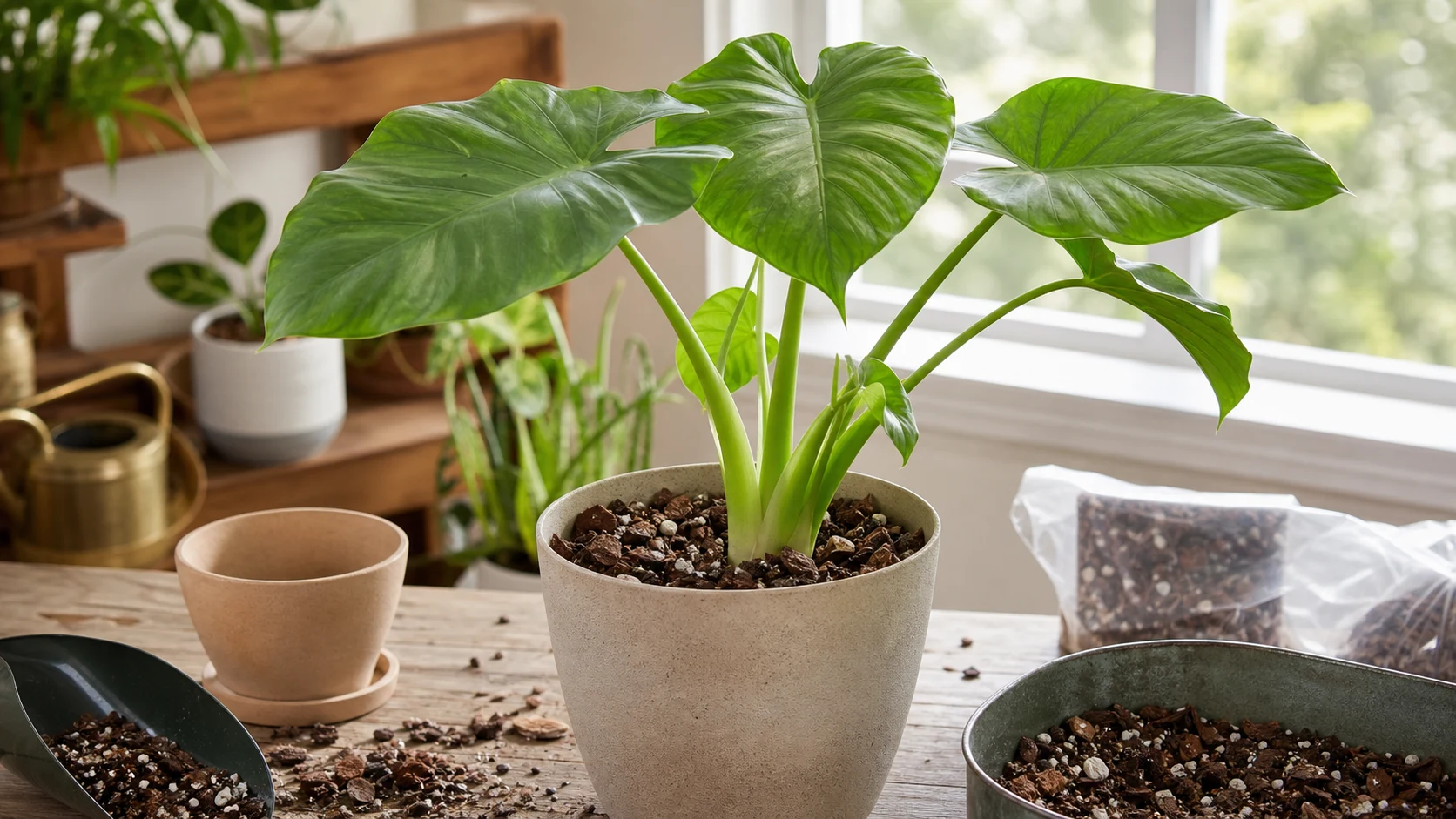
An airy bark-and-perlite mix protects Alocasia roots more reliably than a rigid watering schedule.
Social Listening: Why This Plant So Often Fails Indoors
Across owner discussions, the same patterns keep repeating. People worry about pot size when the bigger issue is dense nursery soil. They panic over drooping and add more water when the roots are already staying too wet. They assume winter slowdown means the plant is dying, or they do a quick toxicity search and underestimate the pet risk.
That cluster of mistakes is useful because it tells you where to look first. If an Alocasia odora declines indoors, check the mix structure, root-zone moisture, winter light level, and pet placement before you start changing five variables at once. Community examples are not controlled trials, but they do reveal the repeat-offender problems most generic care guides skate past.
What Makes Alocasia Odora Different From Other Elephant Ears
The name “elephant ear” covers several genera: Colocasia, Xanthosoma, and various Alocasia species all carry it. The care differences between those groups matter indoors.
According to the University of Wisconsin Horticulture Division, Alocasia leaves are generally held more upright and are not peltate – meaning the stem attaches to the edge of the leaf rather than through its center, which is common in many Colocasia varieties. That upright growth habit is also a built-in health signal indoors: when stems start drooping, something has gone wrong.
| Feature | Alocasia odora | Colocasia (taro) | Xanthosoma |
|---|---|---|---|
| Leaf orientation | Upward-facing | Usually downward or horizontal | Usually horizontal |
| Stem attachment | Edge of leaf | Often through center (peltate) | Edge of leaf |
| Indoor suitability | Good in bright light | Prefers outdoor or very moist conditions | Usually outdoor |
| Watering preference | Evenly moist, never saturated | Tolerates wetter soil | Similar to alocasia |
| Frost tolerance | None | Some varieties, limited | None |
Alocasia odora also grows significantly larger than most of the smaller alocasia cultivars sold in garden centers – Polly or Amazonica types look dramatic but are less forgiving indoors. Odora is more tolerant of typical home conditions and will grow into a floor plant over time, not a shelf plant. For a broader look at species in this genus, see the Alocasia care guide. If you’re still deciding between elephant ear types before buying, the elephant ear plant care guide covers the main genera alongside each other.
Light: More Than You Think, Less Than Full Sun
Alocasia odora does best with bright indirect light. A spot near a large east- or west-facing window is a good starting point. South-facing windows work well if there is a sheer curtain between the plant and glass during peak summer hours, or if the plant sits a few feet back from the window rather than directly beside it.
The most common placement mistake is putting it too deep into a room. Alocasia odora can survive lower light for a stretch, but it responds by producing smaller leaves, leaning toward the nearest window, and slowing its growth considerably. If stems are reaching sideways rather than holding upright, that is the plant asking for a better position, not a different watering or fertilizing routine.
Direct afternoon sun through glass will scorch the leaves, especially in summer. Bright and indirect is the target.
Watering: Where Most Indoor Growers Run Into Trouble
Alocasia odora wants to stay evenly moist, not wet. Those two conditions feel similar but behave very differently in practice.
Evenly moist means the soil holds some moisture throughout but never sits saturated. Push a finger a couple of inches into the soil and feel slight dampness without any free water. Wet means the roots are sitting in material that cannot breathe between waterings – and that is where decline begins.
Drooping stems are the most common symptom, and many growers assume the plant is dry when it is actually overwatered. Before adding water, check the soil first. If it already feels damp two inches down, the drooping is more likely coming from too much moisture than too little.
In winter, when the plant slows its growth, reduce watering accordingly. The soil should dry out slightly more between sessions than it does in spring and summer. There is no fixed watering schedule that works across every home and season. The soil tells you more than the calendar does.
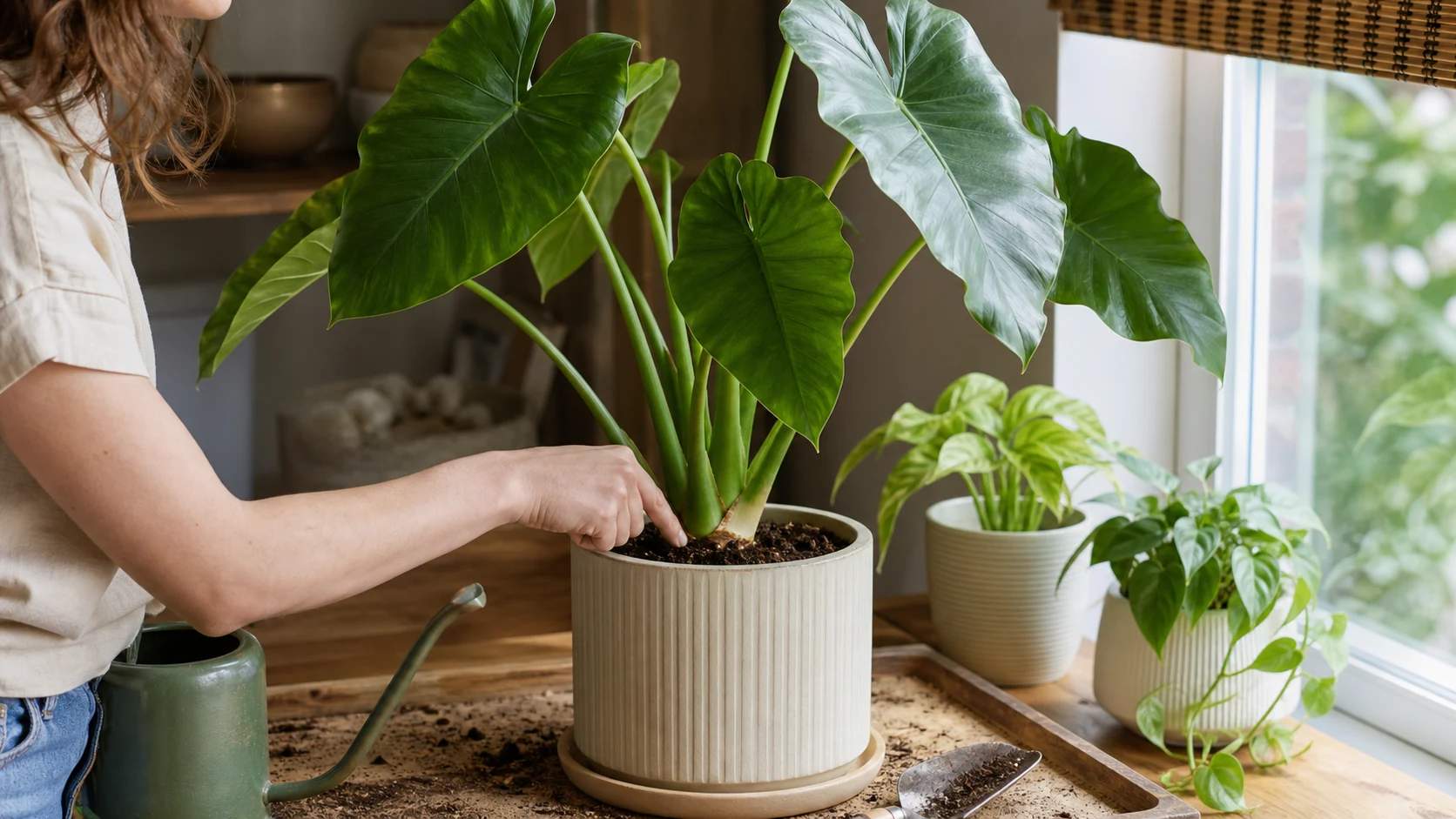
Check the root-zone moisture before reaching for the watering can, especially when stems begin to droop.
Soil: Why the Mix Matters More Than the Pot Size
Alocasia odora needs an airy, fast-draining mix indoors. The dense nursery soil that many plants arrive in is not suitable for long-term indoor care. It holds too much moisture, compacts over time, and prevents the root-to-air circulation the plant needs.
A chunky aroid-style blend works well: perlite, bark, and a lighter base like coco coir. The structure matters as much as the ingredients. When you water, the mix should drain freely and the roots should have room to breathe between sessions.
A common question is whether a pot is too small for this plant. But pot size is rarely the urgent issue. A smaller pot with open, draining soil is more forgiving than a large pot packed with compacted nursery medium. If your alocasia odora is struggling despite reasonable light and water habits, repotting into a better mix is usually the right first step.
According to the North Carolina Extension Gardener Plant Toolbox, Alocasia grows best in “moist, well-drained, humus-rich soil.” For indoor growers, drainage quality is the variable most worth controlling, because you cannot replicate outdoor rain and airflow. The how to repot plants guide covers how to assess when a repot is warranted and how to inspect roots during the transition.
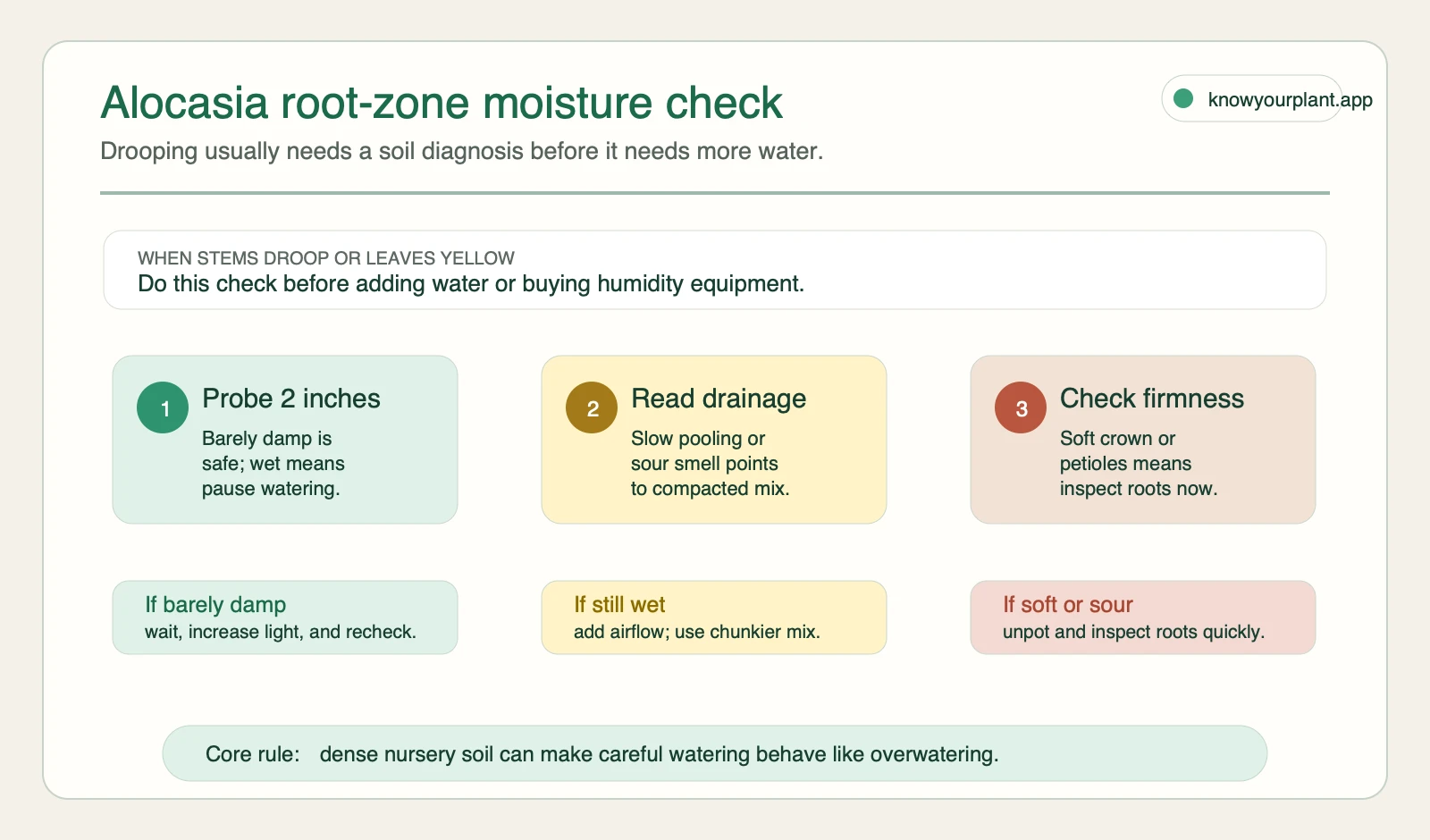
Use this root-zone check when stems droop or leaves yellow. Dense soil can make careful watering behave like overwatering.
Humidity and Temperature
Alocasia odora prefers temperatures between 68 and 77 degrees Fahrenheit (20 to 25 degrees Celsius), as noted in NCSU Extension guidance for the genus. It does not handle cold well. A draft from a winter window or air conditioning vent can stress the plant faster than most watering mistakes.
For humidity, aim above 50 percent when possible. Most homes drop well below that in winter, which shows up as brown leaf tips and edges that crisp over time. A pebble tray with water beneath the pot, a nearby humidifier, or grouping the plant with other tropical houseplants can all raise the local humidity around the foliage.
Misting has limited lasting effect because it dries quickly, but it is not harmful. The bigger risk is persistent dry air combined with heating vents blowing directly onto the plant. Keep it away from both.
Winter Slowdown: Not the Same as Dormancy
Alocasia odora may drop a leaf or two and slow down visibly in winter. This is normal and often alarms owners who have not seen it before. The plant is not dying; it is conserving energy during lower-light months.
Some indoor alocasias go through a more complete dormancy under cooler or darker conditions, but most kept in warm, consistently lit homes just slow down rather than going fully dormant. The confusion between “winter slowdown” and “true dormancy” leads many growers to overwater during this period – trying to prompt new growth with extra moisture when the plant is actually resting and cannot use it.
Reduce watering, stop fertilizing, and let the plant rest. When spring light returns, you will see it respond.
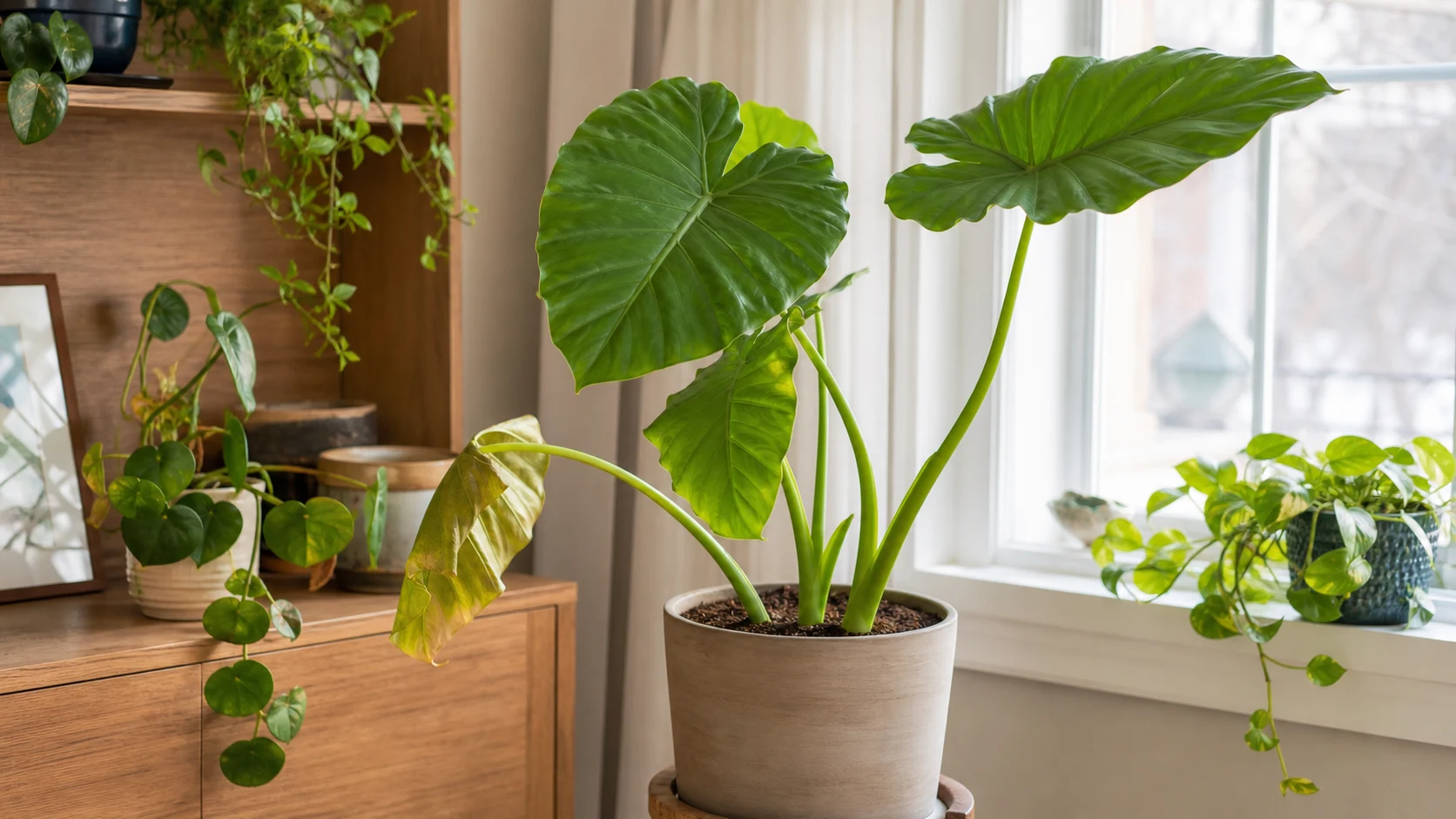
One aging lower leaf can accompany a normal winter slowdown while the rest of the plant remains healthy.
Pet Safety
The ASPCA lists all Alocasia species as toxic to dogs, cats, and horses. The plants contain insoluble calcium oxalates, which cause oral irritation, drooling, vomiting, and difficulty swallowing if chewed or ingested. The reaction is painful and immediate, which typically prevents animals from eating large amounts – but the risk is real enough to treat seriously when deciding where to place the plant.
A pattern worth knowing: some owners do a quick search, find a source describing alocasia as “mildly toxic,” and conclude that placement does not matter much. The ASPCA’s guidance is clear. Calcium oxalate crystals cause a genuine, immediate irritant response. Placing this plant genuinely out of reach is the right call, not an optional precaution.
Expert note: Pet Poison Helpline treats Alocasia ingestion as a real vet-call issue because the calcium oxalate crystals can cause immediate mouth pain, drooling, pawing at the face, and vomiting. A 2024 medical review on Alocasia odora poisoning describes the same crystal-driven irritation in people, including oral pain and swelling. If a pet chews this plant, do not wait for a large dose to “count” before calling your vet.
For households with cats or dogs, the guides on cat-safe indoor plants and dog-friendly houseplants cover safer alternatives if you are reconsidering the placement.
Common Pests
Alocasia odora can attract spider mites, especially in low-humidity environments. Mites thrive in dry air and spread quickly between nearby plants. Look for fine webbing on the undersides of leaves, a faintly dusty or stippled texture across the leaf surface, or tiny specks that show up when you tap a leaf over white paper.
If you suspect mites, isolate the plant first and confirm the pest before spraying everything nearby. University of Maryland Extension guidance on spider mites notes that broad-spectrum insecticides can actually make mite problems worse by knocking out beneficial predators. For indoor plants, that means your safest first moves are inspection, isolation, rinsing the leaves, and using a mite-appropriate treatment deliberately rather than reflexively reaching for a general bug spray. If you need the next steps after confirmation, our guide on how to get rid of spider mites walks through the treatment sequence.
Scale and mealybugs are less common but possible, particularly on new growth or in the joints where stems meet petioles. Check those areas when you water. Catching infestations early makes treatment significantly easier than waiting until the plant shows obvious stress.
Seasonal Care Calendar
| Season or condition | Light | Water | Humidity and airflow | Feeding | Watch for |
|---|---|---|---|---|---|
| Spring restart | Move as close to bright indirect light as the plant can tolerate | Increase only after you see active new growth | Resume regular airflow and start mite checks | Restart light feeding once growth is underway | Repotting stress, old compacted soil |
| Summer active growth | Brightest indirect light in the room, with hot glass filtered | Keep lightly moist, never swampy | Humidity helps, but airflow still matters | Feed during active growth only | Scorch, fast dry-down, mites in hot rooms |
| Autumn slowdown | Hold bright light as days shorten | Stretch the interval between waterings | Watch for dry indoor air returning | Begin tapering fertilizer | Yellowing from wet soil in lower light |
| Winter slowdown or semi-dormancy | Give the brightest safe window you have | Water less and let the top layer dry a bit more | Keep away from cold drafts and heating blasts | Stop feeding until light improves | Overwatering, mushy rhizomes, mistaking rest for decline |
Spring: Resume or increase watering as light improves. This is the best season to repot if the roots have outgrown the container or the mix has compacted. Start fertilizing once you see new leaf growth underway. Check for spider mites as indoor heating runs less and humidity naturally rises.
Summer: Peak growing season. Water more consistently but still check the soil before each session rather than following a fixed schedule. Bright indirect light is essential; direct midday sun through glass will scorch leaves. Keep an eye on soil moisture if outdoor temperatures are high, as pots near south-facing windows can dry faster than expected.
Autumn: Begin tapering fertilizer from mid-autumn onward. Watering frequency should decrease gradually as light levels drop. Watch for spider mites as indoor heating resumes and dry air conditions return.
Winter: Expect slower growth and possible loss of one or two older leaves. This is normal. Reduce watering significantly. Do not fertilize. Keep the plant away from cold drafts, heating vents, and windows that drop below 60 degrees Fahrenheit at night. A humidifier nearby makes a real difference as central heating dries the air.
Symptom Diagnosis Card
| If you see this | Most likely explanation | First move |
|---|---|---|
| One oldest leaf yellows while a new one is emerging | Normal leaf cycling | Leave the leaf until it is mostly spent, then remove it cleanly |
| Several leaves yellow and the mix smells sour or stays wet | Root stress or rot risk | Unpot and inspect roots and the rhizome before watering again |
| Sudden droop after cooler nights or much lower light | Seasonal slowdown, sometimes edging toward dormancy | Keep it warm, reduce water, and check rhizome firmness before assuming it is dead |
| Fine stippling, dusty undersides, or webbing | Spider mites | Isolate the plant and inspect leaf undersides and nearby plants |
| Brown or yellow lesions after leaves stay wet | Leaf spot pressure or poor airflow | Improve airflow and avoid keeping foliage wet for long periods |
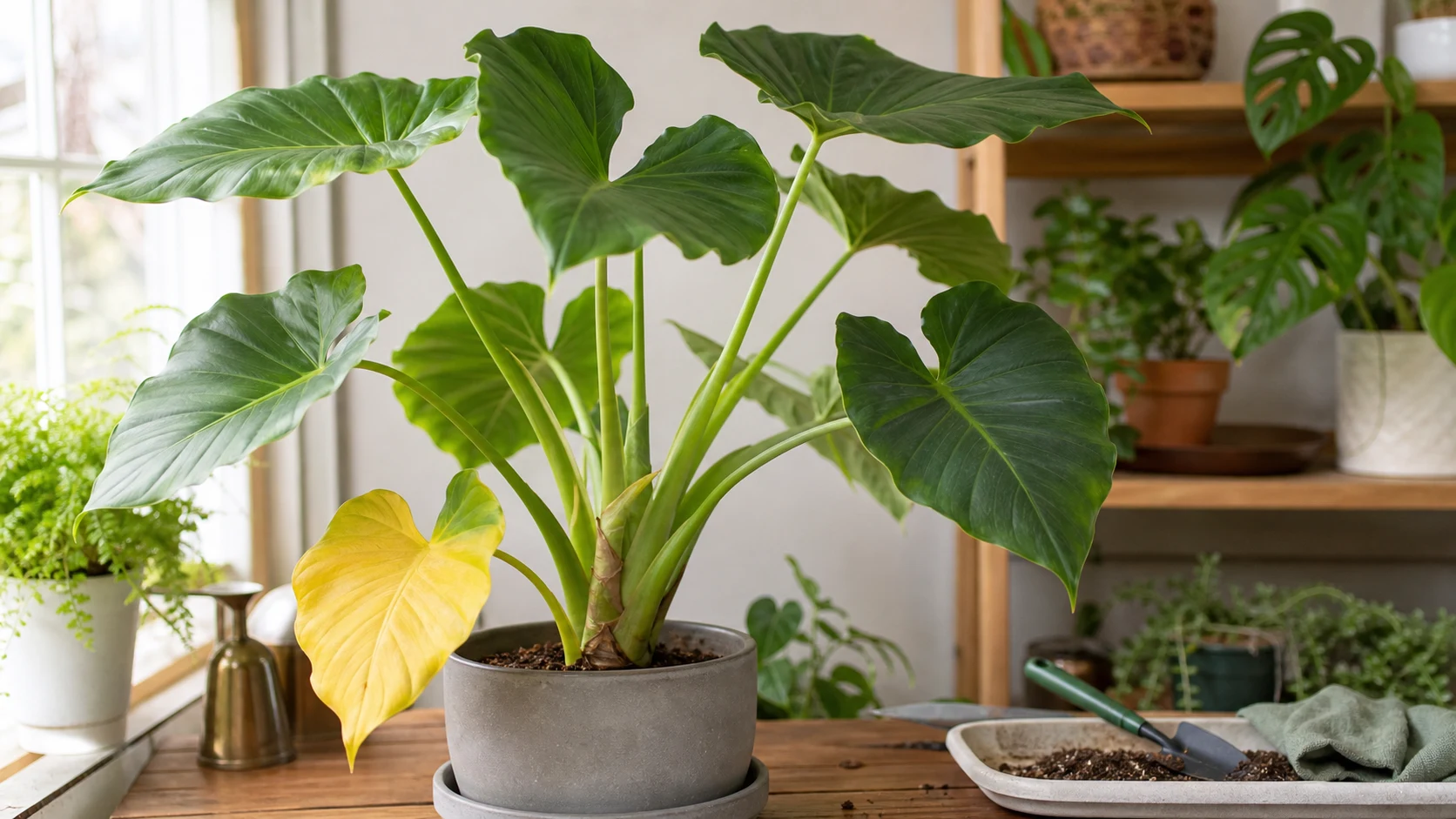
A single yellow lower leaf beside a fresh spear usually signals normal leaf cycling, not whole-plant decline.
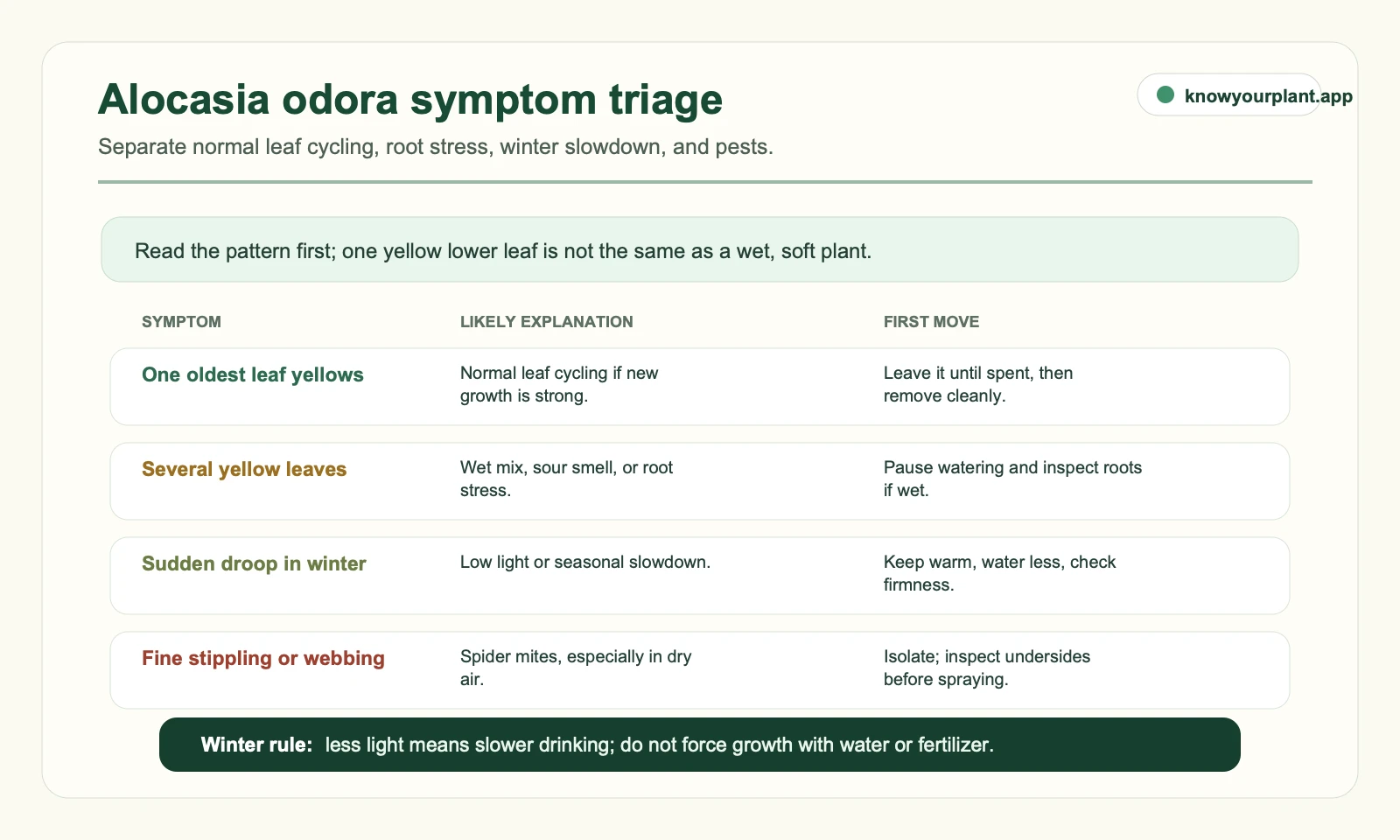
Use the triage card to separate normal leaf cycling from wet-root stress, winter slowdown, and spider mite pressure before making a fix.
Decision Tree: Drooping, Yellowing, or Going Soft?
- If the stems droop and the mix is still wet, treat it as a root-zone problem first. Delay watering, improve airflow, and consider repotting into a chunkier mix if the soil stays dense.
- If older lower leaves yellow one at a time while new leaves still look strong, treat it as normal leaf turnover before assuming the whole plant is in trouble.
- If multiple leaves yellow at once and the plant is leaning, move it closer to brighter light and then reassess watering.
- If the plant looks stalled in winter but the stems are still firm, think slowdown, not emergency. Water less, keep it warm, and wait for stronger light.
- If the crown or petioles feel soft or mushy, unpot and inspect roots quickly. That is the moment to rule out rot rather than waiting for the next watering cycle.
Quick root check when the mix stays wet:
- Slide the root ball out once and check the center, not just the dry-looking top layer. If the middle stays cold, dense, and peat-heavy, the plant is being kept wetter than it looks from above.
- Press the rhizome or corm and the thicker roots gently. Firm tissue points more toward slowdown or stress. Soft, dark, collapsing tissue points toward rot and means you should stop troubleshooting from the top of the pot.
- Smell the root zone before you water again. A sour, swampy smell is a stronger rot warning than a single yellow leaf.
That one inspection tells you more than changing light, water, and fertilizer all at once. If the roots and rhizome are still firm, correct the mix and watering pattern first rather than assuming the plant is beyond recovery.
Common Problems at a Glance
Use this as your first-pass diagnostic before changing anything else:
| Symptom | Most likely cause | First check |
|---|---|---|
| Drooping stems | Overwatering or root stress | Check soil moisture 2 inches down before adding water |
| Brown leaf tips or edges | Low humidity or inconsistent watering | Check both; humidifier or pebble tray helps |
| Small leaves, sideways lean | Not enough light | Move closer to a bright window |
| Yellowing lower leaves | Normal aging, or overwatering | One or two at the base is normal; more than that, check soil moisture |
| Wilting despite moist soil | Root rot or compacted mix | Inspect roots; repot into chunkier mix |
| Fine webbing on undersides | Spider mites | Isolate immediately; treat with neem or insecticidal soap |
| No new growth in spring | Too little light or pot-bound roots | Evaluate light first, then assess whether a repot is due |
Common Mistakes With Alocasia Odora Indoors
- Following a fixed watering schedule. This is the fastest way to rot a rhizome in winter or lower light.
- Keeping dense nursery soil for too long. A wet, compacted mix causes more indoor failures than pot size does.
- Treating every yellow leaf as the same problem. One aging leaf is different from multiple yellow leaves in cold, wet soil.
- Misting for humidity without airflow. Damp leaves plus stale air can create a different problem than the one you were trying to solve.
- Skipping quarantine after bringing a new plant home. Alocasias are notorious for arriving with spider mites that spread before owners notice.
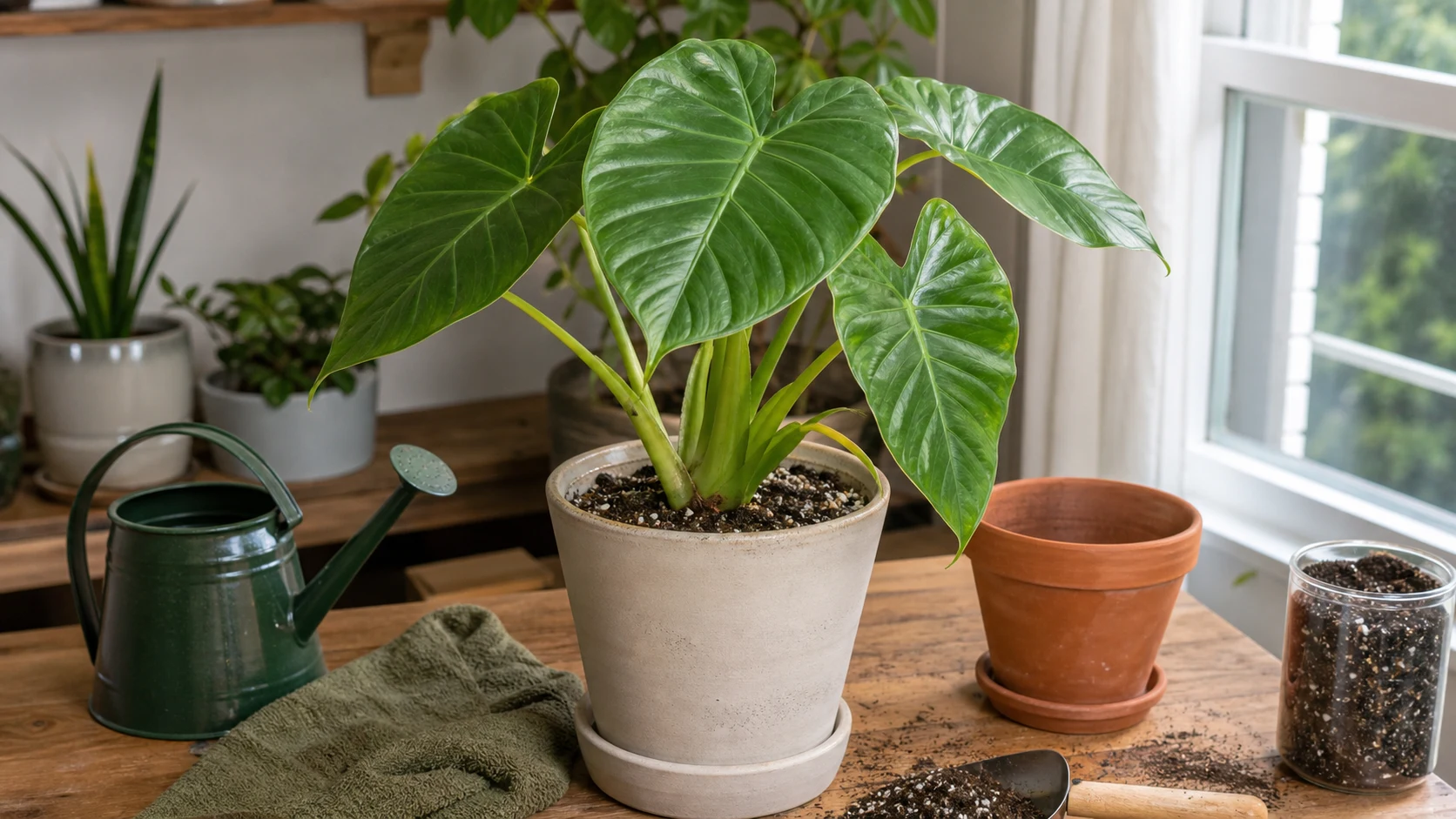
Replace fixed watering habits and compact nursery soil with moisture checks, drainage, and an airy mix.
If you are comparing care routines for another houseplant, see Croton Plant Care: Keep the Color and Stop Sudden Leaf Drop for a focused step-by-step guide.
Real User FAQ
How big does Alocasia odora get indoors?
According to UF/IFAS, Alocasia species can range from 2 to 10 feet tall depending on conditions. Indoors, Alocasia odora typically settles into the 3 to 5 foot range when given adequate light and root room, but a well-established plant in a large container with bright light can push larger over several years. Plan for a floor plant that takes up real corner space, not a shelf plant.
Why are my Alocasia odora leaves turning yellow?
The most common causes are overwatering, low light, or the plant naturally shedding an older lower leaf. Check the soil first. If it has been staying wet rather than barely damp, that is usually the culprit. If the soil is fine and only one older leaf at the base is yellowing while new growth looks healthy, the plant is cycling out older foliage, which is normal. If multiple leaves across the plant are yellowing, light and watering both deserve a closer look.
What is the difference between Alocasia odora and other alocasias?
Alocasia odora grows larger than most commonly kept alocasias and has more upward-angled, waxy leaves. It is sometimes called the night-scented lily for the faint fragrance its flowers produce under the right conditions. Compared to Polly or Amazonica types often seen in garden centers, odora grows significantly larger and tends to be more tolerant of indoor conditions than those smaller, more visually dramatic cultivars. The Alocasia care guide covers care differences between species in more detail.
Does Alocasia odora go dormant in winter?
Not always. Plants kept in consistently warm, well-lit homes tend to slow down rather than go fully dormant. You may see slower growth and the loss of one or two older leaves, which is normal. In cooler rooms with lower winter light, a more complete dormancy is possible. Either way, reduce watering and stop fertilizing from late autumn through winter. Do not try to push growth with extra moisture when the plant is resting.
Is Alocasia odora safe for cats and dogs?
No. The ASPCA lists all Alocasia species as toxic to cats, dogs, and horses due to insoluble calcium oxalates. If chewed, these crystals cause oral irritation, drooling, pawing at the mouth, and vomiting. The reaction is painful and immediate. Place alocasia somewhere genuinely out of reach rather than relying on pets to self-correct.
What soil mix works best for Alocasia odora indoors?
A chunky, airy mix that drains quickly – such as a combination of perlite, bark, and coco coir – works well. Standard potting mix compacts over time and holds too much moisture for alocasias kept indoors, especially in lower light. If the plant came home in dense nursery soil, changing that before troubleshooting any other care issue is usually the right move.
How often should I water Alocasia odora?
There is no fixed schedule that works across every home and season. A better habit is checking the soil: water when the top 2 inches feel barely damp rather than wet or completely dry. In summer with good light that might mean every 5 to 7 days. In winter it might stretch to 10 to 14 days or longer. The soil gives you better information than the calendar does.
Can Alocasia odora grow in low light?
It can survive briefly in low light, but it will not perform well. In low light, the plant produces smaller leaves, stems lean toward the nearest window rather than holding upright, and new growth slows significantly. Over time, low light combined with moist soil increases root rot risk. Bright indirect light is a real requirement for this plant to stay healthy indoors, not a preference.
Methodology Note
This guide combines direct care claims checked against Pet Poison Helpline, a 2024 PMC medical review on Alocasia odora toxicity, public botanical garden records, extension-style pest guidance, and established horticultural references with qualitative owner patterns surfaced through search and community discussions. The safety language, pest-monitoring caution, and species framing were verified directly against those sources. Community examples were used only to surface recurring indoor-grower confusion, not as proof that every Alocasia odora will behave the same way.
Alocasia odora rewards attention to two fundamentals: the soil it lives in and how much moisture it receives between waterings. Get those right and most of the other care variables become far more manageable. The generic elephant-ear advice that is easy to find online tends to skip the soil structure detail entirely, which is exactly why many indoor growers run into trouble before they have done anything obviously wrong.
Download KnowYourPlant for personalized plant care reminders and step-by-step guidance when something looks off: https://knowyourplant.app