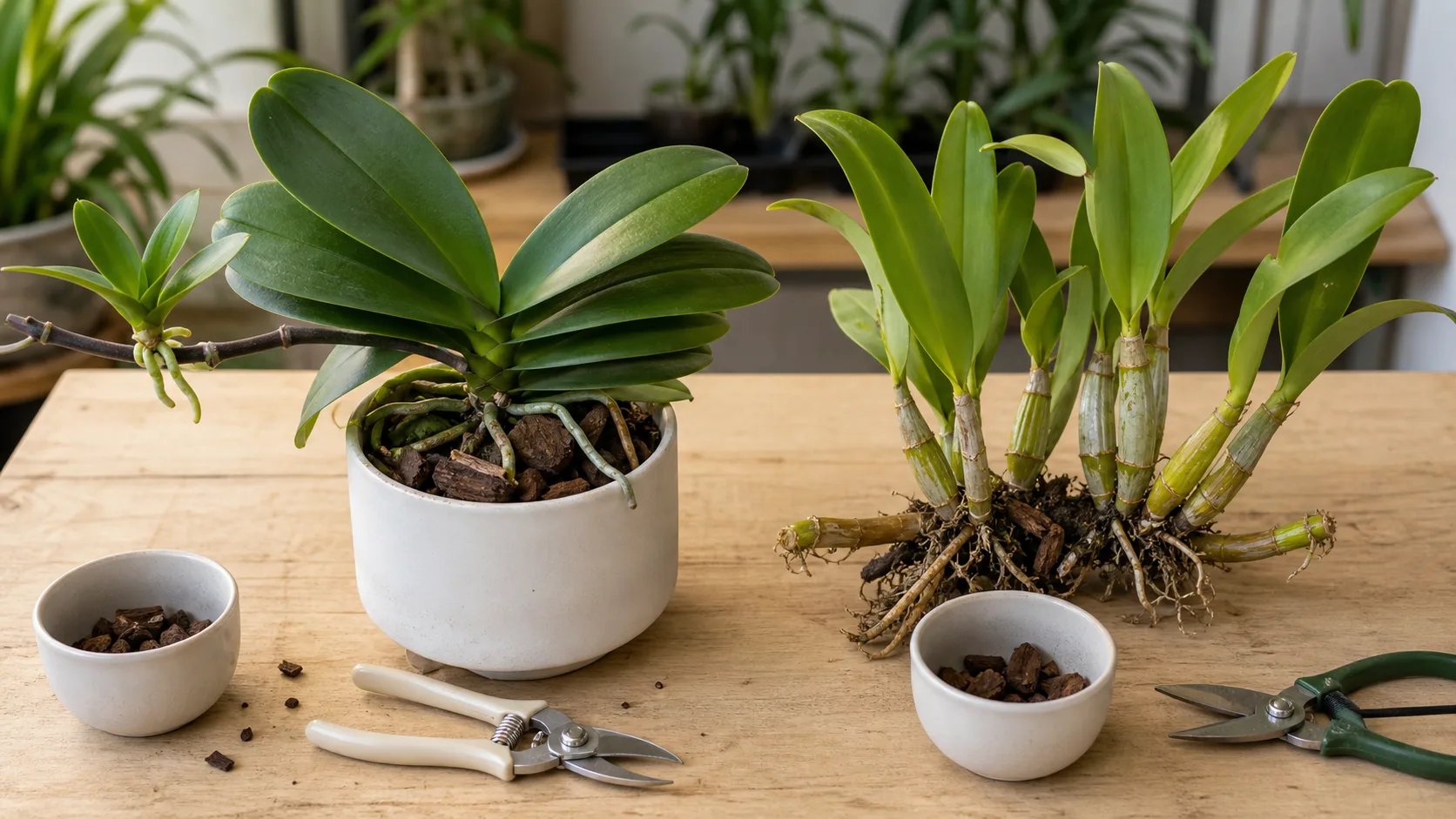
A healthy orchid keiki and a sympodial orchid with pseudobulbs ready for division

Orchid Propagation: Should You Cut, Wait, or Fix Care First?

Most home orchid owners do not need a complicated propagation guide. They need one low-risk decision: safe to cut, wait, or recover first. If the plant has limp or fast-yellowing leaves, mushy roots, sour media, or a tiny baby with one short root, do not cut today. If the plant is healthy but too small, wait. If the plant shape matches the method and it clears the size threshold, you can propagate carefully. ...
 · 7 min
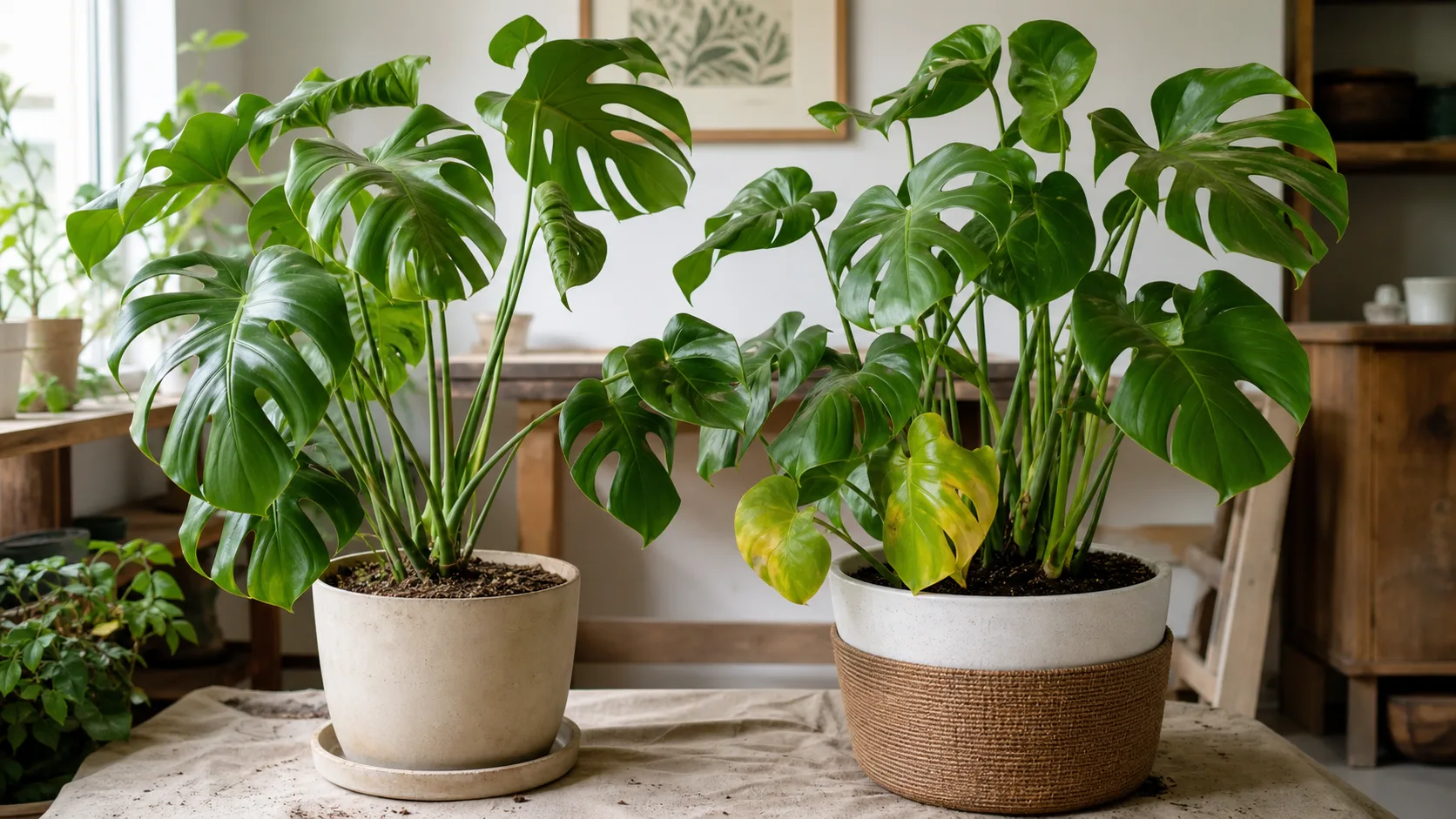
Monstera leaves curling inward

Monstera Leaves Curling: Read the Clues First

Monstera Leaves Curling: Read the Clues First If your Monstera leaves are curling, resist the urge to water, mist, fertilize, and repot all at once. Curl is a stress signal, but it is not a diagnosis. Dry roots can make leaves curl, and so can roots that have stayed wet for too long. Strong sun, hot glass, drafts, pests, and recent root disturbance can produce similar-looking reactions. The useful clues are in the pattern around the curl: whether one leaf or the whole plant is affected, whether the root zone is dry or wet, whether damage faces the window, what changed during the last 7 to 14 days, and whether there is credible pest evidence. ...

 · 16 min
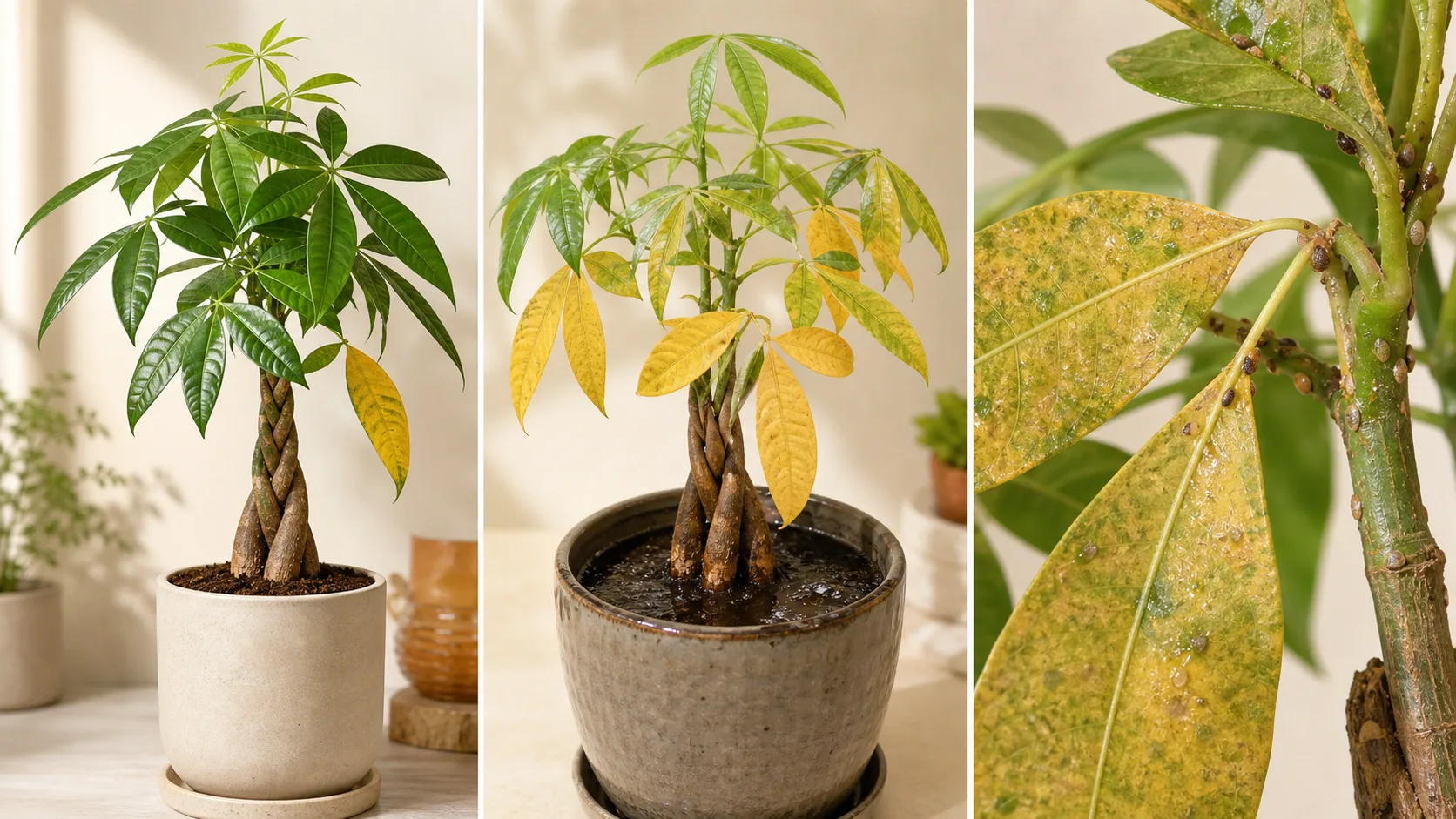
Money Tree leaves showing yellowing among healthy green foliage

Money Tree Yellow Leaves: Diagnose Before You Water

Money Tree Yellow Leaves: Diagnose Before You Water Your Money Tree has yellow leaves, and now you have five choices circling in your head: water her, wait, move her, inspect the roots, or treat for pests. Start by waiting just long enough to check the pattern. One older lower leaf fading slowly is often normal. Several leaves turning yellow while the pot feels wet and heavy point toward root-zone stress. Fine pale dots or sticky residue send you toward pests. A soft trunk or sour-smelling soil makes the situation more urgent. ...

 · 13 min
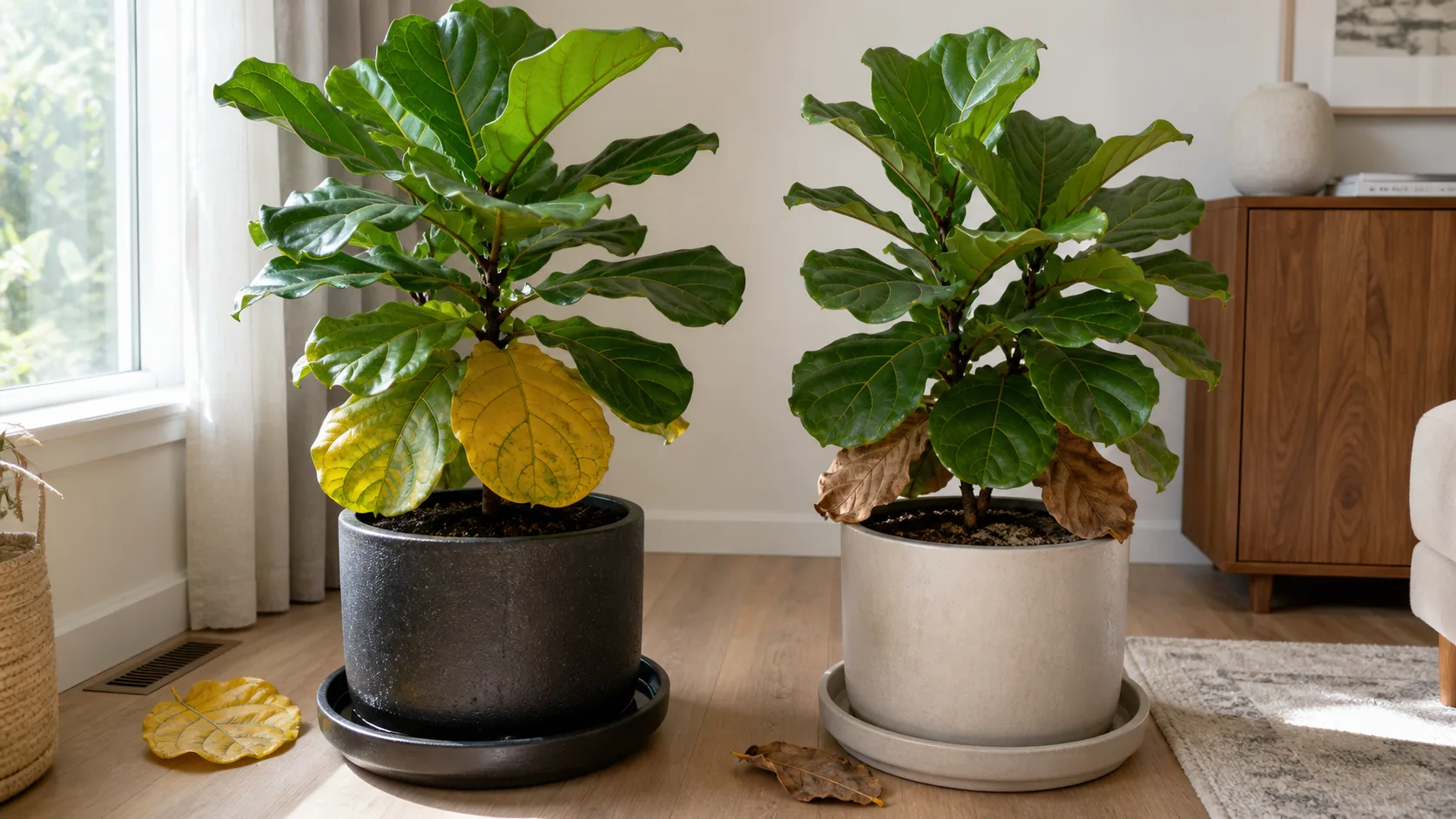
Fiddle leaf fig with fallen lower leaves beside its pot

Fiddle Leaf Fig Dropping Leaves: Start Where It Fell

If your fiddle leaf fig is dropping leaves, pause before you water, repot, fertilize, or move it again. Leaf drop means the plant is responding to stress, but it does not identify the stress by itself. What Most Care Guides Miss The most common misdiagnosis is that a yellow lower leaf must mean thirst. Lower leaves can also yellow and fall when the middle of the pot stays wet too long, especially in low light or an oversized pot. Watering immediately may make that problem worse. ...

 · 16 min
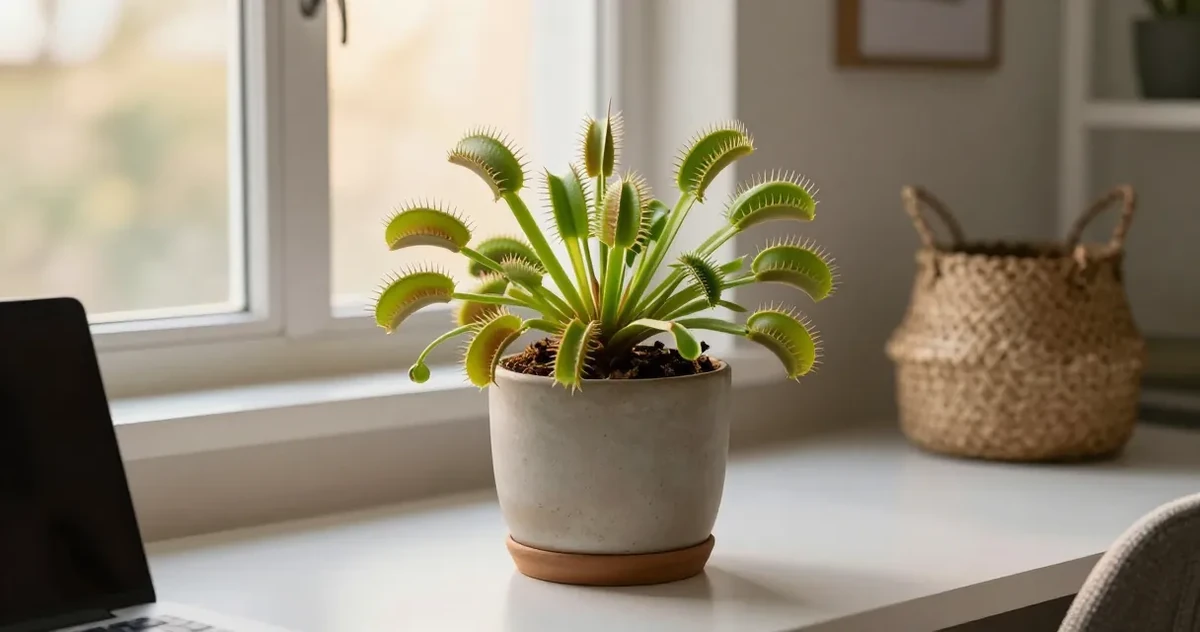
Venus flytrap plant in a white pot with open traps

Venus Flytrap Care: Water, Light, Feeding, and Dormancy

Most houseplants want roughly the same things: some light, regular watering, decent soil, maybe a little fertilizer once in a while. Venus flytrap care runs on almost the opposite set of rules, and that is exactly where most new owners get into trouble. A Venus flytrap is a carnivorous bog plant native to a narrow stretch of coastal wetland in North and South Carolina. NC State Extension notes that it evolved in nutrient-poor, mineral-light conditions that would stress many ordinary houseplants. That is why tap water, standard potting mix, weak indoor light, and routine fertilizer are not small mistakes here. They are the main reasons a new plant declines. ...

 · 12 min
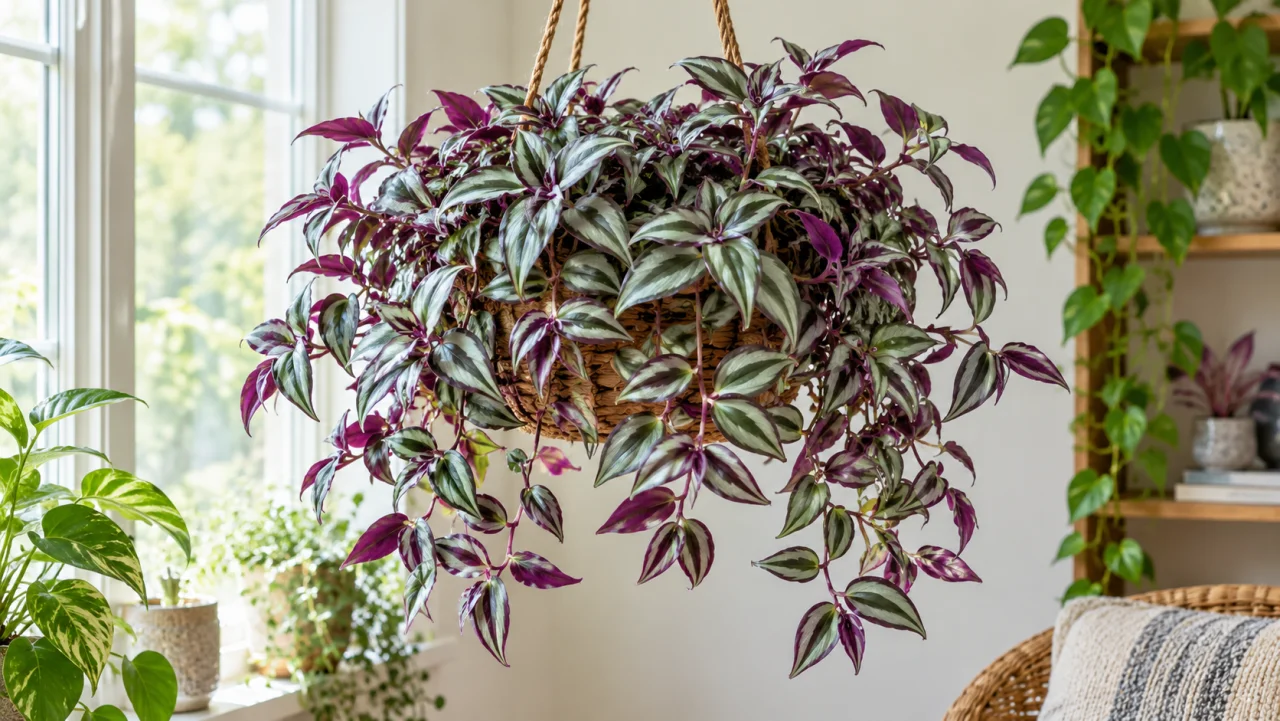
Tradescantia plant with purple and silver striped leaves trailing from a hanging basket

Tradescantia Care: Fuller Growth, Color, and Cuttings

Tradescantia care is easiest when you use one rule: correct light before you correct shape. When the vines stretch between leaves, the color softens toward green, or the top of the pot turns patchy, do not start by fertilizing or repeatedly trimming the same dim-grown stems. Improve the light, judge the next two or three leaves, and only then decide what to pinch, cut, or replant. We call this the Light-First Reset Rule. It turns four complaints that are often treated separately, fading color, long internodes, a bare crown, and weak cuttings, into one ordered diagnosis. This guide uses that rule through the fundamentals and the renewal moves that keep Tradescantia full, colorful, and genuinely easy to look after long-term. ...

 · 19 min
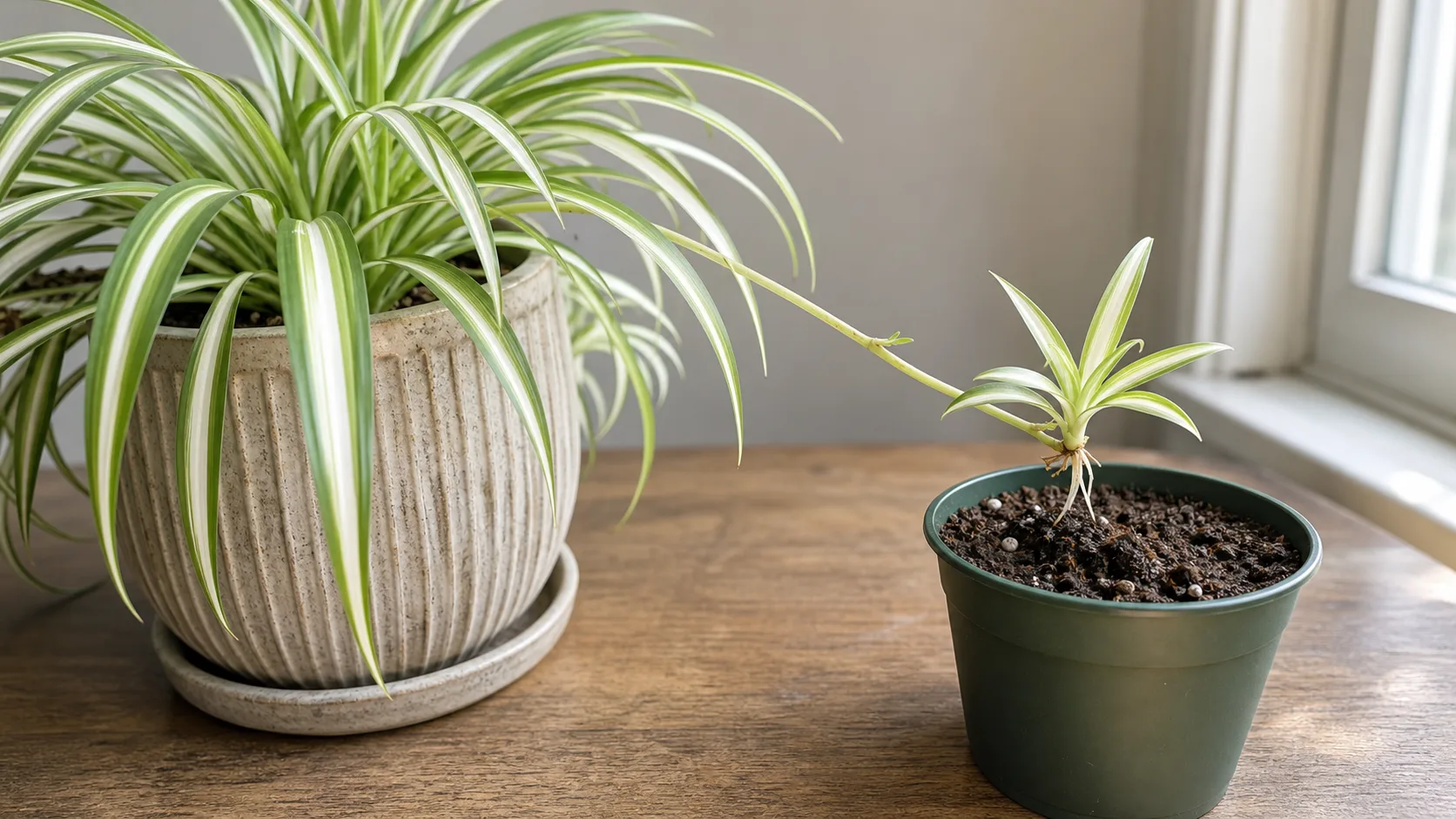
Spider plant babies hanging from the mother plant beside a small pot ready for propagation

Spider Plant Propagation: Root Plantlets in Water or Soil

Spider plant propagation sounds easy until you are holding one baby in your hand and getting four different answers. Cut it now. Wait for roots. Put it in water. Never use water. By that point, the plantlet is still tiny, your confidence is gone, and the whole thing starts to feel more risky than people promised. The real question is not whether water or soil is better. It is whether this spider plant baby is ready for that method yet. ...

 · 13 min
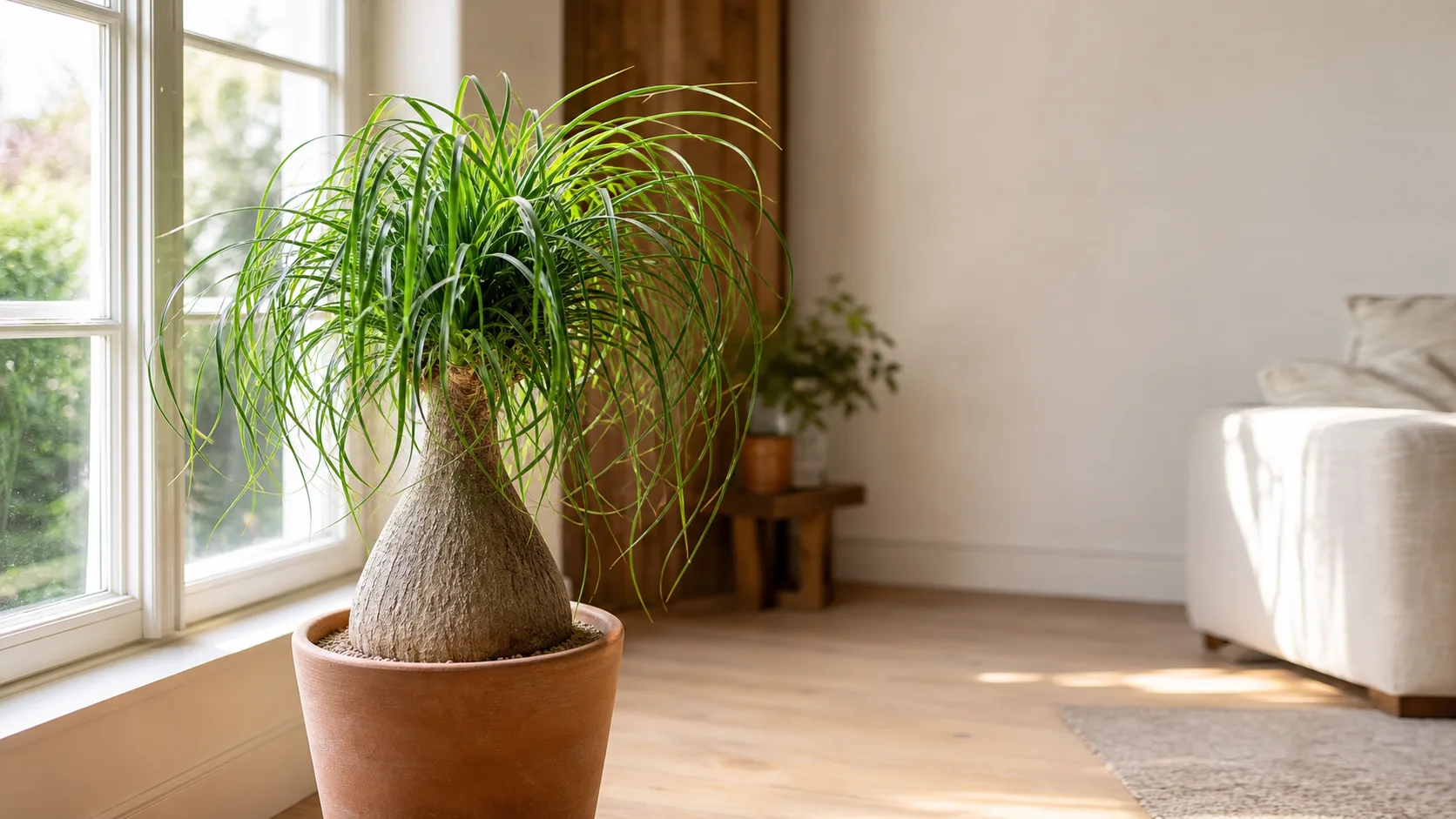
Ponytail palm with a swollen caudex base and long arching leaves near a bright window

Ponytail Palm Care: Light, Watering, and a Healthy Caudex

Ponytail palm care is simpler than most guides make it sound, but people still run into trouble because the plant gets categorized wrong. It is not a thirsty tropical houseplant. It is a slow-growing, water-storing succulent from the dry scrublands of eastern Mexico, and once you understand that, almost every care decision becomes clearer. The plant’s formal name is Beaucarnea recurvata. That swollen base at the soil line is called the caudex. It is not a decorative feature: it is a water reservoir, which is why this plant can go weeks without being watered and still look perfectly healthy. The challenge is knowing when “drought-tolerant” shades into “actually needs a drink,” and when “let it dry out” becomes “the roots are sitting in wet soil and rotting.” ...

 · 13 min
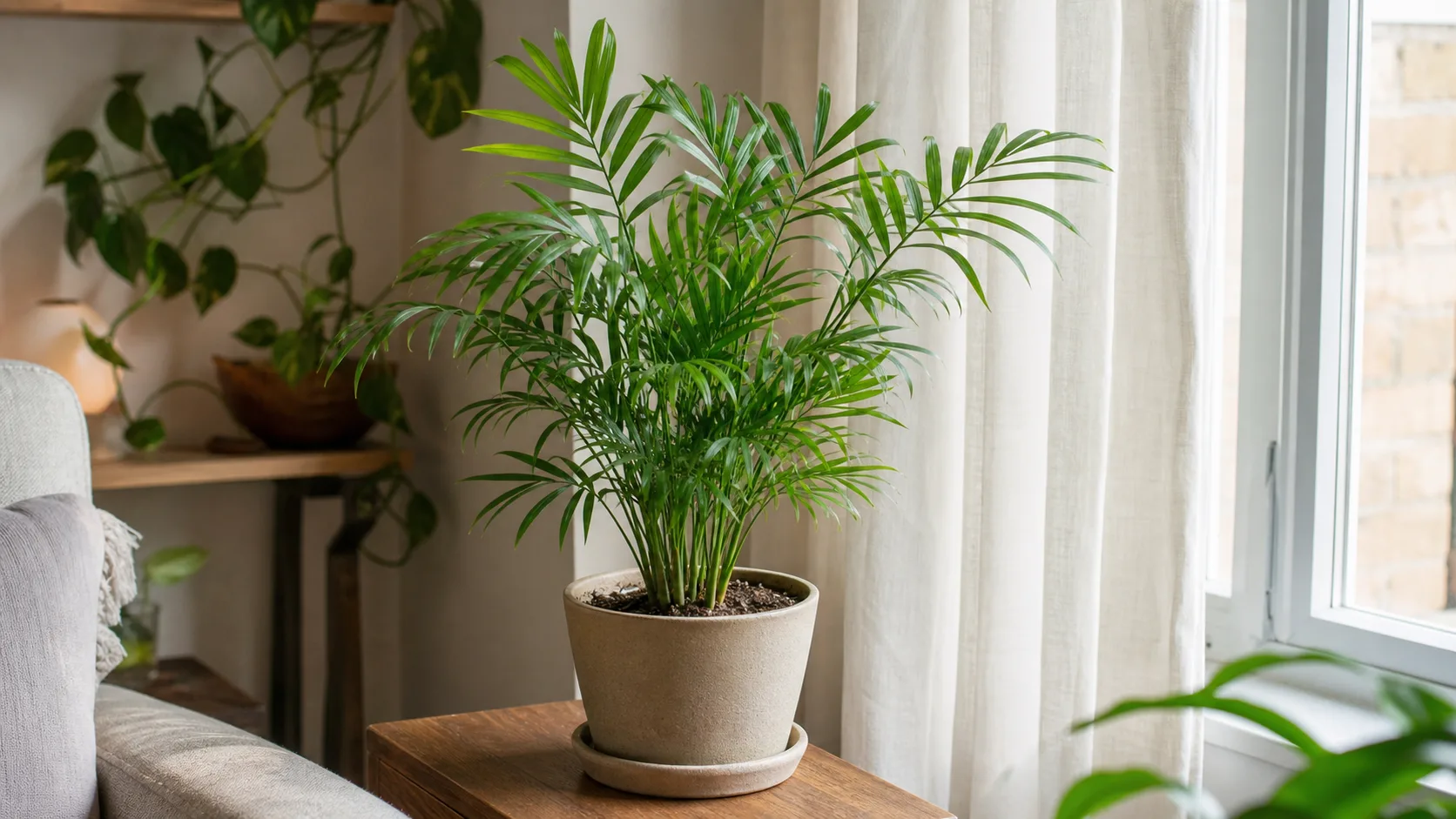
Healthy parlor palm growing indoors near a bright window with soft indirect light

Parlor Palm Care: Low-Light Tolerance Without Overwatering

Parlor Palm Care: Low-Light Tolerance Without Overwatering If your parlor palm looks more tired than tragic, you are in very familiar territory. Most people search parlor palm care when the fronds are still mostly green, but the tips are browning, a stem is yellowing, or the whole plant seems stuck. That slow decline is exactly why this palm confuses people. She rarely crashes overnight. She just keeps asking for small corrections. ...

 · 13 min
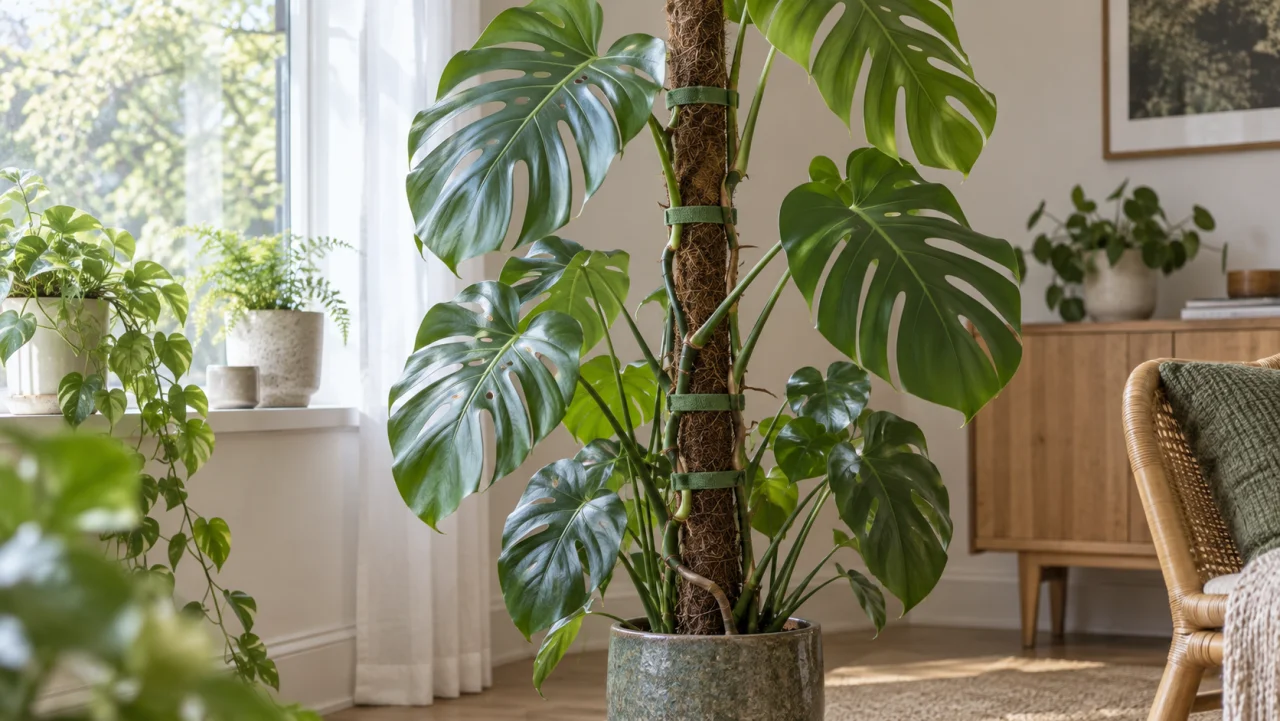
Monstera deliciosa trained onto a moss pole with aerial roots attaching to the support

Moss Pole for Monstera: Choose, Install, and Train It

If you’ve been researching moss poles for Monstera and noticed that most guides treat every product on the market as roughly equivalent, you’re not imagining it. Most articles give you a list of steps, tell you to tie the vine on, and call it done. Then you follow those steps, and the plant ignores the pole completely. The reason is almost never the product. It’s one of three things most guides skip entirely: the type of support doesn’t match what you actually want, the pole went in at the wrong moment relative to the root ball, or the support is on the wrong side of the plant. That last one is the most common, and it’s the easiest to fix once you understand it. ...

 · 15 min