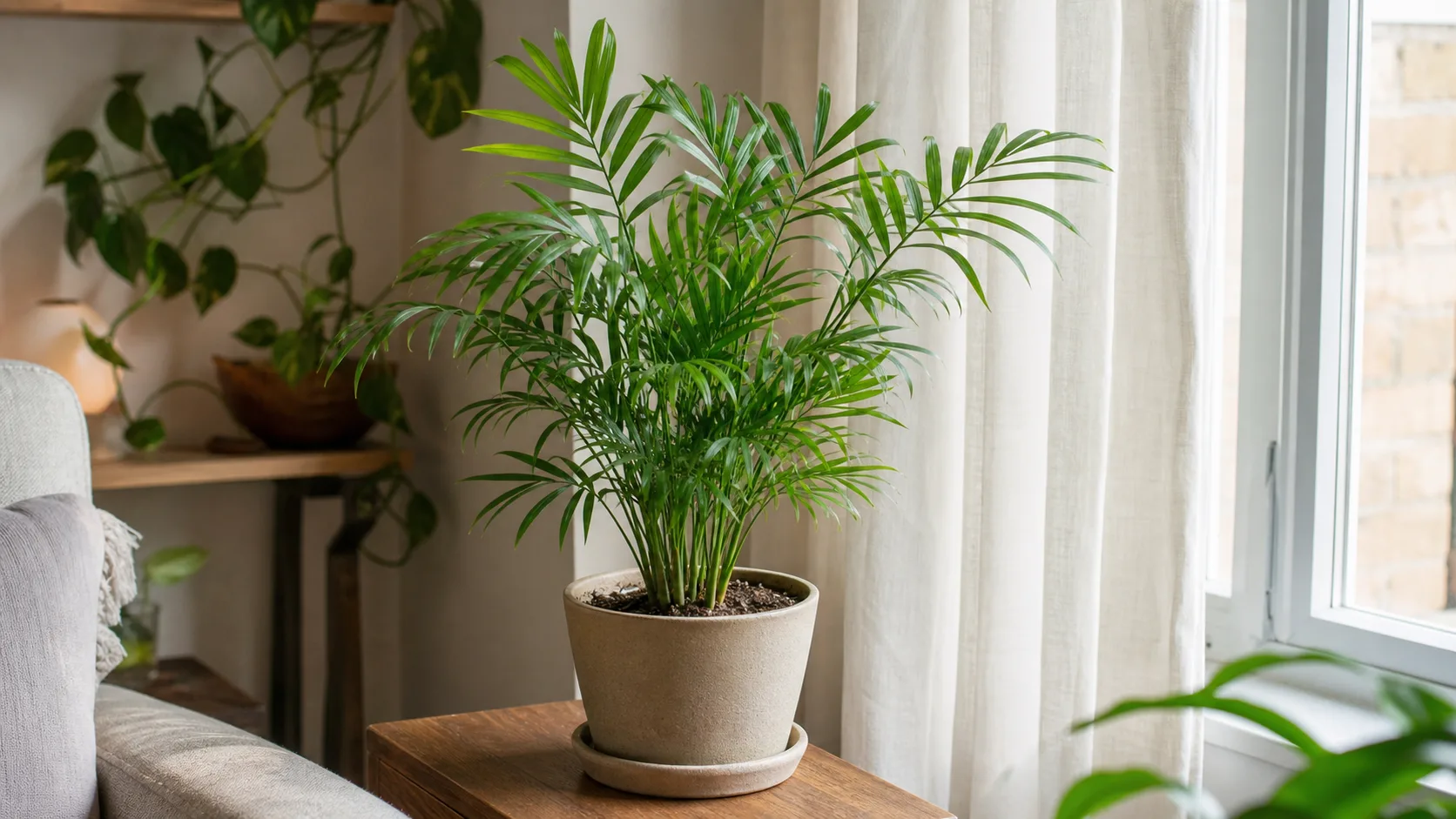
Parlor Palm Care: Low-Light Tolerance Without Overwatering
If your parlor palm looks more tired than tragic, you are in very familiar territory. Most people search parlor palm care when the fronds are still mostly green, but the tips are browning, a stem is yellowing, or the whole plant seems stuck. That slow decline is exactly why this palm confuses people. She rarely crashes overnight. She just keeps asking for small corrections.
A parlor palm, or Chamaedorea elegans, is popular for a reason. She tolerates lower light than many houseplants, stays manageable indoors, and is one of the easier palms to share a home with. But low-light tolerant is not the same thing as happy in a dim corner, and that one misunderstanding leads to a lot of overwatering.
The better way to care for her is to stop asking “how often should I water?” first, and start with this: does she have enough usable light to dry her soil at a normal pace? Once you answer that, the rest gets much easier.
What most care guides miss
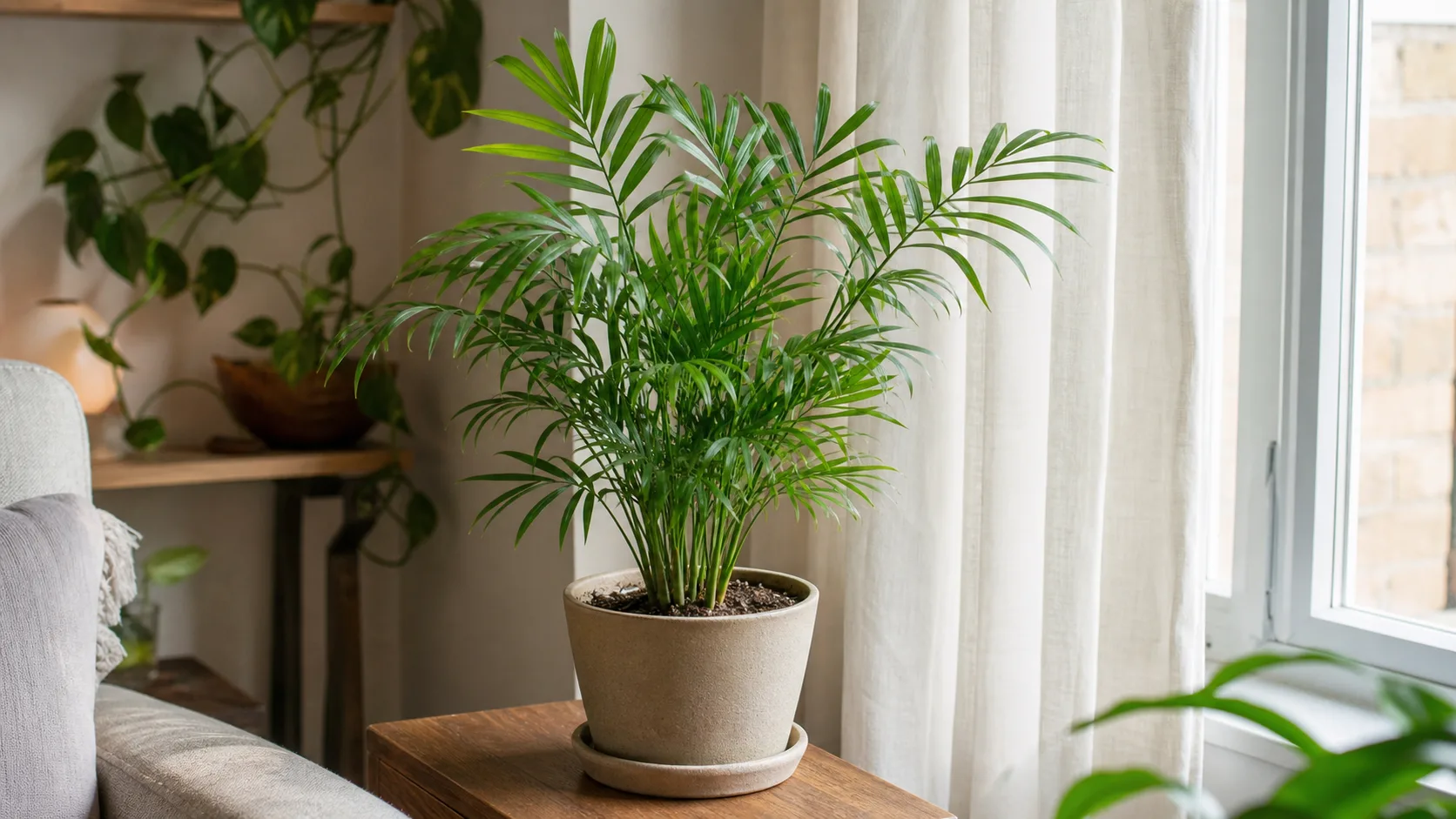
A parlor palm can survive modest light, but steady bright indirect light gives it the energy to keep producing healthy fronds.
Most care guides give you the same broad list: low light, indirect sun, moderate watering, average humidity. That is not wrong, but it leaves out the decision rule that actually saves this plant.
The most common misdiagnosis is treating every brown tip or yellow frond like a thirst problem. In real homes, the first check should be light plus lower-root moisture, not a weekly watering schedule.
Start here before you change anything:
- Can you read comfortably in that spot during the day without turning on a lamp?
- Is the top inch dry, but the soil deeper in the pot still cool and damp?
- Is the plant near an AC vent, heater, or drafty door?
- Do the leaves have fine speckling, webbing, or sticky residue underneath?
If the room is cave-like, she may be surviving instead of growing. If the top looks dry but the root zone stays wet for days, more water will make things worse, not better.
Quick care snapshot
- Light: low to bright indirect light, but not deep shade
- Watering trigger: when the top 1 to 2 inches feel dry
- Humidity: average indoor humidity is usually fine, but very dry air can crisp tips
- Best soil: loose, well-draining potting mix
- Pet safety: generally considered pet friendly
- Top beginner mistake: watering on schedule when the pot is still damp below the surface
Low-light tolerance, with a reality check
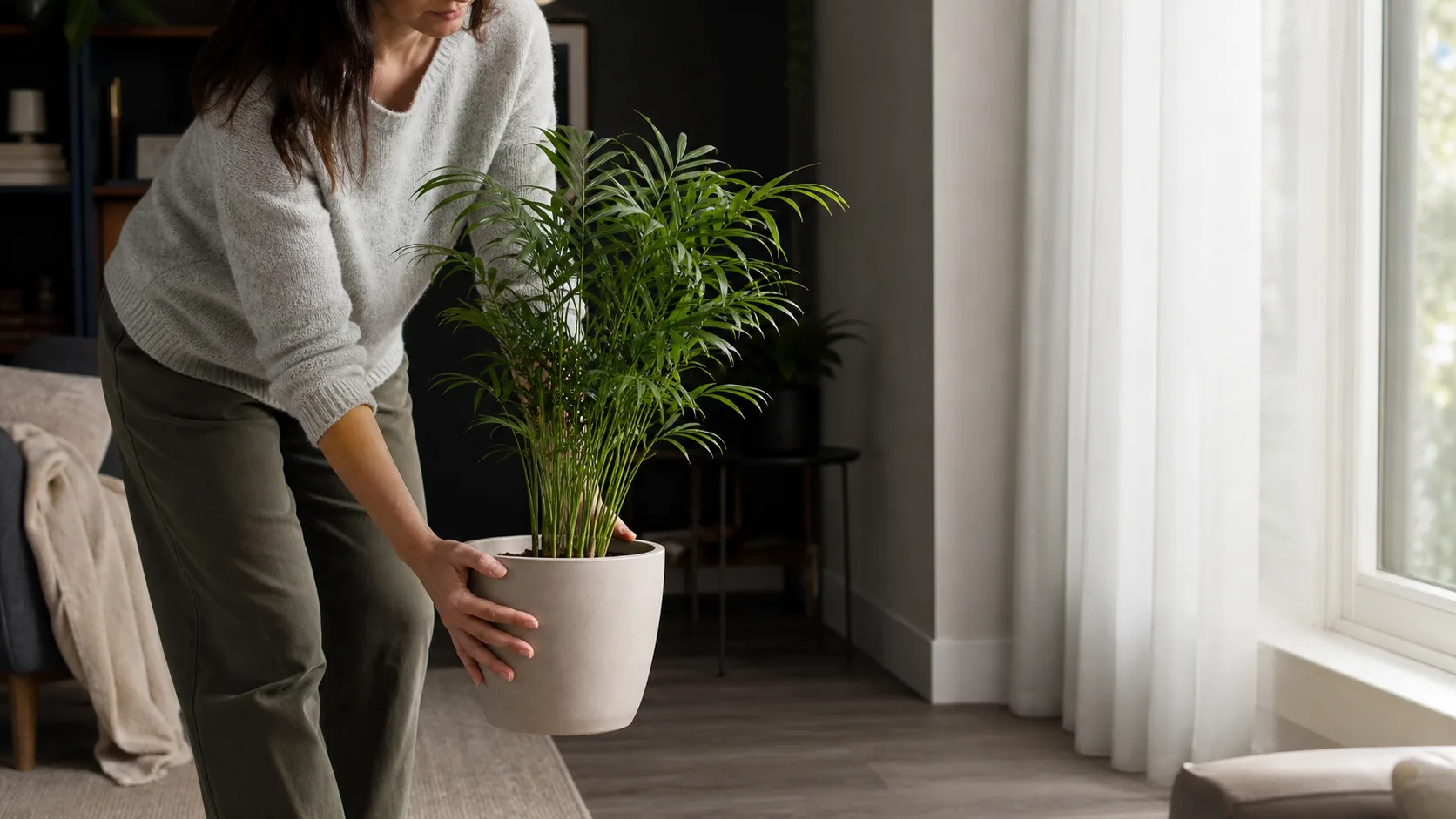
Low-light tolerance is not darkness tolerance: move the palm closer to usable window light without exposing it to harsh direct sun.
Parlor palms tolerate lower light than a lot of houseplants, and that is true. But many people hear that and place her across the room from a small window, then wonder why she never grows, keeps yellowing, or stays wet forever.
A better phrase is this: she handles gentle indoor light better than many plants, but she still needs enough daylight to use water well.
A usable-light scorecard
Your spot is probably workable if most of these are true:
- the plant is within a few feet of a window, not deep across the room
- the light stays soft, not hot and direct for hours
- you can see some daylight shape in the room for much of the day
- the soil dries at a steady pace instead of staying heavy for a week and a half
- new growth appears slowly but regularly in the growing season
Your spot is probably too dim if most of these are true:
- the plant lives in a corner that feels gloomy even at midday
- the fronds lean hard toward one side
- older fronds fade without much fresh growth replacing them
- the pot stays wet for a very long time after watering
- winter makes the plant noticeably worse
If you are choosing between a darker corner and a brighter room a few feet back from the window, choose the brighter room every time. With parlor palms, usable light is one of the biggest hidden factors behind both watering success and failure.
If you are still deciding what belongs in that room, compare the realistic light limits and pet-safe options in the best low-light indoor plants guide.
How to water a parlor palm without guessing
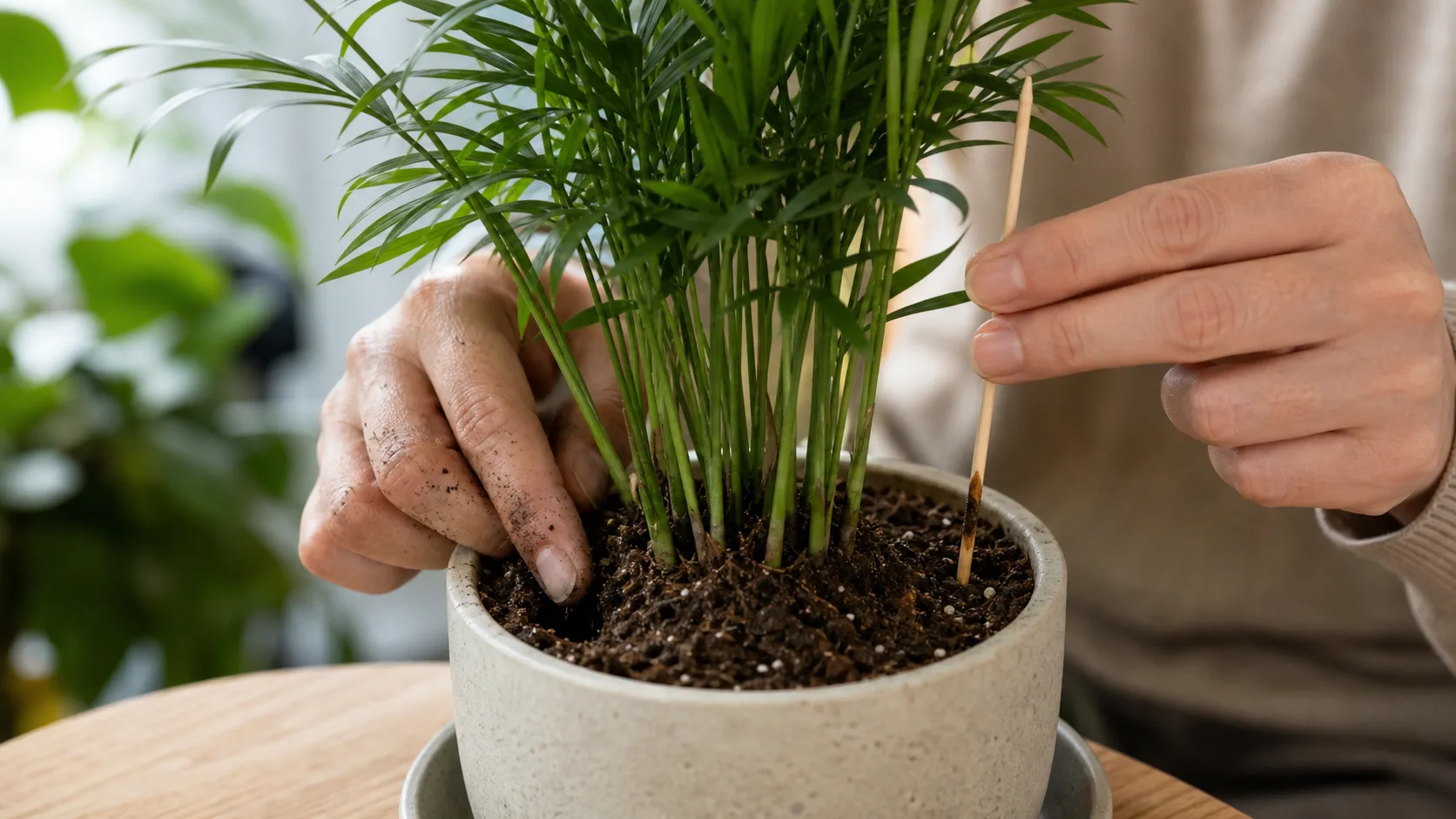
Check below the dry surface before watering; a skewer or fingertip can reveal whether the root zone is still holding moisture.
This is the part most people want simplified, and thankfully it can be.
Do not water on a fixed weekly schedule. Some homes dry quickly. Some stay damp forever. A parlor palm in a bright room in July and a parlor palm in a dim room in January are not living the same life.
Instead:
- Press a finger into the top 1 to 2 inches of soil.
- If it still feels cool and damp, wait.
- If that top zone feels dry, water thoroughly.
- Let extra water drain away completely.
- Do not water again until the top dries back out.
That one routine solves more problems than memorizing a number of days.
A simple watering decision tree
If the top inch is dry but the pot feels heavy: wait and check again tomorrow. The lower roots may still be wet.
If the top 1 to 2 inches are dry and the pot feels lighter: water deeply.
If the top is dry but the plant still looks limp after watering: check roots, drainage, and light before you water again.
If the soil smells sour or swampy: treat it like a root-zone problem, not a thirst problem.
If you think the plant may already be suffering from too much water, read overwatered plant signs and fixes and root rot treatment guide before you reach for the watering can again.
Brown tips are a clue, not a verdict
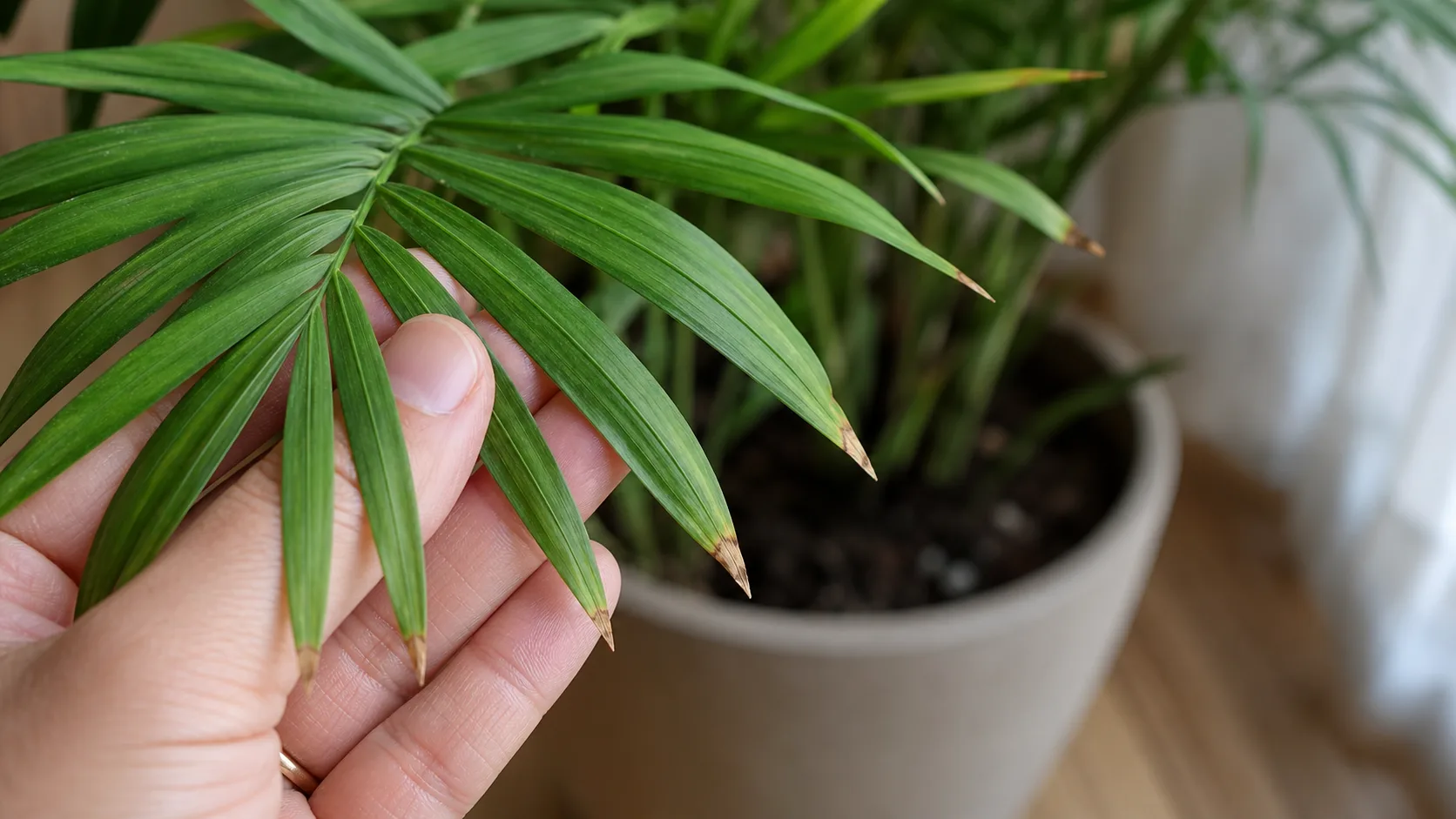
A few brown tips are a symptom to interpret alongside moisture, salts, humidity, and root condition—not a diagnosis by themselves.
Brown tips are one of the biggest sources of confusion with this plant. They are real information, but they do not all point to the same cause.
Brown-tip diagnosis matrix
| What you see | Most likely cause | First check |
|---|---|---|
| Dry, crispy tips but green fronds overall | dry air, inconsistent watering, mild salt buildup | check recent watering swings and fertilizer use |
| Whole fronds turning yellow | overwatering, low light, older frond aging | feel deeper soil moisture and review placement |
| Soft decline, limp stems, stale-smelling soil | root stress from staying wet | inspect drainage and stop watering on schedule |
| Pale speckled leaves or fine webbing | spider mites or other pests | inspect leaf undersides closely |
| Soil pulling from the pot edge, very fast drying | underwatering or root crowding | water thoroughly, then assess root density |
The useful question is not “why are the tips brown?” It is “what pattern is happening around the tips?” That pattern tells you what to test first.
A lot of people lose time here because they keep correcting the wrong problem. They water more for crispy tips when the issue is dry air and salts. They water less for yellowing when the real problem is a dark room that keeps the mix wet too long. The symptom matters, but the pattern matters more.
Why one yellow cane is not always a disaster
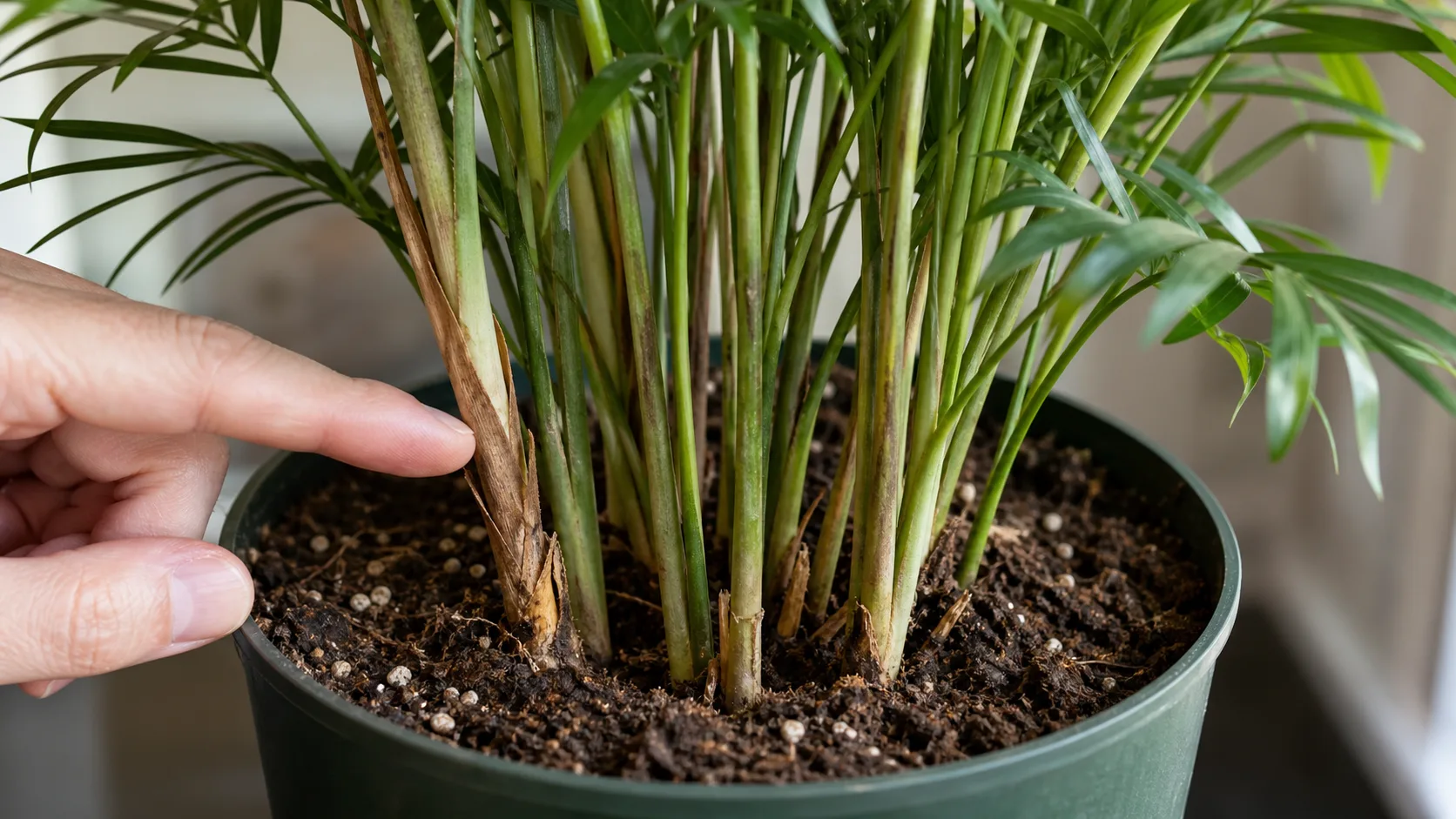
Nursery pots usually contain multiple seedlings, so one aging outer cane can decline while the remaining canes stay healthy.
This is one of the most reassuring details about parlor palm care indoors, and many general care guides barely mention it.
Parlor palms are often sold as several stems grouped in one pot. That means one older cane can fade over time without the whole plant being in danger. If one stem yellows slowly while the rest look steady, that can simply be part of the clump aging.
That is very different from these patterns:
- several stems yellowing at once
- limp growth plus wet, stale soil
- speckled leaves plus dry new growth
- no fresh growth for a long time in active season
So before you panic over a single tired stem, step back and look at the whole clump. Is the entire plant declining, or is one older part finishing its cycle?
The root zone matters more than the calendar
A parlor palm can look like she wants water when the real problem is that the roots have been sitting wet too long. This is why root-zone behavior matters more than the day of the week.
Signs the root zone is too wet
- several fronds yellow at once
- the soil stays cool and heavy for too long
- the pot has poor drainage
- runoff sits trapped inside a decorative outer pot
- the base smells stale or sour
Signs the root zone is too dry
- the mix turns hard and shrinks from the pot edge
- water rushes through too fast
- brown tips spread after long dry stretches
- fronds feel thinner or papery
A very common beginner mistake is seeing yellowing and assuming underwatering, especially because palms “look tropical.” But with parlor palms, slow yellowing in a dim room often has more to do with soggy roots than thirst.
Soil, humidity, and placement details that quietly matter
Parlor palms do best in a mix that drains well and does not stay compacted forever. You do not need a fancy specialty blend, but you do need a soil that lets air reach the roots. If your potting mix feels dense and stays wet for ages, that alone can hold the plant back.
If you want help reading your mix, best potting soil for indoor plants is a useful next stop.
Humidity is similar. This palm appreciates moderate humidity, but she does not need a glass cabinet or a machine running all day. What usually matters more is avoiding extremes. A plant next to a heating vent, blasting AC, or a drafty exterior door will often crisp at the tips faster.
Try these low-effort fixes before you buy anything:
- move her away from vents and hot radiators
- keep her out of harsh afternoon sun
- water thoroughly instead of giving tiny sips
- flush the pot occasionally if you fertilize
- wipe dust off the fronds so they can use the light they get
Pests can look like care mistakes
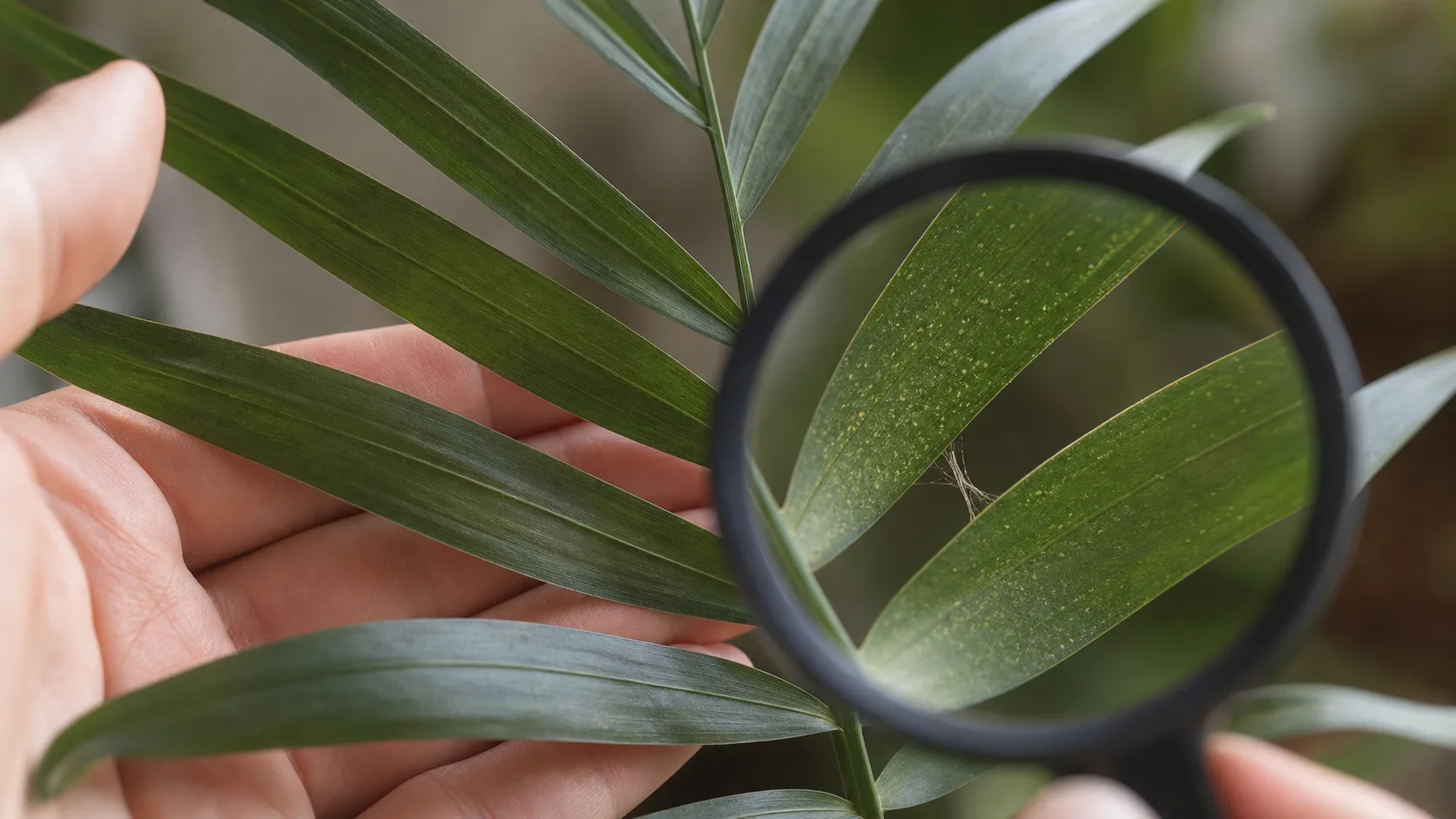
Inspect leaflet undersides closely when color fades or stippling appears, because early spider-mite damage can resemble general care stress.
This plant is one of those sneaky cases where pests can look like bad care at first. Dry indoor air makes that even more confusing.
If you see:
- fine speckling
- thin webbing
- pale, tired-looking leaves that do not improve
- sticky residue or cottony bits
then stop adjusting watering for a moment and inspect the undersides of the fronds.
Spider mites and mealybugs are worth checking for early. If you find them, isolate the plant and read how to get rid of spider mites or how to get rid of mealybugs before the problem spreads.
Common mistakes that keep this palm stuck
1. Treating low-light tolerance like darkness tolerance
This is the big one. A plant that is technically alive in a dim corner may still be too weak to use water well.
2. Watering because the tips are brown
Brown tips can mean several things. More water is only one possible answer.
3. Leaving runoff in a cachepot
The top can look fine while the lower roots sit in trapped water.
4. Changing five things at once
Move the plant, change watering, fertilize, mist daily, and rotate her into a brighter room all in one weekend, and you lose the ability to tell what actually helped.
5. Ignoring pests because the problem looks like care stress
This palm can collect mite damage quietly. Always check under the leaves before you keep tinkering with moisture.
Seasonal note: why winter changes everything
Parlor palm care usually gets harder in winter, not because you forgot what to do, but because the environment changes.
There is less daylight, the sun angle shifts, indoor air gets drier, and the pot stays wet longer. A watering rhythm that worked in spring may be too frequent in winter.
In colder months:
- expect slower drying
- water less often, not by habit
- watch for dry-air browning from heating
- keep the plant away from cold drafts near windows and doors
If your parlor palm declines every winter, that pattern itself is a clue. The fix is often brighter placement and slower watering, not more fertilizer.
Expert notes that actually change care
A few source-backed takeaways are especially useful here:
- parlor palm tolerates low light, but still does best with usable indirect light
- the soil should dry slightly between waterings, not stay wet all the time
- many retail pots contain multiple stems, so one older cane fading is not always a full-plant emergency
- this is a pet-friendly choice for homes with cats and dogs
- spider mites and mealybugs are common enough that every slow decline deserves a leaf check
Those points sound simple, but together they answer most of the real questions people have with this plant.
If you are comparing indoor palms, the majesty palm care guide explains why that larger palm usually needs brighter light and steadier moisture than a parlor palm.
A calm routine you can actually follow
If you want a realistic care plan, keep it this simple:
- check the soil once a week with your finger
- keep her in a bright room, just out of harsh direct sun
- water deeply only after the top dries
- empty trapped runoff
- inspect for pests before changing watering again
- expect slower growth and slower drying in winter
That is enough. You do not need a perfect system. You need a calm one.
FAQ
How often should I water a parlor palm?
Usually every 1 to 2 weeks indoors, but only when the top 1 to 2 inches of soil feel dry. In dimmer rooms or winter, it may need water much less often. In brighter summer conditions, it may dry faster.
Why does my parlor palm have brown tips?
Brown tips usually come from inconsistent watering, dry air, salt buildup from fertilizer or tap water, or roots staying stressed too long. Check the pattern around the browning instead of assuming it means thirst.
Can a parlor palm live in low light?
Yes, she tolerates low indirect light better than many houseplants, but she still does best with usable daylight. If the room is very dim, expect slower growth, slower drying soil, and more watering mistakes.
Is parlor palm safe for cats and dogs?
Yes. It is generally considered non-toxic to cats and dogs, which makes it one of the friendlier palms for pet homes.
Should I mist my parlor palm?
Misting is optional and usually less important than stable watering, better placement, and keeping the plant away from vents. If your air is very dry, improving the room around the plant helps more than occasional misting.
Why is one stem yellow while the rest look okay?
That can be normal, especially because many parlor palms are sold as clumps of multiple stems in one pot. Worry more if several stems yellow at once or the soil stays wet too long.
Do parlor palms need fertilizer?
Only lightly, and only when the plant is actively growing. If the plant is stressed, fix light and watering first before feeding her.
Sources and methodology
Author: KnowYourPlant editorial team
Reviewed by: KnowYourPlant horticulture review
Last updated: 2026-07-19
This guide was built as a diagnosis-first parlor palm care article, not another generic indoor palm primer. The goal was to help readers separate low-light slowdown, overwatering, brown-tip confusion, and pest pressure before they keep adjusting the wrong thing.
Care framing and troubleshooting logic were checked against North Carolina Extension, ASPCA, Bloomscape, The Sill, Leon & George, and Ohio Tropics. Community-style owner confusion helped shape the questions this article answers, but the care claims here were grounded in source-backed indoor plant guidance.