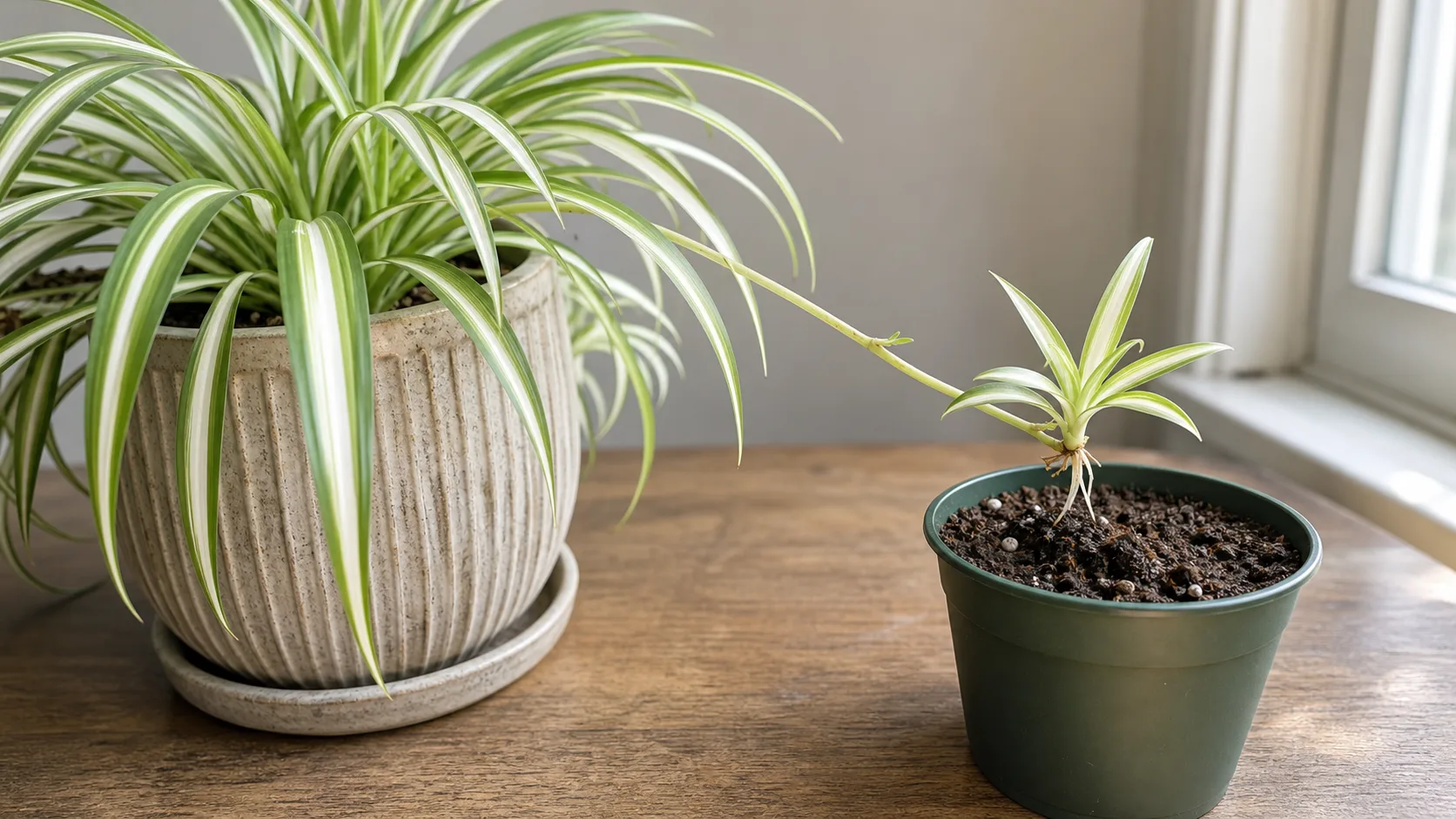
Spider plant propagation sounds easy until you are holding one baby in your hand and getting four different answers. Cut it now. Wait for roots. Put it in water. Never use water. By that point, the plantlet is still tiny, your confidence is gone, and the whole thing starts to feel more risky than people promised.
The real question is not whether water or soil is better. It is whether this spider plant baby is ready for that method yet.
That is where most care guides get thin. They tell you how to propagate, but not how to judge the baby in front of you. A spiderette with six healthy leaves and little root nubs is a different situation from a large-looking offset with no roots at all. If we treat both the same, one takes off and the other rots at the crown.
What Most Care Guides Miss
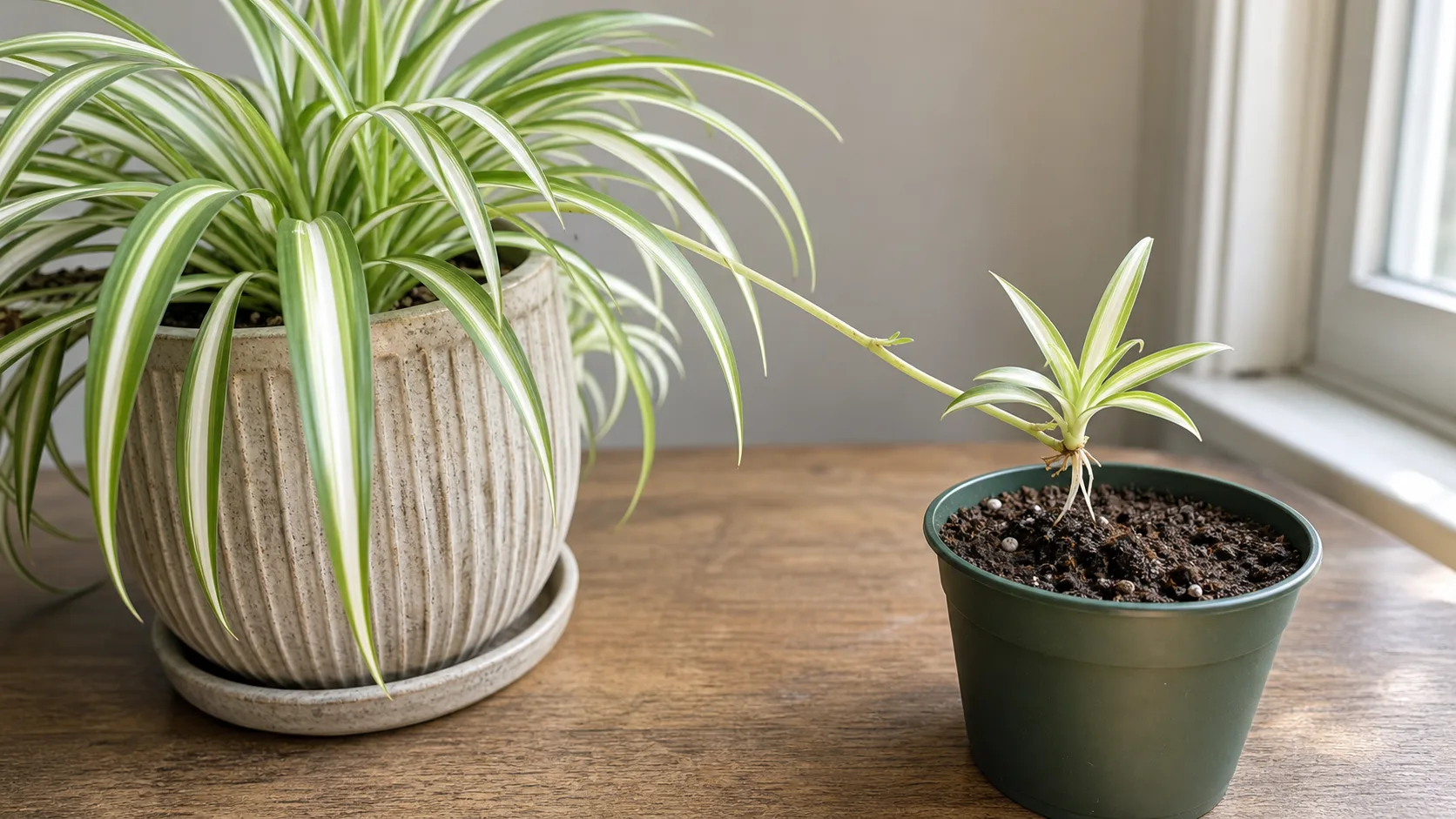
A plantlet with several leaves and visible root nubs can be rooted with less risk while the runner still supports it.
The most common misdiagnosis is blaming the method when the real issue was timing.
A rootless baby that should have stayed attached longer can fail in water and fail in soil. A baby with visible rootlets can go straight into mix and do beautifully, but stall if you fuss with it too much first. Generic advice like “just snip and pot” skips the part that actually changes your odds.
Before you cut anything, do one practical first check: look at the base, not just the leaves.
Ask these four questions:
- Leaf count: does she have around six healthy leaves, or at least enough foliage to support herself?
- Root prep: do you see root nubs or tiny white roots at the base?
- Attachment option: can you pin the baby onto soil while she stays connected to the mother plant?
- Rot risk: are you likely to keep the setup lightly moist, or accidentally too wet?
If you answer those first, the water versus soil decision gets much easier.
Quick diagnosis card: is this spider baby ready now?
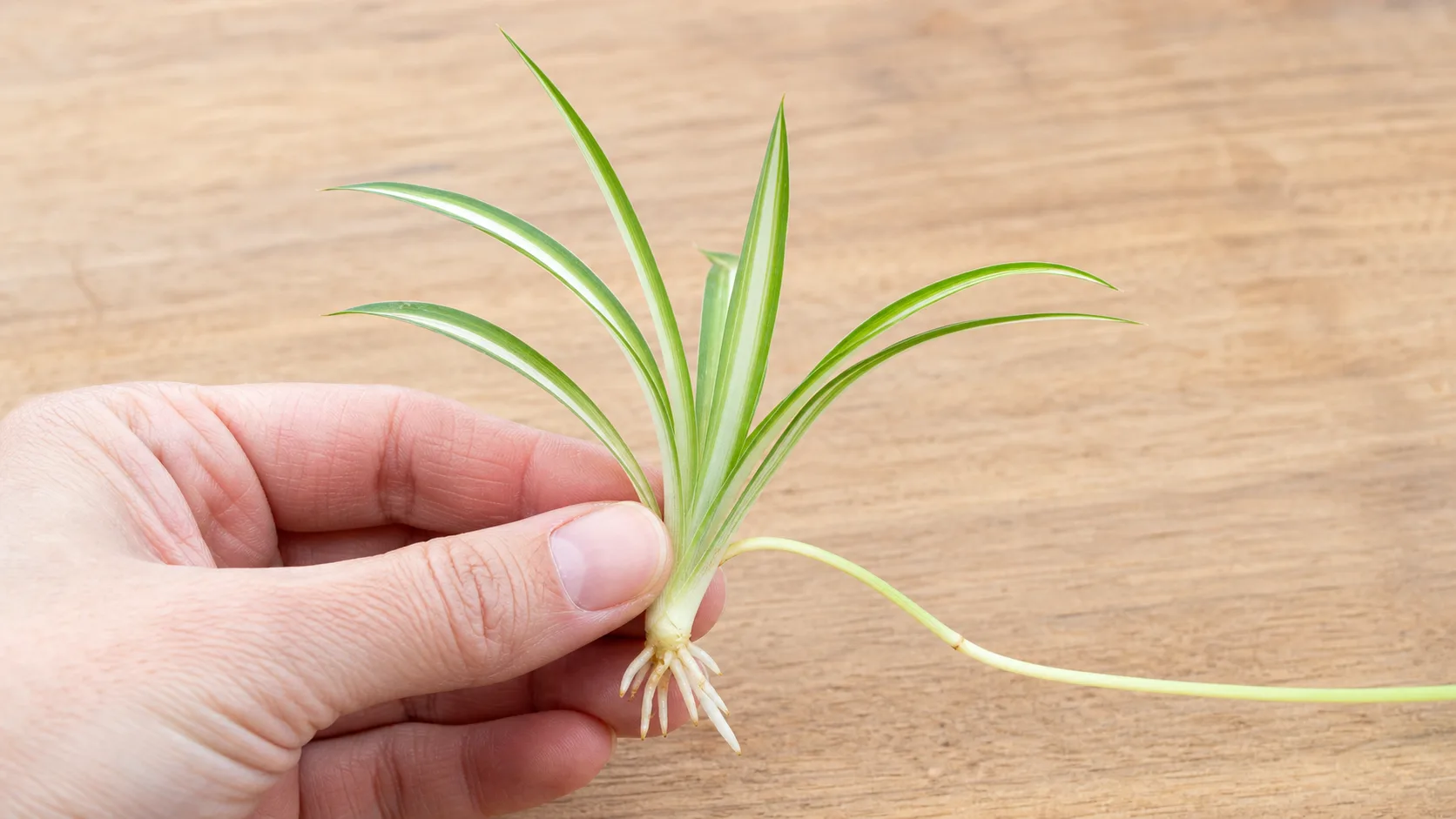
Leaf count, a firm crown, and visible rootlets are more useful readiness signals than plantlet size alone.
| Check | Ready now | Better attached first | Wait a bit longer |
|---|---|---|---|
| Leaves | Around 6 or more healthy leaves | 4 to 6 leaves and still growing | Tiny, sparse, or floppy |
| Root area | Root nubs or short roots visible | No roots, but base is firm | No roots and base looks weak |
| Stability | Can sit upright in a small pot or jar | Can be pinned into nearby soil | Cannot stay stable yet |
| Best move | Direct soil or shallow water | Attached soil rooting | Leave on the mother plant |
This is the main readiness rubric most search results skip. A surprisingly small baby with root nubs is often easier than a bigger rootless one.
The three numbers that matter most
A few expert benchmarks help take the guesswork down.
- The New York Botanical Garden says detached plantlets are easiest when they have six or more leaves and small rootlets.
- NYBG also notes that attached babies often do best when left to root for about two months before you sever them.
- For water-rooted babies, NYBG gives a useful transfer target of roots around 1 inch or more before potting up.
- South Dakota State University Extension says detached offshoots can sit in water for a couple of weeks to encourage more root growth before planting.
These are not magic numbers. They are guardrails. They help you avoid the two classic mistakes, cutting too early and potting too soon.
A spider plant propagation decision tree
Use this instead of jumping straight to your favorite method.
If the baby already has rootlets and feels sturdy
Detach and plant directly into soil. If you want the gentlest route, you can also root her while attached.
If the baby has no roots but the runner reaches a nearby pot
Pin her onto lightly moist soil while she stays attached. This is usually the lowest-stress option.
If the baby has no roots and you need to detach now
Use shallow water rooting so you can watch root development before potting up.
If the mother plant is crowded and full of offsets
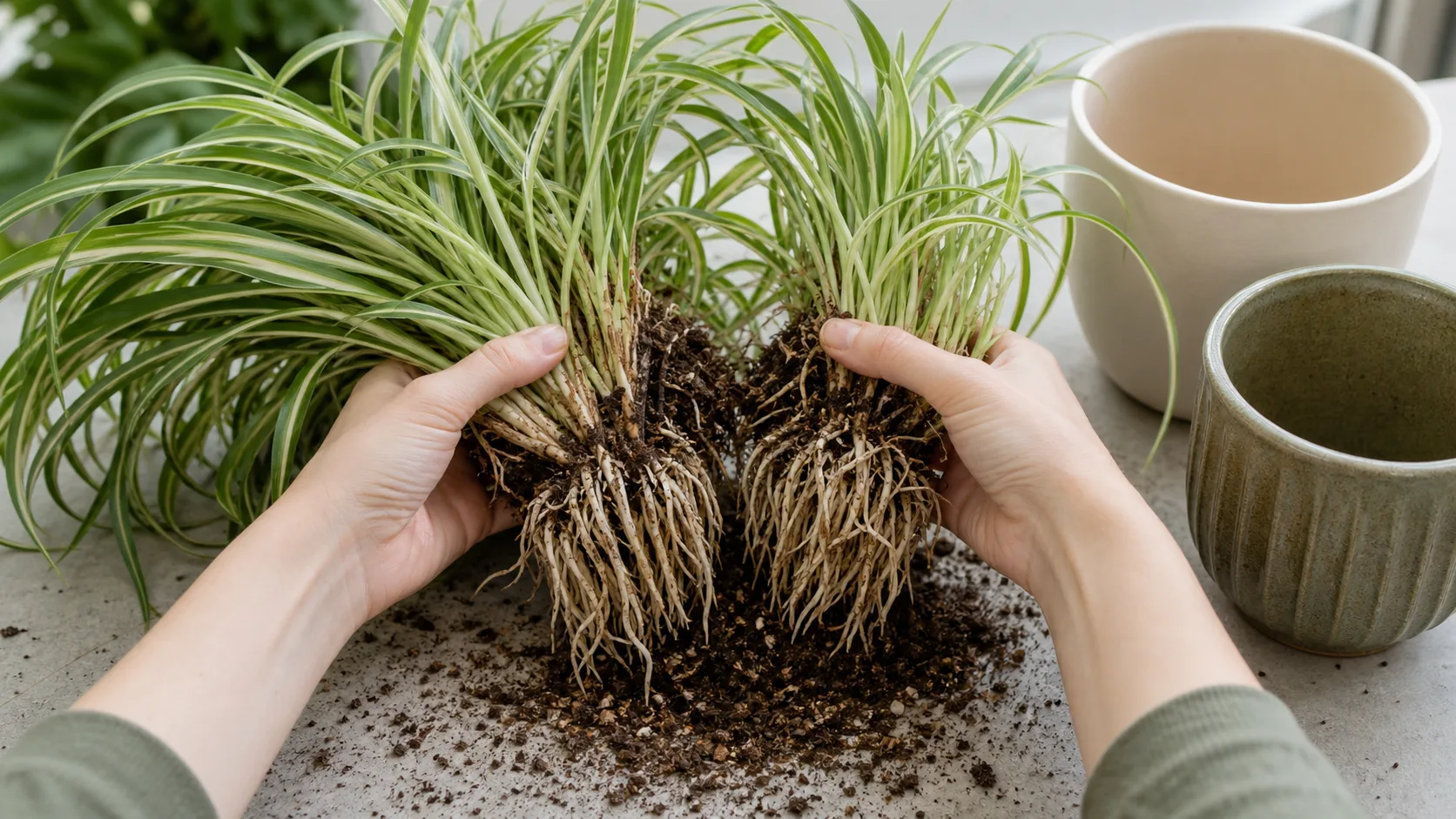
A crowded mother plant can be propagated by separating substantial rooted crowns instead of waiting for individual runners.
Consider division instead of fussing with individual babies.
Clemson Extension says spider plant plantlets root readily when they contact soil. That line matters because it points us toward what actually helps: contact, stability, and moisture balance.
Method 1: Root spider plant babies in soil while attached
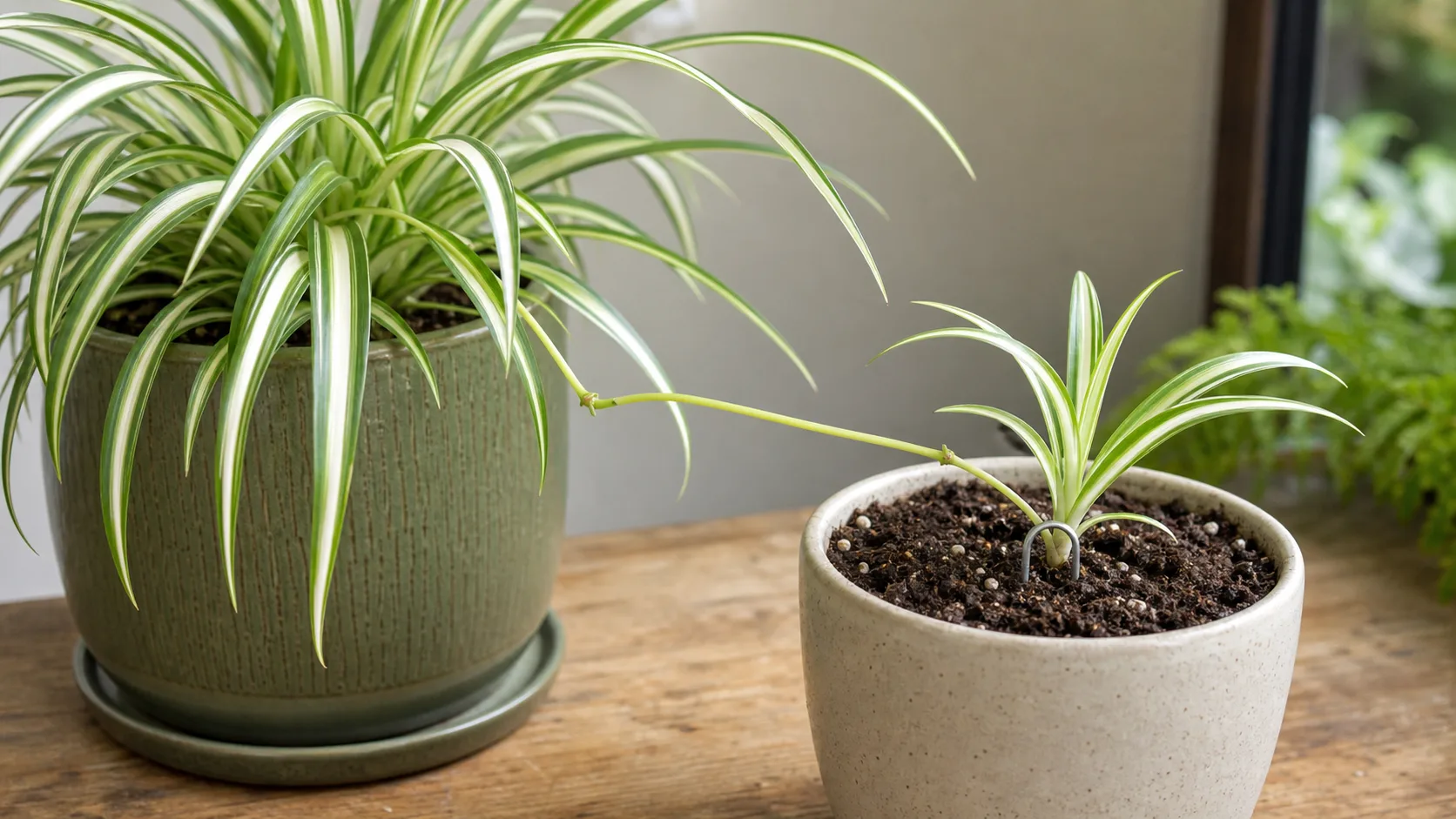
Keep the runner intact and pin only the plantlet base to airy mix until new roots anchor it.
If you want the safest method, start here.
Set a small nursery pot next to the mother plant and fill it with loose, lightly moist mix. Rest the baby so the base touches the soil surface, then pin her down gently with floral wire, a bent paper clip, or a small stone. You want contact, not burial.
Why this works so well:
- the mother plant keeps feeding the baby while roots form
- the baby avoids the stress of an immediate cut
- there is no water-to-soil transition later
NYBG describes this as the most successful home method, and it fits the real-life pain point behind a lot of failed attempts: people cut first, then try to solve weakness after the fact.
How to tell when it has worked
After a few weeks, give the baby a very gentle tug. If she resists, roots are forming. Once she can hold herself in the pot confidently, cut the runner.
Keep the mix lightly moist, not soggy. If the crown sits in wet soil for days, that is where rot starts.
Method 2: Detach and plant directly into soil
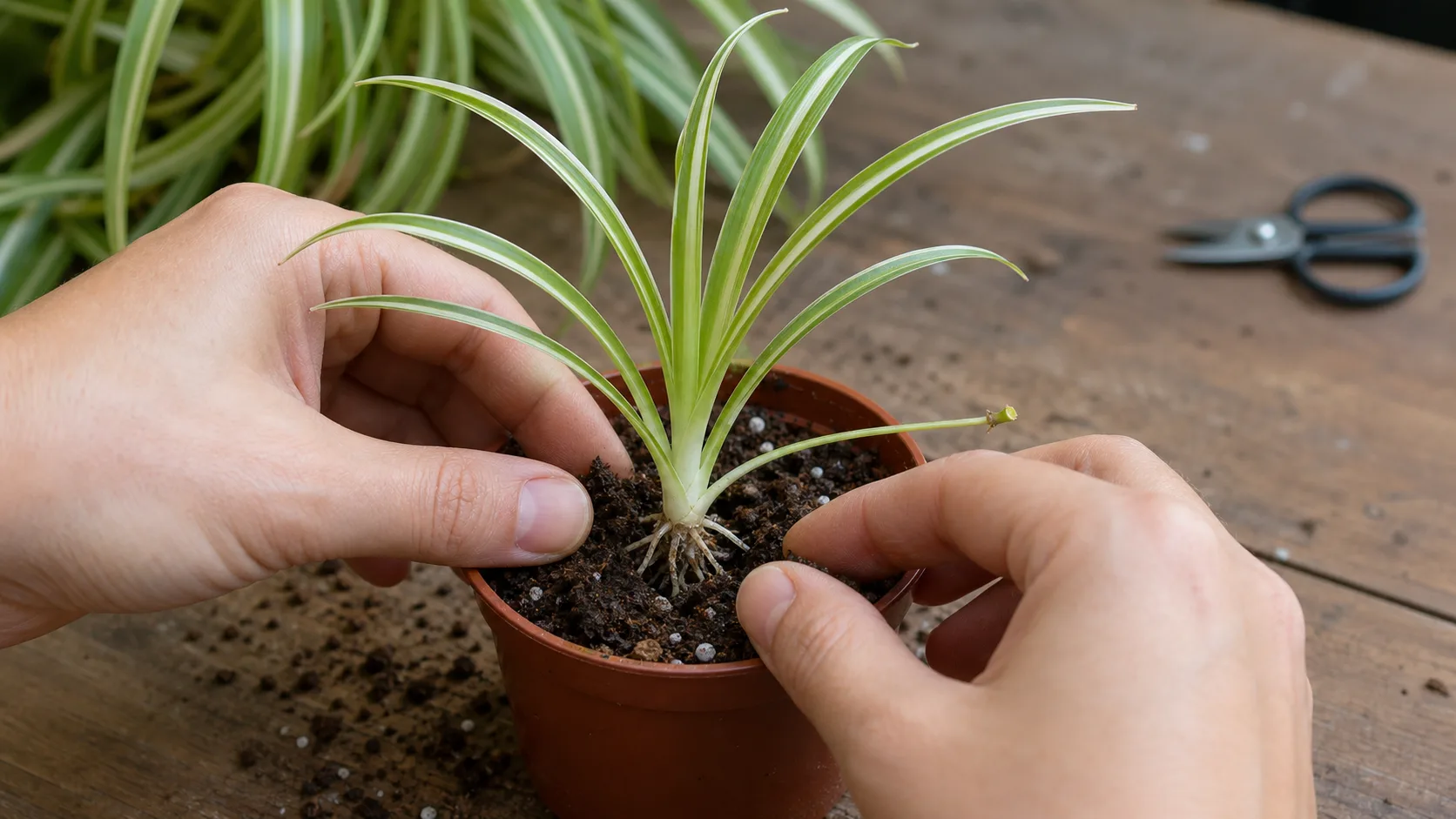
Short existing roots can go directly into a small pot, provided the crown stays above the soil line.
This is the cleanest choice when the baby already has visible root nubs or short roots.
Use a small pot with drainage and a loose indoor mix. Make a shallow hole, settle the base in place, and firm the mix just enough to keep her upright. The crown should sit high, not buried in a wet pocket.
North Carolina Extension notes that spider plant propagates easily by plantlets or division. That is true, but it works best when the plantlet is actually at the right stage.
Soil setup that tends to work best
- small pot, not oversized
- drainage hole required
- airy potting mix
- bright indirect light
- evenly light moisture, never swampy soil
If your mix stays wet forever, that matters more than the label on the bag. If you need a better texture for baby offsets, /blog/posts/best-potting-soil-indoor-plants/ can help you tune the mix.
Method 3: Water rooting for detached babies
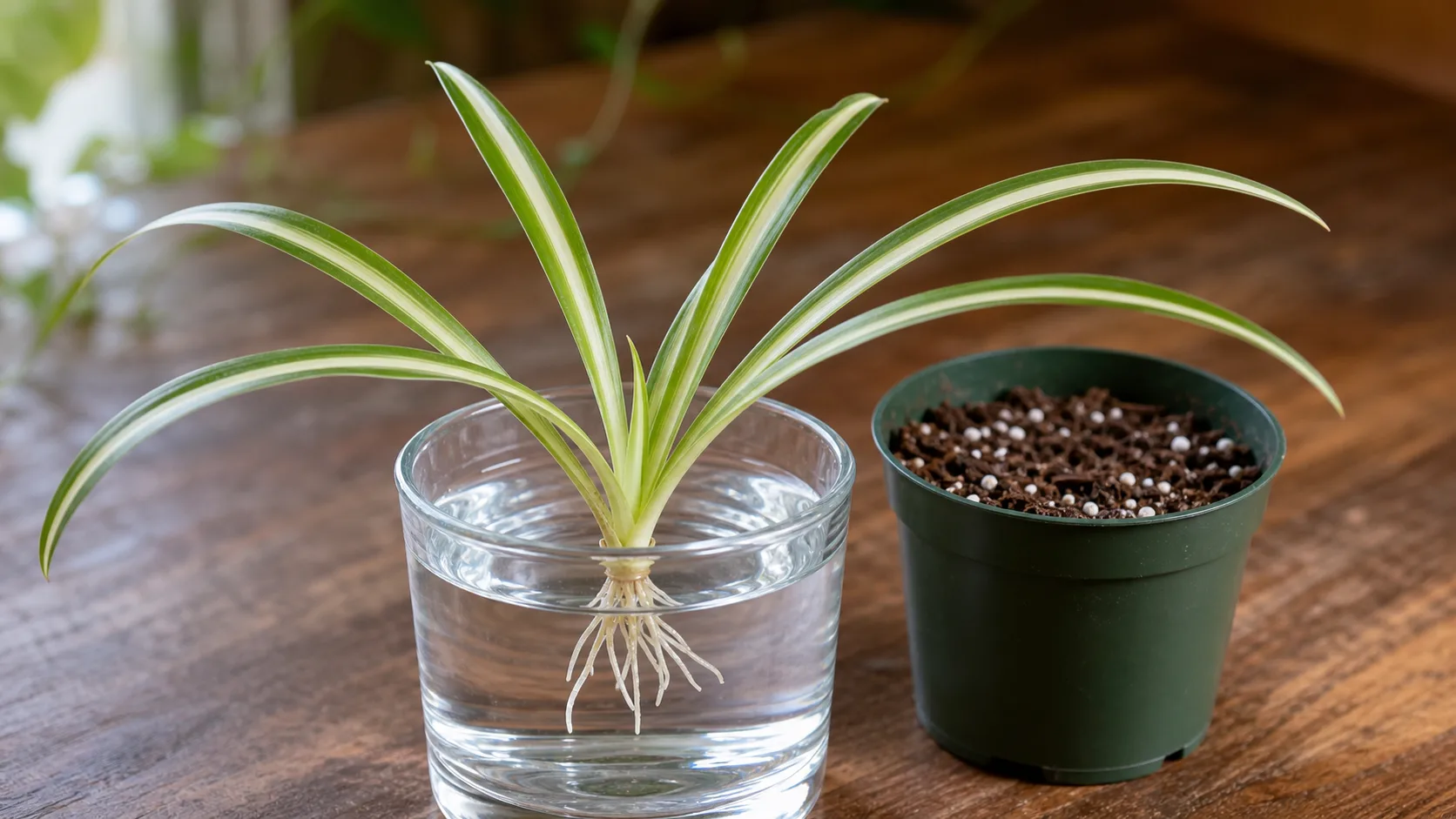
Water should cover the roots, not the crown; transfer once a modest root system can anchor in mix.
Water rooting is not automatically better. It is simply more visible.
This method makes the most sense when:
- the baby had to be detached without roots
- you want visual feedback before potting up
- your past direct-soil attempts ended in collapse or rot
Place only the base in water. Keep the crown and leaves above the waterline. Bright, indirect light is ideal. Refresh the water regularly so it stays clear.
The biggest mistake here is submerging too much of the baby. That often leads to softness at the base before roots have a chance to organize themselves.
When roots reach about 1 inch or more, move the plantlet into soil. Expect a short adjustment period after potting up. Water roots and soil roots are not identical, so a brief pause does not mean you failed.
For the bigger picture on rooting methods, /blog/posts/how-to-propagate-plants/ is a helpful next read.
Attached soil, detached soil, or water: which is actually best?
| Method | Best for | Main advantage | Main risk | Best if you are… |
|---|---|---|---|---|
| Attached soil rooting | Rootless or early-stage babies | Lowest stress | Overwatering the small pot | Risk-averse |
| Detached direct soil | Babies with root nubs or short roots | No transition later | Crown rot if planted too deep | Ready to pot and leave it alone |
| Water rooting | Detached rootless babies | Easy to monitor | Base rot or transplant stall | Wanting visible progress |
| Division | Crowded parent plants | Fast for mature clumps | Root disturbance to the parent | Working with an overgrown plant |
If you are unsure, ask one simple question: can this baby stay stable in soil right now without being buried? If yes, soil is often the smoother path. If no, attached rooting or shallow water rooting is kinder.
The failure patterns most owners run into
This is where the Research Pack added the most value. Search results keep repeating that spider plants are easy. Reader confusion shows the opposite: they are easy once the stage is right.
1. Large baby, no roots, lots of hesitation
This is probably the most common stuck point. The baby looks ready because she is long and leafy, but the base is smooth. In that case, do not let size trick you. If the runner can reach a pot, attached rooting is usually the safer call.
2. Freshly cut baby keeps toppling in soil
That usually means the plantlet was not stable enough yet, the pot is too large, or the base was set too shallow to anchor. Use a smaller pot, tighten contact gently, and do not be afraid to support the baby with a pin or stake for a week or two.
3. Crown gets mushy after planting
This is usually not a mystery disease. It is a setup problem. The crown was buried too deep, the mix stayed too wet, or the pot was too large. Clemson and SDSU both reinforce the same risk pattern here: too much water around a weak root system.
If overwatering is a repeating issue in your home, /blog/posts/overwatered-plant-signs-fixes/ is worth keeping nearby.
4. Water-rooted baby slumps after transfer
That often looks scary, but it is usually transplant adjustment, not instant failure. Keep moisture even, avoid hot direct sun, and do not keep repotting her to “fix” the droop. Give the roots time to switch jobs.
Common mistakes that make spider plant propagation fail
Cutting babies off too early
A big spiderette without rootlets can still be immature. Readiness is about structure, not just size.
Burying the crown
This is one of the fastest ways to lose an otherwise healthy baby. The base should touch the mix, not disappear into it.
Keeping the medium constantly wet
Tiny offsets do not have a mature root system to buffer your watering mistakes. Moist is helpful. Soggy is dangerous.
Potting into a container that is too large
A tiny baby in a big pot sits in moisture too long. Small pots give you better control.
Moving too fast after water rooting
One long root is a start, not always a full support system. A firmer base and multiple roots make the transition easier.
Seasonal note: if your spider plant is not making babies yet
Sometimes the propagation problem starts before propagation.
NC State notes that stolons and plantlets develop under short-day conditions, and Clemson points to fall as the main season when offshoot production tends to increase. NC State also warns that overfertilizing can reduce plantlet formation.
So if your spider plant is healthy but not producing babies, do not assume you are doing something wrong. A recently overfed plant may focus on leaf growth instead of offsets. A plant in long bright summer days may simply not be in her most prolific baby-making phase yet.
That is why patience can be a propagation tactic too. Sometimes the best next step is not cutting. It is waiting for the mother plant to offer a better candidate.
A simple low-risk plan for today
If you want the shortest version, here it is:
- Choose a baby with about six healthy leaves if possible.
- Look for root nubs before deciding on direct soil.
- If there are no roots but the runner reaches a pot, pin the baby into soil while attached.
- If she must be detached rootless, use shallow water rooting.
- Keep moisture gentle and the crown above the wettest zone.
That is the practical difference between hearing “spider plants are easy” and actually having propagation go smoothly.
If you want help remembering when a baby was pinned, watered, or ready to sever, KnowYourPlant can be a calm little backup instead of one more thing to track in your head.
For a related hands-on growing walkthrough, use LECA for Plants: A Beginner’s Semi-Hydro Guide for the setup and follow-up care.
FAQ
When should I cut spider plant babies off the mother plant?
Cut them once they have formed roots while attached, or once they show visible root nubs and enough leaf growth to support themselves. If the baby is still rootless and sparse, waiting usually improves your odds.
Can you propagate spider plant babies without roots?
Yes. The lowest-risk route is often to pin them into soil while they stay attached. If you need to detach first, shallow water rooting is a reasonable backup until roots form.
Is it better to root spider plant babies in water or soil?
Neither method wins every time. Soil is usually smoother for babies that already have rootlets or can stay attached while rooting. Water helps most when a detached baby has no roots yet and you want visible progress.
How long does spider plant propagation take?
It depends on the method and the baby’s maturity. Attached rooting often takes several weeks, and NYBG notes about two months as a common attached-rooting window before severing. Water-rooted babies may show useful roots within a couple of weeks, but pot-up timing still depends on root length and firmness.
Why did my spider plant baby rot in soil?
Usually because the crown was buried too deeply, the mix stayed too wet, or the pot was too large for such a small start. A spiderette needs moisture, but she also needs air around the base.
What counts as enough roots before potting up a water-rooted baby?
A good working benchmark is roots around 1 inch or more, plus more than one root and a firm base. One tiny thread is not always enough for an easy transition.
Can I divide the mother plant instead of rooting babies?
Yes, especially if the plant is mature, crowded, and already has multiple rooted sections. Division can be simpler than managing several tiny offsets.
Sources and methodology
This article was built from the KnowYourPlant Research Pack for spider plant propagation, with a focus on the readiness gap most search results underexplain. We used reader-confusion patterns around rootless babies, timing, and soil-versus-water hesitation as qualitative direction only, then checked the care guidance against the New York Botanical Garden, North Carolina Extension Gardener Plant Toolbox, Clemson Extension, and South Dakota State University Extension.
The core recommendation is simple: match the method to the baby’s stage. That is the piece that reduces rot risk, avoids stalled plantlets, and gives you a clearer next step today.