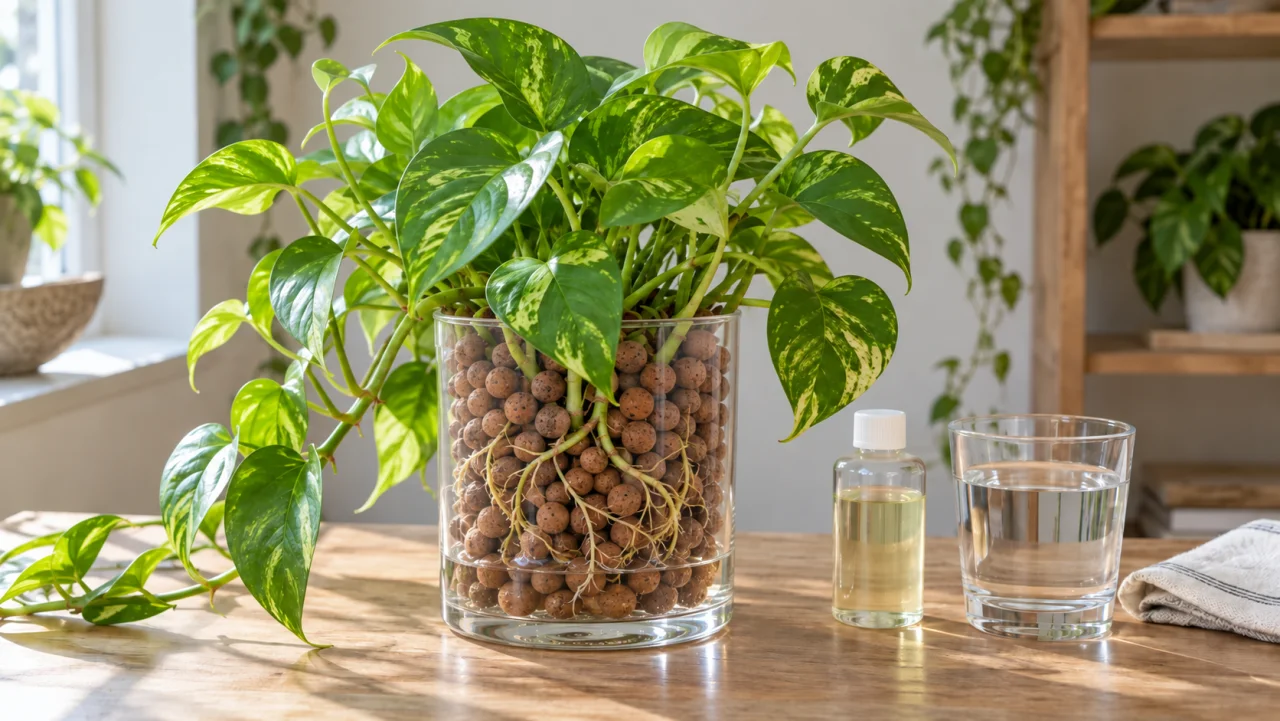
If you’re looking into LECA for plants, you’re probably trying to solve a real problem, not join a plant trend. Maybe soil keeps staying wet too long. Maybe you’re tired of guessing when to water. Maybe fungus gnats keep showing up the second a pot stays damp for a few extra days.
Here’s the clearest beginner truth: LECA is not better than soil. It’s a different system that gives you more control, but also asks for more active care. The clay balls support the roots, while water and nutrients do the actual feeding.
That difference is exactly where many beginner guides go fuzzy. They explain what LECA stands for, then jump straight to rinsing clay pebbles. What they often skip is the decision that matters most first: is this plant, in your home, with your routine, actually a good candidate for semi-hydro?
What most LECA guides miss
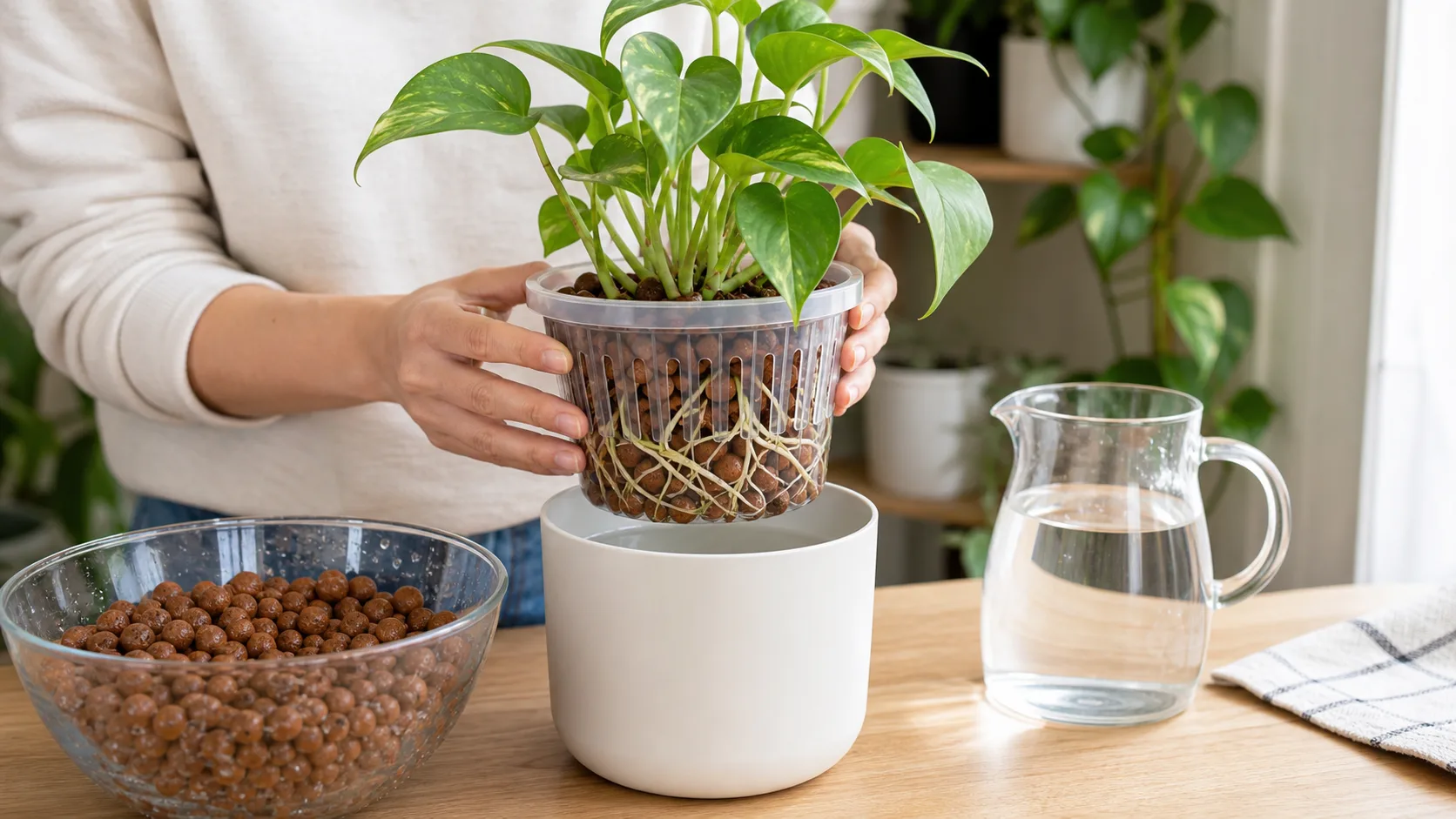
A useful LECA setup keeps healthy roots visible, supported, and above a modest reservoir rather than fully submerged.
The most common misdiagnosis is thinking LECA fails because the plant drops a leaf after conversion. Sometimes that is just transition stress. The bigger risk is quieter: old soil trapped around the roots, a reservoir that’s too high, or stale nutrient water sitting long enough to turn the setup swampy.
Generic advice like “just switch her to LECA and watch the roots” is incomplete because it doesn’t help you separate normal adjustment from true root decline.
Your first practical check is simple: lift the inner pot and smell the root zone every few days during the first two weeks. A healthy transition can look a little messy, but it should not smell sour. If roots stay firm and the water stays fairly clear, you usually have time. If roots go mushy and the container smells off, act early.
What LECA actually is, and what it is not
LECA stands for lightweight expanded clay aggregate. In houseplant care, it’s usually used in a semi-hydro setup where roots grow among porous clay balls and pull from a small water reservoir below.
The National Agricultural Library defines hydroponics as “the technique of growing plants using a water-based nutrient solution rather than soil” and notes that it can include an aggregate growing media. That is the right mental model here: LECA is not plant food, and it is not potting mix. It is structural support inside a water-and-nutrient system.
That helps explain both the pros and the tradeoffs:
- you can see roots and water levels more easily
- moisture is often more consistent than in soil
- there is less decaying organic material around the roots
- but you now manage nutrients, flushing, and reservoir hygiene yourself
As the USDA material summarized by the National Agricultural Library puts it, closed hydroponic systems require nutrient management techniques. In plain English: LECA is not a set-it-and-forget-it shortcut.
Is LECA a fit for your plant and your routine?
Before you convert anything, score your situation honestly.
Good beginner experiment
LECA is often worth trying when:
- the plant is healthy right now
- the roots are firm and not already stressed
- you like checking water levels and roots
- you’re willing to use nutrients consistently
- the plant handles repotting fairly well
Aroids usually land here, especially plants like pothos, heartleaf philodendron, syngonium, and some monsteras. If you want plant-specific care before you experiment, our guides to golden pothos, heartleaf philodendron, and Monstera deliciosa can help you judge whether she’s sturdy enough for the move.
Better kept in soil unless you enjoy maintenance
LECA may be possible, but not automatically worth it, when:
- the plant is already happy in soil
- your real goal is lower effort, not more control
- you forget feeding routines easily
- you tend to top off containers without cleaning them
If your plant is thriving and your routine is inconsistent, a better potting mix may solve more than a full system change. In that case, start with best potting soil for indoor plants.
Not a good conversion candidate right now
Hold off if:
- the plant is drooping, yellowing, or pest-stressed
- roots are already soft or damaged
- it’s winter and growth is very slow in your home
- you’re trying to rescue a plant and learn LECA at the same time
That last one catches a lot of us. When a plant is already struggling, changing everything at once makes it much harder to tell what actually helped. If the roots are already in trouble, work through the full root rot treatment guide before you ask a plant to adapt to a new system.
A simple candidate screen before you buy anything
If you want one quick framework, ask these five questions:
- Are the roots healthy today? If no, don’t convert yet.
- Can I check a reservoir every few days? If no, soil may be kinder.
- Will I use nutrients on purpose, not occasionally? If no, growth will suffer.
- Does this plant usually bounce back from repotting? If no, think twice.
- Do I want an experiment, or do I want the least work possible? LECA is better for the first goal than the second.
If you answered yes to four or five, LECA is a reasonable test. Two or three means maybe. Zero or one means skip it for now.
How to use LECA for plants without creating root rot
This is the part most beginners actually need.
1. Start with a healthy plant
A healthy plant has energy to replace some old soil roots with water-adapted roots. A weak plant often does not.
2. Clean the roots more thoroughly than feels necessary
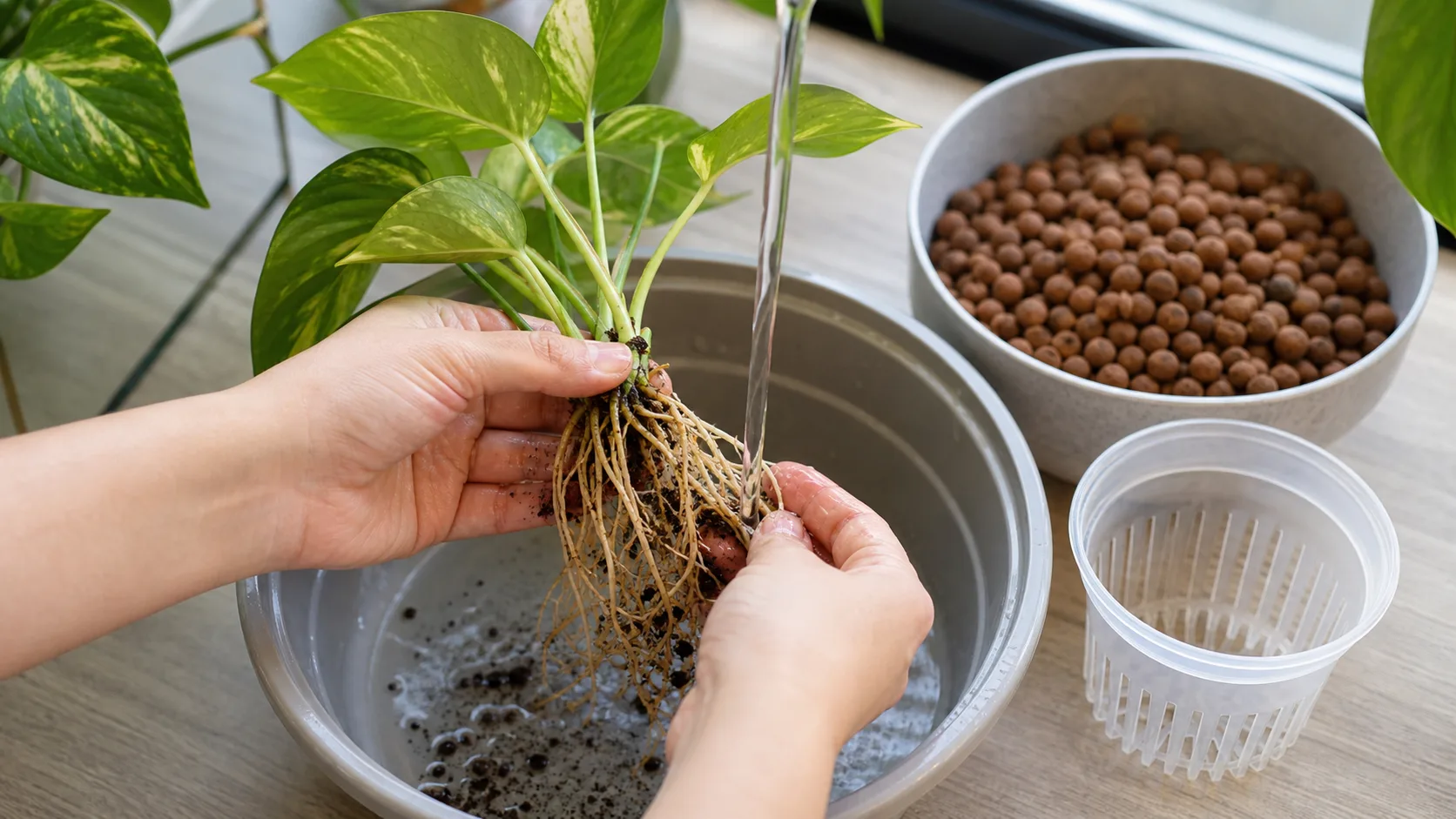
Remove trapped organic mix gently, especially near the crown and between thicker roots, before adding clean LECA.
Remove the plant from soil and rinse the roots gently with lukewarm water. Keep going until you’re not finding packed potting mix near the crown or hidden between thicker roots. If you want the mechanical unpotting steps before you convert, the full how to repot a plant guide covers how to ease a root ball out and inspect it without tearing healthy roots.
Leftover organic matter is one of the easiest ways to create rot in semi-hydro. If you want a separate crash course on early rot signs, our monstera root rot guide walks through the texture and smell cues to watch for.
3. Rinse the LECA well
Fresh LECA often carries dust. Rinse until the water runs much clearer. You do not need to make this ceremonial, just clean enough that you’re not starting with muddy residue in the container.
4. Use a small reservoir at first
For beginners, a shallow reservoir is safer than a deep one. You want moisture access, not submerged roots sitting in stale water.
5. Feed lightly, but actually feed
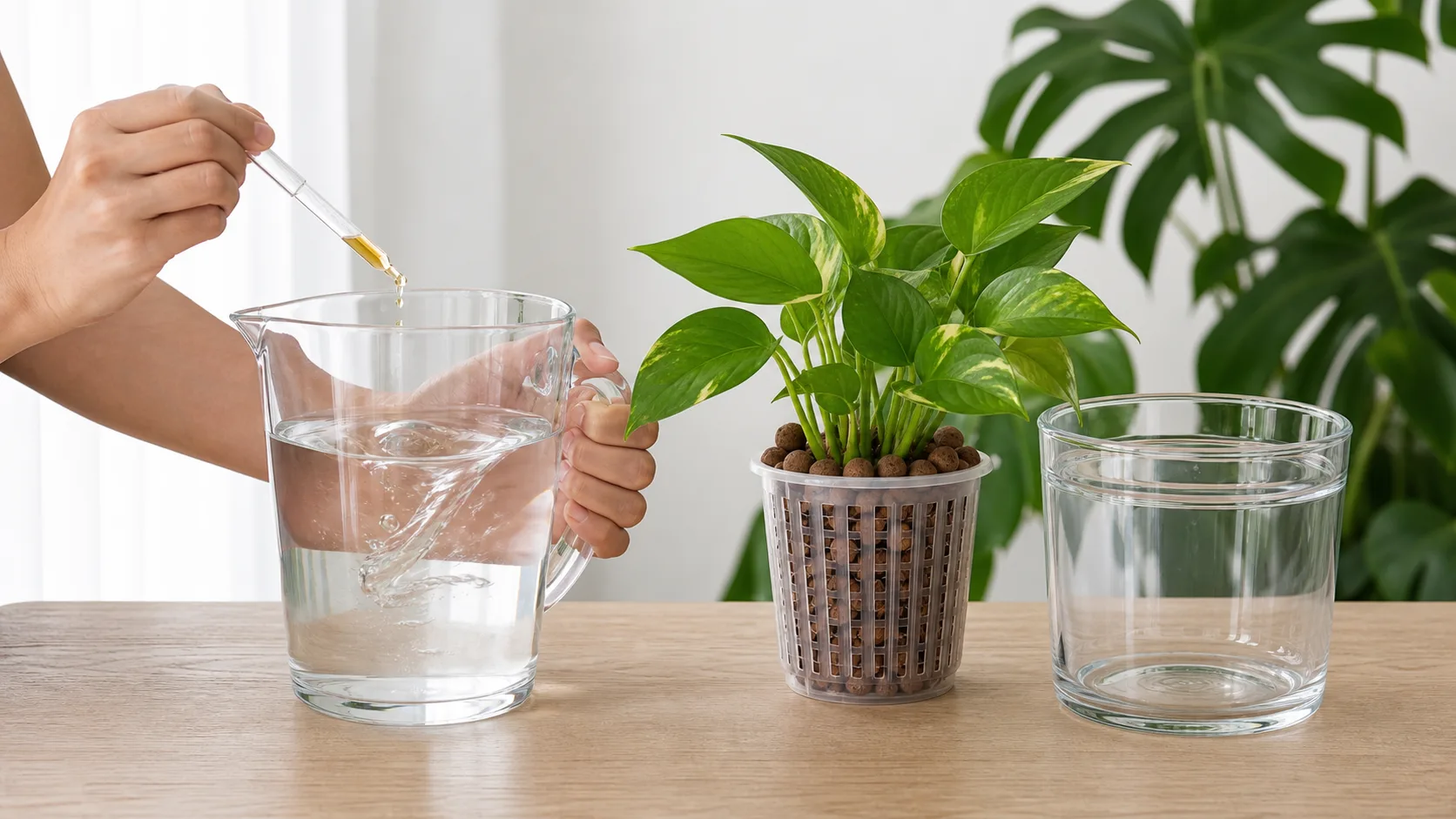
Because clay pebbles are inert, use a gentle complete nutrient solution after the initial transition settles.
Because LECA is inert, plain water alone is not a long-term plan. Once the plant settles, use a dilute nutrient solution consistently instead of giving random stronger doses.
Set the reservoir by root position, not a magic line
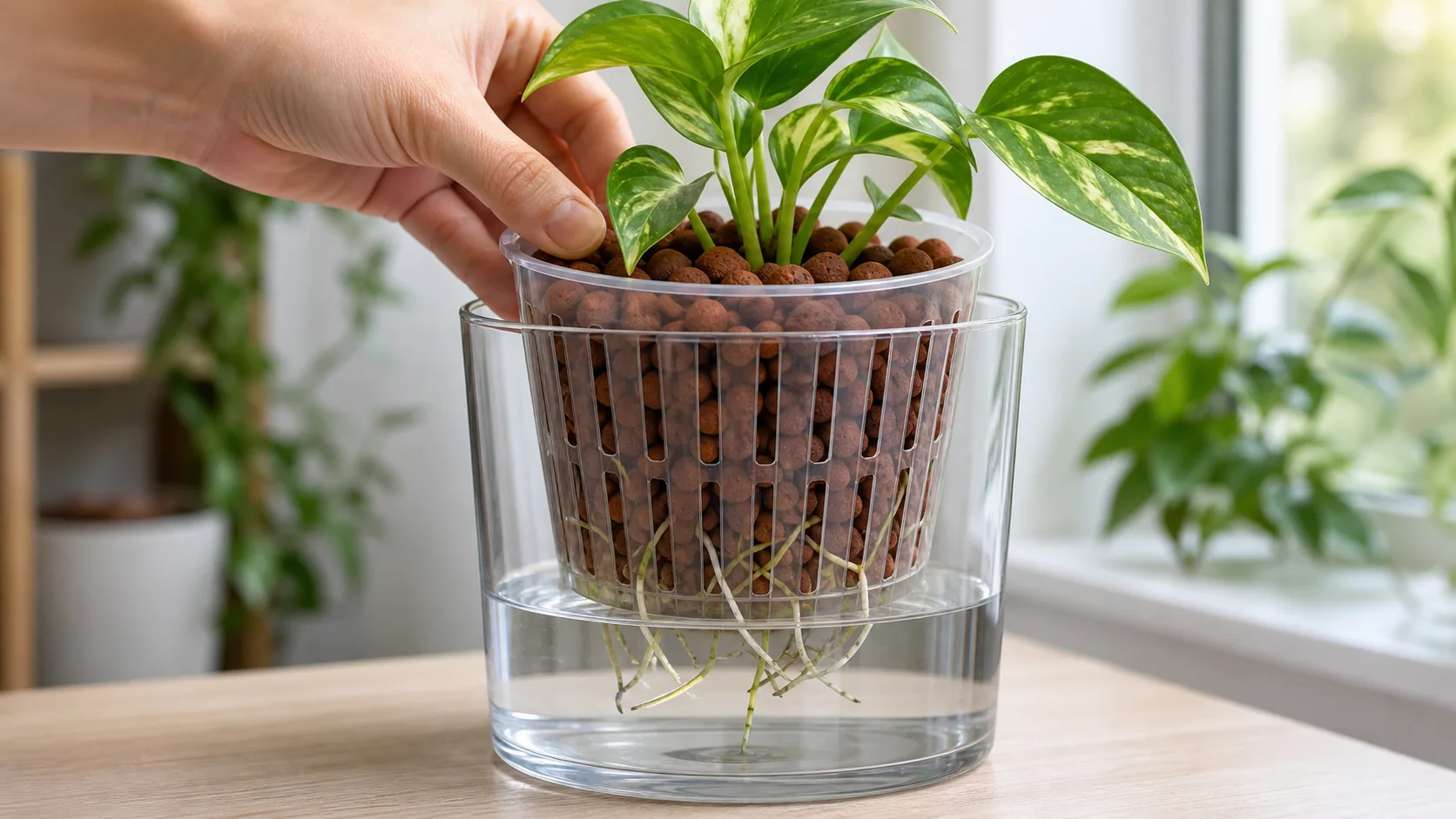
Set the waterline from the actual root position, leaving most roots and the crown above the shallow reservoir.
The safest beginner setup is an inner pot with drainage or slits inside a watertight outer container. Add enough nutrient water to create a shallow reservoir below most of the established root mass. The LECA can wick moisture upward, while the upper roots still have access to air.
This is why a universal instruction like “fill it one-third of the way” can mislead you. One-third of a short cachepot may reach the roots neatly. One-third of a tall jar may drown the crown. Look through the container or lift the inner pot and ask: Is the water reaching the lower LECA without submerging the crown and most of the old soil-grown roots?
During the first two weeks, check every few days. If the reservoir disappears quickly but the roots stay firm, refill to the same modest level. If water sits unchanged, smells stale, or darkens, empty it, rinse the container, and lower the next fill.
Nutrients, pH, and flushing without turning care into chemistry class
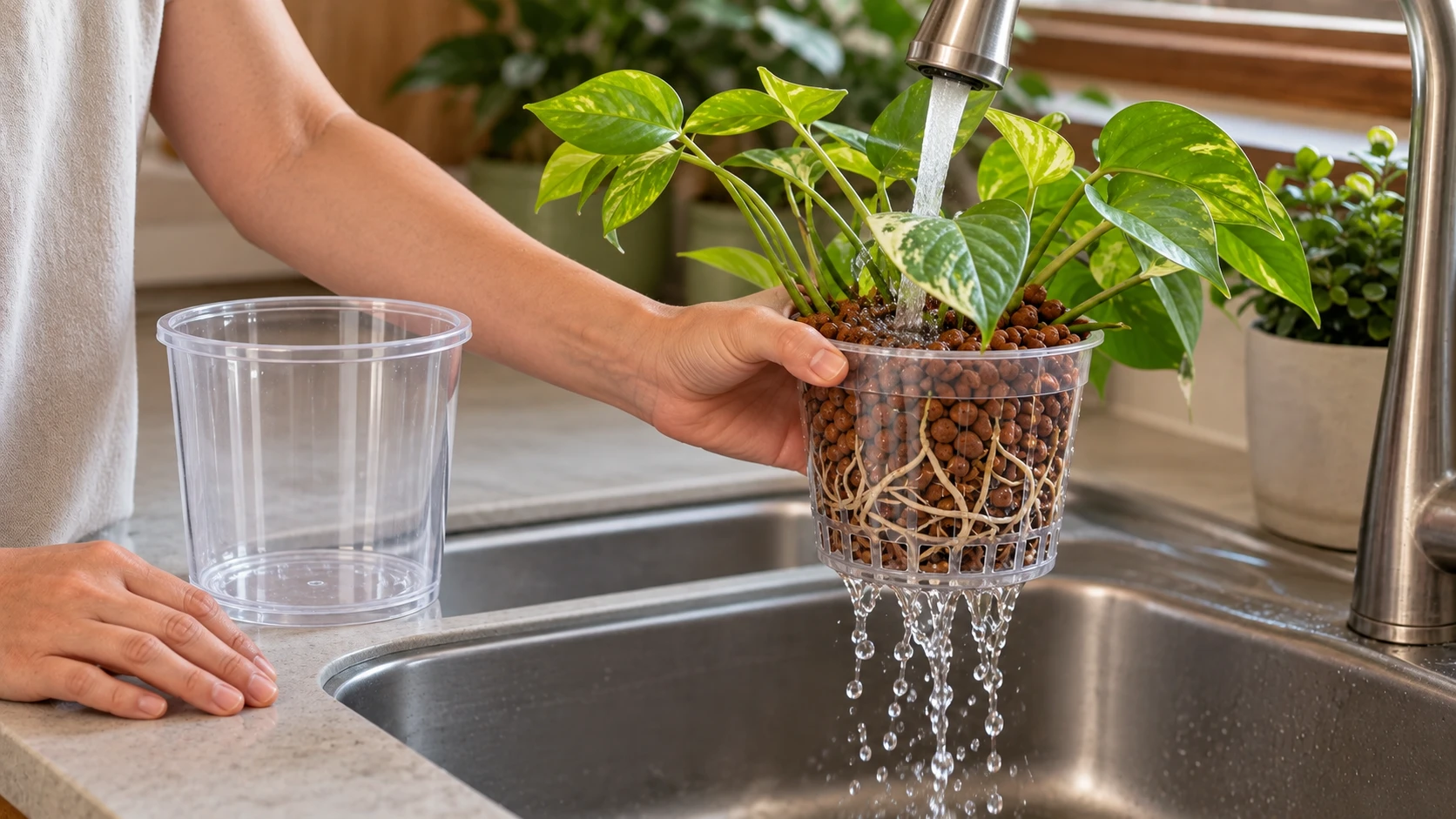
Flush the inner pot and clean the outer reservoir instead of repeatedly topping off stale solution.
LECA does not contain compost or slow-release food. Once the initial transition has settled, use a complete hydroponic or semi-hydro nutrient according to its label, beginning at the gentle end of the recommended range. A weak consistent solution is safer than occasional strong feeding.
Water chemistry varies between homes, so there is no honest universal dose or pH correction. If your plant grows steadily, roots look firm, and mineral crust does not build quickly, avoid chasing every number. If growth stalls despite adequate light, new leaves emerge unusually pale, or white residue collects on the clay, then checking the nutrient label, water quality, and pH becomes useful. Change one variable at a time.
Flushing is simpler than it sounds:
- remove the inner pot from the reservoir
- run clean water through the LECA until loose residue and old solution drain away
- wash the outer container instead of pouring new solution over stale water
- return the plant and add a fresh, shallow reservoir
Do this whenever the water smells off, residue is visible, or algae and debris are building up. A routine monthly reset is a reasonable starting reminder, but the container is the real schedule. A warm, bright setup may need cleaning sooner than a cool, shaded one.
Symptom diagnosis card: normal transition or a real problem?
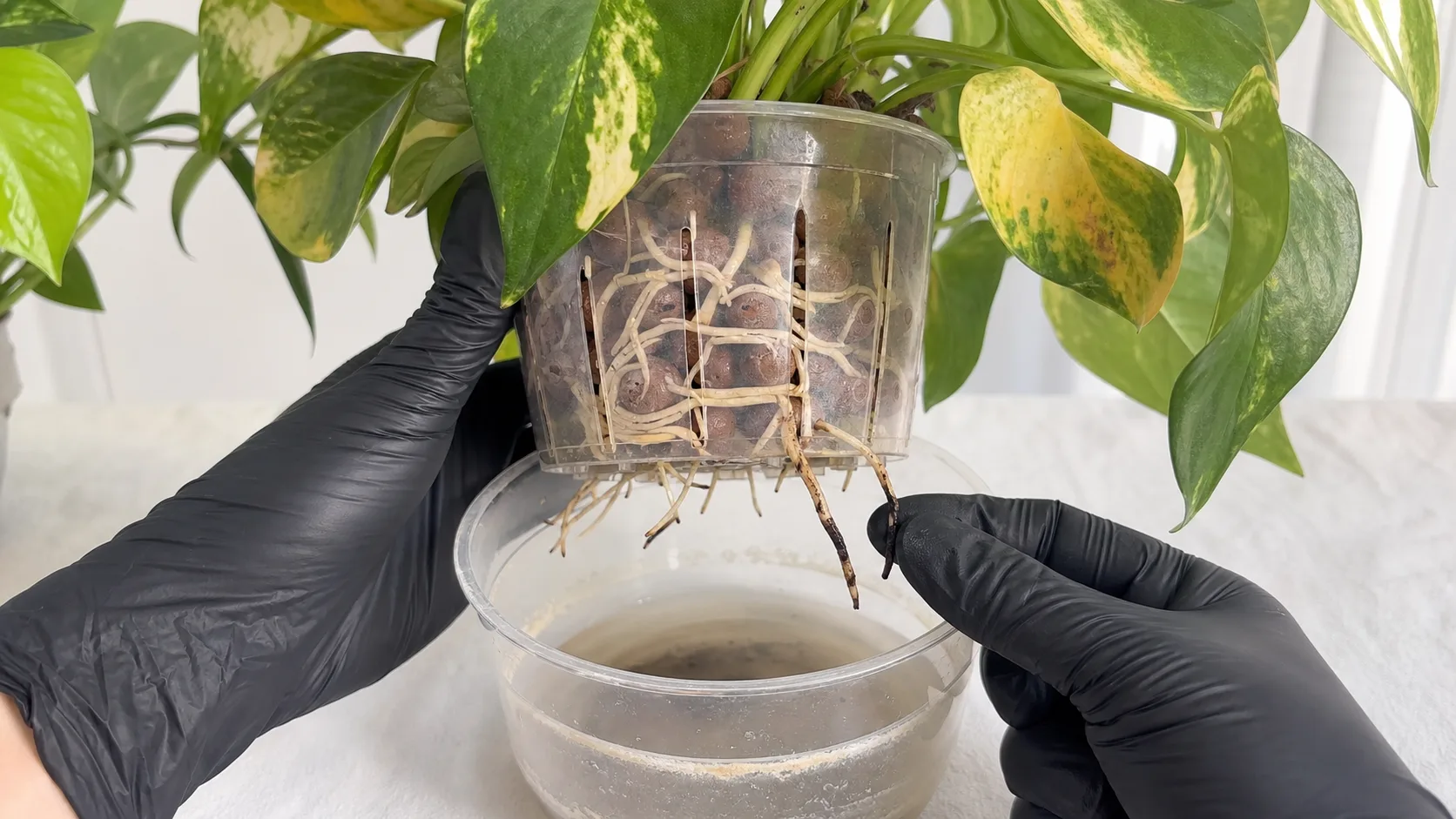
Firm pale roots and neutral-smelling water suggest stability; soft dark roots and sour water call for early intervention.
| What you notice | More likely meaning | What to do next |
|---|---|---|
| One older leaf yellows, plant otherwise stable | Normal transition stress | Wait, monitor roots, don’t keep changing things |
| Water turns murky and roots smell sour | Stagnation or rot risk | Empty, rinse, trim mushy roots, lower reservoir |
| Leaves curl but roots stay firm | Plant not accessing moisture well yet | Check water level and root contact |
| Growth pauses for a couple of weeks | Common adjustment period | Stay consistent, avoid repotting again |
| Several leaves collapse and roots turn soft | Conversion is failing | Remove dead roots, reassess whether LECA is worth continuing |
The maintenance side, with the numbers most people skip
This is where semi-hydro becomes real care instead of pretty containers.
UC IPM notes that fungus gnat adults are commonly about 1/16 to 1/8 inch long, that eggs can hatch in about 3 days at 75°F, larvae take about 10 days to develop, and a full generation can happen in about 17 days. That matters because many plant owners move to LECA hoping to escape constantly moist, organic media. You may reduce one major fungus gnat breeding environment, but you are not escaping moisture management itself.
UC IPM puts it plainly: “Because fungus gnats thrive in moist conditions, avoid overwatering houseplants and provide good drainage.”
University of Maryland Extension makes the same point from another angle, noting that larvae breed in moist soil rich in organic matter and that overwatering supports the fungi they feed on. So yes, LECA can help if soggy organic mix has been part of the problem, especially alongside guidance like our fungus gnat guide. But if you keep a high reservoir, never flush, and let debris build up, you’re still creating a root-health issue, just in a different format.
A beginner decision tree for the first two weeks
Use this instead of reacting to every yellow leaf.
- Plant looks mostly stable, roots are firm, and water smells neutral: stay the course
- Plant is thirsty-looking, but roots are not mushy: check whether the roots are actually reaching moisture before adding more changes
- Container smells sour or roots feel soft: clean the setup and reduce the reservoir immediately
- Plant keeps declining after the first adjustment window with no new healthy roots: LECA may not be the right fit for this plant or this moment
The goal is not perfection. The goal is catching the wrong pattern early.
Common beginner mistakes with plants in LECA
These are the mistakes that usually create the “LECA was a disaster” story:
- converting a stressed plant and blaming the medium
- leaving clumps of soil hidden in the roots
- keeping the reservoir too high from day one
- feeding never or feeding far too strong
- endlessly topping off old water instead of refreshing it
- treating every leaf yellowing event like proof the system failed
A lot of beginner frustration starts because LECA looks cleaner than it behaves. The setup is neat. The care is still active.
Seasonal note
Spring and early summer are usually the easiest times to convert because the plant is naturally ready to grow new roots. In winter, recovery can be slower and less forgiving, especially in cool rooms with short days.
If your plant is already semi-dormant, waiting a bit is often the kinder move.
So, is LECA worth it?
LECA is worth trying if you want visibility, consistency, and system control. It is not worth forcing if what you really want is a forgiving plant you can mostly leave alone.
The best beginner path is usually this:
- pick one healthy, resilient plant
- clean the roots thoroughly
- start with a shallow reservoir
- feed lightly and consistently
- watch root texture and smell more than one random leaf
That gives you a fair test without turning your whole shelf into an experiment at once.
If remembering reservoir checks, nutrient refreshes, and seasonal adjustments is the hard part, download KnowYourPlant for personalized plant care reminders that fit the plant you actually converted.
FAQ
Is LECA better than soil for houseplants?
Not universally. LECA gives you more control over moisture and makes roots easier to inspect, but it also asks you to manage nutrients and reservoir hygiene. If your plant is already happy in soil and your routine is simple, soil may still be the better fit.
Which plants do best in LECA?
Many growers start with pothos, philodendrons, syngoniums, hoyas, and some monsteras because they often adapt reasonably well to steady moisture and airy root space. Even then, plant health at the time of conversion matters more than a generic “LECA-friendly” label.
How much water should sit in the reservoir?
For beginners, less is usually safer. You want roots to have access to moisture, not to sit deeply submerged in stale water. A modest reservoir helps you avoid the swampy conditions that often cause early failures.
Do you need fertilizer in LECA?
Yes. LECA is inert, which means it holds the plant up but does not feed her. After the transition period, use a dilute nutrient solution consistently. Plain water alone is rarely enough for long-term growth.
Why are leaves yellowing after switching to LECA?
One older yellow leaf can be normal transition stress. What matters is the pattern. If roots stay firm and the plant otherwise stabilizes, give her time. If the water smells bad, roots go mushy, or decline keeps spreading, the setup needs intervention.
Can LECA help with fungus gnats?
It can help reduce one common breeding environment because there is less moist organic material than in typical potting soil. But LECA does not solve overwatering habits by itself. If water stays stagnant or plant debris builds up, you’re still creating conditions that can stress the plant.
Should I move all my plants to LECA at once?
No, and this is one of the easiest ways to get overwhelmed. Start with one healthy plant that tolerates repotting well. Learn the rhythm first, then decide whether you actually like the system before converting more.
Methodology and sources
This guide was built as a decision-first article, not a generic LECA explainer. We focused on the gap many search results leave open: deciding whether semi-hydro is actually a good fit before you convert a healthy plant. Factual framing was checked against the National Agricultural Library, UC IPM, and University of Maryland Extension, and community-style pain points were used only as directional beginner confusion, not as invented quotes or popularity claims.