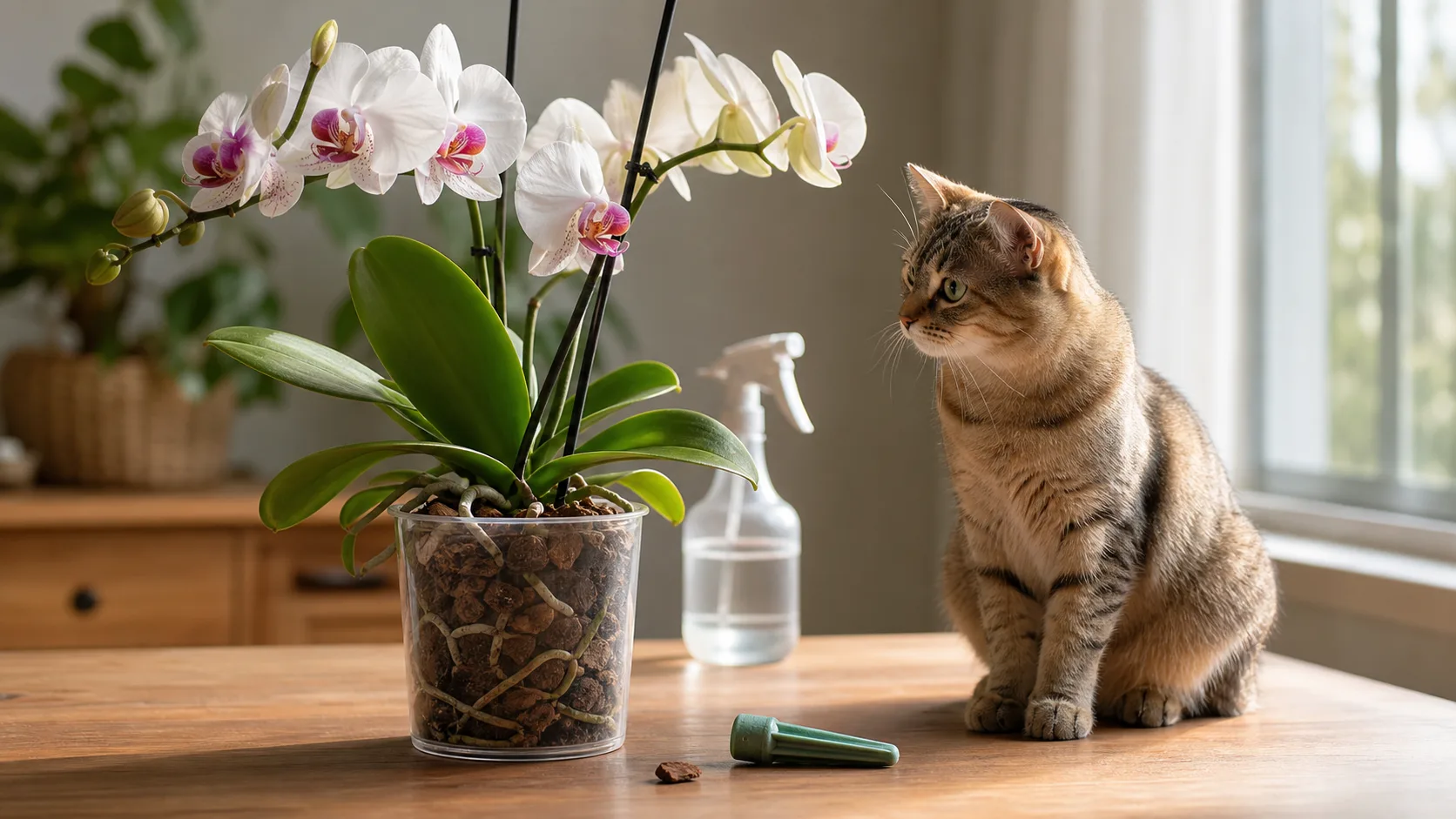
Orchid roots in chunky bark potting mix showing healthy silver-green color

Orchid Soil Guide: Bark, Moss and the Best Potting Mix

If you’ve ever brought an orchid home and wondered what on earth it was sitting in, you’re not alone. That mix of bark chunks, moss, and sometimes what looks like nothing but a clear plastic cup? That’s not a mistake. Orchid soil is really a drainage and airflow system, not a growing medium in the traditional sense. Orchids don’t live in soil in the wild. They cling to tree bark, and their roots expect light, air, and fast drying between waterings. ...

 · 22 min · 
Houseplant leaf with visible spots and discoloration showing common disease symptoms

Houseplant Diseases: Identify Spots, Rot, Mildew and Wilting

Something is wrong with your plant and the leaves are telling you, but they’re not speaking plainly. Yellow patches, brown spots, white dust, a stem that suddenly feels soft. You searched “houseplant diseases” hoping for a clear answer and instead found a dozen articles listing every disease in alphabetical order, none of which quite match what’s in front of you. Here’s a more useful starting point: a houseplant disease is any infectious or environmental condition that damages plant tissue in a repeating pattern – but most indoor plant problems are not infectious at all. They look like disease. They feel like disease. But they’re actually stress responses to watering habits, light levels, or drainage problems that mimic the real thing exactly. ...

 · 17 min · 
Phalaenopsis orchid after blooming, with bare spike and healthy green leaves

Orchid Care After Flowering: What to Do When Blooms Fall Off

What to Do After Your Orchid Flowers Fall Off One day your orchid is covered in blooms. A few weeks later the last flower drops, and you are standing in front of a bare green stick wondering whether you killed it or whether it is going to be fine. The honest answer: it is almost certainly fine. But what you do in the next few months is what separates orchids that rebloom reliably from orchids that sit on a windowsill for years – looking completely healthy, never flowering again. ...

 · 20 min · 
Monstera leaf showing fenestration holes and splits along the midrib

Why Doesn't My Monstera Have Holes? How to Get Fenestration

You got a monstera for those dramatic, Swiss-cheese leaves, and yours keeps pumping out big, smooth, completely solid ovals. The plant looks healthy. It’s growing. But month after month, still no holes, no splits, nothing even close to the photos you saved before buying it. The confusing part is that a healthy, growing monstera with no holes isn’t obviously broken. So you’re left wondering whether to change the light, repot it, buy a moss pole, start fertilizing, or just wait. And most of what you find online tells you to “give it more light” without explaining why, or whether that’s even your actual problem. ...

 · 22 min · 
Orchid in a clear pot showing roots next to ice cubes

Orchid Ice Cube Watering: Helpful Shortcut or Bad Idea?

You probably saw it on the care tag that came with your orchid: three ice cubes, once a week. It sounds almost too tidy. And if you have spent any time in orchid forums since then, you have discovered it is also controversial enough to start arguments. “Ice cubes are safe.” “Ice cubes damage roots.” Both camps sound certain. Both are talking past each other. The reason for that divide is not that one group is right and the other is wrong. It is that the ice cube method has a specific scope, and that scope almost never gets explained clearly. Whether it helps or harms depends less on water temperature than on the orchid genus, the potting medium, the condition of the roots, and whether water is actually reaching the right places. ...

 · 19 min · 
Zebra haworthia and jade plant on a bright windowsill indoors

Indoor Succulent Plants: Best Types and Care Rules

You brought home a succulent because every article said it was the easiest houseplant you could own. Three months later the stem is soft, or the leaves have gone pale and stretched themselves toward the window in a hopeful, spindly lean. You’ve been careful. You haven’t overwatered. And yet. The issue is almost never your watering. It’s that most succulent care guides skip over the single decision that determines whether an indoor succulent stays healthy or slowly declines: whether you chose the right species for the light you actually have. ...

 · 19 min · 
Hands holding clean scissors about to make a pruning cut on a monstera vine near a node

How to Prune Monstera: Where to Cut and What to Do With Cuttings

You decide your monstera needs a trim. You get the scissors. You stand there. And then the plant just looks back at you, and you realize you have no idea which stem to cut, let alone where on that stem the cut should go. That specific moment of freezing is what this guide is for. And if you have already made a cut and now have a stem sitting in a glass of water doing nothing for the past two months, this guide explains why that happens – and what a viable cutting actually needs before you clip anything else. ...

 · 25 min · 
Close-up of potting soil surface showing tiny mites in a houseplant pot

Soil Mites in Houseplants: Harmless Helpers or a Problem?

You move a pot to water it, disturb the top layer of soil, and suddenly notice tiny white or orange specks scrambling in every direction. Your stomach drops. Are those bugs? Do you need to act? Before you reach for a spray bottle, here is the single most useful thing to know: soil mites are not automatically a problem. They are a natural part of living soil. In the garden, nobody panics when they turn a shovelful of earth and find mites working through the decomposing matter. Indoors, though, any moving creature near a plant triggers the urge to treat first and ask questions later. ...

 · 19 min · 
Healthy succulents in terracotta pots on a bright windowsill

How to Care for Succulents Indoors: The No-Kill Guide

The most common indoor succulent story is painfully predictable: you put it near a window, watered it the same way you water everything else, and watched it slowly go soft and die anyway. If that has happened to you, the problem was probably not neglect. It was generic advice applied to conditions that do not behave like a desert. This guide is built for the apartment version of succulent care, where light is weaker, nursery soil stays wet too long, and decorative pots quietly trap moisture. The goal is simple: help you tell the difference between a thirsty plant, a rotting plant, a light-starved plant, and a plant that just needs you to stop fussing with it. ...

 · 15 min · 
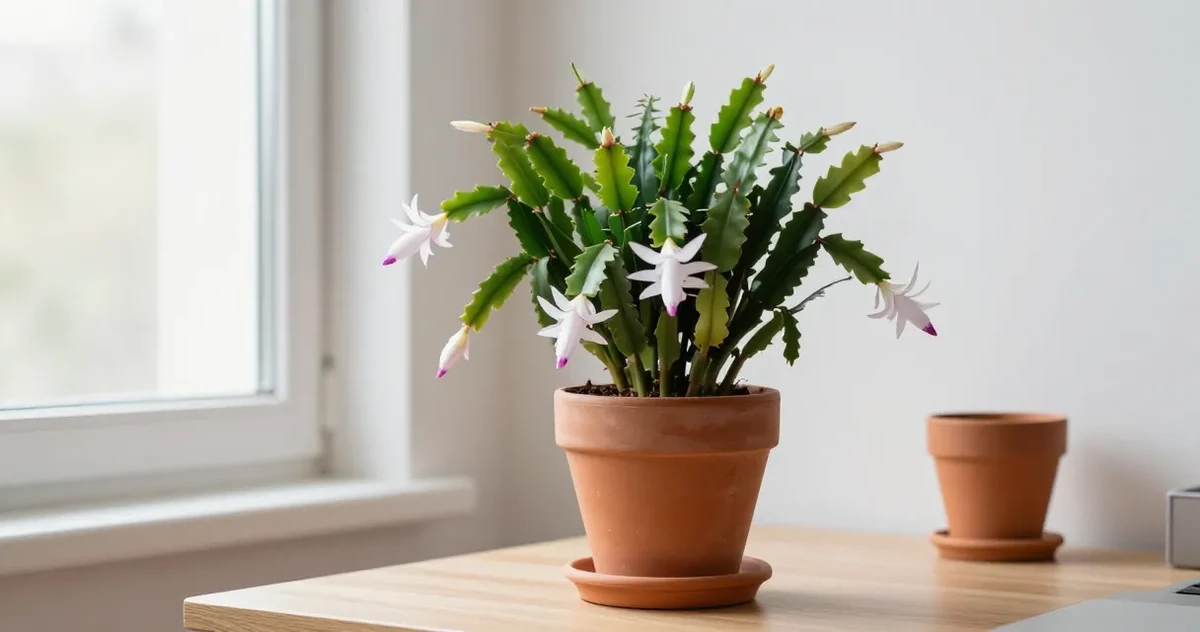
Small green plants arranged on a wooden office desk near a laptop

Best Office Plants: Low Maintenance Options for Your Desk

By KnowYourPlant editorial team. Last updated June 18, 2026. How this guide was evaluated: We compared the most common office-plant recommendations against four real desk conditions, near-window desks, fluorescent-only cubicles, weekend-dark offices, and shared workspaces where drainage and pest risk matter. We used University of Minnesota, University of Maryland, and Penn State Extension guidance for lighting and watering, then cross-checked the shortlist against recurring office-plant frustrations surfaced in public forum snippets. This is editorial evaluation, not controlled greenhouse testing. ...

 · 27 min ·