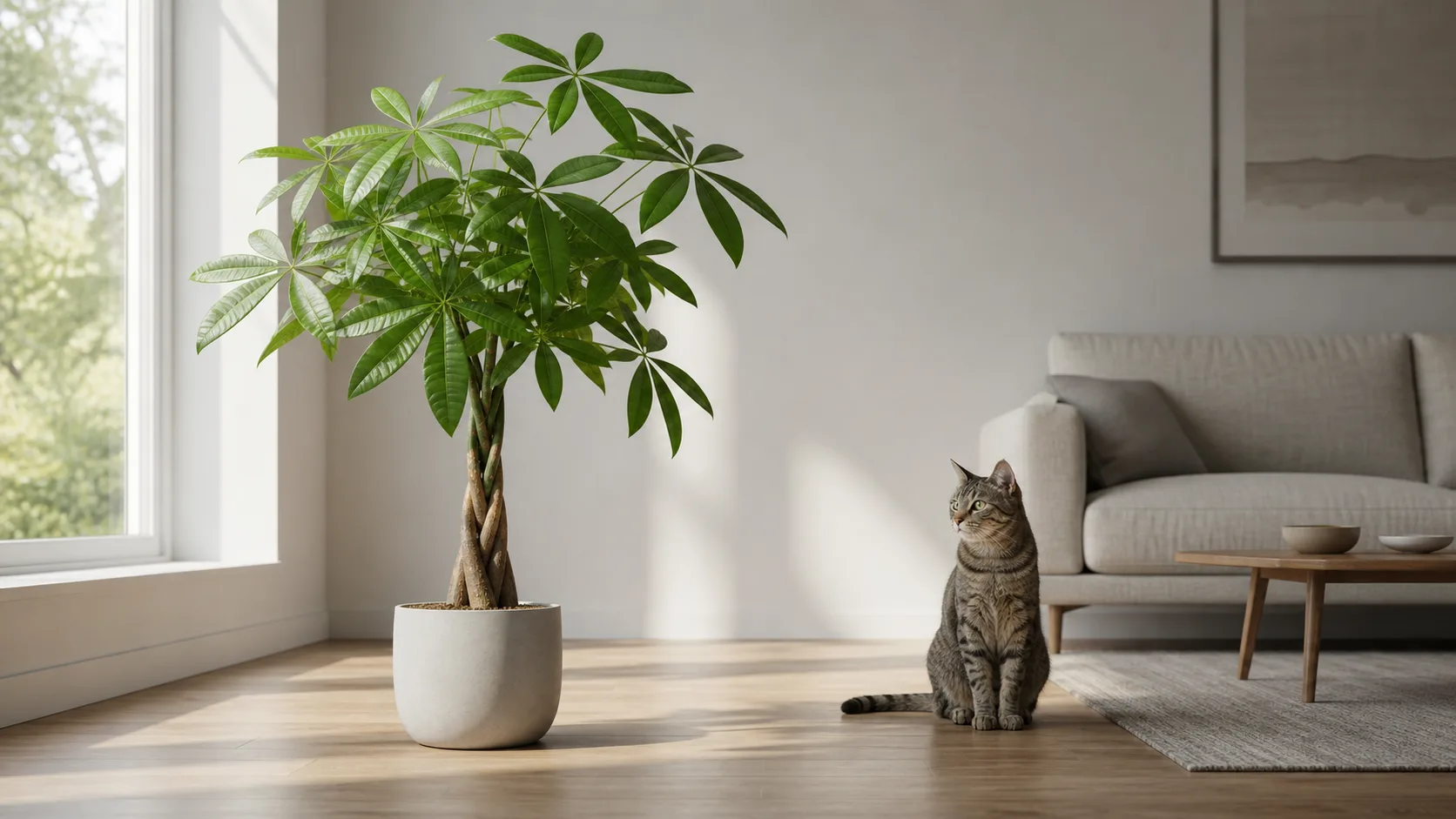
Is Money Tree Toxic to Cats? Symptoms and Safety
If your cat just chewed your money tree and you are standing there with a torn leaf in one hand and your phone in the other, here is the short answer first: a true money tree, Pachira aquatica, is generally considered non-toxic to cats.
That is the reassuring part. The part most pages skip is what to do next.
A non-toxic label does not always mean a no-symptom day. Cats can still drool, gag, vomit once, or get loose stool after chewing fibrous leaves, swallowing potting mix, or licking fertilizer or spray residue from the leaf surface. So the better question is not only is money tree toxic to cats? It is also: what exactly did my cat chew, what should I watch for next, and when should I stop monitoring and call for help?
By KnowYourPlant editorial team
Updated July 19, 2026: This guide is anchored to ASPCA, North Carolina Extension, and Missouri Botanical Garden sources, then shaped around the real confusion owners have after a chewing incident.
Symptom Diagnosis Card
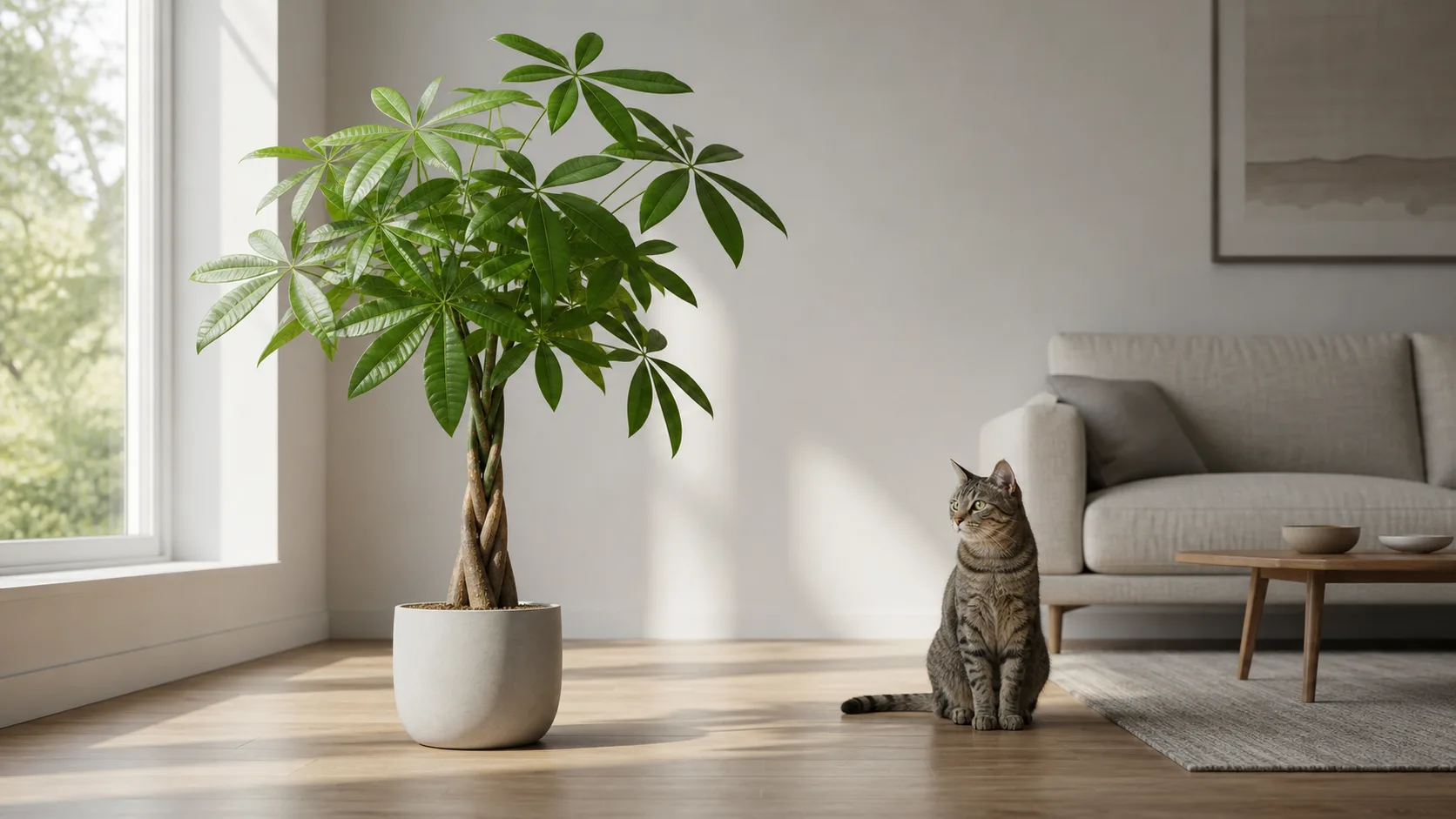
Confirm Pachira and separate the cat before judging risk, because plant identity changes the safety answer.
| What happened | Most likely read | What to do now |
|---|---|---|
| One small nibble, cat acting normal | Mild or no reaction | Remove access, offer water, monitor for several hours |
| Chewed leaves, then vomited once | Stomach irritation is possible | Watch closely, then check the pot and any product residue |
| Repeated vomiting, ongoing drooling, seems quiet or wobbly | More than a simple nibble incident | Call your vet or pet poison support |
| You are not sure it is really a money tree | Plant ID problem first | Do not rely on the non-toxic answer until you confirm the species |
The short answer, without the fluff
For a true money tree, Pachira aquatica, the standard safety answer is non-toxic to cats. ASPCA lists money tree as non-toxic to cats, dogs, and horses, with no toxic principles listed.
But ASPCA also notes possible clinical signs such as nausea, vomiting, and loose stool. That sounds contradictory until you separate poisoning from irritation. A cat can feel sick after chewing a non-toxic plant because the leaf is tough, the stomach is sensitive, or something on or around the plant came along with the bite.
That is why the useful first move is not repeating the word non-toxic and stopping there. It is checking the whole setup.
What Most Care Guides Miss
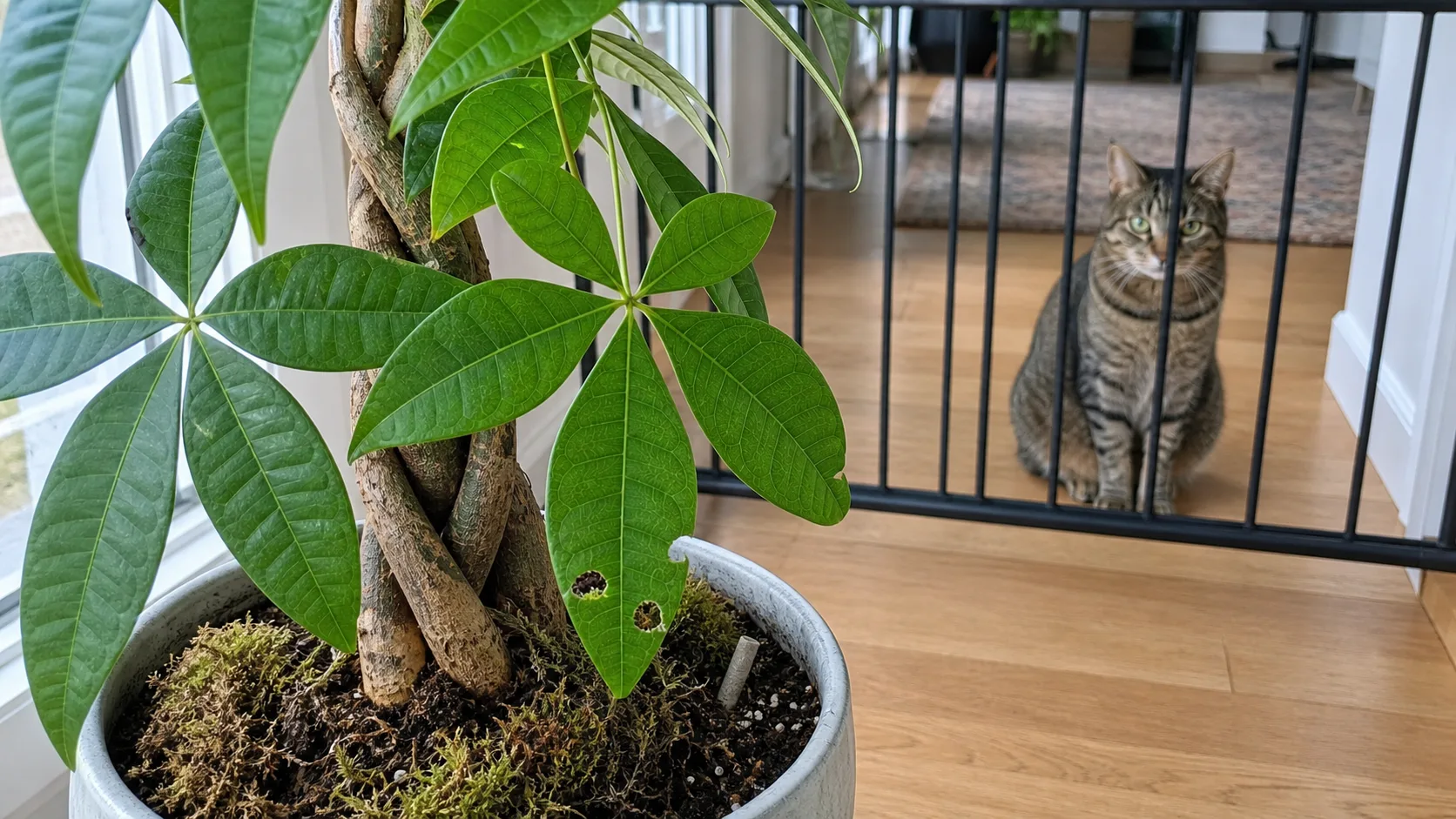
Chewed foliage, disturbed soil, moss, and fertilizer residue can all affect the exposure you are evaluating.
The most common misdiagnosis is this: people hear non-toxic and assume nothing important happened.
That shortcut misses the real household problem. In many homes, the issue is not plant poison at all. It is one of these instead:
- your cat chewed more leaf material than you realized
- the leaf had fertilizer dust, leaf shine, or treatment residue on it
- your cat grabbed decorative moss or potting mix too
- the plant is not actually Pachira aquatica, even if the label said money plant
So before you spiral, do one practical first check: look at the pot, not just the bite mark.
If the soil is flung out, a fertilizer spike is broken, the top dressing is missing, or the leaves were recently sprayed, that changes your next step more than the word non-toxic does.
Identification Snapshot
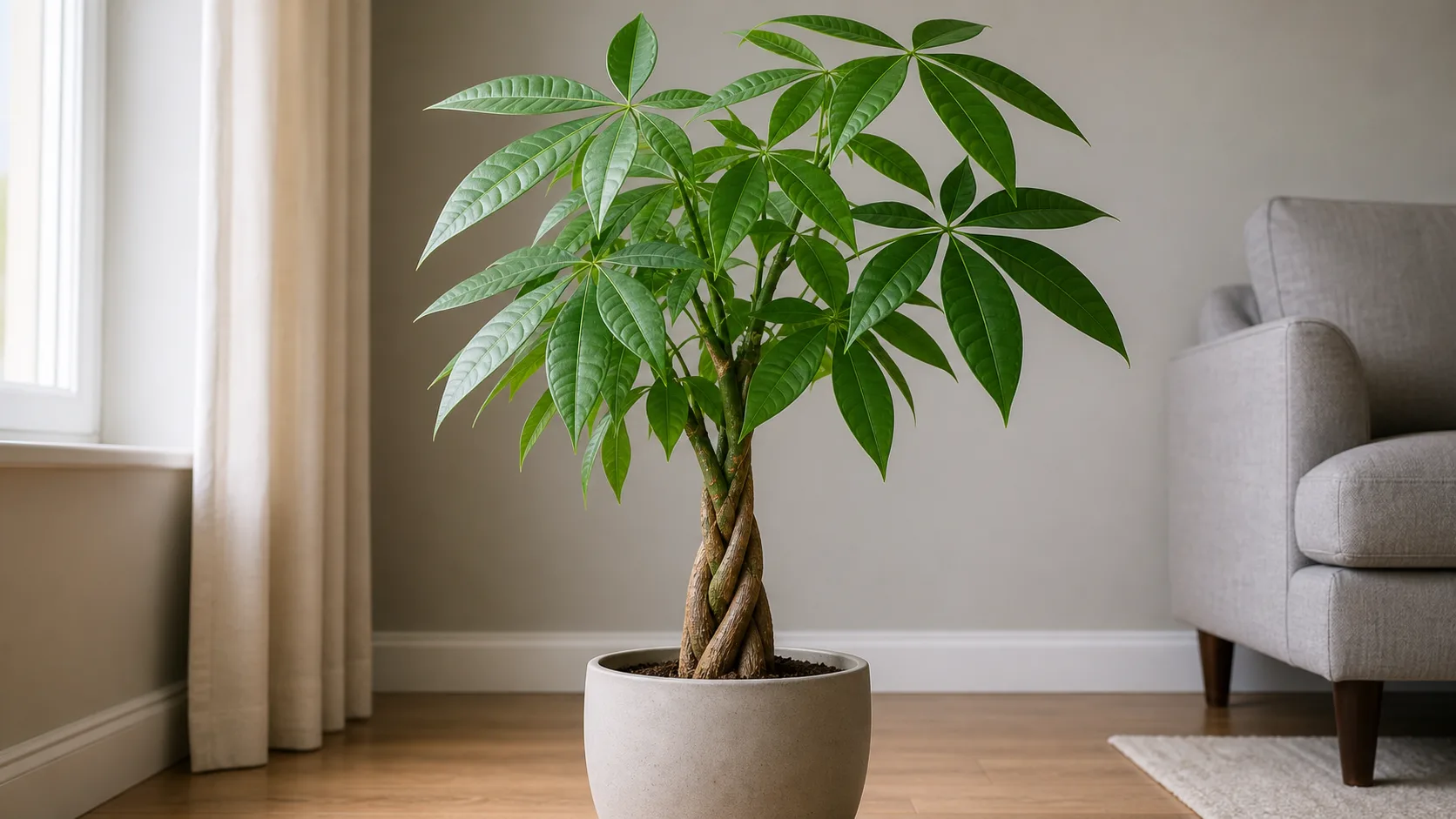
A braided woody trunk and hand-shaped clusters of glossy leaflets help identify Pachira aquatica.
This article applies to money tree, Pachira aquatica, the tropical houseplant often sold with braided trunks.
| Detail | What to look for |
|---|---|
| Botanical name | Pachira aquatica |
| Common nursery look | Braided or clustered woody trunk |
| Leaves | Hand-shaped clusters with 5 to 9 glossy green leaflets |
| Indoor size | Often around 6 to 8 feet indoors over time |
| Safety takeaway | Generally non-toxic to cats, but still worth monitoring after chewing |
North Carolina Extension and Missouri Botanical Garden both describe money tree as a plant with palmately compound leaves, usually in groups of 5 to 9 leaflets. Missouri Botanical Garden also notes that it is commonly sold as money tree or money plant, which is exactly why owners get tripped up.
Lookalikes and Confused-With
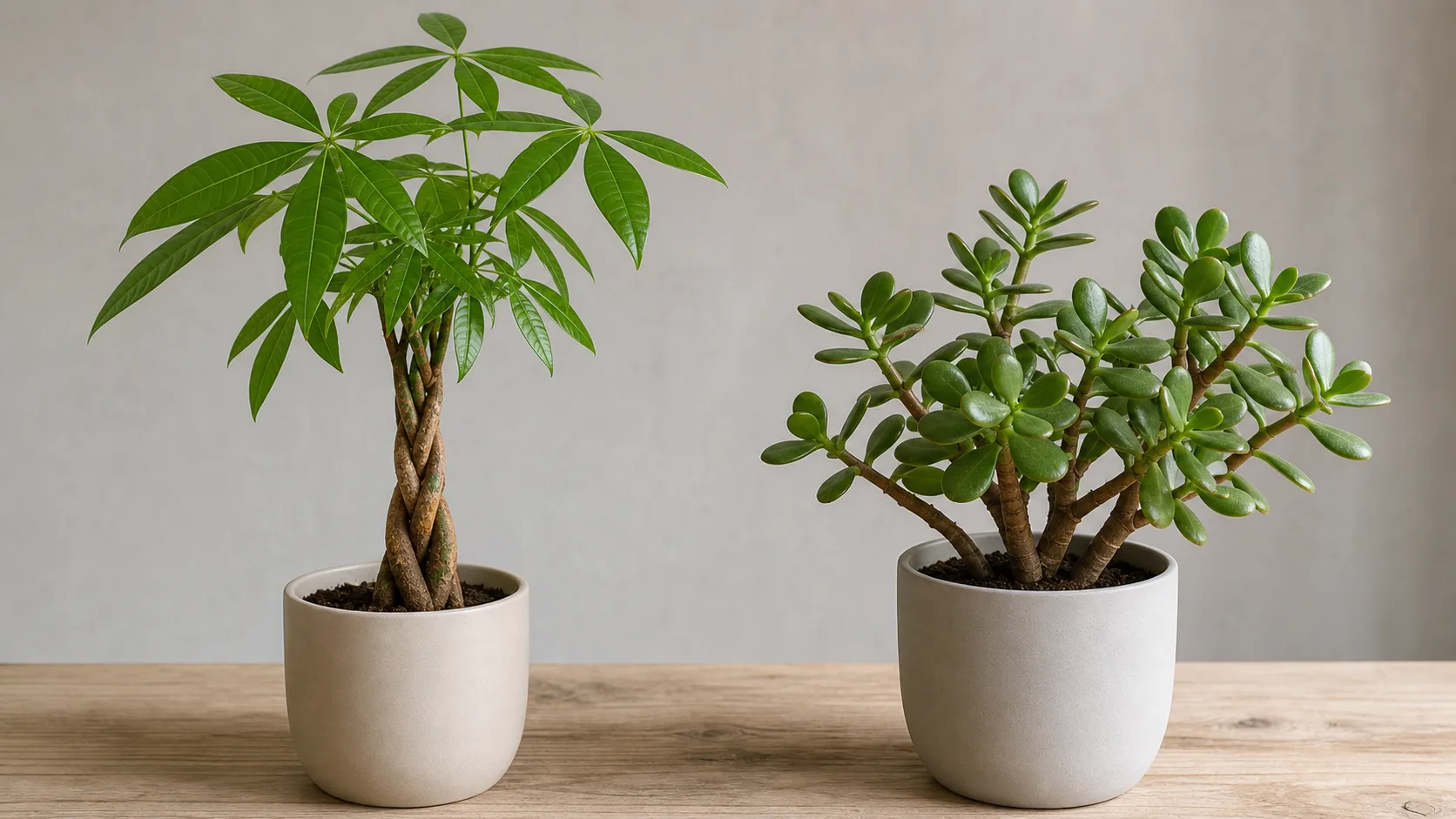
Pachira’s palmate leaflets differ sharply from the thick oval succulent leaves of toxic jade.
Do not trust the nickname alone.
| Label you may hear | Actual plant | Cat safety takeaway |
|---|---|---|
| Money Tree | Pachira aquatica | Generally considered non-toxic |
| Money Plant | Can mean Pachira aquatica, but not always | Verify before assuming |
| Jade Plant | Crassula argentea | ASPCA lists it as toxic to cats |
This matters more than it sounds. If your plant is a succulent with thick fleshy leaves, that is not a money tree answer anymore. If it is a braided tropical plant with leaflets spreading from one point like fingers on a hand, you are much more likely dealing with Pachira aquatica.
My Cat Chewed a Money Tree, What Should I Do Right Now?
Work through this in order.
1. Move the plant out of reach
Do this first so the situation does not keep going while you think.
2. Remove any loose plant bits from the mouth area if that is easy to do
Do not force your cat’s mouth open if that is going to turn into a wrestling match. If there is an obvious loose piece on the lip or whisker area, wipe it away gently.
3. Check what else was involved
Look for:
- disturbed soil
- missing fertilizer pellets or spikes
- decorative moss or bark chips
- leaf shine or pesticide use
- a recently treated plant from a shop or nursery
4. Watch the symptom pattern, not just the plant name
A cat who nibbled once and then walked away is a different situation from a cat who keeps gagging, vomits again, or goes oddly quiet.
5. Escalate if the pattern stops looking mild
If vomiting repeats, drooling keeps going, or you are not confident about the plant identity, call your veterinarian or a poison line.
Why a Non-Toxic Money Tree Can Still Upset a Cat
This is the gap between the SERP answer and the real kitchen-floor answer.
A money tree leaf can be non-toxic in classification and still be irritating in practice. Fibrous leaves are not a normal cat snack. Swallowed bits can trigger stomach upset. Damp potting mix can cling to a torn leaf. A cat who chews fast can also swallow more than you realize before you notice.
The pot environment matters too. North Carolina Extension says money tree prefers moist but well-drained potting mix and does not tolerate standing water. In a real home, that means the pot may also contain wet organic matter, fertilizer, top dressing, or residue around old fallen leaves. Sometimes the leaf is not the only thing your cat sampled.
That is why I would treat the phrase cat ate money tree as a setup question, not only a toxicity question.
Decision Tree: Watch at Home or Call?
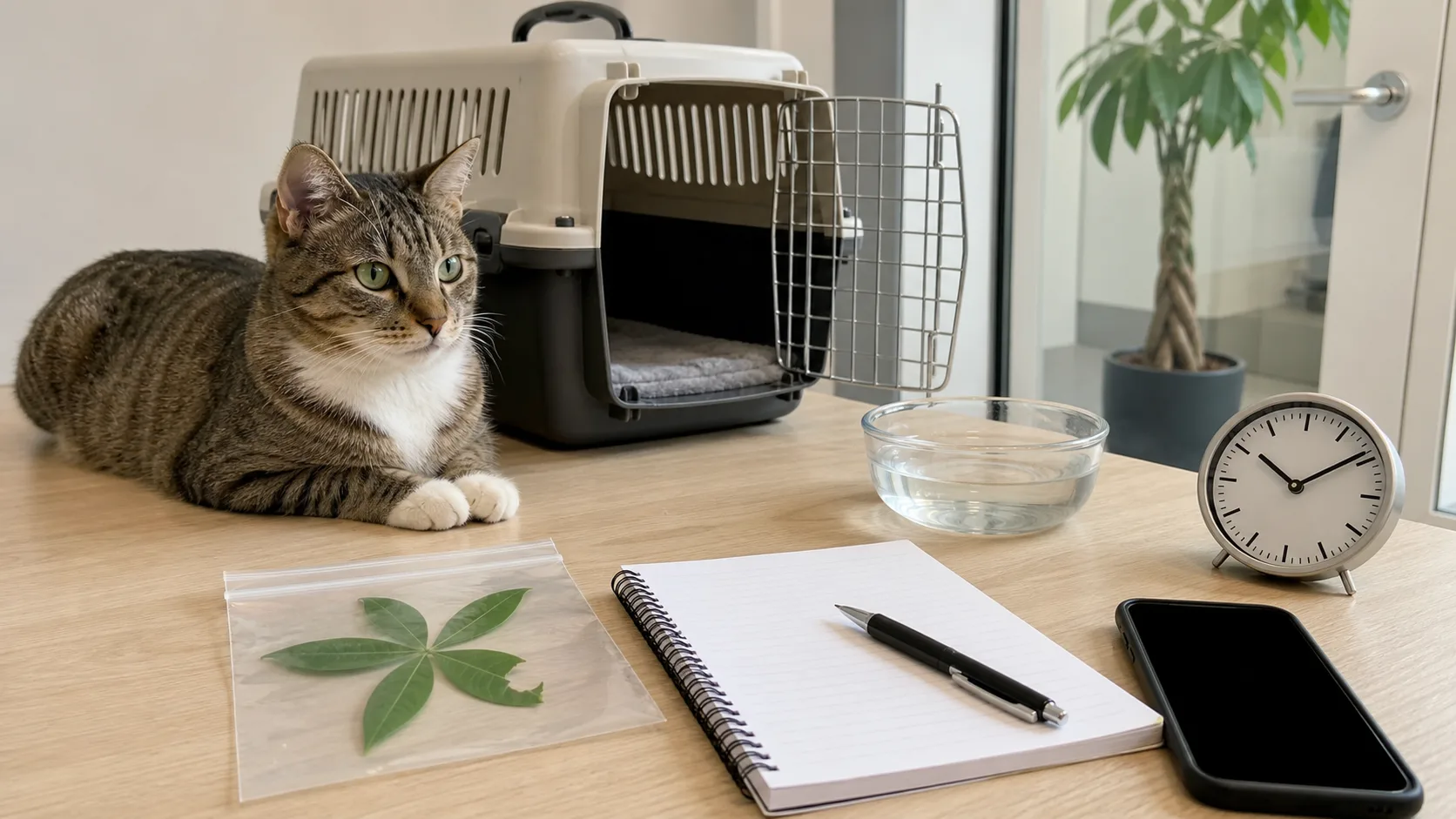
Save a plant sample, record timing and symptoms, and keep the carrier ready if the pattern escalates.
Watch at home if all of these are true
- you are confident the plant is Pachira aquatica
- your cat took only a small nibble
- symptoms are absent, or very mild and brief
- there is no sign your cat got fertilizer, spray residue, or a large amount of soil
Call your vet or poison support if any of these are true
- vomiting repeats
- drooling continues instead of settling down
- your cat seems lethargic, weak, or unusually quiet
- you are not fully sure this plant is really a money tree
- your cat chewed a large amount
- a fertilizer spike, pellet, moss plug, or treated leaf may be part of the incident
Use this simple rule
If the pattern looks worse than mild mouth or stomach irritation, stop thinking of it as a basic pet-safe plant question. At that point, you need live guidance.
The Unique Risk Check Most Pages Skip
Most ranking pages stop after “money tree is safe for cats.” That is not enough help when you are looking at an actual bite mark.
The more useful question is: what probably caused the symptom?
Use this quick check:
| Clue | What it points to |
|---|---|
| Tiny bites, normal behavior | Probably minor nibbling, monitor |
| Vomiting once after chewing | Likely irritation, still watch closely |
| Soil scattered everywhere | Potting mix ingestion may be part of it |
| Treated or shiny leaves | Residue may matter more than the plant |
| Thick-leaved “money plant” | Re-check ID, could be a different species |
That is the piece generic pet-safety pages often miss. Owners do not only need the label. They need a way to sort the incident into the right bucket.
Expert Notes Worth Remembering
Here are the source-backed points that actually help:
- ASPCA lists money tree, Pachira aquatica, as non-toxic to cats.
- ASPCA still lists nausea, vomiting, and loose stool as possible clinical signs after chewing.
- Missouri Botanical Garden says money tree is commonly sold as money tree or money plant, which helps explain the naming confusion.
- Missouri Botanical Garden says houseplants usually grow to about 6 to 8 feet indoors.
- North Carolina Extension says the plant prefers indirect light and moist, well-drained potting mix.
- ASPCA lists jade plant as toxic to cats, which is why “money plant” is not a safe enough identification by itself.
If the cat scare is over and you want help with the plant itself, our Money Tree care guide, best potting soil for indoor plants, and how often to water indoor plants can help you reset her setup.
Common Mistakes People Make
1. Stopping at the word non-toxic
This is the biggest one. It is reassuring, but it is not the full answer after an actual chewing event.
2. Assuming every money plant is the same plant
Retail labels are messy. Gift tags are worse. If the ID is fuzzy, the risk answer is fuzzy too.
3. Forgetting the pot environment
A clean leaf is one situation. A leaf with soil, fertilizer, moss, or spray residue is another.
4. Watching only for dramatic symptoms
Mild mouth irritation, lip smacking, a brief gag, or one vomit can still happen. You are looking for whether the pattern settles or escalates.
5. Leaving the plant in reach because it is technically cat-safe
Safe for cats is not the same as safe from cats. Some cats will keep coming back until she is shredded.
Safe for Cats Does Not Mean Safe From Cats
This is the everyday owner problem that keeps showing up around this topic. The emergency may pass, but the chewing keeps happening.
If your cat is a repeat plant chewer, focus on prevention instead of hoping the behavior stops on its own:
- move the money tree somewhere truly inaccessible, not just slightly higher
- keep dangling leaflets away from launching shelves and windowsills
- remove torn or dropped leaves quickly
- skip decorative moss or loose top dressing if your cat mouths everything
- give your cat a better legal target, especially if every leafy plant becomes a toy
If you are building a safer plant shelf overall, our guide to cat-safe indoor plants is a helpful next stop. If dogs share the home too, the dog-friendly houseplants guide helps you choose plants that stay safer for both pets.
Seasonal Note: Why the Risk Pattern Changes Through the Year
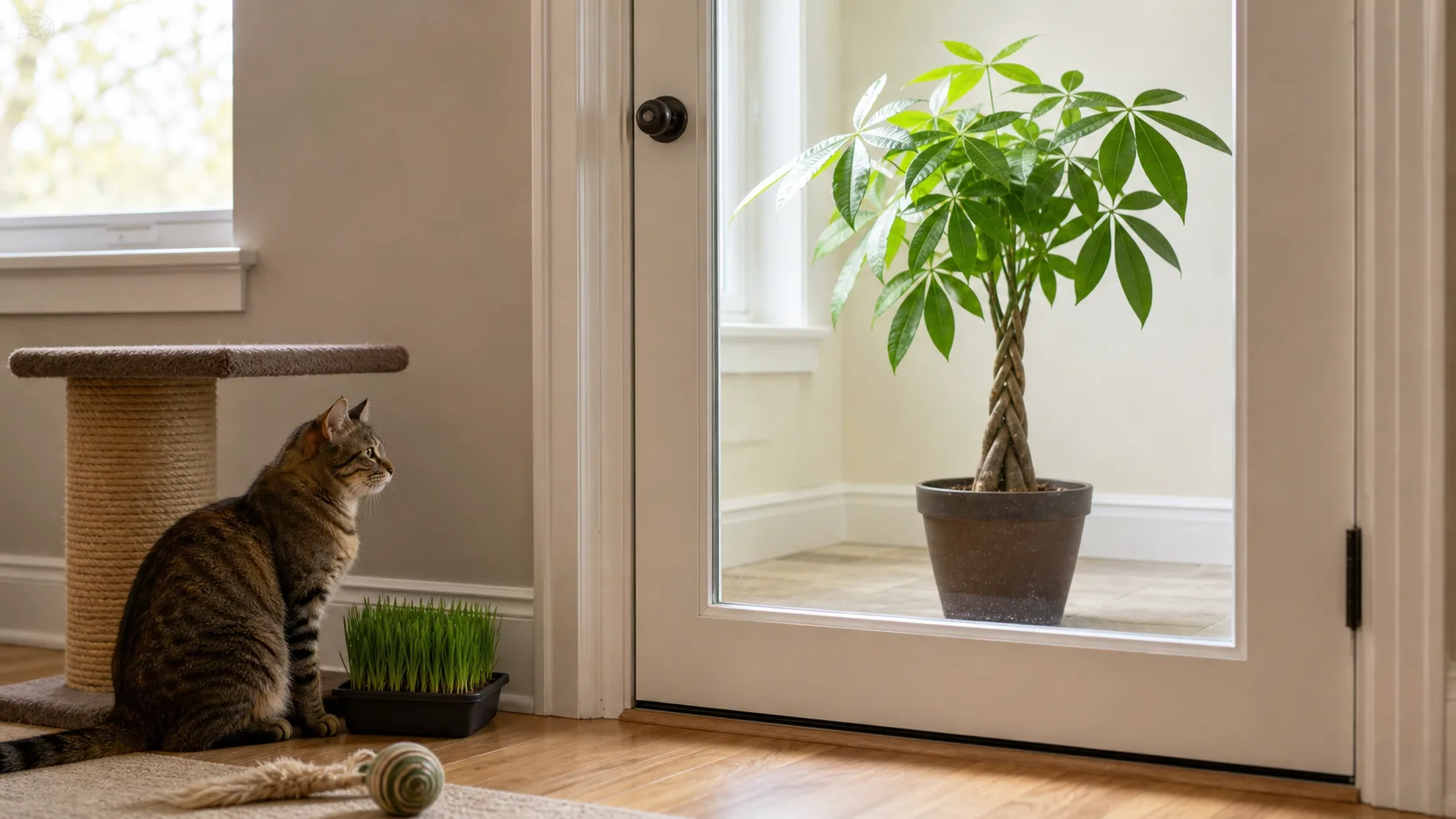
Tender new growth can renew a cat’s interest, so pair a closed barrier with cat grass, play, and scratching options.
Money tree often becomes more tempting when she pushes fresh growth. New leaflets are softer, easier to catch, and more fun for a cat to bat at or chew. So a plant that was ignored for months can suddenly become a target in a brighter season.
Re-check placement when:
- new leaves start unfurling
- you move the plant into brighter light
- you refresh the soil or add fertilizer
- your cat starts a new chewing phase for no obvious reason
This is also a good moment to review routine care. A stressed, drooping money tree can hang lower and become easier to reach, while a vigorous one can push tender growth that is more tempting to chew.
FAQ
Is money tree toxic to cats or not?
A true money tree, Pachira aquatica, is generally considered non-toxic to cats. That said, chewing can still lead to mild stomach upset or mouth irritation.
My cat ate a money tree leaf and threw up once. Should I panic?
Not automatically. One brief vomiting episode can fit irritation from chewing. Remove access, check the pot and any residue, and watch closely. If vomiting repeats or your cat seems off, call your vet.
Can soil or fertilizer be more important than the plant itself?
Yes. In some homes, that is the real issue. If the soil was disturbed or any fertilizer product is missing, treat that as part of the incident.
Is Pachira aquatica toxic to cats?
No. It is generally classified as non-toxic to cats. The caution is about chewing-related stomach upset and about making sure the plant is truly Pachira aquatica.
Is jade plant the same as money tree?
No. Jade plant is a different species, and ASPCA lists it as toxic to cats. Do not rely on the word money alone.
Should I prune chewed money tree leaves?
If a leaf is badly torn, you can trim it for appearance later. First make sure your cat is okay and that she cannot reach the plant again.
What if my cat keeps chewing the same money tree?
At that point, the answer is management, not more reassurance. Change placement, remove easy access, and treat the plant as attractive prey even if it is not poisonous.
For a related hands-on growing walkthrough, use Money Tree Repotting: Pot Size, Soil, Roots, and Aftercare for the setup and follow-up care.
If you are troubleshooting another common plant symptom, see Money Tree Yellow Leaves: Diagnose Before You Water for a focused diagnosis and recovery plan.
Methodology and Sources
This article was written for the real intent behind is money tree toxic to cats, money tree toxic to cats, cat ate money tree, and pachira aquatica toxic to cats. We anchored the safety answer to ASPCA’s Money Tree listing, used North Carolina Extension and Missouri Botanical Garden for plant identity and household care context, and built the decision support around the gap most search results leave open: what to do after chewing, not just whether the plant is technically toxic.
Because no validated social evidence pack was available for this slug, we did not use unverified social posts, screenshots, or anecdotal quotes in the article body.
The practical takeaway is simple: a true money tree is generally not toxic to cats, but chewing still deserves a quick check for plant identity, symptoms, and anything else your cat may have picked up from the pot or leaf surface.