
If your cat just bit an aloe leaf and now you’re searching is aloe vera toxic to cats, the short answer is yes. The more useful answer is this: the main concern is usually the bitter sap or latex and the chewed plant tissue, not the clear inner gel people associate with soothing skin care. That distinction is where many quick pet-toxicity articles fall short, and it is exactly why cat owners end up unsure whether to panic, monitor, or call their vet.
Most aloe exposures do not look dramatic at first. More often, you see drooling, vomiting, diarrhea, a cat who suddenly seems quiet, or a cat who keeps licking their lips after chewing. So the first job is not to spiral. It is to figure out what your cat actually touched, whether the plant was chewed, and whether symptoms have started.
What most care guides miss
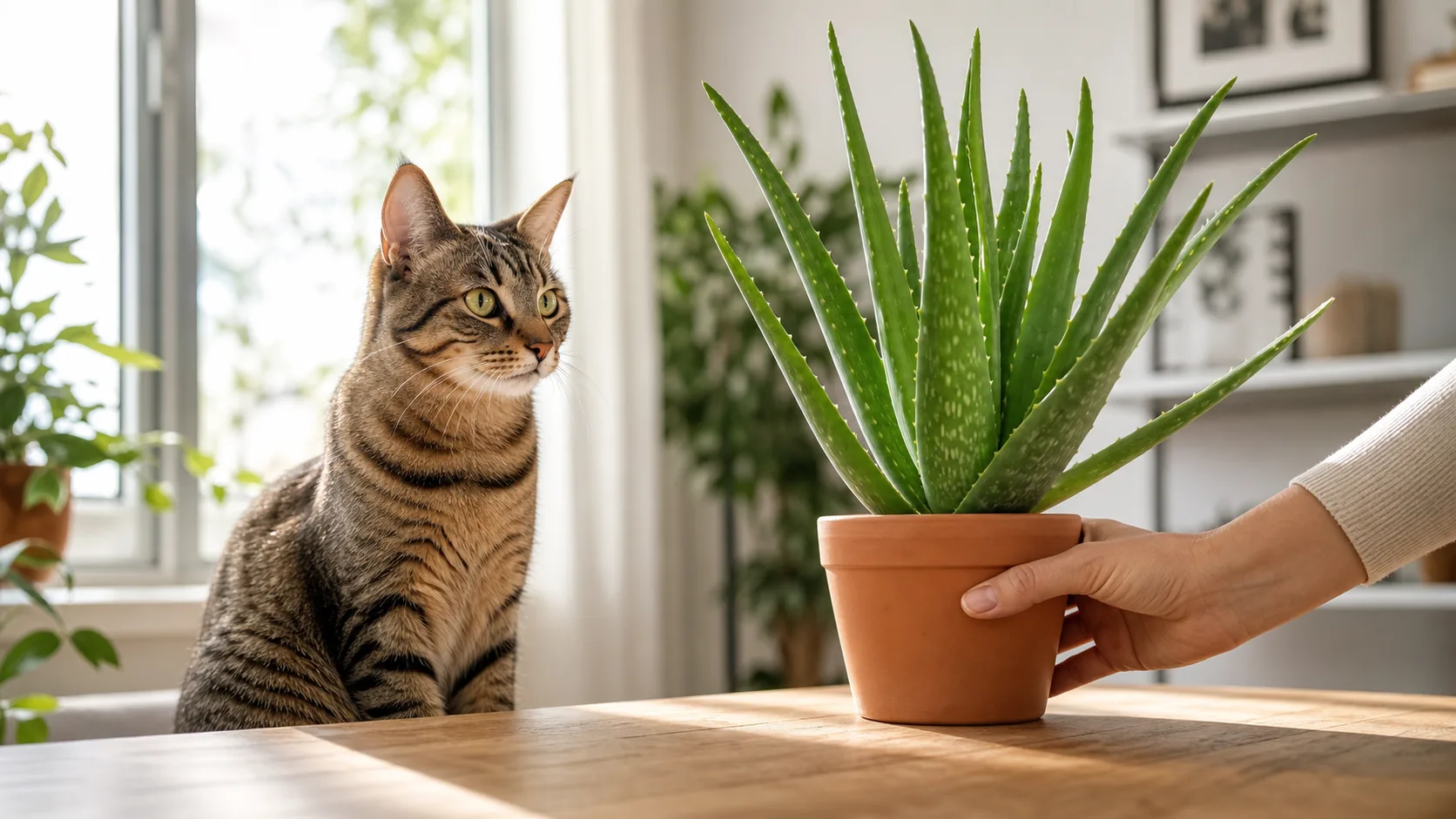
Aloe vera is toxic to cats, so remove access first while you confirm whether chewing or sap contact occurred.
A lot of articles stop at “yes, aloe is toxic.” That is technically true, but it does not answer the real question owners have in the moment. There is a big difference between a cat who brushed past an intact plant, a cat who licked a little aloe gel from your hand, and a cat who bit through a live leaf and got sap in the mouth.
The common misdiagnosis is treating every aloe exposure as the same because aloe has a “healing” reputation for people. Generic advice is incomplete here. VCA Animal Hospitals explains that the gel inside the leaf is not the toxic part, while the white sap contains saponins and anthracene glycosides. In a real home, though, cats rarely sample a neat spoonful of inner gel. They chew through the leaf, get sap and plant fiber together, then re-expose themselves while grooming.
A practical first check: look at the leaf, not just the cat. If you see torn edges, fresh bite marks, sticky residue, or missing chunks, assume this was more than a harmless sniff.
Is aloe vera toxic to cats?
Yes. The ASPCA lists Aloe vera as toxic to cats and identifies saponins and anthraquinones among the toxic principles. Their guidance highlights vomiting, lethargy, and diarrhea as common signs. VCA adds that larger ingestions can lead to tremors, red urine, and dehydration, which is when the situation moves well beyond a mild upset stomach.
So if you are wondering whether aloe vera toxic to cats is just an exaggerated internet warning, it is not. The outcome is often gastrointestinal upset rather than a worst-case emergency, but it is still a real pet-safety problem and worth taking seriously.
Start with the pattern, not one cause
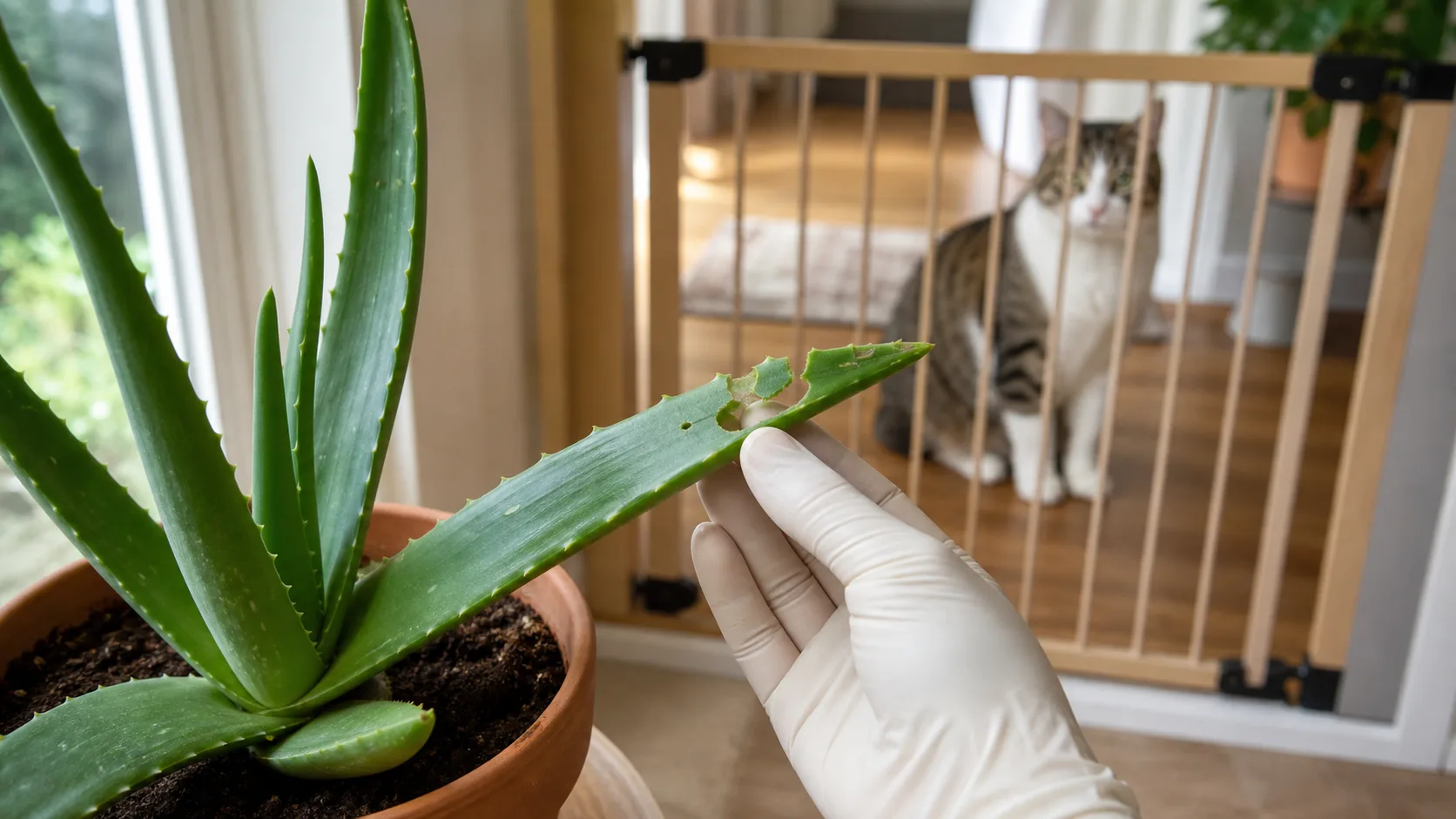
Fresh leaf damage plus confirmed access is stronger evidence than treating one nonspecific symptom as proof of Aloe exposure.
Before you change everything in your house or assume the worst, start with the exposure pattern.
A common mistake is blaming vomiting on a random stomach issue while missing the half-chewed succulent on the windowsill. The opposite mistake is treating every tiny lick of an aloe product like a poisoning crisis. The better decision rule is this: if the live plant was chewed, treat it as whole-plant exposure until proven otherwise. If only a packaged aloe product was licked, check the full ingredient list before you judge the risk.
That one distinction gives you a much better next step than a generic toxic-plant list ever will.
Symptom diagnosis card
| What happened | Usual concern level | What to do first |
|---|---|---|
| Cat brushed past an intact plant | Low | Check for a broken leaf or sap on fur, then monitor |
| Cat licked a tiny amount of plain aloe gel | Low to moderate | Read the label, wipe residue, and watch for stomach upset |
| Cat chewed the leaf or swallowed pieces | Moderate | Remove access and call your vet or poison line the same day |
| Cat is vomiting repeatedly, very lethargic, trembling, or worsening fast | High | Get urgent veterinary guidance now |
Why aloe confuses so many cat owners
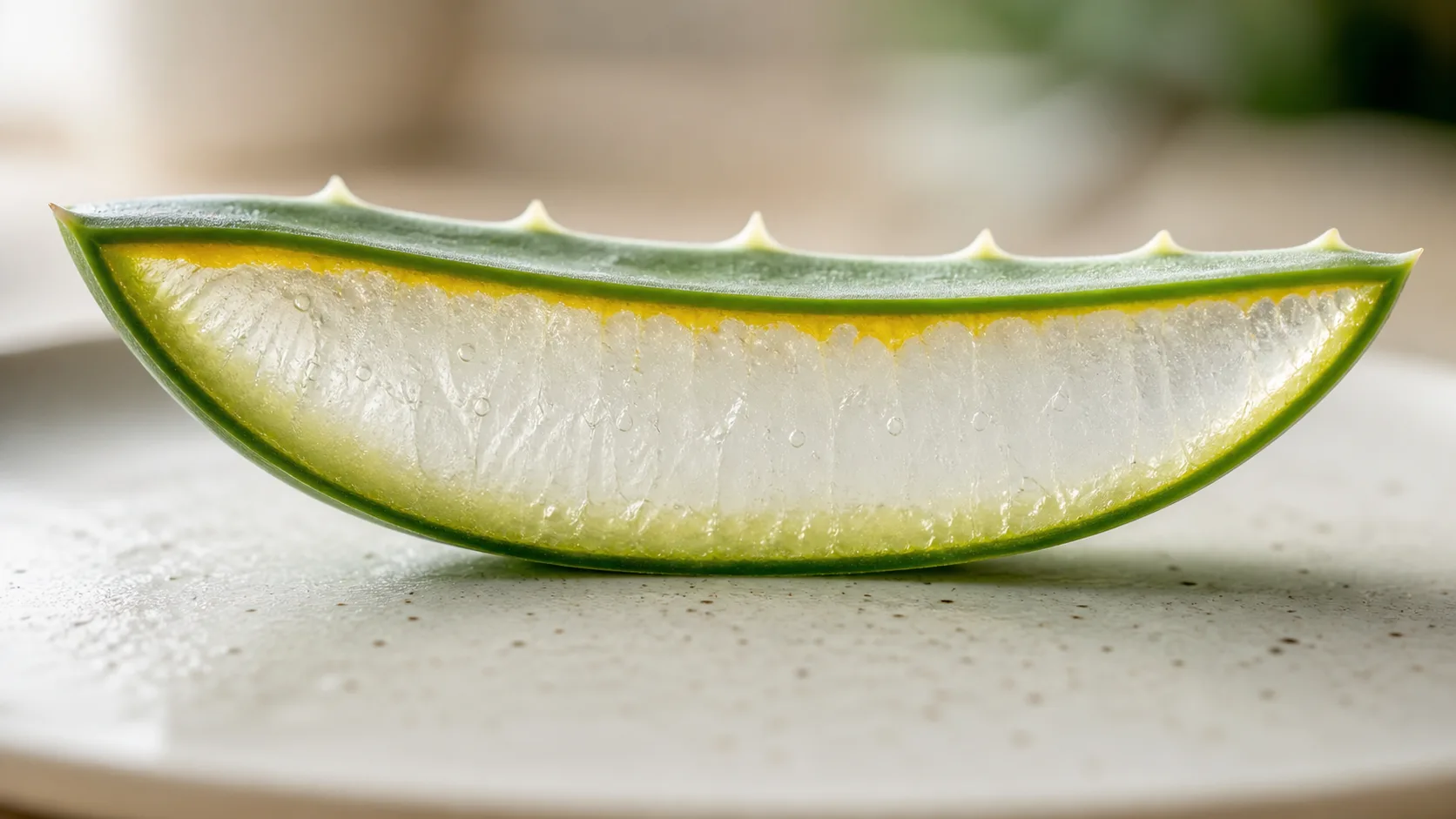
The clear inner gel is not the same as the yellow latex layer beneath the green rind, which is why exposure details matter.
Aloe sends mixed signals in a way few houseplants do:
- it is common in homes
- it is marketed as soothing for humans
- the clear inner gel has a helpful reputation
- the live plant is still unsafe for cats to chew
That contradiction is why so many people hesitate after a small bite. The thinking makes sense: if aloe is used on burns and skin, how dangerous can it really be? The answer is that cats do not interact with aloe the way humans do. They chew the whole leaf, swallow fibers, get sap on the lips and paws, and keep licking after the first contact.
Aloe exposure by type
1. Cat chewed the live plant
This is the classic cat ate aloe vera scenario. It deserves the most attention because chewing usually means exposure to both plant tissue and the irritating latex near the leaf lining.
2. Cat licked clear aloe gel from skin
This may be less concerning than chewing the plant, but product context matters. Many gels and after-sun products contain alcohol, fragrance, essential oils, preservatives, or pain-relief ingredients that may matter more than the aloe itself.
3. Cat licked sap from a snapped leaf
This is more important than many owners realize. If a leaf was broken and you saw yellow-white or sticky residue, do not dismiss it as a meaningless taste.
4. Cat got into a drink, lotion, supplement, or cosmetic with aloe
At that point, this is not just an aloe question. It is a mixed-product ingestion question, and the full label matters. If you need the plant-owner version of what counts as gel versus latex before you read the ingredient panel, the aloe vera plant uses guide breaks that down clearly.
Comparison table: gel, latex, plant, and packaged products
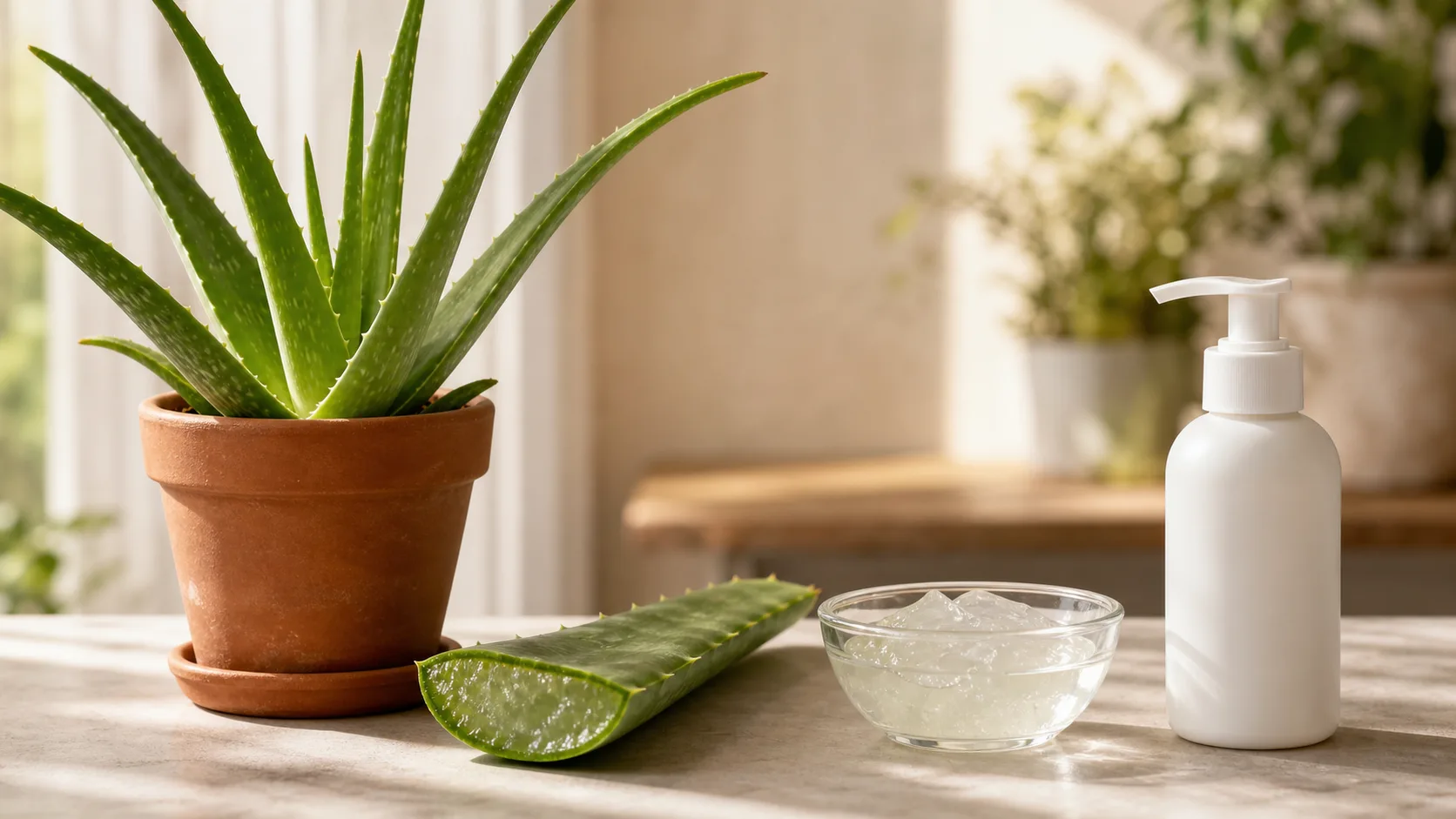
A live leaf, extracted gel, latex-containing rind, and a formulated product can create different exposure questions.
| Aloe exposure | Why it matters | Likely next step |
|---|---|---|
| Clear inner gel only | Lower concern than whole-leaf chewing, but not automatically harmless in products | Monitor and review ingredients |
| Yellow-white latex or sap | More irritating and more likely to trigger GI signs | Call for advice, especially if symptoms begin |
| Whole live leaf | Most realistic houseplant exposure and the one vets worry about most | Treat as toxic plant ingestion |
| Lotion, cosmetic, juice, or supplement | Risk depends on the full formula, not aloe alone | Check the label and contact your vet if swallowed |
Cat ate aloe vera, what should you do right now?
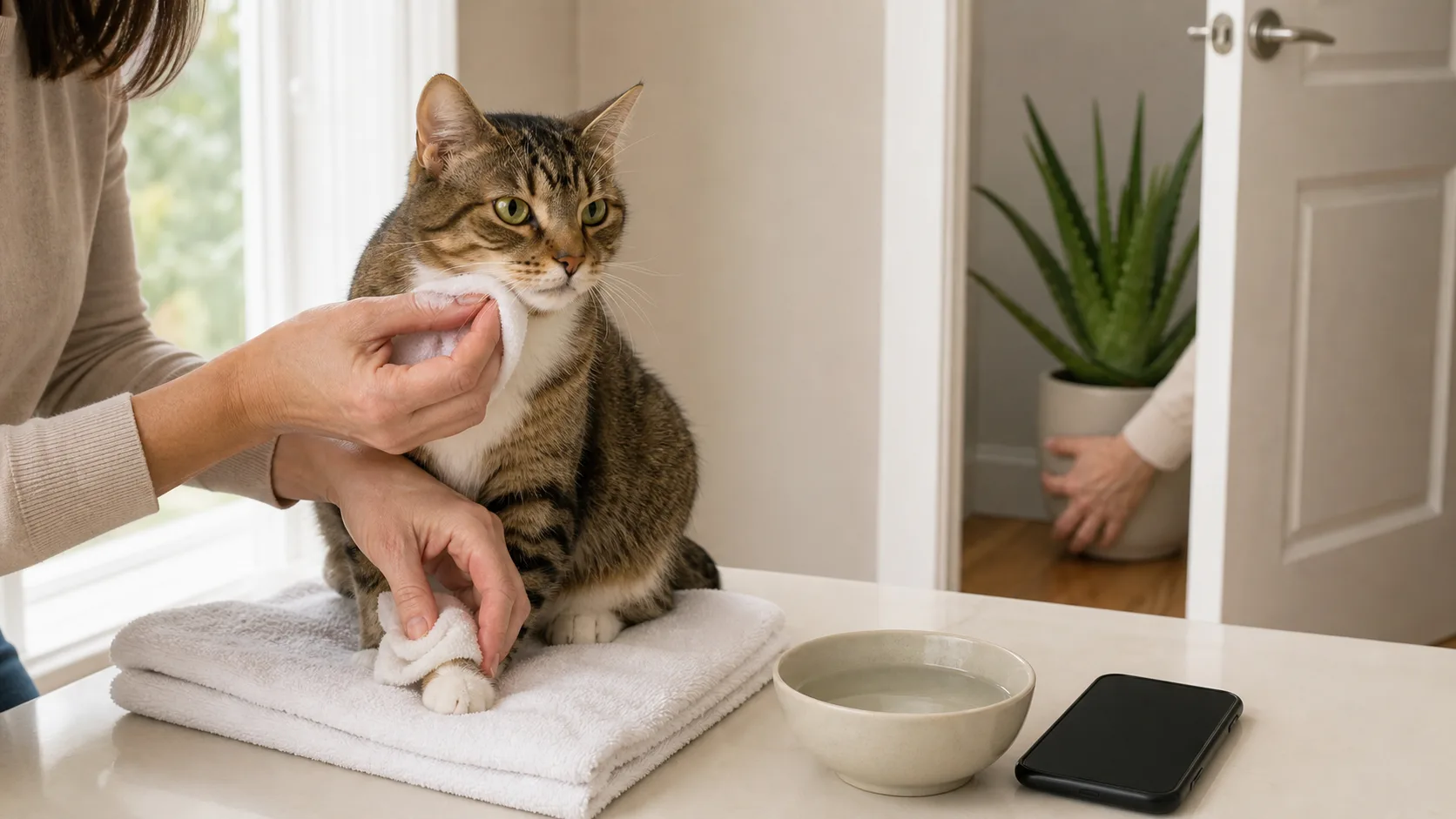
Calm first steps are to remove Aloe, wipe reachable residue, offer water if wanted, and call for case-specific guidance.
If your cat ate aloe vera, move through these steps in order.
Step 1: Remove the plant
Take the plant away, clean up broken pieces, and stop a second round of chewing.
Step 2: Wipe the mouth and fur if needed
If you can see sap on the chin, paws, or coat, gently wipe it away with a damp cloth so less gets swallowed during grooming.
Step 3: Estimate the exposure
You do not need perfect answers. Just note:
- one nibble or repeated chewing
- whether chunks are missing
- whether sap was visible
- when it happened
- whether your cat seems normal, nauseated, or sleepy
Step 4: Watch for symptoms that change the plan
Common signs include:
- vomiting
- diarrhea or loose stool
- drooling
- reduced appetite
- lethargy
VCA also notes that large ingestions can cause tremors, red urine, and dehydration. Those are not watch-and-wait signs.
Step 5: Call the same day if the plant was definitely chewed
This matters even more for kittens, seniors, smaller cats, and cats with health conditions that make dehydration harder to handle.
Step 6: Do not induce vomiting at home
Do not use peroxide, oil, salt, or home remedies unless a veterinarian specifically tells you to.
A practical decision tree for aloe plant and cats
If your cat only brushed past the plant
Risk is lower. Check for a broken leaf, sap on the coat, or new grooming of one paw or side.
If your cat licked your skin after you applied aloe gel
Read the label first. Plain aloe is one issue. Alcohol, fragrance, menthol, lidocaine, salicylates, or essential oils are another.
If your cat chewed the leaf
Assume meaningful exposure. Remove access, monitor closely, and call your veterinarian or a pet poison resource the same day.
If symptoms are already happening
Let symptoms drive urgency. A cat who maybe sniffed a plant is one situation. A cat who is vomiting, hiding, drooling, or refusing food is a different one.
If your cat keeps returning to houseplants
This stops being only a toxicity question. It becomes a home-management problem, because repeat access makes a second scare very likely.
When home monitoring is reasonable, and when it is not
Home monitoring may be reasonable if:
- you are not sure any plant material was swallowed
- there was no obvious chewing or missing leaf tissue
- your cat is acting completely normal
- your vet has already guided you through a similar low-risk situation
Do not rely on home monitoring alone if:
- the aloe was definitely chewed
- vomiting or diarrhea has already started
- your cat seems unusually sleepy, weak, or withdrawn
- your cat is very young, elderly, or medically fragile
- the exposure involved a lotion, juice, or mixed product with other ingredients
That line matters because many generic articles say “monitor” without explaining what pushes a case out of the monitor-only category.
Keep it, move it, or remove it?
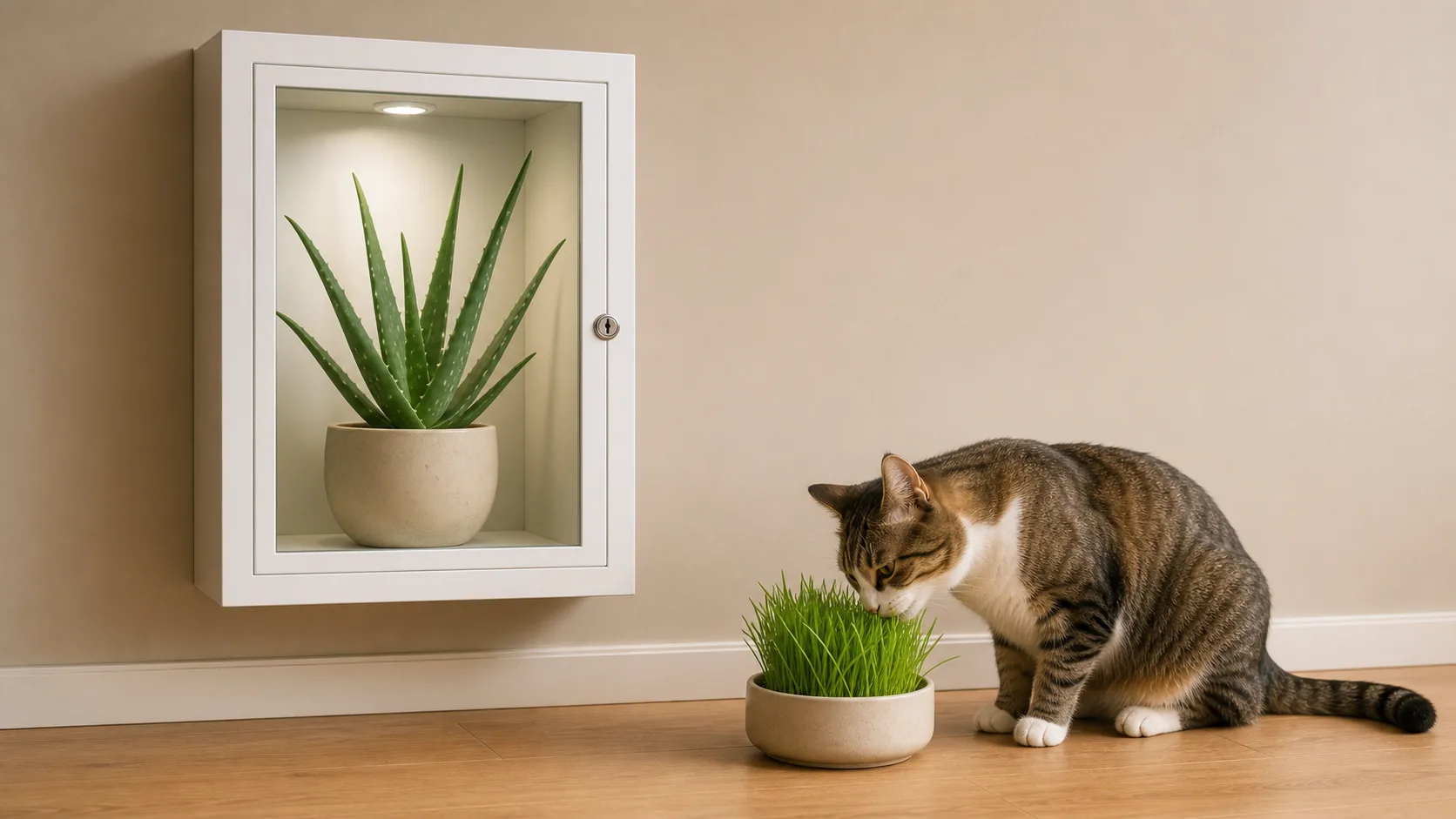
A genuinely closed, locked cabinet is safer than relying on height alone, while cat grass offers an accessible alternative.
This is the household decision many cat owners actually need help with after the scare.
Keep it, maybe
This is the lowest-risk version:
- your cat reliably ignores plants
- the aloe lives in a truly inaccessible area
- there are no dangling or broken leaves within reach
- you can keep it separated all the time
Move it, probably
This makes sense if:
- your cat is curious but not a repeat chewer
- the plant currently sits on a sill, shelf, or table your cat can reach
- a kitten phase or boredom has changed behavior recently
Remove it, honestly
This is the safer call if:
- your cat has already chewed aloe once
- your cat routinely bites fleshy or grass-like leaves
- you cannot create a cat-proof location
- you do not want to repeat this exact toxin scare next week
If you want lower-risk options, start with cat-safe indoor plants. If dogs share your home too, dog-friendly houseplants can help you choose something safer for everyone.
Why this article’s angle is different from the generic SERP
Most ranking pages stop at a short symptom list. That is the sameness problem. What owners actually need is a framework:
- What was exposed, gel, sap, leaf, or product?
- Did chewing really happen, or was it possible contact only?
- Are symptoms absent, mild, or clearly escalating?
- Can this plant stay in the home without creating the same problem again?
That gives you a decision, not just a warning label.
Expert note and source-backed takeaways
A few grounded details help make the risk clearer.
- ASPCA lists Aloe vera as toxic to cats and identifies vomiting, lethargy, and diarrhea as key signs.
- VCA states that the gel is not the toxic part, while the white sap contains the more concerning compounds for cats.
- North Carolina Extension notes that the Aloe genus includes more than 500 species, which helps explain why labels vary and owners are not always sure whether their plant still counts as “aloe.”
- Aloe vera may also appear under names like Barbados Aloe, Medicine Plant, and True Aloe, so a different tag does not necessarily mean a different safety answer.
This article is built from veterinary and extension guidance reviewed on 2026-07-18. Community question patterns helped identify confusion points, especially around gel versus sap and plant versus product exposure, but they were not used as proof of medical outcomes.
Common mistakes after an aloe scare
Assuming a natural plant must be safe
Aloe can be useful for humans and still be a poor fit for a cat household.
Waiting for dramatic symptoms before calling
Not every toxic exposure looks extreme at first. Mild vomiting, drooling, or diarrhea after known chewing is enough reason to get guidance.
Focusing only on the clear inner gel
At home, cats usually bite through the leaf and contact more than the center.
Ignoring the grooming factor
A small amount on the mouth or paws can turn into more ingestion over the next hour.
Leaving the plant in the same easy spot
If aloe was tempting once, the environmental fix may matter more than the one-time medical question.
Seasonal note: when aloe incidents tend to happen
These scares often rise during routine changes, not because aloe suddenly becomes more toxic.
- In winter, indoor cats may be more restless and more likely to sample windowsill plants.
- In spring and summer, aloe often gets moved into brighter spots that are easier to reach.
- After repotting, pruning, or an accidental snap, sap exposure becomes more likely because the leaf is already open.
If your cat has been showing more interest in plants lately, zoom out and look at the setup too. A stressed or relocated plant often ends up exactly where a curious cat can investigate it. If you are keeping aloe because you genuinely love the plant, our aloe vera care guide can help you keep it healthy in a safer spot. If the plant keeps getting bumped, snapped, or shifted because the potting mix stays wet or unstable, the soil guide for aloe plants can help you fix the setup before the next scare. If nearby plants are already struggling and getting moved around often, this houseplant pests guide may help you stabilize the whole area.
Questions to answer before you call
When you contact your vet or a poison line, these details help:
- Was it definitely aloe vera or another aloe-type succulent?
- Was the live plant chewed, or was it only a product with aloe?
- About how much seems missing?
- When did it happen?
- Has your cat vomited, had diarrhea, drooled, trembled, or acted lethargic?
- Is your cat a kitten, senior, or medically fragile?
You do not need perfect answers. Rough details are still useful.
FAQ
How toxic is aloe vera to cats?
Aloe vera is considered toxic to cats, but many cases cause gastrointestinal upset rather than immediate collapse. Severity depends on how much was swallowed, which part was involved, and whether symptoms have already started.
What happens if my cat eats aloe vera?
The most common signs are vomiting, diarrhea, drooling, reduced appetite, and lethargy. Larger ingestions may cause dehydration, tremors, or red urine. If your cat definitely chewed the plant, call your veterinarian or a pet poison resource the same day.
Is pure aloe gel safe for cats?
Pure inner gel is not considered the main toxic part of the plant, but that does not make every aloe product safe. Many gels, lotions, and drinks include other ingredients that can irritate or harm cats.
Should I make my cat vomit after aloe exposure?
No, not unless a veterinarian specifically tells you to. Home attempts to induce vomiting can make things worse.
Can cats die from eating aloe vera?
Most aloe exposures are not fatal, but the plant is still not harmless. It is better to get advice early than to guess, especially if symptoms are building.
Is the aloe plant more dangerous than aloe lotion?
Usually yes, because live-plant exposure often includes the irritating sap and leaf fibers. But lotions can still be a problem if they contain alcohol, fragrances, or other active ingredients.
Should I remove aloe from my home if I have a cat?
If your cat has ever chewed plants, I would lean yes. For kittens, bored indoor cats, and repeat leaf-chewers, aloe is rarely worth the repeat risk.
Methodology
We reviewed the target query and related owner-confusion patterns on 2026-07-18, identified the main SERP gap around gel versus sap and plant versus product exposure, and verified factual claims against ASPCA poison-control pages, VCA veterinary guidance, and North Carolina Extension references. Community discussion patterns were used only as confusion signals, not as proof of frequency or outcomes.
Bottom line
So, is aloe vera toxic to cats? Yes. The practical reason to care is not just that aloe appears on toxic-plant lists. It is that cats usually chew the whole leaf, not the tidy clear center, and that is when vomiting, diarrhea, drooling, and lethargy can follow.
If your cat ate aloe vera, remove the plant, check what was actually chewed, watch for symptoms that change the plan, and call your vet sooner rather than later if there was real ingestion or any sign your cat feels unwell. A calm, early response is usually the best one.