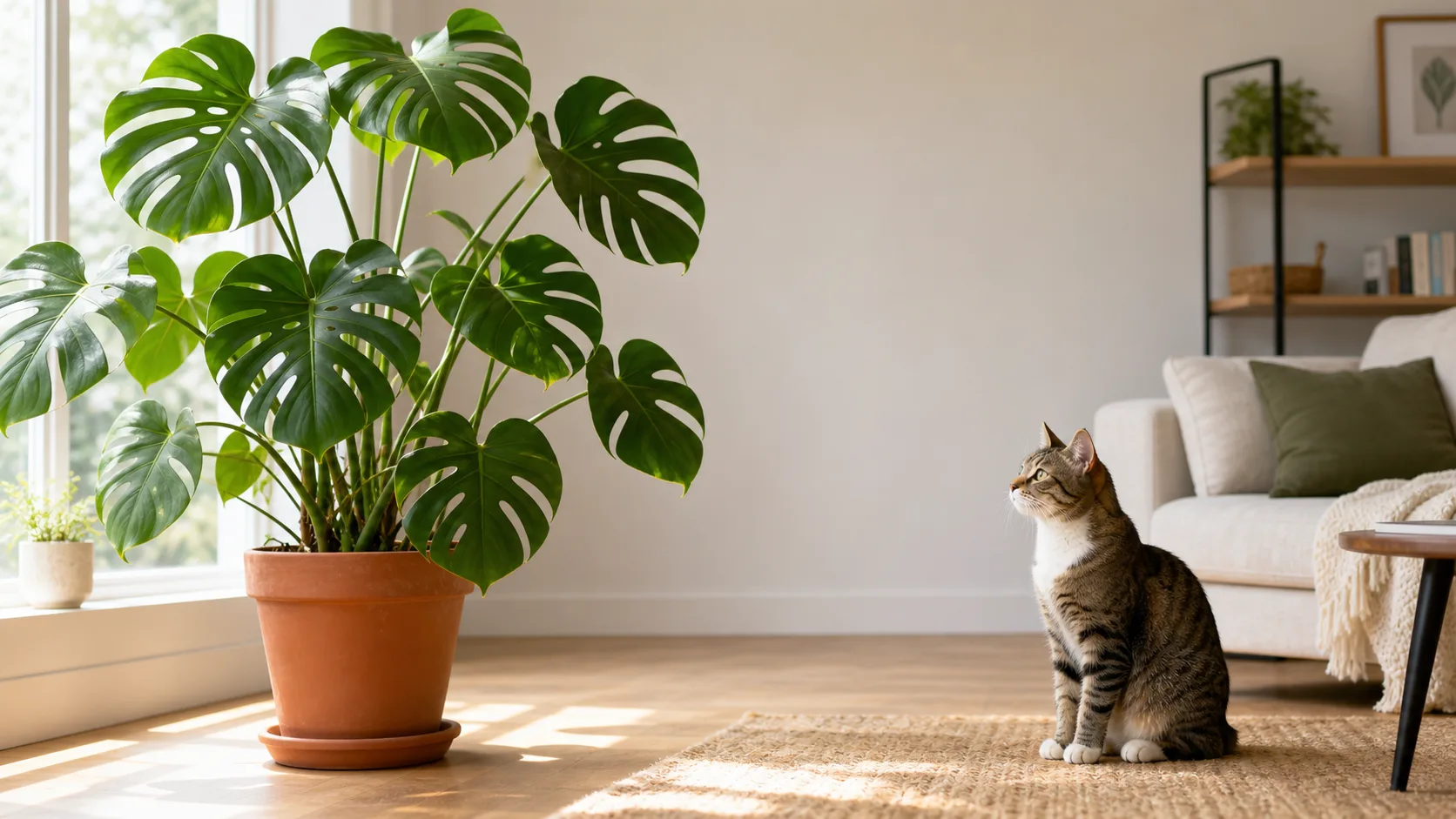
If you are asking whether monstera is toxic to cats, you already know your cat has been eyeing that big leafy plant in the corner. The short answer is yes, monstera is toxic to cats, and the mechanism behind it matters more than most guides bother to explain.
Monstera deliciosa contains insoluble calcium oxalate crystals. When a cat bites into a leaf or stem, those tiny needle-like crystals embed in the soft tissue of the mouth, throat, and tongue. The result is immediate oral pain, which is actually one reason most cats stop after a bite or two. That does not make the plant safe to leave within paw reach. It makes it worth understanding properly, so you know what to watch for and when to actually worry.
What Most Guides Miss About Monstera and Cats
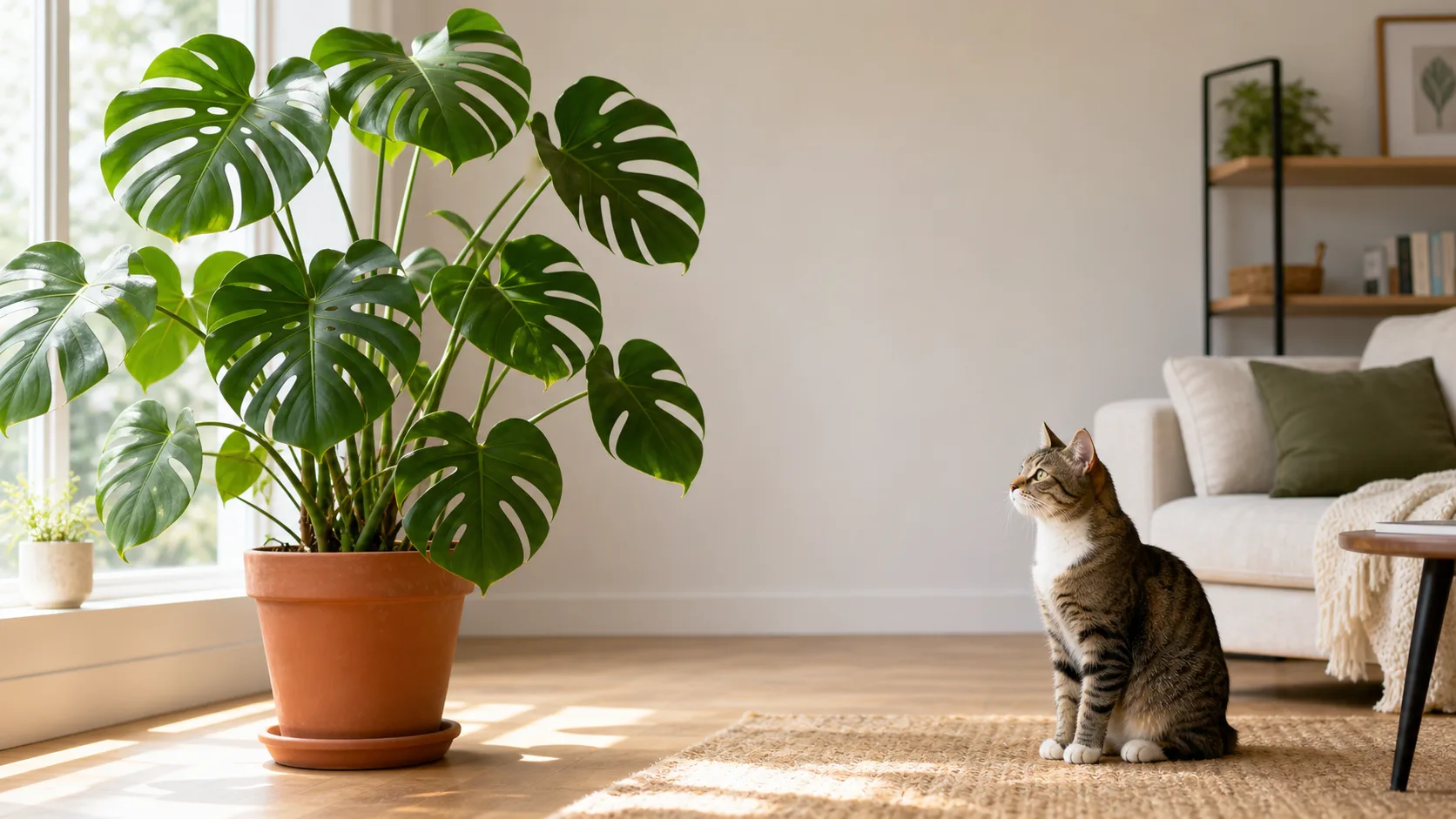
Monstera is unsafe to chew, so separate cat and plant first while you confirm access and observe the cat.
Most articles online repeat the same line: monstera is toxic to cats, call your vet, end of story. What they skip is the crucial middle ground between “completely safe” and “rush to the emergency clinic.”
The common misdiagnosis here is treating monstera toxicity the same as lily toxicity. Lilies cause acute kidney failure in cats even in tiny amounts. Monstera does not work that way. The calcium oxalate crystals cause localized irritation, not systemic organ damage. That distinction changes how you respond, how urgently you need to act, and whether keeping the plant in your home is a realistic option.
The practical first check: look at your cat’s behavior within the first ten to fifteen minutes. A cat that chewed a monstera leaf and immediately pulled back, is drooling, pawing at its mouth, or sneezing is showing the expected irritation response. That is uncomfortable but not an emergency in most cases. A cat that swallowed a significant amount and is showing repeated vomiting, throat swelling, or any breathing difficulty is a different situation that needs a vet call right away.
Most cat owners who have lived through a monstera chew incident discover after the fact that their cat was fine within an hour or two. The problem is not knowing that in the moment, which is why a clear triage framework is more useful than a generic “toxic, keep away” label.
First, Confirm Your Plant Is the One on the Warning List
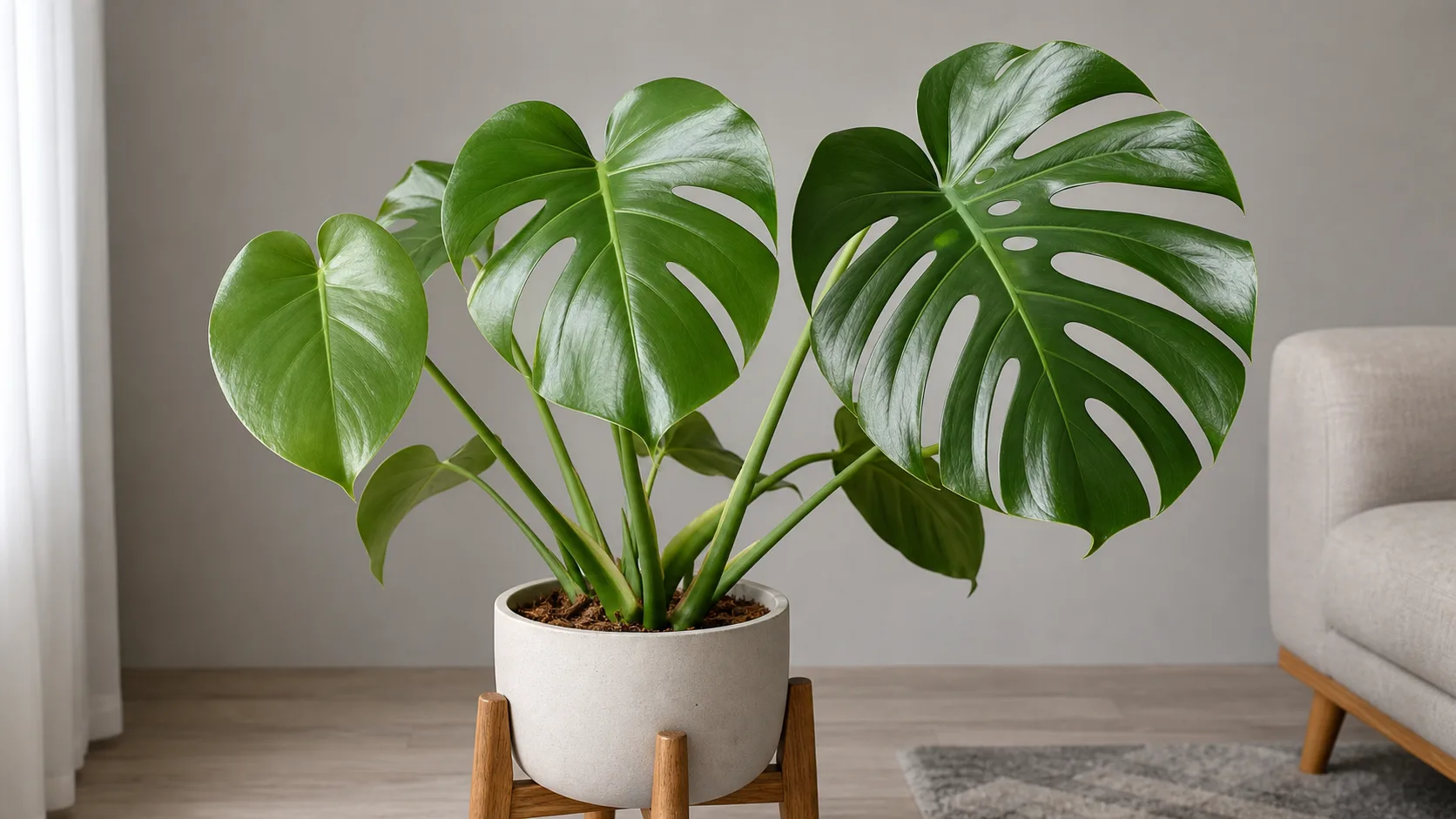
Juvenile whole leaves, later edge splits, and mature fenestrations help confirm that the plant is Monstera deliciosa.
One thing that trips up a lot of cat owners is the naming. Monstera deliciosa is sold and labeled under several different common names depending on where you bought it:
- Swiss cheese plant
- Ceriman
- Cutleaf philodendron
- Split-leaf philodendron
- Mexican breadfruit
- Hurricane plant
According to NC State Extension, all of these names refer to the same plant: Monstera deliciosa. The ASPCA lists this plant under three separate common-name entries, including Ceriman, Swiss Cheese Plant, and Cutleaf Philodendron, all pointing to the same calcium oxalate toxicity and the same cat risk profile. If you searched your plant label and landed on a toxicity page for “ceriman” or “cutleaf philodendron,” that is still your plant, and the warning still applies.
If your plant has large heart-shaped leaves with natural splits and fenestrations as it matures, and it was sold under any of the names above, you are dealing with Monstera deliciosa.
What the Toxicity Actually Means
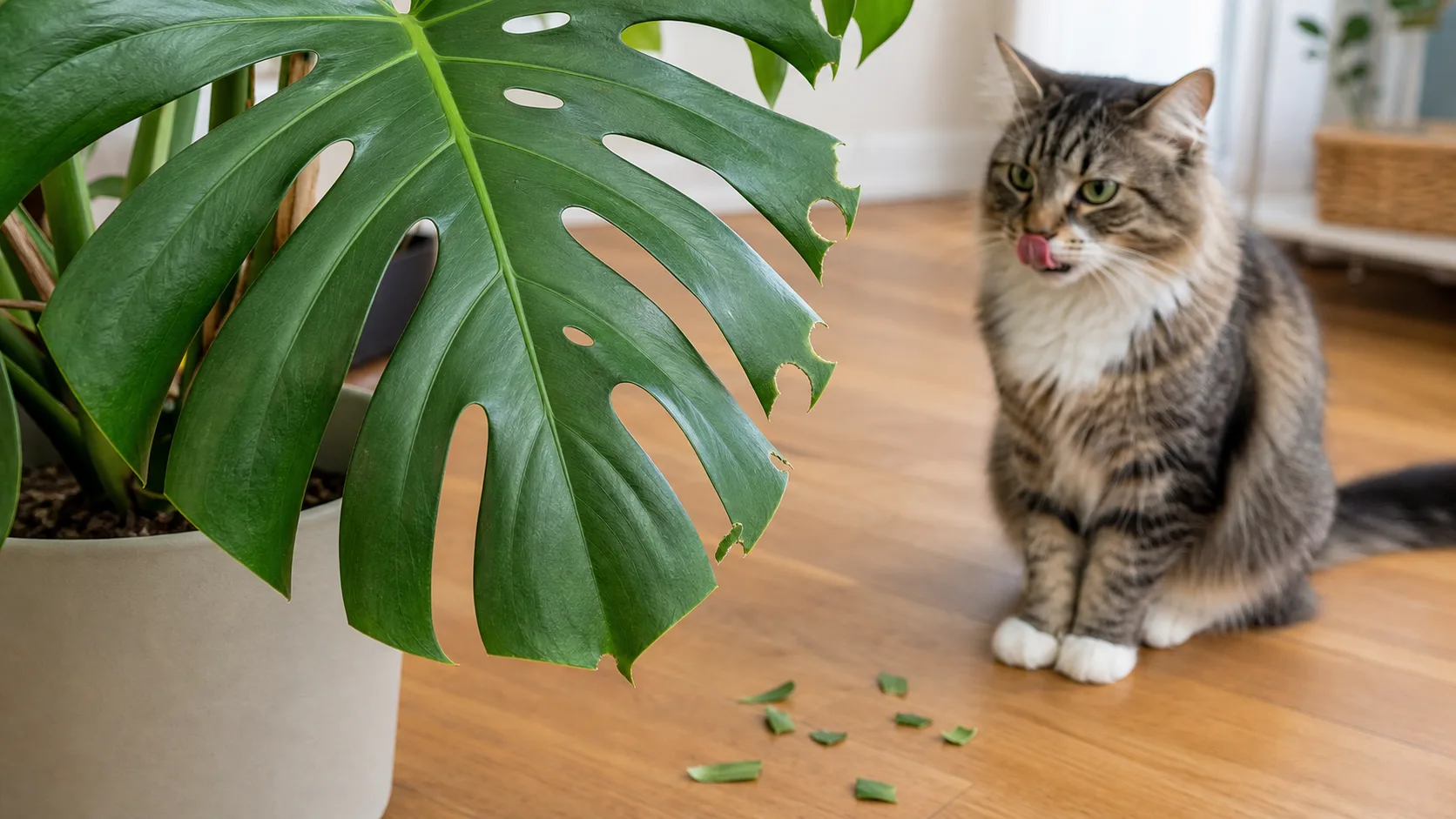
Fresh edge damage and leaf fragments are more useful exposure evidence than one vague symptom alone.
“Toxic to cats” covers a very wide range of severity. With monstera, the mechanism is localized irritation, not systemic poisoning.
According to the ASPCA, Monstera deliciosa causes oral irritation, pain and swelling of the mouth, tongue, and lips, excessive drooling, vomiting, and difficulty swallowing in cats. The University of Florida IFAS Extension adds that the needle-like insoluble calcium oxalate crystals irritate the mouth, throat, eyes, and digestive tract on contact, and that all parts of the plant are toxic.
Here is the honest picture of what that looks like in practice:
- Your cat bites the leaf
- The crystals fire into the mouth tissue on contact
- Your cat feels immediate burning or stinging
- Most cats pull back and stop eating
The result is usually oral irritation: pawing at the mouth, drooling, reluctance to eat or drink, or some swelling of the lips and tongue. These symptoms are real and uncomfortable, but they typically resolve within one to two hours when exposure was limited to a single chew.
A veterinarian-reviewed explainer from Cat-World notes that most cats stop chewing because the bite is immediately painful, which is why symptoms are usually limited to the mouth and throat. Difficulty breathing is identified as the major red-flag escalation point that distinguishes routine exposure from a case needing urgent care.
The concern rises when a significant amount is swallowed rather than bitten and dropped, when swelling extends into the throat, when your cat shows difficulty breathing or swallowing, or when vomiting is repeated rather than a single episode.
Cat-Exposure Decision Tree: What to Do After a Chew
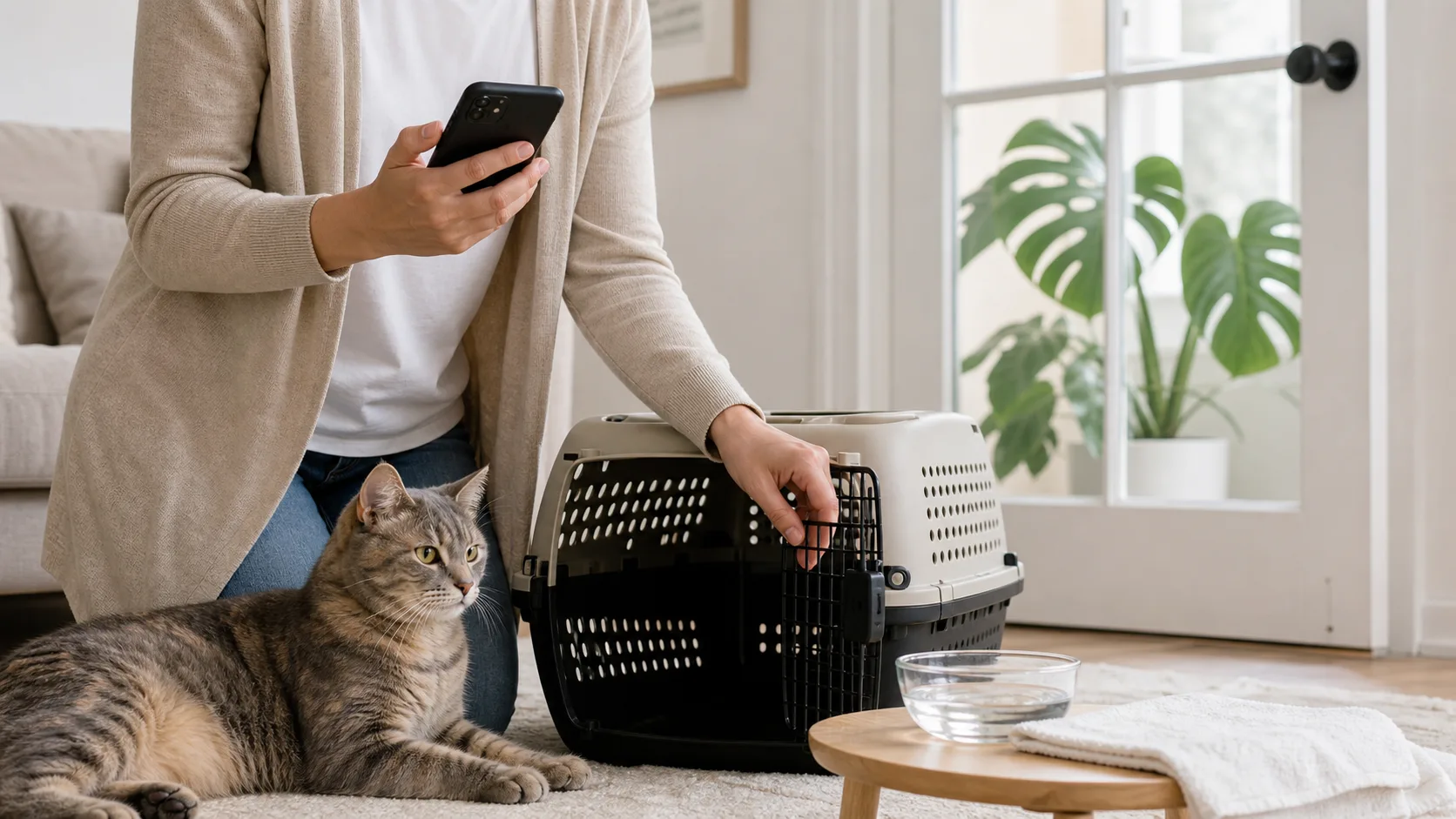
Calm first steps are to block access, call for case-specific guidance, and keep the carrier ready.
Use this as your triage starting point, not a replacement for veterinary advice.
Your cat chewed a monstera leaf and stopped: Watch for the next 30 to 60 minutes. Drooling, pawing at the face, and reluctance to eat are expected. Offer fresh water. If symptoms ease within an hour, monitor normally.
Your cat swallowed a significant portion (not just a bite): Call your vet or the ASPCA Animal Poison Control Center (888-426-4435). Give an estimate of how much was consumed and your cat’s weight. They will advise whether to monitor at home or bring the cat in.
Swelling that does not subside within an hour: Call your vet. Swelling of the tongue or throat can progress, and it is better to have a vet confirm everything has settled than to wait and see.
Repeated vomiting, difficulty swallowing, or any change in breathing: This is a vet call right now, not a watch-and-wait situation. Open-mouth breathing in a cat that is not overheated is always worth treating as urgent.
Do not wait for breathing symptoms to appear before calling. If your cat is having trouble swallowing, that is already the moment to pick up the phone.
Common Mistakes Cat Owners Make After a Monstera Chew
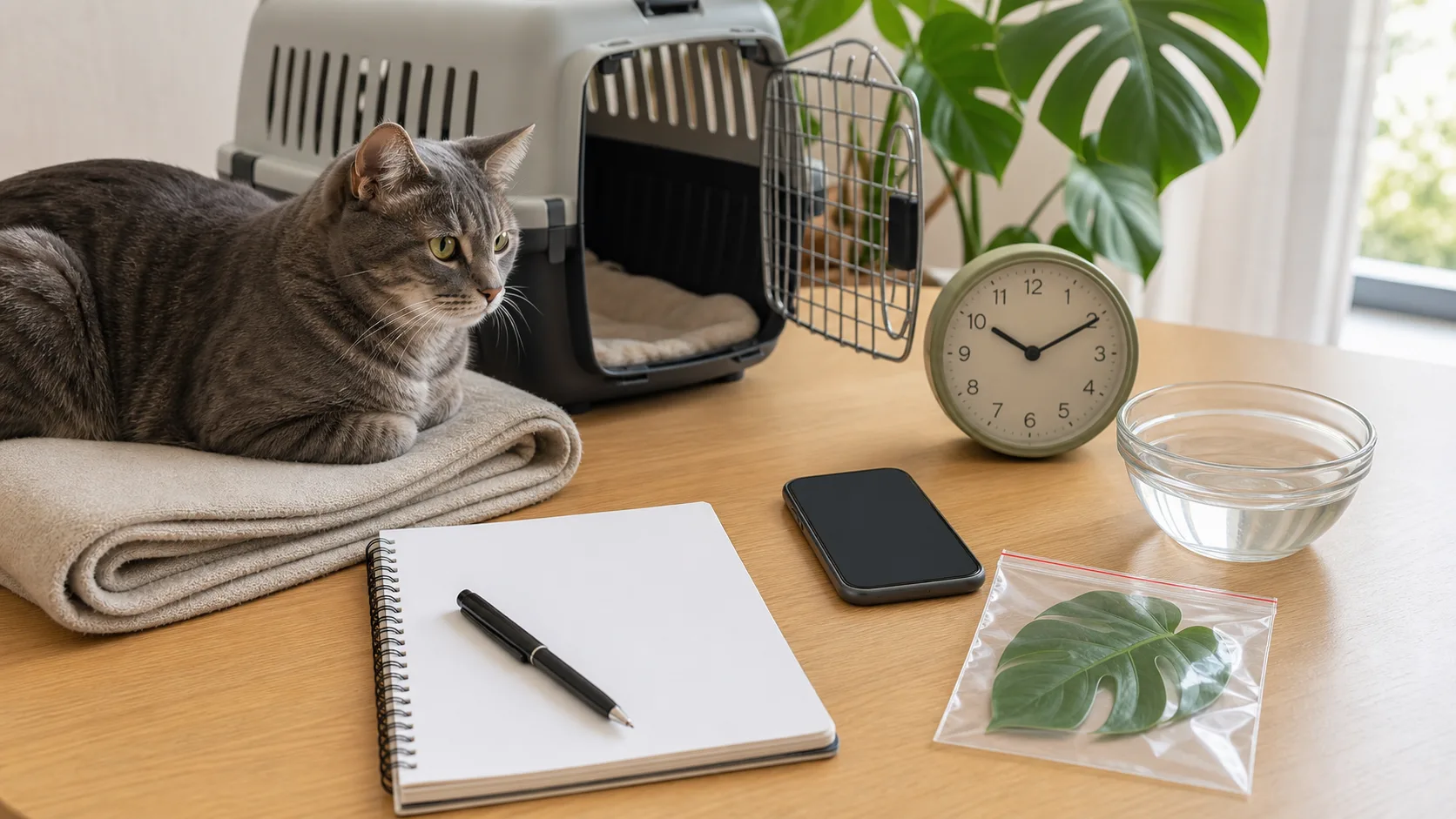
Record timing, save a plant sample, and prepare to call or travel instead of improvising home treatments.
Treating it like a lily emergency. Lily toxicity is a genuine rush-to-the-vet situation with any level of exposure. Monstera is not in that category. Knowing the difference helps you stay calm enough to observe clearly, rather than panicking or, on the other end, dismissing real symptoms because “it is not as bad as a lily.”
Trying to rinse the cat’s mouth aggressively. If your cat will drink fresh water voluntarily, that is helpful. But holding your cat down and trying to flush the mouth causes stress and raises the risk of aspiration. Let the cat drink if it wants to. Do not force it.
Assuming past bites make future bites low-risk. “She chewed it last month and was fine” is understandable logic. The issue is that repeated access leads to repeated exposure, and cumulative irritation from calcium oxalate crystals is real. A cat that keeps returning to the plant may eventually take a larger dose than a single curious nibble delivers.
Thinking only the leaves are the problem. All parts of Monstera deliciosa contain insoluble calcium oxalate crystals, according to UF/IFAS Extension. This includes the stems, roots, and sap. A cat that chews a fallen stem, bats at the roots during repotting, or contacts the sap when you take a cutting is still at risk. The leaf is not the only part that matters.
Why Some Cats Keep Going Back
You might think the immediate pain from the first bite would deter any cat permanently. Often it does. But cats also return to plants out of habit, boredom, or simply because the plant sits in a spot the cat already spends time in.
A few things make repeated exposure more likely:
- The plant is at floor level and easy to access at any time
- The cat has no alternative chewing outlet like cat grass or silver vine
- The plant is near a window where the cat already spends morning time
- The cat is young and less cautious about new textures
This is especially worth watching in spring and summer, when monstera pushes soft new growth that may attract cats more than older, toughened leaves. And when cats spend more time indoors in winter, with less outdoor stimulation, boredom-driven plant investigation increases. If your cat has already shown interest in the monstera and the seasons are shifting toward more indoor time, that is a good moment to reassess placement before a chewing habit takes hold.
Repeated nibbling is worth taking seriously even when each individual chew looks mild. Calcium oxalate crystals cause cumulative irritation if a cat keeps returning to the same plant, and chronic access is a different risk profile than a single curious bite.
Safer Placement: Realistic Options If You Want to Keep the Plant
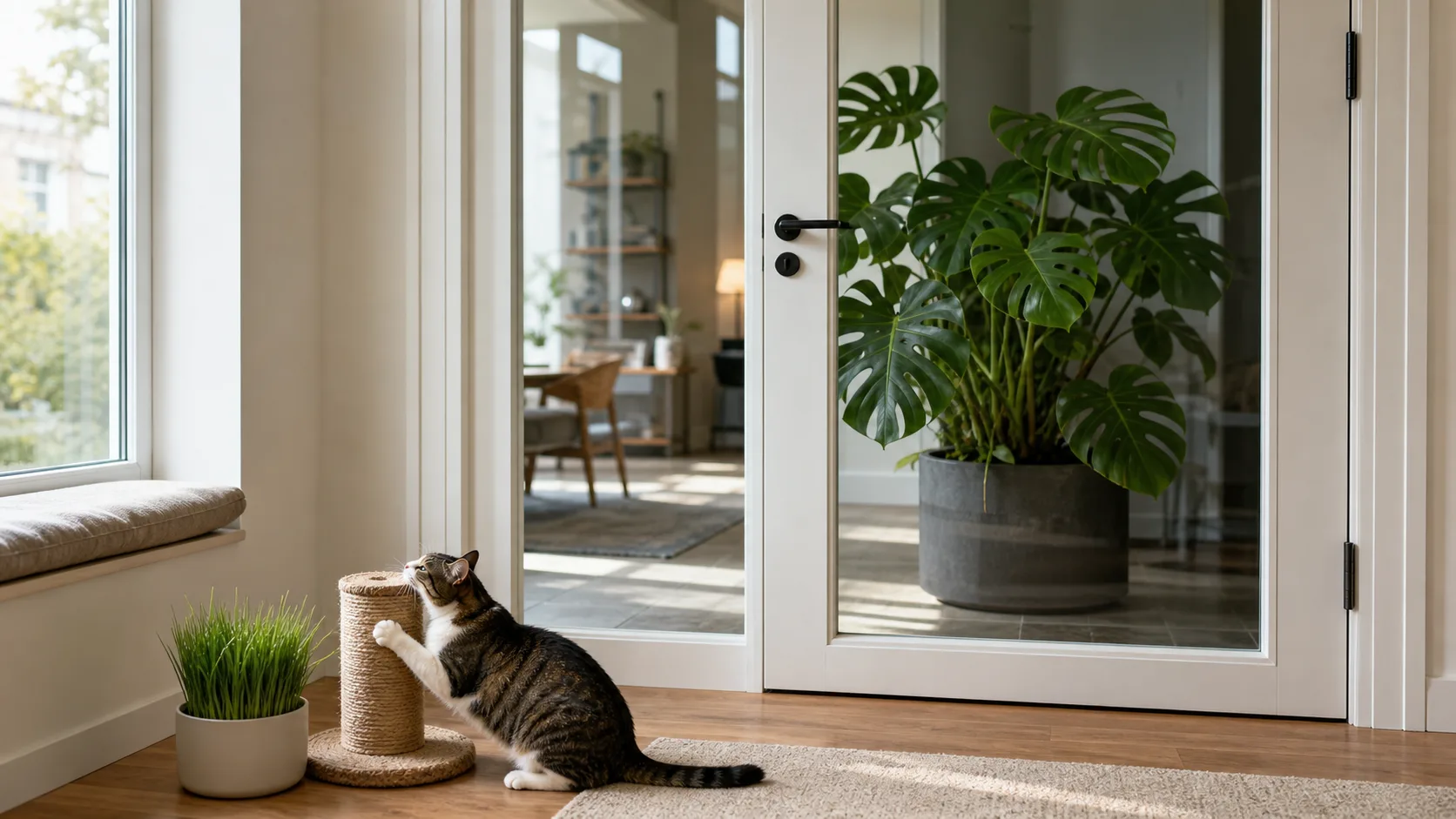
A genuinely closed door creates a reliable barrier, while cat grass and a scratcher provide safer enrichment.
Removing the plant is always the safest choice if your cat is a dedicated chewer. But monstera can grow into a substantial plant, and not every owner is ready to give one up. There are realistic middle-ground options.
Height is your best tool. Getting the plant onto a high shelf, plant stand, or dedicated plant room puts physical distance between the leaves and the cat. The bigger the plant, the harder this becomes, but even lifting a monstera a meter off the floor removes casual ground-level access for most cats. If moving the plant to a spot away from its usual window means working around light, the grow lights guide covers supplemental lighting options that can keep monstera healthy in interior placements.
A room with a closed door. If you have a space you can keep closed during the day, monstera lives fine there and your cat never develops access habits. This is the most reliable option for households with persistent chewers.
Deterrent textures and scents. Citrus-scented sprays around the pot base, sticky mats near the planter, or aluminum foil on the soil surface discourage some cats from approaching. These work best for cats that are mildly curious rather than actively chewing.
Cat grass and silver vine as redirects. Offering cat grass or silver vine gives cats a sanctioned chewing target. Some cats redirect quickly when they have their own plant to interact with, especially if the alternative is placed near a sunny window they already like.
An honest look at your cat’s behavior. A cat that chewed once, reacted badly, and moved on is a different household than a cat that circles the plant pot every morning. If your cat is a repeat chewer with reliable access, the plant needs to move out of reach permanently.
The Keep-or-Rehome Checklist
Before deciding, work through these questions:
- Has your cat chewed the plant more than once? (Yes means the pain deterrent is not holding)
- Can you place the plant somewhere the cat genuinely cannot access it? (Floor-level plants in open-plan spaces are almost impossible to fully protect)
- Does your household have space for a high shelf, closed room, or dedicated plant area?
- Is your cat young, especially curious, or already a known plant chewer?
- Do you have other plants in the home that the cat also goes after?
If you answered yes to the first two questions and no to the third, rehoming the plant is the cleaner option. For households where access can be genuinely controlled, coexistence is realistic.
Pet-Safe Large-Leaf Alternatives
If you decide monstera is not the right fit right now, a few non-toxic alternatives give a similar lush, large-leaf look:
- Calathea and prayer plants: Non-toxic to cats and dogs, with dramatic patterned leaves. See how to care for calathea for what they need to thrive.
- Bird of paradise: The Strelitzia genus is listed as non-toxic to cats by ASPCA. The bird of paradise care guide covers what it needs for good growth.
- Peperomia: Wide variety of leaf shapes, all non-toxic. The peperomia varieties guide can help you find one that fits your light situation.
- Spider plant: Non-toxic and forgiving of imperfect care. The spider plant care guide covers the basics if you are new to it.
None of these replicate monstera’s fenestrated split-leaf shape, but they give a green, tropical feel without the toxicity concern.
If you want to keep exploring what large tropical plants are safe to grow alongside cats, the cat-safe plants guide covers a wider range of options including some that do well in lower light.
For another practical pet-safety check, see Is Spider Plant Toxic to Cats? Why Cats Chew It and What to Do for the risk level and the next steps.
Frequently Asked Questions
Is monstera toxic to cats? Yes. Monstera deliciosa is toxic to cats due to insoluble calcium oxalate crystals present in all parts of the plant, including leaves, stems, and roots. The ASPCA lists it as toxic under three separate common-name entries: Ceriman, Swiss Cheese Plant, and Cutleaf Philodendron.
What happens if a cat eats a monstera leaf? The calcium oxalate crystals embed in the soft tissue of the mouth and throat on contact, causing immediate pain and burning. Most cats drool, paw at their mouth, and stop chewing. Vomiting, reluctance to eat or drink, and mild swelling of the lips and tongue can follow. Most mild exposures resolve within one to two hours. Swelling that does not subside, repeated vomiting, difficulty swallowing, or breathing changes are signs to call a vet immediately.
Is one bite of monstera dangerous for a cat? For most adult cats, a single bite that triggers immediate oral pain and causes the cat to stop eating is unlikely to cause serious harm. The mechanism is localized irritation, not systemic poisoning. That said, the severity depends on how much was swallowed, the size and health of the cat, and whether swelling is confined to the mouth. When in doubt, call your vet rather than guessing.
Which parts of the monstera plant are toxic to cats? All parts of the plant contain insoluble calcium oxalate crystals, according to UF/IFAS Extension. This includes the leaves, stems, roots, and any sap that contacts tissue. There is no safe part to let a cat chew.
My cat chewed a monstera leaf. What should I do right now? Offer fresh water if your cat will drink voluntarily. Watch for the next 30 to 60 minutes. If symptoms are limited to drooling and pawing at the mouth and ease within an hour, continue monitoring at home. If swelling does not subside, vomiting is repeated, your cat cannot swallow, or breathing is affected, call your vet or the ASPCA Animal Poison Control Center at 888-426-4435.
Are all monstera species toxic to cats? UF/IFAS Extension notes that all Monstera species are toxic to cats, dogs, and humans due to insoluble calcium oxalate crystals. This includes Monstera deliciosa, Monstera adansonii, Monstera peru, and related species. If you have questions about a specific variety, the ASPCA Poison Control line can confirm.
Can I keep a monstera if I have cats? Many cat owners coexist with monstera by controlling access. The realistic options are placing the plant in a room the cat cannot enter, elevating it genuinely out of reach, or using deterrents for cats that show only mild interest. If your cat is a persistent chewer who has already returned to the plant more than once, removing or rehoming the monstera is the safer long-term choice.
What are the signs I should call a vet after monstera exposure? Call your vet if swelling of the mouth or throat does not settle within an hour, vomiting happens more than once or twice, your cat seems unable to swallow comfortably, or you notice any change in breathing. For significant ingestion, do not wait for symptoms to escalate before making the call.
About This Article
The toxicity information in this article is based on primary sources reviewed on 2026-07-18: ASPCA Toxic and Non-Toxic Plants listings for Ceriman, Swiss Cheese Plant, and Cutleaf Philodendron (all Monstera deliciosa); UF/IFAS Extension publication on common poisonous houseplant species; and NC State Extension Plant Toolbox entry for Monstera deliciosa. Practical triage guidance references a veterinarian-reviewed explainer from Cat-World. Community discussion was used for pain-point language only and not as safety evidence. This article is not a substitute for professional veterinary advice.
For a broader look at which houseplants are safe to grow alongside cats, see the cat-safe indoor plants guide. If you are growing monstera and want care tips for the plant itself, the Monstera deliciosa care guide covers light, watering, and propagation.