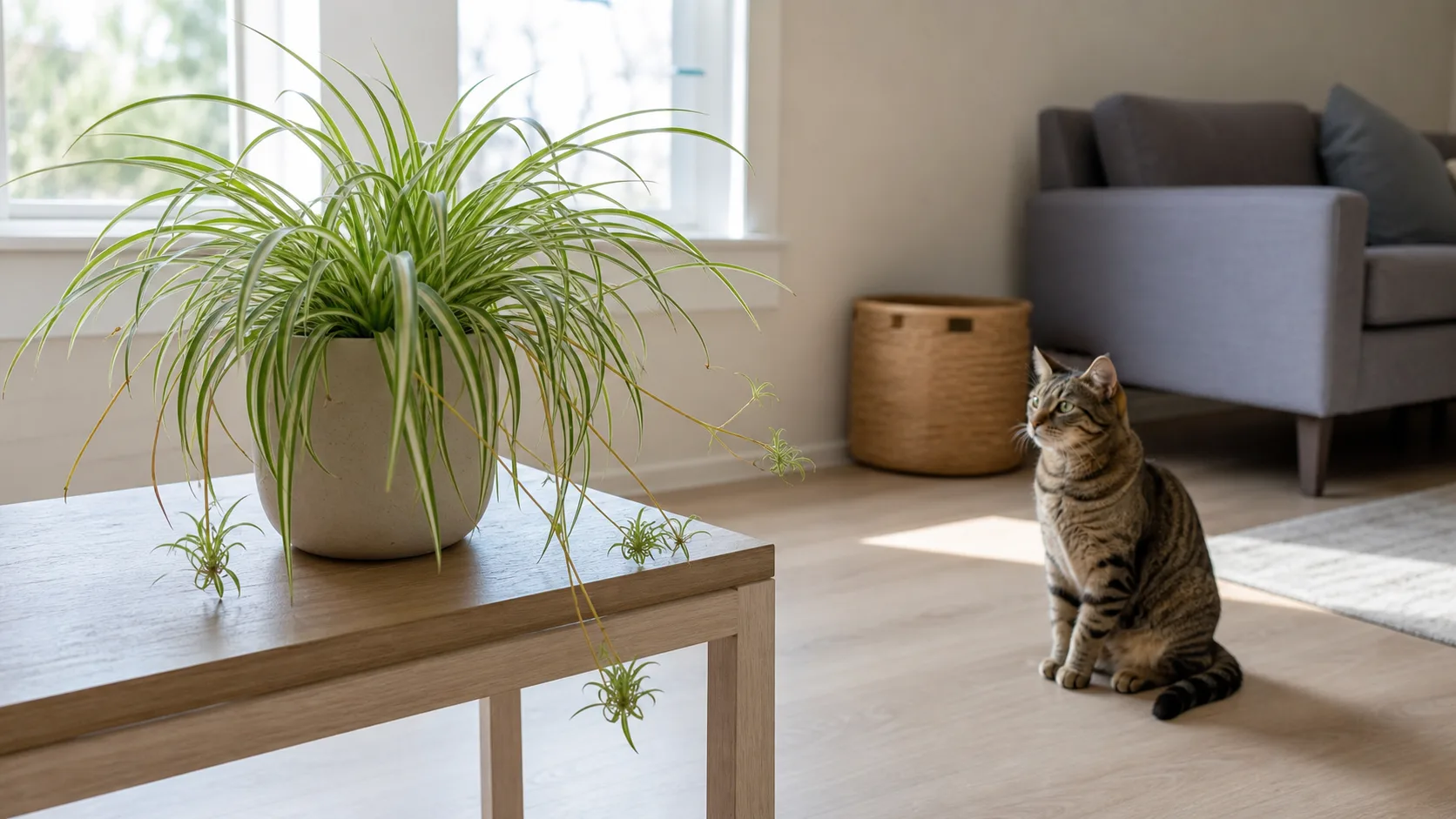
If you just found your cat chewing a spider plant, you probably do not want a long botany lecture. You want to know two things fast: is your cat in danger, and what should you do next.
The short answer is reassuring. A true spider plant, Chlorophytum comosum, is classified as non-toxic to cats by the ASPCA. But that does not mean nothing can happen after a chew. Cats often vomit after eating plant material, and this particular plant creates extra confusion because the common name “ribbon plant” is sometimes used for a different plant that is toxic.
So the real answer is a little more useful than a simple yes or no: if your cat chewed a verified spider plant, serious poisoning is not the expected problem. The things that matter are confirming the plant’s identity, watching the symptom pattern, and making a plan if your cat keeps coming back for another bite.
Quick Action Card: What to Do in the Next 10 Minutes
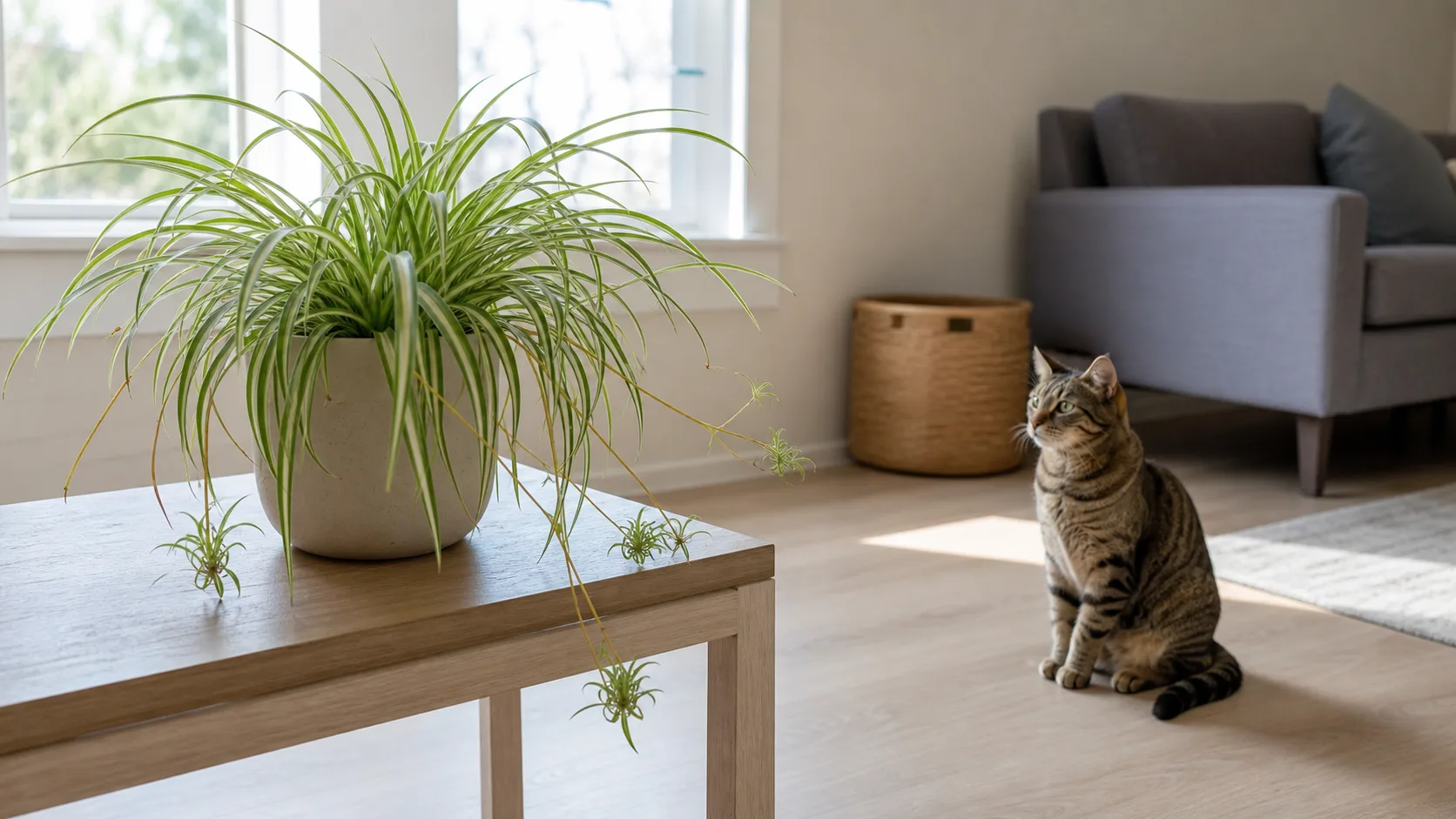
Confirm the plant and separate it from the cat first, because identity changes the safety decision.
- Move the plant out of reach. Do not wait to see whether your cat goes back for more.
- Confirm what plant you actually have. A true spider plant is Chlorophytum comosum. If your plant has upright cane-like stems instead of arching leaves and dangling baby plantlets, pause before assuming it is safe.
- Do not induce vomiting. Offer fresh water and let your cat settle.
- Watch the pattern, not one isolated symptom. A small nibble with one brief vomit is very different from repeated vomiting, lethargy, wobbling, or dilated pupils.
- Call for help if the plant identity is uncertain or symptoms escalate. Your veterinarian or animal poison control can help you sort out species, amount eaten, and risk.
What Most Care Guides Miss
Most articles answer is spider plant toxic to cats with a quick “no” and stop there. That is technically correct, but it misses the part owners actually need when they are standing over a chewed plant.
The first missed piece is misidentification. “Spider plant” and “ribbon plant” are both used for Chlorophytum comosum, but “ribbon plant” is also used in some places for Dracaena sanderiana. Those are not interchangeable names in a cat emergency. One points to a non-toxic plant, the other can cause real toxicity signs.
The second missed piece is after-care. “Non-toxic” does not tell you whether vomiting once is normal, whether you should feed right away, or when it is time to stop monitoring and call. If your cat already ate the plant, that practical decision layer matters more than the headline.
A useful first check is this: look at the plant structure before you interpret the symptoms. If you can confirm a rosette of narrow arching leaves and trailing runners with baby plantlets, you are likely dealing with true spider plant. If you cannot, use the more cautious path.
Is Spider Plant Toxic to Cats?
A true spider plant, Chlorophytum comosum, is considered non-toxic to cats by the ASPCA. That is the core safety answer.
What non-toxic means here is important. It means the plant is not known for causing poisoning in the way truly toxic houseplants do. It does not mean a cat can chew a handful of leaves and feel absolutely nothing. Cats are obligate carnivores, and their stomachs often protest when they eat plant matter. Mild stomach upset, gagging, or a brief vomit can happen even with safe plants.
So if your cat ate spider plant and then threw up once, that can still fit the expected pattern for a non-toxic plant exposure. The question becomes whether the symptoms stay mild and brief, or whether they start to look bigger than a simple plant nibble.
Expert Note: Why the Name Matters So Much
This is where a lot of panic, and a lot of bad reassurance, comes from.
- ASPCA lists spider plant, Chlorophytum comosum, as non-toxic to cats.
- ASPCA also lists Chlorophytum under common names including ribbon plant and spider ivy, again as non-toxic.
- Pet Poison Helpline warns that “ribbon plant” can also refer to Dracaena sanderiana, which is toxic to cats and may cause drooling, vomiting, dilated pupils, and wobbliness.
That is why the safest rule is simple: trust the species, not just the common name.
Spider Plant vs. Toxic “Ribbon Plant” at a Glance
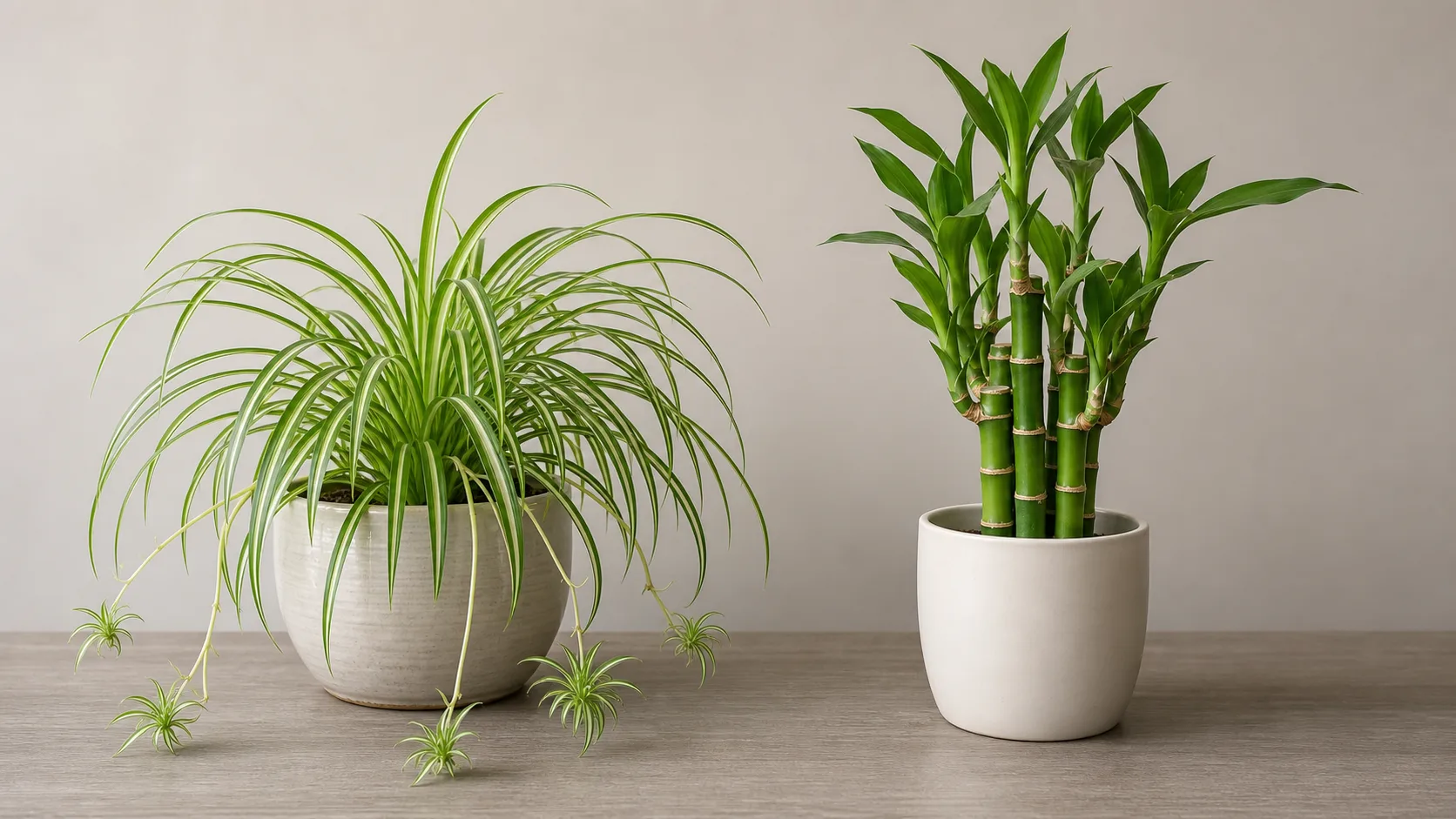
Arching leaves and baby plantlets identify spider plant; upright segmented canes point toward toxic Dracaena.
| Feature | True spider plant, Chlorophytum comosum | Dracaena sanderiana sometimes called ribbon plant |
|---|---|---|
| Growth habit | Low rosette with long arching leaves | Upright stems or canes with leaves coming off the stem |
| Leaves | Narrow, grassy, flexible, often striped | Broader, stiffer leaves on a more upright plant |
| Plantlets | Common, on dangling runners | No dangling spiderettes |
| Cat safety | Non-toxic | Toxic |
| Best next step if chewed | Monitor symptoms if identity is confirmed | Call if exposure is possible or symptoms appear |
The decision rule that helps most in real life: runners and baby plantlets strongly support spider plant identity. A vague plant tag does not.
For a side-by-side care comparison of Dracaena structure and growth habit, the dracaena care guide can help if you are trying to identify a mystery plant in your home.
Why Cats Keep Chewing Spider Plants
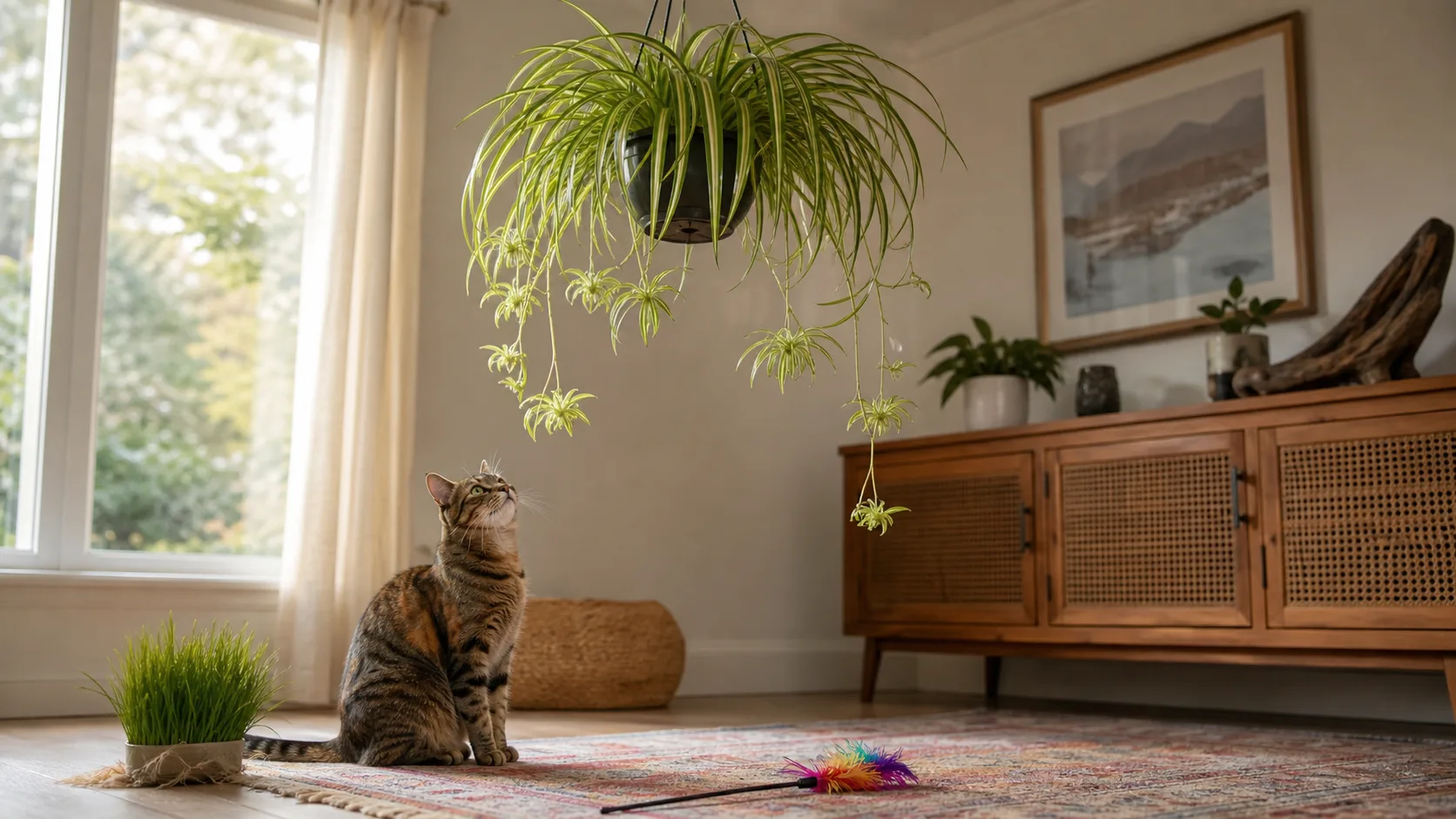
Moving leaves and dangling spiderettes can attract repeat attention even without proven catnip-like chemistry.
If your cat acts weirdly obsessed with this plant, you are not imagining it.
Spider plants are irresistible in a very cat-specific way. The leaves are thin, springy, and easy to bat. Mature plants throw out long runners with baby plantlets that dangle and bounce. To a cat, that can feel less like a houseplant and more like a toy hanging at mouth level.
You may also run into the claim that spider plants are mildly catnip-like or hallucinogenic for cats. That idea is repeated all over the internet, but the careful version is this: owner observations are common, hard proof is limited. It is fair to say many cats seem unusually drawn to spider plants. It is not fair to present the “gets them high” claim as settled science.
Practically, the reason almost does not matter. If your cat has already targeted the plant once, assume she may do it again.
Decision Tree: My Cat Ate Spider Plant, What Now?
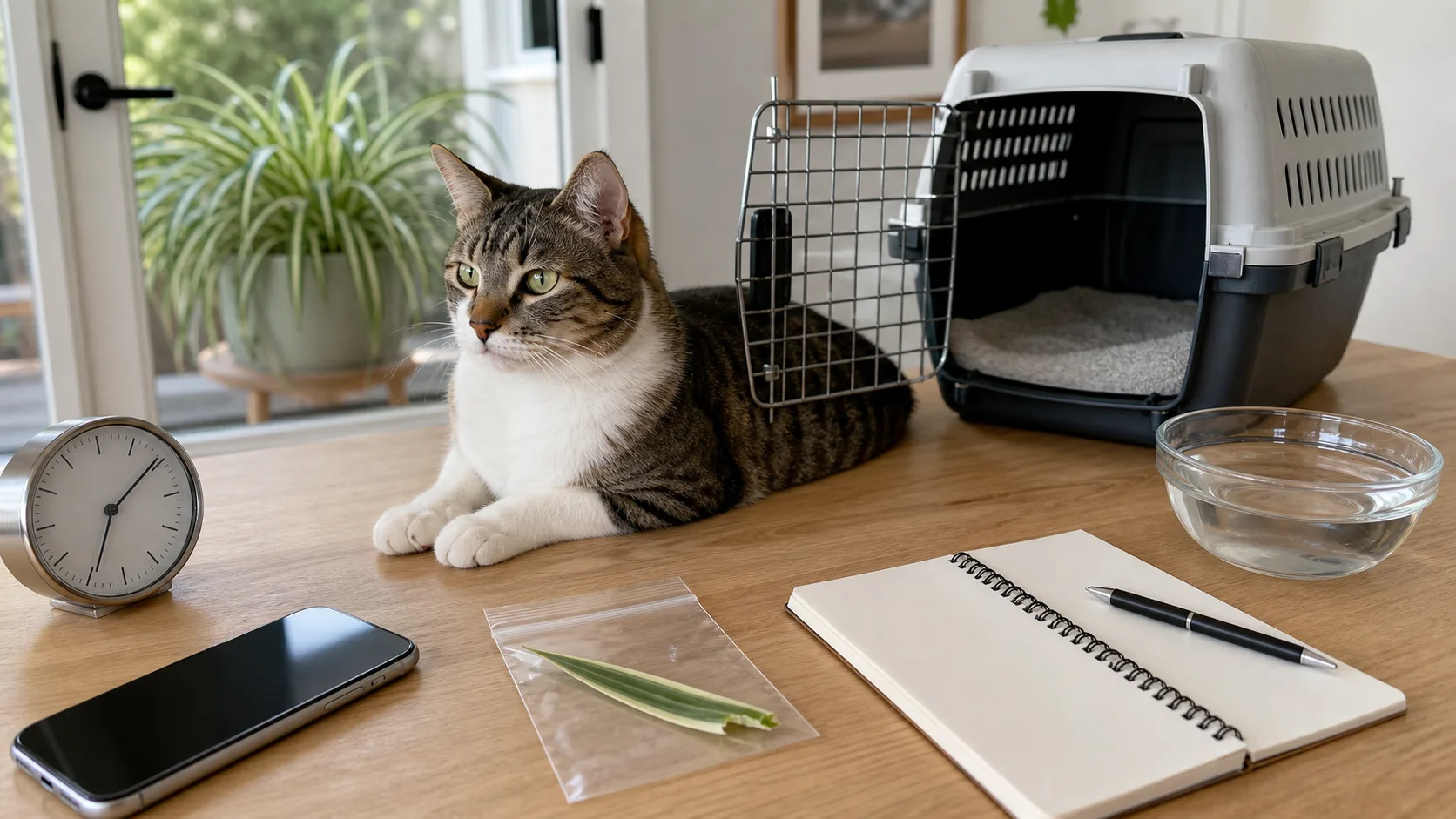
Save a sample, record timing and symptoms, and keep the carrier ready if the pattern escalates.
Use this instead of relying on a generic safe-or-dangerous label.
Scenario 1: You did not actually see chewing
Your cat was near the plant, but you are not sure any leaf was eaten.
What to do: Check for missing or torn foliage, then monitor. No emergency response is needed if your cat is acting normal.
Scenario 2: A small nibble, no symptoms
You saw your cat chew a tip or take a small bite, but she seems completely fine.
What to do: Remove access to the plant and watch for a few hours. Many cats have no obvious reaction.
Scenario 3: Chewing followed by one brief vomit or mild stomach upset
This is the scenario most owners are really asking about.
What to do: Offer water, give your cat some quiet time, and continue to monitor. One vomit after chewing plant material can happen even when the plant itself is non-toxic.
Scenario 4: Symptoms are repeating or the plant identity is fuzzy
Vomiting keeps happening, your cat seems tired, hides, looks unsteady, or you are suddenly not sure the plant was really spider plant.
What to do: Call your veterinarian or poison support. This is especially important if the plant may have been a Dracaena sold under a similar common name.
Symptom Diagnosis Card: Monitor vs. Call
| What you see | What it usually suggests | Best next step |
|---|---|---|
| No symptoms after a small confirmed chew | Likely minimal irritation or no effect | Monitor at home |
| One brief vomit, then normal behavior | Common GI irritation from eating plant matter | Offer water and watch |
| Repeated vomiting over several hours | More significant stomach upset or uncertain exposure | Call your vet |
| Lethargy, wobbling, dilated pupils, heavy drooling | Does not fit a simple spider-plant nibble well, especially if identity is uncertain | Call promptly |
The most useful mindset is trend over panic. A mild, short-lived reaction usually stays mild. A concerning exposure tends to keep unfolding.
What Not to Do After the Chew
A lot of well-meaning reactions make the next hour harder than it needs to be.
Do not force vomiting
Home remedies for vomiting can cause more harm than the plant did.
Do not keep offering food to “settle the stomach”
If your cat just vomited, let her pause. Fresh water matters more in the immediate moment.
Do not trust a common name you are half-remembering
If someone once told you “that ribbon plant is safe,” that is not enough if the plant has never been properly identified.
Do not assume non-toxic means unlimited access
A cat can still keep vomiting, keep shredding the plant, and keep turning your living room into a repeat problem even when the plant is technically safe.
Keeping Spider Plants in a Cat Home
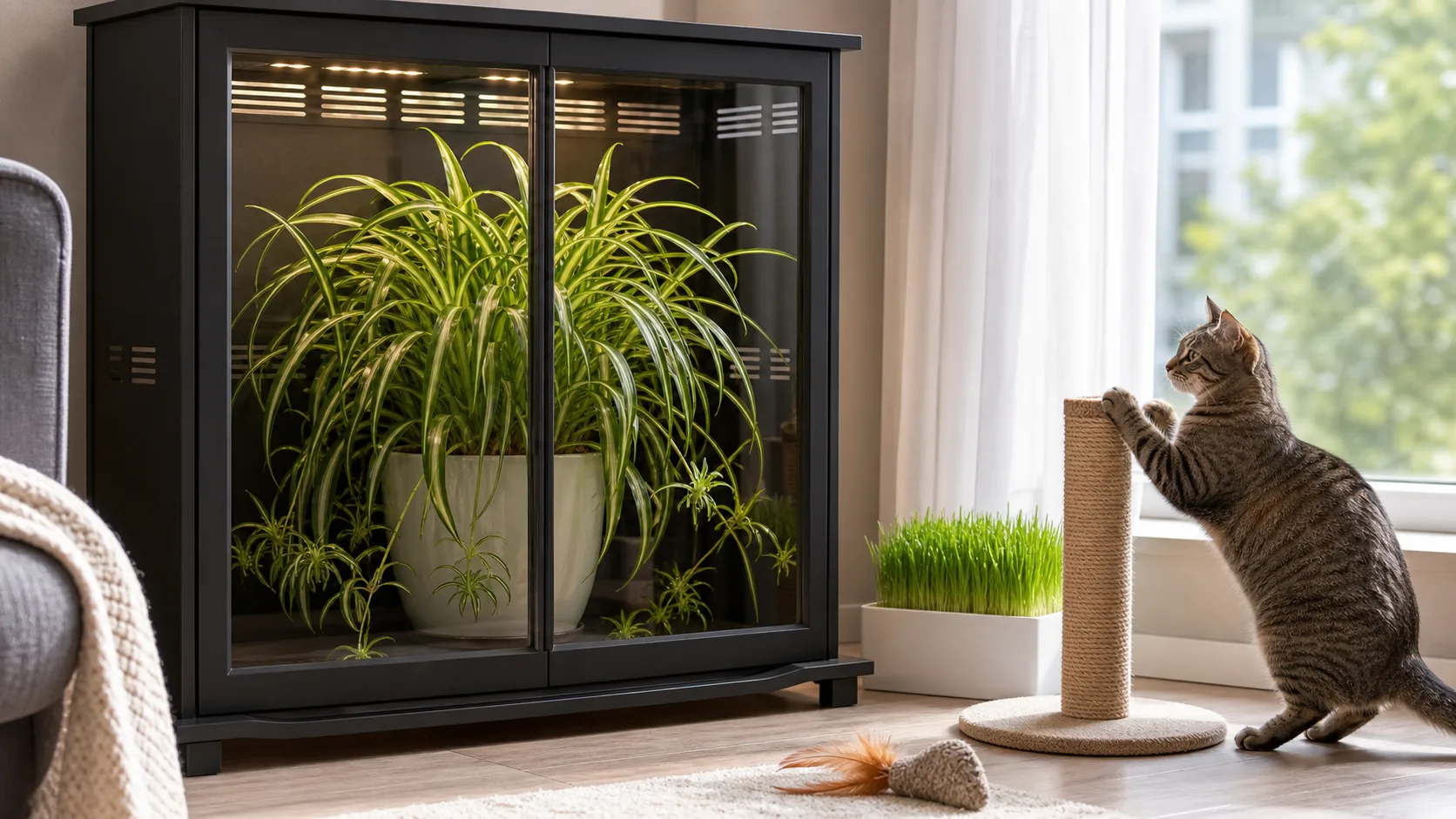
A closed physical barrier plus cat grass and a scratcher is more reliable than repeated redirection alone.
If your cat treats the spider plant like a salad bar, the goal is not just safety. It is prevention.
1. Raise the plant, but think about the runners
A hanging basket helps, but mature spider plants send out long stems with plantlets. Those baby plants can end up hanging right back into reach, or falling to the floor.
2. Use a room-level barrier if your cat is persistent
If you have a determined chewer, the most reliable fix is often simple separation. A bright room the cat cannot access works better than hoping deterrent sprays will solve everything.
3. Offer a safer chewing alternative
Cat grass is often the most practical replacement for cats that crave grassy texture. It will not distract every cat, but it gives her a better target than your spider plant.
4. Re-check after furniture changes
Cats are very good at discovering new launch points. A chair, shelf, or side table moved under a hanging basket can quietly undo your whole setup.
If you are also working out where a spider plant will actually thrive indoors, the spider plant care guide covers light, watering, and those fast-growing runners. If you want options that are generally easier to keep in a cat home, the cat-safe plants for indoors guide is a helpful next stop. And if your household has both cats and dogs, the dog-friendly houseplants guide helps you choose plants that stay low-risk for both pets.
Common Mistakes That Keep the Problem Going
Mistake 1: Treating one calm day like the issue is solved
Cats often go back when new growth appears or a runner drops lower.
Mistake 2: Hanging the pot but ignoring fallen plantlets
The parent plant may be out of reach while the babies end up right on the floor.
Mistake 3: Focusing only on toxicity
Sometimes the bigger household problem is not poisoning. It is repeated chewing, repeated vomiting, and a plant that keeps getting damaged.
Mistake 4: Using generic reassurance instead of a decision rule
“Spider plant is non-toxic” is true, but it is not enough when you are trying to decide whether to keep watching or make a phone call.
Seasonal Note: Why This Problem Gets Worse at Certain Times
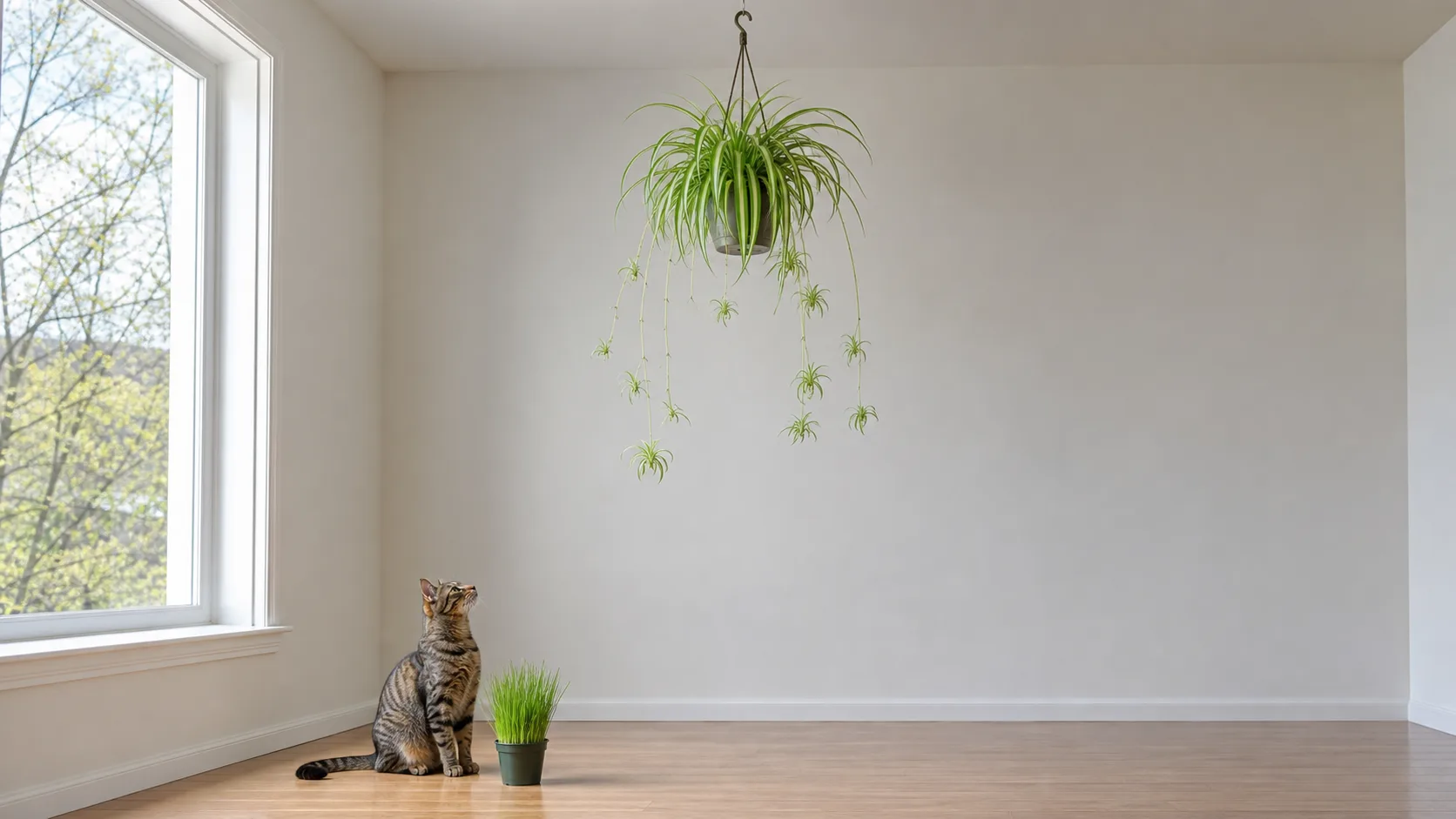
New spring runners can change an old safe setup, so recheck both reach and nearby launch points.
Spider plants often push more runners and baby plantlets during active growing periods, especially in brighter months. That means spring and summer can quietly increase chewing opportunities even if your setup worked fine in winter.
If your cat suddenly rediscovers the plant after months of ignoring it, check whether new dangling growth has changed the game. This is also a good time to rethink placement in rooms where summer light has improved enough to support a higher shelf or hanging spot.
For broader room-placement ideas in lived-in spaces, the best plants for bedroom guide is surprisingly useful because it focuses on where plants actually work around human routines, not just where they look good.
The Bottom Line
Yes, a true spider plant is non-toxic to cats. That is the good news.
The more complete answer is that non-toxic does not mean symptom-free, and common names are not enough for ID. If your cat chewed a verified spider plant, mild stomach upset is the most likely issue. If symptoms keep going, look more serious, or the plant might not actually be Chlorophytum comosum, it is time to call. If you are double-checking a higher-risk comparison plant, is snake plant toxic to cats covers one of the most common lookups in the same pet-safety cluster.
And if your cat keeps returning to the plant, do not frame this as a one-time scare. It is a setup problem you can solve with better placement, plantlet management, and a safer chewing alternative.
Frequently Asked Questions
My cat ate spider plant leaves. Should I call the vet right away?
Not always. If the plant is confirmed spider plant and your cat seems normal or only vomits once, monitoring at home is often reasonable. Call sooner if vomiting repeats, your cat seems unusually tired, looks wobbly, or you are not confident about the plant ID.
Can spider plants make cats high?
That claim is popular, but it is better treated as anecdotal than proven. Many cats are strongly attracted to spider plants. The exact reason is less clear than the internet often suggests.
Why does my cat keep chewing this one plant?
Spider plants have thin moving leaves and dangling plantlets, which are extremely tempting to many cats. Once your cat decides the plant is fun, she may keep coming back unless access changes.
Are spider plant babies safe for cats too?
Yes. The plantlets are the same plant and carry the same non-toxic classification. The issue is access, not a different toxicity level.
Is one vomit after chewing spider plant normal?
It can be. Cats commonly vomit after eating plant material because their digestive systems are not built for it. Repeated vomiting or behavior changes are the signs that deserve a closer look.
What if my plant was labeled ribbon plant?
Do not rely on that label alone. Ribbon plant can refer to true spider plant, but it can also refer to Dracaena sanderiana, which is toxic to cats. Check the shape and growth habit before you assume the ASPCA spider-plant listing applies.
Methodology and Sources
This article was reviewed against the search intent behind is spider plant toxic to cats on 2026-07-19, with special focus on the gap between simple toxicity labels and the real decisions cat owners need after a chew. Factual safety and identity guidance in this piece is grounded in ASPCA poison-control listings, Pet Poison Helpline’s warning about the ambiguous ribbon-plant name, and horticultural descriptions from NC State Extension and Missouri Botanical Garden.
Sources: ASPCA Animal Poison Control Center plant listings for spider plant and Chlorophytum; Pet Poison Helpline on ribbon plant; NC State Extension Gardener Plant Toolbox for Chlorophytum comosum; Missouri Botanical Garden Plant Finder for Chlorophytum comosum. Reviewed 2026-07-19.