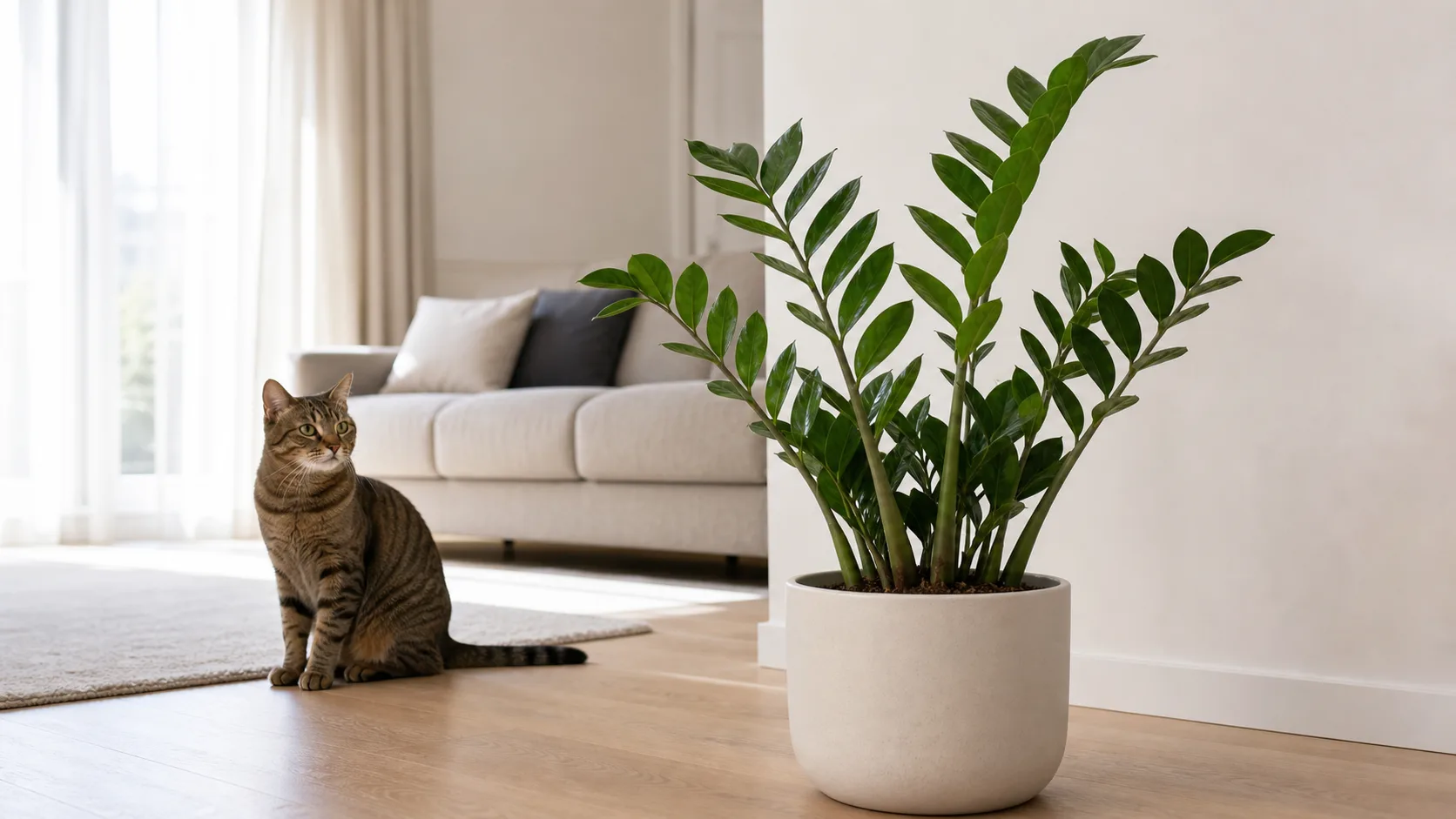
If you searched is ZZ plant toxic to cats because your cat just bit a leaf, rubbed against a broken stem, or keeps eyeing the pot like it is part toy and part snack, take a breath first. Yes, ZZ plant is a cat-risk plant, but the usual problem is painful irritation from insoluble calcium oxalate crystals, not the same emergency pattern we worry about with the most dangerous true poisonings.
That distinction is what many quick answers skip, and it matters when you are standing in the kitchen trying to decide whether to rinse, watch, or leave for the vet right now.
The short answer
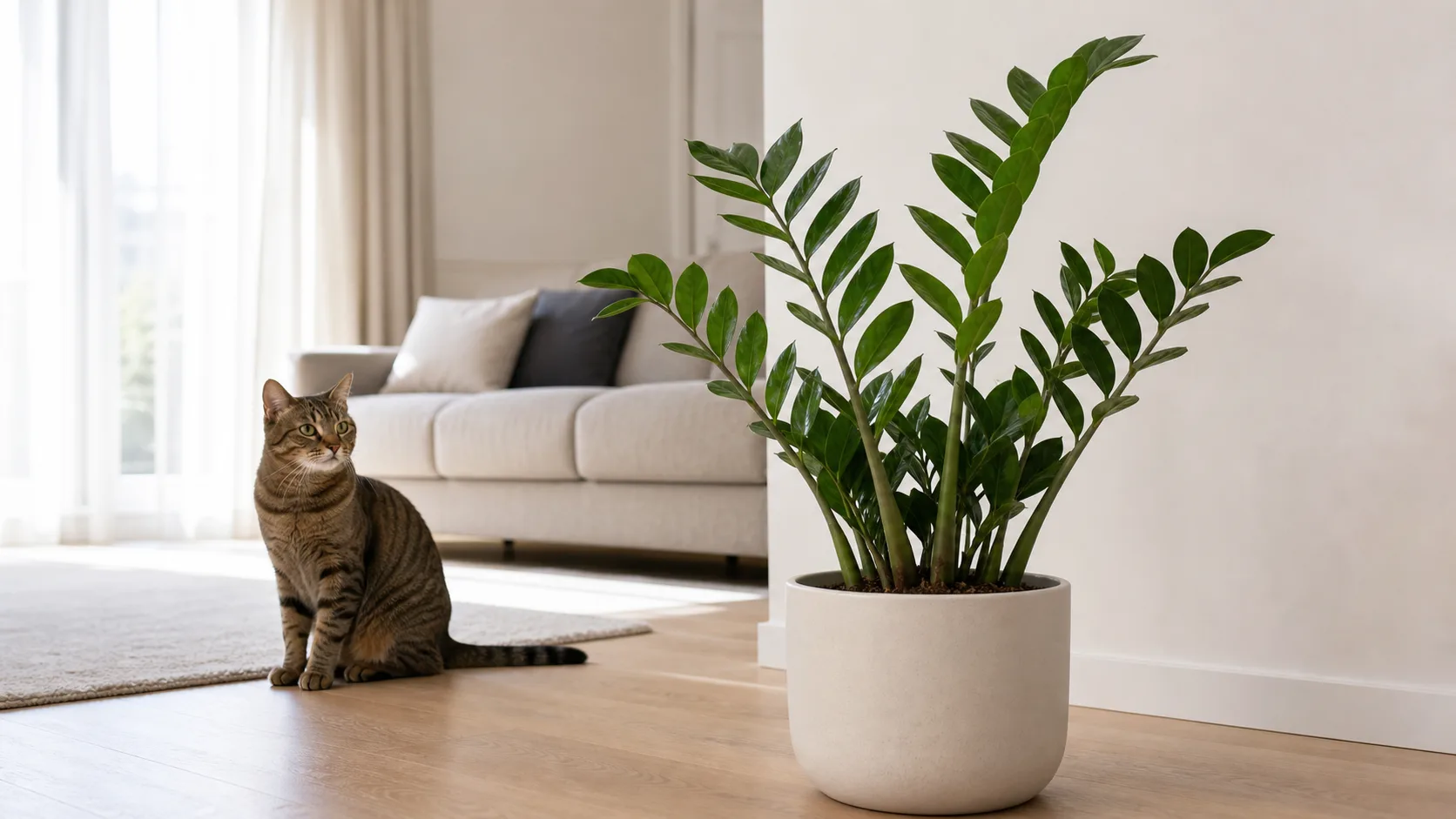
Separate the cat from the plant first; the useful next question is what was chewed and what symptoms are happening now.
Yes, ZZ plant toxic to cats is a fair warning. ZZ plant, or Zamioculcas zamiifolia, contains insoluble calcium oxalate crystals in its tissues. When a cat chews a leaf or stem, those microscopic crystals irritate the lips, tongue, mouth, and throat. Sap can also irritate the skin and eyes.
ASPCA Poison Control explains that these plants contain tiny needle-like crystals called raphides. Chewing them can lead to drooling, retching, nausea, loss of appetite, vomiting, and diarrhea. ASPCA also gives one important piece of context, the usual severity is low, even though the experience can still be painful and upsetting for your cat.
So the calm, accurate answer is this: a ZZ plant is not a good plant to leave within reach of a curious cat, but a small chew usually causes irritation first, not a silent collapse.
What most care guides miss
A lot of articles flatten this into one line, toxic, keep away from pets. That is technically true, but it does not help you triage what just happened.
The common misdiagnosis is assuming every toxic-houseplant exposure means the same level of danger. With ZZ plant, the usual pattern is mechanical irritation from crystals and sap, not a fast systemic poisoning like the cases cat owners fear most.
Your first check: look at the symptom pattern, not just the plant name.
- Mouth pain, drooling, lip smacking, and pawing at the face fit the usual ZZ exposure pattern.
- Skin redness after broken stems or sap contact also fits.
- Trouble swallowing, repeated vomiting, or breathing changes are the signs that move this out of the mild-irritation lane and into call-the-vet-now territory.
That one check helps you avoid both overreacting to a mild exposure and underreacting when symptoms are starting to build.
Symptom diagnosis card
| What you notice | What it usually means | What to do first |
|---|---|---|
| Mild drooling, lip smacking, pawing at the mouth | Oral irritation from insoluble oxalate crystals | Remove plant bits, offer water, monitor closely |
| Red skin or a sticky patch on fur | Sap contact irritation | Rinse with lukewarm water |
| Squinting or rubbing one eye | Sap or plant residue near the eye | Flush gently with saline or lukewarm water |
| Repeated vomiting or refusal to drink | More significant irritation or ongoing distress | Call your vet the same day |
| Trouble swallowing, throat swelling, breathing change | Red-flag escalation | Treat as urgent veterinary care |
Why ZZ plant confuses so many cat owners
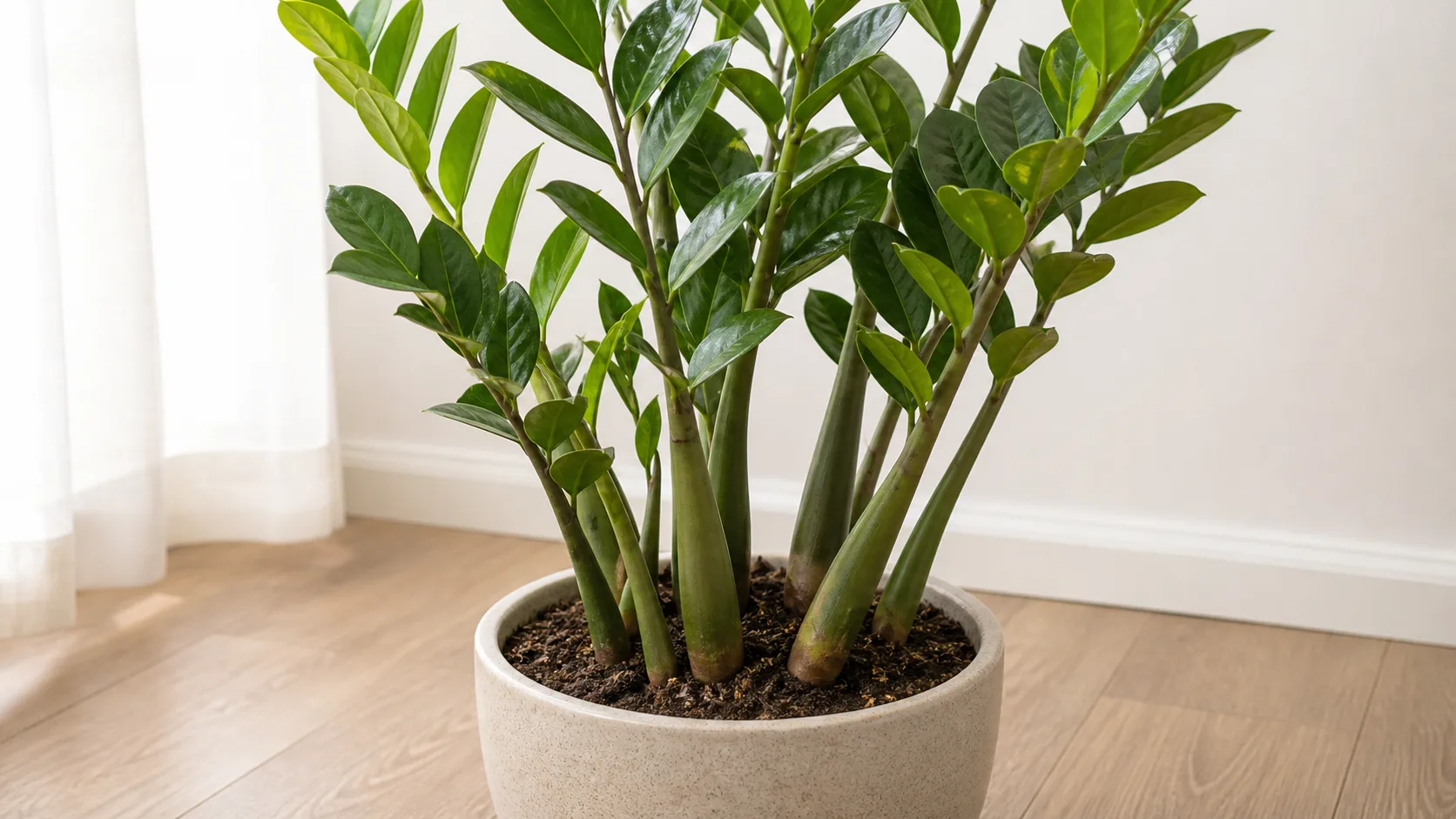
Thick upright rachises and evenly spaced glossy oval leaflets are the defining ZZ plant structure.
Part of the confusion is naming. You may see ZZ plant, zamioculcas, fern arum, Raven ZZ, and the full botanical name Zamioculcas zamiifolia. For pet safety, those names all point back to the same basic question.
North Carolina Extension describes ZZ plant as a rhizomatous aroid with medium toxicity to cats and dogs. That wording matters because it pushes against two bad assumptions at once, not harmless, and not automatically catastrophic.
The other reason people get stuck is that many houseplant roundups treat every pet warning the same. But cat owners usually need a more practical answer:
- Is one bite a crisis?
- Does sap matter too?
- Can this plant stay if my cat usually ignores leaves?
- Is a shelf actually enough in a small apartment?
Those are better questions than a simple yes or no.
What symptoms a cat may show after chewing ZZ plant
If your cat ate ZZ plant, the most common symptoms usually show up in the mouth first.
Common mouth and stomach signs
- Drooling
- Lip smacking
- Pawing at the mouth
- Repeated swallowing
- Brief gagging
- Mild vomiting
- Refusing food because the mouth hurts
Pet Poison Helpline notes that with insoluble oxalate plants, drooling, gagging, and vomiting are common signs, while severe throat swelling is rare.
Sap contact signs
If a stem snapped and sap got on the skin or fur, you may notice:
- Local redness
- Repeated licking of one spot
- Irritation around the mouth or chin
- Squinting if sap reached the eye area
Poison Control guidance on similar oxalate houseplants also notes that skin and eye exposure can cause swelling, redness, and irritation.
Red-flag symptoms
Call your vet promptly or seek urgent help if you notice:
- Repeated vomiting
- Trouble swallowing
- Swelling that seems to increase
- Loud breathing or breathing effort
- Ongoing eye pain after flushing
- A very young, small, elderly, or medically fragile cat who seems distressed
What to do right now if your cat chewed a ZZ plant
If your cat took one small bite
- Remove the plant and fallen pieces.
- Gently wipe visible plant residue from the mouth area if your cat allows it safely.
- Offer a small amount of water.
- Watch for drooling, vomiting, or trouble swallowing over the next several hours.
- Call your vet if symptoms build instead of settling.
ASPCA says many exposures can be managed at home, and that long-term effects are not expected. That is reassuring, but it only applies when symptoms stay mild.
If sap got on skin or fur
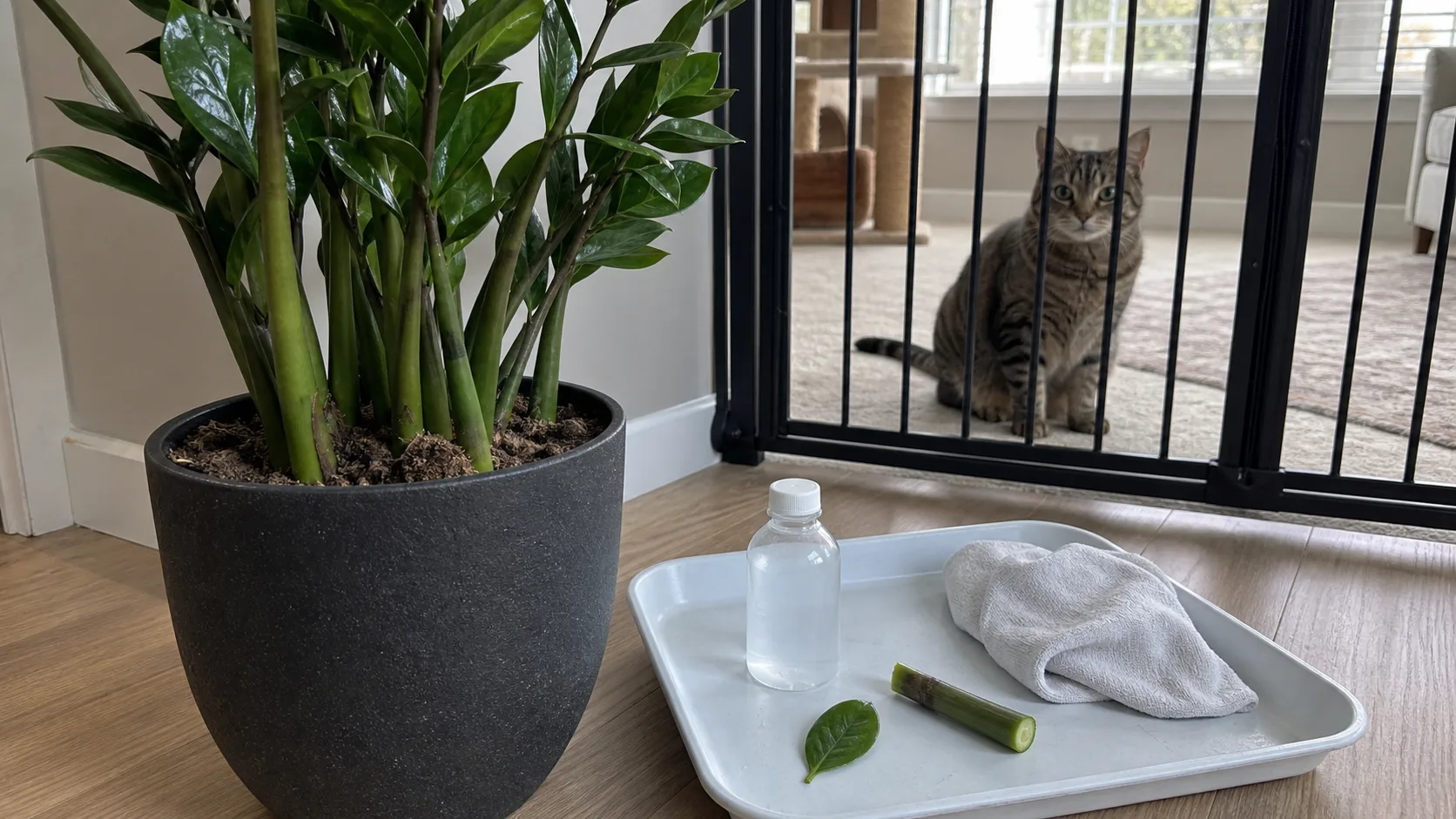
Isolate broken tissue and remove sap residue before a cat can lick it from fur, paws, or the floor.
Rinse the area with lukewarm water. If the fur feels sticky, use a very small amount of mild pet-safe soap, then rinse well. The goal is simple, get the irritating residue off before your cat licks more of it.
If sap got near the eyes
Flush gently with lukewarm water or sterile saline. If your cat keeps squinting, pawing, or hiding afterward, call your vet.
Decision tree: watch, call, or go now
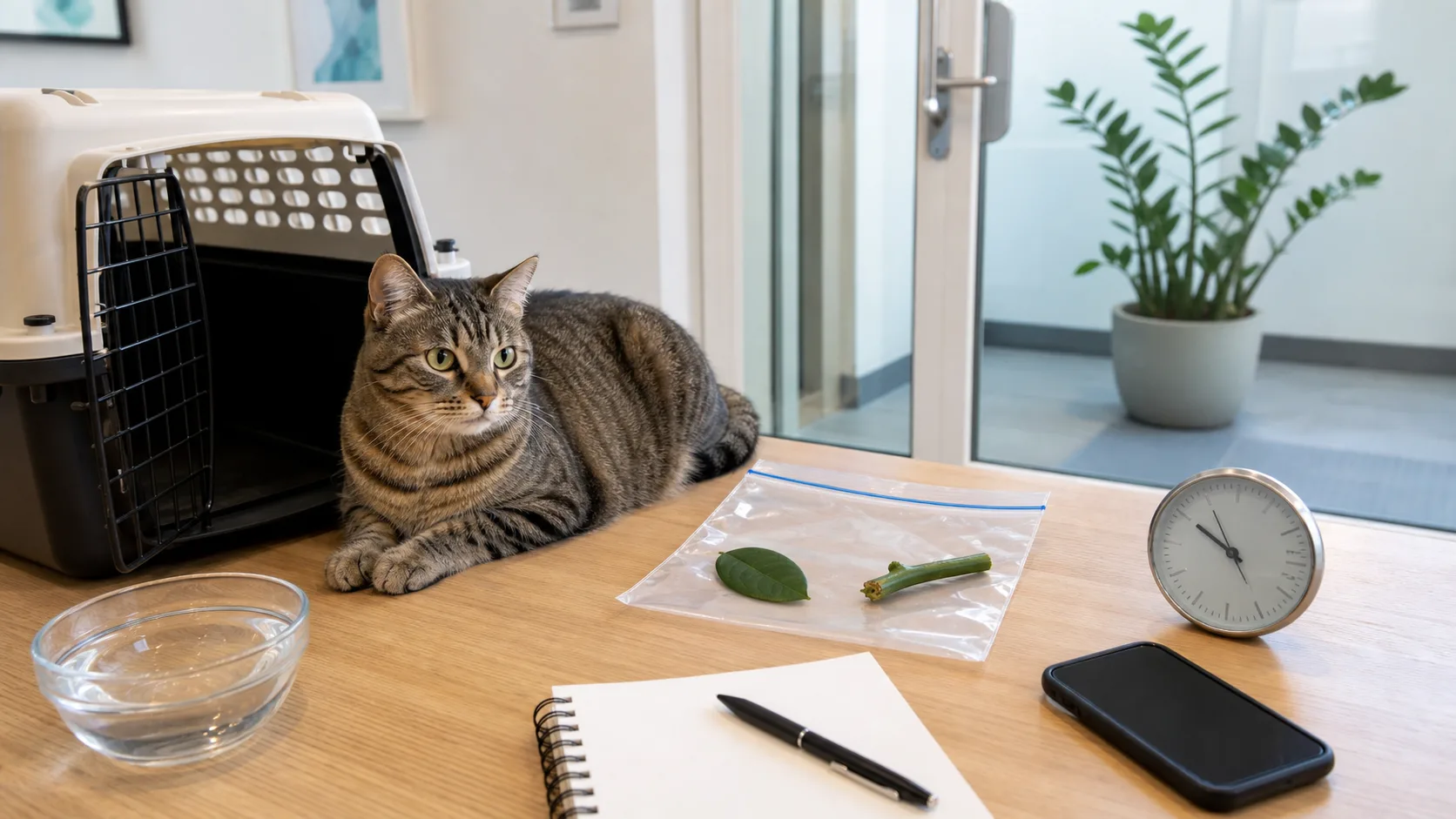
Save a sample, record timing and symptoms, and keep the carrier ready if mouth irritation escalates.
You can usually watch at home if
- You saw only a small chew
- Your cat is alert
- Drooling is mild
- There is no breathing problem
- Symptoms start easing, not building
Call your vet or a poison line the same day if
- You are not sure how much was eaten
- Your cat keeps vomiting
- Your cat will not drink
- Mouth pain seems significant
- Sap got into the eyes
Treat it as urgent if
- Your cat is struggling to breathe
- Swelling seems to involve the throat
- Your cat cannot swallow normally
- Symptoms are escalating quickly
A practical placement scorecard for cat homes
This is where real life matters more than generic keep-away-from-pets advice.
| Placement option | Cat access risk | Realistic in a small apartment? | Good enough for repeat chewers? |
|---|---|---|---|
| Floor pot | High | Yes | No |
| Plant stand | High | Yes | No |
| Open shelf | Medium to high | Sometimes | No |
| Office with door usually closed | Lower | Sometimes | Maybe |
| Closed room your cat truly cannot enter | Low | Not always | Better |
| Rehoming the ZZ plant | None | Yes | Best for determined chewers |
The honest problem is that high shelf is not the same thing as cat-proof. If your cat already goes after leaves, jumps onto bookcases, or gets bored and exploratory at night, elevation alone is usually wishful thinking.
Can you keep a ZZ plant if you have cats?
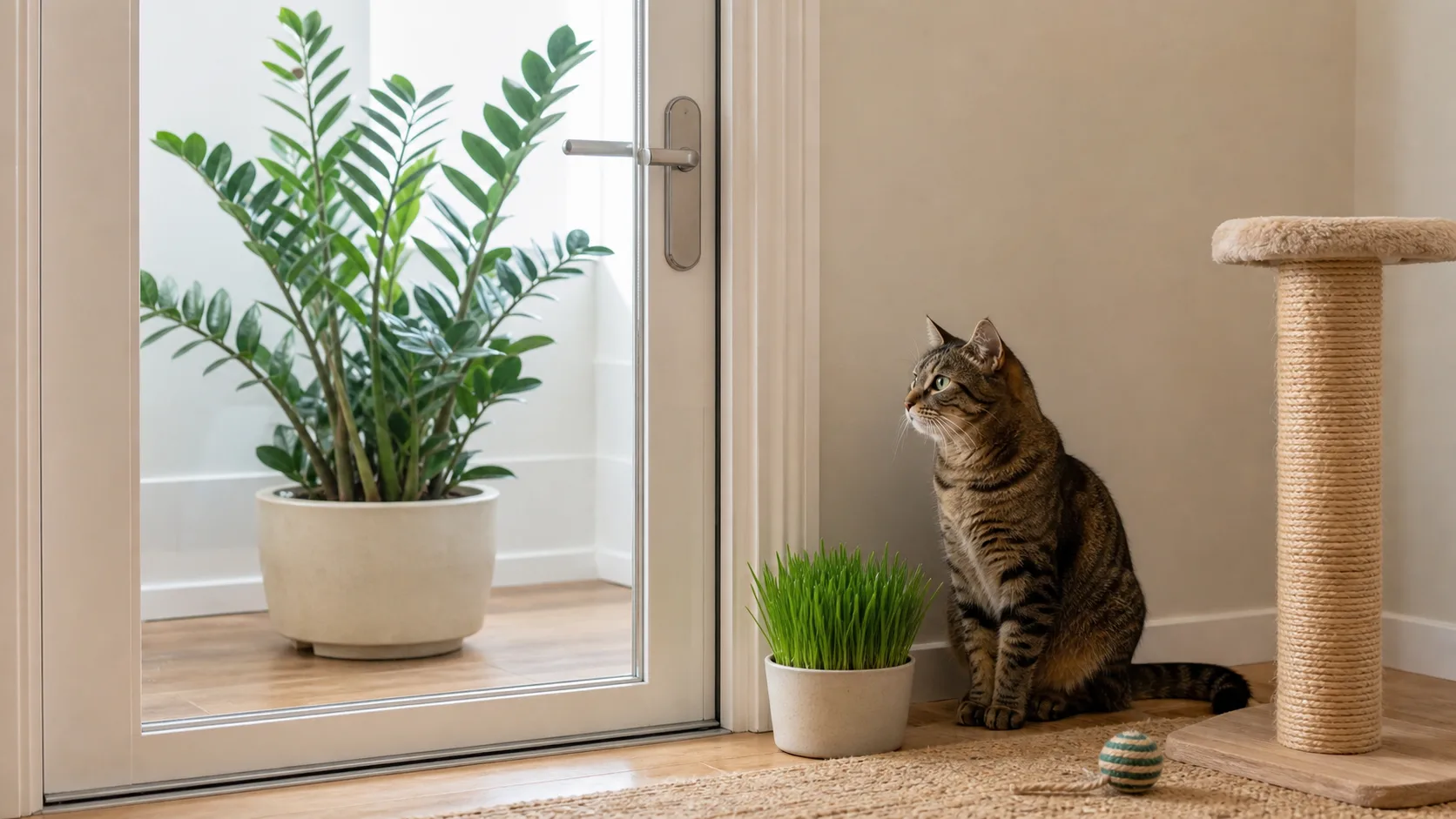
A genuinely closed door plus cat grass, play, and scratching options is more reliable than a high shelf alone.
Sometimes, yes. Often, not comfortably.
If your cat ignores plants completely and the ZZ lives in a truly inaccessible room, some homes manage it. But if you are bringing home a kitten, live in a studio, or already know your cat is a repeat chewer, this plant stops being low-maintenance very quickly.
That is the part many plant owners need someone to say plainly: a manageable plant on paper can still be a stressful plant in your actual home.
A simple rule helps here:
- Low-risk household: adult cat, no plant chewing history, truly separate room, consistent supervision
- Medium-risk household: cat mostly ignores plants, but has occasional curiosity and easy access to shelves
- High-risk household: kitten, bored indoor cat, repeat chewer, or small home where separation is not realistic
If you land in that high-risk group, the kindest answer is usually not better placement, it is a different plant.
If you want a lower-risk setup, start with cat-safe indoor plants instead of trying to outsmart a cat who treats every leaf like a toy.
Safer low-light alternatives if you want the same easy feel
A lot of people keep ZZ because it tolerates neglect, lower light, and missed waterings. You do not have to give up that whole category just because this one plant is a poor fit.
Here are better directions to explore:
- Parlor palm if you want something soft and forgiving
- Cast iron plant if you want a tough low-light plant with a calmer growth habit
- Peperomia if you want a compact tabletop option
- Spider plant if your home has brighter indirect light
If you are furnishing a dim room or apartment, best plants for apartments and low-light indoor plants can help you choose something easier to live with day to day.
Stats that actually help you judge this plant
Here are a few numbers worth knowing, because they make the plant less abstract.
- ZZ plant typically reaches 2 to 4 feet tall and wide indoors or in warm protected settings, according to North Carolina Extension. That matters because a bigger plant creates more reachable leaf area, not less. If you are still deciding whether this plant belongs in your home at all, the ZZ plant care guide shows how its size, light needs, and watering rhythm play out in real rooms.
- Each leaf usually has 6 to 8 pairs of glossy leaflets, again from North Carolina Extension. So when one stem snaps, there may be more sap-bearing surfaces than owners expect.
- NC State recommends bringing container-grown ZZ plants indoors once temperatures fall below 60°F, which is one reason this plant spends so much of its life inside pet homes instead of outside on a patio.
- North Carolina Extension says to water only once a month in winter and about twice monthly in summer, but only after the soil dries out completely. That matters because overwatered ZZ plants often soften and break more easily, which can increase sap contact in busy cat homes.
None of those numbers change the toxicity category. They just help you picture the real household setup more clearly.
Expert note
Two expert lines sum up the plant well.
“The severity is low.” Source: ASPCA Poison Control, on insoluble calcium oxalate houseplants including ZZ plant
“This plant has a medium toxicity to cats and dogs.” Source: North Carolina Extension Gardener Plant Toolbox
Those two statements are not contradictory. Together, they tell the real story: the usual outcome is not the worst-case emergency, but the plant still deserves real caution.
Common mistakes after a ZZ plant scare
Assuming mild means harmless
Mild usually describes the usual severity pattern, not permission to leave the plant within reach for repeat exposure.
Looking only at the word toxic
The more useful question is, what is my cat doing right now? A symptom-based read is what helps you choose the next step.
Forgetting about sap
Sometimes the leaf was barely chewed, but the broken stem left irritating sap on paws, whiskers, or fur.
Trusting a shelf that your cat has already proven it can reach
If your cat gets onto counters, cabinets, or curtain ledges, a shelf is not a prevention plan.
Treating every cat home as identical
A quiet older cat in a two-room home is not the same setup as a new kitten in a studio apartment. Good pet-safety advice has to fit the household, not just the plant label.
A quick seasonal note
Cats often get more interested in houseplants when indoor routines change, especially in colder months or during long hot stretches when everyone is inside more. ZZ plant is also commonly moved indoors when temperatures dip below 60°F, which can suddenly put a previously distant plant right back into your cat’s traffic pattern.
If your cat starts pacing windowsills, plant stands, or office corners more than usual, that is your cue to rethink placement before a chew happens.
Related plant safety reads
If your cat tends to sample leaves, it helps to look at the bigger pattern, not just one plant. You may also want to read dog-friendly houseplants if you have a mixed-pet home, houseplant pests guide for those moments when ragged leaves are actually pest damage rather than pet damage, or indoor plants low light if your real goal is filling a dim room without constant stress.
FAQ
Is ZZ plant deadly to cats?
Usually, no. The typical concern is painful irritation from insoluble calcium oxalate crystals, not the same kind of severe poisoning pattern linked to the most dangerous cat toxins. But that does not mean you should ignore exposure, especially if your cat has trouble swallowing, keeps vomiting, or seems to be struggling to breathe.
What if my cat only licked a ZZ plant?
A lick may cause little or no obvious trouble, but watch for drooling, lip smacking, or pawing at the mouth. If there was sap on the surface, even licking can irritate the mouth. Remove the plant, offer water, and monitor for a few hours.
How long do ZZ plant symptoms last in cats?
Mild mouth irritation often starts quickly and may settle over several hours once the plant material is gone and your cat stops chewing. If symptoms are getting worse instead of better, or your cat still will not drink or seems very uncomfortable, call your vet.
Is Raven ZZ plant toxic to cats too?
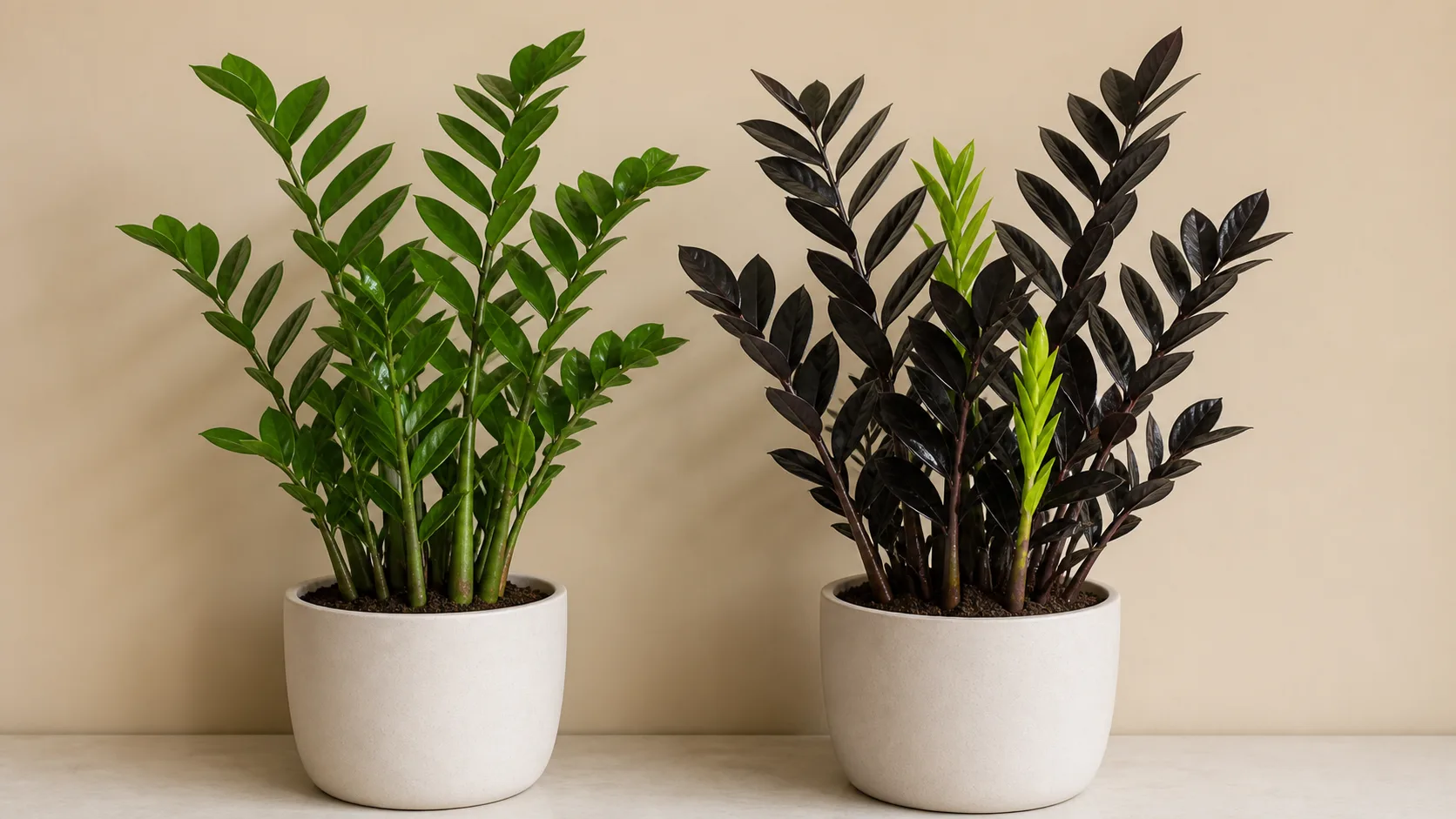
Raven ZZ changes color as leaves mature, but it remains the same Zamioculcas species and carries the same cat-safety concern.
Yes. Raven ZZ is still a ZZ plant cultivar, so the pet-safety question does not meaningfully change. Darker foliage does not make it safer.
Can ZZ plant sap hurt a cat’s skin or eyes?
Yes. Sap from broken stems can irritate skin, and eye exposure deserves a rinse right away. If squinting, redness, or rubbing continues after flushing, contact your vet.
Should I make my cat vomit after eating ZZ plant?
Do not induce vomiting unless your veterinarian specifically tells you to. With an irritant plant like ZZ, the safer first move is usually to remove plant material, rinse or wipe residue if needed, offer water, and get symptom-based guidance.
Is a high shelf enough to keep a ZZ plant safe around cats?
Not for many homes. If your cat climbs, jumps, or obsessively investigates plants, a shelf is often temporary luck rather than real prevention. A closed room or rehoming the plant is more realistic for repeat chewers.
What is a better plant choice for cat owners who like ZZ plants?
Look for sturdy, lower-risk houseplants that suit your light and routine, rather than chasing the same exact look. Start with our cat-safe indoor plants guide, then choose based on whether you need low light tolerance, compact size, or easier placement in a pet home.
Sources and methodology
This article was built around the real question cat owners ask after exposure: is this a mild irritant situation or a true emergency? We reviewed ZZ plant toxicology guidance from ASPCA Poison Control, Pet Poison Helpline, North Carolina Extension, Missouri Botanical Garden, and Poison Control, then shaped the article around the practical gaps most generic SERP summaries miss, including sap exposure, symptom-based triage, apartment placement realism, and the difference between a reachable shelf and a genuinely cat-safe setup.