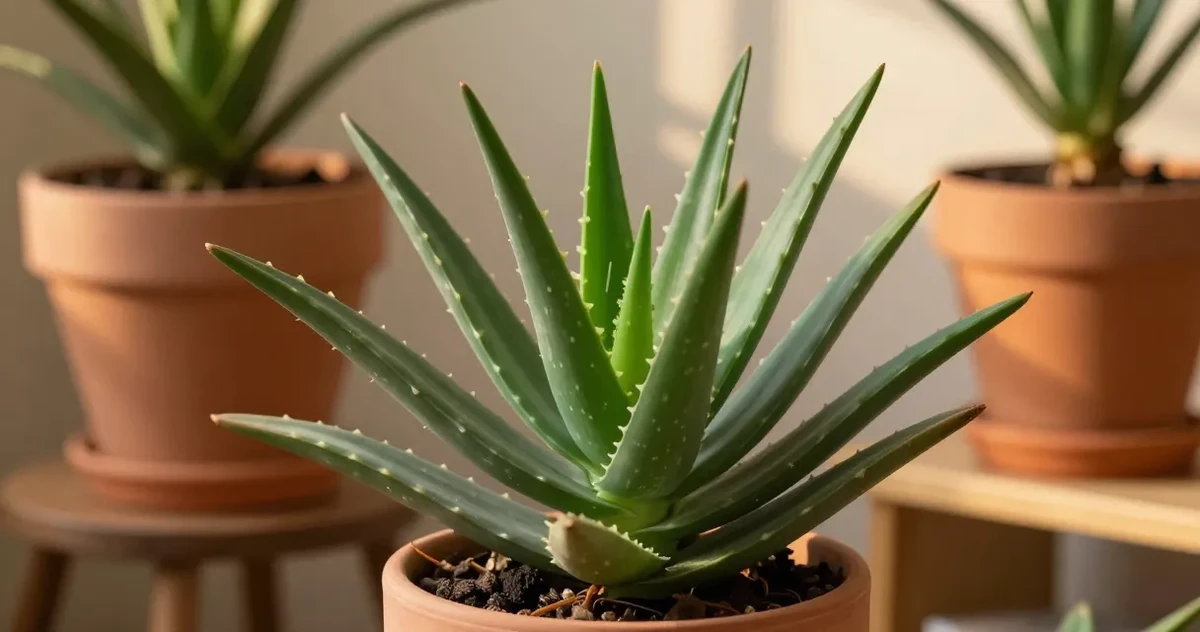
Aloe vera is one of those plants people buy with a plan. Sooner or later, you are standing there with a thick leaf in one hand and three questions in your head at once: can I cut this yet, is that yellow sap normal, and what part is actually safe to use?
That is where most aloe articles get frustrating. They give you a long wellness list, but skip the plant-owner questions that come first.
If you already have an aloe at home, this guide is here to make the practical part easier: how to keep her healthy, how to harvest without stressing the plant, what part is actually useful, and which uses are realistic and safe.
Identification Snapshot
| Detail | What to look for |
|---|---|
| Botanical name | Aloe vera (often sold simply as aloe vera in garden centers) |
| Growth habit | Rosette succulent with thick, water-storing leaves |
| Mature harvest leaf | Thick outer leaf near the base, not a small upright center leaf |
| Usable part for home growers | Clear inner gel only |
| Part to treat cautiously | Yellow latex just under the skin |
| Pet safety | Toxic to cats and dogs if chewed or eaten, according to the ASPCA |
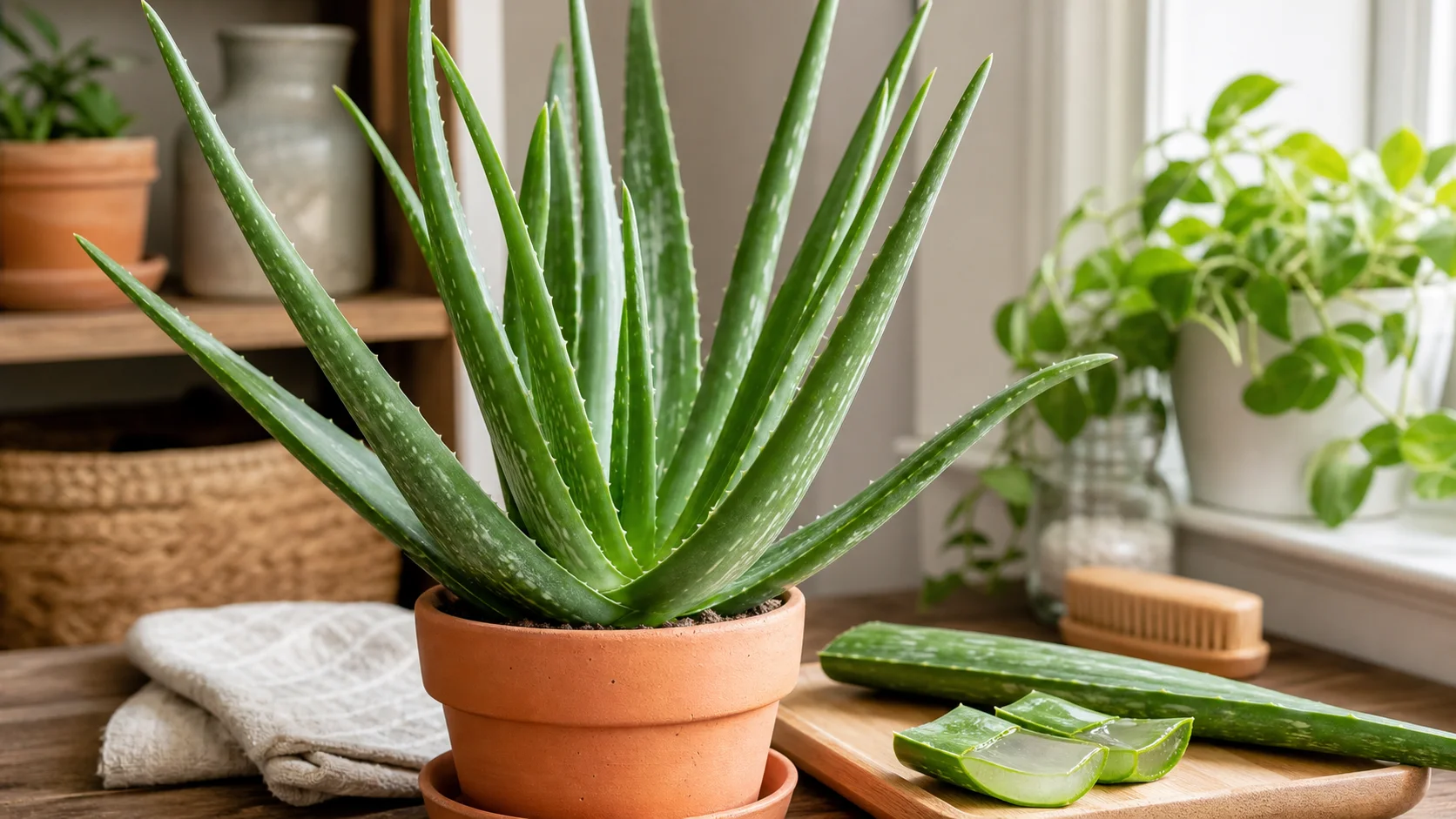
A mature aloe rosette, thick outer leaf, and clear inner gel show the plant parts that matter before harvesting.
Lookalikes and Plants People Confuse With Aloe
| Plant | How it differs from aloe vera | Why the mix-up matters |
|---|---|---|
| Agave | Stiffer leaves, stronger terminal spine, more fibrous texture | Not a like-for-like home gel plant |
| Gasteria | Tongue-shaped leaves, often mottled, slower compact growth | Decorative succulent, not the same harvesting use case |
| Haworthia | Smaller rosettes, white striping or bumps, usually softer-looking patterns | Often kept indoors, but not grown for the same gel use |
If you are not fully sure the plant is aloe vera, identify it before cutting a leaf. A uses guide only helps if the plant in front of you is the plant you think it is.
What Most Aloe Use Guides Miss
The most common misdiagnosis with aloe is thinking the whole leaf is one safe, interchangeable product.
It is not.
Generic aloe advice usually skips the part that matters most to a home grower: clear inner gel and yellow latex are not the same thing, and a uses article is not very helpful if it does not tell you when to cut, what to drain off, and when to leave the plant alone.
Before you harvest anything, do this first check:
- Is the leaf mature and outer, not small and central?
- Is the plant large enough to spare one leaf without looking stripped?
- Are you using the clear inner gel, not the yellow sap near the skin?
If any of those are a no, stop there and wait. That one pause prevents most aloe mistakes.
Quick safety snapshot
| Part of the aloe leaf | What it is | Usually fine for | Be careful with |
|---|---|---|---|
| Clear inner gel | The soothing inner flesh | Minor topical use, fresh skin-soothing gel | Patch-test first if your skin is reactive |
| Yellow latex | Bitter sap just under the skin | Not a casual home remedy | Can irritate skin and upset the stomach |
| Whole raw leaf | Everything together | Not the best beginner choice | Easy to mix gel and latex together by accident |
| Store-bought aloe gel or juice | Processed aloe product | When you want labeled ingredients or internal-use products | Check additives and whether latex has been removed |
Decision tree: should you use fresh aloe from your plant?
- If you want a simple topical use, like a small patch of sunburn or dry skin, fresh clear gel can make sense.
- If you want to drink aloe, skip the raw leaf and use a commercial product clearly labeled for internal use.
- If your plant is small, stressed, or just repotted, do not harvest yet.
- If you have pets who chew leaves, aloe is not a casual windowsill plant. Move her well out of reach or choose a safer plant for that room.
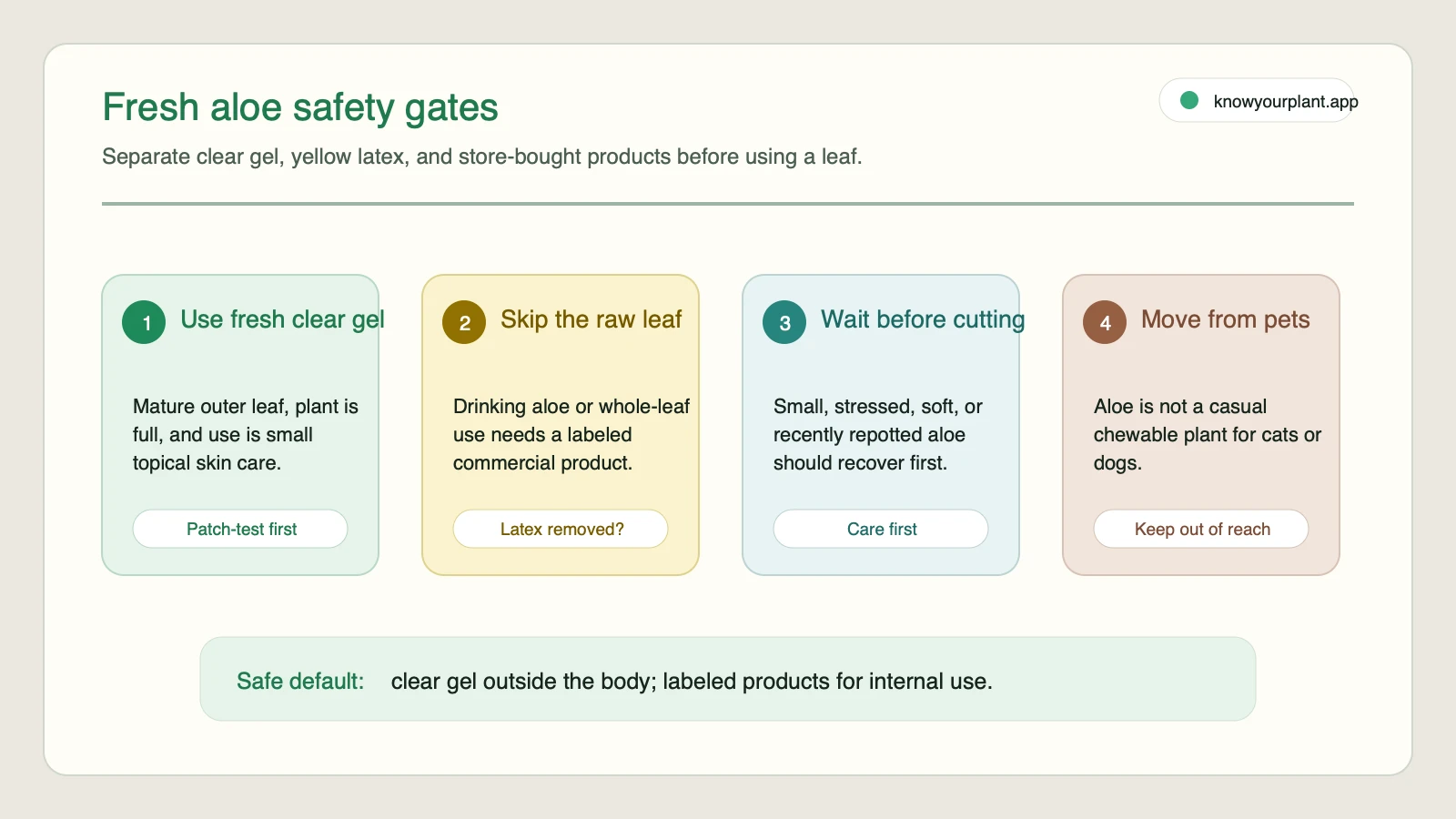
Use the safety gates before cutting a leaf: clear gel is the casual topical path, while internal use, stressed plants, and pet access need a pause.
What Makes Aloe Different From Other Succulents
Aloe vera stores water in her thick leaves like most succulents, but she also stores something genuinely useful for everyday plant owners: a clear inner gel that people often use for cooling and soothing minor skin irritation.
That is what makes aloe different from a decorative succulent you mostly admire from across the room. She can still be beautiful, but she is also practical.
The leaf itself has layers:
- a firm outer skin,
- a bitter yellow latex layer underneath,
- and the clear inner gel in the center.
Knowing that difference matters more than memorizing a long list of benefits. Once you can separate those layers cleanly, the plant becomes much easier to use safely.
Growing Aloe Vera at Home
If you want useful leaves, you need a healthy plant first. A weak, stretched, or overwatered aloe will not give you good harvest material.
Where she will be happiest
Aloe wants strong light. A south- or west-facing window is usually best, somewhere she gets several hours of direct or near-direct sun through the day.
If the light is too low, she often tells you quietly before she collapses. The leaves get thinner, the color can go pale, and the whole plant starts leaning or stretching. She may stay alive like that, but she is not thriving.
If your home is dim, a grow light placed overhead can help much more than most people expect.
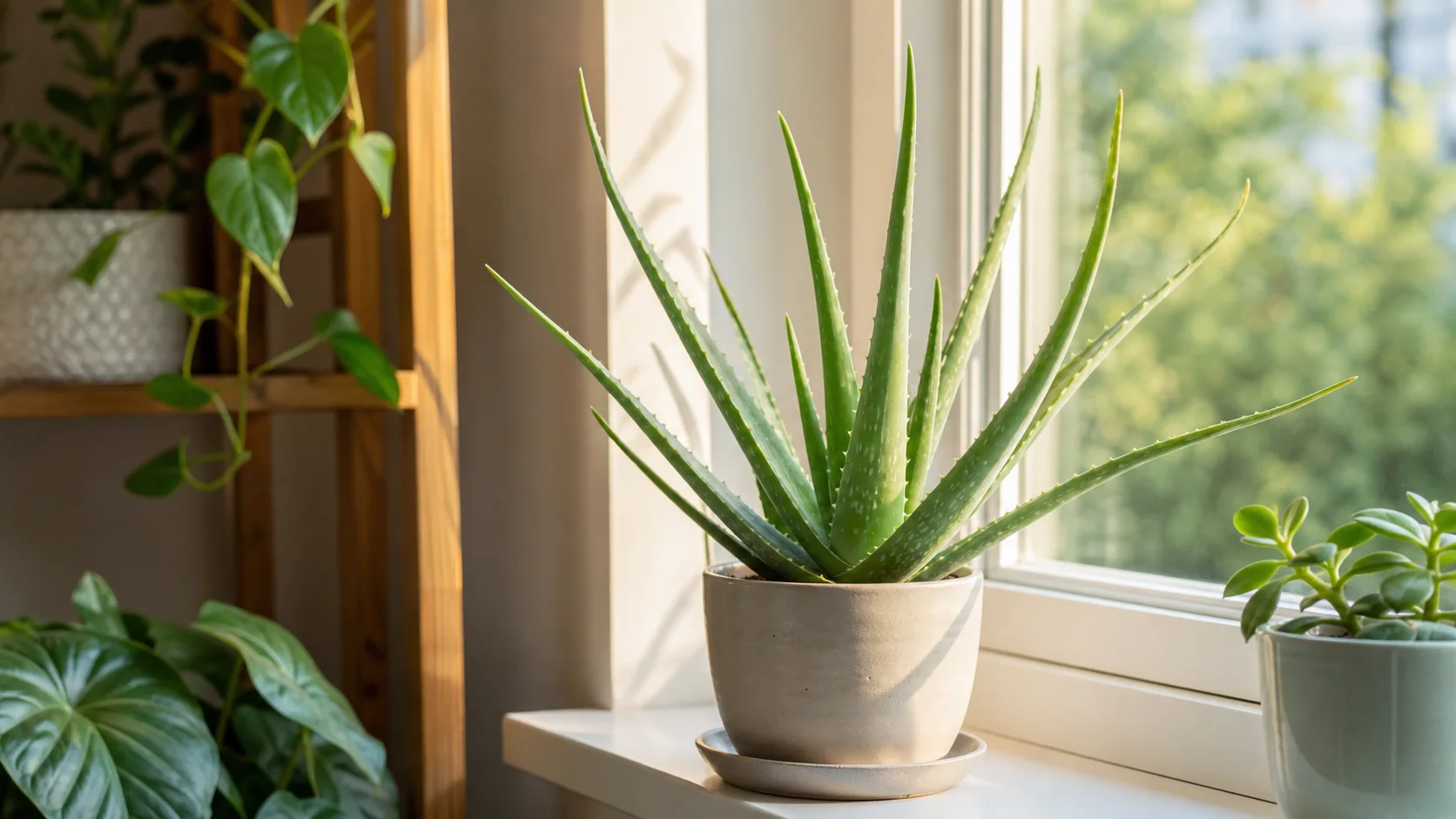
A bright window gives aloe the strong light it needs to keep its rosette compact and vigorous.
Watering, the part that goes wrong most often
This is the big one.
Aloe hates sitting in wet soil. Water her well, then let the mix dry out fully before you water again. In many homes that means every two to three weeks in spring and summer, and even less often in winter.
A simple check is better than a schedule:
- push a finger into the soil,
- feel below the dry top layer,
- lift the pot if you can,
- and wait if there is still cool dampness below the surface.
A thirsty aloe can usually bounce back. One with roots that have been sitting wet for too long is much harder to save.
Soil and pot
Aloe does best in fast-draining soil. Use a cactus mix, or add extra perlite to regular potting soil so water moves through quickly.
The pot needs a drainage hole. That part is not optional.
Terracotta is a very good match because it helps moisture escape instead of trapping it around the roots. If you are deciding between containers, the terracotta pots guide explains why that matters so much for drought-tolerant plants.
Self-watering pots are usually not a good fit here. Aloe wants a wet-dry cycle, and those setups are designed to keep the root zone more consistently moist. If you are curious about the tradeoff, the self-watering pots guide breaks it down.
Temperature
Aloe is happy in the same kind of temperatures most of us like, roughly 15°C to 27°C, or 60°F to 80°F. She does not handle frost, and cold drafts can make a healthy plant sulk fast.
Aloe care card
| Need | Quick rule |
|---|---|
| Light | Bright light, ideally several hours of direct or near-direct sun |
| Water | Water deeply, then let the mix dry fully before watering again |
| Soil | Fast-draining cactus or succulent mix |
| Pot | Use a drainage hole, ideally in a porous pot like terracotta |
| Temperature | Best in warm indoor conditions, away from frost and cold drafts |
| Harvest readiness | Wait until the plant can spare one mature outer leaf without looking stripped |
For a full care walkthrough beyond harvesting and uses, visit the aloe vera care guide.
How to Harvest Aloe Vera Gel Without Hurting the Plant
This is the part most plant owners actually worry about, and for good reason. A lot of aloe guides tell you how to use the gel, but not how to cut a leaf without making the plant look ragged or stressed.
Start with the right leaf
Choose a thick outer leaf near the base. Leave the small inner ones alone. Those center leaves are her growth engine.
If the whole plant still looks young, give her more time. A tiny aloe should not be treated like a pantry.
A good real-life check is simple: if removing one outer leaf would make the whole plant look noticeably uneven or sparse, she is not ready yet.
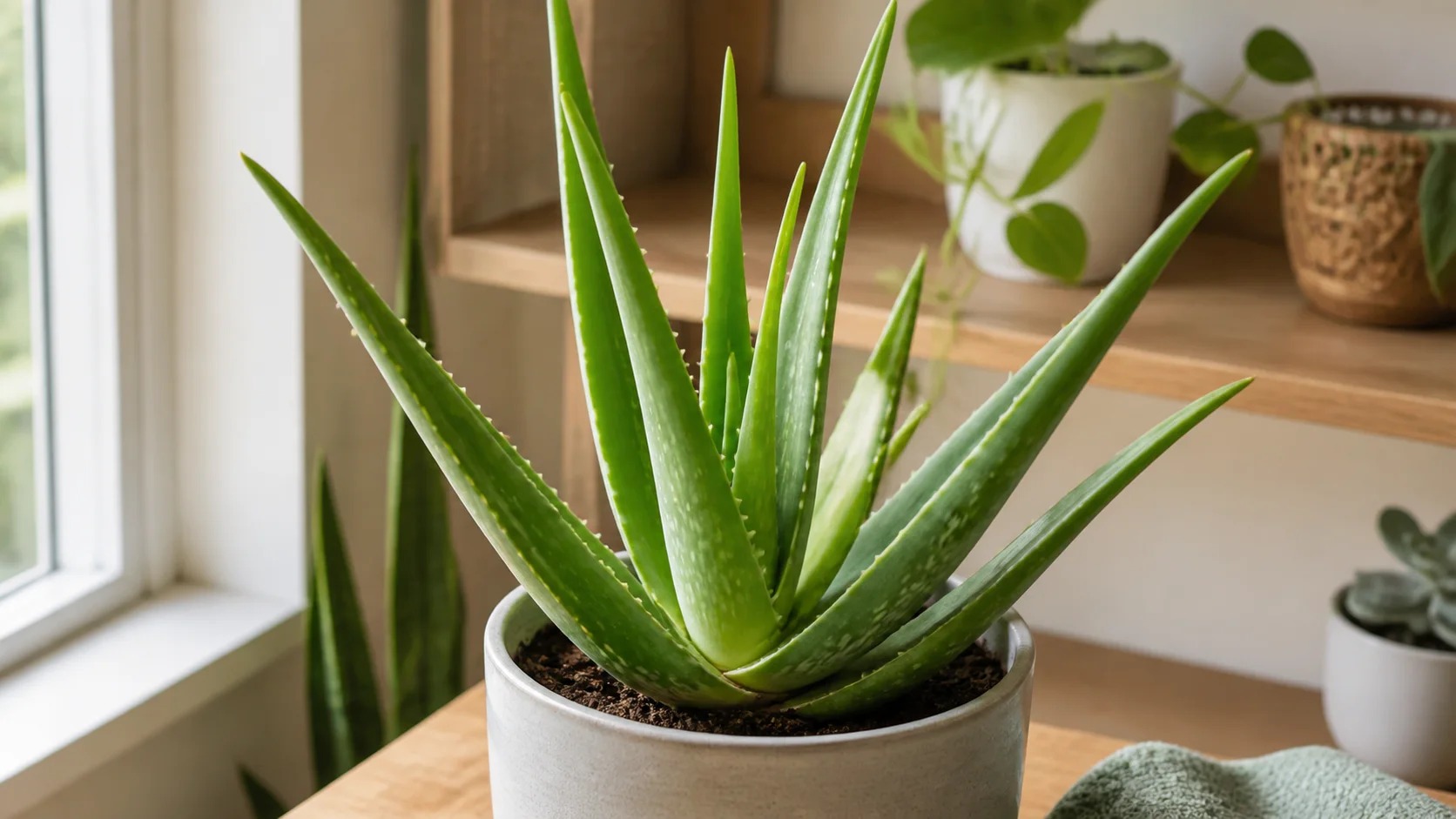
Thick lower leaves can be harvested from a mature aloe while the small upright center growth stays untouched.
Make one clean cut
Use a clean, sharp knife and cut the leaf close to the base. A neat cut is easier for the plant to recover from than tearing or twisting.
Let the yellow latex drain off first
Stand the cut leaf upright, cut-side down, in a cup or bowl for about 10 minutes. The yellowish sap that drips out is the latex layer people often get nervous about. It is normal, but it is not the same as the clear gel you are trying to keep.
NCCIH makes this distinction clearly: aloe products can come from the inner gel, the latex layer, or the whole leaf, and those are not interchangeable.
Scoop only the clear gel
Once the latex has drained, slice the leaf open and scoop out the clear inner gel. If the gel still looks yellow near the edges, trim a little deeper away from the skin.
Use it fresh, or chill it
Fresh gel is easiest to use right away. In the fridge, it usually keeps for about three to five days. If you want to save more, freeze it in small portions.
A quick harvesting checklist
| Check | Good sign | Wait if |
|---|---|---|
| Leaf choice | Thick outer leaf | Small central leaf |
| Plant size | Full, established plant | Plant still looks small or sparse |
| Number of leaves removed | One, maybe two on a large plant | You are tempted to cut several at once |
| Aftercare | Plant stays in bright light and dry soil cycle | Plant is already stressed, soft, or recently repotted |
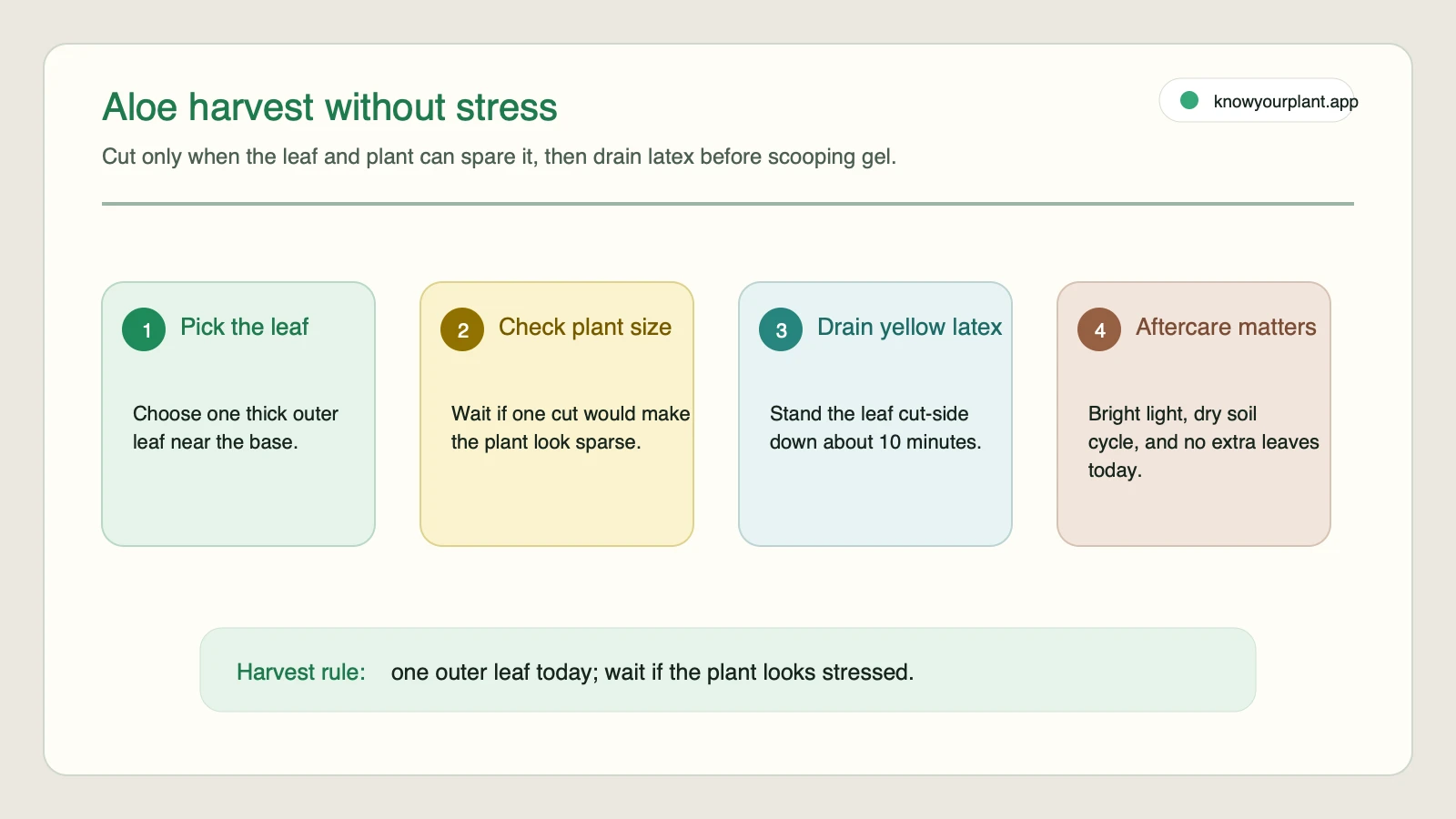
Use the harvest checklist to keep the plant from losing more leaf mass than it can comfortably spare.
When not to harvest yet
Pause and fix care first if:
- the leaves feel soft or translucent,
- the plant looks pale and stretched from low light,
- she was repotted recently and is still settling in,
- or she only has a handful of small leaves.
NC State and The Old Farmer’s Almanac both point back to the same practical idea here: a healthy aloe needs strong light, drainage, and a proper dry-down between waterings. Harvest comes after that, not before.
The Aloin Question, Because Everyone Wonders About It
If this is your first time cutting aloe, the yellow sap can make you feel like you did something wrong.
You did not.
That yellow layer is part of the leaf. The reason people talk about it so much is not because the whole plant is unsafe, but because the latex layer is more irritating and much less beginner-friendly than the clear inner gel.
So the rule is simple:
clear inner gel for cautious topical use, yellow latex not for casual home experimenting.
That one distinction makes aloe much less confusing.
Social Listening: Where Aloe Owners Get Nervous
During research, the same plant-owner worries kept showing up in community threads and search-result snippets:
- Pet owners get mixed signals fast. Aloe has a soothing reputation for people, so cat and dog owners are often surprised to learn the plant itself is toxic if chewed.
- The yellow sap makes first-time harvesters think they did something wrong. Many readers are not prepared for latex versus gel, so they hesitate right at the point of cutting.
- Home growers worry about weakening the plant. Questions about harvesting usually focus less on benefits and more on whether the aloe will recover after one leaf is removed.
- Fresh-leaf use gets confused with processed aloe products. Readers often blur together homegrown gel, bottled juice, and cosmetic aloe products even though the handling and safety boundaries are different.
Those are qualitative confusion signals, not statistical proof. But they are exactly why a plant-owner-first article needs harvesting guidance, pet safety, and clear gel-versus-latex distinctions in the main body.
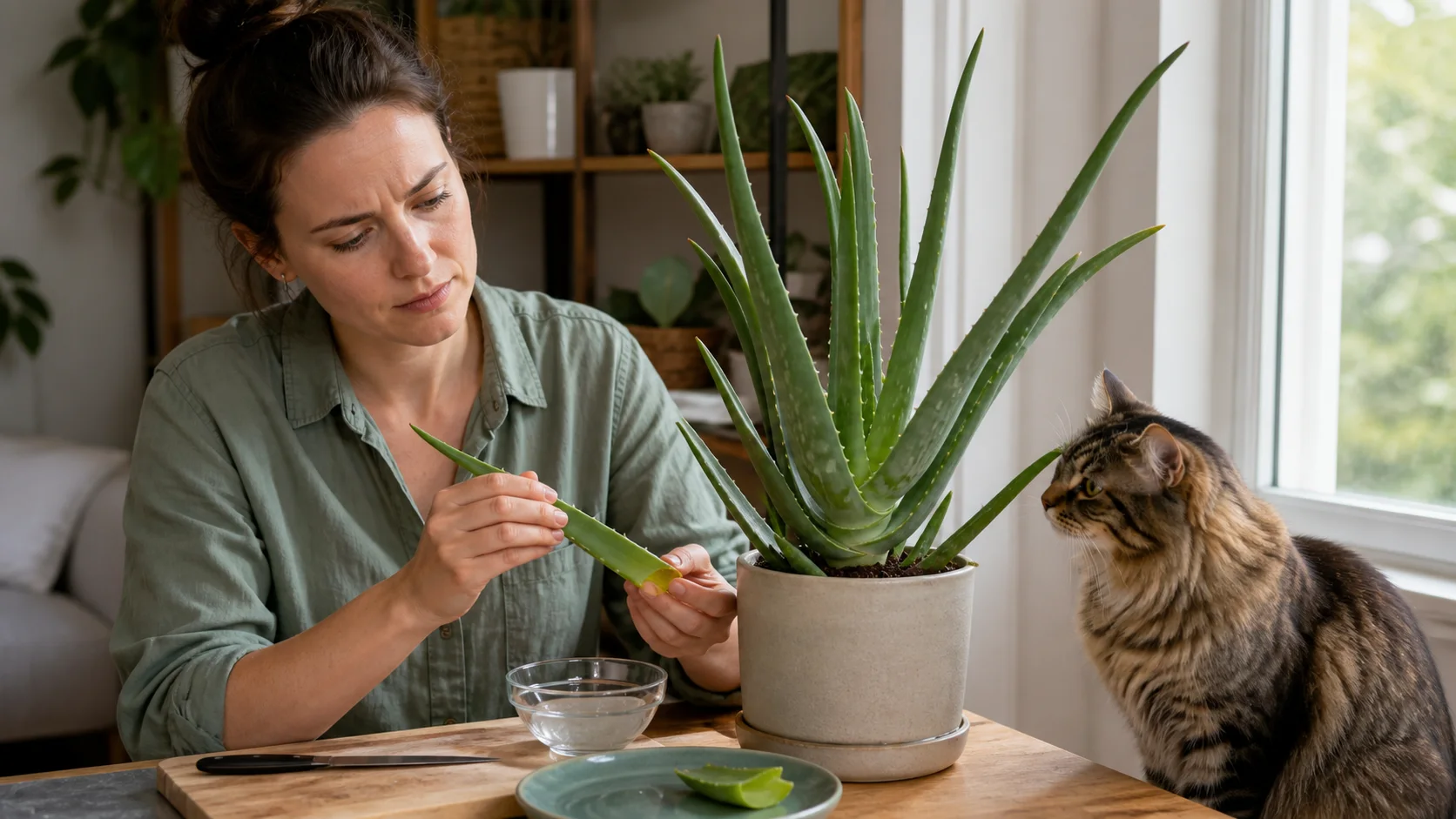
A cut leaf, yellow latex, and curious cat bring the most common harvesting and pet-safety worries into one realistic scene.
12 Realistic Aloe Vera Uses Worth Knowing
This part is where it helps to stay grounded. Aloe is genuinely useful, but not every internet claim deserves equal trust. The most realistic home uses are small, topical, and practical.
Skin and body
1. Sunburn relief
This is the classic one for a reason. Chilled clear gel can feel immediately cooling on mild sunburn. Some research has looked at aloe for superficial burns, but for home use the main value is simple soothing. It is for mild burns only, not serious or open injuries.
2. Minor kitchen burns
After cooling the burn under running water for about 10 minutes, a little clear gel can help soothe the area. If the burn is deep, blistered badly, or covering a large area, skip the home remedy approach and get proper medical care.
3. Lightweight moisturizer
Fresh aloe gel can feel especially nice when skin is dry but you do not want something heavy or greasy sitting on top.
4. Post-sun skin cooling
Even when you are not truly burned, aloe can help calm skin that feels hot and flushed after time outside.
5. After-shave soothing
A small layer of clear gel can calm razor irritation without added fragrance.
6. Minor cuts, scrapes, and bug bites
For small surface irritation, aloe can be a gentle soothing layer after the area is cleaned.
7. Dry patches
Aloe can take the edge off tight, dry skin, especially in winter. It is not a miracle cure, but it can be a comfortable first step.
8. Chapped lips
A dab of gel can help in the moment, though it will not last as long as a richer balm.
Hair and scalp
9. Scalp soothing
If your scalp feels dry or itchy, a little fresh gel before washing can feel cooling and calming.
10. Simple hair mask base
Mixed with a small amount of oil, aloe gel can soften dry hair without feeling too heavy.
Internal and mixed-use caution
11. Store-bought aloe juice for digestion
This is where the line matters. If you want aloe for internal use, use a commercial product clearly prepared for that purpose. NCCIH notes that aloe products can come from different parts of the leaf, which is exactly why raw home-harvested leaf is not the beginner route here.
12. Cooling gel from the fridge
A small container of clear gel in the fridge is one of the simplest, most practical ways to use aloe through summer.
When Fresh Aloe Is the Right Choice, and When It Is Not
This is the part many articles skip.
Fresh aloe from your plant is a good fit when:
- you want a small amount of topical gel,
- the plant is healthy and mature,
- you can separate the clear gel cleanly,
- and you are using it right away.
Fresh aloe is not the best choice when:
- you want internal use,
- you are unsure how to separate gel from latex,
- the plant is small or already stressed,
- or you live with pets that chew leaves.
That does not make aloe complicated. It just makes her more specific than a generic wellness roundup usually admits.
Common Mistakes
- Cutting inner leaves because they look fresher
- Harvesting from a small aloe that needs more time to grow
- Treating the yellow latex like it is the same as the clear gel
- Assuming store-bought aloe drinks and fresh homegrown aloe are interchangeable
- Keeping aloe where a cat or dog can nibble on her
- Watering more often because you want bigger leaves faster
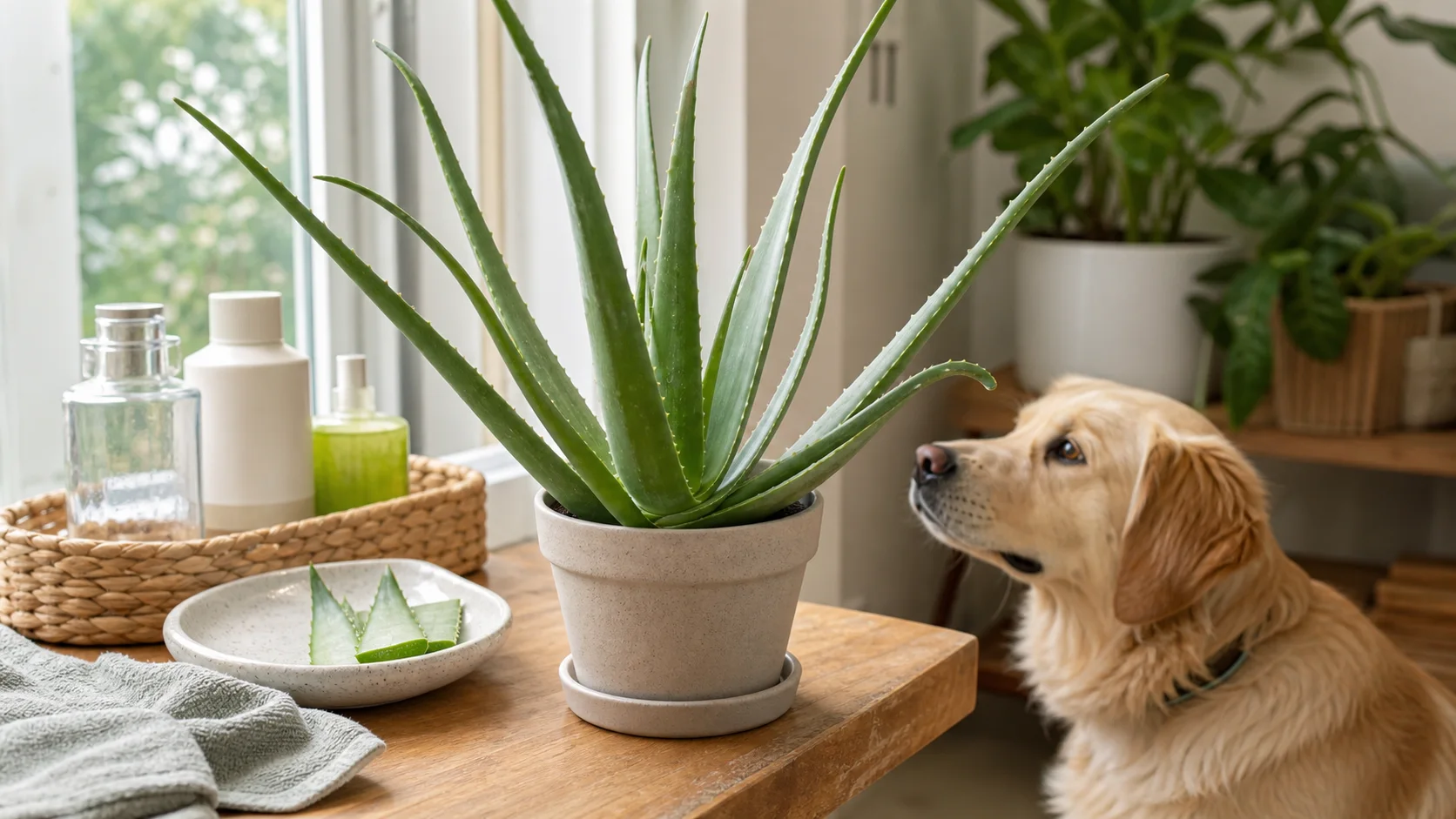
Processed products, cut gel, and a dog beside the plant show why aloe use and pet access should never be treated casually.
Common Problems When You Grow Aloe for Use
| Symptom | Likely cause | What to do next | Harvest now? |
|---|---|---|---|
| Mushy base or translucent leaves | Overwatering or root stress | Let the mix dry fully, check drainage, and inspect roots if the softness spreads. If the base keeps softening, follow a root rot treatment guide before harvesting again | No |
| Pale, stretched growth | Not enough light | Move to a brighter window or add a grow light overhead | No |
| Brown, crispy patches after a move | Sudden sun shock or heat stress | Ease the plant into stronger light gradually | Usually wait |
| Thin leaves with weak recovery | Underwatering, cramped roots, or low vigor | Deep-water once, then resume a dry-down cycle and check whether repotting is due | Wait until the leaves plump back up |
| Bite marks or torn leaves | Pet access or physical damage | Move the plant out of reach and let damaged tissue dry cleanly | Usually no, unless the leaf was already being harvested |
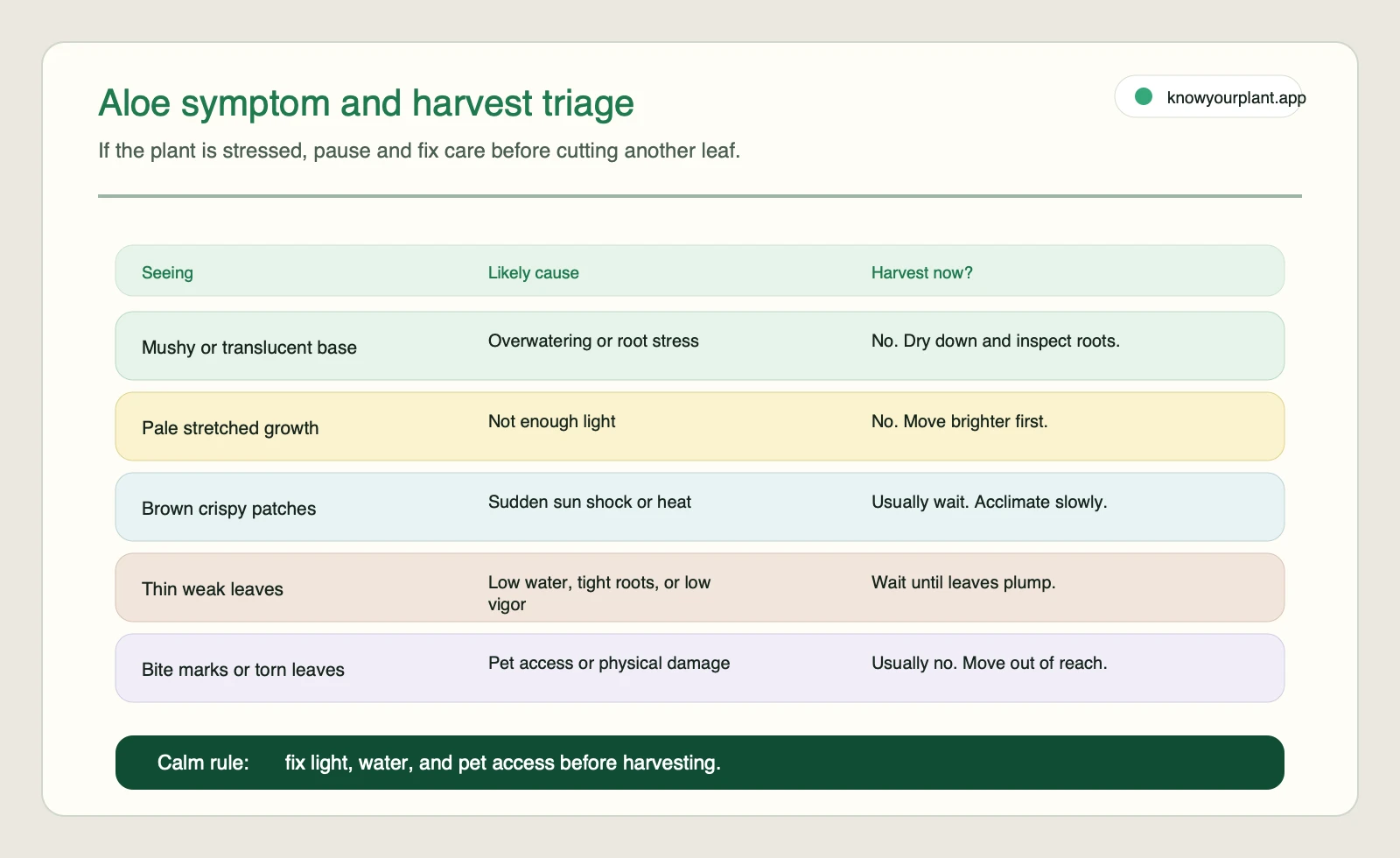
Use the triage chart when the aloe looks stressed: most symptoms mean fixing care before harvesting another leaf.
A uses article should not pretend harvesting exists in a separate universe from care. If the plant is stressed, the best next use is often to leave it alone and fix the growing conditions first.
Aloe Vera and Pets, Please Do Not Bury This Part
Aloe has a soothing reputation for humans, which is exactly why the pet issue surprises people.
According to the ASPCA, aloe is toxic to cats and dogs if eaten. The plant contains compounds that can cause vomiting, lethargy, and diarrhea. So if you have a pet that chews leaves, do not treat this as a small disclaimer. It should change where the plant lives, or whether you keep her at all.
If pet safety is a daily concern in your home, the cat-safe plants guide is a better next step than trying to outsmart a determined cat.
Seasonal Care Calendar
Spring: She starts waking up and growing again. Check the soil more often, but still let it dry fully before watering. This is also a good time to repot or separate pups if she has outgrown her pot.
Summer: This is usually her strongest season. Keep her in bright light, let her dry out between drinks, and harvest only from mature outer leaves.
Autumn: Growth slows. Ease off watering before the plant has to remind you the hard way.
Winter: This is when aloe often gets accidentally overwatered. She is using less, the soil stays wet longer, and weak winter light makes recovery slower. Keep her bright, keep her dry, and leave her mostly alone.
Expert and Source Layer
This guide is built around practical plant care and safety sources, not just general wellness claims:
- NCCIH for the difference between inner gel, latex, and whole-leaf aloe products
- ASPCA for pet toxicity
- NC State Extension for aloe care, overwatering risk, and gel use context
- The Old Farmer’s Almanac for light, pot, and moisture guidance in home growing
The goal here is simple: help you use aloe in a way that is kind to the plant, safe for your home, and realistic for everyday life.
For another practical pet-safety check, see Is Aloe Vera Toxic to Cats? Gel, Latex, Symptoms, and Action for the risk level and the next steps.
Methodology Note
This article starts with the plant-owner questions that generic wellness roundups usually skip: how to harvest a mature leaf, how to separate clear gel from yellow latex, when pet access changes the advice, and when a store-bought aloe product is a different category from a homegrown leaf.
Source-backed claims were checked against NCCIH, ASPCA, NC State Extension, and The Old Farmer’s Almanac. Community threads and search-result snippets were used only as qualitative confusion signals, not as proof of medical outcomes, efficacy, or frequency.
Freshness Note
Last updated: 2026-08-09. This article stays plant-owner first on purpose because aloe advice online often blends skincare, supplement, and houseplant intent together. If you are unsure whether a use is topical, internal, or pet-safe, slow down and check which part of the leaf or product the advice is actually referring to.
Real User FAQ
How do I know if an aloe leaf is mature enough to harvest?
Choose a thick outer leaf near the base. If cutting it would make the plant look noticeably sparse, wait.
Why is yellow sap coming out when I cut the leaf?
That is the latex layer. It is normal, but it is not the same thing as the clear inner gel people usually want for simple topical use.
Can I apply aloe gel directly from the leaf to my face?
Usually yes, if you are using the clear inner gel and have drained off the yellow latex first. Patch-test first if your skin is reactive.
How long does fresh aloe gel keep?
Usually about three to five days in the fridge. For longer storage, freeze it in small portions.
Is it safe to eat or drink aloe from my own plant?
Be more careful here. For internal use, it is better to choose a commercial aloe product clearly labeled for that purpose, especially one that states latex or aloin has been removed.
What if my aloe looks stressed but I wanted to use the gel today?
Skip harvesting for now. Soft, pale, or recently repotted aloe plants need recovery more than they need to become a home remedy.
Why is my aloe turning brown or mushy?
That usually points to too much water or poor drainage. If the base feels soft and the roots look brown or mushy, she has been staying wet too long.
Is aloe vera safe for cats and dogs?
No, not if they chew or eat the leaves. Keep her out of reach, or choose a safer plant for pet-accessible rooms.
The Real Value of Aloe at Home
The best thing about aloe is not that she has twelve possible uses.
It is that she is one of the few houseplants that can be both easy to keep and genuinely useful when you know how to handle her properly.
That means bright light, dry soil between waterings, mature leaves only, clear gel only, and a little extra care if pets share your space. Once those pieces are in place, aloe stops being a vague wellness plant and becomes something much more practical: a healthy succulent you actually trust yourself to use.
One Last Thing
If you want help remembering when to water, when to repot, or when your aloe is finally big enough to spare an outer leaf, KnowYourPlant can keep that timeline in one place. It is a simple way to care for her with a little more confidence and a lot less guesswork.
A simple care record makes watering, repotting, and harvest-readiness decisions easier to remember.