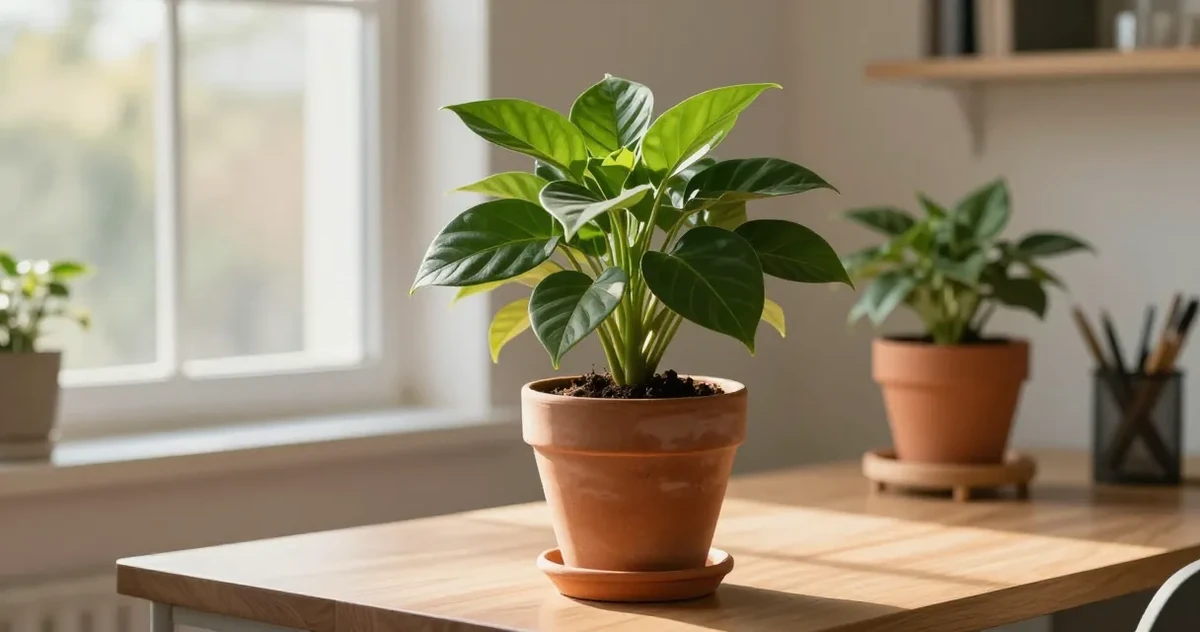
Pothos plant in a terracotta pot being checked for soil moisture with a finger

How Often to Water Pothos: The Complete Watering Guide

If you searched “how often to water pothos” hoping for a number, here it is: it depends on your pot, your soil, and your season more than it depends on the plant. A pothos in a well-draining terracotta pot under bright indirect light may need water every five days in summer. The same variety in dense nursery peat inside a glazed cachepot in a dim corner might go three weeks. Same plant, completely different schedules. ...

 · 17 min · 
Several houseplants growing in clear glass vases of water on a bright windowsill

15 Houseplants That Grow in Water (No Soil Needed)

If you have ever dropped a pothos stem into a glass of water and watched roots appear within a week, you already know the appeal. No potting mix. No drainage drama. No soil mess. Just a clean jar, some light, and a cutting that wants to live. The honest version: water growing is a real and valid way to keep many houseplants alive and display-ready, not just a temporary propagation trick. For the right species, a glass vase can genuinely be a permanent home. ...

 · 22 min · 
Roots circling the bottom of a plastic nursery pot, visible when slid out before repotting

When to Repot Plants: 7 Signs It's Time for a Bigger Pot

By KnowYourPlant editorial team. Last updated: June 17, 2026. Knowing when to repot is one of those things that sounds obvious until you’re actually standing over a plant, trying to decide if it’s genuinely cramped or just looking a little dramatic. Most people repot too early, too often, or for the wrong reasons. A fair number also wait too long, then wonder why their plant stopped growing. The real problem is that the usual signs you’ll read about – roots at the drainage hole, slow growth, soil drying out fast – are real but incomplete. They show up in guides without context, and that missing context is what sends a healthy plant into unnecessary repot stress, or leaves a struggling one stuck in a pot it’s outgrown. ...

 · 18 min · 
Houseplant with brown leaf tips and edges on a windowsill

Why Are Plant Leaves Turning Brown? (10 Causes + Fixes)

By KnowYourPlant editorial team, updated June 2026. We checked current extension guidance on brown leaf causes, then compared it with real houseplant-owner confusion patterns so this guide helps you diagnose the pattern before you change care. If you’ve been stressing over your plant’s brown leaves, you’re probably not doing something obviously wrong. Brown leaves are one of the most common plant distress signals, and also one of the most misread. ...

 · 19 min · 
Fiddle leaf fig stem being pruned with clean scissors just above a leaf node

Fiddle Leaf Fig Pruning: Branching, Shaping, Propagating

Fiddle leaf fig pruning is one of those things that feels irreversible right up until you do it. You stand there with clean scissors, staring at a plant you have spent months, sometimes years, keeping alive, and every instinct says put them down. What if it goes into shock? What if it never branches? What if this is the cut that ends it? Here is what actually helps: before you decide where to cut, decide what you are trying to accomplish. “I want to prune my fiddle leaf fig” can mean four completely different things, and which one you are actually after changes everything about where to cut, how much to remove, and what you will realistically see afterward. ...

 · 26 min · 
Monstera plant being removed from pot to inspect roots for signs of root rot

Monstera Root Rot: How to Save Your Plant Step by Step

Your monstera looked fine last week. Now the leaves are yellowing, the soil feels permanently damp, and you have that sinking feeling something has gone wrong underground. If that sounds familiar, you might be dealing with monstera root rot - and catching it now, even before you are certain, gives you a real chance to save her. Monstera root rot is what happens when roots sit in waterlogged soil long enough that they can no longer take in oxygen. Without oxygen, roots stop functioning and begin to decay. The plant above the soil can look fine at first, then drop fast - which is exactly why so many owners get caught off guard. ...

 · 19 min · 
A collection of dog-friendly houseplants on a bright windowsill

25 Dog-Friendly Houseplants That Are Safe for Dogs

You found a plant you love, looked it up, and your heart sank. Pothos: toxic. Peace lily: toxic. Snake plant: toxic. If you have a dog at home, finding genuinely dog-friendly plants you can keep without anxiety is more work than it should be. This list is the shortcut. Every plant here is confirmed non-toxic to dogs and grouped by where they’ll fit your actual home: low-light rooms, high shelves, empty floor corners, or small desks. Twenty-five plants, organized by where they live best. ...

 · 17 min · 
Snake plant with drooping leaves leaning to one side

Snake Plant Drooping: 6 Causes and How to Fix It Fast

Your snake plant has been perfectly fine for months, and now the leaves are leaning, bending, or going soft. The first instinct is usually to water it, check for root rot, or move it closer to the window. The trouble is that all three reactions can make things worse if you guess wrong. Snake plant drooping usually comes from one of a small set of causes: root trouble, thirsty soil, top-heavy growth, crowding, light imbalance, or recent stress. The right fix depends on which one you actually have. The diagnosis step is not optional here. ...

 · 12 min · 
Houseplant leaf with bleached white patch from direct sunlight

Plant Sunburn: Signs, Treatment and How to Prevent It

You moved your pothos closer to the window on a sunny afternoon, or brought a new plant home from the nursery and set it on the sill. A few days later you spot it: a pale, washed-out patch on a leaf. Or a crispy brown edge that definitely wasn’t there before. Your first thought is that you’ve done something wrong, and now you’re trying to figure out what before it spreads. ...

 · 18 min · 
Close-up of houseplant soil showing tiny insects on the surface

Tiny Bugs in Houseplant Soil: ID and How to Get Rid of Them

You pull back the leaves, glance at the soil, and see something moving. Something tiny. Something that was definitely not there last week. Before you do anything, take a breath. Most tiny bugs in houseplant soil are either harmless or very fixable once you know what you are actually dealing with. The problem is that most people skip the identification step and reach for whatever spray or drench they have on hand. And the wrong treatment either does nothing, or stresses the plant while the real problem continues underground. ...

 · 19 min ·