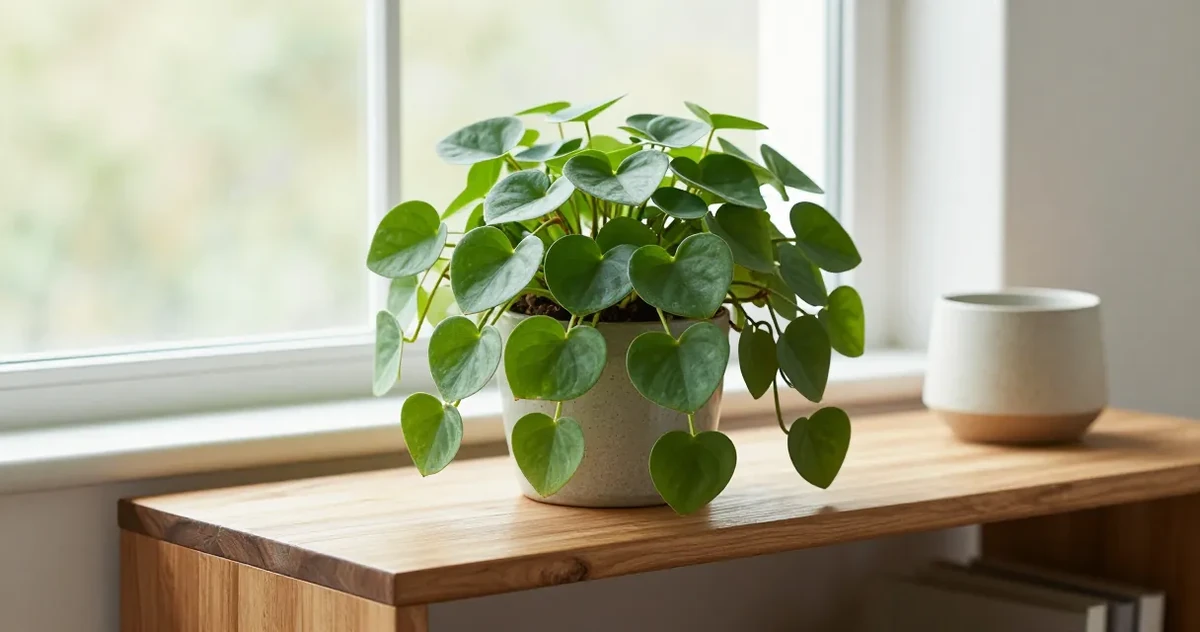
You have a long string of hearts vine - maybe one beautiful trailing strand, maybe a pot that looks thinner than you expected - and you want more of it. That is the moment most people start searching for propagation advice, and that is the moment most guides let them down.
Not because water propagation or soil cuttings are hard. They are not. String of hearts roots readily. The real problem is that most guides treat propagation as a single task with four interchangeable options, when it is actually three different goals with four different best-fit methods. Choosing the wrong one for your situation is why people spend weeks waiting for results that never quite match the lush basket they were picturing.
If you are not sure where to start with general string of hearts care, our string of hearts care guide covers light, watering, and seasonal needs, which all affect how well cuttings establish.
10-Second Chooser
| If your goal is… | Best method | Why it wins |
|---|---|---|
| A fuller original pot | Keep the vine attached and pin nodes or aerial tubers back into the same container | You add rooted growth without sacrificing the mother plant’s fullness. |
| One or two separate new plants | Water or direct-soil cuttings | Both are reliable, and water is easiest if you want visible proof before potting up. |
| The biggest yield from one long vine | Butterfly propagation | One strand can become many rooted pieces that you later group into one dense pot. |
Not sure what plant you are caring for?
Open KnowYourPlant, snap a photo, and get the plant name plus care notes matched to the species in front of you.
Identify your plantWhat Growers Keep Getting Stuck On
In grower discussions, the same three frustrations come up again and again: water cuttings that feel slow, thin pots that stay thin even after one successful cutting, and confusion over what to do with those little aerial tubers once they appear. That is useful context because it shows the real question is usually not just can string of hearts root? It is which method gets me the result I actually want?
That is why this guide is organised around the outcome you want, not just the mechanics of taking a cutting. If your goal is a fuller basket, you will usually get there faster by pinning several nodes or tubers back into the same pot than by rooting one long strand in a glass of water.
Plant ID + Plant Doctor
Not sure what your plant needs?
Snap a photo in KnowYourPlant to identify the plant, check yellow leaves, spots, wilting, or pests, and get a calm next step before the problem spreads.
What Most Propagation Guides Miss
The common misdiagnosis: treating propagation as the solution to a sparse-looking pot. A pot with one long vine trailing down the side does not necessarily need a cutting. It often just needs that vine looped back into the same container.
Generic propagation advice assumes you want a second plant. But the more common goal is a fuller original pot. Those goals call for different methods, and if you pick a method built for one goal while trying to achieve the other, you will be disappointed with the result even when the propagation itself succeeds.
The practical first check before you cut anything: ask whether you want a second plant sitting in its own pot, or whether you want the pot you already have to look denser and more trailing. If it is the latter, the fastest answer is often not a cutting at all. It is coiling existing vines back into the pot and letting the aerial tubers along those vines do the rooting work for you.
This single question changes which method makes sense for at least half the people searching this topic.
Want a care schedule you do not have to remember?
KnowYourPlant sends watering, feeding, repotting, and seasonal reminders based on the plants you actually own.
Get care remindersWhat String of Hearts Actually Needs to Root
Ceropegia woodii is a trailing semi-succulent vine. Along its stems, between each pair of leaves, it produces small bead-like bulbs called aerial tubers (sometimes called tubercles). These are the plant’s natural propagation shortcut. They contain stored energy and rooting potential. When a tuber makes contact with moist soil, it will begin to root on its own - no cutting required.
The nodes where leaf pairs attach to the vine also root well. Both nodes and tubers respond to warmth, moisture, and free-draining medium. The plant does not like sitting in constant wet, whether in a waterlogged pot or a glass of stagnant water.
The South African Plant Biodiversity Institute (SANBI) describes Ceropegia woodii as a succulent climber with stems arising from tubers, and aerial tuberous growths produced at various lengths along the stem, typically in shaded positions with humus-rich, loamy, or rocky soils. That rooting context matters for aftercare too: free-draining mix and filtered light are the right conditions for new cuttings, matching what the plant produces in the wild.
Identification Snapshot
- Growth habit: Thin trailing vines with spaced pairs of heart-shaped leaves.
- Propagation points: Roots form from nodes and from the small bead-like aerial tubers along the vine.
- Colour cues: Leaves are usually green on top with purple-toned stems and undersides.
- Why it matters here: If a section has no usable node or tuber, it is a poor propagation candidate no matter which method you choose.
Lookalikes and Name Confusion
| Plant or label | What usually causes the mix-up | Quick way to tell them apart |
|---|---|---|
| Ceropegia woodii | This is the accepted botanical name for string of hearts. | Heart-shaped leaves on thin trailing vines, often with aerial tubers along the stem. |
| Ceropegia linearis subsp. woodii | Older labels and alternate taxonomy still use this name. | It refers to the same plant rather than a different propagation method or separate species. |
| String of pearls | People shopping for trailing succulents often compare them. | String of pearls has round bead-like leaves rather than flat heart-shaped leaves. |
| String of turtles | Another trailing houseplant sometimes confused in quick online searches. | String of turtles has small patterned round leaves and does not show the same obvious aerial tubers. |
“String of hearts is easily propagated from cuttings, from tubers produced at the leaf bases, or by seed. Aerial tubers can be pressed into soil, preferably while still attached to the vine, then severed after rooting. Vine cuttings root best with bottom heat.”
- Wisconsin Horticulture Extension, University of Wisconsin-Madison
For a broader look at how node and stem rooting work across different indoor plants, our guide to propagating plants indoors covers the principles that carry over to string of hearts.
The Four Ways to Propagate String of Hearts
Water Propagation
Cut a vine section with at least two or three leaf pairs, strip the lowest leaves to expose the node, and set it in a small glass with the node just at the waterline - not submerged. Change the water every two to three days to keep oxygen levels up.
Roots emerge from the node, not from the tubers, and they typically appear within two to four weeks. Once roots reach about two centimetres, move the cutting into a well-draining mix. Waiting longer makes transplanting harder without snapping the new root tips.
Water propagation gives you the satisfaction of watching roots form before committing to soil. The trade-off is that each cutting ends up in its own separate pot, making it a slower route to a full-looking basket.
Soil (Direct) Propagation
Cut a vine section and press the lowest node directly into barely moist cactus mix or a general potting mix with extra perlite. Keep it lightly moist for the first couple of weeks, then shift to normal string of hearts watering - letting the top layer dry between drinks.
Roots establish more solidly in soil than in water, and the cutting skips the transplant step entirely. The downside is that you cannot see what is happening underground. A gentle tug at three to four weeks will tell you whether roots have taken hold.
NC State Extension recommends bright indirect light, well-drained sandy potting soil, and allowing the plant to dry completely between waterings - advice that applies directly to cuttings, not just mature plants.
Butterfly Method
This is a way to produce many rooted plants from one long vine. Cut the vine into short segments, each with one pair of leaves and the node between them. Lay each piece flat on the surface of moist soil or coco coir, with the cut end lightly pressed into the medium and the leaf pair sitting above it.
The method takes its name from how the leaf pairs look on the surface - small wings, one on each side of the stem. The advantage is yield: one long vine becomes ten or fifteen rooted cuttings. The smarter move is to pot all of them together into one container once they root, rather than separating them, which is what gives you the full, dense basket look faster.
Tuber Propagation
Aerial tubers are the small, round, bead-like growths along the vines between leaf pairs. They are not defects or growths to worry about - they are the plant’s own propagation mechanism.
The most reliable approach is to press a tuber against the soil of a new or existing pot while the vine is still attached to the mother plant. Wisconsin Horticulture Extension specifically recommends rooting tubers while still attached, then cutting the vine after rooting is confirmed. Keeping the vine connected gives the tuber a food source and significantly reduces the chance of it drying out before roots form.
Tubers can also be removed and rooted on their own, but they need more careful attention: lay them directly on the soil surface without burying them, and keep the medium consistently moist until growth appears. Burying them risks rot.
Method Comparison at a Glance
| Method | Best for | Rooting timeline | Transplant needed | Fuller-pot potential |
|---|---|---|---|---|
| Water | Watching roots form, single cuttings | 2-4 weeks | Yes, before roots grow long | Low per cutting |
| Direct soil | Strong roots, minimal follow-up | 3-5 weeks | No | Medium |
| Butterfly | Maximum yield from one vine | 3-5 weeks | Group all into one pot | High |
| Tuber (in place) | Fuller original pot, least disruption | 3-5 weeks | No | High |
Quick Decision Tree
- You want the original pot to look fuller, not to create a separate gift plant. Keep the vine attached and pin several nodes or aerial tubers back into the same pot.
- You want one or two separate plants and like seeing proof before potting up. Use water propagation, then transplant once the roots are short and sturdy.
- You want the strongest roots with the fewest steps. Use direct soil propagation and leave the node undisturbed while it settles.
- You have one long vine and want the biggest payoff from it. Use the butterfly method, then pot the rooted pieces together instead of splitting them up.
- You already have aerial tubers along the vine. Use them first. They are usually the easiest and least disruptive route to new growth.
Choosing the Right Method for Your Goal
Your pot looks sparse and the vine is long. This is the most common situation, and cutting is not necessarily the answer. Take the long vine and coil it back into the same pot. Pin each aerial tuber against the soil surface using a bent hairpin, a straightened paper clip bent into a U, or any small wire anchor. You are not cutting anything, not waiting for a new pot to establish - you are helping the plant root at multiple points along a vine it already grew. Within a few weeks, the pot starts to look noticeably denser from the inside out.
You want one or two new standalone plants. Water propagation or direct soil cuttings are both reliable here. Water lets you confirm roots are forming before you pot the cutting. Soil produces stronger, better-adapted roots and one fewer step.
You have a long vine and want to make the most of it. The butterfly method converts one strand into many individual cuttings. Pot them all together into a single container rather than scattering them across separate pots, and within a season you have a basket that looks like it has been growing for years.
You have aerial tubers with no soil contact. Press them against the surface of any nearby pot while still attached. You are not doing anything unusual - you are just making contact that the plant would eventually make on its own if a vine drooped close enough to touch soil.
For choosing the right container and soil combination to support faster establishment, our best potting soil for indoor plants guide covers what to look for in a free-draining mix, and our hanging plants indoor guide covers how to position trailing plants so the vines can find their own path.
What to Expect Week by Week
Weeks 1-2: Nothing visible happens, and that is normal. In water, the cut end may develop a slight callus. In soil, the cutting uses stored energy to begin sending root hairs outward. The worst thing you can do here is tug the cutting to check, increase watering, or move it to a different spot. Leave it alone.
Weeks 2-3: In water, thin white roots become visible from the node. In soil, the cutting may look identical to day one, but a gentle tug will meet faint resistance - the first sign that roots are gripping. Water cuttings approaching two centimetres of root growth should be potted soon.
Weeks 3-5: Root systems are developing. Soil and butterfly cuttings can be left undisturbed. Tubers pinned to the soil may show tiny new vine tips emerging from the contact point - this is confirmation they have rooted successfully.
Weeks 5-6 and beyond: New leaf growth above the soil or from a tuber is the clearest sign of a fully established cutting. At this point, it is ready for a normal care routine: bright indirect light, free-draining mix, and watering only when the top layer has dried out.
After Your Cuttings Root
New string of hearts cuttings need the same conditions as the mature plant: bright indirect light, a fast-draining mix (cactus blend or general potting mix with perlite), and watering only when the top few centimetres of soil are dry. They are not heavy feeders when young, and overwatering is the most common way to lose a cutting that successfully rooted.
Give the cutting a few weeks to settle before moving it to its permanent spot. If you see yellowing or any softness at the stem base, check early - catching root rot at the start gives you a much better chance of saving the rest of the plant. Our overwatered plant signs and fixes guide walks through what to look for and how to respond before the damage spreads.
Care Cards for Newly Rooted Cuttings
| Care card | What to do |
|---|---|
| Light | Keep cuttings in bright indirect light, not harsh afternoon sun. |
| Soil | Use a fast-draining mix, such as cactus mix or potting soil cut with extra perlite. |
| Water | Keep the medium lightly moist while roots start, then let the top layer dry before watering again. |
| Warmth | Rooting is faster in warm rooms, and bottom heat helps if your space runs cool. |
Common Mistakes That Slow Propagation
- Taking a cutting with no usable node. The node is where roots form. A plain section of stem without a viable node or tuber will not do much.
- Keeping the medium wet instead of lightly moist. String of hearts is still a semi-succulent, so constant dampness raises the risk of rot faster than it speeds up rooting.
- Separating aerial tubers too early. If a tuber can stay attached to the mother vine while it roots, do that first. It is usually more forgiving.
- Using one cutting when the real goal is fullness. If you want a dense pot, root several nodes or butterfly cuttings together instead of celebrating one isolated success.
Seasonal Notes
Spring and early summer are the easiest times to propagate because the plant is actively growing and warmth speeds root formation. In winter, the same methods can still work, but expect slower timelines and be stricter about avoiding cold, soggy soil. If your room stays cool, bottom heat is often the difference between a cutting that stalls and one that finally takes off.
Common Problems and Quick Fixes
| If you see this | Likely issue | What to do next |
|---|---|---|
| Cutting shrivels | Dehydration before roots have formed | Raise humidity slightly and keep the node or tuber in consistent contact with the rooting medium. |
| Stem base turns soft or dark | Rot from staying too wet | Trim back to firm tissue, let the cut end dry, and restart in fresh airy mix. |
| No roots after 5-6 weeks | Node is not making clean contact, or the room is too cool | Recheck node placement and add gentle bottom warmth. |
| Detached tuber does nothing | Tuber is drying out before it can root | Press it directly onto moist soil, or root it while still attached if possible. |
The cutting is shrivelling and looks dehydrated. This is usually moisture loss, not rot. The cutting is losing water faster than it can absorb it. Try moving it somewhere brighter and covering it loosely with a clear bag for the first week to increase humidity around the leaves and stem.
The stem is soft or darkening at the base. This is rot, and it means the medium stayed too wet for too long. Trim back to firm tissue, let the cut end dry for a full day before placing it back in fresh, dry medium. Our root rot treatment guide covers when salvage is possible and when to restart from scratch.
No roots after five or six weeks. Check that the node - not just the stem - is actually touching the water or soil. Check that the medium is not swinging between bone dry and waterlogged. Bottom heat makes a real difference: Wisconsin Extension notes that vine cuttings root best with warmth at the base, so a warm windowsill or a seedling mat set around 21-24 degrees makes rooting faster if your home runs cool.
A detached tuber is not rooting. A tuber sitting above the soil surface will dry out before roots form. Make sure it is in direct contact with moist soil, not hovering. If you can, root it while still attached to the vine rather than after removing it - that one change improves the success rate noticeably.
Real User FAQ
How long does string of hearts take to propagate?
In water, roots from a node cutting typically appear within two to four weeks. In soil, you should feel faint resistance when you gently tug the cutting after three to five weeks - that is the first sign roots are holding. Full establishment, where the plant is producing new leaf growth and can be treated like a mature plant, usually takes six to eight weeks from the initial cut.
Can I propagate string of hearts in just water?
Yes, and it works reliably. Set the node so it just touches the waterline rather than sitting fully submerged, and change the water every two to three days. The main trade-off is that water-rooted cuttings sometimes take a little extra time adjusting to soil, because roots that form in water are adapted to a wet environment. Moving them while roots are still short - around two centimetres - makes the transition easier.
What are the little round beads on my string of hearts?
Those are aerial tubers, sometimes called tubercles. They are normal and useful - natural storage organs the plant produces along its vines. If they touch moist soil they will root, and eventually produce new growth. You do not need to remove them or treat them as a problem. They are the plant’s built-in propagation mechanism, and one of the most reliable ways to root string of hearts without cutting anything at all.
Should I propagate in spring or can I do it any time of year?
Spring and early summer are the easiest times, when the plant is actively growing and roots form faster. That said, string of hearts can be propagated year-round if you have consistent warmth and bright indirect light. In winter, rooting may take a few extra weeks and cuttings are more vulnerable to rot if the soil stays damp while growth is slow.
Why is my string of hearts cutting not rooting?
The most common reasons: the node is not in direct contact with the water or soil, the medium is too wet and early rot is developing, the light is too low for the cutting to have energy for root production, or the space is too cool. Wisconsin Extension notes that vine cuttings root best with bottom heat - a warm windowsill or a seedling heat mat at around 21-24 degrees makes a real difference in a cool room.
Can I put multiple cuttings in the same pot?
Yes, and this is usually the better approach if a full-looking result is the goal. The butterfly method is designed for exactly this - it produces many small cuttings from one vine, and potting all of them together into one container once rooted gives you a dense, trailing basket much faster than placing them in separate pots. They can also be placed together from the start, as long as each cutting has its node or tuber in direct contact with soil rather than tangled above the surface.
How do I use the aerial tubers to make the original pot fuller?
Coil any long outward-trailing vines back into the pot. Then pin each aerial tuber directly against the soil surface using a bent hairpin, a small U-shaped wire, or even a folded piece of garden tie. The tubers begin rooting once they have consistent contact with moist soil. Within a few weeks, the pot starts to look noticeably denser - and you have not had to cut a single thing.
Is string of hearts safe for cats and dogs?
Ceropegia woodii is generally considered non-toxic to cats and dogs, though any plant material can cause mild stomach upset if eaten in quantity. For more detail on which trailing and hanging plants are safe around pets, our cat-safe plants indoor guide covers this in depth.
How This Guide Was Checked
This guide was updated in June 2026 after checking extension references, taxonomic sources, and recurring grower questions around slow water rooting, aerial tubers, and making a sparse pot look fuller. Community discussions helped shape the practical questions readers usually ask, while rooting guidance was checked against extension and botanical references. It is meant for normal home propagation of healthy or mostly healthy vines, not for severe rot rescue or pest-heavy rehabilitation work.
Freshness Note
Propagation advice changes less often than pest or product recommendations, but timelines and reader pain points do drift. This version reflects the current extension references and the recurring owner questions that were easiest to verify directly.
Article researched using Wisconsin Horticulture Extension, NC State Extension Gardener Plant Toolbox, SANBI PlantZAfrica, and Kew Plants of the World Online. Last updated June 2026.
Save this plant plan before you forget the details.
Keep the plant, diagnosis notes, reminders, and care changes in KnowYourPlant so the next decision is based on your actual plant history.
Open KnowYourPlant