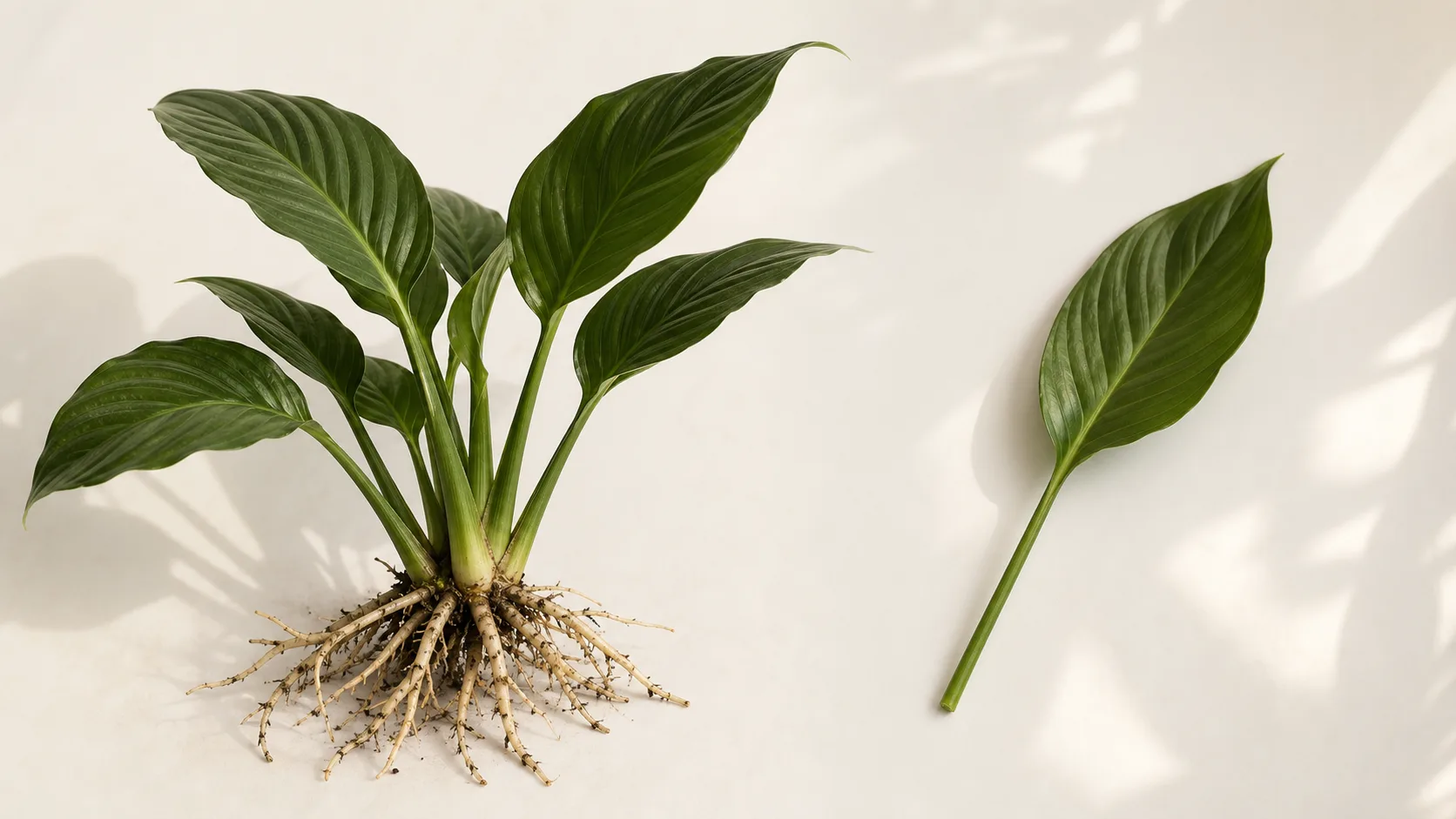
Peace lily crowns separated with healthy roots attached

Peace Lily Propagation: Divide Crowns Without Damaging Roots

Peace Lily Propagation: Divide Crowns Without Damaging Roots Dividing a peace lily too soon can leave both halves drooping with too few roots. The next mistake is panic-watering that droop until healthy roots begin to rot. Avoid both with this 30-second rule: Divide today only if two or more leaf clusters each have their own firm base and attached roots. Repot her whole if crowded roots still belong to one base. Wait and diagnose if roots are sparse or mushy, the base is soft, or the plant is already badly wilted. A detached leaf is not enough. This guide shows the safest split, then exactly when to water, where to place each division, and what to do if she droops afterward. ...
 · 11 min · 
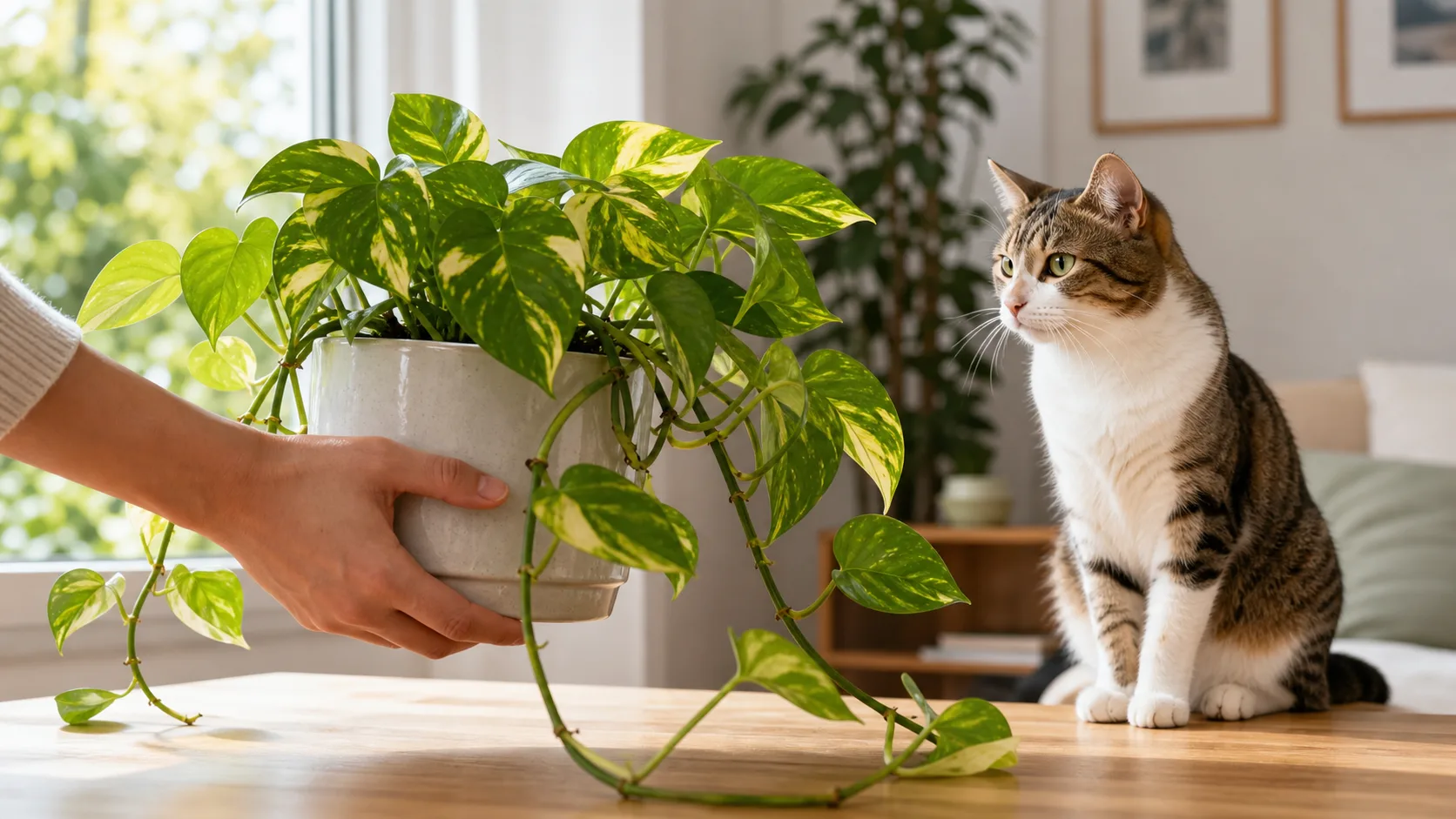
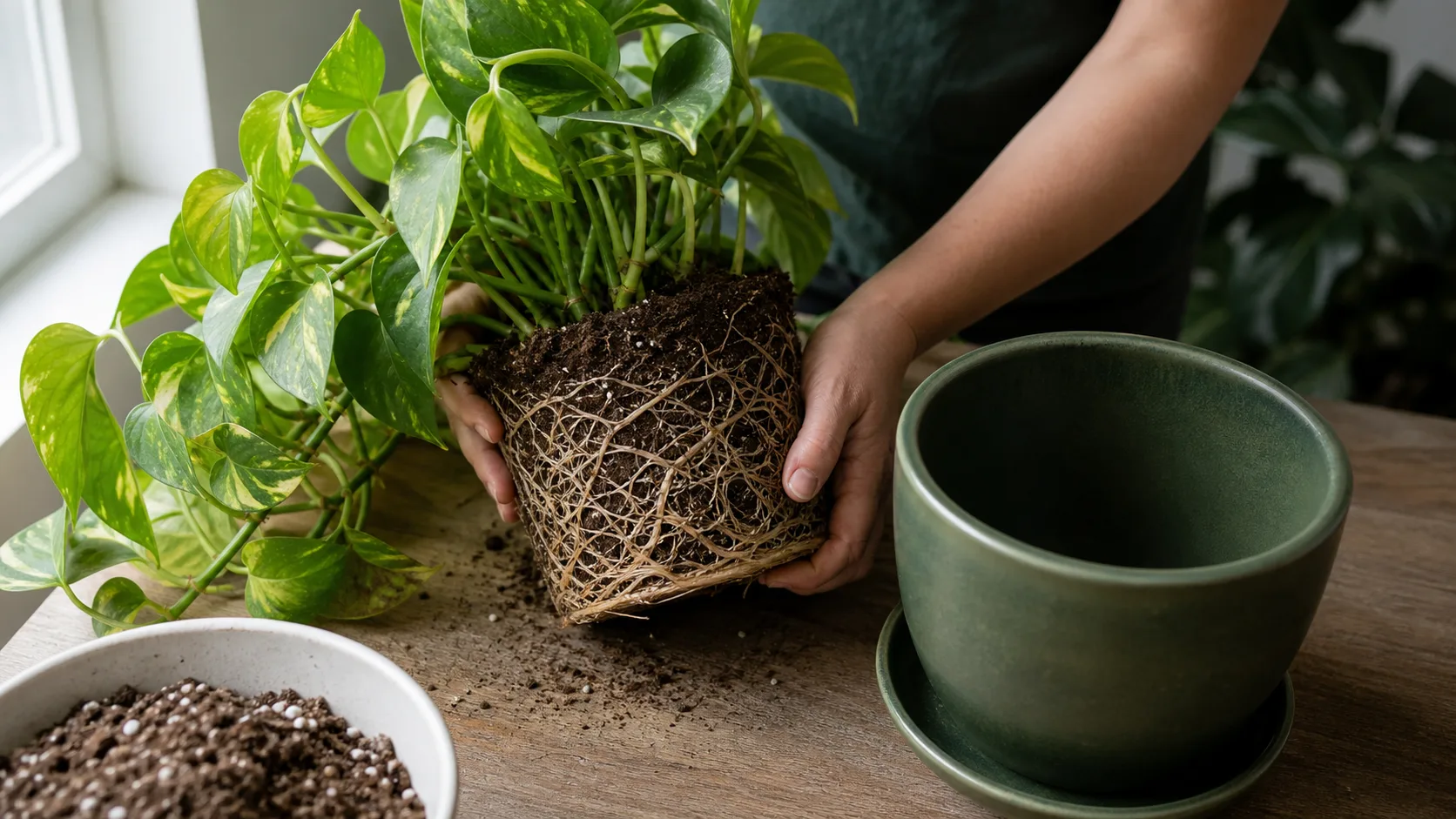
Pothos being gently lifted from its pot for repotting

Pothos Repotting: When to Move It and How to Prevent Shock

Afraid repotting will make your pothos droop, yellow, or rot? You can make the safe call in under a minute. Repot now only when the roots are packed and watering or growth has changed. Refresh the same pot when the soil is tired but roots still have room. Wait when one root has escaped but the plant otherwise behaves normally. Repot now, refresh soil, or wait? If this sounds most accurate Best next move Why The root ball is densely packed, roots circle the pot, water runs through fast, and the plant now dries out in about half its old interval Repot now Root crowding is affecting moisture balance Growth is still steady, the root ball is not solid roots, but the mix feels compacted, crusty, or tired Refresh soil, same pot if needed Soil quality is the main issue, not space There is only one escaped root or a few roots near the bottom, and watering rhythm and leaf size still look normal Wait and recheck in 2 to 4 weeks Slightly snug is not the same as stressed A simple rule helps: slide the plant out and check whether you still see a real layer of potting mix around the roots. If you mostly see soil, waiting or refreshing the mix may be enough. If you mostly see roots, repotting is more likely to help. ...

 · 8 min · 
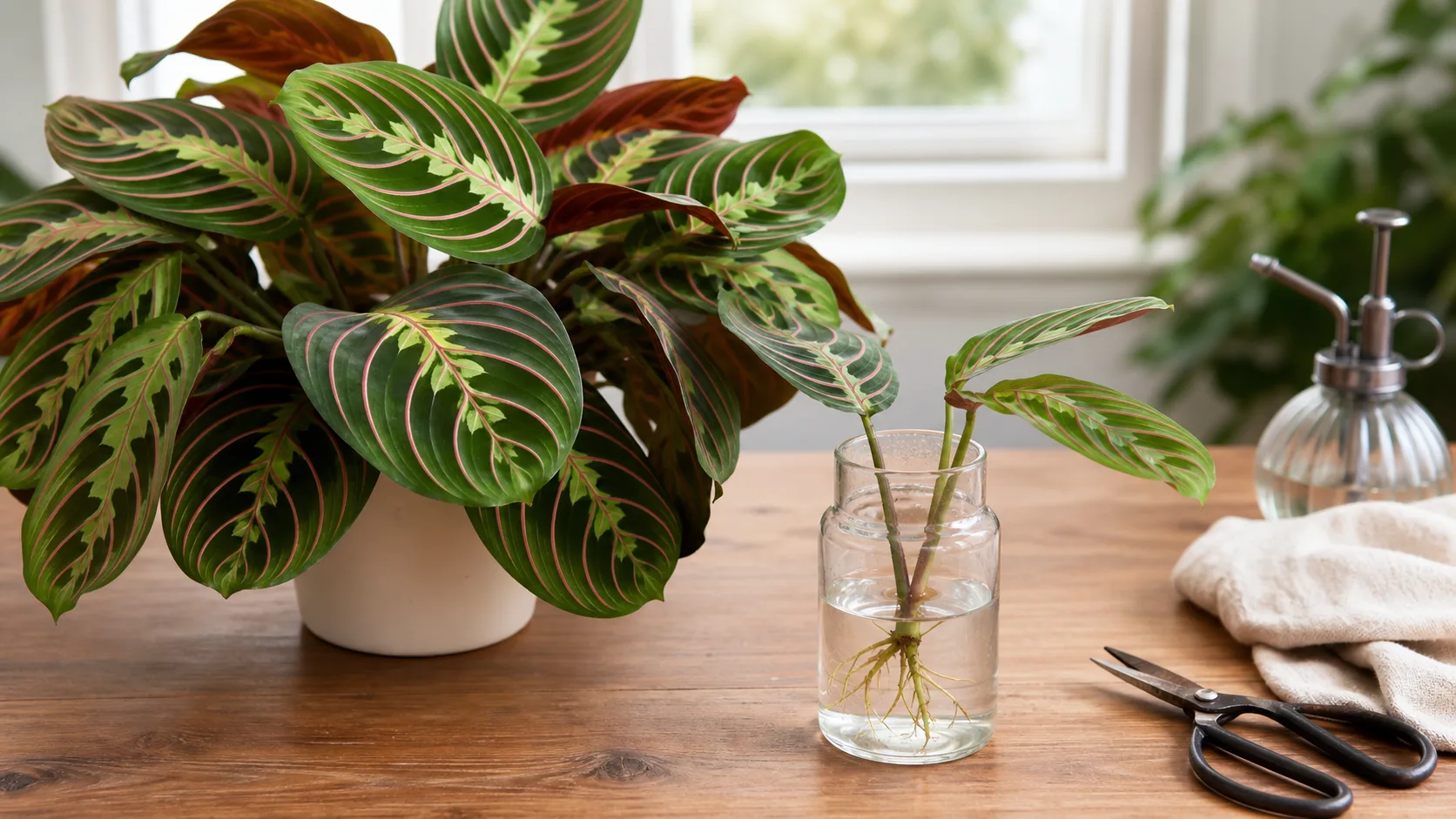
Prayer plant stem cuttings and a divided Maranta ready for propagation

Prayer Plant Propagation: Cuttings, Division, and Rooting

If you need the shortest safe answer, make this decision first: Root it if the piece has at least one firm node on a healthy stem. Divide it if the parent plant already has separate rooted crowns or sections. Discard it if it is leaf-only, node-free, black, mushy, or sour-smelling. That is the whole job in the first minute. Most failed prayer plant propagation starts with the wrong piece, not the wrong method. ...

 · 14 min · 
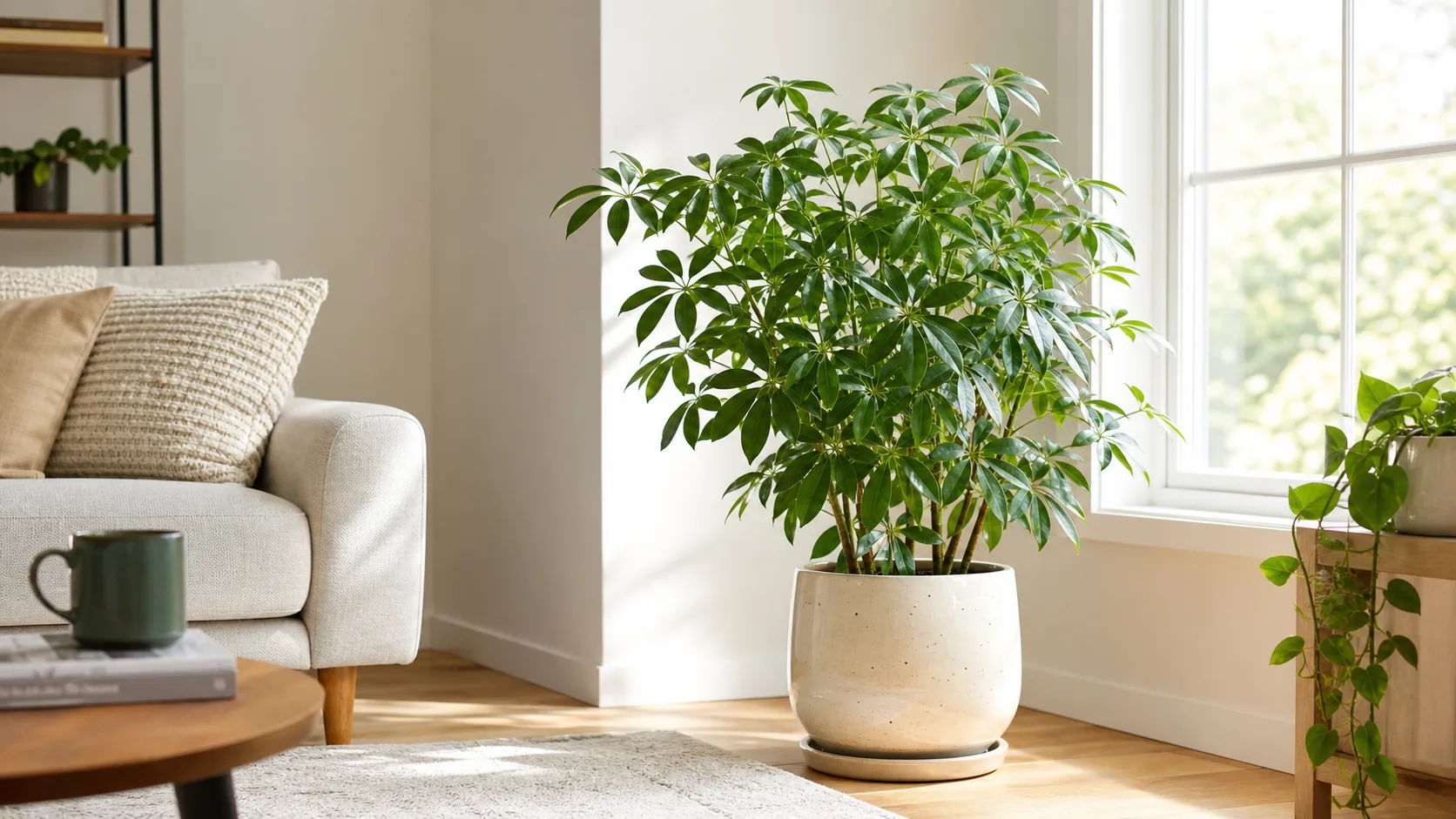
Indoor schefflera houseplant with glossy umbrella-shaped leaflets

Schefflera Plant Care: Light, Water, Pruning, and Leaf Drop

If your schefflera is dropping leaves, yellowing, leaning, or suddenly declining, this guide is built to help you solve the problem in the order that prevents avoidable plant loss: roots first, light second, temperature and drafts third, pests fourth, then pruning or repotting last. Most indoor failures happen when owners stack the wrong fixes on top of the wrong diagnosis. The practical baseline is simple: bright filtered light, thorough watering followed by moderate drying, steady warmth, and fast inspection of the leaf undersides when symptoms begin. The hard part is not knowing the rules. It is knowing which rule matters first when the plant looks bad. ...

 · 22 min · 
Are Pothos Toxic to Cats? Symptoms and Safer Next Steps

Are Pothos Toxic to Cats? Symptoms and Safer Next Steps

If your cat just bit a pothos leaf and now she is drooling, licking her lips, or looking deeply offended by her own mouth, I know how fast this search turns scary. The short answer is yes, pothos is toxic to cats, but the usual problem is not the same kind of emergency people picture when they hear about true lilies. In most cases, pothos causes painful mouth and throat irritation from insoluble calcium oxalate crystals. ...

 · 11 min · 
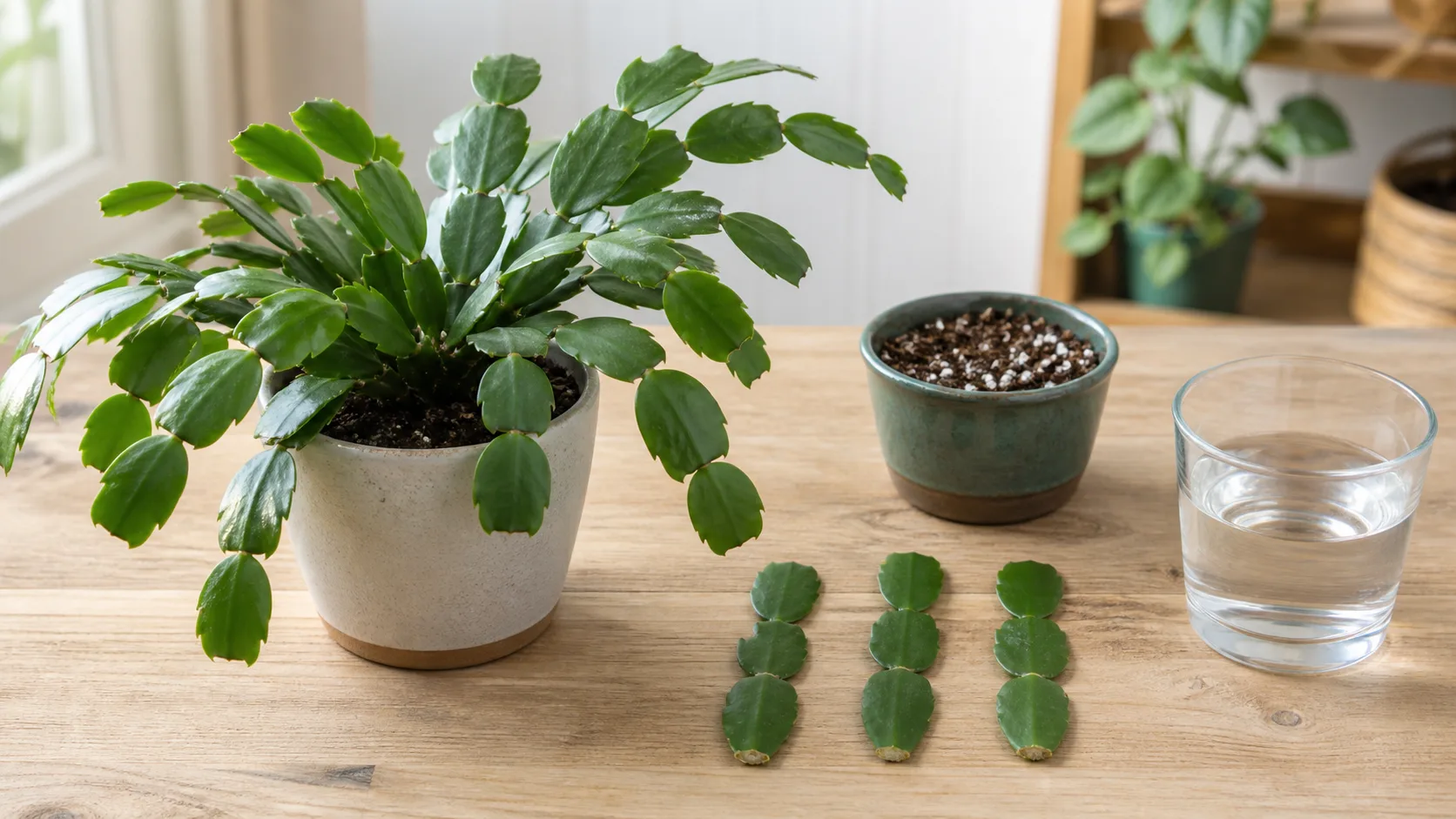
Healthy Christmas cactus stem segments set aside to callus before propagation

Christmas Cactus Propagation: Root Cuttings Without Rot

Christmas cactus propagation usually fails in one quiet moment: the cutting is still alive, but it sits in more moisture than it can handle before roots ever form. If you are here with a broken piece in your hand, or a leggy plant you want to turn into two, that is the real job. Not just getting roots, but getting a firm healthy segment through its most rot-prone week. The good news is that holiday cacti are generous plants. The Royal Horticultural Society says, “It’s very easy to take cuttings from Christmas cacti,” and NC State notes that holiday cactus types are easily propagated by stem cuttings. What most quick guides miss is the practical question real plant owners ask first: is this piece even worth rooting, and what setup gives it the safest start in your home? ...

 · 16 min · 
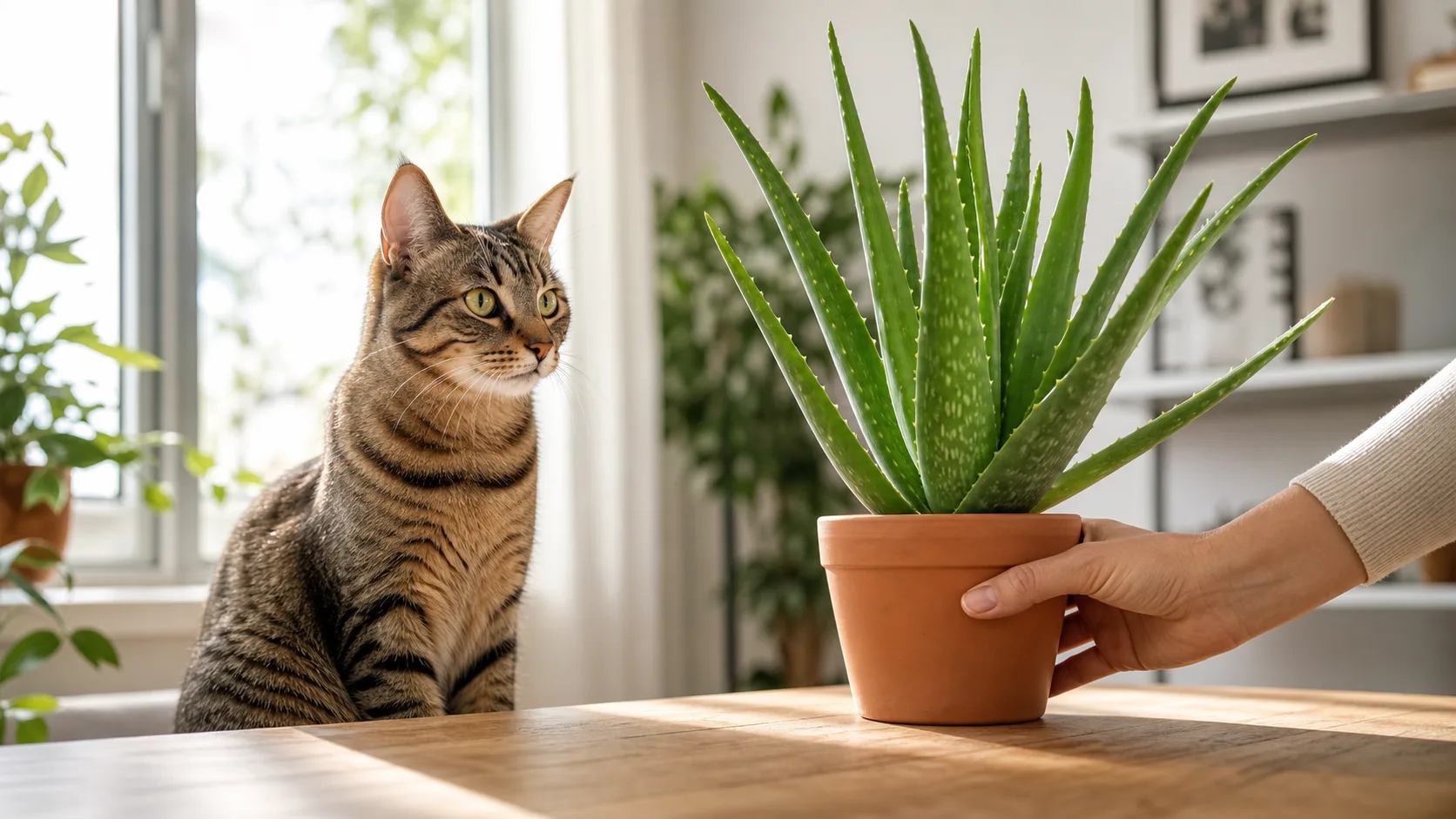
Aloe vera plant on a shelf away from a curious cat

Is Aloe Vera Toxic to Cats? Gel, Latex, Symptoms, and Action

If your cat just bit an aloe leaf and now you’re searching is aloe vera toxic to cats, the short answer is yes. The more useful answer is this: the main concern is usually the bitter sap or latex and the chewed plant tissue, not the clear inner gel people associate with soothing skin care. That distinction is where many quick pet-toxicity articles fall short, and it is exactly why cat owners end up unsure whether to panic, monitor, or call their vet. ...

 · 14 min · 
Snake plant with stiff upright leaves in a terracotta pot on a shelf

Is Snake Plant Toxic to Cats? Signs, Risk, and Prevention

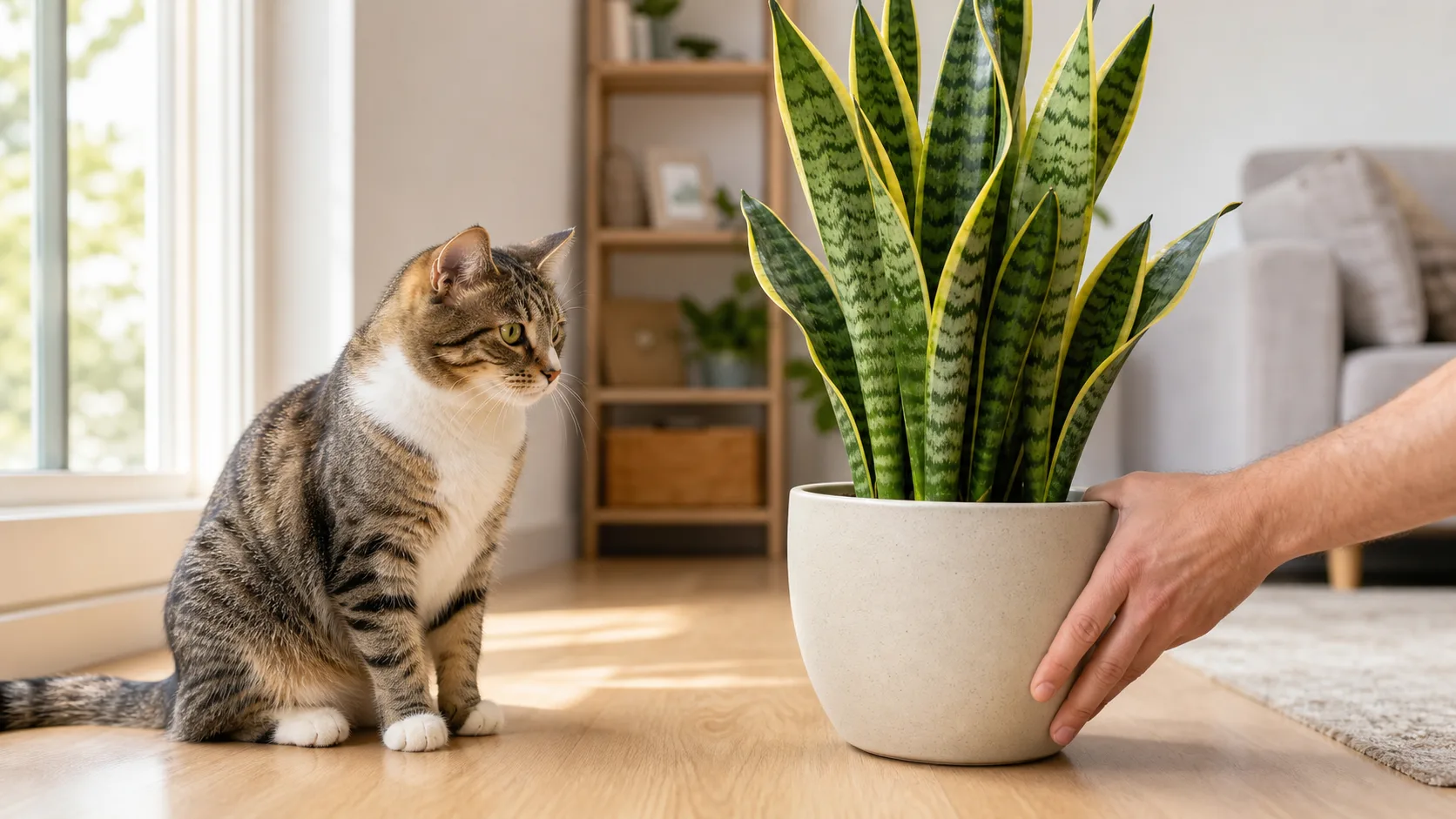
Is Snake Plant Toxic to Cats? Signs, Risk, and Prevention If your cat just chewed a leaf and now you are panic-searching is snake plant toxic to cats, the short answer is yes. Snake plant, also sold as sansevieria, mother-in-law’s tongue, or Dracaena trifasciata, contains saponins that can irritate a cat’s mouth and stomach. The part most articles skip is the part you actually need in the moment: this is usually treated as an irritation and GI-upset problem, not the same kind of no-delay emergency people associate with lilies. That does not mean ignore it. It means stay calm, look at your cat first, and respond based on symptoms rather than just the torn leaf. ...

 · 13 min · 
Spider plant with cascading green and white variegated leaves, a common houseplant in cat homes

Is Spider Plant Toxic to Cats? Why Cats Chew It

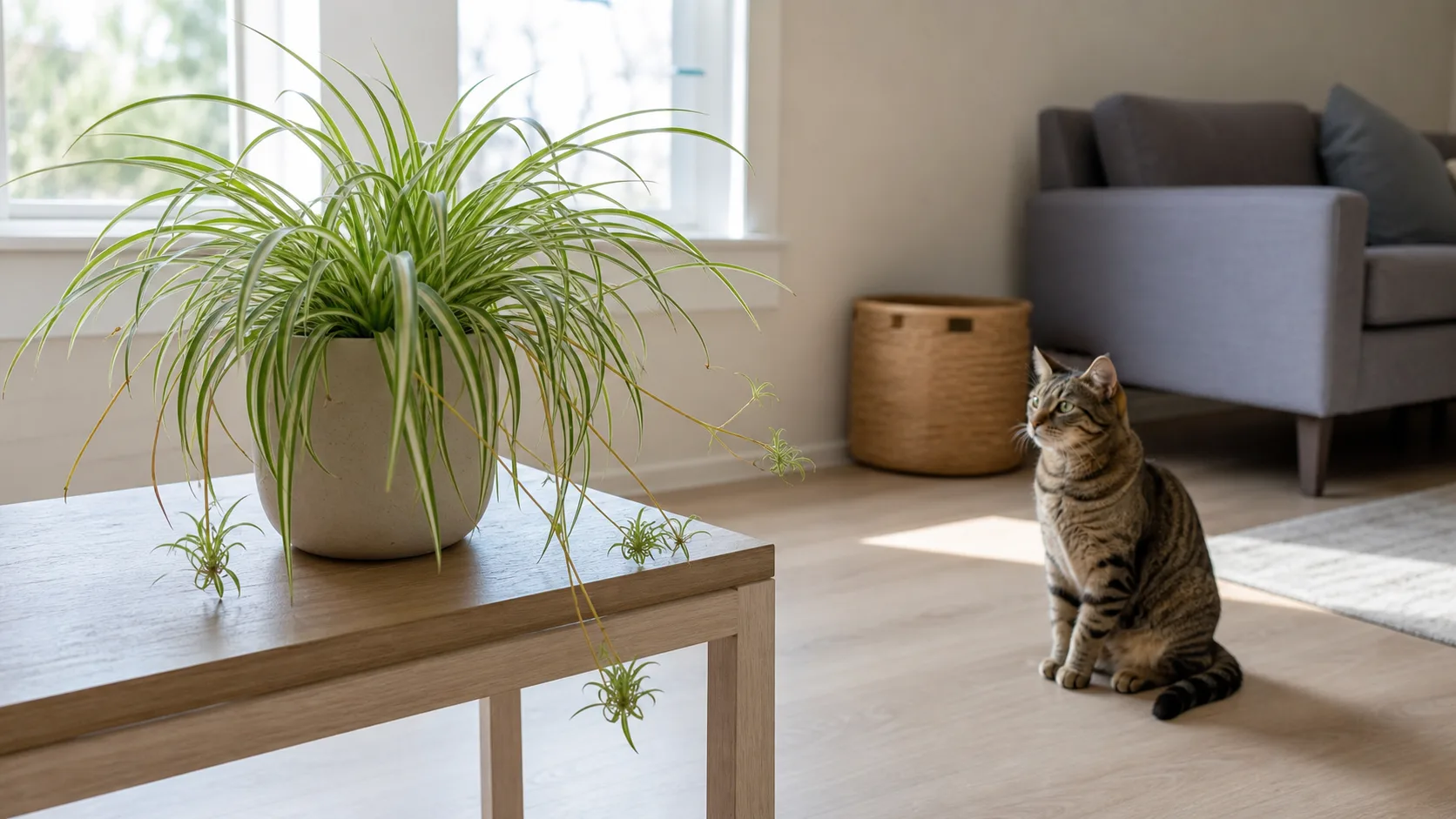
If you just found your cat chewing a spider plant, you probably do not want a long botany lecture. You want to know two things fast: is your cat in danger, and what should you do next. The short answer is reassuring. A true spider plant, Chlorophytum comosum, is classified as non-toxic to cats by the ASPCA. But that does not mean nothing can happen after a chew. Cats often vomit after eating plant material, and this particular plant creates extra confusion because the common name “ribbon plant” is sometimes used for a different plant that is toxic. ...

 · 12 min · 
Spider plant babies hanging from the mother plant beside a small pot ready for propagation

Spider Plant Propagation: Root Plantlets in Water or Soil

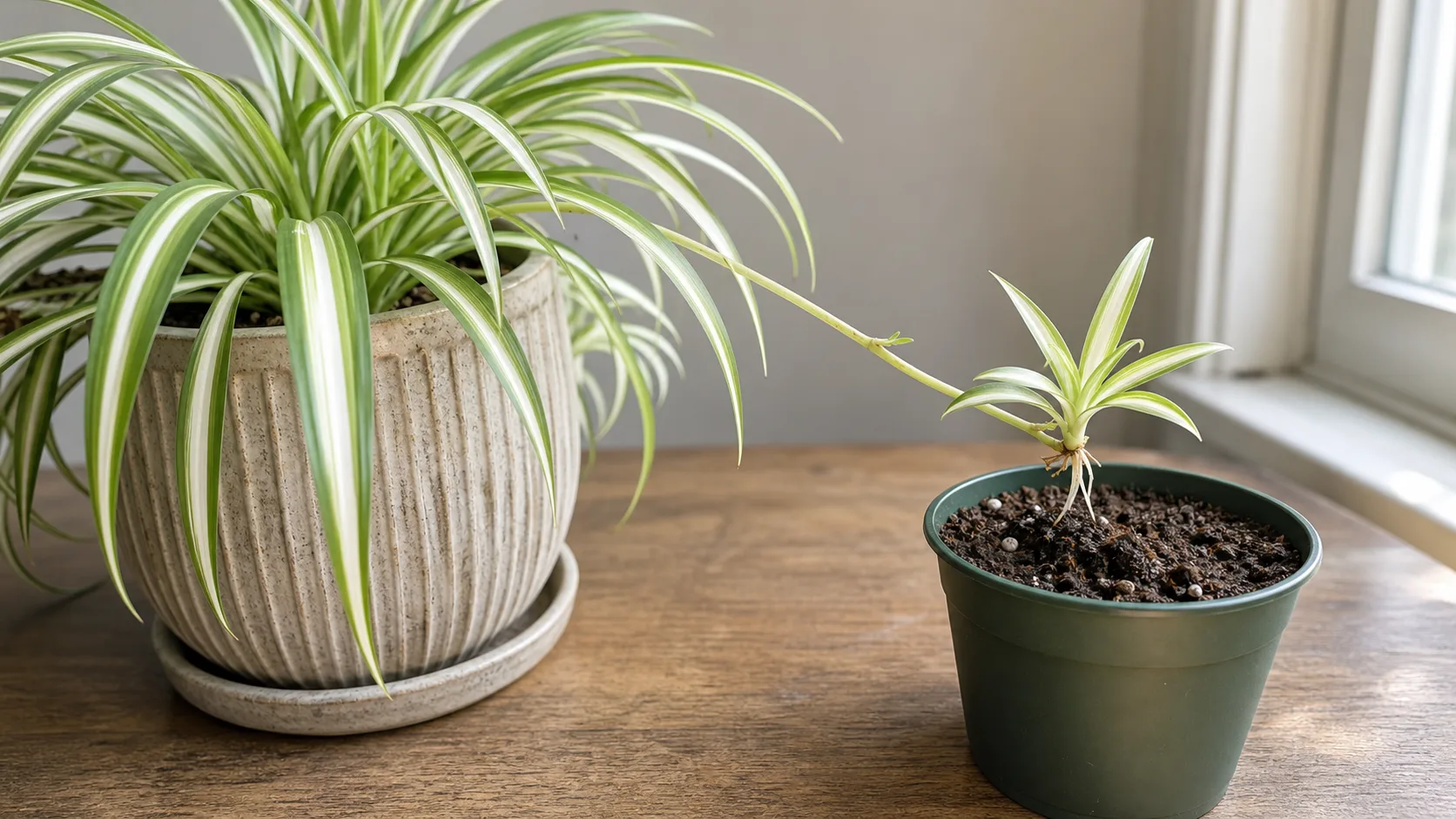
Spider plant propagation sounds easy until you are holding one baby in your hand and getting four different answers. Cut it now. Wait for roots. Put it in water. Never use water. By that point, the plantlet is still tiny, your confidence is gone, and the whole thing starts to feel more risky than people promised. The real question is not whether water or soil is better. It is whether this spider plant baby is ready for that method yet. ...

 · 13 min ·