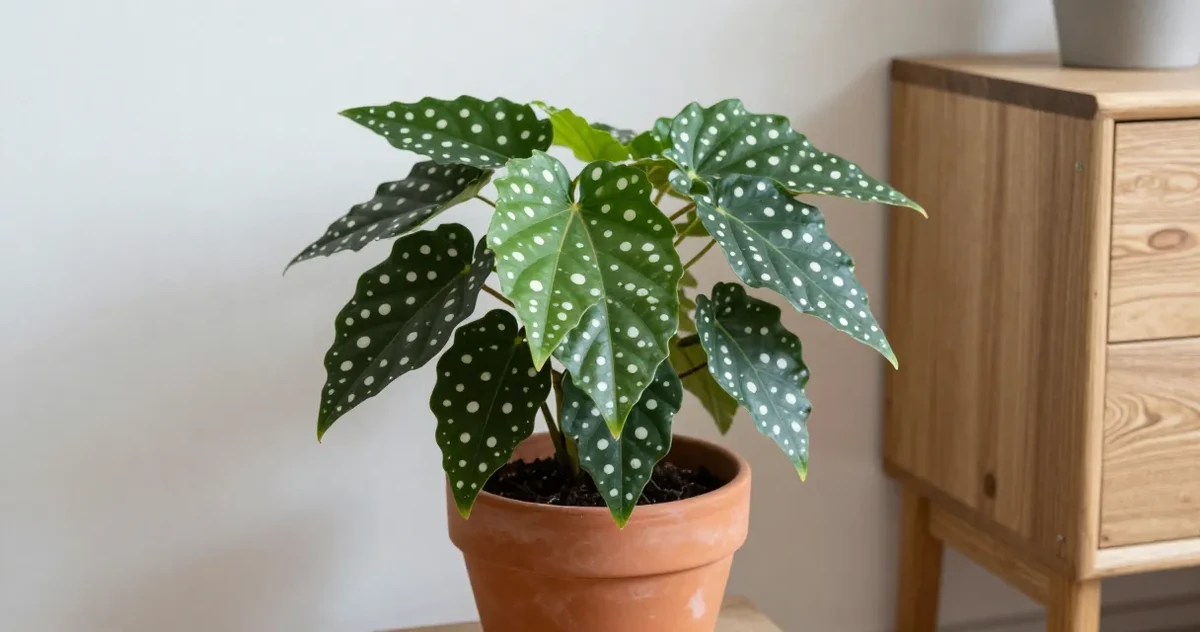
The polka dot plant (Hypoestes phyllostachya) is one of those plants that looks impossibly cheerful on the shelf at the garden center, tiny spotted leaves in pink, red, white, or burgundy against deep green, and then quietly turns into a tall, leggy disappointment about two months after you bring it home. If that sounds familiar, you’re not doing anything terribly wrong. It just needs a specific kind of care that most generic guides skim past.
This is what polka dot plant care actually looks like when you understand what it wants: bright filtered light, consistently moist (not soggy) soil, and regular pinching to keep it compact. Get those three things right and it stays vivid and bushy. Let any one of them slip and it will tell you, with stretched stems, faded spots, or brown-edged leaves.
Identification Snapshot
- Botanical name: Hypoestes phyllostachya
- What it should look like: Soft, thin green leaves splashed with pink, red, or white spotting on flexible stems
- Growth habit indoors: Compact at first, then noticeably taller and looser if it does not get enough bright filtered light or regular pinching
- Most common owner surprise: A healthy-looking plant can still get scraggly fast indoors, which is why pruning and fresh cuttings are normal parts of care
- Best home setup: Warm room, bright indirect light, evenly moist soil, and higher humidity than the average shelf usually provides
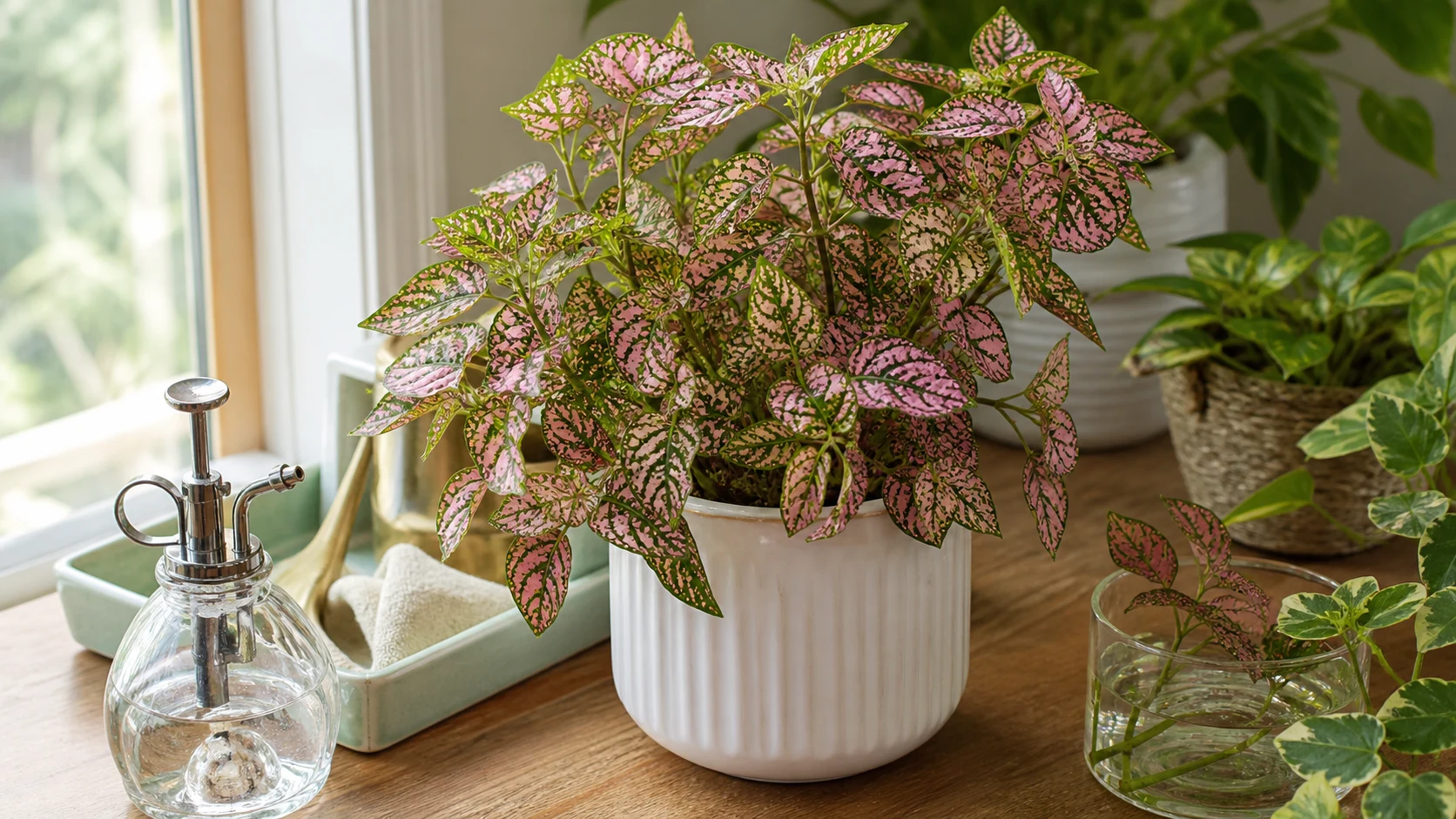
Healthy pink-spotted Hypoestes stays vivid and compact in bright, filtered indoor light.
What Most Care Guides Miss
The majority of polka dot plant advice focuses on light and water in isolation. What they underplay is that leggy growth, faded color, and leaf problems are usually all connected to the same root cause: not enough bright, filtered light indoors.
When the light is too low, the plant stretches toward any source it can find. The spots fade because the plant produces more chlorophyll to compensate. Then, because the stems are long and thin, the leaves feel more exposed to dry air and the watering rhythm shifts, the pot dries unevenly, and you start getting brown tips or crispy edges.
Most guides will tell you to move it to brighter light for legginess and increase humidity for brown tips. Both can be true at the same time. But the practical first check is always light: is your plant within two feet of a bright window, out of direct midday sun? If not, solve that before adjusting anything else.
What Owners Keep Running Into
Across live plant-owner Q&A threads reviewed for this guide, the same frustration kept appearing in different words:
- The plant looked fine at first, then started drying at the edges once the pot was allowed to dry longer than expected between waterings.
- Older plants became scraggly and disappointing, and owners were not sure whether to keep troubleshooting or simply cut them back and restart from cuttings.
- Curling leaves, faded spots, and stretched stems often showed up together, which made it hard to tell low light apart from direct sun, dry air, or inconsistent watering.
That is why this guide leans on diagnosis first. Polka dot plant problems usually overlap, so the best fix comes from reading the symptom pattern together instead of changing one thing at random.
The Right Light for Polka Dot Plants
Polka dot plants do best in bright, filtered light, the kind you get near an east-facing window or a few feet back from a south or west window with a sheer curtain. NC State Extension’s plant toolbox notes that the best leaf color comes from bright filtered light: too much direct sun can cause leaves to crinkle and curl, and too little fades the foliage and encourages leggy growth.
Expert note: If a polka dot plant is stretching and losing color at the same time, treat the light problem first. NC State and Wisconsin horticulture guidance both line up with what owners report: compact, colorful growth is much easier to keep in bright filtered light than in a dim room.
In practice, this means:
- East window: Usually ideal. Morning sun is gentle enough not to burn.
- South or west window: Fine if you pull the plant back two to three feet or filter with a curtain.
- North window or dim room: The plant survives but loses its color and starts stretching noticeably within weeks.
If your room light feels like low but not dark, that is probably the problem. Polka dot plants are not low-light plants in any meaningful sense, they just tolerate dim conditions long enough for you to think it is working.
If you’re not sure your natural light is enough, grow lights for indoor plants can fill the gap. A basic LED grow light a foot or two above the plant for 12 to 14 hours a day makes a real difference for color and compactness.
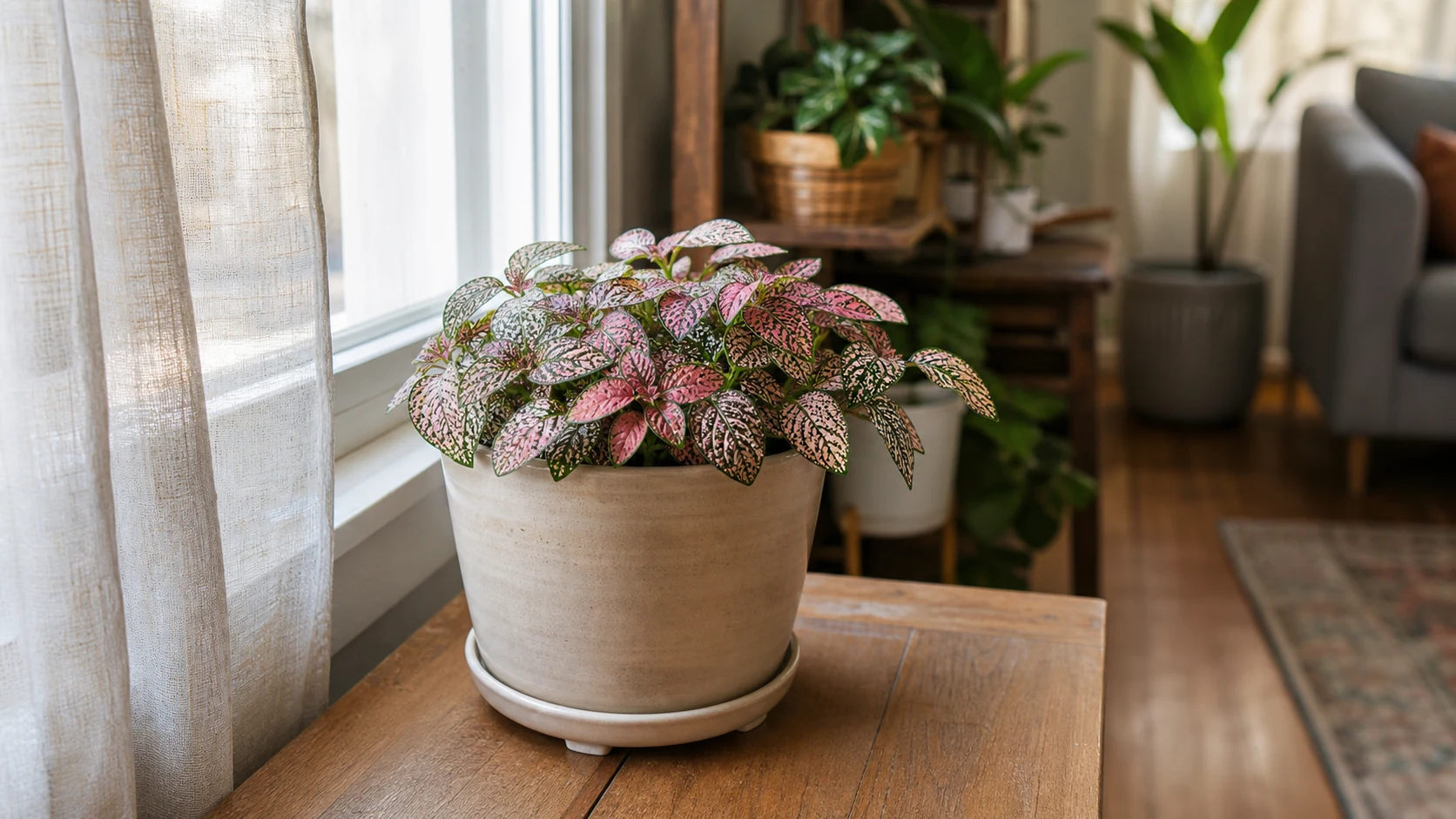
A sheer curtain softens window light while keeping pink Hypoestes growth compact and colorful.
Lookalikes and Confused-With Cases
If your plant has pink coloring but the care advice here does not seem to fit, these are the most common mix-ups:
| Plant | How It Differs From Polka Dot Plant | Why It Matters |
|---|---|---|
| Nerve plant (Fittonia) | Leaves show colored veins rather than scattered spots, and the plant stays lower and more creeping | Fittonia usually wilts dramatically when thirsty and often wants even higher humidity |
| Coleus | Leaves are usually larger, more serrated, and more upright, with bold color blocks instead of freckles | Coleus can handle stronger light and grows more like a bedding plant than a delicate shelf plant |
| Caladium | Leaves are larger, thinner, and heart-shaped on longer individual stalks | Caladium care is more seasonal and the plant often goes dormant |
If the plant has broader, glossier leaves with red or pink blocks instead of freckles, compare the Chinese evergreen varieties before applying polka-dot-plant care.
Care Cards
Light
Bright, filtered light keeps the color vivid and the stems shorter. Too little light fades the spotting and causes stretch.
Water
Keep the soil evenly moist during active growth. Check the top inch instead of following a fixed weekly calendar.
Humidity
Aim for around 50 percent humidity or higher if you want clean leaf edges. Dry indoor air shows up fast on this plant.
Pruning and propagation
Pinch often to keep the shape compact. Once the plant gets scraggly, cuttings are usually the fastest way back to a fuller plant.
Temperature
Warm indoor conditions suit it best. Cold drafts and blasts from vents can trigger sudden decline or leaf drop.
Common Problems and Quick Diagnosis
When something looks off, this table helps narrow it down before you start changing things at random:
| What You See | Most Likely Cause | First Check |
|---|---|---|
| Stretched stems, long gaps between leaves | Low light | Distance from window; add grow light |
| Faded spots, greener leaves | Low light or too much direct sun | Window direction and curtain coverage |
| Brown, crispy leaf edges | Low humidity or underwatering | Soil moisture check; humidity level |
| Curling or rolling edges | Direct sun, dry air, or underwatering | Move away from harsh light first |
| Yellow lower leaves, soft stem base | Overwatering, possible root rot | Stop watering; inspect root zone |
| Pale overall color | Underlit, overfed, or rootbound | Light first, then pot size |
Leggy Growth Decision Tree
- Leggy stems plus faded spots: Increase light first, then pinch the tips back.
- Leggy stems plus bare lower nodes: Prune harder and root several cuttings instead of waiting for the original plant to fill back in.
- Leggy stems plus brown edges: Fix light first, then check humidity and watering rhythm together.
- Soft stems or yellowing with stretch: Check the root zone before you assume the problem is only light.
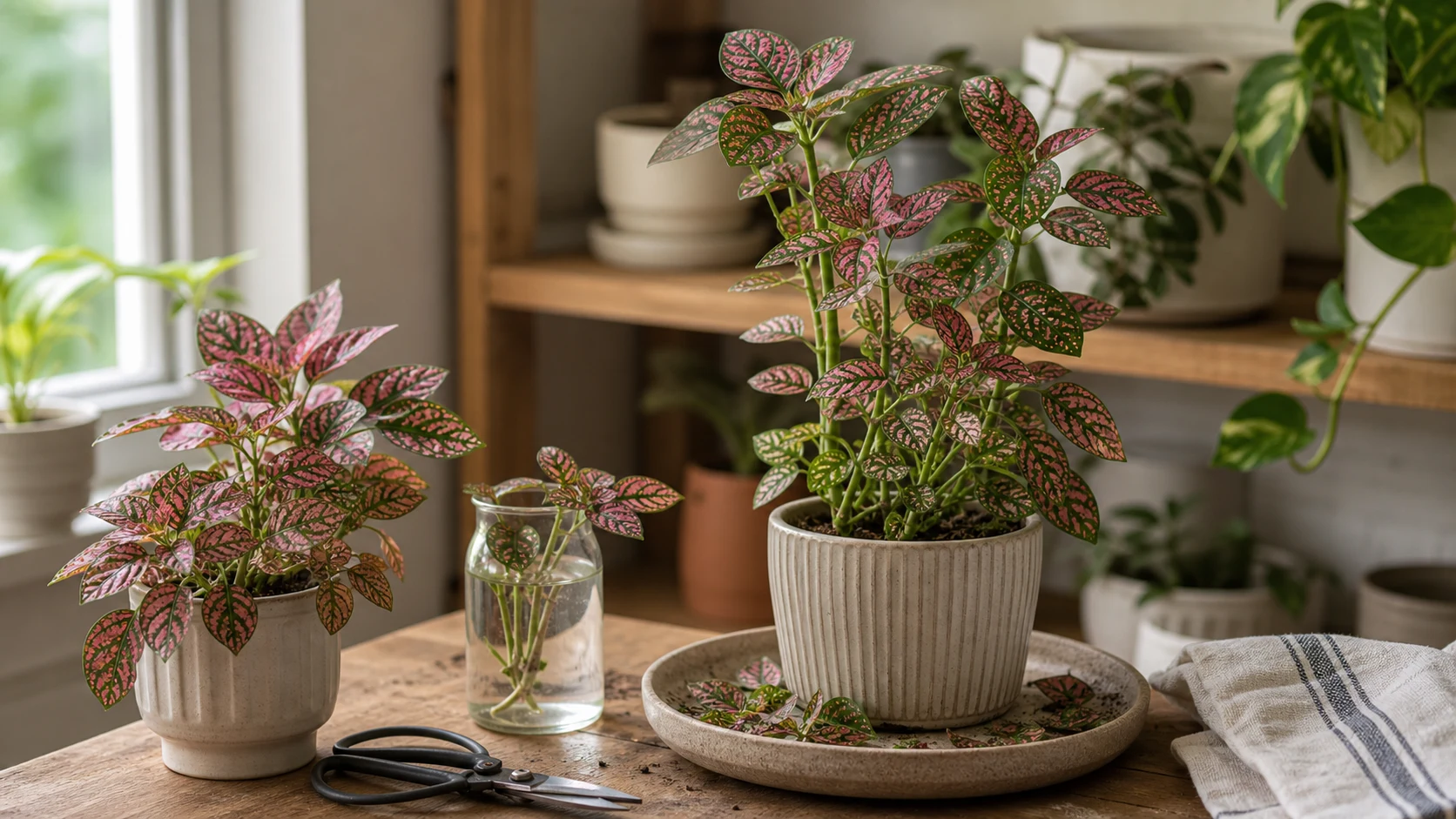
Compare bare-node growth with compact stems before pruning and rooting healthy tip cuttings.
Watering: Read the Soil, Not the Calendar
Wisconsin Horticulture notes that despite being somewhat drought tolerant, polka dot plant actually grows better with plenty of water, the tolerant part means it will survive a dry spell, not that it prefers one.
A fixed weekly watering schedule tends to fail because indoor conditions shift. A sunny week near a window, a cold draft from an AC vent, or a slightly larger pot all change how fast the soil dries. A more reliable approach is a quick soil check every few days.
The check: Press your finger into the soil about an inch deep. If it feels barely damp or dry, water thoroughly until it drains from the bottom. If it still feels moist, wait another day or two. The goal during the growing season is consistently moist soil, not wet, not bone dry.
Signs you’re underwatering: browning leaf edges, leaves that dry and curl from the edges inward, fading spots even in adequate light.
Signs you’re overwatering: yellowing lower leaves, soft stems near the soil line, a musty smell from the pot. If you suspect root rot, check our root rot treatment guide before the damage spreads.
If you’re seeing brown, crispy tips alongside generally healthy growth, humidity is usually the next thing to investigate, not watering frequency. Those two problems can look almost identical from across the room. Our guide on why plant leaves turn brown breaks down how to tell them apart.
Humidity: Not Optional for This Plant
Polka dot plants are tropical. They want the humidity to match, ideally 50 percent or higher. Most homes sit around 30 to 40 percent, which is why brown, crispy leaf edges are so common indoors even when light and water seem fine.
A few practical options:
- Set the pot on a tray filled with pebbles and water, with the pot sitting above the water line rather than in it
- Group it near other humidity-loving plants so they raise the ambient moisture around each other
- Run a small humidifier nearby, especially in winter when heating systems dry out the air
If you need to choose between these methods, the indoor plant humidity guide compares what measurably helps, what has only a small local effect, and how to avoid trading dry edges for fungal problems.
Curling leaf edges that are not explained by direct sun are usually a humidity issue. Leaf roll that starts at the margins and works inward, without any yellowing or soft stems, almost always points to dry air. If you’ve addressed light and watering but still see rolling edges, humidity is the next thing to check. Our guide on plant leaves curling covers how to tell the causes apart if you’re still not certain.
Leggy Growth: Why It Happens and What To Do
Polka dot plants stretch. It is normal, especially in home light. Older plants lose their compact shape, the stems elongate between leaf nodes, and the lower leaves sometimes drop. This is not a disease, it is how the plant ages in less-than-ideal light.
The fix is pruning, and you can be more aggressive than you think. Pinch or cut back the growing tips regularly, even once a week during active growth, to encourage branching and keep the plant bushy. If the plant has gotten truly leggy, cut it back by a third to a half. It will push new growth from the remaining nodes.
The better long-term move is propagation. Those pruned cuttings root easily in water or moist soil. A fresh cutting in good light will look better faster than trying to rehabilitate a long, spindly original plant. For a step-by-step on rooting stem cuttings, our guide to propagating plants covers both the water and soil methods.
Decision Point: Prune or Propagate?
Both are valid, but here is a simple way to decide:
- Prune when the plant is still mostly green and healthy, just a bit tall or unruly. Cut back the tips by a third and pinch regularly going forward.
- Propagate when the original plant is scraggly, has bare lower stems, or has lost most of its color. Take several cuttings, root them, and start fresh. The original plant can be cut hard and may recover, but a new cutting from that same plant will outperform it within weeks.
- Do both if you want to keep the original and also build a backup. Cut back the leggy growth, root the cuttings, and you have two chances for a compact, colorful plant.
This is worth normalizing: polka dot plants are naturally short-lived as indoor houseplants. Many experienced growers treat them as annual-style plants, starting fresh from cuttings every year or two rather than nursing the same aging specimen indefinitely. There is nothing wrong with your plant if it gets scraggly. That is just what older growth does. The answer is often a cutting, not a dramatic care overhaul.
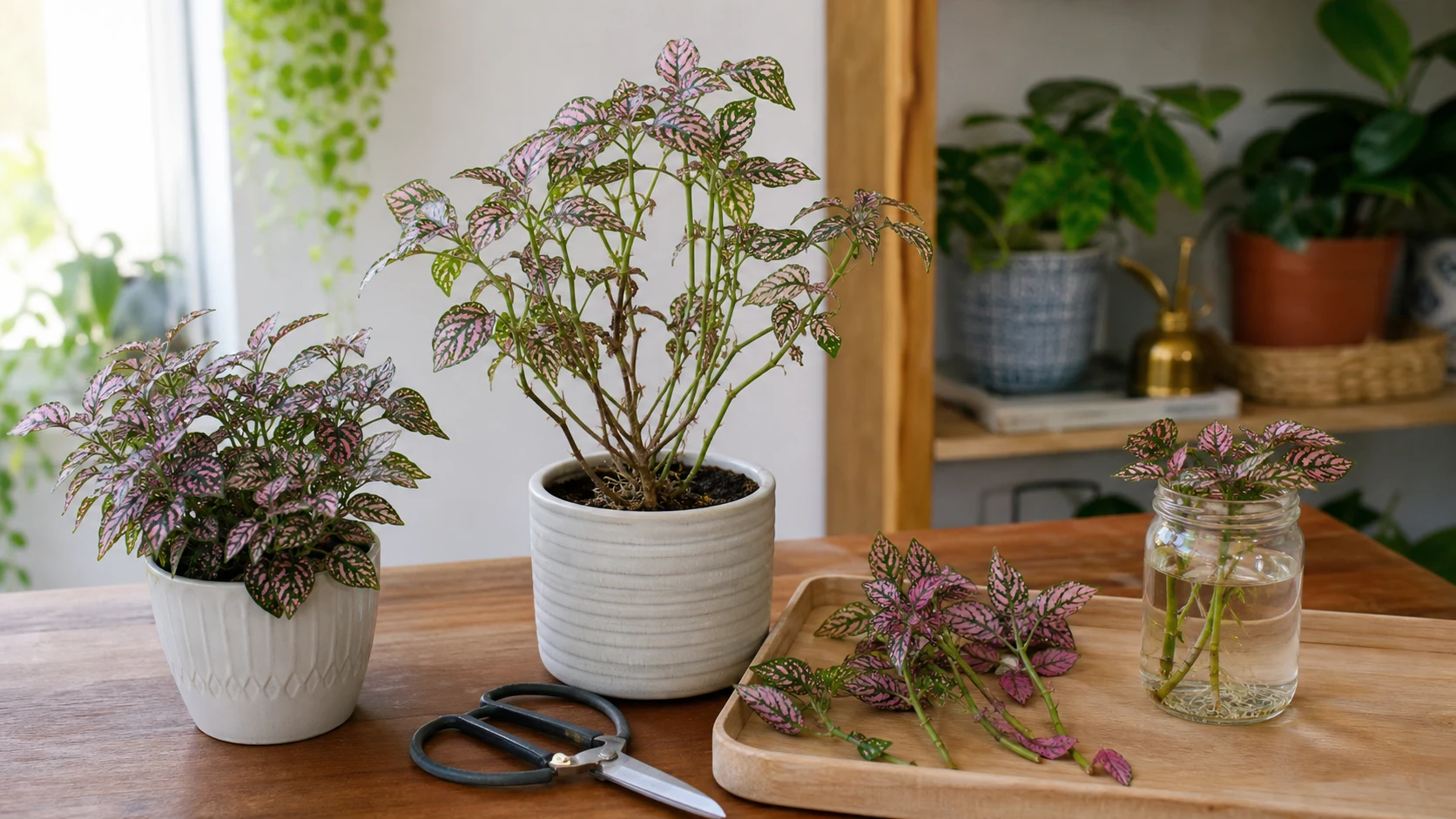
A scraggly parent can be pruned while healthy tip cuttings root into a compact replacement.
Common Mistakes That Create Crispy or Leggy Growth
- Letting the plant sit too far back from a window because it seems bright enough to you
- Waiting for the whole pot to dry before watering during active growth
- Treating one bad week of shape or color as a disease instead of a light and pruning issue
- Keeping the original overgrown plant forever instead of using cuttings to refresh it
- Ignoring dry indoor air during winter and blaming every brown edge on watering alone
Seasonal Care: What Changes Through the Year
Spring and summer, active growth: This is when the plant pushes hard. Water more frequently, feed every four to six weeks with a balanced liquid fertilizer at half strength, and keep up with pinching to stop the stems from bolting. Good light is most important now. Color and compactness track the available sun almost directly. If you’re going to start cuttings, do it now for fastest rooting.
Autumn: Growth slows as days shorten. Pull back on fertilizer and let the soil dry slightly more between waterings than you did in summer. Do not stop watering, just ease the frequency. This is a good moment to decide whether the plant still looks healthy or whether it is a candidate for propagation before winter stresses it further.
Winter: Minimal feeding, less frequent watering, but do not let the plant dry out completely. Central heating drops indoor humidity sharply, so this is when browning edges and crispy tips are most common even if your care routine has not changed. A humidifier near the plant or a pebble tray helps noticeably. Keep it away from cold window glass and heating vents.
Soil and Potting
Use a standard well-draining indoor potting mix. The plant does not need anything specialized, just avoid heavy garden soil or anything that stays waterlogged. A mix with some perlite added works well.
Pot size matters more than it might seem. A pot that is much too large holds excess moisture the plant cannot use, which increases root rot risk. Keep the pot proportional to the plant and repot only when roots are visibly crowded or circling the drainage holes. Our guide to repotting houseplants walks through the full process if you’re not sure where to start.
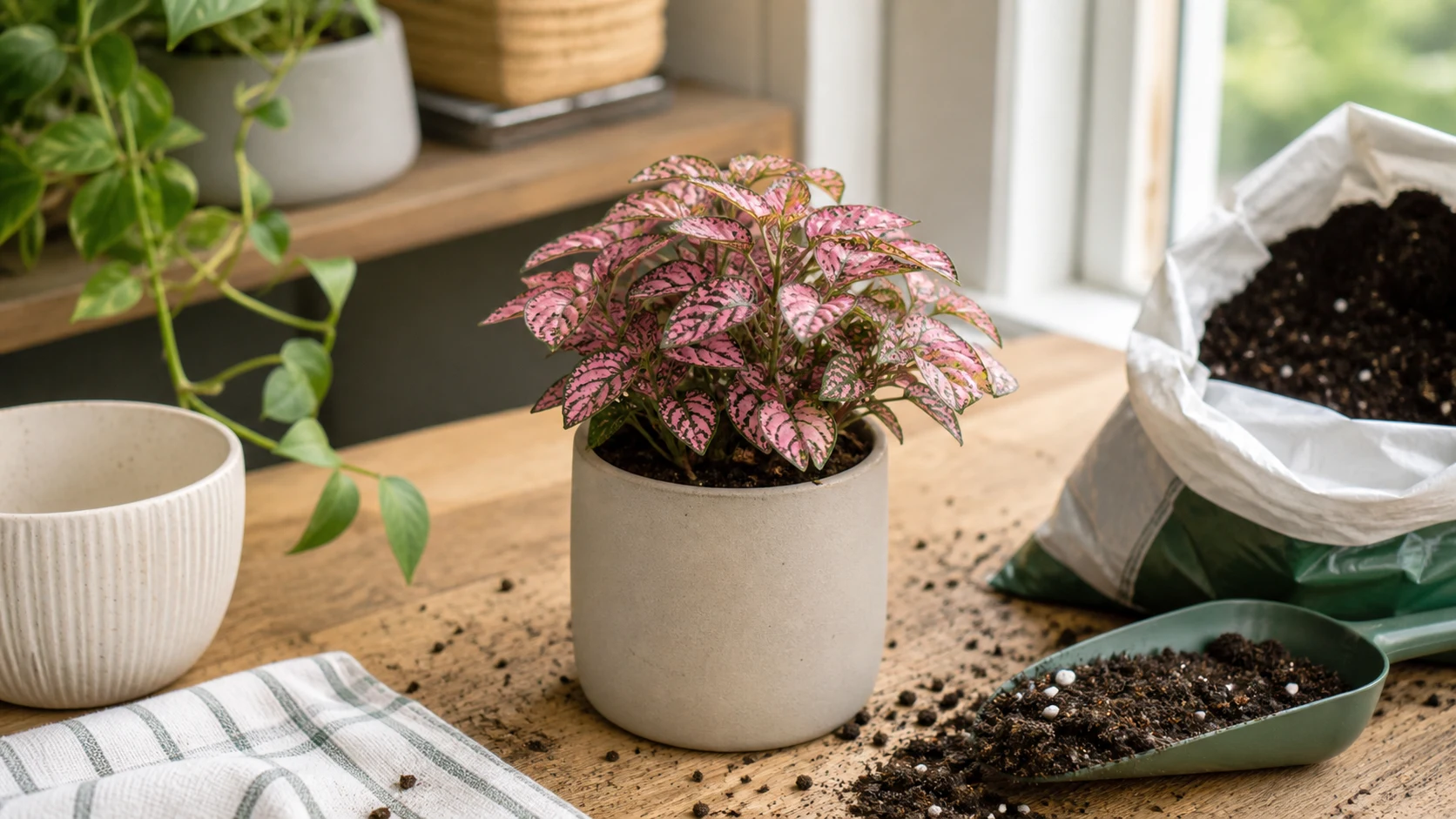
Use a proportional pot and a loose indoor mix amended with perlite to limit waterlogging.
Pet Safety
Polka dot plants are listed as non-toxic to cats, dogs, and horses by the ASPCA, a genuine relief for a plant that tends to attract curious pets with its colorful leaves. It is a reasonable choice for homes with animals. If you’re building a pet-friendly collection, our guide to cat-safe indoor plants has more options in the same vein.
Quick Reference
| Condition | What It Wants |
|---|---|
| Light | Bright filtered; near an east window or sheer-curtained south or west exposure |
| Water | Consistently moist; check soil 1 inch deep every few days |
| Humidity | 50 percent or higher preferred; brown edges appear below that more easily |
| Temperature | 65 to 80 degrees F (18 to 27 degrees C); no cold drafts |
| Pruning | Pinch tips regularly; cut back hard if leggy |
| Soil | Well-draining potting mix with perlite |
| Fertilizer | Half-strength balanced liquid every 4 to 6 weeks in spring and summer |
| Toxicity | Non-toxic to cats, dogs, and horses (ASPCA) |
Real User FAQ
Why is my polka dot plant getting leggy?
The most common cause is insufficient light. When the plant cannot get enough bright filtered light, it stretches toward whatever source it finds and the gaps between leaf nodes grow longer. Move it closer to a bright window, within two feet and out of direct midday sun, and pinch back the growing tips regularly. If legginess is severe, cut the plant back by a third to a half and let it resprout from the lower nodes. If the plant has been scraggly for a while, starting a fresh cutting in good light will usually give you better results faster.
Why are the spots on my polka dot plant fading?
Faded spots are almost always a light issue, either too little light, which makes the plant produce more chlorophyll and look greener, or too much direct sun, which can bleach the pattern. Move the plant to a position with bright, filtered light and the color typically returns in new growth within a few weeks.
How often should I water a polka dot plant?
There is no reliable fixed schedule because how fast the soil dries depends on pot size, light, season, and room temperature. A more useful approach is to press a finger an inch into the soil every few days. Water thoroughly when it feels barely damp or dry, and hold off when it still feels moist. During active growth in spring and summer you may water every four to seven days. In winter, less often.
Why are the leaf edges turning brown and crispy?
Brown, crispy edges on polka dot plants are most often a humidity problem. These plants prefer around 50 percent humidity or higher, and most heated or air-conditioned homes run drier. Try a pebble tray with water under the pot, grouping the plant with other humidity-loving plants, or running a small humidifier nearby. If the edges are browning while the rest of the leaf looks fine, low humidity is the likeliest cause. If you’re also seeing wilting or yellowing, check watering as well.
Can I keep a polka dot plant in low light?
It will survive in low light, but it will not thrive. The spots will fade, the stems will stretch, and the plant will lose the dense, colorful look that makes it worth keeping. If your light is genuinely low, a basic grow light for 12 to 14 hours a day makes a bigger difference for this plant than for many others.
Is polka dot plant safe for pets?
Yes. The ASPCA classifies polka dot plant (Hypoestes phyllostachya) as non-toxic to cats, dogs, and horses. It is one of the safer choices for homes with curious animals.
How do I propagate a polka dot plant?
Take a stem cutting with at least two leaf nodes, remove the lower leaves, and place the cut end in water or moist potting mix. In water, roots typically appear within one to two weeks. In soil, keep the mix moist and place the cutting in bright indirect light. Cuttings taken during spring and summer root faster. This is also one of the best ways to refresh a leggy plant.
Why is my polka dot plant dropping leaves?
Leaf drop is usually tied to one of three things: overly dry soil, cold drafts, or the natural aging of older lower leaves as the stem extends. Check your watering first, then look at whether the plant is near a window that gets cold air in winter or a vent blowing directly on it.
Freshness Note
This guide was refreshed after a live source check completed on 2026-05-25. The diagnosis language was tightened around the real symptoms owners search for most often: legginess, color fade, curling, and crispy decline.
Methodology
We compared the current care advice against NC State Extension, Wisconsin Horticulture, and ASPCA listings for the factual baseline. We also reviewed live plant-owner Q&A threads to capture the recurring symptom language people actually use when this plant starts struggling indoors. Those owner threads were used as qualitative signal, not as stand-alone proof.
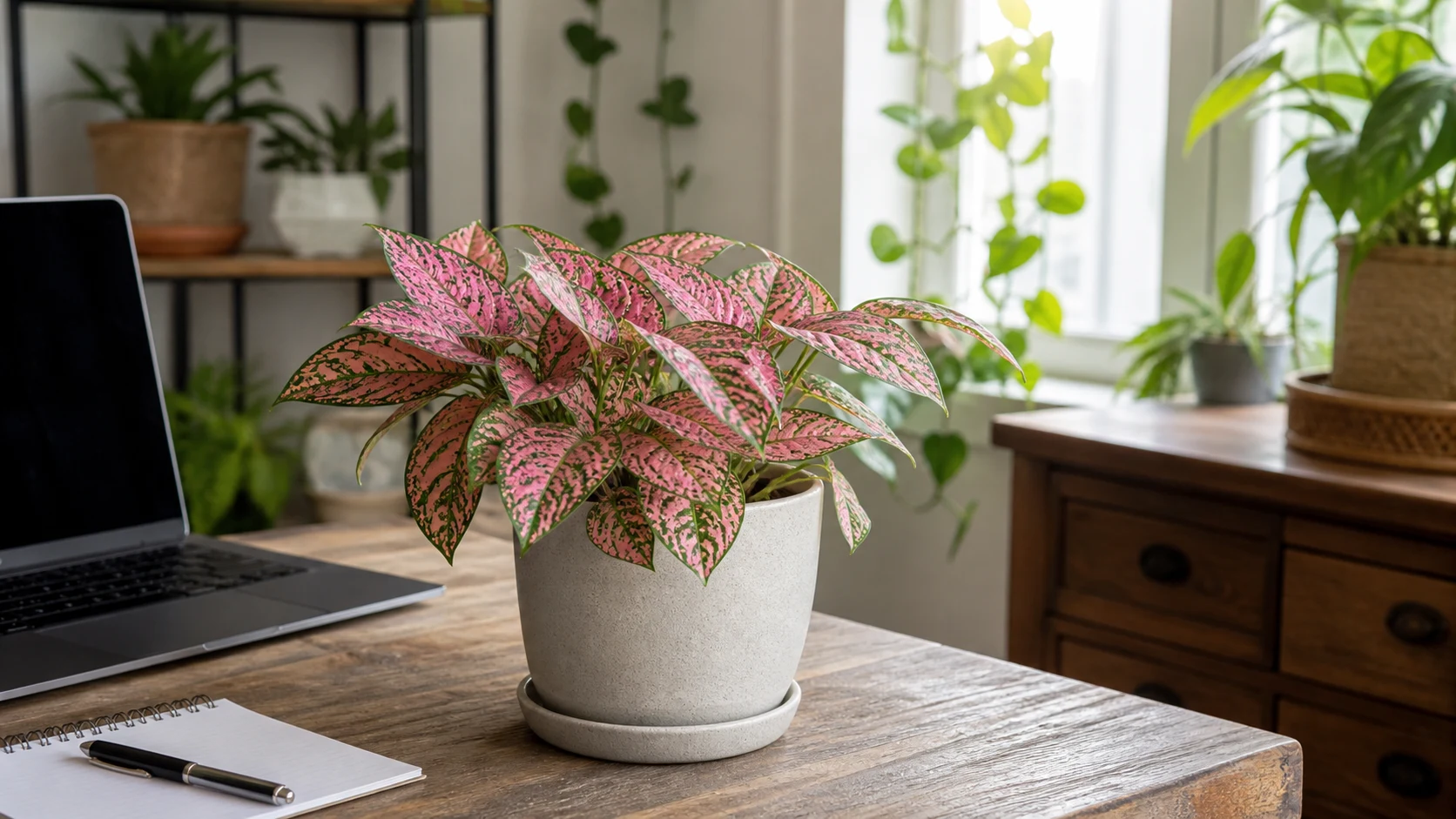
Editorial review pairs live plant observation with source comparison and structured notes.
Care guidance informed by NC State Extension’s plant toolbox, Wisconsin Horticulture’s Hypoestes phyllostachya profile, and ASPCA toxicity listings. Reviewed by the KnowYourPlant editorial team.