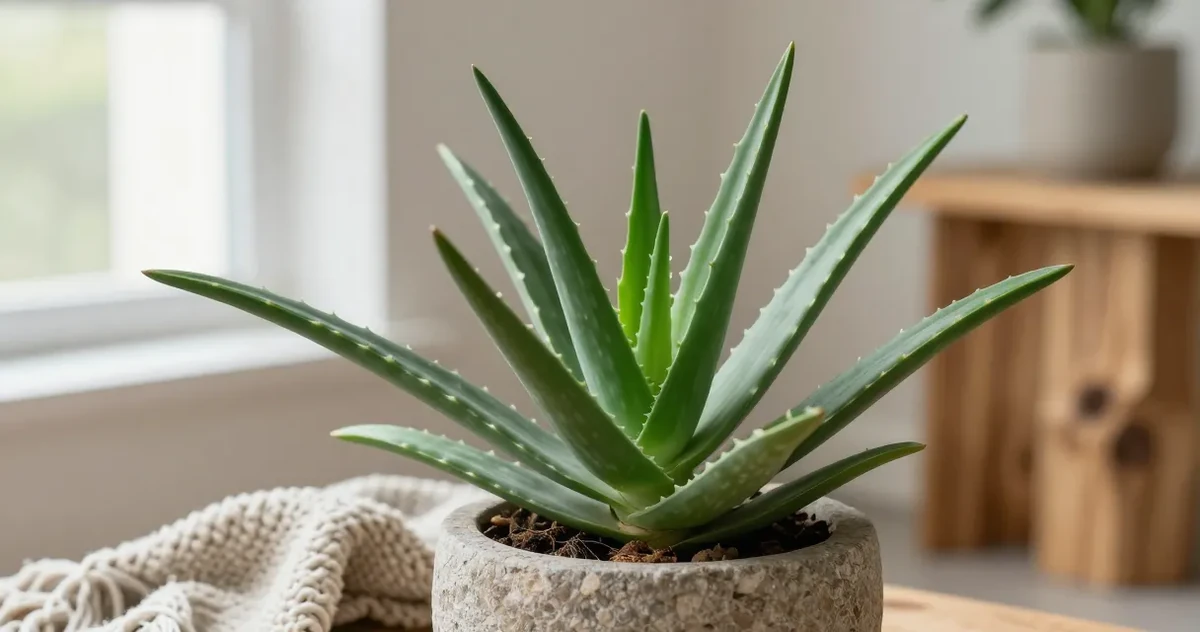
You have an aloe leaf. Maybe it snapped off when you moved the pot, maybe you deliberately pulled one after seeing a succulent propagation tutorial and thinking this should work the same way. Then the waiting started. The leaf stayed green but did nothing, or the base slowly turned soft while the rest still looked fine.
Here is the part most articles soften: a detached aloe vera leaf is a low-odds propagation piece, not the reliable method. If your plant has pups or offsets at the base, use those instead. If a lone leaf is all you have, treat it like a rescue experiment, not a guaranteed route to a new plant.
Quick Decision Tree
Use pups or offsets if:
- your aloe has baby plants at the base
- you can separate a small rosette with roots attached
- you want the highest success rate with the least rot risk
Use division if:
- the pot is crowded with multiple established rosettes
- roots are tangled but intact
- you can repot sections into fresh, fast-draining mix
Try a detached leaf only if:
- there are no pups available
- the base of the leaf is still firm, pale, and not mushy
- you are comfortable with this being a low-odds experiment
Do not try the leaf first if:
- the mother plant is rotting at the crown or stem
- the fallen leaf came off soft or translucent
- your main goal is a dependable new plant, not a last-chance salvage attempt
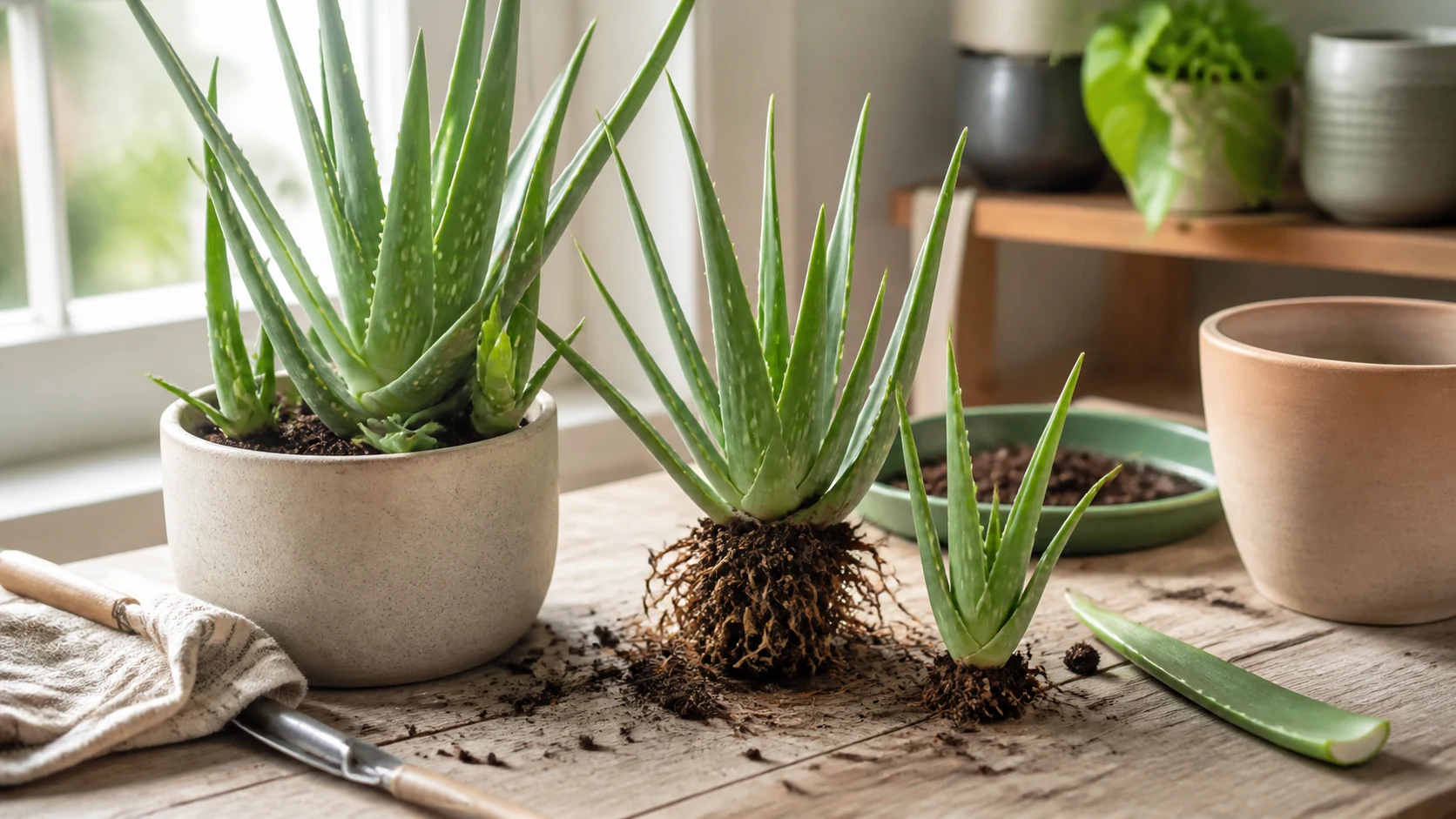
Choose rooted pups or division before treating a detached aloe leaf as a low-odds experiment.
Not sure what plant you are caring for?
Open KnowYourPlant, snap a photo, and get the plant name plus care notes matched to the species in front of you.
Identify your plantWhat Most Guides Miss About Aloe Propagation
A lot of search results make aloe leaf propagation sound routine: cut a leaf, let it dry, plant it in cactus mix, wait a few weeks. Those steps are not completely wrong, but they skip the reason readers get confused.
Aloe does not behave like the easy leaf-propagating succulents that make social media look effortless. A detached aloe leaf often lacks enough viable growth tissue at the base to turn into a full new plant. On top of that, aloe leaves store a lot of internal moisture, which is exactly what makes rot so common once the cut end touches soil.
That is why a leaf can look healthy for weeks and still never do anything useful. The failure is often structural, not procedural. You did not necessarily mess up the technique. The leaf itself may simply not carry what it needs.
Want a care schedule you do not have to remember?
KnowYourPlant sends watering, feeding, repotting, and seasonal reminders based on the plants you actually own.
Get care remindersIdentification Snapshot: What Counts as a Viable Aloe Propagation Piece?
Before you plant anything, make sure you are looking at the right kind of material.
| Propagation piece | What it looks like | Rooting odds | What people confuse it with |
|---|---|---|---|
| Detached leaf | One single aloe leaf with no crown and no roots | Low | People assume it behaves like sedum or echeveria leaf props |
| Pup or offset | Small aloe rosette growing from the base of the mother plant | High | Mistaken for just a side leaf instead of a separate baby plant |
| Stem piece with crown intact | A top section or stem portion that still includes the growing center | Moderate | Mistaken for a plain leaf cutting |
Save this plant plan before you forget the details.
Keep the plant, diagnosis notes, reminders, and care changes in KnowYourPlant so the next decision is based on your actual plant history.
Open KnowYourPlantLookalikes and Confused-With: Leaf vs Pup vs Stem Piece
The most common mix-up is calling every broken aloe part a “cutting.” That hides a big difference.
- A leaf is just storage tissue unless it carries enough active growth tissue at the base.
- A pup is already a small plant, which is why it is the best option.
- A stem piece with the crown intact may root because it still carries the growing center.
If what fell off has no crown, no roots, and no tiny rosette structure, you are working with the hardest version of aloe propagation.
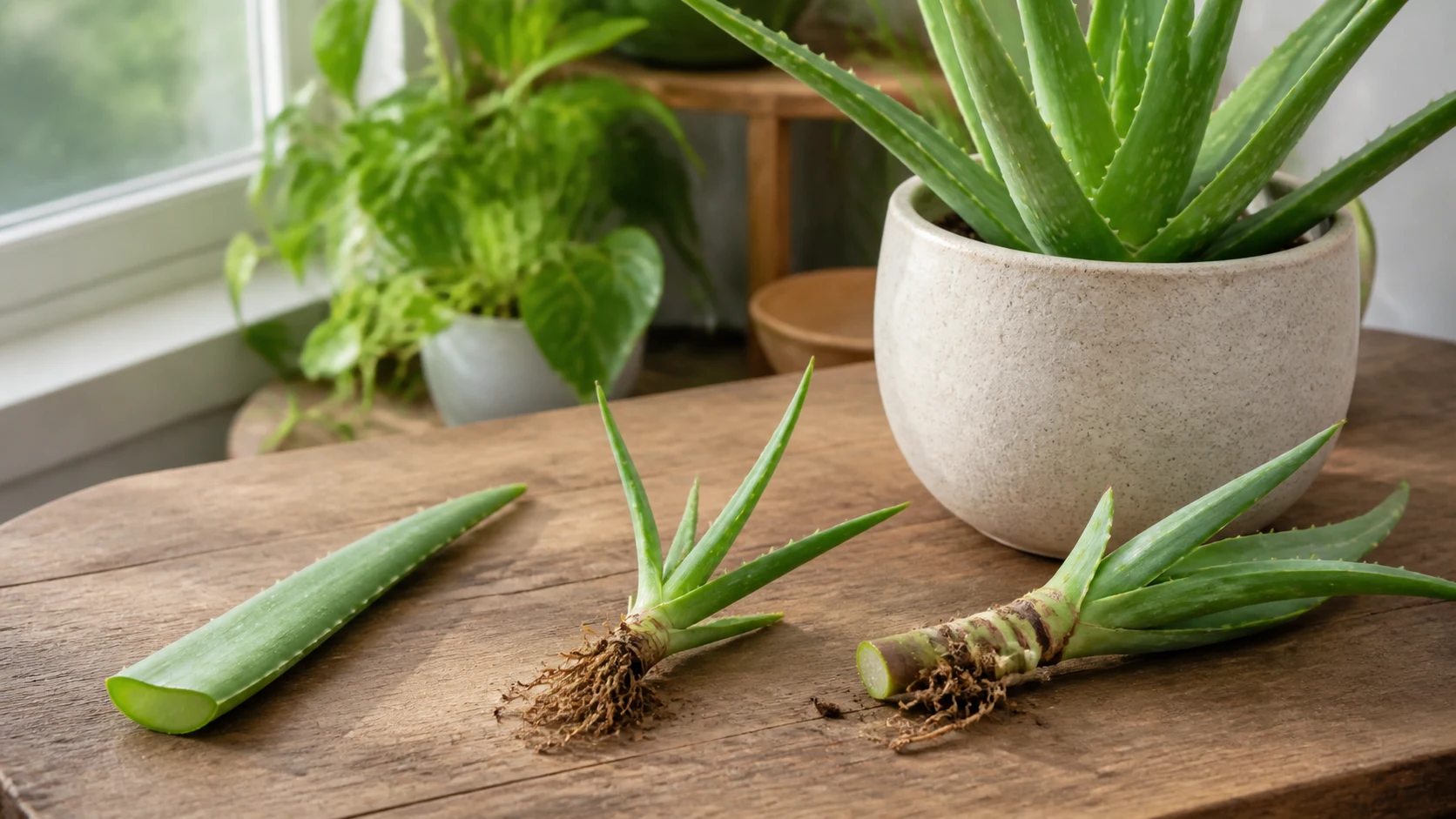
A detached leaf, a rooted pup, and a crown-bearing stem piece are not equivalent propagation material.
Social Listening: Where Plant Owners Get Stuck
The same reader problem shows up over and over in community discussions:
- people pull or lose one aloe leaf and assume it should become a full plant
- the leaf stays plump for a while, which creates false hope
- the base turns mushy a week or two later
- many owners only learn afterward that offsets were the reliable path all along
That pattern showed up repeatedly in the research behind this article, including search-surfaced Reddit threads and a Gardening Stack Exchange discussion where growers were trying to rescue fallen leaves that still looked healthy. Community discussion is not controlled evidence, but it is a strong signal about where standard tutorials leave people stranded.
Aloe Propagation Methods: How They Compare
| Method | Success likelihood | Rot risk | Beginner friendly? | What you need |
|---|---|---|---|---|
| Offsets or pups | High | Low | Yes | A mature aloe producing babies at the base |
| Division | High | Low | Moderate | A crowded multi-plant pot |
| Stem cutting with crown intact | Moderate | Moderate | Moderate | A leggy or damaged plant with a viable stem |
| Single detached leaf | Low | High | Misleadingly simple | Just one leaf |
If your aloe has produced offsets, use them. If the pot is crowded, divide it. A single detached leaf is a last resort or low-stakes experiment, not the default method.
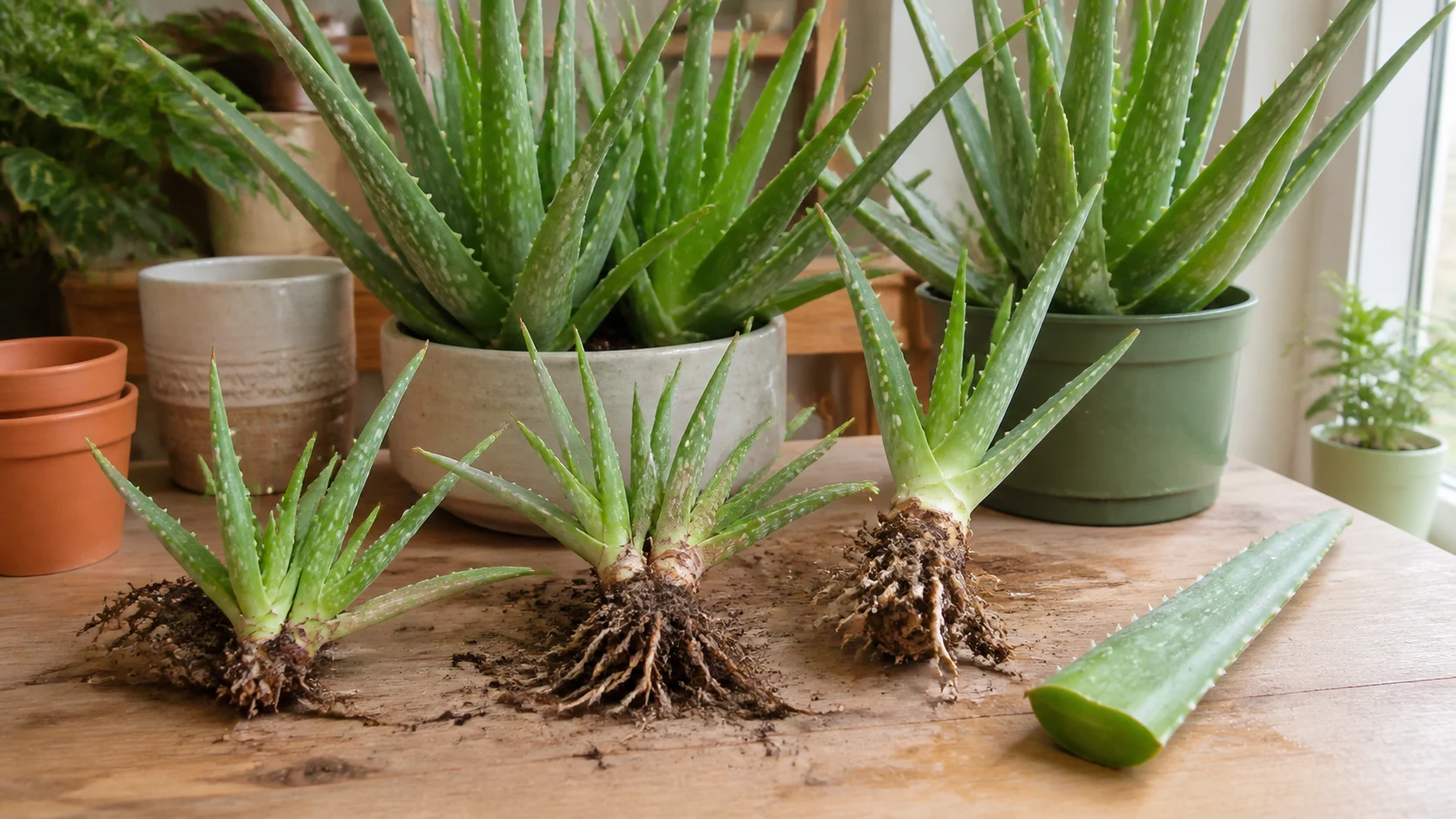
Rooted offsets and divided rosettes offer far better odds than a single detached aloe leaf.
Original Data: Failure-State Matrix for a Detached Leaf
Use this quick matrix to decide what to do next instead of waiting blindly.
| What you see | What it usually means | Best next step |
|---|---|---|
| Leaf stays firm but inactive for weeks | The leaf has moisture reserves, but may not have enough viable growth tissue to form a plant | Leave it in very dry conditions and reassess after 6 to 8 weeks |
| Base turns soft, dark, or mushy | Rot has started | Cut back to firm tissue if any remains, re-callous, or stop the attempt |
| Leaf dropped from a rotting stem | The base tissue may already be compromised | Focus on saving the mother plant first, not propagating the leaf |
| Small pup is already visible at soil line | You are no longer dealing with a leaf-only situation | Separate and pot the pup when roots are worth preserving |
Expert Note: What Extension Sources Actually Support
North Carolina Extension, University of New Hampshire Extension, and Missouri Botanical Garden all point to the same core aloe care rules: use very well-drained soil, let the mix dry between waterings, and propagate aloe most reliably through offsets or division. That matters because many failed leaf attempts are really moisture-management problems layered on top of a weak propagation method.
A practical takeaway from those sources: if the leaf fell because the mother plant was overwatered, you are not starting with healthy propagation material. Fix the drainage and watering pattern first. The soil guide for aloe plants is useful if you need to reset a mix that is staying wet too long. If the leaf fell because of physical damage and the base is still firm, you at least have a cleaner starting point for a low-odds trial.
For full care guidance on an established plant, the KnowYourPlant aloe vera care guide covers light, watering, soil, and seasonal needs in more detail.
The Method That Actually Works: Offsets and Division
Aloe spreads naturally by producing offsets, often called pups. These are small rosettes that appear around the base of the mother plant and usually come with their own emerging roots. That is why they work so much better than detached leaves.
If you see babies around the base, wait until they are large enough to handle, then separate them carefully with as much root attached as possible. Let any damaged tissue dry briefly, pot the pup into a fast-draining mix, and hold off on heavy watering. Division works similarly when several established rosettes have crowded the same container.
If your goal is a dependable new plant, stop here and use one of those methods. They solve the exact problem a detached leaf usually cannot solve on its own.
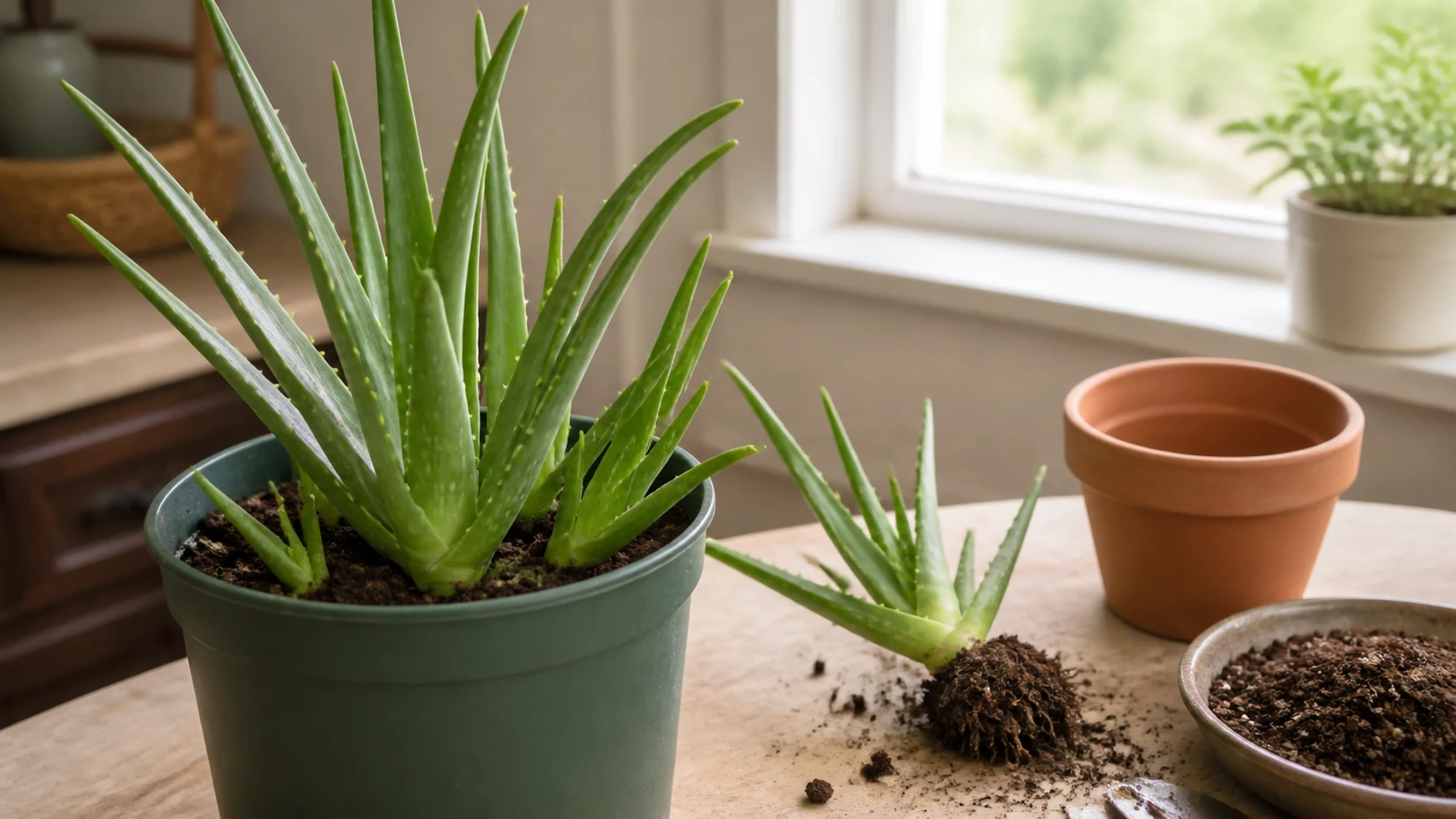
A rooted aloe pup is ready to move from a crowded mother pot into its own fast-draining mix.
Quick Care Cards for a Leaf Attempt
If a detached leaf is all you have, use the setup below.
| Care card | What to do |
|---|---|
| Base check | Press the cut end gently. It should feel firm, not soft or translucent. Trim back only to healthy tissue with a clean blade. |
| Callousing | Leave the cut end dry for 2 to 4 days in bright shade with airflow. Do not rush this step. |
| Soil | Use cactus or succulent mix, ideally made even grittier with extra perlite or coarse sand. The best potting soil for indoor plants guide explains what fast drainage actually looks like. |
| Planting depth | Set the base shallowly into the mix, just enough to keep it upright. Deep planting raises rot risk. |
| Watering | Water barely. The leaf already stores moisture. A soaked pot is more dangerous than a dry one. |
| Patience window | Expect a long wait. No visible change for several weeks is common. |
The KnowYourPlant guide to propagating plants is also useful if you want to compare this with methods that are more reliable across different plant families.
Common Problems and Symptom Diagnosis Card
The question to ask is not just “Can this leaf root?” but “What problem am I actually looking at?”
| Symptom | Most likely issue | First move |
|---|---|---|
| Leaf detached after soggy soil or a soft crown | Overwatering or early rot | Dry the plant completely, inspect roots and crown, and do not treat the fallen leaf as normal propagation material. If roots are already failing, use the root rot treatment guide for the rescue steps |
| Leaf detached after bumping the pot, but base is clean and firm | Mechanical breakage | Let it callous and try a very dry leaf experiment if you want |
| Leaf base is shriveling without rot | It may be drying out before rooting, or never had enough viable tissue | Wait, but keep expectations low and avoid adding extra water |
| Leaf base is wet, brown, or collapsing | Rot | Stop watering, cut to firm tissue if possible, or discard the attempt |
If you are seeing a broader drop-off problem, the succulent leaves falling off guide can help you trace whether the real issue is stress, moisture, or root damage rather than propagation technique.
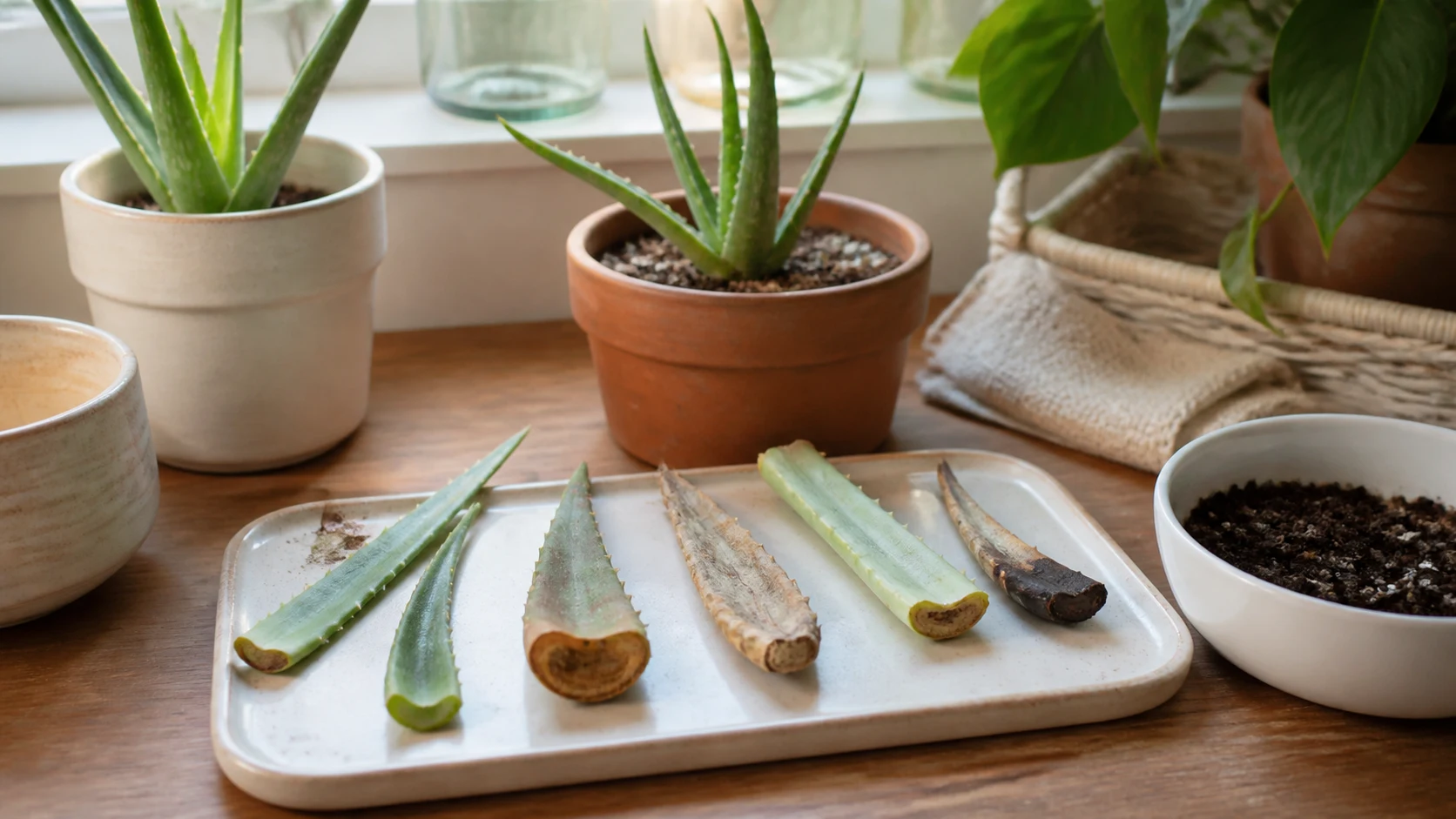
Firm, drying, and collapsing aloe leaf bases point to very different next steps.
Common Mistakes That Ruin Aloe Leaf Attempts
- Using a leaf when pups are already available. This is the biggest avoidable mistake.
- Planting before the cut end callouses. Fresh, wet tissue is easy to rot.
- Using regular moisture-retentive potting soil. Aloe leaf attempts need the driest setup in the room.
- Watering because nothing is happening yet. A quiet leaf often tempts people to “help” it. Extra water usually makes things worse.
- Confusing stem-rot cleanup with propagation. If the mother plant is collapsing, the real job is triage, not cloning every fallen leaf.
Pet Safety Around Broken Aloe Leaves
If you share your home with cats or dogs, do not leave detached aloe leaves, cut bases, or shallow gritty trays where pets can mouth them or knock them over. A broken aloe leaf leaks gel, and propagation setups often use coarse, messy potting ingredients that are easy to scatter. Keep any experiment out of reach and clean up trimmings right away.
Plant ID + Plant Doctor
Not sure what your plant needs?
Snap a photo in KnowYourPlant to identify the plant, check yellow leaves, spots, wilting, or pests, and get a calm next step before the problem spreads.
Real User FAQ
Can you grow aloe vera from a single leaf?
Sometimes, but the odds are low. It is worth treating as an experiment, not the standard method.
Why does this work on some succulents but not on aloe?
Because aloe leaf attempts are much more prone to rot and often do not include enough viable growth tissue at the cut base to form a new plant.
How long should I wait before calling it a failure?
If the base stays firm, give it several weeks. If the base goes mushy, the attempt has failed even if the upper part still looks green.
Should I propagate in water or soil?
Use a very dry soil mix. Water propagation pushes a moisture-heavy leaf toward rot even faster.
What if the leaf fell off a plant with stem rot?
Treat the leaf as low-value salvage material and focus on drying, cleaning, and repotting the mother plant instead.
What should I do if my aloe already has pups?
Skip the leaf attempt and separate the pups when they are large enough to handle safely.
Methodology Box
This guide was built from live research gathered on 2026-05-20. Search results were reviewed across the main query and close variants, practitioner discussion was checked through search-surfaced Reddit threads and a Gardening Stack Exchange post, and care claims were cross-checked against North Carolina Extension, UNH Extension, Missouri Botanical Garden, and Ask Extension. Community discussion is used here as qualitative signal about common failure patterns, not as statistical proof.
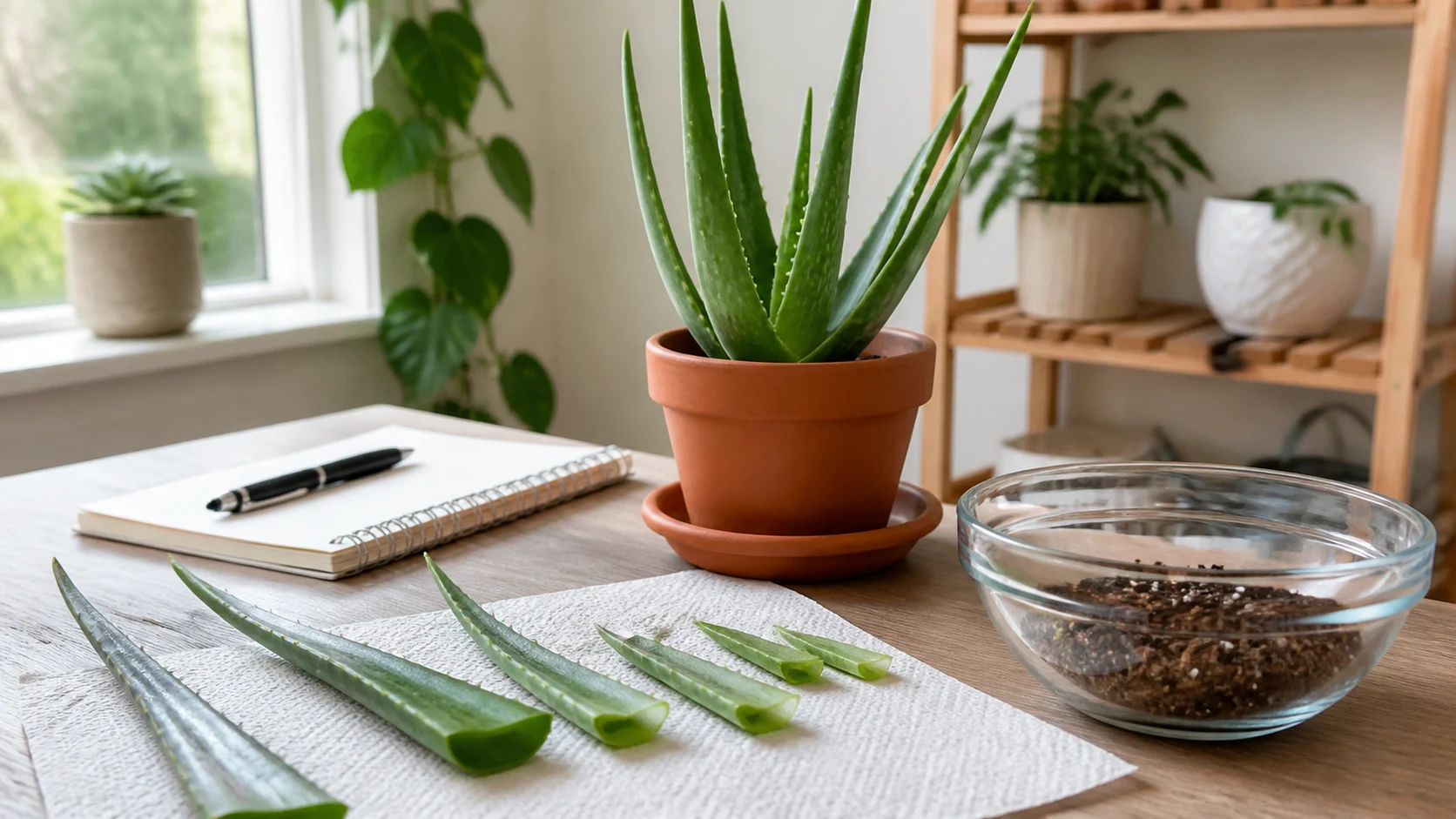
A documented aloe leaf trial pairs direct observation with healthy reference material and a controlled dry mix.
Freshness Note
Last source review for this article was completed on 2026-05-20, and the editorial update in this draft was completed on 2026-06-24. If a future revision adds first-hand propagation tests or clearer extension guidance about detached leaf viability, this page should be tightened again around that evidence.
The short version is still the honest one: if you want a reliable new aloe, wait for pups. A detached leaf can be worth trying when it is all you have, but it should not be the method you trust most.
If you are trying to figure out whether your aloe’s leaves are dropping because of overwatering, root problems, or something else, the KnowYourPlant aloe vera care guide walks through the most common causes with practical next steps. And if you want to put a healthy aloe leaf to good use in the meantime, the aloe vera plant uses guide covers the practical side of harvesting gel safely.