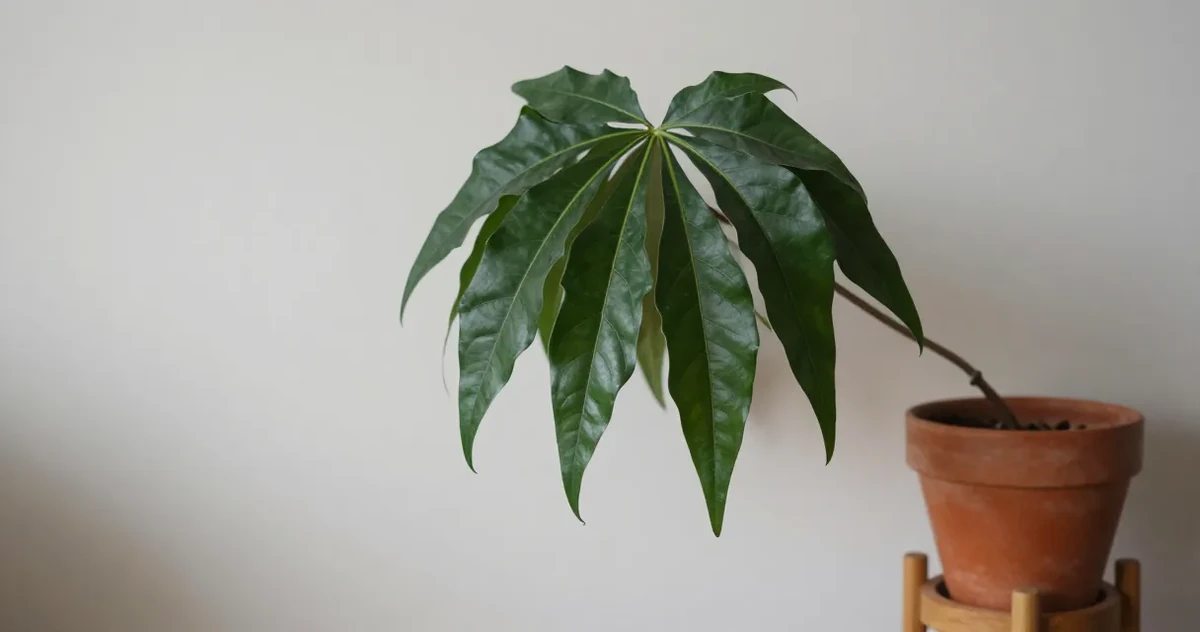
You come home and something has changed. The plant that was holding itself upright yesterday is now hanging forward, leaves soft and heavy. Before you’ve finished thinking about it, your hand is already reaching for the watering can.
That instinct makes complete sense. It’s also the reason a lot of plants end up in worse shape than they started.
Drooping leaves are a distress signal, not an instruction to water. They tell you something is wrong. They don’t tell you what. And the fix looks completely different depending on which problem you’re actually dealing with.
This guide walks you through a practical diagnosis: what to check first, what each combination of signs means, and what to do based on what you actually find rather than what the droop looks like from across the room.
What Most Care Guides Miss
Search for “drooping plant leaves” and you’ll find long lists of possible causes: overwatering, underwatering, low humidity, root rot, temperature stress, pests. Most of those articles leave you in the same spot you started, staring at your plant and still unsure what to do.
Here’s the part that usually gets left out: overwatering and underwatering produce almost identical symptoms. Both give you limp, drooping leaves. Both feel urgent. The external appearance tells you almost nothing about which one you’re actually dealing with.
University of Illinois Extension flags this directly: wilting is frequently misread as thirst when the real problem is waterlogged soil that prevents roots from absorbing water at all. Roots sitting in saturated, oxygen-depleted soil can’t move water upward into the plant efficiently. The result looks exactly like drought stress: soft, limp leaves, all the classic signs of a thirsty plant.
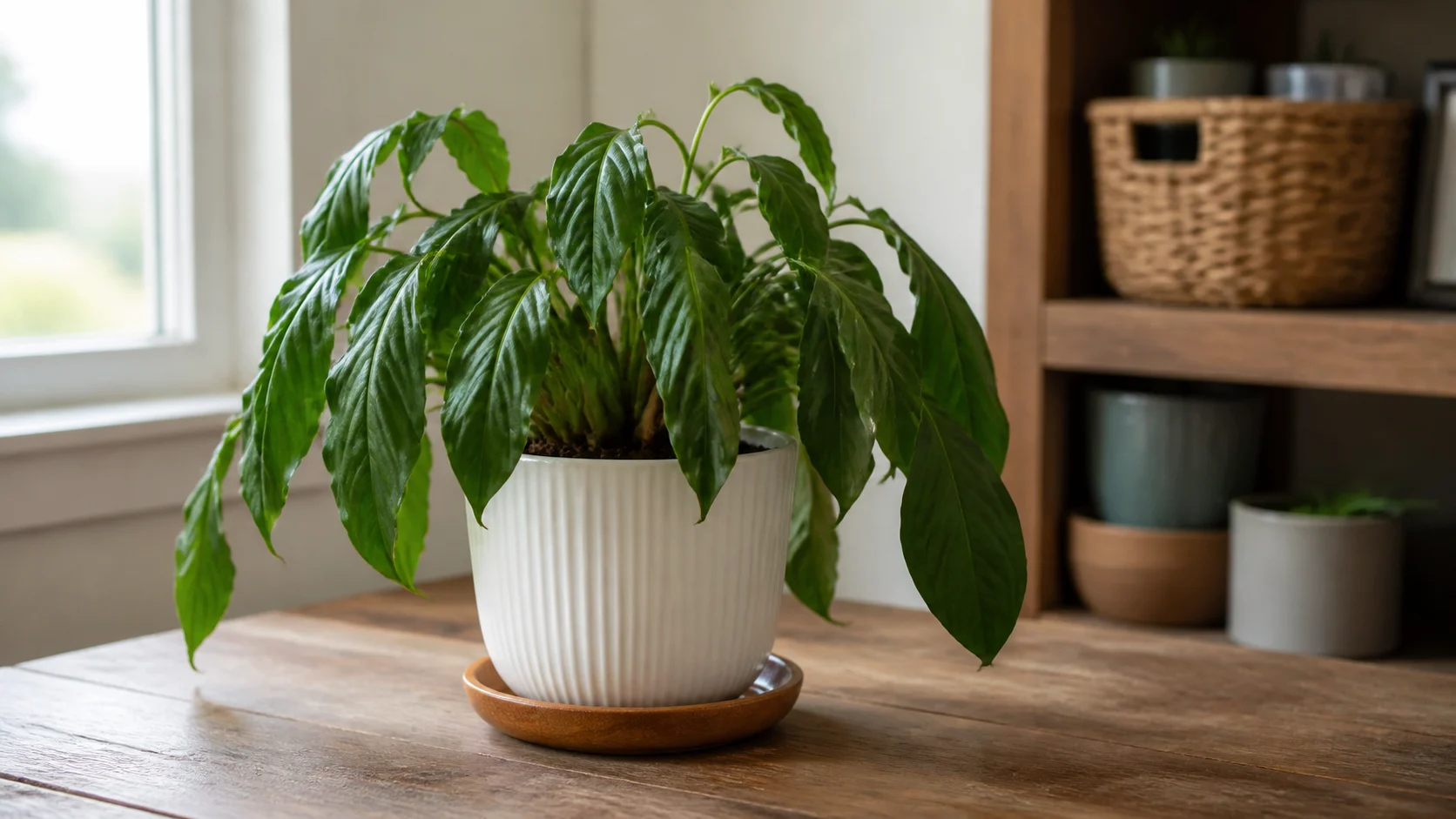
A green peace lily can droop from either thirst or saturated roots, so the soil and pot—not the leaf angle—should guide the next step.
If you water a plant that’s already sitting in soggy soil, you make the situation worse.
Before you do anything else, there are two quick physical checks that will almost always tell you which direction to go. They take about 30 seconds combined and they rule out the most common misdiagnosis.
Not sure what plant you are caring for?
Open KnowYourPlant, snap a photo, and get the plant name plus care notes matched to the species in front of you.
Identify your plantSocial Listening: Where Plant Owners Get Tripped Up
The same owner pattern shows up again and again in Ask Extension threads: a drooping plant gets watered first and diagnosed second. One succulent owner was told the real issue looked like overwatering and a pot without drainage, not thirst. Another peperomia owner moved a stressed plant into stronger sun, which made the collapse worse. A baby rubber plant case looked dramatic from a distance but came back to drainage holes, indirect light, and steadier moisture checks. Those examples do not prove every drooping plant has the same cause, but they are a useful reality check: droop is often a symptom owners misread, not a watering command.
Want a care schedule you do not have to remember?
KnowYourPlant sends watering, feeding, repotting, and seasonal reminders based on the plants you actually own.
Get care remindersTwo Checks Before You Reach for the Watering Can
The Soil Finger Test
Push your finger about two inches into the soil, down to roughly the second knuckle. This is the most reliable single test available for houseplant watering, and the reason University of Illinois Extension recommends it over any fixed watering schedule.
- Dry and crumbly all the way down: The plant is thirsty. Water it thoroughly, let the excess drain fully, and give it 24 to 48 hours to recover.
- Damp, cool, or wet: The problem is not thirst. Set the watering can down and keep reading.
The Pot Weight Test
If you’re unsure what the soil is telling you, some potting mixes dry out on top while staying wet further down. Lift the pot and notice how heavy it feels.
A pot with dry soil is noticeably lighter than one that’s still holding water. If the pot feels almost weightless, the soil has dried through and the plant probably needs water. If it still feels heavy, there’s moisture in there, and watering again won’t help.
This check is especially useful for plants in plastic nursery pots, which can feel dry on the surface while the core stays saturated. It’s also handy when you’ve lost track of your last watering and the surface is giving you mixed signals.
Together, these two checks will point you to the right branch of the diagnosis in under a minute.
Save this plant plan before you forget the details.
Keep the plant, diagnosis notes, reminders, and care changes in KnowYourPlant so the next decision is based on your actual plant history.
Open KnowYourPlantSymptom Diagnosis Card
Before you take any action, look at the full picture, not just the droop.
| What you see | What it likely means |
|---|---|
| Dry soil, lightweight pot, limp papery leaves | Underwatering |
| Wet soil, heavy pot, soft drooping leaves | Overwatering or root damage |
| Wet soil, musty or sour smell from the pot | Root rot in progress |
| Drooping after a recent move | Light stress or temperature shock |
| Wilting in afternoon sun, soil checks fine | Transpiration stress, not a watering issue |
| Lower leaves yellowing and drooping over weeks | Overwatering pattern over time |
| Firm roots, recently repotted | Transplant shock |
Use this as triage. The soil check, pot weight, and smell together will point to the right branch in the large majority of cases.
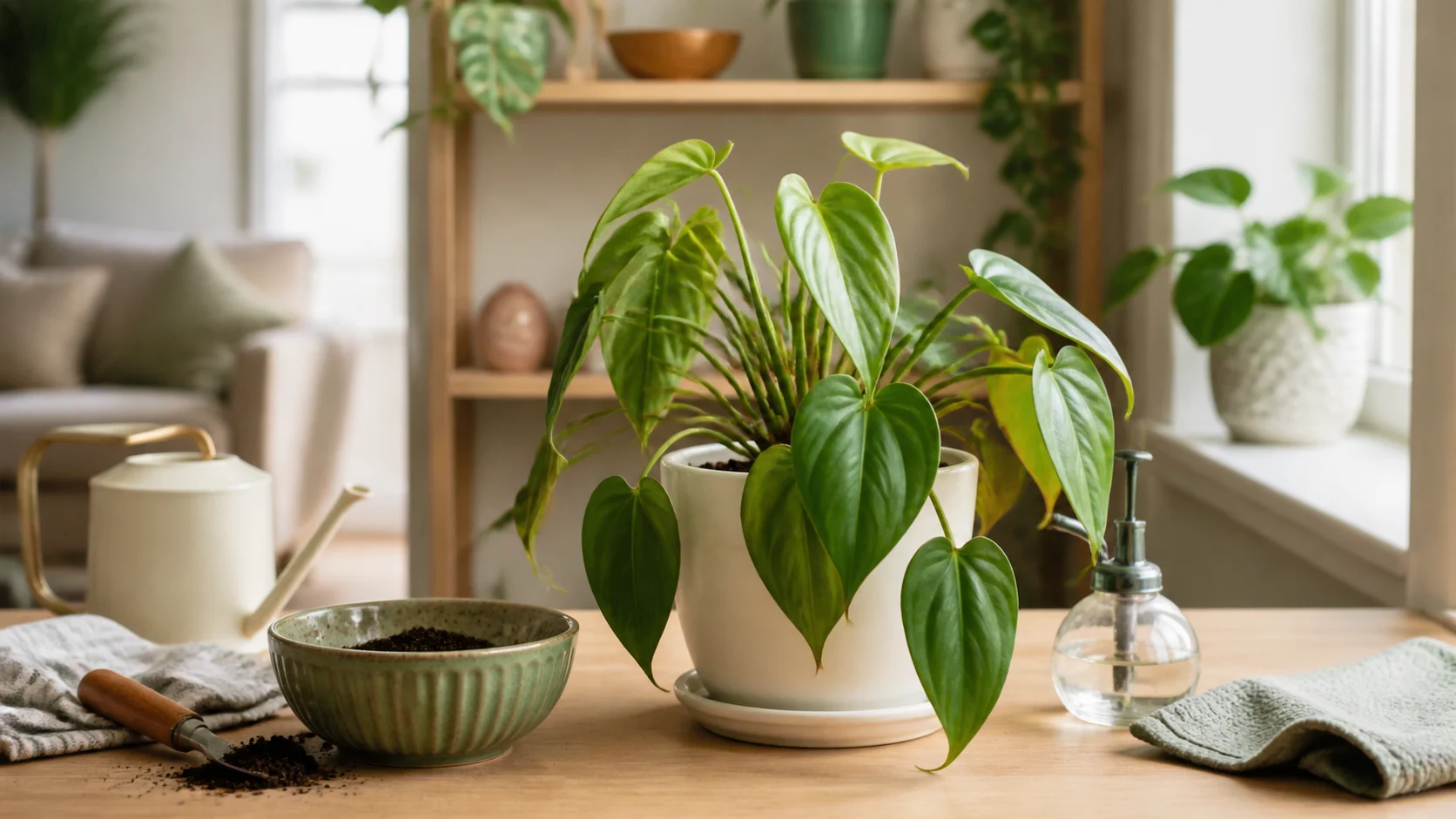
Leaf posture, lower-leaf color, exposed soil, and drainage setup provide better triage evidence together than any one symptom alone.
Drooping Leaves Decision Tree
- Dry soil and a light pot: water thoroughly, let excess drain, then wait a full 24 to 48 hours before doing anything else.
- Wet soil and a heavy pot: stop watering, empty any standing water, and check whether drainage holes are blocked.
- Wet soil plus smell, mushy roots, or yellowing: unpot the plant and inspect for root rot before you decide on the fix.
- Soil feels roughly right but the droop followed a move: check for direct sun, hot glass, AC drafts, or a recent repot before assuming this is a watering problem.
That order matters because it separates thirst from suffocation, then separates mild overwatering from actual root damage.
When the Soil Is Wet: Working Through the Problem
When you find wet soil and drooping leaves together, your job is to figure out how long the soil has been wet and whether the roots are still healthy.
Check the Drainage First
Pick up the pot. Is water pooling in the saucer? Are the drainage holes blocked or missing?
Roots sitting in standing water lose access to oxygen quickly. Missouri Botanical Garden explains it plainly: waterlogged soil starves roots of oxygen, weakens the plant, and creates the conditions for both crown rot and root rot. The plant wilts not because it lacks moisture but because its roots can no longer function in saturated, airless soil.
Empty any standing water from the saucer. If the pot has no drainage holes, that’s the underlying problem to solve: either repot into a pot with drainage, or use the nursery pot as an inner liner inside a decorative pot you can lift out to drain after each watering.
For a detailed look at what overwatering does over time and how recovery actually works, the guide on overwatered plant signs and fixes covers each stage.
Look at the Roots
If the soil has been wet for several days, or if you notice a musty or sour smell from the pot, unpot the plant and look at the roots before doing anything else.
Gently slide it out. Healthy roots are firm and usually white, cream, or light tan. Roots that are soft, brown to black, and smell bad are a sign of root rot: a fungal condition that develops when soil stays wet too long and root tissue begins to break down.
University of Maryland Extension notes that root rot causes yellowing, browning, poor growth, and wilting, with roots that go brown to black and soft or mushy, often developing a foul odor before the plant shows serious visible decline above the soil line. Wisconsin Horticulture adds a detail that’s easy to overlook: gardeners often first notice root rot precisely because the plant is wilting while the soil is still wet. That combination, droop plus wet soil plus soft dark roots, is the clearest signal to act on.
If you find root rot, the fix isn’t to adjust watering. It’s to trim the damaged roots, let the root ball air briefly, and repot into fresh, well-draining mix. Leaving the plant in decomposing soil while hoping it stabilizes on its own rarely works out. The guide on root rot treatment covers trimming, treating, and repotting step by step.
Expert Note
Extension guidance is unusually consistent on this point: if a plant is drooping in wet soil, treat the roots as the first suspect, not the leaves. University of Illinois Extension recommends checking the soil directly because wilt can signal too much water as easily as too little. University of Maryland Extension and Wisconsin Horticulture both connect wet-soil wilt, dark soft roots, and bad odor with root-rot risk. In practice, that means the most important decision is not “how much should I water?” but “should I water at all, or should I inspect the root zone first?”
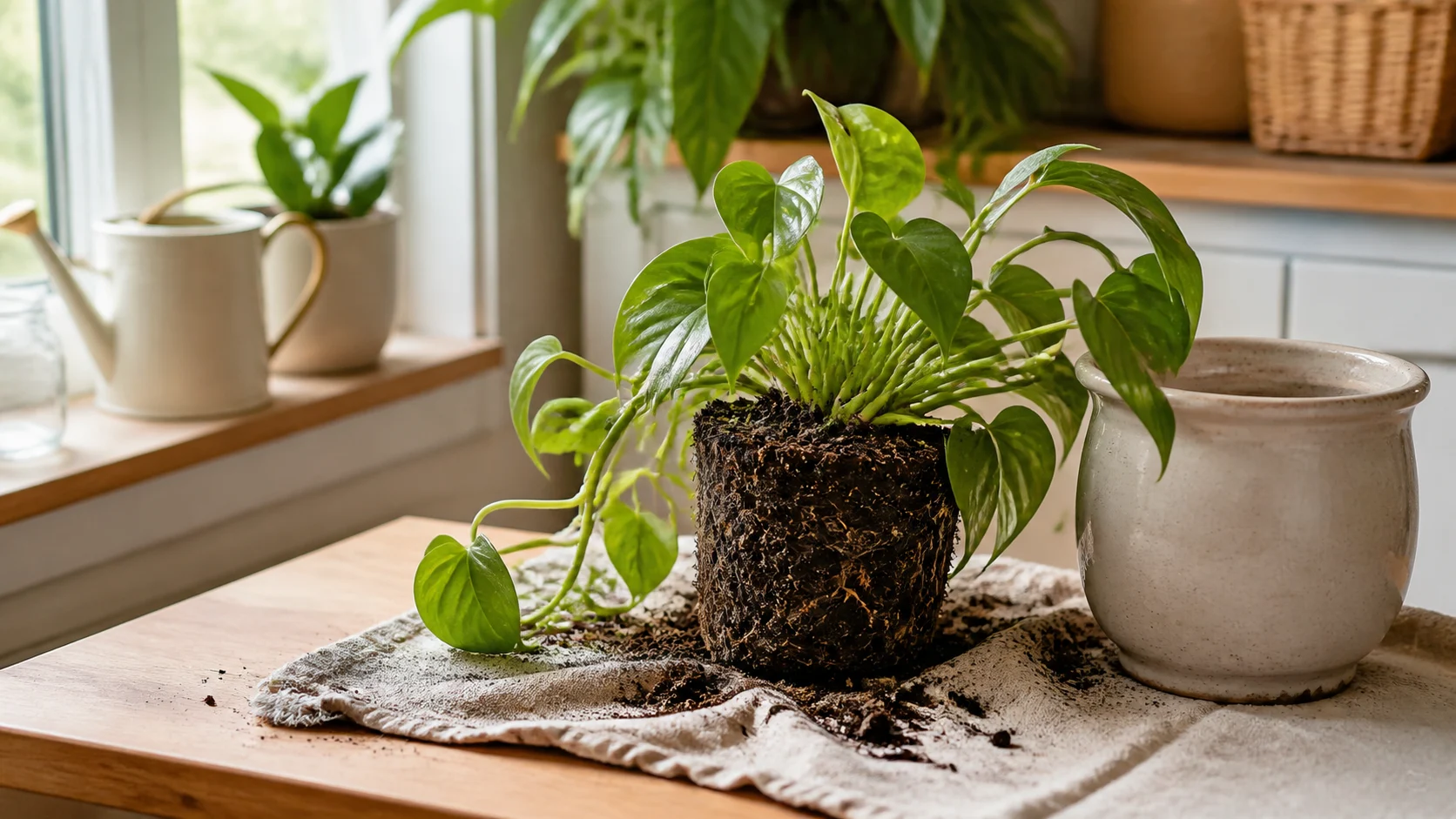
Unpotting a drooping plant reveals whether the root zone supports another watering or needs corrective care instead.
Plant ID + Plant Doctor
Not sure what your plant needs?
Snap a photo in KnowYourPlant to identify the plant, check yellow leaves, spots, wilting, or pests, and get a calm next step before the problem spreads.
When the Soil Is Dry: Recovery Takes Longer Than It Looks
Dry soil and drooping leaves is a simpler diagnosis, but the recovery isn’t always immediate.
Water slowly and thoroughly until water runs freely from the drainage holes. Let it drain completely before setting the pot back down: don’t leave it sitting in what collected below. Then wait. Most plants need 24 to 48 hours to fully rehydrate their tissue and visibly perk back up, even when you do everything right.
Don’t check the plant an hour later and water again because it still looks limp. That’s one of the most common ways a plant goes from underwatered to overwatered within the same afternoon. The leaves take time to recover; give them a full day before reassessing.
If you’re ending up in this situation regularly, the watering pattern is probably the thing to revisit rather than the plant itself. The guide on how often to water indoor plants explains why the same plant can need water every week in summer and barely once a fortnight in winter, and how to read what the plant actually needs rather than following a fixed schedule.
Light, Location, and Recent Changes
If the soil check doesn’t point clearly in one direction, maybe it’s somewhere in between, not bone dry and not soaking: think about what changed recently.
Did you move the plant to a new spot? Did it end up near a heating vent, an air conditioner, or a window that now gets direct afternoon sun?
Direct sun exposure can cause drooping that has nothing to do with water. The plant is losing moisture through its leaves faster than its roots can replace it, a process called transpiration stress, which creates wilting even in properly watered soil. Missouri Botanical Garden specifically notes that wilting in hot sun is not automatically a reason to water more. It can be a temporary response to heat and light load, and adding water on top can compound the problem rather than help it.
A plant moved from a shaded corner to a bright south-facing window can droop noticeably within a day or two. The fix is straightforward: move it back to indirect light and monitor it for 24 hours. Don’t water it again to compensate for the stress. That combination of light shock plus extra water is exactly the pattern that leads to root problems.
If you’re not sure what direct-sun stress looks like as it develops, the guide on plant sunburn symptoms and recovery shows how sun damage typically progresses and what actually helps early on.
A plant that’s drooping and also starting to curl its leaves alongside the droop is showing a different combined pattern. The guide on plant leaves curling covers what that progression typically means and how to separate the causes.
Seasonal Note: Summer Changes the Variables
In summer, plants are working harder than they were a few months ago. Higher temperatures mean more water lost through leaves, and the angle of sunlight through windows shifts enough that plants which were in safe spots in spring can find themselves in direct afternoon sun by June.
If your plant has been drooping more than usual recently and nothing obvious changed, summer transpiration is worth factoring in. Plants that needed water every ten days in March may genuinely need it every five to seven days now. The soil check always takes precedence over a schedule, but the schedule itself may need recalibrating for the season.
Air conditioning stress is also worth naming. Tropical plants placed near vents can start drooping from cold drafts even when the room temperature feels comfortable to you. If the plant is close to an AC vent and everything else checks out, try moving it a few feet away and see whether the droop eases over the next day or two.
The Mistakes That Make Drooping Worse
When a plant starts drooping, most people do one of two things automatically: they water immediately, or they move the plant somewhere brighter. Both feel like reasonable responses. Both can make a struggling plant significantly worse.
- Watering without checking the soil first. The droop looks like thirst. It often isn’t. This single mistake is how a recoverable overwatering situation turns into root rot.
- Moving a stressed plant into direct sun. A plant already under stress needs stable, gentle conditions, not a dramatic change in light or temperature.
- Leaving the pot in standing water. Roots in a saucer full of water lose oxygen quickly. Empty it after every watering and don’t let the pot sit pooled for more than an hour.
- Repotting during acute stress. If the roots still look healthy, stabilize the care conditions before making any big changes. Repotting adds a layer of shock on top of stress the plant is already managing.
- Making a second move too quickly. A properly watered plant can take 24 to 48 hours to visibly recover. Checking an hour later, deciding it isn’t working, and watering or moving the plant again is a reliable way to turn one problem into two. Give it time before you intervene again.
The First Thing to Do Right Now
If your plant is drooping while you’re reading this, here is the sequence:
- Push your finger two inches into the soil.
- Lift the pot and feel the weight.
- Dry and light: water thoroughly, drain fully, wait 48 hours.
- Wet and heavy: check drainage, empty the saucer, unpot the plant and look at the roots.
- Roots soft or smelling bad: trim the damaged sections and repot into fresh mix.
- Neither clearly dry nor clearly soaking: check for recent location changes, direct sun exposure, or proximity to heating or cooling vents.
That sequence covers the large majority of drooping cases without guesswork. Start at step one and you’ll know what you’re dealing with before you make any changes.
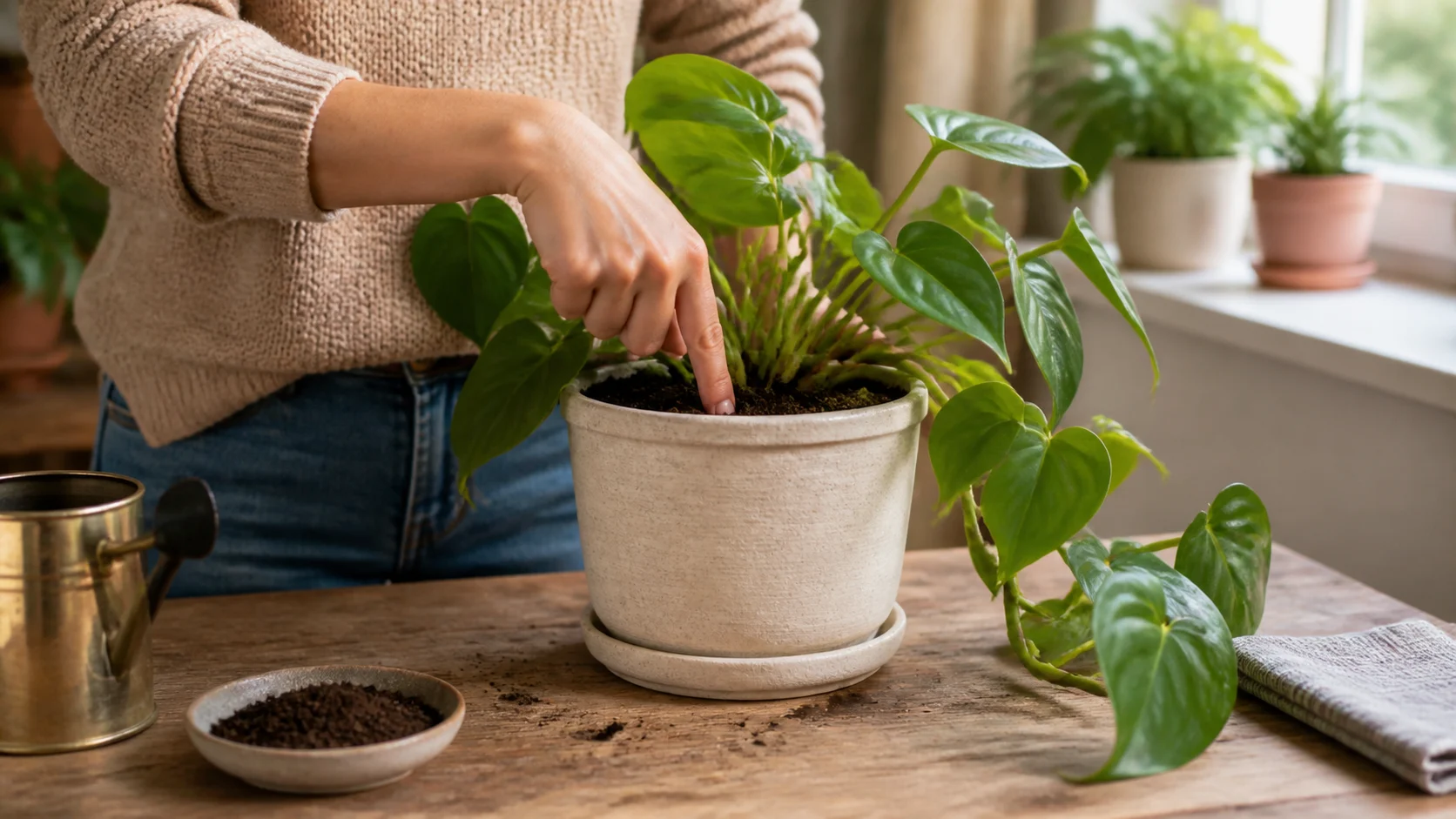
The first useful action is a two-inch soil check; the watering can should stay put until the result is clear.
Methodology Note
This article was updated against live search results and extension guidance on 2026-05-18. We reviewed the primary keyword and close variants to see where generic care posts were flattening very different causes into the same advice, then used Ask Extension threads to surface real owner misdiagnosis patterns around overwatering, drainage, direct sun moves, and root rot. Factual guidance in this piece was checked against University of Illinois Extension, University of Maryland Extension, Wisconsin Horticulture, and Missouri Botanical Garden. Practitioner Q&A is used here as qualitative signal, not statistical proof.
Last updated: June 2026
Frequently Asked Questions
Why is my plant drooping even though I just watered it?
This is the most common drooping scenario, and it almost always points to overwatering rather than thirst. When soil stays waterlogged, roots lose access to oxygen and can no longer move water efficiently into the plant. The result looks identical to drought stress: limp, heavy leaves. Check whether the pot is draining properly and whether the saucer has standing water. If the soil feels saturated and has been wet for several days, let it dry before adding any more water.
Can an overwatered plant recover?
It depends on how far along the damage is. If the soil got wetter than ideal once but the roots are still firm and healthy, letting it dry out and improving drainage is usually enough. If the roots have already started to rot, the plant won’t recover without intervention: you’ll need to unpot, trim the damaged sections, and repot into fresh, well-draining mix. The earlier you catch it, the better. Wet soil plus wilt, spotted before any smell or root softness, is the moment where a quick response makes the biggest difference.
How do I know if my plant has root rot?
Three signals together make it clear: the soil has been wet for several days, the plant is wilting despite moisture, and when you unpot, the roots are soft, brown to black, and may smell musty or sour. Healthy roots are firm and usually white to cream-colored. If you see a mix of firm light roots and soft dark ones, trim the affected sections and repot into fresh mix. If most of the root system is affected, recovery is harder but still worth attempting.
How long does it take for a drooping plant to recover after watering?
Most plants need 24 to 48 hours to visibly perk back up after proper watering. The timeline depends on how long they were dry, the size of the root system, and the ambient temperature and humidity. Don’t judge recovery by checking an hour later: leaf tissue rehydrates gradually. If the plant hasn’t recovered after 48 hours, recheck the soil. It may have dried unevenly, or the roots may have stress from a longer dry period that takes a few extra days to fully resolve.
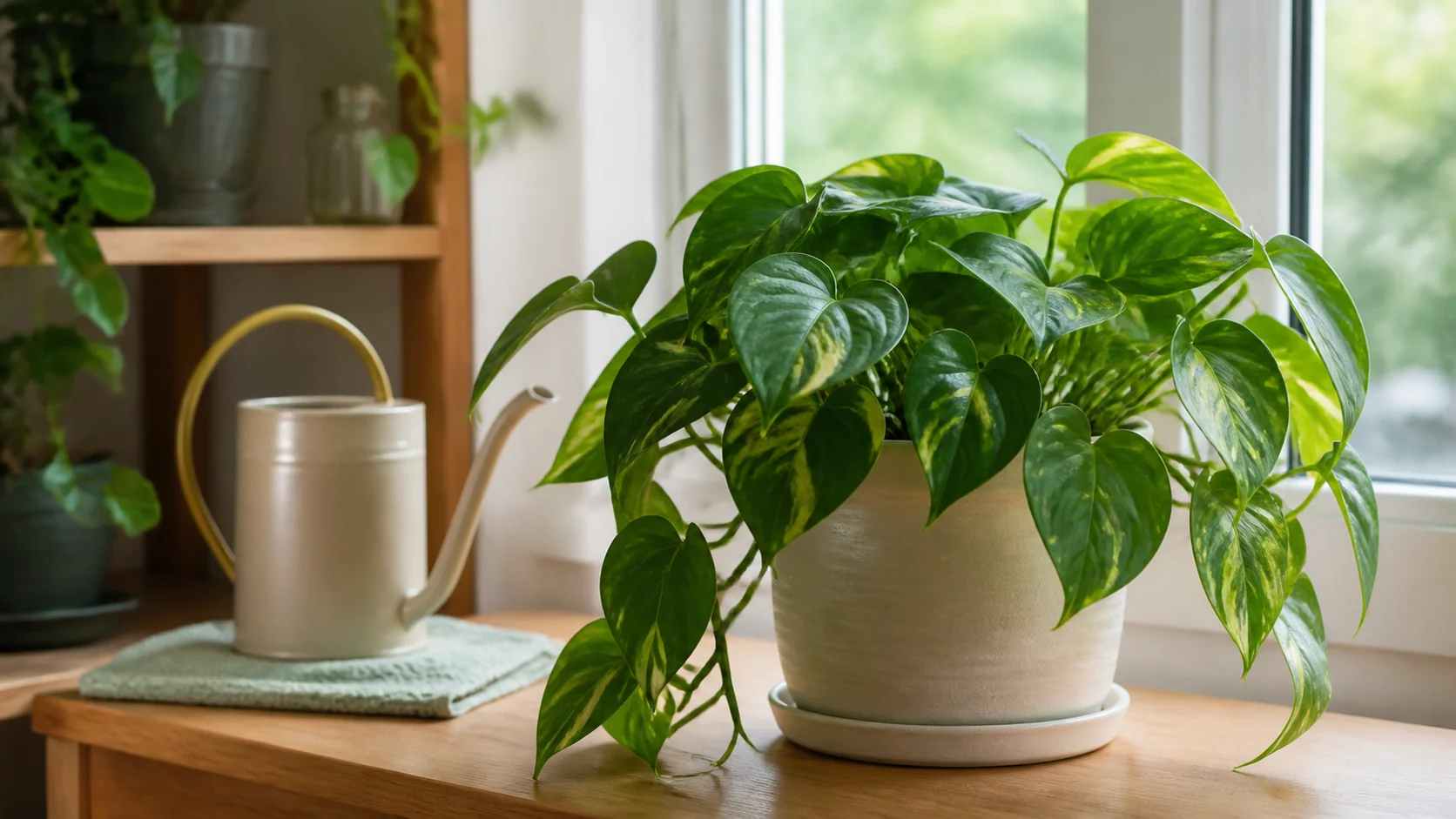
After one thorough watering, a previously dry pothos should be left in stable conditions while its leaves rehydrate over the next day or two.
My plant is drooping but the soil feels fine. What else could it be?
Check three things: recent location changes, temperature from nearby vents, and pest presence. If the plant moved near a heating vent, air conditioner, or into stronger direct sun, transpiration stress can cause wilting even in properly watered soil. Cold drafts affect tropical plants quickly and visibly. If care conditions all look fine and the plant keeps declining, check under the leaves and along the stems for pests like spider mites or mealybugs, which can stress roots and vascular tissue enough to cause drooping.
Should I repot a drooping plant?
Only if the roots are the issue. Root rot or a severely root-bound plant struggling to absorb water are both good reasons to repot. But if the droop comes from underwatering, light stress, or a recent move, repotting adds shock on top of existing stress and can slow recovery. Stabilize the care conditions first. Once the plant looks steady and healthy again, then assess whether the pot size or soil mix needs an upgrade.
My plant’s leaves are drooping and turning yellow at the same time. Is that different?
Yellow plus drooping together usually points to a longer-running issue rather than acute stress. Lower leaves yellowing and drooping over several weeks is a classic overwatering pattern: the roots are slowly losing function and the plant is sacrificing older leaves first. The guide on why plant leaves turn yellow covers how to read yellowing patterns and separate overwatering from other causes.
Do some plants droop naturally without there being a problem?
Yes. Prayer plants fold their leaves upward at night: it looks alarming the first time but it’s completely normal. Some large-leafed tropicals like bird of paradise may droop slightly in intense afternoon heat and recover in the evening. The question is whether the drooping is new, whether it happens all day rather than at a specific time, and whether it’s affecting the whole plant or just certain leaves. Cyclical drooping in a plant with otherwise good color and firm stems is usually not a care emergency.
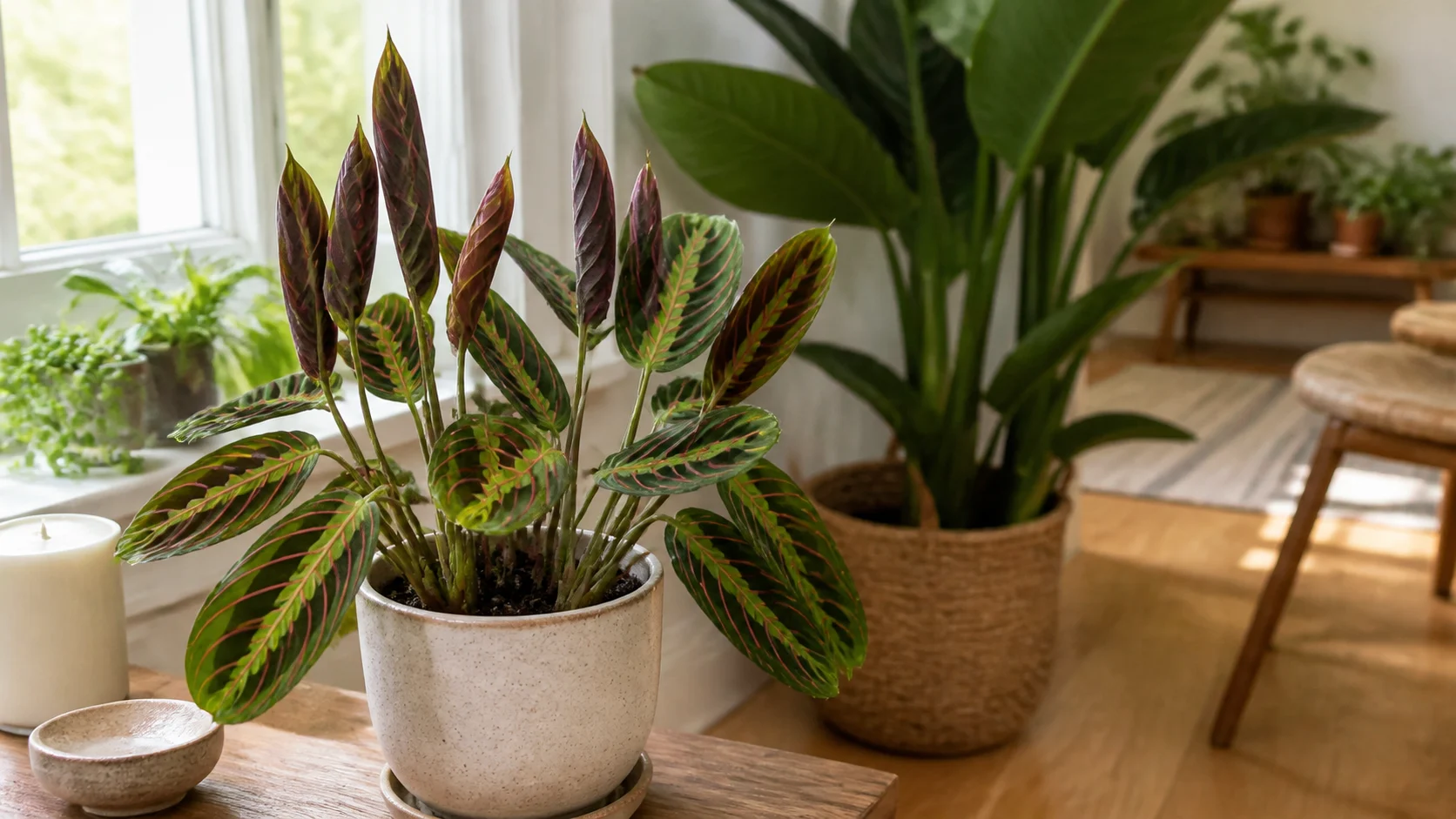
A healthy prayer plant may hold some leaves upright while others stay open, and a bird of paradise can shift posture with afternoon conditions.