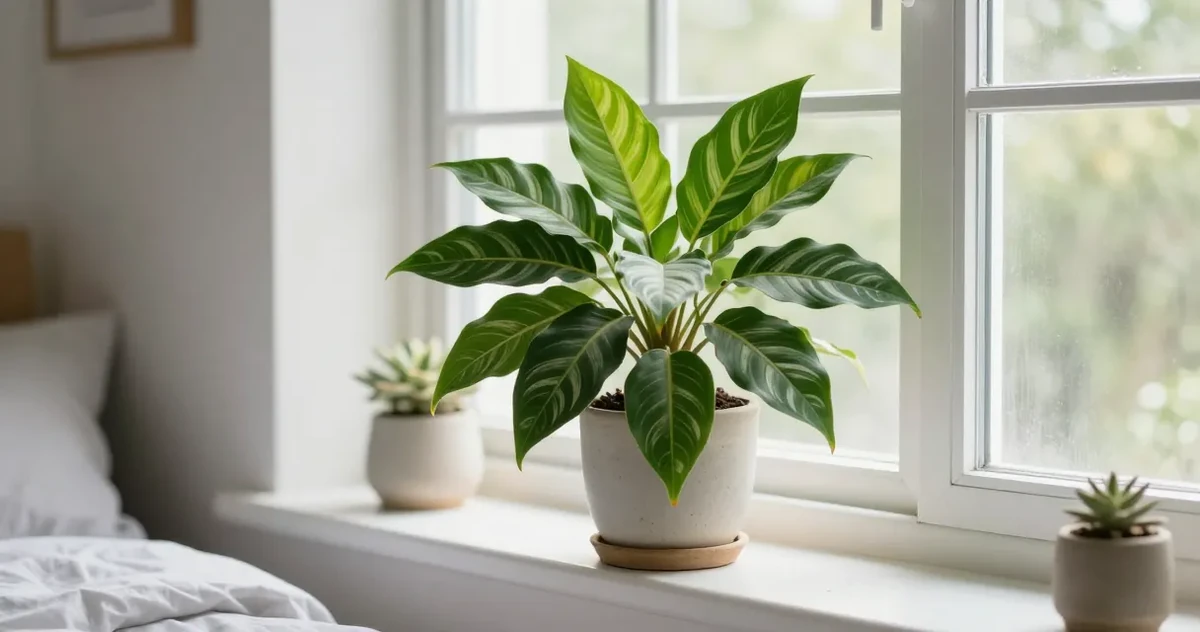
Chinese evergreen propagation is the process of creating new Aglaonema plants from an existing one, and the method you choose depends almost entirely on what your plant looks like right now.
That distinction matters more than most guides admit. If your Chinese evergreen is a full, clumping plant with multiple stems rising from the same pot, division is faster and gentler on everyone involved. If it has one or two long bare canes with a tuft of leaves way up top, stem cuttings are the better route. Starting with the wrong method for your plant’s current shape is the most common reason propagation feels harder than it should be.
Identification Snapshot
- Best division candidate: a full, clumping plant with two or more distinct stems already emerging from the pot
- Best stem-cutting candidate: a leggy cane with healthy leaves near the top and visible nodes lower down
- Wait before propagating: plants with mushy roots, recent pest pressure, or obvious recovery stress
- Pet-safety flag: fresh cuttings and sap stay toxic to cats and dogs, so keep propagation jars and new pots out of reach
Not sure what plant you are caring for?
Open KnowYourPlant, snap a photo, and get the plant name plus care notes matched to the species in front of you.
Identify your plantLookalikes and Confused With
Growers often use one word, propagation, for three very different starting points. Sorting them correctly makes the rest of the guide easier to follow.
| What you’re looking at | Easy to confuse it with | What it usually means |
|---|---|---|
| A full, multi-stem clump | A plant that needs to be cut apart from the top | Usually a division candidate because separate rooted sections may already exist |
| One long bare cane with a leafy top | A plant that can be split at the base | Usually a stem-cutting candidate because there is no separate rooted section to divide |
| A detached leaf with little or no cane attached | A viable propagation piece | Not enough tissue for reliable rooting because Aglaonema needs a stem node |
Want a care schedule you do not have to remember?
KnowYourPlant sends watering, feeding, repotting, and seasonal reminders based on the plants you actually own.
Get care remindersWhat Most Propagation Guides Miss
Most Chinese evergreen propagation guides jump straight to the method without first asking what the plant actually looks like. That’s the gap.
The common misdiagnosis is treating every Aglaonema as a candidate for stem cuttings when many home specimens are already mature clumping plants with separable rooted stems sitting right there in the pot. Cutting a plant that could simply be divided is unnecessary stress on everyone involved.
The practical first check: look at the base of the pot before you reach for scissors. If you can see two or more distinct stems and a plant that has naturally sectioned into separate clusters, you already have divisions waiting. The method question is answered by the plant’s shape, not by which technique you read about first.
A second missed point is aftercare. Many guides stop at “wait for roots to form” without addressing what happens to the mother plant once you’ve topped a leggy cane, or why the transition from water to soil is the moment cuttings most often fail – even after weeks of successful root development in the jar.
Save this plant plan before you forget the details.
Keep the plant, diagnosis notes, reminders, and care changes in KnowYourPlant so the next decision is based on your actual plant history.
Open KnowYourPlantFirst: Which Method Does Your Plant Need?
Before you get your scissors out, look at the base of the pot.
If you see multiple distinct stems and the plant looks like it has naturally split into separate sections, you already have a head start. Those stems likely have their own root sections, and your job is careful separation rather than encouraging something to root from scratch. Division is faster and causes less overall stress on the plant.
If the plant has one long cane that has grown bare at the bottom while the leaves have all moved upward, division won’t help. The plant isn’t clumping – it’s just leggy. Here, you take a top cutting from a healthy section of that cane and encourage it to root on its own. Illinois Extension notes that tip cuttings are the standard approach when Aglaonema stems become too long, framing propagation as both multiplication and rejuvenation of a stretched plant.
If the plant looks stressed – pale, droopy, or like it has been sitting in soggy soil recently – pause before propagating. A weakened plant is a poor candidate for either method. Give it a few weeks of stable conditions first, then revisit. University of Florida IFAS guidelines for Aglaonema production note that cuttings should be inspected carefully before use and weak or damaged material should be set aside. The same logic applies at home.
A Quick Decision Framework
| Your plant looks like… | Best method | Why |
|---|---|---|
| Multiple stems, clumping, full base | Division | Roots already exist; less recovery needed |
| One long leggy cane, leaves at top only | Stem cutting (top) | Plant needs rejuvenation; division isn’t possible |
| Stressed, pale, mushy at base, recent pest problem | Wait and rehab | Neither method works well on a struggling plant |
| Healthy with one main cane and side shoots | Stem cutting or division of offshoots | Depends on how developed the offshoots are |
Plant-owner signal: In community questions, the recurring confusion is not whether Chinese evergreen can be propagated. It’s whether the grower is looking at a divisible clump, a leggy cane that should be topped, or a stressed plant that needs rehab before any propagation attempt. Starting with that classification prevents most avoidable failures.
Social Listening: Where Growers Get Stuck
The same four questions keep coming up in grower discussions, and they line up with the trouble spots in this guide.
- “Can I do this without unpotting the plant?” Usually yes for a leggy cane with clear nodes, but not for a compact clump that is better divided at the roots.
- “Where exactly do I cut?” Take a top cutting with visible nodes and enough leaf mass to stay viable, rather than a leaf-only piece or a tiny cane stub.
- “Should I use water, soil, moss, or something else?” Most beginners do better when they choose the simplest method that matches the plant’s structure instead of trying every medium they see listed online.
- “Is this safe around pets while I’m propagating?” Fresh cut stems, jars, and new pots are all more reachable than the original shelf plant, so toxicity matters more during propagation than many quick guides acknowledge.
Propagation Method Comparison
| Method | Best for | Main upside | Main tradeoff |
|---|---|---|---|
| Division | Full, multi-crown plants with separate rooted sections | Fastest recovery because roots are already attached | You have to unpot the whole plant to see where sections separate |
| Water rooting | Leggy top cuttings with clear nodes | Easiest way to monitor when roots are forming | The move from water to soil is the stage where beginners most often lose momentum |
| Direct-to-soil rooting | Growers who want to skip the water-to-soil transition | Avoids adapting water roots to potting mix later | Harder to tell whether rooting has started until new growth appears |
| Sphagnum moss rooting | Growers who already like rooting in airy media and can monitor moisture closely | Keeps the node in contact with a light, airy medium | Easy to overcomplicate when division or water rooting would already solve the problem |
Expert note: NC State, Clemson, Missouri Botanical Garden, and ASPCA sources all support the same core framing here: Chinese evergreen is an Aglaonema with cane-like stem tissue, indoor-houseplant growth habits, and calcium oxalate toxicity. That is why good propagation advice has to cover both node-bearing stem sections and safe handling of fresh cuttings.
Care Cards
Division care card
- Best when the plant already has separable rooted stems
- Use a snug pot and fresh, airy soil after separation
- Expect minor yellowing for a week or two while roots reestablish
Water-rooted cutting care card
- Keep only the lower third of the stem in water
- Refresh the water every five to seven days
- Wait for firm roots about 1 to 2 inches long before potting up
Direct-to-soil cutting care card
- Use a well-draining mix and keep it lightly moist, not soggy
- Keep the crown above the soil line
- Expect slower feedback because you cannot see root development directly
Mother plant care card
- Leave healthy nodes below the cut whenever possible
- Give the stump two to three months before deciding it will not regrow
- Cut back lower only after a long, inactive stretch and only if the base is still firm
How to Propagate by Division
Division works best in spring or early summer when the plant is actively growing and better positioned to recover from the disruption. The University of Florida IFAS guide on Aglaonema production identifies dividing basal shoots and suckers as one of the two primary propagation methods for the species. It’s not a shortcut – it’s the appropriate method for plants that have already done the work of producing separate rooted stems.
Ease the plant out of its pot and shake away as much soil as you can from the root ball. You’ll usually find the base of each cane wrapped in a tangle of roots. Your goal is to follow those roots down and identify where one plant ends and another begins.
Use clean scissors or a sharp knife. Cut between root sections rather than through them where you can help it. Each division needs to keep some roots attached, and the more you can preserve, the faster the recovery. You’re not trying to slice everything into tiny pieces – you’re separating what the plant has already started to separate on its own.
Pot each division into fresh, well-draining soil in a snug pot. A very large pot for a small root section holds too much moisture and slows settling. Water it in gently, then keep it in a warm spot with indirect light for two to three weeks.
Don’t be alarmed if a leaf or two yellows in the first week. The plant is putting energy into reestablishing roots rather than holding every leaf. As long as new growth appears within a month, things are going the right direction.
How to Propagate by Stem Cuttings
If your Chinese evergreen has grown leggy with a long bare stretch of cane and leaves only at the top, stem cuttings let you create a new plant and rejuvenate the original at the same time.
Choosing Where to Cut
Look for a section of cane with at least a few healthy leaves and visible leaf nodes – the small bumps or joint points along the stem where leaves emerge. University of Florida IFAS guidelines for commercial Aglaonema production specify that cuttings should carry four to five leaves and be inspected carefully before use. A cutting with more leaf surface roots more reliably than a single-leaf piece. This is a detail that gets glossed over in most hobby guides, but it matters.
Make your cut just below a node using clean, sharp scissors or pruning shears. A pattern that comes up repeatedly among Aglaonema growers: cut low enough on the stem to leave plenty of nodes and healthy material on the mother plant, not just a short stump. Both the cutting and the mother plant do better when neither is left with almost nothing.
If the original cane still has healthy nodes below your cut, those sections can sometimes push out new growth on their own, though it takes patience to find out.
Rooting in Water
Place the cutting in a glass or jar with enough water to cover the bottom third of the stem. Keep the leaves out of the water. Set it somewhere with bright indirect light and a stable temperature – somewhere around 65 to 80°F if you can manage it.
Change the water every five to seven days to keep things fresh. Roots typically begin forming somewhere between two and six weeks in. They’ll appear as small white nubs at the node or the base of the stem. A single month with only tiny nubs showing is normal. Many growers worry they’ve failed when they’re actually just at the beginning of the process. Once roots reach about an inch or two long, the cutting is ready to move to soil.
If you want to skip the water stage, you can also root cuttings directly in a well-draining potting mix kept lightly moist. Direct-to-soil propagation removes the water-to-soil transition risk, but you won’t be able to monitor root development as easily.
Moving from Water to Soil
This transition is where cuttings most often struggle. Water roots and soil roots work slightly differently, and a move that feels routine to you can set the cutting back noticeably.
Use a light, well-draining mix. University of Florida IFAS recommends rooting Aglaonema cuttings in well-aerated media with a pH of 5.5 to 6.5. At home, a peat-based or coco-coir mix with added perlite hits that range and keeps drainage open. Plant the cutting deep enough that the node with roots is covered, but keep the crown – where the leaves meet the stem – above the soil line. Burying the crown invites rot. This is the single most repeated mistake among growers learning by trial and error: planting the cutting too deep because “more buried means more stable.”
Keep the soil slightly moist for the first two weeks, then ease off to a more normal watering rhythm once you see new growth pushing through. If you see leaves drooping in the first few days after the move to soil, that’s the cutting adjusting, not a signal that something has gone wrong. Give it a week before deciding it needs intervention.
Rooting Timeline: What to Expect
| Stage | Approximate timing | What you’ll see |
|---|---|---|
| First signs of root nubs | 2–4 weeks in water | Tiny white bumps at the node or cut end |
| Roots ready to pot | 4–8 weeks in water | Roots 1–2 inches long, white and firm |
| First new leaf after potting | 3–6 weeks after soil transfer | Small unfurling leaf from the crown |
| Established, normal growth | 2–3 months after soil transfer | Multiple new leaves, plant not drooping |
These are ranges, not promises. Temperature, light, cutting health, and the time of year all affect timing. Warmer and brighter conditions within the plant’s comfort range generally speed rooting. A cutting sitting in a cool, dim corner in winter will take much longer.
Common Problems
| Problem | Usually means | What to do next |
|---|---|---|
| Tiny white nubs but no long roots yet | The cutting is still in the normal early rooting phase | Keep the water clean, keep the jar warm and bright, and wait another week or two before intervening |
| Drooping right after the move to soil | Water-to-soil transition shock | Keep the mix lightly moist, protect the crown from burial, and avoid repotting again immediately |
| Stem base feels soft or smells sour | Rot from stagnant water, soggy soil, or a buried crown | Trim back to healthy tissue and restart in a cleaner, airier setup |
| The mother cane stays bare for weeks | The cane is dormant, slow, or too depleted to resprout quickly | Give it up to two or three months before cutting lower or discarding it |
Seasonal note: Spring and early summer usually root faster because the plant is actively growing. Fall and winter propagation can still work, but slower metabolism means longer waits, especially for water-rooted cuttings.
What Happens to the Mother Plant After Topping
If you took a top cutting from a leggy cane, the remaining stump won’t look encouraging at first. This uncertainty – whether the original stem is spent or just recovering – is one of the real aftercare gaps in most propagation guides.
Here’s what’s realistic: new growth can emerge from a node lower on the original stem, but not every bare cane will do this, and not every cultivar responds the same way. Give it two to three months before writing it off. Some canes push out fresh side growth right at the node below your cut; others stay dormant and eventually decline.
If nothing stirs after several months, you can cut the old cane back to the soil level and let the root system try again from the base. Root systems on mature Chinese evergreens are often more resilient than the visible cane suggests. If the plant has other healthy stems alongside the cut one, those will continue growing undisturbed.
Plant ID + Plant Doctor
Not sure what your plant needs?
Snap a photo in KnowYourPlant to identify the plant, check yellow leaves, spots, wilting, or pests, and get a calm next step before the problem spreads.
Common Mistakes Worth Avoiding
Cutting a leaf without any stem. Aglaonema doesn’t root from leaves alone. You need a section of stem with at least one node. A single leaf in water will sit indefinitely without producing roots.
Burying the crown. The point where leaves emerge from the stem needs to stay above the soil line. Covering it, even slightly, creates the conditions for crown rot.
Propagating a stressed plant. A plant that’s been overwatered, is infested with pests, or has mushy roots is not ready for propagation. Address the underlying problem first and give the plant stable conditions before dividing or cutting.
Using a pot that’s too large. A small root section – whether a fresh division or a rooted cutting – doesn’t need a big pot. Excess soil holds excess moisture, which slows rooting and invites rot. Go snug initially; you can move up later once the plant has established.
Giving up too early during water rooting. A cutting that’s been in water for four to six weeks with small nubs forming is on track. The instinct to recut and restart at week three is usually premature. The plant is still building.
For more on getting the potting transition right, the how to repot plants guide covers pot sizing and soil choices in detail. And if you’re new to propagation in general, the how to propagate plants guide explains the techniques that carry across different species.
A Quick Note on Pet Safety
Chinese evergreens contain insoluble calcium oxalate crystals, which cause oral irritation, drooling, vomiting, and difficulty swallowing in cats, dogs, and horses if they chew on leaves or stems. The ASPCA lists Aglaonema as toxic to cats, dogs, and horses for this reason.
Fresh cuttings in a jar of water or newly potted divisions sitting at floor level are especially accessible to curious pets. The propagation process brings plant material down to ground level in ways that a potted plant on a shelf doesn’t. Keep propagating cuttings out of reach during and after the process, and handle the sap with care if you have sensitive skin.
If you’re already thinking about the right conditions for your Chinese evergreen post-propagation, the Chinese evergreen care guide covers light, watering, and humidity in more detail. The humidity for indoor plants guide is also worth a read if you’re trying to help fresh cuttings settle in faster – slightly higher humidity in the first few weeks can ease the water-to-soil transition.
Real User FAQ
Can you propagate Chinese evergreen in water?
Yes, and it’s one of the more beginner-friendly options. Take a stem cutting with four to five leaves and at least one visible node, place it in a glass with the bottom third of the stem submerged, and keep it in bright indirect light. Change the water every five to seven days. Root nubs typically appear within two to four weeks; wait until roots are one to two inches long before moving to soil. The most common mistake is transferring the cutting too early, before roots are substantial enough to support the transition.
How long does Chinese evergreen take to root?
In water, expect two to six weeks for initial root formation and another two to four weeks before the roots are long enough to pot. Direct-to-soil propagation may feel slower because you can’t see the roots, but new leaf growth is the signal that roots have established. The full timeline from cutting to a settled, actively growing plant is typically two to four months. Temperature and light affect speed – a warm, bright spot moves the process along; a cool corner in low light slows it.
When is the best time to propagate Chinese evergreen?
Spring and early summer give the best results because the plant is actively growing and better able to recover from division or the loss of a cutting. Propagating in fall or winter isn’t impossible, but rooting tends to be slower, and the mother plant may take longer to push new growth after you’ve topped a cane.
How do I know if my Chinese evergreen can be divided?
Look at the base of the pot. If you can see two or more distinct stems emerging from separate sections and the plant has a clumping, multi-crowned shape, division is likely viable. If you see one main cane or a plant that hasn’t developed separate rooted stems, division won’t work – stem cuttings are the path forward. When you unpot the plant, you’ll see whether the root mass naturally separates into sections or stays as one unified clump.
What happens to the original plant after I take a stem cutting?
It depends on what’s left behind. If you topped a single leggy cane, the stump may push new growth from a node below your cut over the following two to three months, or it may not, depending on the plant’s condition and the cultivar. If nothing develops after several months, cutting the stump back to soil level can encourage the root system to try again from the base. If the plant has other healthy canes alongside the one you cut, those continue growing normally.
Why is my propagated cutting drooping after I moved it to soil?
Some drooping in the first one to two weeks after the water-to-soil transition is normal. Water roots and soil roots work slightly differently, and the cutting is adjusting. Make sure the soil is lightly moist but not waterlogged, that the crown isn’t buried below the soil line, and that the pot isn’t too large. If the drooping persists past two weeks or the stem feels soft at the base, check for rot at the base of the cutting. The most common culprit is overwatering during the settling period.
Can you propagate Chinese evergreen from a leaf alone?
No. Unlike succulents, Aglaonema does not root from leaves without an attached stem section. You need at least one node – the small bump on the stem where a leaf emerges – for roots to form. A leaf pulled cleanly from the stem, even a healthy one, will sit in water without producing roots. Always take a cutting that includes a stem section with at least one, and ideally two or three, visible nodes.
Does Chinese evergreen propagation require rooting hormone?
It’s not required. Chinese evergreen roots reasonably well in water without any additives, and in well-aerated potting mix without rooting powder. Rooting hormone can slightly speed up the process for direct-to-soil propagation, but it’s an optional tool rather than a necessity – especially for water propagation, where open water contact with the cut end already stimulates root development.
Freshness Note
Last updated in June 2026. Horticulture guidance in this article was checked against NC State, Clemson, Missouri Botanical Garden, ASPCA, and established propagation guidance, then compared with real grower questions from Reddit and plant forums to make sure the troubleshooting sections answer the points that repeatedly confuse home propagators.
Methodology Note
This guide separates what institutional references support directly, such as Aglaonema identity, propagation structure, indoor care conditions, and pet toxicity, from community anecdotes about where people get stuck. Grower posts were used as qualitative signal for node confusion, where-to-cut questions, media choice overwhelm, and pet-safety concerns, not as proof that every Chinese evergreen will root at the same speed.