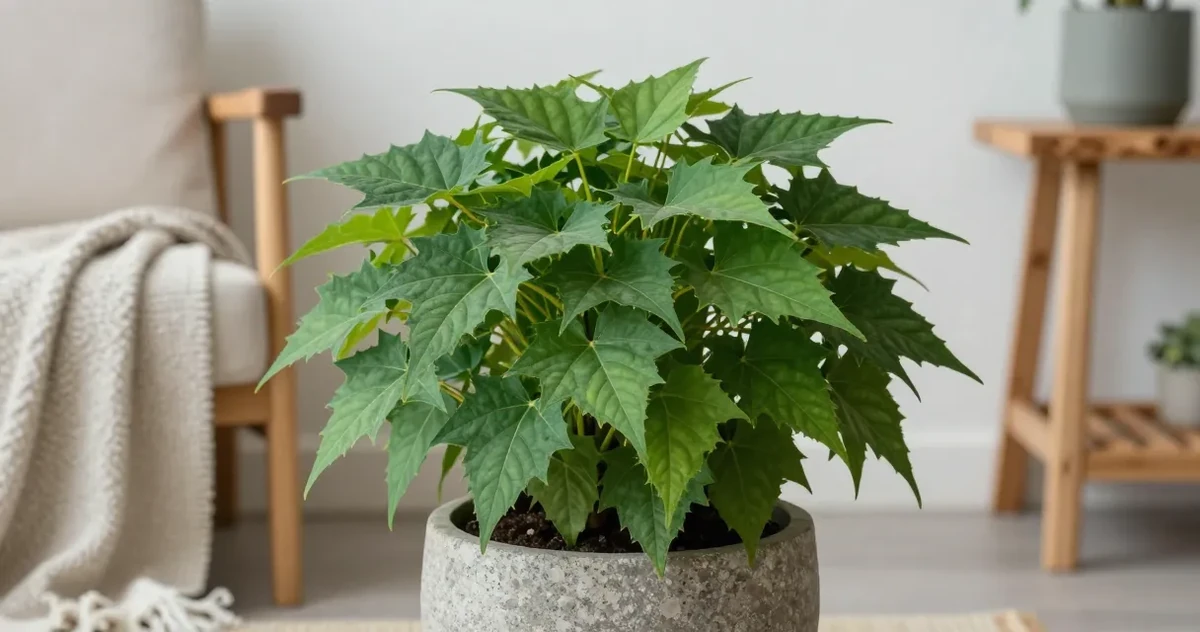
Moon Valley pilea is the kind of plant that looks robust right up until it isn’t. That deeply quilted, topographic texture makes it seem tough, but most owners hit the same wall: the plant starts drooping or drops a leaf or two, the surface soil looks fine, and nothing in the usual care advice explains what is actually going wrong.
This guide is structured around that moment. You will find a symptom-first section up top so you can check what your plant is telling you before adjusting any care routine, followed by specific guidance on light, watering, humidity, soil, and pruning.
A note on the names: If you have seen this plant labeled as Pilea mollis ‘Moon Valley’, Pilea involucrata, or “friendship plant” across different nurseries and care guides, that is not a sign you have different plants. Penn State Extension identifies Moon Valley specifically as Pilea mollis ‘Moon Valley’ and notes that it is commonly labeled Pilea involucrata in retail commerce. Missouri Botanical Garden and NC State Extension document the same overlap. The care requirements are identical either way, so whichever label is on your plant, what follows applies.
What owners keep getting stuck on. Current community threads around Moon Valley pilea repeat the same rescue questions: sudden droop, leaf drop, holes or curled leaves that might be pests, and black spotting that might be either soggy roots or insects. That is why this guide stays symptom-first instead of giving you a generic weekly care calendar.
Identification Snapshot
- Leaf texture: deeply quilted, puckered leaves with valleys between the veins, which is where the plant gets the Moon Valley name.
- Growth habit: compact, softly branching stems that stay bushier when you pinch tips regularly.
- Typical color: bright to medium green with darker shadowing in the leaf texture; low light often makes new leaves flatter and less dramatic.
- Most common confusion: the plant may be sold as Pilea mollis ‘Moon Valley’, Pilea involucrata, or simply friendship plant.
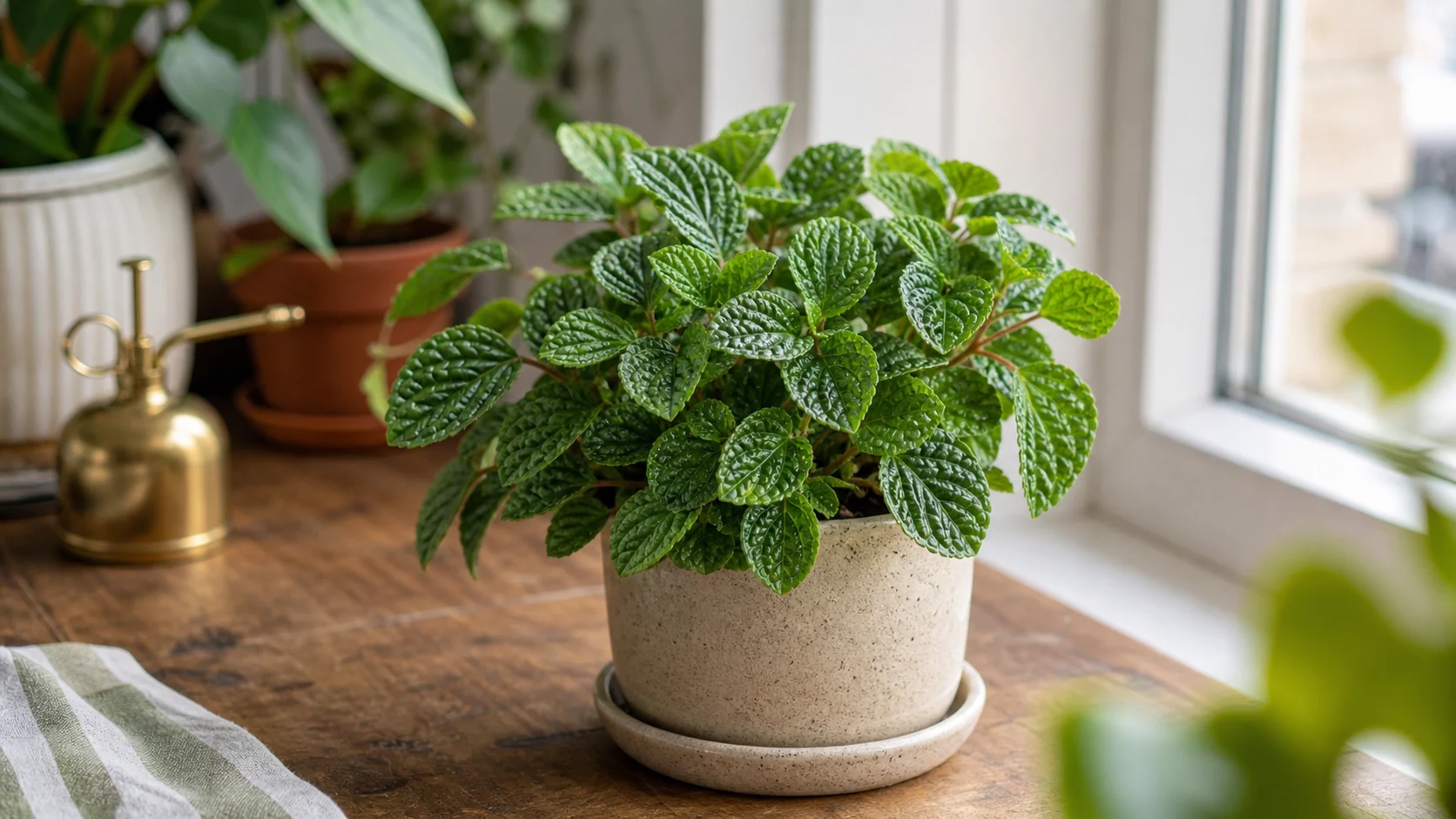
Deeply quilted leaves and a compact branching habit make Moon Valley pilea easy to recognize in bright indirect light.
Lookalikes and Label Confusion
| Label or lookalike you may see | What it usually means | Care takeaway |
|---|---|---|
| Pilea mollis ‘Moon Valley’ | The specific textured cultivar Penn State Extension calls Moon Valley | Follow the care in this guide |
| Pilea involucrata | A common retail or reference label used interchangeably for Moon Valley in commerce and plant databases | Treat it the same for light, humidity, and watering |
| Friendship plant | Common-name umbrella often used for this same pilea group | Verify the quilted leaves, then use the same care rules |
| Flat-leaved pilea from a mixed tropical table | Often a different pilea sold under the same casual name | Use the leaf texture and compact habit, not the tag alone, before copying care advice |
If the plant has thick, glossy, or spoon-shaped leaves instead of a quilted surface, use the peperomia varieties guide to identify the closer match.
What Most Care Guides Miss About Moon Valley Pilea
Most Moon Valley care articles give you the same checklist: bright indirect light, high humidity, do not overwater. What they skip is the thing that actually trips most owners up: the surface of the soil is almost always misleading.
The textured, fast-draining top layer of a pilea pot can feel dry and look dry while the root zone lower in the pot holds enough moisture to cause rot. This matters because the most common owner panic – drooping, mushy lower leaves, and sudden leaf drop – is not usually caused by underwatering even when it looks that way. The plant is asking you to check the whole pot, not just the top inch.
The common misdiagnosis: An owner sees drooping and dry-looking surface soil and waters more. The lower root zone was already saturated. More water makes the problem worse, not better. The first check is not “did I underwater?” but “has the soil at root depth actually dried out?”
The second gap in most guides is the naming confusion. If you search “Moon Valley pilea” and “pilea involucrata” and get different-seeming advice, that is because both names are in active retail use for the same cultivar group, not because you have a different plant. You can stop second-guessing which name applies and follow the care principles below.
The Symptom-First Check: What Is Your Plant Telling You?
Before you adjust any care routine, identify what you are actually seeing.
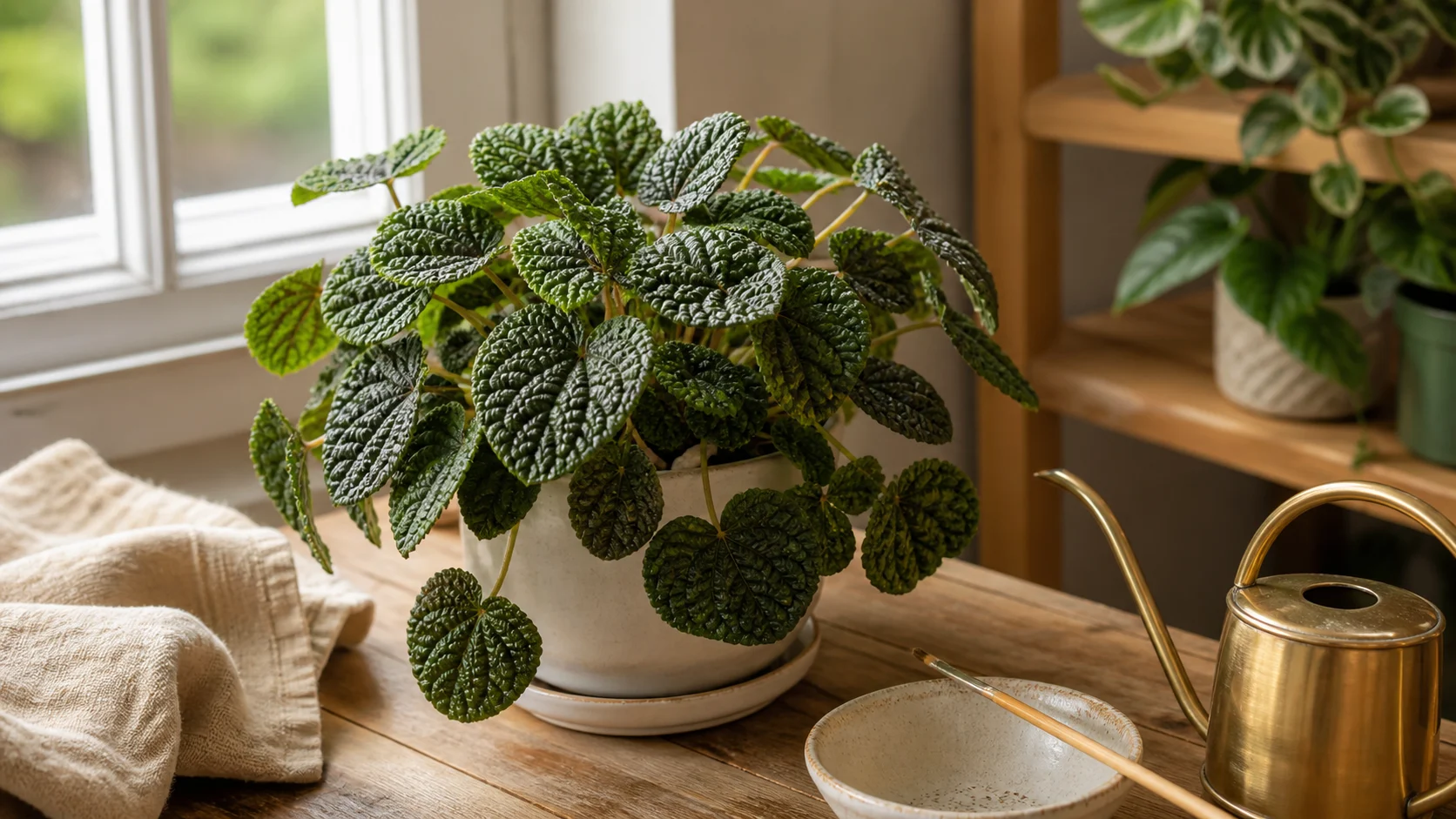
A slightly drooping Moon Valley pilea calls for a root-zone check before the watering can comes out.
Drooping leaves with soft or mushy lower stems: This almost always points to overwatering and poor drainage. The surface may feel fine; check the root zone by lifting the pot or probing deeper with a chopstick. If it is wet and compacted down there, the roots are being deprived of air.
Leaves dropping off cleanly: Sudden temperature drop, cold draft, or dramatic underwatering. Check whether the plant is near an air conditioning vent, a drafty window, or a heater that swings the temperature. Leaf drop from cold stress often shows up two to three weeks after the exposure, which makes it difficult to connect cause to effect in real time.
Crispy brown edges: Low humidity or irregular watering, alternating between bone dry and heavy soaks. This is the most common complaint from new Moon Valley owners who live in dry-climate homes or run central heating through winter.
Holes or curled leaf edges: Check for pests before changing any care routine. Run your finger along the undersides of leaves and look for fine webbing (spider mites), white cottony clumps (mealybugs), or stippled silvery damage across the leaf surface. Missouri Botanical Garden and NC State Extension flag mealybugs and spider mites as the most common Moon Valley pest problems.
Dark spots or black patches: This is the trickiest one. It can mean overwatering combined with poor airflow causing fungal spotting, or it can indicate pest activity such as thrips. The first check: improve airflow around the plant and let the soil approach dryness before your next water. If spots continue appearing on new growth, inspect carefully for insects. If spots are confined to lower, older leaves and the soil has been staying consistently wet, drainage and airflow are the more likely culprits.
Leaves coming in smaller and flatter than usual, stems stretching: Not enough light. The deeply textured character of Moon Valley depends on adequate bright indirect light to develop fully.
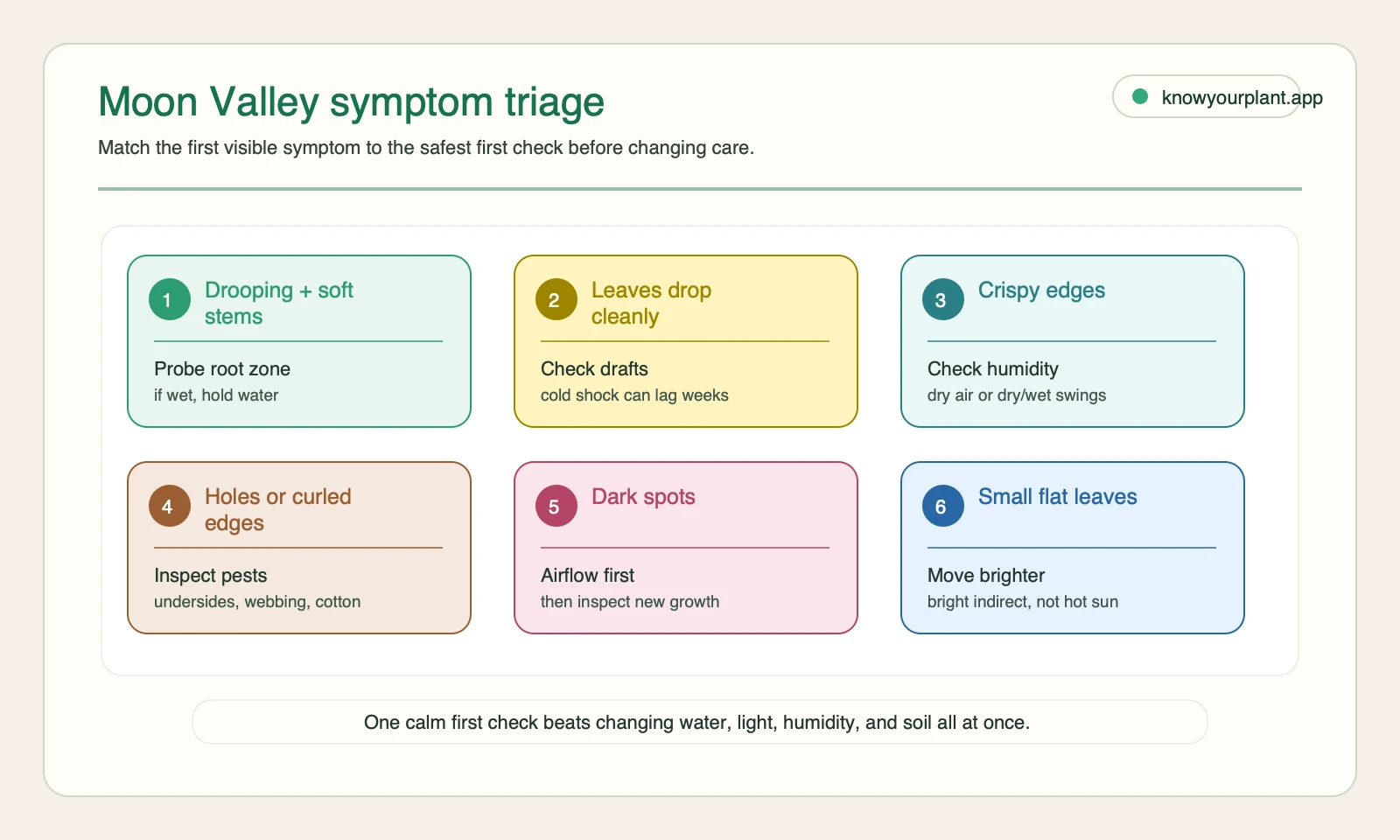
Start with the symptom pattern before changing the routine. A calm first check keeps you from stacking water, light, humidity, and soil changes at the same time.
Care Cards
| Care point | What Moon Valley pilea wants | Fast correction if it looks unhappy |
|---|---|---|
| Light | Bright indirect light, with no harsh afternoon sun on the leaves | Move closer to an east or bright north window, or pull it a little farther back from direct sun |
| Water | Let the deeper soil approach dry, then water thoroughly and drain fully | Probe halfway down the pot before watering again |
| Humidity | Consistently moderate to high humidity with some air movement | Use a pebble tray or humidifier, then improve ventilation if spotting continues |
| Pot and soil | Snug pot with drainage and a loose mix that does not stay wet at the base | Repot smaller or add drainage material if the lower root zone stays soggy |
| Shape | Regular tip pinching for a compact mound | Trim stretched stems and improve light before new growth flattens out |
Light: Reading What the Leaves Tell You
Moon Valley pilea does best in bright indirect light – the kind of spot where you can comfortably read without a lamp but the sun is not landing directly on the leaves. A north or east-facing windowsill works well. A few feet back from a south or west window, with a sheer curtain softening the light, also works.
Direct afternoon sun will bleach or scorch the leaves. Low light will cause the stems to stretch and the new leaves to come in smaller and flatter, losing the textured character that defines the plant.
The deeply quilted leaf surface is a clue about the plant’s origin: Moon Valley evolved under tropical forest canopy where light is bright but diffuse, not intense and direct. That context makes the care logic make sense. In winter, if your nearest window is also cold or drafty, keep the plant a few feet back from the glass so it is not in contact with the cold radiating off the pane.
Watering: How to Check Root-Zone Moisture, Not Just Surface Dryness
Moon Valley pilea wants the top layer of soil to dry out a bit before you water again, but it does not want to go bone dry throughout the whole pot. The problem is that the surface is not a reliable guide to what is happening below.
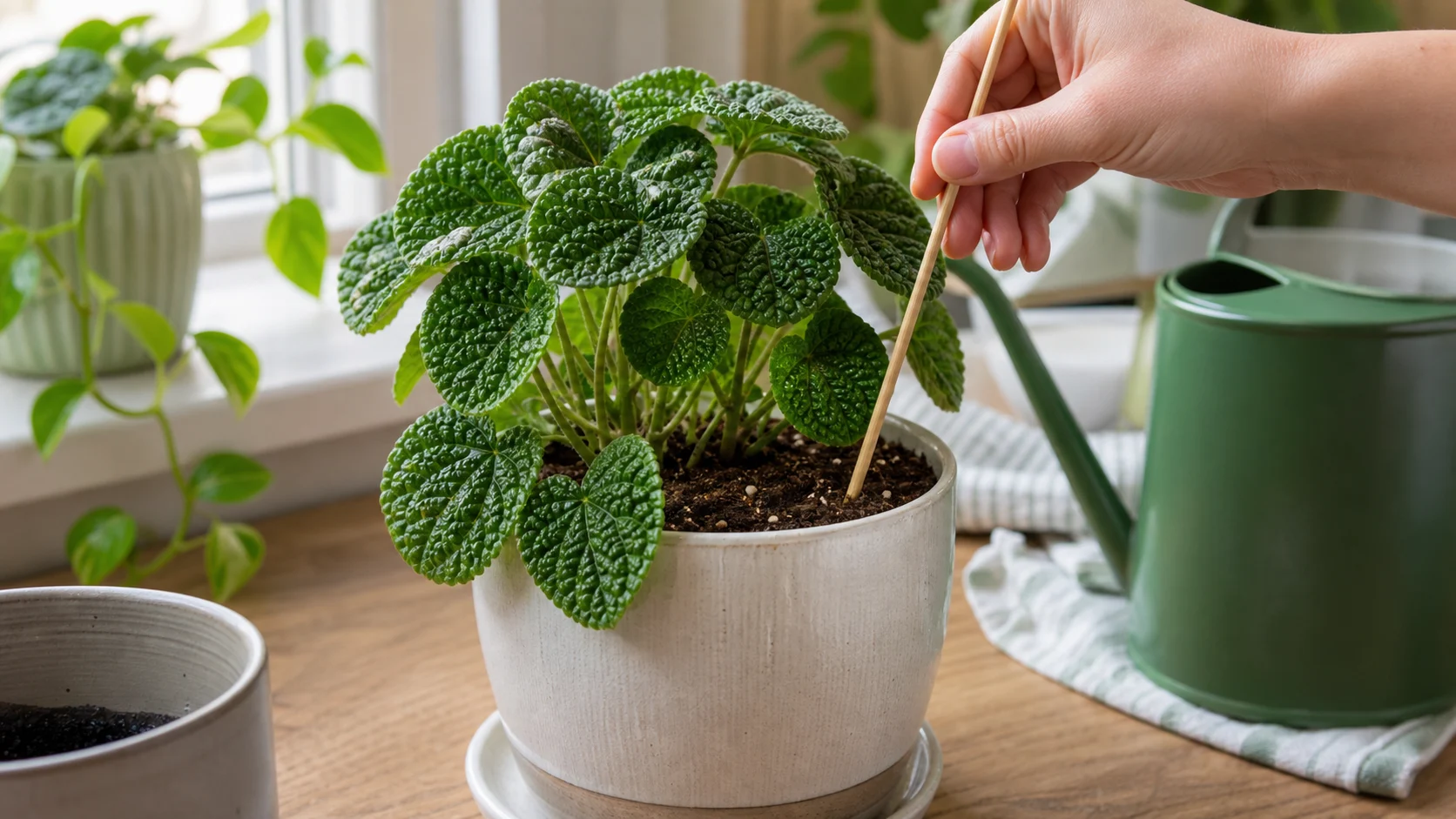
A wooden skewer tests moisture where the roots are growing instead of relying on the dry-looking surface.
A better approach: push a wooden chopstick or skewer about halfway down into the pot. If it comes out clean and dry, water thoroughly. If it comes out with damp soil clinging to it, wait a few more days. Water when the deeper soil is approaching dry, then water thoroughly so it drains through the drainage holes.
That drainage piece is non-negotiable. If water cannot escape the pot, the lower root zone stays wet long after the surface looks fine. That hidden wet zone is exactly where rot starts. Growers who think they have fixed their watering routine often still see mushy lower leaves and black edges because the lower layer of the pot never fully dried out between sessions.
According to Penn State Extension, pileas prefer pots about two inches wider than the root ball. Going too large means extra soil that stays wet longer than the roots can use, which significantly increases rot risk. Keep the pot size snug.
If you are using a decorative pot without drainage, set a plain nursery pot inside it and lift it out to water. This is not optional: Moon Valley pilea in a pot without drainage holes is almost always on borrowed time.
Reduce watering frequency in autumn and winter when growth slows. The RHS recommends lighter watering in cooler months for Pilea involucrata, and Missouri Botanical Garden echoes the same seasonal reduction for Moon Valley. The plant is not dying; it is resting, and its water needs drop noticeably. Watch the soil rather than the calendar.
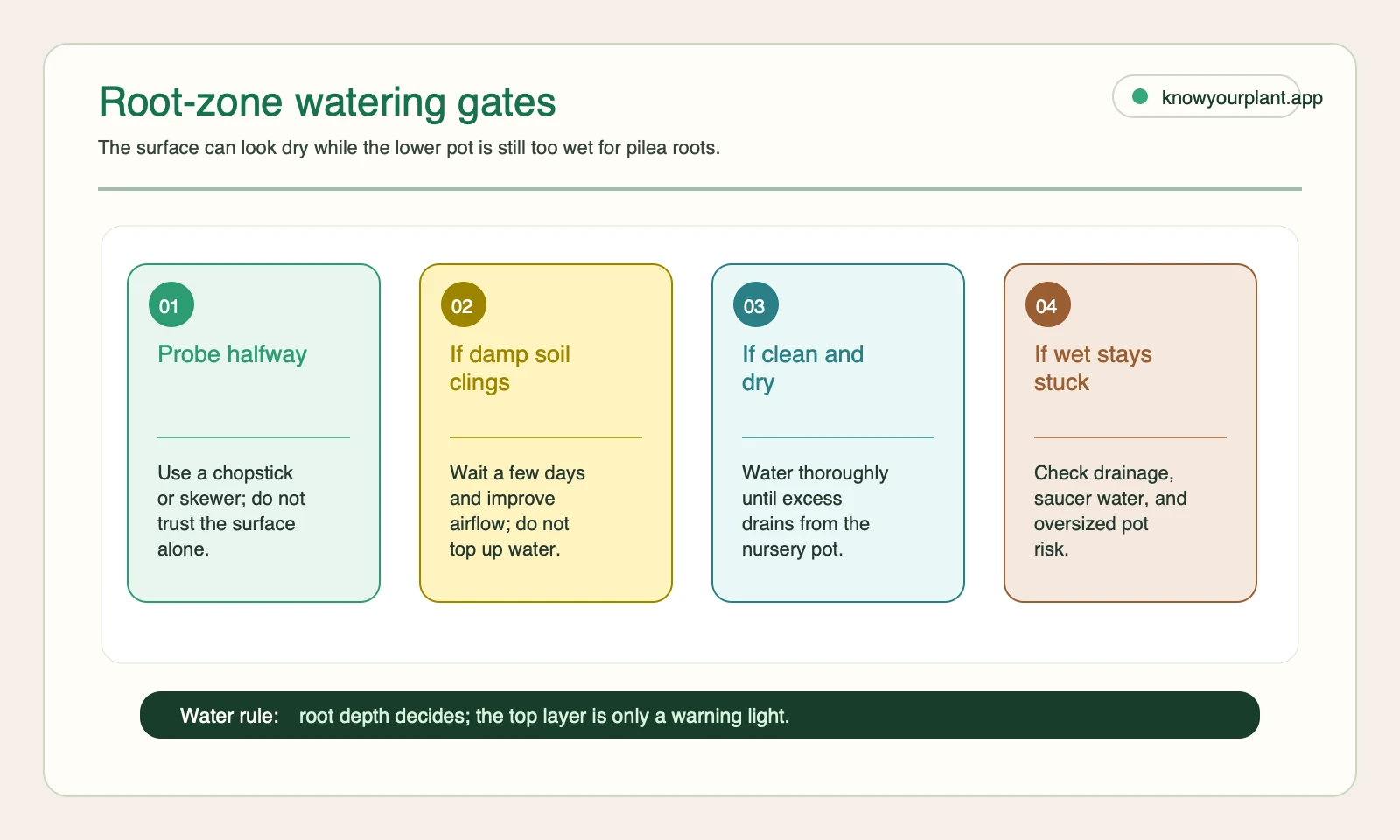
Water decisions start at root depth, not at the dry-looking surface. If damp soil clings to the probe, wait and improve airflow before adding more water.
Humidity: High but Moving
Moon Valley pilea comes from tropical and subtropical environments and appreciates humidity above 50 percent. Dry indoor air, especially in winter when heating runs constantly, is one of the most common reasons leaf edges crisp up and turn brown.
The fix most people reach for is misting, but misting leaves water sitting on the textured leaf surface, which is an invitation for fungal spotting. Better approaches:
- Pebble tray: Fill a shallow tray with pebbles and water, set the pot on top so it sits above the waterline, and let evaporation do the work without wetting the leaves.
- Grouping plants: Placing Moon Valley near other tropical houseplants raises local humidity through shared transpiration.
- Small humidifier: The most reliable option if your home runs consistently dry. Position it nearby rather than blowing directly on the leaves.
The detail most guides skip here is airflow. High humidity with stagnant, still air is a different problem entirely and can lead to the same spotting and stem issues as overwatering. Good humidity means the air around the plant holds moisture while still circulating. A room with occasional air movement is better than a sealed bathroom that never dries out fully. If you notice the plant staying wet for too long between waterings and the air feels heavy and still, occasional ventilation helps more than increasing the humidity further.
Common Mistakes That Push Moon Valley Into Decline
- Watering by the calendar instead of the root zone. The top layer dries faster than the bottom, so fixed schedules often keep the lower roots too wet.
- Using an oversized decorative pot. Extra soil stays wet longer than this plant can use, especially in lower light.
- Chasing humidity with heavy misting. Moisture sitting on textured leaves can make spotting worse when airflow is weak.
- Leaving it in dim light because it survives there. Survival is not the same as healthy textured growth; low light flattens the leaves and stretches the stems.
- Ignoring pests until the leaves are badly distorted. Moon Valley’s crinkled foliage hides early spider mite and mealybug activity surprisingly well.
Temperature: Warm and Stable, No Cold Surprises
Moon Valley pilea dislikes cold. Keep it somewhere consistently warm, ideally between 60°F and 80°F (15°C to 27°C). Cold drafts from windows in winter or air conditioning vents in summer will stress it noticeably. Because the damage often shows up two to three weeks after a cold exposure, it can be genuinely confusing to connect the cause to the symptoms you eventually see.
Do not leave it on a cold windowsill in winter, even briefly. Glass conducts cold directly to whatever is touching it.
Soil and Pot: The Foundation of Good Drainage
“Moon Valley pilea should be grown in a peaty potting mix with good drainage, and pots should be approximately 2 inches wider than the root ball to reduce the risk of soil staying wet.”
– Penn State Extension, Pilea as a Houseplant
A peaty, well-draining mix is the right starting point. A standard indoor potting mix with 20 to 30 percent added perlite works well. You are aiming for a mix that holds just enough moisture for the roots to access between waterings but drains excess quickly rather than sitting wet at the bottom of the pot.
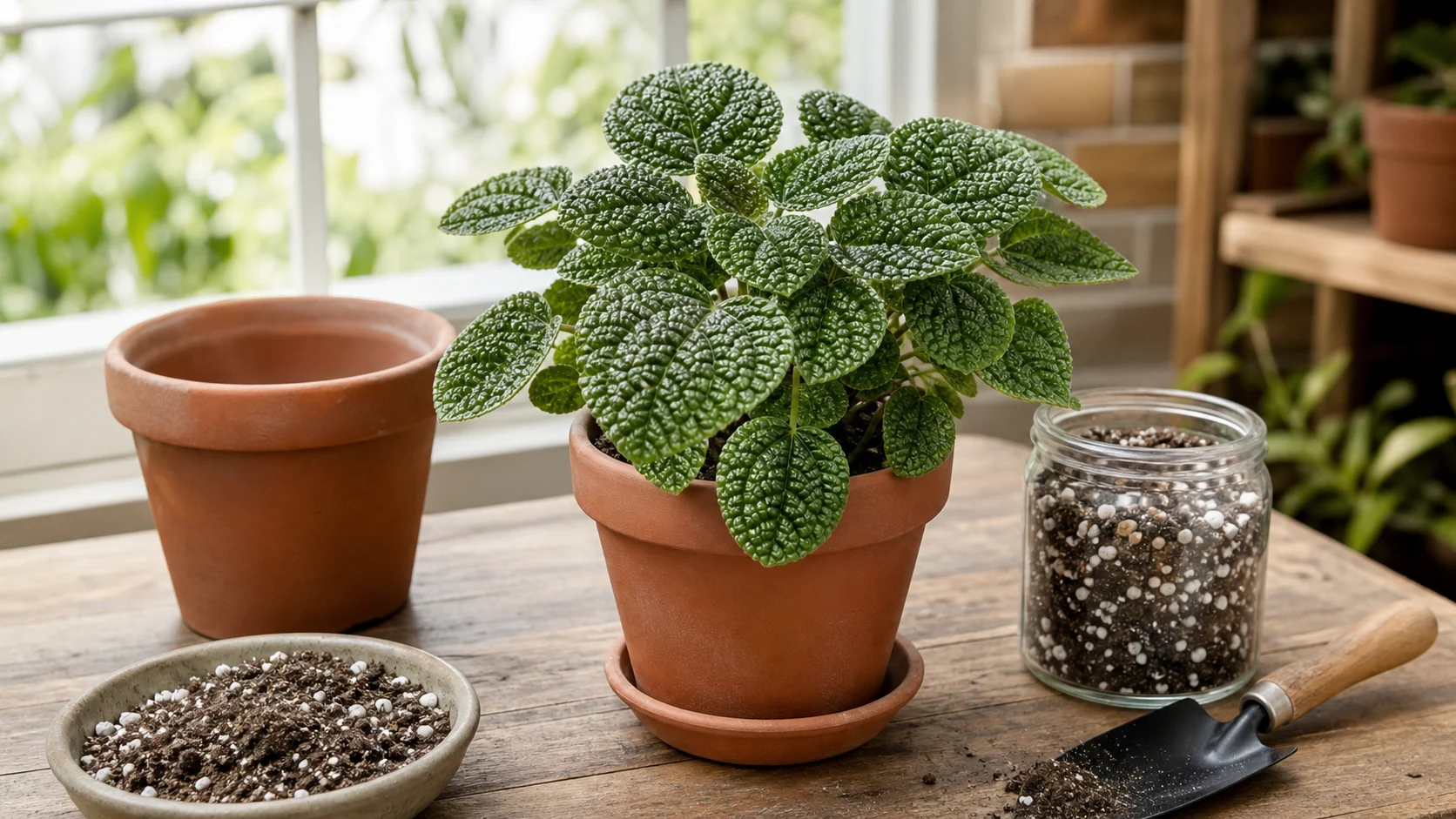
A snug terracotta pot and perlite-rich mix help the lower root zone release excess moisture.
On pot material: terracotta dries out faster than plastic or glazed ceramic, which can be helpful for Moon Valley if you tend to water on a schedule rather than checking by feel. If you have overwatered pilea before, terracotta is worth considering because the porous walls help wick excess moisture away from the root zone between waterings.
Pruning and Keeping It Compact
“Pinching growing tips promotes bushiness and compact growth in Pilea involucrata.”
– Royal Horticultural Society, Pilea involucrata plant details
Moon Valley pilea benefits from light pinching throughout the growing season. When you trim the growing tips, the plant branches out rather than getting tall and leggy. Doing this a few times between spring and early autumn maintains the compact, mounding shape the plant is known for.
If you want a fuller walkthrough on stem cuttings, node placement, and aftercare, the step-by-step process in how to propagate plants pairs well with this cultivar-specific advice.
If your plant is already stretched or leaning – with long bare stems and small leaves at the tips – pinch back those stems and move the plant to a brighter spot. It will fill back in over the growing season, though it takes patience. Moon Valley recovers gradually rather than bouncing back overnight, so give it six to eight weeks before assessing whether the move helped.
Pests: What to Look for on This Cultivar Specifically
According to Missouri Botanical Garden and NC State Extension, the most common pests on Moon Valley and related pilea cultivars are mealybugs, spider mites, and aphids.
The textured, crinkled leaf surface makes pests harder to spot than on a smooth-leafed plant. Make a habit of checking leaf undersides and the junctions where leaves meet the stem, which is where mealybugs tend to cluster. For spider mites, look for very fine webbing stretched between stems or across the leaf underside, and tiny stippling or silvery discoloration across the leaf surface.
If you confirm webbing or stippling, use the targeted cleanup steps in how to get rid of spider mites fast instead of treating every pest problem the same way.
Treating spider mites early matters because they reproduce fast in warm, low-humidity conditions – the exact conditions that also stress the plant. If you see signs of mites, increase humidity and isolate the plant before treatment. Mealybugs respond well to isopropyl alcohol applied on a cotton swab directly to each cluster, followed by a neem oil spray for ongoing prevention.
Common Problems at a Glance
| Symptom | Most likely cause | First move |
|---|---|---|
| Plant droops even though the surface looks dry | Root zone still wet or compacted | Check halfway down the pot before adding water |
| Lower leaves yellow, blacken, or go mushy | Overwatering and low airflow | Reduce watering, improve airflow, and check drainage |
| Edges turn brown and crisp | Dry air or uneven watering | Raise humidity and stop letting the whole pot go bone dry |
| Holes, curling, stippling, or visible bugs | Spider mites, mealybugs, or other pests | Inspect leaf undersides and isolate before treatment |
| New growth is small and less textured | Light too weak | Move to brighter indirect light |
| Spots keep appearing on fresh leaves | Ongoing pest issue or wet stagnant conditions | Inspect for insects and correct airflow plus watering together |
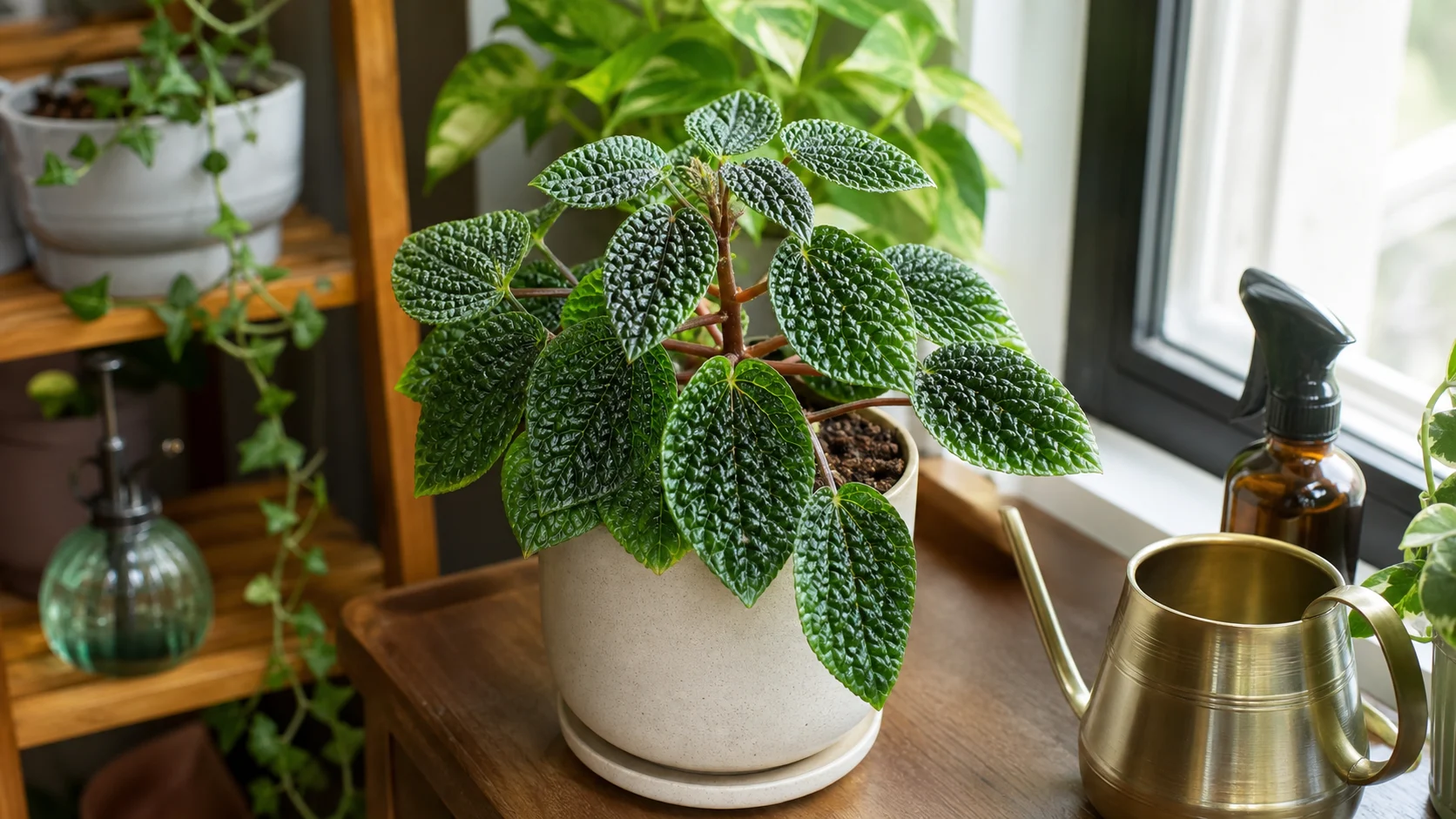
Long exposed internodes and an open silhouette point to weak light; move the plant into brighter indirect light before new growth flattens further.
Propagation: New Plants and the Rescue Option
Moon Valley pilea propagates easily from stem cuttings. Take a cutting with two or three leaf nodes, remove the lowest leaves, let the cut end callous for an hour or two, then place it in moist potting mix or in water. Roots typically form within two to four weeks in a warm spot with bright indirect light.
Spring and early summer are the best windows for propagation, when the plant is actively growing and cuttings root most reliably. New plants make good gifts, which is one of the reasons this plant goes by the name “friendship plant” in some regions.
When propagation becomes the rescue plan: If the main plant is in serious decline from overwatering or rot – with soft mushy lower stems, persistent blackening at the base, or roots that smell off when you unpot it – propagating healthy stem tips is a legitimate recovery path. You do not save the parent plant, but you preserve the genetics. Take cuttings from the healthiest stem tips available, let them callous, and root them fresh in clean, well-draining mix. This is triage, not failure, and it often works.
Pet Safety
According to the ASPCA, friendship plant, the pilea group that includes Moon Valley, is listed as non-toxic to cats, dogs, and horses. It is a practical choice if you share your home with animals who investigate plants.
Seasonal Care Quick Reference
| Season | Watering | Humidity | Pruning |
|---|---|---|---|
| Spring | Moderate; check soil before watering | Keep above 50% | Good time to pinch tips and propagate |
| Summer | Moderate to slightly more frequent in heat | Keep above 50%; watch airflow | Continue pinching for fullness |
| Autumn | Reduce as growth slows | Maintain; watch heating vents | Minimal |
| Winter | Least frequent; probe deeper before watering | Run humidifier if needed | Avoid heavy pruning |
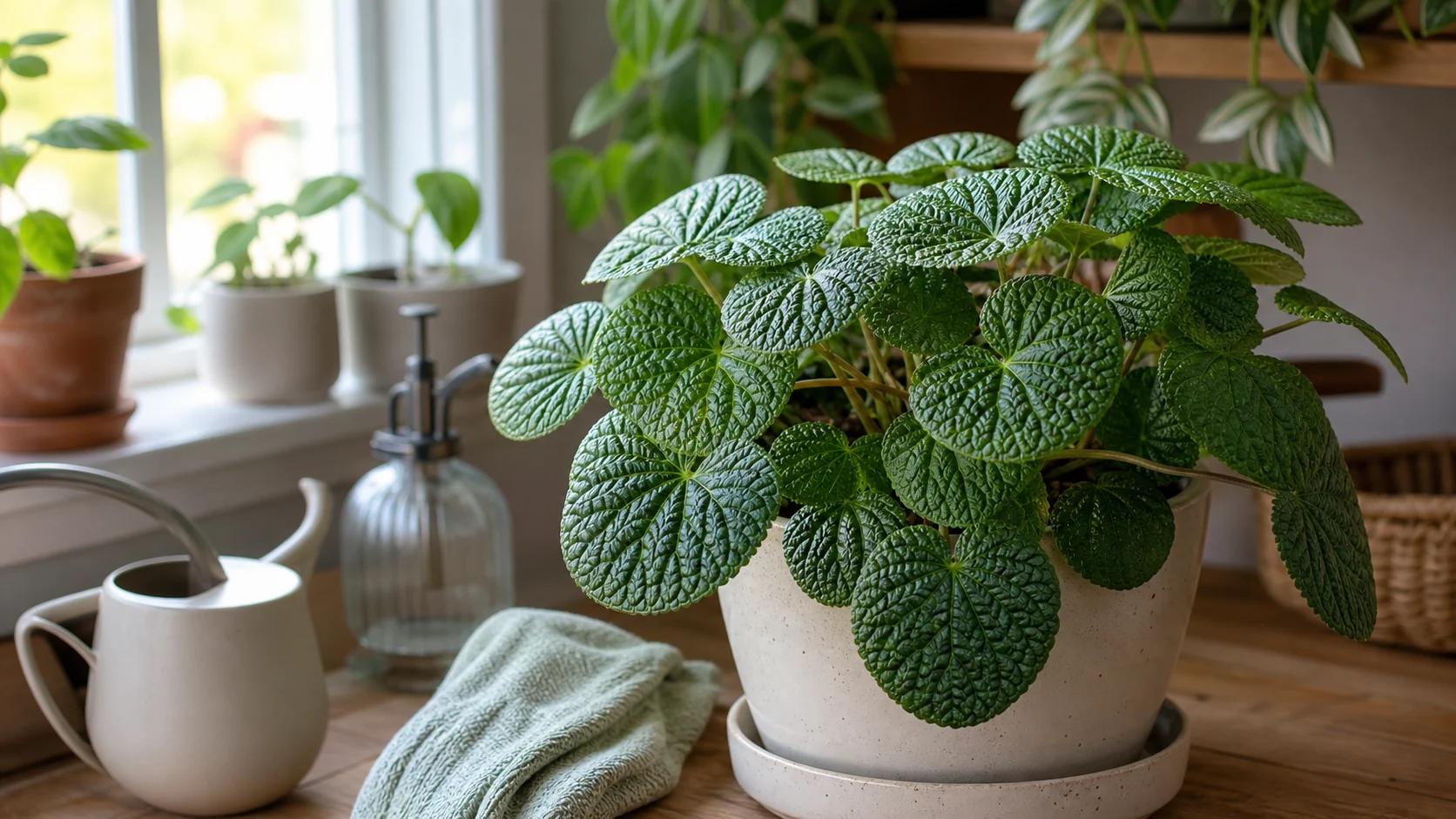
A watering can, mister, and cleaning cloth keep seasonal watering and humidity adjustments close at hand.
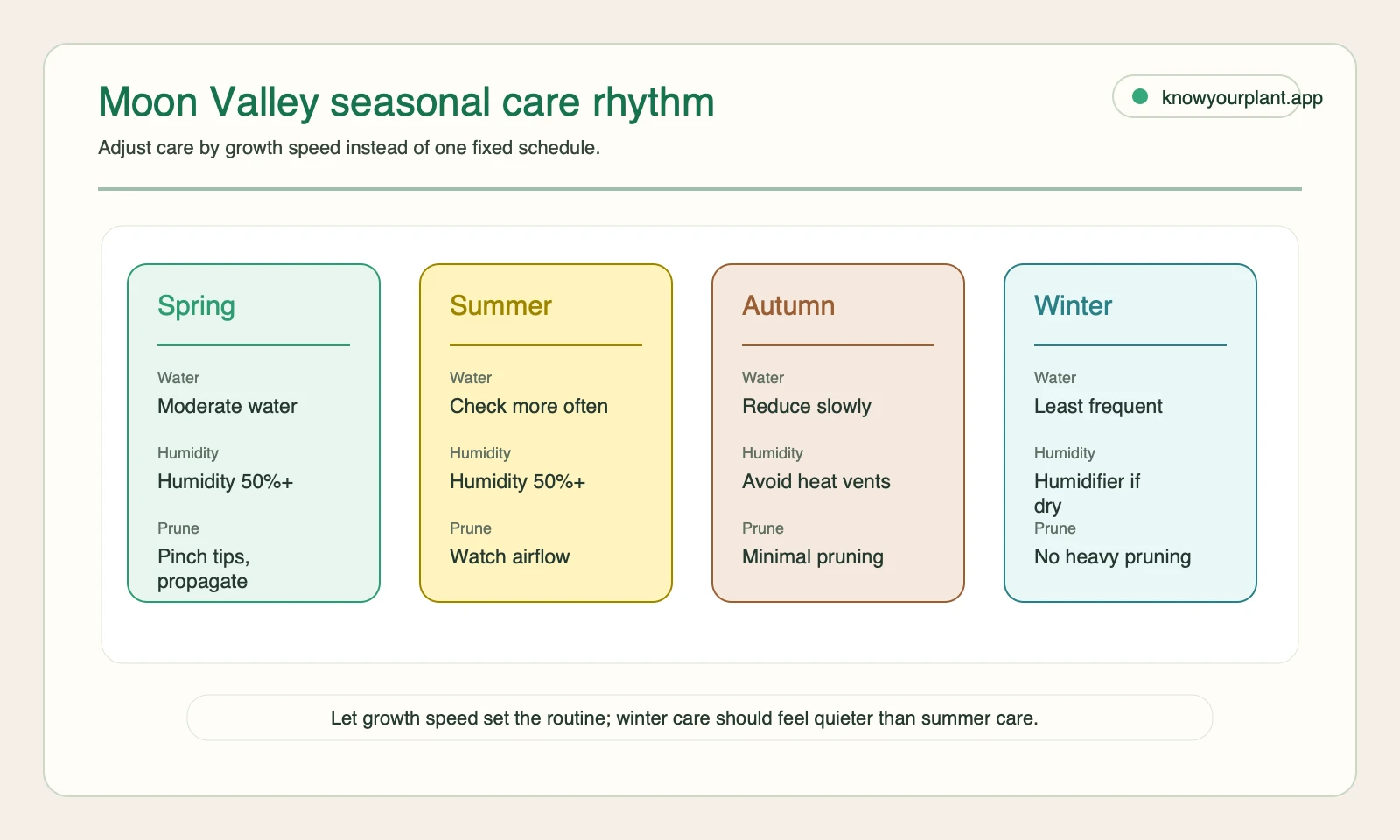
Let growth speed set the routine. Moon Valley pilea needs steadier water and pruning in active growth, then quieter winter care with humidity support.
Methodology. This article was refreshed against live research on 2026-06-19. The evidence base combines current search-result review for Moon Valley pilea queries, repeated owner-problem themes surfaced from current community threads, and direct horticultural guidance from Penn State Extension, Missouri Botanical Garden, NC State Extension, the Royal Horticultural Society, and ASPCA. Community examples are used as qualitative owner-language signals, while the care recommendations are grounded in the primary horticulture sources.
Freshness note. The care sections, symptom priorities, and naming-clarity guidance were rechecked on 2026-06-19 so this page still reflects current Moon Valley owner confusion, not just a generic older pilea care template.
Real User FAQ
Why are my Moon Valley pilea leaves drooping?
Drooping most often means the roots are either waterlogged or the plant has had a temperature shock. Before changing anything, check the root zone by probing the soil halfway down the pot. If it is still wet, hold off watering and confirm the pot drains well. If the soil is dry throughout, water thoroughly and move the plant somewhere warmer and away from drafts. Drooping from overwatering usually comes with softness at the base of the stems; drooping from drought does not.
Why are the leaf edges turning brown and crispy?
Crispy brown edges almost always point to humidity that is too low or watering that swings between very dry and very wet. Both produce similar-looking damage. First, check whether your home humidity is below 40 percent, which is common in winter with central heating running. Add a pebble tray or small humidifier near the plant. Second, check whether you are waiting until the soil is completely bone dry before watering. Moon Valley pilea can tolerate some dryness in the top layer, but if the whole pot dries out repeatedly, the leaf edges take the hit first.
What is the difference between Pilea mollis and Pilea involucrata?
For practical home care purposes, these names refer to the same cultivar group in retail settings. Penn State Extension identifies Moon Valley specifically as Pilea mollis ‘Moon Valley’ and notes that it is commonly labeled Pilea involucrata in commerce. The care requirements are the same either way. If you find conflicting advice under the two names, it is a labeling inconsistency in the sources, not a genuine care difference.
How often should I water Moon Valley pilea?
There is no fixed schedule that works reliably across homes, seasons, and pot types. Instead of counting days, check the soil: probe about halfway down the pot with a finger or chopstick. When the soil at that depth is approaching dry, water thoroughly. In a warm, bright summer spot, that might be every five to seven days. In a cooler, lower-light winter location, it might be every ten to fourteen days or longer. The plant’s conditions, not the calendar, should set the rhythm.
Why does my Moon Valley pilea keep getting black spots?
Black spots on Moon Valley pilea usually come from one of two sources: overwatering combined with poor airflow, which creates conditions for fungal spotting, or pest activity. If spots appear on lower, older leaves and the soil has been staying wet, improve drainage and airflow first. If spots appear on new growth or you see stippling, webbing, or tiny insects, inspect carefully for spider mites or thrips. Improving air circulation around the plant helps in both scenarios.
Can Moon Valley pilea grow in low light?
It will survive in low light but the leaves will change. Stems stretch, new growth comes in smaller and flatter, and the deeply textured character becomes less pronounced. The plant is not dying, but it is not thriving either. If you need to grow it in a lower-light spot, a full-spectrum grow light on a timer can bridge the gap without putting the plant near a drafty window.
Is Moon Valley pilea safe for cats and dogs?
Yes. The ASPCA lists friendship plant, the group that includes Moon Valley pilea, as non-toxic to cats, dogs, and horses. It is a practical choice if your animals tend to investigate or chew on houseplants.
When should I repot Moon Valley pilea?
Repot when roots start circling the bottom of the pot or emerging from the drainage holes. Penn State Extension recommends choosing a new pot about two inches wider than the current root ball, not dramatically larger. Oversizing the pot is a common mistake that keeps too much damp soil around the roots between waterings. Spring is the best time to repot, when the plant is entering its active growing season and can recover quickly.
Moon Valley pilea rewards attention to a few specific details: the right light to keep those leaves textured, drainage that works all the way down the pot rather than just at the surface, enough humidity without stagnant air, and light pinching through the growing season. Get those basics right and the deeply crinkled leaves stay vivid and compact rather than pale and stretched.
If you are troubleshooting a decline and not sure whether you are looking at a watering problem, a humidity problem, or a pest, the symptom-first section at the top of this guide is the fastest way to narrow it down. Start with the root zone before you change anything else.
Care guidance in this article draws on primary horticulture sources including Penn State Extension, Missouri Botanical Garden Plant Finder, NC State Extension Gardener, the Royal Horticultural Society, and ASPCA toxicity data. Common owner problem patterns were identified from plant care community discussions. Last reviewed June 2026.
For a related care deep dive, see the low-light indoor plants guide, the cat-safe indoor plants guide, the grow lights guide for indoor plants.