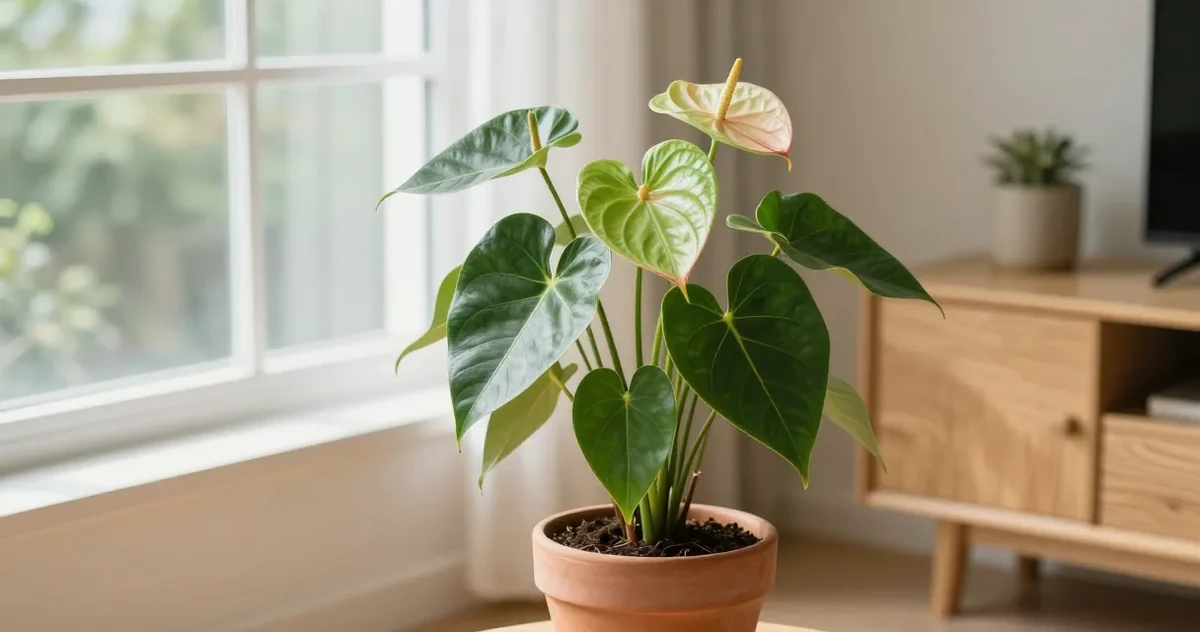
Most anthuriums arrive home blooming. The waxy red spathe looks almost too perfect to be real, and for the first few weeks everything seems fine. Then the bloom fades, nothing new follows it, and you start wondering what you did wrong.
Here is what most guides leave out: the same plant can fail to bloom for completely different reasons depending on which problem started first. Water more and the roots rot. Move it to brighter light and the soil – now compacted and hydrophobic after a few dry cycles – still does not deliver that water to the roots. Add fertilizer and the tips burn from salt buildup. Each fix makes sense in isolation. Applied in the wrong order, one problem compounds the next.
Given the right conditions, anthuriums bloom repeatedly, with individual flowers lasting around six weeks each according to UF/IFAS Gardening Solutions. That kind of continuous output requires fixing the right thing first – not just knowing the full list of requirements.
Updated June 21, 2026. This guide checks NC State Extension, UF/IFAS, UF/IFAS EDIS EP159, Missouri Botanical Garden, ASPCA, and Clemson HGIC for care and pet-safety claims.
Identification Snapshot
- Common names: Anthurium, flamingo flower, laceleaf, painter’s palette
- Species sold most often: Anthurium andraeanum and Anthurium scherzeranum hybrids – the compact indoor flowering types, not the rarer foliage species that need much higher humidity and different care
- What to look for: glossy heart-shaped leaves, a waxy colored spathe, and a finger-like spadix in the center
- Best indoor fit: bright filtered light, warm rooms, humidity above 50%
- First check to run before anything else: pour a small amount of water onto the soil and watch it for 30 seconds – does it absorb, or does it run straight down the gap between the dry peat block and the pot wall?
Not sure what plant you are caring for?
Open KnowYourPlant, snap a photo, and get the plant name plus care notes matched to the species in front of you.
Identify your plantWhat Most Care Guides Miss
The common misdiagnosis: treating each anthurium symptom as a separate, isolated problem. Brown tips get a humidity upgrade. No blooms get fertilizer. Yellow leaves trigger a watering change. But these problems rarely travel alone, and fixing them individually – without a check order – often means changing the wrong variable and waiting weeks to find out.
Why generic advice is incomplete: every care page confirms that bright indirect light, high humidity, and moist well-drained soil are the requirements. That is true. But the sequence in which these break down has a logic that generic advice leaves out. Light affects how fast soil dries, which affects whether roots rot or dehydrate. Soil texture determines whether water actually reaches roots at all. Humidity determines whether bloom spikes can develop before aborting. These interact. Fixing one without checking the others can make the overall situation worse.
The practical first check – do this now: pour a small amount of water onto the soil surface and watch for 30 seconds. Does it absorb evenly across the root zone, or does it pool at the edges and run straight down the gap between the dry peat block and the pot wall? If it channels through without absorbing, the nursery mix has gone hydrophobic. No amount of watering, light adjustment, or fertilizer will help until the root zone can actually take up moisture. Fix soil absorption first. Everything else is secondary.
The Diagnosis Order
Generic guides give you the full list of anthurium requirements. This is the order to check those requirements when something goes wrong – because each variable you fix changes the behavior of the next one.
1. Can water actually reach the roots? Pour water on the soil and watch it. If it channels around the dry peat block rather than soaking in, the mix is hydrophobic. Set the pot in a basin of water for 20–30 minutes to rehydrate from the bottom. Resolve this before adjusting anything else – you cannot accurately diagnose light, humidity, or fertilizer problems if the roots are not receiving water in the first place.
2. Is the light genuinely bright – not just “bright enough to survive”? NC State Extension’s plant database entry for Anthurium directly links low light to reduced blooming. Bright indirect light means a spot where you would comfortably read a book by the window without turning on a lamp. If the plant is more than a few feet from a window, move it before changing watering, humidity, or fertilizer.
3. Is humidity actually low – confirmed, not assumed? NC State Extension identifies brown leaf tips as a direct humidity-deficiency symptom in anthuriums. But most heated homes already run between 30–40% humidity, so the question is whether yours is below that threshold for this plant. An inexpensive hygrometer takes the guesswork out. If you are already above 50%, the brown tips are coming from something else.
4. Is tap water mineral content the culprit? UF/IFAS notes that some anthuriums are sensitive to fluoride and mineral content in tap water. If humidity checks out but tips keep browning, switch to filtered or overnight-rested tap water for four to six weeks before concluding humidity is the issue.
5. Is fertilizer salt buildup masking as another problem? Salt buildup from overfeeding causes brown tips that look identical to humidity damage – and it also slows root uptake, which looks like underwatering. If there is a white crust on the soil surface, flush with plain water before the next feed. Skip feeding entirely in autumn and winter.
Run through that order before changing multiple things at once. Most anthurium problems trace back to steps one or two.
Lookalikes and Common Confusion
| Plant | Why people mix them up | Fast way to tell them apart |
|---|---|---|
| Anthurium | Glossy tropical leaves and colorful “flowers” sold as gift plants | The showy part is a waxy spathe with a central spadix, not a true petal cluster |
| Peace lily | Similar upright houseplant shape and indoor-care reputation | Peace lilies bloom white and droop dramatically when thirsty; anthuriums hold a stiffer waxy spathe |
| Heartleaf philodendron | Heart-shaped leaves and a tropical look | Philodendrons do not produce the waxy red, pink, or white spathe-and-spadix bloom |
A note on Anthurium species: the common indoor flowering anthurium – sold as flamingo lily or painter’s palette, identified in Missouri Botanical Garden’s plant database as Anthurium andraeanum – tolerates standard indoor humidity better than rarer foliage-focused species like Anthurium crystallinum or Anthurium clarinervium. Some online Anthurium care content is written for those higher-demand collector species. Check which type you have before copying care advice, because the humidity and substrate requirements are genuinely different.
Choosing the Right Spot
Before adjusting anything else, check whether the spot itself is set up for success. Bloom potential and watering forgiveness change significantly by window placement.
| Placement | Bloom Potential | Scorch Risk | Watering Forgiveness |
|---|---|---|---|
| East-facing windowsill | High | Low | High |
| South window with sheer curtain | High | Low-medium | Medium – check more in summer |
| West window, 3–4 feet back | Medium-high | Low | Medium |
| Bright north window (summer) | Medium | Very low | Lower – dries slowly, watch for rot |
| Dim corner away from windows | Low | None | Poor – soil stays wet too long |
East-facing is the most forgiving starting point. Morning light is bright without the afternoon intensity that scorches leaves through unfiltered south or west windows. If you are using a grow light to supplement a dim room, the guide to grow lights for indoor plants covers spectrum and distance for tropicals like anthuriums.
Save this plant plan before you forget the details.
Keep the plant, diagnosis notes, reminders, and care changes in KnowYourPlant so the next decision is based on your actual plant history.
Open KnowYourPlantFast Care Cards
| Need | Best target indoors | First warning sign when it is off |
|---|---|---|
| Light | Bright indirect light near an east window or filtered south exposure | Fewer blooms, greenish spathes, slow growth |
| Water | Let the top inch or two dry, then water thoroughly | Limp leaves with bone-dry peat, or yellowing in persistently wet soil |
| Humidity | 50% or above – verify with a hygrometer | Brown tips, stalled new growth, blooms that do not hold |
| Soil | Loose mix that rewets easily and drains fast | Water channels around the pot edge without wetting the root zone |
| Temperature | Warm room above 13°C (55°F), away from drafts and cold glass | Yellowing after cold nights, dull growth |
Light: Why Survival and Blooming Are Different States
An anthurium in a dim corner holds its leaves, loses older growth slowly, and might produce one spathe every eight to twelve months. The same plant near a bright east window can bloom several times a year. NC State Extension connects this directly: low light reduces anthurium blooming – and the same light deficit changes how the plant processes moisture. A watering schedule that works in summer can cause overwatering problems when the plant moves to a darker winter spot, because a plant using less light also uses less water.
“Bright indirect light” means a spot where you would comfortably read a book without turning on a lamp – genuinely bright, but no direct beam hitting the leaves. Direct afternoon sun scorches spathes and leaves within days. The failure mode most owners encounter is not scorching. It is the dim middle ground where the plant survives but does not bloom.
If the plant has not bloomed in several months and the leaves look healthy, move it closer to a window before changing anything else. Four to six weeks is a fair test. That single adjustment resolves most bloom failure cases.
Watering: The Rehydration Problem Nobody Talks About
Water when the top inch or two of soil feels dry – press a finger in to the first knuckle. If it comes out with soil on it, wait another day or two. If it comes out clean, water thoroughly until it drains from the bottom.
Here is what most guides skip: the dense, peat-heavy mix that anthuriums come in from nurseries can dry into a nearly hydrophobic block after a few complete dry-down cycles. UF/IFAS EDIS publication EP159, which covers cultural guidelines for interiorscape anthurium production, identifies substrate management as a key factor in plant health – and the same dynamic plays out in home pots. When peat dries hard, water runs straight through the gap between the soil block and the pot wall without actually wetting the root zone. The plant appears watered; the roots are still dry. This drives a “water more” loop that never resolves because the problem is not how much water you are using – it is that the root zone cannot absorb it.
If you suspect hydrophobic soil:
- Set the pot in a basin of room-temperature water for 20 to 30 minutes
- Let moisture absorb from the bottom until the surface feels damp
- Drain fully, then check whether the soil now holds moisture evenly across the pot
This is especially common in the first few months after buying a garden center plant, when the nursery peat has dried hard for the first time. Once the soil rewets evenly, normal top-watering works fine again.
If the plant shows droopy leaves and the soil has been wet for more than a week, root rot may have started. The overwatered plant signs and fixes guide covers how to check the root zone and what to do next.
Humidity and Temperature
Anthuriums are happiest when humidity stays above 50%. Most homes run between 30–40%, especially in winter when heating systems pull moisture from the air. NC State Extension’s Anthurium plant entry directly identifies brown leaf tips as a humidity-deficiency symptom, and also recommends rainwater or purified water – some anthuriums are sensitive to fluoride and mineral content in tap water, which can worsen tip browning even when humidity is adequate.
Check humidity with an inexpensive hygrometer before adding a humidifier. If you are already above 50% and tips are still browning, mineral content in tap water or fertilizer salt buildup is the more likely cause – not humidity.
What actually helps when humidity is genuinely low:
- A pebble tray with water under the pot (keep the pot above the waterline, not sitting in it)
- Grouping tropical plants together to share ambient humidity
- A small humidifier nearby if the room consistently runs dry
Keep the plant away from heating vents and cold drafts. Anything below 13°C (55°F) is stressful, and a cold windowsill in winter can cause yellowing that looks like a watering problem but will not resolve until the cold source is removed.
Source note: NC State Extension’s Anthurium plant entry links fewer blooms to low light and brown tips to dry air, and recommends soil-moisture checks over calendar-based watering. UF/IFAS Gardening Solutions supports consistent light, warmth, and humidity as the conditions for repeat blooming. UF/IFAS EDIS EP159 adds substrate management – including moisture-retentive but well-drained media – as a key interiorscape variable. Put those together and the indoor rule is: fix soil absorption first, then light, then humidity. Each affects how accurately you can diagnose the others.
Seasonal Care Note
In spring and summer, anthuriums dry faster, push more leaves, and have a better chance of setting repeat blooms. In winter, the same plant often sits in weaker light, colder window zones, and drier indoor air at the same time. That combination is why winter yellowing and brown tips are so often misread as a simple watering issue. Before changing fertilizer or repotting in winter, check whether the season changed faster than your care routine did.
Soil: Why the Nursery Mix Works Against You Over Time
Standard potting mix holds too much moisture for anthuriums as it ages. It compacts, slows drainage, and is the main reason the hydrophobic soil problem develops after the first few dry-down cycles.
| Soil Mix | Drainage | Rewetting After Drying | Beginner Forgiveness |
|---|---|---|---|
| Dense nursery peat | Poor | Hard – becomes hydrophobic | Low – root rot risk increases quickly |
| Standard potting mix | Medium | Moderate | Medium |
| 2:1 potting mix + orchid bark or perlite | Good | Easy | High – more forgiving of missed waterings |
Two parts potting mix to one part orchid bark or perlite drains faster, holds less standing moisture, and rehydrates far more reliably after drying out. If you are repotting anyway, switching to the chunkier blend from the start sidesteps most soil-related watering confusion entirely.
Repotting
Repot every two to three years, or when roots are circling the bottom of the pot or emerging through drainage holes. Move up one pot size only – too much extra soil holds excess moisture and raises root rot risk. If you are unsure about timing, the repotting guide covers the key signs to look for before and after the move.
Feeding
During the growing season (spring through early autumn), half-strength balanced liquid fertilizer once a month is enough. Anthuriums are light feeders. Overfeeding causes salt buildup in the soil, which produces brown leaf tips that look identical to humidity damage – another reason to run through the Diagnosis Order before assuming any single cause. If there is a white mineral crust on the soil surface, flush with plain water before the next feed. The plant fertilizer guide explains how to avoid the salt-buildup cycle for tropical houseplants.
Skip feeding in autumn and winter when growth slows.
Bloom Recovery Checklist
If the leaves look healthy but new spathes are not forming, work through this table before increasing fertilizer. It separates the common indoor bottlenecks that all produce the same “no blooms” symptom.
| Factor | Pass signal | Problem signal | Next adjustment |
|---|---|---|---|
| Soil absorption | Water absorbs evenly across the root zone | Water channels around the pot edge, pot feels light | Rehydrate the root ball in a basin for 20–30 minutes |
| Light | Plant sits close to a bright window with filtered light for most of the day | Healthy leaves but plant is dim or far from glass | Move it closer to an east window and check again in four to six weeks |
| Root zone | Roots are firm and the mix rewets evenly | Mushy or dark roots, sour smell, soil stays wet for more than a week | Repot into a looser mix, trim any damaged roots |
| Plant maturity | Established plant with steady active leaf growth | Small, newly purchased, or recently stressed plant | Focus on stable care and leaf growth first; blooms follow |
| Feeding timing | Half-strength balanced feed during spring and summer only | No feeding during active growth, or heavy feeding with visible salt crust | Resume light monthly feeding in growth season; flush first if salts have built up |
| Humidity and temperature | Warm room, no cold drafts, humidity consistently above 50% | Dry heated air, cold glass, or a drafty corner | Stabilize warmth and humidity so developing bloom spikes are not aborted |
Pet Safety
Anthuriums contain insoluble calcium oxalates and are toxic to dogs, cats, and horses. The ASPCA lists flamingo flower (Anthurium scherzeranum) with clinical signs including oral irritation, drooling, vomiting, and difficulty swallowing. Clemson HGIC confirms anthuriums among the houseplants that irritate pets’ mouths, throats, and digestive systems – a useful secondary confirmation for anyone whose pet has chewed a leaf and is deciding whether to call a vet.
Keep the plant on a high shelf or in a room your pets cannot access. If you need something equally tropical-looking that is safe to share space with animals, the cat-safe indoor plants guide and dog-friendly houseplants list have good alternatives.
Common Problems
Plant ID + Plant Doctor
Not sure what your plant needs?
Snap a photo in KnowYourPlant to identify the plant, check yellow leaves, spots, wilting, or pests, and get a calm next step before the problem spreads.
Brown leaf tips: Check humidity first – NC State Extension directly links tip browning to insufficient humidity in anthuriums. Use a hygrometer to confirm; if you are already above 50%, switch to filtered or overnight-rested tap water for a month before concluding humidity is the issue. If you have been fertilizing regularly, flush the soil with plain water before the next feed to clear salt accumulation.
Yellow leaves: A few older lower leaves yellowing is completely normal – every plant cycles out its oldest growth. If yellowing is spreading to newer leaves closer to the crown, check whether the soil has stayed wet for more than a week, whether a cold draft is nearby, or whether the plant was recently moved. The yellow leaves troubleshooting guide walks through how to separate normal cycling from actual stress across tropical houseplants.
No blooms: Light first, always. Both NC State Extension and UF/IFAS confirm that low light directly reduces anthurium blooming – and the plant can look perfectly healthy in dim conditions while producing almost no spathes. Move it to a brighter spot and give it four to six weeks. If light looks adequate, run through the Bloom Recovery Checklist.
Limp, drooping leaves with a light pot: Do not water from the top – it will run straight through compacted hydrophobic soil without helping the roots. Soak the pot in a water basin for 20 to 30 minutes, drain it fully, and give the plant a day or two to recover. Most come back quickly once the roots receive actual moisture.
Green spathes instead of red: Newly purchased anthuriums sometimes produce greenish blooms before full pigmentation develops. On established plants, consistently pale spathes across multiple bloom cycles usually mean light is not bright enough – spathe colour intensifies under stronger filtered light.
Brown or black spots spreading across leaves: Isolate the plant first, then check: look at leaf undersides for pest activity, tap foliage over white paper to check for spider mites, inspect the root zone for rot, and consider whether leaves have been staying wet without adequate airflow. Spots after consistent misting without airflow often indicate fungal damage. Spots that emerge after overwatering may indicate root rot spreading upward. Do not treat until you have narrowed the cause.
Before You Change Anything: Quick Diagnosis Check
When something looks wrong, run through these five points before adjusting care. Most anthurium problems trace back to one or two of them.
- Soil absorption: Pour a small amount of water onto the surface and watch it. If it channels around the edges rather than absorbing, rehydrate from the bottom in a basin before adjusting anything else.
- Light: Is the plant within a few feet of a bright window? If not, move it before changing watering, humidity, or feeding.
- Soil moisture: Press a finger in to the first knuckle. Wet for more than a week – wait and check drainage. Bone dry but water is not absorbing – soak the pot.
- Humidity: Use a hygrometer to confirm, not estimate. If you are above 50%, look elsewhere for the cause of brown tips.
- Root zone: If leaves are drooping despite the soil looking fine on the surface, check for root rot or a pot much larger than the root ball – both keep soil wetter than it appears.
Change one thing at a time. If you adjust all five at once, you will not know what actually helped.
Anthurium Diagnosis Tree
- Only one or two oldest leaves are yellowing? Start with normal aging. Keep care stable and remove leaves when spent.
- Newer leaves are yellow and the soil stays wet for a week or more? Check drainage, root health, and pot size before watering again.
- Brown tips keep returning? Confirm humidity with a hygrometer first, then test filtered water, then check for fertilizer salt buildup.
- Healthy leaves but no blooms for months? Move the plant into brighter indirect light and give it four to six weeks before changing anything else.
- Leaves are limp but the pot feels light and water runs straight through? Rehydrate the root ball from the bottom – compacted nursery peat has gone hydrophobic.
- Spots spreading across multiple leaves? Isolate the plant, inspect leaf undersides for pests, check root condition, and avoid leaf-wetting until the cause is clear.
Where Anthurium Owners Get Stuck
Anthurium discussions in plant communities loop around the same handful of problems. Owners mistake normal lower-leaf turnover for a disease and start changing multiple care variables at once. Others chase brown spots with random treatments without narrowing the cause – wet roots, pests, mineral buildup, and misting without airflow all produce spots that look similar but need different responses. The most repeated frustration is a healthy-looking plant that refuses to bloom for months after purchase. Replies that actually help point back to light levels, root health, post-purchase acclimation, and humidity stability – not a single fertilizer trick.
The pattern worth noting: anthurium problems almost always involve one or two root causes masked by symptoms that look like something else. The Diagnosis Order and Diagnosis Tree in this guide are both designed to stop you from changing three things at once and never knowing which one mattered.
Want a care schedule you do not have to remember?
KnowYourPlant sends watering, feeding, repotting, and seasonal reminders based on the plants you actually own.
Get care remindersReal User FAQ
How often should I water an anthurium indoors? There is no fixed schedule that works for every home. Check the soil: when the top inch or two feels dry to your finger, water thoroughly until it drains from the bottom. In most growing-season conditions that is roughly once a week, but in a dim room or during winter it can stretch to every ten to fourteen days. The room and season matter more than the calendar – and if water is not absorbing evenly, fix the soil before worrying about frequency.
Why isn’t my anthurium blooming? Light is the most common reason. NC State Extension and UF/IFAS both confirm that anthuriums produce fewer blooms in low-light conditions even when the rest of care looks fine. Move the plant to a brighter spot and give it four to six weeks before expecting a change. If light looks adequate, run through the Bloom Recovery Checklist – root health, humidity stability, plant maturity, and feeding timing all affect whether a bloom spike can form and mature.
Why are my anthurium leaves turning yellow? Check which leaves first. A few older lower leaves going yellow is normal shedding. If newer leaves near the crown are affected, look at the root zone: soil that has stayed wet for more than a week points to overwatering or drainage problems. A cold draft or a sudden move can also trigger yellowing that will not resolve until the environmental trigger is removed.
What causes brown tips on anthurium leaves? Usually one of three things: low humidity, tap water sensitivity, or salt buildup from fertilizer. Low humidity is the most common culprit in heated homes – confirm with a hygrometer before adding a humidifier. If humidity is already adequate, switch to filtered or overnight-rested tap water. If you have been feeding regularly, flush the soil with plain water before the next fertilizer application to clear any salt accumulation.
Is anthurium safe for cats and dogs? No. The ASPCA lists flamingo flower as toxic to cats, dogs, and horses due to insoluble calcium oxalates, with clinical signs including oral irritation, drooling, vomiting, and difficulty swallowing. Clemson HGIC confirms anthuriums among houseplants that irritate pets’ mouths, throats, and digestive systems. Keep the plant on a high shelf or in a room pets cannot access. The cat-safe plants guide and dog-friendly houseplants list have equally striking non-toxic alternatives.
What soil mix does an anthurium need? Anthuriums do better in a looser, chunkier mix than standard potting soil. Two parts potting mix to one part orchid bark or perlite drains faster, holds less standing moisture, and rehydrates far more reliably after drying out. Dense nursery peat-based mixes compact over time and are the main reason the hydrophobic soil problem develops – and once a mix goes hydrophobic, watering from the top does not help until you rehydrate it from the bottom.
How do I get my anthurium to produce more blooms? Start with the Diagnosis Order above – soil absorption, then light, then humidity. Once those three are working together, half-strength balanced fertilizer once a month during spring and summer supports bloom development. Stop feeding in autumn and winter. If the plant has been in the same pot for more than two to three years, a repot into a slightly larger container with fresh mix can restart a slow period by giving roots room and improving moisture uptake.
Anthuriums are more rewarding than their care reputation suggests. The flamingo flower is not asking for perfection – it wants light, soil that actually absorbs water, and enough humidity to feel at home. Fix those three things in the right order, and the waxy blooms keep coming back.
Methodology: How This Guide Was Put Together
This guide was built against NC State Extension’s Anthurium plant database entry, UF/IFAS Gardening Solutions, UF/IFAS EDIS EP159 (Cultural Guidelines for Commercial Production of Interiorscape Anthurium), Missouri Botanical Garden Plant Finder entry for Anthurium andraeanum, ASPCA Poison Control plant listings, and Clemson HGIC houseplant toxicity guidance. Care and pet-safety claims are grounded in those sources. Community patterns around yellow leaves, bloom failure, and brown tips are used as qualitative triage signals that reflect recurring owner confusion – they are not statistical proof, and individual plant problems require checking light, soil, roots, and pests together before treating any one symptom in isolation.
Download KnowYourPlant for personalized care reminders, yellow leaf diagnosis, and step-by-step guidance when something looks off: available on the App Store.