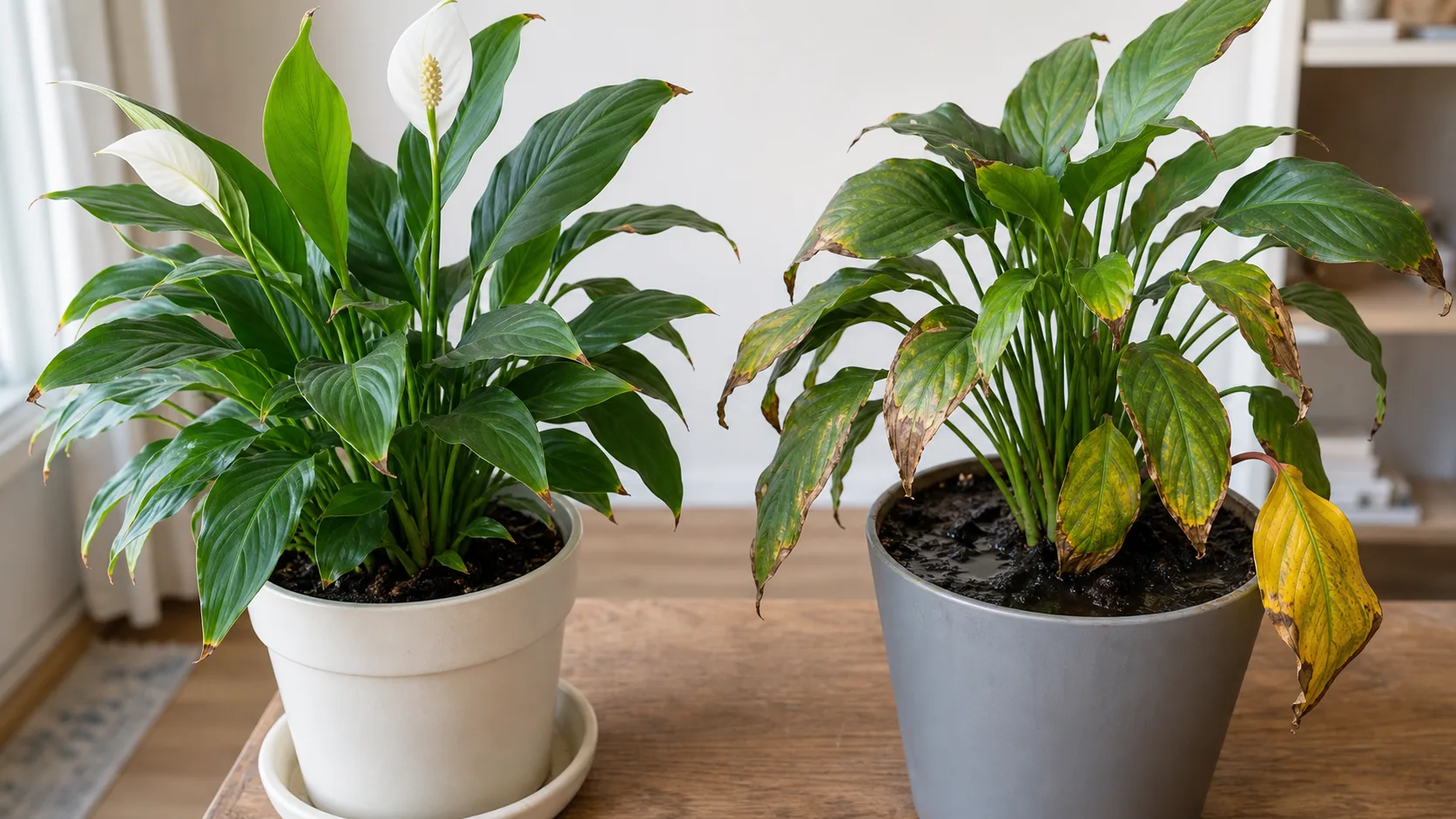
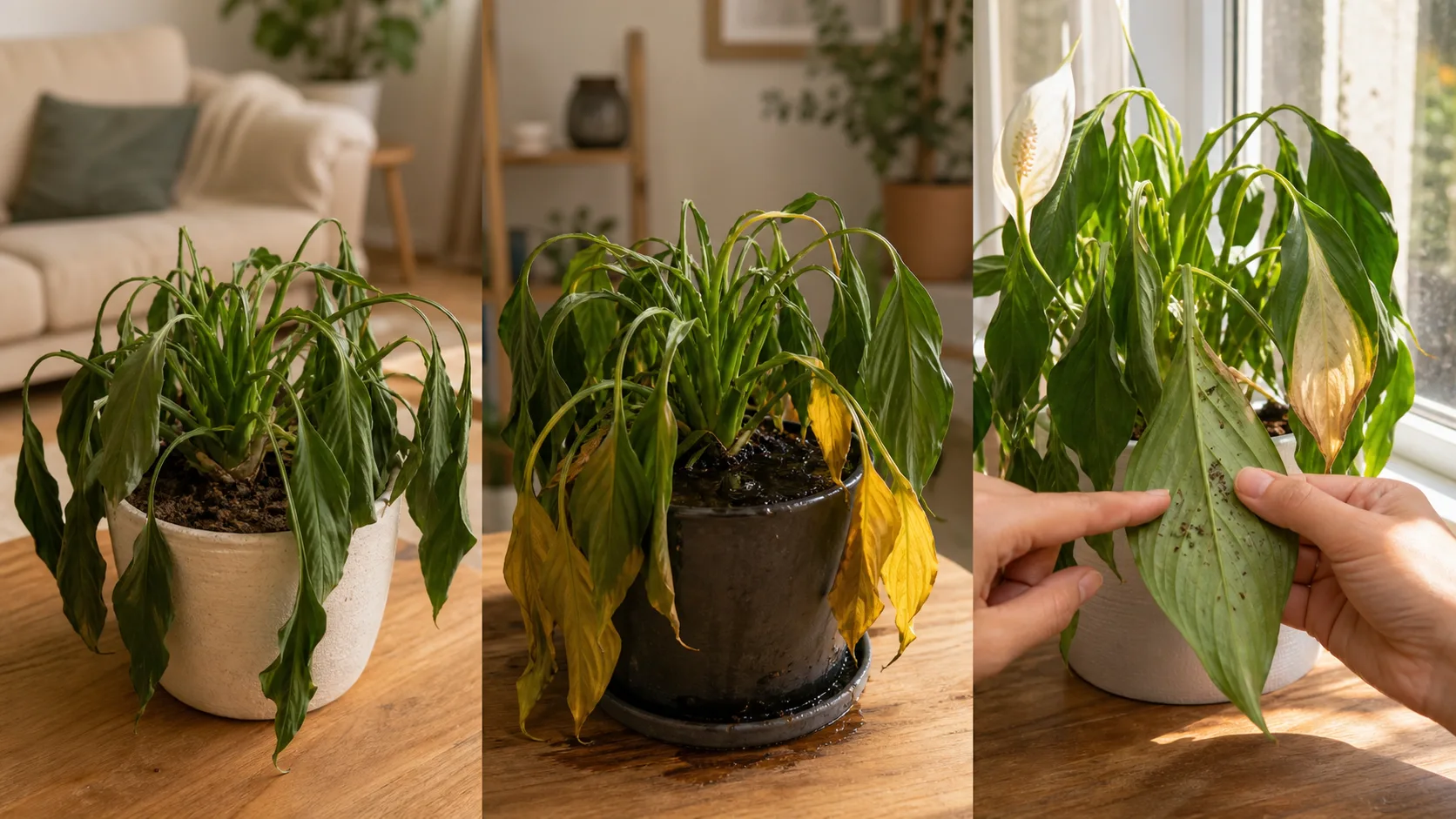
Peace Lily Drooping: Thirst, Root Stress, or Shock? Do not water yet. In under ten minutes, you can separate dry-soil thirst from wet-root stress and choose one safe next step without guessing.
Use the Four-S Check: Soil, Setup, Shift, Signs. Soil decides water or wait. Setup finds trapped water. Shift connects the droop to a recent change. Signs tell you when simple monitoring is no longer enough.
What the check finds Safe action Stop waiting when Skewer reaches the middle of the pot and comes out dry; pot feels light Water: soak evenly, drain, and empty runoff No lift begins within several hours; reassess by the next day Skewer comes out damp or muddy; pot feels heavy Wait and drain: do not water; recheck in 48 hours Yellowing spreads, soil smells sour, the base softens, or decline speeds up Droop follows a move, repot, strong sun, cold window, or vent Stabilize: keep one suitable location while you monitor Damage spreads beyond the leaves exposed to the change Webbing, sticky residue, insects, or a soft base Act: isolate a pest case or inspect roots Wet soil and rapid decline occur together; inspect the same day If you inherited the plant or are unsure it is a peace lily, identify it first. A correct identity gives you a baseline for light, moisture, and expected leaf form before you diagnose the droop.
...