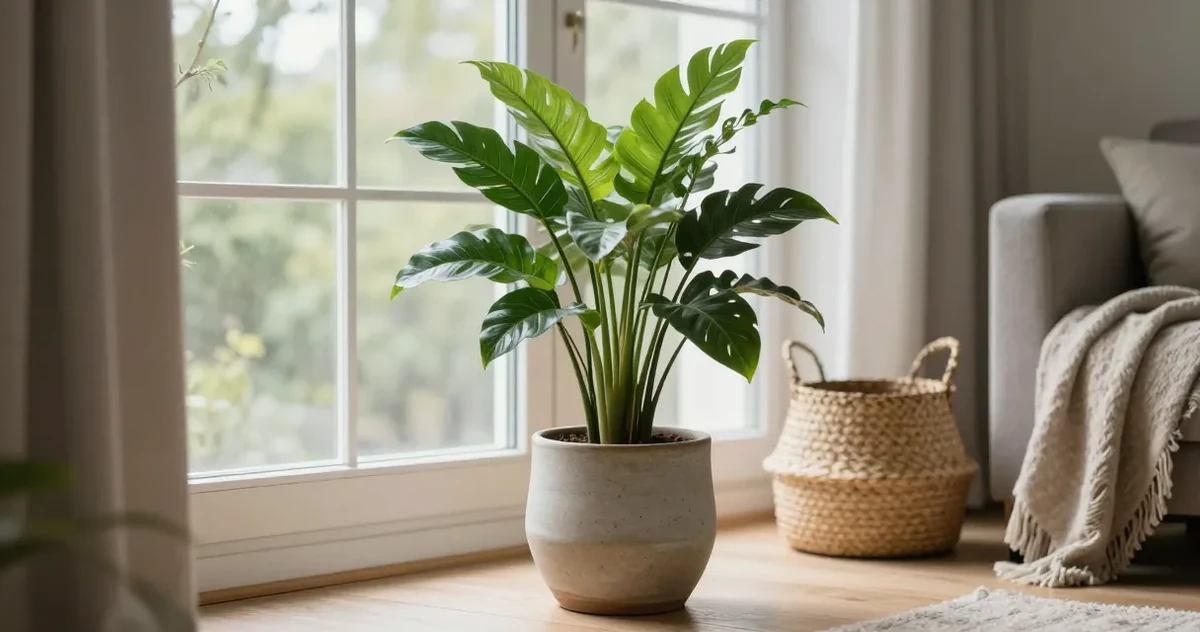
Plant Fertilizer Guide: What to Feed Your Houseplants and When
You’ve been watering your plant faithfully for months, but something’s off. The new leaves are smaller than the old ones. The colour is a little washed out. It’s alive, but it isn’t thriving.
Before you change everything about how you water it, there’s a simpler question worth asking: when did you last feed it?
Plant fertilizer delivers the nutrients your plant can’t pull from water alone: nitrogen to build leaves, phosphorus for roots and flowers, and potassium to run basically everything else. In a pot, those nutrients get used up over time. Fertilizer puts them back.
The catch is that most houseplant problems aren’t caused by too little fertilizer. They’re caused by too much, or the wrong kind, or feeding at the wrong time. This guide covers how to get it right without overdoing it.
What NPK Actually Means
Every bag or bottle of fertilizer lists three numbers, something like 10-10-10, or 5-1-3, or 20-20-20. These are the NPK ratio: the percentage of nitrogen (N), phosphorus (P), and potassium (K), in that order.
Here’s the plain-language version:
Nitrogen (N) is mostly about leaves. High-nitrogen fertilizers are for plants you want growing big and lush. Foliage plants like Monsteras, Pothos, and Philodendrons do well with a higher N ratio during growing season.
Phosphorus (P) is mostly about roots and flowering. If you’re trying to get an orchid to rebloom, or encouraging a Peace Lily to flower again, more phosphorus helps. For most foliage houseplants, the middle number matters less day-to-day.
Potassium (K) supports overall plant health: disease resistance, water uptake, and how the plant processes everything else it takes in. A balanced potassium level keeps most plants steady even when nothing dramatic is happening.
A balanced fertilizer (equal or close-to-equal numbers) works well for most houseplants. You don’t need to optimize too hard unless you’re growing something specific.
One note for variegated plants: because they have less green, chlorophyll-producing tissue than their all-green relatives, they grow more slowly and need proportionally less nitrogen. If you have a Monstera Thai Constellation or similar variegated variety, feed it at half the standard rate and see how it responds before increasing.
The Three Main Forms
Liquid fertilizers
Liquid fertilizers are mixed into water and applied at watering time. They work quickly and give you good control over how much your plant receives. They’re also the easiest to adjust, and starting at half the recommended strength is standard advice.
The main thing to remember: liquid fertilizers should only be applied during the growing season (spring and summer). Applying them when a plant is dormant in winter is like offering a big meal to someone who’s already asleep. It doesn’t help, and it can hurt.
Granular fertilizers
Granular fertilizers are scratched into the surface of the soil or mixed in during repotting. They release nutrients slowly as they’re watered in, so you apply them less often and don’t have to think about it at every watering.
This is a good option if you have a lot of plants and want to reduce the number of steps in your routine.
Slow-release pellets
Slow-release fertilizers, often small pellets or spikes, break down over months. Push them into the soil and forget about them for a while. They’re reliable for outdoor container plants and for people who’d otherwise forget to fertilize at all.
For indoor plants in winter, skip slow-release fertilizers or remove them. You don’t want nutrients sitting in the soil feeding a plant that’s barely growing.
When to Feed (and When to Stop)
The growing season runs roughly from spring through late summer. That’s when your plants are actively building new growth and actually using what you give them. During this window, most houseplants benefit from feeding every two to four weeks with a liquid fertilizer.
From late autumn through winter, stop. Most houseplants slow way down, or go dormant entirely, when light levels drop. Fertilizing during this period causes salt to build up in the soil without anything to absorb it, and that can burn roots. NC State University Extension recommends stopping fertilizer applications from late October through February for most container-grown houseplants.
One thing worth knowing before you start: fresh potting mix already contains nutrients. Most commercial mixes provide enough to carry a plant for roughly two to three months after repotting before supplemental feeding becomes necessary. NC State Extension notes that nitrogen is the nutrient most quickly depleted from container growing media, which is why pale, slow growth is typically the first signal that it’s time to begin a feeding routine.
If you’re not sure whether your plant is actively growing, look at it. Is it putting out new leaves? That’s the signal. Nothing happening? Hold off and check again in a few weeks.
Light also plays a role that’s easy to miss. A plant without enough light won’t be growing vigorously regardless of how much you feed it, and a plant that isn’t growing doesn’t need much fertilizer. If you’ve recently moved a plant closer to a window or added a grow light to your setup, you may notice it picks up speed, and that’s a good moment to start feeding regularly.
Seasonal Fertilizer Calendar
Most fertilizer guides tell you to feed in spring and summer and stop in winter. That part’s right, but the transitions matter more than the peaks. Here’s what to actually do each season.
Spring (March-May) Growth is resuming, but roots are waking up slowly. Start at half the recommended strength for the first two applications. The signal to begin isn’t the date on the calendar: it’s new leaves pushing out. By late April or May, most houseplants can handle full-strength feeding on a two-to-three-week schedule. Remove any slow-release pellets left over from last year and start fresh.
Summer (June-August) Peak growing season for most houseplants. Full-strength feeding every two to three weeks suits foliage plants well. Mid-summer is a good time to flush the soil with plain water once, to clear any salt that’s been building up quietly. One thing to watch: if your plant is sitting in intense direct sun during a heat wave, it may be stressed rather than actively growing. Hold off on feeding until it settles.
Autumn (September-November) Start tapering from September. Give one or two more feeds in September, then let October be the last. Growth slows naturally as light levels drop, and your plant doesn’t need the same input it did in July. If you have slow-release pellets in the soil, remove them now. Letting them break down through winter feeds a plant that has no use for it.
Winter (December-February) Plain water only. If you notice a white crust forming on the soil surface, flush the pot once with plain water and let it drain fully, then leave it alone until spring. This is also a useful time to assess light: a dim winter spot is the most common reason plants look flat coming into spring, not a lack of nutrients.
Signs of Underfeeding vs. Overfeeding
These look different, and it’s worth knowing which one you’re dealing with before you act.
Too little fertilizer: Slow growth, pale or yellowing leaves (especially older, lower ones), new leaves that are noticeably smaller than the old ones. The plant looks tired but otherwise stable.
Too much fertilizer: Brown leaf tips and edges, a white crust forming on the surface of the soil, wilting even when the soil is moist. In worse cases, root burn, where roots can’t take up water properly because the soil is too salt-heavy. This is harder to fix than underfeeding.
The University of Missouri Extension lists salt accumulation from excess fertilizer as one of the most preventable causes of root damage in container-grown houseplants. A simple habit helps even when you haven’t overfed: flush the soil with plain water every few months. Run water through until it flows freely from the drainage hole, then let it drain completely. It takes two minutes and keeps things from building up quietly over time.
If you think you’ve already overfed, do the same flush, then let the plant rest for a few weeks before feeding again. Most recover well if you catch it early.
Why Isn’t My Plant Responding to Fertilizer?
You’re feeding on schedule, but the plant still looks flat. Before adding more, work through this.
1. Is the light adequate? Fertilizer supports growth. It doesn’t create it from nothing. A plant in a dim corner can’t use what you’re giving it, and the nutrients have nowhere to go. Move the plant closer to a light source, or look into adding a grow light, before increasing the feeding schedule. More fertilizer in low light just means more salt in the soil.
2. Is the watering right? Roots damaged by overwatering can’t take up nutrients properly, even when they’re available. If the soil stays wet for more than a week between waterings, or if the pot has no drainage, fix the watering first. Fertilizer won’t help a plant that’s struggling to breathe.
3. Are you feeding at the right time? A plant in its winter slow-down, or one that’s just been moved to a new spot and is still adjusting, isn’t actively growing. Feeding it now doesn’t accelerate anything. Wait for clear signs of new growth before starting or resuming a feeding routine.
4. Is there existing salt buildup? If the soil has a crusty white layer on the surface, or the plant has persistent brown leaf tips, there may already be too much salt from previous feeding. Flush the pot thoroughly with plain water, wait three to four weeks, and then start fresh with half-strength fertilizer.
5. Is this just the plant’s pace? Some plants are simply slow. A snake plant that pushes one new leaf every few months is doing exactly what a snake plant does. A cast-iron plant won’t sprint with more nutrients. If conditions are good and growth is gradual rather than absent, that may just be the plant’s rhythm.
Which Fertilizer for Which Plant
Most houseplants don’t need anything fancy. A balanced, water-soluble fertilizer handles the majority of cases. Here’s where to adjust:
Foliage plants (Monstera, Pothos, Philodendron): A slightly higher nitrogen ratio during growing season encourages the big, lush leaves you’re after. Feed every two to three weeks in spring and summer, then stop.
Flowering plants (Peace Lily, Orchid, African Violet): A bloom-booster fertilizer, with a higher middle number meaning more phosphorus, helps before and during flowering. If your Peace Lily hasn’t flowered in a while, switching to a bloom formula in early spring is one of the first things worth trying. Orchids do well with a diluted orchid-specific fertilizer rather than a general one.
Succulents and cacti: These need far less than you’d think. Once or twice in spring and summer is plenty. Use a fertilizer formulated for succulents, or dilute a general fertilizer to about a quarter of the recommended strength. According to the University of Arizona Cooperative Extension, over-fertilizing succulents is more common than under-fertilizing them, and causes the same soft, leggy growth that too much water does.
Newly repotted plants: Wait at least four to six weeks before fertilizing. Fresh potting mix already contains nutrients, and new roots are sensitive. Let the plant settle in first.
Homemade Fertilizer: What Actually Works
A few household materials do genuinely help, though none replace a proper fertilizer:
Used coffee grounds can be worked into the soil of acid-loving plants, including ferns, gardenias, and African violets, in small amounts. They add a little nitrogen and can slightly lower soil pH. A thin layer scratched in occasionally works fine. A thick layer packed on top doesn’t.
Banana peel water (peels steeped in water overnight) delivers a small amount of potassium and is harmless to most plants. Not a replacement for real fertilizer, but as an occasional supplement it’s not nothing.
Aquarium water from a freshwater tank is genuinely useful. It contains nitrogen and trace elements from fish waste, and plants respond to it well. If you keep fish and do regular water changes, pour the old water on your plants instead of down the drain.
Darryl Cheng, author of The New Plant Parent and founder of House Plant Journal, puts it plainly: the goal of fertilizing isn’t to push a plant to grow faster; it’s to support the pace of growth it’s already capable of at its current light level. A plant in a dim corner doesn’t need more nutrients. It needs more light. Feed according to what your plant is actually doing, not according to a rigid schedule.
FAQ
How often should I fertilize my houseplants?
For most houseplants, every two to four weeks during spring and summer with a diluted liquid fertilizer is the right range. Slow-growing plants, succulents, and plants kept in lower light can go once a month or less. Stop feeding entirely from late autumn through winter when growth slows. If you’re unsure, err on the side of less: underfeeding is much easier to fix than overfeeding.
Can I use one fertilizer for all my plants?
A general-purpose balanced fertilizer covers most foliage plants. The main exceptions are orchids (which prefer a diluted orchid-specific formula), succulents and cacti (which need less and do better with lower concentrations), and flowering plants trying to rebloom (which benefit from more phosphorus). Outside of those, one good general fertilizer handles most of a collection.
What happens if I use too much fertilizer?
Brown leaf tips, wilting despite moist soil, and a white crusty residue on the soil surface are all signs of salt buildup from excess nutrients. If you see those, flush the pot thoroughly with plain water, let it drain and dry out normally, and hold off on feeding for a few weeks. Most plants recover well if you catch it before root damage becomes severe.
Can I fertilize a plant that’s struggling?
Generally, no. A plant that’s already stressed, from overwatering, low light, pests, or a recent move, doesn’t have the capacity to use extra nutrients, and fertilizing it can add more stress. Stabilise the conditions first: fix the light, fix the watering, let the plant settle. Once you see new growth, that’s the sign it’s ready to be fed again.
Is organic fertilizer better than synthetic?
Not better, just different. Organic fertilizers (fish emulsion, worm castings, compost) release nutrients slowly and can improve soil biology over time. Synthetic fertilizers deliver nutrients more precisely and quickly, making it easier to control the dose. Both work well. For most houseplant keepers, a balanced synthetic fertilizer applied correctly is the simpler choice.
Why are my plant’s leaves pale even though I’m feeding it regularly?
Pale leaves despite regular feeding usually point to one of two things: not enough light (so the plant can’t process what you’re giving it), or root damage from overwatering (which prevents proper nutrient uptake). Before adding more fertilizer, check the light levels and watering frequency. More food won’t fix a light or drainage problem. If light is the issue, it’s worth reading about grow lights for indoor plants to understand your options.
Is fertilizer safe around pets?
Most fertilizers are mildly toxic if ingested and can cause stomach upset in cats and dogs. Keep freshly fertilized plants out of reach for a day or two after feeding, and don’t let pets chew on treated soil. If you’re thinking about this more broadly, the cat-safe plants guide covers which plants are lowest-risk in a home with cats, useful context if you’re deciding what to grow in shared spaces.
Fertilizer is one of those things that’s easy to overthink. Most houseplants do fine on a basic liquid fertilizer applied every few weeks during growing season, with nothing in winter. Start there, watch how your plants respond, and adjust from that baseline. The plants will tell you what’s working, and what isn’t.
Download KnowYourPlant for personalized plant care reminders, so you never miss a feeding window or accidentally fertilize a plant that needs to rest.