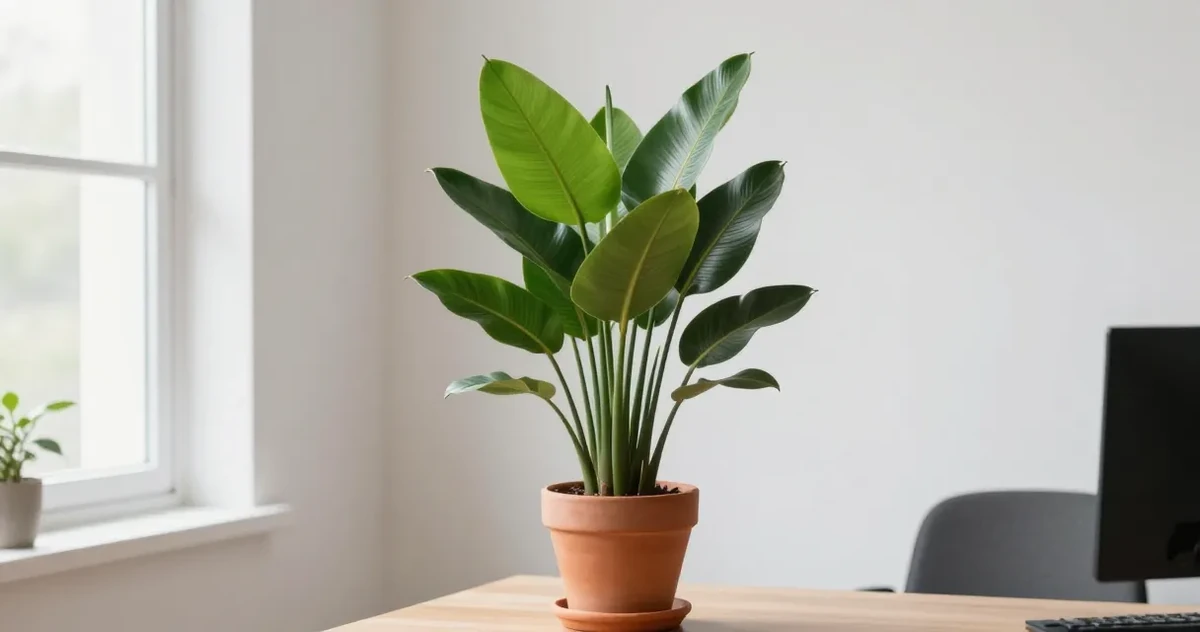
Bird of Paradise Plant Care: Indoor Growing Guide
You spotted it in a hotel lobby or someone’s living room — a plant with paddle-shaped leaves the size of your arm, fanning out like it owns the whole corner. And now you have one, or you’re about to. Bird of paradise is that kind of plant: impossible to ignore, genuinely dramatic, and surprisingly manageable once you understand what it actually needs.
Bird of paradise (Strelitzia) is a tropical South African plant that thrives on bright light and benign neglect — give it a sunny spot and resist the urge to overwater, and it will reward you with years of bold, architectural foliage.
The most important thing to know before anything else: there are two types you’re likely to encounter, and they’re different enough that care advice for one doesn’t always translate to the other.
Orange Bird vs. White Bird: Know Which One You Have
Strelitzia reginae is the classic orange-flowered bird of paradise — the one with the stunning tropical blooms that look like a flying bird. It stays compact (usually 3–5 feet indoors), loves direct sun, and can actually bloom indoors if you give it the right conditions.
Strelitzia nicolai is the white-flowered giant — the one you see in hotel lobbies and design magazines. It can reach 6–8 feet or more indoors, has larger, more oval leaves, and is more tolerant of lower light. It rarely blooms indoors, and that’s fine. People grow it for the foliage.
Most of what follows applies to both, with notes where they differ.
Light: The One Thing That Matters Most
Bird of paradise is a full-sun plant from South Africa. Outdoors it grows in direct sunlight all day. Indoors, it needs the brightest spot you have.
A south- or west-facing window is ideal. East-facing works for Strelitzia nicolai but will limit growth and almost certainly prevent flowering in S. reginae. North-facing isn’t enough for either.
According to the University of Florida IFAS Extension, Strelitzia reginae needs at least 4–6 hours of direct sunlight daily to have any realistic chance of producing flowers indoors. Short of that, it’ll grow — just don’t count on blooms. As the IFAS guide puts it: “Insufficient light is the most common reason bird of paradise fails to flower in home settings.”
A few hours of direct sun through the window — especially morning light — makes a real difference. If your bird of paradise is growing slowly, getting droopy between waterings, or producing pale leaves that are spread far apart, light is almost always the issue.
If you move it outside for summer (which it will genuinely love), ease it in gradually over a week or two. Even a sun-lover can scorch when it goes from indoor glass-filtered light to full outdoor exposure all at once.
Watering: Less Than You Think
Bird of paradise stores moisture in its thick, fleshy roots. It doesn’t need — and doesn’t want — to stay constantly damp.
Water thoroughly when the top 2 inches of soil are dry. Let water run through the drainage holes, then don’t water again until the soil dries out in that top layer. How often that is depends on the season:
| Season | Watering Frequency | What to Watch |
|---|---|---|
| Spring | Every 7–10 days | Growth resumes; soil dries faster as temps rise |
| Summer | Every 7 days (check first) | Hot rooms may need more frequent checks |
| Autumn | Every 10–14 days | Reduce as growth slows |
| Winter | Every 2–3 weeks | Soil stays wet much longer; always check before watering |
Yellow leaves near the base, a pot that stays heavy for weeks, or a soft stem near the soil — those are signs of overwatering. Brown, crispy leaf edges (dry, not mushy) are usually the opposite: too dry, or more often, low humidity combined with inconsistent watering.
Bird of paradise is sensitive to fluoride and accumulated salts in tap water, which show up over time as brown leaf tip burn. If your tap water is heavily treated, leaving it out overnight helps the chlorine off-gas. Or use filtered water for this one — it makes a noticeable difference.
Soil and Pot: Don’t Rush to Repot
A well-draining mix is essential. Something that holds a bit of moisture but never stays soggy. A standard potting mix with added perlite (roughly 3:1 ratio) works well. If you want to get drainage right and reduce the risk of root rot, terracotta pots are worth considering — they breathe through their walls and dry out more evenly than plastic. Here’s what makes terracotta worth it for plants like this.
Here’s something counterintuitive about bird of paradise: it actually prefers being slightly rootbound. This is especially true if you want flowers from S. reginae. Darryl Cheng of House Plant Journal, who approaches plant care from a physiology-first perspective, explains the logic: a pot-bound bird of paradise puts its energy into flowering, while a plant in a generously-sized pot keeps growing roots instead. Moving up in pot size too early can delay blooming by years.
Repot only when roots are visibly circling the bottom or escaping from drainage holes. Go up just one pot size. Going too large keeps the soil wet around the roots for too long and sets the stage for rot.
Humidity and Temperature
Bird of paradise tolerates average indoor humidity better than most tropicals, but it does best between 40–60% relative humidity. The clearest sign that the air is too dry isn’t yellowing — it’s dry, papery browning along the edges of the leaves, working inward over time.
A pebble tray with water underneath the pot adds passive humidity without touching the roots. Grouping it near other plants helps too. Unless your home is genuinely very dry in winter, a dedicated humidifier isn’t necessary for this one.
Keep it away from cold drafts near windows in winter and away from heating vents that blast dry, hot air at the leaves. Temperature range: 60–85°F (15–30°C) is the sweet spot.
Fertilizing
During spring and summer, feed monthly with a balanced liquid fertilizer (10-10-10 or similar) diluted to half strength. This supports the leaf and stem growth that happens during the active season. Pause fertilizing in autumn and stop entirely through winter — the plant is resting and doesn’t need the push.
One thing worth knowing: don’t fertilize dry soil. Water first and let the soil settle for a day before fertilizing — you can feel when that top inch has gone from soaked to just evenly damp. Fertilizer applied to dry roots causes salt buildup that shows up as the same brown-tip burn as fluoride sensitivity, and it’s easy to mistake one for the other.
Why the Leaves Split (And Why That’s Normal)
If the long leaves develop slits along the sides, that’s not damage — it’s by design. In the wild, bird of paradise grows where strong coastal winds blow regularly. The splits allow wind to pass through the leaf without tearing it. It’s a structural adaptation shaped by the plant’s environment.
Indoors, with no wind to trigger it, you’ll see this less. Some indoor birds never split much at all, especially in calm, sheltered rooms. If yours is split, great. If it’s not, don’t worry — it just means you’ve given it a very comfortable home.
Month-by-Month Care Calendar
Bird of paradise has a clear seasonal rhythm. Following it — even loosely — is the difference between a plant that slowly declines and one that rewards you year after year.
January–February: Deep rest. Water sparingly, every 2–3 weeks, always checking the soil first. No fertilizer. If you have a spot that stays around 50–55°F at night (a cool hallway, an unheated room), this is the month to put S. reginae there — a cool rest period is one of the main triggers for spring flowering.
March: Waking up. Days lengthen and you may notice a new leaf sheath pushing up from the center. Resume watering a little more frequently. Still no fertilizer quite yet — wait until you see active growth.
April: Growth begins. Start fertilizing monthly with half-strength balanced liquid fertilizer. Water when the top 2 inches are dry, which may be every 7–10 days. If the plant is visibly rootbound (roots circling at the bottom or poking through drainage holes), April is the best month to repot — the growing season will help it recover quickly.
May–June: Prime growing season. If nighttime temperatures are reliably above 55°F, this is a great time to move the plant outdoors to a spot that gets direct sun for most of the day. Transition it over a week — a few hours of outdoor shade first, then gradually more direct sun. Continue monthly fertilizing and check soil moisture every 5–7 days; outdoor conditions dry it out faster.
July–August: Peak summer. The plant is working hard. Water consistently and keep up with monthly feeding. Wipe down the large leaves every few weeks — dust blocks light absorption more noticeably on these big leaves than on smaller-leafed plants. Check undersides for scale insects, which love warm, sheltered conditions.
September: Winding down. Give one last feed in early September, then stop fertilizing. If your plant has been outside, start bringing it back indoors before nights drop below 55°F. Inspect the foliage carefully before it comes in — pests love to hitchhike back inside on the leaves and between the stems.
October–November: Transitioning to rest. Reduce watering as growth slows and the days get shorter. The soil will stay wet for much longer than it did in summer — don’t water on a schedule, only when you check and find the top 2 inches dry.
December: Full rest. Water every 2–3 weeks. No fertilizer. Clean the leaves to help what winter light is available get through. If you want flowers in spring, this is when the cool nights matter most for S. reginae.
Why Won’t It Bloom? A Diagnosis Guide
This is the question that drives most bird of paradise owners quietly mad. Here’s how to work through it honestly.
Step 1: Is it Strelitzia nicolai? The large white-flowered giant rarely blooms indoors. If yours has very large, more oval leaves and grows tall quickly, it’s probably S. nicolai — and that’s okay. The foliage is the feature. Stop chasing blooms and enjoy what you have.
Step 2: Is it old enough? Seed-grown plants need 5–7 years before their first bloom. Division-grown plants from a nursery (which most are) may flower in 2–3 years — under the right conditions. If you’ve had it less than 2 years, patience is the only answer.
Step 3: Is the pot too large? This is the most common, most fixable cause. A bird of paradise in a generously-sized pot focuses on growing roots, not flowers. If it’s not snug in its pot, move it to something smaller and leave it there. Rootbound is where it wants to be.
Step 4: Is it getting enough direct sun? “Bright light” isn’t enough. S. reginae needs actual direct sun through the glass — ideally 4–6 hours — not just a bright room. If it’s not close to a large south- or west-facing window, it won’t bloom. Move it, and be honest about the light it’s actually getting versus the light you think it’s getting.
Step 5: Did it get a cool winter? Consistently warm indoor temperatures year-round reduce the plant’s incentive to flower. A period of cooler nights (around 50–55°F) in winter helps trigger the spring flowering response. Even moving it to a cool room for 6–8 weeks can help.
If you’ve checked all five and everything is in order — it’s the right species, it’s mature, it’s rootbound, it gets real sun, and it experienced a cool winter — then you’ve done everything right. Some plants just take a little longer to decide it’s time.
Bird of paradise isn’t the only dramatic tropical that rewards patience. If you’re drawn to large, architectural statement plants, elephant ear plants have a similar presence and a similar love of warmth and bright conditions.
Is Bird of Paradise Toxic?
Yes. Strelitzia is mildly toxic to cats and dogs. According to the ASPCA, ingestion can cause nausea, vomiting, and drowsiness. It’s not among the most dangerous houseplants, but it’s worth keeping out of reach of pets who like to chew. If you’re building a pet-safe plant collection, this list covers 30 cat-safe plants that won’t cause any problems.
Quick Care Reference
| What | How |
|---|---|
| Light | Bright direct or bright indirect; south or west window best |
| Water | When top 2 inches are dry; reduce in winter |
| Soil | Well-draining mix with perlite |
| Humidity | 40–60%; watch for dry, papery leaf edges |
| Fertilizer | Monthly spring–summer, half-strength balanced liquid |
| Repotting | Only when rootbound; go up one size only |
| Temperature | 60–85°F (15–30°C); protect from cold drafts |
Bird of paradise is forgiving of most things — skipped waterings, average humidity, imperfect temperatures. What it genuinely cannot compromise on is light. Get that right, and almost everything else takes care of itself.
🌿 Need reminders tailored to your exact plant setup?
KnowYourPlant tracks your species, pot size, and season to tell you exactly when to water and what to fix.
Try KnowYourPlantFrequently Asked Questions
How long does bird of paradise take to bloom indoors? Seed-grown plants typically take 5–7 years before their first bloom. Division-grown plants (which most nursery plants are) may flower within 2–3 years under ideal conditions — meaning maximum light and a rootbound pot. There’s no shortcut to this one; it rewards patient, consistent care.
Why are my bird of paradise leaves curling? Leaf curling usually points to one of two things: the soil has gone too dry and the plant is stressed, or the air is too dry and the leaves are losing moisture faster than the roots can supply it. Check soil moisture first. If the soil is fine, consider humidity. Consistently low light can also cause weak, inward-curling new growth over time.
Can I put my bird of paradise outside in summer? Yes, and it will love you for it. Bird of paradise thrives in summer warmth and direct sun. Transition it over 7–10 days — start with a few hours in outdoor shade before moving it to full sun — to prevent sunburn on leaves that have been adapted to indoor light levels.
Why are the leaf edges turning brown? The two most common causes are fluoride and salt buildup from tap water (shows up at the very tips first and spreads slowly) and dry air combined with inconsistent watering (tends to affect the whole edge of the leaf). If you’re seeing tip burn on otherwise healthy leaves, try filtered water. If the browning is along the full edge, look at humidity and watering consistency.
Is bird of paradise hard to care for indoors? Not especially, once you understand the light requirement. The biggest adjustment for most people is accepting that it needs a genuinely sunny spot — not just a bright room, but close proximity to a large south or west-facing window. Get that right, water it when the top couple of inches of soil are dry, and otherwise leave it alone. It’s more forgiving than most tropical plants once it’s settled in.