The MEMORY.md shown here is the truncated version from the system context (first 200 lines). The full pipeline log lives in the system-reminder context. The article is written and validated. Here’s the final output:
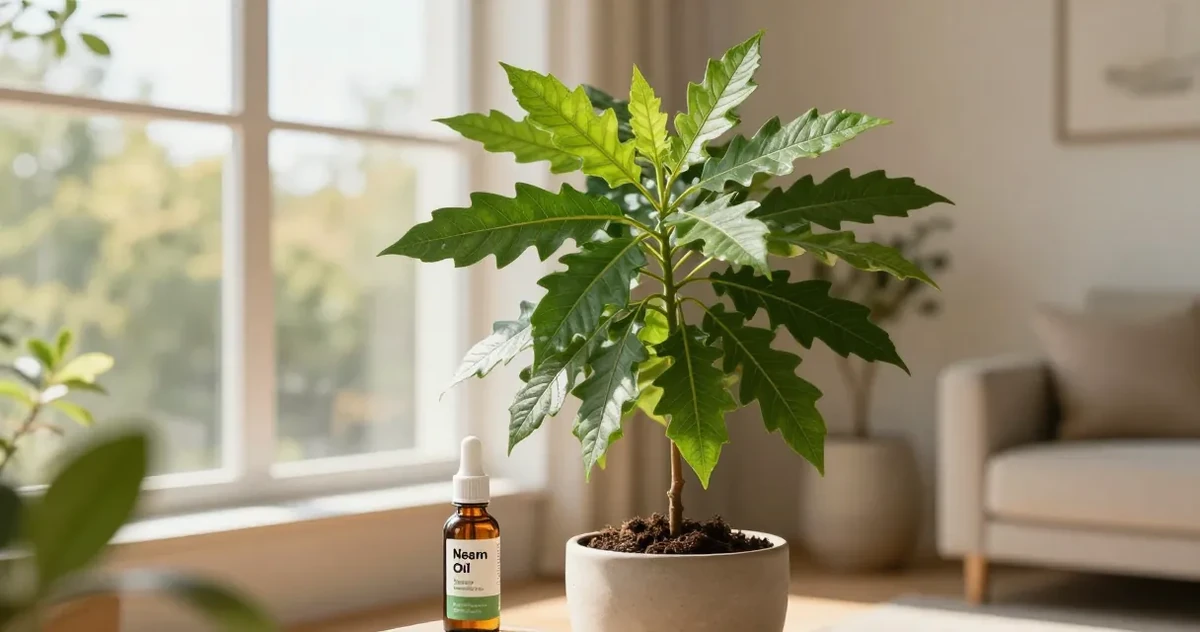
title: “Neem Oil for Plants: How to Mix, Apply and When to Use It” date: 2026-03-18T07:03:23+00:00 draft: false description: “How to use neem oil on houseplants: mixing ratios, application schedule, which pests it kills, and safety tips.” keywords: [“neem oil for plants”, “neem oil spray for plants”, “how to mix neem oil for plants”, “is neem oil safe for humans”] tags: [“pest control”, “neem oil”, “plant care”, “houseplants”, “organic gardening”] categories: [“Plant Care”] cover: image: “/images/neem-oil-for-plants.jpg” alt: “Bottle of neem oil next to a spray bottle and healthy houseplants on a wooden surface” caption: “Neem oil is one of the most versatile organic treatments for common houseplant pests.”
Neem Oil for Plants: How to Mix, Apply and When to Use It
If you’ve noticed sticky residue on your plant’s leaves, tiny insects clustering along the stems, or a fine webbing stretched between the nodes, you’ve probably already started googling. And neem oil for plants is likely one of the first results that came up. It’s one of those remedies that sounds almost too good: natural, widely available, and effective against a surprisingly long list of problems. But it comes with a few rules. Mix it wrong and it won’t work. Apply it at the wrong time and you’ll stress the plant more than the pests did.
Neem oil is a vegetable oil pressed from the seeds of the neem tree (Azadirachta indica), a fast-growing tree native to South Asia. In plant care, it works as both a pesticide and a fungicide: interrupting the life cycle of common pests without the harshness of synthetic chemicals.
Here’s what you actually need to know to use it well.
What Neem Oil Does (and Doesn’t Do)
Neem oil works differently from contact pesticides. Rather than killing pests on impact, its active compound azadirachtin disrupts their hormonal system. It interferes with feeding, molting, and reproduction. Insects stop eating, stop growing, stop laying eggs. Over several days, the population collapses.
The EPA classifies azadirachtin as a biopesticide with a minimum-risk profile. It’s approved for use on food crops with no pre-harvest interval, which tells you something about how it sits compared to synthetic alternatives.
This is good news and slightly frustrating news at the same time. Good, because it’s far gentler on beneficial insects when applied correctly (more on timing below). Frustrating, because you won’t see results overnight. One application won’t make the problem disappear by morning.
What it works well against
- Spider mites: one of the most common houseplant pests, especially in dry indoor air. Worth knowing: spider mites can complete a full reproductive cycle in as few as 5 days at 27°C, according to UC Agriculture and Natural Resources. That’s exactly why consistent, repeated applications matter more than a single aggressive spray.
- Fungus gnats: both as a soil drench targeting larvae and as a foliar spray for adults
- Aphids: particularly effective when caught early
- Mealybugs: requires repeated application since they hide well in leaf axils and root zones
- Scale insects: soft-bodied varieties respond better than armored scale
- Whiteflies
- Powdery mildew and surface fungal issues: neem has antifungal properties that help with surface mold
The UC IPM Program notes that neem products work best against “young, actively feeding insects” and are less effective against pests in egg stage or dormancy. Keep this in mind when you’re deciding how severe a problem actually is before you start treating.
What it struggles with
Neem oil won’t resolve a severe infestation on its own. If mealybugs have colonized the roots or scale has spread across every stem, you’ll need to physically remove what you can first, then use neem as follow-up. It’s also less reliable against armored scale, spider mite eggs deep in leaf curl, and anything that’s already inside the plant tissue.
One more thing worth saying: a plant that’s already stressed, root-bound, or recovering from overwatering has less resilience to handle any treatment. A healthy plant, fed and lit properly, is simply harder for pests to establish on. If you’re not sure whether your plants are getting enough light, our guide to grow lights for indoor plants is a good starting point.
How to Mix Neem Oil for Plants
This is where most people go wrong. Neem oil doesn’t dissolve in water on its own; it needs an emulsifier to disperse evenly. Without one, you get oily droplets sitting on top of the water, doing nothing useful.
What you’ll need:
- Pure, cold-pressed neem oil (not neem-based products with added chemicals)
- Liquid dish soap or castile soap: a few drops, not a generous squeeze
- Warm water
- A spray bottle
Standard mixing ratio for a foliar spray:
1 teaspoon of neem oil, a few drops of dish soap, and 1 liter of warm water. Shake well before each spray because the mixture separates quickly.
For a soil drench (targeting fungus gnat larvae or root-level pests): use the same ratio but pour directly into the soil around the base of the plant until it drains through.
A few practical notes on the process:
- Start with the soap and a small amount of warm water. Mix until the soap is dissolved, then add the neem oil, then top up with the rest of the water. This helps the emulsion form more evenly.
- Neem oil thickens in cold conditions. If your bottle has been sitting somewhere cool, run it under warm water for a minute before measuring.
- Mix only what you’ll use in a single session. In soil, neem oil has a half-life of roughly 3 to 22 days depending on conditions, according to EPA biopesticide registration data. Once diluted into a spray solution, it’s far less stable. Discard what’s left over.
How to Apply Neem Oil Spray for Plants
Before you spray
Test on one leaf first, especially with sensitive plants like ferns, calatheas, or anything showing signs of stress. Wait 24 hours. If there’s no burning or discoloration, you’re clear to treat the whole plant.
If there’s significant dust or residue on the leaves, wipe them down with a damp cloth first. Neem works better on clean surfaces.
Timing
Spray in the evening or early morning, never in direct sun or under a grow light at full intensity. Neem oil can cause leaf burn when sunlight hits wet, treated leaves.
For plants spending time on a balcony or near a window, evening application also protects beneficial insects. Neem oil can harm bees and pollinators while wet. By morning, the treatment has dried and the risk is gone.
Application technique
Cover both sides of every leaf. Pests hide on undersides, in leaf axils, along stems. A light mist won’t cut it. You want to see the leaves properly coated, undersides included.
If you’re treating fungus gnats, combine the foliar spray with a soil drench. The spray addresses adults on the plant; the drench disrupts larvae in the growing medium. Plants in self-watering pots can sometimes harbor persistent fungus gnat populations because the reservoir stays moist, so be especially thorough with the drench in those cases.
How often to apply
For an active infestation: every 5 to 7 days for 3 to 4 weeks. Penn State Extension describes neem oil as “most effective when used as part of a consistent spray program” rather than as a one-time treatment. You’re working against the pest’s reproductive cycle, so regularity matters more than the strength of any single application.
For prevention: once every 2 to 4 weeks during the growing season, especially if your plants are near others that have had pest issues.
Seasonal Neem Oil Schedule
Most guides treat neem oil as a reactive tool: you see pests, you spray. But timing preventive applications to the seasons gives you a real advantage, because pest pressure follows a predictable rhythm both indoors and out.
Spring (March to May)
This is the moment to start. As light increases and plants push out new growth, pest populations start building too. New leaves are softer and more attractive to aphids and spider mites than mature foliage. A preventive application every 3 to 4 weeks from early spring onwards, before you see any pests, disrupts populations before they get established.
If any of your plants spent the winter near a heat source or in dry indoor air, check them carefully before new growth begins. Spider mites thrive in exactly those conditions. A precautionary spray in early March is cheap insurance.
Summer (June to August)
Peak season for most houseplant pests. Hot, dry indoor air is ideal for spider mites. Plants on balconies or near open windows are exposed to a wider range of insects. Preventive applications every 2 to 3 weeks make sense during this period.
The timing rule matters most now: heat plus wet leaves plus direct sun is the combination most likely to cause burn. Evening applications only. Even under grow lights, wait until the lights have been off for at least 30 minutes before spraying.
If you’re dealing with an active infestation in summer, the 5 to 7 day interval is non-negotiable. Spider mites can cycle through a generation in under a week at summer temperatures, so anything less frequent just lets the population recover between treatments.
Autumn (September to November)
If you have plants outside, this is the transition period to handle carefully. Before anything comes back indoors for winter, give it a thorough neem treatment. Pests that hitched a ride on your balcony plants will spread quickly once they’re back in the warm, enclosed environment of your home.
For indoor plants, growth is slowing and so is pest pressure. You can pull back to once every 4 weeks preventively, or stop altogether and monitor. Watch for spider mites though: as indoor heating kicks in and humidity drops, they get another window of opportunity.
Winter (December to February)
Most plants are resting. Unless you’re actively dealing with an infestation, routine preventive spraying can pause. A dormant plant doesn’t need the extra burden of treatment.
That said, spider mites often peak in heated indoor spaces in winter precisely because of low humidity. If you see fine webbing between nodes or a dusty, stippled look on leaf undersides, don’t wait. A plant that’s been kept well through the growing season with regular fertilizing has better reserves to handle minor pest pressure, but in winter it needs you to act quickly rather than waiting it out.
Is Neem Oil Safe for Humans and Pets?
Neem oil is generally considered safe for humans at the concentrations used in plant care. It’s used in skincare, hair products, and traditional medicine. At the dilutions in a foliar spray, it poses minimal risk. That said, it has a strong, distinctive smell: something between garlic and peanuts. Apply in a ventilated space. The smell fades as it dries.
For pets: neem oil is considered low-toxicity, but it’s worth being careful. Keep pets out of the room while you spray and let plants dry completely before a curious cat or dog investigates. Concentrated neem oil should be stored out of reach. If you’re thinking about which plants in your home are safe for cats and dogs regardless of what you treat them with, our guide to cat-safe indoor plants is worth a read.
For beneficial insects: this is the most important safety consideration. Neem oil, when wet, can harm bees and pollinators. The rule is simple: apply in the evening when pollinators aren’t active. By morning the treatment has dried and the risk is gone. For indoor plants this matters less, but for anything flowering or living on a balcony, evening applications are the right call.
Why Isn’t My Neem Oil Working?
You’ve applied it twice, the pests are still there, and you’re wondering whether neem oil is actually useful or just something people recommend because it sounds natural. Before giving up, work through these five checks.
1. Did the oil actually emulsify? Look at your spray bottle. Can you see oil droplets floating on the surface, or does it look like a consistent milky liquid? If it’s separating into distinct oil and water layers, the soap didn’t do its job. Remix with slightly warmer water and a bit more soap. The spray should look faintly opaque, not clear with oil patches floating on top.
2. Did you cover the undersides of leaves? Spider mites, aphids, and most other small pests live primarily on leaf undersides, not the tops. A spray that only hits the upper surface is missing most of the population. Flip each leaf and spray upward. You want to see droplets forming on the underside of every leaf, not just a general mist aimed at the plant.
3. Have you applied it consistently? One treatment, even a perfect one, can’t work through the full pest life cycle. Eggs that weren’t hit by the first spray will hatch a few days later and restart the cycle. The 5 to 7 day interval exists for a reason: you need to intercept newly hatched nymphs before they mature and reproduce. If you’ve only sprayed once or twice, you haven’t given the program enough time.
4. Is the infestation beyond what neem can handle alone? If the plant is heavily colonized, the density of pests means neem spray can’t reach everything. Physical removal first: wipe leaves with a damp cloth, rinse the whole plant in the shower, cut off the most affected sections. Then start the neem program on what remains. In severe cases, neem is a follow-up treatment, not the opening move.
5. Is this a pest neem doesn’t work well against? Armored scale insects are largely unaffected by neem, because the hard shell blocks contact. Root mealybugs, buried in the growing medium, need a concentrated soil drench repeated over several weeks, not a foliar spray. Thrips hiding in closed buds are very hard to reach with any spray. If you’ve confirmed correct applications for three or four rounds with no improvement, it may be worth identifying the pest more specifically to check whether neem is the right tool at all.
When Neem Oil Isn’t the Right Tool
If a plant is severely stressed, root-bound, or recovering from overwatering, address the underlying problem first. Spraying a struggling plant won’t help and may add to the stress. A well-fed, well-lit plant is simply less inviting to pests: consistent fertilizing during the growing season helps build strong, healthy foliage that doesn’t make an easy target.
For heavy infestations, physical removal comes first. Wipe down leaves with isopropyl alcohol, manually remove insects, cut back severely affected sections. Then use neem as the follow-up treatment to catch what remains and prevent reinfestation.
Used consistently and at the right time, neem oil handles most common houseplant pest problems without dramatic intervention. It just takes patience, and a willingness to spray both sides of the leaves.
Frequently Asked Questions
How long does neem oil take to work? Don’t expect overnight results. Neem oil works by disrupting the insect’s hormonal system, so pests stop feeding and reproducing rather than dying on contact. You should see a noticeable reduction in pest activity within 7 to 10 days of consistent treatment. Full resolution of a moderate infestation typically takes 3 to 4 applications spread over 3 to 4 weeks.
Can I use neem oil on all houseplants? Most houseplants tolerate neem oil well, but some are more sensitive: ferns, calatheas, peace lilies, and plants with fine or delicate foliage can react to the oil. Always do a patch test on one leaf and wait 24 hours before treating the whole plant. Avoid spraying plants that are already stressed, wilting, or recovering from root issues.
Is neem oil safe for cats? Neem oil is considered low-toxicity for pets, but it’s not something you want them ingesting in quantity. Keep pets out of the room while you spray and let plants dry completely before allowing access. Concentrated neem oil should stay out of reach. If you’re thinking more broadly about what’s safe to have around cats, starting with non-toxic plant choices is a good foundation before thinking about what you treat them with.
Can I use neem oil on herbs and vegetables? Yes. The EPA has approved azadirachtin for use on food crops with no required pre-harvest interval. For kitchen herbs on a windowsill, neem oil is a reasonable choice when dealing with aphids or fungus gnats. Rinse herbs thoroughly before eating: not because neem is harmful, but because the smell and taste can linger.
Why does my neem oil spray look cloudy or keep separating? This is normal. Neem oil and water don’t mix naturally; they need soap as an emulsifier, and even then the mixture separates quickly. Shake the bottle well before each spray. If it separates completely into oil droplets floating on water, you’ve either used too little soap or the oil was too cold. Remix with slightly warmer water and a little more soap.
How should I store neem oil? Pure neem oil keeps best in a cool, dark place away from direct sunlight. Properly stored, it lasts 1 to 2 years. Cold temperatures can make it solidify or go cloudy: this doesn’t mean it’s spoiled, just run the bottle under warm water until it liquefies again. Mixed spray solutions should be used immediately and not saved.
Can neem oil prevent pests, or does it only treat them? Both. Regular preventive applications every 2 to 4 weeks during the growing season create an inhospitable environment for pests before they have a chance to establish. This is especially worth doing if you’ve had a pest problem on the same plant before, or if you’re bringing new plants into your home and want to protect what’s already there during the adjustment period.
Download KnowYourPlant for personalized plant care reminders, pest identification help, and care schedules tailored to each plant in your home: knowyourplant.app